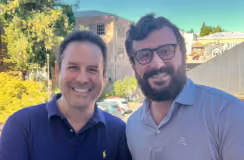
Host: Lack of industry experience is one of the biggest challenges for most acquisition entrepreneurs trying to buy a business. You have to convince sellers and brokers that you have the stuff to parachute into their industry and learn it fast enough to keep the business going. And then you have to actually deliver on that. It means that during the transition into the business you buy, you're not only learning the idiosyncrasies of the business itself, you're also learning the entire industry. This is challenging, to say the least, and we accept it as simply the nature of the game. But there is a happy flip side. If you do have industry experience, you have a big advantage. Take today's guest, Michael Young, who was searching for a business to buy. Months into his search, he decided to spin up from scratch an accounting practice for SMBs. The knock on effects of doing so were hugely beneficial, including meeting the owner of the $4 million accounting practice Michael would then go on to buy. Now. Admittedly, this isn't a playbook that can be copy pasted. Michael's situation was unique in a number of ways, but there are lessons here. Among them, if you can find any way to get experience and credibility in an industry where you might want to buy a business, it is a significant unlock. See what lessons you draw from this conversation with Michael Young, owner of Bay Business Group. Quick Announcement don't forget the webinar this Friday, the Anatomy of an loi. We're going to deconstruct an actual loi. You'll leave not only with a deep understanding of this critical document, but a copy of the LOI template for you to use in your own deals. It's this Friday, February 2nd at 11am Eastern. Link to register at the very top of the show. Notes. Welcome to Acquiring Minds, a podcast about buying businesses. My name is Will Smith. Acquiring an existing business is an awesome opportunity for many entrepreneurs and on this podcast I talk to the people who do it. Listeners of Acquiring Minds know that for almost any business you acquire, its success comes down to the people and how you develop and manage them as their new leader. Thing is, in addition to management, there is also a lot of process and bureaucratic work when it comes to your new employees. Payroll, compliance, HR technology, hiring to name but a few. These processes are crucial to get right, but at the same time distract from where you want to be putting your energy in leadership. So Aspen HR is an HR firm and PEO that takes this work off your plate and handles it with the care it demands. Aspen is owned and run by Mark Sinatra, himself, a successful former Searcher so Aspen's own leadership understands the HR challenges that searchers have. Post acquisition, the firm is offering Acquiring Minds listeners a complimentary pre acquisition HR and PEO review for your target business. Check out aspenhr.com or contact Mark directly@markspenhr.com Michael Young, welcome to Acquiring Minds.
[3:34] Guest: Thanks for having me. Will. Awesome to be here Michael.
Host: You started your career in accounting. You sought a stable, predictable path. Accounting gave you that. But what you gained in stability, you lost in control. Buying a business gave you that. We're going to hear all about it. But start us off please Michael, with some background on you.
Guest: Yeah, so I grew up around small business entrepreneurs. That's what my dad did. Grandparents, great grandparents all owned and ran small businesses. And so I saw the good and bad as a kid and around the time I was probably 8 or 9 my dad and grandfather were running a small packaging business and watched that basically go belly up. And so I thought I wanted then something stable. And so to me accounting for a big firm was, was that was stable. And so started off at a. I moved to New York working for PricewaterhouseCoopers and they've got a great machine kind of once you get in they always kind of put another step in front of you and so was on that was on that escalator and not always intentionally and kind of got to the doorstep of partner and was like did I really mean to be be here this entire time? And so that's kind of along the way then sort of looking at got exposed to the ETA world and was like oh wow, like I think this is actually what I'm looking for. And so jumped off the escalator and did a, did a360 of sorts I guess ended up buying a small accounting firm. But yeah, here I am.
Host: Great. Thank you for that Michael. I'm going to dig into a few of those details. First of all, take us all the way back to 8 or 9 years old seeing this business that your dad and grandfather owned ran go belly up. I guess we already know what that does to the mind of a, of a young boy because kind of dictated the path that you would take at least in early adulthood. But, but maybe take us back. What's that like? Is that traumatic or are you too young to really perceive how hard it is? I mean just what's it like to be in the household at that age when that's happening?
Guest: Obviously didn't know all the details that time. I just saw all of a sudden there was a lot of stress between my dad and grandfather. And it all came back to the. To the business. I had an awesome childhood, great childhood. Would do it 10 times, do it every time again. It was just that stress came home. And so that. That then kind of formed my. Where I thought I want what I thought I wanted. And so what. What happened was kind of. Now I've learned more of the story. But a couple of good business lessons was there was one large customer that. And what they made or assembled was electric charcoal starters. What you'd use for your backyard charcoal grill. Plug into the wall, your charcoal grill going. So they assembled those for Craftsman in Florence, Kentucky. Craftsman was a large percentage of business. Craftsman decides to go overseas starting in kind of the early 90s. And that the business kind of fell apart from there. And my dad and f. Grandfather had different ideas of kind of what to do to try and fix it. And ultimately, I think it permanently changed their relationship. And that kind of, I guess, permanently changed my trajectory as well.
[6:55] Host: That's really kind of a story of. Well, it's obviously not maybe Rust Belt automotive offshoring, but it is a story of manufacturing being offshored and an American owner and his employees being stuck with wondering what the heck to do.
Guest: Yep. For sure.
Host: Yeah. Okay. Although I guess it was, you know, in the early 90s, that was kind of the tail end of really happening badly.
Guest: Yeah, I mean, it was the tail end of it. So, I mean, it wasn't like. It was. This was like the 50s, 60s, 70s, like, where a lot of this was happening. It was a bit later, just because, I mean, it was a small price. There wasn't a lot of margin to potentially do it. And so it's probably down the list. And so they finally got to the bottom of the list of things to move.
Host: Well, you learned customer concentration then from an early age. I'm sure nobody was calling it that, but we all now know how important those two words are. And you also. I also know from the pre call, which you skipped over a little bit, is what your dad did next, please.
Guest: Yeah, so then I said I saw the good and bad growing up. So the good was my dad had a young family and with three kids and was like, what do I do next? And so he started his own mechanical contractor. And so he had. So mechanical contracting, commercial H Vac. That is like very hot. A hot button here in the ETA world. But he started that without any. He was not. Not in the trades originally. He didn't know the difference when a condenser compressor, but he knew how to treat People he knew how to motivate and how to connect with people. And so he started that and he grew that into like 50 or 60 people over the next 20 or 25 years. And so he was. So saw him do be tremendously successful with that.
Host: It's so cool. And is that what he's doing today or has he retired?
Guest: So he was, so he was a minority owner and kind of the, that firm they sold actually to one of the huge consolidators in the H Vac world like two years ago. And so he's, he's on the tail end. I think he's going to be retiring next year at some point.
[9:01] Host: So he didn't sell to a Searcher then?
Guest: No, it was, we, we had kind of toyed around with it, but I mean it was like it would have been a big one to try and get done. It would have and kind of. We can talk through it more, but it was something where I would have need to get outside equity to try and make it work. And it was just, it wasn't, it was too big.
Host: Just a little bit more on your dad being so good with people because that's now an observation I've heard you make twice.
Guest: Yeah, so I mean he,
Host: he, he
Guest: would tell you that was his motivation for growing the business. Right. Because he had guys that would start with him at tech and he's like, well I want this guy to be able to come a project manager because that's going to mean more income for him, more income for his family. And so he was then going out trying to grow and trying to develop opportunities for that for his team. And so his, his core group of like seven or eight folks have been with him now for almost the life of the, that he had it. And almost all of them started off as techs like out of school or very early on in their careers. And they've, they're now in their 40s and like late 40s and they've, they've grown with them. And so he's. The way he did it was like he knows everything about them. Like he knows their kids names, he knows what teams their kids play on, he knows the scores of their games last weekend. Like he knows all of that stuff. And so he just connects with them and like that's how he's, that's his superpower.
Host: That's really I guess exhibit A of kind of servant leadership where, where he's, he's leading by just truly thinking about how he can serve his, his followers for lack of a Better word.
Guest: Yeah, no, yeah. I mean, it was very. No ego leadership of like, hey, what do you need? Let me help you. Like, how do we figure this out? So.
Host: Yeah.
Guest: Yeah. And he. I mean, also important lessons there of, like, he knows then, like, what his strengths are. So, like, he was intentional about finding someone that he could work with who was very super technical and, like, didn't know the difference between a condenser and compressor. And he then also then would go out and find someone who was, like, he's okay with sales. He found somebody who could also then help him on the sales and business development front. So it was like, good business lessons of, like, know what you are and what you're not and fill in the gaps where. Where you're not.
Host: And just out of curiosity, because it's a theme that comes up here so much. How technical did he ultimately become? How much did he learn? Does he yet. Yet know what a condenser and what the difference between a condenser and a compressor?
Guest: Yeah, yeah. So he. So he. He. He has. But I still think he would, like, he would defer to his team. Like, he could walk into a job and know what's going on. But, like, I think that's part of. Also he thinks it's important to have the respect of the team and, like, he's not getting. Getting away from it. But also, yeah, I'd say he could handle his own job today just from. As you would have to just osmosis of everything you're seeing being in the
Host: business for 25 years now, fast forward into your career. You're on the escalator up in your work as an accountant and at one of the big firms. And then you say to yourself, and you kind of, I guess, are having success because you're just. You find yourself continuing to. To ascend. And then you say to yourself, wait, is this what I wanted? So, so, in fact. So I. I guess I'm trying to tease out how deliberate you were in your career versus how it was kind of just happening to you.
[12:16] Guest: Yeah, I mean, I think it was. I would say I wasn't that deliberate. For the first, I don't know, six or eight years, I was. I knew that I wanted to progress and progress fast, but I didn't know that, like, hey, I want to be doing this five or ten years from now. And so the next promotion was always like, okay, that seems like a good hurdle. And then once I get there, then I can kind of go find what I need to find. And that was always kind Of, I mean, it's. It tells you something about organizational structure and kind of people motivating and retaining people. But, yeah, that was kind of always there. And so I think as you start trying to, like, my wife and I, then kind of personal life is like, okay, like, we want to start having a family. Like, how, like, what does that mean for me and my career? And like. And so that's when it started thinking about, like, that's what's prompted, though. Like, okay, am I doing what I want, actually want to be doing? And so don't get me wrong, like, I was in the due diligence phase. So like I said, started off doing quality runnings. And so it was always interesting work with a ton of smart people, saw lots of exciting deals. But there was always, like, I just wanted more. And I guess it was kind of a challenge. I wanted more control. And so I wanted to be able to, like, if I saw someone on my team going above and beyond, I kind of wanted the direct ability to reward them or give them what I felt like they deserved, or I wanted the ability to actually make the business or operating decisions. And so a lot of times we'd see companies and be like, they should be doing this or should be doing that, but then we would leave and never really kind of see what happened. And so it was kind of like an also mentality of like, put up or shut up. Like, if you think you can do this, like, go see if you can actually do it. So that was all kind of going on. And so what originally led me to ETA so was I was at University of Chicago there. They've got the ETA program there. That kind of opened my eyes to it. And my wife had been at University of Chicago, and she actually, before I was like, she's like, I think you'd be pretty good at this ETA thing. You should look at it. And so that originally started me down the path. I reached out to one of the accelerator heads and was like, hey, just trying to learn more. And the next thing I knew, I was in their process for looking at, like, their kind of people who then stay there, search, and then go out and operate. And that made me realize. And so it was again, kind of got put in the process without being super intentional about it, and I got rejected. And so they would be like, what if you just went in to work for one of our portfolio companies and so we can kind of talk more about it. But that was a huge, like, I thought I'd be a shoe in, like, way overconfident. And part of the feedback was like what you need? I don't think you actually understand enough about eta. Like sure, you've been around deals, but I feel like you don't actually understand it. So took that as a challenge. I then went out and talked to a hundred plus searchers, operators, investors. Wasn't smart enough to create a podcast around it, but did that and learned a ton. I even then went and interned for a searcher and that was great. I got it like even while I was working full time, got to really see the insides of like what I felt like worked and didn't work during a search. And so it all kind of got me ready to go do my own thing.
[15:30] Host: Just to elaborate on a few things there. So you're at the University of Chicago where you're exposed to it. Booth of course is the, is the business school of University of Chicago. Booth is a big name in eta. It's one of the, one of the business schools that where ETA is, is kind of most evangelized and a lot of people coming out of Booth do it or I should say a lot of people with MBAs that you see in search have come from Booth. How big is Booth by the way? Every class.
Guest: It's a good question. So I did actually did the executive program. I didn't do the full time program. I want to say the full time is Probably I think 5 or 600 a class. The executive program was like 100 ish a class and then there's they have an evening part time program and that probably has I would say almost like probably a thousand plus kids or students in that.
Host: What do the following Acquiring Minds guests all have in common. Doug Johns, Morley Desai, Tim Erickson, Chirag Shah, Shane Ursam. They all went through the Acquisition Lab, the accelerator and community for people serious about buying a business. But they represent just a sliver of the Lab's success stories. The number of deals across the Lab's cohorts now stands at over 120, with over $300 million in aggregate transaction value. The Acquisition Lab was founded by Walker Deibel, author of Buy Then Build, the book that introduced so many of you to the very idea of buying a business. The Lab offers a month long, intensive, almost daily Q and A sessions with advisors, live Deal reviews with Walker Deal team introductions. And in an active community of serious searchers. Check out acquisitionlab.com, link in the notes or email the Lab's co founder, Chelsea Wood. Chelsea buythenbuild.com and then I just Want to also your decision to do this. I mean you like it, you see it, you like it. Buying a business, entrepreneurship through acquisition. Your wife encourages you, she sees it in you. But. But you also are turning your. Your back on potential partnership making partner at your firm. You mentioned that earlier and of course that is kind of the top level most kind of pedigree most salary that somebody would be shooting for in the line of in. In at a big accounting firm. So just tell us a little bit more about what that path would have looked like so we can understand just how rich it was what you were walking away from.
[18:03] Guest: Yeah, I mean it's, it's great financial compensation. I think it's six figures. It can be seven figures. I think there's.
Host: It can be seven figures. So you could so partners some if you got there over a million bucks a year salary.
Guest: And I mean I think I don't. I should also just. I was felt like I was right there on the doorstep was told right there on the doorstep. But like I also I mean who knows with they've all had layoffs recently and like they just got rid of partners so like who knows what what actually would have happened. But yeah felt like I was right there but was being told that's the next step. But yeah, I mean that is a very lucrative. That is. People are aiming for that. It is a career pedestal and like you've. You've made it from there is kind of for sure.
Host: Yeah.
Guest: And that's again like at that in itself. I didn't find if I was being honest myself, I didn't actually find it. I wasn't doing that for me. I was doing it for like the perception and like the everything else that went with it. And so yeah, I mean that, that with all my conversations with folks the one thing, one piece of advice that I got I feel like was the best was know exactly your reason why for why you're going into this. And because there's going to be shitty days. There's going to be days where you're like why did I do this? But I figured out my why and like that wasn't really tied to PwC through all those conversations does that made the decision much, much, much easier.
Host: But just to be clear, how old would you have been if you'd made partner roughly in this time frame that you thought you might.
Guest: Yeah, I would have been 34 or
Host: 35, so mid-30s at partner level. And then so you'd be looking at another 30 years of. Of partner and I assume there's even tiers within partnership and you probably would have inched up those but it would have been quite a feather in your cap with still a long way to go. Great, that's helpful. Okay, so you figure out your why which is wanting more control. And one of the ways you characterize your control was like wanting to be able to reward somebody on your team who kind of went above and beyond or make decisions. So you guys would see inside these businesses doing the Q of these that you were doing. You'd see inside these businesses and be like oh they should do X or yeah, but not actually have any implementation control there. So when you talk about control, is it really that stuff really kind of tactical day to day control or is it also kind of self actualization control, big picture control, steering your own kind of ship or all the above?
Guest: There's probably some truth to all of that. I think there's the professional side of like yes, I wanted to be able to see if I could actually do what I thought I was capable of professionally. I also wanted the ability to like control and be home and be dad and be husband and be, be who I want like who I wanted to be at home as well. And so that gave me that control to do that as well. Whereas the partner route, yes you are kind of your own boss in a sense but there's still a whole nother like pyramid. Even once you get the partner and your first, I don't know, 10 years, you're still kind of grinding to kind of get figured out. And I was like I don't want the first. And we, we had just had our daughter, our first daughter around the same time of me leaving PwC and starting to search. And I was like I don't want the first 10 years of my daughter's life. To me be like cranking out 120 hour weeks like for PwC. And so that was the other side of it as well. So we just want to control personally of like yes, like last week left moved meetings calendars so I could go to breakfast with Santa at my daughter's thing. And so I wouldn't maybe have the ability to do that, maybe not like elsewhere. And so that, that was the other side of the control that that was looking for.
[21:36] Host: Okay, you turn to an accelerator, you get kind of sucked into their, their funnel, you're going along with it but in fact they don't accept you. Michael. Michael experiences rejection for one of the earliest times in the first times in his career and they tell you it's because it doesn't seem like you've done your homework around eta. And so you take that as a challenge as you said, and you start, you really hit the books, get on the phone, talk to tons, dozens and dozens of people that search accelerator as essentially they all are probably there's an exception or two in there. But generally when you talk about them as a category, they have traditional search fund economics and you. So you didn't go forward with them and then you do your research and you decide you want to do a self funded search any anyway or instead of traditional, a traditional search fund. So the economics of what you're now looking at are and, and the kind of the independence, the autonomy are very different. Talk to me a little bit about more about that decision. Because you'd been exposed to traditional traditional search fund, you didn't get into the accelerator, but you probably still could have circled back around a guy from Booth with connections and stuff and raised a traditional search fund. Had you really set your mind to it. Why didn't you?
Guest: Yeah, I mean it comes back to one like the control of like I want to be in very specific areas I wanted to be doing doing in businesses that I wanted to be involved with. And like I feel like you lose some of that independence autonomy if you are raising a fund because there are certain expectations that folks are going to have. And so that, and then for the other side of it is like my wife and I are fortunate to be in a financial spot where we could put down a pretty sizable equity check for a business and you going SBA route. And so and I also always knew that like there was, did have networks from PwC from Booth. My wife and I both did of like even if we found a $2 or $3 million EBITDA business that's going to be above the SBA world, like we could find at that point kind of the investors to make it work. And so that was like. And kind of again going back to the why it's like why are we going to be looking. I think there's traditional and accelerators have much more flexible and kind of what you're looking at and, and where you're going now. But again if it was all about like family and then also being able to do what I wanted to be doing, like and we financially can make it work. It's like it seems like self, self funded was, was the right way to go.
[24:05] Host: Okay, so now we are at the doorstep of your search. Tell us about it.
Guest: Yeah, so I mean it was, I feel like there Was the first three or four months is like a honeymoon phase where you're, it's easy to get up and get going and like you're talking to folks. But that, that after three or four months was really kind of where I had a wall. And my, my search was doing. Was doing kind of a lot of the same stuff other folks are doing, talking about it was doing talking to brokers, talking to intermediaries, and then reaching directly out to, to companies and industries that I wanted. And yeah, that's kind of what I did for 18 months. And so I had different industry concentrations over the course of the 18 months that I was looking at. And when I first started off, I would have been like, nope, I am focusing on a trades business. Like, that's what. Or something similar to that. I thought I'd be out in the field having a team with like a field of operations. And so given kind of what my dad had been doing and never thought I'd be doing, I thought I'd done my last accounting. Last billable hour once I left PwC and spent a year was all like, occasionally see accounting things pop up and be like, nope, I'm not doing that. I don't, I don't want to do it. But then as you are in the ETA world, you're like, man, a lot of these companies could really use a little help on their accounting side. And like, when I got was being truly honest with myself, it was like, did I not like accounting or did I not like the idea of like, who I was helping? And so we would often work with huge private equity funds and like, it's great helping them make an extra billion, but it was always way more rewarding helping the smaller businesses because that actually had a much more tangible benefit. I felt like. And so then when I started looking at. So then finally, like looked at a serious. Actually, I think it was from one of the podcasts from somebody on here. Patrick Dichter was like, he was like, he had acquired accounting business. I'm like, okay, fine, I'll look. I'll start looking more seriously at it. And he.
Host: And because partly he makes a great argument for why they're so appealing. I mean, there's, there's so much to like which we're going to hear about.
Guest: Yeah. And I mean, I think on here on this podcast, he literally was like, yeah, if I was an accountant, I would buy one. If I was an accountant, I would just start one up. And I was like, okay, interesting, interesting idea. And so then started looking more and More accounting. And it was like, okay, these are these check a lot of the boxes that you'd be looking for. And it's like, if I actually do want to be helping the local mom and pop business, helping local business owners have much more of a tangible benefit. It's not always helping these billion dollar funds. It's like, that seems pretty compelling. Like that's what I want to be doing. And so towards the end of my 18 months, I was almost exclusively just looking for accounting firms. And so was very picky. Actually went up against Patrick on, on a couple deals and. Yeah. And so finally accounting firms, basically during tax season, there's not. The market kind of dries up completely. At this point I was pretty convinced that like, accounting is what makes the sense for me. And so about January of last year, I just basically abandoned my search and was only looking at accounting firms, but. And spent 90% of my time just trying to start accounting practice from scratch. And so.
[27:26] Host: Hold on, Michael. So you start an accounting practice from scratch and you're searching for accounting firms at the same time? Yeah, so you don't abandon your search. You just narrow it super down to
Guest: just get super civic, where I was like only looking accounting practices. Only looking accounting practices that have that look like this. And so I basically was only talking to accounting brokers, only knew I was interested if it had X, Y and Z. And so like the search process was very easy then because it would like, as things would come across, it'd take me two seconds to be like yes or no and all that. And that would. That was probably 5 or 10% of my time. The other 90, 95% was all just building a client base, doing outsource accounting for, for small businesses.
Host: And with the intention of what? To earn money in the meantime, to get yourself in the game so that you can, you can, you can present that you're already, you already already have a practice or what. What was the end game with?
Guest: Yeah, I mean, I think the idea was start something and then grow it and see where it goes from there. Like open to acquisitions along the way, if they made sense, but just start something. Because I felt like the opportunity was too big in kind of the small business accounting world to pass up. And so just got going and I was like, if the acquisition makes sense along the way, we can, we can look at it. And so that's where. So I started in January, spent three or four months or basically it was me. And then like, I'd have a few like outsource bookkeepers that I have helping me like close books for clients. And so it was, I mean frankly it was as any accounting owner will tell you, like finding the work wasn't the problem. It was figuring out how to actually get the work done was, was the problem. And so again stayed in touch with Patrick. Have known him now kind of for over a year, year and a half. And so he was like, I was like, hey, I just started the accounting practice, I'm all in like. And he was like, you should come to this PASBA conference. And so this is Michael.
Host: Michael, let me stop you here because. Because I don't want to get too far away from a couple of follow up questions I have. We'll return to PASBA in a minute. But you had said you looked at a few industries like including home services or field blue collar field type businesses and why would you then disqualify. What were a couple of those and why did you disqualify them quickly? Just each one?
Guest: Yeah, I mean I think the, I mean it started off like my dad's in mechanical contracting and plumbing, all in maintenance side. And so like even before I started doing search, I was like man, those he. I was like kind of learning more about his business. I'm like that's an awesome business. And this is like six, seven years ago where like they just show up, do these small projects, fix whatever it is, come back every month and do it. Like that's an awesome business. And so that's why like of course I feel like every searcher started off on that. I spent some time poking around like I also had a healthcare background. So when I left PwC was mostly doing help, basically doing physician group roll ups. And so looked at that for some period of time there was only like certain specialties that I was interested in looked at like medical equipment maintenance service companies. Looked at like resident.
[30:33] Host: That seems like a good business. Nice recurring, crucial. So it was growing, growing big tailwinds with healthcare.
Guest: Yeah, it was, there's some huge players in it. Um, I mean I would still be open to it but I felt like it was gonna be. It was hard. As I learned more about it, it was, it looked like it was gonna be pretty hard to grow to like actually get your foot in the door to actually talk to the right person to actually get that service contract. Cause a lot of times it's hooked. Like that's all kind of established on the front end. So I was like, it didn't seem like a great organic growth play. I didn't necessarily have want to Bring in investors to make it kind of an inorganic growth play. And so was open to it, but it didn't become a focus point. And then another thing is like you would see sometimes in this industry. Some other ones I looked at at first I get all discouraged because I'm like oh, I see private equity in this space. There's not gonna be anything to buy then. But that also was a pretty good telltale that like okay, you are looking at halfway decent businesses then because if somebody's some private equity is doing a roll up in that world like that tells you somebody else is agrees with your thesis.
Host: Exactly.
Guest: So also looked at like association management. So like community associations, like they have outsourced providers that like will manage the board meetings and all that stuff. And so looked at this is a kind of one I had come across in my PTBC days. And it was like great monthly recurring you're showing up. It's all kind of a consistent service month to month. And you're just helping the board, like a volunteer board make decisions. And so really like that poked around that also private equity world and private equity in that. And so those are kind of a few of the other industries that spent some time poking around.
Host: And why did you go, why did you do an industry focused search or like tackle industries as opposed to just being completely agnostic?
Guest: I wouldn't say I was industry focused. I think there were certain geographies like my wife and I wanted to be in and so would search in those geographies. And I think you have to be a little bit open to industries. There was like three or four that I would never touch. But other than that, if there was something that fit the right size like I would look at it and then there was then the same angle would also have kind of a cross section view of like okay, these are industries that I know that I really like. And so I would go find ways to make sure I knew all the companies in that industry within the geographies that I wanted.
Host: What geographies did you want?
[33:00] Guest: So I mean would tell folks it was basically from Philadelphia to the Carolinas on the east coast is where we're looking. And then my wife and I also have family in Kentucky so kind of around there too.
Host: So and just tell us a little bit more about starting up the practice. So it was initially going to be, I assume you just started with bookkeeping and that's kind of. That's kind of the toehold and then you maybe upsell from there on a client by client basis. It's also the, the most kind of the, The. The lowest, frankly, lowest value, easiest to deliver.
Guest: Yeah.
Host: Service.
Guest: So I, I did that and then did the other way too. Of like, hey, I can. And so during my search, I did some consulting on the side. And so, like, would there would occasionally be folks who were like, hey, I'm looking at this deal. Can you give me whatever. Can you look at this and help me, like, do a semi Q of E for it? And so like a semi. And like, so I would do like. There was also existing companies like, hey, we want to know how much we're making here or there. And so a fractional CFO type service. And so I did that as well of like a fractional CFO toehold. And like, would literally go on, like, upwork and find stuff like that. And then also would then be like, hey, I've got a team. Can also handle the bookkeeping if you're looking for us to kind of stay involved from here. And so that model seemed to make a lot of sense to me of like, hey, you're getting a little bit of kind of CFO time, but then we're also then handling all the books. So you're kind of staying engaged. We're staying engaged with you. We know what's going on and kind of help provide direction as you go. So that was kind of what originally, what it looked like. And I think the other thing I'll say is, like, personally, like, around this time when I was doing it, like, I was. It was hard. Like, I was struggling because I just failed at search. Like, I just quit search basically and was doing this. I think I was excited by the opportunity, but I think that was one thing I wanted to say was like, you see on Twitter or conferences or what have you, like, you see the success side, like, there's a lot of really smart people that don't always get that. Like, it has a lot of luck that happens with it. And so that was one thing that I really struggled with because, like, I hate failing and, like, was failing very publicly with family and friends. And, like, I got to the point, like, where I hated going to family events because everyone would, like, it was always some kind of, like, everyone to know what was going on because it was such a weird thing that I was doing. They're like, wait, so you're buying a business? Like, how's it going? And like, I hated going to family events because everyone always wanted to ask. And so that was. That was something that, like, I just wanted to throw out there. Like, I never really thought about, but it was tough going through it.
Host: That's a such a great point. I'm surprised I haven't heard it before. I don't think I have that. Yeah. When you tell. Yeah, it's like, it's like a lot of things probably in life when you try something and it's a bit of a project and there's a lot of uncertainty and it could be a multi year effort and you, your family hears about it. Every single family gathering means you're gonna, you're gonna get the interrogation. Your family probably means. Well, I mean that, you know, they're just asking what's going on. But if you've been hitting kind of hurdle after failure after face plant, it can be quite draining and demoralizing to have to constantly deliver bad news to your family.
[36:09] Guest: Yeah, yeah. I mean that was again kind of knowing self going into it. Like I didn't realize that I'd always kind of steered towards like very high probability things that I feel like I was going to succeed at. And so this jumping into search was something that I knew like this is not high probability of success, but I'm jumping in. And so I'm. If it doesn't go the way I want it to go, like, am I going to be able to handle it? And so that was. Yeah, I definitely didn't pay as much attention to that on the front end as I probably should have.
Host: But. And, and so wait, are you also saying though that you started the practice for your ego just so you could, you could show yourself in the world, that there was some progress going on?
Guest: Yeah, to be totally honest, there was. That that would not be a non zero percentage of it.
Host: Yeah, well, no, no shame in that, man. You don't have to be, you don't have to be honest about it. We're all doing things for our ego all the time. I know I am. Okay. And, and just one other thing you, you, you said and reinforced and I'm going to reinforce again the. You saw that the opportunity in small business accounting was just too big. And you. And how you said like everybody who's in this space will have said that. And indeed Patrick Dichter and Gretchen Roberts, who was on a few weeks ago, all have said that indeed, like it's shooting fish in a barrel. It's not, it's not getting clients, it's servicing them. That's, that's the challenge of this particular business. But just, just elaborate on that. Why, why is there such a supply, demand mismatch and Then secondly, why is it so hard to, to deliver good service?
Guest: Yeah, I mean it's, it is a supply of accountants problem, right? Like the demand, demand for accounting services isn't really like that's okay, it's growing gdp ish. Probably maybe a little bit more depending on size and that kind of thing. But the supply of accounting services is definitely going. Like you can look at any kind of industry report and like there's less people going into accounting every single year. Now if there's a recession like accounting does go up then but they're like the supply side of the people providing the service is going down. And so a lot of these big firms are sucking up everybody that goes into accounting. And that leaves like the local accountants, the medium sized accountants, like really fun, it's really hard for them to find people or much less quality kind of team. And so that's why accounting is the services for small business just they're stretched way too thin. Like they've got 10, they've got 10 different things they got to answer like every second. And like they, they, they can't be proactive because they have too much demanded of their time. And so that's, that's kind of what drew me in. Now you, we can talk about okay, is AI coming, is technology coming? Is all that coming? And like it is. And I think that's a whole separate conversation of like is that good, bad or indifference to the accounting profession. But that's all certainly coming as well.
[39:01] Host: Fascinating. And is the answer this is. I think the answer that Patrick gave me in his second interview might have been Chris Williams as to why fewer people are drawn to accounting. Because STEM jobs, programming jobs are peeling them off, basically peeling off people who otherwise would have gone into accounting in a previous era sort of thing. One other thing that I know from the pre call which you haven't mentioned here is that you actually submitted three Lois over your 18 month search. Is there anything to say about those?
Guest: Yeah, I mean the, I was probably literally two days from moving to somewhere around D.C. about seven months into my search we, I had a sign a purchase agreement in my inbox that I was getting ready to sign and the deal fell apart and so spent like three or four months getting that to the finish line and fell apart. And so that was really hard. Like it was looking back on it like it's fortunate it didn't happen. It was a whole second set of books and all of that. But yeah, I mean it's hard if you like find something, spend a lot of Time on it and it dies, like right at the last second.
Host: And that was one of. And then there were two other. Lois. How far did those get?
Guest: So the other one second one died in diligence. It kind of came clear to me that his. The owner's relationship was too close with the clients. And I was. There would be churn that happened as a result of that. And like, yep, you can build that into a mechanism. But it was just like, I didn't want to have to fight that pain and deal with all that. And so. And I would. I would say it was. It did help. Like, having done diligence for 10 years before this, like, there was probably two or three dozen deals that, like, I was able. I feel like I was able to kill that I really liked, but I was able to kill because I found something. And I'm like, yeah, we can't do this because of that now. Everyone does that. But I would say it was like, okay, if you're thinking about, like, hey, what do you bring to the table as searcher going into it, that was one of the things that was one of the strengths that I had that was really fortunate. Now I didn't have sales background. I didn't have like a ton of operating jobs, but that was like, that was one thing that I could lean on. And so that, like, that was beneficial for me to kind of lean into that. Yeah. During search. And so I guess message being that, like, again, just being honest with yourself and knowing kind of what your strengths are and just lead into that as you're going through the search process.
Host: Yeah, that's a good call out. Do you happen to remember one or two instances where you caught something that maybe somebody who's less experienced with due diligence might not have caught it?
Guest: Yeah, I mean, that was. It was. I think people have asked me this now and like, hey, if I'm looking at something kind of as I'm doing an alloy or like right afterwards, like, what should I be looking at? And it's like the two things I tell them is like, just look at the balance sheet. Does anything look weird in the balance sheet? And just pay attention to the margins. Like, look at margins over a handful of years and make sure that, like, if they're somewhat consistent and if they're not, if it's popping up in your year, that the deal is happening, like, it's probably not going to be sustainable. And so we could, like all the time would have very sophisticated private equity clients. Those two things they wouldn't have looked at or thought about and like deals would die at some point down the road because of that. Now not every time does that the deal dies because of that. But those are two areas where like just go in with eyes wide open on them if that, if that's what you're seeing.
[42:29] Host: Okay. And so let me, indulge me to just kind of restate that. Probably everybody listening to this knows that if revenue has soared year before sale, that's, that's a pretty obvious like what's going on here. That timing seems too good. Is this really sustainable? So that one, we, we, we. That one's more obvious. But also margins, you're saying look at margins in particular not just, not just revenue. Margins too have.
Guest: Yeah, a pretty straightforward thing. But like a lot of times the accounting may not be caught up in the year you're looking at. And so like they just haven't recorded costs or whatever reason or like something's weird how they're recording cost that year. And so it's going to look like the profit percentage has gone up. And it may be sustainable, it may be, but often I feel like it's not. And so those are the two things that. Now there was a lot of nuances that probably happened along the way where I like killed it later, but those are the two things that often killed it early on.
Host: And so we're just about back to get back to Pasbah here. Pick up the plot. But when you are building up this client base with your zero to one accounting practice and bookkeeping practice, two questions. First, I guess I already know the answer to this question, but I'll ask it anyway. You were finding that you. This, the suit fit. You could imagine owning a firm like this. This, this was a fit you like you liked the work enough to continue on.
Guest: Exactly, exactly. And it also, I mean the first bit like I was doing like one of the first clients was a, was a church and they had this like whole paper process related everything. And so it was like great for me to get in the middle of see like okay, no. And here's exactly the technology we can use to solve this. Here's the software we can do this. It's great to know that you're familiar with those technologies and softwares but if you actually understand the process and like how it all works and like what they're actually trying to solve when you've seen it kind of firsthand and like been the one like nope, this is how we staple the checks together. Like nope, this is where the paperclip Goes it like you, it. I don't know for me it made a lot of sense. Like that's kind of how I learn and that's how I go is like okay, let me understand the very nitty gritty. And then okay, now let's, now let's run with it. And so that was good experience for me again maybe just because at BWC days like you're work, you're never in that kind of level of granularity. You're working with super sky high numbers and that kind of stuff. Like you're never actually in the details of like financial operations and like how should things be set up as much. And so this kind of really got me to see like the very basics and so yeah it was, it was good for me in that, in that sense.
[45:06] Host: Well here I mean if you're literally talking about envelope staple and paperclip placement you're also seeing you're first of all you're also doing, you're physically on site which you probably weren't when you're you know most accounting and bookkeeping is more and more and more and more virtual. So that. But also you're seeing where kind of financial management and like physical operations intersect. It's like, like how the paper is pushed in a small business has knock on effects in terms of like how you know the accounting is run.
Guest: Yeah, I mean it's helped because like literally just yesterday was on a call with a prospect and like their, their approval process for invoices is like everyone in the organization has to reply to an email and then like someone has to print, download the invoice and like then print it and mail it and was like okay, no like here's the software we're going to use that's going to solve this. Here's exactly how this all works. The same functionality is going to be in this software and like just help talk them through. And it's like yes, I could have done that without that experience but it just gave me the like me personally I needed to like have actually seen it to talk through it and so yeah, yeah. But yeah it's, it's, it's again it's also wild just seeing like there's some clients that come to us and it's like very sophisticated. They have all these automations, there's other clients who are like nope, this is where the paperclip goes on these invoices.
Host: Great. And the other question was going to be Michael, what How much MRR or ARR did you grow this, this nascent practice to.
Guest: Yeah, so I mean it was like I got the 10,000 in like the first month.
Host: Yeah, like mrr. Like, like, like recurring or project work.
Guest: No, like 10,000 of like monthly fees.
Host: Wow. Not bad.
Guest: So that's when I was like, okay, there's something here.
Host: You and Patrick Dichter have connected and he says you should go to this PASBA thing. What is PASBA and what happens when you get there?
Guest: So PASBA is like a, basically an industry association for accountants that's telling small business accountants to be business owners and not technicians. And so, I mean you hear it said about a lot of the ETA type industries of like technician founds their own company, they then can only get it to a certain size because they want to be the technician. Like it's the same thing's true for accountants. Like a lot of the small accountants, like they want to be the ones putting the numbers in the tax return. They want to be the ones like seeing the payroll and all that kind of stuff. They don't focus on being a business owner and creating processes and having people kind of fill the different roles. And so that's what PASBA is all about, was like helping accountants step out of that technician role and become an owner. And so which, I mean you hear all the time in like ETA world of like that's kind of mentality you need to have.
Host: Yep.
Guest: And so I was like, okay, if I'm starting something and I'm like, I'm now the one putting the paperclips on these invoices. I need to get out of this and go have that mindset. And so, yeah, so go to the conference and Patrick meets C. Patrick there some. Somebody in his like immediate peer group, um, was like, hey, I'm trying to get on my practice. I need to figure out my exit plan. And like we're at the bar and I'm like, I'll buy your practice. And. Cause I know I knew passive firms were like the kind of firms I wanted. Like, they're much more built around, not just year end tax work, they're built around like, hey, we're in your books, closing your books every month we are doing your bookkeeping. Some of them have layered in like fractional cfo, but like, hey, we have like a. We're in there. We're in constant communication with you throughout the year. And then, oh, by the way, yeah, we also do your tax. And so like that was the model I really wanted to be building towards. And so I knew to be clear,
[48:42] Host: Michael, so, so what we're saying here too is that the PASBA model is, is basically a recurring revenue model as opposed to a lot of accounting engagements where it's like, there's a big. There's a big spend with the client during tax time, they pay you to do the taxes, and then there's a trickle of spend over the year, if anything. And this is more like, no, let's have a recurring relationship. So it makes it a recurring revenue business, which is pretty interesting. And just to emphasize your point here, like, yeah, if you're going to go fishing to buy an accounting firm, PASBA seems the place to do it. I mean, because they're basically, they've got a superior model and everybody who's there is by definition a subscriber to this model. They're probably at different levels of implementation of the model, but they're going to be the high quality that you want. I guess you could make the counter argument that maybe the opportunity is to not go to a past, you know, to find a non PASBA practice practice and then pass by eyes it and then unlock a lot of value that way. But anyway, I mean, there's.
Guest: You see people there that are doing both and like, that's something like there's owners in PASBA that are. They will buy heavy tax practices and then kind of pull them in and try and make them pacified. Because in theory, there's a lot of revenue synergy there. But yeah, so go there. Patrick introduced me to someone in his peer group and he's like, I want to sell. And I'm like, I'll buy it. And then three months later, we closed. And so there was no broker involved. It was just the two of us. And it happened to be in like the D.C. area, which is where my wife and I wanted to be. And again, like, I feel like other thing, like I learned was the business is half of it. Like, you can do all the things you want to do to try and make sure it's a good business. But like, I found a phenomenal seller and that has made it so much easier. Like, so, yeah, I got very lucky there. And that's kind of a wild card. You don't. Can't always diligence as well.
Host: I feel like when his name is David, the seller, David, when David says, I want to, I need to get out of my practice, I want to sell it. And you're like, I'll buy it on the one hand. On the one hand. I was like, I was like, I bet. He was like, no, really and you were like, no. Really?
Guest: Yeah.
Host: He's like, no, really. But then I'm like, I bet a lot of people at PASBA are acquisitive. I mean, Patrick Dichter's acquisitive.
[51:00] Guest: Yeah.
Host: And so I, I imagine actually that you weren't the only one raising your hand to be like, well, I'll buy it. Yeah.
Guest: I mean honestly, it went back to like the classic ETA story of like he had been David and thinking about selling. He didn't really want to sell. Like there had been regional or like D.C. large D.C. firms that approached him with like, hey, we really want to bring in this monthly accounting service to our firm. Like, can we bring you in? You'll run this for us. And so I think. But he was like, no, I want to keep bay business group intact. I want it to be still be a business group. I don't want to lose the culture. I want to make sure that people are treated well. And so when that then appealed to him and so versus if it's another owner, even if it was another passive owner, I think he was kind of like, I don't know because then it's just going to be absorbed into whatever the other organization is. And so the fact that it could still be by business group, still be the same organization. And then I think he trusted and my brother and I, he, my brother also came in as a partner and so he trusted both of us that like, hey, no, I think these guys aren't. Are going to continue to treat people well, are going to be focused on the culture. Like that kind of pushed him over the edge.
Host: So therefore he, your practice, such as it was, he, you had to explain to him wasn't like this big practice that was going to absorb his business. It was going to be the other way around. His business was going to absorb your 10k a month.
Guest: Yeah, exactly.
Host: Yeah. Okay, that's, that's great. And we're going to hear about the business in just a, just a second here. But your brother, this you did not, I don't think mention on the pre call. So what's your brother's role here?
Guest: So my brother, same exact background as me, CPA, went and worked for Big Four firm. Did diligence for 10 years. Got to like where he was on the doorstep partner and like right around the doors time that I had was decided to leave and go start my own firm. And I was like, why don't you just jump into this with me and we'll build some.
Host: We do everything together on lockstep anyway.
Guest: Exactly, exactly.
Host: I was like, let's not break the pattern.
Guest: I was like. And he was struggling with the same things of like, do I really want to be part of a big organization forever? I want to make sure I can prioritize my family and do the things I want to do. But also I feel like it's still rewarding and more I want to be doing when I am at work. So we kind of aligned and all that. And I knew, kind of going in like, you hear like, it's great to do it alone. Partner searches can go. A couple can go very bad or they can go very well. And I think it's something where it's like someone I've known forever, someone I trust, someone who I know is like always going to have my back. And so it was like, this seems like a pretty easy decision to jump in with. And so once he was kind of circling, like waiting to jump into the company that I'd started. And then he joined as soon as. As soon as we closed on Bay Business Group. Wow.
Host: And are you guys co. Equal partners?
Guest: We are not. I think the goal. We'll see where we get with that. I think it was. We were at different spots kind of going in with our families and careers and so. But yeah.
[54:06] Host: And you found the deal, Michael. You did the search and you found the deal. Let's be real.
Guest: Yeah, that was. I mean, I don't think he really realized everything that went into it because we were. We then had dinner with a searcher the other night and the searcher was like, they're mid search right now. And they're just like, they've gone past the honeymoon phase. And we're like this, this, this is not the best. And Matthew's like, I don't think I realized it was like this. I'm like, yeah, I spared you all this.
Host: My long face at all the family gatherings. Didn't tell you, like what, My one
Guest: word responses to how search is going didn't clue you in that. Yeah.
Host: And is he also based here in the D.C. area for the audience? Michael, you're sitting about two miles from my house, so we're practically neighbors. Is he. Where is he?
Guest: He moved to Northern Virginia as well. He's in Falls Church, right across the street from the office.
Host: Okay, so let's hear more about David's business that you bought.
Guest: Bay Business Group. And it's the Chesapeake Bay, not the San Francisco Bay. It's a question we get quite a bit. But yeah, so It's. We have 35 people, about 20 of them in Northern Virginia, the rest all remote. And I think David was. His background was also big four accounting, then left and started his own practice. And so we kind of had very similar backgrounds, but he also had a technology background. So he was pretty. The firm has been very ahead of the curve, kind of technology wise versus others. And so like, he had people working remote, I don't know, 10, 12 years ago. And so. But yeah, the firm today is 35 people. It's. We've focused on. We've kind of three segments. Defense contractors, nonprofits, and then local businesses. And about 80% of the business is monthly accounting, where we're acting as your outsourced accounting department. We're doing the bookkeeping, we're doing your bill pay, we're doing your invoicing. And then we're kind of your controller, fractional CFO overseeing it all. And kind of telling you kind of your.
Host: Your financial partner, defense and nonprofit. Obviously, he strategically went after the big local markets in the D.C. area.
Guest: It's also too, where it's like accounting is a little more nuanced. Like, fence contractors have to have their books kept a certain way, and then nonprofits have to have their books kept a certain way based on the grants and kind of where their funding sources are coming from. So it was like he was very strategic and like, okay, we can double down on these niches and do well. And then so then when somebody else comes in and they're not one of those, it's like, yeah, we can handle that, no problem.
Host: And do you think in general, I actually am not sure that my other guests who have bought practices are. Had such strong niche focus. I know Patrick Dichter did for a while. So, Patrick, don't get mad if you still do it. I'm misspeaking here. And same with Chris. Anyway, is this a common practice within accounting practices that they choose a niche or two or three? And if not, is this a best practice? Is this what pasba, for example, preaches?
[57:16] Guest: I think there's certain parts of Paswell that would tell you to do that. I think that is kind of a newer accounting owner mindset is like, okay, yeah, let's focus on niches. Because, like, if you're trying to think about scalability and like pattern recognition for your team, it's a lot easier if they're seeing the same thing. They can become experts faster. You then provide a better service to your clients, that kind of thing.
Host: Yeah, I mean, it makes perfect sense.
Guest: Sure.
Host: And the. Now let's Just talk a little bit about fractional CFO as well as a service that you're offering. Gretchen Roberts, who, who I already mentioned, who was on a few weeks ago, sees that as an opportunity for her business to take it in that direction. Our virtual cfo, I don't think she is yet offering it, but. But wants to. So the point there is, is kind of what you've already said, which is that it's more of like a financial partner. You're not just running the books, but you're providing consulting, guidance, direction for the. For your client business. Just tell us more. Flesh that out a little bit.
Guest: Yeah, I mean, it can take a lot of different forms. I think for some of our nonprofits, it's like, helping them think through, like, their annual budgets, helping them think through, like, their funding sources and kind of what they should be doing there. For some of our government contractors, it's helping them as they're looking at different types of work. Like, what could this translate to you for your books now? I think it's candidly, it's a smaller piece of what we're doing now. Like, I've characterized much more of it as, like, more controller type, where it's like, hey, your books are done. Here's what it says, here's the results. I think it's only for certain clients who are kind of going above and beyond and doing, like, looking forward kind of thing, which is what I would say most of fractional CFO is. And I think it's helpful. Like, right now, we're having, like, for the very fractional CFO clients, we're having conversations about, hey, what are your goals for 2024? What do you want to do? How do we help you do that? And because a lot of times the small business owner with their accountant, it's like they're just going through the expenses and being like, how do I get rid of this cost? How to get rid of this cost? How to get rid of this cost? And it's like, yep, you can make more money if you do that, but your time's gonna be better spent if we figure out how to help you grow the top line or help you improve the margins. And so that's kind of really where it's coming from. I think there's other. I'd say there's different tiers of fractional cfo. There's some who are great and, like, they really will help you get financing. They'll help you, like, for a vc, like, help you with a cap table. They'll Help you negotiate kind of terms like that's kind of a bit, I'd say above kind of what we're doing now. But I think we'd love to get there at some point.
Host: I see fractional cfo, virtual CFO kind of as an offering out there. Yeah, maybe I'm just late to it, but I mean I see people on the social networks offering it. You'll see it on upwork. I mean that's probably how you self described when you were building your book of business on upwork. Is this something, I'm curious that that is being pulled by SMB owners? Is this concept being pulled out of you guys? Or is this something that the industry has created as a way to upsell? I don't, I don't mean to sound so cynical, but kind of like to upsell and offer clients like what's driving this? Which side of the table is driving this trend?
[1:00:28] Guest: Candidly for us it's been more reactive. It's been like, hey, this, like this client is trying to figure out where to invest the money in their business. They want to understand like the profitability of their different divisions and like where they should then be allocating the money. And it's like that to me is more like the client that's kind of fractional CFO type work. That was all reactionary, that wasn't really us pushing it. I think there is an opportunity for us to kind of highlight that more of for our clients. We're not doing that as much like hey, have you thought about this? Have you thought about that like and push it more. But for us it's kind of been all reactionary. I think there's definitely firms that are pushing and like I think that their demand is there. Like a business, small business owner is lonely and like if you can help that person think through their problems, whether it's financial otherwise like that you're going to be someone who's in their corner and a value add.
Host: Well and also you just hear in my seat talking to so many searchers and just in SMB land generally that there's really a lack of understanding around this stuff and it's harder than it seems. So the classic example would be working capital that even people who think they understand working capital don't. It's actually quite subtle. Very smart, capable people will get into their SMB in the first year and get bitten in the butt by working capital miscalculations like it ain't, it ain't as straightforward as it seems. And you know, the three the three documents, the three big documents, Cash flow, P L and balance sheet. What is it like? Like, most people are familiar with one or two of those, but not the third. Like, what is that one again? How does that go? See, but case in point, I can't even tell you.
Guest: Yeah, no, I mean, people usually are like, if you ask for. If you mention cash flow, like, people have heard the term before, but I feel like, rarely actually understand what it is. Or it's like, well, it's just the cash you made. They're like, okay, but I don't quite get it. And so to your point about networking capital, had a client last week who was. They're going back and forth with a potential buyer and like, how they were thinking about networking capital. I was like, man, you can do that, but you're not going to have any cash. The buyers are going to have any cash the first six weeks because of this. And they're like, no. I'm like, okay, fine, I trust me, I like. And they walked him through it. And they're like, oh, wow. I didn't even think about this. And it was like. Because they didn't, like, they understood networking capital is like current assets minus current liabilities, but they didn't actually understand how it translated to, like, cash coming in their door over a certain period of time. So, yeah, yeah, I mean, that's. That's like, we're happy to help. And that's kind of part of that, that service there.
[1:03:00] Host: Okay, let's hear a little bit more about the business and then the deal itself, and then we'll start wrapping up here. So the business, you said 35 people, 20, Northern Virginia, 10. 10 remote. Five in India. Not sure you said that, but I know from offline. And then you. The remoteness. The 10 or 15 who are remote, is that how. I guess the previous owner. Really, how did he decide that 15 would be remote and 20 would be in the office? And how are you going to carry forward that pattern?
Guest: Yeah, so everyone else who's remote all started in Northern Virginia. And so they're basically all military or like state department spouses who were looking for a job. And then they got. Their spouse got transferred, and they were like. And David, the owner was like, why don't you just keep working and just be remote? And so that's how everyone else is remote, basically. There's been a few people that have been hired directly remote. And I think that's something like we're open to. I think it's pretty. It's night and Day difference. The kind of caliber of people we see like applicants. If it's, if we're just. If we restrict it to only Northern Virginia versus if we're open to somebody remote. And so I think just from a talent perspective, like we have to be open to remote because it's, there's only so many quality accountants and bookkeepers just within a 20 mile radius of Falls Church. And so that's, that's, that's why we've done it. I think we'd like for people to be here. Like we have got different ways to try and keep engaged. Um, none of them perfect. But that's all. Yeah, that's, that's. It's more of a product of kind of the types of employees we've had of why the current remote versus in person.
Host: Yeah. Well, Michael, I, I hope you, you got a plan here because you're sitting now as owner of a, of a business which is just classically. You know, I feel like the employees, if they want it to be remote, they can make a strong case for it. I mean this is, this is something where I just feel like accounting and bookkeeping and CFOs work is something that can be done remotely. And so the employees are going to want that.
Guest: Even right now. Like our, it's. We're not strictly in the office. The people who are coming to the office are because they, they want kind of a chance to step away from home and it's not too inconvenient like. So we've been again, like. I think our David's mentality, our mentality has been like, hey, your stuff gets done. I don't really care when or where it happens. Just get the stuff done.
Host: Okay, 35 people.
Guest: I don't.
Host: Did you say the revenue?
Guest: Yes, it was a little over 4 million revenue.
Host: Is that a large practice in the scheme of accounting practices? 4.3 million in billings and 35 people.
Guest: I mean I would say it was on the. It was large for a one owner practice. A lot of the ones that are bigger are all going to have multiple partners and kind of be like the other thing which didn't really talk about a ton but like the passive model. Most accounting firm model is like a pyramid. The partners at the top. The partner is the one who drives kind of the sales and business development. Whereas the passive firms are like that sales and business development role isn't the partner. There's a separate function that's just sales and business development where the partner then is more of a owner, CEO type. And so Most accounting firms are structured classically, like how big four are, how everybody else is, where the partner sits at the top and they're doing the sales business development. So for firms that I've seen where, like that model, like the past model, like it is, it was in the bigger top quartile, I would say.
[1:06:32] Host: And I assume with the PASBA model that what you're like, basically growth of any business, you are trading margin for size. Because if, if the PASBA model means hiring a dedicated salesperson and a dedicated marketing person and, you know, basically standing up, these functions which are often just on the shoulders of the partner, that's more cost. So that eats into the margin. But the flip side, of course, is that you get to grow a bigger business and a true business rather than a practice that's just led by the partner. First of all, so far, so good.
Guest: Yeah. And I think that that's also why a lot of practices, like, going on, like, early on, it was easy for me to filter out because it's like, Yep, they have 60 or 70% SDE, but it's like they're missing a huge cost of the actual owner, like technician who's doing all the work. And so that's why, like, then if you put that cost in, like, the multiple looks drastically different almost every time. And so it's harder to make any of the numbers work that way. And so that's why, like, I really had. It felt like it had to be a bigger size for it to, like, make the numbers work.
Host: Yeah, that was something that Gretchen mentioned that, that a lot of these businesses that come for sale, these practices that come for sale at first blush have phenomenal margins, but it's because the partner's doing all the work, basically.
Guest: Yeah, yeah. The partner's working 3,500 hours a year. And like, yeah, it's going to take you two people or three people to replace that.
Host: And the business. These businesses are sold as a multiple of revenue, not sde.
Guest: For what, for whatever reason. Yes, yes. I don't know why, but that's, that's why. I mean, it makes more sense if it's like high growth. Like, you're not really investing in margin, like you're not really focused on profitability. But for these business. Yeah, that. Okay, I understand revenue multiples then. But here it's not like, it's not like we're growing at 200% a year and, but yeah, either way that, that they trade on revenue.
Host: Yeah. Well, what, what, what is the multiple of revenue that you paid if you would.
Guest: I would say it was above market. The market is usually like everyone. The classic example of like accounting firms are traded for a long time is. Is 11 times is usually what you hear. If they're brokered at all, they're usually going to be above that. The ones that trade off market usually are going to be less than that, I would say. And then you can hear them going for like above two in certain cases. I'd say most of the time they're in that 1 to 12 range is like I'd say the middle of the ones that are brokered.
[1:09:05] Host: Any more terms you can share with us? Sba, what did that look like?
Guest: So, yeah, it was SBA used one of the common folks around the. One of the lenders that are very. All over the ETA world and feel
Host: free to name them if you'd like.
Guest: Yeah, I mean use, use live oak. And once like there was some bumps, but we got there and we like literally like David and I met for the first time and then we closed the deal 90 days later. And so it was everybody, all, all of the providers in the, in the world all kind of helped us that were in the world of the deal, all helped us kind of get that to the finish line in a pretty, pretty tight timeline.
Host: And anything more to say about the deal sounds like it was pretty clean.
Guest: Yeah, it was pretty clean. Like we. It wasn't. That was kind of part of my, like, I knew it was a great business, I knew I really wanted it. And I was like, I'm not going to complicate this with like super complicated deal structure. Like the priority was like, let's just if this is a great thing, like, let's get it to the finish line. Like that was kind of the priority I had. And so, yeah, I mean, right or wrong, but that was, that was how I went about it.
Host: Well, going back to your misery while you were searching unsuccessfully for 18 months and kind of you underestimated how hard that would be and how much you know, of course luck plays a role. All of a sudden you find this great, seemingly great practice, sizable practice in the geography where you really wanted to live. Like, yeah, you wouldn't want to let that slip through your fingers for all the lack of good luck that you'd experienced before. Like, this was a stroke of great.
Guest: I mean, like it was not even, it's off the charts luck that this all happened. So I completely agree.
Host: And, and you guys were, you guys weren't yet in Northern Virginia or the D.C. area. You wanted to move here. You were where?
Guest: So that we had actually moved. During my search, we moved from Chicago to Minneapolis. My wife kind of got a dream job that had potential to be remote. And so it was like, well, we don't want to be in Chicago long term. Why would you be commuting every week to Minneapolis? Like, why don't we just move there and then live there until we find something the areas we want to be in. And so we then once the deal closed, we moved with. Moved to Alexandria.
Host: The transition, anything to say about that? When did you close, Michael?
Guest: August. August 15th.
Host: August 15th. Okay, so four months ago. Carry on, please.
Guest: And so, yeah, so, I mean, it was. I think everybody's kind of feeling each other out, but I think it's like we haven't had. We've reached. Everybody stuck around. Like, we've. It's been. I think if as you're thinking about, hey, what's this transition look like? What is bad? What does good look like? I think it's been as close to good as we. As we could have hoped.
[1:12:00] Host: So very fortunate in anything that you have learned in your four. In your four months that you've. That you realize, oh, I should have diligence that and you could help educate the audience to learn from your mistake.
Guest: I think the. It was we. We were. We were concerned about the David, like, how involved is he with the clients? Like, you can. You don't really. There's not a great way to kind of get your head around that and like, what his relationships are. And so we were concerned like, okay, if he's no longer the owner, like, what happens with those. And we had, we trust that, like, we had great relationship, seemed very trusting. But it's also like, it's kind of a blind leap of faith on that. So that. That's worked out great. I think the one thing we didn't quite have a ton of we should have. We knew, but we didn't think it was going to be as big of a deal was there was. We had. There was one manager that was very, very strong that left about a year, year and a half ago. And so we had seen like, okay, she left most of her clients all stuck around. And so we didn't really think, okay, that's okay. I think that's continued to be a pain point for us over the last four months. It's just people didn't make the decision to leave right away. It's just kind of now, as you look back of like, I really miss. Miss her. And so that's still been kind of a point. So like, we've leaned into those clients more, tried to help them, trying to make sure they're getting what they need. But that's been a pain point that we thought because we looked at like, oh, she left and no one left. Then the next month, like, we're good. It was people's decision to leave or consider leaving. Was kicked on the can for a year, year and a half. That was one thing that we had to say. We underestimated during diligence.
Host: Yeah. Well, that's a good. Just to kind of abstract that for all searchers and all businesses. Like, yeah, if something has happened in the business prior to your ownership, that seems like it would be damaging to the business, but wasn't. Depending on how long ago it was, you should, you should factor in that maybe the domino effect is slow moving and there still, there still could be effect on, on your watch. It just hasn't kind of hit yet. So don't assume you're in the clear or really, really interrogate that at least.
Guest: Yeah. Yeah. And so, I mean it's. That was. Yeah, I think that's a, that's a
Host: pretty good synopsis of it, the industry overall. So we already, we talked, we've talked about it a lot. We talked about PASBA and the different kind of the PASBA model versus traditional model, the supply shortage of accountants. You touched on how, you know, AI offshoring. You know, these are things that come up again and again. We don't really have to belabor it because I talked to my other guests about it and there's probably not much more to say. But is there, but feel free to. Or anything else about this industry that you would tell searchers who are, who are drawn to it.
Guest: Yeah. So I think a bit different than maybe other accountants or other people that have bought accounting firms. Like, we're actually CPAs that came in. And so I think that can be good and bad. Right. Like, we don't have the outside perspective that others do. But I think looking for me of like, okay, downside risk planning, like, I can step in and play a manager role if like, absolutely, like shit hits a fan. And so that kind of gave me comfort of being able to do, like, what we've done. And so just as like a thing to think about, like, that was kind of my backstop. The other thing is like, yes, I think technology, AI, that is all coming, I think at the core of the service. And like, what we really try to encourage is like, you're helping the business owner and like answer financial questions and so like helping them think through problems. And so like AI will always be a tool to help that. But like really that service of like talking to the owner and being a trusted partner is like what we're trying to get. Like that's what we feel like we're supposed to be doing. And I think that's never going to be completely supplanted. I think. And frankly like today our clients are more technology sophisticated. A lot of the busy work is cut out. But when they have problems, like you really have to understand accounting and really have to understand how like the technology talks to each other to like solve their problem because, and like that skill I think is always going to be needed because like we have like a lot of our clients have multiple different systems that all talk to each other in different ways. And I think knowing ultimately what you should be looking at and how it should be presented is like that's kind of the, that that piece of knowledge is never going to completely be obsolete. So now it could look very different. Maybe the industry shrinks, but like I don't think it completely goes. Hopefully it doesn't get a zero.
[1:16:28] Host: Yeah, yeah. Well, one thing that Gretchen and I touched on was like sometimes this could be broadened out to all of AI versus humans. But I think for, even if, Even if in 10 years, 20 years, the AI has achieved the level of quality of, of input and advice that a human can, I suspect that there's going to be a lot of people who still just want to communicate with a human. I mean it's just purely, they just, they just want to have another, you know, organic brain on the other side of the discussion that they're interacting with. That might just be being old fashioned and people will be talking to avatars.
Guest: It'll be fine. I'm certainly on this on the same page as you on that, or at least I hope that's, that's how it plays out.
Host: Yeah, yeah, yeah. I mean you got a 10 year SBA loan, Michael, so let's hope for the next 10 years, hey, I didn't dig him. And just a little bit, just on the point you just made about your own industry background at PwC, you'd been working on giant transactions for big PE funds. That's very different than the accounting needs of small businesses. And when I had actually asked you this on the pre call, you said, you know, my experience wasn't actually directly applicable. But in the meantime you started your own practice. And what I'm hearing you say is that like, it might not be directly applicable, but like there was. It was certainly much more applicable than somebody who was not a CPA at all, for example. So you did. You do see yourself that backstop, like, you could get in if you absolutely had to, even though you'd be a little outside your comfort zone. You'd be way less outside your comfort zone than say a Gretchen Roberts or Patrick Dichter.
[1:18:06] Guest: Yeah. And I mean, Patrick could maybe jump in. Now I've had. I won't speak to him or him or Gretchen, but yeah, I think it was. Had been living in like a very tangential finance and numbers accounting world. And so a lot of it is still ultimately the same. Like you still want to be measuring, looking at different things, thinking through the business certain ways. Like that is all still applicable, I think. Now what software are you using? Like, did I really use QuickBooks a ton. Did I really use like, build.com or ramp or like be involved in like, the granularity of like processing a payroll? Like, no, but like, you understand the logic of how it should all work and like, what should be happening. And so that all, like, it was there. It just wasn't really maybe a muscle that I'd ever had to flex before or think about. Great.
Host: Michael. Well, I want to just close by circling back to the top and a couple of early decisions you made or thoughts that you had. First of all, decision to. To you didn't want outside equity. How's that playing out? I know you're only four months in, but still, any. Anything to reflect back on that or you basically just still feel in line with how you did back then?
Guest: Yeah, I mean, I think it's still in line. I think. Yeah, I think it was kind of like, hey, I. There's a lot of people who gave great advice, a lot of people who have been incredibly helpful continue to be incredibly helpful, always open to hearing other thoughts. But I kind of really just wanted to like, have the last say on some stuff. Now maybe that changes at some point, I don't know. But that's, that's. Yeah, I think it's still held true.
Host: Great. And the put up or shut up feeling that you had when you were at PwC and looking into all these client businesses and you guys all saying to yourselves, man, they need to be doing this and that and the other. Okay, now. Now you're captain of the ship. Do you feel like early, so you're probably not making tons of decisions, but do you feel like you any early Signs?
Guest: No, I mean, I think there's, there's ideas are the easy part and the like, strategy is usually the easy part. It's like the execution and like implementation, that's the hard part. I think you hear that, you see that from the outside. But actually being in the middle of it is, it's, it's certainly holds true.
Host: And what, why, what's. What's hard about execution? Just getting everybody on, rowing in the same direction sort of thing.
Guest: Yeah, I mean, like, David had set up a great firm. We have a great firm. There's just things just around the edges, just like, hey, we just want to twist this or twist that. And it's like just even doing the twisting has still been hard, I think. So, like a classic one is like, half of our clients are on QuickBooks Desktop, half of Rome on QuickBooks Online. Desktop is going away. We need to get our clients around desktop onto QuickBooks Online. We've had accountants who've only used QuickBooks Desktop for the last 15 years. So just the change, like, from the outside it's like, yep, of course, like, we need to move all of our clients, but then on the inside of like, helping our accountants understand how to get the clients over, help them feel confident with a very similar but slightly different technology. Like, that's hard. And so I think we way underestimated that, that hard piece.
[1:21:25] Host: Great example. And lastly, the, your overall. Why the. The desire for control, essentially. How's that feeling? How's that looking?
Guest: Yeah, I mean, it's, it's held true. Right. Like, I wanted to be the dad and wanted to be the husband that I wanted to be. And then secondly, like, I'm not doing that. Like I want to be doing what I want to be doing outside of work and feeling like I'm challenged, feeling like I'm fulfilled. And so that's kind of held true throughout now, I don't know, espion 10 years. I don't know. We'll still see if that's the name answer, but it's been so far so good.
Host: And your kind of desire that I mentioned at the top, your early desire for stability, having watched your father and grandfather's business collapse, essentially, do you still have any kind of nagging anxieties around stability or the lack thereof?
Guest: No, my, my, My wife would tell you that, like, I thrive when there's like, all kinds of randomness, like, going on. So I think that was a, it was a fear decision, not necessarily like an actual honest decision. So at least that's that. That's that's, that's what I'm saying right now.
Host: All right, great. Anything else, Michael, that we didn't hit on, that you wanted to make sure to share with the audience?
Guest: Yeah, I think the one thing I would add, kind of having talked to hundreds of folks, some of the advice I got was make sure your partner is 110% on board. And my wife Caitlin and I talked about search a long time before and she was, frankly, more. She was on board before I was. And her, her being on board showed up kind of a number of ways throughout the search. It's a, it's. It's a wild emotional journey and I, uh. The searcher is not always the emotionally stable partner that they, they should be. Um, and their, their significant other is one who absorbs a lot of that. And so I think for Caitlin, the way it showed up, like, I think any, almost any way you cut it, she is more professionally successful than me. Um, and so it was a bit maybe unorthodox for us to lean into my career with the, with going the search route. And so she's. It meant putting career opportunities on hold and maybe putting others on the table for her. I think she'd tell you she's happy where she is now and like, very grateful for kind of the difference that opportunities that came with came up as a result of her kind of having to follow along with what worked with search. But at the same time, like the. Maybe the best example was now been doing search. The deal that we closed on Bay Business Group. I met David. I came back telling Caitlin about it, and she was like, okay, great. Like, let's do it. And I was like, mind you, she's due in two weeks at this point. And I was like, no, due in two weeks. Yeah, due in two weeks. And so both of us. I was like, yeah. I was like, I can't do this right now. Like, maybe like, we'll come back in three months and then it'll play out kind of towards the end of the year. Um, she was like, no, no, let's. Let's go for it. She's like, time kills deals. We need to get this thing done.
[1:24:32] Host: I was like, wow. You know, when you have a partner who knows that expression time kills deals, you know, you got somebody savvy at your side. Savvy and deal making.
Guest: Yeah. So she was like, go for it. I'll.
Host: We'll.
Guest: We'll figure out everything else. And so leaned into it. The deal closed three months later. That meant she was now Two months postpartum and moving across the country with a two and a half year old. And I was doing the weekly commute back and forth because we were in Minnesota at the time. The business is in D.C. and so, I mean, it was just utter chaos. It's. Things have slowed down a little bit now. But yeah, I mean, that's what her commitment showed up was like leaning into it at the absolute most chaotic moment of our lives. And so I think we're all grateful. We're all happy where we are. I think we're all very glad it's, it's slowing down. But I think without her support, like, none of this happens for sure. Your podcast was an incredible resource for me as I was going through it, like one, learning, but then two, just like hearing people like what they did. It almost got to the point like, there are certain times during search where I, like, couldn't listen to it because I'm like, it just made me like again the dejected feeling of like, I didn't, I didn't achieve what I was supposed to be achieving, but I think was just trying. My only main message was like, hey, if the it. Luck has a unbelievable factor of like, good and bad outcomes here. And so, yeah, I feel like I've been. Luck has swung my way. And so for the people that it hasn't sworn their way, it's like it was luck. It was not anything else is basically the message.
Host: Great message. Thank you. Thank you for saying that, Michael. Yeah, it's running, doing the pod. You know, you, you want to be inspirational to people and show them what's possible. That really is kind of the raison d' etre of acquiring minds. But fully recognize that success story after success story can be demoralizing to people who aren't achieving the same success for, for bad luck and other reasons. Not to mention, it's, it's just, it's not a true picture of what goes on. It's not all, all roses and unicorns as we know. And so we, we also look for the unhappy stories to air as well. But those are, those are harder to find, but we are always looking for them. Audience. So if you want to share a story where things didn't go as well, hit me up. But good call out, Michael. Thank you for that. And if people want to get in touch, what. How do you prefer they do?
Guest: So the old email is probably the best, best way.
[1:27:02] Host: So that'll be in the notes. Michael Young, congratulations on finally hitting some good luck and getting what seems like a great business. And thanks for coming on.
Guest: Absolutely. Thanks for having me. Will really appreciate all you've done.
Host: Thank you.

































































%20-%20thumbnail.avif)





%20-%20thumbnail.avif)


%20-%20thumbnail.avif)

.avif)




%20-%20thumbnail.avif)