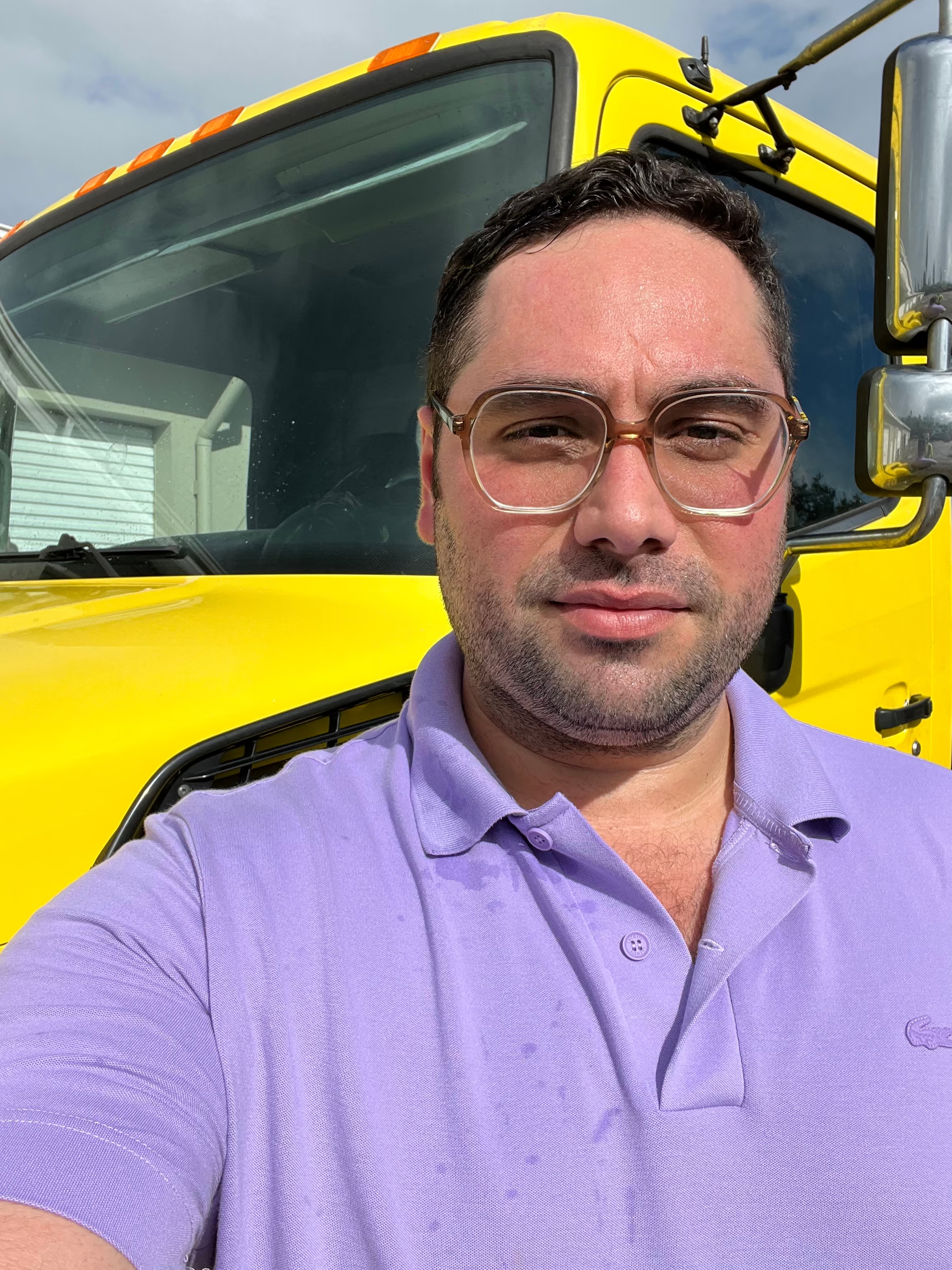
Host: Today's interview might cause you to rethink your approach to buying a business. Mike Ocravi bought a very small project based business, epoxy coating. So very small and project based, not ideal. And if that weren't enough, within a month Mike had acquired a second business. This one a towing business, SDE of around $300,000. So very small again. And this one, three hours away from Mike. Sounds like a lot to bite off, right? Especially as a first timer. The thing is, Mike knows all the search rules, the dos and don'ts. He'd listened to the pods networked with other searchers and he proceeded anyway because he assessed the risks and found them acceptable. He respects risk, he's not dismissive of it, and he recognizes that he'll get bruised from time to time more than a conservative searcher would. But he prefers action and gaining experience to looking at hundreds of sims before getting in the game.
Guest: See what you think about this approach
Host: and by the way, it's going well so far. Here is Mike Okravi, owner of an epoxy coating business and a towing business in South Florida. Welcome to Acquiring Minds, a podcast about buying businesses. My name is Will Smith. Acquiring an existing business is an awesome opportunity for many entrepreneurs and on this podcast I talk to the people who do it. August Felker is a two time successful searcher, first with a traditional search fund. The second time around he did a self funded search. Today August runs Oberle Risk Strategies, an insurance firm with a dedicated practice group for searchers and acquisition entrepreneurs like you. If you've got a business under loi, Oberle will provide complimentary due diligence on that business's insurance and benefits program. A great no risk way to get to know August and team. They love helping searchers. They've worked with hundreds. Oberly is a specialty insurance brokerage for searchers by a former searcher. Check out oberly-risk.com O B E R L E- risk.com link in the show notes. Mike Okravi, welcome to Acquiring Minds.
Guest: Thank you so much for having me.
Host: Mike. You left a corporate job in tech, bought a business, then you quickly bought a second business and one of these businesses is three hours away from you. So in these and other ways you kind of broke the rules when it comes to search criteria, but it wasn't without a lot of thought, a lot of risk calculation on your part. So we're going to hear how you thought through all this and of course how it's going. So let's start off with some Background on you, please, Mike.
[3:04] Guest: Yeah, so I've been working in tech for maybe like 10 or 11 years. I lost track, really. And I've always been in customer facing roles in tech, but I've always had this entrepreneurial bug and spirit. I really wanted to, you know, I really wanted to break my way into that. I used to kind of glorify tech founders, which I think a lot of people did like, especially like VC backed companies. I kind of, I kind of feel ashamed saying that now because I totally think about it differently now. But there was a time when like that was the absolute coolest thing in the world to do is like to want to be like, you know, Mark Zuckerberg. And so I actually, in 2013, I had actually started a telehealth company where you could talk to a doctor remotely through your phone and or through your computer and get diagnosed and get, you know, prescriptions and it was awesome. I mean it worked, but it was way, way, way too early for its time. And so that kind of the losses that I took because I just did everything the wrong way, you know, I was like, you know, instead of like build an MVP and all that stuff, I just went full in and lost a lot. And then, you know, I finally gave up on that like in 2019. It was a side project at that point. And then in 2020 that thing blew up. So that was like, wow, timing really matters, doesn't it?
Host: But if you just waited one more year for Covid, Covid would have saved you.
Guest: And that's why. And that's why, you know, everyone says that the cliche is like running out of money is what sinks business is because it buys you time until the better market conditions or until new opportunity arises. Yeah, yeah, but, yeah, so in tech for 10, 11 years, customer facing roles, and then I got laid off and then that's when this whole thing kind of started.
Host: And Mike, just elaborate a little bit. I mean, you, you've explained how kind of disillusioning it was on your own tech venture. But when you said you used to look up to the Zuckerbergs of the world and no longer do and are even a little bit embarrassed that you once did, what's changed? Why does being in this world mean that you can no longer look up to those folks?
Guest: Wow, that's a really interesting question. And I think there's a few things. For one, those companies are high valuation, high market capitalization without necessarily the profits that justify it. Right. And small business, the total opposite of that.
Host: Right.
Guest: You have cash Flowing businesses from day one. And somehow that, as simple as it is, that just, that just wasn't something I was aiming towards. The goal is to like get VC funding so that you can get your next follow on round and your next follow on round and then somewhere along the line there'll be money. But like it's really not about making money in terms of profit. It's really about making money in terms of, you know, the value of your equity. Right. Totally different, obviously, but it just wasn't some, it wasn't something that I tried to optimize for. The other thing is that you, you know, those companies are great storytellers, they're great at pr. You know, one of the companies I used to work at is Asana, right? And Asana is like the most Silicon Valley company of all Silicon Valley companies. I mean, literally the name Asana is something like, you know, some kind of like Sanskrit word for, I don't know, peace, serenity, meditation, I don't know, something like that. But like they really, really buy into that. You know what I mean? And you know, the founder is co founder of Facebook. And anyway, like you think all these positive things, like you look at their websites, you're like, we're the best place to work. We have food every day and they do like catered food every day. We have all this stuff like unlimited PTO and like people love and you believe it and then you start to kind of like ascribe those positive qualities to the company and I guess what changes. Again, like it sounds so naive saying it, but like you realize that they're just companies just like any other company. They're literally no different than like, you know, the hardware store down the street. They have the same motivations, they just use prettier language and, and really try to, you know, make you feel like there's something like there's some higher purpose there and why.
[7:13] Host: So, so we're getting a clear picture as to why you, you don't love the culture of that or at least, or at least why you no longer like elevated, put it on a pedestal. But this moment of layoff, why was this the moment for you to, for you to scratch your entrepreneurial itch and go ETA versus going back and getting another job.
Guest: Well, so I did get another job after Asana and I had that for about nine months or so and I actually kept that until past the first, past both closings of both businesses. So that was that. I'll get into that in a sec. But yeah, so it kind of just When I was laid off, it kind of just shattered the illusion because Asana was one of those companies I had always wanted to work at. Right. And by the way, I think Asana is a very, very good company, but it is a company. You must keep it in perspective. If you're used to working in tech, you have this like warped idea of like what a company is supposed to be and how they're supposed to treat you and like, you know, tech work. Yeah. Some of the stuff people say is true. We're kind of entitled, you know, like, we're used to certain things. We expect like, no, we're off at 5. What do you ask me to do things for at 7:00'? Clock? Like, that doesn't, it really doesn't happen. Like, it's just not like that there. And, and so, yeah, so what happened was I just kind of was like, wow, like I was one of the better performers on the team in terms of like our measurable numbers because, you know, I was in customer facing roles. So there's like, there's always like measurable goals and quotas and things. And I, and I hit my target and then I still got laid off and I was like, okay, who's making these decisions? Like, and it just kind of, all these things kind of dawned on me. I was like, wow, these people are, you know, these executives, these managers, these directors, they're like, they're pretty mediocre. Like, I mean, don't get me wrong, they're smart. But like, what are they actually enacting in terms of change? They will usually come up with the, when they want to change something or if the company's not performing well, as it wasn't last year, because tech wasn't for much of last year. They'll, they'll come up with these new processes or these new policies or whatever and they'll make a beautiful presentation and then they'll present it to their VP and their VP will present it to the board and then they'll bring it down to the US on the ground. And then, and then, you know, but like, you're not actually changing anything by saying, hey, here's a new process, here's a new way to engage with customers. That's not how you make change. And it just kind of hit me, I was like, wow, they're like professional talkers and presenters, you know, but like, if things don't go well, they're just going to jump ship and do the same thing at another company. Like, there's no real incentive for them to Perform. You know what I'm saying? It just. I don't know if that makes sense, but just kind of like, hit me. And I was like, if these people can do this, I'm no, I'm no worse than them. I can do something great too, you know? So that's how it started.
[9:53] Host: Awesome. And then how ETA specifically. So why this flavor of entrepreneurship? How'd you discover it? What was your rabbit hole moment?
Guest: I stumbled upon it on Twitter or X. I'm still not in. I'm still not down with X. But anyway, I stumbled on it on X and it went through Cody Sanchez. And I just. I don't know why her tweets started coming up in my timeline, but I was like, huh, okay. And then, you know, I had always had this idea, like, if you're gonna acquire businesses, you need to have, like, serious financial backing behind you. And like, I don't know those people. And like, can I find those people? And would those people like me? So it always just felt like a non starter. And when I started reading Cody's content, I think Cody's content's really good for getting people interested in this stuff that really are not really familiarized with it. And so I kind of started reading it, signed up to their letter, and then I started researching it, and I was like, oh, this is possible. Like, you can do this through an SBA loan. So that was how it started.
Host: And one of the things you said to me when we met a few weeks ago that was interesting was like, so. So I think Cody Sanchez is in. Her followers, which are vast in number, are different than kind of the ETA world that we know, and the. The familiar names here and the people I've had on my podcast. I was at a conference this weekend, the people you see at these conferences, and. And yet, ostensibly, it's kind of the same. It should be the same type of group, but it's. It's not. How did you move from the Cody Sanchez ecosystem to this search capital S ecosystem?
Guest: You know, it took a lot of research, and what really changed was just honestly learning the terminology that exists around this world. Like, if you don't know what a searcher is, like, how can you know? You don't know what you don't know, but once you know, then you're able to really zero in on the type of content and the people that you need to meet in order to do things. So I eventually learned, like, what ETA is. I don't believe that's a term that I remember Cody using in her Copy. So that's something I had to find, you know, through reading a search fund. Same thing, you know. And then I eventually came to like Search Fund Accelerator, which is an incubator for, for searchers and basically they have a fund behind them and, and they'll, they'll kind of pay you while you search and guide you and give you resources so you can eventually be installed as an operator of a business. And I applied to that. Um, I went so far as to applying. I thought about it. I kind of, I didn't really, after I thought about it I was like, and I interviewed. I actually met with a lot of people there and I really respect them. Like super smart people, all from like top MBA programs. And I kind of was like, eh, I don't know if that's for me because I mean, I don't know if you want me to go into that or if I'm going off track, but basically. Okay. So it felt like, and I'm not saying this is wrong, right? This is a right or wrong. Just saying for me at first it seemed like, oh great, so you get to be a funded searcher while not really taking on the same risk as everyone else. Plus you get all the resources and the lawyers and the deal teams and whatever behind you. So you're really de. Risking it. And the whole program is designed around teaching you how to find and buy and grow business. So it just felt like the safest way. Oh, plus you'd be buying a business that's like what, 5 to 10 to $15 million in enterprise value which is like, tend to be safer, right? That's what people say, they tend to be safer. And I'm sure that's true. So it just felt like wait, this is a no brainer. When I started looking at it and different, I started thinking about it differently. After talking to some of the people there, I realized, okay, you're looking at like 18 to 24 months, which just feels like a long time. You kind of get it because you're like, how many businesses are there that meet that criteria? And by the way, they try to push you into things that you know, you have a strong background in. So that way the sellers are more likely to want to engage with you or whatever. And it makes sense, you know, but it just felt like, okay, now how many businesses are we talking about my potential tam, you know, so to speak. And then, and then when you look at the numbers, now I'm not an expert on the numbers and exactly how they do it, but this is what I understand. What I generally understand not being like, I am an mba, but not having been in like, you know, PE or anything like that, is that they will, basically, you have to pay them back for the entire acquisition price. This is what. I may be wrong. This is what I understand. You have to pay them back for it. Okay. Plus they're getting 75% of the equity. That never changes even when you pay them back. Right. So then you're left with like 25%. I assume you get a salary or something. But, you know, you're really only making money if you think about. If you, if you were to do the numbers on that. You're really only making money when, you know, maybe there's like, payouts or whatever. I'm sure quarterly, but really when you sell it. And the only way you're gonna make money when you sell it is if you increase it in size by some. By some meaningful amount. So in other words, even if you got through everything and you bought a business and it was a good business, if you don't manage to do the last part, which is actually grow it meaningfully, you just don't have that much upside. And I was like, damn, I could start making money today. Like, there's all these businesses for sale. Like, why do I have to go through this thing?
[15:07] Host: Well, we're, as we're about to find out, you. You did go in the complete kind of opposite direction of that. Yeah, but just one, one follow up to that. When you think about, when you thought about, like, really, there's only going to be a meaningful change to my net worth if I go with this accelerator, if I grow and then sell the business. And so. And you didn't like that. So what did you see as the alternative? Buying a business that you could hold indefinitely. And you would be building your wealth from the dividends of the business as you held it. And because you owned such a large percentage of it, you'd capture all of that dividend value or, you know, well over majority of it. And, and even if you never sold, it would still enrich you. Is that.
Guest: That. And I com. I maintain control if, you know, managerial control, strategic control, when and if I want to sell, how, if and if we're going to expand, it just felt like, wait a second, why would I give up all that control? Plus, I could still net a very meaningful return. The alternative is I have to answer to everyone for the possibility of a higher return. And again, I'm not anyone who did that. I have the utmost respect for them. It Just felt to me like it wasn't as good of a deal as it seemed on the surface. You know, like if you wanted to go and find a business that was cash flowing today and capture all of that yourself and of course take on the additional risk of not having those support the, the Deal team and all the advisors behind you, you could have a better outcome in a shorter period of time, which is what I did.
Host: I want to share an update on the acquisition Lab. As you know, the Lab is a highly vetted cohort based accelerator and community for people serious about buying a business. After going through the Lab's month long intensive, you have ongoing access to almost daily Q and A sessions with advisors, regular live deal reviews with Walker Deibel, author of Buy, then build potential deal team introductions and a very active Slack group with other searchers on the path. Well, the update is that the Lab recently passed 60 businesses acquired and for well over $100 million in aggregate transaction value. Also, all members now enjoy lifetime access to the Lab because when you buy a business, it's often just the first of many and, and the Lab wants to support you in every deal, not just your first. Lastly, check out my recent interview with Shane Ursum, episode 105. Shane acquired a business with over $1 million in EBITDA in just six months. And he attributes a lot of his deal success to what he learned in the Lab. Check out acquisitionlab.com or email the Lab's director, Chelsea Wood Chelseieve. So Mike, you decide not to do the search fund accelerator. What do you decide to do and how does your search start to take shape?
Guest: So like most, I think most searchers are like this. Like we really just care about cash flow. And that was one of the things that actually Cody talked about a lot. Cody was like, I don't care about anything except cash flow. And I was like, you know, that makes sense, like what else matters, right? Of course, like there's some nuance to it, I think, but, but generally that's what matters. So what I did was I was like, all right, any industry, right? Except for like a couple. I don't want to do restaurants or retail, which I think most people are kind of allergic to. No offense, but that's, that's what I hear. And I kind of am myself. And then, you know, I talked to a bank, just a random bank I just looked up like SBA lenders in Florida. And the first one I talked to, I started talking to a VP there in the SBA department and it kind of discouraged Me, this was like in February of 2023 and, and kind of discouraged me because, you know, they were like, well, you know, it's ideal if you have industry background. Otherwise you might want to get a partner to come in with you and take a meaningful equity stake, but then they're going to have to sign a pg. And I'm like, whoa, I don't even know what industry I want. Like, how do you realistically if to me it made no sense. Like, I get it from the lender's perspective. Find the business you want, get an loi, then get your partner and get your everything together. But like, if you don't know what industry you want, that's like, that's like, what's the success rate of any given deal? I'm supposed to find a new partner for each deal that I find, which might be in multiple. It just seemed impossible. So I kind of, I was really deflated. I was like, damn, I had a job at this point. It was a good job. So I was like, okay. And I kind of just kind of chilled for a while, but I didn't give up on it. What I started doing was I just simply made a spreadsheet and I said, okay, these are like the 10 industries I'm generally interested in. Interest, interested in. If you look at there's, if you look at the, the, the typical ones, there's really not that many out there. There's like home services businesses, there's, you know, landscaping and, and things like that. There's maybe like automotive shops. There was like a, a handful that I knew I could potentially be interested in. And I found the ones that were cash flowing anywhere between like, I don't know, like 300k to a million. I was like, let's just start there. And I looked on Biz, Buy, Sell, and I just put them into a spreadsheet. And what I did in the spreadsheet was I tried to figure out, based on this listing, what's the motivation level of the seller. And that was actually another Cody thing. So this is like, I was very much like in the Cody mindset there where Cody talks about getting the best deals by finding motivated sellers. And that actually plays out really well when I actually get to my deal. But, you know, and I figured, okay, if they're offering seller financing, they're probably motivated. If they're retiring, they're probably motivated. So I tried to look for those things. If they're using hard ass language, like, don't talk to me about SBA ever. Like, then you Know they're not motivated. They're just, like, kicking. They're just screwing around. Right. So that cash, you kind of narrowed it down. And then what happens was I started calling these. These brokers, and you realize that most of these listings on Biz Buy Sell aren't even active anymore. You can go and, like, find the broker who put up the listing, go to their website, try to find that listing id. Honestly, more than half the time for me, it wasn't even available anymore. So that when you start doing that is, like, you go from, like, this huge universe of potential acquisitions, and it's really not that much. And so I came across a couple that I really liked. Let me know if you want me to get into that or. Yeah.
[21:15] Host: And so you mentioned Florida. Where are you based when you're doing this?
Guest: And now I was in Miami, and right now I'm in Fort Myers, which is, like, the west coast of Florida, directly west of Miami.
Host: So what were some of these? Like, how. How had it narrowed down? What were you now interested in? And, yeah, what did. What did you find?
Guest: So I was. I was looking. And look, I know this is going to sound naive, but I was looking for businesses that most people are looking for, companies that are in the right industries, and they'll pay a premium on the multiple to get into industries that they feel are safer, like H vac. Right. But I wasn't interested in H vac because when I. When you just do a basic analysis of, you know, the. The SBA loan, the debt service and everything, you're like, wow, I'm really left with nothing here. Like, there's no cushion. So I was looking. I was just like, you know, not knowing much about it. I was looking for businesses that were. Had a low multiple in terms of the sales price, you know, and so I came across this. The first one I came across was this garage flooring business. We do, like, epoxy coatings for garage floors. And the price was great. I was like, hey, I could buy that. And then the SDE was great. I was like, I could buy that. So that was the first one that appealed to me because it just looked like, on the surface, a great deal. I said, why not ask more questions? A lot of people might be like, ooh, that seems weird, like, 1.25 or whatever multiple. Like, what the heck? But I was like, what, I'm gonna get a worse deal just because I don't want to ask questions? So I just. That's how that started. And then I came across another one that Was similar, which was a towing company.
Host: Okay, well, let's hear about. And so those are the two businesses you ended up buying. But let's, let's go through them sequentially. I want to deep dive into both. So, so the epoxy business, first of all, for those who live in apartment buildings, what is, what, what does that mean to do people's garage floors with epoxy?
Guest: Exactly. Someone who's always lived in apartment buildings. Pretty much. I had no idea.
Host: Worker.
Guest: Originally I was like, what? Yeah, exactly. Yeah. I spent most of my life in New York City. Like, I don't know what this is, but basically it's like, it's a. It's a concrete coating, a res. A type of resin that goes on the floor. It's very durable and it's basically an aesthetic upgrade to the floor. Usually you add some kind of like flake to it and it has all these nice colors and it just, just really pops and like makes the garage really stand out look beautiful. It's purely an aesthetic upgrade. But it's very popular in this part of the country in southwest Florida because the housing development here is just exploding. Like if you look at the population growth over the last 10 years, up like 45% and also the last 10 years before that was up 45%. So just nonstop. So yeah, that's, that's it. And the home services here is growing.
Host: And so this is a project based business. You get, you get leads probably almost all online.
[24:02] Guest: Yeah.
Host: Some referral, you hope. And then you, your crews go in and lay down this new garage floor and on to the next project, sort of.
Guest: Absolutely. Yeah.
Host: Great.
Guest: Okay.
Host: And give us some of the, the financial metrics of the business and the headcount. And you know what, what, why did you say to yourself, I can buy this business? What? Give us those numbers.
Guest: So this is. Yeah. And this is small, right? I mean, this is like. I knew that this wasn't what the typical searcher was looking for, but I didn't care because I was like, money. Like, like Cody. What? Cody says, cash flows. Cash flow. But anyway, it was. The asking price was 495. The SDE was 4th. Was. Was 4 13. Okay, I know it sounds too good to be true already. And then, you know, the top line was only about a, about a million. Right. And that was consistent each of the last two years. Now being, oh, an employee account, it was like four, I think four employees or something. Four or five. So like not what you typically want in a search as a searcher. And I Get that. But I was like, okay, like, the, the price is.
Host: Is.
Guest: Is solid enough that it gives you more of a cushion, right? Because I was like. And I honestly thought about this. I was like, I don't want to lose half a million dollars, but, like, if I do, it's not. That's not necessarily, like a complete financial ruin. That's just, like, really shitty. I was like, what's the. What's the number I have to service on this SBA load to not go bankrupt, you know? And it's like, what is it, like 6,000 something a month, right? I was like, that's not crazy. Like, I could. I could make that work. So I was already thinking, like, what's the worst case scenario, right? But then when, you know, as when you're buying smaller businesses, you don't really have like, a deal team around you because you just can't. Like, first of all, you're not going to get the answers you want from the seller when you're a sub 1 million. You just. They're just not that they don't have that level of detail that you're looking for. So there's just a part of this that's just blind. You just. You have to accept it. You can't unearth everything. So what I started looking for was like, okay, what are, like, the proxies for things that indicate this is a really good business? You know, like, just strong green flags, and let's just like, I'll just lean onto those. And what I found was that one, the revenue and profit were consistent over the last two years, and the owner had filed that pro. That was exactly the. The profit that he filed in his tax returns, meaning he paid taxes on that. So I was like, he. It must be real. Like, why would anybody pay taxes on that, on $400,000 if they weren't actually making that much? You know what I mean? Like, you'd have to be a real fraudster. I was like, I just didn't believe it, you know, I was like, they have to have made this much money, Obviously. I checked the bank statements, did as much of the, like, when it came to, like, you know, Q of E, I did it myself. I. I didn't. What am I gonna do, pay 20 grand for someone to do it on a 500k? It just didn't make sense. So I did the best I could. But what I really liked was two other things. One, the management and the operations very simplified. The. The amount of actual administrative work that went into the company was. Was like 5 to 10 hours a week basically just like sending out quotes, sending out invoices, collecting money. It was really not much. The owner spent the most of his time actually doing service and deliveries and installations of the floors. So I was like, well, I'm not going to be doing that, but of course I have to add that into, you know, my cost that I'm layering on. And the other thing was like the online reputation was impeccable. They had like, I don't know, at the time it was like 180 like 5 star google reviews. Not a single one under 5 stars. I was like, you can't fake that. Like you just can't. I know you can't. So that leads me to believe like this is a strong business.
[27:50] Host: And Mike, the fact that the seller was so in the business didn't concern you. Your calculation was simply, well, I'll need to replace him. So that will take out whatever $80,000 from my ste sort of thing. And you know, one of the things, you might not have gone this detailed in your due diligence, but one of the things I've heard is people will look in the body of the reviews. So if there's a big, you know, a big archive of reviews in, in Google reviews or Yelp, looking for the names that are called out and if it's the founder's name too much, you know, the founder is too in the business. It's a great signal. The founders two in the business, I guess you already knew that. You didn't really need to uncover that or not many founders will say, oh no, I don't work in the business at all. And what you're trying to do is diligence, whether or not that's true. But it sounds like your founder was like, no, yeah, I'm totally in the business all the time. I so sort of thing. So I guess, I guess that answer my question. Any thoughts on that?
Guest: Okay. I mean, and I think if I were to reflect on what I saw, you know, first of all, the review seemed very legitimate, so that was the first thing. But yeah, they did mention his name a lot because, I mean, I'm not surprised by that. Like if you're the founder who's also doing the work, the level of relationship you're going to have with your customer is going to be like much, much more intimate than what you'd have at a typical company. But ultimately I was like, people just want a good job. They're happy with him because he showed up on time, did what he said, he would do. And then that was it, you know,
Host: like, yeah, I didn't.
Guest: I have. And I can say that now because so far, having, having been, what, like, I don't know, three months into the, into the ownership, it's, it hasn't posed a problem at all. I mean, there have certainly been people who are like, hey, where's the previous guy? Like, where's he at? Like, he's still around. And, you know, I'll tell them. Either I'll tell them the truth or I'll tell them some version of the truth or something, but it's never, it's. It doesn't, it doesn't really matter. I don't think it matters. Maybe it would matter if it was like recurring revenue type of, type of thing, but because we're not. It didn't matter.
Host: Okay. All right. And so it was $495,000 sale price or enterprise value. So call it, call it 500, 413 of steel. And, and you looked at bank statements, you looked at his tax returns for the last two years to diligence that number, doing about a million in revenue with four employees. Yeah, so, yeah, that, that SDE to enterprise value. So 413 to. To 500, you're paying just over 1x. What is that, like 1.25x? Basically, if you call it. Let's assume SD is about 400. That, of course, the napkin math makes that very, very, very appealing. Very appealing. I mean, that's such a low multiple. But when things, you know, become too good to be true, they often are. Like, almost this screaming green flag becomes so screaming, it's almost a red flag. And you've already answered kind of like how you got comfortable with this business using these proxies. Because, because in a business this small, it's going to be kind of impossible to diligence away all risks. But why not? The glaring question of why, if he's got 400,000 in SDE and you calculate it's going to cost, let's call it 80 to replace him, why doesn't he pay 80 to somebody else and he take home $320,000 a year, $340,000 a year.
[31:12] Guest: I asked him that. And actually it's funny because now that I'm in it, I understand why somebody might not want to do that. But I asked him that exact question. I was like, why the hell are you selling it? Because he wasn't old. He was, you know, I don't know if he was much older than, maybe a few years older than Me, you know, I was like, what is it? Like, why aren't you just keeping this around if it's so profitable? And he said, because when I do something, I need to, like, really be involved in it, and I don't want to be involved. I just don't want to have it there. And I wasn't sure. I was like, it sounds reasonable. You know, like, who am I to judge someone's motivations for wanting to move on? But it did seem like, you know, that coupled with him selling it at such a low multiple, I was like, huh? Like, you must really want to get out of this. Like, why does he really want to get. And I never really got a better answer than what I gave you. But now that I'm in it, I can understand why. Because when you're not there doing the installations, you Managing quality, managing any issues that happen takes a lot of time. I spend more time managing those things than he probably ever did because he was either on site or somehow directly involved in every job that they did. So I can see why somebody, like, taking a step back isn't as simple as it seems. So if he had other ambitions, it would have. It would have eaten into his ability to do those. Yeah, okay. But it was a good question.
Host: Great, Mike. So you go for the. You go for the business. You buy the business. So let's hear about what the transition starts looking like.
Guest: Yeah. So firstly, I think if this is something that I found to be really helpful for me, make sure there's a good broker involved. If there's not a good broker involved, especially in these sub $1 million deals, you're gonna have a problem. Because the broker was basically, like, my de facto advisor. Like, I thought of them as an adversary at first. I thought, like, okay, they just interested in representing the seller and not me, but really, they're representing the deal. And whatever it takes to get the deal done, they're gonna do. It's including and especially telling the seller, like, hey, you need to provide this information. You're dealing with the sba. This isn't a joke. Get your stuff together if you want to make money. And that. I can't tell you how important that was because these sell especially. And I hate to generalize, but it's true. Sub $1,000,000. Business owners don't understand why a buyer might need a lot of due diligence. They're like, it's easy for me. It should be easy for anyone. That's like, literally the mindset. And it's just like, come on, now like, like do some work. So we got through that, the SBA process, I was super happy. But because this thing sub one million dollar owner mindset started to generalize. But it's true, there was a lot of things I just didn't know. For example, I didn't know how many jobs were booked on the schedule and I had no idea. He wouldn't tell me. I didn't know. I didn't get to talk to any of the employees. So I didn't know what their deal was, if they were happy, if they were going to be surprised if they were on the verge of quitting. You know, that was actually in hindsight a huge risk because if they left me not having the skills to do this tradecraft, I don't know what I would have done. I would have had to hire someone right off the bat and who knows what happened. So what I did was I did hire someone before I came on. When I came on the first day, I had no idea how many jobs were booked, so I didn't know how much money to be expecting. Not good. And the key employee, the main guy who like produces the same quality as the owner himself was producing or the seller rather. He was on vacation for that first week. And it turns out when I found out from his friend who also works with him there, he started his own company on the side. And to him it wasn't a big deal. He was like, yeah, I have my own company, it's not a big deal. I just do it on the weekends or whatever. And I'm like, me, I'm thinking like you just violated like a cardinal sin of like working for any business, like you just started it. But he doesn't get that. And so I was just in this tough position. So I would always say in the future, diligence employees, it's a non negotiable, it's a deal breaker otherwise because especially into something with a skilled tradecraft, those guys leave. They are really hard to replace. And I have had so many headaches around it. So take over key employees out. We have jobs on the schedule, who's going to do them? The seller has to be the one to do those jobs. So the first week of transition is just him doing these customer jobs. Not a single piece of transition done. No, like here's the login for Google my business or here's what, none of that, just doing the jobs and then leaving. And I was like, oh my God, great, so one week's gone, then the
[35:53] Host: same and he's given you how many weeks of transition?
Guest: Three.
Host: Did you guys negotiate?
Guest: Three.
Host: Okay.
Guest: And he wanted a third of it. I was like, okay. Then. Then the other thing is that he was like, okay, so we have all this equipment here. We have these vacuums, these diamond grinders, all these, like, big pieces of machinery. And, you know, I only included these, like, whatever in the deal. Like, these four or five are in the deal, and these ones are not. So you have to pay me for those. And I was like, wait a second. What? I'm pretty sure I include. I'm pretty sure I bought the assets of this business in the. In the asset purchase agreement. What do you mean? He's like, no, no, no. Look at the FF and E. Like, I only included these ones in there. And I was like, damn, dude. Like, first of all, super, super sketchy. Secondly, if you really wanted more money, why don't you just put it into the sales price? Like, I would. It would have been so much easier to finance it through the SBA than me handing you 15 grand in cash is what ended up being. And I was just like, it's one of those things where I learned, like, okay, I'm the kind of guy who jumps in head first. I like that about me because it helps me get started quickly, whereas others are kind of, like, thinking about all the different possible downsides. But the inevitable part of that is that you will end up in these situations where you get screwed. And you couldn't have foreseen it because you didn't take the time to foresee it. So I kind of took it in perspective, like, all right, I can't be the kind of guy who jumps in head first and always avoid these things. I'm just gonna have to eat the cost. Thank God it was only 15k.
[37:20] Host: Yeah, yeah. And, Mike, do you think that your seller was basically kind of. This was a scheme that he had intended the whole time to just, for whatever reason, post acquisition, ring you for another 15 grand? Even though, as you said, he could
Guest: have just asked for it, you would
Host: have paid it for him in. In. In your loan, so he didn't need to do this. But was he being somehow. Was it negligence or was it kind of intentional deception?
Guest: I think it. I don't know. I don't know if he would think it was deception, but. But he definitely exploited the fact that I didn't know what I was doing. I mean, I didn't have industry experience, rather meaning, you know, these things that are essential to completing the service of this business. I didn't know exactly you know, how many we should have or how many whatever. I didn't know exactly like how many he had. Right. And, and how many we needed really to run the business. Because. And that's on me. I'm not, I'm not blaming him, I'm blaming me. But nonetheless, it's not how I do business. You know, if I'm telling I'm selling my company, that includes the essential equipment. You know what I mean? So I think it was. I just think we're different. Honestly. I think that, you know, he has his moral code and I have mine and his is more about like, you know, I think and I see this happen with a lot of small business owners. Like they, they become a little bit. What's the word? I don't know, just like not so sympathetic. Not so they lose some compassion, you know, Hardened.
Host: Yeah.
Guest: Yeah. And not in a good way. And I hope I don't become that. But I don't know. You know what? It's my fault. It's my fault. I accept it. I should have done a better job.
Host: Well, let me ask you a little bit more on the, on the seller and his vibe and you know how you do. I loved what you just said, how you're self aware that you're a guy who just kind of dives in and that comes with good and bad. But you do. But. And the really good thing about it is that you get crack in whereas other people can, you know, analysis paralysis themselves to death.
[39:15] Guest: Yeah.
Host: And the technique that you use to, to mitigate risk to the extent that you do is you look for proxies. You kind of 8020 your risk. So like, you know, looking at the number of reviews online is a signal that this is a real business. For example, looking at the. His tax returns is a signal that there's real, you know, that the revenue being reported for the last two years. What he claims is real. What about this signal about the seller that he wouldn't let you talk to employees. He wouldn't tell you the jobs that were booked. Like looking just trying to a 20 this. Looking for signals. Taking aside the fact that those two points. You would have liked to know those two points of diligence. How many jobs. Let me talk to the employees. But the know that the fact that he wouldn't let you, wouldn't give you straight answers on either of those or resisted it. That strikes me as a bad signal, just overall signal of him about him. Did you have a sense, okay, did you have a sense of that going into it? Or did you only start to see that he was an undesirable seller on the back end?
Guest: No, I had a sense, and I'm just talking about. As a seller, I'm not judging someone's character, but as a seller, I had that sense the whole time through. For example, another thing that you're going to laugh because it's so. It's so rudimentary that it's unfathomable that he wouldn't have shared this with me. But I never had a clear idea of, like, what the payroll was. I had like, a sense, but it was never like, this is exactly what I paid my employees into, how much each one gets paid. He just kept giving me runarounds. And I was like, dude, I got to know. Like, I have to know this. I can't ballpark it. You know, that's not good enough. He's like, well, you should look at the P. L. Now again, that's on me. I should have insisted on that. But there were a lot of those and I overlooked them because I felt like there was a good business under there with just somebody, you know, that I don't necessarily see eye to eye with. But if I had to do it again, that probably would have made me walk away. I'm glad I didn't because it turned out that there was a good business under there and that, you know, the. The guy built a great reputation. But it just was. It just could have gone in so many different ways. Imagine if that other. If that key employee had quit or something or, you know what I mean, like, had tried to sabotage us somehow by taking. I mean, he had access to all of our customers and who they are and what our upcoming jobs were. What if he tried to steal them? Like, you know, I mean, there's just. There's just so much that could have gone sideways with that.
Host: So.
Guest: But I agree with you. Those were red flags and they were evident the whole way through. Really, with just like, the lack of being forthcoming.
Host: Yeah, exactly. Yeah. Well, all that said, now kind of flipping sides to supporting the deal, like, let's not lose sight of the fact that the multiple was 1.25. So. So the other thing is, you were saying, like, well, if I'm the type of guy who just kind of dives in, I need to be prepared to get beat up a little bit. It's not always going to go my way. Similarly, if you're going to find a deal, screaming deal for 1.25x, it's also not going to be perfect. It's going to be very hairy, very imperfect. Because that's kind of, that's why, partly, probably why you're getting such a, such a deal. And, and so you do feel, you just said that, like you have discovered that there is a legit business here. So do you feel like despite this pain that you got the screaming deal that 1.25x would suggest?
[42:41] Guest: Absolutely. And I also think that's why the guy was like, dude, just buy it. Like, it's obviously good business, like 500k, like, what more do you want? I feel like that's what he was thinking, but absolutely. I mean, look, when I first took over, and this is why I keep talking about like not knowing how many jobs were scheduled, et cetera, he had told me that they're typically booked out six to eight weeks. And I was like, cool, that's great. So when I take over, there'll be plenty of business on the books while I try to figure things out, you know. But the reality was when I took over, they were booked out like three weeks. And I was like, oh shit. And I'm talking one job a day. Usually we're doing like two a day. One guy had just quit before, before I took over. So it turned out that it was the slow season in that part of Florida. July and August are just slow. People leave. They all have. I learned this now and I, you know, but like, all these people are basically like, a lot of them are retirees. They have multiple homes in southwest Florida and somewhere up north, Michigan, Ohio, Pennsylvania, whatever. And, and they just go back and forth.
Host: So.
Guest: But I was terrified. I was like, you know, I was expecting us to be doing like 85 something and 90,000amonth in revenue and we were doing like 40 to 50 the first month. I was like, oh, wow, this is, this sucks. And I just, I couldn't figure it out. And there was a lot of little things that happened. Like one thing like, was like, you know, he was doing like, I don't know, a handful of dollars on like Google PPC ads. Didn't even, I don't even think he had like a company set up. He did it himself. You know, when he turned that off because it was like on his account. That may have affected lead flow, but I had to figure it out nonetheless. I was like, okay, we're going to figure this out. I got a line of credit. Like, I'm going to, I'm not going to. During when times. This is what I believe. I believe that when market conditions are, are rougher, that Companies that continue to invest in marketing and growth will eventually win twice as much when the market conditions recover. And that's exactly what happened. So, like last two weeks, we had like our best two weeks ever. We did like 75k in new sales over the last two weeks, which is like way above our annualized rate. You know what I mean? So I actually used one of your. It was one of your sponsors. I don't know if they still are, but it was Eversight. And you know, they built a whole new website for me and we did they like a full suite like digital marketing service. So I put money into that. I knew that I wouldn't see the returns that he was seeing at first because I was going to invest in growth no matter what. That plus the SBA loan, plus of replacing him, you know, and his work, I knew it was going to be like something where we were just going to not see as much profit. But nonetheless, you know, I've still, even on top of my salary, I've still been able to take, you know, maybe like $20,000 or something out as a payout. So it's been, it's been good enough for me to feel comfortable doing that.
[45:28] Host: So, Mike, you. We haven't gotten into your second business, but give us a picture of what this business is doing. What, what the cash flow to you as new owner now looks like after the SBA loan, after the fact that I think you've hired somebody after you've put in additional money for marketing. So there's, there's the J. You're, you're right in the J curve. Yeah. Where you know, margins have been compressed as you do stuff that the old seller wasn't doing, that maybe he should have been. Are you, are you actually paying yourself a salary or is. Are you reinvesting everything? Okay, what does that.
Guest: I got a 48k salary, but I also have the same salary in my other business. So like combined it's like, it's okay. I mean, it's, you know, it's something.
Host: Right.
Guest: It's not like, it's not like what you're getting in tech, but like it's not nothing. Right. Obviously. Right. And I think that the, the SD will probably be like post everything post acquisition. SD will probably be somewhere around like 3,300k. But I think that there's a lot grow that it's just that it's just learning. Like that's, you know, one of the reasons will, why people say that when you first take over, you're going to see A dip in earnings and everything is because you make mistakes. You just do. You hire the wrong person, you have too much coverage or something. So you're paying five people at once when you only need three people. You, you know, don't train people properly because you're trying to grow. So you mess up a customer's job, then you got to go fix it or whatever like that. That kind of stuff happens. So like once I figure that all that out and get that all in order, we'll be, we'll be more than fine. And my goal is to turn this into a sellable company which means that those add ons are not necessarily, in my mind, they're not necessarily a bad thing. While they may reduce sde, they'll make the business more attractive to a prospective buyer. And the next layer is going to be adding in management. So neither of these businesses have a management layer. I'm the management layer. I will eventually add that. And once I do, now we're going to be, now we're going to have, you know, a much stronger marketing and, and sales and marketing operation. We're going to have stronger processes around training and inventory management and we'll have a manager. And so it wouldn't somebody feel more comfortable buying a business with less sde, but with all of those safeguards in place? Of course, having been on that side of it, of course they would.
Host: Great. Well, we're gonna, I want to hear the kind of the grand vision after we hear about your second acquisition. So we're going to return to the topic we're on. But before we get to your second acquisition, one more question on the epoxy coating business. This seller, you know, he squeezes you at post close to give them 15 grand for the equipment that you're going to need. So unethical. I mean it seemingly whatever it was, but lame to put it mildly at the very least. He was also pretty unhelpful in other ways. And you really needed to kind of, you needed to kind of download what you could from him and learn as much as you could of the business. He's already, you've already pushed him from two to the two weeks that he wanted to give you in transition to three in the negotiation. But then of course you lose the first week that you fought for in the negotiation because the other guy was out. And so he needed to your cellity to work in the field, did no trans business. So you're back to having two weeks for him to transition the business to you and show you how all of the kind of administrative works and all that stuff. And as I recall he's not helpful in that either. Give us a picture of that. And what would you recommend to people that so to keep a seller motivated to help you do a nice, do a good successful transition?
[49:02] Guest: Well, thankfully the actual transition was, was relatively simple in terms of like hey, here's Jobber, which is like a CRM for contractors. Here's how you use it. Here's how we use it. Oh, let me make sure you have access to all the social pages and all these other things or whatever. And you know, here's some suppliers or whatever. It wasn't that much but still we were on for three weeks right and like the last week so we met every day the second week and like a Starbucks. And then the last week it was like I'm just, he just didn't show up. I mean, I mean he was like available by call but just wasn't there. And like, you know, I, I feel like that time is so precious as a buyer, like I want you to show up even if we don't have an agenda. Like I'll make an agenda but like please show up because there's going to be things we can talk about. You know. So he didn't. And so look, I didn't expect, given how things had gone during the sales process and the, you know, immediately closing, immediately after closing, I didn't expect him to be like a guy I could just pick up the phone and call or whatever. I'm not saying he's not that guy. I haven't tested it but like I didn't expect it. I was basically planning to go on without it. So I would say if you're buying and this is my other thing I'm going to do that's non negotiable. Some part of the sales price will need to go into escrow and will only be delivered upon successful completion of the transition. It they have to have some skin in the game because the dynamic changes so much. It's a complete 180 degree change post closing. The but the seller has gotten their check. They don't give a shit. They have nothing to lose. And, and then as the buyer you have everything to lose. You have to try to, to, to recapture some of that power balance. So I would say like 5% payable after a successful transition. What's the big deal? If you're going to do it, what's three weeks? You know what I mean? It shouldn't be a big deal.
Host: Let me, let Me float something by you, Mike. While that all sounds good in theory, one thing that you'll hear kind of is not very loudly, but some people will occasionally say about seller notes is realistically, they're not that motivating to a seller. They're an additional like 5% or 10%. Of course, the bigger it gets, the more motivating they are. They are. But let's assume it's a 10% seller note or 10%, you know, forgivable seller note. Especially listening to how this guy is, and he already was selling for such a low multiple, he doesn't seem that motivated by every additional point of the enterprise value. On the other hand, being dishonest with you and squeezing you for $15,000 for, for assets did seem to motivate him. So who knows? But do you think an additional 5% or 10%, like forgivable seller note or some, some other way to in theory keep him motivated would have in fact motivated him? Because I'm not sure hearing what I'm hearing about this guy that it would
[51:55] Guest: have maybe not 5%. I mean, I guess the only answer to that is like, do insist on the amount that you feel like needs to be there for the seller to be motivated, whatever that is. If you think it's 20%, they may say, oh, that's unreasonable. But you have to decide in your mind as the buyer, like, what is the amount that would actually help me continue and maybe be more, maybe have a chance of being successful in this business if the buyer, the seller, doesn't live up to their end of the bargain? And you know, 20% is not nothing. Like let's just say let's play this out, right? Like you insist on 20%, right? And they agree to it and then that's a million dollar business, a 200 grand. Okay, let's say they don't do anything and they lose that 200 grand. Well, you're not in a great position to run the business, but at least you're 200 grand less in the hole, sort of at least in your debt, right, that you're carrying. So it's like, does it give you a little bit more breathing room? Yeah, I mean, you know, you can't. And I feel like 200 grand is enough that for somebody selling a million dollar business, they probably would want to be there. So I'm just, I guess the answer is just like you have to decide what, how much risk is there to me if this seller never shows up and fulfills their obligation. If you feel like you can Handle it with them being minimally involved. Great. But if you really aren't sure, insist upon a higher amount.
Host: Okay, we're. We're late to getting to your second acquisition, so let's dive in quick. How is it that you bought two businesses in such short order?
Guest: Oh, my God. I mean, look, I know that people have these rules, the searcher game. They're like, well, make sure that you're buying a business with recurring revenue. Or they're like, well, you know, it has to have. It has to. If you're going to buy multiple businesses, make sure they're in the same industry. Or don't buy anything under 2 million, because under 2 million is just not going to have management. It's going to be higher risk of default and blah, blah, blah. I just, like, I didn't care about any of that. I mean, I was a little nervous at first. I actually called one of your previous interviewees, Reg Zeller. I think a lot of people know Reg. Cool guy Reg made the time for me. I'm so appreciative. And I was like, reg, I know that you have a Holdco, but you are doing in the same industry. Like, what do you think about me doing, like two companies in totally different industries? Is that stupid? And he gave me some advice that I feel like is some of the best advice I've ever gotten. He said that there's no blueprint on how to do anything. There's only just, you know, guidelines and what people have done before that's based on their analogs and their biases. But you can make it work if that's what you want. And I was like, oh, like, you're right, I can't make it work. And if you think about his story where he bought into foundries, which, you know, he said, like, everybody tried to steer him away from that and he did it anyway and he made it work. And now it's like, oh, yeah, foundries, let's go buy those. Like, everybody wants to do that. Now, I would say that buying something three hours apart in geography from something else, I wouldn't recommend that if you can avoid it. But I was so enamored with this towing company that I was like, damn, I've got to have this somehow. Now here's the deal. The towing company, the numbers, it was about. It was probably like 300k in profit. But we don't even really know exactly because. Oh, boy, Another.
[55:18] Host: Another one.
Guest: Yeah, but this one's actually worse in some ways. Like, it probably like maybe like 800k in revenue. Like, I don't know, not. Not a ton. But. But. But here's the thing. The, the. The seller was just, you know, pocketing the cash. Because when you have a towing company, you have like, impounds into your yard. That's one way you make money. And when you release those, it's all cash, almost 100%. So the. The seller was just popping when you
Host: release them, meaning when the person whose card has been towed, they come to retrieve their card from the impound lot, which is your property, and they t. Typically, or maybe always, it's cold, hard cash that they give you.
Guest: It's actually funny because, you know, just as a side note, these two businesses in terms of, like, management are like, completely diametrically opposite. Like, in one, in garage flooring, you just have to kiss the asses of your customers and these, like, you know, really nice, sweet people. But everything's got to be perfect. You know, customer satisfaction is everything. And in towing, it's like, it literally doesn't matter. Oh, you're mad that you have to pay to get your car. Like, tough shit. Like, that's what you have to be. And I'm not that kind of guy. But, like, you have to be that way because if you start giving in and like, oh, I'll give you a discount. Why should I give someone a discount? Think about it just purely objectively. Like, it's already going off track here. But, like, if somebody has their car impounded our lot, it's either because it was an arrest or it was like, parked somewhere illegally or something like that, right? Like, if they don't pay for it, we literally legally will take ownership of their vehicle. So we have no reason to actually give them any break. Which means you get to be, if you want, the worst kind of person, like, who just doesn't care about anyone. Like our Google reviews at this company, not good, but what do you expect? So it's kind of funny just being the guy who has to wear literally two different faces, like, depending on which company I'm working on at the moment.
[57:09] Host: But anyway, I want to return to that actually in a few minutes, but carry on with the story. Why did you. Why did you, like, I mean, especially based on what you just said, Mike, that, that this. There's just this. This business, this towing business swims in like, negative energy. And by the way, let. Let's clarify here. Like, there are kind of, as I understand it, in the world of towing, there are kind of two buckets, maybe more. But there's what you Just described this business is, which is basically towing consumer cars. You know, the end user car away from somewhere they're not supposed to be or whatever, or it's been booted or, you know, and they're going to arrive to where they thought their car was and it's, the car's not there and they got to go to the lot and pay you hundreds of dollars to get it back. So that type of cowing showing, which is what most of us assume a towing company is, but then there are other types of towing where it's more roadside assistance. I know you, you do do some of that as well. Yeah, but you'll, or you'll be contracted by governments where there are accidents and other, you know, things that happen on the side of the road and you're basically moving vehicles out of the, out of the way to, to clear up traffic. And there people aren't angry with you, you know, you're, you're helping clear up an accident, for example. And so your business is solidly in the, in the former category, dealing with the public.
Guest: We do all of those. All of those. Really. The only thing you also do the
Host: like clearing accident stuff.
Guest: Yeah, like police, we have like contracts with agreements like police stations. And they'll be like, hey, we got an accident, come get this car. Usually the insurance company will come and get that car from our lot. But you know, we get paid either way, the same way. But yes, we do do all of that roadside assistance. We, you know, we do a lot of stuff with, with, with Geico and Allstate and you know, other big insurance companies.
Host: Okay.
Guest: Yeah.
Host: Okay. All right, good, good.
Guest: I love towing.
Host: Well, well actually. Okay, so, so let me, so let me ask you why again, like this business, you're dealing with a lot of angry people all the time. It's three hours away from where you've moved to Fort Myers. So you left Miami, moved to Fort Myers.
Guest: Yeah.
Host: And why did you have to have this business, man?
Guest: So everything about this business for most people would just scream like run like literally that. I couldn't even get it financed through a bank. Like I was engaged. I had to call like 20 different banks. By the way, if you're searching for a business, call a lot of different banks because they all have different guidelines in terms of how they lend and I didn't realize how much variance there is. But regardless, I finally found a bank that based on the tax returns, which excluded a lot of the cash, maybe 2 to $300,000 in cash that was being received. Right. Because the guy just didn't report it or whatever. Like, I, you know, I find a bank that was willing to finance it, and I was like, cool, great. You know? But the reason why I wanted to buy it is because I saw a couple of things. One, there's a lot of equipment. So the equipment value alone is probably like 250, 300 grand, right? And this was also a 550k purchase. That was the purchase price. 550, okay. So 300k SD, 550 purchase price, the seller. The real thing that put me over the edge was that, first of all, I had a really great rapport with the seller. The seller himself had bought the business two or three years before, so he didn't have any prior experience. And I was like, well, that's a green flag if I've ever seen one, right? And the last thing was that he was gonna finance 150k himself, which I was like, damn, okay, put your money where your mouth is. I like that, you know? And so I was like. I started looking at it, and honestly, I'll be honest, the due diligence I did on this business was, like, very shitty. Like, it was not. It was like. Because it was so. It was pretty much like so much of it was just like spreadsheets that he kept, you know, maintained. Like, this is what I took into the yard. This is what I released from the yard. This is how much money I got for it. And I was like, damn, this is rough. But I was like, okay, what's the worst case here? He's financing 150k. The equipment itself is worth 250 to 300k. Like, we're gonna be like. And of course, I saw the bank statements and everything. Like. Like, I was like, what's the worst that could happen? This seems like a great business. Like, with those contracts, those police contracts and et cetera, motor club contracts. Like, you're just. You're just going to have demand ready all the time. Like, it's not like garage flooring where you got to generate demand all the time. So I went forward with it. It turns out that after three and a half months. So this is like, what, like mid July, like, late July. The bank that was going to finance it, they were like, yeah, so we got a new head of underwriting and they don't want to do it. So, sorry, we're not going to do it. And I was like, what? And now this guy had been waiting this whole time. He didn't have any other buyers because obviously, who else is going to buy it, you know. So this goes back to like the whole motivated seller thing where it's like, you know, you have somebody who really wants to get out from this business because this guy wanted to retire or whatever and move on with his life. You have no buyers, I'm the only one. So he has to make a deal with me. So we ended up doing was. I said, look, I don't have 550k lying around, but here's what I can give you. Okay, I can give you 100k cash and the rest you'll finance to me. So he basically ended up financing like 82 or 83% of the company to me.
[1:02:30] Host: Wow.
Guest: Yeah. Which is like killer deal. Now of course, stupid me, I did it on like four year terms. So it's very aggressive repayment, but so far it's been damn good. I honestly, I love to, I mean, I look, I love both my companies, but towing, if I had to do another company, it would be towing. This thing is like, it's just like once you have those agreements in place, you don't have to think about generating demand. It's just about capturing it. Just like making sure you have coverage for it. It's like, I don't want to say it's like dodo bird territory because I know there are probably some businesses like that where like you literally could just have like, you know, I run the business, but it's, it's not far off of it. I mean, you know, and I'm already doing things to grow it.
[1:03:11] Host: And Mike, when you say having these government contracts that that just kind of business materializes, is that essentially because it's a recurring revenue business? I mean, is this, have you basically just said in another way why recurring revenue is so appealing?
Guest: It, I would call it more like repeat customers. Like, it's like you, you can't, you know, you can't make the police call you, but they will call you every, they put you into a rotation and then every, let's say, you know, 10 calls they get that require towing, you'll get the 10th one. Right. So it's not, I don't know if it's recurring revenue because it's not like a fixed amount. But yeah, that's repeat. And same thing with like, you know, Geico or the insurance companies.
Host: And so the, and the former owner. So he'd only owned it for how long?
Guest: Three years maybe for three years.
Host: So he was, he bought a business that close to retirement because he told you that he's selling now to retire. So we bought a, this business, a towing business, three years before he planned to retire. Now he wants to retire.
Guest: Yeah.
Host: And you said you were the only buyer because who else would want to buy a business that was all there was just pure cash coming in and out?
Guest: Okay. I saw a distressed asset. I not distressed in the sense that it was, but on paper it's distressed. On paper it looks like this business makes no money. Like the tax returns were showing it was making like 30 or 40 grand. I was like, what? That's, that's like who's going to buy this? Like they're going to look, take one look and run away. There's no one who's going to buy it based on that. You know what I mean? Like, I know how searchers are. They're paranoid about risk. It's funny because like they're taking risk, but they're paranoid about risk. Extremely paranoid. And look, I'm not saying that I'm like special in some way for doing it, but like I wanted to have the quickest turnaround for getting businesses into my hand so I could learn, so I can make some money so that I could prepare myself for the next business acquisition or venture which will be bigger than this one. And I didn't want to wait a year and a half to do it. So yeah, I mean I think that like everyone else would, was scared of this. Anyone who would have looked at this would have been scared of if they were like a traditional searcher. And I saw opportunity. I said if I buy this and just clean up the books and do nothing else, I'm already rehabilitating like I don't know, like 800, 900,000. If the multiples on towing companies are like 5 to 6x, I mean, you know what I mean? So you can do the math on that.
Host: And sorry. So it was only reporting, call it 40 or 50,000, $50,000 a year, but it was actually more like 300 SDE. And how did that. The seller is telling you and how did you get comfortable with that being the truth, recognizing that you weren't going to be able to seal it down tight, but comfortable enough?
Guest: Yeah, I mean, and like I said, I'm not saying I did a great job on that, but especially in light of the fact that you tell us you didn't really do much. I don't think he, because there was so many things, for example, when he would like sell a car from. So like say, you know, somebody doesn't pick up a car from the, from the yard, it Becomes ours. We sell it. Sometimes you get a nice car. I mean, not usually, but you can. Let's say. This is going to sound messed up, but I'll give you some of the, the. Some of the, you know, a little dirt behind towing. Right? Let's say somebody's car gets towed and they died. You know, the owner died. Right. Well, if they didn't have a will or something that like, bequeaths that asset to someone or like, they didn't have a surviving spouse. Like, I don't, I'm not. I don't want to say I'm not going to, but I don't have to release it to anyone, you know, like, you don't. Nobody owns it unless there's no power of attorney. Because you would have had to do that, like, before. I mean, I'm not a lawyer, but like, we're not going to release it to someone who's not the registered owner. So, like, yeah, you get those sometimes. And, and. But I don't want. Before everyone thinks I'm evil. Like, I'm not that evil. Okay. Like, I have released these cars to people sometimes, but, like, I don't have to. You know what I'm saying? But the point is, sometimes you get to keep these expensive cars. I don't think he was reporting those. Like, I think he was just selling them to himself or something. Like, just was not clean at all. Like, we have someone who's like, paranoid about government and taxation and stuff. And I'm like, sheesh, man. So I just saw opportunity. I was like, this guy wasn't so paranoid. He didn't realize how much money he cost himself.
[1:07:21] Host: Yeah. And. But the $300,000 SDE number 3 ish. That was what he told you, or was that some number you back it backed into?
Guest: Sorry, that was the question. Yeah, he told me that. But when I did the math on the looking at the P L and really diving into like, the expenses, and he was much, much more forthcoming than the other seller. He was like total open book about everything. When I looked up the numbers from, like, you know, how much are we getting from the impound lot and how much are we doing with the motor clubs or whatever, all that information is available through the systems that he had in place, I was able to back into that number pretty much. And he was. And he also told me that number, like, it made sense to me.
Host: Great. You know, Mike, what this reminds me of is at the risk of butchering the history, but Warren Buffett talks about cigar butt businesses. He used to when he first got started, he'd buy a cigar butt business where they are unappealing businesses like a cigar. But, but there's actually still some tobacco left in there. There's a few, a few more good puffs. So again, I may be butchering this because that would suggest that there's a few more good puffs and then you kind of liquidate. Liquidate. That's not your intention here. Your intention is to make this a great business. But, but the point is, like you, he was, he was looking for value in seemingly very unattractive places. Things that were completely overlooked by all the normies.
Guest: Absolutely.
Host: And, and I, and how did he do that? He would, he would look closely and he would find value there that was not being accounted for in the enterprise value or that he could quickly realize in once he became owner and took the business into his own hands. And you've called out two things which are pretty compelling. First the, the just the assets, the cap. The capex in the business was worth a serious amount of money. Almost. What did you say?
[1:09:06] Guest: Yeah, yeah.
Host: So almost the full enterprise value of the business. And then also the. So that's one, two is you just thought you could, you could like almost immediately juice the valuation of this business by actually recording things properly. And so, so, so it's almost like you could do the books properly, clean up the books and flip the business if you wanted, which you don't want to. So you had these two kind of immediate ways to convince yourself that there was real value here that wasn't represented in the enterprise value number. I think that's really cool. I love that. Not for the faint. Not for the faint of heart. True. But, but you're not faint of heart, Mike.
Guest: We get that.
Host: True.
Guest: Also with each business, the one thing I also looked at was like, how simple is the management here? Because a lot of searchers are going to say, well, there's no management in place. I'm not interested in that. And I'm like, okay, but if it's like really easy, I mean, do we really have to be scared about that? And it was like I made sure that the amount of times like this is what, this is what each seller told me. And I'll tell you to, to which degree they turn out to be true. Garage flooring guy told me he spent about five to 10 hours a week doing administrative stuff. True. The towing company guy told me does. He literally does one hour a day of work, more or less. True. I think it probably, probably takes me like two or Two or three hours a day, you know, but pretty much true. Okay, so what did I start doing? I started just delegating certain managerial responsibilities to the staff. I mean this, I mean, and I respect the guy who sold me the towing company, absolutely. But like he had like hundreds of paper processes that were like egregious, like so unnecessary. And I was like, what the hell is this? So I got rid of like most of those that were just not necessary. Like for example, like having employees sign their pay after, like before. It's like run to make sure that they will never dispute it in the future. I'm like, what I do not for whatever risk that creates, like just not worth me like taking this and filing these things. So the first thing I did was like, I was like, okay, what are the essential things to run this business? Every business is basically just three processes. You generate demand, you're converting to revenue and then you're delivering on that, on whatever you're contracted to do. It's that simple. And so I said, okay, in the towing business we got payroll to run.
Host: Great.
Guest: Let my office, I have dispatchers who are basically like office managers in a way. Let them run the payroll. They do it, it's easy. Billing, submitting bills to like GEICO and insurance companies. They do it easy. Okay, so like now it's like. And then they make the schedule. Those are like three core things that are needed. So it allows me to split my time between here, which is like Fort Myers and the other place, which is three hours away. Because I can be like two days here, three days there. Right. But there's nothing essential that's not going to get done. So it's just looking at things differently than just like surface level. There's no management in place. Yeah, there's no management in place. But the managerial duties that are there can be delegated and then we basically don't need a manager for now. You know, I don't know, I just see it differently and maybe I got lucky, I don't know.
[1:12:07] Host: Well, well that, that's the question. Because you bought two very small businesses, you know, very, very blue collar businesses. One right after the other.
Guest: Right.
Host: Basically at the same time. And one is three hours away. This is just. Yeah, I mean this is, it's just remarkable that this is going as well as it is because. Because this is the sort of thing that, that yeah, every searcher would be paranoid about, like, would want to avoid.
Guest: Yeah.
Host: And one of the things that comes up again and again. So I want to, I want to Kind of dwell on this, where we're at and, and how, how you're kind of your vibe is like, this isn't that hard, guys. No, one of the things that comes up again and again is how small business operations are. You know, the bloody knife fight. Like it's, it's. You got stuff coming at you, you got, and most, most of which are problems with your employees, like just people problems, maybe sometimes with your customers, but mostly they're internal. You know, managing your employees well when, especially if you were coming from, you know, fancy tech, white collar environment, the, the culture and the, the expectations for behavior are very, very different. And yet you don't. But actually like you have experienced it like you experienced in the epoxy coding business. Like where, where actually there's a story I know from the pre call where you hired a guy and then had to promptly fire him and your seller was totally unhelpful. And the first week there you're. And one of your guys has a business on this competing business on the side. So square the circle for us. Like, why do you find this like, not that hard? Whereas many of my guests, very capable people, risk on. People are screaming from the rooftops. Don't take this lightly. This is so hard. I just, I ask very earnestly. It's hard for me to reconcile these two very different experiences that I hear from you. And some people like you. And then the others, I.
Guest: It's hard to answer, but I'll try. My, I'll try, at least from my perspective, right? Like, first of all, hard and complicated are different things. Like complicated means I don't know what to do. Hard is like, I know what to do, but I just have to do it right. And there's varying degrees of that in any, any list of tasks, right. Some things are very simple and some things are like, well, I know what I need to do, but like, it's still harder to do it because it's just a hard task by nature. I found that for the most part it's just like you have a list of hard but not complicated tasks that just need to be done and if you do them, you're okay. Now the part that varies a lot, business to business, is how are you generating demand if you're not, if you're having trouble generating demand, you know, you basically lost a huge part of what it is to buy an established small business. And that's tough. That's really tough because like, you know, the whole reason we all buy businesses rather than starting them is because we don't want to spend as much time generating demand. That being said, you're going to have to. You're going to have to learn some of those muscles. You know what I mean? But again, is that hard? Like, if I asked you in general, no context, hey, Will, how do you generate demand? You know, you have, like, already, like, an idea of what to do. So go and do those things. Hire a marketing company. Set up some PPC ads. Go send out email or send out, like, put out door hangers or whatever. Like, call whatever it is. But, like, there's a list of things to do that you just need to execute on. And if you do it, you just have a good shot. I don't. I don't know how to put it other than that. Like, maybe there's. There's obviously an element of luck in everything. What if I joined the garage flooring company and the key guy had quit? I mean, maybe I wouldn't be talking to you.
[1:15:41] Host: Actually, Actually, Mike, that's a great example. Let's not do that one. But let's say, you know, it was a four. Four employees. Let's say tomorrow you got, you know, full day and one of your employees just doesn't show. So you're now at 75% capacity for a full day. That must happen. I mean, that's what I hear from all my guests. That happens all the time. So now. So then you lose. Not only do you lose the money, but you have an unhappy customer who's going to. Who's going to go on Google reviews and start pulling down those. Those sterling reviews that you currently have, right? Or am I wrong? Like, how do you deal with that?
Guest: You are 100% right, and it is incredibly stressful. Thankfully, the people I have, look, all I can do is try to foster relationships and take care of them. That means that I do what I say. If I tell, if they work extra or they work harder, I give them money for that. That's the only thing I can give them. I can't. I can't take back the time that they spend. And you hope that that turns out to be like, okay, like, you know, they're not gonna screw me over. You know what I mean? And so far, look, have. I'll tell you, out of all the people I've hired, the garage flooring company, okay, like, 80% never even showed up the day I hired them. Like, but I've had contingencies in place. I'm like, okay, I'm gonna make sure that these people are there just in Case this bozo doesn't show up and it's worked out, but it can not. It's possible that it won't work out. All you can do is try to be as good as possible to them. You have to. And you're gonna. Yeah, like, does that squeeze my margins? Yeah. Does it make my SD less? Yeah, but what's the alternative? I. Who doesn't know how to, how to install these floors, really not at, like, the level that we need, you know, rely on these people to be there. And I don't want the headache of that. But it is a. It is a headache. So it's just, it's just about risk mitigation. Like, the worst things in the world can happen. Um, it's just, you know, but like, but you, you figure it out. You talk to customers, you try to reschedule, you apologize if you want to. If you give them a discount, you can. If you give them a refund, you. You can like, what are you going to do? You've got to do the next best thing. So there's a problem and the solution may not be ideal, but there's a next best solution. And I always go to the next best solution, you know, whatever that is.
Host: All right, Mike, I want to ask a couple more about the towing business and then. And then close us out with a couple more kind of bigger picture questions. So just to be clear, the reason you like towing so much, despite the fact that you're dealing with angry. The angry public all the time, is that the phone always rings because there's kind of just like always, like, demand is easy, which is of course, the core problem of the first problem to solve of any businesses. Do people want what you're selling? We know that from Techland. Build something people want. Easier said than done. And what about. So is there anything more you want to say about why you like towing so much or why you'd recommend it to the audience? Yeah. Anything else? Or was that.
[1:18:24] Guest: I love. I mean, just. The only thing, the only other thing I'll say about towing is that, you know, it's not super in terms of like, labor and people management. It's not like the most difficult trade to teach someone. Like most of our drivers started without never having done it. So it's different than the garage flooring in that way. We're like you. If you start without ever having done it, there's going to be a large
Host: learning curve and then the three hours away thing. So, yes, you've explained how you've delegated a Lot of the management. So, so even some of the stuff that the previous seller, the previous owner who sold it to you was doing that he didn't need to. The, the too much paperwork, cutting out a lot of paperwork and so on. Still, every time you want to go visit that business, I think you said you go there two or three days a week, I assume you have to spend the night because you're not going to spend six hours a day in the car. Three hours. I taught Quick digression. So a previous guest when he was first started his search, Jesse Sundquist, he was like my radius, my search radius is going to be three hours. And he was like. And I, But I, I quickly reduced that to one hour when I did my first on site visit to a seller and it was three hours away and just that was a long time. Like it's easy to, it's easy to fool yourself that that's not that far. A three hour schlep is, is really far. And to have to do it weekly and repeatedly, it would have just, I decided that that was, it was untenable. You seem to be fine with it. So talk to us about that.
Guest: I mean this is one of those things that like, yeah, you know, you never had something where like, you know it's going to be a problem and you can't ignore it. But like you kind of just figure like we're gonna figure it out somehow. But later like I don't know how, but we'll figure it out. It's been like that. But to be honest with you, so far I haven't minded it like it's what. This is what I typically do. I'll spend Monday here in southwest Florida. Tuesday morning. Usually I would already be there. So I'll leave it like you know, maybe six in the morning or whatever. Be there at nine at the, the towing company. Spend a couple days there. I'm still managing what needs to go on, you know, at both businesses. Right. But it's more about. Most of it is about showing face. That's the part that matters. Like in terms of what I actually need to do in person, very minimal, especially for the garage flooring. Like those guys have the supplies, have the equipment, know what they need to do when they need to fix it. They all have credit cards, company credit cards. So they could, they're, they're autonomous in that way. Do I want to show up? Yeah, because I want them to see that I care. But, but it does. If I don't show up for two or three Days they understand and it's been okay. But there is a cost, not just because of the three hours that's part of it, but there's a trade off in terms of running two distinct businesses. You can't execute on as much as you want to execute on. There's no doubt in my mind that either business would be better off if that was the only business. I manage just how it is. Like, if I have a strategic priority, I can execute it today, whereas now I have to say, okay, that's a strategic priority, but I have to execute it next week because I have other things that are in the way. And then sometimes there are fires going on at both companies at the same time. And that's tough. That's tough. Sometimes it's all harmonious and it's like beautiful. And you almost are like, wait a second, this is too good to be true. But this is what I signed up for. And like, look, I would, I'll tell you this, the three hours is tough, but I don't see it as permanent because eventually one of these businesses, I will have a full time manager, somebody with a lot of duties that will make sure the business is running smoothly and I can pretty much focus most of my time on the other one. I don't know when or how that will happen, but I'd rather have businesses that I feel good about that. You know, it's not like I took a $5 million SBA loan or something, right? And then have this, you know, where I have to travel between them. And I'll tell you one other thing. Will let me finish that thought. I'd rather have this than like two businesses that I'm really, really. Or one business that I'm really not sure about. So I, I feel good in that way. I feel like I hit the target on these businesses, right, Regardless of how it's structured. So that's one thing I'm happy about. But I've tested it. Can I be away from these companies? And so the last two weeks, my wife is pregnant and did kind of like a baby tour, like to her hometown in California, my hometown in New York. And I told everyone, listen, I'm going to be away. I said, you're all in charge while I'm away. If you need me, I'm here. But I trust you to make decisions. And I don't think anyone's ever told these people that, like, they're just not in jobs. When you work for a small business owner, they're never like that. They're never going to be like, you go ahead, make decisions. I don't care if you make a mistake. And it costs me money. It's like those words never appear to their mind, but I did that. And I actually think that the people appreciate that, that they're being trusted. And they're like, you see who steps up and who, like, really leans into that. And nothing burned down. Nothing. We didn't lose money. We were fine. Like, it was okay. Nothing that me being there would have. Would have done anything to change any of the outcomes. So it's.
[1:23:22] Host: It's.
Guest: I don't know. It's like what Reg said. If you want it to be that way, if you want to make it a certain way, you can just. Just make it that way. You know, that's what I took from what he said.
Host: Yeah, I do. I do love his message. The But I. And I. But I do need to press you here, Reg. Reg. I do need to press you here, Mike.
Guest: The. If you.
Host: So you just acknowledge that, yeah, you do have to split your attention between two babies. So. And. And you wish you didn't have to. You could just devote all of your attention to a single baby. But on the other hand, you feel like you got two solid businesses, and so you know that that's really great and exciting. And you. And you won twice. Is there not an argument, though, to have bought one business, one single business with the same amount of SDE or the same amount of enterprise value of these two businesses that probably wouldn't have been that hard to find because this was the 300SD? Well, maybe it would have been because you basically, these on paper at least had a combined $700,000 of SDE, which that could have taken you a while to find, actually. So. But the question was going to be, you know, would. Would it have been better to find. To take a few extra months to find one business with basically that has the same ste. And then you'd only have a single baby to focus on versus these two.
[1:24:40] Guest: Yes. I mean, that. That would have. And here's the thing. Like, I didn't think that was possible at the time because I only knew about structuring an SBA loan with typical, like, 10% equity injection, which is basically a down payment. I didn't have that much money at the time, so I was like, I didn't feel as possible. Now I know that there's all sorts of ways to structure these deals. Do I think that would have been better? Yeah, I mean, I think that. That there's certainly merit to that. But the other side of. Is that I get two bites at the apple, maybe smaller apple, but still two bites at two smaller apples.
Host: Right.
Guest: And there's a, there is a bit of risk hedging. Now when you hedge your risk, there's a, there's always a trade off to upside. Right. Because, like, it's just like investing. Right. If you invest your, if you buy, you know, if you're buying stocks or, and you buy one high risk stock and then, you know, one low risk stock to hedge the high risk stock, you won't make as much money on the high risk stock even if it hits. Right. Because you could have more money in there theoretically. Right. It's the same, same concept. So I'm hedging my risk and saying, okay, I can get the same ste as a two and a half to $3 million business, but for $1 million. But the, but the giveaway is that I have to manage two businesses. But then also my, my, the loan that I'm on the hook for is really with the SBA is 500k. I mean, technically I'm on the hook for the towing company, but, like, you know, if it doesn't work out, it's not like being in debt to a bank. There's probably some other remedies we would pursue. You know what I mean? So it's like, it's just. They both have positives and negatives.
Host: Yeah.
Guest: But I can't, I feel like this. If you're keeping your head above water, you're already like, ahead of the curve. Even if you bought an established business, like, my head's above water. We're making money. I have enough money to pay myself salaries and then, and then some. You know, I'll probably be taking, you know, another. I'll probably be taking a good chunk of money out of the towing company. So I'm getting my, I'm getting my payouts. Like, it's working as it should.
Host: Yeah. Let's wrap here with two bigger picture questions. The first is, so what, what do you, what's the plan with these?
Guest: Yeah, yeah.
Host: So like five, five and ten years
Guest: from now, garage flooring. I want to expand into different markets. That's my goal. So right now we're in southwest Florida. I want to move up into Tampa area, like Sarasota, Clearwater, St. Petersburg, whatever. So that's those, those two markets are the two places or two of the place in the country where, like, the housing prices have gone up the most in the last couple of years. And, like, there's Just a huge influx of people. Right. So I want to go into those two markets and eventually into Orlando area in central Florida. So that's one thing I do. I like the idea of staying focused on the garage flooring even though there's a lot of complementary services we can add because it simplifies our operations and our, our knowledge base. And then eventually I'd like to sell it, but I'm also taking two of the key employees and bringing them on as equity partners. So one guy is our sales guy and I want to give him a meaningful equity stake. And I've already talked to him about it, so it's not news or anything if he listens to this. Because I want him to be involved. I want to, I want, because I don't want him to go. That's basically what it is. I told him that. I said if you go, it's going to suck. So I'm doing, I'm giving you like the full with the like this huge offer to keep you on and I will lower my take home but I don't care because like I said, most people do this because they want to trade. They don't want to keep trading time for money. They want it to be the opposite where they have less time to give less time but still make money. So that's the plan for that. It's basically just grow as fast as possible and expand it to different markets and then maybe sell for the towing company. It's going to be pretty much the same play but you grow a lot slower with that because you can't just like start doing Google Ads or whatever and start getting towing demand. I mean you can, but like it's going to be. You're going to have to. The capex you have to put down is like a lot, you know, to surface more tows, you need more trucks. And trucks are not cheap. They're very expensive. Not just to buy but to insure. So you have to be very thoughtful about growing in those and towing. But I'm already doing it. Like I'm already looking at opening up another yard. I've already 25% above the annual run rate of the previous owner. I mean, it's only early, but still like I'm doing more to capture more revenue and I don't see myself selling it. I really don't. Like, I want to make it sellable, but it's too, I don't know, it's. I don't want to say it's too easy but like it's funny because I talked to another guy who bought a towing company, a much bigger one, and I was like, is it pompous of me if I say that this is, like, stupidly easy? And he said, no, it is stupidly easy. I was like, okay, good. This is not just.
[1:29:13] Host: Is this somebody who was on the podcast?
Guest: Maybe he's connected to. He's in North Carolina, I think. Okay, maybe he's connected to somebody who was on the podcast. So, world.
Host: Last question for you, Mike. So I think that people are going to get from your attitude and from your energy and from your appetite for risk, Even though we've talked a lot about how you do, you're not. You're not careless. I mean, you definitely try to mitigate risk, but you still have a. Have a higher tolerance for it than a lot of people. A lot of people listening, probably. And so they might perceive that you're just, you know, kind of all swagger and encourage. But in fact, the prospect of failing is terrifying for you, right? And you have experience with it. So give us a little a window into that aspect of your personality, please. And disabuse people who think that, having heard you thus far, that they think that you're just, you know, Mr. Doesn't give an F. Well, you're right.
[1:30:23] Guest: I mean, first of all, I told you about the telehealth company, and, yeah, I didn't. Like, I felt awful about myself. I had spent a ton of money, hundreds of thousands on building that, all for it just to be nothing. I mean, it's not even, like, sellable. There's no assets to unwind. There's nothing. But also, in 2017, my. My father, he was like my world. And he had built a string of successful urgent care clinics in New York City. And then he died. He just woke up and died of a heart attack. And I had to. I didn't have time to grieve. I had to just take over his businesses because they needed to keep running. And that was, like, what supported the family and me. I mean, I was, you know, working, but, like, you know, like, my dad was. Was. You know, I was involved in my dad's businesses, right? And I didn't do a good job. I mean, I don't know. I wasn't in the headspace because he had just died. I don't know if it's. Because I'm just immature. I don't know what it was. But instead of selling those businesses for, like, you know, 10 to 15 million dollars, like we were supposed to, you know, I don't think that was realistic anyway after he died, because, you know, key man, whatever. But, like, instead of selling them or managing them to keep generating profit, basically I had to liquidate them and not get very much at all. And that was a huge shame. And it kept. Because I let down my family. That's what I felt like. I feel like my dad would have wanted me to take over if that happened, but, like, look, like they're medical businesses. It's not that easy to run if you're not a doctor. And it scared me away from risk for a while, which is why I leaned heavily into, like, the tech world and, like, and like, you know, got to these, like, public, you know, tech companies and SaaS companies. I just, like, I just want a safe paycheck. I'm tired of this, like, you know, not knowing where my next paycheck is going to come from. So it took me a while to feel comfortable with this, but I feel like the idea of, like, being an entrepreneur through acquisition takes a lot of the sting out of it because you're talking about companies that are established that, you know, have a existing customer base and reputation and everything. And so I was like, oh, like, maybe that's the middle ground, but I just never saw it before. I never saw how much a plumbing company could make or I never saw anything like that. I never saw myself doing that. You know, everyone, if everyone will ask you if you don't know anything about this world, if you say, hey, I'm buying a business, I'm buying a plumbing company, they'll say, like, why? Why are they selling it? Like, what do you have? What do you know about plumbing? You know, and you just kind of like, think that. So it took me a while. I still don't have the confidence. I'm paranoid as hell. Like, I'm. I'm. Every dollar we lose makes me paranoid. And I. I told you, I've taken some payouts, but, like, really not very much. Like, I'm keeping as much money these businesses as possible. I'm not going to let them fail. And I will do whatever I have to to make it work, even if we have to pivot to a whole new industry or something. But I'm going to make it work, you know.
[1:33:19] Host: Thank you for that, Mike.
Guest: That was.
Host: That was powerful. Thanks for sharing.
Guest: Of course.
Host: Anything I didn't ask, Mike, that you want to share. This has been an awesome tour of. Of an adventurous acquisition journey that's only really only getting started. But anything that we didn't touch on that you wanted to.
Guest: The only thing I want to say is that if you're thinking about buying a business, don't try to. Don't. You don't need to try to stay within the rules or color between the lines or whatever. Like you can buy. There's so many businesses out there today where the owner's motivated to sell and they're making money and you can be that person and why not make money today? Why wait? So, I mean, you know, I just want people. I just hope people take from this that, like, you don't have to do it the way that everyone else did it.
Host: Awesome.
Guest: I love that. Yeah.
Host: Mike, how could people reach you?
Guest: You could reach me through my email, which is mike ocravi gmail.com you can reach me on LinkedIn @Mike Okravi. I'm also somewhat active on. On X. No, sorry, we don't.
Host: I've seen you there.
Guest: We don't X. Sorry, we Twitter. I'm also somewhat active on X. My tag is Mike the Lummox. So I'm kind of of like anonymous there, but I don't really care anymore.
Host: Great. Michael Kravi, thanks so much for your time, sir.
Guest: Thank you. Will.



































































%20-%20thumbnail.avif)





%20-%20thumbnail.avif)



%20-%20thumbnail.avif)

.avif)




%20-%20thumbnail.avif)