Host: Morgan McCauley had spent six years in New York, then three in San Francisco, and he was itching to get back to his native South Florida. Meanwhile, he was also itching for more impact in compensation in his work. He was starting to desire more control over his own destiny than a career in W2s would afford him. So when he discovered Search while living in San Francisco, it was a light bulb moment. Buying a business in South Florida would give him the extreme ownership he desired in the place he desired. Flash forward and today Morgan owns Helios Home Health, a $3.5 million home care business in Palm Beach County. He bought it as a self funded searcher, no investors, but he considered a traditional search fund, a partnered search and a self funded search with investors. So you'll hear how one entrepreneur chose from among all these different flavors. We also spend time learning about home care and home health care, an industry with many opportunities to buy a business. You've probably seen listings on BizBuySell for agencies in this space. And finally, listen toward the end where we discuss small business growth. Morgan now understands why growing an SMB is a more nuanced proposition than you might think. Please enjoy this conversation with Morgan McCauley, owner of Helios Home Health. Quick Announcement don't forget the webinar this Friday, the Anatomy of an loi. We're going to deconstruct an actual loi. You'll leave not only with a deep understanding of this critical document, but a copy of the LOI template for you to use in your own deals. It's this Friday, February 2nd at 11am Eastern. Link to register at the very top of the show. Notes. Welcome to Acquiring Minds, a podcast about buying businesses. My name is Will Smith. Acquiring an existing business is an awesome opportunity for many entrepreneurs and on this podcast I talk to the people who do it. As you graduate into being a business owner, you are going to want to optimize your taxes like never before, because for business owners, effective tax strategy easily amounts to thousands of dollars per year in savings. Steed is a tax firm that creates personalized tax strategies for entrepreneurs and business owners, including searchers and acquisition entrepreneurs. Steed has specialists on staff who understand the challenges you face buying a business and can maximize tax benefits during the acquisition process. They're running an exclusive offer for Acquiring Minds listeners, a free tax strategy session. There's a link in the show Notes to book the session directly, so try out Steed Risk Free and see how their CPAs can deliver immediate value. You can learn more@steedstrategy.com or click that link in the show notes to book your free tax strategy session today. Morgan McCauley, welcome to acquiring Minds.
[3:23] Guest: Thanks for having me. Will, excited to be here. Long time listener. Listening to your pod always gets me fired up to focus on growth. So thanks for that. Thanks to your guests for that. I think in my situation it might be easy to devolve into kind of a lifestyle business and you've inspired me to think a bit bigger. So thanks for having me.
Host: Well, great, Morgan, that's great to hear. And we're going to spend time on that very topic. So perfect teaser there. You acquired a home care business just over two years ago and of course home care and home health care. We'll get into the definitions. There is an industry that is growing, that is seeing interest from private equity, seeing interest from searchers like yourself. So we're going to spend time also just on the industry, learning about it and of course hear your story. So let's start off, Morgan, if you would, some background on you.
Guest: Yeah. So names. Morgan grew up in South Florida. We're recording here now. I live here now. This is where I own and operate my business. But between growing up and moving back here to buy the business, I went to college in the Northeast, studied economics. After graduating I moved to New York, joined a macro hedge fund trading rates and credit. Learned a lot about that business. I was on the front office but I also dealt with the back office. I dealt with settlements, I dealt with marketing, legal. It was kind of a small business so I had a bit of a small business experience there. I stayed with that for six years. So six years in New York City doing that. And by the end of the six years came to the conclusion, two conclusions really. One, one, that Macro hedge fund management wasn't a long term career path for me. Sort of the, the top down analysis and the short horizon of the trades we were making wasn't kind of resonating with me. My boss, my PM was incredible at it and kudos to him, he's done great with it. But it just for me I was a little bit more systematic and I wanted to do more concentrated bets, more bottoms up style analysis that, that I could potentially have influence over the outcome of the trade as we were trading Treasuries, you're never going to influence the treasury rate. So towards the end of the six years I started looking for a job that would enable me to do bottom up style analysis. And also I wanted to move away from the city. Having grown up in Florida. Six years in New York City was, you know, just a bit too much for me. So, so the job search started. I think what I really wanted to do was private equity in Florida, honestly. And what I ended up with was a family office in California. So kind of close, kind of not. But it was a blessing in disguise. So what, what I was doing over there, I was the only non family member investment professional at that family office. We were doing private equity, venture capital, and also allocating to funds and, and real estate. And I wouldn't trade that experience for anything. It just that the difference between San Francisco and New York really struck me as far as the attitude and sort of the pie. Like I always felt, I kind of, after that experience, I kind of felt like New York was focused on your slice of the pie and California was focused on the size of the pie. And I don't think without.
[7:16] Host: Interesting. I love that.
Guest: Yeah. And I don't think without my experience over there in California, I would have felt confident enough to, you know, quit a pretty successful W2 and, and go and pursue search.
Host: So what do you mean, what do you mean that in California the culture is more focused on the size of the pie? Like growing the pie, growing markets, creating new markets.
Guest: Yeah, yeah. It was all, it was all. And it could also be just due to what I was doing specifically right. In New York. I was trading and we were trading liquid securities that anyone could buy and sell intraday, intra week, whatever. And that always kind of felt zero sum to me. Whereas when I was in California for three years running this family office, I was focused on venture capital and growth equity investments where I saw everybody do well. It was not zero sum, it was positive sum. Um, and that really resonated with me. I, you know, I never got a chance to see that in my hedge fund job in, in New York. Um.
Host: Gotcha.
Guest: Yeah.
Host: Really, really interesting observation. Okay, carry on.
Guest: And, and I don't think I would have been able to jump from the hedge fund job to what I'm doing now without the experience I had there in California. So I was in California for three years running this family office. Um, and towards the end of the three years, the family office decided to kind of double down on San Francisco. Whereas when I joined, there was a chance for me to potentially keep my seat and move to Florida. So I started thinking about ways to leave. In maybe the summer of 2019, my wife and I were due to get married. We were thinking about having kids and her being from Florida as well, just having kids and doing the Family thing in San Francisco, when both our families are from the east coast, just was one reason to leave. Second reason. I had been there three years and my exposure to different deals and different people and my network was expanding was all great, but kind of my perceived career trajectory at that firm, I would say tapered. I had been there long enough to see what it would look like I was doing well. And I would, I think I would have continued to grow there, you know, at a moderate pace until I was maybe the CIO of the family office at, at some point. But it just to me seemed like it was going to take too long to get there. And it also felt like as soon as my learning curve kind of slows down, if, if my compensate after that point, if my compensation hasn't gotten directly tied to my output, then, then what am I doing? So if I'm not learning, I mean, I'm happy to be paid in, you know, learning and knowledge and, and all that. But if my, if my learning curve is sort of tapered, I'd like to see the compensation directly tied to my performance. And there was just the feedback loop in a W2 seat was never direct enough. Maybe is. Is how I'm feeling.
[10:44] Host: Well, you sure? But I'm sure remedy that as a small business owner.
Guest: Yeah. Now the feedback is every decision you make, you'll feel by 3pm and I kind of love it. I really do love it. I don't think there's any going back.
Host: Morgan, give us a quick picture of what a family office looks like inside. For those of us from outside the world of finance, we hear this phrase a lot of, and probably for a lot of people, they literally imagine kind of, I don't know, like a patriarch coming, checking in at lunch every day, and a small team of people thinking about how to deploy this, usually man's capital. Is that what it looks like? I mean, what is it? What is this family office thing?
Guest: Well, that, you know, that description would not be far off, honestly. But there's an expression in the family office world is once you've met one family office, you've met one family office. They're all completely different. They're that different that there's that saying, so the family office that I worked for, the patriarch was a hedge fund founder. There's all sorts of family offices. There's people with media money, people with oil money, people with real estate money. The family office that I was at just happened to be a hedge fund founder. And everyone on the team came from hedge fund backgrounds, including the Patriarch's son who had his own successful Wall street career. So we were hyper focused on trading strategies which already suited my background. And we were kind of wandering off into venture and private equity type transactions which maybe didn't fit our history or family pedigree. But I think the main difference between a family office and a fund is there's no investors, there's no rules and there's no limit to the speed that a family office can deploy capital. And there's no, you know, a fund might say they have this mandate to long short equity and if you offered them a credit product, they would just say no, not in our mandate. We might represent ourselves as this hedge fund family office, you know, the patriarch being a hedge fund founder. But if you offered us some, some direct venture deal, we could say yes. Who, you know, who cares about the prospectus, right? So I think that, you know, potential searchers or potential people looking for capital, they maybe take advantage of that a little bit. They always pursue the family office because they know the family office can always bend investment prospectus per se. They know they can move quickly and family offices get a little inundated with that sort of thing. But, but the reality is true, they, they can move quickly and they can change their rules if you, if you get through to the right person with, with a good idea.
[13:48] Host: And and another thing to just highlight that you said that is kind of a pretty important structural difference between family offices and private equity funds is this lack of the fact that funds have life cycles and so the, and funds have LPs investors who, the people running the fund, the GPs have raised money from and expect their money back with return. And the, so a family office, the timeline, the capital is more patient as a rule because they're not having to return money back up to their LPs. Is that a fair characterization?
Guest: Yeah, that is a fair characterization. I never thought about it that way. But yeah, we have, we have no, no time horizon. You do have liquidity needs that you have to manage. A lot of, a lot of family offices are making capital commitments that can be called at any time and you're forecasting that and you need, you need to manage liquidity, but not in the sense that, yeah, you have to, you have to have a defined investment holding period for any one of the investments that you, you make.
Host: Yeah, yeah. Well thank you for that side education there, Morgan. August Felker is a two time successful searcher. First with a traditional search fund. The second time around he did a self funded search. Today August runs Oberle Risk Strategies and an insurance firm with a dedicated practice group for searchers and acquisition entrepreneurs like you. If you've got a business under Loi, Oberle will provide complimentary due diligence on that business's insurance and benefits program. A great no risk way to get to know August and team. They love helping searchers. They've worked with hundreds. Oberly is a specialty insurance brokerage for searchers by a former searcher. Check out oberle-risk.com O B E R L E D risk.com link in the show notes. Return us to the plot here. I know that working in this family office was also where you were exposed to search, but why don't you tell it?
[16:02] Guest: Yeah. So it was like I mentioned, I had already started thinking about ways to leave the family office because they were going to keep me in San Francisco and I had learned as much as I thought I was going to. Around that same time, we are diligencing a deal in a firm called Footbridge Partners Capital Partners run by Greg Geronimos. I don't know, you're smiling like I think you know him. Maybe you've had him on the pod. Anyway, he was looking for, he was looking for a seed deal to start Footbridge Partners. So this is before it had begun. Maybe it was his first deck. You know, I think they're up and running, doing great now. And that's when I got, that's how I was introduced to search. I was diligent. I was looking at his pitch deck about investing in searchers and I was thought, oh, I could be one of the guys getting capital from him doing a search somewhere. And, and that's when I was looking to leave. So I wasn't ever going to leave this job without a plan. And that was the introduction to search that was just like a light bulb. Oh, I can, I'm just going to move back to Florida and do this. And that's summer, summer 2019. And I met with Greg. I asked him if he thought I could do at that point. He's a big advocate of traditional search. Right. So I met with him and I, that was the only search that I knew at the time. And I asked him if he thought I could do traditional search because I wasn't an MBA and that that seemed the traditional path.
Host: Right.
Guest: And he encouraged me that definitely you can, no problem, go do it. And that was summer 2019. So to continue Thanksgiving.
Host: Well, hold, hold on a second, Morgan there. So he. So right. So Greg Geronimus is, is raising money to build a fund to invest in traditional searchers. And yeah, that, that as you said, 2019. So this is three and four years ago and Greg is a known entity as, as his footbridge partner. So really interesting to that you were kind of a little bit of a part of that, that story. And so when, when Greg first comes to the office or over zoom or whatever it is and kind of gives you his pitch, I assume he kind of explains this phenomenon of search. He probably doesn't assume you all know what it is. So he kind of, he kind of. You said it was a light bulb moment for you. So, so it was probably the first time any of you maybe around the table were hearing of this concept of entrepreneurship through acquisition.
[18:44] Guest: Yeah, I don't, I don't think I met him in person beforehand, but his, his deck for Footbridge partners came across the, the desk. So I, I read the deck and the deck kind of explained it well. And then I think we had a call with Craig where I took, you know, the position of the family office and, and, and heard the pitch. But then obviously I'm not on that call gonna ask him could I, could I leave here search myself? So shortly after that, maybe a week later, I reached out to him independently and we got coffee in San Francisco and, and that's where we really got into the weeds on it. And I told him that I was, you know, probably leaving here. I, you know, I said all good things about the family office and you know, I think he can, I don't, I don't know what, what happened there. Footbridge got off the ground, which is great, but that's where I learned about search.
Host: And, but Morgan, you, and you've told us why you were ready to leave your corporate current job, but you haven't said what turns you on so much about search in ETA and why it was, it just immediately resonated.
Guest: I think it was part like partly the overall arc from my New York was sort of trading and you know, it was exciting. You're, you're moving big sums of money, but I, I didn't have any influence over the outcome of the trades. And you're dealing with incomplete information. You always dealing with incomplete information. But that's okay. I think if as long as after the deal is done, you don't just let the dice fall where they may, you can have influence. And at the family office seat, there were a number of deals we were in that were struggling and needed capital and I helped run an equity raise for them or I helped introduce them to Another portfolio company of ours that was a potential client. And I saw, you know, what otherwise would have been a bad investment. Get new wind or new legs. And that, you know, to me that seemed like a big de. Risking possibility so that, you know, I wanted to get closer and closer to that. I think I kind of was almost close enough at the family office, but again, I would have had to stay in California. And then the other thing was just having the extreme ownership, right. Like when you start a new job, it was, it was okay to, you know, work salary and be, be, be bonused on just the, the general well doing of the, the company that you're at. But I had a real itch the whole time to just be, I don't know, kind of independent and eat what you kill. And I never got kind of the formulaic compensation package I was looking for there. And search just kind of ticked all those boxes. I'm like, well, if I go do this, you know, it's, there's nobody to answer to. It's, it's all, it's all up to me. And so that's what I chose to go do.
[21:53] Host: Yeah, well, interesting, Morgan, that those characteristics in you are common ones seen in entrepreneurs. The appeal of kind of killing what you eat in having unbounded potential. But you came to it, you came to it somewhat circuitously, but you did, you did come to it. And here you are. All right, so you're turned on by search, you and your now wife. Did you say you guys were married in California or not yet?
Guest: Yeah, so I'll skip ahead. We were engaged in California and we were due to be married. Maybe the date's important. February 8, 2020. And that just seemed like a good time to, you know, I had the confidence that I was going to do search, so I kind of tendered my resignation at the family office to move back to Florida and start searching as soon as I got back from my honeymoon of my wedding. But in the interim between summer 19 and getting married Thanksgiving break home in Florida, I'm talking to one of my like, longtime childhood best friends, Pete, who I think you're gonna have on the podcast. I introed you too, and that would, that would be great. And of course it resonated with him big time, you know, and at the time I still wasn't. I, I was pretty confident I was gonna do search, but I, it's still, it felt to me a huge risk leaving, you know, the career path that I was on and doing either traditional partnered or self funded partnered partner just Seemed like a little less risky for whatever reason. So I had introduced it to him over Thanksgiving, over Christmas, I'm back in Florida again, he's all in. And we decide to like discuss what a partnered search would look like. And you know, to the point that we read books called the Partnership Charter, we disclosed each other's current compensation at the jobs that we've had. We, you know, I had never really done that with anybody. Kind of opened the kimono type stuff about what we're making now, what we want to make. You know, we went down the whole rabbit hole because we, we're best friends. We don't want to ruin that with the, you know, maybe a business deal gone, gone poorly. And what we started with was an analysis on traditional search. He, he kind of at the beginning was leaning towards traditional search. I was, I probably was too, but, but less so. I think I had slightly more savings. And when we got together over Christmas break and put pen to paper, we, we decided to, after speaking to people who had done traditional searchers, after speaking to potential investors to say, hey, can us two non MBA guys raise the capital for a traditional search and getting positive feedback on that? But we put pen to paper and decided that that equity capital was too expensive and we were going to do a partnered self funded search. So I think what we thought was that searching for a deal, diligencing a deal and raising capital at the same time was going to be a two man job. And it just, it just felt better to, to like have somebody in it with you. And we were, we were fully planning on doing that. So I'm excited for you to have Pete on the pod and, and hear his, his side of it. But my side of it is I do get, you know, I quit the family office job, I move back, I get married February 8, 2020 and the plan is I come back from my honeymoon and Pete and I are going to start self funded partnered searching. So I come back from my honeymoon the end of February, early March 2020 and it's Covid. We can all remember that. It's a little bit, the world is a little bit different. So I was a finance guy, Pete was an operations guy. He was in a venture backed startup that was doing well. It had ups and downs, but Covid was a big boon to its business. And all of a sudden, because it was a kind of a last mile delivery business, all of a sudden Pete's like, I'm not, I gotta see this through. We're gonna get an exit to a spac. We're gonna sell this company and I gotta, I gotta do this. So, so now my search. Now I've left California, I've quit, I'm married and in Florida. And my search is evolving. So I decided I'll keep self funded searching, but I'll, I'll do it on my own. But I also started to, I don't think I was fully committed to search after I lost the partnership. So I was also still looking for potential. I think what I was looking for was maybe a seat at a fund where I could essentially do search but inside a fund. Maybe I should have done traditional, but what I ended up finding was the family office I was with hired me back for some consulting work and then another company, a potential investor who I had socialized my search with, he owned, he was the CEO of a local company in South Florida that was doing a capital raise and he hired me as a consultant on that. So for 2020 I was kind of part time searching solo. I was part time consulting for both family office and this new consulting project. So I was working and I was part time still looking for a potential family office or private equity seat. So I would say that the partnership switch and maybe just all of COVID in general because search, search, you're supposed to be looking for really boring businesses, sleepy businesses. And in March through July of 2020, there wasn't a single boring or sleepy business. Everything was turned upside down. Small businesses in particular were having a really tough time. So I'm like, let's walk this back a little bit. And maybe it was just that I hadn't, I didn't have the confidence at the time to really go do it. So that's kind of what I spent 2020 doing until November or October. October of 2020, I came across a deal that I really loved. I think I was brokered only searching at the time. And I took that deal and I want. And the numbers just jumped out at me that the growth prospects jumped out at me and I, I kind of put down everything else I was doing and ran with that, that.
[28:53] Host: Morgan, let me, let me jump. Morgan, let me jump in here with a question before we get too far away from. Yeah, yeah, you going way back up to your decision not to do traditional search. The analysis that you and Pete, who you thought you were going to be partnering with at that time did was that it wasn't worth it. Tell us more about the conclusion, that conclusion that you reached.
Guest: You know, we were actually analyzing our own balance sheets and, and how long it might take us to start to close the deal. And we, you know, we ren read the Stanford study and you know, the average term 18 months to 2 years to, to close a deal. And we, we had socialized in socializing, raising a traditional search. We also socialized with kind of high net worth and family offices and got their feedback and they had never heard of what a traditional search is. So we kind of got the sense that the money would be there anyway while we were doing this. And then we also sort of papered out what the traditional search economics look like and the cost of that equity capital to have a salary that's between 70 and 150k a year, it immediately puts you in a higher market cap, more competitive situation. And we sort of figured that all out in December of 2019, early 2020 by socializing and just talking to as many. We spoke to a lot of searchers, we spoke to a lot of potential investors, we spoke to traditional investors, we spoke to traditional search fund investors, spoke to high net worth investors and everything just led us towards a self funded search.
[30:46] Host: Well, let me, and let me just distill a couple things you said there for the audience because I think they're really insightful. There are many benefits to a traditional search fund, but among the big ones are your, it's called, you know, the reason self funded is called self funded is because you're having to do your search and pay for it yourself. You're self funding it. Traditional search. Of course you have, you're paid a salary while you search and for many people, they have to go traditional search for that very reason because they don't have the bankroll to just live on off savings. So that's one of the big benefits and you know, big differentiators between traditional and self funded. And then of course as well, you're teaming with a group of investors in advance of your acquisition and so they don't have to invest in the business that you ultimately buy. But typically the idea is that I think you basically need to get there. I might be speaking out of turn here. You kind of need to get their blessing to move forward.
Guest: They get a right of first refusal on any additional equity capital that you would bring in. Any offering that you know, they can, they can always fill the equity if they choose to. So what you end up with in a traditional search that doesn't get funded is an equity gap and that's kind of like an adverse selection signal is that your own investors don't want invested in you aren't even going to take up the whole thing. But I mean, it could be that you just, you know, you, you've harpooned a whale, right? And you need a lot of equity and that the people you spoke with before that too. So.
Host: And then you're going to have the support of the, the, the, these investors, you hope over the course of your ownership. But the point is that equity that they're kind of, you know, that they're providing to you or you know, contingent on them liking the deal is and them paying you to search, you're giving a lot of the economics of the overall business to them. So there's a trade there as. And this is what I'm trying to kind of distill because the way you put it, you said, you know, the salary, the way you put it was the salary that we would be paid if we did a traditional search raised from traditional search investors was too expensive. So what you thought you were getting, you were giving up in terms of equity was too expensive for the salary that you'd be earning while you did your search. Is that, does that get to the nut of the thing? Because it's an important crystallization of the trade.
[33:20] Guest: It's expensive. And in a traditional search you end up, if you're partnered, maybe you end up with, you know, 35% of the business. If you exit, there's vesting periods. And so when you back in from, if you start with that, you know, if we sell the business, we own 30%, there's two of us, we're splitting it. We have this pref stack from having raised search cap, all the equity we paid ourselves in that year we were searching. Plus they get to roll that in at a step up into the new deal. It's not that it's not a feasible way to do things, but kind of the only way it makes sense for a searcher to do that is to buy a, a business north of like a kind of 10 million enterprise value proposition. And then you kind of still have bosses as your investors. Although that's not what we were thinking at the time. But it, I think what we also thought was it put us into a market cap that we, being non private equity professionals, were uncomfortable with. We didn't think we had any real advantage in closing a big transaction. Um, you know, maybe the investors on our board could have helped us do that. But then like I said, we, we actually looked at it the other way. It's like this money costs money and I have X savings, you have Y savings. If it's only going to take Us a year or two to do this. Do we have enough money to just do it ourselves? Because we had spoke to you know, individual, you know, non traditional cert, but, but just, you know, regular un, you know, self funded investors and they had said, yeah, you bring me a good deal, we'll, we'll do it. And so once we heard that, we're like, why, why take this expensive capital if we have sort of the savings to float for a year or two? It's kind of.
Host: Yeah, yeah, exactly. So, so if you don't go the traditional way, you're a little bit floating out there because you don't have investors necessarily waiting for your call and you're going to pick up. But you guys felt confident, having socialized your, your project here, that if you did bring a good deal, you, that, that capital would be there even if it wasn't formalized in advance like it would be in a traditional search fund.
Guest: Exactly. Yeah, we, we, we felt confident about that. So we, and then we, we looked at our savings and we thought, you know, we, we can probably search for a while and just, just get one. Pete was going to keep his job and search on the side and when we got a live deal, that's when he was gonna throw in the towel actually. Was, was his plan for kind of greasing the landing because time is important, time is money. So you want all these things to line up. And I looked at my savings and I thought, oh, you know, I'll search on my own and it'll be fine. And I'll say here now that I think probably I reached on my deal a little bit because I was self funded searching and the tick of the clock and dipping into savings really started to get to me. And I think towards the end of my search I reached probably maybe because of that reason. I think when I was looking at my savings, talking with Pete about how this would all go, it was one thing. And then, you know, I got married, I bought a house, I had two kids and I'm searching. That all happened in 20, 20, 21.
[36:55] Host: Yeah.
Guest: And I, I felt, I felt an urgency to get a deal done. Let me, let me put it that way. Right, right. Yeah, well, but.
Host: And then you also said something, Morgan, kind of just off the cuff a few minutes ago, that like you said, reflecting back, maybe, maybe you should have done a traditional search. You said. What did you mean by that?
Guest: What did I mean by that?
Host: I don't think you. You mean, I don't think you mean like from where you're sitting today that you wish you had done a traditional search, but as you were still kind of figuring out if you were going to try to get a job in private equity or maybe go back to a family office.
Guest: I think what I meant is, is, you know, I don't know what, I don't know. But, but in the best case scenario, if a traditional search were to have gone like this for me, you know, Pete decides not to partner with me because his, his business is going great. During COVID I go out to all the people we spoke to. I raise the traditional search capital. I get great kind of mentors on my cap table, my board, and we go out and we buy a much bigger business. The business I bought, that would probably be a good result for me. But it's easy to say that in, in hindsight. Right? So it, you know, it could have gone another way. Who knows what type of investors I would have had, you know, how helpful they would have been and, and how big a deal I, I would have ended up doing. I don't know. Because I didn't do it. I ended up going another way. I don't have investors. I, I, I kind of like it that, that way. So far happy with the project I'm doing. And you know, maybe towards the end of the conversation we'll talk about what I'm, what I think I might do next. But I, I don't, I don't know. I, it, it would be open. I think the answer is always a, a bigger deal. And whether that involves investor capital or not, I don't know. But I know it wouldn't be raising blind, blind pool capital like traditional search to pay for the search, but it would, it would probably be a bigger deal that required an equity ticket from investors. Yeah.
[39:16] Host: Well, Morgan, let's return to November 2020. You were about to tell us that you, about a deal that you found that you liked.
Guest: Yeah, November 2020. So I'm kind of, I'm, I'm, I'm consulting for these two consulting projects and I'm searching on the side and then I find a deal that, on Biz Buy Sell, that I just loved, it was a medical supplies distribution company. And just, it was the first deal I saw that was truly off, you know, offered kind of at 3x of, of earnings. And the earnings were, I think, you know, close to a million, a million bucks. So 3, 3 million for, for 1 million. To make the math easy. There was a little, a little hair on that deal and that he was, he was trying to close the deal by December 31st. This is something you always hate in a family office. Seat is, hey, I got this opportunity, but it's got to be done, you know, next week. You know, I need an answer. So this guy was trying to pull one of those. He didn't broker it. He was managing the sale himself. And what he ended up doing was playing me kind of against another buyer, which is fine. And. And he. And it. And the speed of it was such that there would be no debt financing, so the steel needed, like, a $3 million equity ticket. I thought it was such a great deal that I, you know, I did tons of diligence. I wrote up a big prospectus and soft circled the equity raise with my network and kind of got the equity ticket filled. We walked away from it in the end because there were certain things he wouldn't disclose, and he was playing me against the other buyer, and he was just going to close with whoever was going to close first or fastest with the least diligence. And it was the first kind of my first at bat. The farther I get away from it, the more I'm like, man, that was a. That was a really good one. But anyway, it. It the process of doing all the diligence, like, really modeling out the investor terms, my terms, raising the capital, negotiating with the seller. I was like, oh, I can do this. Even if this one doesn't work out, I can do it. So I walked away from that deal in December 2020. And so January 2021, I'm full time. I'm full time searching.
[42:04] Host: You're feeling. Even though you walked away from that deal, you're feeling confident that you're feeling like this is. This is achievable.
Guest: I felt a little bit of the sting of, like, all I did the last two months was focus on this deal, and that two months is wiped. But it wasn't like I had been unemployed all of 2020. It had been an oddly good year for me. And then.
Host: Yeah.
Guest: So. But 2021, I'm all. I'm all in on. Search down. Yeah.
Host: Morgan, when you say just for people who are less savvy to. To deal vocabulary and dynamics. When you say no debt. So the deal that you lost. No. Or that you walked away from, no debt. On it. So no SBA loan. So this guy wanted a $3 million check. And so you. You were. You said you $3 million equity ticket. That means you were going to raise $3 million in cash from investors. So. And pay him, stroke him a check for that amount of Money. And I guess, I guess really the only question is if you, if you can share, how do you decide what percentage of the business that these investors who are giving you $3 million get?
Guest: So I've learned a lot since then. But I'll give you the answer of what I knew at the time. I was basing it off of structures that I had seen at the family office and structures, carry structures that I had seen at our hedge fund and other sort of SPV deals we invested in at the family office. And what I ended up offering them was, I think on close, I owned 25% even though they funded the full 3 million equity ticket. I got 25% for closing the deal. And then I think it, it went up to 40% and then 50% over hurdle hurdles of return to the, the equity investors, you know, on an exit. So after 2x, I was at 35%. After 3x, I was at 50%. So everybody was in line to really shoot for the moon there. And that's just a carry structure that I had seen in growth equity deals at my, at my prior seats. So that's how I did it. But now, you know, now I'm in the search world and I probably would have structured it differently.
Host: More advantageous to you, obviously.
Guest: I think so, yeah.
Host: How so? How so?
Guest: So I think the typical structure now is if you bring say a $5 million deal and maybe the equity tickets, 20%, 1 million. What you are offering the equity investors as the baseline, this is current market, I think, is if they bring the million, they get 20%. One million out of five. It's a $5 million deal. You brought one million, you get 20%. Even though, because I brought the deal together, who cares how I financed it with debt or sba. I think the way searchers justify this is they say on the full 5 million, I'm the one with the personal guarantee on the SBA, right? So I should at least have over 50% of the equity. If I'm the only one with 100% downside. The, the, the investors who bring a million, they get 20%. That's preferred equity, their first capital out. So there's limited downside there. And then I think what happens is the negotiation is over the step up. So if you call 1 million out of 5 million 20%, that's, that's just a straight, straight deal. But a step up would be, call a 2x step up, I think is high. I think maybe market is somewhere between one and a half and two right now, depending on the Searcher's pedigree and the deal and if it fits and all that stuff. But call the step up between one and a half and two, if it's two, what that means is the equities. Invest the equities, the investor's equity of a million into a $5 million deal. One out of five is 20%. But a 2x step up would mean they own 40% right? To two times the 20. So I probably would have structured it something like that. So that means I would have ended up owning somewhere between 60 and 80% instead of this waterfall over a pretty strong performance that I was forecasting on that, on that first deal. Mm, right.
[46:41] Host: That's great. That was an education. Thank you, Morgan. Okay, so you walk from the deal. You're now springish 2021. You're feeling like yeah, you lost two months of your life but at the same time it was a great, frankly great learning experience and gave you the confidence to surge ahead full time on your, on searching for 2021. Then what?
Guest: So now I'm full time searching. I had had the experience of sort of shaking my tin cup for an equity ticket and I felt confident in doing, in doing that one. I felt confident in doing that again. So my search started with kind of a. The only thing I really knew was my geographic focus was going to be South Florida and I had just bought a house, I had just been married. We were due to have our first child, our son Griffin in May of 2021. So this is early 2021. My wife had been pretty pregnant, so committed to South Florida. But my, the size, so that was locked, but the size was, was relatively open. I was, I was looking at deals up to you know, 2,3 million of EBITDA and all the way down to 3,400 of of SDE because, you know, because of what I was trying to replace and what I found through that search is when I started actually speaking with brokers or already going through the deal process on those two three million dollar deals, you know, I was under, prepared, under resourced. I was, it's, there's private equity players there, there's, there's experienced independent sponsors there. The deal moves quickly there. They run kind of auction processes a lot of times and so I was still looking at it, but, but getting one under contract I think at a reasonable price would have been difficult. Uh, I tried, uh, I don't think I got any large deals under contract. Um, so I started looking down market and, and then I, then I, maybe I've learned about the SBA program kind of then. And I, And I started, I don't know, romanticizing about having no investors and it just being all mine. So. So then I had like, a number where I think the number was probably a four or five million dollars transaction where I was like, I could own 100 of this with an SBA loan. And so I kind of bifurcated it into the two buckets, and I just found so much more deal flow at the bottom end. And. And the more deals I worked on there, the more I got convinced that I should just. This should just be all mine. And that's the way I ended up
[49:43] Host: going, yeah, this should be all mine. Meaning it just. It seemed like it was something kind of, again, that, that, that concept that money costs money, and so you feel like you could. You were getting more and more confidence that you could do this without giving up any equity. So why give up equity?
Guest: Exactly. Yeah. And I. And I just. And also the complication of bringing in investors. You know, I have seen that dealing with investors and reporting at my prior jobs, and it's a job on top of the job of running the business. And the more I thought about it, the more I thought it'd be great to not have to do that,
Host: paint a picture. How much additional work is it for an operator to be providing information to their investors? I mean, I assume it's a quarterly kind of phone call and deck. And the deck probably just has templates that you can swap out numbers, or am I oversimplified? Dramatically.
Guest: Yeah, you would think. Yeah, so I think it would be that. And maybe it's more. More than just the work is probably the standard that you hold yourself to and the questions that you would have to get cleared with your investors. So what right now, you know, if. If we had an expensive month because of doctor's visits for the kids or something, and I wanted to pay myself a bonus. That's not a. That's not a phone call to anybody. That's just. Yeah, that's just me. Right. So a lot of. Lot of things like that. And then my deal had a lot of structural stuff that I want to be the captain of. I did it in a Rob's rollover transaction where. So I used my 401k to fund the equity ticket of the transaction. So me, the natural person, and me, my 401k plan, own the business kind of 50, 50. And to change that 50, 50 dynamic is a. Is a stock transaction that you'd have to run by people that I. I Don't want. I don't have to now. It's just up to me.
[51:58] Host: So really, the autonomy is, is what it was coming down to.
Guest: Yeah.
Host: Okay, well, let's get into, I mean, we're, we're, we're what, 50 minutes in here and we haven't heard about the deal that you did buy. And we got, and we got lots of details there to, to share, but this is great, Morgan, so please let, let's get into the business that you bought. Tell us what you found, what you liked about it, all about it.
Guest: Yeah. So when you're searching by probably any kind of search, you end up going down these. You start pulling on a thread of an industry. And in South Florida, the industries were, the big ones were home services is big, so kind of landscaping and, and H vac and plumbing stuff like the traditional stuff. Those were just. The prices on those at the time were, were incredible. I did bid on a bunch of those and kind of miss it. And then the other big industries in Florida are aerospace and defense. I, I thought that would be interesting, kind of serving, serving the aerospace area. And I looked at a couple deals there. And then healthcare was, was the final one. So I was on a. Healthcare, a home care kick at the time. And it was because that first deal, the deal that got me going was medical supplies distribution company, and their end customers were home care agencies. So I had called them previously to say who makes the buying decision at your company? And I learned a bit about them through that. And so I was on that kick and I was brokered, searching. And another searcher in South Florida reached out to me to have lunch and like, all right, well, we're kind of. You're searching, I'm searching. It's kind of in the same area. It's kind of competitive, but yeah, let's get lunch. And I showed him a deal or two that I had looked at and passed on. And he showed me a deal or two that he had looked at and passed on. Not passed on. He actually bid on this one. And he told me his terms and he told me what the seller said. And he introduced me to the broker that introduced him. That's how I found this deal. And I kind of knew the, I knew what he, he bid, so I thought I knew what the, the market was. So when I found it, I was looking for a home care business for probably two months before I stumbled on this one. Stumbled on it in June of 2021. We closed in October of 2021. It felt like a long time for me, because healthcare is a heavily regulated industry, transferring the licenses from a registered nurse to, you know, a non healthcare professional, that was a big to do. Transferring Medicaid reimbursement contracts was. It was a big thing that actually carried over through the close that, that got us very close to the edge, numbers wise, the first two months into the business that Medicaid wasn't reimbursing us. And eventually they did, but so I found the business in June of 2021 through another searcher in South Florida and got under contract.
[55:11] Host: Why were you able to execute on this business and he wasn't. You said that their bid wasn't. His bid wasn't accepted. Why were you willing to pay more?
Guest: So I think that his bid carried a bit more seller paper or a longer horizon. On the seller note, I ended up bidding what he told me he bid. And maybe my relationship with the seller through our phone calls was just better. I had already been pulling on the healthcare thread. I had mentioned to her, to the seller that I had an aunt in Florida that was a registered nurse that had previously been a director of nursing at a home care agency. That, that gave me confidence to go into it. I was very apprehensive of jumping into healthcare because it's so heavily regulated, with no experience. And the only reason I did was because I felt that I had that aunt as support and I had, you know, some family members and people in my circle encouraging me to go in that direction because of the demo geographic trends instead of, you know, landscaping or H vac or, or plumbing or something like that.
Host: Yeah.
Guest: So I was already on the thread and I think maybe the seller picked up that I knew a bit about it. And it turns out we, her and I have some, some friends in common, the seller. But we didn't, we didn't learn that until I think after we closed the deal. Funny, but I think it was this. I think it was largely soft touch and a bit of me knowing what she had already.
Host: Yeah.
Guest: Turned down.
Host: Yeah, that helps. For sure.
Guest: Yeah, for sure.
Host: And so tell us about the business.
Guest: So it's a home care business. You characterize it as staffing, but the real value proposition we provide to our clients is the credentialing and screening of home care professionals. Take care of your, your loved one like, like an aging parent or someone who's sick and wants to stay at home and not in the hospital. You could do this yourself, but the screening process is time intensive and difficult. Unfortunately, we recruit a lot of caregivers to help us provide our service. And there's plenty of caregivers who have their cna, a certified nurse assistant license, they have experience at hospital, they have their cpr. All their stuff is up to date and they're just unreliable, you know, not showing up on time. And we, the core value, the core value add that we provide is we've already registered those caregivers, we've already sent them on cases and in the event that they have been unreliable, you know we have sort of marked that and we don't refer them anymore so that the screen that's sort of the main value add. Other value add is we invoice long term care policies and Medicaid insurance policies. So you know, nobody wants to do that themselves. And we also handle scheduling of emergencies and, and there's someone always there you can speak to. Right? You can always call the off if an aide didn't show up. You can always call the office and say hey, my mom's alone in her condo, so and so didn't show up. You somebody answers the phone for you there. And we sent, and we send somebody immediately and we, you know, so that's the business.
[58:45] Host: Well, we'll, we'll get. I want to get into a little bit in a minute the different types of home care businesses that there are. I want, if you would give, give us a little education on that because there's all these different kind of slices and slivers and niches within the umbrella of home care and home health care. But can you tell us anything about size of, of this business that you bought in terms of headcount and or numbers?
Guest: Yeah, happy to go full transparency there. So I do think I reached a little bit because of A, I know what the seller had previously declined and B at the time there was, there was a Covid. The CARES act was a, was had a big stimulus package for SBA loans and rates were super low. So my, my rate is locked at five and a half percent but I paid two and a half million for north of 600k of SDE. So call it a 4x on SDE or you know, if you want to take 100k away from the SDE you would call it 5x on EBITDA which I feel I'm two years removed from this now I feel is high high. I feel like I over overpaid. But, but the way things have gone. Would I do it again? Yes, definitely do it again at that, at that number.
[1:00:14] Host: And, and that's because the way things have gone meaning you've Seen growth that
Guest: has grown into that multiple, if you pay. Yeah, I have, I have seen growth. So I feel very confident that it's worth at least that or more now because we've, we've grown 40% top line and bottom line since then. But also, even if I didn't feel confident about the resale value of the business, which isn't something I'm thinking about a lot, buying SDE at 4x is, is a 25% yield proposition. So I'm two years in of making 25% yield on what I put in, but I put in 30%, 30 equity, 70 SBA. And then the seller, there was no seller note, actually. It was a, it was a escrow holdback on 10%. So she had 10 held back 250k, which is meaningful to her. And it was only released over a certain performance hurdles, which I think kept her super interested in the business. But I'll say that the way the business went from the first call, I felt like her and I had a good connection relationship. And it got a little, I don't want to say contentious, but it got less friendly during the negotiation and up until the close. But I kind of always knew as soon as we closed that she was going to be exactly who she was representing. She was, you know, a retiring nurse in her 70s who wanted to
Host: be
Guest: quasi involved with the business. She wanted to see her caregivers still getting work. She wanted to see her existing clients, patients being well taken care of. And I think she looked at her business as a. She probably felt her business was like her child. Right. And I think, I don't think she thought of me as her child, but certainly over the course of the one year transition, she definitely looked as me as like a mentee. And the relationship with the seller is very important. I felt very strongly that it was going to go well. And if it hadn't, I can see a lot of ways the business could have gone wrong. It could have gone poorly, but it went, it went great. So, yeah, and I credit a lot of that to her.
Host: And on this point about the escrow. So no seller note, but escrow. Well, how did you put it? What was, what did we call that? The 10in escrow was called.
Guest: It was, it was held back. And, and, and, and it was also, you know, it was forgivable against reps and warranties in the first year. So if she had misrepresented something in the diligence or what have you, I could cancel that. Right. Or not release it.
[1:03:13] Host: Is this the Same thing as a forgivable seller note or is it slightly different because it's not officially a seller note?
Guest: It's not a note because it was funded. Right, right, exactly. And that makes the whole deal more expensive. But I never looked at the deal, I was never looking at deals like what's the least amount of equity I can put in? I, I was always looking at deals like I hate leverage, like I'm about to put my life savings in here and I just don't want to be over levered. I always kind of had that mentality. So that's why I ended up putting more equity in than maybe I needed and then getting it over the line. I just could tell that she was never going to accept some five year paper or ten year paper that you would have had to do to make it, to make it work on a debt service coverage ratio. So she wanted kind of one year paper. And I was like, sure, but we, you know, we got to have these performance hurdles.
Host: Well, one of the things that you'll actually one of the kind of counter arguments against some, any kind of seller note type structure or, or hold back is that it's actually not as material to the psychology of the seller as you. You might think quarter million bucks. In her case, it's, it's, that's a lot of money. But at the same time it's also like she just got a check for 2. 2.25 million. And, and so that, that 10% difference now for her on the other side of the transaction is, is maybe for, for, let's call it an unethical or disinterested seller for somebody who, who, who's kind of not looking to be helpful and doesn't have the, the kind of investment in the longevity of the business that you've already said that she did. Let's say she's not as kind of wholesome an actor that, that 10% maybe might not really motivate them as much as we all like would like to think.
Guest: Yeah, I can definitely see it going that way. You know, she, she would have cleared less than two and a quarter because the broker fees. Yeah, but, but throughout the diligence I kind of learned a bit. And since I've learned a lot about the way she ran the business, but she was a micromanager. She kept costs really way, way down. The size of the business when I acquired it was the absolute maximum business she could have been processing with the infrastructure and platform without the wheels coming off in place, without the wheels flying off the Bus. So she was, she was conscious of every dollar to the point where we get a lot of. It's a. Unfortunately healthcare is still like a fax run business. We get a lot of faxes for authorizations for long term care, insurance policies. And she would get these faxes, she'd write down the authorization we just got, then she'd flip that piece of paper over and put it back in the printer upside down to save the paper. Wow. I love it. So 250k to her was important. Yeah, yeah, yeah.
[1:06:29] Host: Perfect illustration. Yeah, A paper saver. A paper. No blank side of a piece of paper will go waste it. Yeah, I know, I know the type. Okay, well this is great. And so just to be clear, you put 750 grand of your own money into this 30% of 2.5 million.
Guest: Yeah, just. Just shy of it. And that's pretty much everything I had. It was all of my 401k and almost all of my savings. Yeah, 5050, call it 300 each. 325 each. Something like that.
Host: With a new young family, new mortgage, two kids, wife.
Guest: Yeah, my son was born 5-6-21. I think we were under contract. Like we were already speaking by then. I was under contract in June. Yeah. And closing the deal in October. He was a couple months old.
Host: Good for you, Morgan. And they say acquisition entrepreneurship isn't as risky as zero to one entrepreneurship. Something I push back on. But by the way, also thank you for sharing so transparently this personal number of yours.
Guest: Yeah.
Host: Okay. We got some ways to go here, Morgan, and a lot of good stuff to come. So let's move. Give us in a nutshell. Okay, so it's been two years that you've owned it. Give us in a nutshell, what's happened basically under your tenure. Yeah.
Guest: So I get the keys. I think I mentioned earlier we had a real cash flow scare in the first two, three months just trying to transfer Medicaid reimbursements which were 20% of our business. So we were. Business was operating as normal, but we were providing care to a number of Medicaid patients. Only 20 of our business, but I'm receiving zero compensation or cash. And you know, in exchange for that for a couple months while I'm trying to get the state to recognize this transfer of the license. So that was electric. But besides that, I would say that year one just went up into the right probably because of the sellers interest in seeing me succeed. You know, she was so great. She wanted to see me succeed. She also probably cared about the 10% hold back. And I was left at the end of that year thinking, like, you know what, what did I do that, that made this happen? I think I took an approach during it, you know, if it's not broke, don't fix it. And I was, I was learning. I was letting it run. I was doing a little, maybe a little bean counting, and I'm like, well, geez. It's just, you know, this is going great. But I wanted, But I knew I had to figure out why. Right. And upon sort of rumination and looking back, I'd say the reason for that year one growth, the growth was about 40%. So. So now we're doing three and a half million in revenue instead of two and a half. It was for two reasons. Inflation was, was big. In 2022, caregivers started making a lot more money and the industry just kind of defended the margin. So the end rates for home care went up to clients everywhere. So, you know, 30% of three and a half is a lot more than 30 of two and a half. Yeah, we just, we just kept it that way. And then secondly, I think the census or the, the care, you know, the client list that was on the books when I took over, they were aging. And as people age, they tend to need more help at home. So the light, like kind of the life cycle of revenue in home care business is, it's interesting. People reach out for help, they need a little bit of help, and then the amount of help that they need steadily increases over time. And I saw that happen throughout year one. Yeah. So I was starting to figure that out by the end of year one and then year two. I invested heavily in, you know, the seller got her hold back back, and she was doing more traveling and more retiring. You know, she, I don't want to say she held my hand, but there was definitely training wheels that first year, and it was incredible. And I, but I knew it was going to go away and I didn't know how much of the growth was due to her. Right. And I knew, but I could tell that she was taking a step back and I went to replace her. And that was, that's where I went heavy on recruiting and hiring. So the business, let's say we probably have 200 caregivers in the field taking care of people. But the management, the office itself, she was running it herself, plus two employees. I ran it. When I took over, it was her, me and one employee because one had left before the, the deal closed. And today it's myself and three employees. She's still involved a little bit, but it's the type of employee, the type of player, and the amount of autonomy I'm giving them, I think is, is pretty different from the way that she was doing it. Like I mentioned earlier, when I took over, she was at the ma. The max size she could be without the wheels flying off the bus. And today our headcount in the office isn't much bigger. It's myself and three employees. But with our systems and the way we digitally intake clients, caregivers, all those things, I think we can do double where we're at with our current org chart and platform.
[1:12:30] Host: Really?
Guest: Yeah, because I'm going to find where the limit is. But it's, you know, I'm utilizing a lot more technology than she was. Everything she had was paper charts.
Host: Sure, but, but, but still, the reason I'm so impressed by that possibility is because, okay, so it was doing two and a half million dollars of revenue when you bought it. Now it's doing three and a half million. And if you think you could maybe get to 7 million, 6. 7 million with the same infrastructure and overhead that you have now for a business whose margins are what's the 25%? But. So that's, that's a lot of SDE. And in a business which is notoriously. Maybe this is not accurate, but I feel like home care has a reputation of being a very difficult business. A lot of moving pieces, not one where you can get a lot of operating leverage. But I'm hearing the exact opposite from you.
Guest: I think it's in the quality of people that you hire to your team. So everybody on my team's making well above market compensation and I give them a lot of autonomy and then I'm fully invested in the business. I still have touch points with clients, with caregivers today, I still have touch points with almost all of them. And I, and I, I see bandwidth even within myself to go maybe not quite double, but close to double. Before I start to, to break on that, I do see where it gets hard to let go of certain responsibilities and touch points to the business. And I expect I'll have to do that. And I expect the margin will have to come down from 25. We're not even at 25 anymore. I think we're closer to 22. But I don't want to let kind of the EBITDA or SDE margin come down much below 20. That's sort of the goal.
Host: So I guess, Morgan, like, what would you say to searchers out there? Looking at these types of businesses, you're making it seem like a great business. Just we've talked very superficially, admittedly just about numbers and about how much operating leverage you think you can get. But you know, there are a lot of these businesses for sale, even just on biz buy sell most of them smaller than what you bought admittedly. But could you, are those things that you would be enthused for searchers to be looking at?
[1:15:08] Guest: Well, so let's be clear that we're talking about private duty home care, which means non skilled and it means long term care. So these are for chronic conditions or aging in place. It's not Medicare, it's not acute things where you're being discharged from the hospital and you get a, a doctor's prescription for two weeks of physical therapy that's covered by Medicare. That's, that's a big, that's a different business. One that I thought would have a lot of cross pollination with my business and I thought I would end up buying one of those by now to cross pollinate them. But, but specifically my business, I would advise that it's important to buy one with scale. A lot of our lead gen and inbound is you hear this a lot on when you're searching and speaking with sellers about where the sales come from and they're like, oh, you know, it was recommended by a previous client and you think, okay, well I gotta diligence that sales channel. Right. How real is that? In my case, very real. All the clients speak highly of their experience with my seller and my company and they all have relatives or friends or what have you. So, so there's a, there's a funnel there. The business also came with caregivers that had a long relationship with our business and that's very important. So the cold start problem is real because it's a, it's a stat, it's staffing is a matching problem. It's easy to get caregivers if you have clients and it's easy to get clients if you have quality caregivers.
Host: Yeah.
Guest: But if you have neither, it's hard to get started. It's starting from zero to try and build it up to where you have quality caregivers. And I'm doing, I'm dealing with that now as we move into new markets, we're trying to geographically expand. We have great caregivers in Broward county and we're trying to expand north up into Palm Beach county and Port St Lucie and Indian river. And we are recruiting those caregivers on places like Indeed and at nursing schools and you onboard them and. But the only time you really find out if they're, if they're quality, if they're any good or quality is if you, if you put them on a case. So you have to have a case to put them on. And if you're trying to break into a new market and you're testing new caregivers on your first clients in that market, you could see how it could quickly fizzle. Right. So that's a reason for buying an existing entity. That said, I've looked at existing entities in my, in our geographic area of expertise and I've come to the conclusion that I would rather compete with them than acquire them at this point.
Host: Going back to the Medicare or this is yours is not a Medicare agency. Break down, I had teased it out earlier, break down the types of home care and home health care agencies that there are. I think there's 4 or 5ish, depending on how you define them. And just real concisely, we won't spend too much time on this, but give us vocabulary.
[1:18:18] Guest: Well, I'll only talk about the two that I, that I know. The only one I really know is private duty long term care, which is what I'm doing. Medicaid has a program that offers long term care, but that's for chronic conditions and aging. So that's expected to be a long term engagement. The other side of the coin is skilled care. And Medicare, which is, you know, in the home, is predominantly ordered by physicians, discharged physicians at hospitals, discharging patients that, that have a physical therapy need, an occupational therapy need, or a wound care or intravenous medication type need. The patient gets a prescription and the home care agency fulfills that need with skilled care. And they bill Medicare. But those acute needs are usually, you know, handled by skilled care practitioners. So LPNs, RNs, it's very expensive. Nobody would pay to have somebody like that in their home out of pocket. They only accept that. For Medicare, the type of care we're providing is nurses assistants and home health aides, which are, they're allowed to help you with things like personal care, which is getting out of bed, getting dressed, getting fed, taking a shower, reminding you to take medicine, but they can't do physical therapy or intravenous medication or things like that. And the engagement is more for long term care. And it fits because if it's going to be long term, it's got to be more affordable. You can't have a neurosurgeon in your house 24, seven. Right. So that's sort of how it gets delineated across disciplines. And maybe the other disciplines you were talking about are probably hospice and maybe something else. But I can't speak to those because I never looked at acquiring one of those. I've looked at acquiring Medicare agencies and I haven't talked myself into it yet. It seems like a much more difficult business than, than what I'm doing.
Host: So, so just to make sure I got this, the line between home care and home health care is, you know, is, is unskilled versus skilled and it's also Medicare versus not. So Medicare is where you would have skilled people in the home and it would be for a shorter period because it would be for an acute need rather than a long term need because neither, neither individuals nor the government can afford, as you said, to put up to park a neurosurgeon in somebody's house for long stretches of time.
[1:21:01] Guest: Exactly. And those terms get conflated a lot. Skilled and Medicare and acute and home care. So home care is going to be long term, unskilled and home health. Home care. Home health. Home health is going to be skilled and usually acute and more expensive and covered by insurance.
Host: Now let's steel man the business that you're in with pulling in Robert Graham here, who's going to be a familiar name to longtime listeners. Robert Graham of SIG and also has acquired his own business, businesses in home care and I guess home health care. You talked to him when you were evaluating this deal and he actually, as I recall, didn't love this particular business. Why? And then why, why were you able to get over his disapproval?
Guest: So I found him on Search Funder when I was, I was digging in on this industry. He was already an owner of one in Texas. And I told him about the deal I was looking at. He didn't like it for two reasons. The price, which, you know, he's right. You know, I was in 2021, I was reaching. I'm fine with the fact that I reached. But I think he also didn't like the private duty aspect of it and maybe didn't appreciate it. He thought that the bells and whistles of a heavily regulated Medicare agency that had the ability to invoice different payers like Medicare and Medicare Advantage plans maybe had more staying power. But to me, that business model seemed like more SGNA and kind of more volume and business risk and liability and a thinner margin. The clients in that business, though, the amount of patients being discharged from a hospital every day is endless. Right. So so the market there is, is very, is more solid, I think, than long term private duty care. So he was, he was more your demand.
Host: The demand side is, the demand side is more robust.
Guest: Much easier to come across there. Yeah, you just need to, to kind of have the right referral sources at the right hospitals and there are markets that are saturated, but the amount of people being discharged from hospital every day that need some sort of therapy is kind of endless. So that's the business he was in and the business that he liked. And he advised me that my deal was maybe a little more, a little too expensive. He thought it was too small also. I think after he heard my pedigree, he's like, look at this Ste. And after you pay the bank, you know, what are you going to be making? You're going to be making less than maybe you made on Wall Street. And he also knew that the clients in the private duty side are come and go, can come and go quickly. I've seen it in the two years that I've operated the business. I had one week or one month where a number of clients passed away from the same flu in the same neighborhood. And you know, that really hurt our business. So if you're not, if you're not really focused on the top of the funnel in the long term private duty business, you know, you can get into trouble. So he was worried about the staying power of it. But yeah, he, you know, the search fund community is incredible. You know, I'm just some guy that pinged him and he's like, yeah, let's get on a call like this. And I got, you know, I took his two cents and you know, why didn't it discourage me? I don't know, maybe I just felt something with the seller.
[1:25:00] Host: Well, you also, as I recall from our pre call there, you looked at the lifetime value of the clients and saw that that was a pretty, pretty good number.
Guest: Yeah, it was, it was something like 80% of revenue was due to clients from the prior year. I've seen that go up and down in the two years I've had the business. But it ticked a lot of search fund boxes. Right? There was no customer concentration risk. There was a lot of recurring revenue. There was no cap X. It's a fragmented market with no, you know, big player in the space. It just ticked every box. So, you know, I wanted to get opinions of players who were in it. And I listened to Rob and I took it into consideration. But at the end of the day, it just ticked too many boxes. And so I did it.
Host: Yeah, Morgan, we got to start wrapping up. Even though there's some juicy things I want to get to here, so let's just see how we go. One thing that you said to me that was really interesting on our pre
Guest: call was
Host: you'd always heard about how small business owners can kind of reach a ceiling in their growth and it can be really hard to puncture that ceiling and get to the next plateau. And you didn't understand it. And I think I don't understand it still, even though I know that it's the conventional kind of experience. But now you do understand it now that you kind of can see it and feel it. So educate us on that.
Guest: I see it, I feel it and I just kind of went through it. So in the first two years the business was going well, called the first 18 months, probably six months ago or 10 months ago, I really did invest in growth and creating a platform that could do more than what we're currently doing. And it cost me on bottom line. So like our top line is going to stay the same. We had that 40% growth in year one from two and a half to three and a half in year two. We're, you know, I can see my QuickBooks right now. We're going to be at three and a half again so flat year over year. But the, the net, the take home pay is, is going to be down a little bit maybe from you know, 23 to 18 or something, something like that. And it was hard to choose to just spend that money on building new things in the business that will help us get, you know, handle bigger business when there's no guarantee that you're going to have those bigger sales. You have to invest in the infrastructure and the scale before you have the sales. And yeah, I can see, you know, I almost was thinking I was two years in and looking at my debt. My net debt from the business loan was at, was at 50% was half. I was halfway done with a 10 year loan, I'd be done in four years. I was halfway done in two years and I'm like, well I could just keep doing it like this and in two more years there'll be no debt. And you know, maybe that'll, you know, that's what I should do. But when you're in this seat, if, you know, if I was older, that's probably what I would do. But when you're in the seat, listening to your podcast inspires me to focus on growth and think a little bit bigger. I think I mentioned that at the beginning. And so that's, that's what I did.
[1:28:30] Host: Morgan, to be clear, what you, what it is is this decision to basically take a lot more. Like a small business owner will have sweat and toiled to get where they're at and they're making a great living and they got a system dialed in and things are basically, there's basically a smooth status quo. And so the decision, the reason why it's hard to then get to the next level is because the decision is to disrupt that status quo. Take out less, you know, take home less, invest, basically invest in the business. So take home, take less money out of the business for yourself and put it back into the business without the promise of, you know, that. Yeah, paying, paying dividends, getting new sales, whatever it is you're targeting. And, and again, like not, not just, it's not just an investment decision. If I put in 150 or 250 into my business, is that money going to come back to me. But it's also this, this psychological. Like you've got something that's nice, a machine that's smoothly running and you're scared about just disrupting that. And can you ever recapture that? That.
Guest: Yeah, no, it's, it's definitely, it's all of those things. You, you have to finance that growth investment yourself. And I can see it's kind of a risk tolerance question, I guess. And if you had started from nothing and you're in your 50s and 60s and it's at this scale where you're making 6,800k a year, I can see how it'd be hard pressed to go take some huge risk investing at that point rather than just take that off the table. And then you hear a lot of, or at least I see a lot on SMB, Twitter. You know, either there's nothing wrong with a lifestyle business and there's nothing wrong with aggressive growth investment and M and A growth. Just make sure you know which one you're doing. Um, and I, in the face of that, I think I am growing at the fastest pace that I'm comfortable with, you know, owning all, owning all the risk. It's my personal guarantee on the line. I would say I'm investing aggressively compared to most people would in that, in that seat. But I'm, I'm managing that. The reason I was able to invest in growth sort of 18 months into the project was because I had built, you know, I had, I had firmed up the balance sheet. Certainly wouldn't have without having the balance sheet you know, the net debt have been cut to almost half now. Now I feel like I can take a little more risk. And the fact that that decision is in my hands is. That's the best part about being an owner operator. Yeah.
[1:31:28] Host: Wait, wait. Well, perfect. Perfect segue. So I want to ask you. Yeah. How you're, how you're feeling now that you're in the seat. And we've talked earlier about your psychology and how you got to. Got to this entrepreneurial adventure. You net it out for us. And also, and also not just like, are you happy or you're not, but just being an owner operator for a first time and how, how it feels different than being a W2 person. So all of that, take it any way you can.
Guest: Yeah. Well, the last bit you said, just so much more satisfying. I'm. I'm deeply satisfied with what I'm doing every day. You know, I feel like I'm always working on building my business, something that matters, something that has direct feedback to me. And then as far as how I feel, you know, from a risk standpoint where, you know, being a W2 guy versus where I'm at now, I'm starting to feel a little bit more confident about this path. I'm already two years into owning the business and it's been up and to the right. You think I would be like, you know, celebrating, but I'm cautiously optimistic that it's going to go really well in 2023. When I look, when I look back at the business that I bought and when, where we're at today, it's very different from the offices to the personnel, to our processes and digitization. It's, it's all. It's in a position to be a much bigger business. You know, we're only 40% bigger than the business I bought, but I, I think a double from here is realistic in the next year or two, which would be a. A meaningful result for me. So, yeah, I feel, I feel really good about the decision. Just my general satisfaction day to day is much higher, and I would recommend it to anybody who's got the edge. My advice would be to start searching, speaking to brokers, speaking to deals, and try to mentally put yourself in the space of doing that deal, because once you start pulling on the thread, it feels more real. And that. That's kind of how the ball started rolling for me.
[1:33:47] Host: Yeah.
Guest: Yeah.
Host: Yeah.
Guest: Wow.
Host: Well, if you can double this in the next couple of years, call it Morgan. First of all, impressive that you think you can do that again without much Additional overhead like wow. And give or take. But even if you can loose like roughly do that, that's pretty, pretty amazing. And then secondly, just going back to the point about demand and how if you're on the Medicare side in the, in the home health care world, the demand kind of, as you said, people always coming out of hospitals, there's just kind of this persistent, persistent demand. But in your case you don't have that. So you're essentially having to top of funnel things, drum up demand. How are you so confident that you're going to be able to effectively double your demand in two years?
Guest: So we're going to focus on geographic expansion. But, but you're right, that lead gen is going to be my number one focus going forward and I now have the support that I can focus on that. I don't have as many in the business day to day things to focus on. I can focus more on lead gen and I think a lot of that demand generation you can do by just being a little bit better at the margin than the mom and pop down the street with your, your SEO presence, with your networking presence, you know, in person at the assisted living facilities, at the hospitals, with recruiting better salespeople, with providing a better experience to your existing clients so that they refer you every. It's not just one thing that's going to do it. You just have to do everything a little bit better. Because I've been shopping for tuck in acquisitions and I've met with other sellers and a lot of them are in their 60s and 70s and they're just not doing those things. There's a couple of franchise systems, there's a couple private equity players and they're trying to do that. But I'm going to bet on me to be able to do that and invest in the right people. The other thing is I'm in South Florida and the demo geographic trends in Florida for this thing in particular are really good. A rising tide lifts all boats. Like in the beginning inflation the first year, you know, our growth was due purely to inflation and our, and the aging population of our current clients, you know, essentially. So, you know, today the median age of a baby boomer is 68. Like our, our go to client is probably 75 when they start with us. So it's only we're on one of those rising ties, lifts all boats sort of things and we'll try to expand geographically. I don't want to make it sound, you know, too easy, but it, I don't know, it's gone. It's gone.
[1:36:41] Host: Okay, well, well and actually but on that point Morgan like being somebody so you know what a lot of searchers have to do is they buy outside of an industry they have experience in so they hit the books. And you know there's a steep learning curve to learn the industry. Once they get, they get in there. How difficult would you say it has been to learn this industry? You touched on it being a highly regulated one, so that's probably a big part of the learning. What's the learning curve like for somebody who has no home care experience?
Guest: Deep, very steep. It's, it's very, it's heavily regulated. So just getting through the regulations like the administrator of the firm has to either be a clinic, a clinical person, a clinician, like a registered nurse or a nurse practitioner or something like that or have had supervisory experience in health care. But there are way, you know, obviously there's ways around that. You see private equity guys doing roll ups and they own it and then the management kind of runs it. But the, but the way I did it is just go all in and I'm learning the regs, you know, one piece at a time and there's no substitute for time in the industry. What I am finding at least in private duty long term care is, you know, I was a little overwhelmed at the beginning but now I find that oh, I'm actually one of the only people like deeply interested in seeing the whole picture of the regulations and, and I speak to other agency owners of multiple years and they, you know, they, they stopped reading the regs a long time ago and they don't care where the industry's going and they don't know the whole picture and, and trying to transfer licenses around the state, you talk to different departments and each department kind of only knows their, their narrow scope of it and, and no, nobody really knows the whole picture. So, so private duty. I was able to overcome all that I think with my two years experience so far. But the Medicare side, kind of the side Rob Graham advised me to go, I would not even knowing what I know now, would not feel comfortable buying a business the size of the business that I bought on the Medicare side because I just don't have that clinical experience and I just, I wouldn't have been able to. You'd have to buy a much bigger, bigger business. If I was going to buy a Medicare business, which I, I don't, I'm not going to take that off the table. But it would have to have at least a layer or two of management in place. Already for me to learn from. I wouldn't be able to buy a mom and pop Medicare business. There are those, they exist, you know, run by an RN or a doctor or whoever who have, you know, just these small mom and pop Medicare businesses. I would not buy one of those just pure, purely due to the, the learning curve, you know, regulatory burden hurdle to get over. I just, it's too much.
[1:39:40] Host: Yeah.
Guest: And it's, and it's healthcare. Right. So it's a little different from other search. Right. So like it's fine to be a profit maximalizing capitalist in H Vac and landscaping, but in, you know, Medicare and end of life care and taking care of people's loved ones at home. It, you want to do it by the rules. It's not, it's not move fast and break things. It's, you know, it's be well educated on the system and, and deliver the best care within those bounds and you know, just, just buying a Medicare business to roll them up without, not without knowing much about it. You know, you could lean too far towards the move fast and break things, you know, theme in an industry that you should do that.
Host: Yeah, well, I'm really glad you said that. And we'll leave it there, Morgan, because yeah, all of my questions have been oriented from a very capitalistic perspective. And let's not lose sight of the fact that this industry exists to care for people who are at the end of life, a very difficult and wrenching time for them and their families. So it's, and, and, and one thing that came up, I had Jerome Bullion on probably 9 months ago who bought a Visiting Angels franchise in North Carolina, now has two. And he, and he, we talked a little bit more about this aspect of the industry in that conversation, especially with respect to the people who work in it, you know, the caregivers and how so many of them are in it because they're motivated, they're so, they're so, there's so much heart. They're so motivated just by the work and which I found very beautiful to be in. There's an industry that's so mission oriented. Not to be naive though, because Jerome was quick to point out that that also means that they're not necessarily always so reliable or so business oriented or so professional maybe as a polished business person would expect, but it's a passion business in some sense.
Guest: Yeah. What I'd like to see is them be connected closer to the clients that they serve and receive a bigger piece of the pie. And our business model sort of is geared towards that, towards less spending on the regulatory aspect of it and more dollars in the caregivers pockets. And then, and then also just on the HQ side, you know, in our office, administrative side. I just want to mention, I think in your recap, like a couple weeks ago you said one of the things that searchers in this operating seat felt most strongly they didn't expect was, you know, giving back to their employees. So I have lots of caregivers in the field, but the real employees who sit with me day to day, the four of us, yeah, I love that they all are making top market compensation and you know, just trying to educate them about where this business could go has definitely been one of my favorite things about being an operator.
[1:42:52] Host: Oh, great. Well, thank you for saying that. Great callback, Morgan, on that.
Guest: Yeah.
Host: Okay, well, I have to let you go now. We're over time. We had most of what I wanted to get to, so we'll have to leave it here. How could people get. Reach out to you, Morgan, please.
Guest: LinkedIn. It's probably fine. Morgan McCauley.
Host: All right. Anything I didn't ask or. Well, there are. I already know there are some things, but anything you didn't get a chance to say that you wanted to.
Guest: I think we said it all, man. That was, that was really fun. Thanks for having me. I appreciate it. I hope to see you down here in South Florida soon. I know you have the ties, so come on down and that's right. You know, if you interview Pete, you have to come meet both of us.
Host: Blue anchor, do you know the spot on Atlanta?
Guest: I know it, I know it. Well, I'll see you there.
Host: Yeah, yeah, great.
Guest: All right.
Host: Thanks a lot, Morgan.
Guest: Yeah, thanks, Phil.

















































%20-%20thumbnail.avif)





%20-%20thumbnail.avif)

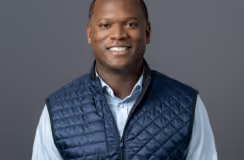
%20-%20thumbnail.avif)

.avif)




%20-%20thumbnail.avif)