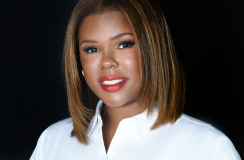
Host: Morley Desai had two young kids and was recently separated from her husband. She was approaching 40, life's midpoint, according to the thesis of a book she'd recently read. And as the daughter of a small business owner, Morley had always nursed her own entrepreneurial dreams. All of this, plus the timely urging of a friend, conspired to convince her that she needed to seize the moment. Today, Morley is three months into the acquisition of a $4 million E commerce business. You might say it's a dream come true, but let's not get carried away. We all know that the real work begins only once you actually take ownership of the business you acquire. Morley is learning quickly what makes E commerce, yes, attractive, but also punishing at times. We cover many of the Dynamics of a $4 million E commerce business and how a loan acquisition entrepreneur acquires such a business with an SBA loan. This is a hopeful story of someone who had had a traditional path but finally heeded the nagging itch to set out on her own. Please enjoy my conversation with Morley Desai, owner of Amira Natural Skincare. Welcome to Acquiring Minds, a podcast about buying businesses. My name is Will Smith. Acquiring an existing business is an awesome opportunity for many entrepreneurs, and on this podcast I talk to the people who do it. Top of the list for most acquisition entrepreneurs after they close on the business is digital marketing. Is the business doing it properly or at all? Has the website been touched since 2005? In many cases that website is going to need an overhaul. Eversight is a firm that works with searchers to do custom redesigns of their websites for a flat monthly fee so you don't need to spend down your precious working capital for a custom redesign of the website. That and all ongoing support is baked into their monthly fee. So your website cost is simple and predictable month after month with the assurance of knowing that you can ping the folks at Eversight for any changes you might need and you will talk to a human, call or email your Eversight rep, make a request and expect your changes live in hours, sometimes minutes. There is so much going on when you transition that business you buy. Make the website management easy by putting it in the capable hands of Eversight. Check out Eversight.com searchers E V E R S I T E.com searchers Morley Desai welcome back to Acquiring Minds.
Guest: Thank you for having me.
Host: Will Morley, you were on a few weeks ago as one of the three female panelists interviewed by Chelsea Wood. Your story got some brief airtime there, but I wanted to have you back on to share it in its entirety. So thank you for saying yes for a second time. Morley, before we get to your story of buying the business, let's have some background. Can you share a little bit about yourself?
[3:18] Guest: Yeah, sure. So I think my story starts kind of before I was even here, but my parents are immigrants from India. They immigrated in the late 70s before I was born. But they, you know, kind of the true rags to riches stories. They came over with nothing and then have built themselves up and then had a family. And my mom was a small business owner. She started her business when I was in middle school and then into high school. And so I watched her build this business. And my dad was a pharmacist, had a great job, but I saw him clock in and clock out, and it was a very different experience with the two of them. And so growing up, I was like, I want to be a business owner. This. This looks great. My mom got a lot of respect from the community. She loved what she did. And I had a lot of great times helping her with her business.
Host: Sorry, what was that? Pieces.
Guest: Yeah, she was an accountant, so she started her own accounting practice where she does small business accounting for other small businesses. So. So was exposed to a lot of entrepreneurs growing up. So I spent a lot of time, look, as I mentioned, with entrepreneurs, and I always thought being an entrepreneur meant startup, that you had to start something from scratch. And that was what I had seen my mom do. And so when I graduated college, I decided to go work on Wall street. And after Wall street, got my MBA and then worked for corporate, always thinking that, okay, I'm going to do entrepreneurship. At some point, I. I'm going to get a brilliant idea and I'm going to start something. And just never had that burning platform or that desire to bootstrap something. And so I had met a friend a couple of years ago, and I was lamenting to her about my woes of not feeling fulfilled at corporate. And she was like, why don't you just buy something? And it was one of those things, like the record scratch of like, wait, what? Like you can actually do that. And so as I looked more into it and read the prerequisite books, did the research, it came to fruition that, yes, this is exactly what I needed to do. And it was an idea for a long time. I remember, I think it was early 2019. I was on my second maternity leave and just noodling it and talking to another one of my friends who had also gone out on their own. And he was like, okay, so what's your date? And. And I said, what do you mean? He's like, what's your date of when you're gonna do this? And so I put it out there. I said, you know, May 1, 2020 sounds like a nice round date. You know, not knowing what the world would be like at that point.
[6:14] Host: Right in the heart of COVID trying to time things perfectly.
Guest: Exactly, yeah. And I said, that's gonna be my date. That will be when I, when I officially leave corporate. And for me, I needed to do it full force. I couldn't side hustle it. I, I'm just very focused of what I get into. And so for me, I just needed to have a clean break.
Host: And so, and morally, this friend of yours was also going to start something, and that person was going to buy something or start something.
Guest: They were, they were on the startup track, so they had actually left corporate. We worked together and they had started something, but I had told them that my vision was something different. It was more entrepreneurship through acquisition.
Host: But. And the other friend who had planted the seed in or record scratch for you about buying something, just curious, how did that person know? Was that somebody who had bought a business themselves?
Guest: Yeah. So that person had just graduated from Stanford's business school, where it was just a lot more of the noise. I had come out of Wharton in 2009, and I don't remember anyone talking about search funds and buying businesses out of business school at that point. I think it was still kind of on the coast at that point. And so she had gone through an ETA class at Stanford. And so she was the one that had pointed me into the, in the direction of the resources
Host: and, and then morally, another background question, just going all the way back to your mom and how seeing her made you want to be an entrepreneur, and yet she was a small business entrepreneur. And the other entrepreneurs that she exposed you to, her clients were also small business entrepreneurs. And it's interesting to me, I don't think you're alone here, but even seeing that traditional entrepreneurship, small business entrepreneurship, somewhere along the way, you still convince yourself that being an entrepreneur didn't look like that. It looked like Mark Zuckerberg. I wonder, I wonder why even you, somebody who's exposed to small business entrepreneurs, never said to themselves, that's the type of entrepreneur I'll be.
Guest: Yeah, I think it's just you get conditioned into it depending on what your path is. Right. So, you know, I, I worked on Wall Street, I saw examples of bigger companies, I worked with bigger companies. I Worked in private equity. And then when you go into business school, the focus is not on small business entrepreneurship. The focus is more about becoming CEOs and CFOs of kind of the Fortune 500. And then once you get into corporate, right, it's, it's a, it's a race to get to the top. And so, you know, that became the prevailing visual of what it was to run a business rather than the small scale, small business entrepreneurship.
[9:10] Host: And when the friend who had come out of GSB said to you, why not buy something that immediately did grab you. But was there any kind of resetting of expectations in your own mind you needed to do to shift what you've been conditioned to understand as success as entrepreneurship to this idea? Oh, maybe I'm going to be a small business owner.
Guest: Yeah. And I think it's like this is where also the gender dynamics come into play, Right. You've heard the anecdote about a woman feel they need to have 100% of the criteria to be able to take the risk. And I think that's what came up. It was that, you know, do I have the requisite skill set to be able to go and actually run a company on my own, rather than doing it kind of in a corporate where you work your way up and have that full set of kind of resources to help you. And so I think that was another part of it too, of like, you know, can I do this? Do I have, you know, the finance, the marketing, all the different functional areas, not realizing that you don't have to be, you don't have to have it all checked off to be able to do entrepreneurship.
Host: And so, so what was it that gave you the nudge of confidence that indeed you could do it?
Guest: Yeah, for me, you know, it goes back to the anecdote. You know, if you, if you're, if you're trying to lose weight and you're trying to eat healthy, surround yourself with people that eat healthy. If you're trying to, you know, read more, work out more, surround yourself with those people. And so I purposely surrounded myself with entrepreneurs. You know, a key thing that I did in my journey is I joined the acquisition lab with Chelsea and, you know, made sure that I was in those circles where people talked about entrepreneurship as it was just an everyday occurrence. And it was through being exposed to people that were already taking the risk that you start kind of osmosis, right? It seeps in and you kind of start believing it and seeing the vision of it.
Host: Excellent. Okay, great. Back. So back to the story. So we're in 2019. You have pegged May 1, 2020. Nice round date to step off the ledge.
Guest: Yes. So, you know, here comes May 1, 2020. I. My husband at the time had just moved out of the house. We had decided to get separated. My youngest child had just turned one, and so my oldest one was only two and a half at this. At that point, you know, I was about to turn 39, and I had all these dreams of what I wanted to accomplish before, you know, before 40. And so, you know, I felt like my world was falling apart at that point. And I was like, you know what? We're just going to go ahead and blow everything up. And I. And we were in the pandemic, right? We were in this new world of, like, we didn't know what was going to happen. And so I ended up calling my boss and saying, I'm out. This is my dream. If I don't do it now, I'm never going to do it, and I don't want to regret it. So. So that kind of. I stuck to that date and that kind of started the dominoes. Now it took me another year to actually le my corporate job because I wanted to leave in the best way possible so that if I have to call, call my boss in like six months or a year and be like, I need to come back, that I can easily come back. But it was something that I, you know, I was like, we got to do this now or it'll never happen.
[12:32] Host: So you gave notice, a full year notice.
Guest: I initially gave notice and I said, hey, this isn't like a normal two week. I'm out in two weeks. I want to work with you and make sure that you're, you know, you've got what you need to be able to kind of continue operating the team. And so it started with me like, hey, just. Can you just hire your backfill? And then it became with the great resignation, I ended up rehiring the whole entire team. And so it took about a year to kind of get the new team up and running and then kind of acting as a chief of staff to my boss so that he could be in a good position where when I finally did leave that he was in a lurch, that if I had to come back, there was. There was a good enough relationship that I could always come back.
Host: Yeah, well, both a. A pragmatic and very ethical way to. To go out the door morally. So just a little bit more on your decision to, quote, blow everything up coming off Of a separation, like, and then Covid and then age and then two young children and then wanting to be an entrepreneur, realize his dream. Maybe just. Can you elaborate a little bit on your emotions? Was it like joyous or was it tears or was it. Or it depends on the hour of
Guest: the day or what it really does. And it was all kind of mixed up together where, yeah, some days I'd wake up and I would be excited and I'm gonna do this. And you know, we're rewriting the whole script for the following 2000 weeks of my life. I, I always reference back to this great book that I read, 4,000 weeks. And 4,000 is approximately your life. Right? It's about 80 years. And kind of having those 2,000 weeks left, it was like, you know, if I, I gotta make sure that the last half of the life is what I really want it to be. But then there were days that I'd wake up and I'd be like, what am I doing? I, you know, I'm a single mom, middle aged. I just left a very stable job. We are in the middle of a massive pandemic. You know, I'm self funding myself and, you know, working off the savings. And so it was definitely a lot of ups and downs, not only in making the decision, but then also through the search phase is extremely up and down. And even now operating in these first 90 days is also extremely up and down.
[15:06] Host: And I take it your mom's going again back to your history. Your mom's business wasn't so tumultuous. It was more steady in the beginning it was tumultuous.
Guest: You know, she had to build it from scratch and kind of get clients. And so, I mean, she's been operating it now for over 25 years. And so now she's got it steady state. But she's been a great advisor and support system and talking about her experiences and the things that she had to overcome. And so, you know, I think that's also nice too, is having that community of entrepreneurs to kind of talk about the highs and lows and then to be able to get through it together.
Host: And you're in Atlanta and you're. And your parents are also in Atlanta.
Guest: Yes, Correct.
Host: Cool. All right. Oh, in 4,000 weeks. So I haven't listened to the book, but he, Sam Harris, had like an excerpt of the book on his app, which I listened to and really enjoyed. But just tell, tell us. I mean, there are, there are a lot of books about, you know, seizing the moment sort of, or you know using your year as well. But I too found that author's. The way he portrayed things quite. It really grabbed me but I guess not enough to yet read the book. Maybe I'll get there but. But just because I have heard you mentioned the book before, you mentioned it with the. On the panel. What, what do you think about that book which is an old message, use your life wisely, you know, self actualize. What do you think it was about how he packaged this message that so grabbed you?
Guest: Yeah, I think it was just also the context of where I was in my personal life and where things were changing very quickly and just realizing that I just hadn't put a lot of thought because I always thought there was infinite amount of time. That book just helped me kind of understand, you know, that there is a such thing as mortality and that you know, you've got to make clear trade offs and clear decisions and, and you know, figure out what it is you want to do. And so that was kind of the big wake up call for me, you know, turning 40 and then just also all the changes and in my family life that was, it was just like the right book at the right time.
Host: Totally. As books they often do if they grab you or not. It depends very much on your own personal context. You already know that business owners are making amazing use of virtual assistants, often based in the Philippines. And while virtual assistants are helpful, virtual professionals are transformative. More Staffing is a boutique agency that hires a players in the Philippines not for task execution but for deep competency work. Think controllers, operators, supply chain managers. Moore Staffing helped an e commerce company build their entire supply chain, analytics and finance team. It saved them over $400,000 and enabled them to build the in house expertise of a much larger business. Global staffing is increasingly the norm and building the muscle within your business to take advantage of it will be crucial in the years ahead. So if you're sourcing the next management hire within your business, make sure you speak with More Staffing first about the pool of capable affordable managers they can connect you with. Check out Morenow Co. That's Morenow Co. Okay, so take us now to the search or when the process actually begins. You've taken a year to rehire everybody on your team in corporate and you've, you've gone out gracefully. Then what?
[18:51] Guest: Yeah, so it, you know, it was a situation where my boss was like, you could stay as long as you want. And then we were at the point where I was literally about to turn 40 and I was like okay, this is my last day, the day before I turned 40 and I said, I gotta go. Like, this is not, you know, like I said, I can't side hustle things. I wasn't really focused on it. And so I officially left, you know, full cold turkey. And then at that point it was really a journey in kind of crafting what this was going to look like. So initially the only criteria I had was that it had to be in Atlanta because I couldn't relocate my family. And so then there was a series of decisions of, you know, is it traditional versus is an accelerator funded versus is it a search, self funded search fund? Um, it was a series of decisions of is it services, is it product? You know, what are the criteria? And it was through looking at lots of different businesses, getting in there, kind of doing the kind of the early diligence, the modeling to kind of figure out what was the right fit for me.
Host: Okay, and, okay, let's go through each of those quickly, starting from the last one. What, what type of business did you choose and why?
Guest: Yeah, so I landed on an E commerce business. And so some of the big criteria that I had to decide was size of business. Right. And for me it came down to I wanted to be able to replace the salary that I was getting at corporate. So I looked at businesses that had SDE of at least 750. And then I wanted to do, on the top end, I wanted to do an SBA loan. And so it was kind of tapping at in about 1 1.5 million in SDE to be able to kind of successfully do an SBA loan. And so that became kind of the first criteria. The second criteria was a decision of kind of doing services versus products. So my background is product strategy and product marketing from corporate. And also the other big thing too is with services, your main product or your main, you know, what you're selling is usually people. And thinking about that, a key decision I made is the desire not to be managing a lot of people and have that have the crux of the day to day be the people piece. You know, I led teams when I was in corporate and I just, it just used to suck the energy out of me to have so much time spent kind of managing people and dealing with, with their issues and just having to be super empathetic. And so for me, going more on the product side allowed me to be a little bit more analytical, a little bit more removed from the people management and that was a better fit for what I was looking for.
[21:49] Host: Let's double click There on that people thing, because that will be something that other many listeners are considering. And certainly like managing people is one of the big challenges of getting into small business if you don't do a product business. And so your experience in corporate led you to believe that you just really didn't want to do that again. Do you think that is because managing people is inherently really, really difficult, or is it something about you as a manager that makes it more difficult than maybe it is on average? Kind of try to try to generalize from your own experience in a way that might help the audience think through this decision for themselves.
Guest: Yeah, I think it's totally personal. Right. It's looking at yourself and seeing where your skill sets are, but also where you derive energy versus what saps your energy. And I just knew from being in corporate, managing large teams of people that have all of their complexities, that used to SAP a lot of my energy versus things that I could kind of individually contribute and work on and kind of produce on my own gave me energy. And so as I thought about businesses and I kind of envisioned myself, did I envision myself talking to people all day, every day, or did I envision myself, you know, having a couple of people on the team more in a collaborative environment where we're all kind of working together rather than direct management and then being able to, you know, spend time to kind of deepen, think and to work on strategy and to work on analytics. And that was a lot. You know, when I thought about it, one of them gave me a lot more energy than the other scenario.
Host: Wow, you're causing me to rethink my entire direction. When you just describe those two, I think I also resonate with the latter. Okay, great. So you have your criteria dialed in. You had talked about surrounding yourself with other people to. To give yourself the kind of give yourself confidence, make it seem normal, not weird, that you're going out to be an entrepreneur, that you're going out to buy a business. You. You decide. I know from our pre call that you kind of do it on your own, Submit some. Lois doesn't go anywhere, so talk through all that stuff. Up to your decision to join the lab.
[24:22] Guest: Yeah. So in the beginning, I was very kindly gifted a broker list for the Atlanta area. So I kind of did what a lot of searchers do. Initially, I sent out the form letter to a bunch of brokers and kind of introduced myself and asked them for, you know, can we get coffee? Can we do a call? And didn't get great responses. I, you know, I was like, well, that's kind of, you know, that's kind of a bummer. And so I had pivoted away from that and just didn't feel great with kind of the interactions I had had with brokers. I mean, a lot of it, looking back now was just because, like, I wasn't clear on what I wanted. And brokers are a different, you know, a different kind of subset of people. And so really understanding what their motivations are very important in interacting with them. And so I pivoted quickly to doing more of a proprietary search. And I really focused, because I was Atlanta focused. My head, Atlanta roots, was focusing on female and minority business owners in the Atlanta area, feeling that I had a more compelling story to tell in terms of being able to, you know, protect and, you know, can I pass along their legacy? And so. And that was a great experience. You know, I worked with. I mentioned my mom and that community, and then my financial advisor, my cpa, local lawyers, and met a lot of great business owners through that experience and through that process. Put in three Lois. What was difficult, though, is a lot of those business owners were just kicking the tires. They were just understanding what could they get right? And so we would have multiple conversations over and over again. And they were very generous about opening their business up to me and learning, but we couldn't get to an agreement on valuation. And so in those three Lois, I had to walk away because we just couldn't agree on valuation. And I knew what I wanted to pay. I had some great relationships with some lenders. And so they were also validating what they thought, you know, valuations would come in for the sba. And so from that experience, I pivoted, then back to brokers. And that's, at this point was also when I joined the Acquisition Lab because I had put in my third loi, and it just didn't work. And so I said, okay, I'm doing something that's not working here. I need to find a new path. And the Acquisition Lab proved to be that path, where not only did I have support from advisors that could help me on things like valuation and, you know, understanding a business, but also the cohort of other entrepreneurs that were out there doing the same thing, which I think cannot be underestimated because it is a very lonely and emotional journey, but it. And it also just was a place that I could go to find other women, because I wasn't meeting a lot of women in what I was doing before.
[27:39] Host: We're going to get more into that morally But I just want to circle back to a couple of things. Your opinion about brokers. You kind of send out emails reaching out, saying, I'm a buyer in town, look, you know, like, let's talk, and don't get much response. And you kind of realize in retrospect that maybe it was your approach or messaging wasn't dialed in. And so it was kind of more on you than on them. Although, as we all know, brokers can also are known for not being super responsive. What was it now, when you look back on that initial outreach that you were not doing as well as you could have.
Guest: Yeah, I think it's just providing the information they care about. Right. Like, the question is, can you get a deal done? So I got pre qualified by a couple SBA lenders, and I had that support letter that I would send them. I filled out the SBA personal financial statement that showed that I had, you know, the equity that I could use to get a deal done. And then a very targeted resume that showed my experience base and. And kind of. And then the last thing was a very targeted statement of what I was looking for. For. And so after I went back to brokers and kind of sent out my initial email, I would literally five minutes later get a phone call and say, hey, I've got this, or I don't have this. And I think it was just speaking their language where they get a lot of inbound requests from people saying, hey, I'm interested. But the way I had approached is saying, you know, my goal is to get a deal done in the next six months. Here is all the supporting documentation that's already prepared in order to move forward. And so I think that kind of just changed the tone of my outreach compared to some of the other ones that they were getting.
Host: Yeah. Which was just too open ended, too vague. Hey, I'm a buyer in town. Let's talk.
Guest: Yeah, right.
Host: And then when you. So you. You leaned on your. As you said, then your next step was to kind of lean on your network, the immigrant community. Female business owners, you said, your cpa, maybe your mom and her network, lawyers. So those were all. In each of those cases, those were all kind of part of the immigrant community in Atlanta. And you were just saying, hey, let people know, you know, there's a young Wharton grad daughter of immigrants out here in Atlanta looking to buy a business. And you got some deal flows.
[30:10] Guest: Okay, yeah, yeah, a lot of great deal flow. But again, owners that were not necessarily looking to sell. And that's the key thing that I tell people now, proprietary networks, great, especially if you're very targeted in what you're looking for. But it's a little bit harder because at least with the broker, they've gone through the mental work of understanding valuations, of committing to actually putting their company up for sale. With proprietary, you oftentimes have to work through that with them. And so two of the Lois that I put in that eventually I had to walk away because of valuation, ended up calling me again six months later, but I was already under. I was about to close on another business. And so I think it's definitely doable. You just have to have a little bit more patience in a longer timeline because you're having to do the work to get them comfortable for a sale.
Host: It's, it's a pattern that I have just heard so many times where, and typically it's the brokers who are absorbing this, that a seller has unrealistic expectations of the valuation of their business. Somebody, either an eager buyer, independent direct buyer like you, or a broker says tells them what the realistic valuation is, they don't like it, and they say, bug off or no thanks, and then they process it or maybe learn more or maybe talk to their accountant or do something. But six months later, their expectations have come down to earth and are realistic. And then they re approach whoever it was that had approached them the first time, be it a broker, be it a buyer. So really interesting. I'm just curious though, because these buyers, these sellers, do you know how off your valuation was? I mean, are they. We know that like people who build little SaaS businesses and like in techland, have completely unrealistic expectations because everything, all tech valuations are so inflated. But like in small business land, are sellers also kind of expecting millions and millions or what, what, what, what more did you learn about their psychology?
Guest: Yeah, I think a lot of times they end up pricing in future potential. Right. I had one seller that business was growing nicely, and so they wanted to get paid on, you know, kind of future, future earnings without even it being there. And so I kept mentioning, you know, like, that's just not a way we value businesses, we value business. And I was willing to do TTM for him, right? The trailing 12 months, not even the last audited or the last tax return year. And still he was pushing to have kind of the full year. We were only, I think, in May at that point, and he wanted to do a multiple on the full year. And so it was just conversations like that that just, you know, when I, you know, when I would think about it, and I would try to model it out. It was just too much risk. And then with the sba, right, you're limited with earnouts and some of these more, you know, creative solutions. And so I also would communicate, you know, there's only so much I can do to do to do these creative solutions if we're going to be valuing it on future earnings. And so. So, yeah, eventually they had to walk away.
[33:32] Host: So it sounds like they may have been open to some kind of earnout, but your hands were tied because the SBA won't permit that. They might have done some interesting terms. Okay. All right. Okay. This is great, Morley. So you joined the lab, and you had just said the importance of being around other people doing this. Talk more about what else you. The lab kind of helped you dial in. I got how you approach brokers. That's a huge one. Yeah. Tell it. Was there anything more or were those the big things?
Guest: Yeah, I mean, for me, it was just having that suite of advisors that I can go to and just say, hey, does this sound okay? Does this sound weird? And people that had been through it had been through the acquisition process. I can't. You know, that's what I was missing in the first year of looking for a business is that I just felt like I wasn't on an island and I didn't have anyone that I could ask for advice. And so that was very valuable. And being able to take the deals to the deal forum, where you would have, you know, a whole kind of community coming together to provide insight, I mean, that's just so valuable to get kind of all of that insight from not only fellow searchers, but for advisors. And so that was. That was huge. But the biggest thing was confidence, too. Right? I, after three, failed, Lois. I was kind of. I don't know if this is. This is the right thing for me. Am I doing something wrong? And so having that to kind of pick me up again and having those fellow searchers to say, yeah, I'm there with you. I don't think I could have gotten to where I am had I not had that community.
Host: And any advisors in particular you want to shout out that were. That were particularly helpful?
Guest: Yeah. I mean, Chelsea, who runs the lab, is. Is amazing. She's a rock star. She has an open calendar that if you just need to get 15, 20 minutes with her, you can just go in and book it. And so there were so many things where it was like, okay, I need to talk to someone today before I, like Turn in this loi and I could get time with her, and she's just, she's seen so much, and so I really trusted her judgment from seeing so much of it. So she, she would definitely be. Be one of the MVPs of getting my deal done.
Host: Great. Great. All right, so now tell us about finding the business that you bought.
[36:04] Guest: Yeah. So my third failed loi was an E commerce business. And it was through looking at that business that I decided fully that an E commerce business is what I wanted to do. And the benefit of that, it's completely virtual. So my geography constraint just became a lot easier if I could find an online business. And then going back to the broker route. Right. There's a couple of great brokers. Quiet Light is the one that I eventually worked with to get my deal done. But what's great is that, you know, they, they pop up online, so you don't have to do a whole lot of outbound calling. You kind of just have to be quick on the draw once you see them pop up and kind of contact the broker right away. And so as soon as I had decided on E commerce, I just watched the different listings, and as soon as something popped up that remotely looked like it could fit my criteria, I immediately reached out. And after looking at about 50 to 60 businesses, I had gotten it down to an art that I could probably turn an LOI around kind of within 24, 48 hours of speaking to the owner.
Host: Wow.
Guest: A full.
Host: The. A full offer within 24 hours. So. And with Quiet Light, one of the benefits of their model is that when, you know, they send out the teaser, you say, I'm interested. It's all, clearly, it's all automated. And then they, you say, I'm interested, and then they immediately respond with a package, the sim. And most interestingly, of course, is the video interview with the seller. So it's 20 or 30 minutes with typically the founder. Not always, but usually it's the founder of the business, Founder, seller, talking through the business and, you know, these kind of candid interviews. Obviously everybody's trying to sell, but they, they feel often quite honest that the sellers will talk about, you know, the limitations of the problems and why they want to sell and what feels like a pretty, pretty transparent way. It's, it's, it's really, it's really cool. Now when you said 50 or 60, though, I know my deal flow from, from Quiet Light is not that volume. I just get kind of a trickle. Less than one a day. Far less than one a day is that yours as well or am I not in that? Did you. Is there some other list I should be on?
Guest: Yeah, no, the 1560 is just like from the beginning, right through the journey. And so it included the broker outreach, the broker proprietary, you know, the online stuff. But yeah, and what I used to. Because there's a couple of different online sites. I used this thing called Market Watch that's offered by Centurica, the due diligence company. And it's an aggregator of a lot of the online sites. And so I didn't have to be on all the multiple sites I could be. I can just have the Market Watch alert set up. And so that was kind of nice to too where again it streamlined all the various listings that would come in. And honestly the criteria of setting it for the SDE is the biggest thing that kind of whittles it down. And so you're right, it wasn't a whole lot of deal flow. It's maybe a couple a week but it was enough to kind of find the one that I eventually ended up buying.
[39:17] Host: You know, they're really at least okay. So I'm just saying this based on what I see from Quiet Light. There are many other brokers out there selling online e commerce businesses, but there aren't that many that I see that are in the range that you're looking for. I mean a lot of them are quite a bit smaller. And I suspect that you know how in the offline traditional business world we talk about competing with private equity and private equity has a threshold below which they're just, it's too small, they're not that interested. And people often say it's you know, maybe 2 million in EBITDA or maybe even, you know, smaller PE firms will come down even further to 1 million. But I feel like in E Commerce the more sophisticated buyers. Private equity, but also aggregators. Aggregators are the, you know, the big name and the big moneyed monied interest in E commerce, at least at this time when, when we're talking about your acquisition will come down lower, a lot lower than PE in the traditional world. So making a business like, of the size that you wanted to find that much harder in E commerce because an E commerce business doing a million in EBITDA or a million in SE is a very desirable business to a lot of parties. Acquisition, individual acquisition, entrepreneurs and aggregators alike. So yeah, I just feel like you got there was good fortune smiling on you.
Guest: Morally I think that's true. And I remember talking to the broker and kind of saying you know, what. What are the other offers look like? And she was very honest and said, you know, there's a couple of aggregators that have put in offers already. And I think that was also one of the things that I was able to set myself apart from the aggregator. And I pushed to have a call with the seller because I wanted him to know that this isn't a financial transaction to me. And luckily, the taint on aggregators was also starting to spread at that point too, with a lot of these aggregators going belly up and not really being able to kind of get to close on the initial terms that they had initially offered. And so that was one of the things that I did, is I really set myself apart from aggregators and said, you know, this is a personal business. And it was very lucky. We're in the business where I was like, the ideal customer for this business, and I really wanted to be the face of it going forward. And so. And wrote a personal handwritten letter saying, you know, this is really what my dream is. And I was. I think I was able to win because I was able to show that I wasn't just a financial check. Right. That there was something else that I wanted to bring to this business.
Host: A personal handwritten letter that's very. From the residential real estate world. People want. Really want that house, and they. And they write a personal letter to the sellers to. In a competitive market. Did you. Where did you get that idea to do that?
[42:13] Guest: Chelsea.
Host: Huh? There you go. Chelsea.
Guest: Because I was telling her, I was like, you know, I really want this deal. And I had told her, and she's like, you should write them a letter. And so that's what I did.
Host: And you wrote it and scanned and just scanned it sort of thing.
Guest: Yeah, exactly. The seller was not based in the US They. He was a bra. So I. It would have taken forever to mail it to him. So. Yeah, exactly. I sent it. I wrote it, sent it to the. The broker, and the broker forwarded it.
Host: Great, Great. Okay, well, let's hear what the business is. We keep talking about the business. The business. The business. What is it?
Guest: Yeah. So the business is called Amira Natural Skincare amiraskincare.com It's an online retailer of skincare products. So serums and creams that even out skin tone and skin texture specifically for the body. And what's nice, it's about 80% is through their Shopify website and then 20% through Amazon, which I really liked that dynamic rather than a lot of businesses that tend to be the other way.
Host: Yeah, yeah, because it among other things implies, although not necessarily you answer this for me, that there it has built a brand because it's not just people shopping on Amazon for, you know, the product with the, the most stars and the cheapest price, people are actually going direct to the website. Now I could be wrong there because it also could be just be heavily reliant on ppc. Maybe a combination of both. Address that please.
Guest: Yeah, I think it's a combination of both. They do definitely have a brand. But I think what's nice too is that there's opportunity to invest in the brand. And so one of, one of my criteria, my qualitative criteria was I wanted to find a product that the, the customer base was majority women. And so I'm excited to be able to further invest in the brand and infuse a mission into it where we're all about helping women feel confident in their skin so they can go out there and take on the world. And so I, you know, it is heavily reliant on PPC right now. So one of the, you know, when I wrote the business plan on and one of the opportunities companies we're looking at is how do we drive more of an organic presence and also drive more of a brand loyalty?
Host: Yeah, well, so the nature of the product, women's skin care and for you know, skin imperfections, for lack of a better word, that afflict women specifically. But the seller founder was a dude, right? So had he, had he done this? I assume he'd kind of done this kind of opportunistically because he somehow perceived this a demand for something like this. What's the backstory there? So curious.
[45:08] Guest: Yeah, so, so his wife is Thai. Half Thai, half Middle Eastern. And so the, you know, the original idea was kind of born by her, but also he has a, a great background in digital marketing and had identified that there was a gap in the market for, you know, for this kind of skin care that had more of a luxury kind of positive spin to it. And so it was kind of, yeah, fortuitous where he kind of found the gap and was able to build the business and kind of drive the marketing muscle behind it. But yeah, but they didn't do any social. So there's an opportunity, like I said, to really invest in the brand and then launch it to the community in an outward facing way so that there is more of a story behind the brand.
Host: Yeah, yeah, really neat. Okay, well let's get in a little bit to the acquisition because was, yeah, a little, it Was unusual, unusual setup. He was not American, you've already said, which plays into this. So tell us more.
Guest: Yeah, so initially my thought was always to use SBA funding. I just like how you can lever it up. And then obviously, E commerce businesses don't have a lot of assets, and so there weren't a lot of other funding opportunities really open to me. And so kind of fortuitously, when I was looking at deals, I wasn't really paying attention to the. To the criteria that said, you know, if it was SBA eligible. And I can't remember if it even had, like, not eligible written to it, but it was a little bit of a fortuitous thing where I had contacted the broker and I asked about sba, and she said, you know, I'm not sure because the owner is not American. While the company was a C corp and it was an American company, there still was questions about it. And so, you know, obviously one of the big questions I needed to get answered before I submitted the LOI was that, could it. Could the SBA actually fund it? And it turned out that there were two entities, a US entity and an Australian entity. And the US entity could be funded by the SBA. So when I put in my LOI, we actually, I did two LOIs so that we could keep them separate because we didn't want the Australian entity to kind of muddy up the. The SBA deal and so put an offer with. With kind of the prerequisite seller note and kind of the 80% leverage from the SBA. And then I did a separate LOI for the Australian business where I asked for a fairly large seller note on that side to be able to do the deal. And that was kind of like, okay, I don't know if he's going to go for it, but luckily he accepted the LOI and kind of had. With that kind of hybrid structure on two different deals.
[48:13] Host: And, and so with the. The American. So what was the split in terms of size of the American and Australian entity?
Guest: Yeah, so total, it was about a million in SDE, and it was about 800,000 on the US entity and about 200,000 on the Australian entity.
Host: Okay, great. So glad you said that. I didn't ask you the size. So in the business, how much revenue was it doing?
Guest: It was doing about 4 million in revenue.
Host: Okay, so 4 is great. So 4 million across both entities. A million in SDE across both entities. Split 80, 2080 US, 20 Australian. That's really cool. So in that 8 for the. For the US entity doing 800 SDE with the SBA loan. You didn't. The SBA was kind of none the wiser about the Australian entity. You just were totally silent on that piece of it. This was just about an American buying an American American entity, period. And then you have the side contemporaneous transaction going for the Australian entity. How much did he finance of the Australian entity?
Guest: He ended up financing up to 85%.
Host: Great.
Guest: And yeah, and we're actually, it took me three months now to get my Australian business license. So we're actually in the process of closing the Australian entity now. Now that I've got my Australian business license.
Host: I was going to ask you. So you own a business in Australia, so you bought it to be able to kind of capture the value there, but you're closing it down and consolidating.
Guest: We weren't able to close the Australian entity until I had the Australian business number, the license. And for some reason it took the Australian tax organization three months to give me that license. And so I just got it last week. And so now we're in the process of closing the Australian acquisition.
Host: And, and so buying a business in Australia, you have to get this license first. Are you, is this according to Australian law? Like who's, like who's, whose legal framework are you using to buy this?
Guest: Yeah, that's a good question. I, you know, I've got an Australian tax attorney that's been helping me through this and so we definitely needed to have the Australian business number in order to do business there. And luckily through kind of working with, with that tax attorney, we determined I didn't have to have a separate entity in Australia. I can use my US entity to buy the assets of that company. So I don't have to pay Australian income taxes, but I do have to pay obviously the, the gst, the equivalent of sales tax there.
Host: And so you are going to continue to have to, to have this Australian entity.
[51:02] Guest: Yes, correct.
Host: Because the $200,000 in SDE is just coming from the Australian market. This is being sold to Australian women in Australia and.
Guest: Yes, and yeah, and the margins are a lot better on that business because a lot of the back office rate gets, gets done in the US So it's kind of a higher margin business because it's just benefiting, you know, the sales with the, it's got a, and there's no Amazon in Australia a part of the business. It's just the Shopify store. So it's kind of a nice add on to kind of, you know, further scale the back end of what's happening in the US entity and then just have higher margins in the, in the Australian entity.
Host: And why is the back end US based if the seller was not American?
Guest: Just because the majority of the revenues are US based. And so just where they would pay the contractors, where they would pay a lot of the marketing cost, a lot of the branding costs, they were being booked in the US entity.
Host: Okay. And the fact that you now have an Australian entity and are, are active in the Australian market, does that make you feel like you can. This is a business that can be taken to Canada and to the UK and other English speaking markets more easily than somebody who's just got an American E commerce business that's never crossed borders.
Guest: Yeah. So what was super nice also is that the seller had gone through the work to build out the Canadian store and so that's actually ready to launch. I actually was able to get my Canadian import license a lot quicker and so that's ready to go whenever we're ready to launch. My hope was, you know, learn the US piece, acquire the Australian store and then we're going to launch the Canadian store. And so that's absolutely part of the growth plan is to kind of launch in individual geographies and then after that the UK and Europe would probably be next.
Host: Great. Well that's exciting, an exciting possibility for growth. And also on growth, are you envisioning other products under the Amira umbrella that are tangential to the existing products?
Guest: Yeah, absolutely. The growth kind of thesis is kind of threefold. So it's optimizing the digital marketing, trying to move away from the over reliance on the PPC ads and trying to introduce more organic marketing. It's the additional geographic locations. And then the third one is definitely product launches, either organically or inorganic. Finding other products that can fit into the brand.
Host: Okay, you just said about three things that gave me follow up questions. So. But first I want to circle all the way back to. So people heard this because I've mentioned in other interviews that people email me afterwards saying what was that? You're talking about the, the service platform that you were using to track new E commerce listings hitting the market is something called Market Watch for the audience now by by Centrica. Centurica is a due diligence firm whose niche is E commerce and digital businesses. So they really are established in that niche and just as kind of presumably kind of a lead generator for them, they offer this awesome service that just basically tracks like, like Morley said, aggregates many of the listings across brokerages that Focus on digital businesses. So you can go there, you can say I want an E commerce business with SE north of 750. Notify me when a new one hits the market from across these 15 brokerages that are being tracked. So Centrica Market Watch. But on that morally, by the way, there is I believe a checkbox in your filters for SBA eligibility which I always checked and you probably did too.
[55:00] Guest: I think I had missed it. You know I think we talked about this like it was just one of those fortuitous things that I think I might have missed it or just wasn't paying attention to it. And so because I don't think this deal initially when it was listed was officially SBA eligible. And so I had not had that criteria checked.
Host: Yeah. Because I knew that Quiet Light had been silent on it in the description. But I didn't recall if you checked it or not on Market Watch. Okay, now back to. Okay, back to the story. You these opportunities for growth, the over reliance on PPC and these and you want to grow it on social. As I recall from our pre call there was also not. They're not leveraging the seller was not leveraging the email list.
Guest: Yeah, they do, they do use email marketing but I think there is an opportunity to approve email.
Host: And how many email, how big was the list?
Guest: The list was probably about 100,000, probably 30,000 of them were kind of what they deemed active users. So they did have a pretty nice list and all of it through kind of from their website. You know, people choosing to get kind of 10% off and then also from past purchases. But looking at their repeat rate which were sometimes kind of single digits, there's a lot of opportunity to kind of leverage that email list and existing customers and making sure that they continue to buy and kind of off rebuild more subscription type services. They hadn't really explored any of that. And so one of the things that I'm definitely looking into is that you know that repeat customer rate because I think there's a lot of good movement that we can do there.
Host: And on that let's talk about some of the risks of the business. So a product like this, kind of a kind of a Lotions and potions business, one of its appeals is. Well one of its appeals is that these are high margin businesses typically, but it's also a consumable. So if people like it, they come back for more and more and more. So there's a reoccurring nature to the purchases. Does it, did it concern you that the repeat sales were were low or did you just chalk that up to, to the seller not optimizing that?
[57:31] Guest: Yeah, I mean both. Right. I think, I think there's, there's definitely a lack of optimization and really targeting those existing customers. But also, you know, I think there's education too. You know, you know we've got a 60 day money back guarantee so anyone can return product kind of within 60 days if they don't see a difference. And we have a very low return rate. So we do think that customers are happy, but I don't. Yeah, we, I think we need to do a little bit more work of how do we capture them. And you know, we just recently introduced subscribe and Save on the Amazon platform platform and that really exploded. So it does tell me that there is an appetite for repeat purchases but that we just have it really taken advantage and how to make it very easy for our consumers so that they can, you know, it's kind of a one click in rather than having to physically go back to the site and reorder every time.
Host: Yeah, yeah, well that's very optimistic. And then on, on the product itself, the other thing that would make me nervous about product like this is like does it, does it work? Do I, I don't know anything about chemistry. I, I somehow failed to take chemistry. I never even took chemistry. Now I know and I know you're not a chemist either and you don't expect to, you know, analyze the components of the, of, of these, of the product. But still like I would feel nervous buying something where I really have no idea what's in it, how it works, if it works. So how did you, how did you wrap your head around that and did you use it before?
Guest: Yeah, yeah. So definitely through the diligence process, I went through the customer journey, ordered product, tried it out and you know, had other people do it too. So like I wanted to make sure that I was comfortable with that whole journey. And what I like about this product is that it's a plant based natural product. And so it is a, you know, a competitor to someone going to the dermatologist and getting a prescription that has hydroquinone in it, which is, you know, a bleaching agent and can be, if not used correctly and under the care of a dermatologist, can be dangerous for your skin. And so this is an all natural alternative. And we had, we've done lab tests to make sure that can be used on sensitive and intimate areas. And so, you know, having that, that documentation, trying it on myself, seeing the customer reviews, we Ask customers to send before and after pictures so that they can also see for themselves whether they're seeing something that's happening. Because it's not an overnight thing. You kind of have to use it consistently for at least 60 days to be able to see some, some brightening effects. And so, but again, these are all things that I think are opportunities to further educate our customers customer so that they don't just buy a pro a bottle and think that overnight it's gonna, it's gonna make all the difference.
[1:00:57] Host: Great. And on PPC morally, so the, the channel that was really being leaned upon so you, the sales, you know, the, these $4 million in sales, I mean that's, don't do public math. What is that, what is that a day that's, that's over? That's probably what, $10,000 a day in sales.
Guest: Exactly. Yep.
Host: Wow. So, you know, if anything goes wrong with the PPC at any moment, you know, your business is big enough, big enough where it's one of those, where it's like, you know, downtime for an hour means hundreds of dollars of ste to you. Maybe, maybe, maybe more with, with a high, high gross profit business. And you don't know ppc I assume yourself. So you have. So talk to me about kind of, you know, who you're working with for PPC and how you hold on tightly to them.
Guest: Yeah. So with the business it came over with six contractors. So we had two customer service, we had two inventory managers and then one marketing genius marketing guru and then one kind of web developer. And so, so I had them all come over with the business because I wanted to make sure we kept operating kind of steady state while I was still getting up to speed. And so the marketing manager that came over, she handles the PPC mostly, but the risk was that she was related to the seller. And so I had a six month contract with her. But she had made a clear that, you know, she, she worked another brand and other businesses. And so beyond six months, you know, there wasn't a guarantee. And so one of my first things in the business was I've got to find a replacement for her. And so instead of hiring another marketing manager, I decided to work with an agency that a girlfriend of mine owns and work with her to transition the PPC business over to her. And so that's been, you know, a kind of a couple month process to make sure that, you know, the existing marketing manager is also involved in that transition and that the new agency can handle that and. Exactly. For, for that reason of, you know, the business really relies on those PPCs to drive traffic to the site. And if we lose that traffic traffic, it would, you know, it would be a big detrimental effect to the business.
[1:03:37] Host: Yeah, great. And. And so the idea of getting it into an agent agency's hands as well is that then the agency worries about the hiring or loss of a particular PPC manager because the agency will. Will be a constant. But people might come and go from the agency rather than having it just be in a key man or woman. I didn't ask you what she paid for the business.
Guest: Yeah, so. So what was nice with Quiet Light, it had a price on the business and they were asking for three and a half times. And so as I mentioned, the SDE was a little bit over a million. So it was about 3.6 million for the total asking price. And I remember going to the acquisition lab and saying, you know, what should I offer on this? And. And one of the advisors, Walker Deibel, that wrote the Buy then build book was like, just offer the asking price because then you know that the seller would be willing to sell it to you at that. So I offered what asking was, and I actually thought three and a half times was a fair multiple. It didn't include the inventory. So with the inventory was about 3.75.
Host: Well, morally, I mean, so, and, and when are, by the way, when are we. What are the dates now? Is this mid-2022.
Guest: So, so I found, like I said, I found the business kind of late late July of last year, turned around an LOI as quickly as I could because I knew I was competing with these aggregates aggregators. And then, you know, we signed the LOI early, early August. And I had asked for 75 days of due diligence. And my, the bank that I was using for the SBA literally got me a commitment letter on like day 74. So, you know, and I had, I had in good faith brought. Had my lawyer started working on the purchase agreement and everything. I wanted the seller to know that I was still super committed. And luckily he was able to extend my exclusivity. But we didn't get the deal done. We signed it on December 16th.
Host: Okay.
Guest: And it was like after close on December 16th. So that was a Friday night. So it, it, you know, we, it didn't actually come and close till December 19.
[1:06:05] Host: Well, despite the fact that you were competing with aggregators, as we've touched on, there was this taint, as you put it, starting around aggregators. So it wasn't. And I Think the E commerce market had started to soften. I mean I did an episode about the E commerce market softening probably a year ago. Now we're talking March right now, so probably last March or last spring. So anyway, where all of this to say that the multiple that you got for a million dollar SDE E commerce business, which, well, a couple years ago everybody wanted now, now E commerce itself has a bit of a taint as, as we know. But still, I mean that, that just seems like a phenomenal price. Is, is really what I wanted. All of that was to say that seems like a really great multiple for such a sizable E commerce business.
Guest: Yeah, I mean it, it definitely had risk. Right. It was the risk of it not being SBA eligible. There's also content concentration in the business where their hero product is 70 to 80% of sales. And then the over reliance on PPC. And so there were things, there was definitely risk in the business. And so when I, you know, kind of looked at it and did the modeling like 3.5 seemed appropriate for me given the risk.
Host: Okay, okay, that's well put. And just going back to your banker and your lawyer, it's not a question that I have asked before, but I thought I might start your deal team. Do you want to give anybody a shout out and who was on it and who did you think did a good job for you?
Guest: Yeah, absolutely. I had a great deal team. So you know, the SBA piece especially I used a company called Multifunding. They're loan brokers. But there was a guy named Joe McAleer who was amazing. He literally was the MVP of getting the deal done. We had a couple of hiccups with the bank. They actually ended up getting out of the SBA business at the end of last year. And so it was, there were a couple of times where I didn't, I thought the bank wasn't going to come through and kind of, as you know, you know, E Commerce deals are not always banks and favorite deals to do. And so he had found me a bank that would do not only an E Commerce deal, but a carve out deal. So the US entity had a couple of brands in it and I was just carving out a piece of the brand. And so there was a lot of work the seller had to do to show the, you know, the bridge from what the tax return showed to what was the actual financials. And, and so the fact that he found a bank that had the appetite to do that and he ran interference multiple times when the requests came back from the bank that were just, just not feasible. He really. Yeah, he really. I, I credit him with being able to get the financing done and then, and, and the deal because without the financing I couldn't have purchased the business.
[1:09:17] Host: So even though it was the 11th hour when it finally came through, that was actually a testament to his ability that he got it done at all.
Guest: Exactly. Yeah, exactly. And, and there were, I remember going through the points where I would hear like, okay, the SBA or the, the bank has stopped doing SBA loans for this year and then the bank is pulling out of SBA altogether. And so it was one of these, like, I wouldn't be surprised if I was the last deal that they had gotten done for the sba. But, but Joe kind of pushed it through and made sure that they stayed to their commitment. And so, yeah, so I just, I'm so grateful for him because I just don't know if it would have gotten done. And then on the legal side, I worked with a lawyer that I was introduced to through the acquisition lab, a guy named Joel Ankney who actually has a great book out also I blanking on the name of it, but he has decades of experience closing small business loans and his legal advice was so invaluable, especially because it was two different transactions. And so there was a lot more that we had to do than just kind of a boilerplate, you know, one single purchase agreement.
Host: Great. We're, we're going to wrap up here, Morley, but I do have a couple more questions for you. The. I recall you talking about the transition. So one of the many contrasts between buying an E commerce business and buying a people traditional business is the transition. The transition can be so rocky, so delicate when it's a people business. But in your case,
Guest: yeah, you know, it's, it's kind of anti climatic with E commerce businesses. Right. Because most of these assets are all digital. And so, you know, I was lulled into this false sense of like, oh, this is going to be easy. We got everything transitioned in the first kind of week. And it was, you know, everyone warned you about, about transitioning. Amazon is dangerous. And we didn't have any issues. And we Amazon the shop, we transitioned the Shopify store. And so it was just kind of interesting. You know, we did it all on the first working day of the new year and I was like. And all of a sudden I was seeing money come into my bank account. And so it was just kind of this cool experience of, okay, all right, we've done all of that. And with the the inventory, we use a third party logistics company. And so I, I never physically, I still haven't physically seen any of the inventory. I'm just trusting that it's at this three pl. And so that was really cool. In the first kind of week or two was just kind of smooth sailing. The contractors were continuing to do their job. And then kind of right around like the 2530 day we, we started having some issues with, with Amazon and in our hero product we started getting complaints that they were getting the wrong product. And so we, it was just this weird scenario where there was a barcode mix up on the product and they, there was another product that had the same barcode on it, you know, the seller's other brand. And so we had to recall all of our inventory was our hero product, the one. And that's 70 to 80%. And so we went through these, this series of like Amazon supply chain logistical issues. And so the second 30 days is where like, okay, this is my initiation. This is what it means to be an E commerce owner. And then we also got flagged on the PPC side of Google Ads at the same time where one of the Google bots kind of took a bunch of them down for some reason. Luckily within, you know, a couple of hours we were able to get the ads back up. But we did see, kind of, to your point, we did see traffic drop off considerably. And so now that we're in like the third, third, the third set of 30 days, I'm finally kind of getting back to like, okay, now we're kind of getting back to steady state. But you know, the transitions, the easy part, the actual operating it that is, you know, it's definitely a drama every single day. It's like, okay, what's the issue that I have to work through today?
[1:13:49] Host: Oh, because of these two big events, you're now kind of paranoid or are there more? Is there kind of a daily, A daily issue?
Guest: Not a daily issue, but things with Amazon pop up, right? Things with the PPC pop up. And so it just, it was just this perfect storm of within the first 60 days, both of those things kind of just popped up. And so, and I remember kind of having a conversation with the seller and he's like, you know, this is what it's like. These things pop up and you gotta like then get in and troubleshoot it. And, and I was like, you know, I hope I've banked up some of these, these disruptions for the next couple of months. But you know, you just never know when you're gonna get flagged by Amazon, by. Flagged by Facebook, flagged by Google. It just, it's just the, the environment that you're in.
Host: Does it. Do you still have the same feeling that E Commerce was the right choice for you? I know it's, it's still early, but you've been through the wringer now a couple times.
Guest: I do, I really do. I, you know, I, I'm grateful for the team that came over, the contractors that came over there. I love working with them. They are experts in what they do, and so that's nice to have them. But I don't spend my time. Right. Having to spend a lot of time with them. I kind of trust them to do their job, which is really nice. And then I love kind of getting into the data and the analytics and kind of understanding it. You know, the big thing right now is understanding cash flow. You know, I bought $1 million in cash flow, but, you know, it's, you know, I got to figure out if it's actually still there, especially with some of these supply chain disruptions. And now as I'm watching interest rates continue to creep up. You know, I've got that big loan payment that I've got to be very careful about in cash flow. So right now we're focusing on profitability, we're focusing on cash flow. And then I've got to make sure that I've got the right team in place.
[1:15:43] Host: The, the cash flow and inventory management is, is something that people who in E Commerce always say that, like, if you're an E Commerce novice, comes as a rude awakening.
Guest: You people.
Host: We underestimate the complex complexity or the. Yeah, like, you make a lot of sales, but the money goes right back out again to buy new inventory. Are you finding yourself going through that now, like the. Like.
Guest: Yeah, yeah, absolutely. So. Absolutely. So instead of, you know, a lot of people hire CEO coaches, I hired a CFO coach specifically to help me work through all of this. And so, you know, there's profitability of the business, but I'm doing it profitability on an individual SKU level to understand, you know, where. Where is all the money going to, Especially as we're seeing the PPC ad costs start to creep up. You know, I've got a feeling that some of these products may not be as profitable as we initially, as I initially thought they were. You know, my, my manufacturer raised prices this year. You know, shipping costs continue to go up. And so there, you know, when we, when I put the LOI in, I had actuals as of May, and that's what I had based the price on. And so a lot, you know, it's almost a year. A lot has happened since those actuals. And so kind of getting a better understanding of what future costs and steady state costs are going to be is definitely kind of one of my key things that I'm working on right now.
Host: And what about the people piece that we touched on before and you were drawn to E commerce so that you wouldn't get sucked into the quagmire of managing a lot of people? Do you feel, I know it's still early, so we're 90 days in or less than 90 days in, really? Do you feel that that's playing out, that you're enjoying the day to day of your, the intellectual stimulation of the job and not having to be on the phone all day with people or in person with that?
Guest: Yeah, absolutely. You know, I batch my calls in the morning from like 9 to 12 and I get all my calls done and kind of have all of that extroverted time. And it's not just with the people on the team, but it's, you know, the bankers, it's the bookkeeper. It's like there's always kind of a set of calls, the accountant. And so I try to get them done in the morning. I kind of, you know, get all that done. Then I usually go for a walk like midday and I'll either listen to your podcast or listen to something and just kind of reset. And then I come back and I kind of pick one thing to deep dive on or to focus on and to learn. Because there's just an infinite amount of things to learn. And I think having kind of like that two hour block to just sit and think about something and learn about something is kind of how I work best. And so that's been working for me really nicely so far. Far. And I hope I can kind of keep that cadence.
[1:18:41] Host: Two last questions for you. I'm backpedaling here a little bit, but it's an important one. On again, risk assessing risk of this business and of e commerce businesses in general. This was also a youngish business. Five years old.
Guest: Yep. Five years old. Yep.
Host: So. So, so. And that's one of the reasons that SBA doesn't like E commerce businesses, because SBA generally likes slow and steady because they're more predictable, at least in theory. And so an E commerce business that, you know, e commerce businesses typically make, like in your case, show a lot of growth year over year growth over the typically short duration of their histories. And that discomfort that SBA has is one that we as buyers of businesses might also have. So, yeah, you know, you're trailing 12 months was a million dollars ste. But you know, look at the year before that and the year before that. It would have been significantly less, I presume.
Guest: Yeah.
Host: How did you, how did, how did you get comfortable with that? You're paying for numbers only in the last 12 months, not in the last 36 months.
Guest: Yeah, I mean, it's, it's a couple of things. One, it's understanding the seller and the role that he was playing. Right. He was only spending five hours a week on the business. He was really relying on, on the paid ads to really drive a lot of the marketing. And so I felt that was one of the things that if I could open up the marketing leads, I could grow the business. And, and, and kind of simplistically, if he was spending five hours and I was spending 40, I've got to be able to do something with the business.
Host: Yeah.
Guest: And so. Yeah. And so kind of the, the opportunities that I saw that because he wasn't spending enough time on the business weren't really being, you know, he couldn't really pursue them. And now having the bandwidth to actually try some of these different things, I felt like, you know, I, I had confidence. And then with my background being marketing and strategy, it kind of fit nicely where I don't have to worry about the manufacturing because it's all contract manufacturer. I don't have to worry a lot about the logistics. It's all third party logistics. And so I could focus down right. On the actual marketing and kind of driving the business. And so I just, it was like a good match kind of skill set wise of what I was interested in. And so. And you've got to take the risk at some point.
[1:21:03] Host: Yep, yep. Great. And then just lastly, morally, the future. So beyond growing Amira, in the ways that we've already talked about buying another business, are you thinking that far ahead? You know, you've only got whatever 3,997 weeks left here, so.
Guest: Yeah, no, and, and that's what's kind of fun, like, kind of loosely. I think there's a way to organically drive Amira. There's also opportunities to inorganically drive the business. You know, a lot of e commerce platforms, if they can kind of operationalize the back end, then it's kind of easier to plug in new brands. And so, you know, the goal is at least for the next year or two to focus more on the organic growth and see how much I can do and then potentially look at inorganic and hopefully we're at a, you know, a different peak in the cycle at that point too, to kind of open up some more opportunities. But yeah, but right now it's definitely focusing on the business and, and seeing organically what we can do.
Host: Okay. And do you feel now that now you're an entrepreneur? Is it what you expected? Is it what you wanted? Is it like looking, talking to your, you know, morally of two or three years ago, Would she be pretty psyched or how would she feel?
Guest: Yeah, I mean, I will say Will, like the morally of three years ago thought her world was, was ending. Right. Thought, thought that everything was falling apart. And so kind of being where I am now and feeling that I had, you know, not only accomplished my dream of being an entrepreneur, but also just emotionally and mentally grown through the journey of reassessing what my priorities are and then what I was really looking for. Absolutely. Like, I, you know, I love it. I wake up every day excited. I mean, there's, there's the low level anxiety of like, okay, am I going to be able to pay my loan payment, but, but there's the greater excitement of, and I'm actually, you know, driving something, building something, working for myself. And that's. Yeah. And that's pure gold.
Host: Well, congratulations, Morley. It's been an eventful three years for you and I'm really happy to hear you say this. It feels like the accomplishment that it certainly looks, looks like from my perspective.
Guest: So thank you.
Host: Thank you for coming back on. We'll check in with you again probably later this year, maybe next year, and hear how things have gone in the interim.
Guest: Perfect. Thank you so much, Wal. I really appreciate the time and, and what you do for, for all the entrepreneurs and aspiring entrepreneurs out there.
Host: Great. Thank you for.















































%20-%20thumbnail.png)





%20-%20thumbnail.png)


%20-%20thumbnail.png)

.png)



%20-%20thumbnail.png)