Host: It didn't seem appealing at all. Initially, the wedding catering and venue business was mostly just a husband and wife team. It was in a tourist town. There was customer concentration, one off client engagements, no recurring revenue. And it played in industries that he wanted to avoid. Hospitality and food. But at the urging of the broker, today's guest, Nick Patrick took a second look at the business. And upon closer inspection, he discovered a lot to high margins, negative cash conversion cycle, stellar reviews, 30 years of history. Oh, and an asking price of 1x, much of which the sellers were willing to finance. Nick bought this business using only $20,000 out of pocket, and while it wasn't his initial plan, he sold it just 19 months later. All told, he netted himself about $900,000. A remarkable story of taking a second look, systematically thinking through risks and going all in. Please enjoy my conversation with Nick Patrick, former owner of a wedding catering and venue business in Colorado. Welcome to Acquiring Minds, a podcast about buying businesses.
Host: My name is Will Smith.
Host: Acquiring an existing business is an awesome opportunity for many entrepreneurs and on this podcast I talk to the people who do it. What do the following Acquiring Minds guests all have in common? Doug Johns, Morley Desai, Tim Erickson, Chirag Shah, Shane Ursam. They all went through the acquisition lap, the accelerator in community for people serious about buying a business. But they represent just a sliver of the Lab success stories. The number of deals across the Lab's cohorts now stands at over 120, with over $300 million in aggregate transaction value. The Acquisition Lab was founded by Walker Deibel, author of Buy Then Build, the book that introduced so many of you to the very idea of buying a business. The Lab offers a month long, intensive, almost daily Q and A sessions with advisors, live deal reviews with Walker, Deal team introductions, and an active community of serious searchers. Check out acquisitionlab.com, link in the notes or email the Lab's co founder, Chelsea Wood. Chelseauythenbuild.com Nick Patrick welcome to Acquiring Minds.
Guest: Thank you for having me, Will. Super excited, Nick.
Host: You bought a very small business, essentially a husband and wife team in a difficult industry, operationally complex, consumer facing, without recurring revenue. And you made it work. You stabilized and grew the business and actually sold it 19 months later for a really great return which you are going to share with us. We're going to get into the numbers. So we'll hear that. We'll hear the whole story about how this this eventful 1920 months of your life. And let's get started with some background on you, please.
[3:32] Guest: Perfect. Well, yeah, first of all, thanks for having me. Will longtime listener. Been listening for years and appreciate everything you've done for the community. It's awesome. So, yeah, with that, a little background on myself. I'm originally from Colorado. Entrepreneurship's been in my blood for as long as I can remember. So, you know, elementary school is flipping video games and then just scaled the size of my ventures from there. So I went to school for finance here in Colorado at Boulder and then spent the next seven and a half years of my life in wealth management at Fidelity Investments. So that took me out to San Francisco. They took care of my master's in finance at Indiana University. Also cover my cfp. So awesome training ground. Learned some incredible sales experience, but just wasn't fulfilled. Didn't see myself doing that for the rest of my life. And as I reflected the entrepreneurship, the creativity was something that I could see myself, you know, doing, always have and wanted to take that jump. So basically, self reflection, your podcast, other podcasts led me to the highest likelihood of success of not having to have a W2 for the rest of my life. Was buying a business.
Host: And had you heard about. I'm just curious where you heard about buying a business, how you got turned onto the pods and everything. What was the first? The red pill.
Guest: Yeah, invest like the best. Some of these early on search funder big, you know, traditional searches of hey, this is a thing that exists. And then leading into your podcast is it became clear of, you know, no matter your background experience that this can be done and you know, on a smaller scale was a little bit more attractive to me as well.
Host: Fantastic. Okay, so you are in San Francisco and you've decided that you want to become an entrepreneur proper. You have an entrepreneurial personality, but at this point you're, you're sitting in a W2. What happens next?
Guest: Yeah, was in Covid so I didn't have to dress up and wear the tie into work anymore. So that afforded me some time to spend elsewhere. So I got to the point where I committed to I'm going to quit my job, you know, nine months out. And so really approach those nine months of anything I can do is I icing on the cake. So read all the books you're supposed to read, did all the networking and then started looking at different listings purely through brokers. So that was kind of my ramp up just to get my feet wet and kind of understand the jargon industry, the SBA loans, all of that good stuff.
[6:45] Host: And as I recall, you were actually living a Pretty good life. Even though you didn't want to remain in a W2, you were surfing like you lived by the beach. Where did you, where did you live in San Francisco, roughly?
Guest: I was Outer Sunset, three blocks off Ocean Beach. Outer Sunset? Yeah.
Host: Okay.
Guest: 41st in Judah.
Host: Oh, great. Okay. I lived, I lived on, just off Ocean Avenue was the last place that we live. So more inland as you go toward, as you go toward 280 there. So it's not that San Francisco was killing you. You were actually, you were actually thriving there, but wanted to be an entrepreneur. These listings that you're looking at, these brokers that you're reaching out to, where are they? What is the geography of your goal look like?
Guest: Yep. So my geography was originally Colorado. I started looking in California initially just in case I was going to make a fool out of myself. And then once I felt comfortable, I moved to Colorado, which was realistically where all my family was, where I want to live for the rest of my life, where my long term girlfriend was living at the time. So I was 100% where I wanted to be for, for an acquisition.
Host: Okay, so. So you kind of get your feet wet looking at California listings, but ultimately this was going to be a path for you to get back to your home state where girlfriend and family all were and where presumably you're going to put down roots.
Guest: Correct.
Host: Great. Okay, so tell us a little bit more about this search. How does it, how does it go? And by the way, what is it? What does it look like when you're talking to brokers in. You're in California, are you telling them all that you'll move to Colorado or what?
Guest: Yep. Yeah. So the story is basically just telling them about where I grew up, what's important to me, why I want to be in Colorado. Not many people who live in Colorado are necessarily from Colorado, so that flowed quite well. People could latch on to that and to your initial question there of where the search went. Basically starting to talk to brokers. I'm getting every single, you know, new listing that's coming in via email, reaching out. You know, had a one pager I'd be sending to brokers, trying to get an individual call with them and explain, here's what I'm trying to do, here's who I am, here's my experience, what I'm looking for, and just to kind of build that relationship of new business comes along, maybe Nick's the right person to buy that business is where I went.
[9:25] Host: And what were you looking for? What were some of your Search parameters other than state of Colorado.
Guest: Yep. I had the traditional search criteria, so I was a little bit smaller. But you know, 500k to a million dollars of SDE, you know, your traditional recurring revenue, you know, etc. Etc. I was looking at everything, I had no clue, you know, I didn't have a specific category and just was trying to see everything I could with the goal of narrowing it down once I quit, move back and you know, really jump into this thing.
Host: I love that you, you were looking for the, you know, the businesses that check the boxes and, and you were, and you were industry agnostic. Except as I know from our pre call, you did not want hospitality, you did not want food. You basically violated every single one of your parameters.
Guest: So the only metric the company that I bought met for the traditional parameters was good margins.
Host: Good margins. Yeah. Well, I'm jumping a little bit ahead here, but this is going to be such a good lesson in being open minded and, and taking a closer look at things. So segueing myself here. So tell us about your first glimpse of this business that you would go on to buy. How did it come across your desk?
Guest: Sure. Yeah. I was in San Francisco about probably seven months out from the quit date
Host: and
Guest: I get the SIM for a wedding catering company and a wedding venue. Numbers look good, asking price looked good. I read through it and I see hospitality, I see food. Food. I see owners heavily involved. I see a small, you know, tourist town. And I immediately passed, sent the broker a quick email and said hey, I'm passing for these reasons and moving on to the next thing. And that I did.
Host: And, and, and so it, it had a venue as part of, as part of it.
Guest: Correct.
Host: Okay.
Guest: It's a wedding venue, has a commercial kitchen on site and then majority of the business comes from actually catering at other wedding venues.
Host: Okay. Okay. And you mentioned the, it's location in a tourist town. Why was that something that you didn't like? Because tourist towns are so seasonal, so cyclical.
[12:05] Guest: Yeah. Variety of issues. Being up in the mountains, you know, you have a smaller workforce pool, you know, it's seasonal. About hour and a half drive from Denver where all my family, girlfriend, now wife lives.
Host: Sure. Okay. So you say no, but here you sit. So, so then what happens? How do you, how does the no become a yes?
Guest: Yeah. Fast forward six months, there was no bites. Nobody wanted to buy this business. So the broker reaches back out to me and you know, and she says, hey, I'd love for you to talk to the owners. And I'm about A month out from quitting my job. And I said, hey, I'd love to talk to the owners. This would be perfect. You know, no risk, opportunity to start talking to an owner, get my feet wet in those, those spaces. So that I did. And then had a great call. The owner seemed like an awesome person, very put together, business minded, and went ahead and scheduled the time to go ahead and meet the owners from there in person. See the premise.
Host: But wait, Nick. So, but when the broker reached back out to you six months later and said, hey, take another look, and you said yes, was that just an exercise in kind of having a call with an owner or at this point had you 100. Okay, so you, you, you were still pretty much like hard. No. On the business. This was just kind of, why not, why not just talk to an owner?
Guest: Exactly right.
Host: Okay. And, and then you, but, but in fact, you talk to the owner and like them and they sound like they know what they're doing, that they're professional, that they're a business person. So at what point then do you actually look back under the hood of the business and start to like the business for its, for its own fundamentals more than you did at first glance?
Guest: Yeah. The second I hung up that call, I was right back into it. Of saying, what is this company? What are they all about? And then I started to see some pretty attractive things. You know, aside from the financials, I saw they had flawless reviews. You know, 200 reviews combined between Wedding Wire, between Google, you know, not one negative review. I said, wow, that's pretty impressive. You know, this company's been around more than 30 years. You know, they're doing something right there.
Host: And for such a high stakes for wedding, you know, for basically catering weddings, you'd think that, I mean, every wedding I go to or have been to, people are kind of like, have their little, their little complaints. They're like, is there such thing as a perfect wedding or is there such thing as the bride and groom thinking that everything was just perfect? I just feel like it would be a category where it'd be much easy, pretty easy to garner negative reviews even
Guest: if you're doing a great job, I would totally agree. But no, there is such thing as a perfect wedding. And we did a ton of them. And if you're getting it 95% right and there might be a few little bumps, people are looking to have a great time. And if you can provide that for them, that's what they're looking for. Memories, good food, good times. I think that's most important versus little little details that might be missed or overlooked by, you know, a vendor or something like that.
[15:26] Host: Ah, good. Most business buyers acquire their target company using an asset purchase. Which means that you've got a brand new legal entity that needs to be ready on day one to properly employ your new team. Payroll, HR documents, tax accounts, workers comp, benefit plans like medical and 401k. You need to make sure all of that is transferred or set up on day one. Aspen HR understands this challenge and the delicate timing that searchers have to juggle. Led by a successful former searcher, Mark Sinatra, Aspen HR can assist searchers to ensure a seamless transition for the employees. If you are structuring an asset purchase, contact Aspen HR for a free consultation. They'll walk you through their proprietary checklist for asset purchases that assesses your readiness for HR, payroll and benefits. Check out aspenhr.com or contact Mark directly@markspenhr.com so flawless reviews. And you said 30 years old.
Guest: Yep.
Host: Okay. And when you say you talk to the owner, it's it, it's a very small business. Husband and wife team. You'll flesh that out for us a little bit. But who did you talk to? The husband or the wife?
Guest: The wife.
Host: The wife. Okay. So you have this call you, then it goes. Well, you look at the, look more closely at the business, take a second deeper look at the business and then all these kind of details reveal themselves that are very positive and you decide to do what? Visit them? You said?
Guest: Yeah, so I, I started to, you know, peel back the layers of the onion. I said this is pretty attractive. I still don't like the industry but it's worth seeing this through. Let's go meet the owners, see the venue and go from there. So I carpooled with my girlfriend at the time, now wife and the business broker. So an hour long drive up to the, the mountain town and met both the husband and wife. Husband was the chef or the head chef and then the wife handled a lot of the bookings and some of the operations pieces, toured the venue, toured the space. Wedding venue was gorgeous. It was, you know, historic, old, you know, intimate. Awesome charm. Definitely some potential as you look at the, the space, toured the kitchen, toured, you know, the whole premise and I kind of liked what I saw. It's not that complicated of a business. They've got it figured out fairly well and saw some potential but still was not 100%, you know, this is what I want to do. I the other. Yes, I'll stop there.
[18:27] Host: Well, I'M gonna, I'm gonna, I'm gonna push on a lot of these weaknesses, or at least what looked like weaknesses in the business to. Because I know you do. You kind of systematically went through and figured out how you'd mitigate each of them. We'll get into that. But give us more of a picture of this venue. So is the venue, what is that just kind of like a big open room with a stage at one end and a kitchen in the back? Or is it, or is it actually like a converted barn or some converted like thing that's been repurposed?
Guest: Yeah. So the, the wedding venue was about 120 years old historic building. Originally was a residence through the years it was a restaurant, a bed and breakfast and then was converted about 20 years ago into a wedding venue. And the commercial kitchen was expanded. So it's a large interior space, two large outdoor decks, two tiered lawn. So it was good for about 60 people. For a seated event we could do both rehearsal dinners, actual weddings with ceremonies on site. And then we do all of our cooking for weddings at our venue or off premise. So other wedding venues on site there at the property as well.
Host: So you, you do also.
Guest: Go ahead.
Host: No, please.
Guest: There was also a former ranger cabin from one of the national parks that was on premise too, which we'll get into the significance of that shortly.
Host: So this is, this is a site that you arrive at and, and I assume being in a tourist town, it's, it's quite picturesque. It's in the Colorado mountains and it's got this romantic old building. I mean it's probably, it's probably pretty alluring. You're having hesitation about, you know, buying this business. Does this actually become your life? But I imagine it's got great curb appeal. Kind of wrong choice of phrase there, there's no curbs up, up in the mountains. But you know, it's kind of like, it kind of, it makes an impact as you, as you approach, drive up to it and kind of poke around. Sounds like an interesting property at least.
Guest: Definitely. Yeah, interesting property.
Host: So you got. So the business did catering like they would do weddings on site, but they would also do, they would also be just the caterers if the bride and groom had another site where they were gonna have the correct, have the wedding. Okay.
Guest: 80% of the revenue was off premise catering. So majority of it was actually coming from some of the more high end venues around the area. And a very small percentage was, you know, 20% or so was coming from on site venue fees and Catering.
[21:11] Host: Oh, interesting. Well then if that's the case, then it almost sounds like, you know, this property wasn't, I mean it only represented kind of a key to 20% of the revenue. So it's almost more like this is, this is additional real estate to the business as opposed to being a key element of the business. It's almost like you're. Yeah, you're think it might, you might think about this, start to think about this transaction as an operating business with some real estate attached as opposed to the real estate being really intrinsic to the business.
Guest: 100%. Correct.
Host: Okay. But it's a tiny team. So it's the husband's, the chef, the wife is kind of operations, business booking, sales, right?
Guest: Yep, yep.
Host: And anybody else.
Guest: So when they originally list it, there was one other woman who'd been with the company for seven years who also was doing the majority of the sales and helping out with the planning. So there's a pretty in depth planning process leading up to a wedding. So she would take care of all the planning, detailing and then coordination with the chefs between when I originally saw the business and then the six months later when I went and visited with the owners. She had actually quit. But it was apparent to me I needed someone who understood how this business worked and they told me, hey, she may have interest in coming back. So that was someone that I said, if this is something I pursue, I'll 100% need this person to help me figure out what it is that I'm going to be doing on a day to day basis.
Host: Okay, well, so I mean, so that, that's, you know, you need this person to come back, which is, you know, there's some risk there, although maybe you can negotiate that in advance of actually signing on the dotted line. So you kind of mitigate that risk. But, but what about the fact that, that, I mean this business is basically all key people. What about. So, yeah, so, so how did you answer the screaming question of like who's going to be the chef and who's going to be the operator? And you know, you can, even if you were, you know, even if you wanted to, like you wouldn't be able to do both of those. So, so what, you know, the, the biggest flaw here, the weakness of the business, how did you wrap your mind about. Around it?
Guest: Yeah, the seller said, hey, you know, we have another chef who's here part time. And I quite honestly said, hey, I can go and did post listings to see if there's interest in this town for chefs. So I wrap My head around it of we're going to have an extra period for the head chef. If I can't hire someone in a month, I'm going to have the opportunity to continue to keep the former owner and former head chef on and had confidence, hey, I can figure this out. If I got a month, two months, three months to get a chef in there, to get them trained. I feel pretty confident that I can get someone in there, I can pay them well and get someone who can execute for the business.
[24:28] Host: And you felt confident in that because A, the head chef slash seller was willing to be involved for a transition and to train a new chef and B, because you'd posted essentially this job opening before you even owned the business to kind of test the waters of the local labor market to see if there were chefs even available in the market to come fill this role. And you got a yes to that answer. You felt that there were got a
Guest: yes to both those answers. This is jump a little ahead. But the sellers you were about to close down this business about three months later if no one had purchased it. They're great people, still friends with them and they were very open to just about. Just about anything in terms of helping me be successful. They really did see and we connected really well of Nick can get in there, run this business and had total confidence. So they were willing to make some consolations to help me be successful.
Host: And this thing about them, basically three months later, like three months away from just shutting the business down. Did you know that during the negotiation or did that. Did you only learn that much later? Because that could. That's obviously a big. That's gives you a lot of negotiating leverage if you know that their alternative, you know, the alternative is no money or some money from you.
Guest: The broker shared that with me prior to an loi so I became aware of that. The broker shared a lot of things. She was very open and really wanted me to be confident if I went down this path that I understood what I was getting here.
Host: Tell us about that ride in the car with the broker for an hour and a half.
Guest: Yeah, I thought I was going to get shook down the whole way. But that didn't happen. No, it was nice to chat with her. We, you know, talked about other businesses, employees leaving all sorts of different things. The business, you know, the owners we're going to be talking to some of the advice she had given them that they, you know, they had taken other that they didn't and just really learned a lot and have a lot of respect for the openness that was, was shared. It helped me feel more confident about, you know, the path I eventually went down.
Host: Great. So. So we understand how in your own mind you could, you thought you'd mitigate the risk of the whole business basically being key people. What about, what about some of this stuff around project based, seasonal, etc. Some of, some of the other ostensible weaknesses in the business?
[27:14] Guest: Yeah, yeah. One of the biggest things that I was looking for, so my experience at Fidelity was high value sales with a long sales process. So high ticket items were something I was experienced with and that's something I was looking for in an acquisition. So that was an area where I felt I had an advantage and could bring, you know, a little something to this business.
Host: Tell, tell us more about that, Nick. What do you like about high ticket items? Obviously, we all like bigger, bigger dollar signs rather than smaller ones. But the flip side of high ticket is that there's a long sales cycle and the cash, cash coming in is usually lumpier. So, so why did you like that and what about that sales process? Did you feel like you could add value to?
Guest: Yeah, I liked it because it's what I knew. Um, you know, wealth management is you're going to be meeting someone, you know, they need to trust you. You need to build that confidence, show that confidence, you know, before they give you their money. Same thing with a wedding caterer. You know, you are going to be trusting me with potentially never meeting us since we're in a destination with the most important vendor at your entire wedding. A wedding could go on without a photographer or any other flowers, but the caterer is responsible for setting everything up, folding the napkins, serving the food on time, following the timeline. So I felt there was some aspects both in the sales process of being able to articulate, listen, add value that would apply to, you know, hiring a wedding caterer as well.
Host: What else in the business, were there any of these other risks that you saw that you needed to, to get comfortable with or have we hit them all?
Guest: Oh, there was a bunch more.
Host: Tell, tell me.
Guest: There was some customer concentration. Covid was very much still a risk. All of the employees, we had this seasonality.
Host: When you say all of the employees. So there were other employees. So did. Were they kind of 1099 folks who would help you on the day of a wedding sort of thing?
Guest: Correct. There was a, you know, a list of 40 or so part time wait staff who, it was their second job typically would work the event. So actually execute on the day of. So those were the only other, quote unquote, employees of the business. And I think that would sum up, you know, the biggest risk that I kind of saw from the on site, aside from the one specific to the industry.
[30:10] Host: And what about the customer concentration? What did that look like and how did you get comfortable with it?
Guest: Yeah, so I was very scared that I was going to come in and take over this business. You know, the owners have had it for 30 years and these wedding venues are going to say, who is this guy? You know, we don't really want to work with you anymore. And then, you know, there goes 15% of my revenue, 20% of my revenue. So in the wedding business, if you were getting married, the first thing you're going to do is go find your venue. The second thing you do is find your caterer. So a lot of when I purchased business, almost all of the business was on referrals from those wedding venues. So I was very scared that I was going to go in there and they were going to say, nope, we don't want to work with you anymore. We don't know you. And so that was another risk that I had to de. Risk as best as I could as we get into the actual purchase.
Host: And you thought that you'd be able to do that. Just, I mean, it was, it was a risk that you were aware of, but just thought you'd absorb that risk and hope for the best and do. Do your best to kind of go and approach these venues and develop relationships as early and as quickly as possible sort of thing.
Guest: Yeah, I asked for a specific plan of how we're going to approach that, you know, outlaid that to the seller. That was a key risk to me. And then ultimately had provision in APA regarding if we lost those venues, you know, over a certain period of time, that portion of the seller note would be reduced.
Host: And on this point about, you know, the, the linchpins being these relationships you have with the venues, how competitive is the local market where they, you know, they, they. How many other caterers are you competing with for the relationships with these venues?
Guest: Yeah, so this jumps into some of the attractive aspects of the company. So being that it was a, or is a small tourist town, this was the only off premise catering company in town. The next closest competitor was 30 miles away and down a big steep, you know, mountain to, to get there. And I thought that was very attractive. I think that answers the question.
Host: And then lastly, the COVID risk, what were you. I mean, I got married during COVID so and we had Started doing research. I was living in San Francisco at the time. We had started doing research in Napa, where else, and had started getting kind of pitches from venues in wine country, so. And then basically had a Covid wedding in the living room of my godmother in San. In Noe Valley. So we didn't go that path. So we're kind of exhibit A on why the wedding venue wedding caterer industry got just absolutely hammered, at least in the first six or so months of COVID So how did you wrap your head around that? I can guess. Like, Covid ain't gonna be forever was kind of your answer in your own mind?
[33:24] Guest: I hoped. I mean, I think at that point, you know, nobody. Nobody really knew, but it seemed to be getting better, as I recall. And again, a provision in the APA of if revenue dropped by X percent based on, you know, Covid or something similar reduction in the seller note. Again, great.
Host: Sounds like you. You were really good about basically, you know, adding explicit language to. To mitigate all of this, all these individual risks.
Guest: I tried my best.
Host: So now let's look, go back to some of the positives as we were starting to touch on not a very competitive market. I mean, you were kind of a market leader. And what else?
Guest: Yeah, by the time of closing or there was going to be over a million dollars in future booked revenue. So I felt that was very much what I was ultimately buying was, you know, there's at least some revenue in my Future. There's about $400,000 in deposits which would transfer upon the sale of the business. You know, the history, the reviews were awesome. The natural moat the sellers really connected with, felt great about them. And because you're booking wedding catering, you know, quite far in advance, a cash flow analysis is actually pretty clear of why, when we're getting money from these booked clients. So that helped me feel really comfortable that I'm not going to get the keys and that business is just going to disappear. So all of those were pretty attractive on top of good margins. And my analysis looked good, too.
Host: And what did margins look like when you say good?
Guest: The SDE has an asterisk behind it. The two owners in the business, they were running a net margin north of 40%. 40 to 45%. I obviously thought that was ridiculous, but as you kind of back that out, I felt comfortable I'd be able to keep the company north of a 20% net margin.
Host: So let's talk about this $400,000 that's sitting in the bank account and what the other Thing you just said, the negative cash conversion cycle. So you, you know, unlike a lot of small businesses that my, my guests acquire, in this business, you get your money up front or half, you know, you get the deposit, which I guess is half the cost of a job, and then you spend the money as you pay for all the expenses associated with your delivery of the service. So that's very attractive. It means that, you know, cash flow shouldn't, shouldn't be too tricky to juggle in this business as it can be in other businesses. Maybe you'll, you'll correct me as the story goes. And then Also you have $400,000 in cash that's just going to transfer with the business. So they're not like, typically if there's cash sitting in the bank account, a seller will say, that's mine. I earned that. I'm taking it with me. And then you, that's when you get into the kind of working capital, you, the buyer, get into the working capital negotiation. How much working capital needs to be in the business for this thing to operate? What is, you know, what's the oxygen need of this business? Sounds like they weren't thinking about it that way and they were just going to leave it all in there. And it was sizable. 400,000. So what can you say about that?
[36:57] Guest: Yeah, I think it's different than a lot of other businesses because these deposits were for, you know, future events. So the sellers hadn't necessarily earned this money, rather they just had received it for a future event. So it is different than most businesses in that we are getting paid well in advance. So a lot of this money is sitting there, isn't going to be used until six months later, three months later, four months later. So I thought that was incredibly attractive. And I'm still challenged to list more than a few industries that have such a incredible, you know, negative cash conversion cycle. So that also led me to, that's a lot of money in deposits. You know, what happens at closing. And then a little research, I said, well, okay, based on kind of the numbers we've thrown around so far, I'm going to get a check and a sizable check on closing. And based on what we've discussed so far, that's going to be well in excess of, you know, the working capital needs to keep this company rolling like it has been, in addition to hiring and the investments that I was expecting to have to make.
Host: And to be clear, this check that you were going to get was basically the cash in the business. They were just zeroing their bank account. Giving it to you to put into your bank account.
Guest: Yes.
Host: Right.
Guest: Okay.
Host: Well that, that's a perfect moment now to get into the terms of this deal in some detail because this is where an already interesting business acquisition story gets super interesting. So what can you tell us?
Guest: Yeah, so numbers and acquisitions. So company when I acquired it was doing about a million dollars in revenue. SDE of the two owners, 440,000. And then I paid a purchase price of 400,000 that was comprised of a marketing fee for the booked events plus a purchase price all in 400,000. And then negotiations, it became clear to me this wasn't a company that I was confident enough in to go take out an SBA loan. That is what I was originally planning to do. So I made my offer in a way where the sellers would be carrying the note. So we structured the LOI, or rather I structured the LOI in such a way where there'd be 30% of that purchase as down payment, 130,000 or so, and then the remainder the seller would carry. So 270,000, you know, carried over 10 year amortization with a four year balloon.
[40:03] Host: And you didn't want to go SBA. So you've come to like this business and want to acquire this business, which means that you are confident in what you can do with this business. But I guess there's yet another level of confidence where you take an SBA loan and personally guarantee and you didn't, you didn't want to go that far. You also, it needs to be said, didn't need to. Because as we know you had kind of a lot of negotiating leverage here.
Guest: Correct. I was scared at this point. I hadn't, you know, I had two people who worked for me part time in wealth management. I'd never managed anyone. I had no operational experience. And so it seemed, especially for this type of business, a risk that just felt a little bit excessive. Whereas if I could structure this in such a way where my personal risk is effectively zero, that right sized the risk and made it much more attractive to me to jump into something I don't totally love, but love a lot of aspects of it to make it really interesting for my first acquisition.
Host: Couple follow up points there. So in fact some of where what you saw as the biggest risk was less in the business itself, although of course any business carries a lot of risk, but in your own ability to operate, manage, because you'd never really let people before, other than a couple of part time people, while you are at a W2 100%.
Guest: That's what scared me was, can I do this? Which I had confidence, but I had no track record, no experience in doing that.
Host: Yeah, tell us a little bit too about your, how you see this as maybe kind of the first step in a career as an acquisition entrepreneur. You said this is going to be this. You, you characterize this as my first acquisition, implying there will be others. So maybe. What was your kind of mental model around this particular project?
[42:06] Guest: My mental model was that this is a no risk opportunity to learn everything that I don't know about operating a business, managing people, growing a business. And I truly felt that, you know, the only way to truly learn this stuff is go do it. So once I connected that of, hey, I can get in here, I can make some money and I can, you know, do some really great things, it became a really attractive acquisition target from a risk adjusted standpoint, which is how I tend to evaluate any investment that I make.
Host: But it was also a little bit of like a rookie at bat. And you know, you're kind of, you're kind of earning your stripes through this one. So, yeah, first step on free at
Guest: bat, see how it goes and, you know, hope for the best, if you will. And then we can see what happens once I get to, you know, first base.
Host: And, and how old are you at this, at this time?
Guest: I was 29 years old.
Host: Okay, 29. Okay, back to the, back to the terms of the deal. So you so basically purchase price headline number 400,000. 70% seller financed, 30% down payment. But. And that 30% came out to call it 130. Roughly 130,000. But you're also getting a check from them which is they're liquidating their bank account and moving that $400,000 into your bank account. So what, so I'm teeing you up here. What are the implications of that with respect to this $130,000 number you got to come up with?
Guest: That means I didn't have to have the $130,000. Basically at closing, they subtract that down payment amount, so the seller gets to keep that 130,000 and then the difference is wired into my bank account the day after closing.
Host: So you buy a business that is without an SBA loan, without a personal guarantee, 70% seller financed, and the 30% that you have to bring comes out of a check they're giving you. So on the day you close, you don't you actually receive a check for 270, $260,000. That's the 400 less the 130. That represents your, your down payment.
Guest: That's correct. Yep.
Host: So, so, so this, this structure feels like something that, you know, a guru would, would tout as what's possible out there. But you really, it's really rare to actually hear stories like this. I mean that's a, that's pretty favorable and amazing, right? I mean, am I, am I interpreting this correctly?
[45:09] Guest: Yeah, I mean it was a culmination of a lot of factors. For all of these things to come together. It really, you know, you'd have to have a, a very specific seller situation type of business and they'd have to be really confident in you taking over to. It was a lot of trust that the seller was, you know, handing me. Yeah. And I took it seriously. But it was, you know, it's, it's a lot.
Host: Well, this would be a good time to talk about that. The old ranger cabin on the property.
Guest: We get the LOI all taken care of and I've got a bunch of stipulations surrounding, you know, the chef staying on, surrounding the variety of things we talked about earlier. And I'm living in California, say, okay, well, gotta quit my job, I'm under LOI so we packed up my 4Runner, drove 20 hours back to Colorado. That might be an exaggeration. 16. And I signed a one month lease for due diligence to live on site in that ranger cabin. So I moved straight from, you know, the beach to the mountains into a one bedroom, you know, 110 year old log cabin and began my due diligence.
Host: And so if something came up in diligence that you didn't like or that was a deal breaker, you couldn't go back to California. You were now correct, basically stuck in Colorado. Although maybe stuck is the wrong word because you had designs on moving back to Colorado anyway, but still, you kind of really uprooted yourself and had no other home other than this cabin. So it probably felt like you sure didn't want to uncover something negative in diligence. You really wanted this thing to. More than even my typical guess. You really wanted this thing to look good and get all the way across the finish line with it.
Guest: I, I was committed at that point. I definitely had you a backup plan. If I found something. I had done a bit of due diligence prior to moving. So I had seen the, you know, tax returns, I had seen the P. Ls and everything lined up. So I was fairly certain that there wasn't going to be anything that was, you know, so big that I couldn't, you know, get past it.
Host: Great. And the husband and wife, where do they live with respect to the property?
Guest: Five minutes away.
Host: Okay. And then just to round out the, the terms of the deal. So did you spend any money on anything?
[48:00] Guest: Yeah. So on with the loi. I put 20 grand in earnest money. I paid someone off Dudilio about $1,000 to kind of double check some of my work and act as a mentor. I worked with Oberle Risk Strategies. They did my insurance on your suggestion. That's where I heard about on this podcast.
Host: Great.
Guest: Looked at a few other insurance providers as well. And Oberle so were pretty awesome. They said, send us what you got. We're going to run you through every single aspect of what we think you should have, the costs associated with them. So that was a huge value add for me, not knowing what I was doing. And then throughout the process of working with them, I'd get a reply in 24 hours every time if I needed something. And then on the tail end, they did such a good job with the buyer. My understanding is that the person who bought the business continued on with them. So yeah, they, they did an incredible job. And then I paid my lawyer, who he also does taxes, tax attorney as well. So I helped out. I didn't have a CPA at this point, so those were my only, you know, quote unquote costs, no QOV or anything like that. So deal costs were pretty minimal, all things considered.
Host: And just going all the way back to your original search parameters where you're looking for the kind of typical 500 to a million in SDE, the
Guest: were
Host: you going to have your own capital to bring the money, the equity and the deal cost for a deal of that size or were you thinking that you might have to raise money from investors if you found a deal of that size?
Guest: Yeah, I was planning to raise money from investors. So in that build up period while I was still working, you know, hitting everyone up who will talk to me on search, funder investors, you know, people in other industries, networking, trying to build, you know, my list of people who may be interested in investing in me. So I was very much of the mindset of I'm going to need to raise capital, want to raise capital, and ended up not having to, you know, with this deal.
Host: Yeah, not only not having to raise capital, but only having to actually outlay 20 grand over the whole, whole process. Okay, so you're living in the ranger cabin doing diligence and anything, anything to say there. Anything you Uncover actually being on site for a month.
Guest: Nothing crazy came up. I was in there working at one weddings, learning their systems and processes, what little pieces there were. And there absolutely was just not documented. And it went pretty smooth. I meet with the sellers at this point, I'd convinced the woman who had quit to come back. That was part of the loi. So she was up there working again and had made some headway on hiring chefs as well, in due diligence.
[51:18] Host: So for this, this, this month, you're under loi, but you're effectively. Maybe it's a little strong to say you're starting the transition, but maybe not. I mean, you're already starting to kind of hire for a business you don't own. You're doing what in a. In a field service business, we might call a ride along where you're in the truck with somebody. But in your case, you're actually working weddings and. And kind of. Right. Contributing to the operations as you.
Guest: 100%.
Host: Yeah, yeah, yeah.
Guest: No, I started to get my feet wet. You know, once I started to get comfortable with all the numbers and all of those aspects, it was more of, all right, I'm gonna be buying this business. What can I do to set myself up for success and attempt to make these first few months as easy as possible? Which, you know, didn't happen, but that's okay.
Host: Okay, well, maybe so. So it's, as I recall from the pre call, you actually get through this. Diligence probably helps that you're living there to go quickly. It's a 30 day from LOI to close.
Guest: Yes. It was about, I think, 45 from when. When we signed LOI and then due diligence period was 30 days.
Host: Okay.
Guest: I may be. I. I don't recall exactly. Perfectly.
Host: Okay. What then does it look like to finally become owner?
Guest: Yeah, it was exciting for the first 12 hours and then said, hey, we have a wedding tomorrow. Let's figure this out. It's a big wedding too. 200 people. So I had training periods with both the owners and was living on site. So basically this started my 60 to 80 hours a week for the first, you know, probably four or five months living on site. I was initially basically doing everything from being in the kitchen, helping out the two chefs that I had hired to cleaning the bathrooms, to figuring out how to detail. I was learning to plan weddings. I was at tastings, learning to sell weddings. So I was very much in the weeds, learning just about every single aspect of the operations of this business, beating myself up, doing it just, you Know, long hours, manual labor sorts of things.
Host: And so you're at this point, 60 to 80, 60 to 80 hours a week living in the cabin on the, on the premises. You're doing nothing but this business. I mean, you are living and breathing this transition, this business, and 100%. And you're, you're in a, in a town where. I know it's your home state of Colorado, but do you even know people in the town where you now are? Because your family's in another part of Colorado.
[54:08] Guest: As I recall, I did not know anybody in this town.
Host: So it's, it's just, just wall to wall doing the business all in.
Guest: Yep. Great working transitions. It's a thousand different things every, every day. So it was a lot, but it felt like the right way, especially with hires that I'm have to make of, you know, being able to understand this business. It gave me peace of mind that, you know, if something breaks, someone doesn't show up, that I'll be able to be the one, you know, who can pick up that slack. Wasn't the goal from, you know, for the long term, but it felt like the right thing to do in the near term.
Host: Sure, sure. And over the long term, or at least the medium term, like how long did you think that you would want to or have to sustain this just as long as possible, or were you like, I'm going to go, you know, six months at this because, because you do have a larger vision of extracting yourself out of the, out of the business. So do you have any kind of timelines in your mind of, of what
Guest: that looks like as quick as possible get me out of operations. So easier said than done. Again, but I. Six months was kind of my idea of I'm not going to be living in this cabin full time anymore. I'm going to be, you know, maybe a few days a week and then getting that down to one day a week up in, you know, the business and then spending the majority of my time, you know, in Denver, you know, with family and, you know, my wife.
Host: Oh, okay. Well, that's actually pretty quick to think that a business that requires so much to kind of put infrastructure in place and, and, and can, can survive without you literally like holding it together with your bare hands that in six or so months you'd be able to actually only be there a few times a week, not let alone, you know, be living there working 68, 80 hours. So you were, you were, you actually had a pretty, at least a. My perspective, an accelerated, an accelerated ambitious Timeline there. And you know, you had gotten a big strong taste for the business during the period of diligence while you're living there. But now that you're the owner, operator, does any. Does it feel, does it feel different? Are you learning new things about the business that only came to light now that you're the owner?
Guest: Yeah, it totally felt different. People came to me for their questions and what to do. And I had to make decisions, decisions that I'd never made in my life before. And I never had fired anyone, I had never told anyone specifics of what to do. And a lot of this was challenging for me at the onset. I realized this later, but I think this is worth mentioning of I learned my conflict style is both to avoid and accommodate. And so that was challenging for me to address people and expectations and when they weren't met. So it was a lot of learning while doing and a lot of learning about myself as well.
[57:21] Host: Well, say more about that, Nick, because there's going to be some people who are conflict averse. I mean, I think probably more than half the population prefers to avoid conflict. There are, there are those people who, who don't mind fighting and are even drawn to it. But I don't like conflict, so. So talk more about somebody who's having to kind of get over his conflict aversion, conflict avoidance on the fly without training, you know. Yep, first time. But give us more.
Guest: Yeah, so it's really challenging at first. Cause I didn't realize you, or put a name to it, if you will. Um, so, you know, I was getting super nervous to tell someone, hey, you have the wrong shoes on and you know, you need to wear black non slip shoes. Um, and so, you know, over time, purely just repetition, I got more comfortable with it. And then once I finally got through the, you know, the framing of, you know, forget me, you know, it's best for this business, it's best for the clients. You know, expectations that, hey, we're gonna, you know, these are the expectations of the business to execute and have the best possible event. Once I could put myself in that mindset, I was able to kind of get out of my skin and say, you know, confidently what needed to be said.
Host: And so do you think if we saw you have an interaction where you're basically having to tell somebody what to do, one of your staff, what to do directly, if we saw an interaction like that in week one versus at the end of month six, that your performance would feel materially different night and day? Yeah. All right.
Guest: Yeah.
Host: Learning how to lead. I love it. And in those early days, as you're learning this, were there any missteps that you can share or just kind of general timidity or, you know, do you look back now at any specific example where you're like, man, I didn't handle that well.
Guest: Yeah, one thing that I made a misstep as I was starting to transition myself out of the business, I didn't make, I didn't communicate it clearly to the entire staff, know or kind of more operations person was aware of, kind of where, where I wanted to be in the business, but I didn't make it clear to everyone kind of where I was trying to put myself and wanted to spend time, you know, on the business rather than in the business. So when I wasn't there every day and I started showing up, you know, six months and two, three days a week, and then, you know, later on one day a week, that led to some feelings of nick doesn't care, you know, questions of, you know, who's in charge, you know, doubt. And obviously none of that's good for, you know, the employees of the business. So one thing I would, you know, it seems so simple, Communicate, you know, your visions and, you know, how you're going to be involved. But I didn't do that. And that led to people, you know, having feelings that could, could have been avoided.
[1:00:32] Host: Okay, good, good lesson. And any. So, so kind of learning to manage, learning to lead. Any other difficulties, any, any fetal position moments, any, any moments of, of panic or terror.
Guest: Absolutely. Let me give you an example of this is probably more consistent terror. So we got a big wedding day. So we have three weddings in one day. So operationally, and this was where a lot of my stress came, was operations. What does that mean? That means we have to prepare three separate menus. So appetizers, entrees, desserts, and that's probably for 500 cumulative people.
Host: Wow.
Guest: So we're thinking, you know, a stupid amount of different types of food. And then on top of that, we're going to need to staff 25 to 30 people. So we need people to show up and that's a lot more than we typically staff. And then we need to deliver all three of these different meals within about a 20 minute window. And then on top of that, we have three separate couples who it's the most important day of their entire life. And if we don't execute, we are potentially going to ruin or drastically impact that day. So the operations were very in depth and as you can imagine, we're missing one ingredient. Someone calls in sick. We forgot to pack enough chafing dishes or any other things. Things could get out of hand really quick.
Host: And at this point, is it you doing every plate count and, you know, making sure the spice for this appetizer is stocked? Is that you doing all of that, or do some of your 1099s do some of that? Or somebody or. Or the woman that you hired back in?
Guest: Yep. So we'll take a step back. So initially, the day I purchased it, I had hired two chefs, a head chef and then a sous chef who's also previously been a head chef. They both had some catering experience. So I was really confident, partially because I can't cook in mass quantities, that even if one of these chefs left, that the other would be able to lead. So I mitigated that risk kind of on day one. Day one. I'd also hired the one who'd been there for seven years. She started actually before the close. She knew the operations. She started as a server and kind of had worked her way up through each of the different pieces. She was going to lead sales. I felt that was her strongest point, but helped out with the operations piece. For the next two months, I was doing a lot of the prep, those sorts of things. Majority of the ordering was on the chefs. And then at two months in, we hired a former wedding planner to kind of take over the operations. So more of the glue between the sales to the wait staff, to the chefs stocking things. And so I was just about two months in. It was still a part of it, but I was just kind of jumping in where I needed to be. So I didn't necessarily have a true role other than support, you know, document and just kind of pick up the slack wherever it needed at that point.
[1:04:06] Host: Wow. Well, that's pretty great to take a business that's 30 years old, completely reliant on husband and wife to, you know, starting to build a layer there where. Where you're. You're kind of mostly over you as owner, kind of mostly overflow pair of hands and just jumping in where needed.
Guest: Yeah, there was still a lot of overflow. There were a lot of tasks that were mine. So, for example, I was still doing staffing for all of the events, so there was still a lot of things for me to do, but I was starting to feel more confident that I can get into a place where I'm not a fundamental piece of the daily operations.
Host: And all of these hires that you're making, there's enough meat on the bone to do that. So from one chef to two, you hire back that employee who is there under the previous owners. Then you hire a wedding planner. You're. Are you paying yourself now a salary?
Guest: I was so S Corp llc. So I was paying myself, you know, fairly minimal, you know, 60 grand a year income. I did not take any money out of the business in the first year. We showed a profit. I could have. But the short answer is yes. There was enough meat on the bone to basically afford me an income, have some leftover from business earnings, and still pay each of these additional hires. And we'd been growing the business all along too. Pretty quick to hop on some of the optimizations and, you know, ultimately led to the revenue growth too.
Host: Well, I want to hear about that in just a second. But I guess also this $270,000 check, $260,000 check that you just dumped right into your bank account that gave you. And that money wasn't. That was just kind of accrued profits over time. That money wasn't deposits that were going to need to.
[1:06:15] Guest: To all deposits.
Host: Okay. So. So that it's not like you could just do whatever you wanted to do. Like you couldn't hire new people out of that money. You were going to need to pay for the delivery of services with that 260. 270, correct? Yeah. Yeah. Okay.
Guest: I will put a little addition on to that though. So with all the future booked revenue, we're going to continue to take in money, you know, six months prior, 50% of, you know, a client's bill, six months prior. So immediately from when I acquired was roughly the beginning of wedding season. So that 260 was continuing to accrue. So you could effectively, you know, spend some of that on payroll and some of these other expenses, knowing that your cash flow situation is not going to become dire for quite some time.
Host: Okay.
Guest: Assuming you're still continuing to book events, of course.
Host: Yeah. Great. Okay, so tell us about some more of these improvements that you're making to the business other than just more headcount.
Guest: Yeah. So there was, you know, a fair amount of low hanging fruit. It was a DIY WIX website, you know, so got someone off upwork to create a better website. I was focused initially on optimizing the sales process and then, you know, some of the operational stuff would follow. Second. So the initial goal was just a presence, pictures and reviews sell weddings. Our pictures were terrible and our wedding venue was underutilized. So new websites networked with some of the photographers up there to do A style to shoot, get really incredible photographs of all of our, you know, different venues, weddings we cater at, and just put our venue on the map. A lot of people who even live there didn't know it existed. And then just making it really easy as well. From the catering side of, hey, you filled out our proposal or request for a proposal, now schedule a calendly. The odds of us closing business, if we could just get someone on the phone, you know, about doubled. If we could get them to come to a tasting and try our food, we have a 75% chance of closing that business. So just getting us one step closer and just making it that much easier for the client to talk with us and talk with us quickly, really pay dividends really quick on the front end.
Host: And on that particular point, kind of like refining your, your, your sales funnel, that was where you were kind of, there was good business, buyer fit, that was where you were leaning on some of your expertise from your previous job. Fair to say, correct? Yeah, Yep.
[1:09:12] Guest: And then, yeah, coaching. I, I implemented kind of a sales process, you know, consultative sales with the salesperson of, you know, just adding consistency to, you know, every call we're on to talk about, you know, what's important to the client, but also what's differentiating about us as a company.
Host: And some of this other stuff, the, the improved website, the, the new photographs, properly marketing the venue, putting getting it on the map, so to speak. Was this all stuff that you only learned once you were inside the business or had you seen those as opportunities from the outside?
Guest: Majority of it was while I was in the business, something like the G suite. I knew, hey, this is what we've got to do. But a lot of it was just getting into the weeds and figuring out, hey, this is an inefficiency, what can we do to do this a little bit better? We've stressed really from day one, we need to document everything. So our process for our servers. Here are your expectations for our captain of an event. Here's your sign out sheet. What can we do better? And then scanning that into the Google Drive, sharing that with the entire team. So just giving a full transparency from beginning to end of everyone who's a part of it, of how are we doing? And asking what can we do better? And that led to some really good ideas that I wouldn't have come up with as well,
Host: this point about the team. So really the team is, I mean you've got eventually two chefs, you've got you, you've got a wedding planner, you've Got sales and operations, the sales and operations person. But when you say team, I assume you also probably mean all of the 1099s that you are bringing back for events on a regular basis. Those folks as well. Are you. How much of a relationship are you developing with these people who work contract for you?
Guest: Yeah, I would say depends. You know, some people might show up once a month, others would show up, you know, four times a week. But they were very much a part of it. They started to feel, hey, I made a suggestion that, you know, we need to do this with the trash at night. That's implemented the next day. So I think just having their voice heard helped them feel a bit more a part of the team. And we'd also pull on some of these people for big events. Come help out here, come out, help out here. Help us do a walkthrough for an event. So it started to feel a bit more inclusive of you're not just showing up for a gig job, you're showing up to be a part of something. That something's the most important day of someone's life and you're going to be fundamental in executing on that.
[1:12:05] Host: So the business was doing about a million dollars in revenue.
Guest: Yep.
Host: And you thought a. I mean, a goal was to get it to 2 million and improve margins somewhat. Now that you were a couple months, few months into the business, how realistic did that goal seem?
Guest: A couple months in, it seemed realistic. You know, we were able to raise prices quite a bit. We were. We were way below kind of our competitors. We were able to increase the venue fees and targeted getting a liquor license about six months out. And our sales were kicking up. Our average event price was increasing. So it felt we had the workings to get to that 2 million. I targeted to be able to do that in two years. And we were starting to see that uptick in the first few months. We have a lot of improvements. We're seeing, we're increasing our minimums, we're cutting out some of the. When I bought the business the previous year, they did 299 events. And I was able to say, hey, let's chop this bottom 20%. We're not even going to take those events so they don't make us money. And let's focus on the higher end. And we were starting to book some of these $20,000 weddings, some of these really big awesome events. And I was feeling really confident about being able to execute on them. The more I got involved with the community, with the wedding association and got to know the owners of the other venues, you know, get numbers on, hey, how many weddings are you doing a year? I realized that how much of the market that we had was pretty significant. We probably were doing about 40% of the potential weddings that we could cater at in the city and you know, the surrounding 15 or 20 minutes, it was a lot higher than the number I initially thought. And the next highest competitor had less than 10% of that market share. So that was the point where I started to realize this growth that I initially thought was possible may not actually be attainable.
Host: Just so we understand 40% market share is a lot, but it's still me. It's a ton to, to be clear for the audience, but it still, you know, means that there's 60% yet to conquer. So. But in your own mind, so it, it, you're basically telling us that it didn't feel like to double the business, it means going from 50 to 80% market share, which is, doesn't really happen. So just, just to, so people understand that like there's no such thing as getting 100 market share in a services business really. So, so what do you see the ceiling of your own market share potential being probably not much higher than you're already at. Is that what you're telling us?
[1:15:21] Guest: Yeah, I, I thought we can really invest in our own venue. We can upsell that for rehearsal dinners to all of our off premise catering clients and we can do a ton of micro weddings since that's a trend that's been continuing to grow at our own venue. And I think we can still mainly through the price increases, you know, increase our price per head or you know, total event cost. But I didn't see a lot of opportunity to grow the number of events we were doing outside of our own venue. So to answer your question, I thought maybe 1516 would be kind of where we can get to if we add a few more venues, you know, a little bit further out, maybe one or two that we weren't catering at very much, you know, in the, in the, in the town.
Host: So this kind of de facto ceiling on where you think you can get revenue without totally transforming the business or, or pursuing some super aggressive geographic expansion means what, what does that mean for your plan?
Guest: Well, it's just a projection, so who knows, right? But that's where it started to, you know, the initial thought of maybe this doesn't have the potential that I thought maybe this isn't the company that I'm going to own for the next 10 years. That was Going to be the initial inkling that kind of led me down that path of, hey, there's still a lot of work to be done, but it might not be what I initially thought it was going to be.
Host: And so what does that thinking lead you to?
Guest: Well, yeah, that thinking ultimately led me to a sale. So to put some numbers to it the first 10 months, I own the business. So 2022, we got it up to about 1.25 million top line sales. And 2023, we were on track to hit 1.4. Those growth numbers. Good, not super exciting. And especially beginning in 2023, looking at our bookings, doing comparisons historically, and the additions we had done to our own venue, it was pretty clear of, hey, we've done great here, improved a lot of things, but this isn't going to get to 2 million. This isn't going to be attainable without a huge investment of expansion and a ton of money into new hires, new space, new venues, and just kind of restarting in another geographic location.
[1:18:14] Host: So what do you decide to do instead?
Guest: I decided to try to sell a business. And I was of the mindset that I could sell it myself for some reason. Went down that path of reaching out to some of our competitors, got someone who wanted to purchase it at the price I was asking, and it became clear after about a month or two that this person's a chef. And, you know, they've got really big aspirations, but they've never bought a business. And I don't think this is actually going to go through, even though, you know, the prospective buyer says they want it to go through. So I ultimately ended up listing it with a broker, listed it about 900,000. And then about two months later, we got a offer from a local family office who has a number of other businesses and, you know, kind of the weddings and event space, and sold it for $800,000.
Host: $800,000. You had acquired it for $400,000, but as we know, very little of your own money went into that mean $20,000, give or take. So this $800,000, can you. Can you give us more math on how it all shook out and essentially bottom line it for us? The money that you put in your pocket after this.
Guest: Sure, yeah. So 800,000 sale price, 80,000 to the broker who found the buyer, five grand. To my attorney, I think about $2,000 in deal costs. And I had a little bit over 210,000 remaining on the seller note. So roughly, it was about a half million that I was able to profit from the sale.
Host: So half a million dollars, $500,000. And your cash outlay had been 20. You basically pocketed $500,000. Is that. Was there any other money that flowed to you during the process? Like, did you take out any distributions that were. Apart from the $60,000 you were. You were kind of salarying yourself?
Guest: Yeah. So, yeah, in addition to the distributions between the. The whole 19 months, I was able to pull out roughly about an additional $400,000, which is separate from the, you know, 500 or so that I profited on the sale.
Host: So you were able to pull out $400,000 in cash as a distribution to you as owner, apart from what you were salarying yourself. This is pre. Acquisition, pre. Your sale of the business. $400,000 you took out of the business, not sitting in the business, but you actually paid to Nick Patrick.
[1:21:18] Guest: That's correct.
Host: So. So really, you turned $20,000 into $900,000. That 400 that you distributed to yourself and then 500 later from the sale. So 20,000 into 900,000.
Guest: So that's correct. Yeah.
Host: Well, that. That just got a little juicier than what I. What I already thought was. Was pretty juicy for nine months of work. Glad we got that little detail as well. That's remarkable.
Guest: Wow.
Host: Okay. Well done. So I guess this just goes to show that this is a, like you have said now, quite a profitable business. There are things not to like about it that we keep returning to, but maybe we haven't amplified enough that. What to like about it, which is that it's a. It's a. It's a high margin, very profitable type of business.
Guest: Correct? Yeah. Margins are huge. And that just comes with, you know, the expectations of. Of what you're doing.
Host: How'd you feel about that? How'd you feel about. I mean, especially going back to like, you know, your thought about this exercise being kind of like, can I. Am I even a capable. Capable of owning and operating in a business and managing people and so on. Talk to us about how you kind of reflected back on how you now reflect back on both the financial windfall, but also the qualitative value you gained along the way.
Guest: Yeah. Yeah. It was surreal. The idea that, you know, I could tell this business at a profit, you know, made good income along the way, and, you know, this might just be the beginning or it's. It is just the beginning. It was incredible. I learned more in, you know, those 19 months than either of my degrees. And it was really impactful to me, you know, and this was the hardest part about selling was, you know, the employees. We were in a position to pay well. I had two employees who actually purchased their first house while they were working for me and that was very emotional to make those calls and share with them that the business had been sold. The buyer I felt or is a great company is going to afford additional benefits that I couldn't provide. And that, you know, helped me feel better about it. But it doesn't change the emotions of. Yeah. Of leaving the employees.
[1:24:05] Host: Yeah. And on that point, or at least the point about the decision to sell understanding. Thank you for your analysis. About like this probably didn't have the long term potential that you'd wanted it to, but you didn't. I mean you didn't want to kind of hold on to it. I mean it sounds like your acquirer is something of a local Holdco. That's presumably their plan with it. You didn't, you wanted to move on to your next thing as opposed to holding it. But, and, and being less involved, a little bit involved. But basically having it be kind of, you know, maybe, maybe the first business of a Holdco your own.
Guest: No, that definitely crossed my mind of the, the Holdco. And yeah, this, this is challenging for me to answer because I had an operations manager who was close to a general manager and evaluated it and I felt with this company and how operationally challenging it was, even if I wasn't there, it's still something, you know, that I'm hearing about managing. I didn't have 100% confidence that this was the right company that I could confidently put into a Holdco manner and know that it's going to kind of take care of itself with a hour or two a week. I didn't have that complete confidence. So I wanted to kind of pass it on to the next person who could take it to the next level. It seemed to make sense and to
Host: be clear, you felt that it couldn't be that business because it's so operationally involved and the stakes are high for your, for your client, for your customer, the people getting married, most important day of their life. So it's not something, I mean you, you treat every event as precious and there's so many details. It's, it's just a, it just. You got to really. It's kind of a business. You got to really be in somebody minding the ship tightly.
Guest: Yep. Those, those things stressed me out. You know, even if I wasn't there, that wore on me. And so that, that was. The stress was the operations and that was one of the pieces that it was, was a relief and would be something I didn't want to carry with me, you know, for 10 years, 20 years in a holdco.
Host: Yeah. And Nick, the. Just reflecting back now kind of more on this point but tying it into how you, when you were developing your search criteria, you did not want anything in hospitality or in food and then ended up buying something in hospitality and in food. How do you reflect back on those on, on like. Or what are your thoughts now on that industry? Having seen it from the inside and being successful at it, Maybe you just. Yeah. So do you have a different thoughts or is it as advertised basically in an industry that listeners should stay away from.
[1:27:13] Guest: I talked to someone yesterday who is looking at a catering company and I stressed, you know, this is a business that is operationally challenging. I feel very strongly that the wedding services business is an extremely attractive kind of niche. Maybe not so much for, you know, someone who's trying to grow, you know, a traditional ETA type company, but it's a lifestyle business and there are some different examples, but it's really attractive. Variety of reasons, awesome margins, negative cash conversion cycle. And I think there's a lot of, yeah, a lot of potential to take advantage of that in a variety of ways.
Host: Just to really net out here the value creation. You bought a business for 400 and sold it for 800. So you doubled its enterprise value and. But that part of that was revenue growth and therefore ste growth. I mean it was going to cash flow more. But also you put in, you know, you, you basically built out, you, you operationally refined the business, improve the business. You built out a management layer or at least much more than, than it had than it had had. Is there anything else that you saw as the key to this basically doubling the, the value of a business in 19 months that we, that we didn't hit?
Guest: So yeah, a few things I bought it low. I mean I bought less than one times sde. So you know the age old saying of, you know, you don't make money, you want to sell, but at the buy I think applies because I sold it, you know, roughly two times sde. It wasn't a astronomical price.
Host: That's a great point.
Guest: Thank you.
Host: I failed to call out though that you basically bought it for 1x SDE. Yeah, great.
Guest: So I think that's probably a big aspect made it, you know, more attractive to a purchaser, but that Multiple's average for hospitality 2x. The other aspect would be, you know, just the people, everyone that Was a part of the. Or is a part of the two companies subscribe to the mindset of, hey, we're different than anyone else. We're going to have the best food, we're going to have the best experience. And I think everyone also having, you know, I empowered them to say, if you don't know what to do, just make a decision. I'm not going to fault you if it's the wrong decision. The event comes first and we're going to figure out money or whatever we have to after. I think everyone getting behind that and truly feeling that they were a part of something, they were empowered, and that they were going to make an impact for this person really helped when people would come visit with us, see us working, you know, be a part of our events, that, you know, this was something special and that this is who I want to work with. People are having a good time enjoying what they're doing, so building that sort of community or, you know, or you employ workplace culture. Was culture way better word. Thank you. Well, was hugely impactful with, you know, just being able to grow it and doing it in a sustainable fashion.
[1:30:32] Host: Well, thank you for that. And it's a perfect segue to my final question, which is, as you sat in your W2, looking forward at this, at this prospect, and like, you know, I. I'm entrepreneurial, but I've never actually had a business.
Guest: Yep.
Host: Was it what you expected? Just the role in life and the. The experience? Like, how do you. Yeah. What was it what you expected? Different. What. What can you say about just the kind of. The kind of identity shift that you experienced?
Guest: Someone told me when I was at, you know, fidelity, that owning your own business, and they had done it previously, was, you know, a lot of high highs and low lows. And I still remember that because there were a ton of high highs and lowest of lows. It was the most stressful job that I've ever had, but also, you know, the most engaging and empowering and exciting. So, yeah, it's a lot. It'll impact, you know, relationships. You're gonna wake up in the middle of night and be thinking about things, but it's all worth it. And it's an experience that I want to do again. And I want other people to see that. Hey, it's possible. You don't have to follow the find the perfect business if you're willing to get dirty. You know, it doesn't matter what your background is, your experiences. You know, if you're committed to something and willing to put in the work, you can be successful and have a good shot at it.
Host: Well put. And congratulations, Nick. It's great success for you.
Guest: Thank you. Appreciate it.
Host: Yeah, Nick, if people want to reach out to you, ask a question. How do you prefer they do that?
Guest: Email, Twitter search, Funder. I got it all.
Host: Okay. All right, well, we'll. We'll get all of that. Put it into the notes. This is a great story, Nick. Congratulations again. And, yeah, and I love. Aside from just the numbers stuff, I love the kind of central takeaway here of like, taking another look at things and not being overly biased in your search criteria and really thinking through when an opportunity looks like it could be interesting, all of its risks, and then how you would mitigate those risks. And if they all feel mitigatable, maybe it's an opportunity worth pursuing, which is exactly what you did. And rewarded. Were rewarded handsomely for doing so. So pretty cool.
[1:33:04] Guest: Awesome. Well, yeah. Well, I had a great time. You're fundamental in me going on this journey. So big. Thanks to you. And, yeah, I appreciate you.
Host: I really appreciate you saying that, Nick. Thank you. You very much.



































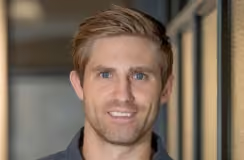


























%20-%20thumbnail.avif)





%20-%20thumbnail.avif)



%20-%20thumbnail.avif)

.avif)




%20-%20thumbnail.avif)