Host: What type of business produces a physical product, outsources manufacturing, requires no equipment, no Capex, doesn't carry inventory and can be run by a single individual and from anywhere. No, I'm not thinking of a drop shipping or Amazon FBA business. I'm thinking of Flavor Crisp, the business acquired by today's guest, Pat Lazure. Flavor Crisp is a breading and batter mix used by restaurants for their fried dishes like fried chicken and fish, as well as pork tenderloin and other menu items. And there's so much to love about it. On top of the aforementioned Characteristics, it's a 63 year old business. It was run by a single person and now Pat and the average relationship with its customers is measured in decades. You can see why Pat fell in love with it and pursued the previous owner for a couple years. He did also search for businesses elsewhere, but it was Flavor Crisp, the very first business he looked at that he really wanted and ultimately got. During Pat's search, he actually spun up another interesting niche business which I'll call Netflix for Barber Shears. You'll see what I mean. Pat and I discuss that business as well. Both of these businesses meet his own investing philosophy. The more obscure, the more allure. Please enjoy this conversation with Pat Lugieur, owner of two obscure, alluring businesses. Welcome to Acquiring Minds, a podcast about buying businesses. My name is Will Smith. Acquiring an existing business is an awesome opportunity for many entrepreneurs and on this podcast I talk to the people who do it. I want to share an update on the Acquisition Lab. As you know, the Lab is a highly vetted cohort based accelerator and community for people serious about buying a business. After going through the Lab's month long intensive, you have ongoing access to almost daily Q and A sessions with advisors, regular live deal reviews with Walker Deibel, author of Buy, Then Build Potential Deal, team introductions, and a very active Slack group with other searchers on the path. Well, the update is that the Lab recently passed 60 businesses acquired and for well over $100 million in aggregate transaction value. Also, all members now enjoy lifetime access to the Lab because when you buy a business, it's often just the first of many and the Lab wants to support you in every deal, not just your first. Lastly, check out my recent interview with Shane Ursum, episode 105. Shane acquired a business with over $1 million in EBITDA in just six months and he attributes a lot of his deal success to what he learned in the Lab. Check out acquisitionlab.com or email the lab's director, Chelsea Wood Chelseieve Pat Lejour, welcome to Acquiring Minds.
[3:15] Guest: Thank you. Happy to be here.
Host: Will, Pat, you and I have gotten to know each other a little bit over a few phone calls, so I'm glad we're getting to do this. Thank you for saying yes.
Guest: Absolutely.
Host: We've got two interesting businesses to talk about today, one you actually started and one you bought. And we'll spend more time, of course, on the one you bought, which is a food business. And the business model is fantastic. So we're gonna go deep there and among other things, try to figure out why more such businesses aren't pursued by business buyers, by searchers. But let's, as always, start off with some background on you. Please, Pat, if you would.
Guest: Yeah, absolutely, will. Thanks again for having me. As I've, as I've told you, I'm such a huge fan of your podcast and what you do, and I think it's a gift to the community and I hope more people discover it. And I sure have helped a handful of friends discover your podcast. So thank you for all, all the work and I'm humbled to be here.
Host: I appreciate that, Pat. Thanks for saying so.
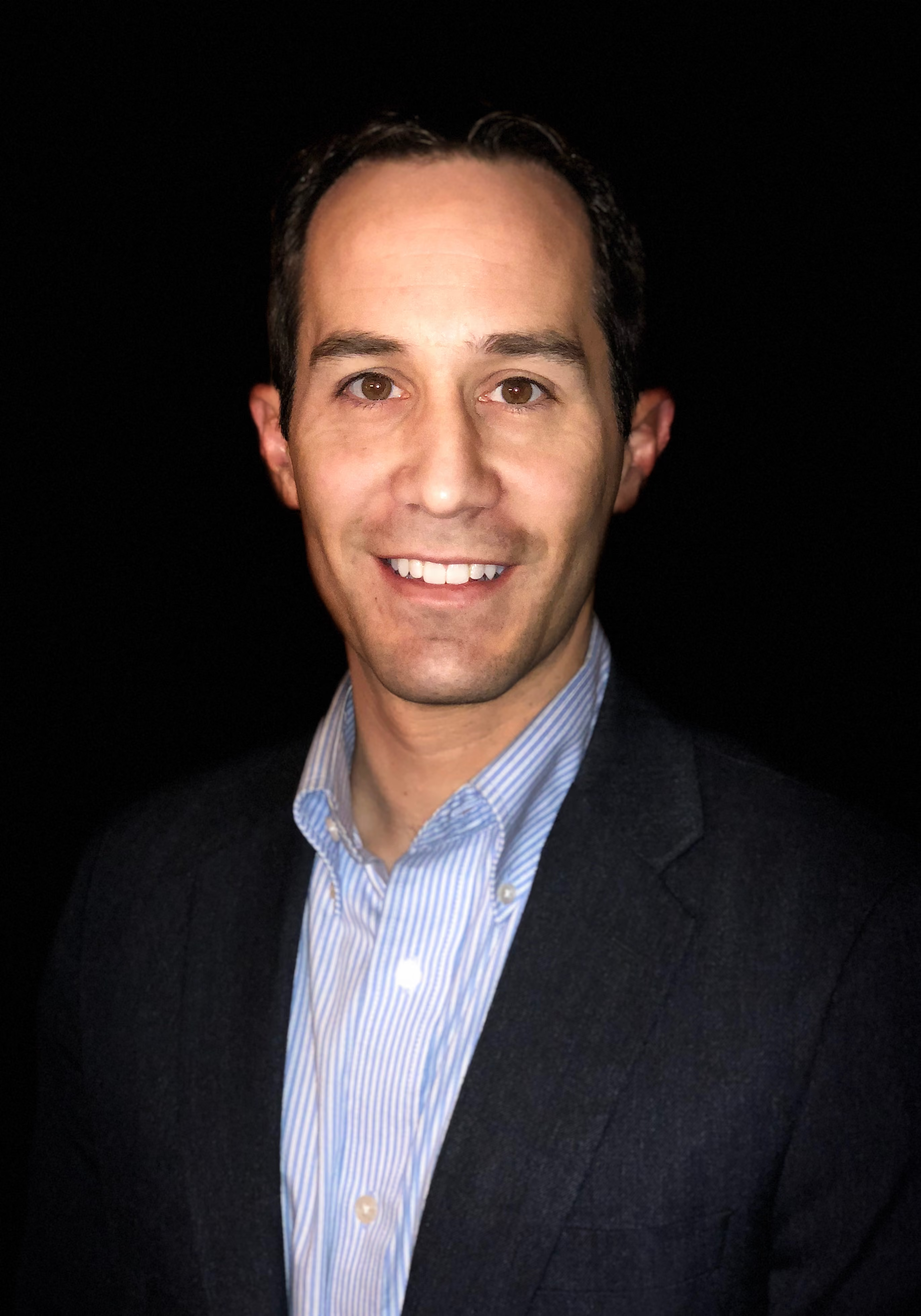
Guest: I'm, my name is Pat Leure. I live in Omaha, Nebraska, born and raised. I'm 47 years old. On the home front, I'm blessed with a wonderful wife and daughter, and they've been supportive in all of this craziness. Just for education and work background, I've got a finance degree and an MBA from Creighton University here in Omaha. I describe my, my career as one part corporate and one part recovering entrepreneur. I've seen a lot of different things from, in my corporate life. From beginning as a corporate auditor, which is about as boring as it gets and the least entrepreneurial job you could possibly have for a railroad, no less. During the dot com era to what was it?
Host: Was it that what Warren Buffett was also doing investing in railroads? During.
Guest: I was ahead of him on, on that. But, but yeah, I, I had a buddy who was giving me a hard time back then saying, you know, what are you doing working for a railroad? You should be out in California working fora dot com. And so anyway, I've, I've done some consulting. I've done. I got into merger and acquisitions. And then more importantly, I'll touch on this more later. The afterthought, the integration, the much less sexy piece of a deal. And it's, and we can get into that later in more detail. But it's that discipline that kind of educated me and Forced me to wear different hats, whether it be one moment it. And then you're the marketing person, and then you have to look at the business through human resources, et cetera, et cetera. So with, with that and a few other jobs, I feel like I've had a lot of. I've achieved a lot of corporate athleticism, as a friend of mine says. But even from a young age, I always knew that I wanted to be an entrepreneur. And I always had the support of my parents, and I finally took the plunge. And all in, I've started four businesses. Three of them I've sold. They've all been modest exits, no home runs, just enough to kind of justify the opportunity cost of not working a corporate job. Layered on top of that, the, the learnings from that.
[6:40] Host: Yeah.
Guest: And then the fourth, the fourth startup is one that I still have. It's called Rock Paper Shears. And we'll talk about that some more later in. In the interview. Great.
Host: So you have the. You have an entrepreneurial streak, clearly, but you also have this, this deep reservoir of, of corporate experience. So how then do you arrive at the idea of being an entrepreneur, but as a business buyer rather than a business starter?
Guest: It's a combination of things. So part of it was experience and knowing what the startup life is like. It's kind of a younger person's game. You know, six years ago, when I decided to leave a corporate life, I deliberately told myself I was not going to do a startup. And my goal was to see if I could, if I could take my startup experience, my corporate experience, and now my merger acquisition experience to see if I could assemble a small collection of small businesses. That was the goal. And I deliberately said to myself that I was not going to start a business. And of course, you now know that I did exactly the opposite. And I'll explain why I did that, too. But as I was looking at that prospect, I really didn't have some of the resources that I have today and that other searchers have today, namely your podcast, a host of other podcasts, search funder. These were resources that I did not know about. I felt a little bit out there on my own. There's a couple of books that really helped me, namely Walker Dibel's book Buy, Then Build, and then the HBR Guide to Buying a Small Business. And those were things that kind of navigated this, this concept. And as I listened to them, and I listened to them over and over again throughout the search process, because I learned something a little bit different or I heard something a Little bit different along the way, but that gave me the framework and the confidence to give this a try. And in hindsight, I feel like buying a business, entrepreneurship through acquisition is the entrepreneur's best kept secret. And, and so the reason for that is because as a startup person, you're taking all sorts of risk. The chances of failure are exponentially higher. It's, it's, frankly, it's audacious. And buying a business is, is still crazy. It's, it's. I was, I've heard guests recently on your podcast say that anyone can do it. And if someone's out there listening to this, I want to say that's, in my opinion, respectfully, absolutely not the case. Starting a business and even buying a business is not for most people because it's risky. And especially if you're talking about personal guarantees and all that, it is scary sometimes. But buying a business, something with the right characteristics can really hedge a lot of those risks. And that's why I think it's, it's the entrepreneur's best kept secret.
[10:03] Host: And Pat, when you decided that you were going to take a run at assembling a portfolio of small businesses, did you. I think it sounded like that kind of vision was. Before you read the two. The two Bibles.
Guest: That's right.
Host: Okay. And so did you. Was that just kind of your own notion that you kind of, that came from within or is it because you live in Omaha and Everybody just sees Mr. Buffett down the, down the block and kind of like he's just has outsized influence over your ideas for yourself or, or what? Because, you know, hold cos now are hot. Many, many Berkshire Hathaways are hot. But it sounds like, but it sounds like you weren't exposed to all this, all that. And this was years ago anyway, so, so, so how did you come to that idea?
Guest: Yeah. So Warren is somebody who I definitely admire.
Host: First name basis.
Guest: Yes. Yes. Well, as a side note, he, he actually showed up to my surprise 30th birthday party. But that, that's another conversation.
Host: Wait, wait, wait. Are we, are you, can you, can you give us any more?
Guest: Like, yeah, someone invited him to my surprise 30th birthday party and, and I had met his wife and, and, and to my surprise, he showed up and hung out for about an hour and a half and took pictures with people and sipped some cherry Coke and he was delightful. And I don't think he's on the birthday circuit anymore.
Host: But yeah, I feel like there's maybe a little bit more to the story There. But maybe one time over beers, I can hear it.
Guest: And, and to be clear, we, we are not, you know, we don't hang out or anything like that. We are. I've had the privilege of meeting him a handful of times, and he's, he's someone that I've long admired. But no, to answer your question, this concept was not meant to emulate Berkshire. I mean, how could you? I mean, it's just. But, but there I was working for a small public company and, and it was struggling, and I knew, you know, and I was the merger acquisition, corporate development guy, also wearing investor relations, fielding phone calls from people who were pissed off because the stock was around a dollar. The CEO had just been made free to industry, and so it was time to make a move. And, and, and I really had felt, you know, I want to be an entrepreneur again, but how do I do that in a responsible way as someone who's now 40 years old, that, you know, something where in the next year or two I would have an income. And so, so that, that was, that was kind of the, that was kind of the idea. And why multiple companies? Or, you know, maybe. Sometimes I feel like I've, I've scripted my work life in a way that suits my personality. I don't know if I have add, but I, I hope I don't. I don't. I don't want to get tested, because I probably do. But having, you know, a couple. Few different things to work on has always suited me well and it keeps me, Keeps things interesting. So that, that was the concept. But, you know, I was not thinking of the word holding company or holdco or anything like that.
[13:40] Host: How does this decision, this vision for the next chapter of your career go, Pat, once you decide to search, give us a picture of what this searching process, the next couple years looks like.
Guest: Yeah, so it started out, I confided in this gentleman out in New York who was our investor relay. So I was an employee. And I confided in a guy that I worked with that I was thinking about leaving the company for the reasons I just mentioned. And I told him what I wanted to do. This guy was the managing partner of an investor relations firm. And he said, well, Pat, I'd really like to help you out, but I only know one person in Omaha, and that's Brad. And Brad used to be the CFO of a comp. Of a. Of a public company called Ballantine, which Brad and the team and this guy helped take public in the night in 1995 to be exact. And years later, after Brad finished a strong career as cfo, he left and he ended up buying Flavor Crisp, which ultimately is the company that I acquired.
Host: Flavor Crisp.
Guest: Flavor Crisp. And as, as Dave was telling me about Brad, I knew immediately Brad was a guy that I needed to get to know. So that's how I met Brad through new this guy in New York. And that's how I how Flavor Crisp came to be. But it was not it, it, it was a two year courtship and we. I'll talk about that a little bit more. But when I first met Brad, he was not ready to sell. And so I did what a lot of searchers do and I went to biz by sell and I had to do that because that's where the low hanging fruit is. You have to turn over every stone. And most of most of those opportunities were quick notes. I knew that I was not going to be buying a restaurant, a bar. I didn't want anything in healthcare. I also didn't want anything. I didn't want a franchise. But you had to go there and look at this myself. To compliment those efforts, I tried to develop what people now call a proprietary search list. And so that was a lot of speed dating with accountants and personal finance consultants and just getting the word out there. And so that was a lot of coffees and breakfasts. But incidentally there were a couple of opportunities that came out of that that were actually mispriced. They weren't a fit for me. But I think that is also an important way to cultivate an opportunity to buy a company.
[16:37] Host: You already know that business owners are making amazing use of virtual assistants, often based in the Philippines. And while virtual assistants are helpful, virtual professionals are transformative. More Staffing is a boutique agency that hires a players in the Philippines not for simple tasks, but for deep competency work. Think operators, supply chain managers, controllers. More Staffing de risks your engagement with a 12 month guarantee to you. And they provide coaching for six months to their talent. When an engagement begins, that means your hire is coached in the background, no additional cost to you, so that your working relationship flourishes and is as successful as it can be. Global staffing is increasingly the norm and building the muscle within your business to take advantage of it will be crucial in the years ahead. Speak with More Staffing about the pool of capable affordable managers they can connect you with. Check out Morenow Co. That's Morenow Co. I'm always interested to hear about people who do a proprietary search. If at the end of the day they either found their business that way, or if they didn't, they at least found some leads on something that could have, could have borne fruit. Um, because it just seems like there's many other guests for whom it's just no, no and no. Like it was a lot of work, it was a lot of points of contact, and it was a lot of nothing at the end of it. So. Sounds like, it sounds like you're kind of a believer, even if the business that you bought didn't come that way.
[18:13] Guest: Yep, yep, absolutely. So, you know, along the, the way, I, I had kind of the traditional search criteria or investment criteria. I was looking for recurring revenue. It took me way too long in my career to realize that recurring revenue is the holy grail of business. And, and the way I learned that is I worked for a public company that manufactured light fixtures. And if we wanted to grow, say 10% next year off of $100 million in sales, we actually needed to go and find $110 million in new sales to tell people that we grew 10%. It was quite miserable. And I got, I had a front row seat to it. Where investors were, would give us an earful on, on, you know, where's the growth? Where, where's the company going? So that, that was a lesson that I learned late in my career. And I knew that if I was going to buy a business, I needed something that was predictable, you know, and the rest of the list was idealistic, where I was looking for companies that had high switching costs, their customers had high switching costs if they wanted to switch over to an alternative. Low customer concentration. And I was also considering a company that would possibly, possibly be a platform for future growth. And I should say I was looking for a company that might have had revenue between 2 and $10 million, meaning that we would have to take out, we would have to find outside investors to make a deal like that happen. And finally, one, one criteria that I added that a lot of people don't talk about was the more obscure, the more allure. And what I mean by that is I had an appreciation for companies that were just a little bit strange, like seasonings for fried chicken and fish, which is what flavor crisp is.
Host: So it sounds like, Pat, you were looking for the perfect business. And no less, I would say that was the idealistic.
Guest: But I knew that something had to give. I knew that I couldn't get everything. And, and, and I didn't. But I feel like I, I got something pretty close.
Host: And you are full time searching at this point?
Guest: Yes, full time searching and then about a year into it, I'll tell you how Rock Paper Shears, my startup came to be. So I accidentally looked at a company that based out of California and the guy was trying to sell his shear sharpening business, a shear sharpening business, which is, yeah, so shears or scissors. And his customers were barbers and hairstylists and, and I, I kind of caught myself, I thought this sounds so absurd. I really can't have this kind of opinion on something so strong that I really don't know anything about. So I called the guy, asked him about the business and the more I learned about solidified how, how weird the business was. He would go around in California, fight traffic, look for a parking spot and, and, and pick up a stylus shears, and he would take them home at night, watch tv, said he'd watch football and he would sharpen these things and then he would do it all over again. Return to the salon the next day a hero because he's got sharp scissors for the barber, the hairstylist.
[21:58] Host: And so the sharpening of shears is something a need to have by these professionals.
Guest: It is an absolutely need to have as, as we say it is, it is what separates the hairstylist from her paycheck. And it's important to have sharp shears because they're more proficient from a customer, a client's perspective. You know, it's got to reduce split ends and all these things. So it's really important for this, the hairstylist to have sharp shears all of the time. And so I thought gosh, there's gotta be a better way to do this. And I kind of turned the model on its side and one, one thing that came to mind was the old fashioned Netflix version where they're mailing out DVDs and retrieving them through the mail. And that was the genesis for, for rock paper shears. And so the way rock paper shears works is it's a subscription business and we serve just under 500 hair stylists. It's the model is boiled down to three simple steps. The stylist selects his or her shears, we send them out, they put them to work for either a four or a six month subscription. And then at the end of the four or six month subscription, we send a replacement shear out of their choice. Usually it's the same shear along with a prepaid return envelope. So think about stitch fix or something like that to retrieve the dull shears. And then I don't know how to sharpen shears. It, it really is a bit of an art form. And you can permanently mutilate these, these things, these, these scissors if you don't know what you're doing. Those get professionally sharpened and then eventually redeployed out to barbers and stylists.
Host: And so the, the stylists, the barbers and stylists don't own their own shears. They're renting them from you, if you will. They're constantly returning them.
Guest: Yeah, that's correct. And that's an important point because there is a little bit of an education involved in the business where you know, stylists will quote unquote, want to invest in, in their own pair of shears. Kind of like professional chef would want to have her own knives.
[24:18] Host: Yeah.
Guest: And having known some chefs, I almost did not start this business because I thought there would like, like chefs with their knives. There would be a personal connection between a barber and her shears. And that's just not the case. The, the barbers and the stylists, they like shiny objects. They like, they like something new. And when I learned that then I thought, well, the switching cost from going from one shear to another shear today is 300 to $1,000. And what I mean by that is a HairStylist will pay 300 to $1,000 for a decent pair of scissors, which is just, it's, it's egregious, but that's what they are charged. And so the switching costs become pretty expensive. With our model, the switching cost is a mouse click. If somebody wants a six inch shear this next cycle instead of a five and a half inch, they just let us know. This actually happens. If somebody wants blue finger inserts and a little tension screw in the scissor instead of pink this time, because her hair is now blue, that's what we'll send them. And so it really gives a stylist a way to not only maintain, conveniently maintain sharp shears, but to access high end shears and, and to change her mind without a lot of those switching costs.
Host: Yeah. And because even if they were to invest in the three to one hundred two thousand dollar pair of shears, they're still going to have to pay to have those sharpened. So you, they're getting the sharpening done, which is, and they're getting kind of are all having always new shears to work with. And the shears you send them, are they at the level of 300 to thousand dollar.
Guest: Our low end is the equivalent of some shears that sell for a thousand dollars. And Then the incremental cost to go with a little bit higher end shear which basically is a better quality metal that's going to hold that sharp edge longer. It's, it's nominal. And so yeah, I, I, I, I, I figured why, why scrimp on that? Let's just have high quality products. The incremental cost is, is nil. So yeah, we can, we can say that our shares are at least as good as some of those, those high end shares. Now the dirty little secret in this industry of beauty is that, and this was a motivating factor for me to start this business is because the pricing in my opinion is predatory. So those thousand dollar shares that are sold I have on, on a good account that they cost that company somewhere between 19 and $25 landed with taxes and everything to, to bring in from China into the United States.
[27:31] Host: Wow.
Guest: And so there's all this marketing dollars and all, all these, this markup and, and, and, and they're convincing these stylists that that's what they need to have. And, and so what is your cost
Host: for a pair of shears?
Guest: Yeah, ours I wish was, was at under $25. It's not it premium, it's about $35. And then for our elite shears, our higher end ones, those are about $60.
Host: And so those $60, those shears that cost you $60 would cost the end user barber or stylist over a thousand
Guest: dollars in some cases. And then other, other shear manufacturers may take the same shear and charge only in Air quotes, $300. So in either scenario the margins are insane.
Host: Yeah.
Guest: For a product.
Host: Yeah, yeah. And so, and so then part of your value proposition too is you're allowing them to get their hands on a product that they might not invest in themselves or might not even be able to afford. And they're being able, they're able to use new ones, I guess. They're not necessarily new. You'll dispatch shears that are not, that have been used before in other cycles of other barbers and stylists. They're just, but they're sharp.
Guest: Correct?
Host: Yeah. What a neat, what a neat idea. Okay. And so, well, pat a little bit on the, on the emotions here or the psychology or the add, however you want to call it. Yeah, the. How do you decide that it's worth your time to pursue this venture? Recognizing, you know, it's as ventures go, it's simple. You know, we can all kind of imagine the mechanics of it. There's not a lot of moving pieces. But let's be real. Anything getting anything off the ground. There is a lot of, a lot of moving parts, a lot of moving pieces, a lot of effort, a lot of time. You got to 500 customers, you have to sell each one of the, so it's a big, it's a big project. How did you decide this is a better use of my time and continue with my full time search?
Guest: Yeah, so a few, a few things contributed to that. One, I was, you know, spending a lot of time searching and I was frustrated. And, and, and the second, I was, I was eager to get started with something.
Host: Yeah.
Guest: And the second thing is, is I thought that this was a pretty good idea, a neat way to disrupt an industry. That is a necessity. And a lot of times these sharpeners are also showing up in refurbished ambulances. One lady I talked to, she was getting eight miles to the gallon and she was going state to state sharpening shears in the parking lot of these salons. And I just again thought that there'd be a better way to do it. And I felt like I had formulated a business model that was interesting to me. And then the third thing would be, even though Kara, my wife, was extremely supportive, I think there was some self inflicted guilt that I was not contributing to the family coffers. We had saved up some money but during the search we were not, we were not banking anything to retirement. We were getting by because she was, you know, I say self funded. It's, it's really spouse funded if that's a thing.
[30:55] Host: Yeah, it is. I've heard people use that exact phrase. Yep.
Guest: Yeah, I, I think it's, it would be disingenuous to say self funded because I, I very, Even though she does not work in the business at all daytoday, she, she has been supportive the whole way. And I, I, I try to say we, we bought this business, we own this business, we own both businesses together. And, and that, and that's the, that's the truth. That's the formula that we kind of put together and, and, and, and that's the way we, we did it. So it was, it was a combination of those things where I took the plunge and like I said, I did exactly what I said I would not do and start a business while at the same time I knew that I was going to continue to search just in case this Rock Paper Shears subscription did not work.
Host: So how did you, how are you splitting your time?
Guest: At that point I was probably 75% on Rock Paper shares and 25% on my search. And all the while I was continuing my courtship with Brad, the owner of Flavor Crisp. And that involved a lot of breakfast and just checking in and reminding him that I would love to buy his business when he's ready. And at about the two year mark of my search. So this was about one year into Rock Paper Shears, he finally started to make some noises about yeah, maybe it is time to sell.
Host: And so just to be clear here, the Dave I think was the name of the person you knew when you were still in corporate. And he said, the only person I know is this. Sorry, what's his name was Brad in Omaha. The only person I know Omaha is Brad. Talk to Brad. But did he mean that in the sense that Brad might actually have a business to sell you or just.
Guest: Yeah, yeah, he did.
Host: So he knew Brad had Flavor Crisp that eventually maybe.
Guest: Yeah, that or Brad knew of somebody who, who maybe had a business to sell.
[33:03] Host: Okay, so you reached out to Brad even initially, it was all the while, the whole time you're kind of getting to know Brad, it's always with an eye toward maybe buying his business. Flavor Crisp.
Guest: Yeah, I remember where I was sitting. I mean it was within the same hour I got off the phone with Dave. I went to this guy's website and, and then I tracked him down and called him. The way that Dave described the business, I was immediately excited.
Host: Yeah, and we're. And we'll definitely get there. Going back to the search and getting Rock Paper Shears up and running. How do you feel about part time search versus full time search? Because if you are now a part time searcher after you start Rock Paper Shears and it's even, and it's even a little bit more complicated because you're splitting your time between two of your own entrepreneurial projects. A lot of times if we talk about part time searchers, somebody is basically splitting, splitting their time between their W2 insertion. So you're constantly, I imagine during this time having to, having to kind of do this time and resource allocation decision every hour in your head. Should the next hour go to. To searching or should the next hour go to Rock Paper Shears? So how do you reflect back on that? Were you able to do that pretty effectively? Do you feel, I mean it all, it all worked out, you've now got two businesses. But reflect on it for us.
Guest: Yeah, I feel like, I feel like you're reading tarot cards right now because what you described is, is very real. Constantly. Even today I think about, okay, what is this next hour? What's the best use of my time in this next hour. But to go back to your question, I think it would be a mistake to say to. To someone, go all in. Quit your day job. I think it'd also be a mistake to say the opposite, which was keep your day job and search nights and weekends. I think it's really a personal decision based on at least a hundred different variables. But the ones that come to mind are, what's your financial situation? What kind of support do you have on the home front? How much Runway do you have? What's. What's your experience up until this point from a business perspective that makes you think that you could do. You could acquire and not break a business. So I think it's really a personal decision. You can listen to advice from a lot of people, but for me, it was the right decision in the moment to pursue the startup. But I. Out of the corner of my eye, I was still looking at acquisitions. It was just that I had something to work on.
Host: Yeah.
Guest: And that allowed me to be more discerning in my search criteria.
Host: Yeah. Well, and let's spend a few more minutes here on Rock Paper Shears. You had something to work on.
Guest: But.
Host: But it's still. One of the reasons we're all here interested in buying businesses is because they offer immediate salary and revenue and so on. And even if Rock Paper Shears was going to prove a success, it was still going to take, you know, who knows, a year, two years to generate enough profit that it could pay you the salary that. To replace your W2 or even, like, the salary that you'd probably take out of a business you bought. So how are. So even though you were doing something, it was real revenue for the family probably was a ways off. How are you tell it? I guess. Tell us about how that went. You know, once you kicked off the business, how did you start. How did you start to get customers? And how long did it take for real. Real revenue to materialize?
[36:43] Guest: Yeah. So we launched it at the Chicago Beauty show. And my. I will forever be in debt to Kara because we lugged all these scissors and tables and all sorts of things out to Chicago, and we were just kind of a fish out of water. And for that weekend, we had a little booth just in the shadows of some of these giant beauty brands. And. And we got our first 50 subscribers. And along the way, my wife, who's a little bit of an introvert, found out that she's a terrific salesperson, as introverts often are. It was amazing.
Host: It was Amazing unknown truth there. Go ahead.
Guest: Yeah. And, and then there was, there I was and you know, I, I pulled my weight, but I'm, I'm the extrovert in the family and, and has, I've got some sales experience and, and she, she was lapping me. It was amazing. I lost my voice because we were talking so much that weekend, but that's where we launched. It was a miserable experience and, and she, she didn't complain, but I'll never put her through something like that again.
Host: How did people respond to your concept? I mean this is where, this is kind of your, your first time where in, in real numbers you're able to kind of take the temperature of the market with respect to this idea that you've, that you've given birth to.
Guest: Yeah, yeah. So there was, as I touched on earlier, there's a little bit of an education process to it, but once people understood it, they thought it was marvelous. And to my surprise, I really thought that this would be a business that was geared towards the recent graduate from beauty school who didn't, didn't know that they need to keep their shears sharpened regularly and they didn't have 300 to $1,000 to buy the first year and replace the really cheap shears that come with their in school. But to my surprise, the most of our customers are established barbers and stylists who already have a half a dozen expensive shears in the drawer and they just want to try something new. So, so the response has been really favorable. I would, I, I've always thought with all my startups to take an over the top approach to customer service because I believe that it can be a source for competitive advantage. And it's a theory, but it's, it's yet to let me down. And so that's how I approach this business and Flavor Crisp and any business that I've ever started. And as a result of that, I would describe in a word the Rock Paper Shears subscribers as fanatical. They love the concept, they love the customer service and because they're standing elbow to elbow with one another for several hours during the day, eventually I believe that they run out of things to talk about and they're going to talk about their scissors. And so with that there's a little bit of a built in marketing engine.
[39:56] Host: Yeah.
Guest: That I don't have to pay for to spread the word. And so that's, that's where it's gone from 50 to just under 500.
Host: Did you do any other marketing yourself after that? That show. After appearing at the show we did
Guest: in that first year, we did some targeted Facebook marketing to people who indicated that they were a stylist or a barber, and that was the extent of it. But when Brad told me that he was considering selling the business, all of that came to a screeching halt. This was five years ago and I've yet to spend a dollar since then on any marketing. And, and the reason for that was I knew that if this Flavor Crisp acquisition was going to happen, it was going to cost a lot of money, it was going to require a lot of attention, and there's going to be a lot of risk associated with it. And I did not want to screw that up knowing that there was a potentially a personal guarantee on our horizon. So I wanted to compartmentalize the Rock Paper Shears business. And since then, it's just been collecting some cash. But I'm now at a point where I feel like my head is above water on Flavor Crisp. We've accumulated some cash. I need to, to give Rock Paper Shears a little bit of a tech up upgrade in early 2024. But then I'm going to, I plan to begin deploying that cash, potentially hiring someone, but also to deploy some marketing dollars to grow that business.
Host: You've gotten to 500 customers. And so if you didn't do any more marketing, if you didn't do all the things that you're planning to do, you think it would get, what is it growing every year, roughly? I mean, if you had to peg
Guest: it maybe 10% on a. Okay, subscriber count without really doing anything.
Host: And what does Churn look like? I mean, is it. This is a recurring revenue business?
[42:02] Guest: Yeah, yeah, it's. That is, that is the Achilles heel of the business. The, the Churn really comes from those subscribers who fail to update their credit card. And that is a challenge because if, if I'm Netflix, I push a button. I don't know how they do it, but they push, they, they disconnect the service. What's different about that for us is the subscribers still have our assets and their, their perception is that these things are worth several hundred dollars. And what's frustrating sometimes is they, they are not following up and responding to our, our efforts to reach out, to say, hey, look over here, update your credit card. And more time goes on. And eventually they must be noticing that their shares are dull and they're not calling me up and cursing me out, saying, you failed to live up to your end of the bargain. Where are my sharp Shares instead, it's silent. And so I'd stop short of calling that theft. But our assets are out there, and that is. That is the portion of the business that represents most of the churn.
Host: Yeah.
Guest: So I'd say 75% of the churn is from those scenarios, and then 25% is, hey, I bought my own shears, which is actually kind of rare. More common is I've stopped cutting hair. I'm no longer behind the chair, and I'm just not cutting hair anymore.
Host: Yeah. It's interesting what you pointed out, that they have their. Your assets in their hands. When we think of recurring revenue businesses, we think of a lot of different kinds, including sas, including cable, including Netflix. And in all of those, there's no physical anything. So they. So the provider just turns you off if you don't pay. Yeah, but in your.
Guest: Is more like they have a little leverage over you.
Host: Yeah. Got your car?
Guest: It's not a car, but there's an asset out there and it belongs to somebody.
Host: Fascinating. And so can you share what the numbers are on revenue or maybe tell us what the monthly fee is and we can do our own math? Yeah, yeah.
Guest: I'll give you a little taste for what it is. It's like I said, it's deliberately small.
Host: The.
Guest: The subscribers pay anywhere between $12 and $28 per month, depending on the number of shares, the quality of shears, and the frequency. Again, four or six months for how often they want to swap. Revenue is approximately $80,000 right now per year. So, again, super small. And that's something that. That I'd like to change. I've even considered. I mean, I've got. I've got a cash pile that the company has generated, and it's just been earmarked for. For growth. But I've thought about once I get past some of the technology upgrades that are needed, that might even go out and raise. Raise money. So, so super small, but the unit. The unit economics are promising.
[45:27] Host: Really, really cool, Pat. That's a neat business. That's a neat idea. Well, we could spend another chunk of this talking about it, but I'm going to force us on to Flavor Crisp. But actually, just before we get to Flavor Crisp, you've mentioned Kara and how supportive she's been, your wife. I know that that's something that's come up on each one of our calls prior to. To all of our pre. Calls. How appreciative you are of that. Is there anything more you want to say about it or have you kind of have you said your piece? Or maybe another thing to ask would be this doesn't get a lot of attention. I've had more than one guest say, you know, maybe you should talk about spouses or bring on a panel of spouses or something like that. Is there anything more to say here from your, from your own experience, Pat?
Guest: Well, first of all, I like the panel of spouses. She's. I don't know if she would. Well, maybe she would. Would join, but I'll have to ask her. But, no, I just. I just think that it's. It's so important to have that support in a relationship. It's something that I think a person can take for granted. And, and I would. Starting a business is. Is a little bit scary, and it's a little bit crazy, and you have to manage those expectations and those risks. And if, If a person out there values the relationship more than the, the dream of buying a business someday but doesn't feel like that they've got their, their copilot on board, I would tend to that first or, or give pause before buying a business. And, and I was fortunate enough to, to have that support.
Host: Well, thank you, Kara, for the support you're giving Pat. All right, so you're, you're talking to Brad, owner of Flavor Crisp, as you search, even as you build rock, paper, shears. And then eventually, these talks do bear fruit. What happens?
Guest: Yep. So then we kind of play Antique Roadshow and try to figure out what the business might be worth. He goes to his accountant. His accountant does an appraisal, comes back and says it's worth $700,000. So Kara and I agree to pay that. And as we're going through the due diligence, we did an SBA loan, we're going through all of that. He calls me up and he tells me that his accountant, who conducted the valuation, has just offered him $800,000 for the business. So naturally, Brad entertains. You know, it's another hundred thousand dollars. I don't think he would mind if I told that. I mean, Brad is. He's an amazing guy, and I actually consider him one of my closest friends. He's is just. He's an amazing guy, and, and I did not know him before any of this, but, you know, these monies that he's collecting, they're not for him and his wife. They're very philanthropic. They don't have children. So any extra dollar is going to go to a good cause. And that's where his head is. And he's thinking about, okay, $100,000 is a lot of money. But at the same time, he's questioning. He's now questioning the integrity of his valuation and the integrity of his accountant. And is the company really worth $700,000? And if it was, why is this guy offering 800?
[49:20] Host: Yeah.
Guest: So things got a little. Things were a little bit weird, and then they got strange. The accountant's mother actually reached out to Brad and, And, and, and called. Called Brad and said that her son really would be the ideal owner of this business and that he's such a good boy and all this stuff. And, And Brad's telling me this, kind of laughing, and, and so he. He literally said he wanted to prey on the situation. And then I got a voicemail. I kept the voicemail. And, and he said, you know what? I've been doing some thinking about it, and you're the. You and Kara are the best owners and stewards of the business, and I guess you can buy it for 700. And all that while. I hope he's not listening. We were considering, you know, inching up our offer a little bit more, and probably not to 800, but it was. It was a stressful time because I felt like this business that I had been chasing for two years, and by the way, it was the. Out of all the businesses that I looked at, it was the first one and my favorite one that, That I look, that I considered, and here it felt like it was slipping through the cracks.
Host: Well, it's funny, Pat, that the first one you looked at was your favorite, because often people will talk about their experience of the first one. They look at being their favorite and then being like, bo, Bo, you know, I didn't know anything, or, you know, I just kind of got swept up and was naive. And then I looked at a lot of other businesses and realized, sure, I'm glad I didn't find, buy, or go after that first business. And so it's funny that you're. You're the first one you looked at held up, even after looking under the covers of so many other businesses. So this would be the perfect opportunity to tell people why it was your favorite. What. Tell us all about Flavor Crisp, what it is, why it's so compelling. And in answering that, what is. Give us a picture of what? Brad, this owner that you're negotiating with, this now friend, is he operating it full time? Is he retiring? Like, what's his deal in relationship with the operations of the business?
[51:26] Guest: Yeah, well, you know, ever since I was a young kid, I always dreamed of operating a breading and batter business, not to mention a scissor company.
Host: No, breading and batter.
Guest: All right. Truth be told, when I would tell some friends early on what I was doing, I'd start laughing at myself and, and just kind of giggling because it's. The. Both businesses are just. They're so absurd and, and unique. And I say that with reverence.
Host: But the more obscure, the more allure, baby.
Guest: There. That's right. That's right. So. So I knew. So I'm a person where I'm a little bit of a business junkie. I. I can get excited about business models, and that is what has happened with both of these businesses. When I contacted Brad, he told me about the business, and he. He assured me that he only works two or three hours a day in the business. It was a bit of a hobby business. And he then went on to assure me that he would never work more than an hour at a time. That, you know, that that would be crazy. So he'd check email a little bit in the morning and process some purchase orders, et cetera, et cetera. One thing that he did not do, and again, he was. He was the CFO for the small public company and took it public. So this, this became his hobby after he had retired. He had already decided to retire, and he just. He did not want the fuss. And so he met face to face one time with a customer over 11 years of ownership. He went on zero sales calls. And, and, and that's. That's not the situation for me. That's not a day in the life for me. We've got. We still have a lot of debt on the business. We do need to grow it, but that's. That the business was on cruise control, and yet he was able to grow it modestly in line with inflation over those years.
Host: And what, what is this product? Tell us what the product is. Yeah, the.
Guest: The product is seasonings, primarily breading and batter mix for restaurants. These restaurants use the products on fried foods. Think fried chicken, fish, vegetables, pork tenderloin, a variety of products. And our customers are primarily food service distributors, who in turn distribute the product to restaurants. We have customers, restaurant customers across the country and in 14 north and central American countries. But if you looked at our customer base on a map, it's like Swiss cheese. We. We don't have any customers in Texas, for example, so we're working on growing that. But that's, that's what the company does. And it's. It's a little bit like a subscription in a way, because when the customers run out of product, they reorder and. But I think when people look at food companies, they don't think of it like that. But that's what. That's what it is. The average customer, I would estimate, has been a customer for a quarter century, 25 years. Company was started in 1960. And the reason these customers are customers for that long. So you talk about churn in a subscription model, I would estimate that the churn is, I was going to say 1%, but just to err on the side of caution, maybe 2% per year. And so these customers, they use flavor Crisp because they are known that is the flavor that delivers. That's what, that's what they're known for. And the product, Flavor crisp delivers the flavor for the chicken. So getting back to the business model, one characteristic of this product is it's. If you could graph. On the x axis you have price, and on the Y axis you have importance. This is a product that is very important to its customers. But the cost, the price is very, very low. So, for example, if a plate of chicken costs, or a chicken dinner cost $10, and you were to build a bill of materials for that $10 plate of chicken, the cost for to the restaurant might be $3. Of that $3, let's say $2 and 50 cents is the chicken. And then you've got some sides. Maybe it's coleslaw or beans. Call that 40 cents. That, that. That leaves 10 cents. There's 10 cents left in that bill of material. And that is where flavor crisp comes in. That's what the relative cost is. And yet it is disproportionately important to the restaurant operator because that is the flavor that they're known for. I'm not going to be a pig about it and increase that price. You know, a customer could certainly try something different, but there's some inertia there with this product. So that's one characteristic of the business model that I, that I fell in love with. I'll take a breath to see if there's any questions there, but I've got a few more points I want to make about the business model.
[56:56] Host: Great, I want to hear them. But I'll just emphasize what you've just called out, that that is such a strategic kind of sweet spot, if you can find it where a business will sit. That is strategically high value, but really low cost. So I remember the first time hearing this. Alex Mears of Bryden Group talking about his time in private equity and his Example was there was some sort of. I'm going to not remember any of the specifics, but there was some sort of big, expensive widget being manufactured. I don't know, maybe it was a, like, airplane part or something. And so within this big, expensive part, of course, there's hundreds, maybe thousands of littler parts. And one of, like the gaskets, the manufacturer that his private equity team was looking at was the manufacturer of one of the gaskets that goes in this. In this piece of machinery. And the gasket was fitted just for this one big old widget, one big, old expensive widget. And it was crucial. It was a crucial component, albeit tiny and really, really inexpensive. So in a moment of contraction or price cutting or, you know, if the team at the larger supplier who's making the big piece of machinery is going down the list of all of their expenses, all their component expenses, and they're going to lean on all their suppliers for better pricing, they're not going to get to this gasket manufacturer forever. I mean, they're way down the list.
[58:26] Guest: Oh, yeah.
Host: And yet they're never going to strike it altogether because it's absolutely crucial to this piece of machinery. That's where that is like the sweet spot. That's where you want to live. And it sounds like that Chris lived.
Guest: Yeah, it's a good place to be positioned as a business owner. In a previous life, I worked in procurement, which I say with reverence, is the armpit of any company. Uh, I was an analyst. And you can derive so much value from, from, from procurement. And, and one of the things that we would do regularly is look for ways to contain costs. And there was a certain dollar threshold and we looked at only the big stuff. So something like this, it just never got any attention. And fortunately, most of our customers are so married to this product that even if the price increased materially, they would not change to, to something else. And so, so, so that was one characteristic. And then one other validating point along the way, as we were getting closer and closer to closing, was we received a phone call from a elderly woman and, and her friend was Washington on hospice. She was dying. And her last dying wish was to try to have flavor crisp chicken one more time. She was out in Portland, and it was only because of my due diligence that I, I told Brad that you actually do have a customer in Portland that's buying it through a food distributor and spoke from Spokane, and we could send this woman there to get it, to get one last meal and I. I've struggled on how to wrap a marketing message around this situation, but we. Because the woman, she passed away a few days later. But. But we did send her in there and she did have Flavor Crisp chicken. The restaurant rolled out the red carpet for her and we like to think that, you know, we put at least one more smile on her face.
[1:00:30] Host: That's pretty.
Guest: I felt like that was kind of an omen from above that, that this. Despite my trepidation, our trepidation going into this acquisition, there was once again a fanatical customer base out there.
Host: Well, so this happened during due diligence.
Guest: This happened three weeks before we were scheduled to close.
Host: That's that. What. Yeah. If you were totally. If you were looking for a sign from above, boy, did you get it. But it's. But no, that's actually a beautiful story, but. But it makes me a little confused. So this is a. Flavor Crisp is a seasoning that consumers know or it's behind the scenes as something that, I mean, obviously this woman knew it. So. So I guess consumers do know it. But. But it sounds like more that it's kind of one of the. An ingredient behind the scenes. So explain that for us.
Guest: Yeah, yeah. Let me clear the. Clarify that. So the company did a better job decades ago of having its brand front and center. There were actually, I don't have all the history on it, but there are actually some restaurants that had. That were called Flavor Crisp. And, and Flavor Crisp actually started in the 1960s where movie theaters drive in movie theaters would buy Flavor Crisp restaurant equipment. So think about pressure fryers and, and things like that. And then. Oh, by the way, if you bought the pressure fryer, then you bought the recurring revenue breading and seasonings.
Host: Ah, well, 20 razor blade model.
Guest: Exactly. Exactly that. And so about 20 years ago, all the restaurant equipment was canceled. And what lived on was the breading business. And to. To this day, some restaurants will still have Flavor Crisp on their menu featuring Flavor Crisp fried chicken. But I would say slightly more than half do not do that. Or actually it's quite a bit more than half. They do not. And Flavor Crisp lives behind the scenes. And some, some restaurants even say that they use a. An old family secret recipe. And in fact they're using Flavor Crisp. So it's a little bit of a hybrid. But back in the day, it was a brand that was front and center.
Host: Which explains why this woman who is older as knew it as a consumer.
[1:03:02] Guest: Yep. Well, what, What a business.
Host: And so. Okay, and so, and so what size give us Some numbers around the business, if you would.
Guest: Yeah, yeah. So when, when we bought the company, it had, depending on the year, it had about $700,000 in sales. Going back to the business model, I fell in love with the business model because it's very asset light. So just structure wise, by the numbers, there's one employee in the company and you're talking to them, that's me. And so how does this company only have one employee? Well, the company leans on co packers in Nebraska and Illinois. We have warehouses in Nebraska and Illinois. We do not own the inventory that's in those warehouses. Instead, the co packer owns those. They have our, they're finished goods. They have our, our branding on them and we're obligated to buy them if we ever decided not to. But until we ship them off to our customers, we do not own them. And we, we own them for the two or three minutes. We own the inventory for the two or three minutes that it takes to process the paperwork. It's kind of silly, but that's the reality of it. And so because the company is, is so asset light, we don't own any equipment, we don't own any real estate. If we're so lucky as to grow it, then we can really scale that. This business at the time, it's kind
Host: of a drop shippy FL feel.
Guest: It is, it is a lot like a drop ship feel. We, we of course own the recipes and the customer, customer relationships and all that. But it. Another one of the reasons we fell in love with the business model is because it is a little bit of a virtual company. And we talk about someday running this company from an RV if we so choose. So.
Host: Okay, well, this is, so, this is so interesting, Pat. And it's like, wow, how did I not know that such businesses exist? Because. Well, let's. Well, we're going to get into kind of food and are there more opportunities like this in, in Food Land or is this a one off, which I suspect it is not. But, but just to be clear, so. So 700, about 700,000. And how are margins? I imagine. And margins are good. That would be my guess.
Guest: Yeah. Gross margins today are in the upper 20%. When I stepped into the business, they were very low 30s. The reason for that is a few things. You know, the business has not been without challenges. Covid was, was weird for everybody. So that was one reason. But another challenge was the invasion of Ukraine. And, and you might be wondering how, how does that, how's that relevant to any of this? Well, Russia And Ukraine produce about a third of the world's wheat. And that is our biggest ingredient in our, our breading. And so wheat prices nearly doubled for a while. And I really thought that the Ukrainian invasion, the war in Ukraine would be short lived. And, and of course it was not. And so I was slow to increase, increase prices to our customers. I still am behind on that. It's worked in my favor in some respects because we've been able to win new customers. But as wheat prices are retreating now, those margins are being repaired. So. But yeah, decent margins. I know that some of my competitors probably have higher margins, but I don't want to be a pig about it. I, I would, I know, I recognize that if I can get a customer, they could be with me for a quarter century and I'll make my money that way instead of being greedy in the short term and trying to have some fat margins.
[1:07:18] Host: Yeah, let's actually just talk about a little bit more the, the COVID in the Ukraine and basically just downside here risks of a business like this. So you've already said that your suppliers or the, you know, the commodity products that, that are the ingredients in your, in your product, you're subject to the prices there. So that, that would be a, a risk. And then things getting weird in Covid, you said. So I assume that because the pull through demand wasn't there because people weren't going to restaurants, basically. So consumer demand for restaurants is kind of a bucket, bucket, bucket of risk. Okay.
Guest: Yes, that's exactly right. And then we had a couple of customers who decided to close their doors for good and retire closing the restaurants.
Host: So your health is really, it's kind of like your health is tied to the health of the end customer, which is always the case I guess for us, for businesses. And most of your customers are the individual restaurants or like restaurant distributors.
Guest: Most of our customers are restaurant distributors like a Cisco or a US Foods that are redistributing the product to individual restaurants. There are some restaurants, there's only a few that just go through a lot of breading. And so we'll just ship a full pallet to their restaurant, provided that they have the space. But usually our orders are one to somewhere between one and 20 pallets of breading per order.
Host: Okay, and then what about the, the competition for something like this? So is that, I assume, like, is that something you have to worry about, that somebody's going to come up with some similar product and call all your distributors and offer to them for cheaper and you're Pushed out.
[1:09:08] Guest: Yeah, yeah, that is, that is a risk because I've been slow to increase prices. That, that provides a little bit of protection. But going back to the example I, I shared earlier, for a product like this, taste buds come first. And I'm never one to say that hey, this, this product tastes great. I mean, consider the source, right? But, but now, actually a few weeks ago there was a competition put together by the. It's an annual competition. I had no idea until a few weeks ago that it took place. But it's put together by the Pork Producers association and they had a contest for as weird as this may sound, 774 restaurants submitted their pork tender breaded pork tenderloin sandwich. And the restaurant that finished in first place for the first time ever divulged their recipe. And they use Flavor Crisp. And so now I'm fortunate where I can point to an article in the media that, that tells the story about how this first place restaurant uses Flavor Crisp. But really it comes down to taste buds first and then the economics come second button.
Host: Congratulations, by the way. That is quite a. Quite a.
Guest: Hey, I can't take credit for that. Someone else came up with this recipe years ago and truth be told, until, until this article came out, I didn't even know that this restaurant, which is an hour from my home, was a Flavor Crisp customer. And there's several other restaurants out there where I just don't know that they use our product because our customer, our direct customer is the food service distributor.
Host: What does the supply chain look like here downstream from you? Do distributors do marketing on your behalf? So it's like putting it on Amazon or getting it in Walmart where you as long once you get in, you're leaving it to Amazon or Walmart or in your case, Cisco, a restaurant distributor to promote for you and you kind of don't have to think about it anymore.
Guest: I wish it was like that. And going into the business I thought it was like that. But there I can count on one hand the number of times where a food distributor has said, hey Pat, what can I do to grow your business? Some of the food distributors actually have developed their own breading utilizing co packers that is a competitor. And of course there's more margin in that. It's kind of like it is a house brand. And so for a lot of restaurants that is quote unquote good enough and that's what they buy. I've actually had some instances where I've found that my distributor has tried to slit my throat and replace our Breading with, with their lower cost, well, not even lower cost breading, but higher margin breading. And the restaurant has called me up and as a courtesy let me know. So that's a little bit disheartening, but that doesn't happen very often. Unfortunately though, they're not, they're also not creating pull through demand for us in most cases and introducing the product to prospective new customers. And so that's, that's where I'm slowly doing some outreach and working on introducing the product to new customers.
[1:12:42] Host: Well, that does sound like quite a risk to have these distributors who can, you know what, you know what it's like is, it's kind of like a little bit like platform risk. So you're, you know, I, I don't, I think you, you're more diversified than this. But if you have like an Amazon business, a business on Amazon and only on Amazon, you know, if Amazon chooses to like what you just described, like if you're selling headsets and they, they come up with a headset, they're going to promote their headset over everybody else's, which they do. Everybody knows this and is annoyed with Amazon for doing so or whatever. They change the algorithm or they, or whatever. Just some tweak in the way Amazon's doing things. You're just completely beholden to the winds, the way the winds blow at eternal internal decisions at Amazon, you're really vulnerable. So, so I feel like my, my analogy here is falling apart a little bit. But the point, the point is, you know, with your, with your food distributors, they're empowered. They're really empowered in ways that make you vulnerable. They can introduce a competing product. They have, they have the relationship with your ultimate end customer. So, so that's not ideal, but I, I assume it's kind of, there's no way really around that because you're not going to call 5000 individual restaurants and direct, and develop direct relationships with them. Probably because they don't want that. They, I assume restaurants want to only deal with a distributor anyway.
Guest: Yeah, in most cases you're right. Yeah, they, they, they don't, they don't want a pallet of breading to show up in the back room and try to figure out where to put it.
Host: Yeah, yeah. Well, it's still an all. Despite having spent a couple minutes here on the risk. It, it sounds like an amazing, it still sounds like an amazing business. Do you need, if you, if so did you pat and then extrapolate for everybody else and looking at food businesses like how much do you need to know about the recipe, the science, the consumer safety. Like I, yeah, I mean you're, you're, you're creating a product that people are ingesting. Like how is that.
Guest: Yes.
Host: Are there all kinds of rules and regs that you have to familiar, familiarize yourself with or what? Talk to us about that piece.
Guest: Yeah, there's certainly been an education and that's something that you absolutely have to take seriously. I was lucky where I inherited a lot of that, A lot of that was built in with the CO packers. That was part of the beauty of buying an established business, even though it was obviously very small. But yeah, the CO packers that we lean on have been, they've been wonderful and they have those resources there. They have food scientists on staff. This is overhead that, you know, indirectly we pay for in the unit price of our product, but they're not on our payroll. And it's rare that we have to phone a friend and talk to the food scientist, but when we need that person, she's there and you know, all the quality standards. That's, that's kind of, that's one thing that, that we have to manage is making sure that these food distributors have the, the licenses and the health permits and all these things. But I don't have to lose any sleep over that because they have several other customers that are larger than me and that provides a control for them to ensure that they're thinking about these things a lot harder than I am.
[1:16:08] Host: Yeah, yeah, yeah, that's well put. And just to be clear, so, so this, this kind of co packing, co pack or co packing situation, what does this mechanic look like? What does the supply chain look like? They're also, they make it, they also, they manufacture it and store it for you and have the, all of the scientists and so on. They do everything. They're like your Chinese manufacturer. If you're an FBA business on Amazon, they're basically your Chinese manufacturer that basically does the whole thing and puts your name on it sort of thing.
Guest: Yeah, I feel you're kind of embarrassing me because it's, it's, I, I, I've got it pretty good. So they will source the ingredients.
Host: This is all a testament to how great a business you got. So you know, take this, take this as flattering. Go ahead.
Guest: Well, and, and Brad, Brad deserves a lot of the credit because he kind of re engineered some things and made it even more streamlined. But uh, yeah, the co packer obviously knows the recipe. So they know the ingredients to that recipe. They source the ingredients if they're about to run low on wheat flour, they order the more wheat flour. I don't have visibility to that, which is you could say a risk. But they're professionals and the partnership is there. There's been a couple of stockouts along the way, but for the most part it's been good. They keep track of the labels, our labels with our branding on it. If those are about to run low, they reorder those. They, you're right, they, they have the machinery and on certain days of the week they're blending wheat flour. When they're done, they spray down the facility and get rid of all the, the, the glutens in, in there so that they can make whatever they make next on the next day. And so it's,
[1:18:09] Host: and so there's some
Guest: trust involved in there and that relationship. And for that reason that's why I always have had, from a business continuity perspective, have had to. To at least two co packers and I actually have four on hand, but two are active.
Host: And so are these co packers big businesses? Are they also kind of mom and pops or what is. Or is there a range?
Guest: Yeah, I would say one has the smaller one. The one that I feel the most comfortable with probably has a hundred million in sales. Another one probably has maybe 2 billion in sales. So it's a little bit harder to navigate that. And then the other one is probably double that size at about 4 billion publicly traded company. And, and, and they, they actually, I won't say who they are, but they actually. The company Flavor Crisp used to single source everything to that company for the first five decades of its life. And, and then some things more recently changed and there were some challenges there where we shifted some of the, the, the production from, from one co pack from that single source co packer to this other one that's a little bit more, it's a little easier to, to work with.
Host: So are a lot of food brands like this like your business here? So, so let's kind of zoom out a little bit and try to understand what searchers can take away from this story. There's hundreds and thousands of brands that are producing some sort of ingredient or a spice or food product or direct consumable. And are, are many of them like this where they're working with co packers and do you think or are they, do they have their own manufacturing facilities or. It's too hard to generalize. Give us a lay of the land as you understand it.
Guest: What I do know is that there are hundreds of companies that rely upon co packers. What I also know is that they are very hard to find. I have deliberately made an effort to as I. I'm searching for other acquisitions and I deliberately look for businesses that fit this model because I like this model. Yeah, they're very hard to find. And I found some that are much smaller than what we are and they don't have a lot of. There's a lot of really small food companies that are made in somebody's kitchen and they're for sale on biz by sale, Biz by sell. And they're trying to get to that co packer level. But I just don't know how to take it from a person's kitchen into a co packer. So I kind of ruled those out. That's a lot of work. But yeah, they are out there, but the strike zone is very small. I think they're very hard to find.
[1:21:10] Host: It's interesting that you say that there are these food businesses on biz by sell, however small and unappealing they might be, because I don't feel like I've seen those. I don't. I. Maybe I just not looking closely enough, but I just don't feel like I've seen. Really. I can't remember seeing any kind of food business like yours, Pat, which is part of the reason for my excitement about. About this. It's just opening my eyes to this whole. Because, you know, I have. I'll probably say something to this effect in our. In the intro that I record for this episode. But, you know, I have the experience of just like walking down the aisle in a grocery store or in Costco or something. And unlike when I'm driving down the road now and I see landscaping trucks and, and you know, plumbers trucks and. Or many other times where I'm making contact with the, the larger economy and I, I feel like I know something about these businesses and I take an interest in all these little, little parts of the economy because I've had. I've had a guest who's done something there. But I walk down the aisle of a grocery store and there are countless brands on either side of me and I have no idea where they come from or how big they are or like if they're available for sale. You know, just. I just don't. It's. It's just like an industry that hasn't come across at all for me. So anyway, I'm just kind of trying to reconcile that. I don't know.
Guest: Yeah, I think you'd be surprised if you, if you walk down the grocery aisle. You'd be surprised at how many of those products that you see are actually made by a co packer. A lot of barbecue sauces, salsas, crackers, pasta, bread. A lot of bread is made by a co packer. There are quite a bit. Someone was telling me about a vinegar company. The name escapes me. Had something like a. I don't know if this could be right. Let's just call it, at 500 million in sales, a giant vinegar company. And, and they solely relied upon co packers to make the vinegar. So they are out there. But, but they, I think in general, most of these companies go to great lengths to conceal that they're not manufacturing their own products. I don't know if there's a stigma around that, but I don't think it's a stigma. I think, I think it helps. Without that, we would not be able to afford the low pricing to our customers and pass those savings on to our customers.
Host: And, and so as one kind of frame to think about food products, I, in food product businesses, either they do co packing or they do their own manufacturing. It's kind of this either or, and, and the structure of the business will look very different depending.
[1:24:03] Guest: Absolutely. Yeah, yeah, it's. And, and I, for everything that we've discussed, I prefer the one that's with a co packer.
Host: Sure, sure. And so if a searcher were to come across a food business where there's co packing involved, it's likely to be like your business, very asset light. Yeah. And they're absolutely there. Yeah. Really, really interesting. Well, anything more to say about the food business or co packing or your business? I want, I want to return to, to Flavor Crisp. Specifically in your story now, did you tell us the final terms or what you can share about the terms? You offered 700. The shady accountant offered 800. But Brad came back to you after getting the letter from the accountant's mom saying, guys, I want you to have it for 700. And then you buy it with an SBA loan.
Guest: We bought it with an SBA loan. The seller's discretionary earnings at that time were probably, depending on the year, hovered between 200 and 225. I think the most recent was 210,000. Uh, so that lands at about a 3, 3 multiple if I'm not mistaken. It's been a few years. Um, been able to grow it modestly. So if you can't tell, a day in the life for me is a little bit of a whack. A mole between rock, paper, shears Flavor Crisp. And we haven't really touched on this, but I also invest, you know, to the extent possible, where there are profits, I invest the, the two companies profits into, into boring public companies or Treasuries, and those dollars are earmarked for future acquisitions. But as of today, going back to Flavor Crisp, where we just surpassed about a million in, in annual revenue, and like I said, some of the margins are being repaired. But, um, the company's profitable, I draw a modest salary from there and, and whatever's left we put into. Actually, this is kind of, might be interesting. We take the profits and we keep them within the business and it really doesn't matter that much. We could put them into our own investment account, but we choose not to because if you can't tell, we are a long ways away from declaring victory. And I guess the entrepreneur gene, the paranoia gene in me looks over my shoulder and sometimes will catastrophize and think about, okay, what's the worst thing that could happen? And so if something catastrophic ever happened to the businesses, taking those dollars out of our own investment account and putting them into the business to repay the SBA loan is a different sensation. And so those dollars are parked within the business. The business owns the investment account. And you know, someday, if we find another acquisition, those dollars are earmarked for that next acquisition.
[1:27:09] Host: Interesting. So you don't want to take them out, put them in your personal account and then have to put them back. Should, should the business need it, because it, it hits, it hits a, a bump in the road.
Guest: Yeah. And I know a lot of that is just cosmetic, but some of it's psychological. It's just compartmentalized and we don't think about it.
Host: Well, speaking of hard times, I guess you did say to me on one of our pre calls that you do think about your SBA loan every day. So. So even though things have gone well for the last four and a half years, but just give us a little bit on that, Pat, the psychology of having an SBA loan.
Guest: Yeah. Well, since this business was asset light, it was not a candidate for a conventional loan. I know in my opinion, it seems like it's in vogue to complain about the SBA process. I've heard a lot of, a lot of people complain about it. There's a lot of paperwork. I don't feel that way at all. I think lucky to live in this country where a mechanism like that is offered. We chose a 10 year loan by contacting our banker after a year asking for a lower interest rate. He Lowered it for us. We got 4.79% at this point. I wish we could get that today.
Host: Fantastic.
Guest: So, but yeah, I mean, it's, it's, it's still a lot of money, at least for us. We earlier, I think it was last year we made it to a milestone where if the business were to stop, we've got enough in the business and receivables that we could, you know, pay the. It'd be a bad day, but we could, we could pay off the loan, obviously at that low interest rate. We're in no hurry to do that. But it's. I guess it stems out of that. I feel like as an entrepreneur, the most important thing you can do is manage risk and downside. And I don't think people talk about that enough. And so I think about that downside and being able to pay off that loan. And in the early days, it was white knuckle driving. It was, it was scary. It still is scary. And I think people need to know if they have a personal guarantee. That's a lot of responsibility to take on. And so it would be malpractice, in my opinion, to not think about that loan every day.
Host: Yeah, well, one way of thinking about or hedging downside or minimizing downside is to grow your upside using the words incorrectly. But you see where I'm going with this one way, you know, best defense is a good offense, shall we say? How about that?
[1:30:01] Guest: Yes.
Host: So growing those sales, which you've done to, to a million dollars in revenue from, from around 700, so almost 50% growth. I don't want to circle back here on the plot, but I do. Let's, let's figure out how you have done that and, and how you're able to, you know, because you had said that the lifetime value of, of a new customer could be up to know you've got customers who've been with you for decades, literally. So it seems like you'd want to pull out all the stops to just go out and get new customers because they're, they're so sticky. What, what does that look like? What does grow? How have you done it and how do you imagine doing it going forward?
Guest: Yep. So I, I do see those opportunities. And I think somebody from the side, whether it's for flavor crisp or rock paper, Shear says, okay, you know, the unit. The unit economics are there. What are you waiting for? You know, hire somebody already to go out and, and, and hit the streets and sell this stuff. And I know this.
Host: She's Pretty good.
Guest: Yes, that's right. She's got her day job and, and she likes that. Sorry. So that is also a conversation that I have in my head almost every day. And so we've been stockpiling some cash to afford to take that risk when the time is right. The, the, the next year for, for Rock Paper Shears will be a time to, to grow that business. And then as we inch down the road a little bit further, you know, we may find ourselves hiring somebody to grow flavor Crisp. But until then it's, it's been me day to day in both businesses. On occasion my 15 year old daughter has helped with Rock Paper Shears and that, and that's helpful but it's, it's been more of a cautious growth story and as we, as we continue, you know, if we're, if we're lucky enough to continue some of the success that we've had, then you will see us make some more aggressive moves and, and towards growth.
Host: Well, I want to start wrapping up here, but there are a couple questions kind of separate from the plot that I want to get to. The first is you had a vision for owning small businesses multiple and you now do, do you feel like it's what you envisioned, what you wanted? Do you want to do more? Do you wish you had five? Or do you have a goal to have three additional ones? Now you reflect back on that, on that goal and have, have achieved it in some capacity. How do you reflect back on it?
Guest: Yeah, I'm, I'm very grateful for where we are. I absolutely love what I do. I have, I continually am excited about when the, when the alarm clock goes off in the morning. I'm excited to get going. There were days in my corporate life or even my startup life where I felt that, but not as regularly as I do now. I do have that cautious ambition to grow both of these companies and also I can't help myself but to window shop on biz by sell every other week or so. Yep. Just to see what's out there. So yeah, I would, I would certainly consider other acquisitions. I think one way to kind of cheat that is to buy some stock and XYZ company and to let. Obviously that's another form of ownership and so we've done that and that is definitely part of a day in the life for me is I spend time looking at various stocks and also recently started to get involved in the Nebraska Angels with some potential angel investing. So all in all I'm very happy with where, where things are. I wish that in hindsight, I'd grown both companies a little bit more and I, you know, I know I probably could, but my first year on the job, my goal was to not break anything and sit on my hands, even if I knew that there was a financial opportunity. So year one was really about patience and understanding and curiosity. And the reason for that is in my M and A integration life, I've seen a lot of people look at deals and pontificate from a spreadsheet on what the business should be once they get into it. And those cowboys and cowgirls have ironically ended up destroying value. And I just did not want to do that. I couldn't afford that risk. And so that's why it's been a more patient growth story.
[1:35:08] Host: Great, Pat. Well, speaking of working in M and A, seeing integrations go badly because the acquirer comes in too confidently, starts changing things and you seeing that and now knowing better. There was another, there was another learning that we talked about on the pre call during your search that you wanted to share with the audience. The Insight Report Biz by Sells Insight Report.
Guest: Uh, yes.
Host: Tell us what that gem is that I, you know, was news to me.
Guest: Yeah, thanks for bringing that up. I'm going to, I might, I'm going to try to summarize. There's a blog post that I wrote a few years ago about this insight report on Biz by Sell. And so I'll try to summarize it here. But it was, it was only, it was a year into my search where I discovered this insight report on Biz by Sell. And I hope you can share it in, in the, in the show notes. But my, my summary from this report is threefold. So this report, it, it summarizes actual data on thousands of small businesses that have recently sold.
[1:36:19] Host: And, and it comes out quarterly. Is it quarterly?
Guest: It comes out quarterly, yep. And, and there's three reasons I like it. Number one, it allows for fact based negotiations. So brokers do a nice job of establishing a listing's asking price by using kind of a one size fits all valuation, which is almost always higher than actual valuations. And this report allowed me to have fact based conversations with prospective sellers and their brokers. And it's the kind of data that can frankly save you thousands of dollars at the negotiation table without telling the seller that their baby is ugly. You can just point to the report. Number two, the report offers, it tells you the median days that a business that's for sale has been on the market. Most sellers don't realize that the Sale process can take months or really even years. And as I wrote in this blog post, the sellers are often seduced by brokers who promise them top dollar while at the same time the lock the seller into a one to two year contract that exclusively would give the broker the right to sell the business. Obviously some businesses never sell and if they do, it likely takes a long time. The average is 180 days. But keep in mind that that statistic is actually understated because this report does not include all of those businesses that end up not selling.
Host: Exactly.
Guest: So the, the reports median days on the market can objectively be shared with sellers and hopefully motivate the sellers who might be holding out for a better deal to come along. And then the third piece of it would be just the key metrics that are offered by, by sales price. The report includes a separate section on that you can filter on if, if the sale is above a million or below a million. And, and so seeing some of these things, whether it be sales by industry geography, it really helped solidify my investment criteria. And like I said, having that information provided for an easier conversation with the seller. So I wasn't telling him or her that their baby was ugly. But also more importantly I felt like it, it had potential to save tens of thousands if not hundreds of thousand dollars, thousands of dollars at the negotiation table.
Host: Well, I love, I love the point of being able to use third party objective data to make your points so that it's not as you said, you, you insulting them. And, and just a question about this data because there are other sources of uh, there's one or two well known ones BV Insights, I think it's called search Funder provides data data Axle and then there might be others but there are a couple providers out there who also track transactions and will give you recent multiples within an industry and stuff. I'm not very familiar with these products so I'm speaking out of turn here a little bit, but is the, is the Biz by Sell Insights report something materially different than that or kind of same idea and maybe those. Same idea, similar value. Similar value. Yeah. Okay, cool.
[1:39:42] Guest: Yep. And Biz by Sell, frankly they don't do a very good job of getting it in front of their website visitors. I mean I really, you really kind of have to hunt and peck for it. So that's why I hope you're able to share the link in the show notes.
Host: Well, thanks again for coming on, Pat. What a, what a neat business. Thanks for educating me and probably a lot of people in the audience. A bit of a primer. Primer on the food business. What a. An overlooked, I mean, at least by me industry. So you've whet my appetite to learn more. How can people reach you, Pat? What's your preferred.
Guest: Preferred method? They can reach me through LinkedIn. That's probably the best way.
Host: Pat Lezure, thanks for coming on Acquiring Minds.
Guest: My pleasure. Thanks. Will. Sat.

































%20-%20thumbnail.avif)




%20-%20thumbnail.avif)

%20-%20thumbnail.avif)

.avif)



%20-%20thumbnail.avif)