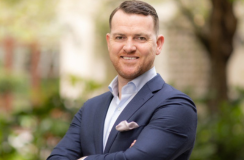
Host: Sam Turner returns today recall from his first appearance July 2022, Sam left corporate to build a Holdco of mechanical and electrical businesses. In that interview he shared very clear goals to build a business in five years with £60 million in revenue and 10% margins. Well, 18 months later and Sam reports that that goal has expanded. Now it's £150 million in revenue over 10 years, which by the way would represent a £50 million payday for Sam personally if he exited at that size. I know you appreciate hard numbers, I do too. So I love that Sam's are so concrete and that he shares them with us. But this interview is actually much more than just big numbers. Sam shares his strategies around some of the biggest Holdco themes diversification, shared services, cross selling. We also discussed the psychology of small business. Despite that headline number here of 150 million, it has not been easy. Sam recounts his own near fetal position moments which actually occurred soon after our first interview. But listen for how he's evolved and how he might react to similar challenges today, 18 months hence. Please enjoy this excellent return by Sam Turner, owner of Advantos. Welcome to Acquiring Minds, a podcast about buying businesses. My name is Will Smith. Acquiring an existing business is an awesome opportunity for many entrepreneurs and on this podcast I talk to the people who do it. Listeners of Acquiring Minds know that for almost any business you acquire, its success comes down to the people and how you develop and manage them as their new leader. Thing is, in addition to management there is also a lot of process and bureaucratic work when it comes to your new employees. Payroll, compliance, HR technology, hiring to name but a few. These processes are crucial to get right, but at the same time distract from where you want to be putting your energy in leadership. So Aspen HR is an HR firm and PEO that takes this work off your plate and handles it with the care it demands. Aspen is owned and run by Mark Sinatra, himself a successful former searcher, so Aspen's own leadership understands the HR challenges that searchers have. Post acquisition. The firm is offering Acquiring Minds listeners a complimentary pre acquisition HR and PEO review for your target business. Check out aspenhr.com or contact Mark directly@markspenhr.com Sam Turner welcome back to Acquiring Minds.
[3:04] Guest: Thanks very much Will. Great to be here. Still a massive fan of what you do and I've caught up. I got I think one missing episode and I must go back to that which is your 2 200th where you kind of give a bit of a summary and I and I keep meaning to get Back to that one, but no great stuff. I listened to a few and for sure yours is the. It's easy for me to say, genuinely yours is the. Is the best one. So no kudos to that.
Host: Thank you. Thank you, Sam. It really means a lot. And by the way, you can, you can skip that 200th episode. Just go on to the ones with, with other guests, please. So, so you're a, as I just made clear, a repeat guest or this is your second time. We talked in July of last year, so almost a year and a half ago, you told the story of leaving a successful corporate career to build a holding company of H Vac businesses in the uk. It was a great conversation, so it'll be linked in the show. Notes. For people who didn't hear it the first time around, there was at the time a lot of momentum to your venture. There was a very well defined goal to, to your venture, which made the conversation really special because you were so specific. So I wanted to have you back on for an update and hear how all of those things look a year and a half later. But before we get into it, Sam, remind people who you are, please, but about your history and a bit about what you're building at Advantos.
Guest: Yeah, great. And again, thanks again for, for having me back on. Will. Great. Great to be here. So. So I'm Sam. I'm based in the uk, not far from London, about an hour north of. Of London. I spent 20, 20 plus years in the sort of corporate life as you suggested. Finance background, finance strategy background, got bored, not bored, got fed up with. Disenchanted maybe is the best word. Disenchanted with the, with the whole corporate existence. I've spent 15 years living in different countries, which was nice and great and anyone that has the opportunity to do that, I would absolutely recommend, but just got disenchanted with the politics, with the travel and with the inability to be, let's say, master of your own destiny. And I think those three things combined for me to, to exit the corporate world, to spend some time thinking about what I wanted to do and then, and then decided on, on this path which is trying to leverage the skill sets. And I, I tend to say that I operate, you know, well between the financial community and the world and, and you know, given my background in, in that. And we were owned by private equity, so I understand all of that, but I also enjoy being on the front line, being on the ground, being, you know, talking to business owners, small business owners, and helping and supporting and developing People. So I guess it's kind of the combination of those things is this really in terms of what we're doing. And that's why over the last couple of years, that's what I've been focused on.
Host: Great. Well, and just to give a little bit more detail there because I re. Listened to our episode this morning. It's fresh in my mind. You also talked about, you know, you, you did. There was that break after Corporate where you were exploring what to do. You considered real estate but decided against it because it didn't seem as dynamic or interesting to you. And as you just touched on briefly here, developing people is something that, that you're drawn to and you do that a lot less, if at all, in real estate versus buying and building small businesses. And you took some of the courses from some of the folks that are big names in the UK kind of business acquisition education market. The, the, the. The Carl Allens, the J. Yeah. Jonathan J.
[6:38] Guest: And Jeremy Harbor.
Host: Yep. Jeremy Harbor. Right. Yeah. And that really sets you on the path. You're. You're probably their exhibit A for somebody who took the learnings and did something with it. Because we know that a lot of people take courses but don't end up taking action. You, you took. Took action and then some. Great, great.
Guest: Just, just on that Will, I think, I think it's probably worth to say because I think link to the point around lots of people not taking action, I think is partly, partly the reason for that is there's this whole, as you. You will appreciate more than most people, there's this whole kind of plethora of, you know, business buying training, you know, selling training to how to buy a business, the next thing in terms of get rich quick, all that kind of stuff, and you end up then with a lot of people that are maybe not sure what they want to do and think, yeah, this, this sounds good. It's. It's kind of, you know, the fast way to earn a buck. And I think I'm actually, you know, more and more again disengaged with that whole sort of community and that whole line of thinking. And actually the types of characters that actually come into that sometimes are not, not the ones that you want to be associated with. And I think that's, that's, you know, if I can speak frankly and, and maybe one of the reasons why a lot of people don't do is because, you know, they're just looking for that next easy. Realize that actually maybe it's not that easy. And then, you know, go off to the next thing. I think that's probably, probably why.
Host: Yeah, well, I, I want to, to that point kind of just make a comment about gurus. So, so yeah, biz, you know, gurus, they're gurus and real estate investing, they're gurus in every kind of get rich quick area, including buying businesses. And there are gurus in the uk, there are gurus in the US and but there are also people who are doing education programs. I'm not saying you were painting everybody with this broad brush, but they're. I just, I just certainly want to say that there are some, some names that'll be familiar to this audience. The Walker Divals of the world, the Sam Rosatis of the world who are in the, at least here in the us Very real people.
Guest: Yep.
Host: Very direct and transparent about how difficult this path is. Life changing. Yes. Incredibly powerful, incredible, incredibly magical in many ways. But no joke, not a get rich quick thing. And they are front and center about that all day long and yet still teach people who are, who are serious about this path to do it and to do it well. So yeah, as you're out there shopping for education, be do so with a very discerning eye because there's, there's some from Camp A and then there's, then there's others in camp and.
[9:07] Guest: Well, it's not just, it's not just. And I'm not, this is not a slur on any individual. I'm just saying, you know, if you put it out there that there's an opportunity to create wealth quite easily and it can all be done with a few steps, etc. Then of course naturally you're going to attract people that may be just don't want to do the hard work work and maybe, maybe dare I say even aren't really qualified to kind of get that done and, and deal with the consequences afterwards. So is, I'm not slurring these individuals necessarily. I'm just saying look, that's naturally going to happen because there is the buzz around it. So of course you get the kind of let's everyone drawn into that and so. But no, absolutely. I think there are people that do add a lot of value in the space. I'm not suggesting that everyone is, is, is useless. Not, not at all. But I think that's just one of the reasons why a lot of people, you know, do it and then don't do it. If that's because it's just the latest, almost the latest trend, isn't it? And it is not as easy, perhaps Perhaps it's made out to be. I think that's the point.
Host: Great, great, great clarification. Thanks for that, Sam. Okay, well, let's pick up the plot where we left it Last time you were, you had done two acquisitions at Advantos and you were on the cusp of closing your third. Did that one close and what's happened since?
Guest: Yeah, the simple answer is yes. So that one closed. Whether it was then it probably delayed and dragged, as these things do, a few weeks more than whatever I was suggesting last time. Again, that's one of the learnings in this is, is, is typically things take slightly longer than you expect them to or your promise that they will, etc. So you need to be a little bit switched on to that and expect that almost in terms of the process. But yes, we closed on that third one, which happened to be a very strong performance of that business since, which is great. And, you know, I'm really delighted that as of yesterday and when we spoke Will, it was going to be done the early part of this, the early part of this month, if not before, but again, the same thing. It's kind of dragged on longer. As of yesterday, we completed on the fourth acquisition.
Host: Okay. All right. Congratulations.
Guest: Very excited to say that. Yeah, we're now four businesses. But again, the learning there is. It took two months longer than we anticipated. In this case, it was pretty much all down to the sellers. I would say, slow response. And that slow response was partly because of his busyness. He was extremely busy. The business is doing very well and he's got a lot of things on his plate, which is, which is fair enough. But again, you can't, with these small business acquisitions, you can't sort of say, well, this is the timeline that we do this, that we do, you know, because typically on the other side of the transaction is somebody, A, that's never done it before, B, that's trying to run their business as well, and therefore maybe doesn't have the time to, to get everything that you need effectively or the different stakeholders need. So I think just to be realistic with those time frames, I think is the advice that I would give anyone. And if you're thinking, you know, X months, then probably add another one or two on top of it. In terms of what's, what's, what's realistic.
[12:19] Host: Well, it's such a good illustration, our conversation being scheduled now, Sam, because you and I, when we exchanged emails, we said, let's push it out to this. Let's just be cons, let's be Conservative and push it all the way to December 1st. Yes. And yet we just made it by a day, as it turned out.
Guest: Yes, exactly, exactly. That was my, that was my. You know, I was thinking I had to do it by then because otherwise I've got to go on the podcast and say that we've not completed. But yeah, it was. So, yeah, we're okay.
Host: Well, so at the end of last time, if you, if you had closed the. On the third business, which you did, you were saying that you were going to be at £15 million in revenue with about 10 margins. Yeah. So if you could show the numbers of the business today with now this third and fourth one in the fold.
Guest: Yeah. So the third one meant that the year just finished actually for us is I say just finished in end of June, that on a pro forma basis with the three businesses, assuming that we had them the whole year, did 15 million or 15 and a half million of revenue. So pretty much in line with where we expected. And I think I said last time, 1.4, 1.5, and we delivered, we had a budget of 1.4, we delivered 1.4 million from an EBITDA perspective. So let's say that sounds like all very robust in terms of delivering what you say, which is again, another important thing for me, delivering what you say. Having said that, and we'll, I'm sure we'll get into it, there were some ups and downs within there. So. So one business is, is suffering a lot and the other one is performing very well. So it wasn't like everything was just ticked along nicely. Some big challenges in there, some big down moments in there as well that we had to come back from.
Host: So.
Guest: But yes, so that, that we delivered. And then with this acquisition, that's a further £7 million on a pro forma basis. So you're talking about 22. Between 22 and 23 million and about just under 9% EBITDA. So we'll be around about 2 million, if not, you know, 1.92 million from an EBITDA perspective. And we'll start the search now for the fifth and the sixth, and we'll aim to be two more businesses by this time next year.
Host: Two more businesses this time next year and about a third to the way, to the third of the way to your goal of £60 million and aggregate revenue. That goal may have changed. We're going to get in, we're going to get into that in a few minutes. I'll tease that out, though, but, you know, one, I think One other takeaway, for lack of saying the obvious about the fact that even though your numbers are right in line with where you projected or wanted them to be, that's not. Things have not been smooth. One has been being battered and the other has been crushing it. And so happily it. They work each other out. Takeaway being diversification. Right. This is, this is why. This is. When not having all of your eggs in a single basket, owning multiple businesses really shows its strength. Care to, care to say anything more to that or have I basically just.
[15:26] Guest: No, I'd completely agree. And I do recall, Will, our discussion last time, which I think was a really good discussion, that is still not 100% clear one way or the other in terms of what drives value. In terms of multiples, we were talking about multiples and the fact that you're not integrating businesses and how does that then drive an increase in multiple. And my argument was around risk. Now risk and multiples or valuations sort of go hand in hand and they're correlated, let's say inversely. Yeah, so, yeah, so there's an example. So we haven't integrated those businesses. And one business is in a slightly different, let's say sub sector of what we're looking at, performed very well, continues to perform very well. The other one, the market is very, very, very challenging at the moment and you know, is, Is really, really suffering. And we're, you know, we're doing everything that we can to, to, to turn it around, but it's very, very difficult situation. And that just, you know, says, you know, if we'd only done that one acquisition and let's say we double down and actually built out two or three in the same and integrated those all together, they would be in a situation where they'd all be suffering and we probably wouldn't have a business now. So, so there's my argument again for diversification is still it doesn't have to be integrated to be diversified. And, and I think actually probably the opposite is true. The less integrated you are, the probably the more diversified you are, if that makes sense. Yeah, so. So, yeah, so. So we have had a really, really challenging time. I think, you know, we spoke in July and I know a few people on the, on the podcast have talked about these kind of fetal moments and, and, and I was, I was, I was almost there, honestly. Probably not, you know, not that long after we spoke, probably three months after we spoke, probably this time last year. It was a really challenging period. We actually raised a little bit more equity to put into the business and I say we raised, I mean I was part of that along with the investors that we had because I felt like we just didn't have the liquidity that we needed. And 100% really down to this, down to this one more struggling business. So it's not been easy. We're still not out of the woods. But I think with this fourth acquisition as well, which is a business that's doing well in a subsector that's doing well and we're doubling down in that area again, diversifies that risk even more and that gives us a bit of breathing space and headroom to fix the issues in that business and come out winning. And that's definitely the plan that we've got.
[18:12] Host: August Felker is a two time successful searcher. First with a traditional search fund. The second time around he did a self funded search. Today August runs Oberle Risk Strategies, an insurance firm with a dedicated practice group for searchers and acquisition entrepreneurs like you. If you've got a business under loi, Oberle will provide complimentary due diligence on that business's insurance and benefits program. A great no risk way to get to know August and team. They love helping searchers. They've worked with hundreds. Oberly is a specialty insurance brokerage for searchers by a former searcher. Check out oberly-risk.com O B E R L E- risk.com link in the show notes the business that has suffered. Which of the, which one was it? The first acquisition or the second?
Guest: Yeah, the first, the first acquisition. The first, the first acquisition. And I think, you know, there's a lot of things that we can learn from that. And you know, this is always the, the challenge is to look at every, every stress and every pain as an opportunity to learn. And I think there's a gift and you know, one of my friends always says there's a gift in this somewhere even though you know, you don't realize it yet. And I think there is because you don' you don't. You think about them not making the same mistakes. You think about actually how you need to pivot away from where, where you know where you're at, how you need to diversify even more. But it sharpens the brain around what not to do in certain, certain cases as well. So, so this business, I would say at the time we acquired it, we touched on it at the time inflation, which has ravaged the world as we know in the last two years, 18 months as just was just starting to really accelerate and we were sat with contracts where the, the revenue line or the price to the customer was fixed and they were long term contracts. So the margins in this business are relatively small and thin anyway. So once you then have, you know, all your material costs, all of your heating and plumbing, which is this business, all of those material costs were going up 10, 15, 20% and we couldn't really pass most of that cost on. So we were then suffering with having to operate these programs, these projects with a very small wafer thin margins and effectively all the margin then went in that business. So very difficult situation. But at the time, and I remember saying this last time is we were sat there with, with you know, historical Trends the last 10 years. Inflation in the industry had never been past 3% in 10 years and all of a sudden it was 1520. So can, can you legislate for that when looking? Well, perhaps not. But then what's happened since is the house because that's the residential to new build housing, big development of houses. Interest rates as we know have gone up everywhere as well on the following following Covid and the, the flood of money into the system. So interest rates go up has a knock on impact on consumer demand for, for housing. And all of a sudden you've got a slowdown. All developers slowing down the bid build schedules becoming much more aggressive with their subcontractors around price because they're getting squeezed at the top end. So it's like the perfect storm in that, in that business right now and we'll, we'll get through it. But it's, it's, it's a really challenging time. But again, I would say that if you can get through it, there are a lot of learnings that come out of it and a lot of good I think that that comes out of that, including your resilience. So now you know, we can go through the same issues I did a year ago. And to be honest, it's not like, not that it's water off a duck's back is the, the saying here. Not that it's kind of, you know, I'm flippant about it, but you don't get it doesn't affect you in the same way it did a year ago. And I think that's that first experience of whoa, you know, this could all go wrong very quickly. It's my money on the table, it's my reputation on the table. It's, it's everything else to, to now it's a case of look, there's no point thinking the worst. Let's be Positive, let's get through it, let's do what we need to do. And things will, you know, have the belief and actually things will, things will come through. So. Yeah, so lots of learning. It's been a real roller coaster, I would say, the last 12, 18 months.
[22:49] Host: It's interesting to hear you. The water off the duck's back, because when I've talked to people about the fetal position moments they've had and gotten through and they're on the other side and maybe they're years down the road. One of the things that comes up is they look, they reflect back on those moments and they're like, I've had equally dire moments since. Yeah. But I just, I built armor, you know, I've, I've developed a thicker skin. So maybe some of the, and I don't mean to belittle anybody who's really the, the pain of the struggle when you're a small business owner and things are looking dire. But after hearing that a few times, you do start to wonder if maybe it's not as dire as it seems. And it's the experience of a rookie feeling that squeeze for the first time and, and later that squeeze won't, won't cause them to sweat quite as much.
Guest: I think, I think that's absolutely true, Will. Honestly, I think it's a different environment. So, so my, my career, I've been in some stressful situations, but they're very different. When you know your context is different. It's not about your, in the, in the main, it's not about your livelihood, it's not about your financial situation, is not about people's jobs. In the main. There have been occasions where, where it has been difficult, really difficult situations. But the corporate career, I would say your stresses and strains are different. And I think your first one being an entrepreneur is, is a wake up call because it's a different, it's different experience. And I think once you get. Not that anyone wants to get used to those experiences, but I think part of it is the fact that you've just never been exposed to that kind of pressure. Yeah, you've been exposed to pressure and I've always been one that's dealt very well with pressure, but it was just a different kind of pressure that I wasn't used to and I just didn't know what to do with it in, you know, for a period of time. For a period of time. And now I think there's, there's learnings on that for people listening. I would advocate massively that what Gets you through is, you know, things like, at least for me, things like having a particular focus on routines, which means that you continue to do stuff because otherwise you can just freeze and go, wow, I've got so many things I need to do, I just don't know where to go. So routines, I think exercise drives massively a mindset thing for me. So getting into decent routines, doing exercise on a regular basis clears your head, gives you the more, let's say, confidence and a feeling of positivity. And these, these things are all important. The other thing that I think is nice, there's a couple of sayings that are not mine but I've listened to over the last few months actually. One of them is a guy actually was doing a talk somewhere I was yesterday, he said, you got to remember a nice way of putting it is pressure. Pressure creates diamonds. So, so that's. I thought that that was quite nice. And pressure creates diamonds. But you need to be able to withstand the pressure in order to create that diamond. And another one, which I think is really true to my, A lot of my beliefs is, you know, your reality, regardless of how bad your reality is, your reality is somebody else's dream. And you need to, you need to think about that. It's coming back to the whole gratitude point. So that helped me a lot. So I thought that I was going to lose a lot of money, I was going to lose my reputation, I was going to let down people, which is a massive issue for me. I was going to have livelihoods at stake. And all these things go through your mind. But then you go, well, you know, I've got a family, I've got two young children that are beautiful. I've had experiences that other people would dream of. I'm still in a position financially that I'm not broken all these things. And I think, I think, you know, many people will call it out as, you know, this whole gratitude thing. But when you're in the, in the, in the. In the. So to speak, these things really help. And actually having that context and perspective is, is really important. And now I can use these as tools much more because things don't get to me as much because I'm kind of used to it, but I'm also realize the power of these tools and these tools just kind of help you kind of carry it, carry it through. But. But yeah, I mean I think the, the watch out to people as well is, is sometimes this is not easy. Right. So if you think it's going to be a walk in the park then, then maybe think again now you might be lucky and you might find the right business, the right. The first time. And maybe people could say, well, you bought the wrong business the first time. Well, maybe, you know, it's on. It's on me. Maybe I, I couldn't have foreseen how the market was going to go, which is the lion's share of where the issues are. But, but certainly doing your homework around having the right business that's got some good characteristics that minimize that risk is. Is important because where, you know, things do dip off, it becomes difficult mentally quite quickly.
[27:55] Host: Yeah. Thank you for Sam. There was, there was a lot there that was, that was really fantastic. The. You said something that I, I just had one of the points about. I love the. Your reality is somebody else's dream. Your reality can be your own dream as well. The dream of a three or five year younger. Sam or whomever it is. I had an interview last night with somebody. It'll air right around when this one does and he bought a business and then a second and it's doing phenomenally well. But it's also phenomenally difficult. Not, not because the business is going to collapse. It's just a tremendous amount of responsibility on his shoulders. And so while from the outside everything is going swimmingly or much as an understatement, he still finds himself pining for the days of his W2 in, which is US parlance for, you know, having a job is still pining for the, the lack of. The lack, relative lack of responsibility of when he, when he, he wasn't in charge of 100 people and he has to kind of shake himself and be like, whoa, whoa, whoa, don't for this. I'm living my own dream. I'm living my own dream now of a few years ago. Yeah. So, yeah. Pretty interesting.
Guest: Yeah. And I don't think, I think the whole responsibility of something, let's say this, that's going well, the whole responsibility responsible for people, for me is not an issue. In fact, the, you know, people were. I was having this conversation with somebody yesterday around, you know, what you're good at and what you're not good at. And actually, are you not scared about what you're trying to do in terms of the numbers involved than actually adding two more and, you know, borrowing this and did it. Honestly, the bigger it gets, the easier it is for me because that's what I'm used to. I'm used to dealing with lots of, you know, having a team of 2000 people all over the world. You know, these things don't phase me at all. The responsibility for these things is I. This really isn't an issue. What's an issue is this is the feeling of actually it's going wrong and then you start to go get ahead of yourself in terms of the potential implications of that. But I think the general responsibility of running a business or running a group of these, of the people underneath that group and I think it's something I relish not, not the other way around.
[30:18] Host: Let's touch a little bit on this point about integration which we, which you brought up and we did spend some time on last. Last go round. Yeah. So as you. As you just hinted at, you're buying businesses that are kind of under the umbrella of H Vac, but they, they all, they operate in different sub niches, subsectors. And you're not. And you're, and you're not doing an integration play where you're bringing them all together as one cohesive entity. And as you just said, part of, part of that is for. Because actually keeping them as kind of discrete entities that diversification helps with risk, helps minimize risk. It seems like you now have front proof of.
Guest: Yep, proof of that.
Host: Exactly. You now have proof of that. But there was one synergy that you thought that you might be able to use across these businesses, which was the cross selling. Yep. So they might be able to feed each other leads and business. Has that played out?
Guest: I would say yes, it has, but not. And we never expected this to be significant early on because for me, the more businesses do you have, the more opportunities there are to do it. So it's one of these things that will actually accelerate, not be linear with the number of businesses that you. You bring on. So we never fa. Well, we 1. We never factored in any of these numbers anyway to our business plans. It was always an. On top of. But in terms of what we've seen, we've seen bits and pieces. Interestingly we've already seen from the new company that's joined even before they joined because the process was so long, they already started to give some work to one of our companies in the group because they knew they were coming into the group and you know, so that's. And with that fourth acquisition, you can just see that there's, there's quite a lot of opportunity to, to do that. So like I say, I think it will accelerate more and more. No, no question at all. There'll be plenty of those opportunities. So it's been bits and pieces to date. But that's, that still holds true. Absolutely. But I think, I mean it might be helpful to, to share a little bit the, the evolution of our thinking in that regard. So what we've done since 18 months ago is we've developed more the thinking around our strategy and our business model. So we're now clear that actually, you know, we have the way we would describe our, well, our vision first of all, which I think is probably illustrates the point of what we are. So our vision is to be the UK's favorite platform, note the word platform for independent mechanical and electrical. So M and A. So slightly wider than H Vac. It's, it's a slightly wider definition, but so UK's favorite platform for independent M and E businesses delivering more than 150 million a year in revenue within a 10 year time frame. So that's kind of, that's our, that's our vision. But this concept of being a platform, what, what does that actually mean? And what, what, what benefits does that give to, to our businesses coming in and sitting on that platform? We then say, well there are three core categories of benefit, which is what drives value. Number one is what we call the collaborative initiatives. So the cross sell being one of them or the biggest one buying together. So some supplier overlaps within there is a second and then the, let's say cross pollination of knowledge and expertise across the group is one that is difficult to quantify but is significant. And there's a lot of things happening I would say on that front. Okay, so that's the kind of working together, collaborating with each other is, is number one. Number two is what we talk about our, and we touched on this last time, we call it the advantageous framework, which is loosely based on the EOS framework, which is the entrepreneurial operating system. So we have, then we bring, what we bring is management expertise around running businesses. So I now have a cfo, I have a chief support officer which is also my wife who's now working full time with me in the business. We've just hired a chief Operating officer who will start in March, although he's already starting to be involved. All of us come from a larger organization with much, I say greater expertise around process systems, strategy, finance, all of these things. So we can bring, let's say management expertise to these businesses. So that's number two. But we call that the Advantos framework where we take, we take every business through creating their own vision and values and uniqueness in the marketplace, strategy and all this kind of stuff putting, putting management Accounts in place, putting scorecards in place so we've got the right data to manage, documenting processes, looking at the tech stack and seeing how, how can we move towards a common tech stack over time which is, you know, loosely not integrating but sharing common best practice. So that's what we call the, the advantage framework. And then we have, also on top of that we have group services. And then we touched on that last time as well. But we now will offer certain things at a group level which doesn't make sense to be done at an individual company level. I'll give you one, one example of that is marketing. Anything to do with website management, but also to a certain extent business development. So all of these businesses in this space are pretty hopeless at driving business development, driving into new customers in, in an intentional way. Everything comes through through relationships, which is great relationships, word of mouth, maybe a little bit of networking, which is great, but there's no other intentional use of technology as part of that. So we are now setting up campaigns to look at, you know, using LinkedIn, looking at profiles in LinkedIn, automating things that we can connect to. People want to, want to set up meetings with people to try and create a funnel of opportunities for each of the businesses. There's no point doing that at a business by business level. And if you look at any business doing 5 million, 6 million, 7 million in this space, none of them are doing anything like that. None of them. You know, and I've spoken to one
[36:42] Host: of them and why, why does it not make sense for a smaller business like that to do that?
Guest: Because, because that's not, that's, that's not, and I'm, I'm generalizing. Not, not that you need scale, but you need, you need a way of thinking that that's, that's what you need to do. So 90% of these businesses are owned by, by engineer led people, right? So the people that have actually grown the business from being on the tools, on the, they don't necessarily think like that, they don't think that actually there's any need. We've grown a reasonable rate, let's say to 5, 6 million and then it tends to get a little bit harder. And that's when a lot of them want support and want to, want to potentially exit, but they don't create any internal capability for things that are these new modern ways of, you know, using technology, using, using more management techniques, let's say in order to drive business in a more intentional way and what you want to have is more predictability to your revenue, don't you? So you don't want to be there and say well I might get a new contract from someone because I went to play golf with him last week. And that's all great but you want to be able to see that I know that if I do this many contacts, this many know outreaches, I can actually start to get a little bit more predictable about where my future revenue is coming from. And actually we can accelerate the growth even further. So, so it just typically doesn't happen. It's not that that is a particular big cost that needs scale, but that those expertise don't exist in these businesses. But, and, and we can do that with in fact five percent of my time or 10% of my time or 10% of one of my teams time in, in the group just because that's not, that's more natural for us, if that makes sense. So yeah, so, so group service could be marketing, could be BizDev, could be HR, could be managing the fleet as one. Could be a number of things that could be done at a group level where it just makes sense to do that. Maybe it's not being done at all currently by each of the operating companies and therefore they can leverage that. So there's three blocks, collaborative initiatives, management expertise and group services that they can tap into. That's where we drive and add value. As part of that we are looking at what is a, what is our target technology stack that in an ideal world every business moves towards and that potentially moves you closer towards what you might call an integration. But we're still not integrating the businesses at that stage. We're just leveraging the same sorts of things.
[39:19] Host: Sam, I was going to ask you but you've already answered it. You know the idea of diversification, buying have kind of disintegrated businesses although with cross selling opportunities means this diversification. But at the same time though you are in a single industry, sub sectors but within a single industry. So you've got diversification down here but at a top level you've gone all in on a single industry. But as I just heard you talk about the overall strategy and vision, it's interesting because you, so you are going all in on mechanical and electrical so you don't have industry diversification. So 1. So I should ask you like if you, if you're a big believer in diversification, why aren't you buying in completely separate industries? But let me put a pin on that because I think the answer is, I think I know the answer which is that if you found a big macro industry, mechanical and electrical, pretty giant industry, and it's got good characteristics and great growth prospects, you can feel pretty confident that there's always going to be a need for that and it's a good industry selection. But inside that, then you have all of these ways that if, if the industry, if the businesses aren't identical but they're loosely similar and they have a lot of kind of similar functioning, then you can, then you can, you can get these synergies that you're doing. The three pillars that you just, you just described. Yeah. And you can have like, you know, you could call them group services. I tend to hear them called shared services here. But you know, kind of a centralized services and centralized services. Shared services. Group services maybe don't work when you've got completely different business, a basket of businesses which are in completely different industries. So you have kind of this interesting sweet spot of diversified, diversified types of businesses, but under an umbrella of an industry where you get the benefit of diversification, but also, but not so much diversification that you can't layer in a shared services model.
Guest: Yeah, well, I think you've answered your own question. Well, I think exactly right. So, interestingly, I'm looking at this week in terms of M and A models and the way of looking at your targeting for M and A, which again I think now is, for us is going to get to the next level of being much more strategic around where we go. But if you think about it on an axis or on two axis, you've got, you know, products and services and, and type and maybe customers or customer groups or whatever. So you, you can, you can stay in your, you know, highly focused area of, you know, acquiring businesses in same sorts of customers, same sorts of products and services, which I. E. Similar businesses or you can go, you know, different services, but same customers, so the chain or you can go different services, different customers, but you get to a point where you go all the way outside of that and you go completely different business in a completely different industry and a completely. There for me is a very little benefit of doing that apart from a complete diversification approach. But then you would leverage none of the benefits of what we're talking about. And, and therefore for me it's, it doesn't make sense to do because our focus is, is businesses that make sense as an ecosystem or to be part of the same, the same group that makes sense to be part of the same group. There's enough, I think there's enough diversification within that. If we get that right, that you got to think the whole, I mean you can call it different things, but the whole M and E industry is relatively robust, is relative, relatively non cyclical, is not going to be completely transformed tomorrow by technology. So it doesn't have those massive risks if you're diversified within it. Now what we've seen is in the one hand, in the construction world we've been bitten because construction for new, for houses has gone down because of certain characteristics. But in the, what we would call the built environment, so existing properties, the demand is sky high and that, therefore that's kind of offset that, but that's all within that kind of wider ecosystem. So I think that's proven the point. There's enough diversification in there. But, but we want to make sure that with each of the businesses they can benefit from those three things. They can benefit from collaboration with other companies, they can benefit from management expertise that we can bring on top, which you could argue could be any business to be fair. But they can also benefit from the group or shared services, which again would be more difficult to do if we were then having to learn how to do that in a completely different industry. You know, it just, it's just difficult. So I think you answered it yourself. But, but yeah, that's, that's our philosophy around what we're, what we're doing.
[44:05] Host: Great, Sam. Okay. Well, one thing I also want to hear a little bit more on is we talk, we talked in our first interview about who runs the port, the port coast, the portfolio businesses. And you generally. I now, now I'm forgetting maybe sometimes an owner stuck around. Yep. But sometimes it was promoting the number two. Yep. So you now, you've, you've now had four runs at this or three runs. And you're about to, you're about, you have a plan presumably for your fourth acquisition, I hope. Yeah. So. So what have you learned and what, yeah. What have you learned about that? That. Because that's such a crucial. Yeah, I mean that's almost the name, that's almost all the success hinges on who's leading these portcos.
Guest: I think it does and I think it's, it's obvious to say that, but it's still not obvious enough for people. So what I mean by that is. And I've fallen foul for this up until now. I say up until now. Well, probably up until now actually is again not being intentional with that thinking around, let's say this business that we're, we're bringing in now the owner wants to stay around he wants support to grow the business, which is, which is, which is great and we can work with that. And actually we've got, we share the same values, I think, into which are very important for me in terms of making sure that that fit is right. So it just so happens, I think this is going to work out really, really well because we're both, we've spent a long time together, we're both aligned around what we're trying to create. The way I've structured this deal, in fact, is actually meaning I've given him as part of the consideration, shares in our group. So that's another, I guess, talking point in does it make sense to look at financing through different ways and using paper or equity swaps effectively as part of that? So I think there's a great deal of alignment, but I think in the. Up until then we've been quite opportunistic and I think so we've got two and two, two, two people staying and two people that have left and then the number twos have stepped up. And I think we haven't been intentional about that enough about that. And what, I guess what I mean by that is we should be looking and every, every person should be looking very, very carefully at what is that management solution that I'm bringing in if it is the former owner that's staying. The key question is do they have the appetite to work the way we also want them to work? And I don't mean that to be a sort of a dictatorial approach. I mean, we have a philosophy, we have a way of trying to manage, we have a framework that we're trying to impart on the businesses around best practice. You know, are they going to run with that or not? And being much more intentional with that thought process I think is critical because one thing that I perhaps have learned is it's quite difficult to get change with people if they're not that way of thinking. To try to change their way of thinking is very, very difficult. And I think we, we have got one experience of, of that, I would say, where we're just not really getting traction with any of the chat. Oh, that's a bit harsh. Not enough traction with what we want to do. In my mind, the business is not moving forward in the way that it needs to, if that makes sense. So I think being much more intentional about when you're looking at companies and this person who wants to stay, great, is he really the type of person that's going to be around for six months of transition, knowledge transfer And I need to bring someone else in. If the answer is yes, who's my backup to bring to bring in? So that's something we're now trying to build is a, is a network of potential MDs that might want to, or GMs that might want to, to join. And that's part of my role now is linking with many more people in the industry because I'm not from the industry to make sure that if we do need to replace someone, we've got two or three or four candidates that might be suitable. Our way of thinking aligned in what we're trying to do that we could actually put there. But be intentional about that. Don't just think because the guy wants to stay, that's great, that's problem solved. If you want to work in a certain way, are they really aligned with that way of thinking? Can they be aligned with that thinking? Can they really adapt to that way of thinking? It's much easier bringing a number two up because they're not the owner, they've not everything's typically not going to be their way and they're maybe a little bit more malleable to, to, to what you want to try to do. And I don't want to give the impression here that we're basically dictating everything in the company. That's not the case. What we're trying to say is there's a few certain things that make sense to look at and I'll give you one, one example and this is a talking point I think in, in, in, in buying businesses. But one of the things that we want to do now is in our industry, which is blue collar industry and many of your guests are in similar industries and listeners will be in similar industries. The use of technology and the use of AI for example is very, is quite limited in this space. And I think we have an opportunity to almost create, at least for a short period of time, a competitive advantage by using technology, by using AI. The others are just simply miles behind the curve and just won't get too quickly.
[49:39] Host: Right.
Guest: So that's our way of thinking from a group perspective, what are we doing? What can we do? That's the way we think. But trying to get that change in a business that doesn't want to be thinking about, you know, using technology in that way or changing their process radically or is it feels sometimes like you're pushing water uphill. So I think that's, that's a great example where you've really got to be intentional about who that person is. That's going to work with you. Are they like minded? Do they think, are they likely to come on board with your overarching strategies? Not that I want to get involved in day to day decisions, I don't. That's for the business. But in terms of how we can compete in the marketplace as a whole, how we can differentiate ourselves as a whole, how we can leverage industry and technology trends in a way that's far more quickly than others are doing, this is what we need to impose because that's, you know, that's our, the way we'll survive and the way we'll prosper. But you know, you need people then to work with you on that. And some, some, for some people it's easy and some it's not. And that, that's a big learning. So it's a big watch out for people thinking about who's the, who's the manager. If they're not going to manage it themselves, who's the manager? Are they aligned with my way of thinking in terms of those, those things I think is a, is a big, is a big topic.
Host: I want to pivot a little bit and kind of step back and talk bigger vision and numbers and just the entire project of building a Holdco and what's kind of underlying all this, you were very transparent about that in our first call. And so I want to revisit some of that. It was really great and valuable. So I'll just, I'll just take the words, your previous words out of your mouth. So, so one of the things that you shared with us was your goal at the time or when you started on this venture was basically in five years to build a holdco to a 20 million pound exit. That's not £20 million in your pocket. You have investors and there will probably be some debt on that business, but an enterprise value of £20 million and you backed into that quite arithmetically. You know, that meant 60, 60 million pounds in revenue assuming 10% margins, assuming a multiple of 5.7 to 6 where you're buying at 3 to 3 and a half. So some arbitrage there, multiple arbitrage and then, and again with like a five year plan. So when I earlier said that you're a third of the way there because you're now just over £20 million. So a third of the way is 60. But now I've heard you say the number £150 million. So, so update us on this, this plan.
[52:24] Guest: So I, I think the first is the, the time frame. So your time horizon I think when we spoke last time I was thinking about the five year time horizon more as a typical kind of window by which you to sort of put something, put this kind of, if you like call it a buy and build together and actually create some value to think about an exit. And my conversation with investors at the time would have been along those lines and therefore it wasn't just me and therefore I kind of guided towards that because that seemed like a sensible time horizon to look at. I think since what's happened since my, my view is I think the opportunity is greater number one, why I think the opportunity is greater just because even though there's been challenges, I think there is more value that we can add and the more we do this, the better we'll become. The more we can choose to then reinvest some of the profits into better group services, into better value producing items. And I think that it just becomes a bit of a flywheel. So I, I really think that the opportunity is bigger. I don't want to be out of this in, in five, five years. I'm still young enough to think about horizon that's longer than that. So I've extended the time horizon to be a 10 year time horizon. So my plans now are going to 2033. We one of the things that we did, which I would advise again depending on where people spend status is at, but we put together an advisory board so I have four non executive advisors that help us and to be fair we only had two meetings so far. So it's only relatively new. We only meet every three or four months. So it's kind of three or four times a year. But the first meeting was around strategy and business model. And I think what those meetings do is force me as the owner of the strategy and that's the bit that I'm let's say relatively good at is to really think more clearly around all of this kind of stuff. So we put together a bunch of stuff around that and we, we got some, some, some pushback in some areas and, and we had a, a good discussion around what made sense and did I need to slow down first, get some things right and then speed up later and all those kind of things. So we've redone the plan but we've modeled it in, in a little bit more detail than perhaps was the high level before. So we now have a 10 year plan of reaching 150 million. And in fact we put that in the vision and that vision is now explicit. And you know, we talk to investors, we'll talk to lenders, we'll talk to partners, we'll talk to our teams now about that vision of moving to 150 million pounds of revenue within a 10 year time frame. So our goals are 150 million revenue. We actually want to be 11. I won't go into details why 11, but 11% from an EBITDA perspective which is about 16 and a half million, we think the valuation at that stage will be around about seven, seven to eight times in terms of where we've been thinking, guiding, having conversations with private equity, etc. Etc. So enterprise value of whatever, whatever the maths come out of. I mean for me and I can't remember the numbers but for me now that 20 million, which was actually the 20 million was for me, so it was slightly north of that including investors for me, for me it's more like 50 now but in a 10 year, in a 10 year time horizon and in reality that 10 year isn't a fixed 10 year. Well, so it's not like I need to exit in 10 years but that's the leaf you like your the value of the business in 10 years. I, I can quite see and I've been inspired a little bit by reading more around how private equity works and, and there's a great and not I want to plug someone else but a great book by Adam Coffee that you will have heard of, I guess this, this guy called Empire Builder. He's done three books I think now Private Equity Playbook, the Exit Strategy Playbook and Empire Builder. This is the new one that's come out and that reading, that is a great read for people that are wanting to go on a kind of buy and build and his, his ethos there, and he's absolutely right is you know, don't think about a single exit. So actually why don't you think about bringing you know, private equity in maybe as a minority initially at a level and the way I think is at a level where you might get to 3 or 4 million from an EBITDA perspective and maybe you sell 25, 30% of the business at that stage, but then with their help as well because they should be bringing something to the table, not just access to cheaper debt capital as well, which is part of it, but also expertise around how to grow and how to source more businesses. They will be looking for a 3x3 times return on invested capital. So if you then do the maths and you know, you get that number and then you can maybe move into to, to sell another chunk of the business and then sell another chunk of it. So I don't see that you need to be a single 10 year and exit in 10 years. I think that could be in sort of multiple chunks. And again, if you think, if you come back to what. Why is it that I want to do that is because I want to free up capital, free up resources in order to invest in philanthropic areas along the journey. And I want to start doing that, you know, in the next, within the next couple of years ideally. So, so to kind of start getting those, those returns. I would say openly, well, and we can come back to these numbers in a second. I would say openly that, you know, I don't take any money out of the business at the moment. And the reason I don't is because one, we haven't needed to because I had some other income streams that, that have meant that I didn't need to. And secondly, I wanted to make sure that we give the business every chance, every bit of headroom, you know, to, to reinvest all of that into making sure that we can deliver in the long term. So for me it's about the medium to long term. It's not about the short term. I think another great quote I've got and I read every morning is a quote. I forget who it's from, but it's a quote that says don't give up what you really want for what you want now. And that for me is a, is a test of me, you know, eating junk for example, or having too many drinks or whatever it is, you know, don't sacrifice the short term or, sorry, what you really want, which is in the long term for stuff that is just short term, you know, gratification. I think that is not thought about enough. But that for me is, is what it is. I don't, my time Horizon is a 10 year time horizon is not a next year. I need to have this much cash. It's like I don't really care as long as we're surviving. It's a 10 year time horizon so a bump in the roads might happen. As long as we can kind of get through and move on with that big picture in mind. That's, that's, that's where we're at. So it's a 50 million, let's say valuation for or creating value along the way. 50 million for, for me in order to be really impactful with the, with the, with those funds.
[1:00:07] Host: I don't know if the name Chenmark means anything to you, but they're the buyers of small businesses holding companies here in, in the U.S. up in Maine. And one of the, they have a newsletter that they put out every week and they talk a lot about the, just kind of the, the softer side of this whole project. Less tactical, more just kind of philosophical and delayed gratification is a favorite, is a favorite subject of theirs. So they come back to that theme again and again and again. Yeah.
Guest: Yeah.
Host: And by the way, that's another, that's another differentiator when we, when we were talking at the top about the people who take action in this world and want to buy and truly do buy business versus those who are attracted by it but don't is the appetite or the ability to have delayed gratification because this is a way to build wealth, but not a way to build wealth quickly. And so that quick word filters out
Guest: a lot of people completely, completely agree. And I think that's. That is one thing. And we talked about it a little bit last time. But one thing I really wanted to get across for me, it's, it's as much about those other things. It's as much about, you know, the purpose in our organization is creating success by driving value for. For all. And that means all stakeholders. So for me, very. And we, we're developing a website for the group now that will be launched on Monday or Tuesday next week. And now we've got the acquisition done and it's, it has all this in there in terms of, you know, what, who are the stakeholders that we're talking about? So, and how do we create success for those stakeholders? So for me, it's about the employees and the teams and the, and the, and the management teams of each of these companies. It's about the former owner creating value for them either as part of their journey with us or as you know, creating value for them in terms of, you know, what we're able to provide to them as a result of them building value in their business over the years. It's about customers in terms of value. How can we improve service for customers as a result of us being together? It's about communities. How do we create an impact in our communities? One of the things that we've just done recently is developed a people strategy because that was a missing link for us. We have an M A strategy. We have a what are these platform benefits, if you like, and creating these opportunities for business. But the third pillar is how do we develop our people within that context? And we are a service business. People is our product ultimately. So again, none of these businesses do this well, so we've created a framework for that. But one of the things was we're going to give people time off, paid time off every year to help in local community projects, which is each business will come up with two or three kind of key things where they, they pay their employees to basically go and volunteer for, for these things. And I think that's something that we can then, you know, we want to be having a positive impact in our communities as well. And so for me, it's very much creating success for all. It's all stakeholders, not just about, it's certainly not just about me or it's not about shareholders, it's about all stakeholders. And that's, that's, that's the purpose that we've got. So. And again, I see that, I don't see that everywhere. Well, and that's, you know, everyone's different.
[1:03:19] Host: Right.
Guest: But for me, I tend to resonate and sort of now sort of work, tend to work much better with people that have a kind of similar values, so, and similar kind of ethos. So the people that we create recruit at a group level now we just create, recruited a CEO, a CFO, etc. They've got similar kind of values because if not, it doesn't really work because you're, then, you know, you're off in different directions. And that, that's at the heart of what we do. So bring it all together. And that's, you know, I just, I just think there's so much power in this. But it's, you know, you can look at the short term and go, oh, shit, we've got a cash flow issue next week. But you remember this is part of a bigger journey that, yes, we'll, we'll get over that and we'll, we'll juggle the balls and whatever we'll need to do. But it's part of a bigger impact and I think that bigger impact can be huge in the next 10 years. But we need a, we need a bigger, we need a bigger time horizon to think otherwise, we'll think too small.
Host: Yeah, great. I love on, when thinking about short term versus long term, in the ups and downs. If I, if I, if I can try to explain a visual without butchering it in people's minds, but basically a line on a graph and you know, when you zoom in and you're looking at short term, the line is really bumpy. Ups and downs, ups and downs. But when you zoom way out, the trajectory of that line is up and to the right and those Bumps, those bumps along the way get lost as just noise if you zoom out far enough.
Guest: I love that, I love that. That's a great, that's a great way of thinking about it. And I think, I think this, you know, what is your time horizon and therefore try to make decisions that are congruent with that time horizon. And don't think about making a decision because next week it will give me this, it comes back to that delayed gratification. What is the best decision? Okay, you can't put your business in jeopardy, so, so you've got to balance that. Absolutely. But think, if you get a thinking in line with your time horizons, you're, I think it, it frees you up to be more creative or think bigger. And I think that's been a helpful context for me. And part of this stuff is, is I spend a lot of time and money or reasonable amount of time and money on, on being part of the, these kind of mastermind programs as well where you're with like minded business owners with a great coach that's, that's bringing external speakers and content and, and just getting you to think, think about some of these things as well. And I think if you don't stand back and every now and then and look at things in a, in a, in a, you know, without the day to day kind of craziness that goes on, then you kind of miss the big picture and you miss taking the right calls, I think. Or you're in jeopardy at doing that list. Yeah. Yeah.
[1:06:10] Host: You know, Sam, something that strikes me about you see if, if this lands well is that you, you are really thoughtful about your goals and then you work backwards from them. And you know, that's kind of some, that sounds kind of trite like in, you know, any number of whatever strategic approaches will tell you to do that. But it's actually something that a lot of people have a hard time either don't know to do or have a hard time disciplining themselves to do, including yours truly. You kind of are always looking forward and what should I do next as opposed to okay, you know, what do I want in five or 10 years or 10 years? What's my time horizon? Let's call it 10 years. What do I want then? And let's almost reverse engineer that outcome that really came across in interview number one and it's coming across again right now. And speaking of goals, we're going to start wrapping up here, Sam. But you touched on your philosophy, your philanthropic motivation and you did last time as well. But I Didn't ask you to give us more color. You there also have a pretty. A pretty specific goal there, although I, you know, the other thing about specific goals is that doesn't mean they're fixed forever. You can have a specific goal today that you tweak tomorrow and it's something else. But it's always nice to have something quite specific that you're working toward. Tell us a little bit about this, this. This vision, philanthropic vision you have.
Guest: Yeah, so I've had a. I don't know whether the word is fascination or appreciation or somewhere of a cross between the two of Thailand as a place. It's been a place that I've visited many, many times, both on holiday, both through work. We used to have offices there, so I was there quite a lot. We've hosted events there. But I did spend some time helping a community there. And this was back maybe 10, 12 years ago, and I spent, I think it was two weeks helping a community. It was actually helping build part of a school, which was very, very rewarding, working with the locals there, but also helping some small local businesses with some of their challenges and that sort of thing. And it was really a very special experience for me. And I think that coupled with the fact that it's genuinely my favorite place in the world anyway, in terms of the people, the food, the culture, the landscape, the craziness, the kind of diversity, a number of things there, including the value for money, things of a very good value for money, if you want to enjoy the experience of going there as well. So I'm just attracted to that and I know a lot of people there, and I see the impact that actually a relatively small amount of money can have on communities. And that's what's driven me in terms of my ability to have a. Probably a bigger impact in a place like that that's close to my heart than perhaps, let's say here in the uk, where the same amount of money would go and help far less people in terms of the amount of money that you need. So the numbers that I had initially were to help sustainably improve 30,000 people's lives. And the reason why I had 30,000 people was because the. Where I play, where I was staying, was in a place that if I looked at the sort of perimeter of all the local communities in. In the kind of vicinity of where we were, it was around about that number. And that number's always kind of stuck with me. Me then in terms of. Imagine your ability to create sustainably improved lives for that whole community. And that's kind of what's, what's driven with me. So, so that's kind of where, where it kind of comes from. I need to kind of start moving on it sooner rather than later. And one of the nice things is, and I have this actually on my part of my daily review and, and, and, and visualization almost is looking at this, this place in, in, in Thailand and thinking about actually taking my family and my business partners there for my 60th birthday, which is in 15 years time. So it's been quite, quite a way off. But that's my vision that I can then take them there. We can, we can have not only experience the greatness of Thailand, but also visit the foundation and show them all the good stuff that we've done. And that's the kind of visualization I have. Now I'm taking my dad to Thailand next in, in February because he'll probably be too old at that point when, you know, to, to benefit. So I really want, before he's too old to, to take him, to take him there. So I'm just me and him traveling there for two weeks, which will be, yeah, once in a lifetime experience in February. So that's kind of where it comes from. Now, you know, I'm not saying we won't be looking to do other things as well, but that's, that's a kind of a big part of what I was aiming to, to do.
[1:11:15] Host: Thanks for sharing that, Sam. That's a beautiful vision. I've not been to Thailand, sadly, because I've just heard countless times how, what a wonderful country it is. So certainly top of my list, but not yet.
Guest: Well, if you do go, then let me know and I'll make sure that. Yeah, A, you go to the right places and two, that you're, you're looked after.
Host: Okay, great. All right, Sam, let's, let's wrap up here. I guess I would ask for you to reflect for the, for. I guess now we're talking about people who are kind of attracted to this concept, this space, this, this adventure of build, buying businesses now that you've got another 18 months of experience doing it, two more acquisitions under your belt. You're thinking very strategically at this point. Anything that you, anything you might want to tell them about doing this, I,
[1:12:14] Guest: I think in my reflection and my perspective is if you're doing this just for the money, I think it will be hard. It'll be hard because as we've just discussed, I think there is a wealth creation opportunity, a significant wealth creation opportunity here, but it's not going to happen overnight. And don't assume that actually all of a sudden, you know, that just, you know, fountains of money just kind of are generated by, by doing this. I'm not saying it hasn't been done, but it's probably been done in many different areas. I mean, generally speaking it's hard work. I always said before, this is not complex necessarily, it's not that complex, but it's not easy as well. So one thing is there's a, there's a set number of things that you need to do and if you do those, you can be successful. But it's hard work. So if you think it's going to be a quick, a quick return, then I would maybe focus on, on other things. I think it's, it's helpful to have some other passion than just the numbers. That would be my kind of reflection, I think then on being more practical around, you know, tips and things to, to focus on stating the obvious and you've talked about it a number of times, is really being focused on ensuring that the business that you're acquiring is as predictable as it can be and as low risk as possible is especially the first one is paramount because if you only have one and it goes wrong, then you're out of the game potentially. So that first one for me, whilst there's a, there's a, there's a, there's an argument for just getting in the game, for me there's also an argument for making sure that that's not too high risk because getting in the game enables you to then step up, diversify, etc, the first one is then you know too much of a risk and actually that risk goes wrong, then you're potentially out of the game. So that would be another one. The third one we touched on as well is be intentional about who you want to work with. So if you're working with people, both from a group perspective, if you're setting a whole co op or working with an MD or general manager in a business is just make sure that the values aspects at least are aligned and that you feel that they're a. They're going to be able to work with your vision in terms of what you want to do. Otherwise it'd be very, very difficult and you'll get very frustrated very, very quickly, I would say. So that would be my kind of. Those are great, quick, quick reflections and advice.
Host: Thank you for those, Sam. Those were great. If people want to reach out, what's the best way to do that?
Guest: Yeah, so I'm on, on LinkedIn and actually this is one of the benefits. I've done a few podcasts but I think I've got the most people reach out from, from yours Will and which is slightly odd in the sense that most of the audience is US based, but I've had people from the US contact me, which is, which is great. I mean many of the things are, you know, they go across, across borders, don't they, in terms of some of the, some of the, some of the core elements here. So yes, LinkedIn, I'm on LinkedIn but otherwise my email address also people want to email me is sam.turner advantage.com so that's the other way and, and feel free to reach out. I love speaking to people. I will always try to get back to people and, and allocate time because that's also the purpose. My own personal purpose is to help others. So yeah, so it's been great for the follow up from the last time and to engage with people and try and help a few people. So I'm more than happy to do that again.
[1:15:56] Host: Well, Sam, the audience is a smidge bigger this time around than last time. I would expect some inbound
Guest: and congrats for you on that as well. Absolutely.
Host: Thank you. This has been great. Sam, thanks very much for coming back on Acquiring Minds. Lovely to have you.
Guest: No, I appreciate it and yeah, keep up the good work, will.










































%20-%20thumbnail.png)





%20-%20thumbnail.png)


%20-%20thumbnail.png)

.png)



%20-%20thumbnail.png)











%20-%20thumbnail.png)