Host: One of the classic pitfalls when buying a business is mistaking what is essentially a glorified job for the owner for an actual business. Case in point, today's guest Tato Corcoran bought a manufacturing business, but one that the owner had optimized for his own comfortable lifestyle, to the detriment of everything else about the enterprise. When Tayto took the keys, the business was doing just $400,000 in revenue, employed three people, hadn't maintained equipment, and hadn't raised prices in close to a decade. And oh, by the way, Tado knows nothing about manufacturing. For the first four months of her ownership, she cried on her kitchen floor every day. Well, 18 months later and Taito has more than doubled revenue. 2023 closed with over a million dollars in sales. There's a lot of detail in this episode. Taito shares everything, but let me call out a few to listen for how she used snail mail campaigns to reach owners during her search, how the value of the business's real estate factored into her risk analysis, and how she finally cracked the code on hiring Buckle up for this adventure with Tato Corcoran, owner of Brandt Molded Marble Quick announcement everyone. An event you should know about In May, the M and A Launchpad conference is bringing together searchers, experienced business buyers, owners and private equity investors for one day to go deep on buying businesses. Walker Deibel, author of Buy Then Build is one of the keynotes, and 30 other experts will be on hand sharing their expertise. It's happening May 11th in Houston. The organizers are running a promotion just for us. $200. Off with the code acquiringminds go to malaunchpad.com and use the code acquiringminds. All one word or use the link in the show. Not. Welcome to Acquiring Minds, a podcast about buying businesses. My name is Will Smith. Acquiring an existing business is an awesome opportunity for many entrepreneurs, and on this podcast I talk to the people who do it. What do the following Acquiring Minds guests all have in common? Doug Johns, Morley Desai, Tim Erickson, Chirag Shah, Shane Ursum. They all went through the Acquisition Lab, the accelerator in community for people serious about buying a business. But they represent just a sliver of the Lab success stories. The number of deals across the lab's cohorts now stands at over 120, with over $300 million in aggregate transaction value. The Acquisition Lab was founded by Walker Deibel, author of Buy Then Build, the book that introduced so many of you to the very idea of buying a business. The Lab offers a month long, intensive, almost daily Q and A sessions with advisors, live deal reviews with Walker Deal team introductions and an active community of serious searchers. Check out acquisitionlab.com, link in the notes or email the Lab's co founder, Chelsea wood. Chelsea buy then build.com Tato Corcoran, welcome to Acquiring Minds.
[3:46] Guest: Thank you. I'm so excited. Thank you so much for having me.
Host: Tato, you bought a manufacturing business in Milwaukee, a very small business, almost a glorified job for the owner you eventually learned, but 18 months later, you've held on and you're making it work. And you have a story to tell that I know that the audience is going to love. Let's start off, please, with some background on you, Tato.
Guest: Yeah, definitely. In a nutshell. I was born and raised in the San Francisco bay area about 30 miles east of the city center, and grew up there my whole life. My parents still live in the house we grew up in. As is fitting with millennials who were raised in our area, I graduated from college and went into tech. So I got my first job right out of college at a tech company that I then proceeded to stay at for almost 10 years, which is very unlike my age group. But it was a Fortune 100 company and I was lucky to get an entry level role there and was able to just kind of work my way up, you know, at least to a certain extent. And I sort of, like I like to say, grew up there professionally, quote, unquote, spent all my twenties working in tech. I was, I did a couple different things, but I was primarily an executive assistant to a couple of the top leadership there. And that was a great experience for a billion different reasons. But I've always been super entrepreneurial. I always knew that I would go, you know, do my own thing at some point. I didn't know what I didn't know when, I didn't know how. Um, I just knew that I was going to do that. So my meanwhile, my little sister had settled in the Milwaukee, Wisconsin area. She had gone to Madison for college.
Host: Before we get to that, Tato couple, follow up questions. When you say you're always very entrepreneurial, you knew you eventually do your own thing at some point. Had you done anything entrepreneurial before or you just had the itch?
Guest: Both. As a little kid, I was always the one, like trying to find side hustles, you know, classic trying to make extra cash. But my first kind of foray into that was I went away to an out of state school for freshman year of college and was really homesick So I moved home for my sophomore year and went to community college. And it was during that time that I started kind of my first real side hustle. I started selling things for our family friends. Like, it started with, you know, a small bag of clothes that I sold on ebay and escalated to selling large amounts of furniture and other homewares for local people who are moving or just downsizing or whatever. I was running the business out of like two storage units at one point at kind of like my height and ran it like, you know, a real business even though I was in school. And that was like my first quote, unquote, real foray into things, quotes. Because, I mean, it was still a kid business for sure. It was never really going to go anywhere, but it was an I absolute blast. And kind of like taught me at least the initial principles of business is, you know, I put out a marketing letter, I had to manage my cash flow, things like that.
[7:00] Host: Great. Really interesting.
Guest: Yeah.
Host: And the tech business that you work for for 10 years, is there a reason that you're not telling us at Salesforce?
Guest: No. Sometimes. Sometimes I get tempted to talk about the craziness of the job, so I don't lead in with it. But yeah, I was working at Salesforce.
Host: Oh, well, then maybe you're not going to want to answer my follow up question, but were you at times in the same room as Mr. Benioff?
Guest: Oh, many. Very often, yes. Yeah, I support.
Host: Can you tell us?
Guest: I supported the leaders who reported directly into him. So yeah, that's. That is a whole other podcast.
Host: Okay. I'm so eager. I'm so eager to learn.
Guest: That would truly take hours and cocktails, but would make for such great content. For sure.
Host: Well, sometime over cocktails, when we turn off recording, maybe. Maybe you'll share.
Guest: Yeah. But yeah.
Host: Did you work in a tower in Salesforce Tower, which people who know San Francisco will know that is the dominant building on the skyline these days.
Guest: Yeah. So there were at one time five major quote unquote, towers in downtown San Francisco. I worked in all of them. And then like halfway through me being there, they erected what you're referring to as the Salesforce Tower, which is a little bit of a misnomer. We paid for the naming rights and were the primary tenant, but it wasn't a building that we owned. We owned other buildings around there. We didn't own that one, but nevertheless, yes. Yeah, I worked in Salesforce Tower for several years. I actually also had the opportunity to support an executive who was New York based. And so I spent half my time in New York for about a year and a half working out of the New York tower, which is in midtown. And I got to, you know, travel the world on the company's dime and work with, you know, a gajillion other young, single, twenties happy houring folk while also supporting really, really well known names in the industry and having to play at, you know, a much more mature level than, than I really was at. So it's. It was hands down the most fun, incredible experience of my life. I. I loved it. It's just. It is what it is, right? It's a W2 job at a major corporation. You can either kill yourself to climb the corporate ladder and sign away your entire life, which is what I saw every person I work for do, or you can stay there and accept that you'll just kind of like be here the whole time, which is totally fine. That's what the vast, vast, vast majority of like common folk do, you know, or you can go figure out how to do something on your own. And so like I said, after close to a decade, that was, that was what I chose. And that was sort of a right place, right things happening situation. Because my little sister had moved here to Milwaukee. We have family here. She had settled here and she was preparing to have her first baby. So it was our family's first grandchild. And what I thought was just a week that I had, you know, chosen to work remotely from Salesforce ended up being Covid shutdown. So we were all here. We were the last family in the hospital for the day for the baby being born, and then the world shut down the next day. So. Which is totally bizarre because I never went back and ended up not even retrieving my stuff till literally two years later when I was like on my way out. But anyways, long story made short, sort of. I ended up spending a bunch of time here. My sister had a new baby. My parents ended up buying a second house here. And it occurred to me on just sort of a fleeting moment thought that I could afford to buy a house here, which if you're raised in San Francisco Bay Area, is not something that you just like come to. It's not a conclusion that you come to. You know, I'm like, wow, I could buy a rental here. You know, I could spend a few hundred grand and buy like a really great house in a gentrifying neighborhood and do the thing. I didn't know anything about real estate investment. And I was raised by a dad who absolutely detests Real estate and has like. He's like the only human on the planet who somehow lost money on every California property he ever owned, which is also a whole other thing. But anyways, so I was like, oh, because he.
[11:17] Host: He tried investing and failed, or all of the above. His house, he hated.
Guest: He hated every tenant he ever had. He always sold at the wrong time, which is so difficult to understand because if you did, like, anything right at all in California, you made a billion dollars. But whatever. He was never going to bring me to real estate as an entrepreneurial path. But like I said, it occurred to me, being there, that that was possible and that could potentially be something interesting, but I didn't know anything about it. And so I turned to the Internet, Googled real estate investment. What do you think comes up first? Bigger pockets. Became an absolute bigger pockets, you know, obsessed fan girl, as lots of us do. Total rabbit hole. You know, I would try to crush like three or four podcast episodes a day and just became totally consumed by real estate investing. Tried my hand at wholesaling, tried my hand at flipping. Eventually settled on Buy and hold, though. You know, you need cash to do that. So I. I kind of did a mix of it all in order to make Buy and hold work as often as I could and just became obsessed. And I. Real estate is still to this day, like my true love. That's why I've done everything up to this point that I have. I have. It's my rental portfolio size isn't anything crazy, but it's certainly something I'm so glad that I have and something that I'm constantly trying to expand anyways. So I pretty much became like the poster child for why millennials shouldn't be allowed to work from home. I was side hustling like crazy during COVID Like, I figured out how to do my salesforce job in like roughly two hours a day and spent the rest of the day driving for dollars, like, hustling up deals. I was flipping houses, I was wholesaling, I was doing all the things. And I joined a mastermind group, actually, from Biggerpockets. Brandon Turner's coach at the time, Jason Dries, which I'm sure people listening to this have heard of. He created a mastermind that wasn't real estate based, but that was kind of like the base of the membership. Joined that and totally changed, like, my direction. Became really close with several of the people that I met who are still really close friends and mentors today. And a couple of them were buying up small businesses. They turned me To Cody Sanchez. And that was another rabbit hole of kind of, you know, self education, like buying businesses. Interesting. I might be good at that, you know, but I don't know anything about that, you know, so took Cody's course at all, all the reading, all the episodes, you know, all that, and did a lot of trying to figure out what kind of business I would want to buy, which we can talk about, but in I ultimately found this one. I can stop there if you want me to. Like, I don't want to skim over details, but.
[14:12] Host: Well, one, just one question. Is there anything to be said about the intersection of people who like real estate and then also buy businesses? Like, why do some people make graduate, if you will graduate? That's loaded. Because it suggests that buying businesses is somehow more advanced. But why do some people go even further and buy businesses and some people not? Like, what appealed to you about it? Appealed to you about it?
Guest: So for me, and actually I heard one of the gals on your podcast that I was an episode I was listening to not too long ago say the same exact thing. And so I think it's, I think it's this way for a lot of people, by and large, real estate is such a long term game, right? Like, it is just not a get rich quick scheme. Not that anything is, nor should it be, but unless you're raising large amounts of capital and doing, you know, buying up large, multifamily, etc. Which you can totally do, you know, unless you're doing that, you're buying the deals that you can find and they're typically one to four or six families and you typically find a couple a year and they typically cash flow, you know, two or $300 a door a month. It's just not, it doesn't replace a Silicon Valley tech salary as quickly as ambitious people would like. And so for me, I was like, okay, if I can buy businesses that cash flow, you know, 4x what my real estate does per month, or more, whatever the number is, and I can take all that money and buy more real estate more quickly, then that's my road to freedom, like financial freedom. So that was. And that has ended up being like the most jagged road ever invented. But that was my initial hypothesis. And like I said, I've heard other people on your show say that in the past. So I, I personally believe that that's where the intersection kind of comes to be.
[16:05] Host: Yeah, I think that that's, that's right, Gretchen. Yeah, Gretchen says exactly that she got into real estate, but it Just was not going to replace her salary anytime soon.
Guest: Exactly.
Host: Yeah. Yeah. An SBA loan broker, as opposed to a direct lender, doesn't work for a particular bank. Instead, the broker pairs you with the right SBA lender for your deal based on industry terms, risk thresholds, then helps you navigate the process better than many lenders themselves do. Matthias Smith of Pioneer Capital Advisory is just such a broker. Matthias worked at two of the country's top 10 SBA lenders. So he's been on the inside of the SBA process and knows well the pitfalls and hurdles and how to avoid them. He struck out on his own to laser focus on the ETA and search space. Our niche is his niche. You'll see Mathias at all the ETA conferences. He's closed over 30 search deals since starting Pioneer in May of 2022, including some acquiring minds guests. To learn more and get in touch, go to PioneerCapitalAdvisory.com or click the link in the notes. Okay, so you go down the rabbit hole kind of with Cody and then what?
Guest: I am very much the type of person who I say this not in a way of like, not flattering myself, but like, I don't really. I'm not really, like a skilled person. I don't really have skills. I have excellent communication skills. I thrive meeting people and networking and connecting and, you know, being genuine. But in terms of, like, quantifiable skills, I'm pretty lacking. I don't have an accounting background, I don't have a technology background. I don't have anything where it's like, oh, that was my skill and I used it in my W2. So I bet I could, you know, do something with that, you know, business wise. So it left me with like a, okay, well, what, you know, I could probably figure out how to do basically anything, you know, within some parameters. So let's just like, try everything and see what sticks. And so I literally sent direct mail. I sidebar. I'm a massive direct mail person. That's how I found every real estate deal I've ever done. It's how I've found a ton of my customers today and everything in between. So I turned immediately to direct mail to source business prospects. And I made lists of basically any business I could think of that even like, fractionally interested me. Laundromats, dog washes, campgrounds. I literally made a list of all the owners of porta Potty businesses in the state of Wisconsin. That made for some really interesting phone calls. Anything you could think of. And I just blasted Mail out. I always put my picture on every piece of direct mail because I immediately stand out that I'm a young girl and I just feel like I, I feel like I immediately appear way more approachable than any other solicitor to these people. Quickly realized that absolutely no one is banging down the doors of baby boomers to buy their businesses. Literally, my phone rang nonstop. I mean, it was kind of comical.
[19:34] Host: Every person, I thought you were being sarcastic. So they're not getting any interest because many of my guests talk about how much interest, how much interest there is, you know, that searchers are stepping on each other to get access to boomer deals, boomer businesses.
Guest: I would love to get together a group of people who have opposing viewpoints on that and talk about it because it wasn't at all my experience. And I don't know if it's because of my market. I don't know if it's because I was looking too small or looking at the quote, unquote, wrong thing or I really have no idea. Like maybe I was just soliciting, I don't want to say hobby businesses because the, this was these people's professions. But yeah, I don't know if I was just soliciting, you know, folks who basically had glorified jobs and when. I don't know. But that just was not my experience at all. Which is interesting.
Host: But, but, but it also could be. Well, you got the phone to ring because of this novel approach where you were mailing them and there was a photo of yourself. But then when you had conversations with them, you were also hearing them say nobody else is, is reaching out to me. You got the impression actually when you talk to them that they weren't getting other solicitations for their businesses.
Guest: Yeah, I got so many calls that started with like, is this real? Are you really looking to buy, you know, businesses like this? Like, yeah, I would love to tell you about my business. And it wasn't like that every time, but I would say that was the overwhelming sentiment, particularly everybody who owned the Porter Potty businesses because it was all like 80 year old men who were absolutely flabbergasted to get my letter and then actually hear a real voice on the other end of the phone who was like halfway serious. So yeah, that was interesting.
[21:17] Host: Well, well, little do they know that Porta Potty businesses, searchers love Porta Potty businesses. There's like, I guess three case studies. So, so, and why did none of those work? So why did none of the businesses just skipping ahead, you don't close on any of these businesses that, yeah, you drummed up these phone calls from. But were none of them interesting to you?
Guest: No, many of them were for sure. The porta potty thing in particular. I didn't realize how much licensing, at least in our state, was involved in. I think ultimately I probably could have figured out some sort of transfer of that licensing or like some sort of like keeping the owner on for whatever duration of time is needed to like make that work. But administratively that hit pretty quickly, hit an area where I was like, oh, I don't know anything about this. This feels outside of what I feel comfortable with. But the rest of the businesses were all very interesting. Yes, I would say that there was. And this is with anything, this is with real estate. This is why you have to talk to so many people to find a quote, unquote, good deal. Every person thinks that their thing is worth a gajillion dollars for starters. So you have that. I came pretty close on a couple of laundromats. That was like my most promising thing at the time. Something that I really educated myself on. Met with other laundromat owners and really tried to dial what running that type of business looked like. And then I guess I can't, I can't recall the timing exactly, but basically while I was in conversation with a couple of those people, I came across the broker who listed my now business. So ironically, after all the direct mail and all the conversations, I ended up buying through a broker. But that was because I made a list of all the business brokers in the Milwaukee area and set aside like a whole day to cold call them. And then funny enough, there's only like six here. I literally think the list was like at most a dozen. And he was the first person who answered the phone and gave me the time of day. And so then enter that business and so then, you know, the rest of everything else died off.
Host: Well, and before we get into the business that you did buy, a couple follow up questions here. So on this direct mail thing, just educate us a little bit because it was so successful. You've said that you think you have a hunch that maybe it was a success because it's 80 year old male owners receiving, you know, actual letter from a millennial woman. Are the. But give us a picture of these letters. Are they handwritten? Are they mass produced? Are they form letters? What do they look like and how. And how much personalization is there in terms of, you know, their business? Is there information that you've really looked at their particular business in there or does it feel very formish?
[24:02] Guest: Yeah, good question. So in between real estate investing and buying this business, I briefly had met a gentleman in my mastermind, my Jason Drees mastermind group who was building handwriting machines and helped him co found a handwriting machine business. So you see these things on YouTube or TikTok. He literally built dozens of handwriting machines to make direct mail more effective. And I did that with him for about a year. He still operates the business. I'm no longer involved, but I utilized that process for a lot of this and I still use him, you know, on occasion for things moving forward. But yes, every one of my envelopes was handwritten. It was written by a machine that was like holding a pen. So that's unique for sure. Um, so it's immediately doesn't look like junk mail. Right. Regardless, though, you don't necessarily need to take it that far. I believe that so long as you put it in a regular envelope and not like just something that's not super junk mail. Like not a postcard. Right. First and foremost, that's like the first thing that gets thrown away. Not. I'm trying to think of like other junk mail forms, but you can picture what I'm talking about.
Host: Not something with like a plastic, you know, dress is coming through the plastic.
Guest: Correct. Exactly. Um, that immediately gets you in the door because you know they're going to open your letter. Inside my letter was typed. But all you need to do is get them to open the envelope and be intrigued enough to read what it is that you sent them. Enter the picture. You immediately like my. It's like in the top right of the writing, you'll meet. That's the first thing you see. And you're like, interesting. I don't know this girl. What is this? And then you read the whole thing. And yes, the message is generic enough that, you know, I was able to use a, you know, an Excel sheet and a. Whatever the Microsoft Word fill in the name thing is. I'm blanking.
Host: Yeah, like mail merge, sort of.
Guest: Thank you, mail merge. But it says a little bit about who I am, why I'm reaching out. You know, that I might literally like a young woman looking to buy someone's business, carry on their legacy and do, you know, continue to do the great work that they've been doing for all the years past. Um, even if you're not sure, would you be willing to talk to me? Like, there's so much I can. And then like a little like ego boost, you know, you've been at this for so long. You clearly are an expert in your field. You know, even just to chat with you for 10 minutes would be, you know, incredibly valuable if you'd be so kind. That's it.
Host: Wow. And so how many. That's great. And so how many letters do you think you sent?
Guest: Ooh, that is so hard to say because I'm always sending real estate.
Host: Or less than 100, let's say.
Guest: Oh, my God. Yeah, definitely. A few thousand for sure.
Host: A few thousand. Wow.
Guest: Oh, yeah. I go big with direct mail. There's. In my opinion, Unless you have some, like, very specified list and you're going to hammer it a bunch of times, I wouldn't just send out, like, a piddly amount.
[27:00] Host: And so a few thousand. And you. How many calls do you think you had? More or less than 100?
Guest: Less than 100, but many dozen.
Host: Awesome. Any chance we can put that letter in the show notes?
Guest: Totally got. Yeah, Great. Absolutely. Copy paste.
Host: We'll do that. And then the list that you got.
Guest: Yeah.
Host: Where were you getting the list and the addresses and so on?
Guest: So this is my favorite secret. That's not a secret because I'll literally tell anyone who asks, technically, I believe this is a breach of the use of this list source. So just say saying that and, like, be careful what you do with it. But there is a database called Reference usa. It's also known as Data Axle. One of them bought the other, I'm not sure which. And so they're similarly branded. They're the same software. If you were to just buy it off the open market, it's insanely expensive. Like, I don't know, 40 grand a year for a license or something. It just so happens that public libraries in the state of Wisconsin carry that license for whatever reason. So you can actually, I can, as a library member here, go on and use that completely for free. It's a touch archaic in terms of its user friendliness. However, its database is astoundingly accurate. And I know that because I never once got a phone call from somebody and was like, I've never owned a business. What is this? The. The, like, most inaccurate thing I got was I actually sold this five years ago. Just wanted to let you know. But every. It was like every single person had a direct relation to the business. Or, like, occasionally I would get like, well, I was the general manager, not the owner, but I'll pass your info along. Crazy accurate. Really, really robust. Lots of awesome search features. And I used that all through my acquisition, and now I Use it today. I build lists for the types of customers that I want to sell to and I use that for my list building for my marketing.
Host: And. And it includes. So it includes not just the address of a business, but owner name, everything. Those are 100% accurate.
Guest: You can search by like employer name, size, top line, revenue, those types of things. I can judge a little bit less with regard to accuracy because I wasn't necessarily. I guess I was targeting a certain size to an extent, but I never fact checked the actual like top line. Gross. But there's. You can do it by, you know, location, radius, number of employees. The main thing I used was the nacis code or I'm not sure if I have the letters background or backward, but that's the main thing.
Host: I use it with naics. Naics, yeah, yeah, yeah.
Guest: The nick's good.
Host: And because you were looking for, as you said, a couple you had zeroed in on laundromats and Porta Potty businesses.
Guest: Yeah, I would say it was a little more broad. Yeah. Today, as I seek to acquire new customers, I like definitely use the Naics codes because I'm pretty dialed in on kind of what that is. But previously. Yeah, you. You can even do search. You can do a search term, campgrounds. Hit enter and it'll give you all the naics that they think is relevant. And some are better, some are worse, and you can choose all of them.
[30:20] Host: Great Tato. Okay, so let's return to the story. Then you finally decide. Okay, well, why don't I just reach out to the brokers in Milwaukee. You find that it's actually a pretty small handful that are doing any. Any real business and you talk to one and where does the story pick up?
Guest: So called them all. Like I said, I think I literally think I ended up only talking to this particular guy who ended up brokering the deal. I don't think anyone even bothered to get back to me. But he, he is like his own self as a broker versus being a part of like a larger company. So he was a little more personable in that way. But he had this business listed and he pitched me on it. And are we allowed to swear on this? Yeah, I literally, no joke, was like, I don't know about, but I definitely don't know anything about manufacturing. So as much as I appreciate the mini pitch, like, this makes no sense for me. And he laughed and we had a good conversation, whatever. And then he called me. It probably was like maybe two to four weeks later. And he's like, hey, remember that Business we talked about. I'm like, yeah, still not interested. And he was like, well, I failed to mention that I've had it listed for a year and a half. And the listing's gonna expand, expire literally in a week. And the owner is going to close his doors. He has no other options and he's just unwilling to keep going. So it was the case that the owner owned the manufacturing facility and the land as opposed to renting it. So this broker's kind of like in with me was, you know, hey, he owns the real estate, so like bare minimum, want to come look at the building? And I'm like, okay, like there's no reason not to, right? They need to give me the whole pitch. Like he's motivated, you know, all this stuff. So he was smart, he got me there. I brought a good friend of ours who is very entrenched in the commercial real estate market locally here. And I was like, okay, we're going to split up. I'm going to go talk to the owner. You're going to lap every square inch of the building and tell me honestly if you think it's like, you know, rentable in any way, shape or form. Because that's the only thing that, you know, I'm interested in knowing. Right. Does it have any value?
Host: What is the business? Tato, when you say manufacturing, give us more details, give us a picture.
Guest: So, so we man make stone. We may make stone for countertops and showers. When it comes to bathroom products, the least expensive thing you can buy is a plastic laminate. And then a price comparable, yet major upgrade in quality from that is what's called cultured marble or molded marble. The word cultured just means man made, but everything is made in molds, hence the name. So we manufacture bathroom vanity tops and showers for remodelers and spec builders. So all of the entry level, semi custom and spec homes built in our area use our products in their bathrooms. It's a significant price downgrade from like a quartz, which is a premium product, but like I said, it's an actual stone product. And so it's an upgrade from that plastic laminate that you see in old school houses.
[33:35] Host: And it's, it's molded, so it. Yeah, so that, that. All that means though is that it's basically ready to plop onto the vanity.
Guest: What that means is. Yeah, yeah. So this, the cultured marble is a resin based product. So resin is used all over everything you use in life, plastics, etc. You mix a polyester resin with crushed natural marble that's pulled out of mines in places like Georgia, Texas, etc. You mix it with a little bit of a color pigment and a catalyst, which is just a chemical hardener, makes it harden quickly over time. And it's literally mixed like a cake. Like, it looks like a giant bakery operation, I guess, if you will, in a simplistic sense. It's mixed, it's poured into a mold. It's actually hand spatula ed veined. Like, the color is kind of veined on there. And then it sits for about an hour. And then after that period of time, maybe couple hours after that period of time, it's hard enough to pull off the mold. And, you know, if you were to polish it quickly, you could install it that day. So it's made very quickly, hardens very quickly. But, yeah, that's kind of like the high level of. Of the process.
Host: Great. And so this is. This is a product where you all sell to custom home builders in the area. But it could, in theory, be something that, like, you know, scaled up. It could be in. In a Home Depot or. Or be being sold at like, a. To what, distributors? I don't know how it works for home builders, but, like, you just have the local market currently.
Guest: Yeah. So fast forward, I'm now very close with many of the manufacturers remaining in the US which is actually a smaller group than you would expect. This type of manufacturing has just died off really quickly as families have sort of aged out of it, not passed the business along. But many of my friends in markets not local to me, like the Atlanta area, provide for Home Depot. So you know that pretty much any Home Depot, you can go in, you can buy a cultured marble vanity top. Um, and those are being made by the people who I meet up with twice a year. Um, so, yeah, on. In a. There are shops that are huge, you know, 40,000 square feet doing thousands of tops a month. Um, there are small shops like mine. There actually are even smaller shops than mine. Um, we've grown considerably in the last year, but even still, we only make probably, I don't know, realistically, 200 vanity tops a month, with my goal being about 300 or. What's my goal? 75 a week. Yeah, 300. Yep. So it's all. It's all relative. We service a lot of the home builders here and regionally a little bit too. But mostly, yeah, it's. It's pretty much like as far as we could drive versus shipping.
[36:38] Host: Great. So you're. You're walking around the facility and you're seeing this. How did you put it? Like a bakery. What. What was your. That it actually looks like a giant
Guest: during the day when we're pouring stone. It looks like that from like, in a very simplistic sense, but when you walk in, like. So I came at six at night because he was honest with his employees about the fact that he was retiring, which I can appreciate. But for whatever reason, he didn't. He wanted to do the initial vetting. He didn't want his employees to feel like he was bringing in like parades of people and, you know, like, I guess having them make preconceived notions about who they would potentially have to work for. He didn't want them to meet the potential person until things were a lot more serious. So I came after hours. And honestly, I mean, it's funny looking back on it, it's. I mean, it's a factory. It's dirty, it smells. Resin is, you know, very odorous and. But he had super cleaned it up
Host: and you fell in love.
Guest: Well, no, that's what's funny is like he, he had his employees clean that entire day before I showed up. Like, the place has never been cleaner, so I didn't really think a lot of it. I think too honestly, I was so detached from any ability to actually comprehend what the business did that. Yeah, I mean, we walked through and I was like, okay, it's a building with stuff I. I don't know how to use. You know, it was organized, it was clean, totally not how it is now. And he was a guy who was willing to talk to me about his business. I mean, really, that was it. It was actually a fairly simple interaction and.
Host: Okay, well then, so take us from that interaction to why you actually decided to go forward with this. What. And I guess a big part of this is what did your friend come back and tell you? Having scouted the real estate?
Guest: Yeah. He was like, I love the building there were it. A lot of it was decaying for sure. Like, by no means was it a new building and it had like old rooftop units and things like that. However, it's 10,000 square feet, which is a super desirable size. Not too big, not too small in a manufacturing park. So, you know, perfect for literally any type of business. It has a big overhead garage door too, which is pretty expensive if you don't have that. So that was desirable. It's on about an acre of land, which is really nice. And then it has a detached garage that's like probably the better part of 8 or 900 square feet too. That's just completely dead unutilized space. So in terms of real estate investment, you know, nothing's perfect, but it was, it was very solid. At the right price, it was going to make plenty of sense. Especially too. I bought during great interest rates. I could definitely buy and then rent to somebody triple net for a profitable
[39:29] Host: amount based on the sale price of the business. Now, so. So how did. How did the value you saw in the real estate and in the business square with what he was trying to sell for? I guess let's get into the deal itself.
Guest: Yeah, so that kind of answers your initial question of why did I do it? It's a mix of things. For one, I'm the type of person who. I'm so wildly impatient. I'm like, I would rather do something than nothing. Um, even if that something is like jump off a cliff knowing that my wings have not been built yet, not knowing how I'm going to build them, but just like sheer hope that it's gonna work out. So I was definitely impatient at that point to just buy a business. I just wanted to try it. Even if it was an absolute fucking disaster, I wanted to do it. And that's just sort of how I approach everything in life, which is a very mixed bag, not necessarily recommended approach, but regardless, it's how I am. But also too, he had like, obviously most deals broken out. This is what I want for the real estate. This is what I want for the business. And he literally had no options. And that was a known fact. You know, he. He was kind of past the point of pretending like he did. He didn't have any leverage.
Host: Why do you think that Tato give it. Tell us more about the business and its appeal or lack thereof. Why did he have no takers, no buyers?
Guest: There's no way I could have answered that at the time. And it probably didn't even occur to me to really ask myself that at a deeper level. But looking back on it, because he didn't have a business. He didn't have a business. He had a job that paid him. Okay. And he had a couple of loyal people working for him. That's it. That's not a business that does. That does not by any means mean that you own a business. In my opinion. That might sound really harsh, but that's how I feel about it.
Host: And so how many people are we talking and how much revenue was this, quote, business generating?
Guest: Yeah, so that also varied. He had, he had owner operated for 35 years. Start Classic, started as a one man show hired a couple people, was always in charge the entire time. There were times when they were doing. He, he claims there were times when they were doing many millions of dollars. I've never seen financial proof of that, and I have a mixed belief on that. But regardless, the last like decade, which is really the only period of time that mattered at that point. He. I mean, in fact, I was just looking at my SIM the other day and I don't know why I was like, oh, I'll walk down memory lane. And it was less than I had remembered. I feel like for the last five years leading up to the acquisition, he really was only doing like mid threes, like 3:50, 400,000.
[42:06] Host: In revenue. Yeah, in revenue.
Guest: In top line. In top line, yeah. And of course he was citing. Well, that's not even true either. So the last five years, I want to say, were. Yeah, anywhere between three to 500,000, pushing up to 500 to even. I think he maybe achieved 600. Like the year prior to me buying. That was purely Covid. That was zero percent interest rates and the home building market going absolutely ballistic. That was not at all intentional growth on his part. So it.
Host: So taking away Covid, the COVID boom, it was a three to four hundred thousand dollars a year business.
Guest: Yeah, like, I mean, I, I guess to be generous, you could say like a half a million dollar top line business. But. Okay, yeah, so re. I mean, really small.
Host: Really small. And, and how many people were around him at that point, did you say?
Guest: So technically, at the time of acquisition, he had three people working for him. It was, Yeah, A. A kid who he had brought on when that guy was 18 and he had kind of like grown up with the owner of the business. He had been there for 10 years, so definitely tons of knowledge. Right. Then he also had Noah, who was his stepson, who had been there for only a couple of years, and then the first employee's youngest or younger brother, who, frankly, I don't count, because he was headed to college. He had decided to go to school, and so he was headed to college 30 days after our acquisition. So technically you could call it three. You know, luckily for the seller, that was like something he didn't have to deal with. That kid was on his way out and they were going to struggle to do it with just two people. So. And that was it. That was the crew.
Host: You had educated yourself somewhat on buying a business. So you'd done a lot of Cody Sanchez stuff, but not enough to recognize how small and precarious in glorified. Job like this was.
Guest: Yeah, I, I don't know how to articulate this in, in the best way. I love a lot of Cody's content. Most of it, however, is overly simplistic and very shiny. And I'm the type of person who just, I guess believes what I read. I mean, I was like, well, he's citing that for the last know, his trailing twelve says his SDE was $150,000. Like why would that not be true? You know, and who cares that the four years before that he didn't post a profit because every business owner doesn't post a profit. You know, that's like the whole point. Right? So they don't pay taxes and all this stuff. I don't know. I think that it really, and I'm, I have no problem admitting it. Like I am a no ego person. I, I, I, I had no fucking idea what I was doing. None. And I was okay with that, at least at the time. I was like, you know what if, if I acquire this for land value, my, my risk is so hedged that, you know, whatever, this will be my MBA course.
[45:24] Host: Well, I don't think that's crazy, Tato, at all. And I don't, and I don't mean to make you feel self conscious about your decision because let's not forget too what you said about yourself, that for better or worse, you were just effing gonna buy a business. Yeah, so, so there, there was, there was that like self pressure to contend with. And, and here, this, this one does have, you know, this, this interesting real estate angle. But still we haven't, we don't quite understand how interesting it is because what is the business selling for?
Guest: Yeah, he wanted, he, his total price package that he wanted was like $1.3 million.
Host: What is, and what did you think? The real estate, including the real estate.
Guest: That included the real estate. Yeah.
Host: And what did you think the real estate was worth?
Guest: I ultimately offered him 750 and didn't budge from that.
Host: Okay, so 1.3 to 750. So 550 for the, for the business.
Guest: Okay, yeah, more or less. I ended up not even getting a business loan. I ended up getting a real estate loan because there, that's just what it was, it was a real estate transaction.
Host: Ah, interesting. Okay, so you got a real estate, a real estate, a 25 year real estate loan.
Guest: I should know that off the top of my head. Yes, I think it's 25 years. And then he held back, he held back a bit.
Host: Okay, all right. And so how much money did you have to bring my couch?
Guest: Did you have to bring my down payment? Ultimately, I want to say was like 125 grand. Okay, that was just the start of it though, right?
Host: Okay, we're about to get there. Just going back again to the push and pull of, of this, of this project in you, in the moment, to making this decision. So. So you didn't know what you were doing, but you were like you're hell bent on buying a business pretty much and taking action, which I love. But, but the other thing, the other circle to square here is you had, you had felt enough discomfort with manufacturing that you had told the broker no. Initially, yeah. But then somehow you got comfortable with manufacturing. I guess seeing it made you more comfortable with it.
Guest: I, I think that I. Probably the best way to put it is I'm the type of person who learns by doing, and really often the doing is so painful because you learn so much the hard way. Um, I just, you know, I can, you know, absorb all kinds of content and whatnot, like I did with real estate for sure. And that can be insanely helpful. But the truth of the matter is, in my opinion, the learning begins the second you start taking action. And I've made every mistake in the book with regard to real estate. I've made every mistake in the book with to regards regard to landlording. No matter that I've read a dozen books and consumed a billion and 17 million hours of podcasts and it was not. I just kind of felt like it wasn't going to be different here. No, I wouldn't say like all of a sudden I was like, oh, well, I'm comfortable with manufacturing now that I've seen the shop not working at all at 6 o' clock at night. You know, it just, I just am really, really risk tolerant. Not for any good reason. It's not like I'm a jillionaire, you know, but now too, but especially at the time, I mean, I was single, unmarried, no kids, have been insanely frugal with my money, have several investments that most people my age don't have. You know, house hacking, a duplex, no monthly overhead expenses, just all of those things, you know, and those were all intentional decisions for me. I've intentionally put off, you know, those things in life. I've intentionally lived way below my means because when I go to make decisions like that, I know that the literal worst thing that was going to happen was that I burnt the business to the ground and I turned around and rented the real estate and netted 40 grand a year. That was, that was my personal worst case scenario. That and like some lost ties time and maybe a bruise to the ego, but I really don't even care about that.
[49:25] Host: Great Tato. Okay, well thank you for the self examination here because I do, I do
Guest: find it interesting because I'm painfully self aware, trust me.
Host: Okay, all right, well, let's get into it then. So you buy the business, then what, what, what do you discover what is not as it seemed? Because it frankly, as you've made very clear, it didn't seem very good and yet it was even worse.
Guest: Yeah, it's going to be so impossible to answer that in a concise manner. And a lot of it, to be honest, I've just like blacked out for self preservation. But kind of like the couple of major issues that I just didn't foresee at all, and I was never going to foresee really were I bought a general labor manufacturing business at the absolute height of supply chain crunch. So my material cost was just shooting through the roof. That was not made aware to me at all during due diligence, coupled with the need for people which were nowhere to be found during that time, as everyone knows. You know, the labor crunch is super real and was incredibly real for me, particularly at that time, particularly to again, general labor.
Host: When you say general labor, what do you mean? Like less skilled?
Guest: No. Completely unskilled. Completely unskilled.
Host: Okay.
Guest: So I would, I would never beg to say that people operating businesses with skilled labor have it easy. That's not true. Skilled labor is just as hard to hire for, for sure. However, general labor is just its own animal. I had never even met a person who worked in a factory, by the way, until I've bought one. I mean, that's how ironic this is. I had never met a person who was in general labor. I grew up in Silicon Valley, you know, now being so intimately familiar with what it's like to live that every day it's just a different beast. Hiring unskilled labor can be hard as hell. Then you get them there to the job and they actually show up. Then you have to motivate them to stay. What? Like, it's crazy, you know, my shop is dirty, it smells, the job is hard, the job is heavy, it's not fun. And all of a sudden I needed like, you know, four people that, that in and of itself was, was such, such a journey. But so supply chain labor, the other thing too, that is unique to this particular business a little bit, but, but others could definitely Relate is when you engage in home builder contracts that pricing is secured for a duration of time obviously. Right. Taking building a house takes, you know, upward of about six months in this case. And so they have to make sure that the pricing they have when the hole is dug is the same as when you go install five months later, regardless of the fact that it's five months later. So I came in immediately. Was just like hemorrhaging money. So that's a whole other thing. I've never actually like, you know, I've lost a little bit on real estate deals, but to just consistently bleed money every single month when you have five night resources. I genuinely have never experienced stress like that in my entire life.
[52:55] Host: And why, why was this happening?
Guest: Because we were so like our pricing versus my overhead was so out of balance. So like that's another thing, right? When you buy a business with debt, understand that debt is expensive. I didn't understand that. I didn't even think about it. It's my opinion that the day you buy a business, even though you're buying a business that's been in operation and been the same way it's been for how many ever years, it's a fundamentally different business. The day you take ownership, it just is. And I found that to be the case right away the owner and say
Host: more about that Tato because maybe. Sorry if I interrupted you were about to. But just because that is a theme of this podcast. The business I thought I bought is not the business I actually bought. Do you mean that kind of about the business itself or simply the numbers are different because you've got a loan and your seller didn't or what?
Guest: Both. So there's the fact based things like numbers. I have debt, you know, I all of a sudden need more people. Right. The owner was. Regardless of what he told you, the owner was involved in getting through every minute of the day. And so now all of a sudden that resource is gone. And really it's a couple resources because that person had a lot of knowledge that now you need to replace with a couple unskilled people also too. Owners who are at it for that amount of time find incredible efficiencies. Efficiencies that are not realistic efficiencies. Such as the van doesn't need to go in for maintenance. Why would I do that? That's silly. Our forklift. Why would I have a service contract? It's fine, I'll just kick it if it doesn't start. Things like that just are. I call them efficiencies. To be polite. But you, you show up and you're like, oh my God, like all this stuff is, you know, decaying and not maintenanced and also too, like, I actually care about where I show up to work every day. And this place is dead disgusting and I want to pay to clean it and I want to have, you know, proper dust collection systems in place. Those are expensive. You know, I, I have, you know, I don't have my two employees or three whatever, who, you know, have worked here forever for reasons that I'll never understand because I didn't give them a nice place to work. I want to have a nice place to work to attract other people. So it's just all of those things. Plus two, like I said, the, the cost of everything was going up so fast, there's no way I was going to catch up to it. It hit me in the face. Oh, another thing that I should mention. When your new boss walks in and it's the biggest labor crunch that America has seen in God knows how long, the first thing you say is, it's so nice to meet you. What's my raise? So there was that too. My labor boom shot up. Absolutely shot up.
[55:52] Host: And so you find yourself hemorrhaging money. So give us a sense of. And, and then I think one thing that maybe I haven't heard you say is also the credibility gap. So you also, by the way, have to learn manufacturing or learn at least the manufacturing that you all are doing.
Guest: Correct.
Host: And so you have to learn that. And there might be a credibility issue there with your employees, with your, with your customers.
Guest: Right.
Host: So give us a little bit on that as well.
Guest: Yeah, for sure. So the catch 22 of it all was, and I started to say this earlier, in homebuilding and in many other industries, they secure pricing. So even if you decide that you're not selling at a price that is sustainable, your you can go in and request a price increase or demand one or whatever. First and foremost, they won't change the price for at least 30 days, sometimes upward of 60 or 90. So you're continuing to get POs at the old price even though you've decided on a higher price. But then still you're not actually going to do that job for another three, four, five, six months. So that's a lag of bare minimum, like best case scenario, four months, worst case scenario, upward of a year, where, sure, you change your pricing. You still have to operate your business. So you're operating for over all of this time at the reduced price before your Price increase goes up. So that was a major. One of the major reasons why I bled for so long as it just took forever to see that elevated amount come in. Also the among, you know, in fitting with the theme. And this is just yet another thing I didn't do any research on. His prices were so. So, like illogically low. And. And I kind of fit that into the category of longtime owner efficiencies. He figured out how to live his life in this box. In this little box his business ran. He only worked eight hours. He, you know, only worked with people he trusted, and he paid himself enough to feel like he was living a good life all in this little box. Well, that's fine, but it doesn't mean that your prices have any reality to them. They were. They were at least five years outdated. I would say upwards of a decade dated. So the catch 22 is I come in, I'm a new owner, all my customers, who, by the way, when I say all mine, that's like yet another due diligence. Due diligence error. They say, don't buy customer concentration. I did exactly that. We had like 10 or 12 major customers who I've retained to this day. Zero customer attrition. I'm very proud of that. But regardless, what the hell was I thinking? I just wasn't thinking. So you have 10 customers who have been working with the same person forever in a day. You come in, you have no credibility. And just looking at me, they're like, who the literal fuck are you? You know, what do you know about anything? And so I had no confidence to go and ask them for more money. So I decided to spend time proving that I could do it. So I spent three or four months in prove mode just, you know, trying to get my sea legs on and show them that we could go on business as usual. So then you further put off the price increase, and then you finally get to the table about the price increase, and yeah, you have to wait, like, you know, nine months to feel it. So there was just this painfully long cycle of. Of trying to.
[59:23] Host: Well, I have to say, though you did. You did manage to retain the customers, even though you were this outsider who didn't know anything.
Guest: Yeah.
Host: And you raised their prices and probably by a lot, given how underpriced he was.
Guest: And. Yeah. And so that's.
Host: That's it. That's a feather in your cap. I'd say.
Guest: Thanks. Yeah. That you finally get to the table and you're like, yeah, I don't really know how to tell you this, but I'm going to charge you 40% more. Fortunately, it had become clear to me how sticky I was to them. That has its limits for sure. And I'm probably pretty close to the ceiling. But the product is pretty sticky because the manufacturers are few and far between and the price point you just can't beat unless you want to put in plastic laminate, which people just don't want anymore. So I definitely, I had leverage that way for sure.
[1:00:17] Host: Yeah, I was going to ask. It's like you say to them, sorry, I don't know how to tell you this, but I'm going to raise your prices. And they say to you, I don't know how to tell you this, but I'll just go to your competitor. Thank you very much. But you answered, you've answered why they didn't do that, right?
Guest: Yep.
Host: And, and so, okay, say a little bit more about why you needed to hire. So are you seeing new sale? I mean, you, you said that the, the seller, you're probably going to need to backfill with you running the business, but also somebody else who actually knows the space. So, so just the, the exit of the manager of the, of the owner probably means more hiring, but what else? Talk to us about what.
Guest: Yeah, there were, there were a couple different things happening. Like I said, it was truly the height of home building. I mean, we were busier than ever. He hadn't fielded that much incoming business in decades. So sheer volume alone, it would, it just went up month over month over month over month. Right. During our changeover. So probably if he had hung on any longer, I honestly think he also would have hit a point where he would have just been out of people. I could be wrong, I don't know. But, so volume was, was going up considerably. Um, also too, again, this comes with like owner efficiencies. I, I don't know how, how to say this best, but I mean, these kids working for him were busting their asses. I've really never seen anything like it. They were, each of them was doing the job of at least two people every single day. And it's just like what they knew. It's how they rolled, you know, it's how the old owner rolled. He, he was a fair person for sure. Like by no stretch of the imagination can I say that he was, you know, an evil or unfair person, but he just was a hard ass, crotchety, grumpy boomer, you know, and he lucked into a couple insanely good, hardworking kids who rolled with It. And so I just. I felt the need and recognized the need to come in and earn their likeness and trust. And you can do that with money, for sure. I mean, that was first thing they asked for, and they got it. But also, too, I was like, you guys, you're busting your ass. I want to grow this business because that's what I'm here to do, and I don't want to do it at risk of burning you guys out. And so hiring was going to be inevitable for. For kind of all of those reasons.
Host: And give us a picture now of the. Of the money coming in or not, or maybe even more money going back into the business. Are you paying yourself? Are you putting money or. Or not? Are you actually having to put money in? Like, you have just given us a picture of a lot of additional new expense on a business that was not doing very well to begin with. So what's the bottom line look like here?
[1:03:05] Guest: Yeah, so initially, there was blanking on his name. There was this guy on your podcast that I just listened to. I even reached out to him over LinkedIn, and there was this just insanely relatable part where pretty much on closing day, or I think it was on closing day, the former owner came forth with this list of $15,000 worth of things that was owed to him in addition to the sale price. Do you remember what I'm talking about? Oh, my God.
Host: Mike. That was Mike in the epoxy business. Yeah.
Guest: Yes. Exact same thing happened to me. And again, it's just you don't know what you don't know, and you have no confidence. At least that's how I was. And so I didn't even think to question this. But literally the day before closing, he walks around the shop and details out all the raw materials that I owe him for because he had paid for those incoming raw materials, even though they were half used. He, like, figured out, like, what their value was. That is, like, thinking back on that, I'm like, oh, my God, like, how much of a red carpet did I roll out for this guy to walk all over me? That was so stupid. You know, it's an asset of the business, but whatever. So that was the start of. It was like, opening my check.
Host: How much did he calculate?
Guest: It was almost the same as Mike. It was like 10 or 15 grand. I mean, it was a lot.
Host: Wow.
Guest: So that was kind of the start of it. And then from there, you know, the numbers just didn't work. I mean, the second I hired a couple people and did a Couple of things to make the place better. I, I was literally, I was finding pennies under mattresses. You know, you always hear the stories of how like, you know, Mark Cuban starved and this and that or whatever, but I feel like I lived like a mini version of that now. Like, I totally get it. You know, you just, you switch into survival mode. You literally do anything you have to do. I applied for more credit cards in that month than I ever have my entire life. I somehow got a couple, I got lucky a couple times when with credit limits that were like 15,000. So I cobbled a couple of those together before the lender on the business or on the building could gather like recent financials. Before he could do that, because I was still new to business, I convinced him to give me a $50,000 line of credit that was lucky as all hell because I wouldn't have gotten to that like if I had waited six months and he was like, show me your financials. So I got a line of credit, a bunch of credit cards. I fortunately had bought a off market property at such an insane discount that there was like a hundred thousand dollars worth of meat on the bone there. So I refinanced that and then I went and sold another house. So I cobbled together a couple hundred grand to just get through it. I didn't pay myself. I spent probably, or invested, I probably invested, I don't know, 50 grand into new equipment that in hindsight we probably could have limped along without. I definitely was, I was too eager to, to turn things around. I should have prioritized figuring out how to make money first for sure. But again, I was caught up in this whole, like, I'm your young new owner, who cares? And here's how I'm going to show you. Even though it's, you know, costing me my life saving and sanity and then just, just the, the cost to operate the business was, was quickly becoming out of hand. And I genuinely believe it would have for that owner too, because like I said, the volume was getting to a point where you couldn't operate it under his efficient circumstances. Like by the time you hired a couple people, threw a little debt into the mix and waited to recover from raw material price increases, you were losing money like before you could even open your QuickBooks.
[1:07:08] Host: Well, one thing that comes up as a theme, not maybe so often, but maybe it should more is how growth in small business land is not all. There's good growth and bad growth. So I'm tempted to say, well, there's, there's you know, the silver lining here, at least, is that you have a business that's growing.
Guest: Yeah.
Host: But if the. The way the business is structured means growth is kind of further, more just going more into the red, it's not a silver lining at all. Can you say more about that?
Guest: Yeah, for sure. Again, I just. I catalyzed growth too quickly. I would say that right now, I am still very much in growth phase. However, I'm very excited about that growth because I've dialed in as best as I can right now. There's always more to learn, but I've dialed in what good growth looks for me. Looks like for me. And also, you know, how much revenue can I really produce on the backs of the, you know, eight or nine people that I have now? Back then, in the beginning, it was. It was uncontrolled growth just because, like, my customers were growing so much that they were just. I was eating POS for breakfast. Breakfast, lunch, and dinner. Like, I wasn't even really, like, going out there and finding the business. It was coming to me. And again, to your point, it was just. It was uncontrolled growth. I didn't know really what I was doing. I was grasping for whatever resource came my way. I hired whoever walked in the door for 20, 22, whatever dollars per hour, even though those numbers didn't make sense and I couldn't afford it. They were a heartbeat, and they showed up and they were willing to do the job. And so it was like, say yes, figure it out later. Kind of same thing with the equipment again. I felt like it was a little more dire than in hindsight. It really was. I was like, okay, say yes to it. Figure it out later. This is like, a personal theme for me. Again, very questionable approach, but it's how I roll.
[1:09:00] Host: So you closed at the end of June, 2022. So you're basically 18, maybe now, 19 months into it. Here. We're recording at the end of January, so. So this was a year and a half ago. Okay, so you. You think it was about 125,000 that you brought to the transaction?
Guest: Yes, I wrote a check for, like, 10 or 15 grand for the materials
Host: that he claimed you owed him for.
Guest: Correct. The equipment that I invested in right away was about 50 grand.
Host: Oh, 50. I have 15 here.
Guest: Yep.
Host: Wow.
Guest: Was about 50 grand. And then I spent. I spent close to at least seven months, maybe upward of nine. At least seven. Bleeding roughly 10,000 bucks a month.
Host: Wow. So you said for how many months? Seven, nine. What did you just say?
Guest: Like seven eight, nine, whatever it was. Definitely seven.
Host: Okay, call it eight months. $10,000 a month, that's 80 grand. Plus the 50, a new equipment, that's 130. Plus the 10 that he wants for materials, that's 140. Plus the 125 that you put in to buy the business, that's 265. And you're not paying yourself, so there's opportunity cost there.
Guest: Yep.
Host: So I, I'm just. I thank you for indulging that. You know, I'm not trying to rub your nose in or anything. It was brutal, people. These numbers are important, for sure.
Guest: Okay.
Host: Okay. Talk to me a little bit more about hiring. I know that there was, there was a discovery you made in your hiring process that really helped. What was that?
Guest: Yeah, yeah. So I had no idea how to hire anybody. I had never even managed a person professionally, much less a workforce, much less gone out and find anybody, much less found an unskilled person. So I initially posted on all the usual places, indeed, Craigslist, whatever. Actually hadn't thought about Facebook at the time. I'm not sure why I know I didn't post on Facebook right away. Yeah, that was, that was a whole bizarre thing. Like there is general labor on Indeed. To a limited extent, a very limited extent. Um, had lots of reach outs at, you know, like I said, Roughly 20ish dollars an hour. I think maybe one or two people showed up. Ever. Like, come to find out, people, especially during COVID times, can perpetuate their unemployment by showing proof that they're looking for jobs. And so you can do that if you're, you know, you can show that you're interviewing on indeed and stuff. I can't tell you how many people I had just not show up like, or if they would do a phone interview and I'd be like, great, do you want to start Monday? And they're like, yeah, yeah, for sure. Fill out all the employee, like fill out everything and then just never show up. I mean, so much heartache. Wow. And then I was like, okay, I obviously can't hire myself, so I'm going to go find a staffing agency. Also had no idea that general labor staffing agencies existed. That was totally new to me. That kind of blew my mind. I was like, holy shit, People made a business out of this. That's amazing. So had a guy come in, meet with me. Of course he, you know, sales guy. Right. Could have been more delightful, blah, blah, blah, total used car salesman and sold me on his services. He ended up placing three people for me at 5,000 ahead, non refundable. If you fire them, by the way, you get like, I don't know, a month or something. And anyways, you can guess the end of the story. I fired two of them. The third stole from me, like, literally took the company credit card and went to the mall and had a great little evening. And so that was another 15 grand, just gone. Like, I couldn't do anything about it. It was gone. It was part of the contract. I signed it and I didn't. I literally didn't have it. Like, it didn't exist. It was going to go on another credit card that I had somehow figured out how to get the balance down on a little bit. I had absolutely no way to repay that. And I came home and I just had a complete mental breakdown. I had pretty much cried every single day leading up to that, just like, in general. But this was like, full blown. Like, I was like on the kitchen floor just bawling.
[1:13:09] Host: And how many months into this is this, tato?
Guest: Actually, I can tell you for sure this was. Yeah, it was like four months in.
Host: Four months in. And you had cried every day for four months?
Guest: Definitely. Definitely. Yes.
Host: Wow. Okay. Yeah, I know. And this is now what we call the fetal position moment. Yeah, the bawling on the kitchen floor moment. Yeah. Okay.
Guest: Yeah. And I was just like, I can't do it, you know, and. And that's okay. I'm. I'm gonna figure out how to come to terms with that and I'm gonna liquidate and keep the building and rent it. And so I was talking that through with. I'm sure I called my dad, because my poor dad, I call him about everything. But I was definitely talking it through with my boyfriend. And yeah, I was just like, you know, I'm done. So we went to bed and I can't remember. I wish I could remember exactly what led me to do this, because I honestly don't recall. But I was like, you know what? There are literally stereotypes in life for, like, everything, for a reason. Like, if it's a stereotype, there's a reason. And everyone always says that Hispanic people work hard. You know, how. Why have I never met a Hispanic person to come, you know, have them work for me? And I'm like, okay, well, we have a huge immigrant population here. That's the irony. Like, I know that south side of Milwaukee is. Is that's all it is. And I'm like, huh? How would I find those people? And I'm like, well, I'm sure they're on Facebook. Okay, I'm sure they have Facebook groups. Well, let's try to find a group. And so I literally plugged in like basic Spanish search terms into Facebook groups and found a couple buy sell groups. They, you know, in Spanish, you know, compro evento. And I was like, holy. Like, why not? I'm going to post a job ad. So. So I typed one up on Google Translate. It was late at night, my boyfriend was asleep and posted it with my cell phone number. And the next morning I couldn't believe it. I was getting texts, all in Spanish. Texts and calls that I had to immediately, like, ignore. And then the Google Translate back being like, I'm sorry, I don't actually speak Spanish, but can you text? You know? And I got like half a dozen. And I was like, no fucking way. Like, this can't actually be happening. And so sure enough, the first person to actually show up from the text was Christian. And we can talk about the whole thing, but long story short, he runs my shop now. And since then I have only hired immigrants. And it has completely changed my business and my entire life.
[1:15:46] Host: Why say more about what? Why this has been. They. Yeah, this group of people shows up or what, everything.
Guest: So Christian showed up. He understood a ton of English, spoke very little, but I would say he like, very competent, understanding. He is from Mexico and he had lived here for not quite 10 years. And very classic. Like he was a landscape labor. And here in Wisconsin, that's a shit job. In the winter, you know, it's snowing or snow plowing. It's. And just in general, like, it's just a hard job, you know, beats you up. And he was considering looking for something else. Their management had changed. She didn't really like management, whatever. And he just wanted something inside. And so he came at the time, one of one of my employees who's no longer with me, one of the two who I had. Initially, he spoke Spanish. And so he was able to show Christian around and tell him about what we did. And he was there for like half an hour. And my employee runs over and goes and goes, hey, this guy wants to apply. Do we have an application? Of course we didn't have a fucking application. Like, you know, I didn't. We were not formal like that, but I was like, oh my God, really? He's interested? And he's like, yeah. And I was like. I grabbed my laptop, I pulled up adp, hit ADD new employee. And I was like, he's not leaving here until he fills payroll out. And he starts Monday at 7. And he did, he filled, he was like, okay, great. He filled payroll out. He showed up Monday at 7. Literally, the rest is history. He. So he's been with me now, he's been with me now like, you know, a little over a year. And he is, aside from Noah, hands down, my most knowledgeable employee. He still has plenty to learn, of course, we all do, but he's completely dialed in. Knows how to do every single thing in the, in the shop. Knows how every piece of equipment works intimately. Understands how to produce the product, repair it, cut it, install it, you name it. Um, he will come in with 105 degree fever and a raging cough if he has to. He is so ridiculously reliable, so delightful to work with. Totally has this hilarious sarcastic personality. We have overcome crazy language barriers and he, he made me feel like I could do it. You know, I, he, We just had this bond. I think maybe we each were experiencing our own personal difficulties at a time and just have this beautifully unspoken appreciation for one another. He also, interestingly ran a food business in Mexico. And I'm like, I'm like, oh my God. Like, he, so he's funny. He'll be like, look, unlike the rest of the Mexicans, I didn't leave because I was poor. And I'm like, oh, interesting. Like, why are you here? You know? And he was like, yeah, my business was successful and I was sick of every Friday at 2 o' clock the mafia showing up, demanding their cut. I was done, so we moved here. So he has, yeah, he has this amazingly interesting perspective that most employees don't. Where, you know, he was the boss, he was the jefe, he was running a successful business. And so he has also been a partner in that way, you know, helping me make well thought out decisions and actually caring about what we're doing from a bottom line perspective. He gives me all kinds of opinions. Sometimes they're unsolicited, and he's the first to say that, but just all kinds of opinions and insights. And I know that he will never do something or suggest something out of his own self interest. And that is like, really more than you can ask for out of an employee. But from there, the amazing thing about embedding yourself in that type of community is it there's never a shortage of people. I'm on, I'm literally on Wilker's seventh primo. And he's great and that's amazing. And then we needed some other kid and their downstairs neighbor who moved in from Columbia. John, you know, Showed up the Monday we needed him, and it just. It just goes and go. It's like this wheel that never stops.
[1:19:59] Host: And just to be clear, the Facebook group that you posted in was Compra Venta. So it was. It was like a buy. It wasn't a job board. It was like a buy sell.
Guest: True.
Host: You know, like true.
Guest: But there's always tons of jobs on there. Like now I'm on all the groups all the time, and I'm like, always looking at what people are posting and. And whatever. But yeah, people post post jobs on there all the time, so. And now what's crazy too is I've posted on there so many times and like, I always put my phone number that pe. And there's so many new people coming into this state or looking for new jobs, whatever, all the time that, you know, they scroll and scroll and scroll. I get texts almost daily from people even though I haven't posted for a job and I don't know how many months. I get texts all the time. Hey, are you hiring? Hey, are you hiring? You know, I don't know how I'm on a billion different groups and I'm guessing they scroll back enough to, yeah. See it or whatever. And I save every number who's ever texted me. Every single one. I literally have a note in my phone called potential employees. And anytime someone texts me, copy paste, I literally have a note in my phone that's just a bajillion and 17,000 numbers.
[1:21:10] Host: What a hack. I hope people in the audience are going to get value from that because it seems like, I mean, it turned everything around. I mean, your own words. Well, perfect segue has that. What. So what does the business look like today, Tato? And then I want to zoom out and kind of try to distill this experience into its essence, if it can be.
Guest: Yeah. So today, you know, our employee count changes somewhat regularly based on a variety of factors, but we have anywhere between seven and nine general laborers at any one given time. Something that we kind of have skimmed over but has been an absolutely integral part of this whole experience is that Noah, the stepson of the owner, has become my. My greatest, greatest partner. He is very much a business partner to me. He's actually cut into the success of the business. I did that pretty early on to retain him, and I'm so glad that I did because it's so well deserved. But he and I co run the business. We each have our strengths, and he's young and, you know, he's quote, unquote, Just an employee. But he's way more than that. You know, he like, sets his own schedule and decides what he does, you know, every day and whatever. And in exchange, I rely on him for a lot. And, you know, he gets autonomy. Anyway, so it's he and I, and then Christian manages our shop. So Christian's in charge of bodies in and out and what those bodies do on a daily basis, definitely with lots of input from Noah and I. Like, there are for sure days where I'm like, hey, this is how I want the data run. And he's like, okay, no problem. But anything that goes down in the shop is his responsibility. So it's Christian. And then like I said, yeah, anywhere between five, six general laborers, kind of quote unquote under Christian.
Host: And is it a completely Latin crew at this point?
Guest: Yeah, yeah.
Host: So everybody's speaking Spanish in the. In the office, in the. On. On the plant floor every day.
Guest: On the plant floor all day, every day. So, yeah, it's all men. Or was historically all men. Because of the nature of the job, we had a need that I felt could be filled by the correct woman. Slash, we. I was like, we really could benefit from somebody who's bilingual. That would help a lot. So I hired our first woman. That was maybe six months ago now, or not quite. And that's been phenomenal too. That was like a whole other kind of learning experience for me and her. I mean, I was. Couldn't have been more painfully transparent during our interviews, talking about, you know, setting expectations. So she is American born, Mexican, bilingual. She does our. She'll do some labor, but mostly, mostly she does the non laborious stuff. Setting up molds and kind of things like that. So every person is Spanish speaking except for Noah and I. And then Valeria is the only Spanish and English speaker. So after months of denial, I just decided, fuck it. Yet another thing I need. I'm just going to learn Spanish. Of course, I took French through college. Right. That was well thought out. I'm Californian too. I don't know what I was thinking, but I was like, forget it. I'm gonna learn Spanish. Like, I don't wanna. You grow such a love for these people who show up every day and do such a good job. And through translated conversations, you learn more about them. But I was like, I just wanna talk to them. You know, they. I adore these people. Like, I really can't describe the extent of the love I have for the people who work for me. And so I got ahold of the basics and then now, the shop rule is, everything said to the hefa is in Spanish. Say it slow. And any word that I don't understand, sit there and Google it with me. And then I repeat it back to you. And if for whatever reason it's an emergency situation and you need me to understand more fucking quickly, then fine, you can go find Valeria. But that's where we start. And my Spanish has grown so quickly over time. I'm, like, totally focused on it. I speak all day, every day. I'm constantly trying to learn new verbs. My conjugations are heinous, and my articles are just all over the place, but I walk out on the shop.
[1:25:32] Host: You can make yourself understood.
Guest: Totally. And, like, I almost. A lot of times I would avoid going out on the shop floor out of fear of not being able to communicate. And now it's totally different. And it feels amazing and empowering. And I walk out and I'm like, David Capasso, you know, like, tell me what's going on, you know, and we have lunch together, and we still definitely rely on Valeria for a lot. Like, not to, you know, understate her importance, but, you know, for, like, big, big concept things. But it's so much fun. Like, today, one of my employees left at noon because he was gonna go buy a new car, and we were just kind of chatting about that, like, where he was gonna go buy it and who's gonna buy it from and blah, blah, blah. And that might seem really silly that it's even a topic of reference on this podcast, but it's just been. Those are, like, probably my. Some of my funnest and most empowering times, for sure.
Host: No, I think that that. I think that that actually is the essence of what this podcast is about, because we're trying to give a window into the life of somebody who buys a business. And this is clearly just a really meaningful aspect of your life today.
Guest: Yeah.
Host: And so it's a perfect segue. Yes. Go ahead.
Guest: And it hasn't all been rainbows. Like, I've definitely had a couple immigrants who. Or employees, I should say, who, you know, weren't the right fit and I ended up firing. I was surprised by their attitude and whatever. They're. They're not all, you know, rainbows and butterflies. But I feel like I've really dialed in, like, the people who I want here and who want to be here. And, you know, that if I'm going to choose to give my money, granted, they earn it, but, you know, pay out my money to a group of people. I would choose this group of people all day long.
[1:27:24] Host: Potato. We need to start wrapping up. But give me a give. What does the business look like from a financial perspective today? People are definitely including me, really want to know is this. Have you righted the ship or. Still in process. And then.
Guest: Good question.
Host: Let's talk. And then let's talk about how you're feeling emotionally, because it's interesting. Well, we'll get to that. Numbers first, please.
Guest: So I'm really excited. We just barely scratched a million dollars top line in 2023, which was definitely a goal of mine.
Host: Congratulations.
Guest: So that's depending on how you look at it. I mean, at a minimum doubling top line. It really. It's more than that because if, if you benchmark that, you know, the original owner's top line was never more than 350 or 400, but whatever, roughly doubling top line. What's cool about that is. And these are kind of loose numbers, my tracking on my list of things to improve in 24. But loose tracking, we increased like physical output by about 33% versus increasing top line by or doubling top line. So, you know, that to say we're charging more for what we're doing, you know, which was like, obviously we went over that. But yes, we've increased what we're doing, but we've really increased what we're bringing in. So that's great. That is great. Thank you. I would like to be able to afford some. What's the word? I'd like to be overstaffed. I can't say that I am. I can't say that I really ever have been. At the moment. I can't afford to be overstaffed, but I would like to be able to afford that. I'm very proudly staff stable, which feels amazing. I have great people who, you know, show up every day, but, you know, it's inevitable. Right? Like some people do leave and you have to fill them in. And when those. Or when that has happened, it has been a painful, you know, couple of weeks or a couple of months. And I would love to alleviate that pain by having one to two more people than we need and like really filling those people with knowledge so that if and when inevitably a person leaves, we're not hurting so bad. So that's like a pro con. Like I'm staff stable. That's great. I certainly wasn't before, but, you know, room to improve there. And then really what I'm my. My major couple major focuses in. In 24. I've barely scratched the surface of what I can do sales wise, that is like my thing is to get in front of people and pitch them on why they should buy from us and particularly buy from me. This is a whole other thing we didn't touch on. But I'm licensed by the state of Wisconsin as a female owned business, which is valuable to developers who are trying to access things like state tax credits or build on land that, that the state requires, you know, be built up by a certain proportion of diverse vendors. So just like getting that out in front of people, you know, really capitalizing on the fact that this particular product is not easy to buy, there's not a lot of people making it and the people who are making it, you know, my competitors frankly have a service issue, customer service issue that, you know, I feel is our strong suit. Right. I answer the phone, I answer email. That's gone an insanely long way with people. I didn't realize that such low hanging fruit is such an opportunity, you know. So my focus is figuring out like, okay, what is truly the highest and best use of my effort and time, which of course is like the entire crux of business. You know, there's nothing innovative here, but when you're surviving, you're not doing those things. You know, when you're like, dare I say, thriving, which I still feel like I borderline that every day, but you know, then you really need to like be protective of your time. So focusing on that and then also too kind of like what we were talking about earlier, not all growth is created equal and I fell victim to that and I know that. And so I'm in this real time exercise right now of figuring out, okay, okay, I have X number of people. What can we actually do? I don't know, I. This whole thing has been like a it an in real time experiment and I don't think I'm close to the ceiling of what we physically can produce relative to the people that we have. And so I'm just selling my little buns off to see where that XY axis is of profitability. You know, in the meantime, our material cost, fortunately with rising interest rates and stuff, has gone down, down, down, it's still going down. So again, real time, like, okay, can I really produce 300 countertops with only six heads at a reduced material cost of X? And what does that profit look like? You know, I have what I feel are pretty stinking attractive and promising numbers that I don't feel are unrealistic, but now it's time to prove it.
[1:32:36] Host: There's a lot of optimism in your tone. That's pretty exciting, Tato. And are you paying yourself yet?
Guest: Oh, yeah, that I make a measly wage of fifteen hundred dollars a month. So yes and no. I have chosen to do that because like I said, I live extremely lean. And all the profit that we made in 23, we did end up posting a profit. Even though the first, at least quarter, if not first half was at a pretty drastic loss. We did end up posting a profit and I took all of that and reinvested back into growth. So kind of a second round of buying equipment, except for this was revenue producing equipment, more molds, more machinery to produce more product. So I have made the choice to cash strap myself in exchange for keeping as much cash in the business as possible. And you know, I don't know that that choice is a double edged sword. There's opinions on all sides, but that, that's been what, what I've prioritized. So I would like to, you know, increase that at some point, but I haven't felt the need to do so. Like, I'm not sat. You know, I don't know, I'm not sacrificing more in life now that I. Than I have previously, I guess, if, if that makes sense. You know, my tenants upstairs pay my monthly expenses and anything beyond that, you know, I make do with my money and some money for my partner.
[1:34:05] Host: So when did you stop coming home and crying every day or wherever? Maybe you were crying on the shop floor. When, when was it that you stopped crying every day? And how often are you crying now?
Guest: Yeah, definitely depends on whether you ask me, my boyfriend or my father. But I would tell you that, no, I will not lie to you. I cried as recently as, like five days ago. But now it's less about like, oh my God, like I actually as a human can't do this and more, I can take way more now. Like, and my. I had no idea the actual like, personal limits that I have, my. The strength that I feel we all have is way more than you could ever really know. But the gut punches still hurt. You know, like, you still show up every day and you take it in the face. At least that's how I feel. Because like I said, like, yeah, I've been through a lot, but I, I really am still like so new in this journey. Um, and so I had one of my favorite employees quit last week, unfortunately due to, and he, he quit due to something that was wholeheartedly my fault and that really hurt for, for A hundred different reasons. And so I cried about that. Um, so I guess a concise answer to your question is a couple times a month, maybe, but for reasons that I feel are warranted, you know, reason. The reasons where I'm like, wow, like that, you know, God, that's a tough lesson. Tough lessons. You know, you learn lessons every day, but some just hurt. And also, too. I mean, I guess not to, like, blanket women, but I do feel that being a younger woman in this particular industry that is so wildly ill suited for women in general, it comes with its own stuff, you know? Yeah, I cry. Like, I'm sure people are listening to this podcast and they're like, seriously, your employee quit? And you cried? Like, I don't know. I. I do. I. I do the thing they tell you not to do. And I grow attached to my employees. I love them. I love him. He is an amazing human being, and it was a preventable thing, and that was such a hard lesson to learn. Now, I had a great week this week, and it's prompted me to. To put in place, you know, some things that were clearly lacking so that I keep the rest of the people that I love. So I feel like every, like, heartache now, like, very much has, like, a happy ending and a silver lining instead of just feeling totally hopeless before. But, yeah, I definitely care too much about everything, for sure. That's just kind of like how I am, and it's. It leads to that, like, emotional aspect of it, you know?
[1:37:02] Host: Tato, what about this industry has, quote, stuff for women? What. What is this stuff?
Guest: Well, you know, so you hear this touted all the time. And let me preface this with, I am the furthest thing from a feminist. Like, I come home every night and say to my boyfriend, like, I effing need you. Don't ever go anywhere. I am totally not a feminist, but I go to work every single day with all men. I have phone calls every day, all day with all men. I have meetings every day, all day with all men. And to sell what I'm trying to sell and grow how I want to grow, I have to sell to all men. It just is how it is. There are definitely female designers and whatnot within, like, the building groups and stuff that's cool and fun. There aren't female decision makers. There just aren't that. I work with one builder who not owned by female. At least their president's a female, so that's great. But it's manufacturing, it's building, it's construction. I really don't care what you have to say, it's run by men. And again, like, you know, I'm not, I'm not trying to say, like, oh, I'm so oppressed. You know, I show up every day and do it. But bottom line, you know, I've been on the end of I don't know how many phone calls of, you know, 50 plus year old project managers who think it's totally fine to just absolutely berate me because my guy's got wet on the floor, you know, and I've had to finally come to a place where I can be like. So I'm gonna hang up now and then I'm gonna call you back and you're gonna speak to me how you would want someone to speak to your wife because this was so wildly disrespectful and appropriate. You know, there's just moments like that that, yeah, I feel that, you know, I do. I'm not going to lie. And it's, it gets better, for sure. I also, I treat this as like, funny now, but this happens every five days. Probably I'll get a call or a customer visit or whatever it is from somebody and they're like. And they're like, oh, so this is a family business? And I'm like, no, it's not. And they're like, okay, but your dad started the business. And I'm like, my dad lives in California, you know, like that whole thing. And they're like, well, are you married? Like, they just like, they can't get there. You know what I mean? I was. Tell me if I'm going on a tangent now, but I was at a golf outing over the summer with my dad, and it was for like a builder thing and it was super fun, but the 17th T or whatever was a Capital One booth, you know, the Spark credit card. And to this guy's credit, I mean, he was out there hustling harder than any of the other booths on the course. But he immediately goes to my dad and is trying to pitch him on the Capital One Spark card. And my dad's like, oh, thank you so much. I appreciate that. But I'm just here as a plus one, like, you should go talk to my daughter. And he, he could not get it through his head. And so he came up to me and he's like, your dad sent you to me or me to you? I'm not sure why, because I know he started the business, but. And I'm like, what are you talking about? Like, how did you even get there? Like, you got yourself There no one told you that, you know, so you're just. There's just this, like, immediate disadvantage disposition that you find yourself in, and you figure out how to. You figure out how to thrive in it. Like, I don't. I don't think you necessarily overcome it. I think that you not only go accustomed to it, but, again, you figure out how to thrive in it. You figure out how to just own the fact that you own this shit. And, you know, they're answering to you now. But that's a very emotional journey, at least for me.
[1:40:45] Host: Well, I hope some women listening to this will. Will feel inspired by that, because I'm sure it is extremely intimidating. I mean, it's intimidating. The world of manufacturing for any outsider is intimidating who isn't from there, but probably much more so for a woman, for all the reasons that you've just explained. Tato, what is the. You know, even when you're. You were talking about balling on the kitchen floor, like, you sound really upbeat, and maybe it's just where you are in this very moment and you're optimistic about 2024. But I'm trying to make sense of this whole adventure of the last 19 months. So maybe one way to go at this, this final. This final question for you is, is would you do it again?
Guest: It really is such a hard question because you're right, I talk about it, and I do get overcome with a sense of excitement, gratitude, empoweredness, for sure. Empowerment, rather, and all of these great things I was never not going to do. Entrepreneurialism, I think that I would have. I would have done it smarter or different. But honestly, if you were to then follow up with a question of, okay, well, how I. I really don't even know if I could answer how. I think that I think I would invite. There are things I would absolutely, like, scream from the rooftops to people to do differently. I think I did a lot of things in a way that was, like, way more painful than necessary. And I definitely am not on this podcast today talking about all the financial freedom that I have. You know, I'm not telling you that I went and played nine holes last week. No, I. I spend five days a week at my shop. For sure that. That is where I'm at in my journey. However, I have never grown more as a person than I have in the last 18 months. I honestly don't know if I would have grown this much as a person in two decades had I stayed where I was. I really don't. And so, like, that personal evolution is Something that. And kind of like going to your point of, oh, you sound so upbeat. Like, you learn that, like, who you are as a person and your evolution and your, you know, maturity and your financial sophistication and all of this stuff is something that no one can take from you. People could, you know, somebody could figure out how to ruin my business. Somebody could figure out how to burn my building down, you know, whatever, all these things, but no one can take from you the fact that you went and did arguably the. One of the hardest and scariest things that you could possibly do that pretty much no one else is willing to do. And you did it, and you stuck with it. And so would I do it again the way that I did it? Absolutely not. I think it would kill me, but, like, am I coming out on the other side with things that I never would have gotten any other way? Yeah, absolutely.
[1:44:00] Host: Well, let's end it on that note, Tato. If people want to reach out to you, how should they do that?
Guest: Yeah, so I'm definitely on LinkedIn. Find me there. I'm very easy to find because my name is so weird.
Host: Thank you so much for this. This trip through quite an adventure, Tato. Congratulations on the progress that you've made. I can't wait to see what what 202024 looks like for you guys. But there's just so much here. So really, really a great story and fascinating journey for you. So we appreciate it, Tato.
Guest: Thank you. I really appreciate it.


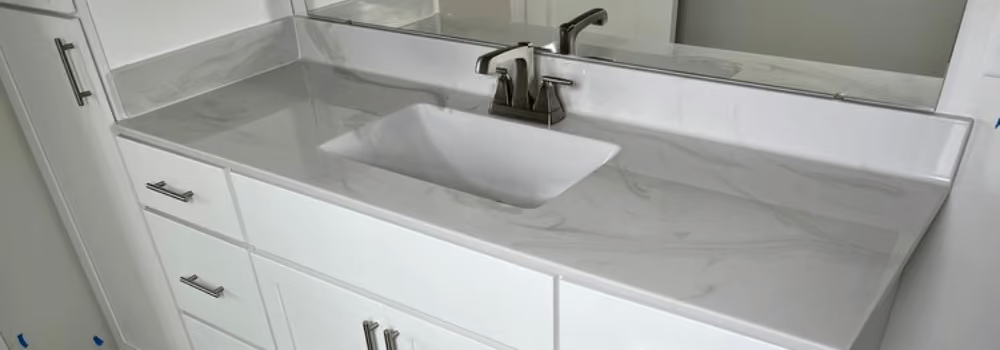






























































%20-%20thumbnail.avif)





%20-%20thumbnail.avif)



%20-%20thumbnail.avif)

.avif)




%20-%20thumbnail.avif)