Host: Today's story captures one of my favorite themes about buying businesses, that it is a path forward for the hungry entrepreneur who otherwise feels stuck. Maybe you don't have an idea. Or maybe, like today's guest, you already have a business but it's reached its potential and you don't see it growing anymore. But what you do have is the energy, the appetite to build. Dustin Carillon had a small business that sourced and supplied electronics parts. It could kick off nice profits, but sales swung year to year from 1 to 3 million, so quality of revenue wasn't great. And more importantly, he didn't see a path to growing it further. So Dustin decided to take his profits from that business and start buying others, using low quality revenue to buy high quality revenue. Seven years later and he has acquired four businesses and his Holdco will hit $20 million in revenue this year. He owns 100% of it and just as important as the money is the fulfillment. Dustin's words. I'm so excited man. It's a dream and I don't know what I did to deserve this. I'm just absolutely having fun. I love what I do and I love finding businesses and this is the best thing for a career that's ever happened to me. Here is Dustin Carillon, owner and builder of COI Holdings Announcements don't forget the webinar this week on Thursday, July 25. Searchers often shy away from buying existing franchise businesses, but longtime listeners will remember compelling stories of searchers who did buy an existing franchise unit or portfolio of units and have done very well. If you are franchise curious in your search, come listen to Connor Gross teach the merits of buying an existing franchise business and crucially, how to evaluate a franchise brand from an ETA perspective. Connor's owned or operated franchise units in multiple systems and he's grown his own portfolio through multiple successful acquisitions, so he knows the power of acquisition in a franchise context. Specifically, the webinar is sponsored by System 6. System 6 provides bookkeeping, payroll, invoicing and other day to day finance services to over 200 companies including more than 40 searcher acquired businesses. It's this Thursday, July 25th noon Eastern. Link in the show notes of this episode or on the Acquiring Minds homepage Acquiringminds Co. And if you can't make it register anyway so that you receive a link to the recording after the fact. Also, Smith List the Job board for operators and leaders of small businesses has a fantastic new opportunity. Tim Erickson bought a business called We Rent Copiers that does short term printer and copier rental in markets across the us It's a four million dollar revenue business and Tim was a guest on Acquiring Minds back in August of 2023 telling his story of acquiring the business. Well, he has since successfully transitioned the business, done a lot of the hard work to get the business on firmer operational footing and he's now looking for a CEO to lead it and double EBITDA. He's looking for someone with a B2B sales background preferably. Now this is a fully distributed team so the CEO role is location independent, a rarity for the opportunities on Smith list. So if buying a business right now is less your priority than leading and growing one, check out this CEO role and others@smithlist.com link in the show notes okay, on to today's episode. Welcome to Acquiring Minds, a podcast about buying businesses. My name is Will Smith. Acquiring an existing business is an awesome opportunity for many entrepreneurs and on this podcast I I talk to the people who do it. August Felker is a two time successful searcher. First with a traditional search fund. The second time around he did a self funded search. Today August runs Oberle Risk Strategies, an insurance firm with a dedicated practice group for searchers and acquisition entrepreneurs like you. If you've got a business under loi, Oberle will provide complimentary due diligence on that business's insurance and benefits program. A great no risk way to get to know August and team. They love helping searchers. They've worked with hundreds. Oberly is a specialty insurance brokerage for searchers by a former searcher. Check out oberle-risk.com O B E R L E- risk.com, link in the show notes. Dustin Carrion, welcome to Acquiring Minds.
[5:26] Guest: Thanks Will. Very happy to be here. Excited.
Host: Dustin, you're a one man holdco. Your first acquisition was 2017. Today you've done four total acquisitions. Actually you just told me before we hit record that you've done a little bolt on so maybe four should be five. You already had one business so COI holdings is a portfolio of five ish businesses doing revenue that'll easily hit $20 million this year. 2024. And you are the sole owner so 100% of the equity is is Dustin's. Let's get into it. Dustin, start us off with some background on you please.
[6:11] Guest: Yeah. Thanks again for having me Will. Yeah, we were talking earlier in the in the pre interview. Yeah, my story's probably a little bit different. Not too unique but a little bit different from other guests. Yeah, I grew up in humble McGinnings Lower Middle class in Los Angeles, you know, Southern California area. My father was in the scrap metal business. So I grew up exposed to an industry where there was a lot of junk. So it's funny, I'd wake up or come home from school and there would be like a barber chair or a fireman, you know, fireman, you know, axe, or an old bathtub from the 1920s. So I think that kind of got me started with this adventure and entrepreneurship, right? Like my parents were going to swap meets and doing those types of things and that really kind of intrigued me. And as I got older, you know, you and I talked about this like I was a really troubled teen. I got in a lot of trouble and I went away to like quote unquote boys camp for a while. So wait, what does that mean?
Host: What am I, what lines are we reading between here?
Guest: Is that like, we'll call it like Camp Snoopy for boys? You know, basically we're, basically it's juvenile hall, right? So yeah, I, I went, I went away for a while and it was the best thing that happened to me. I got help and as a result my life started at a young age, started to come together and I, I became, you know, pretty much. I think what happens is that, that those kind of experiences early on, they talk about failing early on and sometimes it's better. It, it. I grew up really fast, right? So by the time I didn't, I graduated from high school, but I had to do a lot of night school and stuff like that. So my, my opportunity for college was, I'm not going to say it wasn't there, but I'm going to say that because of the circumstances, I didn't go to college and I really had no clue what I was going to do as far as a career. However, I asked my dad to work with this company. But at that time it was, you know, my dad was freelancing a lot of, so he had like basically this one person operation that he was running from our, our two bedroom apartment, right? So he literally had scrap metal in the bedroom and so forth. So I started working with him and then he brought in my uncle and, and from that business is where I really kind of started to fall in love with the hunt of the deal, right? Like full finding junk for like five cents and selling it for five bucks, that kind of thing. And I was very arrogant and I told my dad how to scale his business at the, at the whopping Age of 19 or 20, right? I told him what, what I thought he should do. And he just laughed at me. What happened was, was that by accident or just by kind of chance we started coming across a lot of recycle electronic components. So now nowadays it's all about E waste, right? So we, we started to come across a lot of electronics that had gold and palladium and so forth. And in these E waste, right? And we would buy these giant lots of material. There would be semiconductors who were chips, right? So you know, now and day everybody talks about chips. It was popular then, but kind of unknown. So that's when you know, I got this, you know, idea of and, and it wasn't necessarily something that I came up with, but there was other companies that were doing it that were separating the scrap business and the chip business. So I told my dad, why don't we you know, learn the chip business. I'll learn it. And you know, we, we were just buying a ton of it, like new stuff. It was just being liquidated like crazy in, in the 90s. So I, with the $2,000 loan for my dad, or not a loan but a $2,000 investment, I put a down payment on a know, I think it was like a 3,000 square foot building. Took my brother with me at a young age and one of the workers and we started buying and selling new electronic components. So we became a distributor of electronic parts. So we had two companies, the scrap business, the electronic business. And it was at that point that, and I think I explained this to you too. My dad got real sick in, in, in 99. And at that point his scrap business was kind of changing and it was a different type of business at that time. So I ended up buying his shares out right before he passed away. So I became 100% owner of freelance Electronics. And then from there, you know, I started trying to grow the business. We, we, we grew from like three employees to you know, 10 or 15. And it just kind of evolved to something completely different from the scrap metal business.
[11:06] Host: Let me stop you there, Dustin. A couple of follow ups. So when he passes and you have this chip business and you've become an electronics distributor. So the chips business was not about extracting the value from chips as junk or as scrap or as salvage. Salvage is the word.
Guest: Yeah.
Host: So was it that or was it distribution or both or what?
Guest: Yeah, good question. It started off as the salvage part of it, right. And then eventually we realized that the money was really in the new parts. So, so if companies, if you go to, it's, it's no different. Like if you go to, you know, a retail, like Walmart or something, and they're going to be liquidating all their stuff. A lot of their stuff is, is junk, it's scrap, but some of it is still good and it's in brand new packaging and it could be resold. And that's basically what we were doing is we were going to these companies and saying, hey, do you have any excess inventory? Right? Do you have any, do you have any junk? And instead of scrapping it, we would, we would remarket it and we would put it in the stock. Because what happens in electronic components and that happens more than ever is that a lot of times, especially with government, right. Some of these parts become obsolete, but the designs don't change for four decades. So if a company stops manufacturing that part like a Texas instrument, then they're going to, they're going to probably need it someday. So we would put it in stock and just buy and hold. Basically just wait for us to get that call. And usually the person that we bought it from for two was the same
[12:47] Host: person who was throwing it away.
Guest: Yeah. And then they'll come back and buy it eventually.
Host: So, yeah, okay, so you buy out your father as he falls ill and at that point it sounds like his business is still just him, your uncle and maybe another person. Really, it really, you know, as we might call in our world, kind of a glorified job. And you had said earlier that as an arrogant 19 year old, you, you, you instructed him on how you could scale his business. Well, you find yourself as owner of his business and it sounds like you do scale it. So was it, did you scale it according to your own prescriptions or was there some other way? How'd you go from 3 to 15 people and over what time frame? So I guess pick back up the story there.
Guest: Yeah, absolutely. Will. I think what I was trying to get my dad to scale, and again, I sound so, it sounds terrible saying that, but it was the scrap metal end of the business. And the scrap metal business is a commodity business. It's a very tough business. You need a big yard, big containers, a lot of trucks and a lot of volume. And that was a commitment that my dad wasn't willing to take. But chips, semiconductors are small, right? They're small and they're more, you know, they take up a quarter, you know, one fourth of the space and they're 100,000 times more expensive per piece. So that was something that I believe we can scale. My dad totally got it right. Like he totally stepped out of the way and just said, okay, just, you know, I don't really know what you're doing, but I like the money and keep. And keep doing that. And I'll tell you a little something, too. And this is something that I hope it helps other people. And it was key for me. Like, I came across somebody that was kind of a mentor in that industry. It was this old guy that looked like Santa Claus, right? He literally looked like Santa Claus. And he would. He would, like, have a truck, and he would go around to all these little scrap yards and just buy stuff, right? You. We buy something for 50 cents a pound. He would come and give you five bucks a piece for these. And I'm like, holy smoke, that's great. And I was wondering what this guy looked like. He was homeless. And then I. I follow him one day, and he has this giant warehouse in Long beach, and he's selling military aerospace stuff. And this was the guy that kind of gave me the idea of, like, wow, that's what I want to do, because I. I can do that, right? I. I think I can do that. So I had to. I. And I think this is important for any entrepreneur. I. I didn't know exactly what was going to happen, but I knew where I was going, and it was trying to get that envision. So I envisioned like, okay, here's. Here's my dad's scrap company. I'm going to partition one part of this small little building. One side will be for electronics, one side will be for scrap. And then once electronics started out growing the scrap, I envision this warehouse, you know, so I'm going to have all these shelving, and all the parts are going to be organized. And.
[15:44] Host: And.
Guest: And that was my goal, and that was my vision. And I think from there is when the pieces fell into place. And it was timing, too, Will. It wasn't anything that I think I sought out to do or I take credit. It was. Things started going crazy in the electronic component industry in the 90s, mid-90s or so. So we just kind of rode that wave. I started hiring. I still didn't know what I was doing. I just made so many mistakes. I knew at a very young age from being around my parents and watching my dad deal, buy low, sell high. I knew how to allocate capital. I didn't even know what that word meant, but I knew how to do it. It was the business side of it, the people side of it, that I had a lot to learn. So that's. That was kind of the early Days of freelance electronics.
Host: And just to be clear, this. So following this guy, this unassuming Santa Claus looking homeless. Homeless Santa Claus to his giant factory. Excuse me, his giant warehouse. Basically what it was, was, oh, this could be big. This could be sophisticated. So it gave you a North Star in terms of just ambition and how big this thing, this project, this business could maybe one day become. And did you get to know him, by the way? Did he actually mentor you?
Guest: I, I did. You know, he was like Babe Ruth to me. Like I maybe, maybe dated myself a little bit, but he was literally like a rock star to me. I just, I idolize this guy. And he had, he just kind of had this uncular type of personality. But yeah, he was very, kind of odd, very intelligent, you know, back east guy from, from, from Brooklyn, New York or from the Bronx. And he just had this, this thing. But yeah, he allowed me to go inside of his warehouse. So he started buying from me. And then the day came that he let me buy from him and, and I was trying for years to be able to go to his warehouse and just kind of pick a basket around and just grab these things. And he, and he kept saying no. He kept saying no and he kept saying no. And I go, Bob, you gotta let me come in. He says, come in on a Saturday and don't tell anybody because I never do this, you know. And it was at that point that, yeah, I just, he, he was my mentor by watching me, by, by myself watching him and, and just pretty much telling me in his own way that, you know, you're on the right, right track. You keep, keep doing what you're doing, you'll keep getting what you're getting.
[18:20] Host: What a neat story, Bob. What was his last name?
Guest: His last name was Averback. Bob Averback.
Host: Bob Averbeck. Great. A PEO run by a searcher for searchers. If you're running a company with less than 100 employees in providing health insurance, you could secure better benefit plans at a 15 to 30% discount through a professional employer organization or PEO. Aspen HR, run by search fund veteran Mark Sinatra, understands the needs of search operators and could be a great solution for you to receive HR compliance and diligent support. A powerful HR tech platform and Fortune 500 caliber benefits, all for a fraction of the cost. Check out aspenhr.com or contact Mark directly@markspenhr.com well, let's fast forward a little bit. You're so take us as far into your story as you need to to kind of the launching Point where the idea of acquisition and what you're. You're doing now started to be a glimmer in your eye.
Guest: Yeah, well, I, I think what I'll start off with there is, is going into the, into kind of the, the crux or the foundation of, of what I was really doing at Freelance electronics, because I think it all leads up to acquisitions, right? And, and I think that, you know, some people go to business schools, you know, nowadays. I mean, all this stuff was happening before Buy and build and before all this other stuff was being taught. And, And I think where I'm very lucky and grateful is that I, I got to experience some of this stuff in a different way. You know, early on, as far as the business aspect, as far as allocation of capital. And the way I saw it was, was that I was going out and I would go to companies that would call. Some of them were defense contractors, and they would call me up and they would go, you know, we have 50 pallets of inventory. We want you to take this off your hands, right? Well, the value of this inventory acquisition cost may have been, you know, five or $10 million. So what do I pay for, right? How do I figure that out? So what I had to do is I. I had to almost do, like, what Warren Buffett calls, you know, discount cash flow, right? Like, I have to go in there and figure out how much money am I going to make out of this over years. I'm not going to sell it for $5 million. So I had this process that I developed as far as buying deals and looking at those deals as little tiny companies. So if I buy this $5 million deal that I'm only going to pay 20,000 for, that $20,000 could turn into two to $300,000 over a couple of years. So if I get five of those going, then I have this kind of this Ferris wheel type of event happening. And, and what happened was during that time was that I didn't know how to, how to scale that. Well, like, I came to a point where, like, this is great. We're making. You know, our margins are on some of this stuff, gross margins is like 95%, almost nothing. But I don't know how to scale it. And the way I can scale it is going to. Is going to cause me to put more, more capital into the business and more expertise. And I'm not really too sure. I figure I had to do something. So one of the things that I learned by reading about Buffett and Berkshire Hathaway is that what Berkshire Hathaway was, was like a, a failing textile company. And he talks about taking money from a bad asset that's generating cash flow and putting it into a good asset. So I started doing that concept early on, whether it was buying stocks, whether it was buying property, whether it was investing in something else. So I go to Hawaii one day and literally, will I buy a book called Buying a Business for Dummies or Idiots Buying a Business for Idiots? And I just read it and I go, I could do this. I kind of understand this concept. And what I learned from that book wasn't so much like talked about due diligence. It talked about sourcing a business. All the things that we are taught now. But this was 10, 15 years ago, whatever. But it really talked about, you know, capital allocation or trying to figure out how much you're going to really make, right? What, how to value a business. And how to value a business is going to be based on your risk tolerance, you know, and those types of things really made sense for me because that's all I was doing, was trying to reduce risk. So I thought about the Berkshire Hathaway concept in this book and said, I, I think I'm going to do this. Let me, let me get started.
[23:22] Host: So just to make sure I have the analogy, when you were in freelance electronics, buying big quantities of junk or inventory that the company didn't want anymore might be, might have a book value of five to $10 million, but you weren't going to buy it for that price. You were. The way that, that's like a business is that you're basically not going to flip that inventory. You're going to sell it gradually over years. So what you're really buying is a stream of income over. It's going to take you five years maybe to unload all that inventory that your supplier is dumping on you. So it will take you five years to unload all of that. And so you're calculating, okay, if I buy, if I, if I, you know, buy this big lump, when, one big lump, this inventory, how do I calculate what it's going to generate in year 1, 2, 3, 4, 5, and what's that worth to me? And in some ways, that's not unlike when we think about businesses as assets.
[24:32] Guest: We, we are.
Host: We also know that we shouldn't think about them just as that, because they are fundamentally groups of people. But when we think about a business as an asset, similar thing. You're paying money upfront, you're buying cash flow, future cash flows, with a big Lump sum payment upfront, maybe it's financed, but fundamentally the seller gets, you know, gets a big, big chunk of money.
Guest: Did I get it? You absolutely got it. 100% good.
Host: Really interesting though, Dustin. That's that, that really is a really. It does feel very analogous. So, so it felt natural for you to think about buying businesses. And, and so to be clear too, you, you also thought the thing about Buffett taking money from a bad asset and putting it into a better asset, you were at a point in freelance electronics where to get to the next level was not something really that interested you. So it was at this point a cash cow. You needed to figure out a better way to allocate this money than just trying to grow the business, which you weren't interested in. So that's where you say, okay, maybe it's time to look around. And you do, and then you find that buying a business for idiots which opens your, opens your eye. The, the buy then build of 2007 or whatever. What year is this, by the way?
Guest: I think it was like, yeah, 2012. 13, something like that.
Host: Not too long ago. Okay.
Guest: Yeah. Yeah.
Host: Okay, great. And how big is freelance electronics at that point?
Guest: I, I think at, at that point we were probably, you know, somewhere between $1.52 million. So you know, not, I mean to me I was like, oh my gosh, we're a huge company. Right. Because of where I came from. And, and I really, you know, took out most of the cash flows and tried to reinvest it, but it was, it was really kind of small and it's really, those, that kind of business really fluctuates. Will like it. It's not a normal to have a $3 million year and then have a $1 million year the following year.
Host: I mean, it's just as you're like any kind of project business, you're just as good as your last trade sort of thing.
Guest: Absolutely.
Host: Okay, so, but how much I guess give us a sense of the cash flow. You kind of feel like you're playing with. What are you going about to go into the market to buy a business with? What's your balance sheet look like?
Guest: Yeah. So at that time, you know, again, freelance is, is, is still a really profitable business. And at that time, look at when, when I decided for myself that I was going to start buying businesses. Right. And I want to back up for a second, like I, and I may have told you this before, like I actually wanted to like start managing money. Right. I have no idea. I don't know. If I'm going to get my CFA license or what, And I'm like, why don't I just be like Buffett and start a fund and do all these things? And I'm like, oh my God, I can't. You know, there's no way I can look somebody in the eye and say, hey, I lost some, some of your money. I would feel terrible. So I was still trying to figure out what to do. And I think it was at that point where the business, buying, the business thing just made sense. And as far as capital that I was going to use for that, like, I had no problem. You know, I knew about SBA loans, I looked at so many ways of financing. I read about, you know, seller financing and all these other things, but I had capital, right? I had enough capital to, to, to do a deal probably underneath a million or so. I mean, I, if I wanted to, I could pay cash because wasn't like, I was just, you know, super, super full of money. But like, remember, at this point in my life, I'm, I'm in my, you know, mid-30s or late-30s or so, so I'm already established, right. I started freelance electronics in, you know, in, in my early 20s. So I was able to invest, I was able to save a lot of money. And, and I really put that, you know, it compounded, right? Everything was compounding. So, so at that time, I don't know if that answers your question, I, I, I had, I had some capital to play with and then I was, I was somewhat bankable because I, I had some, some, some assets and so forth. So, and, and as far as the SBA loan aspect of it was like, you know, the personal guarantee thing, when I started looking at it, it's like, oh my God, I gotta guarantee all this stuff. Well, I, I've been doing that my whole, really mind doing that because when you start off kind of young, you get that, you know, why should I trust you? Why, why should I, why should I invest in you? You know, can you do this? You don't have any experience, so I, to me, none of that was scary for me. As far as personal guarantee.
[29:10] Host: Okay, well, I appreciate the transparency there, Dustin, because as always, we're, we're, the audience is going to be hearing your story, wondering, you know, if they can do what you've done.
Guest: Okay, so acquisition number one is BNB Socket Products, right?
Host: BNB Socket Products, yes.
Guest: So it's, it's a company that was, that's a family, that's a family owned business, you know, Second generation. It's, it's been around the. There was two companies, so there's BNB Socket Products, I think BNB Specialties. And these two companies kind of broke off even though they're kind of under the same ownership. And BNB Socket Products, the smaller part of the company, was for sale. And I would say, I would say that when I started looking for businesses and decided, okay, I'm going to, I'm going to be on the hunt, that business I came across within months. Like it was at first, it was like, wow, this is going to be easy. I mean, this, this business is in my wheelhouse, you know, and, and, and, and it wasn't that. It was something that I, that I really kind of understood. It's, it's, it's a company that sells nuts and bolts and a lot of the hardware, right? It, it goes into aerospace, defense. And, and I think I was telling you, like, what really intrigued me about this business was that even though it was, it was a small business, I mean, it was doing at that time, you know, seven to $800,000. So it wasn't something that I felt like was too much of a risk. I felt like I could understand it, but there was these little things in that business that were like moats to me, things that I kind of felt like I understood and things that I liked. And one of the things that you and I talked about previously was that a lot of this hardware was specked in with the manufacturer. So it was parts that basically you kind of create for your customer and you give it your own part number. So they pretty much are indebted to come back to you because you kind of done the work for them. You may even, they, even the BMD socket products went to the manufacturers and said, hey, look, I have this client and I need to get this part made. And there was maybe some specifications for it, maybe a. Needed a different type of plating on it or a different type of shave or cut. And one of their biggest customers still today is a company that makes. They're one of the largest makers in the world of prosthetic legs, right, and arms and those, those actually use a lot of hardware. So I was like, really intrigued with that. I was like, wow, that's, that's awesome. And so anyway, so I, I looked at the business and there were some things that I liked. It wasn't profitable at that time, but I, I thought I could make it profitable. And as, as far as the financing's concerned, it was. We went back and forth and this is one thing I see a lot like, you know, a lot of times in this type of business you have to have a lot of inventory. And they thought their inventory was worth more than at the actual business. Right. So we went back and forth with the inventory. The inventory is worth 400,000, 500,000, whatever. We and forth. And I actually looked at the inventory and I was like, you know what? The inventory is actually really undervalued here. Like I, I look because a lot of times these companies don't know how to, you know, they probably zero their cost. Right. At, at one point or another and then it becomes surplus and then all of a sudden it's trying to figure out what it's worth. So I saw a lot of value in that inventory that I believe we can sell and we could continue to sell. So I worked out a deal where I believe the price, the asking price or what we agreed on the business was right about, I'm going to say right about 475,000 ish, right around there. And I think we probably paid another 40 or 50,000 for the inventory. So it was upwards around 520, 535,000 in there for the entire business.
[33:28] Host: Well, how did you arrive at that number? You've said that the inventory. First of all, you said something counterintuitive that they were actually under valuing inventory. Typically what we hear from that sellers are over valuing their inventory and you as buyer have to be super careful, go in and audit the inventory to the best of your abilities because a lot of that is going to be unsalable and essentially worthless. But in fact, in this case it was the reverse. They were pushing you for an inventory number and when you looked at the inventory you said sure, because you thought the inventory was, it was worth even more than they were pushing for.
Guest: Yes.
Host: Yeah, but, so, so that's, that's priced in. You just said you paid 40 or 50 for that. You, and you thought maybe the inventory is worth 150. But you still, if it's not, if it's a business that's not profitable, how do you come up with the remaining, whatever that is? 400. And you said you paid 475 for the business. Where was that, what was that valuation based on?
Guest: Well, obviously there was SDE in the business. Right. So once I, once I figured out that what the true SDA was, so they, they had a general manager at that time that that was making a decent salary. So they let this person go, somebody else quit like the day the day that I bought the business. So basically you had two employees in this business that, that were basically running the company and both employees. It is. You know, I am grateful that this acquisition has been my hardest acquisition. I'm glad that it, it wasn't easy because I learned so much from it, right? And, and I think I kind of knew that going into it. So I, I got a lot of kind of rebuttal from the employees. It. It was a very kind of. Cancerous culture, I guess you could call it a culture of. Of. Of mistrust. Right. So they came in. When I came in, they saw me as like some type of corporate raiders. I was going to go in there and shut the business down or something. So there, There was a lot of stuff to kind of navigate. So what I, What I did was we. This deal pretty much fell through because I got a sense and look at. I'm gonna, I'm gonna tell you something right now, and I think this is kind of funny. So what happened was, was that this business, one of the, One of their vendors was like a friend of mine. He's almost like a surrogate uncle to me. So his machine shop supplies products to the company that I'm trying to buy. Now, I've never bought a business before. I sign an NDA. So I go over to this gentleman and I, And I talk to, you know, I talked to one of his employees and I said, hey, do you know who BNB Socket products are? You know, and he goes, yeah, we, we, we. We deal business with them, we compete with them. You know, they're a good company and all that. And that's. I didn't feel like I needed to say anything like, hey, keep this on the lower. Well, sure enough, Will, a week later, the word gets around that they're selling the business. It gets back to the owners, the sellers and employees, and all of a sudden they come back to me and they're just yelling at me, you know, you're screwing this deal. I don't trust you anymore. And look, I'm not that kind of person. I really didn't, you know, I really. I shouldn't have done that. But I was trying to make sure that, hey, is this, you know, just like they're doing diligence on me? I wanted to do diligence on them. So this almost threw the deal out the window. So as. As a result, what I wanted to make sure was once we kind of reworked out the details, I went in there and I talked to them and I said, hey, look, I Want to make sure that these two employees who are running the entire company, who knew everything about the company, because I made a decision that I wasn't going to go in there and run the company. If, if I have to, I will, but. So I, I had a, I had this, this thing that I did that I thought it was kind of, you know, made sense at the time where we put, we put aside out of the cell about 100, 100, $150,000 or something like that in an escrow account. So if one of those employees didn't stay, you know, that money would come back to me because I really didn't trust that one of those employees were going to say so. And, and then if they did, then they get some of the money, the sellers get some of the money back, and then the employees will get part of that money as a bonus for staying on in a year. And what happened was that I signed a contract with each employee. So it's not something I do now, but it's something I did at the time, like an employer employee agreement. And I said, this is your salary. I really need you to stay. We value you. However, after a year, if things don't work out, we just go upon our way. And it was one of the best things that by accident that I did because one of the employees was just, it was, was just being very difficult, you know, was, was pretty much taking control the whole company where she didn't want to delegate anything else to anybody. So I was in a real big risk of somebody just completely just, you know, doing things without my knowledge. So anything.
[38:49] Host: So what was good was that you got everybody contractually committed to a year without over committing, so that if somebody after a year was not long for their, for the business, you could let them go. Which is what happened with this particular woman.
[39:06] Guest: Yes.
Host: Okay. All right. And sorry, just timing here. This is 2017, but you bought the book how to Buy a business in like 2012. So it took you a while to actually go out and find a business to buy. Is it. I know we're kind of, I'm stepping back a little bit, but is there anything to say there? Because it sounded like you read that book and you went after it, but it wasn't until five years later that you bought bnb.
Guest: Yeah, I didn't, I actually didn't start looking until, until four or five years after I read that book. I went back and revisited that book several times. I think I was still trying to really figure out what I was going to do, like I said, I kind of pondered with, you know, maybe I'm just going to be a fund manager or maybe I'm just going to do this. And the more and more I thought about it, the more and more just buying a business just made sense.
Host: Yep.
Guest: Gotcha.
Host: Okay, thank you. Okay, so back to BNB. So it's a. It's a 700 to $800,000 business. And you like the moat. The. The nuts and bolts are specked into client products, which means your clients are other manufacturers, for example, of prosthetic legs. And so in the specification of the prosthetic leg, it'll be like this particular nut from this particular vendor is, you know, goes here. And so that's what it means to be spec d in. It's almost like, you know, it's. It's not just, we need some standard nut that you can get from any vendor. No, it has to come from bnb, right?
Guest: Yes.
Host: And this is a dynamic that is common in manufacturing, I guess.
Guest: Yeah, I mean, it's. It's common in the electronic components industry, certain things. I mean, there's like any other manufacturing industry, whether it's cars or whatever it is, there's. There's standard products, standard part numbers, but in this specific case, because it's in the medical industry, and also there's clients that we sell to in the defense industry that there's very. There's. There's very specific things. And, you know, we. We also have what's called an AS9100, which is an aerospace compliance quality system that we're certified on every three years. And, you know, in order to keep that certification, you have to buy from certain types of vendors. You have to have paperwork on everything. You have to get special tasks. So again, it's not the hardest thing to do, but there's a lot of companies that just don't want to deal with that. So this company was very big on making sure that they had their certifications and making sure that they kept up on those standards.
Host: Okay, Dustin will give us a little bit more about the transition, because you've told us that it was, I guess, your hardest acquisition, that the culture was toxic. You've given us example of this problematic employee. What else did you learn that year? You know, give maybe some more highlights. And I. And I want to just get that from you because this was your first time doing this, and as hard as it was, it did make you feel like, well, no, but this is the way. As hard as this is, this is the way. Let's do more of this. So tell us how it was hard, how you dealt with it, but then why you liked it so much.
[42:41] Guest: Ultimately, yeah, I mean, the reason why I like the business and this is, look, I read Investing for Dummies a long time ago. And so, you know, sticking to this topic, one of the things that it said, when you're going to be an investor, you kind of have to decide early on what type of investor you're going to be. Are you going to be a day trader? Are you going to be a long term investor? You're going to be, you know, you're going to trade, you know, currencies and so forth. And I think with acquisitions, when I decided to be an acquisition entrepreneur, which wasn't a thing then, like I had to decide, you know, what is, what is my area of competence, what are the things that I'm willing to buy, what I'm not going to, willing to buy. And again, this whole boring business thing, like, I know that nuts and bolts are not going to change anytime soon. You know, they're, they're pretty much I'm looking at bolts that have been made the same way for like 100 years, just about. So, so that fits my personality, right? That fits my personality of kind of like slow incremental change. So I, I think knowing that, like, knowing that I was in the right business and doing the right thing is what made it easier for me to kind of deal with all of the things that I was dealing with at that company. So I, I think that, you know, some of the, some of the challenges was really trying to understand that even though it was only two people that there was, and, and eventually I brought in like my own team. I brought in people from my other companies, my other company, Freelance Electronics, to help out in those companies. And, and I think that what it was, was not, not really understanding the culture and not really putting down kind of that foundation up front. Meaning, you know, these are, this is the expectations, this is what we expect. And it was a, it was a real challenge. And then what happened was, was that I, I started bringing in consultants and I started, you know, delegating a lot of things. And then all of a sudden, you know, we just started hiring a bunch of salespeople, right? Thought like, well, you know, this is a good little business. It has a good little moat. Let's go ahead and just expand this. And so we started hiring salespeople and we just, and, and brought in, you know, brought in people for that. And it was, it was a little disastrous Right. The salespeople didn't work out. You know, there was just all these issues. First off, I just want to go back and say that I made a decision early on. Like, I thought about closing the doors. Now this. That we.
[45:18] Host: We.
Guest: We made the first year, like 2017, I bought the business. 2018, you know, they went from like, a negative profit, and we had like a. I don't know, we had. We had like a huge, like 300. $300,000 cash flow that year. Right?
Host: It was huge.
Guest: And a lot of that was the windfall from the inventory. Right? So what happened was, is that the inventory just kicked in. So then we had to replenish the inventory for the pre. For the next year, 2019. And then the business kind of started, you know, dropping a little bit. So I made a decision at that point. Like, even though it was making money, I was so frustrated and. And I said. And. And I literally thought about shutting it down.
Host: Right.
Guest: I think I told one of the employees that, you know, I kind of had, like, a moment, and I think for me, I had to make this work. Right? Like, I felt like it was very important. Not that I won't cut my losses if I have to, but I felt like I had to prove this to myself, you know, that I can do this. And. And the problem was, was that I was putting too much expectation on myself instead of just taking a step backwards and saying, look, this is a good little business. It. It doesn't have to sell a lot to make enough money. And it has this little moat, and all we have to do is serve the customers, you know, try to increase business with the current customers, get back to them in a. In a. In a. In. In a good amount of time, and give them the service. So I. I literally started going out there and just kind of talking to the customers and started to really figure out what is. What is the business that we're in, what. What is the type of business this is? What are we good at and what are we not good at? You know, what. What. What are the things we should stay away from and what are the. The specific things we should do? And once I figured out the business that we're really in and why customers buy from us, then it just kind of relieved this whole thing. Like, I gotta fix this. I gotta deal with these people. And after a year, will. Then things just kind of worked out. Like, the lady who was second in command, she ended up stepping up. She ended up basically becoming the general manager of the company. The other lady that I Brought over from one of my other companies. She had experience. They just started to work with together as a unit. And, and the whole thing was I want everybody in these small companies and I got this, this template. I'm building this template good and bad, the good things and the bad things of how I'm going to scale this going forward. What am I going to do in my next business? And the number one thing is that you're going to train the person under you to do your job. I don't want one person doing one thing because one of these days you, if we keep buying businesses, you're going to be able to go in the next company and I want somebody who's going to be able to do your job and do it even better.
[48:10] Host: Huge learning and very powerful, very powerful process to, to bake into all of your, your employees. The. So let me just make sure I got that. Dustin. You were. You, you came in hot, feeling like you had to do grand things with this kind of from a place of ego to, to prove it to yourself that you could work magic. And, and that wasn't going well. And so then you kind of had to take a step back, be a little bit more circumspect and really understand the core of what the business did. And once you did that and just kind of relaxed a little bit and just said, let me. Rather than being too ambitious here, let's be iterative, do what we do already, but better. And that pivot in attitude made it finally work. It's interesting because it's almost like you came in more entrepreneurial, you know, wanting to do things, build, create change. And then that was the wrong attitude. The right attitude was more of an investor attitude. Like let's, let's do, let's, let's make improvements at the margins, but mostly let's have this thing keep running as it was.
Guest: Yeah, it was at that point, Will, where you're spot on. And that's where I, like, I kind of already knew this, but I had to. It comes down to you, right? As, as the owner, as the entrepreneur, as the buyer. It's not about the companies, it's not about the people. It's understanding what am I really doing right? And the number one job, especially of a, you know, you know, you could call it search or whatever, but when you, especially when you have a holding company. My job is to allocate capital. You know, I am to put money to work in the best places. Now, there's a lot of other things that come under that right Leader, visionary, you know, you know, you know, try, try to empower people, recruiting, all that other stuff, but my main job is to do that, so I have to come in there. It was at that point that I realized is, is what my real job is, is that, you know, yes, these are small companies, but in order for me to scale this model to do what I wanted to do was to become like this, you know, mini conglomerate of, of these smaller companies where I have flexibility, where I can buy a company over here and have it over there, and is that I also have to have trust in my people. I have to have a process. And it's only through autonomy and kind of cutting out, you know, all those layers. But having expectations is how I'm going to be able to scale this thing so I could concentrate what I'm really good at, you know, and that's. And again, I'm so used to, for all these years, you know, running my little freelance company and doing everything right, like doing all the stuff that I had to completely take a step back and realize that's not my role anymore. And it was really tough because I'm a micromanager by nature, but I had to really let go. But make sure that I don't let go too much. I don't know if that makes sense.
[51:22] Host: Well, sure, and we're going to return to that because you buy businesses that basically run themselves with your oversight, and there's going to be a lot of people eager to hear how you identify that, because a lot of people would love to, you know, the. I kind of, for a lot of people listening, that's the gold standard to be able to buy a business that runs itself. And it's actually something that we are really wary of advocating too hard here, because often in most businesses that are acquired by people in this audience, they're going to need the active involvement of the owner, you know, the owner. The, the searcher is going to come. The searcher buyer is going to come in as owner, operator, at least for a while. And so your, Your model is the exception, not the rule. And, and so it's intriguing the. On. On the other side of that first couple of years at BNB Socket, despite the kind of pain and the learnings, you were convinced that buying more businesses was the career you wanted to pursue.
Guest: Absolutely. And. And I continued to keep my eyes open for other businesses. And it was, it was really. So when I really made that decision, right. I mean, years after I read the book, I. I found. I found BnB soccer products really Fast, right? I found it really fast. And another thing I want to add, like I, I saw this company and it was like the way it was listed, it's like, oh my God, I, I, I, I, I know I could, I know I can buy this company. I know this is perfect. It's close by. It's, it's an area I kind of know the industry a little bit. And the broker never returned my phone call so I literally calling and kept calling them and just told them, look, you, you have to sell this to me. I didn't exactly say it like that, but I was like, you know, so you, you have to do a lot of convincing. Right? And, and, and obviously having a background, being an entrepreneur is, is really important with that, is really important having that background because obviously they're going to talk to me a little bit differently than they would to. Somebody had never bought a business but they still want to make sure that it's the right fit. But yeah, going back to your point, like there was a three or four year period that I just didn't find anything, right. I just, I didn't find any businesses. Like, it was just, I kind of hit this dry spell and I never set out to say, hey, look, you know, I'm going to buy a business every two years, I'm going to buy a business every year, I'm going to buy a business every five years. It was, you know, I think you really put yourself in a position, you limit yourself and then you feel like it's, it's, you know, not that there's anything wrong with search funds but you know, like any type of fun, you have a timeline. And I decided that I didn't want to do that. That's not the type of person I am. I am, I'm used to waiting. Like Warren Buffett says, when there's blood on the street, you know, when there's blood on the street. And, and I know that sounds really gory when you're taught, but I knew that there was oper that I'm going to jump at the right opportunity when this comes. So I, I was just kind of patient and I just kind of waited for more opportunities come, you know, one, one thing I just want to add on, Will, I don't want to go back too much but you know, not, you know, the difference between somebody like myself and somebody who's actually working in the business. A search funder or buyer who buys a business and works in it. Yeah, yeah, I made, I made and, and I keep this till today. Right. Like I'm, I'm fortunate that I have a team now, but there's a time and I'm dealing with that right now where I might have to go in there. I'm not opposed to going in there and running the business if I have to. You know, it comes down to me, you know, it's my personal guarantee and I made that decision now and I make it today that, you know, when it comes down to it, I'm responsible, you know, for this company. It may not be my fault, but anything that goes wrong within the companies, I'm responsible. So if I have to be there, I will be there. I'm not above that and I'm not too good at that. I don't think it's a good worth of my time to be there every single day, but I will do what I have to do to keep this company going and profitable.
[55:26] Host: So over the course of your seven year adventure here, how many times would you say you've had to get in as operator as a stopgap?
Guest: I would say BNB was the time that I was actually, I wouldn't say I was running the day to day, but I was definitely pulling the strings and making and I was going in there quite often, like, often for me is like three to four times a week just to make sure things were getting done. But there's been times where I've had to physically gone, go into like a location and spend time there and really figure out I, I think what's important will, what I've done is that, and I encourage everybody to do this and I hear about this a lot on your podcast and I encourage my people to do this is, you know, literally get in the weeds. You know, if you're, if you have a machine shop, you know, learn the machines, you know, work the machines for a couple weeks or a couple days, you know, understand what they're doing. You know, if you have a company that has a milk run or has a delivery route, go on the delivery routes, you know, meet the customers. It was very important for me and still is to really try to understand every aspect of that business. And, and I, and I think you get a certain buy in from people when you do that. You know, they kind of respect you a little bit more.
Host: Well, many of my guests have found that, that doing, doing the actual whatever service is being delivered earns credibility and respect from the team. And that's as owner operators, you who is almost more kind of a little bit arm's length owner unless, except when you have to be more in the business. It, it probably, there's probably even more of a gap between, you know, how, how close they feel you are to the business and you know, and not. So having you as owner come and, and do the service and, and you know, get your hands dirty is probably even says even more to them than my typical guest because you are fundamentally just owner, investor. You're not the operator. Couple follow ups on the so about you're thinking about buying a fund, doing a fund. You, you entertained that. And one reason you said you didn't want to do it is because you couldn't stomach the idea of losing your LP, losing money for your LPs. And another was you didn't want to be. Funds have timelines. They need to deploy capital once they've raised it. And you wanted to not have that restraint. You wanted to be just as patient as you needed to be. Very sound reasons. And then there was an example of this. So I guess you said you waited three or four years. So it was between BNB and your second acquisition that that four year dry spell occurred.
[58:17] Guest: Yeah, I can't really tell you why that happened or if there was a. Again, it just kind of happened. It wasn't that I was looking, but my next acquisition, which is kind of ironic, was another nut and bolt company in Seattle. And it's a little bit different. It's more industrial supplies. I don't know if you heard of Fastenal or any of the listeners, but it's kind of like a company that goes in and services manufacturers who are building stuff and a lot of times they'll have these shelves of parts and industrial supplies and vending machines and they'll restock them every week. And this was a little business in Seattle, a three person team. And I talked to the owner like I think it was like in 2018 or 19 and the business was a little overvalued. And even though it was in another state, I figured, look, I think I understand this. I don't know how I'm going to run it in another state, but I want to be able to have flexibility. I want to be able to have that option to look at deals just outside of where I live. And so the valuation was way too high. I thought so about during COVID I think it was in the middle of 2020 or the end of 2020. The business came back on, on, on online again and, and again I'm, I'm, I'm, I'm not sourcing these directly. I'm just, I'M looking on biz by Sell, you know, all, all these, all these sites that we all kind of laugh at. Like, that's where I'm, that's where I'm finding a lot of these deals. Right, because they're just, they're just kind of in my wheelhouse. And so this guy got the, the seller, his name's Russ, he got a different. He fired that one broker, he got a new broker and it was for sale and I went ahead and bought it and paid cash for it. It wasn't a lot of money, but it was, it was something. It was, it's just, it's, it's my, it's, it's by far one of my less profitable businesses. But as far as the return on capital, as far as how much money I put in in the money, it's one of the best businesses ever. Because these three people run this company like it's theirs. I hardly need to talk to them. They come to me when they need something and they just, they pretty much just run the business on their own. And it was, it was something that was like, yeah, I think I can do this. Because it's, it's, it's pretty much like a hands off thing now. It does need some of our attention. However, it was something that I'm like, wow, this is, this is perfect. So I went ahead and got it and that was my second acquisition.
[1:00:54] Host: And how much revenue did that, does that business do? Quest fastener and industrial supply.
Guest: Quest is doing over a million dollars a year. You know that, that was during COVID and it increased over that, over time. That was, that was, during that, that, that was, I mean, they took a big hit. But I think at the time they were doing just roughly about a million at that time.
Host: Okay. Okay. So after these two acquisitions of BNB and Quest, you're basically at about 2 million.
Guest: Yes.
Host: And so from then until now, three years, you jump another 18 million.
Guest: Yes.
Host: So one of you. There must be one whale in here that we haven't gotten to. Is that what it is?
Guest: There's two.
Host: Okay, so the next. Okay, so I was going to spend time on your first two acquisitions, but maybe it's the, the number three and four that are the big needle movers. Just before we get to those. And we're not going to have time to do the stories there, but you'll tell us about them. You know, you're, you were really strategic in your BNB socket acquisition in terms of really liking the moat. I mean, you, you saw where the Value was, but it was a two person company. So that's an enormous vulnerability. This business up in Seattle Quest is a three person company. You don't appear to be scared by key person risk.
Guest: I, I, you know, I, I think I, I was at that time, but I decided to do it anyways because I think what balances that risk for me is again, it's not that you're completely, you insure yourself because you know, you know the business. Right. So if I feel like I'm, I'm confident in the business. Right. Is, is it a, is it a business where the economics are somewhat predictable? Well, nothing's predictable. 100 but if it's, if it's something I understand something that I feel like the long term economics are good and I kind of understand that the, the business, then I feel comfortable. I think what's happening at this point Will, is that I'm developing this culture and this, in this process of my companies now I have a holding company, I have three companies and I have this team, these people that I can probably, that I could interchange if I wanted to throughout the company. So what I'm really buying is the goodwill of the business. This. I looked to try to grow freelance electronics by acquiring new customers. It would take me five to 10 years and a lot of money to try to get inside of a company and say, hey, I want to become your supplier. That's something these owners, these sellers, these baby boomers that most of them, they did all the work for me. So that's the hard part. So if, so if I could, I'm not saying that I want this to happen, but if any of those one or two people, if they were to leave, as long as I have a process and a system, I could plug somebody into those companies. And now that I have people from my other companies, you know, the risk is less for me. So that was the whole thing. The biggest risk is losing customers. And that was the thing was that I had to really look at like what's the vulnerability of any of these customers leaving?
[1:04:06] Host: Yeah. Yeah. Okay. So that's a really key point. The fact that you had existing staff in your existing first business, freelance electronics meant and people that you thought you could plug into BNB or Quest if you absolutely had to, gave you kind of, you thought kind of a bench of people that you could lean on if some key person at one of your acquisitions left. And then as you've done more and more acquisitions, your employee base grows and you feel like you can move that many more people around you have that, that much larger of a bench to, to, to lean on in, in case some, a key person leaves. Let me ask you, at this point in the story, you got freelance, you got your two acquisitions, you have foundation kind of principles now. At what point are you, is it at this point that you're really starting to like, make your vision of what this is going to be better and better defined? Are you still kind of surfing biz by sell and when something interesting comes along, having, you know, picking up the phone, talking to the owner, is, is it still a little more ad hoc or is it, is it starting to become a more truly mature holding company with a strategy?
Guest: I would say that at this point is when that starts to really come to fruition. I think it's starting to shape. I do have a vision at this point. I have an idea of what I, you know, if not so much like how many companies we have or what type of companies they are. Right. As long as they fit in in it within the scope of what I know, but of more of like, okay, this is kind of, you know, the cash flow that I think we want to work towards. So, so yeah, I, I do have this template and I think what happens is that, you know, what the, the last company that I bought, so I bought Sierra Pacific Supply in, in, in 2021 or was it. Yeah, 2021 was Sierra Pacific Supply. And you know, that's the biggest company today. And that company was a company that I knew of. It was something that I kind of heard about it. And the company's an aerospace supplier of rivets and fasteners and all kinds of stuff. It's been around for 75 years and it has an interesting, interesting background and interesting story. And, and you know, I, it was just the timing. It was during COVID It had a really, really bad. Because it's all kind of related to aerospace and commercial travel, business travel. And I bought it at really the downtime of, of of that business. And you know, at this time it's like, you know, it's definitely, you know, the best investment I ever made. But at that time it was actually a risk. Like I didn't, we didn't know whe, whether aerospace was going to come back anytime or so.
[1:06:58] Host: Right. You know how you get comfortable with that. That was quite a gamble.
Guest: Margin of safety. I, I, I thought about worst case. You know, I, I got, that was my first, that business was the first official SBA loan that I got, you know, using 7A debt. So I got an SBA loan on that. It had a building that I didn't, I didn't end up purchasing. So I know a lot of these build. A lot of these companies have the owners own the building and you have an option to buy that. So it was all this stuff. So we kind of went back and forth, but it just worked out. It wasn't hard. The owner was, was, was a great guy, still is, you know, a little, a little controlling, but, you know, he's one of those guys in his 70s that was doing a lot of, was doing a lot and didn't really find that out until we went in, but just a good staff, some great accounts. And then right after we took it over about a year later, just, you know, things just started really to come back in full swing. So it's just, it's just a great business and we, we just got lucky at that time.
Host: Can you give us some bullet points on revenue, SDE terms of the deal?
Guest: Yeah, so it was the, the deal was with inventory. Again, it was another inventory thing which was also undervalued, but with, with, with inventory and the business, I think we paid close to well. I also bought some of the receivables, so I think it was pretty close to 1.1 million, including receivables inventory. In the business itself, it's how much I paid for the business, I used about $150,000, you know, put about, you know, roughly close to 15 down on that. The, the business at that time was doing, you know, roughly 4 to 5 million dollars in revenue.
Host: In, in the down year.
Guest: In the down year, yeah.
Host: Okay. All right. And it's a distribution business, so it's going to be low margins. 10, 10ish percent.
[1:09:07] Guest: No, their, their, their gross margins were, you know, the gross margins are in, in that industry, they're going to be anywhere from as low as 30, all the way to 50, 60%. They're all over the map. But hardware and mil. Military hardware and aerospace types of products generally have a higher margin.
Host: Okay, but, but net net margin after overhead and everything.
Guest: Oh, the actual. Yeah. Operating margins. Yeah, yeah, they were at, at that time. Or, or generally it's, they're going to probably be around 15 to 20% around there.
Host: Okay.
Guest: Yeah. You know, not, not great, but not terrible. Yeah. And, and, and the, and the thing is, the thing that's. Look at this is something that I've always kind of. The model that I kind of always wanted with Freelance Electronics, which we couldn't really do, is having a model where, you know, Instead of just having inventory and just waiting for people to come to you and say, hey, I need this part and it's obsolete and I can't find it anywhere else, you know, can you, you know, how much and can you send it out today? This company sources, you know, whether it's for airlines or whether it's for manufacturers of aircraft or to the, or the defense. It actually has a, has a government cell. So we sell directly to the federal government. We actually, customers or manufacturers come to us and then we source it. So we buy it from one vendor and bring it, bring it to our location and then put a percentage on top of that. So it's really having that flexibility of being able to source whatever you want, not having to go to just one source or rely on your stock. So it was something that was, that I've always kind of wanted in a business. So when I, when I saw this opportunity come up, I was just like, wow, this is the perfect opportunity, you know, And I wasn't the only one that bid on it. But later on I found out there was other searchers, that it was their first business. And they came up to me later on and said, hey, you beat me out on that deal, you know, and it was just, it was just kind of funny. So it, it was one of those businesses that just. Yeah, it was just, just, just the, just the great or the right fit for us.
Host: Well, and so what has happened subsequently? So I guess you bought it in the, in a, in a valley and it came surging back. So what does revenue look like today in that business?
Guest: Revenue is going to be anywhere between 12 to 13 million this year.
Host: Fantastic. So it's more than well over doubled.
Guest: Yes.
Host: Oh, it's almost tripled. It's almost tripled depending on if you're. Yeah, in two years. You bought that in 2021. So it's two, three years.
Guest: Yes.
Host: Okay, this is great. And so at this point, you're. So you really have a distribution, industrial manufacturing theme going on here, are you, as you continue looking at deals, that's your wheelhouse. You don't look at anything else. So you're never tempted by the H Vac business or the B2B services business. You are only looking at things in your wheelhouse at this point, at this point in the story.
[1:12:16] Guest: Right. So I, I was always, I think for my first businesses, like when I set out to do this, I was like, look, I'm going to stay in my wheelhouse. As time went on, I have looked at other businesses. I made A. I made an offer on a company that makes batting gauges. This was a couple of years ago. I know that sounds crazy. That's another story in itself. So again, I thought that was something I could kind of understand, but I have an open mind at this point. Well, as long as I. If it's something, I may not know the industry, but it's something that I can learn and something that doesn't require a lot of capital. Right? That's the whole thing, you know, how, you know, do I have to reinvest every penny that I make back into the business? You know, is it something that could somewhat run on its own? Is it a company that, you know, if I run into trouble, do I need a specific type of professional skill set that I can't find anywhere else? And those are kind of the things that I stay away from. So, you know, I've made offers on, you know, a company that bought that, that sold tomato paste, you know, so I looked at a lot of different things. So. But basically, these types of businesses that I've been buying since, I understand them pretty well, and a lot of times, as you know, and as you hear, a lot of these sellers will, will choose me or want to choose a buyer that is in that type of industry, even if the, even if the offer may be a little bit lower, the terms are a little bit different.
Host: So, so even though you're in this, in, in manufacturing, either directly or indirectly, you wouldn't say generally that the employees at the businesses that you've acquired are, have skills that are too specialized. You feel like a lot of your employees are people that if they, if they left, you could replace pretty easily.
Guest: Yeah, I mean, I, I would say for, for the most part, yes, but obviously we, we are in a, in a, in a really challenging environment. And as far as just finding people with a certain skill set, but just retaining people. And I think what has happened is that, you know, we, we do have a lot of, you know, a few people in our companies now that will be retiring in the next three to four years. And when you buy these businesses, like, there's nothing written down, there's no process. So you go in there and you start talking to them like, hey, you know, I, you know, they start, they start coming to me, you know, pretty soon, you know, when I start talking to every employee and they'll tell me, well, you know, I'm going to be retiring in two years, so. And I'm like, well, great. Do, you know, can you, can you train somebody? Do you have anything written down, and they look at you like you're talking another language. Right? So. And then when you have them try to train somebody, so that's the biggest thing. Like, all that information is in their head. So I, I think those are the biggest challenges. Even. Even for the things that don't seem hard, seem hard. When somebody's been doing this for 30, you know, 20, 30 years, it makes it really challenging to find somebody for. But for the most part, it's not too hard to find some of these people, but we are having challenges with that.
[1:15:29] Host: And Dustin, your strategy that you shared with us earlier, where everybody in your companies needs to be training somebody under them to do their job, how's that going? It sounds like you actually experience resistance to that at times.
Guest: It's going really great, actually. It was something that took a lot of work. Real quick, I did buy a. My last acquisition is Gates Washer. It's a manufacturing company. It's in Chicago. It's a manufacturer of washers, and it's been around for almost 100 years. I think the best thing we did is we brought in a manufacturing consultant and they went in there and just started training everybody. They're still on the payroll and they go in bi weekly. So they cross train people. They. They do Six Sigma, they do best practices. We just got really, really lucky. You know, I pretty much. We hired somebody like a general manager who's been pretty much running part of the company, and then they also have a shop manager, too. So those things were very, very key for that kind of business because it does have a specific type of skill set. So we have our holding company, and I have a CFO in the holding company, and I have two other people that support the cfo. And one thing that we did recently, which is a part of the best practice, is that we came up with processes and procedures on every single function as a template for now and for future companies that we want to acquire. So it's basically telling the companies, hey, you could kind of do what you want. You could kind of be autonomous. But here's how to hire, here's how to fire, here's. Here's how to train. So we have this process now, and it has cross training in there, and it has every single thing that we need to do. A disaster plan, a weather plan. You know, now that we have two companies out of California, they have volatile weather. So this has really been huge, and it's really, really great. And, and so now I'm starting to get to that point where you know, I could take on other companies where I probably couldn't take them on before because my people were so overwhelmed.
Host: So you're, you're, you're building infrastructure at the Holdco level. You have staff at the Holdco level. You have playbooks and processes at the Holdco level. So there's a standard process of how to fire and how to hire at all your companies. So for the next companies that you buy, you just give them the manual sort of thing. Tell us a little bit about building the staff at the Holdco level. Were these, were these people that were already with you at Freelance Electronics that you've kind of carved out to be your Holdco staff, or what did it look like to build the staff that you would, what you would say is at the Holdco level and not within any of the, of the holdco of the OPCOs within the holdco?
[1:18:28] Guest: Yeah, no, that, that's a good question. I think it's really, really important. And the, the, the stat. The, the three main staff. Well, I have four now that work for the whole cold Holdco company. Three of them came from Freelance Electronics. So they've been with me for, for 15 years. You know, and, and I just want to say, like, what's, what's really important about that is that we've had some struggles in that time when we were just one company. Right? So, so these people have, you know, have, have stuck with me and stuck with the company for all these years when things are bad. And now, you know, I hope that everybody's being rewarded for this. So I have this, you know, awesome experience and core people that kind of been there through, through, through the crazy times and now that we're growing their experience of that. So yes, you know, they're, they're, they started with me at Freelance Electronics. You know, two of them that are on that are pretty much my CFO and works with the CFO underneath her. They've been with me for those two people. One of them's been with me for 12 years and the other one's been with me for almost eight years. And then recently one of the gentlemen he worked with my company was the warehouse manager, QC manager, and he left and he worked with the competitor and I brought him back and he's pretty much the cfo. So he pretty much oversees on a fractional basis most of our companies. So, so this was something that was kind of built over time. I was very lucky to have that. I know other people have to go out and source these kind of people, but as, as we get, you know, bigger I think the challenge is, is do you want to become too top heavy, right? Do you want to add more people on the holding company? Because this model for, for, and I could be wrong with this, but this model may not work for somebody that's going to be selling their business to two to three years. Right? You need, you need people integrated in those companies. So this is, you know, this model of kind of having this autonomy in the companies and having support staff at the holding company. In, in my opinion it really makes sense for a buy and hold type of strategy.
Host: And to be clear, that's because as Autonomous as your OPCOs are, as your operating companies are, there is some reliance on the mothership, on the shared services of the holdco. So in fact they're not truly autonomous. So to, to sell one for example there would be the entity the, that business would have some gaps in it. Like it wouldn't have a financial person for example because the op. Because the hold co is currently doing that for that business.
[1:21:06] Guest: Well, yeah, each, each company has its own accounting department so they're pretty much handling that. But like we're kind of like almost like the cpa, right. So the way I see it is that yeah, they're all kind of separate companies and you know, we at the whole code, we actually, not that it really matters because it's the same company but we charge a management fee to each company so, so they can kick up. So we're giving them support. So you're, you're absolutely right Will. Like there's a, there's kind of a gap in there if that happens. So. But every company's different, right? The manufacturing company is, is, is, is completely on its own pretty much. They have everybody there and they have to be because they're a manufacturing company. You need a lot of resources in there for to, to have that company, you know, to, to be able to function on a daily basis.
Host: Gates Washer, how big a business is it?
Guest: Gates Washer is probably going to do six to seven million dollars this year.
Host: So are you done buying one million dollar and eight hundred thousand dollar revenue businesses?
Guest: No, we just bought one. The bolt on. Yeah, you know, I mean I don't know if you could really call that a business, but yeah, I mean I, I think, I think Will, I think that obviously we've been buying companies that, that, that are doing more in revenue which are going to cost more. I, I think again that you know, I, I don't want to handicap myself and just say I'M only going to buy this type of business. I think a lot of people get in trouble by doing that. I think what it really comes down to for me is, you know, the return on capital. Right? It's, it's not so much, you know, I'm going to buy a 10 million dollar business, but it's only going to make two or three hundred thousand dollars versus you know, I'm going to buy a, you know, a million or two million dollar business, but it's making four or five hundred thousand. So it's really looking at those opportunities and trying to, trying to act on them really fast.
Host: Let's talk about your decision to be a buy and hold. So, so before you started this project, you considered doing a fund, being a professional capital allocator, raising money. You decided against that, started buying businesses. That strategy got clearer and clearer over time and although you still have flexibility, as you just said, you're not, you're not limiting yourself to what you'll consider acquiring. But it does sound like you are quite clear on a long term buy and hold cash flow strategy. Why, how did you arrive at that? What, what's the vision there? What's the strategy there?
Guest: It, it was, I, I think we kind of touched on this earlier. It was something that I believe that kind of fit my personality of being able to not have a timeline on when I wanted, you know, and when to buy or when to sell it. It was, I, I think that in my experience and from what I've viewed from other companies is that you're going to go in there and run the company a lot differently if, you know you're going to sell into three and five years versus if I'm going to buy and hold, you know, I'm going to make different decisions if I'm going to do something temporarily for, for, for a quick gain rather than have a little bit of pain for the long term gain. Right. So I realized that early on that, that that strategy is just not going to work for me. Now I'm not saying that I'm never going to sell a business before, but, but I see it as, I, I know this is kind of a weird analogy. I don't mean to get like philosophical, but I, I kind of see like the holding company, I get asked that a lot, like why the holding company? Tell me about it, I want to do the same thing and all that. There was no really grand plan. It was just, it was a way for me to organize in my head the structure of the company. So it was easier for me to go out and execute what the vision was, and that was to continue to buy companies from the cash flows. So the bigger the cash flows, the bigger, the better that the companies do. The more cash flows, the more I could compound that money because I'm not taking a lot out. I'm putting just about all of it into the holding company. And it's almost like this, you know, the, the brand, the, the, the trunk, the tree of the company is the holding company, right? And you know, the branches are the individual companies in itself. And, and those branches are getting nutrients, which is cash flow. And as long as those nutrients are coming through the tree, the tree is going to continue to grow and get taller and taller. But those branches sometimes are going to stop. They're going to stop feeding on the nutrients, right? The nutrients is going to, is going to stop. So it's not that you cut off the branch necessarily, I don't see that. But it's taking those nutrients and putting them towards another branch or adding more branches, which is more companies. So I felt like doing that, doing that style, doing that process was going to be best for what I wanted to do was what was to continue to scale, you know, and, and have, and have these companies and have this cash flow. So I don't know if that makes any sense to anybody, but it was just something that really kind of made sense to me.
[1:26:39] Host: Well, it's interesting, Dustin, because I, I feel like you, fundamentally, you're kind of prioritizing your own, your own freedom. You want to be able to do things according to your timeline. Basically, you don't want to be rushed to make changes, you don't want to have to sell, you want to buy when you want and so on. And that's a version of freedom, not having LPs kind of lean on you to, to, to. And impose, you know, their needs on your decisions. And I feel like usually in life, but certainly in business, if you prioritize freedom, it's at a cost of something. So you're not going to grow as much or you're not going to have as much success. But it, it seems to have worked really well for you, actually. You're, you've made an enormous amount of progress in seven years, $20 million in revenue, all while prioritizing freedom as opposed to doing, you know, a, maybe a more aggressive strategy. You know, it's interesting. I, I feel like it's not what I would have expected. I would have expected a guy who, who kind of wants to go slow and wants more freedom in his decision making to therefore probably grow slower. But you've grown really quickly. And I guess one follow up to that would be. I think a lot of the growth story here is in what happened with Sierra, that your big business tripled in size. So $10 million of your aggregate revenue this year will come from Sierra that you didn't necessarily predict. It's just been a wonderful investment that way. Is that a fair takeaway from your portfolio?
[1:28:20] Guest: 100%. It's, it's all about timing and luck and it's, you know, it really comes down to that. But I think going back to, you know, the being limited on. You make decisions and there's, there's, there's, you know, there's pros and cons to everything. And I think, like, yeah, there's a limitation on what I can do. What, what. And, and, and I don't know what my problem is. I don't know if it's like I don't trust people or I have to have total control or that my philosophy may be a little bit different than others. But I do know to get to where I want to get, you know, I am going to have to raise money someday. I am going to have to do something that, that is going to be part of the plan. And, and, and I'm not opposed to that, to doing that, but I think what I really wanted to do will for myself, and maybe this is a part of having that imposter syndrome. I don't, I don't really know because it's like, I feel like, you know, when you, when you say those things and you say where we're at today, you know, as far as revenue, I look at it and I go, wow. And I know this sounds, I hope this doesn't sound pretentious, but it just, it's. It's me. It's like, wow, you know, I could do better than that, you know, and it's absolutely stupid. First of all, it's not all on me, but it's. It's this. It's this, you know, this drive of, of wanting to continue to, to get better, you know, and that's, and that's what it is. So my point is, is that I had to do what I've done so far pretty much on my own. And I'm not talking about. I've had a lot of help, right? But I'm talking about with my own capital, I had, I had to do that on my own. And I get, and I get offered. I'm very fortunate you know, I get offered a lot of deals whenever there's, there's raises for these, these funds. I, people come to me all the time and I, you know, again, I think having that flexibility to pounce when I want to pounce is, is, is the freedom that I really want and not being limited. So as long as I have this stream of cash flow coming in and all of that can change. Right. So, you know, these businesses and this growth that we experience is not going to happen. So forever anything could happen and I know it's going to happen. I've been in business too long to see that everything comes to a stop sooner or later. The good thing is, is that we will still be in a position to buy things if we have to. I don't have to go out there hopefully and refinance or raise more money and do these things because we could actually, I hope in those times that we could continue to start buying more businesses and have those opportunities, you know, to kind of take advantage when there's blood on the street.
[1:31:01] Host: And, and, and that's because even if there's blood on the street and your own businesses decline and sales are hit hard in an environment like that, you don't carry a lot of debt. Is that, is that kind of part of the, you know, the, the, your ability to buy even if your own businesses are suffering? I guess. Let's just step back. Talk to us about kind of the debt to equity ratios that you have at the Holdco.
Guest: Yeah, so the, my, my target is for me, and I try to be right around 50% under, under 50, let's just say 60% or so of, of debt to equity. Right. And this is my, and I look at it as my total kind of nut in a sense, when I, when I have a portfolio, I'm very, very much. If, if your job is a capital allocator. If my job is a capital allocator, then I have to know my numbers. And you know, I'm not a mathematician. I don't come, come from that. I didn't go to school, but I, I really studied and made sure that I understand numbers and I understand my business, you know, and so many, so many entrepreneurs, so many people don't. And, and that's fine, I get it. But I have to do that if I'm going to be doing what I'm doing. So yeah, I have to, you have to know what you're comfortable with. And for me it's like I'll take on more debt if I have to. Again, if I understand the risk and if it's something that I feel like, wow, you know what, this just makes so much sense. Like I really can't really lose in this situation. I mean I can, but I really understand. So I, so going back to your point, like, yeah, I'll take on reasonable debt, but I try to really keep those numbers under, you know, 50 to 60% debt to equity ratio, you know, and, and, and, and I'm, and I'm looking at everything and, and I have, you know, the goal was, is to have enough assets that again, going to, the concept is that I have other assets. So I own, I own two of the buildings that the companies are doing business with. Right. So I have to, I have those options to be flexible. Right. My whole job is, you know, it's buying businesses. I think that's where the money, that's where the highest ROI for me, whether it's stocks, real estate or buying businesses. And out of those three, it's the buying the businesses that's the heart, the highest ROI ROI for me. But if I see an opportunity, I have that flexibility. If my debt may be at a level where I'm uncomfortable, I could always be at a point where I could sell one of those assets to buy a better asset. And, and that's something that I've learned over time by kind of studying the Warren Buffett principles about, you know, taking a bad asset and putting it into a better asset. So does that make sense on debt?
[1:33:48] Host: Yeah, yeah. And, and so where are you going, Dustin? What, what is the long term plan here? Are you targeting a revenue number or do you have some other North Star, you know.
Guest: Well, that's a, it's a good question. I'm a very goal oriented person and I think it's, it's, I, I have exceeded all my expectations so far, you know, by, by, by, by chance. I'm very grateful. I never dreamed in a million years. You know, I was, I was happy when I had no money, struggling and happy now as I was. And I, I think that it's, it's, it's. I never like to put like a, it's really hard. I am a numbers person, so it's really hard to say, okay, what is Success? Is it 50 businesses? Is it 5 businesses? Is it 10, is it 50 million? But I do have to have a measure and I, and I think the way we're going and I think we're would, where I would feel like, wow, you know, we, we really took this thing to an extraordinary level with probably Taking the whole, the holding company to $100 million in revenue. You know, so I, I, I think I would have said that would never be attainable years ago, but I, I think there's a, there's a chance that I could, that we can get there.
Host: Over how long?
Guest: I, I would say I have that written down somewhere, but I don't know. But I would probably say realistically, probably in 10 to 15 years, you know, maybe sooner, maybe, maybe longer, maybe not. Regardless, I'm, I'm really grateful to be, you know, even if, even if we did anything like, I was just going to take cash flows out of freelance electronics for the rest of my life and just live off of that and be, and be happy with it, you know, And I think at a certain point is where I figured, like, look, I, you know, my, my desire to grow and to learn was started to happen later on in life for me. And so in.
Host: What do you mean, what is, what do you mean by that?
Guest: That I, I felt like that when I was able to step back and not run the day to day of my companies is when I realized that, look, I want to take this to different heights. I want to have, let's see how many businesses we can get, let's see how high we can scale this. And again, it was just something that started happening and at this point right now for me, because I'm able to really concentrate on what I'm doing and I'm able to have a lot of like space for myself, right? I have a lot of flexibility in my schedule. Like, you know, I heard, I think I heard somebody on your show say, or maybe it was another show and I apologize to say that just because I'm not running the day to day businesses doesn't mean that I don't have any stress anymore. Right? It's a different type of stress. It's a different type of responsibility. So I, I'm still responsible for everything. I still think about, okay, well, I have the leaders in my company, I'm going to take care of them. But what's happened now, Will, is that I'm able to step back and I'm able to really just kind of work on myself, you know, whether it's mentally, physically and just really trying to become the best money allocator, the best entrepreneur I can and the best leader in my people. And as a result of doing that, Will, because there was a time when I was running freelance electronics, I was having panic attacks, I couldn't get out of bed, I couldn't remember the last time I had a vacation and I was a lot smaller company then, so now bigger company because I was able to delegate, let go and put a plan in place. I have more drive and I have more energy than I've ever had in my entire career. So I'm, I'm just, you know, more pumped up than I ever was today and I'm ready to keep going.
[1:37:37] Host: I think you, you said in the pre call that you feel like a kid again. I loved that. I do that sound familiar?
Guest: I do. I'm, I'm absolutely, you know, as, as there's things that happen every day but I am so excited man. I'm just, I'm just, it's a dream. I, I honestly do and I, I don't know what I did to deserve this, but I, I'm just absolutely having fun. I, I love what I do and I love finding businesses and this is, this is the best thing that you know for a career that's ever happened to me.
Host: Well, that's so wonderful to hear Dustin. And you, you're the dream. You're, you're living your own dream and you're leaving living the dream. Of many people listening right now, this just seems like the absolute most fun career. And so before I close this out, I do need to get to this one important question which is a little bit back more into, into the weeds. But it's so central to this game if you will you buy businesses that run themselves. Yes, you'll, you'll dip in if you have to if there's a crisis, what have you. But as we touched on much earlier in the conversation so often in our world of ETA entrepreneurship through acquisition or search, the expectation is that the searcher, the buyer is going to come in and be owner operator and you identify businesses that don't need that. And in fact as I think I also said I actually generally advocate that people not entertain that fantasy. You should expect when you buy a business that it is going to consume you, it is going to be your full time job and then some at least for a while. So how do you do that Dustin? How do you identify businesses successfully? You, you do this successfully that really do run themselves. The day to day is basically they're running themselves barring a crisis or where they, you know, they need something from you. Well, teach us please.
[1:39:34] Guest: Well, I don't know if I'm going to give any secret or t or tell you anything that's, that's different that you haven't already heard of the audience but I Think I'm going to reframe and kind of backpedal a little bit. And I think what it is is that, look, I think a lot of people would argue, even myself, there's no such thing as a business that really runs itself right. So I believe the goal is to reframe it as. Let me find the business that requires the least amount of, of oversight, the least amount of fixing. What is the business that with the right process in the right people, that if I visited once a year, there won't be nothing would really change except for the fact that it has more money than it did today, than it did a year ago. So I think that what I do is that I look at a business and going, wow, this is a business that we can hopefully structure in a way where it can run on its own. Because one thing that all of these companies don't have, as, as you probably know, as a lot of people agree, is they don't have processes. You know, they don't really have processes. They don't have succession plans. They're, they're, they're just, they, they need a lot of direction and vision. And once you figure out what it is your job the first day, and I said this again, is to understand, you think you may know that during the LOI phase, during the due diligence phase, but it's like, why? How does this company really make money and what are their business that we're in? And once you figure that out, then I'm able to come in there and go, okay, I think we could get this business in a sense where it aligns with our holding company, where we don't have to hold its hand and solve every single problem. And that's hard. And, and the thing is, is that we're going to have those companies that we buy in the future. That is going to be the complete opposite. We're going to go, wow, we really screwed this up. So what you can do in the beginning to try to mitigate that is, is obviously you have to know what you want and you have to, you know, it's going in there. And like everybody does, it's like, you know, these are, these are the things that I like, these are the things that I don't like, you know, and right away, if I find out that, you know, an owner's doing five or three or four jobs, that's a red flag right there that I'm going to probably have to hire four or five people or I'm going to have to be in there and this may not meet the model. So it's finding those types of businesses not where they run on its own, but with the right process, I could get it to the point where it could run 80, 90% on its own. And one, one quick thing is that every company has in, you know, in this model. And again, this is still beta testing, right? We're still. My goal is to still scale. This is to have, you know, this is when you come to us, and this is when you don't come to us. And everybody knows, you know, anything under a certain amount, anything under $10,000, you can buy anything over that, you need to. It needs an approval, you know, those types of things. So there's financial decisions, there are, you know, personnel decisions that they can make on their own. And pretty much as long as they know when to come to us, then they come to us. So they, You. They have to know what is their authority, what they can do and what they cannot do.
[1:43:04] Host: Great, Dustin, thank you for that. If people want to reach out, how do you like them to do that?
Guest: You can Find me on LinkedIn. You could also find me on. I. I have a Twitter account. I probably have like 10, 15 followers. I don't have anything, but I, I know I never tweet, but I, I'm on Twitter a lot. But yeah, you could reach out to me, to LinkedIn.
Host: Okay, Dustin, carry on. Congratulations on what you built. I'm excited by your own excitement on your path. It's going to inspire a lot of people eager to. To track your progress here in the years ahead. Thanks very much for sharing it with us.
Guest: Thanks. Will.


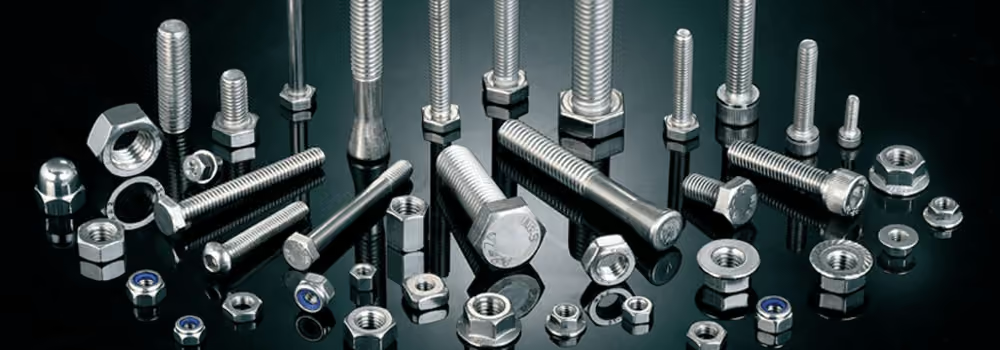












































%20-%20thumbnail.avif)




%20-%20thumbnail.avif)

%20-%20thumbnail.avif)

.avif)




%20-%20thumbnail.avif)