Host: Today's Guest is a zero to one entrepreneur building a VC backed startup for 13 years. In 2020 he pivoted and by 2022 had decided that buying a small business would be his next adventure. Tim Erickson bought a printer rental business a few months ago and he's bringing to bear his hard won lessons from a startup to his newly acquired small business. My favorite point that he makes here is how being funded by vc, gunning toward unicorn status trained him to think big, to move fast, to be aggressive. Now a lot of that attitude is what many of us, and indeed the culture more broadly, has soured on when it comes to the culture of tech. And yet there is something to it. Tim has big plans for his acquisition, namely doubling it in three years. Also listen for the theme of remote operations. This is old hat for Tim, whose startup had 35 locations at its peak. He believes that running an equipment rental business remotely from his home in Puerto Rico is eminently doable. And again, maybe we would all be similarly comfortable with that if we thought a little bigger. Now I'm not saying run out and buy a business a plane right away, but Tim did it. Chris Munn did it episode 73 Paul Quirk did it episode 124 private equity funds do it almost by default. So food for thought. Okay, please enjoy this conversation with startup founder turned SMB acquirer Tim Erickson. Welcome to Acquiring Minds, a podcast about buying businesses. My name is Will Smith. Acquiring an existing business is an awesome opportunity for many entrepreneurs and on this podcast I talk to the people who do it. August Felker is a two time successful searcher, first with a traditional search fund. The second time around he did a self funded search. Today August runs Oberle Risk Strategies, an insurance firm with a dedicated practice group for searchers and acquisition entrepreneurs like you. If you've got a business under loi, Oberle will provide complimentary due diligence on that business's insurance and benefits program. A great no risk way to get to know August and team. They love helping searchers. They've worked with hundreds. Oberly is a specialty insurance brokerage for searchers by a former searcher. Check out oberly-risk.com O B E R L E- risk.com link in the show notes Tim Erickson welcome to Acquiring Minds.
Guest: Thank you. Happy to be here.
Host: Well Tim, you are a zero to one entrepreneur who spent over a decade building a VC funded startup that you started from scratch and today you have come over to the dark side. Or maybe I should say the the light side, the bright side with the recent acquisition of a small business, a small business that I myself had seen on biz by sell, asked for the sim but was told was already under loi and now I know by whom. So let's get into it. Tim, as always, let's start with some background on you, please.
[3:30] Guest: Absolutely. So thanks for having me. I'm a longtime listener, but yeah. I started my VC backed company called Zagster back in 2007 coming out of undergrad in Philadelphia. We were the one of the first companies to bring bicycle sharing to the US market way ahead of our time. But ended up spending a few years in Philadelphia trying to get it off the ground live the zero to one and took three years of making no money, eating ramen and trying to get something that I believed in off the ground. We ended up moving up to Boston to go through the techstars program which is really, if I look back, the pivotal point in the business where it started to accelerate and ultimately went on to raise over $40 million in venture capital. We grew the company to hundreds of employees with 250 bike share programs in 35 states around the US and then ultimately sold the business to one of the e scooter companies who wanted to use that were nationwide network of operations team and our city and university contracts to accelerate their entry into the market. So went through the full lifecycle of a VC backed company, all the good things and the bad things and came out the other side and started to look at what to do next.
Host: And you, so you said you started in 2007 that business and exited in what year was it?
Guest: 2020.
Host: So a 13 year run. Good for you.
Guest: 13 years. Yes. I had a hair before this.
Host: Quite a run. Okay, 2020 exit. And if I may was the exit, you know, of stratospheric Silicon Valley exits. Get rank it for us. I know you don't want to give us a number, but give us a sense of what it did to your life post acquisition.
Guest: It wasn't a huge windfall for me personally. I still have stock in the company that acquired me, but it's still privately held so I hope one day that'll be worth something. But ultimately investors were pretty happy with the outcome and we were able to help the company that acquired us, a company called Superpedestrian, accelerate and go go into cities like Paris and London and major cities around the world with with our operations team.
[6:04] Host: Fantastic. And and so was Zagster consumer facing. I mean might people in the audience have have used Your bicycles and know the brand.
Guest: Yeah, so we were a B2B2C brand. So we would sell to cities and universities, corporate campuses around the country. So we did everything from big universities like Yale, Princeton, Duke and Ohio State to smaller mid sized cities like in Albuquerque or Rochester, New York. And then we did a ton of corporate campuses like General Motors campus outside of Detroit. So there's a, there's a good chance that you may have seen our bikes or use them around the country.
Host: Oh really? Cool. Well, that's not the last we'll hear about Zagster. I'll be, I'll be referencing that story a lot as we go here. Okay, so we're up to 2020 now. You exited in Covid. Did Covid play a role in that timing or would it have, would it have happened?
Guest: Anyway, so the market had shifted. You know, we were growing 300% year over year, having an amazing run for, for many years leading up to, to 2019 and 2020. Those years the, the scooter programs came in the, if you remember the Chinese dockless bike share in. And those companies had raised literally over a billion dollars. None of them are still in existence today. They all blew through all that money and never really made it anywhere. And so we were coming off of two major industry shifts and so our investors were B2B SaaS investors and our business model was B2B and recurring revenue until the market changed. And so in 2019 we started to, to look to get acquired and use our operations team as the, as the thesis for selling to many of the companies that didn't have any operational backing.
Host: Yeah, well, when you talk about those, those market entrants or kind of disruption to the market, the scooters and the dockless bikes, obviously we all know, or anybody who is paying attention, scooters. I mean, what a, what a remarkable story that was. I mean just absolutely white hot hype and kind of trendiness and then just utter collapse. I don't think it's since Groupon that I, that I saw something go up so quickly and back down so quickly. On the other side you still see some scooters around, but not many, not many at all. And then the dockless bikes, I'm not even, I'm not even sure I, I was aware of that Trend. Give us 30 seconds on, on both of those. Just kind of as somebody who is playing in the space, how, how you, how you observe those trends.
Guest: Yeah, so historically in the US bike sharing programs were really considered more of a public transit type application. So Cities and universities and corporate campuses would fund these programs so that there was additional transportation options for their constituents. And so, you know, that was the market that we were playing in. And we had, you know, really great long term contracts and recurring revenue there. And then a handful of companies came out of China who sort of flipped the model on its head and said, let's just put the cheapest bicycles out there as possible. We will not charge the cities, we'll not even work with the cities. We're just going to do it without any permits. And those companies ended up going uber style. Yep. Those companies went on to show on paper stratospheric growth, which you know, now that we've all seen the sort of up and down, realized that it was an actually true. And so they tried to come to the US and sort of flip the model, go after our customers and say, hey, you've been paying for this bike share program, now we're going to give it to you for free. But then they launched in places like Dallas where they put like literally tens of thousands of bikes that were just piling up on the street corners because they didn't lock to anything. There was no coordination with the city. And so ultimately all of those programs went away and you could actually go around the world. You could see, still see a lot of those bikes. Saw one here in Puerto Rico, where I live the other day, riding down the street. I've seen it in Asia, the Middle East. Those bikes are just spawn around the world still being utilized without their technology today.
[10:20] Host: And so do any dockless bike programs still exist? I mean, I'm sure there's gotta be a handful around. But are they, is it effectively a defunct model altogether because the scooter still exists just in a shadow of its former self?
Guest: Yeah, I'm not aware of any, at least in the US any. There are no individual bike share companies that are, that are dockless still. Many of the scooter companies got their start in dockless and then moved to scooters. And so some of them still operate some of those programs. But the traditional docked based bike share programs that you see in like New York and Boston, you know, are all still thriving but because they follow the model that we followed, which was this is a public transit, public good and you know, they work with the, with the city with long term contracts.
Host: Really Interesting. Well again Tim, congratulations on, on being so early in a, in a space, having that foresight and that vision and sticking with it for 13 years. It's 2020, you've now exited that business. And how do you get the idea of buying a small business? Tell us about that evolution.
Guest: Yeah, so it honestly it took a little bit to get there and took to 2022 to, to really solidify that vision. But yeah, I've literally worked every single day since I was 13. Worked all through college while going to school full time and then immediately coming out of undergrad founded Zagster. So I've literally worked every single day from, for the last, you know, 2030. And so originally moved to Puerto Rico from Boston after we the acquisition was going through. Really wanted to get out of the Boston winters. Spent a little bit of time down here and then it turned into well, if you're going to go for a few months, let's go for a year and three and a half years later, I'm still here in Puerto Rico and loving it. But 2020 21, I spent a little bit of time trying to figure out what I want to do with my life. I worked and did a couple of consulting opportunities and ultimately I did a consulting gig with a friend of mine who had come from the VC space, worked as a VP of product at a friend's company and then ultimately he went on to buy one of those van rental companies, those like 13, 14 person passenger van companies where you can't get it from Hertzer Enterprise. I did a little bit of work with them and I was fascinated by the concept. He ended up buying a whole bunch of them and rolling them into the platform. And he was the one who ultimately gave me the Buy then build book and started my process to look for a company on my own.
[13:12] Host: And so it sounds like if he gave you Buy then build the Bible in this space or one of the two or three Bibles. It sounds like he also kind of came via learning about search and read the, read the books and so on. Well, you know, have to introduce me, Tim. He sounds like a great story as well.
Guest: Yes, definitely. Great.
Host: So, so you see his success, you're fascinated by what he's doing, by the business itself. You read Buy, then build. And so is this, is this the proverbial light bulb moment and you're off, you, you're, you're, you're dead set. I'm doing this. Or was there more evolution to come as to, you know, actually making the decision to proceed?
Guest: Yeah, so that was early 2022 when I read the, the book around springtime and ended up spending the entire summ at literally reading every other book I could find. I listened to every single one of your, your podcast actually while doing some hiking. I've literally listened to every single one and by the end of the summer came back. Absolutely, it came back. Thank you. Came back to Puerto rico and decided September 1st to start full time to look for a business. I went through the Acquisition Lab which I was really looking for a community of other searchers who now we're going through the same thing. I was to, to have some, some comrades in that. I had that in the venture capital space and found it, you know, hugely valuable. So wanted to find something similar. I went through the Acquisition Lab to help accelerate the beginning of my search. It's a September cohort coming out in October and started looking for, for business full time.
Host: Let's linger on the value of community for a minute. Listeners will know that the Acquisition Lab is a sponsor. I also went through the lab friends with Chelsea and the gang over there. So full, full disclosure there. But the value of community is something that comes up again and again actually. Although I, I haven't spent too much time talking about it. So let's do that. I, I actually going back to Zagster, when you'd mentioned tech Stars and that I think you mentioned it, or maybe it was on our pre call you said that Zagster really finally kind of got product market fit or started to accelerate, started to really take shape as a business during and after techstars. Something happened at techstars, correct? That was the catalyst.
[15:35] Guest: Yeah. So techstars is a three month accelerator program for companies that are on the venture capital path and what they really do is help companies that are ready sort of figured out their product, figure out some early customers and they help them help us really accelerate and move faster, get more customers and then go down the path of fundraising from venture capitalists. So I went through that program in the winter of 2012 with Zagster and you could literally pinpoint that timeframe as the beginning of our massive growth, our ability to actually raise venture capital to fund the type of business that I wanted to build. And so when I started looking to buy a business myself, was looking for a similar community of people that were going through this.
Host: Yeah. So, so you were in your own mind kind of referencing your techstars experience and looking for some sort of parallel in this space.
Guest: Absolutely, absolutely.
Host: And, and, and, and then, so did you find this is, this is going to be a bit of a softball for my sponsor, but did you find that the value of the, of your comrades and of that community gave you what you wanted? I mean, you know, we can't overdo the parallels here. Techstars is very different. It's in a different space than, than the acquisition lab in the acquisition space. But talk about what it was like actually having comrades as you went through this. Yeah.
Guest: And to be clear that the acquisition lab does not sponsor me, so I'm speaking freely on my end. But thank you. Good clarification. I was very happy that I went through the program. I mean, I think the month long cohort is really helpful to accelerate your search and it probably cut what would have taken me three months, I got done in four weeks. Which, you know, as you're, if you're doing a full time search, it's actually extremely valuable to you. But I think where the real value comes in after that was the slack groups and the monthly bimonthly calls where they go through deal reviews and then the weekly office meetings as I was going through my search and then I was going through diligence on the company that I ultimately bought. Just having those resources was just so, so valuable for me. And you know, I now regularly give back in the slack groups and others that are earlier in their journey. So it's the same sort of mindset that the techstars have of giving first. You know, so many people help me and I want to make sure that I help others as well.
[18:12] Host: Listeners of Acquiring Minds know that for almost any business you acquire, its success comes down to the people and how you develop and manage them as their new leader. Thing is, in addition to management, there is also a lot of process and bureaucratic work when it comes to your new employees. Payroll, compliance, HR, technology, hiring, to name but a few. These processes are crucial to get right, but at the same time distract from where you want to be putting your energy in leadership. So Aspen HR is an HR firm and PEO that takes this work off your plate and handles it with the care it demands. Aspen is owned and run by Mark Sinatra, himself a successful former searcher. So Aspen's own leadership understands the HR challenges that searchers have post acquisition. The firm is offering Acquiring Minds listeners a complimentary pre acquisition HR and PEO review for your target business. Check out aspenhr.com or contact Mark directly@markspenhr.com Fantastic. Thank you, Tim. And yes, to be clear, I found you completely independent of the lab. So this is totally just between Will and Tim talking here. All right. Okay. So you're in the lab. You've consumed a ton of ton of information on our pre call. You called it your summer of learning. You really Just consumed as much as you could. Hit the books as hard as you could. Tell us about the search itself. What, what are you doing?
Guest: Yeah, so I ended up doing a pretty broad search. I initially looked at everything in the 750k to 2 million EBITDA or SDE range anywhere in the US that was SBA qualified. And so because I was doing this full time, I, I really spent the first four weeks getting out of the acquisition lab, building up my, my pipeline. I contacted literally Broker on the IBBA list. I signed up for every mailing list and even built a couple little tools just, just for me to do some scraping and others to get all of the, all the, the postings all in one place. So, you know, I'm pretty efficient on that. I, I even ended up using HubSpot to track my search. I've got a YouTube video that I walk searchers through how to, how to set up HubSpot for free to better manage your, your search. So happy to link to that in the show notes if that's.
Host: Yes, yes, please.
Guest: And so yeah, it started just full time. I would look at, I don't know, probably close to 5, 600 deals a week and you know, you end up digging into only one, two or three of them a week and sort of ending the week with most of them not, not being a fit for, for various reasons, but ended up finding a handful of ones that I, that I really liked and gave two Lois and then ultimately landed on the business that
[21:13] Host: I boug Tim this. I mean, so you really blanketed the US with, you know, your outreach to brokers. So it sounds like you were doing strictly brokered, but you were, but you were doing very wide broker outreach and you're in Puerto Rico. So first of all, explain that. What if you had found a business in Washington state? You ultimately found a business in Maryland by me. But, but anyway, both of those are playing right away. So how are you thinking about that?
Guest: Yeah, so I was looking for businesses that I could ultimately move towards a work from home or work remote model. And so, you know, at Zagster we had literally hundreds of people working for us in 35 states. So it's very comfortable with, you know, one, travel. I spent like two weeks of every month on, on the road while I was running Zagster. But two, most importantly, it's the, you know, tech and processes to be able to run a company where people are not physically in the same office every day. So I was looking for companies that could fit that and I was willing to Move to whatever city that I found it in for six months, nine months, whatever it took to ultimately move the company to a remote first model. So that's what I was looking for. And the business that I found operates around the country, happened to be headquartered in Maryland, but since COVID all of the admin staff work from home. So it was ended up being a
Host: perfect fit for me and Tim. When you say, well, I'm going to want to spend quite a bit of time on, you know, your comfort with having so many remote employees because having employees at all is daunting to a lot of people listening, let alone remote ones. And you're, and as you said, you're very comfortable with it, so we'll get into that. But first, when you say you were looking for a business that was either already remote or could be taken remote, what, what does that leave? What is that? What kind of businesses does that exclude? Because that doesn't, I mean you're perfectly happy to do a very physical business as long as there can be remote managers in place to, to, to, to manage the various satellites around the country. So, so what kind of business could not be ultimately done with Tim, you know, running the whole thing from Puerto Rico?
Guest: Yeah, I think any like manufacturing, which was not really something that interests me. I would look at manufacturing companies because I was curious, but I really just never got excited about it. And I think it's mainly because I think my skill set is really in the sales and marketing and go to market strategy versus the, you know, really digging in and worrying about the nuts and bolts on the operations side. I usually work with a, with a partner who has that mindset. When I even at Zagster I had that. So you know, I think it excluded those types of stuff. But honestly I think most companies that don't have a physical storefront and you know, aren't manufacturing something in a, in a facility could ultimately be run remotely. And I think, you know, as we, Covid showed that most of these companies can be run remotely. And so I think that the timing for me being in Puerto Rico made a lot of sense. I, I also looked in Puerto Rico and still looking for, for opportunities in Puerto Rico, but there just isn't the broker network in Puerto Rico that there is in the US and so I, I think maybe long term I could find a really great opportunity here. But it's definitely old school, you know, proprietary search and spending a lot of time meeting with people. So building up sort of a longer term pipeline.
[24:53] Host: So a quote unquote blue Collar services business where you have people in the field, a landscaping business or an H VAC business, those do qualify because ultimately those people are not in the office anyway, they're out in the field. And so you could, even if a business like that has kind of a headquarters that, where people are checking in, the crews are checking in every morning, you or the operator manager is there something like that you envisioned could be evolved into a remote business, remotely operated business?
Guest: Absolutely. I actually looked at a, a landscaping business in Maryland. I'm not sure why I got a whole bunch of deal flow in Maryland, but I did. And ultimately I, I didn't like that particular business because of the dynamics that they had with their customers and how the, the owner was really going to like all the HOA meetings. And so I felt that it was very difficult to, to replace him. Being remote, I think it's a great business and if I was in Maryland I probably would have bought it. But it was just one where I felt that particular landscaping company would have been difficult to run remotely. But you know, if I had gotten into the landscaping space, I probably would have looked at buying landscaping companies up and down the east coast. And so I'd have to make sure that those could run remotely or at least have a, you know, operations manager in place in each market checking in with me.
Host: Well, I'm so eager to hear again about your comfort with this, Tim. And but just a quick thought. I mean this just feels to me like the, what is the expression where we set, we're self limiting because I, for example, I'm like, I could never like if, when and if I buy a business, it's, you know, I'm going to be there, I'm going to be in there. I frankly don't have the confidence to buy a business even you know, two hours away, let alone up and down the east coast when I'm in Puerto Rico. Because you know, I just think that, you know, I'll need to be there. And I, and I do think that that's a best practice. But I'm looking at you, who has so much comfort with a model like that and it's you know, it's largely thanks to 13, 13 years of experience running a business like that. But the point, my point is that like, you know, maybe I should think bigger and maybe I should just, you know, think like Tim already thinks because it is possible. And I'm kind of just. Many of us are just kind of self limiting that we, we say oh no, we first have to maybe one day I'll get there. But first I have to be physically in the business that I buy and operate it that way in person. At least in the early years. I don't know any response to that.
[27:25] Guest: Yeah, I mean, I think this is why my background in running a VC backed company was so valuable to the space and why I'm seeing others with that similar background starting to come into the, to the ETA space. You know, I came out of undergrad, I was founding my last company. I had zero, you know, business operating experience prior to that. And you know, the, the good and the bad of the VC model is that it forces you to think really big. It forces you to move really quickly and do things that are uncomfortable. And you know, I probably wouldn't have done if we didn't have the pressure to grow big and grow fast. And so you're forced to learn that stuff. And now it became second nature to me. I mean I never thought of it as running a remote company. And you know, we did have a headquarters in Boston but you know, most of our employees were, were not at headquarters, they were, they were out in the field. So you know, I just over time learn, learn to do that. And that's the lens that I took when I, when I did my search. And I was looking to, you know, find an entry point into the space, but I was going to buy, I plan to buy multiple companies probably now in the equipment rental space because that's where I ended up. And you know, the likelihood of them being in a location other than Maryland is pretty high. And so I knew from the beginning that I needed to find a way to be able to be able to essentially work remotely and run it not physically on location.
Host: Yeah, man, I love that Tim. Just the bigger vision and how the kind of the VC land was training for that. That's great. We can all learn from that. Okay, let's. So you encaps. Okay, so tell us about the discovery of short term copier.
Guest: Yeah. When everybody tells you whenever, when you're searching, the general feedback that you get from people who have searched and successfully acquired a business is that you need to go out and you need to talk to brokers. You need to create this search and sort of look at biz by sell but ignore it, you'll probably find it somewhere else. Ultimately I found lots of other companies and companies I dug into a past for other reasons in the broker network, direct broker outreach. But ultimately I was always still looked at biz buy, sell. And one day I saw this copier company pop up and I'm like, what is this? How is there still a copier company out there? And I'll be honest, I was pretty skeptical at first. But I requested the sim like I usually do and anything that sort of catches my eye, I just want to move quick, see the sim, see if it's interesting and then make a decision to dig in or not. And you know, as actually there was no SIM available. So they didn't put together a SIM for this business. They basically just had the listing on bizbuy Sell. So I ended up talking with the broker. We had a good call and after I got off the phone with them, I started seeing a lot of the similarities to Zagster. This company, short term copier. They rent copiers and printers on a short term basis for events and legal war rooms around the country. So they do the super bowl every year. They do, they work with all the major law firms when they're doing, they're traveling to cities to, for big legal cases. They do Burning man. They do all the U.S. embassies and the embassy events in, in D.C. and as I started digging into the, to the business, I just saw a lot of the parallels to Zagster. They operate out of self storage units around the country. They have a lean team of, you know, a person and a van and a, and a warehouse and some equipment in the cities that they operate in. And most importantly, they're already the largest and only nationwide company that owns their own equipment doing this in the, in the space. So I started digging in and I just got more and more excited every time I talk with anybody about the business.
[31:25] Host: So much to, to react to there, Tim. I love it. First of all, a business that can claim Burning man embassies and the super bowl as customers. I mean, well, like if you, if you said to somebody, guess what type of business has all three of these as customers? Good. Good luck coming up with the answer. That's amazing. Let's get also the, the obvious out of the way. Aren't. Isn't. Aren't printers dead? Isn't printers dying? Isn't everything electronic? That as I know from our pre call was also your, your first, you know, your reflexive approach or kind of reaction to the business. So address that please.
Guest: Yeah, that was my main concern. If it was any other industry, I probably would have even more excited, but that was my main concern. And this is actually I brought it to the acquisition lab. I went to the biweekly call with Walker where we review the different businesses that people are Considering or have under loi. And I literally asked the group, I'm like, I'm really excited about this deal, but am I crazy? And literally Walker put up a poll in Zoom and asked the group if I was crazy. And I think it was like 95% said no. So I think that, you know, that gave me the confidence that my gut was telling me. This was really interesting. You know, I had this reservation around, you know, is this dead? And as I started talking to more people, understanding the client base, I got comfortable with it because I found that this, these are, they're servicing customers that I can actually see going fully digital. And I kind of got comfortable with it that most businesses that could go paperless have gone paperless now. But like we do a lot of filming, film production, so like we do a lot of Netflix series and others and they print out all of the, the scripts and everything on, on site at the super bowl. They've got a media kits. All this stuff like all this stuff is, is, you know, just easier to, to have, you know, printed in front of you on paper. And also 50% of the revenue comes from law firms and their court cases. And could you imagine like sitting in court with a, you know, lawyer being like, oh, sorry, my iPad rebooted, you know, when they're trying to argue a case? Like, I just didn't see that, that changing. And that's ultimately what gave me the comfort to move forward.
[33:47] Host: You're now the third interview, maybe fourth of somebody I've had who's bought a printing related business. And, and yes, there was a big decline when digital came in, but like a lot of that decline has already happened. So wherever paper is persisting in whatever context, there are like the ones you just described, like, it, it's, if digital were going to eat that, it would have already eaten that. So those, those, those use cases are, are pretty secure for the, for the future. Okay. And so this thing, Tim, about there being no sim, is that because why is that and why and, and why is that not a red flag? I mean, I know the answer is basically the more you learned about the business, you, the more you liked it. But it just feels kind of like my gut is like, well, if they, if there's some link in the chain here that's really unprofessional, maybe it's just the broker or maybe it's somebody at the business, but it just doesn't feel if whoever is on their team delivering this business to the market, if they can't get their ducks in A row to put together a sim. There are probably other, many other places under the hood where they're the ducks are not in a row as well. Your thoughts, your reaction?
Guest: Yeah, I think it was definitely concerning and actually I called the broker probably two or three times before I ultimately got a call back and of course it was like five o' clock on a Thursday while I was driving. But you know, ultimately got some of the information. From what I understand they were in the process of putting this in together. I think they put it out on Biz Buy Sell sort of prematurely just to test out the market or maybe they thought it was going to take a really long time to sell so they just wanted to get it out there and start building leads. But you know, my M.O. and what I recommend to others that are, that are searching is that especially if you're doing this full time, I was aggressive. If I found something I liked, I probably contacted the broker within hours of that listing. Coming onto the to the market. I generally did that over email and if I didn't get A response Within 24 hours I was calling them. And you know, I was very quick to, to get the sim and review it and see if this was something interesting or not. And I took the same approach here. I, I don't remember exactly how long it was on Biz by Sell before I I called him, but I'm guessing that it was pretty quick based on, you know, his, his delayed response. I think maybe even he was over overwhelmed by, you know, the interest in it.
[36:12] Host: Well Tim, you, you, you have some sales background there that you're bringing to bear for sure. So by the way, that is why when I reached out to said broker, he said sorry already under loi because somebody was, was out there acting really quickly on this, on this listing actually. But I want to get more bullet points on the business, Tim. But, but question before we get too far away from it on this technique that you had to kind of blanket the broker sphere, the, the national broker sphere, reaching out to effectively every broker in the country to do this nationwide search, you, you bought your business relatively quickly. So I guess the answer is yes, it did work. But did you, do you recommend that to others? In retrospect, is there anything you would tweak about that approach? Talk to me about the results that the fruit that bore did not.
Guest: Yeah, I was fully prepared for a two year long search. So you know, I prepared my wife for that. I prepared myself for that. I prepared financially for that. I was fully prepared to you know, be the on the, the sort of worst case scenario of people search, which is, you know, going out 24 plus months. So I was fully prepared for that. But you know, something I learned early at Zagster was I probably spent a couple of years doing sales wrong. And doing sales wrong is, you know, occasionally reaching out to people, not having a coordinated campaign, not having a full list of people that you want to target, not really thinking through it and just sort of ad hoc doing that. And until, you know, I went through techstars and then ultimately ended up working with some really great sales professionals that, that helped me refine that. I learned how to essentially run a sales process and that's what you're doing in a, in a search. You're selling yourself and you're selling your capability to, to close on this deal. And so it's important to act that way. And so, you know, I spent a lot of time upfront sort of preparing my list, preparing my materials and then, you know, once I had all that together, I blanketed the market really quickly and that's, I was able to get, you know, really get my deal flow up and running with within 30 days of starting my search.
Host: Well, we don't have time to go through everything you learned about sales and a sales process and techstars. But what I'm hearing is essentially like you said, it was kind of like ad hoc, kind of, you know, not very structured. And later it became like the refinement was becoming very structured, having all your materials going out aggressively, talking to everybody as quickly as you can. And then I assume your follow up is just extremely tight. The moment you see something or you get a, you know, a response back, you can pounce all over it. You've got materials at the ready and it's just kind of, it's very systematic and aggressive. And by aggressive, I don't necessarily mean like, you know, aggressive sales, but like fast follow up, moving quickly, goal oriented, not kind of like, you know, getting around to it.
[39:14] Guest: Yeah, for sure. That's exactly how I'd recommend people doing their process. And you know, it's also a really great skill set to learn because you know, ultimately whatever business you buy, even if you have a sales team as the leader of a small organization, like you've really got to drive the sales and the sales process in the organization. So I think it's a skill set that yes, even if you're only buying one business might seem silly to learn, but I think it's transferable to the business that you're buying and I'm implementing a lot of the same strategies with the team now to grow the business because historically they didn't do any real outreach. They've done all their businesses come through word of mouth and inbound. And now there's a real opportunity to develop a great strategy and go out and grow this business using those same techniques.
Host: Cool. Well, we're going to circle back to that. The. Okay, back to the business. Short Term Copier. And the name of the business is Short Term Copier.
Guest: The name of the business is Short Term Copier. Yep.
Host: Can you give us a sense of size? Both, I think maybe you told us the cities, the number of cities, but in terms of its locations and then also any financial metrics.
Guest: Yeah. So they have the capability to operate in, in every major metropolitan market in the US and that was something that really got me excited given my, my background. Operating companies around the. Operating a company that has staff around the country. They were doing in 2022 about $4 million in revenue and just under $1 million in SDE or adjusted EBITDA. That being said, the prior two years before that, Covid really took a, took a hit on this business. Their revenue in 2020 and 2021 was about half of what they were doing in 2019 and ultimately did in 2022. And that's because half of their revenue came from events and conferences, the other half came from legal, which actually didn't really see any sort of decline during that, that time. So you know what, Covid was really difficult for the business, but what it did to the business when it got through it is that they had a lot of smaller regional, local, one city competitors that were renting equipment prior to Covid, but most of those ended up getting killed off. So 2022 was their best year from a, from a revenue and profitability standpoint. And I, we're on track to beat 2022 and 2023, even though I only purchased the company halfway through, through the year. So really excited about the growth opportunity here and you know, the, the pricing power and operational efficiencies we have as being the largest in the U.S. yeah,
[42:01] Host: yeah, that's, that's amazing, Tim. And a great size for a business to buy, even if you didn't have aggressive plans to grow it, which you do. But it's a great, it's a great size business to buy almost a million in SDE in a normal non Covid year is, you know, kind of the sweet spot that we all, that we all would, would love to find. And on Biz by Sell. The.
Guest: And they listed it on Biz by Sell as less than that. They listed it I think October of 2022 and they were actually pretty conservative on their, their estimate for what they thought 2022 was going to do for the year. And they actually under listed it at like 700 or, or something along those lines. But the company ended up doing over a million dollars in EBITDA by the end of the year.
Host: Wow. Tim, I have a screenshot of the old Biz Buy Sell listing.
Guest: Nice. Because as I said, probably still up there. I don't think they ever took it down.
Host: You're kidding. Wow. Maybe it is. Yeah, maybe it is. Maybe I took the screenshot even after you acquired it. But yes, the ebitda was listed at 700, cash flow at 830. So the fact that these local competitors who were smaller didn't have the footprint. They were maybe just in a single city. These single or double city competitors didn't survive. Covid, does that mean that this business model only works at the scale of being in multiple markets like you are?
Guest: I think in normal times you could have a local competitor and most of them weren't exclusively renting it on a short term basis, but most of them did long term leasing of copiers and printers. So you know, if you have an office space and you, you need a copier printer, most people end up leasing it for a three or five year basis. And so a majority of the local competitors did that and then they, with some of their excess inventory would occasionally do the short term rentals. But it's actually a completely different business model. The long term leasing, they may not even touch the equipment. They, you know, go out their sales organizations, they find companies that need this and then they have a relationship with Sharp or one of the other copier providers and then they put it on site and it sits there for, you know, three to five years and they do a little bit of service. The with, with short term rentals. It's a completely different business that these machines aren't meant to be moved around, they're meant to be put in a place for three to five years and, and sit there. So you know, it takes special handling to do that. And there's actually companies that exclusively deal with shipping long distance copiers because it's so different than, you know, being able to put it on the back of a UPS truck or a freight truck. So it requires special handling. And so a majority of the local people doing this just did it as a, as a side hustle. Essentially if they had some extra equipment but really weren't doing it well. And when Covid hit and everybody had to streamline, a lot of them just cut that business or went out of business because so many of the, you know, companies they were leasing to no longer had people coming in the office anymore. So you know, there was a lot of things that, that disrupted there. But, but ultimately it made this company stronger. So I think you can have smaller companies on a, on a regional or citywide level. But yeah, I think what we get with, with this scale is we, you know, can get used equipment at a, at a much better price and you know, customers prefer us because if you're a production company doing, you know, production work all around the country, you want to deal with one vendor instead of having to, you know, deal with 15 different vendors in 15 different cities. And so we get a lot of, you know, repeat business from companies that just deal in multiple cities.
[45:43] Host: Yeah, super cool on this point about repeat business and contrasting it with the model you said of these, quote, competitors who weren't quite competitors because their model was different. But it does sound like the benefit of those models was that they were more contractual, the revenue was more contractual. Whereas in your case, I mean, it's in the name short term copier. To what extent do you have contracts or any sort of pure recurring revenue as opposed to repeat or reoccurring revenue?
Guest: Most of this business is, is job revenue, but it is, you know, their top 20. Our top 20 customers represent like 50% of the business. So it's a lot of repeat with customers, but not on a recurring basis. That being said, the company did do some month to month rentals where they were recurring. And so this would be like a construction trailer or you know, a temporary office that might only be there for 12 months that need to have a copier and a, and a printer. And so rather than going to a leasing company that's going to charge, require them to sign at least a three year lease agreement, they work with our company to, to, to essentially lease it on a month to month basis at a, at a higher price point to compensate. So that's actually a growth area in the, in the business. And you know, I think would for me give a lot more comfort having some recurring revenue versus being solely job
Host: based, the transaction itself. So the business was selling for, according to this screenshot of the biz by sell listing, I have here, about 3. $3 million.
Guest: Yeah, I bought it for, for 2.7 million.
Host: 2.7. Okay. So if your if your cash flow is at roughly a million. Granted that was only the most recent year, that wasn't the last three years, but that's a, sounds like a really good multiple to me. Less than 3.
Guest: Yeah, I, I, I was prepared to pay 3 to 4x on, on the business I was looking for. Not, not particularly this one. I, I think this one, you know, it required a certain type of buyer that, you know, happened to have my background of operating a company around the country in the, in the sort of rental space. And so, you know, and just given that it was in the copier and printer space, I think saw a lower, lower multiple. So, you know, ultimately I, I think I got a great deal on the company and I think that the seller is happy. So I think it's one of those deals where it was a win win.
[48:15] Host: Yeah, well, and yeah, you make a good point that the, the business buyer fit here is, is through the roof. I mean you really, you're really tailor made to, to, to run and grow this thing, Tim. But, but so that's interesting. Do you think that it actually was an unappealing business to most who would have stumbled across it? I mean, I was interested in it and I, I don't have, I don't have. 13 years at Zagster seemed like a pretty appealing business to me.
Guest: Yeah, I don't think it's unappealing, but I think, you know, a lot of like any founder, including myself, when I found that company, you want your company to, to, you know, live on your legacy, to live on and you want it in the hands of somebody that you believe is a perfect fit to take it to the next level. You know, obviously sellers want to get out, they want to retire and you know, they're going to sell regardless. But you know, and I think most sellers and having been in those shoes want the company to end up somewhere where, you know, their legacy is going to move on and grow. And I think that, you know, I felt it was a perfect fit and the sellers thought it was a perfect fit. And you know, I think even if I, there is, this is just my guess, but even if there was offers slightly higher than mine, I think the seller would have gone with me.
Host: And the seller motivation was retirement.
Guest: Yeah, he wanted to retire before COVID or around Covid time. And obviously with the business taking such a big hit, he needed to show the rebound before he sold the business. But he was at retirement age. He'd been in the copier space for 25 plus years, maybe even longer. And you Know, was just, just ready to, to move on. So you know he was, he was amazing at the transition. He helped in the first 30 days, just ran the business as he did before because he did a lot of the sort of order taking and inbound sales work. And so you know, as I was learning the business and just getting through the transition period, he did a phenomenal job just keeping the business running with, with no issues. So you know, you hear some horror stories of sellers who like don't show up the day after the transaction or you know, aren't, aren't helpful. And you know, in this case I have to commend the seller. He did a phenomenal job of transitioning and get it up and running for me to take on
Host: and to. I think we've already said it is based in Maryland, just here, just right outside D.C. right?
Guest: Yep. So it's in. Yeah. Columbia, Maryland, Laurel, Maryland area. So between D.C. and Baltimore.
Host: And as if it's not already, in case it's not already clear, this is not a business that you are going to eventually take to being kind of remote first or remotely run. This was, that was very much already the case for this business happily. And when we first talked for the pre call you were actually at the Maryland location. But headquarters of this business is, is quite spartan. I mean there's not a lot there. Right. Tell us about what headquarters looks like.
[51:14] Guest: Headquarters is a sub rented warehouse space in, in Maryland and Maryland is there. D.C. and Baltimore are their largest, are our largest market around the US and it's mainly because they historically were based there. But also the DC in particular provides a unique opportunity with all the embassies and events going on, legal lawyer cases and all of that. So it is our largest facility and one of the only facilities where we have multiple people in the market. But there's really no office space area. It's mainly just a warehouse with a break room. So you know, we, I had all the staff that were working remotely because most of them, most of the admin staff were actually all of them were based in Maryland. So I had them come in for a month to just meet face to face and spend time together and learn the business. But you know, ultimately after about six weeks I left. I'm back here in Puerto Rico and been running the business remote ever since.
Host: And these folks in Maryland, how many are actually in Maryland?
Guest: So there's eight people in Maryland. Four of them are delivery drivers or technicians and four of them are sort of back office staff.
Host: And so you said as new owner you Said, I want everybody, all, all the Maryland folks to come into the Columbia Laurel office for a full month. Yeah, I guess, I guess the drivers and the field crew would be, would check in in the morning and then just go back out. So we're, we're talking most about four people being in the office and just, just for people imagining themselves, you know, in, in the authority they do or don't carry on day one, you know, asking everybody to come in, you know, they're used to their, you know, working in their pajamas from home. And then the new owner and boss says, I want everybody in here, you know, five days a week for the next four weeks. You know, we keep seeing headlines about all of the tension between employers wanting employees to come back to the office and of course, employees not wanting to. You weren't making, you weren't making a secular change. This was just going to be temporary. But still it was an ask anything to share there about your management style or is it just, you just mandated it and it happened.
Guest: I believe in being really honest with employees and I think if you look back at Zagster, I try not to be top down in my management style. Obviously. I asked everybody to come in here and I explained why it was important. And I think the fact that I didn't live in Maryland and I live in Puerto Rico and my intent was to continue operating the company remotely made them feel comfortable with it because they knew it wasn't going to be, you need to come in for the foreseeable future. It was time box. You know, some, some people had like a, literally an hour and a half commute each way to come in. So I, I felt bad asking for it, but I think everybody by the end of the month agreed that, that it made a lot of sense. It created that camaraderie. You know, we were able to go out and have drinks after work and you know, spend a little bit of time to get, getting to know each other and being able to bounce ideas quickly off of each other. Before that, you know, we went back to our remote first cycle. But I actually think the company works better remotely in this case. I think, you know, people were used to being in their own house and having to call and when we were in the office, there was almost too much collaboration going back and forth and, you know, harder to find some quality time to work. So, you know, I think it just goes to show how much, you know, culture matters and the culture was working remote and that's, that's how it operated best.
[55:03] Host: And do you, given that it is basically a fully remote business already, including even kind of at the management level. Do you envision going to Maryland every X number of months, or is that not even really necessary?
Guest: Yeah, I want to spend time with. With people face to face. And, you know, I knew moving to Puerto Rico that, you know, and not having office space that the advantage to that is that I can use the budget that you would spend on an office space to spend more time being out in the field. Field. And this is exactly what I did at Zagster. I learned more by going out and spending time with our drivers and our mechanics in the field about, you know, what customers were liking, what they didn't like than I did sitting. Sitting in an office. And so, you know, I'm glad that we don't have an office in Maryland because the old owner, there's some employees he's never met face to face. And, you know, I want to. I want to make sure that I'm spending that time in the. In the field with the people who are actually delivering the value to our customers.
Host: Excellent. Well, so let's talk a little bit more about managing a national operation. The kind of. Probably the first fear of somebody who says to themselves, this is not possible or not possible yet I'm not. I don't have the managerial experience level or whatever would be. Would be the point of failure at each of these remote locations. So I'm not sure you said it, but in many of your cities, you basically have a single human on the ground, right? Like a guy, a truck and a storage unit. Is that right?
Guest: That's generally the model.
Host: Yeah. And so what does it look like when you have a problem with one of the people or they quit? Are you just out of commission in that city? I mean, that's not a lot of. That's not a lot of. What's the word I'm looking for capacity or a lot of room for error there. There are some.
Guest: Some of the largest markets, like in Orlando or Miami, we do have multiple two people in that market. So there is some. Some redundancy there. But, you know, I think what, what got me comfortable with this and got me excited is that in addition to the markets where we have our own staff and we have our own equipment and we have our own vehicles, there's actually a lot of markets that can't support that, but we still operate in, through partnerships. So, like, I'll give Boston as a great example. Boston, where I lived, you know, there's probably three or four months of really prime Sort of event time in the summer and then the rest of the year. You know, events aren't, aren't as prevalent there. And so it's really not a market that can support full time people on a, on an annual basis. So we have a really great partner there who is a copier dealer on a long term basis. Never wanted to get into short term rentals or deal with that, who stores our equipment and then when we have jobs in Boston, we'll deliver the equipment and drop it off. So we already have this capability to essentially outsource and partner with people to do delivery and sort of tech service in market. And even in markets where we have our own staff, if we've got five deliveries on the same day, we'll end up pulling on one of our partners there to give us extra capacity. So, you know, I felt comfortable with getting my head around this and that, you know, even if somebody were to quit in a, in one of our major cities that we typically have a partner there that helps us out on busy times that we could use to at least keep the lights on until we found somebody more permanent.
[58:35] Host: Okay, great. And what about the quality of service and how do you ensure that being so remote and having so little facetime or you know, being able to look over the shoulder of somebody in your L. A market?
Guest: Yeah, again, this is where I can pull on my Zagster experience because we had the same thing. We had bikes in 35 states around the US that needed to be maintained. And you know, we weren't going to fly somebody out every time something flat tire happened in a market. So what we did at Zagster was we developed a mobile app for the mechanics that we use to dispatch mechanics and have them take pictures of the work that they're doing. Uses GPS on the phone to make sure they're on site. And so we use that as a, as a quality of service metric. And then we'd also, if there was an issue with the bike and then it was supposed to be fixed and three days later somebody reports the same issue with the bike or another issue, we can use that data to be able to determine that we needed to make a change in that market or coach in that market. So right now the company has been operating with basically no technology in that realm and has been doing it through text messages and emails with PDFs to their drivers. And one of the first things that I'm working on implementing now is basically an ERP software that is built for the event management space that's going to allow us to have a lot of that same functionality that we built with, with Zagster for our mechanics so that we can, you know, have some more visibility into what's going on in the, in the market. So again, this is where you know, just me being comfortable with, with operating with, with people very similar in that role makes it work. And I think, you know, to me my management style is I'm going to, I'm going to trust you and I'm going to, you know, provide guidance for you. And if, you know, you meet that, then we're all going to celebrate and we're going to treat you really well. And if, if not then you know, we'll, we'll have to make a change or you know, do coaching or whatever it is to make sure that we can, we can that great Tim.
[1:00:39] Host: Now some of the other kind of attributes of the buyer business fit here was not, was not simply your deep expertise in running a, you know, a 35 city operation, but in your marketing and sales acumen. We've already touched on the sales a little bit, but you saw a lot of opportunity in this business to ramp up marketing and sales. You've already touched on some of it, but let's dive in. What else did you see there?
Guest: Yeah, what I saw and got me really excited about this is that the company was doing the metrics that I, that I walked you through without really doing any outbound sales in the last maybe even decade, you know, they had built a name for themselves in the space as being a reliable service partner that could operate around the U.S. and so, you know, a lot of their business is, is repeat business. Also the website is a priority for me to change and is a project that I'm working on now. But even given their current website, if you search for short term copier rental and put any city in the US it's going to be number one, two or three on Google. We own this niche. And so that got me really excited because without really doing any of the efforts that I know I can bring to the company, the company's doing really well. And so I have, you know, I'll mark a line in this end now but I believe within three years I could easily double this business. And so that, you know, I'm working on putting the strategy in place now to lay the groundwork for that to happen.
Host: Perfect segue to my next question. So how you're telling us all of the kind of untapped assets of this business but what exactly does your, your three year playbook look like to double the business?
Guest: Yeah, I think we work with a lot of the largest law firms in the, in the country, but there's actually a lot of customers that work with essentially middlemen. Ultimately they end up getting our equipment, but they working with, with middlemen who are providing, you know, logistics for litigation. And so I think sort of step one is being able to work, be able to have the web presence so when somebody's looking for us that they understand that booking direct, like booking direct with Marriott or one of the hotel chains is going to give you sort of extra perks and give you the best price. So I think that's one area, I think there is a lot of opportunity for growth in a couple of the sectors that we're in. I think construction is a big one for us. I think, you know, it's an area we've done a little bit in. But you know, there's construction, trailers, there's, we have a contract with fema. We're at all the sort of sites when you need to set up temporary offices. And so I think there's growth there and I think there's, there's, don't want to tip my hand publicly yet, but there's some additional equipment that I think we could add to our fleet that would complement what we're, we're doing today. So I think all of those combined make me feel very comfortable saying that I could double this business and that's what a 33% year over year growth. And when you're in the venture community, if you did that on a yearly basis, you wouldn't raise your next round of financing. You'd have to be in the 100, 200, 300% year over year growth. So I'm taking a lot of those same playbooks and pressure and mindset to this business to grow it.
[1:04:24] Host: Well, I, I want to, we're going to return to just this transition from 0 to 1 to 1 to 10 businesses. The. But just to repeat something you said or clarify, so right now it's a short term copier. Short term copier and printers. I think you said that actually pure printing as opposed to copying is really what the business is. But there's an opportunity to provide other equipment as well in, in these, in these contexts that you're serving or could grow into serving construction, legal war rooms, movie sets. These, these, these contexts need other things beyond just paper.
Guest: Yeah. I mean at the end of the day when you take a step back, our, our customer is somebody who needs a temporary office and that Office could be at an event or a conference space. It could be a construction trailer, could be a movie set. But essentially it's a, it's a temporary office. And so, you know, there's lots of other things other than printers that you need in a temporary office. And you know, I think there's, there's some other niches that I think we could provide there. We actually do a big business in shredding. After all these legal cases and you've got all these confidential documents and in court, you know, where do they all have to go? They ultimately need to be shredded. So we do a lot of work with, with shredding. We just kind of naturally got in there because our customers were asking for it. So we actually had started to, you know, sort of promote some of that stuff. We're going to start promoting some of that stuff that we had been doing anyway. But you know, haven't really been put front and center to other customers to know that we do it.
Host: Yeah, I love that, Tim. That's, that's such a punchy and bigger vision. Recharacterization of the business from short term copier to basically temporary office. That is a better encapsulation and a much, a, much, a much bigger vision. Really nice. The. So the goal is doubling in five years. You, you. Three years. Three years. Yeah, sorry, three years.
[1:06:27] Guest: Right.
Host: Doubling in three years. You're calling your shot here. And what about what after that? So one of the big differences in, in VC land versus this space SMB acquisition land is a lot of people buy a small business with the idea that it's a permanent acquisition or an indefinite acquisition. Is that how you're thinking about it or are you thinking more like a VC would and there's probably an exit at some point.
Guest: I think to be honest, the answer is I'm not exactly sure. I think that this is something I'll probably end up holding for a long time. I ended up bringing on an operations manager who had worked with me at Zagster, who worked for the acquiring company for three years. And then when I signed the loi, I approached him and got him to commit to coming on board. So I have somebody who can really run the day to day operations of this business while I focus on the sales and marketing and sort of the growth side that I know I can do really well ultimately, you know, as. As we get the systems and processes in place for the new sales push, you know, that's something that I could, I could transition off my plate and look at other acquisitions. I'VE also started investing through the SMB fund into other acquisition entrepreneurs who are looking to buy businesses using SBA loans but need help on that down payment to, to accomplish the the acquisition.
Host: So we've talked about the VC stuff a lot. You, you know what you just said that or what we just said that in that there's often kind of an exit baked into the expectation in a VC funded startup. VC funded startup taught you just about kind of thinking bigger or it was just kind of expected to think bigger. Higher growth, moving more quickly. On the other hand, we know all the drawbacks as well. Starting from absolute scratch is very difficult. For three years you were kind of living on Ramen sort of thing. It took a long time to get any traction at all. Anything about the contrast between these two entrepreneurial paths that we haven't touched on?
Guest: Yeah, I think actually when I became public on LinkedIn and Twitter and some of the other social media places about my transition to, to ETA from the VC side, I ended up getting a ton of people reaching out to me and I probably take at least to one to two calls per week with somebody who is either a founder, an early employee at a venture capital backed startup who are now thinking smaller and thinking about getting into eta. And I think what we've seen is in my opinion, a big shift in, in the VC land. When I started in 2007, the VC landscape was actually pretty small. A place like Boston might have had 10 VC firms and now there's literally hundreds of them. And the goalposts have changed significantly where if you can't show a viable path to a VC that you could be a unicorn or a decacorn in the next three to four years, then you're not able to raise venture capital anymore. And so I think that the goalposts have moved so far out and the likelihood of success for a founder of a startup is so much less than it than it was before financial success that I think a lot of people are rethinking that as a path. I'm so glad that I went through it and I'm so glad I did it at the time of my life coming out of college and had really nothing to lose to do it. And I learned a ton. But you know, having spent time in eta, I'm going to make more at short term copier in the first 12 months of operating this business than I did probably in three years, the last three years of operating Zagster. I mean at the end of the day when you raise that much money 40 million in venture capital. You're an employee of the company, you have no control over your salary and the investors want to keep your salary as low as possible and try to put the carrot of equity being worth something someday in front of you. So you know, I think a lot of people are starting to, to see that and you know, I think the skill set that you can bring with all the tech that we use that at Zagster is you know, such a perfect fit for these SMBs that are even further behind than, than, than, than the rest of the, the country on implementing technology.
[1:11:07] Host: Yeah. Well what about Tim, the, the other kind of giant contrast between these two worlds which is the glory of the, of the business. We here in SMB land, we affectionately call these boring businesses. But they, they are pretty utilitarian. You're not bringing something brand new into the world like, like you were with Zagster. And, and that is one of the draws for VC style entrepreneurs and tech in general. And I think as I recall from our pre call, you too had said that 10 years ago you probably would have, you know, raised your eyebrow at a buddy buying a short term copier business and now here you are so, so address, address that kind of qualitative difference. Yeah.
Guest: I wonder if it's you know, might be age or just mentality but you know, yeah. Coming out of college like you know, I wouldn't have changed what I did but you know, if I could have gone back and done a different company, I probably would have bought a boring business knowing, knowing what I know now. But you know, coming out of college and you, you know, reading TechCrunch and you're sort of seeing all this world of like, you know, everything growing so quickly and you know, people becoming the next Mark Zuckerberg, you know, that, that, that happens to like 0.001% of people who go down that path. And you know, I think you get, you sort of get sucked into it and it's, I was certainly sucked into it and I honestly believed that we were going to be a unicorn. We've got further than most companies do on the VC path, but I fully believed it was going to be a unicorn. I said, I drank the Kool Aid and it came, I wouldn't say crashing down, but certainly we never became a unicorn, although others in our space did, but their market cap is lower than what our last valuation was at Zagster before we sold. So you know, I think that boring is the, is the new sexy in my opinion. I think, you know, it's the new opportunity. And I think that, you know, to me the ETA space today feels like the venture capital space in 2017, 2018, 2019, sorry, 2007, 2008, 2009, sort of the early days and you know, a lot of collaboration and you know, sort of realistic expectations and I think the VC land became too sexy and you know, most VCs aren't going to live up to what they promise their, their LPs on, on returns because you just can't find that many unicorns. So I think we're right. My prediction is we're going to see a ton of people, both investors and operators move from the VC space into the ETA sort of PE space.
[1:13:53] Host: Well, we're already hearing a lot about how there's a lot of searchers. Search has grown a ton. It's hard to find a deal, it's competitive to find a good deal. So that might only get more acute here in the next few years if your prediction comes to pass. Tim, anything that we didn't get to that you want to say, love to
Guest: do a little shout out for the SMB fund. If you're open to chatting about that, go for it.
Host: Yeah, let's see. So yeah, you mentioned that you're, you're looking to invest other, in other searchers deals. Tell us about that.
Guest: Yeah, so as I was going through the acquisition lab and talking with other people searchers who were starting their search, I, I found a lot of really great operators searchers who were thinking, in my opinion, too small and solely thinking about what they could afford for a business. And you know, let's, let's say that you were looking at the top end of the SBA range and you were looking at a, at a company in the five or six million dollars enterprise value. The amount of down payment you'd need if you were doing the 90% SBA loan is 500 or $600,000. And for me, coming from the venture capital space where I've raised $40 million and even my first round at Zagster before I raised VC dollars was, was close to a half million dollars, you know, the, the thought of raising that kind of money didn't phase me at all. But totally understand if you don't come from that world that it can be very daunting to start that process. So what I, what I put together is what we're calling the SMB fund. It's essentially mimics a syndicate angel group that invests in the VC world, but in eta and we take minority investments into Companies that are being acquired by searchers using SBA loans and we can put up to 100% of the down payment. So in my opinion, I think that if you're searching for a business and going down the SBA route, you should find the best business possible. And if you're, you know, don't have the, the capital to put down that whole down payment, there are options out there to, to be able to support that acquisition.
[1:16:13] Host: And Tim, how do you address, if you're, if you're prepared to put in 100% of the down payment or the equity injection on behalf of a searcher, how do you address in your own mind the risk related to wanting them to have some skin in the game? Most people don't have half a million liquid that they can they, where they could, you know, inject into their own deal. But if they have, you know, but it's good that they have some money if for no other reason that they're putting something at risk.
Guest: Yeah, I mean, I think we, we generally have not, we have not done any deal where we put 100% in. And I think that would be a case by case basis for a searcher with a perfect fit who doesn't have a, you know, the balance sheet to really put anything meaningful into the, to the company. But we want the searcher to have some skin in the game. They're obviously still taking the personal guarantee through the sba, so obviously they have some skin in the game. But if you're sitting on capital, then we certainly want you to put something in meaningful, just like a VC would. I came out of undergrad with negative money, negative net worth, and so investors didn't expect me to put money in. But you know, if I had been sitting on a half million dollars and I wasn't putting any money into, into, into each of the rounds, then I think that would raise a red flag and I think it would do the same thing here.
Host: And Tim, this is. You had said that what you witnessed, part, part of your thinking around SMB fund is something you witnessed as a dynamic in the acquisition lab, that, that your comrades were maybe thinking not big enough. So your point here is to also enable people to buy a bigger business. Elaborate on that. Why? How are they thinking too small? Why should they buy bigger? Elaborate, please.
[1:18:04] Guest: Yeah, and actually this is where your, your podcast helped me in my own journey. Even before going into the acquisition lab, when, when I started my thought process around eta, I thought, let me just start small and you know, let me, I don't know exactly what the numbers were. But maybe buy, you know, a $300,000 EBITDA business to see if I like this whole acquisition thing. And after listening to a lot of your podcasts and talking to a lot of other people, I, I realized that it, it's actually riskier to buy a smaller business. And so yeah, you're taking on a bigger, you know, personal guarantee and a bigger loan. But the reality is, is that you know, if no matter which size business you buy the sba, you're pro, if it fails, you're going to go bankrupt. It doesn't matter if it's $200,000 EBITDA business, you know, you bought for a million bucks. You probably don't have a million dollars in the, in the bank, so you're probably going to go bankrupt. And so that to me was, well, I should buy the biggest company I could find because the larger the company, the more customers that they're going to have, the more employees that they're going to have and the more likely it is going to be successful. And so when I saw people in my own cohort only buying something small, but wanted to buy something bigger or found a really good company, I was just like, well, why don't you just raise a little bit of money? And it was me being naive coming from the VC side. It becomes a little second nature to me because essentially what my job was as CEO is to fundraise and so put together the SMB fund because at the same time I was hearing from my old investors that were backing me and people in my network when I announced that I was going into eta, they're like, well, I would put money into your deal. Are there other deals like this? Or how do I get involved with these searchers? And so the light bulb hit that you've got this two sided marketplace of searchers and investors. They all exist in the world, but there really hasn't been a great way to combine them outside of, you know, Search Funder or just posting it and taking a whole bunch of meetings. So the SMB fund we can, you know, it's individual investors putting money into the, to the deal through a, an SPV that we set up. But it allows a searcher to come to one place and get the full down payment rather than having to take, you know, 100 meetings with, with some dentists and doctors coming off of Search Funder and collecting ten thousand dollar checks here or there.
Host: And how many deals have you invested in to date, Tim?
Guest: So we've done two deals to date. And we have a pipeline of over 250 searchers that are at various stages of their search process. So given that the average search takes close to a year, I think by the end of this year we're going to see a significant increase in, in deals coming in. But my goal is to do one to two deals a month by the end of the year.
Host: Well, something you just said there Tim, about how, you know, coming from the VC world, the idea of raising money is just kind of part of it, you know, really not something very daunting to you and really anybody who has raised money. It's just one of those things that you learn how to do and you develop contacts with investors. But it's something I've spent some time on in the last few months to kind of try to illuminate that. Because if you never have raised money, it is indeed very daunting. And most people kind of quit before they even attempt it. They just kind of think, well, that's for people who are connected or people who know what they're doing. That's just not for me. They don't, they don't really kind of even want to approach it. But people should be more open minded about it and recognize that if you can learn to do a deal, the deal itself, you can certainly learn to, to raise money. Tim, this has been great. If people want to reach out how, what's the best way? What's. How do you prefer people contact you?
[1:21:54] Guest: Email is probably the best at TIMB Fund or Tim Committed Ventures.
Host: A lot of fun. Tim Erickson, thank you for coming on. I love the contrast between your, your very long zero to one experience and you've hit the ground running hard here in, in SMB acquisition land. What a cool story. So look forward to having you on three years to the date to see if you, if you, if you got that, if you, if you doubled it like you called like you said you would, I'll probably have you on sooner. Tim.
Guest: Sounds good. I love, I love a good goal.
Host: Thank you, sir.
Guest: All right, thanks.
Host: Will you, Sam?


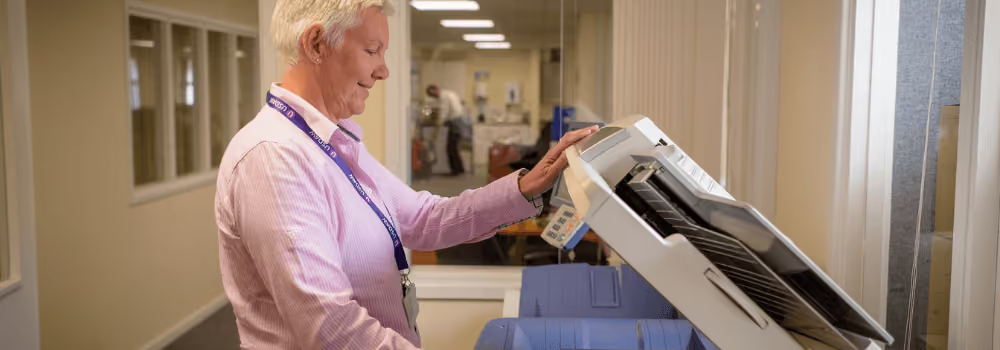





































%20-%20thumbnail.avif)



%20-%20thumbnail.avif)

%20-%20thumbnail.avif)
.avif)



%20-%20thumbnail.avif)