Host: Burke Adams was stuck as a traveling consultant. He was successful but living out of a suitcase, spending far too many nights away from his wife and three adolescent boys. Burnout and depression loomed. Enter Acquisition Entrepreneurship. I'll let Burke tell his own story, but I will tee it up. This buying a business was such a profound and positive move for Burke that he intends to teach his kids how to do it. Another element to Burke's story I want to call out Robs R O B s. You've probably heard of it. This is the program to tap your 401k to help finance the acquisition of a business. We spent some time on it and it was what enabled Burke to take the swing that he did. But I do want to emphasize neither Burke nor I are Robs experts. There are lots of nuances, so do your homework. Rob's is right for some, but and definitely not right for others. Okay, Enjoy this uplifting interview with Burke Adams of PC Enclosures, especially you mid career folks who are feeling stuck. Welcome to Acquiring Minds, a podcast about buying businesses. My name is Will Smith. Acquiring an existing business is an awesome opportunity for many entrepreneurs and on this podcast I talk to the people who do it. Wouldn't it be great to have experts at your back when buying a business? People to help you polish up your pitch and processes as you go to market as a searcher, then help you evaluate opportunities once you get some deal flow. Such experts exist Buy side Advisors, but they'll cost you to the tune of tens of thousands, even hundreds of thousands of dollars. But another option exists, the Acquisition Lab. The lab is a do it with you buy side advisory service, not do it for you. Founded by Walker Deibel, author of Buy Then Build, the Lab represents Walker's vision for what is most needed to make a searcher successful and available at an accessible price. It's cohort based and you will come out the other side of your cohort prepared to go to market as a savvy searcher with with a tight message and process so brokers take you seriously. Pre approved for a loan and with an entire community at your disposal to help you along the journey to buying a business. To learn More, check out acquisitionlab.com, link in the show notes Burke Adams. Thank you for joining me today on Acquiring Minds.
Guest: Thanks Will. Glad to be here.
Host: Burke, you bought a business in your 40s. You had a family, a sizable family, a wife and three kids and a job that was kind of killing you and buying a business turned it all around for you. I was really struck on Our pre call by how deeply enthusiastic you are for acquisition, entrepreneurship and for good reason, based on how sort of wonderful your story is. So let us get into that story. Burke, start us off wherever you think is the best place to do so.
[3:11] Guest: Okay, great. Well, thanks for having me. Will. This is, this is really fun for me. Yeah, you know, I guess I'm 54 years old. I have a bachelor's degree in chemical engineering and I started my career in a consulting engineering firm and I worked there for five years. During that time I went back at night and got an mba. I think what the MBA did for me was helped me to understand that the company that I was working in was not that great and I should leave. So they paid for it and I left. But yeah, so
Host: hopefully none of them are listening. I know this was a while ago,
Guest: but so long, it's like that's in the mid, that's in the mid-90s, so I doubt anybody's listening. So I kind of chose a different path. I chose to go it alone as an engineering consultant. So that's usually a path that somebody would take if they were approaching retirement in engineering. Kind of the gray hair kind of person. So my situation was pretty unique and we could go into that. And I don't think it's super germane to what we're going to talk about, but I did that for 17 years. So I was self employed, but I was also working for major corporations. So I was consulting to the shells and the Exxons of the world to some smaller startup companies as well. So I had a unique experience where I, you know, I think if I counted up, I had worked inside of 30 or 40 different companies during my career. And so I got to see a lot of cultures, a lot of large company culture, small company culture, startup cultures. So a lot of different stuff. So I guess getting back to what you alluded to was if you kind of fast forward in my timeline around 2014, so I guess I was successful at what I was doing. I mean it was fine. I was making good money. Um, and you know, I was able to, you know, have a pretty good lifestyle for my family. The cost of that, of being a consultant was I was on the road a lot. And so this time period that I'm referring to 2014, my kids were, you know, I have three boys. And so they were ranging in age from like 8:12 to 18. And that's a really time when you need to be with your family. And I was on the road a lot. So I was, it was classic midlife crisis. So I was feeling. I don't know if it's age, but just feeling tired. You know, I'm on the road constantly. As a consultant, you have to be at your top game. You don't get to settle into an office somewhere. You know, you kind of have a target on you all the time because you might be the highest paid guy in the room and they want to get rid of you as soon as they can. But that's a good thing. You know, it's not a bad thing. But you, like, you have to maintain a fairly high level when you play that game. And so I was. Yeah, I mean, you said it, right. I mean, I was burning out big time. I just, I was having this moment where I was. I was projecting the next 15 years of my career and just saying, I. I just don't think I can do this. So, you know, then what do you do? Right? I mean, I don't know if it was deep depression, but I was depressed. I mean, I was like, where do I go from here? Because in a career moment, like, if I said, well, I'm just going to go back and get a corporate job, to me, that was like a major pay cut, first of all. And then nobody wanted me because I had been a consultant all these years. I wasn't fitting anywhere to go back and try to, you know, calm my life down and go back in and, you know, sail into a spot. That path for me was just not obvious how I was going to get there.
[7:28] Host: So you're looking at your options. Getting a corporate gig is. Is not one. And what about the other obvious option, which is kind of germane to small business ownership? Was there any way, Is there any way in a consulting thing like this where you can hire under you, or are you really not. You're not really a business. You're a loan consultant. So there's no way to kind of. To kind of build a little business around yourself so that you can breathe.
Guest: I had done that actually. So I had kind of never in the idea that it was going to be a permanent thing, but I would get onto projects. I would hire some subcontractors underneath me. I had some guys at the local refinery working for me for a couple of years. So I kind of did that. But I never. It was never anything that made any sense to me to pursue it, to try to build it. I would expand as needed and then I would contract as needed. And so I just never saw that path. Okay.
Host: And so. Okay, so you, but you around this time, I guess discover, or at least start taking seriously the idea of buying a business. So how did you happen upon eta?
Guest: Well, it wasn't eta. So my, you know, my kids are playing hockey and I'm hanging out with some of the hockey dads. And one of the guys, he owns three gas stations. And so I'm looking at his life saying that's the life I want, because he's out rock climbing and skiing all the time. And of course, you know, that's not real, but that's all I saw. And I'm totally burned out. So I'm like, hey, I'm going to buy a gas station. So I start talking to him and he was super nice and he's like, yeah, sure. And so I go to Biz by Sell, this is probably back in 2014, and I'm looking for gas stations to buy. That's where I started. And of course the story is gas stations are really tough. Once I find out his real story, you know, his family was in the grocery business all growing up. His first corporate job, he worked for a large gas station company and he ran their convenience stores for 10 years. And the way he got his first store was the bank came to his family and said, we've got this problem. Are you guys interested in taking this over? And they got a screaming deal. So my idea of getting into the gas station business went nowhere. But the cool thing was I got on Biz by Sell and I had no idea that this even existed. And so I started diving in and this kind of consumed me for a while, was, wow, check this out, this is really cool. And I was, I don't know, I looked at some stone quarry to buy like some really weird stuff, right? So. And as an engineer, I was kind of drawn to some of that stuff. So anyway, that's kind of how I started. My big problem at the time was I just didn't have any cash. I didn't have maybe family support that I could have gone to for somebody to give me or loan me money or. So it was really going it alone. I didn't have a lot of cash. And so that was my major barrier. So every time I would sit down to do this, I'd be like, this would be really cool, but how do I do it? And I think you've probably come across these. So there was a broker. Maybe it was on Biz by Sell, or maybe it was on one of one of the broker sites I come across. The advertisement says, hey, you can use your 401k to buy a business. And I went click. What's that? You know, because I have a little bit of money or I had a little bit of money in my 401k and I'm like, oh, maybe this is how I do it. And so. Go ahead, Dan.
[11:29] Host: Yeah, well, just a couple things. First of all, I just want to give a nod to Biz Buy Sell because I do think it gives people an aha moment if they're unaware that there's this whole world of businesses to buy. Scrolling through Biz Buy Sell for the first time can give them that moment and it really is magical. I think it's a really, really neat site.
Guest: Yeah.
Host: The other thing I'll just say about bizbuysell connecting to what you're about to talk about the 401k thing is you may not recall or maybe they didn't have it at the time, but anytime you request additional information on a listing on Biz Buy Sell, there's a little checkbox so you're filling out your name and contact information and the checkbox says do you want more additional information on buying a business with your 401k? So they've actually tightly integrated a kind of lead generation tool for some of the Robs providers into their request information flow. So presumably it's a big part of, you know, there's just enough people who are in your shoes or who are going to need to use their 401k in some way, shape or form to buy a business that it's basically on every single business that you request information about. There's a box to check for anyway. Yeah, interesting detail I thought. But continue. So, and where we're going with this folks is Rob's, of course.
[12:52] Guest: Yeah, yeah, so. And it hooked me in because that was where I was stuck. I think in my case it was a broker site, so. But exactly the same thing you're talking about. Okay, so I had looked at some stuff but the first thing I did was call that broker and say, can you walk me through this? I think part of it is I've listened to a lot of like I've listened to a lot of your stuff recently. I think things are very different now than they were back in 2014, 2015, because I called the broker and he was like, sure, I'll help you. And he walked me all through this. I mean, spent time with me and I don't know that you get that today, right? Maybe, maybe not. But so at that time maybe it was what the market was like, it just he took time and he walked me through it. So that's where we started. And then I got comfortable. And we can talk about all that, but I got comfortable around all that. And then I said, okay, let's start looking. And, you know, we can talk about that also. But, you know, it. I will say when I'm trying to key into what the market is like today versus back then, and I just got super lucky. I mean, what I found. And I found it pretty quick, and I know it's just gonna piss somebody off who hears the story, but, you know, it just, I don't know, like, I mean, that part wasn't. I got super lucky. I'm just gonna say that.
Host: Right. Well, before we piss everybody off with your actual acquisition, jump in with a couple other points. Did you. But did you know even about an s. The SBA possibility? Because when you're, you know, when you're looking at the, the sale price of these businesses on Biz Buy Sell, you are you thinking, whoa, I need to have $1 million or $2 million in cash? Which we know you did. You've already told us you didn't. Although you had something in your 401k, or did you know that you were going to be able to do an SBA loan and put 5, 10, 20% down? So you needed to. So the number in your head that you needed to come up with was the 20%, not 100% of the purchase price.
[15:09] Guest: Yeah, well, it was eight years ago. So the sequence, I'm not quite sure. I'm pretty sure that the broker walked me through it all because that was my structure. I did an SBA loan, I did a seller note, and I used a robs and some personal money. So somewhere in that sequence, I figured that all out. But yeah, you know, when I was looking at gas stations, I had no idea. Right. So I had to go through that process and have somebody educate me through how it all worked. I didn't have Walker's book. It wasn't in existence.
Host: Right.
Guest: You know, so I, I had to kind of figure this. I had to piece this all together and the broker was really helpful to me in all that. So. Yeah.
Host: Well, I will say that despite the fact that you, you know, you got a great outcome in a shorter amount of time than searchers get today and how that might piss people off, on the flip side, you had to do all your own figuring it out. So for those of us who are much more recent to this world, you know, we. There are playbooks for us and Podcasts like this one and books to read. So we have, in terms of the viability of this and the way to do it, it's much easier for us than it was for you. So some things have gotten easier, some things have gotten harder. But going back to eight years ago, so I'm going to ask you another question about your mentality at the time to see if you rem. You know, one of the things I remember before I got into this space very seriously thinking about buying businesses and even being on biz by sell, which I've been familiar with, aware of for years, is the who does anybody really buy these businesses, these gas stations, these plumbing businesses, these whatevers, you know, because whatever, you know, they're, they're messy, they're not, you know, they don't scale all this stuff. And I was also have kind of a Silicon Valley orientation where everything is always growth, growth, growth scale, scale, scale. But anyway, for you, you had been a small business owner, sort quasi small business owner consultant and you knew painfully, in fact this is what drove you to biz buy, sell and to wanting to buy gas stations, that a lot of small businesses are glorified owner, operator or self employment. And so I just wonder if your radar for that might have been more sensitive than other people who aren't, who are more naive when they go on biz by sell and they think, oh, I can buy this and that and you know, put an operator in there and just run it and you know, collect checks. The truth is actually somewhere in the middle, you know, I. It's not that easy. But it's also maybe not as hard as some of us, including me, thought it was. Anyway, do you any, any thoughts on that or any memory of that?
Guest: Yeah, for sure. Well, so you know, I kind of tried to go back to my what I three things I learned in business school, which, you know, so one of those might have been that hey, I should work to my core competence, I should do what I'm good at. I'm an engineer, so maybe I should start looking at engineering companies. So I had the broker go get me a couple of engineering companies. The problem with an engineering company that's, you know, say 1 to 2 million sales price is I already owned it. It was a central engineer or two partners and they were the key man of their thing. They were either on their own, they had a couple people in India working for them, they might have had a couple employees, but I kept looking. So I looked at two of those in fair detail and I just was like No, I don't want to retrain myself to be an automation engineer. That's going to take a lot of time and then I'm going to work 70 hours a week because that's what this guy's doing. And I already own that company. So that I went down that road and I basically told. After the second one, I just said, this isn't going to work because the engineering companies that I would have been interested in buying, they were like 20 million. So they were completely out of, out of touch or reach for me. So then I kind of cooled off and he came back to me and said, would you consider manufacturing? Because, you know, that seems to be a fairly decent fit for an engineer. And I was like, yeah, I'm an oil and gas engineer, but sure, bring me something. I think he brought me. The first thing he brought me was a furniture company and I was. I can't remember the details. That was too long ago. So whatever it was about that didn't get me going. And then the second company brought me was PC enclosures. And it's really interesting to me because at the time, you know, I didn't have a lot of detailed criteria of what I was looking for. Like, really unsophisticated compared to a lot of people that you've had on as guests. I mean, you know, my criteria was I want to replace my salary and I want to be able to have a lifestyle. Like, it was really simple. It wasn't. And when you look at growth and all those other things, like, even the deeper I got into it, I didn't look at it from the perspective of how can I grow this company? I was like, hey, this would be really cool if I ran this for 10 years. It paid me similar salary to what I had been making in this really difficult environment. And at the end of it, I paid off my SBA loan. Like, that was my criteria in the whole thing. You know, now we can talk about
[20:37] Host: seven years later, but yeah, yeah, in some ways, you know, it might be heresy for me to say this, but I don't think that that's wrongheaded. You know, if you, if you're coming out of HBS and you know, you've raised money to do a traditional search fund, that's the last thing they want to hear you say. But I think a lot of acquisition entrepreneurs, I think it's totally legit to feel that way. Because, by the way, you know, if even if that was your only outcome, you're still an entrepreneur, you're still an owner. Operator, you're still your own boss. You're still building equity in something that has a lot of value. So in addition to earning 2 or $300,000 a year, you're also building equity in something that you're going to own outright after you pay down your sba loan after 10 years. So I, you know, I just don't, I just don't want people to think that if they're thinking the way you were back in 2014, that there's something, you know, flawed in that. It's, it's not, you know, it's not, it's not what a private equity investor is going to give you money to go do. But, you know, but it's the path and it totally legit path for a lot of people.
[21:46] Guest: So.
Host: But I digress.
Guest: And it was, it was the coolest thing ever for me because I was able, we can talk about the company, but I was able to replace my salary. I accomplished that. But every month that SBA payment comes out and the seller payment comes out to me. If you're used to your home mortgage now, my new mortgage was $27,000 a month. That's shocking when you pay that, but it reminds you every month that you're earning equity in the company. And so it was, even though I replaced my salary, I doubled my salary because every year I was going to earn my salary plus I was going to earn an equivalent amount back in as equity. And it was just like, that was a beautiful thing for me to think about.
Host: Yeah, yeah, yeah, that's well put. That's a great point. Bert, can you tell us what the salary was that you Were earning in 2014 that you needed to replace? August Felker is a two time successful searcher, first with a traditional search fund. The second time around he did a self funded search. Today August runs Oberle Risk Strategies, an insurance firm with a dedicated practice group for searchers and acquisition entrepreneurs like you. If you've got a business under loi, Oberle will provide complimentary due diligence on that business's insurance and benefits program. A great no risk way to get to know August and team. They love helping searchers. They've worked with hundreds. Oberly is a specialty insurance brokerage for searchers by a former searcher. Check out oberle-risk.com O B E R L E- risk.com link in the show notes.
Guest: Well, I laugh because my oldest son is in med school. He's in third year med school so I was earning the equivalent of an ER doctor Because that's what he wants to be. So it's in the three hundreds. Yeah, in the three hundreds somewhere. Yeah.
Host: Okay. And. Okay. Okay. So, so let's now let's talk directly about your search. So you'd cruise biz by sell, you talk to a broker, this broker walked, kind of walked you through how things work, was probably more patient with you than, than they would be today. Although maybe you know, you were a guy in your, you, well you all at the same time. Maybe he just. You were a guy in your. For. You had a family, you had a 17 year career as a successful consultant behind you. He probably also saw you as a more viable buyer than some, you know, 25 year old searcher. So there may also be that maybe. Anyway, so this is, is this the guy? So is it this broker that kind of is, is now going to start sending you deals? Or are you, I mean were you, were you doing a lot of outreach to a bunch of brokers? Are you just kind of talking to this one guy that happened to be the first guy you got on the phone with?
[24:40] Guest: And that's what I'm telling you. It's going to piss everyone off my story because like I call this guy up, I cold call him, teach me about the 401k he does and then he starts showing me deals and like the fourth one I looked at is the one I bought.
Host: So yeah, and then you, and then you became rich. That easy? Okay. No, no. Okay, so tell us. So tell us. So you didn't like the engineering company. There was another company you mentioned that you didn't like.
Guest: Furniture, what was it?
Host: Furniture. And so, and then he sends you PC enclosures. So which is the business that you ultimately bought and are now CEO of. So tell us about PC Enclosures.
Guest: Do you want to know about it today or back then?
Host: Back then.
Guest: Okay. Well it's interesting. So PC Enclosures was formed in 2006 by the owner and his brother. The company. We, we make metal enclosures for TVs and computers. So they're waterproof, dust proof, vandal proof. So it's really a business, it's very business to business focused. So if you can picture like let's say a food manufacturing environment where they have a monitor out on the manufacturing floor that shows the operator's information but that has to be protected from a wash down environment. So that enclosure is what we make. Another example would be in say like a psychiatric ward in a hospital. So there may be a need to have a tv but it has to be it has to meet very strict regulations so that the person can't do something with that TV to cause self harm. So anyway, who knew this was a thing? I had no idea. And. Exactly.
Host: Yeah, it's one of those businesses super, super niche. Right.
Guest: So it. So anyway, so that's what the company is, completely business to business. And so when the broker brought me the information, I looked at the Sam. I went, okay, that looks cool. And then we just started walking down the path. And it was. It was a. It was a weird experience in the sense of I never got super excited. Like, I wasn't like, wow, this is the most amazing thing in the world. But I also could find no flaw. So I just kept walking. You know, the broker's walking me down the path and I go, okay. And okay, and okay. He's like, let's make an offer. I'm like, why would I do that right now? And he's like, well, to get more information, you got to make an offer anyway. So, you know, okay, I'll make an offer. You know, I mean, you're going to ask me, did I negotiate? And I was like, will the bank give me a loan for that amount of money? And, you know, that was my criteria of was it a good deal or not, because I was in no position to negotiate per se, because I was so at the mercy of what the bank was going to give me and the process that I was going to go through. And you're going to say, what was the multiple? And all those other things. I was sophisticated enough back then. I could do an IRR calculation, I could do net present value. I knew how to read a P and L, I knew how to read a balance sheet. I had no idea what a multiple was per se, but I could get myself through all the numbers. And so, yeah, it's just a surreal experience in the sense of I kept going, I kept going, and I have that moment like, am I really doing this? And I was like, yes, I'm really going to do this. Let's go. You know, so then it was, you know, however long it takes, go ahead. Well, just. I was just going to say, you know, for those who've gone through it, then it was five months of hell with the SBA loan. But other than that, you know, it was awesome. So
[28:34] Host: the point about not feeling super excited about the business itself, any. Any thoughts on that now that you've been in it? So. So this is. Are we into 2015 yet or. This is all still happening. California.
Guest: Yeah. 2015. Yeah. So this Would have been. So would have been mar. Or. Yeah, like early summer 2015. Yeah.
Host: So seven years later. Any thoughts on the question of this? Question of like how interested somebody needs to be in the business? This comes up from time to time. And you never were passionate about PC enclosures. No offense to. I'm sure they're great products and it offers a lot of utility, but it seems like a hard product for anybody to be. Passion, but. So what are your thoughts on that?
Guest: Yeah, no, I've thought a lot about this. I will maybe talk about this at the end, but, you know, a big part of my. Why I've been so re. Engaged in this whole process is I've started to consider looking for another business to buy with my kids. And so obviously that's very thought provoking to me of what do we buy next if we do buy something? And yeah, I have a lot different opinion now because I've done a lot of different things. And I wouldn't say that it has to like get my engine going, but it has to get it going enough in the sense of I can picture myself doing this, you know, so it doesn't have to be glamorous. I probably have a more defined picture of what it would be today. But yeah, I think the common theme that I hear, you know, kind of with your guests is a lot of people talk about don't get too narrow in their search. Yeah, that's probably it, but I don't know how else to say it. But you'll know it when you see it and you'll know that it's not it. You can feel it. This one wasn't like a definite you're going to do it. But I never got that negative. Like, no way. I would never do this. So maybe for me that was the confirmation. It was. It just was like, yeah, I got no negatives, so I'll keep going. Maybe that's it.
[30:39] Host: So as long as you don't recoil at the prospect of being a CEO of a business. That's the bar.
Guest: Yeah, I guess so. Yeah. Yeah.
Host: And so numbers. What can you tell us about numbers of PC enclosures at the time?
Guest: I'm just looking on my computer here. So it was 2.3 million sales price plus we rolled into the deal 200k in working capital and 100k in closing and some other fees. So it was 2.6 million. 2 million SBA loan, 300k seller's note and 300k of my own money, which that 300k that I brought to the table. 200 of that was from my 401k and then like a HELOC and some other money that I pulled together to get there. So. Yeah.
Host: So you, if you don't mind, I'd like to get into your cash position a little bit at that time because this is a story of wealth creation. And so while you were earning a great salary, let's call it in the 3002, you also had a sizable family, so that'll eat up a great salary. And anything, I mean, did anything else, I mean, did you feel like some people who hear 300 plus salary are going to think, well, he must have had a lot in savings, but in fact, you had not a lot in savings. You had some in your 401k. Can you elaborate?
Guest: Well, I mean, you know, I don't know what that makes. Yeah, when you say it that way, I look back and I was like, I was an idiot. But, you know, I didn't have any debt. I guess that was good. I owned a home. I maybe had one car payment. So I wasn't living on the other extreme of life. But I wasn't a super saver either. You know, we went on vacation and we went. I had a ski pass every year. And, you know, we enjoyed our life. And I wouldn't say, you know, like, I think those who know me wouldn't say, oh, he's an extravagant guy. To me, it felt like we were living a normal life. And I know maybe that sounds, you know, I gotta be sensitive in that sense of. That might sound unrealistic, but. Yeah, I mean, I didn't have a lot of savings and I mean, if you wanted to say, what was my net worth? That was, it was six figures something, you know, it wasn't much. Yeah.
[33:10] Host: Yeah, that's great. Thank you for sharing that, Bert. Okay, so you, so therefore, if you didn't, if you weren't, you know, sitting on a pile of cash, you had, you know, you took some money out of your home, you took kind of all your money out of your 401k. This was a huge bet. Don't like that word because it sounds reckless. But this was, this was a huge investment. I mean, you kind of all in.
Guest: My kids would call it, they would say it was a full send. Yeah, this was a full send. So, so just going back, how did
Host: you get, how did you get your wife on board and all of that? Let's, let's hear the emotions of this decision for a sec.
Guest: Well, so if you go back to what we were talking about, Before, So I was, I was in a pretty, you know, I don't want to overpaint it, but it was, to me, it was a pretty dark place. I, like, I really saw, I was, you know, I was, I was having a hard time seeing the future in this whole thing when I got at some point down this road and you say a bet. And to me, that's exactly what it was. It was a bet. And I, my, the way I looked at it was, hey, look, if it all crashes and burns, if it goes to the ground, what am I going to do? And my answer was, I'm going to go consult by the hour for the next 15 to 20 years. And the answer is, if I didn't do it, what was I going to do? I was going to go consult by the hour for the next 15 to 20 years. So, yeah, I know that that would have been more devastating financially if that would have happened. But the risk wasn't. I guess it was just an emotional thing. I didn't feel like I had that much to lose. And you would say, oh, you're crazy. You got a lot to lose. But the answer was, I just, I was like, it's now or never. I gotta do something and I'm gonna go big when I do it.
Host: Well, but I do think it's an important point. You had this 17 years of goodwill built up in this client, this client base, this roster of clients. You could, sure, if everything went to hell, you could, you could pick up the phone and probably drum up some, some new contracts for yourself within a few months and kind of be miserable again, but at least earning money.
Guest: I would have been back on an airplane and I would have had a job. Yeah, for sure. Yeah, for sure.
Host: Yeah.
Guest: Yeah.
Host: Okay.
Guest: Yeah.
Host: Okay, cool. I don't think now quite is when we want to get into the, into the rob stuff, but pretty soon. But let's hear. So you bought, you acquired the company. You do it. So talk to us about those first six months. What, you know, did it, did it, did it pull you out of depression? And what was it like to go from being a consultant, flying, crisscrossing the country to, you know, being a small business owner and a manufacturer? You know, talk us through that giant transition in your life.
[36:01] Guest: Yeah, so this is the part that won't piss everybody off, because the first three months was really shocking in the sense of, I think. Well, I know the third month that I owned the company, we had the third lowest month of sales of the history of the company. So, I mean, from the time I took over, for about the first four months, it was nosediving, and I was in an absolute panic to try to figure out what was going on. I was like, the seller screwed me over. You know, I'm trying to dig into everything. So the good news is that his brother. I mentioned him that. So it was the owner and his brother. His brother stayed with me. And so part of it was like, well, I don't think that they would have really done that to me if he was going to stay. So. And I was watching that all unfold closely, and it was all hands on deck to try to figure out what was going on. I really think it. In hindsight, it was just that the owner had probably a year previously took in his. Taken his hand off the wheel, and it was just starting to come around when I took over that things were suffering. So I always say, now it's easy to go back and look and say that was the best thing that could have happened to me. I mean, I didn't sleep much. It was awful. But I did a deep dive into every aspect of the company during those first four months to try to figure out what was going on. And we did some things. And you say, how'd you turn it around? And I'd say, I don't know. We just worked hard. I think part of it was just getting the hand back on the steering wheel, wheel just paying attention, and it kind of righted itself just from not doing anything. But we. I was, you know, I was trying things to try to fix things. I don't know that they made any difference, but we were working hard. I was fully engaged, I was focused, and I don't think I would have gotten that kind of focus without having that experience. So past that. Yeah, it got better and better and better as it went. So. And I wouldn't say it like, we didn't grow a lot for the first three years that I owned it, but it stabilized, and it was slow, steady growth, and it was happy, and I was making the money I wanted to, and I was. Yeah, I was just. I was happy. I was. I wasn't. I didn't get on an airplane for three years unless I went on vacation. I was super happy about that. I lost all my medallion status at Delta, and I was just great with that idea. You know, it's just like, let me ride coach and I don't care. This is awesome. So, yeah, so you turn it around
Host: in about six months. Did you say six? Six to nine months? Was it that?
Guest: I mean, if you talk to my wife, she'd tell you that about six months in, I became a normal person again and I was approachable. So, yeah, probably six months. So, yeah.
Host: And for those first six months, you've already said you were panicking, but, I mean, it must have been like a. I mean, did it feel worse than the reality that you had been trying to escape? I guess panic is worse. What's worse, panic or depression? Right.
[39:13] Guest: Yeah, right. I don't know. I mean, I don't want to overpaint it. I mean, you know, look, I mean, obviously I had to have a lot of confidence myself to do this in the first place.
Host: Yeah.
Guest: Like, I had confidence in myself, in my abilities to manage at some level, to figure things out. You know, I, I, you know, I'm a pretty analytical person. So it wasn't that I was like, it was. But there are things that you can't change. You know, you, there's levers that you can pull, but, you know, whether it's actually going to move anything or not, you know, and it's slow to move. It doesn't. Like, I can't go pull levers and everything just jumps back on the truck that day. And off were.
Host: Yeah.
Guest: You know, you're like, did that do anything? I don't know. All I can do is keep working and keep trying and keep doing stuff. So, yeah, I mean, that was, you know, like, again, that was a long time ago. Yes. So I don't, you know, I have memories, but I can't tell you exactly the emotions. I know it was rough.
Host: Yeah, yeah, yeah. And is PC enclosures, is there a recurring aspect to it? I mean, do you have, do you have customers that come back again and again? Or is it mostly kind of one off deliver deliveries of these, of these, of these PC enclosures?
Guest: Yeah. So when I first bought the company, I would have, Well, I pulled the numbers. It would have been about 25% recurring. And now we're probably more in the 30 to 40% recurring. So it's a momentum machine that takes years to build momentum. So. Yeah, but the other thing that, like, you know, the scary factor of that is, let's say 75% of it is a one and done. So you gotta fill that bucket every month, you know, and you're like, how are we gonna fill the bucket again and again and again, you know, and somehow.
Host: Well, actually, let's press on that berk, because that is, that is, you know, in, in, in our world and, you know, we're all kind of evaluating the Quality of businesses and, you know, probably top of list is really recurring. That's what everybody wants. That's what, you know, if you have investors, that's what they're almost going to demand. But not every business is recurring. In fact, more businesses are not recurring than recurring. So many acquisition entrepreneurs just have to get comfortable with the fact that, like, hey, look, my, the business I'm going to buy is not recurring. But it's still, the customers do appear to keep showing up month after month. But I don't know. Yeah, talk to people about what you just said that, you know, you just, you got, you hope those 75% come back next month. And they, and they just do like, what, what would you tell somebody who's like, oh, I have to have a recurring business. I have to have a recurring business?
Guest: Well, I think, you know, so one of the things that I got really interested when I was looking at the company was that they built it during the financial crisis. So that tells you something about the, I guess the potential health of a company that grows, albeit fairly slowly. But they grew it, I mean, to something sizable from nothing. And it really was, you know, they started in 06, didn't really get going until, oh, eight. And they grew it right through until I bought it. And so, I mean, I don't know if that exactly answers the question, but the first thing I got comfortable around was, well, if you can grow a business during that time frame, it's gotta be okay, you know. So that was my first thought. And then I think about the recurring thing is that bothered me a lot, especially in the, maybe the first year or two of owning the company, Just that anxiety of every month, are we gonna fill the bucket again? Are we gonna fill the bucket again? And I think what happens over time is you're like, we keep filling the bucket. So I'm gonna move on from that word. Cause it just keeps filling up every month. And I, we can talk about my other company too, but we sell. My other company is we sell a residential TV cover, a plastic TV cover that we sell on Amazon, and that one's one and done every single time. And that bucket just keeps filling up every month, you know, so it's. I've gotten my mind around that idea.
[43:30] Host: Yeah, great. Well, I think that that's probably healthy just because, yes, recurring is preferable, but most businesses aren't recurring. And if you just let yourself look at those recurring opportunities, you're just. The pool of opportunities that you're going to avail yourself of is going to be Way, way thinner.
Guest: Can I tell you just one quick one question, one story? So early on I went out to a dairy out by Denver because I was trying to take some pictures for a website and stuff. And so I went on trip and just went to see a bunch of people and so we had pulled, we had put in some enclosures into this dairy within the last six or seven months. And so I set up a, you know, they were kind enough to let me come in and take some video and pictures. And when I showed up, he asked me which ones I wanted to look at and I said, well, I see you have five of them. Just show me what you got. And he's like, well, we got 13 of these things. And I was like, oh, show me that. Well, he had other enclosures that we had sold them from like, you know, eight or 10 years before this and they were still in service and they looked exactly the same as the other ones. So, you know, part of the problem is you have a very high quality product. It doesn't wear out. Like, we're never going to be that, that's not part of our business to replace what wore out, you know. But I guess when it came time to buy another one, they looked at the tag on the side of it and called the phone number and said, yeah, we just want some more. So that's what we get out of that, that type of, that's what we get for recurring. But no replacement.
[45:10] Host: Yeah, yeah, that's an, you know, that's an interesting, that's an interesting thing that I'm sure every business that produces a product has to, or service really has to consider. It's like the higher quality this is, the longer it's going to last and the less likely, but the less likely they are going to come back and have to replace it. But, you know, they'll, they'll see our brand as a, as a, as a quality product and maybe tell others about it because it's such a high quality product and that's, you know, and also it just probably makes you feel better as the producer of that product that you're producing something of quality.
Guest: Oh, yeah, for sure.
Host: So for sure.
Guest: Yeah.
Host: Burke. I want to, I want to. We still have a long way to go, but I do want to get just. I guess you said the first, you know, six to 12 months were this panic, terrible time. But I just, I want to start asking my guests more about like, what small business ownership is like, because I've heard from one or three people that, you know, we let's not glamorize getting in a seat and being a CEO of a small business. It's hard day to day and it's very, very different than, you know, a corporate gig or a tech gig or what have you. So just if you can separate out that panic piece, that panic, that hard first 612 months and just comparing, you know, being a small business owner to what you were doing before, what would you tell people about that?
Guest: Well, yeah, so those things that say it's really hard and all that, that's all true, but I was doing a pretty hard job, you know, when I was selling myself every day to new clients and trying to stay on top of my game all the time. You know, I'm not going to say this was easy, but it was never any harder than that. So that part of it, I mean, the stresses are more personal than they were when I was working for somebody else. I mean, I was, you know, I was. I was working on multibillion dollar projects for large oil companies, you know, so those are real numbers. I felt those numbers personally at some level, but not like I did when I had $100,000 deal going north or going south of my own money. Then it got super real. Yeah, but I think because of my experiences through having managed and having worked in a lot of different environments, I think for me I was more prepared. So I never went through that. Oh my gosh, this is so hard. I mean, yeah, I mean, I said the first six months were difficult, but that wasn't. I never felt like that was something that I was incapable of handling. It was just hard, you know, And I guess in my career I had done lots of hard things. So it was in a way normal but completely different in the sense of it was my money now, you know, so I felt it very keenly. Instead of somebody else's money, it was mine.
[48:07] Host: Yeah. Yeah, sure. And how many employees were at. At PC enclosures when you acquired it?
Guest: We're small. I think at the time it was probably five or six people and we're eight now, so. Yeah, still small. Yeah. Okay.
Host: Okay. Well, tell us about. So a little bit about. More about the numbers and about the growth, because I know it has grown. You said for those first two or three years the growth was kind of incremental and then things sped up or what can you tell us there?
Guest: Yeah, so I think like I mentioned before, you know, my focus wasn't necessarily growth, but I did, you know, I certainly understood the idea that I have to feed the beast. You know, I Can't just suck money out of this thing. I need to incrementally put money into it, allow it to grow, you know, from. The most important thing that we focused on was the ability to grow inventory. You know, when. When we have a customer come to us and ask, you know, let's say that they. It was a hospital and they were looking for 50 units. Our ability to close that sale is fairly highly dependent on the fact, you know, can we deliver in a reasonable time. So when I took over the company, a lot of those types of things were built to order. And so that would go to an outside fabricator or to China. And so those lead times were very long. So. But inventory is expensive, and I couldn't just, you know, we had several skus and I couldn't just walk out. And I didn't have the money to just build inventory. I had to build it slowly over time. And so that was one of my focuses. You know, things have been. So to answer your question, yeah, it was slow growth for about the first four years. I don't know. I mean, I was taking good money out of the company. I was putting, you know, a decent amount of money back in book. Profit was very low from a tax point of view. It was very low just because I was, you know, kind of keeping pace. I will mention that, you know, one of the things that helps you on. On taxes is your amortization of your SBA loan as well as the interest. I mean, that was offsetting about 300k a year off of my P L for, you know, calculating taxes. So when it. When it all comes down to it, I mean, it felt to me like we were just kind of moving along, not doing much, and then we saw a real inflection of the curve in 2019. You're going to ask me what caused that, and I'm going to tell you all the great and wonderful things I did, and I have no idea what caused it. I can point to several things that. Yeah, I mean, you know, like, how do you know? Like, I can tell you we built inventory that. That made some major differences. We held our prices. I think we made a price drop. We held our prices down. I think all through Covid and through the supply chain issues, we've held our prices steady. I think that's been a major frustration for some of our competitors, and we've been able to take market share. So I don't know, you know, how do you get perfect information? All I know is that the things that we implemented, they were working and I think that they were working early on. It just takes time to see that inflection of the curve. I know a lot of your, you know, I listen to a lot of your guests and they see immediate reaction to certain things that they do. You know, we doubled in six months, and I'm like, yeah, that's awesome, but I don't know how to do that. For me, it's. We doubled in seven years, but we doubled, you know, so.
[51:57] Host: Yeah, yeah, yeah, yeah. And, and was it kind of a, kind of a, a step up where you kind of doubled in a short amount of time and then it's back to, it's back to kind of the same growth line of, of kind of more incremental? Or is it, or is, is this kind of accelerated growth continuing?
Guest: It's continuing. And I keep waiting for the curve to bend over. You know, seems to me like that it has to at some point, but we're still in an accelerating phase. I think we probably are slowing down a little bit right now. Like, I, again, I, you know, when people talk about, like in the last four years, I've experienced 20% year over year, and people talk about that like, that's what you want. And I'm telling you, it's awesome. But you better hang on when you have 20% year over year, because it shakes up every system you have in your company. We're just going through a major retooling right now. And it's kind of nerve wracking when you go through that, because in the back of your mind you're like, well, what if we go back to 2019? What if this really crazy growth that we've seen, what if it goes back down? And you're asking, was this a Covid thing? Was it?
Host: Yep.
Guest: You know, what, what was it that caused all this massive growth? And then at some point you have to say, we've got to adjust because I can't, I can't keep living in the old reality. I have to adjust to the new reality. And it's awesome. And it's kind of nerve wracking because you're buying bigger warehouses, you're, you know, getting more space, you're buying more equipment, you're hiring more people, and it feels amazing. And yet in the back of your mind you're still saying, but, but what if it all goes away? This is going to be super painful to downsize again if we have to do that. So, yeah, you know, I don't, I don't. We celebrate. It's awesome. I guess Part of being in the chair is maybe you just never quit worrying. It's in success that you worry, in downtimes that you worry. It's still worry.
[54:03] Host: Right? Yeah, yeah. Well, you know, your mental health notwithstanding, that worry is probably healthy for the business.
Guest: Oh yeah.
Host: You know, you're sophisticated enough to know that, you know, maybe a younger business person would say, oh, look at, you know, look at all this growth after three months of growth and then promptly hire people and you know, get the bigger warehouse or whatever. But you're, you know, you have enough, you know, gray hairs. Figuratively. Not literally.
Guest: No, literally. Yeah, literally for sure. Yeah.
Host: To, to know that, you know, you got to be a little more circumspect about that growth and make sure that it's secular growth and not. And not some, not some fluke or short lived growth.
Guest: Right, right.
Host: But I will say too, you know, despite the fact that you're grow, that you've seen these sales numbers and I want to actually hear the numbers numbers again, an update on those in a sec. But your employee count hasn't increased too much. So what did you say from six to eight or six to nine?
Guest: Yeah, yeah, yeah. So. Well, so I mentioned that I had, you know, the original, one of the original founders with me. And so one of the things that I could tell, and I just knew this intuitively is that over the last two years I can see this growth going on and I can see everybody still doing their same job with twice the amount of work. And I keep checking in with everyone to say, are you okay? Are you okay? And I finally realized that that's the wrong question to ask because very rarely is anybody going to say I'm not okay. So you have to kind of intuitively feel that this is happening. And if you ask them to tell you when it's not okay, you're going to be too late to make the decisions. So I started to make some decisions about a year ago to say we were going to have to restructure because this is a bootstrap company. And my general manager had, I mean, he was the IT guy and he was the operations guy and he managed the websites like he did everything. And so growth is really difficult in the sense of, you know, I started looking, how, how would we restructure? We need to bring some more people in to do that. I think that was really tough for him because he had been with the company from the beginning. He had always done it a certain way. I trusted him, he did an amazing job. But he actually just Gave me his notice about four weeks ago because he got. I think he got a really good opportunity, so. And I wish him all the best in what he does, but I think that growth was difficult for him to kind of. As I said, hey, I'm going to have somebody come in and I'm going to take over the IT portion from some do this, and we're going to split out marketing and do this, and just. I think he could just feel all his baby being kind of. Well, that's a bad analogy. What's the good analogy? It was his thing getting torn apart, and I just don't know that that was very. It was just tough. And I empathize with him. It was tough on me, but I was like, we have to grow. We have to change here. And so, yeah, we're right in the middle of that. So, yeah, we're retooling right now.
[57:35] Host: Yeah, yeah, yeah, yeah. Burke, here's how I want the rest of our interview to go, because we still have a bunch of things to get to. I want to hear numbers, and then I want to talk about Robs, which is, you know, a big feature of your acquisition. A lot to talk about there. And then I want to hear about these other ventures that you've gotten into at the end. So on numbers, I don't think I asked you. You told us you acquired it for 2.3 million plus 2 plus another 300 for working capital and deal costs. So that's 2.6 all in. What was the size? What was the business doing in terms of Revenue and SDE back in 2015 when you acquired it, and what's it doing today?
Guest: Revenue would have been around 1.5 to 1.7. It kind of, you know, if you want to look at different years, but if you're trying to get a balance of the three previous three years, I would say it was about 1.6 million in sales. Highly profitable. I mean, it was like 6 to 700 SDE, which, you know, when I looked at it. Yeah, when I looked at it, I kept trying to pull that apart to see if that was real. And the financials were really messy when I looked at them, because there was a lot of personal stuff intertwined. So, you know, there. I knew going into it there were some risks, but, you know, it turned out to be even better than what I thought. So. Yeah, so those were. Those were the numbers back then. Today, I think, you know, trailing 12 months, right now, we're at about 3.5 million in sales and probably about 1.2 million SDE right now. So. Yeah.
Host: Yeah. And so you're seven months into your SBA loan.
Guest: Seven years. Yeah, right.
Host: Sorry. Seven years. Sorry. Seven years into your SBA.
Guest: Yeah. And I'm. Yeah, I, I count. So believe me.
Host: Well, yeah. In another three years that, that million dollars is, you know, all of that's going to go to you. Yeah. And not to your loan. So that's.
Guest: Yeah, exactly. Exactly.
Host: Yeah. Remarkable. And so just remind us again how impactful this was to your life and what does your family say about it today? Do they. Do they understand that the full send was a total slam dunk?
[1:00:02] Guest: They do understand. I mean, they don't understand to the level that I do because, you know, obviously, as you know, if you're providing in whatever fashion for your family, you shield them from a lot of that stuff. I think my kids had a great childhood and we worked really hard to make that happen. I think that I was burning candle at both ends to make that happen. No, I can't. I mean, I think I told you in the pre call. I mean, it. It's absolutely the most impactful thing I've ever done in my life. It's changed my life. Somebody listening might say that part of that was luck. And I don't say that it wasn't, but I. It was a lot of hard work and it was a full send. I mean, that was. It was not easy decision and I did it, you know, looking forward, you know, to do in the next one. Do I think it'll be that easy again? No, I think I'm pretty realistic about how difficult it is, but nor does it stop me from wanting to do it again. I know how difficult it is today. I know that finding the right deal will be much more difficult, but it doesn't stop me. I mean, I'm definitely, you know, I, I see what it's done for me in my life. I, I'm a big believer. I think I told you off in the pre call. I mean, you know, I got. My oldest son is in med school. We can't do anything about him. He's made his decisions. But my next two, we're doing acquisition, entrepreneurship. That's where we're going. You know, my, my. One of my focuses in life is to teach them to tool them up so that they can go do things in their own life. I see this as a major pathway for them. You know, I'm not going to force him down that road. My middle son, he's very on board. My youngest is still in College. So I'm let him do his thing and we'll see where he goes. But you know, if I, if I'm choosing ways to help them, I'm going to teach them how to do this. That's what I'm going to teach them how to do. Yeah. Wow.
Host: Wow. What an endorsement. Really cool. And you're in Utah, you're in the Salt Lake area?
Guest: Uh huh. Salt Lake, Yep.
Host: Yeah, yeah. Great. Well that's just what a testimonial for acquisition entrepreneurship. Very cool. Burke, one more thing I want to ask you about before we talk about Rob's just manufacturing. So I don't know anything about manufacturing. I tend to just completely disregard manufacturing deals and maybe I shouldn't. I mean I actually myself have an NGO or computer computer science background. So I have the capability of being technical. I haven't been technical for years. But anything you might say high level to acquisition entrepreneurs out there considering manufacturing. Yeah.
[1:03:01] Guest: Well so it's funny, the first thing is it took me until about six months ago, so six and a half years into owning my company to realize that I owned an E commerce business, not a manufacturing business because we don't manufacture anything. I outsource all my manufacturing to other people. I mean we control the design so we definitely have an engineering aspect to what we do. I would say we own the intellectual property of what we do, but we don't. Nobody strikes an arc to weld anything here. We warehouse and we ship. So that would be my first thought is are you really going to manufacture something or are you going to control the intellectual property of what you have and let other people do the manufacturing? That's the route we've chosen. And I think that if I was going to go forward again I've looked at vertically integrating, you know, maybe getting into some things where we could do some of the building ourselves. And it just, I just run, I run away every time. I mean the complexity of owning say a welding shop, machine shop, something like that, it's such a different animal from what we do. We're going to add value by marketing. We're going to add value by. It's really that, it's marketing and E commerce. That's where we add value. So yeah, I don't know that I would go into a nuts and bolts, go build something business. It's not that I'm afraid of doing it, it's just that I'm able to do three and a half million in sales with eight people. You know what I mean? Like I don't have to have 30, 30 people. And that's a totally different organization. I'm not saying I wouldn't, that that's a bad business. It's just not the one that I want to do, if that makes sense.
Host: Yeah, yeah, it does. It does. Burke. Okay, let's hear about Robs and kind of your decision to do it and then pros and cons and the process and all of it. So just as a reminder to people, top line Robs allows you to Tap into your 401k to invest in and that includes acquire a small business. A business. And so this can be kind of, I'm sure Rob's people, providers won't like this phrasing, but it can kind of be a workaround or kind of a loophole to kind of the conventional thought of a 401k that you do not touch it and you're penalized for touching it. So with that context, can you, can you give us more?
Guest: Well, you know, I, first of all, I mean, obviously you can tell I'm not a, I'm not a Robs expert. So I'm not going to try to give Rob's advice. Obviously I went through it and I think what I can share is my experience of going through it. So. And it was probably looking back, I mean, again, fairly unsophisticated. I let the broker kind of hold me by the hand, say who do I talk to? And he's like, you know, and I got it. I got together with Guidant Financial. I mean if you Google Rob's 401k, they will come up, their ad will come up number one on Google. You know, there's other very capable providers. I chose to go with Guidant. So I guess the idea of, if you think about my structure, so a couple things. One is under the Rob structure you're required to form a C corporation and that really chases a lot of people away. So that's one thing. You have to maintain your 401k or a 401k in, in the business, in the new business, which, that didn't seem to be too big of a deal for me. And there's other, there's other restrictions that you should definitely like. Again, if you're interested, you should go do an hour of Googling and look, going through the Guidant website, going through some of the other third party providers, there's some really good information out there. You should become very familiar with what the limitations of the Robs are and what, you know, what you can and can't do. Yeah, you know, again, for me, my. You know, where I'm coming from, it was like, oh, hey, I can do it with this. I'll do whatever it takes. So I was never in the mindset of, oh, I want to do an llc. I'll never do a C corporation. I mean, sure, I took it to my accountant and he said, don't do this. And I said, why not? And he said, well, you want to be an llc? And I said, well, okay, I can't do that. Right. So anyway, that. Anyway, okay, so let's talk about Rob. So in my situation. So I personally own, say it's about 35% of the stock of my C corporation. My 401K owns 65% of the stock. So I act in two different. I have two different hats that I wear in the company. One is I'm personally a stockholder, and the other one is I act as the fiduciary for my 401k. So I am the manager of the company in. To act on behalf of the 401k. And you know, if you kind of read through what that means is I'm going to act as a manager of my company for the, you know, the financial benefit of the 401k. For me, you kind of start to look at those two things and you say, well, are they at odds from each other? And for me, they never are. Because I think the type of people that are, you know, that you have on as your listeners, we're all in the same boat of. We're not here to rob. That's a bad word. Shouldn't use rob. We're not here to. We're not here to trash the company and take money out of it. We're here to build businesses that make sense. And. And that's exactly what you should do as the fiduciary of your company. You should, you know, you should manage cash flow. You should reinvest to the benefit of the growth of the company. You should, you know, do all the things that a prudent manager would do. Now, as a stockholder, can I take money out? I can take money out in. In, you know, as salary and bonuses. You know, as long as all those things are commensurate to what I'm doing to manage the company, it all jives. So those are the two hats that I wear. I've never had a problem with those two. I've never felt like those two things were at odds with each other. Go ahead.
[1:09:48] Host: Yeah. Just the fact that your 401k owns 65% of the business and not you personally, does that mean. Are there any implications of that in terms of, like, control or if you went to sell the business? Like, what if I came to you and I say, I want to buy you beer business for $20 million? You say, yes. Does that mean you can't touch 65% of the $20 million until retirement age? Any. Anything like that? Any. Yeah. What about that?
Guest: Yeah. So, you know, so it does have a significant impact to you at exit. So if you think about it, like, let's. Let's say in my company, we did a $6 million deal, so 4 million would go to my 401k and. And 2 million would come to me personally. If you think about my situation, that's beautiful, right? Because I'm 54. I'm 59 and a half. I can get to it. So, you know, if I was 30, that would be a different scenario, but for me, that's great. The other thing is, why it's beautiful for me is it shields it from that, you know, significant tax event that would happen right then. So it. It literally that 4 million would go back under the umbrella of the 401k and it would sit, you know, tax deferred until it was actually pulled back out, you know, like you would do in retirement. So I guess it depends on how you look at that. If you're.
Host: Yeah.
Guest: You know, if you were younger and you're like, I need to get to that money. Yeah. The only way you can do it is in a liquidity event, is turn back around and use it in another robs. You could do that. But, you know, here's the argument I would use is in my own personal situation is I had 100,000 bucks in cash, not counting my 401k. And if I have a liquidity event that only gets me 2 million and my 401k gets 4 million, like, that's awesome. So it's just how you look at it, right? I mean, yeah, you could be frustrated with that whole situation, but to me, that's awesome. So again, I'm not saying Free still
Host: turned 100,000 into 2 million cash in your hand.
[1:12:00] Guest: Right. I mean, and I'm not preaching that everyone should do a robs. I mean, obviously, you know, I mean, if you can do an LLC and that works, you know, like, of course you should do the best situation for you. But I guess the only. To the naysayers of the robs, I would just say to me, it enabled my life, you know, So I yeah, there's downsides for sure, there's downsides. But you know, if you talk about what's my compliance, you know, how much time do I spend to manage this whole thing? I mean, I use guidant, I use American funds to manage my 401k. I mean, maybe I spend 20 minutes every two weeks when I do my payroll to, you know, connect that stuff up. And I probably spend four to six hours a year doing my annual compliance and that's it. Like I really, it's not that onerous the amount of work that I have to do to comply. So yeah, I mean, we could talk about downsides there. There are definitely some. You know, obviously when I formed in my next business it was an llc. I didn't go back and reuse the same structure. I didn't choose a C Corporation as my structure. But I'm okay to live under a C corporation structure as well. It, you know, we could talk about tax and you know, the thing about a C corp, if you think about it is like I told you, the first three or four years of owning PC enclosures, we didn't go through a lot of massive growth. So when I looked at amortization expenses and interest expenses as well as the money that I was taking out, I paid little if any corporate tax for the first three or four years. You know, the last couple years I have.
Host: And to be clear, what you're addressing is the double taxation criticism of a C corp. And so if the C corp entity doesn't have any profit, then you're not paying any, you're not paying any double taxes because there is no profit for the entity.
Guest: Yeah. And of course, I mean, you know, like I want to make sure that when I say I'm not paying tax, it's not like I'm evading tax. I mean that's the structure of the C Corporation, of course. I mean it's completely ethical to run your C Corporation at very little profit. I mean, I'm taking out a significant salary for myself. The company is functioning, growing. It's doing its thing. Now fast forward the last couple years with such extreme growth. I've been reinvesting in inventory and my AR has been growing and so I can't keep that number at zero anymore. I have corporate profit and but again, you know, like if you kind of look at, you say, well, okay, you're getting double taxed, but not on the whole thing. I mean, I can still take significant amounts of money out through my payroll, you know, my personal payroll as well as Bonuses. And when you look at the amount of corporate tax that I pay, it's like as a percentage, it's not 20% or 21%. It's much lower than that when you look at the entire package. So my only comment on that is before you just throw the whole idea out with double taxation, the growth that it's been able to. It's enabled for me is just so outweighs what the penalty is like. I just don't see it as. I would never choose not to do it because of that one reason.
[1:15:47] Host: Yeah, great. Well, there is a lot of nuance to this and a lot more to learn, so let's leave Rob's there. But that was a great personal. To hear your personal history with it. And just as you said, people should go out and. And read up on it. But you're actually my second guest to do. Second or third guest to do Rob. So it's. It's definitely something for. And there's clearly like a. A trend that the people who do tap into it are, you know, a little older, probably in their 40s, maybe 50s. And that's probably because, you know, those folks have more money in their 401k play with. Yeah. And also because the point you made earlier, which, which you turned me on to that, like if some. Some potential exit or a significant amount of equity is going to sit in the 401k and kind of, for lack of a better word, be kind of be captured there and until retirement. The closer you are to retirement, the less that matters.
Guest: Absolutely.
Host: So.
Guest: Yep.
Host: Cool. Well, Burke, let's hear about your other two businesses before we wrap up. Yeah.
Guest: Okay, so. So PC enclosures. So we sell these metal enclosures for TVs. And the whole purpose of that product is, like I said, it's an industrial or heavy commercial type of product. For the first year of me owning the company, I hear my sales guy on the phone half of the day talking to homeowners that want to hang a TV on their back patio. And he's talking to him, and then price comes up and he's like, yeah, it's 1600 bucks. And they hang up the phone. But I hear this over and over again. And so I start to say. I start to look into the world and I say, okay, what's out there for, you know, the consumer, you know, residential? And it's really interesting. There was to me a very big gap in the product because there were these cloth cover. These cloth covers that you could buy on Amazon for like, 39.95 to put over your outdoor TV. There are outdoor TVs per se, but there was no, you know, say, really high end, something that was going to protect your TV out on the back porch. So I, I approached a really good friend of mine. We've been friends since, you know, our younger days. So we're actually went to high school together. We've stayed in touch all these years. He has done several businesses, but his current businesses, he owns a infrared heater company and he does major business as FBA and also on the major online platforms, Walmart, Wayfair, Home Depot, Lowe's. So very well connected in that world. And so I approached him and said, hey, do you want to do this together? I think this could fly, but I don't want to spend the effort to try to understand how to do all this stuff. And so he was very amenable to that. It worked out really well. We both were manufacturing in China, so we went together. So we designed it, we got the patents, we did the trademark, we went to China, set up the manufacturing, got it all set up. And that's, you know, again, kind of full send, because you don't even know if you can sell one. Right. Like, how do you test something like that if you can sell it?
[1:19:23] Host: Yeah,
Guest: it worked, I guess. I mean, you don't know how you measure these things. Our first year was 2018. We just, we got rolling. In 2018, we sold about 800k worth of product. In 2018, 2019, we sold 2.3 million. 2020 we sold. Oh, sorry. Well, let's see. 2021, we sold 3.5, so 2020, we sold 2.3. And then this year we're on track to sell about 4 points, 5 million. So it's just growing like crazy, you know. Now that's what I call, I call
Host: it also a perfect. It's also a perfect Covid business.
Guest: Oh, I had no idea. I was so freaked out when Covid came and I was like, oh, you know all this stuff and I had no idea I was sitting on an outdoor patio Product during COVID Exactly. Well, in our. As you can imagine, like, we just couldn't stay in stock. So that was the problem. Like, how do you keep stock? So. So yeah, but you know, we probably grew. We probably had an extra, extra year's worth of growth just from COVID you know, pushing traffic our way. So. So yeah, I mean, you know, and it's, it's been an interesting ride because he has an established company, I have an established company. Neither of Us need to draw a salary. So I mean for the last three years just every dollar has been going back in just buying more inventory and trying to grow. It's only this year that we've actually been able to start taking some money out. But so, you know, I know maybe you're going to ask me this but you know, would you start up a company rather than buy a company? And I would just say in my experience it's been really cool. I call it a bolt on startup because it's not really a startup. Right. We both had infrastructure. My product idea came from my other company. So it was all intertwined with all these things. But man, the growth to go through that, like if we would have been on our own to try to fund that, I don't, you know, it would have been horrendous to try to make a living while we were doing that. But it was super fun when we didn't have to take money out because you could just grow it, you know, we could just fund it and grow it as we went.
[1:21:53] Host: So. Absolutely.
Guest: So yeah, that one's been awesome.
Host: That's really, that's really remarkable. Yeah, totally awesome. So it's a four and a half million dollar business. Any sense of where it, where it, of where the ceiling is for this? So I mean not only was it a Covid friendly business, but it's, but, but it's totally green field. There was no other product out there. So you're the only game in town. So even, even when all these Chinese, you know, these Chinese knockoffs come along, you're going to have your, you know, your review moat, right? You're going to, you're going to be the one that has all the selling history and Amazon is going to favor, you know, your listing above all the, all the copycats. So you're, you know, there's a first mover advantage to this other than just simply selling more units in those early years. So. Yeah. Any thoughts on that and how big this can get?
Guest: Yeah, again, I have no idea. I mean a lot of people, I mean TVs are, TVs are cheap, right? I mean they're, I mean they're not super cheap, but you can go buy a 55 inch TV at Walmart or Costco for you know, 5 to 800 bucks, maybe cheaper than that. And so you know, part of what's driven this whole thing is the ability for people to go have multiple TVs at their house and it's not a deal killer for them to afford that. So people have gotten interested in putting something outside on the porch. And you can imagine the community that we, you know, we have a big Pinterest following. And, you know, it's just kind of fun to watch this whole thing evolve and people show you all their bar, their outdoor bars that they build and, you know, just some really cool stuff that people build. And you're like, that's my thing in the middle of that. And that's just so cool to watch. Right. So. So where does it go? No, I don't know. It's still growing. I mean, you know, I'm not going to say it's easy. I mean, with supply chain stuff. Like Amazon did some weird stuff last year. Like they, they really loaded up in the fall on product. We falsely thought that that was sales growth, but they were just because of supply chain. They were just loading just in case the supply chain cut everything off. And so then we bought more and they didn't buy any more in the spring because they were already loaded. So, you know, yeah, we're still, we're still messing up, but, you know, it hasn't killed us. And we keep, you know, they kept buying again once they caught up with inventory, and so that was all fine. So, yeah, I, I think it'll keep going. Do I think it's a $25 million business? Probably not. Like, you know, this thing's going to, the curve's going to turn over the top. There's a limit on who will buy this type of thing. But yeah, I don't know where it goes. The other cool thing for me that's really amazing with this is where I'm very well, I'm very tightly integrated with my partner's company. So we operate under his roof. And, you know, he's, he's built this heater company up to 25 to 30 million in sales in what he's doing. And they're looking at an exit probably in the next two to three years. And we're just going to roll this up with him. So it's just really fortuitous for me in that situation is we're going to get multiple arbitrage on our little piece out of that whole thing because we're going to go along with him when he sells it. Yeah. So we may get 7x on our stuff on that. So I never had that stuff in mind when we did it the beginning. But then as we get into it, I'm like, oh, wow. It's multiple arbitrage. This is really cool stuff. Right.
[1:25:38] Host: So that is super Cool.
Guest: So, yeah, we'll see. I mean, you know, I mean, obviously we're in a, we're in a decelerating market, you know, so with what's going on with the economy and inflation and other things. So, I mean, our sales are still increasing, but, you know, are people going to still have the same multiple appetites over the next couple of years? Sure to be determined. But neither of us are in any hurry to get out either. So if we need to ride it out for a few years, that's fine too, you know, that's no problem. So.
Host: Yeah, yeah, so, yeah, tell me about your, your, your other business. This one I think you're doing with one of your sons.
Guest: Yeah, well, this is, yeah, so my son, my second son. So he's by the way, a hard
Host: act to follow because your outdoor TV business is going to make this one seem small by comparison. But.
Guest: Well, it is totally small and it has a totally different purpose. So my, my middle son, he was in college. So back in 20, probably 2017, 2018, he's in college. You know, my older son, I've mentioned him, he's, you know, med school kind of kid. So college was somehow easy for him. So I got it in my mind that college would be easy for all of my kids. My second son comes along, he's just a born engineer. Like I know it. I could see it in him. When he was 10 years old, he'd be out fixing stuff for hours on his own. We get to college and he's just struggles in college and I mean struggle in the sense of he's a, you know, he's a B student instead of an A student. And I won't get too into that, but I just think that the universities are really structured around an A student. That's who they reward. And a B student in some way is kind of thrown to the curb and he was struggling. I maybe just, maybe just some self esteem issues and things like that. And I'm looking at the kid going, you're awesome and you have so much potential. And he's feeling kind of not like that. And I said, well, let's go build a company together. And my whole purpose in that was to help him see that there's this whole other world out there that isn't grades in school. That's, you know, like at the end of the day, it's like if you can go do these things, you can be amazing and not have somebody tell you you're not. Totally. And so we undertook this, we undertook this thing he and I, well, all of my kids, we had, had this. We make snow in the backyard. We've done this for, you know, probably 10 or 15 years. So we just have this little home snow maker and being a nerdy engineer, you know, like we built this thing and so we just use a garden, garden hose, an air compressor and a pressure washer. And with a, you know, series of designed engineered nozzles, you can make this thing that makes snow. Obviously it has to be freezing temperatures, but so anyway, we did this, we went out, we had my suppliers in China, we did the design, we built them, we started selling them. I had all these aspirations that we just sell a gob of them. And this is a true start from zero startup. And that is hard. That was super hard the first year. How do you get presence on Google when you have no presence? Well, in this little tiny company, we had to spend $10,000 in Google AdWords to get people to come into our site. Right. So of course he doesn't have any money. I'm funding all this thing as we go. But fast forward, you know, he's, I think this is his fifth year of, of having that company. He graduated this last year. So, you know, in his senior year in college, he made six figures from running his snow company, you know, his snow machine company. And so I created an absolute monster, right, because I'm like, okay, that was your training wheels, come do some stuff with me. And he's like, oh no, I'm running this thing because this thing's awesome. You know, so what am I going to say, you know, like he's having fun, he loves the company, he's so invested in it and it's just awesome because he runs the whole thing. He does, you know, he does the website, he does, you know, he orders all the equipment from China. He organizes some summer students, you know, some kids to, to help him assemble stuff in the summer and then he sells it, he just does the whole thing. So it's a beautiful training wheels kind of business for him to get into. So anyway, that's been super fun.
[1:30:26] Host: How's his self esteem?
Guest: Awesome. Like yeah. Oh yeah. No, this was the best thing ever. I mean, I'm not saying that it
Host: was well done from one father to another, right?
Guest: And I don't mean that in the sense of look what I did. But I really do mean that in the sense of there's more to life than, you know, we are all going to go on to our careers and how we were judged and you know, school's important. He graduated. He did it. He stuck with it. But when he came out the other end, he didn't feel like, well, I couldn't do mechanical engineering because they wouldn't let me in. I couldn't do the accounting program because they wouldn't let me in. He did manufacturing engineering, very, you know, a very applicable thing. And when he came out the other end, he had no question that he couldn't go do something in life. Right. He could do it. He knew he could do it. So, yeah, I'm just. That part just super awesome for me. Yeah.
Host: That's a great story to end on. Congratulations.
Guest: Yeah, no, that's fun. That one's fun.
Host: Burke, we've covered a lot. Is there anything that we didn't cover that needs to be said?
Guest: No, Maybe I just wanted to share. I've been going through this growth thing, so I've been reading a lot. Some books that have impacted me recently. Probably a lot of people have read these, but I went back and read the E Myth that was really helpful to me to read. I've been reading Genome Wickman stuff. So we're looking at EOS type of stuff. So traction and get a grip. That's been really helpful to me. The 8020 Principle by Richard Koch. So I've been just kind of flooding myself recently with that kind of stuff, and it just is really kind of helpful for me as well as hanging out with you every week on Acquiring Minds.
Host: I appreciate it.
Guest: I love the plug. Yeah. Yeah. So anyway, yeah, good stuff.
Host: Well, Bert, thank you very much for the time and for sharing so much. Both not only just the numbers, which I always love to have my guests share, but kind of the personal journey that this represents. And it really is quite a journey. So congratulations on finding your way out of that midlife morass. And now, you know, you are. I know it's not, but you're making it look easy, so I'm sure it's going to inspire people.
Guest: So that's great.
[1:33:00] Host: Good deal.
Guest: Yep.
Host: Go ahead.
Guest: Well, I was just going to say yeah. I mean, you know, like, if I can. I mean, that was kind of my point in reaching out to you in the beginning is I. It changed my life, and I hope it can change somebody else's. Like you said, it's not easy. Everybody knows that. Who listens? I mean, nobody's. Nobody's drinking from that, you know, colored Kool Aid that says this is just super easy. I think everybody understands it's not. But what's at. You know, at least for me. What came out of that is just, you know, it's just. It's amazing and it's awesome. And I want to help. Right. So.
Host: Yeah. And how can. How can the audience get in touch with you? What's the best way?
Guest: Well, I'm not super connected. I mean, that's maybe my lack. So certainly reach out to me on LinkedIn. Burke Adams, you know, if you ask me questions, deep questions about Rob's or if you want to buy my company, I probably won't respond, but if you want to just talk about business and life, I'll absolutely respond. There you go.
Host: Okay. There you go. Thank you very much, sir. Yep. Great.
Guest: Thanks a lot.


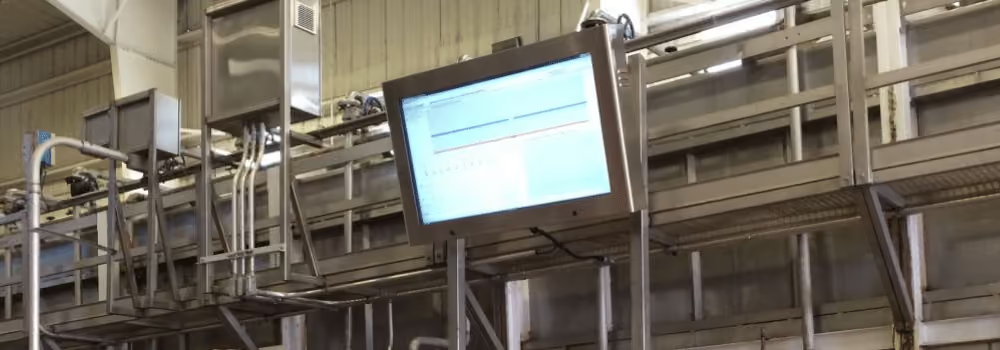


























































%20-%20thumbnail.avif)





%20-%20thumbnail.avif)

%20-%20thumbnail.avif)

.avif)




%20-%20thumbnail.avif)