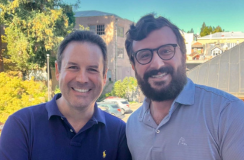
Host: Welcome to Acquiring Minds, a podcast about buying businesses. My name is Will Smith. Acquiring an existing business is an awesome opportunity for many entrepreneurs. And on this podcast I talk to the people who do it. Today I talked to Casey Clark of Cultivate Advisors, a small business advisory firm that has worked with over a thousand small business owners in the the last five or six years. So Casey is super well positioned to share some of the acquisition opportunities he's seeing out there, including a few particular industries of his clients where growth is really strong and likely to stay that way for a while. Casey is a great interview, I think you'll agree. Here he is, Casey Clark. Casey Clark, thank you for joining me today on Acquiring Minds.
Guest: Hey, Will, thanks for having me.
Host: You are the co founder and CEO of Cultivate, which advises small business owners. Cultivate's not your typical small business consultancy or consultant. For one thing, you guys have a lot of scale. So you have had worked with hundreds of small business owners, I believe, since launching in 2013, is that right?
Guest: We're in thousands now, but yes, thousands, Quite a few.
Host: Okay.
Guest: Yep.
Host: So you really see a wide cross section of, of small businesses and industries across North America. And we are going to bring to bear that knowledge on buying a business, which of course is the subject and an audience for this podcast. So before we get into it, Casey, start us off with background on you and on Cultivate.
Guest: Yeah, so I got my start in franchising. You know, did the classic bought the franchise, you know, ran the business, was successful, got tapped on the shoulder to join a larger organization or the corporate of that franchise, essentially it's called a franchisor. And I actually, from their point, bought in, became a partner, built up and really scaled that with a lot of franchisees with underneath me. And that was kind of my first experience, I'll call my first entrepreneurial experience outside of the paper route and the lawn care business and everything else, you know, that started coming up. So I've always kind of.
Host: You did all the typical.
Guest: I did everything. Did you have a lemonade stand you could.
Host: Is it good?
Guest: Oh, yeah. I mean, just if there was a stereotypical entrepreneurial venture, I probably did it. And so, you know, anyway, that kind of got me started. And what really kind of defined my background is, you know, in this franchise you get to meet tons of business owners and you get to realize they all have a lot of the same problems. And they, you know, from there you start to see that systems and scalability, it was just a really cool lens to just dive two feet in. So Quickly, you know, within my career of entrepreneurship. And that's ultimately what led my co founder and I to coming up with the idea for Cultivate. And so background on Cultivate. You know, we, we founded it in late 2013, didn't really generate revenue until 2014. It was actually even a part time thing for the first two years. And then in 2016 is when we went full time and we started to scale the business. And we're at a, we've, we've acquired even another company or two. You know, that, that's within our network now. And you know, we're, we're, we're stretching into about 130, 135 employees spread throughout us and even a few in Canada. So we've had a really fast crazy five to six year growth. And all we do is help small business owners figure out how to scale their company. That might be revenue, that might be profit. It also can just be time. Right. Just like how to get the business to not run me so I can run the business. And so those are the types of things we work on.
[3:35] Host: So as I said, you just see tons and tons and tons of different small businesses. We do in industries and you have multiple clients within multiple industries. So for the people out there who are looking to buy a small business, you know, one of the big questions is what industry do I buy? Yeah. So from what you're seeing out there, can you talk to any industries that are particularly interesting to you? What would tell, tell the audience what they should might be, you know, what they might want to take a look at industry wise?
Guest: Yeah, and I'll answer that. But let me back up too because when somebody looks to go buy the business, I think you also have to think about what is my skill in what industry do I would I be best fit for? Right. I mean the reality is, is like there's a lot of, you know, industries I would never touch if I'm not a detail oriented person. Right. The thing I would really look for is like average transaction size. Right. So for instance, like if you're not detail oriented, you have no business going and buying a window cleaning business where your average order size is going to be $130 or gutter cleaning business. Just simple examples where you're going to have thousands and thousands of customers at scale because the amount of detail, attention to detail, it's going to take to build that type of business versus a business that may have a much larger widget. So if I was somebody to buy, let's say I wanted to Buy a home service business. I would stay away from the micro if I had low attention to detail and I would go after, you know, plumbing or something that has a little bit larger H Vac because it requires a lot less attention to detail. So that's actually something that I think a lot of people don't think about when they go by. The business is what will fit with your personality. And then if you already have experience in industry, start with it. I think that's a great place to go because again, my perspective is that all businesses can be grown and scale as long as there is a true product need or a service need. Right. That's out there in the market. I do have a few industries though, just to answer your question. I don't want to bait and switch on you.
Host: No, you're not going to. But Casey, let me just drill into the attention to detail thing because that's so interesting.
Guest: Okay, yeah, go ahead.
Host: So when you say attention to detail, you know, I don't know anything about plumbing, let's say. So it strikes me as something that I'd have to know a lot and there would be a lot of detail to it. So when you say attention to detail, do you mean like aesthetics, something that's an aesthetic business? Like, give me some more elaborate on exactly what you mean by that because all these home services business to me seem like you really got to get into details. So please.
Guest: Well, I think details of having training is different than literally your personality is, is, you know, in the details. Like you, you, you like the micro, right? Like, I mean that's, it's different to run 30, 40, 50 jobs a week versus three jobs a week and be at scale. Like you just, you have to just think about how you operate. And some people, you know, do really, really well managing a lot of logistics and a lot of little things. That's what I mean by managing the details.
[6:20] Host: Right.
Guest: You've got a lot more people involved to produce your widget versus a larger transaction cost may decrease that. And you'd say, well, wouldn't the larger transaction cost always be easier? No, because often a larger transaction cost is harder to sell. It's harder on the front end to actually get the revenue in because it's a larger ticket item versus the smaller. So attention to detail and skill of sales and just there's a few other elements that you may want to think through before you go in and not just only solely base it on the industry itself, but also how your personality will line up with that industry. And that's All I'm saying, just slow down to just acknowledge what that may feel like and will you actually enjoy being a part of that type of business?
Host: Excellent. Thank you.
Guest: So that's my perspective.
Host: That's great.
Guest: Let's get into the industries. Yeah, yeah. So I mean, you know, I, I've just, I'm pulling up a document here as we're talking. You know we are, I've identified probably about 26, 27 industry categories that we're in probably at 130, 140 sub industries. So we definitely range the gamut. We do these things called portfolio reviews where we track all of the data of all of our clients of how much have they grown, you know, from year over year. So I'm just kind of looking and looking for some outliers to say, like what are some industries like collectively with quite a few clients that we're servicing where we're seeing a big jump. I mean the first one, no surprise what we're already talking about home services exploding right now. Some of that is Covid everybody back indoors. But it's not that there's a bigger problem happening in that industry. I mean the demand for labor is just through the roof. You know, you see the baby boomers push all the college down and white collar jobs and you've got so many less people going in trades. That's a whole other conversation we could talk about, but that is just skyrocketing. The cost. I used to run a home service franchise that used to cost 35 to $40 an hour. That same industry, 10, 15 years later is now closer like 120 to $130 an hour. And some of these folks, and you actually pay more now to a laborer than you do a good laborer than you do somebody who can code you a website. It flips.
Host: Wow.
Guest: That is wow. Not always, right? Like senior developers. Senior developers and all that. But if you look, I mean it happened. I mean your trades folks are six figure producers a lot of times and more the skilled trades. Right. Especially where you're gonna have unions or you're gonna have other certifications. But because of that labor shortage, you're seeing this insane demand right now. So if you're in the right neighborhood and you buy into the right home service organization, I mean I would tend to think it's on you if the business isn't growing for the next five to six years. But just keep in mind before you get into that industry, you're going to have a hard time finding labor. You're probably going to have to be good at training and building out the training grounds to bring people into the trade. Because to find people who are already in the trade is just becoming extremely, extremely difficult. So that's one I think is really interesting to me. Another one is healthcare and medical. I know these. Everybody probably thinks this is low hanging fruit, but it's pretty straightforward. I'm seeing massive, massive growth in this space. It's not because of COVID necessarily. It's actually you're seeing hospitals and you're seeing other, other folks change in the medical industry where they get, you know, things from, like where they, where they get the gauze from, where do they get, you know, I'm going to call, I'm going to kind of tailor in a little bit more to medical supply. You're seeing that type of industry just explode right now because it used to all come through large conglomerates and these hospitals, everything are starting to go more local. They're starting to source more from small businesses. And so for that reason, in the small business vertical of that space alone, you're seeing this pretty large growth happening right now. So that's a pretty cool industry to kind of look at.
[9:55] Host: Another one, medical distribution. Okay.
Guest: Yep. And then hospitality and tourism industry is. We're seeing huge growth now. A lot of that's because the baseline is low because of COVID But I'll speak to this one. You're going to see this unbelievable demand that's going to carry for the next 10 years. There's a really cool case study out there that United did many years back when one of the other viruses kind of came through and they talked about the repair, how long it took. But they also go into the details of talking of how big of a push it was or how just how robust that industry ran for so long. I think you've got a really nice tenure in that type of business right now if you want to get into hospitality and tourism. And that's really low barrier of entry of industry knowledge. Are you good with people? Do you know what people want to experience? That's what's important. So those are three really easy ones that stand out.
Host: Yeah, I keep hearing from people in my own network about vacation rentals, Airbnb, vacation rentals. People are not necessarily acquiring these businesses, but acquiring a property or two or three, and all of a sudden they've got 10 and it's doing really well.
Guest: Well, there's outsourced vendors in that space. I mean, you could pretty much buy the real estate and then factor into Your cost, the person who's going to manage it for you, and you've got a killer business setup. Yeah, yeah.
Host: So one of the things that cultivate does for its clients is really is help them grow, as you said. And there are, I think, tiers within small business where you kind of hit a, hit a ceiling as a small business owner and it can be difficult to break through to the next tier. Many of my of the acquiring minds audience are looking for businesses to buy where they can obviously be the new owner and grow it. And so one of the questions would be, what should I, as a small business acquirer look for in a small business that signals to me that while there isn't growth there now, because maybe, you know, maybe the current owner, the seller is getting ready to retire, maybe they've just been kind of, you know, resting on their laurels for 10 years or just, you know, working 20 hours a week. And so growth hasn't been their priority. How can I determine if, if this is a business that's ripe for growth, if I bring my energy and my, you know, my ingenuity to it? Are there any kind of tells from the outside that I can see in a small business that would, that would
[12:15] Guest: indicate that I think every business is unique and different and you have to do your due diligence and go through that process before you make the acquisition. But I do think there's probably a small checklist that comes to mind for me that is like, I would definitely be excited if I saw these things because that would really tell me I know there's an opportunity. The first one I would say is digital. Digital marketing transformation. They haven't gone through that process yet. If I, if I, you know, there's a lot of baby boomers that have these really amazing small businesses that have been feeding their families for years and years and years. Like, you're kind of talking about the classic baby boomer resting on their laurels, or they've been riding this treadmill for 10 years, you know, and it's just like, you know, it's like you ask the question, you know, when you're going through the due diligence process, how much, you know, how much do you spend on marketing? And they're like, nothing, you know, and you're going, oh, I think I still pay yellow pages. You know, I have money going to yellow pages. That's when you know, okay, and you're, you're still doing that much revenue. Wow, I could probably double or triple this by just hiring a good digital marketing Agency and putting it in place, you know, just to catch up, catch up to the, to that space. Especially if the website's super outdated and they're still producing revenue. I mean, that's just, that's an easy tell. You can almost do that before you get on the phone to understand what you're looking at. Another one that comes to mind for me really, really quick is I would say tech enablement is probably the words that makes the most sense. Is the business tech enabled right now? And again, if it is, just realize you may not get more efficiency. But again, I find a lot of these businesses that are for sale, especially in the smaller market of people maybe first acquiring their first business. A lot of these businesses out there are not tech enabled. They don't have things automated. They haven't moved their financials to the cloud. They still have people managing accounts receivable and not automatic credit card payments that track and create massive efficiency and allow you to remove one or two administrative people that drop and maybe could double the bottom line within six to nine months. These are the kind of things we're looking for all day, every day when we work with our clients, by the way. But I think those two are really, really important. And those are like the sure tell signs there's going to be a massive amount of growth, growth there. The third is the leadership team. If the business is at a scale where there is a certain quality of leader in place and they've been able to get it away from them as the owner and they have managers or leaders in place leading others within the organization, I would really slow down and spend a lot of time understanding the skill level of those leaders. Because again, what I find is that business owners from a different era did not focus on leadership skill. They didn't have to because they were the ones paying. It was just a different environment than it is now, let's be honest, right? Employees pick where they work. They used to not do that. That's a little bit of a new environment of the world. And so with that taking place, business owners have to be better leaders. So if I hear that there's a lot of attrition, like they're having a lot of employee turnover or if I meet the leaders and I go, if I were to replace a few of these leaders with stronger leaders, or if I meet a really good leader that I could run the business through and support through, that gets me really excited to take on that acquisition as well and to potentially, you know, acquire the business for growth and drive it. Because those Three things are, I believe, are probably the biggest levers that are going to create growth in your first two years of buying a business.
[15:26] Host: On the last one, a number of my guests have said that they, that they didn't diligence the team as much as they'd wished. You know, they looked at the business, they looked at the, the numbers and kind of a lot of those quantitative aspects of the business, but they didn't get in there and really try to understand the dynamics of the team. Now, some of that is just going to be opaque until you get in there. You can't diligence every employee, but you can probably do more. Yeah, you could probably do more than what I'm getting from my guests. You could probably do more than many people, many buyers are inclined to. That's great.
Guest: Yeah, go ahead. I was just going to say on that. I mean, I think that the key tip to that is if you are going through this process right now, just pull that forward. Because, um, it's so easy when you're going through the due diligence process to say, can I meet with everybody on the executive team for two hours each? It's not an interview. I just want to learn more about their role and what's exciting to them. Because if we were to buy the business, I want to know how to align the vision. A lot of times I find current owners are afraid to let you talk to their executives on your team. Right. And so the way to do it is to bring it up. Say, I actually just want to make sure if I were to acquire, buy this business from you, they would see value of continue to work with me. And I want to understand what's important to them and their future. So I can align that to the vision, make it more about the future, and that'll take the current buyer away from that. You're actually trying to understand the current analysis which you'll be doing, but that's the way you can get the door in really, really fast to get to meet with some of the team members. Great, great.
Host: So one of the other things that I'm sure there are trends around within cultivate is just standard problems that small business owners encounter. So what are some of those? Like, what are some of the classic problems that, that a business buyer should maybe anticipate? Because in fact, a lot of business buyers don't necessarily have small business experience. A lot of the audience are fresh out of MBA programs or they've just had corporate gigs and they've never actually been in the seat of president or CEO of a small business. So just shed some light for people. What are some of the classic things, problems that cultivate small business owners come to you with.
Guest: Yeah, we have this methodology called the propeller. And our whole idea is that you can propel a business if you understand the roots of a business business that create growth. And so these growth routes are the same problems that are identified. So I'm just going to speak to them because they're literally the exact same from what we see. The first one is financial clarity. What we find a lot of people who acquire a business or when they're running the business is they're trying to scale a company in which the financial widget, the success of each widget of business, each H Vac job or each medical transaction of distribution, whatever it is that has to have a certain level of contribution margin. And what we find is that most business owners are not skilled at a level they need to to understand their financials. So they start to grow with discounts or promotions or they start to go up in different avenues. And by the time they get it at scale, they have tons of regret because they got there and they realize that the bottom line is more important. Right. Revenue is for ego, profit is for success. Right. You got to remember that I know a lot of business owners who run 10 million who make a million, and I know people run a 2 million DOL to make a million. I'd rather have a $2 million business than makes a million. That's a lot easier. You probably have more weekends with the family. And so you've got to really make sure you're clear on that contribution margin. Your financial clarity per widget is really clear. So that's one that comes to mind. The next one, sales conversions. They just accept what the conversion rate is and whatever widget they're selling. You have to know the industry sales conversion metrics of what your top competitors are doing and what is happening in the market to benchmark how you're closing. Instead, people get focused in and just going, well, this is what my business closes that don't fall for that trap. The reason for that is if your close rate is too low in the market, you're still, you're still paying the same cost of acquisition for all your leads as all your competitors. And so what happens is they can start to pay more money because they're converting faster. That sales conversion is really important to have in place first before you start dumping a bunch of money into marketing. Otherwise again, you'll overextend yourself when you realize how much you have to spend to bring enough leads in or enough customers in, depending on its product or service business. So that's another place that I see often the third one is they over invest in leadership either too soon or too slow. So they keep it all underneath them for too long because they like control and they don't want to loosen that grip. We see a lot of just go to issues of that or the opposite problem. They're delegators, right? They just thought, I'm a business owner, I'm going to be a master delegator overnight. You also don't want to fall for that trap because what that does is you actually crush your financials. And so we always just say you really need to understand that all businesses go at different stages. And we see this across all these industries. Make sure you're talking to people and understand what size do you want to get the business to have that clearly defined in your head. Because if you outgrow a stage, people don't realize how expensive it is and how it won't work inside your model any longer. Because again, if I want to grow to a $10 million business, I'm going to invest very differently than if I want to grow to a $5 million business. Right. And so if people don't get that vision really, really crystal clear, everything can fall apart. And what you thought you were building could go bankrupt or doesn't turn out to the why you thought you were buying the business. Because I don't think many people are buying businesses to just run them. Sure, they probably have other reasons for it.
[20:56] Host: It is interesting that you would peg a number because my number would just be as big as possible. But it sounds like that might not be specific enough. I should say no, I want 5 million in revenue or 10 million or 50 million in revenue out of this by this year.
[21:11] Guest: By this year? No, not even. You can't have an open timeline either. It totally changes the game. It's okay to say I want to get there by four years and if it takes me an extra year or two and I need to slow down the growth to get there, that's okay. But it can't be. I just hope to get there one day and I hope it's open. The reason why is because the decision making you will make will be wrong and it will cost you tons of money through that process because you don't have anything to filter through. You have to filter through. Does a $5 million organization have a person in HR? No, they do not. They stay outsourced in HR. So now I know as a million dollar business I need to go make friends and find my right HR outsourced partner that matches my size and up to 5 million. If I decide to change my goal later, I'll then upgrade or bring somebody internally. But I hear we meet people businesses all the time. It's like hire this big exec or I thought I need to bring this person in because it seems like everybody else does. Like yeah, your competitors who are 10 times your size have that. Your size of business. That makes no sense. You have to run it differently.
Host: There's this famous quote from, I can't remember his name, but a private equity guy who became famous for just acquiring software companies into billions of dollars. And he said all software tastes like chicken. Which is basically every software company has the same problems, has the same challenges, has the same opportunities. So with small business, a lot of business buyers out there are not necessarily buying in an industry they already know about. You had said that that could be an advantage and of course it can. But many buyers are kind of just looking for a good, like the right deal. And it's not, it's very often outside an industry they have any experience in. How do you think about that? Does all small business taste like chicken? Or should you be pretty careful about your lack of industry knowledge? Talk to me about that.
Guest: That's such a good question. This is a weird answer, but I think there's two steps to this question because the first step is again, go back to my earlier point when we were chatting. You've got to be excited about the industry a little bit. You don't have to be super passionate about it to where it's like, this is what I breathe. But you at least have to be, you have to have a buy in to producing whatever that industry is. I think that's actually more important than the skill side of it or how it works. Because if you wake up and you just literally hate what the industry does, you're never going to be willing to learn the industry because you don't have any, you don't have any natural curiosity around it, right? So you have to, you know, I would say it needs to be an intriguing industry to you of how something works and you may go, well, gosh, how is plumbing going to be intriguing? It's like if you don't know plumbing well, you can be very intriguing. Like how does that work inside the house? How is that set up? If you have to have some level of curiosity first, I think there are so many industry skill training companies out there. You can learn any industry you want within reason. And those you'll know about because the business owner will tell you you can't buy their business because you don't have a certain certification. So the good news is that the industry is going to block you if you don't have the right certifications to get in anyway. And there's not that many. Right. Mostly government regulated industries. So as you look at the industry I personally put. So I guess I agree that it tastes like chicken. I guess would be to use your analogy, I really believe that 80% of the skill of scaling a business is has nothing to do with industry knowledge. I truly believe that. Now you know our company, we're industry agnostic. I was told when I started our advisory firm and we were going to help all these businesses grow and scale. I was told by many mentors if you don't niche down and pick a very specific industry to become an expert, you're not going to grow your company. I prove them wrong. We're way bigger than almost majority of those industry specific folks. And it's because I believe we really understood that. No, it comes down to the skill of financials. Sales, marketing, leadership, recruiting, productivity, tech enablement. Those are the things that define the growth and scale of an organization. The industry is all better practice. And the industry is always going to change, it's going to evolve. What used to work today is not necessarily going to work tomorrow. And so but the scalability of financial, sales, marketing, you know, outside of maybe marketing, there's not a lot of tweaks. Marketing and tech is moving constantly. The other elements, they usually stay tried and true. Right. In terms of what you're trying to build and try to grow. So we put a lot more effort on that 80% and we see that. I can't tell you how many business owners I've met, they're so good at that side. They don't know anything about an industry. They'll go into an industry and explode an organization because they understand the fundamentals of how to grow and scale a company. So for that reason I put the weight there.
[25:51] Host: Tastes like chicken.
Guest: Tastes like chicken. Yeah.
Host: A lot of what cultivate advises to its clients is putting systems in place. Every good business has lots of really strong systems. And this for the founder, owner, this can be a difficult mental shift because they're set in their ways or they just can't get beyond the way it's always been done. There's just friction there, either imagined or realized. But this strikes me as great for the acquisition entrepreneur because they don't have the same bias in the business. They're coming in with a fresh set of eyes, baggage. Better word, they're coming in with a fresh set of eyes and eager to grow it. Presumably they just plunked down a lot of money to get in this business and make it something bigger. Is that a correct intuition that in fact the acquisition entrepreneur, even though they're at a disadvantage because they have to come in, they have to learn, there's a lot of heavy lifting they have to do in the first six months, but kind of emotionally their approach is going to be more fertile than the founder owner, the founder seller.
Guest: I agree. I think. But there's another issue with this, which I would call a crisis of engagement, that when you first buy that business and I've acquired companies into our firm, you don't want to touch stuff too quick because you don't know exactly what the dials are going to do. So I think it's a different type of self doubt or something that kind of holds you back from sometimes, you know, changing the systems or implementing because you don't know exactly what that's going to dial. And I think it's also my personality. I've seen people buying a business and go in and, you know, they just want to change everything overnight and that is actually what wrecks the business. They made too many changes too quickly. Right. So I think it's still, I agree with you with an asterisk to say, but that doesn't mean go in there and just start, you know, building out more processes and more systems and change it. You know, figure out the right, you know, be around long enough to understand how that, you know, that dial works before you then make the tweaks. So that way you also have a baseline of data that you've currently run to understand why is that getting you the growth or why is that system helping you before you keep changing more?
[27:56] Host: Great. Last question for you, Casey. If you weren't doing cultivate, what small business would you be in?
Guest: Oh, gosh.
Host: Are there no clients or industries that you look at? You're like, man, I'm envious of those people. They're having a blast in that industry.
Guest: I'm having a lot of fun, Will. Okay, but if this was not an option, if you said, Casey, you are not allowed to be part of this business anymore.
Host: Did painting excite you? Remember your first franchise when you were in college? Okay, so you didn't have any of that.
Guest: But here's what I'll tell you. If I, if I had to choose, I would build houses. I would be a custom house builder.
Host: Okay.
Guest: For, for high wealth, High, high wealth individuals. That's where I would go. I love working with my hands. I love like seeing, you know, it's part of why I love cultivate. I love taking a business and hearing somebody's vision and dreams and goals and going. I actually know how to make that a reality the next four or five years. Let's help you get there. It's the same thing. People have these visions when they come to build these custom homes and they want to build something for their family or whatever. They have this vision. Vision. I like, I like understanding that vision and then making it a reality. And that just gives me, you know, it makes waking up in the morning extremely easy. And there's a lot of money in that, in that industry. If it's done right.
Host: Yeah.
Guest: Wow.
Host: What. And what a great metaphor. Building. Helping owners build their small businesses is not unlike building a. Building a home for the family.
Guest: Different. It's no different. So I guess I'm. I'm who I am.
Host: That's great. Casey. How can, how can people reach you? Are you publishing online or are you too busy for that? How can people follow you or get in touch with you or both?
Guest: Yeah, definitely. CultivateAdvisors.com is a great place to jump to. There's a subscription option to subscribe to us. We'll send you a bunch of free toolkits, a bunch of free resources, but you also can go on the website and actually just click the resources and we just. We give away a ton of stuff. So you can go on there. Right now we've probably got at least 30 or 40 playbooks and toolkits you can grab, depending on what you're dealing with. If it's in a marketing issue or a financial issue or whatever is you're working on, we've probably got something for you. We've even got a full assessment that'll help you go through a long checklist of asking you questions. Do you have this in the business that'll help you create a roadmap to go. These are the things if I started to implement, I'd probably start to see a lift. So go check it out.
[30:07] Host: Cool. And I'll just say that two of my guests on Acquiring Minds have been cultivate. Were our Cultivate clients, which is how I learned about you.
Guest: That's how we met.
Host: Yeah. So a lot of good things are being said about Cultivate and I. And I've seen it in their stories, so.
Guest: Oh, very good.
Host: Reach out to Casey, people. Sir, thank you for your time. This has been a great conversation.
Guest: Yeah. Thank you, Will.

























































%20-%20thumbnail.png)






%20-%20thumbnail.png)



%20-%20thumbnail.png)

.png)




%20-%20thumbnail.png)