Host: It wasn't until an hour into the interview with today's guest that I learned perhaps the biggest detail of all to his story. Dominic Blue bought an air duct cleaning business while keeping his W2. Now, the vast majority of Acquiring Minds guests become the full time owner operator when they buy a business. It's hard enough to pull off a successful transition without the distraction of a day job. That said, there are benefits to this model. Chief among them that you don't depend on the business as your livelihood. That income from your salary means you can put all the cash coming out of your newly acquired business back into it to improve and grow it. A salary also cushions you financially should revenue dip or you go through a particularly deep or long J curve. Also here in the States health insurance Dominic had a baby on the way, so maintaining coverage was paramount. Interestingly, having so much on his plate did not deter Dominic from making big moves within his new business, including a second acquisition to take the business in a new strategic direction. We also spent time on Dominic's hiring of an operator who was meant to ease his time obligations but unfortunately didn't work out. Listen for what he learned there and how he dealt with it. And if you'd like another story of an acquisition entrepreneur buying a business, installing an operator and keeping his W2, see episode 142 with Matthew Saskin, who bought a $5 million towing business using this model. That episode with Matthew happens to be the most listened to across the entire Acquiring Minds catalog. You all are clearly drawn to this idea and I get the appeal. Well, enjoy hearing how Dominic is doing it. Here he is. Dominic Blue, owner of AIR ASAP announcements don't forget this week's webinars. Today, Thursday, July 11, three top players in SBA lending to the search and ETA ecosystem will report on the state of the market as of summer 2024. What are current terms? Which industries are strong? Which are struggling? How is competition among searchers? How are their searcher clients who've already closed now performing as operators? That's today, July 11, noon Eastern and tomorrow, Friday, July 12, Max Lummis and his team at forensic accounting firm LCS are hosting an office hours devoted to answering your questions on all things due diligence. LCS does the quality of earnings for dozens of search acquisitions every year. So come get your due diligence questions answered by one of the most active diligence teams in the search ecosystem. That is tomorrow, Friday, July 12, noon Eastern and next week, two more fantastic webinars scheduled. Thursday, July 18, three top search investors will discuss what they're seeing in the market. They'll provide perspectives on self funded, independent sponsor and traditional search deals. That'll be Nicholas James of Mines Capital, my partner Tony Cappert of Workbench Capital, and Adam Borse, whom you'll recognize from his Acquiring Minds interview back in February. Three super sharp investors around the table talking about the state of investing in search. So if you're looking to raise money for your acquisition from investors or are considering investing in this asset class yourself, this will be a super valuable hour. Thursday, July 18, noon Eastern and next Friday, July 19 Attorneys James David Williams and Bill Barlow, whose entire practice is devoted to small business acquisition, return for a legal office hours. They'll walk us through the biggest fights they see when it comes to negotiating the purchase agreement and will then allow ample time to answer all legal questions related to buying a business, not just those related to purchase agreements. So come get any legal question you have about your deal or your search Answered by James, David and bill Friday, July 19, noon Eastern okay, that was a lot of events and dates I just threw at you, but you can find all those topics, dates and registration links nicely neatly laid out on the Acquiring Minds homepage. Acquiring Minds Co. So go to Acquiring Minds Co to see what these events were. Again, check the dates and of course to register for them. Or as always, links and dates and topics are also in the show notes of this episode. Speaking of which, on to today's episode. Welcome to Acquiring Minds, a podcast about buying businesses. My name is Will Smith. Acquiring an existing business is an awesome opportunity for many entrepreneurs, and on this podcast I talk to the people who do it. What do the following Acquiring Minds guests all have in common? Doug Johns, Morley Desai, Tim Erickson, Chirag Shah, Shane Ursam. They all went through the Acquisition Lab, the accelerator in community for people serious about buying a business. But they represent just a sliver of the Lab's success stories. The number of deals across the lab's cohorts now stands at over 120, with over $300 million in aggregate transaction value. The Acquisition Lab was founded by Walker Deibel, author of Buy Then Build, the book that introduced so many of you to the very idea of buying a business. The Lab offers a month long, intensive, almost daily Q and A sessions with advisors, live Deal reviews with Walker, Deal team introductions and an active community of serious searchers. Check out acquisitionlab.com, link in the notes or email the lab's co founder, Chelsea Wood. Chelsea Buy, then build.com Dominic Blue welcome to acquiring minds.
[6:57] Guest: Hey Will, thanks for having me.
Host: Dominic, when we connected for the pre call, you were very recently in the seat of your newly acquired business. Just over a month at that time. As I recall you also had a one month old. So you were doing the two babies at once thing. Guess you still are. We want to hear all about that. Dominic, start us off with some background on you, please.
Guest: Yeah, absolutely, absolutely. So my background, I spent early part of my career, I spent 11 years in the United States Marine Corps. You know, the typical Marine Corps journey. Moved around, lived in a lot of states, lived in a lot of countries, transitioned out towards the end of 2020 and actually transitioned into tech. Spent some time at, you know, some, some CRM companies, you know, took a stab at my own startup, subsequently shut that down, you know, wasn't really passionate about the problem I was solving and then actually came across acquiring Minds. You know, last year in January, discovered the whole ETA process. So very much like every other searcher, I went out and read the two, the two gospels, you know, Buy Then Build by Walker Dibel and you know, HBR guides to how to buy a small business. And then I launched what is my holding company, Nostra Group and then began my search last year. And then I can go into, you know, the search and bring us up to that if you'd like. But yeah, that's my.
Host: We're definitely, we're going to get there, Dominic. But a couple follow up questions. You were an entrepreneurial kid as I recall.
Guest: That's right, that's right. Yeah. So yeah, I think, I think the, the typical cliche story, if you will, of having my own lawn care business and wholesaling candy, you know, in between classes when I was in high school. So I always, always was captivated by entrepreneurship Also, I guess as, as, as I should mention my grandmother, you know, she was a bit entrepreneurial herself. She had a couple side hustles from her, you know, day job and I got to watch how she operated, you know, doing those two things in parallel while somehow managing to get me to all of my sporting events as a kid. And so I think that hustle culture, if you will, was kind of ingrained in me at a, in a very, you know, young age.
[9:28] Host: Grandma hustle culture, that's a new one. So even though you had a good decade in the service, the idea that you go into your, into business for yourself was predestined. Or maybe, maybe, maybe not so much. But it sounds like it was pretty it, you, it, it was an easy guess that that would Happen. And it sounds like you started something right when you got out. So tell us a little bit about that. You said you worked for a couple CRM companies, but also did something entrepreneurial in tech. Can you tell us about that?
Guest: Yeah, absolutely, absolutely. So, you know, just as a context, my wife is from Australia. She's a registered certified nurse and midwife and she was actually a traveling midwife. So you know, they would go from location to location for a certain period of time. And when she moved here to the United States, naturally she gravitated towards that industry. And we found a pretty interesting problem with traveling medical professionals who were doing extended period stays in locations and they weren't happy necessarily with the services they were receiving from say Airbnb or extended stay hotels, whether it was they wanted to bring a whole family and a dog or multiple cars or you know, whatever the specific problem was. So I kind of, I kind of set out to build a platform that could really address that niche market. Or outside of Airbnb, there was only one specific technology company, if you will, that, that was servicing that industry. I very quickly realized that being one engineer and one business developer as a single person is very difficult when you're trying to reach feature parity, to compete against very, very deeply rooted competitors. And I just could not see myself doing that for the next 10 years. I mean, as you know, coming from a tech background, you know, you kind of have to look at it in a 10 year horizon. And so that, that really, I knew at that point, especially having a wife thinking about starting a family, having a cash flowing asset made more sense to me. And so I decided to step away from the, the you know, risk that is a technology startup and then subsequently found myself know, an eta.
Host: And thank you for that, Dominic. But wasn't there also a period where you were kind of building MVPs for tech companies? You kind of use like kind of an MVP agency using no code tools. Was that, was that something else you did for a while?
[12:03] Guest: That's right, that's right, yeah, yeah, I failed to mention that one. So I ran that one for about a year. It was a technology enabled consulting firm. We were building, as you said, minimum viable products for non technical founders. So went out, hired an engineering team, did some business development, landed some clients and then we, we set out to kind of do the full life cycle of product development, you know, kind of integrating with their go to market strategies. And so we had some success there. At that point I didn't really enjoy the, I don't want to Say that I didn't enjoy the work because I did. I just, I don't think I was passionate about the idea of being a consultant pretty much because that's ultimately what I was, you know, so ultimately again, you know, shut that down. And that actually happened before the tech startup. So I took a stab at the consulting, took a stab at the tech startup, mark those two off the list. And then, you know, yeah, I kept going.
Host: Well, I may want to return to your experience doing that consulting just because it was, you just got to see a lot of cases up close and personal of people or companies or startups trying to put something out into the market. So might, might be an interesting contrast with eta.
Guest: Yeah.
Host: So after your, your dalliance in, in tech land, you hear about eta, catch the bug, tell us what your search looks like or what your parameters were, if any.
Guest: Yeah, absolutely. So, you know, after reading, you know, the typical gospels, as I mentioned earlier, you know, I built what I feel like it was a rudimentary, you know, investment thesis. The three standard categories of location, you know, deal, size and industry. So for me I was, I was geographically constrained to Southern California. So, so that was the location I was looking for home services businesses and I was looking for deal sizes anywhere between 300 and 650 in SDE. So that was really what my search was starting out. I found a, you know, a lot of, a lot of landscaping companies, you know, a lot of key man style H vac businesses. And ultimately, you know, the company that I did end up having an offer accepted on was the air duct cleaning company which we can get into here in a second. But the primary reason I, I chose that company outside of the numbers was because it did have a strong management team in place.
Host: And to be clear on your criteria, location, Southern California deal size or financial size of business, 300 to 650, 650 in ste. And then industry. And you, you mentioned kind of home services. But was that one of your criterion or was that just what you were finding in that range?
[15:15] Guest: No, I started out with, with home services as the industry that I was interested in and I guess like a little on the philosophy, I didn't want to belabor the point, but a little on the philosophy there was obviously coming from a tech background. Most of us naturally gravitate towards tech because that's what we're comfortable with. But as we all know, the multiples are exceedingly high in those industries. And because I was investing off of my own balance sheet, I wanted to find something that was in A more stable market as opposed to something that was high growth, high exit and kind of build my portfolio from there. So you hear quite a bit of some of the giants in the industry talking about earning their right to take a risk. And I kind of adopted that myself by saying I'm going to go build a portfolio and then I'll go out and maybe buy something that's more high risk like technology companies.
Host: Well, well, it's funny Dominic, or maybe not so funny and predictable that your and my interest both was coming from kind of tech backgrounds. We both were at least initially drawn to buying something SaaS thing or a micro SaaS or an E Commerce or whatever, something digital and then, and then decided against it. Great. And you mentioned your own balance sheet. So say more about that. No investors in other words. And even if you'd found an opportunity like you didn't want to look for a bigger business that even if you couldn't afford yourself, you would go raise money to buy, you didn't want to do that.
Guest: That's right. That's absolutely right. Yeah. I mean, you know, I had some, some small family family investment if you will. But you know, preponderance of the, of the capital injection did come from my own balance sheet. You know, again the thought process there was, you know, I don't come from a pedigree of investment banking or Wall street or you know, working at PE backed companies so I felt that I needed to go earn, earn those credentials kind of on the, you know, on the streets of hard knocks, if you will. So, so that when I do go present myself to investors that I can come from a place of credibility and, and off of a built reputation of having done it myself.
Host: It's interesting. I feel like that makes a lot of sense. I don't. And, and so I'm, I'm just wondering why I haven't heard people articulate that very often, if ever. So you're going to buy your first business basically totally yourself, maybe with a little friends and family capital. Get the experience. You're not, you're not anti raising capital from investors. It's just you feel like as a rookie doing this essentially you'd rather wait until you got, you got a track record to, to do so, which again makes perfect sense. I just feel like I haven't heard it that much but, but I like it. Great. Okay, so, so 300 by the way. So 300 to 650 SDE. So that's going to be a business that's anywhere from what 800amillion up to 2 million in enterprise value.
[18:34] Guest: That's right. That's right.
Host: And you were expecting to put down 10%, call it of those numbers. So either anywhere from 100 to 200, 250,000.
Guest: That's right.
Host: An SBA loan broker, as opposed to a direct lender, doesn't work for a particular bank. Instead, the broker pairs you with the right SBA lender for your deal based on industry terms, risk thresholds, then helps you navigate the process better than many lenders themselves do. Matthias Smith of Pioneer Capital Advisory is just such a broker. Matthias worked at two of the country's top 10 SBA lenders. So he's been on the inside of the SBA process and knows well the pitfalls and hurdles and how to avoid them. He struck out on his own to laser focus on the ETA and search space. Our niche is his niche. You'll see Mathias at all the ETA conferences. He's closed over 30 search deals since starting Pioneer in May of 2022, including some acquiring minds guests. To learn more and get in touch, go to PioneerCapitalAdvisory.com or click the link in the notes. Air duct cleaning. So tell us about the business that you found.
Guest: Yeah, absolutely. So, yeah, so we. It's a, it's a San Diego based air duct cleaning company. It had 20 employees at the time of acquisition. It had a management layer, you know, a GM warehouse manager, office manager, and I mean that was the core, core management team, if you will. You know, it was 99 residential, so I think maybe a handful of commercial, commercial customers over the, you know, the time of its inception back in 2016, you know, it did right at 2 million in revenue in 2023. And you know, it was operating, it was operating based on the numbers that I saw, you know, at 60 plus percent gross margins, which was really interesting, you know, and, and I bought it right over a 2.5 multiple. So. Yeah, so. So it was really interesting. Yeah.
[21:01] Host: And what were net margins? Or set another way, what was the SDE?
Guest: Yeah, so SDE came in right around 4, 450. So yeah, it was, you know, it was decent.
Host: Typical 20% ish margins, right? Net margins.
Guest: Yeah, that's right.
Host: And you had said. So those 20 employees, are those true full time employees?
Guest: That's right. 2020 full time employees. There was approximately 12 technicians. So, you know, two man crews going out and coming, conducting the work and then a handful of office staff who are, you know, business developers, office admin, you know, account managers, those types of office type roles.
Host: How old was the business?
Guest: So it's right at eight years. It was founded in 2016.
Host: And so you said one of the things that really drew you to it was this management layer.
Guest: That's right, that's so.
Host: And, and so say more about that. You just mentioned the office staff. What, what, what was this management layer?
Guest: Yeah, so I mean, between the core three, if you will, the general manager, you know, the office manager and the warehouse manager. Warehouse manager handles anything inventory, warehouse related tools, equipment and fleet vehicles. And then office manager handles all, all things office. So inbound, outbound calls, accounts receivable, if there were any, I mean, there was practically none when I bought the company. It was all COD when I bought the company. So, and then, you know, handling just office management, general office management duties. And then the general manager also acted as the sales manager. So he was kind of our, our top closer, if you will. So we would, we would send him to maybe larger jobs if there was, you know, a larger home or a more complex job that we were doing an estimate on. So, but, but he handled overarching, you know, the general management duty. So the managers reported to him and he, while in absence of the owner, he would handle, you know, basic accounting, those types of things as well.
Host: And speaking of in absence of the owner, so how involved was the owner? Could the owner step out completely and the GM kept things going? Or was the owner pretty act, pretty active, pretty involved?
Guest: Yeah, really, really good question. And this was actually where I drew the insight of the capability of the management team. You know, talking to the owner, he, he was from another country and he traveled between seven to nine months out of the year. So I mean, he was home country, whether it was his home country, seeing his family in a different state, he was just always, always traveling. And so the general manager, again in his absence was running the business. And so that told me at least to some extent that the management team was capable enough to run this company on their own, you know, with, with a little bit of guidance, you know, remotely. So, so that was a strong indicator of something that I could work with, if you would. Yeah.
[24:30] Host: And that GM represents some key person risk, obviously.
Guest: Correct.
Host: But compared to like some of the other home services businesses that you'd looked at, which were three and four and five person teams, it's much less key person risk than those really small teams where you lose somebody and there goes 25% of your revenue sort of thing.
Guest: Exactly. That's right. That's right. And I mean, you know, when you think about it from the context of the structure of the teams that we had. Would it have been a gut punch to lose the GM on day one? Assuming, you know, which was an assumption that I made, that he was going to leave, it would have been a gut punch. But at the end of the day, we still had two managers who handled two very critical functions of the business. And we had other salesmen who, or I should say sales technicians who were still in the field, who were still capable and who were still delivering on a consistent basis. So while it would have been a gut punch, the company wouldn't have crumbled had he left. Whereas, you know, on the other end of that spectrum for say a four person company where the owner is the project manager, the estimator, the install manager, or the service manager, you know, if that one person leaves, there's. There's many hats that you have to fill on day one.
Host: Yeah, yeah, yeah, yeah, exactly. Great. Dominic. Well, yeah, it is sounding pretty good. And you said the revenue was cod. What, what is, what does that mean for people?
Guest: Oh, yes, cash on delivery. So, you know, at time of service, when we, when we complete our service, the customers would pay us right there. So whether it's cash, check or card. So which just means that we don't have accounts receivable. We're not waiting, you know, 30, 60 days for our customers to pay us, you know, post job completion.
Host: Right. Which, you know, we often like B2B businesses versus consumer facing businesses for a lot of reasons that the audience will be familiar with. But here is one of the things that consumer business or consumer businesses can be nice, that you get paid immediately. You don't have to wait 60 days to get paid.
Guest: Right? Exactly. Exactly. Yes.
Host: All right, anything more to tell us about the business before we hear about the deal itself? Dominic, tell us what air duct cleaning, I mean, it speaks for itself, what it is. But tell us more about the need for this service. You know, this is something I'm not sure, you know, kind of a one of these, I'm not sure I realize it existed sort of things. Tell us about air duct cleaning.
[27:05] Guest: Yeah, absolutely. And I'll tie it to a piece of my background that I didn't really mention. So when I was in the military, one of my jobs as, as a, as a military officer was chemical defense. So really teaching military members how to operate in contaminated environments where there's contaminants in the air, you can kind of automatically see how that kind of overlays with air ducts themselves. So, you know, coming to this Business air ducts are, they are the distribution system that pushes your air throughout your home. And you know, over time, whether you live near a construction zone or, or what, what have you, those air ducts can either a be contaminated with, with dust and debris or you can have rodents and pests infiltrate them. You know, if you have say, a hole in your air duct, you know, the air duct piping itself, hoses itself. So you think all of those contaminants you're potentially breathing in. I think air duct cleaning definitely became more popular because of COVID for obvious reasons. Everybody's thinking about air quality and you know, whether in the home or out in public. And so we started to see a rise in popularity for these companies. And you know, when we talk about the need really, and this can kind of go into some of the takeaways that we can talk about a little bit later. But my perception is there are a lot of individuals who have allergy issues. There are a lot of issues with, you know, say you live in a city like LA or San Diego, there's a lot of smog. You think about the air quality outside and the air quality in the home. And I'm actually a direct person. Like I experienced this directly growing up. I lived one mile from a paper mill and so a lot of people in my area developed lung, respiratory related issues because of the air quality. So when you're thinking about the, the purification, the cleanliness of the air that's coming into your home, all of that stems from your air ducts.
Host: Now isn't this what, what I'm told I need to clean my, my H Vac filters, you know, once a quarter. Isn't that taking care of this? Isn't that what those filters are there to do?
Guest: That's a great question. That's a great question. So you know, filters are one piece. It's not to say that what you're saying isn't correct, but filters are one piece of the whole component, right? So if you think of, from, from H Vac condenser unit and evaporator unit and blower motor, that's pushing that air all the way out to the registers which are the vent looking things on your wall, to the filters that sit there, there's, there's multiple pieces of this. It's just like drinking from, you know, if, if you look at any filter for a water bottle, does it catch all the contaminants? Well, not necessarily, you know, so, so it's a holistic approach to air quality as opposed to just saying it's one piece of the component that I just need to replace, and then that kind of takes care of everything.
[30:20] Host: And then how do you. And the questions I'm asking here are kind of like the sales objections that, that, you know, the consumer might, might ask on a sales. What about this, this air filter that sits in the corner of my room that I bought for 100 bucks on Amazon? Doesn't that do the trick? Obviously, that's just one room, so maybe that's the answer.
Guest: That's a. You mean like the standalone units?
Host: Yeah, yeah. The ones that you plug in and sit on that just are like, look like a dehumidifier or something over in the corner.
Guest: Right, right, right. That's a really interesting question, and I don't know that I've ever heard that, but I would say, you know, regarding that, you think about point of entry, right? So you have, you have a, say, a filtration system, a standalone filtration system in the corner of the room. Well, do you sit near that filtration system all day? Do you sleep near it all day? I mean, you know, so again, you're thinking about holistically, at least for us, we think about the house holistically, not just one particular room or one particular piece of, of, you know, the H VAC system. So, so yeah, I would say, does it help? Absolutely. Right. Otherwise they wouldn't be on the market. But if you're thinking again, in holistic terms, you know, there are other things to consider for sure.
Host: Yeah. Thank you for that, Dominic. And then just on it kind of related to me, me poking at this. And the part of the reason for my poking is because I'm, I'm foreshadowing what will come, which is one of the challenges in your business is, is the quality of revenue here. And just to, to kind of foreshadow a little bit more on the spectrum of need versus want. You know, some home services we think about in terms of like, needing, like, plumbing where, you know, your toilet's clogged.
Guest: That's right.
Host: You know, that can be very appealing, those businesses, because the consumer needs them. Whereas maybe landscaping or something is, is less of a need and more of a want. This feels like it's more that end of the spectrum. Where would you place it on the spectrum of need versus want for the consumer?
Guest: No, I agree. I, I think, well, I, I, I think in the typical consulting terms, you would say it depends. Right. So if, if I am, let's say I am a potential customer who has respiratory Issues, I probably think about air quality more than the average person does. Right, right. You know, so for me it may be more of a need, like I actually need to worry about the quality of the air in my house on a consistent basis. Whereas if I'm say, you know, a middle aged healthy individual who's never had any health defects or health issues or, or any of that, that those types of things, then maybe it is more of a want because again, maybe you're just kind of, you're going above and beyond on your, your healthy habits in your house. Right. So, so it kind of depends and depending on who you are as an individual is where you fall in that spectrum. And kind of looking at our customer archetypes, a lot of the customers that we do have are the individuals who have health like respiratory related issues or maybe they're elderly, those types of individuals because they're the ones who are more conscious of, of what's actually being, you know, absorbed in their body.
[33:42] Host: Great. And you'd said that the revenue mix was, I think you said, 99% residential.
Guest: Yes.
Host: And, and I would, I would think that there would be that there, that this, the need for this service or the desire for this service would be just as strong. Commercial land as in residential land.
Guest: Yes.
Host: So why is that true? And if so, why was so little of the business commercial?
Guest: Yeah, that's great. And I suppose we're a bit, we're foreshadowing a bit to how I've pivoted the business since, since acquisition, which we can get into later. But, but I wholeheartedly agree. I think just the previous owner was very interested in the COD model. You know, the. I don't have to chase down large B2B customers to get paid. I have coined it at least internally to our team as fast money. You know, he liked the previous owner liked fast money, which is okay, right? That's, that's one way of doing business. And, and so he only focused on residential customers, which to your point, there are just as many commercials, commercial type of customers who are also concerned about this potentially more so when you think about large commercial property, multifamily property owners and managers and operators. So that is, and I don't want to get into it just now, but we can get into it later. That is where we're pivoting is to focus on stuff like that. Yeah, great.
Host: Well, we'll put a pin in it for the moment. We're definitely going to return to it. Thank you for giving us the kind of the overview of the business. Now, so tell us what the terms of the deal were. You said 2 1/2 x. Yep, that's right. So what was the, what was the project costs? The, the price of the business and how do you structure the deal?
Guest: Yeah, yeah, great. So total project cost was just over 1.6. You know, obviously 10 down. We ended up going through, we ended up funding with Live Oak, which there's a fun story there. We, we almost lost the deal with a, with a different bank because there was some issues that, on the, on the seller side that we had to resolve three days before closing, which I'm happy to tell you about that story if you'd like. But, but yeah, from a deal structure, 10 down. So you know, 90 debt financing. And yeah, I mean we, again, we. I think it came out to be like 1.2.6 as a multiple over a 10, 10 year standard 7A SBA loan.
[36:28] Host: And that seems like a pretty good multiple. Why do you think that you got a lowish multiple?
Guest: That's a really good question. And I think it ties to, and we talked about this a little bit on the, on the pre call, but to me it ties to the demand generation, demand capture of, you know, categories of the business. Right. So when you think about H Vac and plumbing, they're absolutely needed. If, if it's summertime and you know, a California Valley resident home, H Vac is going to be a priority. If you have a plumbing leak, that's going to be a priority. But for air duct cleaning, I, I venture to say 99% of people did not think about the quality of air in their home until Covid happened. Yeah, yeah, so, so there wasn't this monumental mindset shift until this pandemic that took place, which again was only, you know, four years ago when it started. So we're just now getting to this point where more people are asking more questions about this. Right. And we're, we're in the early days of research being done by allergists and you know, medical professionals who are trying to evaluate some of these different types of environments that people are living in. So because of that, I think, you know, the, if trying to go for a higher multiple actually wouldn't have made sense, at least that's my perception from say the sell side. But that, that's, yeah, that's kind of my hypothesis on that.
Host: And the point about air duct cleaning becoming much more mainstream in the wake of COVID While that, you know, in theory is good for the business, you also worry that it's a business, a service that's going to also suffer from kind of COVID demand collapse like we saw in E Commerce or something. All this pulling back where, where Covid is out of sight, out of mind after a few years. That's right, yeah. So did you think that what the demand for air duct cleaning was, was had grown a lot and it might recede a little bit, but there was going to be a new normal that was higher than pre Covid? You weren't worried it was going to recede all the way back to pre Covid times? Pre Covid levels, That's right.
Guest: Yeah. I, I mean, my philosophy on the air duct cleaning industry is it's definitely a great complimentary service. I mean, if you see some of the large H Vac contractors out there, they typically offer it as an ancillary service on top of everything else they do. For me, I used it. And I heard, I, I've heard this said on your podcast before, where they talk about backing into an industry, so to speak. Yeah, H Vac was the industry that I was backing into. And I knew, I knew coming into this company specifically, at the very least, I'm getting a strong management team that I can then build, you know, infrastructure under. Right. Which is exactly what we're doing. I mean, you know, we haven't got into deal number two yet, but that's exactly what we did. You know, we went from being just a pure air duct cleaning company to now a full suite H Vac company that also does air duct cleaning. So we've actually made that. That's right. Yeah.
[39:56] Host: So you've done it. That's cool. Dominic. Yeah. You're. I think you're the first, you're the first guest that I can recall who's, who's, who's really executed this strategy, who really set their mind to doing it and then did it. And by the way, not very long, it's been less than four months that you've had the business. But yeah, it was John Wilson, maybe others, but John Wilson. I recall saying, you know, home services are really brutal. Like, if you want to go out and buy an H Vac business today, good luck to you. But, but yeah, backing in, you know, try to get a toehold in an adjacent industry and you can then use that toehold to work your way into H Vac delivering of H Vac services, which is, which is what you did. Very cool. And so was that part of your whole thesis around this deal or did that quickly become your strategy? Only. But only after you Got in the seat.
Guest: No, that was the intention from the start. It. I knew, I mean, I should say from the start, from the moment I found the air duct cleaning business and the offer was accepted. The moment I started executing on this deal, I knew that taking it and pivoting it to an H VAC company with the vision of it becoming a mechanical contracting company, if you will. You know, fire protection, electrical, plumbing, H Vac, you know, the, the, the, I should say the, the most seamless way to do that was start out this way back in and then just this is where as we all say, there's always luck involved. Just so happened, we had the second deal that came up that was a really good fit that was right here in Orange county. And it was a perfect tuck in for us to then expand across San Diego and Orange County. So.
Host: So that H Vac. With H Vac. So you bought an H VAC business?
Guest: I did. And I'm happy to go into that if you, if you, if you're interested.
Host: Yeah, we, we will, but not just yet. But Dominic, I'm just wondering, while the strategy is, is really cool and exciting that you're doing it, it also is like a big. It's one of these where. It's like one of these strategies where a lot of things have to align for that.
[42:17] Guest: That's right.
Host: Strategy to actually come to fruition. So if I'm you, I'm thinking, you know, I'm going to try to make this basically have this business that I'm acquiring be a toehold and then I move into H Vac. But because so many things have to align to, to have that come to fruition, I need the business to be viable just if it only stays a duct cleaning business. Because I, there's something I can't see about moving into H Vac or whatever. Was that your calculus? Like could it have, could it have stood on its own as it was just a duct cleaning business from, from now until forever?
Guest: I mean, absolutely. And you mentioned it earlier, you know, with, with another gentleman that you spoke with who also has an air duct cleaning company. I think organic growth in this market is quite difficult, especially if you're looking to scale and go from say 2 million in revenue to 5 million in revenue. That's a very large jump for an air duct cleaning company. But, but I do think it's something that could sustain with single digit growth margins pretty consistently if you wanted to keep it that way. And as you mentioned, obviously there was a lot that needed to line up. So when I was doing my initial due diligence on the business. I factored in a 9 to 10% delta in revenue reduction just, just to, just to make sure from a, from a, you know, a financial scenario that it would still survive if, if I took ownership. And then we saw that dip, which, you know, everything checked out. So I think had, had I not gotten lucky and found deal number two when I did, we could still absolutely operate just as a pure air duct cleaning company. I just wouldn't have been able to take some of the, the major steps and risks, if you will, doing some of the things we're currently doing. I would have had to, I hate saying this, but I would have had to kind of just ride out status quo until, you know, that opportunity presented itself.
Host: Okay, well, very interesting. And we're going to deep dive on that in a minute. But before we get too far away from your deal, sounds like there was an interesting story to tell about. About what was it? There was some paperwork issue, some with your seller, and then you went with Bank A, and then ultimately had to go with Live Oak. So what was that story?
Guest: That's right. That's right. So. So admittedly, I still to this day don't fully understand what happened. And it's because, you know, everything was going well with, with the first bank. Again, we were between three and five days of closing. So, you know, again, they always say it's going to happen in the 11th hour when it happens. Right. And sure enough, there was. There was something quirky with the tax reporting. The, the previous owner changed, he changed addresses, he moved the business, and apparently there was a single document that he didn't submit when he filed as an S corp. Ultimately, that paperwork did get submitted, but the bank didn't want to fund the loan because even though they could see that he paid his taxes, it wasn't processed the way that it was supposed to, at least is my understanding. So we had all the evidence that everything checked out, but they just weren't comfortable moving forward, which wasn't necessarily the issue. What became the issue was they first told me we weren't going to close and then they completely ghosted me. Like, no response to emails, no response to phone calls. The only reason I knew that they were kind of dragging their feet is because I had a good relationship with the, the, you know, the bdo, the business development officer who I originally started working with. And he was doing, you know, he was trying to work on his end to figure out what was going on, but they just started dragging their Feet and as we all know, time kills all deals. And you know, thankfully we had, we had done some, you know, preliminary relationship building with, with Live Oak and they were already familiar with the deal. And so I just switched banks and pulled out from the first bank because I didn't again, I didn't know what they were going to do, if they were going to close it, if they were going to, you know, help us out in any way. Nobody would respond to my emails. Finally I just pulled the plug, moved away from them, moved over to Live Oak and then we were done in four weeks. So we have an amazing experience with Live Oak.
[47:06] Host: Wow. All right, Lisa and team the and and is the by the way, did, did bank number one ever on Ghost and, and, and email you and say oh, sorry or anything or it's still been silence.
Guest: The only reason I have heard from them is because I requested the, I always call it earnest money. But the initial, the initial good faith payment that was made to the bank, I wanted to pull that back. And because they weren't responding to me, I had to not threatened, but I had to tell them that I was going to escalate it as necessary if they weren't going to respond. And then they responded. But after that one response, no, nothing.
Host: And did you got the money back?
Guest: I did, thankfully I did.
[48:00] Host: How much was that?
Guest: It wasn't, I mean it was, I don't know, it was less than $10,000. So.
Host: Yeah, significant. I mean that's not nothing.
Guest: Yeah. Yeah.
Host: And then, you know, interesting on Live Oak because I mean, obviously they have a very, very strong reputation in our world, but they're also known for being conservative and you know, and that's a strategy. You know, banks fall anywhere on a spectrum of conservative to less conservative and it's just kind of a strategy based on their what they underwrite. And Live Oak is a little bit on the conservative side. I would have thought that something that is so closely tied to its performance jumped during COVID like air duct cleaning might not be something that they were that would pass their, you know, threshold. Do you, did they have anything to say about that? Curious.
Guest: No, that's a really good point. And I mean from a historical standpoint, there was consistent, you know, know, 20 plus percent year over year growth for the company. So I mean it had strong performance where I mean, I suppose if there was, you know, say a little bit of growth and then maybe a plateau or a dip, they would have, I, I, I could see them being much more conservative on the deal, but I I just think from a numbers perspective, they were really happy with the deal. They were really excited to do to, to do this deal. So, you know, and especially after building a relationship with them and explaining what my strategy was, and I ended up doing my second deal with almost the same exact closing team. There was like one, the closer was different because the closer I used before changed positions within the company. But so they knew what I was doing. They knew I had the second deal lined up, which they also like that deal. I think they could just see holistically what was happening, and they were pretty happy with that.
Host: And then before we leave this all together, your deal is the takeaway then, Dominic, to basically keep another bank or two on the back burner, just in case. What's the lesson here?
Guest: Yeah, that's a, that's a great question. And I think, you know, coming from the Marine Corps, we had a. Saying it, it doesn't count until it's on paper. Right. So until the deal is funded, it doesn't count. And I'm not saying, you know, shop around your deal because there's definitely something to be said about the, the relationship building that happens between you and the banker that you're working with. But, but I am saying that when you start getting those signals, you know, we all can feel it when we're not getting the right signals. And, and I would say just from a resiliency perspective, you should always consider having bank two or three lined up, know to, to ensure your deal doesn't fall through.
Host: So there's a sweet spot in terms of having Bank 2, 2, 3 or 4 lined up where you've established a relationship. And maybe that's more than just a single call, maybe that's a few calls, but not so much that you're leading these banks on and wasting their time.
[51:11] Guest: Absolutely.
Host: But enough so that if you come knocking because deal bank number one ghost, you. You can, you got. Already got some momentum and everybody's got some comfort with each other sort of thing. So that's a sweet spot of, of not wasting their time, but enough that they know you.
Guest: Yeah, absolutely. Perfect way to say it. Yeah.
Host: Okay, great.
Guest: And
Host: so when did you close? What date?
Guest: So we closed on 18 January, funded on the 19th, which was a Friday. And then first day of operations was the 21st, which was that following Monday, Jan 21.
Host: And when was your child born?
Guest: Yeah, so, so Little wolf was born February 3rd. So in very short order, I did have two babies.
Host: Little wolf, is that a nickname or is that actual name Wolf?
Guest: Yeah, his, his name is Wolf Kakoa Blue.
Host: Wow. Wolf Kokoa Blue.
Guest: Yeah.
Host: That's beautiful.
Guest: Thanks.
Host: Unusual. I'm in the middle of the naming process with my wife and I'll tell you, it's not going well.
Guest: It's definitely an adventure, that's for sure. Yeah.
Host: Okay. Anything to say other than it must have been crazy and a lot of anxiety and stress on your shoulders? The obvious. Anything to say about that of doing both these things at once?
Guest: I would. So I guess, and we didn't really talk about this a whole lot, but, you know, I originally set out, I was, I am one of those typical, okay, now I found eta, now I found holding companies. Now I'm going to go build a holding company by buying my first company. I was one of those very ambitious individuals who got a little hit, you know, ahead of myself. And so when I set out, I kind of set out with the mentality that I was going to place an operator to who would run the company, right as the CEO. And, and in fact, you introduced me to, to John Mahoney, who had a similar thesis of, you know, placing veterans in, in leadership roles in companies. And, and so I executed on that plan. So for the first, roughly first six to eight weeks I was there in a supervisory strategic capacity where, you know, I was still handling accounting. I was still doing oversight of practically all of the strategy and execution of strategy that was taking place. But I wasn't necessarily physically in the office every day and my operator was. So, you know, when I went off to. We had our baby, at the time I wasn't too terribly stressed and concerned. However, that didn't necessarily play out the way I wanted to. Ultimately we had to, you know, exit the, the operator and I went back down into the business. And you know, I've been there ever since, kind of building out the management team and things like that. But yeah, I mean, I would say from, from anyone listening who is thinking about having a family and also subsequently buying a business, definitely take stock in your partner's ability to handle that stress with you because ultimately, even if you try to protect your, your family from it, your. That stress is. That burden of stress is shared amongst everybody in the household. And you know that you have to be very aware of what your partner is willing to, to take on in those moments. And, and I have to, you know, definitely give my wife a shout out here. She, she, I mean, even being pregnant, she, you know, stuck with me through it, you know, through the ups and downs and she was completely supportive throughout the whole thing. And honestly, I wouldn't have been able to do it had she not been so supportive. So, so definitely a shout out for her.
[55:16] Host: And so Dominic, you feel like in your role as the one in the partnership, buying the business and about to go on this professional adventure that you did prepare her for what this was going to look like. So, so she wasn't taken by surprise as to how crazy it was going to be 100%.
Guest: And, and I, if, if I had to succinctly say, like, call it something, it's, it's expectation management. Yeah, right.
Host: Yeah.
Guest: So very early on in the journey, in fact, when I discovered ETA to begin with, she was there with me every step of the way. As I was reading the books, I was like teaching her about the things I was learning. You know, she just so happens she's interested in real estate investing. She's building, building a little real estate portfolio. And so the, the concept of investing in cash flowing assets was not formed to her. And so when we started talking economics of, you know, wealth building as it relates to going out and buying small businesses, she really got behind the idea that, you know, this is something that is going to be beneficial for our family in the long run. So it's almost that delayed gratification of comfort, if you will, knowing that in five to 10 years the family is going to be in a much better financial position than it is today.
Host: Yeah.
Guest: And so yeah, I think bringing her along that journey from day one really set us up for success in terms of all the, the challenges that were presented throughout the process.
Host: Great, Dominic, great. And so, but much more to ask about the operator. Yes. Idea here. So first this operator that you hired, the idea was that they were going to be above the GM or they were going to replace above the gm. Okay. So truly, if you will, a CEO, hard to call it that in a very small business. But so they, they were going to be. Because you, basically the management layer that you've already explained to us was already in theory keeping the trains running on time. So somebody above that would be mostly doing strategic stuff. Right. So that.
[57:24] Guest: That's right. So I think a good example of this is you, you see sig, you know, the Search Investment Group, one of their pathways, if you will, is providing substantial equity to, to an operator that's coming in to operate one of their businesses with little to no money down. And when I, when I saw that with sig, I actually really appreciated that idea of providing somebody an opportunity, a life changing opportunity if they're willing to roll up their sleeves and kind of get in the trenches, so to speak. And so, you know, I, I went out, I, you know, found a person, another military veteran as a matter of fact. And you know, that, that was the, that was the relationship that we had. It was, you're going to have a vesting schedule over the life of, of the 10 year loan, you know, kind of aligning their incentives with, with the company and my own incentives. And you know, they would end up with a substantial stake in the company, you know, kind of a sweat equity, if you will.
Host: Yeah. Can you share what that stake would have been?
Guest: Yeah, absolutely. And you know, it's really surprising to a lot of people, but I was, I was willing to allocate 40% of the company to them over that 10 year period.
Host: Well, that is a lot. For sure. I have the same reaction, but it's also over 10 years. So invested 4% a year.
Guest: Yeah, so we, we had it. I mean the, the vesting schedule was, the percentages were slightly different depending on at what point it was that the vesting was, was taking place, but you could say, yeah, on average, you know, 4% a year.
Host: Yeah, there were cliffs sort of.
Guest: Right. Yeah, that's right.
Host: And how did you arrive at that number?
Guest: Looking at what search funds, you know, what, what operators end up with coming out of a search fund. Looking at what SIG is doing. I think SIG is a phenomenal benchmark for this. Just looking at their various pathways and other various structures that you see out there where people are investing in searchers. Granted the, my operator, we didn't call him a searcher, but for all intents and purposes, you know, he kind of was a searcher. Right. Because he ended up operating the business. But, but anyway, you know, so looking at all of those and understanding that like for a search for, for a deal where you're raising a search fund and you really end up with say 10 to 20% of the company over, over the lifetime of that company. I felt that 40% was a substantial stake, but it wasn't a majority stakeholder, if you will. Right. And that was really critical for my long term vision because as, as we build out the, the Nostra Group portfolio, it was very, very critical that Nostra Group maintained majority, majority ownership of all of the assets.
[1:00:27] Host: And would this person, how much involvement would you have, let's say this person had worked out, how much involvement would you then have had in the business?
Guest: Yeah, that's great. I mean, you know, I think in the early days of course, when you're trying to get, get a pulse, you know, for, for the fluctuations in the business model, you're trying to identify initial, you know, process improvement initiatives and things of that nature, I was definitely going to have my hand in the cookie jar a lot more. More. But, but the anticipation was that would reduce over time. Right. It kind of goes back to maybe a Marine Corps thing of inspect what you expect and through a phased approach of, of, you know, delegating and building confidence in that operator. You know, presumably at some point it would have been. I would have been completely hands off. Yeah, yeah. But. And, and I guess it, it, it, it's really important to say my philosophy was I'm not going out and hiring a, you know, say a, a previous operator of a PE back company or someone from investment banking or even an MBA graduate. I'm, I was going out and hiring somebody who, like me, kind of grew up in life's trenches and is looking for an opportunity to change their trajectory of their family. And, and admittedly, you know, and I've said this to a couple folks who I was trying to recruit, like, you absolutely don't need to like, come work for a company like mine. You could go out and raise a $20 million search fund by yourself just because of your pedigree. Right. And I'm very, very aware that there's certain levels to this game. Right. And so just trying to respect that fact, you know, I was kind of lowering the ladder, giving people opportunity to kind of climb up, if you will.
Host: Dominic, when you say life's trenches, maybe you didn't give me as much background, as much of your background as I would have liked. What was your background like and what kind of similar background were you, were you looking for in this operator? Can you be more explicit about what you're kind of hinting at?
Guest: Yeah, yeah, absolutely. And you're right. I actually don't speak on my background all that much. But, but, you know, a really good friend of mine who, who I actually work with, his name is John Stefan. He's a, he talks to me about sharing this story quite often because it is really important. And I'm glad you're kind of pulling this out because I don't, I don't speak on it very much. But you know, from a, from an ethnic background, I am, I am of mixed race. I am Native American, Scottish and German. You know, I have, if, I don't know if you can tell because of the California sun, but tan skin, green eyes, so I look a little Bit exotic, if you will, but I grew up in a, I grew up in a small town in North Carolina and, and when you grow up in a small town in the 90s in North Carolina, you know, especially where I grew up, you were one of three ethnic backgrounds or races, if you will. You were white, black or Hispanic. And I was none of those things. And so when you don't fit into a category, you don't necessarily fit into those, those groups when you're growing up. So I experienced really interesting racial events from both sides, you know. You know, and so that kind of, I mean, the silver lining to that was it. It created this very diverse world view that I have. But, but really, you know, that happened throughout my life growing up, all the way up until me joining the military, which has its own level of challenges. Right, but, but yeah, I mean, that really defined my idea of inclusivity, of giving people a chance regardless of their race, creed or color. You know, those things really actually mean something to me. They're not just statements on paper. And so when I, when I was looking out to, to find people who could go and run these companies, I like finding the, the diamonds in the rough, if you will. The individuals who, although life may have knocked them down, they're still not giving up. They're still giving their, you know, their best effort every single day with a smile on their face. That's really like the, the attitude that I look for. And you know, thankfully I have it in my gm. I mean he's a great example of that. But, but I also look for that in, in operators who potentially are going to be CEOs.
[1:05:09] Host: That was great, Dominic. Well, I'm glad I asked. That was awesome. And the. But I, I wasn't sure I got you mentioned there are levels to this game. You're aware of that. And, and that somebody with pedigree could raise 20 million to do their own search fund. So are you. Were you trying to recruit such a person and you needed to give them more equity or that person who could go do the 20 million fund, let them do that. You're trying to give somebody a leg up who couldn't otherwise would have a hard time getting even on the first or second rung. I just say I didn't. I missed, I think I missed it.
Guest: Yeah. No, and it's, it's a great point of clarification. The, you know, and it's the latter of what you're saying. Right. So I mean we all understand that if you graduate from Harvard Business School and You are a McKinsey alum and then you decide to go out and buy a business, Chances are you're not buying a business unless you just have a unique perspective and opinion. You're not going out and buying a business with 300 to 650 ste, right. You're, you're probably looking for a deal that's larger. And if you're looking for a deal that's larger, if you're not investing off your own balance sheet, presumably you're going to go raise an investment fund, right? Well, we aren't buying businesses that large. Not yet. Right. Our first deals are very, very small. And we're looking to go from one, we're looking to go from seven figures to eight figures. We're not looking to start out closer in that, you know, lower middle market PE playground, if you will. And so again, the, the archetype of the individual that is looking for those deals aren't looking to come work for a small shop like us. Right. And I, I respect that and I understand that. So when I say there's levels to this, those types, the McKinsey Grads, like they're gonna go do their own thing, they don't need to come seize an opportunity from a guy like me because the opportunity is already presenting itself for them. Right. So the individuals that are coming to maybe work, work with me and the team, those individuals, maybe they don't have an mba, maybe they are, you know, they're just now transitioning out of the military and they're not, you know, say special operations or military officers. Those types of people have very specific resource groups who are trying to help them. You know, I'm looking at the, the, the middle of the row, enlisted service member who maybe has an undergraduate degree. Maybe they don't even have that. And I'm trying to evaluate them for their attitude and potential, not necessarily for their pedigree. Great.
[1:07:50] Host: Dominic, you, you, this is great. This vision is very, very clear that you have. And it, I think it's a wonderful opportunity that you're, that you're offering to people now.
Guest: I appreciate it. Thank you.
Host: Yeah, for sure. Now, unfortunately, on the heels of, of that optimistic note, I need to ask why it didn't work out with this first operator. First operator.
Guest: Yeah, yeah, absolutely. And, and you know, and admittedly, he's out there in the world. He actually decided to stay in the military for a little bit more time because we, I caught him as he was transitioning out, so he actually reversed course and stayed back in, which is great for him. And his family. And it's phenomenal. I think the reality is this is where the pedigree means something, right? It's you, you have seen large deals, you understand the dynamic nature of business, right? When, when you don't have that pedigree, you don't have that. I think exposure is probably a better word for it. When you don't have that exposure to that world, it can be stifling and you can find yourself like a deer in headlights. And that was just the reality on the ground was, you know, for anybody that's operated a small business for any number of days, right? It only takes days for you to realize this. There are a multitude of decisions that you have to make on, you know, every single day, every single minute of the day. And if you're the, if you're like the top of the pyramid, so to speak, if you're the operator or the CEO of that company, every decision that you make could potentially either drive it in the right direction or the wrong direction. And for somebody who's, who has not been exposed to that level of responsibility, that can, that can be a shock. And I think ultimately that's what happened here. It was, it wasn't that the, that the individual was not intelligent or not, not capable or didn't have empathy. It was just the sheer amount of dynamic activity that was happening daily. And then you add on top of that, you're, you're partnered with somebody who's running at a million miles an hour trying to close the second deal. Now we're doing a real life merger, right? A merger in and of itself is something that a lot of people don't experience. Yeah, especially, especially at this, you know, going back to my phrase, at this level of the game, you know, so, so I think all of that dynamic nature was just a lot to handle and it got to a point to where it was affecting his mental health. And again, for me, you know, and my team would, would vouch for this, you know, understanding their well being and their mental health is very important to me because, you know, I look at the employee holistically, right? Who you are at work is dependent on who you are at home and vice versa. So for him, you know, he has, he had a few kids, he, there was a lot of, of stuff that he was handling on the personal side and what we were doing at, you know, at the office was really, really weighing on him in a negative way. And so finally I just made the, the judgment call to say, like, listen, you know, this probably isn't A good fit right now. You know, let's re attack this later on. Ultimately, again, he stayed in the military, so I suppose that won't happen. But I, I did open it up to him and say like, let's, let's re approach this in the future when you're in a better space. But right now what I don't want to see is I don't want to see you mentally break because of the dynamic nature of what you're experiencing.
[1:11:39] Host: So it sounds, well, I guess it's hard to tease out, but it sounds like. What I was gonna say is it sounds like it was basically too much responsibility for somebody who never had that level of responsibility before or that sort of role. But who knows? Maybe it was never going to be the right fit. I guess you just don't, you just don't know.
[1:12:00] Guest: Yeah, and, and I just. Sorry. Just to add to that, you're absolutely right. If, if I, if I had to say it succinctly, it's those two things that you just said. It was too much responsibility and it wasn't the right fit for, for that individual. I think, I actually think he would make a rock star GM or a rock star coo. But, but being the CEO and kind of thinking strategically and all those things, that wasn't a good fit for him. Yeah, yeah.
Host: And Dominic, when it's clearly not working out with him, you said he was there for about six or eight weeks.
Guest: That's right. That's right.
Host: And so your child was born, call it two weeks after you bought the business, less than two weeks after you bought the business. So therefore, you know, six or eight weeks into the business, that your child is, whatever that is, four to six weeks old. And this stuff is, this isn't working. The plan isn't working. The, the, the, your operator isn't working out. How are you dealing with that? The, you know, just the moment, moment to moment of kind of probably having to be backstop for him. But then also the prospect that it's just not going to work out and you're going to have to get in there.
Guest: Yeah. You know, and I've heard the, the fetal position phrase a few times and I was actually not that I'm excited to share that, but, but like it, it was, it is in some cynical way, I suppose, very humorous that I was going to be able to share that. I also. Moments. And you're absolutely right. I mean, you know, I had a wife who was recovering from a. Pregnant from a birth. You know, I had a newborn baby Son, I. And then I had this scenario where, you know, I had to come face to face with a very tough decision. And I knew that the decision itself was tough, but what was going to follow was. Was just as tough or more because I had to. I mean, what was required was I needed to go in, I needed to untangle the yarn, so to speak, and I needed to get it reorganized. And again, going back to my wife, I can't say enough, I can't give her enough praise, but, you know, she saw it. She. She would come in the office and I'm laying on my floor staring at the ceiling like, oh, what, what, what am I going to do? I mean, I know what I need to do, but, you know, it isn't what I want to do necessarily right now. Like, and, you know, I just remember her saying, like, listen, you know, there. There's a phrase that I say a lot. It's, you know, whatever it takes. And I just remember her saying, you know, something to the effect of, listen, you got to do whatever it takes, but the business can't fail. And I said, I know, but, you know, I have obligations here. And she was like, take care of the business. And so, I mean, I rolled up my sleeves and, you know, in short order, you know, we got everything. We got the ship righted, so to speak. And yeah, I mean, again, because of her support and that gentle nudge, you know, it kind of empowered me to go do the thing I knew I needed to do anyway.
[1:15:12] Host: Yeah.
Guest: So, yeah.
Host: Yeah, well, we were. We were kind of, yeah, being light hearted about the fetal position moment. But that sounds like it really was. I mean, you were. You were literally on the ground. So that sounds like it was deeply. A deeply unpleasant, pivotal moment here.
Guest: It was. It was. And admittedly, you know, it wasn't necessarily because of the hard work that was to come. I've never backed down from hard work, and that will never scare me. But it was just the reality of I. I personally want to be present for my child and for my wife, who is healing, and I am. You know, it's that. That moment where you have to look in the mirror and say, you did this. Like it was your decision to go buy a business knowing you were going to have a child. So, you know, it was one of those very hard pills to swallow that I just had to accept responsibility for the decisions I made. And thankfully, my wife was very graceful about it.
Host: The. For lack of a better word, failure, or the fact that this operator, this particular operator didn't work out does that the original vision still hold or has it, did it cause you to go back to the drawing board on the entire operator, on the entire vision of how you'd put in an operator, give them 40% over 10 years, etc. Etc.
Guest: That's a great question. And we, we went back to the drawing board. Admittedly my, my, my right hand man, I mentioned him earlier, John Stefan, you know, we, we, we went back to the drawing board and the reason I mentioned him is because he, he's a 27 year Marine Corps veteran himself. So he had, he has a lot of experience in understanding the various archetypes that you see at the different levels in the military. He's worked at every single level of the military that you could possibly work at. So really we were building this thesis together and so when all of this took place, him and I went back and we said, you know, okay, maybe it's not necessarily that the thesis itself is wrong, it's just, maybe it's not the right time because we don't have the, what, what I realize is, is we don't have the, the time frame to allow a inexperienced operator to come in and kind of learn on the job. Yeah, right. Again, this kind of goes back to the exposure that someone with that type of pedigree already comes with. They already have the toolbox and the frameworks and the connections and the, and the mentors to help them through a lot of those problems. But for the, for the individuals that we were looking at, they don't necessarily come with those things. So they don't have a mentor they can call to and say, hey, have you, I know you've seen this problem 500 times, like, how did you handle it? They don't have any of those things, those resources. So we were the one stop shop for all of that, which kind of defeats the purpose of what we were trying to do. So, so yeah, we, we put a pause on it. We're currently reevaluating what that looks like and maybe, maybe we'll relaunch it once we have a few more companies under the portfolio. But, but for now, yeah, there's, there's a pause on it.
[1:18:30] Host: And that pause means that Dominic is, is the CEO.
Guest: That's right. For all intents and purposes. Yeah, I, I, I very affectionately tell the team that I do not take a title in the company. You know, and, but you're right, you're right. I am the CEO. I'm setting strategic direction. You know, I'm, I'm providing account oversight again because of the GM and what, what we're doing. He runs day to day operations. But, but, but again, yeah, I am the CEO.
Host: And are you. So you're full time in the business. Maybe not there physically, work from home where you can, but you're full time working in, at, on the business?
Guest: Yeah, I would say if I had to categorize it, I'm definitely working on the business. I'm not in the business. So my, my work schedule actually is built around, around the baby right now. So you know, whether that's, it's like late at night or in the evenings. So it's kind of sporadic. So I don't know that I would say it's a specific time frame throughout
Host: the week in the money that's coming out of the business for you, Dominic. So rough math. The SDE, half the S E goes to your SBA loan. Leave it. So leaving you with, what was it, 200ish, call it. And so you're able to pay yourself some significant chunk of that and then I assume 10, 20, 30% of that goes back into the business. Is that kind of the picture of the finances?
Guest: Yeah, I mean for the most part. But right now, and, and I didn't mention this earlier, but I'm actually, I still have a W2 to. So I don't take a salary.
Host: Yeah, there's a curveball.
Guest: There's a curveball. Yeah. Try to keep everybody on their toes. Yeah. So again that, you know, and, and I suppose if you look at everything I said, it kind of alludes to this, but this is why I don't operate daytoday. This is why I'm not in the business dayto day. And this is why it was so critical for me to not operate daytoday. And so with that in mind, my thought process was again going back to my whole reason for investing off my own balance sheet. I'm doing this on my own. So the longer I could kind of do things in parallel, the longer I don't need to take a salary. It was actually one of the major selling points for, for the bank was, you know, Dominic doesn't need a salary because, you know, he pays himself. So that is what is fueling all of this growth that we're doing. Because I don't, I don't see any of that.
[1:21:25] Host: Dominic. I feel like I would have had a whole different direction here. But not, not really. Let's, but we, we need to, we need to get at this a little bit.
Guest: Yeah, okay.
Host: But, but, but, but before I leave the operator bit. The 40% number.
Guest: Yes.
Host: Do you feel like, do you still feel like that's the right number, assuming you find somebody that works out?
Guest: That's a really good question. I don't know that I would go back and do it the same way. I think the, the terms of the agreement would, will definitely be different. And admittedly I don't know that I would land on the 40%. Yeah.
Host: Okay.
Guest: I don't, I don't know what that number would be, but I don't know that it would be the 40%. It would, I would have to have a. I think it would actually have to be more based on the individual because before I kind of just made this blanket thesis like this is what we're going to do. But having learned the lesson that I learned, you know, when I look out across the industry at the big players, you know, like Sig Sig's always a great example of this. You know, they're, they have the infrastructure to offer a substantial amount of equity, but unless I go out and raise a fund, I don't know that I'll ever be in that position to do that. Right now that I'm actually looking at it with a few months of experience. Not to say that that's a lot, but yeah.
Host: Okay, well. And so what is the, the big vision here? If you're at your W2, is it always to be growing something on the side or is it eventually you go become the CEO of the HoldCo, the full time CEO of the whole 100%.
Guest: That's the vision. Yeah. This is. Admittedly it was, it was very much a health care thing. I didn't want to make a disruption in the health care just because of the pregnancy of the baby and continuity of care for the baby. Yeah, that was very important for obvious reasons. So. But yeah, the, the, the full vision
Host: is,
Guest: is to be the full time CEO of the HoldCo with operators that are, that are operating the company. You know, kind of tying it back to what we were just talking about. You know, a part of the new thesis is grow from within. You know, that's, that's something that we pull from the military a lot of. I mean every leader in the, in, in the, you know, at least in the Marine Corps is, is internal. Right. You know, all of, all of the leadership grows from within. So kind of pulling, plucking that mentality out and saying, well, if we're going to have an operator of a business, let it, let's try to find talent inside of the company or let's bring in somebody you know, and Chin Mark's actually a really good example of this. They have their general VP program where you. You kind of come in and you work a few years in. In different leadership roles, and you kind of build that relationship over time, and then you go off and become an operator of a business.
[1:24:46] Host: Right. Well, Dominic, I'm keeping my eye on time, and we're getting to our time, so I want to start closing out. But we do have to talk about your second acquisition and. And kind of the revenue quality that you found when you got in there. But one more thing. Just on the W2 going back to Live Oak now, and, you know, their reputation were they. Did you have to convince them that staying in the W2 didn't represent a big risk?
Guest: I mean, there's always some explanation that's required, but just the nature of the work that I do, you know, I'm fully remote. You know, it's. It doesn't pose an issue because I can do that work from anywhere. So. So I think. I think with that in mind, like, it made it. It made more sense. I mean, if I had a. If I had a position where, you know, I had to go into a specific office and I was only allowed to work from that office, that would have been a different conversation.
Host: Yeah. Going back all the way back now to the nature of the business, air duct cleaning, the kind of very discretionary nature of it. Although demand is stronger than it's ever been, thanks to Covid, it's still quite discretionary, and demand generation, you found to be difficult. So talk to us now on the other side of the transaction about what kind of the quality of revenue is in this business. And. Yeah. Kind of what you found for.
Guest: For the air duct cleaning or for the second. Yeah, for the second.
Host: No, for the air duct cleaning.
Guest: Yeah. Yeah. So, you know, and. And I talk about it in the context of good customer versus bad customer. Right. And this ties into the demand generation, demand capture philosophy. You know, when we. When, for instance, when you have an inbound call, specifically from somebody who does have like a. Say, a respiratory illness of some sort, or maybe they're elderly or something of that nature. The demand generation, or. Yeah, the demand generation is already there. So the only thing we have to do is capture that demand. Yeah, Right. So typically, what we see is pretty consistently, those are sales numbers as it relates to those types of customers are. Are exponentially higher, like on the order of two or three on average per sale.
[1:27:16] Host: Your ability to convert those types of calls that's three times as high as the other type.
Guest: Right? Not just that, but also the average ticket, ticket price for those are, are two to three times higher as well. And so, so, you know, the, the other side of this coin is, you know, the demand generation when we're doing cold calls, you know, and in those conversations you have to simultaneously generate the demand through the sales process and then capture the demand by booking an appointment so that we can actually, you know, go conduct an estimate or, or whatever, you know, go to on site for that job. Right. So that is a very difficult process. And, and what I've seen very consistently is greater than 90% of the time when we have an issue in terms of conversion rates, it's generated from those types of calls. Right. So from a strategic standpoint, what, what I have begun, I mean, I've begun a very long journey of this, but we are shifting to things like digital marketing, brand awareness. We're kicking off a complete rebrand for the company. We are obviously rolling this into the H Vac suite of services. We're doing everything we can to build the credibility of the service that we provide. There's also some very special projects that I'm working on that, that tie to this. But suffice it to say that there are parts of, of the commercial and industrial industry where focusing on air quality is actually regulation based. Right. So, so there is automatically demand in that market. And because we have the infrastructure of understanding air distribution and understanding, you know, air duct systems, installation and repair, so on and so forth, I'm pivoting us to that regulation driven type of, of customer. Again, because the demand generation already exists. We just have to capture it. And that's not to say that we won't offer the services to residential customers that always will be present. But, but from a, from a technical capability standpoint, I'm building us into a company that's focusing a little more strongly on that B2B type customer.
Host: And Dominic, when you got into the business, did you find, I mean, were the numbers as presented, the historical numbers as presented, were they basically accurate? Directionally accurate?
[1:30:03] Guest: I suppose we could do a whole podcast on.
Host: I'll take that as a no.
Guest: No, the easy answer is no.
Host: And 20% year over year stuff.
Guest: No, I mean now the 20% year over year was, was factually accurate. The growth, I mean, they started out with one truck and then they grew from there. So the growth was accurate.
Host: Okay.
Guest: It was just the, and again, this is an opinion from a. Take it from. As an opinion from an engineer who is not a salesman. Right. The. The ethical practices of the sales process was questionable. Right. So there was occurrences. Now, again, this is like, you know, I heard it from somebody who heard it from somebody. So the accuracy of this, you know, I'm sure there's a delta there. But, you know, the. It. It was moments like selling things that don't necessarily need to be sold. I think we've all experienced that where you have, you know, a salesman coming to your house for whatever type of home project it is, and you thought it was one price, you end up with some other price that is exceedingly higher than what you anticipated. We see that a lot when you take the car to the. To the mechanic. Right. Like, you go. You go in for oil change, and next thing you know, you're replacing the transmission. So it's like. It's moments like that where I personally felt like it was unethical. So on day one, I kind of. I. So I could sleep better at night. I just like, X'd all of. All of the questionable, potentially questionable practices that we had. And we went to a very minimalist sell what is required. Do not do anything that is questionable or unethical. You know, I think for. At the end of the day, I can. I can live with us making less money if I know we're truly actually taking care of our customers and we're not just trying to take advantage of our customers.
Host: Yeah, well, what kind of reduction in revenue did that decision represent?
Guest: Yeah, that's great. I mean, you know, there, there. And there are so many variables to this. It's hard to, like, put my finger on which one of these many decisions is what drove down the revenue. But, you know, for that first six to eight weeks where we had the operator, there was a consistent decline in revenue. But then in April, we actually had the. The greatest, you know, the greatest revenue throughout the, you know, the course of ownership, which has only been four months, but still. So I think it was. There was an adjustment period, which is pretty typical. And then as the team got more confident with and more empowered to do the right thing and to take care of the customer and focus on customer value as opposed to just the closing sale, you know, we. We saw. We saw an exponential increase after that.
[1:33:08] Host: Well, and I imagine there's a seasonal aspect to this business, too. That's right. This, in the spring is when people start sneezing because of allergies.
Guest: That's right. That's right. Yeah. So really, April, May. Ish. I mean, California is kind of weird because it's kind of always spring. Yeah, it's always spring. So. So but we, we have seen that at least in April, May, there's an uptick, it, it'll continue to kind of go up and then starting in like October it'll start to plateau out. But then ironically in November, December, we, we've seen, I've seen historically that there is also a slight uptick and it's because people start using heaters. Right. And so again you're still using the, the distribution system. So people see, you know, start using their heaters and it kind of is the same process as you would see in spring. Like so. Yeah, yeah, California is kind of interesting in that, that regard.
Host: And Dominic, the kind of what you found once you got in the seat, do you feel like there were things you would have done differently in diligence? Did you under diligence some things or is just right or. No, no, it's fine. It was just you. Okay, tell us more.
Guest: 100%. Yeah. You know, the big takeaways for me was I didn't do a Q of E. I'm almost embarrassed to say that like knowing that this is going to go out into the Internet, but, but the reality is I didn't do a Q of the, you know, which would have answered a lot of the, the deltas that I experienced in real time for the revenue. And not to say that that would have swayed me one way or the other, but I think it would have managed my expectations a little bit better. And then the other one, and this is really the kicker for me is it's a kicker specifically because my first job in the military was I was a mechanic. I worked on trucks, I was a diesel mechanic. I didn't actually go inspect the quality of the vehicles. Now being a truck based business, you would think logically I would do that. For whatever reason I went and looked at the vehicles, I did like an internal inspection of the vehicles, but I didn't go drive them like test drive them or, or look at maintenance records. Not that there was any, but you know, I didn't do those very specific things. And so another one of the big challenges that we faced in the first six to eight weeks, which we're just now coming out of, is I replaced 40 of my fleet in the first three months, you know, due to transmission loss and a myriad of other mechanical failures on these trucks. So. So yeah, that, that is, I would say for anybody who's listening, who's going to buy a truck based business, you think lawn care, plumbing, H vac on and so forth, doing diligence. If you're not a mechanic yourself, bringing a mechanic to. To evaluate the health of those trucks so that you can better manage your expectations on vehicle replacement. Those big capex projects like vehicle replacement. I think that's critical. Absolutely.
[1:36:25] Host: Yeah, for sure. You know, but in Dominic, just back to the sde, I'm hearing, you know, this was a business without tons of ste. Kind of lowish. Not terribly low, but lowish steel. You hired your operator, which. That expense came and went, but for six to eight weeks, that was a big expense.
Guest: It was.
Host: 40% of the fleet needs to be replaced. The revenue's going down. It just. It feels like there's not enough money in the kitty here to make it all go. Now you. You have your W2, thankfully, so you don't have to worry about paying yourself. But. But even, Even considering that, did things get tight? I mean, is my napkin math here making sense?
Guest: It is 100 making sense, and it is one of the, One of the reasons why I found myself on the floor. Yeah. I mean, the reality is this. It's, you know, could I have, instead of replacing a vehicle, spent a couple thousand dollars to fix a vehicle to keep it on the road? Yes. But I was making bets that. That if I could create more continuity of operations by having healthier trucks on the road, then we wouldn't see large fluctuations in our revenue. Right. Because for every one truck that goes down, there goes a percentage of your revenue. Right. If you're running, say, four to five crews per day, which is. Which is right where we're at. So for me, a lot of this was making big bets very early, and the mindset was make the big bets while you can, because if you lose now and you learn when it comes time for you to take a salary or. Or whatever the case is, you will have already learned and fix those things while you kind of have that. That financial cushion. Right.
Host: Yeah.
Guest: It would have been a completely different story had I said, oh, you know, my family's livelihood is based on this business.
Host: Yeah.
Guest: You know, I don't. I mean, I wouldn't even have bought this business if that was the case, admittedly, just because of the narrow, you know, the, The, the, the small, you know, the small margins that we're working with.
Host: Well, that, That's a, That's a powerful comment that really this whole project is contingent on the fact that you had this W2 as a cushion. Because it does. Yeah, it does feel like things got get. Are getting financially tight. In the business. And also this concept of big bets. I mean, as I think about it, you do seem like a guy who, who makes moves here. Dominic. You, you, you bought, you bought a business with the baby coming. And then you make, you're making these big strategic moves once you're in the business, you know, replacing the fleet or 40% of the fleet, but also pushing into commercial, hiring an operator and then the acquisition, which we haven't even talked about. So, so maybe. So let's close with a question about the acquisition, but just before you get there, maybe we've both already said enough on the topic, but am I, am I right that it feels like you're really like you're the opposite of the guy who hangs back for six months during the transition to just take notes and learn that you're moving really fast, making big changes?
[1:39:48] Guest: Yeah. And you know, and I have to say that, you know, fantastic book, Dan Crammins rights talks about winning moves, but Dan himself talks a lot about that very specific period where you're, you're in observation mode. And he actually his. Maybe it's a contrarian point and, and maybe it's very different because he comes from PE and not so much like small business like we do, but his thought process is those are the critical moments that you need to take big bets to build momentum for your company. And so when, for me, I'm not necessarily the type of person, as you can tell, who sits on his laurels when things, things aren't going the direction that, you know, I expect them to or want them to or whatever the case is, I'm very quick to, to get in and start making decisions and, you know, walking through the scientific method of testing hypothesis, collecting data, validate all those things. And so when for each one of these different experiments, if you will, I had a decision to make. It was either I make it now and learn and then recover, or I let this drag out and potentially don't have the breathing room to make a big bet that might actually put the company in, in a better position? Right. So, so it was very deliberate that I said because of the position that I'm in personally, I'm going to just take those big bets now so we can learn those lessons and so we can just move on as opposed to easing into it, observing for the 90 day period like everybody says, and then kind of starting your process improvement projects after that, you know, and I was very honest with the team. I said, listen, we're going to start running and I'm only going to speed up. We'll slow down eventually, but for now, I need everybody to put their running shoes on because it's, it's, it's time to move. And I explained the why behind it. And especially as we started this, which, this takes us into the last thing the, the acquisition. But, but, you know, my philosophy is, is, and maybe I take this from tech. Always innovate. Always innovate or else, or else you'll die. That's it.
[1:42:19] Host: And how did, how did the team respond when you said put your running shoes on?
Guest: You know, I'm very proud to say that they responded like champs. You know, it was funny because on day one, one of the employees said, you know, the, the only thing I don't like is change. And we like.
Host: I. Honest.
Guest: Yeah. And I was like, well, I can respect that, but I'm here to, I want to manage your expectations that I'm not going to be the type of person that you get along with if that's the case. Because change is inevitable and we have to embrace it as a company, as people. I mean, human evolution is an example of that. So change is necessary for us to continue going down the road of success. And so you have to embrace that. And I told the management team, like, listen, maybe not everybody's going to be here in six months, or some of these people aren't going to be here in six months because they're not going to be comfortable with this. But we need to focus on having the right people on the bus so that when we get to our destination, you know, we're successful. And that's what it takes is having the right people on the bus. So the mindset was if people want to leave, I respect that wholeheartedly. I will help them go find somewhere else to go. But this is the direction we're going. The decision's been made. It's just now it's just up to everybody if they're going to make the decision to get on that, that ride and ride it with us or, you know, they're going to get off. That's. Yeah. So, but, but for a vast majority of the team, they rose to, they, they rose to the occasion and they're still rising to the occasion.
Host: Dominic, what was the book that you referred to? Who.
Guest: The Winning Moves.
Host: Winning Moves.
Guest: Winning Moves. Fantastic book.
Host: All right, Dominic, close us out with a little bit about this acquisition. The second acquisition.
Guest: Yeah, yeah. And I think this one's short and sweet. Small deal. Total project cost was 600,000. It was a four person team. It actually did have the key man, key man issue of the owner was also the lead H Vac manager, if you will, and the install manager and the estimator and all the things. He ran the back office and everything. But the beauty of, of executing the strategy the way we did is we had the infrastructure in place for us to be able to tuck in a small company like that. And so, yeah, so a little bit about the numbers. Again, total project cost was 600. We did the same SBA 7 a loan, 10 down for this deal. You know, gross profit margins were right at 54%. SDE was right at 270 a year. And annual revenue was a little, a little under 850,000 for this deal. The makeup of the customer base was 70% residential, 30% commercial. And those commercial customers had been with the previous owner for over 10 years. It was long tenure. This company was started in 1993. So this individual has been doing this for forever.
[1:45:33] Host: And so this move gets you in the H Vac game. You are now in the H Vac business.
Guest: That's right. That's right. So we, we are a full suite residential and commercial H Vac installation, repair and service company. We also do air ducts and furnaces and, and the like. We, this also took us into the Orange county market. So this exposed us to a whole new set of customers. And so we, we actually run two sites right now. We have what I call our headquarters down in San Diego. And then we have the site up here that it's just a small unit with, with some equipment in our trucks that the Orange county team runs out of every day. So. Yeah.
Host: And do you, I'm curious, do you now lead with, like, when you kind of, when, when the company self identifies, does it lead with H Vac or does it lead with air duct? Because H Vac, of course, is where the growth is going to be, but air duct cleaning is still the, the more than, you know, the majority of the, of the revenue of the business in the history of the business. It was, it was the platform and the H Vac has been bolted on.
Guest: Yeah.
Host: So how do you, how do you kind of position it in your own minds?
Guest: Yeah, so we, and this is actually very recent, over the last month we have repositioned ourselves as a residential, commercial, H Vac Contracting Co. Who, who also does air duct cleaning. So, so I've, I've kind of flipped it, even though the revenue doesn't necessarily match the story, but I flipped it because of the type of customers that we've started working with and, and people will see this on social media to come out. There's some very large customers that, that we're working with in the commercial space that we've landed over the last 30 days that is going to take us into commercial H vac installation and maintenance. And so air duct cleaning, again, is an, is not an ancillary service, but it is an additional service that we can provide to these larger customers as well. And again, this goes back to the philosophy of. And I think if you talk to any air duct cleaning business owner, they'll probably talk about this to some extent. It's the credibility of an eight of an air duct cleaning company. Right. So when you're an H Vac company that does air duct cleaning, the credibility is already established. People trust H Vac companies. But when you're an air duct cleaning company, because people don't truly understand it, sometimes you're viewed as a scam. So. So, you know, in the community, community leadership is a big thing for me and the community. You know, it was very important for me to be able to have our team be proud of saying who they work for and, and us to be able to talk to our customers about all the services that we do. And, and I think it's landing quite well with our customers. We're, we're seeing, we're seeing really good relationship building happening out in the community.
[1:48:30] Host: So the, there's more prestige, for lack of a better word, around H vac as a category than air duct cleaning.
Guest: Yeah.
Host: In the consumer's mind, it, it, the air duct feels maybe a little sketchy. H vac feels solid, dependable, robust. Not weird.
Guest: Exactly. Yeah. And I think it comes down to visualization. Like it's easy to go outside and see your unit. Right. It's there, but it's hard for, for someone to tell you, hey, there's like this piping in your wall and it doesn't leak water. Right. Because you can see water. It deals with air which you can't see. And I'm, we're gonna make that air higher quality like that. That sounds very magical. Right? So when you say that to people, there's a lot of skepticism around it. And so, yeah, to your point, I think H vac, it comes with the industry itself, comes with its own, its own legacy and its own prestige. That kind of erases that problem out of, out of the customer's psyche.
Host: Fascinating. Well, Dominic, I do want to. I have one more kind of meta question for you. So you are in a W2 and you bought a business on the side and it seems to, and have had real challenges. Real challenges. But see, you seem to be making it work. And indeed you've done a second acquisition. You make all these big strategic moves, so you seem to be making it work. Now I like to caution people, dissuade the fantasy that some people might have that they can buy a business on the side while they, you know, aren't the full time owner operator. And so, so you're, you know, you are a counter example of that, somebody who's making it work. But I'm also, but, but I'm, I'm not. That doesn't mean that I lack confidence in my assertion that people should probably expect to be full time owner operators in the business they buy. But, so, but just address that. How, how do you think people should interpret your story that they should aspire to do what you're doing or do you actually share my kind of, my kind of advice that people should basically expect to be owner operators and not have a. Do this only on the side?
Guest: Yeah, that's, it's a, it's a great. I'm actually glad you asked this question. I think the, the phrase goes something like this. Necessity is the mother of invention right? Now, had I had, again, I'll go back to my background. Had I had the, the pedigree, had I had the network, the, the credibility, you know, I wouldn't do things the way I do things now because admittedly, I think we can all say we all have the same amount of time in the day, you know, and I choose to spend a lot, if not most of the available time I have that is considered free, although I don't consider it free, and invest that into building this company. Right. So to your question specifically, would I recommend people do it? Absolutely not. You know, if, if you, and that's just me being transparent. Right? Like, if you have the, if you have the resources, both fiat currency and time, if you have both of those resources at your disposal and you have the ability in your life, wherever your life journey is, to go do that full time, I wholeheartedly say go do that full time. You know, take that step, go work in your business, roll up your sleeves, go on rides with your crew, do all the things for an individual like me who I'm building my own credibility. I, and I did not take on investment dollars. I had a new baby on the way, so I needed to maintain continuity of care for my wife and child. Like all of those things. I mean, that's Circumstantial. Right. So. But I will caveat that with. You can't. You can't allow your life to stop you from progress. You. You have to continue progressing and growing and achieving the goals that you want. That doesn't mean it won't be harder for you, you know, depending on your situation, but you can't let it stop you.
[1:52:57] Host: That's great, Dominic. Well, I feel like you could get questions from all manner of people, people who are in their W2 wondering about doing this, people who are looking at H vac, people who are looking at air duct cleaning, former, you know, vets. I mean, you touch on a lot of different types of people here, Dominic. Really cool. How can all these people reach out to you? Or how do you prefer that they do?
Guest: Yeah, yeah. LinkedIn is kind of my go to. Admittedly, I'm not great at. At. At Twitter or X. You can reach me at. At Twitter as well, I presume. I can give you the. The handle. We can add that in the show notes. But yeah, yeah, they can find me on LinkedIn as well. Those are. Those are my number two.
Host: Great. Well, there aren't. I don't think there are other Dominic Blues out there. It's a. It's a great name, an unusual name, so also easy to search for you. All right, Dominic? Well, what a. What a fascinating. What a fascinating story. And curveball. I kind of like that. You gave me a curveball in there. Keep me on my toes. But it sure enriched the conversation. So thank you, sir, for coming on and sharing so transparently.
[1:54:13] Guest: Thank you so much for having me, Will. I really appreciate the time.
Host: Sa.


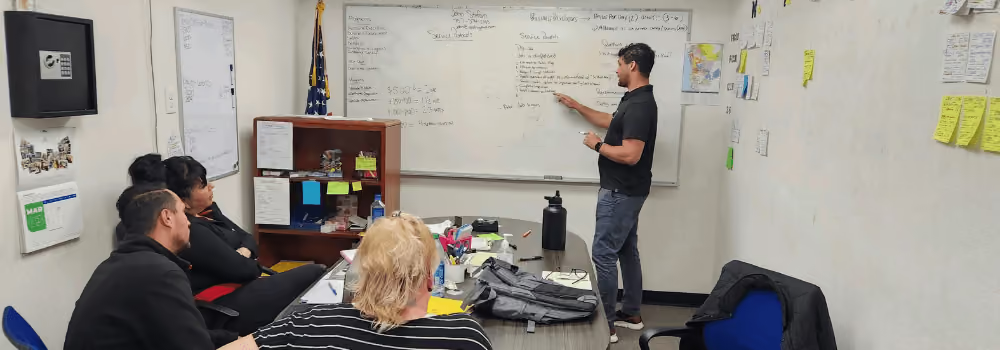




















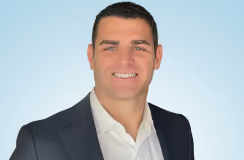





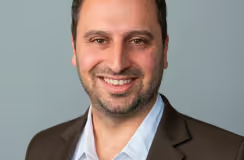















%20-%20thumbnail.avif)



%20-%20thumbnail.avif)

%20-%20thumbnail.avif)
.avif)




%20-%20thumbnail.avif)