Host: The value of peer groups has been a theme on Acquiring Minds. It often refers to a peer group of other owner operators, people who've already bought their business. Or it might refer to a peer group of searchers, people who are experiencing the slog, the excitement and heartbreak of dealmaking. Just such a group was instrumental for today's guest, John Murphy. John had come close on a business, but the seller pulled out at the last minute. I took it hard, John's words. Now I made the mistake of kind of setting my heart towards it. I'd burned the ships, as they say, and envisioned myself running the company when they just pulled out at the 11th hour. It hit me pretty hard. I'd say a good month or two after that I was depressed and I didn't even look at another business. Well, it was joining a peer group that shook John out of his funk. Seeing other people in the group go through similar travails and then persist in prevail gave him a sense of borrowed belief, as he calls got him back on the path. And today John owns a 60 year old commercial painting company, does about $8 million in revenue and employs 50 people. Now, that broken deal was not John's only bump in the road. As you'll hear, he endured lots of setbacks on his road to business ownership, including finding himself half a million dollars in the hole at one point. Enjoy and learn from this conversation with John Murphy, owner of Dave Cole Decorators. Quick announcement everyone. An event you should know about. In May. The M and A Launchpad Conference is bringing together searchers, experienced business buyers, owners and private equity investors for one day to go deep on buying businesses. Walker Deibel, author of Buy Then Build is one of the keynotes and 30 other experts will be on hand sharing their expertise. It's happening May 11th in Houston. The organizers are running a promotion just for us. $200. Off with the code acquiring minds. Go to malaunchpad.com and use the code acquiring minds. All one word or use the link in the show. Not. Welcome to Acquiring Minds, a podcast about buying businesses. My name is Will Smith. Acquiring an existing business is an awesome opportunity for many entrepreneurs and on this podcast I talk to the people who do it. August Felker is a two time successful searcher, first with a traditional search fund. The second time around he did a self funded search. Today August runs Oberle Risk Strategies, an insurance firm with a dedicated practice group for searchers and acquisition entrepreneurs like you. If you've got a business under loi, Oberle will provide complimentary due diligence on that business's insurance and benefits program. A great no risk way to get to know August and team. They love helping searchers. They've worked with hundreds. Oberly is a specialty insurance brokerage for searchers by a former searcher. Check out oberly-risk.com O B E R L E Risk link in the show Notes John Murphy welcome to Inquiring Minds.
[3:41] Guest: Thank you Will. It's an honor to be here.
Host: John. Lots of elements to your story, among them that you graduated from real estate investing, you were a successful real estate investor to buying small businesses. So we're going to want to hear about that evolution plus everything else. Let's get started. John, with some background on you, please.
Guest: Absolutely. First, just want to take the opportunity to say thank you for the podcast and all you do for the community. You know, I myself have listened to it many of your episodes and it's just been an absolute pleasure and helped me on my journey to acquire my business. So I want to say thank you for that.
Host: Well, you're welcome and thank you for saying so, John. Really appreciate it.
Guest: Absolutely. So background on me. I have a little bit of a unique upbringing. So I was born in California but grew up primarily overseas. So my parents did some AIDS and missions work and then came back to finish out high school in the US College rotc, joined the military and did that for six and a half years active and then transitioned out of the military to a corporate career and again, six and a half year corporate career. About midway through that stint I started doing real estate investing and then built up a portfolio and subsequently got divorced and lost a large portion of that portfolio and then transitioned out of my W2 into Do Real estate full time.
Host: So let me, let me pick at a few of the things there, John. How many when you lost how big was your portfolio when you lost A lot of it in the divorce?
Guest: So I built it up to 35 units, all small, multifamily, so think duplex, triplex, fourplex and after the divorce, you know, lost about half of them through some unfortunate circumstances and some investors I had to pay back went down to four units. So 35 to four. Fortunately I had a lot in the pipeline and a good partner and built that back up very quickly in short order. So about three years after that I was up to triple digits with a partner. So we hit 100 units.
[6:12] Host: Oh wow. Given how quickly you bounced back, was going from 35 to 4 painful I assume, or were you so aware that you were going to be able to bounce Back because you had this really full pipeline that you. It wasn't maybe as financially traumatic as that sounds.
Guest: No, it was incredibly painful. Right. It was one of the hardest junctures of my life and I was significantly in the hole due to just all the circumstances that surrounded that and exiting the business. I had a 10 unit apartment complex that I had under this complicated agreement and my investors, I had to pay them back and lost that property in the process as well. So I was in the hole just shy of half a million dollars right after my divorce. So I was went from a very positive net worth to about negative half a million dollar net worth.
Host: Man. Well, sounds like real estate investing for you. No, I say that with naivete. I've never been in the game, but of course it is notorious, especially at the highest levels, those swings, it's known for that. And then you built it back up really quickly. So you went from four units, balance sheet of negative 500,000 and then give us a picture of your, of your quick rise right back up.
Guest: Yeah. So fortunately in the pipeline we had a 24 unit apartment complex. So me and my, my partner and we closed on that, that, that was a, a slow roasting property that took us 17 months from initial contact to when we actually closed the deal. So anyone in the game knows it just takes time sometimes and you have to wait for the seller to be ready. Right. So that took not long after the divorce, I was able to acquire that one and then we stabilized that property over about a year and then did a cash out refinance and found another 50 unit portfolio and parlayed that refinance into acquiring the 50 unit portfolio. And along the way I had acquired a couple other properties as well through some creative finance methods, which is my preferred route.
Host: And because you are now somebody who's bought a small business, I assume your motivations for buying a small business were similar to the ones that you had to do real estate investing. Give us a little bit of the psychology or the personality type that you are that led you to be this person who is kind of entrepreneurial on the side, first with real estate, later with buying small businesses.
[9:06] Guest: Yeah, absolutely. I think I've always been very money minded from a young age trying to figure out, you know, how to make money, but was more, interestingly enough, more fiscally conservative when I was younger. So you think about it, you know, I had a very diverse experience growing up, so that enabled me to deal with risk and deal with uncertainty just based on how I was raised. But I really yearned for that security, that financial security, that kind of sense of belonging that I didn't have when I was younger. So I found that through the military. And when you're in the military, it's interesting because you have a lot of risk, you have a lot of difficult things that you go through. But one of the things that you're not really concerned about as much is your financial stability. Right. I mean, you're getting a government check. If the government can't pay you, we've got bigger problems. Right. So, yeah, so that's. That's kind of one piece of the risk equation that's off the table from that perspective. Right.
Host: And so it sounds like financial uncertainty. It sounds like you're very comfortable in risk, but financial uncertainty bothers you a lot. On the other hand, you are also somebody who makes moves and puts your capital at risk. So it sounds like you really, you really crave financial security, but you're also willing to make big bets to get there. Bets where in fact, you could lose it all and then some as you did.
Guest: Absolutely. And that process from getting me to where I was then to where I am now has. Has taken time. Right. Time and different activities to build that risk tolerance muscle. Right. So, you know, I think I had a bit of an advantage of somebody coming directly from a W2 to go straight into small business acquisitions in that I had seven years of real estate investing in my background. And it's a very similar process to go through real estate acquisitions as it is to small business acquisitions. The complexity's just increased. The numbers are typically larger. So I was building that risk tolerance muscle. Right. I was putting my capital at risk and I was doing things that I was uncomfortable doing, and that allowed me to parlay all those lessons and learnings into acquiring a business.
Host: Interesting that you say that it's so similar, except more complex buying businesses. Because while the math and the structuring of deals and the finding deals, those parallels seem clear post acquisition, everything seems quite different. One is dealing with boxes not to. Not to minimize the difficulty of having a real estate portfolio. And then the other is dealing with people in the. In the infinite moving parts within an organization. So do you think that even. Even post acquisition, that the parallels are strong or are you just kind of talking about just the deal making, finding and making process?
[12:18] Guest: Yeah, I'm speaking more the deal making process. Right. So the, the targeting, the finding, the going through the due diligence, the acquisitions, and then obviously post close, there's. There's additional complexities too. It's just, you know, it's apples and oranges. I think, for me, because I had done real estate for so long, it was much simpler in my mind. So going the small business route, it's a lot more complexity because I hadn't done it yet. Right. So learning the playbook, learning marketing and sales, that I don't have a strong background in the operations side, which I do have a strong background in. And then also the aspect of needing to work on the business and not in the business, not buying yourself a job, and all those, those different characteristics you look for in a business, I think are critical to that whole process.
Host: All right, John, so returning to the story now, you build back up from a negative number to a portfolio of. You said 100 doors, correct. And you referred to a partner. This is a financial partner, business partner, not another life partner.
Guest: Correct? Yes.
Host: Right. Okay. Okay. So. And then you said you. Did you say that you quit your W2. This is all on the side. What, what's your W2 situation through this whole. This whole journey?
Guest: Yeah. So January of 2020, I left my W2. And essentially what happened there is I was at the point where I was financially able to cover my expenses, but just barely. Right. So after that, I had done some more real estate investing, some flips and some wholesales and building up the portfolio. But I was always, as every real estate investor knows, as you're in the acquisition space, you're very asset rich and cash poor. Right?
Host: Yeah.
Guest: So you have very little to live on. And in my mind, I was reinvesting everything into new acquisitions, rehabbing units, you know, doing the flips. And whenever I'd make money from a flip or a wholesale, I'd roll that into another acquisition. Right. So that's, that's how I built up over those, you know, about two and a half, three year span up to from four to 100 units with just one partner. Right. So doing all those. Those moves really helped propel me to that point. Right.
Host: And what was the decision to finally quit your W2,
Guest: getting to that point where I could cover my expenses and buy that time back. Right.
Host: So that had been kind of been a goal, if you could make your real estate investing substantial enough that it was kicking off enough cash to live to cover your living expenses, if barely it was time to go whole hog with this all in.
[15:11] Guest: Absolutely. Yeah. And that. And throughout my corporate career, I realized, you know, about halfway into it, so call it three years in that I just wasn't really built for that. Right. So all my Military experience, all the difficulties with deployments, challenges there and my background. When I was younger, you know, I found myself, funnily enough, I was at the tail end of my corporate career. I had gone from operations management to more of a front end consumer facing pricing department, but I was more of a senior analyst type role. And there I actually had a mental breakdown. First I'd ever had. You know, me, a two time combat veteran, you know, been through a lot of hard, hard things in my life. Here I am sitting at a cubicle and I was so overwhelmed I couldn't even function. You know, it was very, it was very odd to me and that, that kind of led me down, down a cascade of realizing that it was my body telling me that, that this isn't what I'm meant to do, you know, it, it didn't fit into my, my psyche, my personality and my purpose in life.
Host: Wow. And, and what do you think was so wrong? Why was it such a wrong fit? Just because you're more, you're, you're, you need independence and autonomy.
Guest: That's a part of it, I'd say. Independence, autonomy and just knowing myself and my capabilities and wanting to explore those and ensure that I'm not leaving anything on the table. I didn't want to settle, right? And I had been in the military for six and a half years. I had played by the rules, done all those things and now it was up to me, right? So I was just following the typical path, right? So you go, you go to school, go to college, you get a great job and that's that you work for 40 years, right? And that was not the path that I saw for myself, right? So I wanted to take it on my own shoulders and then do what I thought I was capable of doing.
Host: What do the following acquiring minds guests all have in common? Doug Johns Moore, Morley Desai, Tim Erickson, Chirag Shah, Shane Ursam. They all went through the Acquisition Lab, the accelerator in community for people serious about buying a business. But they represent just a sliver of the Lab's success stories. The number of deals across the lab's cohorts now stands at over 120, with over $300 million in aggregate transaction value. The Acquisition Lab was founded by Walker Deibel, author of Buy Then Build, the book that introduced so many of you to the very idea of buying a business. The lab offers a month long, intensive, almost daily Q and A sessions with advisors, live deal reviews with Walker Deal team introductions and an active community of serious searchers. Check out acquisitionlab.com link in the notes or email the lab's co founder, Chelsea Wood. Chelsea buy then build dot com. Well, the people who are in W2s listening to this, John, are feeling the pressure increase having having seen what your, what you did, where'd you live when you were a kid? Overseas. What countries?
[18:55] Guest: So it was quite a few actually. It was a lot of countries in the Middle East. Egypt and Jordan were a couple of them.
Host: And your parents were Christian missionaries.
Guest: Correct. And they did aid work as well. Yeah.
Host: And aid work. Christian missionaries and aid work in the Muslim world. That sounds like a subject for another podcast.
Guest: Yes, absolutely.
Host: Put a pin in that. We're just about to get to your search here. I know people are wanting to, wanting me to get there, but gurus, for lack of a better word, the or coaches, let's be not so judgy. That word just has such a negative valence. Coaches is something that I know from our pre call. You made a lot of use of over your real estate and now business buying career. Say a little bit about maybe who and, and why you are so drawn to them and presumably have seen success with them.
Guest: Yeah. So I think that'll start getting into the search process a bit. So early on when I first found out about small business acquisitions came on my radar, I saw scrolling on Facebook, I saw Carl Allen's name pop up. He had this buy a business in 10 days course. I think he still advertises for that now. And it was, you know, 100, 200 bucks. So I found it interesting, thought I'd, I'd take the course, bought it, you know, went through the full 10 days and I said, wow, this is pretty incredible. And just some of the statistics that really stuck out to me a lot of the, you know, the stats around only 1 in 12 small businesses will close within a year and just the number of baby boomers and all the stats around that, retiring to silver tsunami, $10 trillion wealth transfer, all that good stuff. Right. So that piqued my interest and then I knew enough to be dangerous. Right. So it was a very kind of basic general course that said, hey, you know, these are kind of the general things you need to look at. And so that's right after I did those 10 days, I started to search, right. Got on biz by sell and look for businesses that were local to me. So that was my initial experience with a small business acquisitions coach, although I will say prior to that I had coach in real estate investing and had been to quite a few conferences and a couple masterminds as well.
[21:30] Host: So obviously the fact that you spend your time and resources on the, on coaching means that you believe in it. And, and I, and I guess I'm trying to draw you out because there's, there can be skepticism around the whole category. Maybe address that skepticism.
Guest: Yeah, I think I need to get a little bit further into my story to get to my current coach and how I found him and that'll, that'll probably help clear that up. Okay, so I don't know if you want to do that now or, or keep going through the acquisition timeline.
Host: No, yeah, let's, let's circle back to it when we hit your current coach. Great. John. So you, you, you take Carl Allen's 10 day course. Gretchen Roberts, who bought an accounting firm, recent guest that was also her entree into buying a small business. Also from, graduated from real estate or at least a, maybe not as serious as you, but a dalliance in real estate investing or an interest maybe even.
Guest: So
Host: you like what you see. You turn to biz by sell and you basically start your search. Pick us up from there.
Guest: Yeah, so that was around September of 22 that I took that course and then, you know, turned right around, got on biz myself, started looking and found a fencing company that fit the bill for what I was looking for. It was 30 minutes from where I lived as well. And shortly after that got in touch with the broker. All of it, of course, brand new process to me. I had done a 10 day crash course, so I didn't know what I didn't know. Right. And so I just, I said, well, you know, I'm a guy that I take the information and so this is part of my lessons learned from all of my real estate investing. Right. It's, you got to get over that fear hurdle and the learnings come in, the taking of the action, right? That's, that's when you really learn. Like I did the year and a half analysis paralysis when I was first getting into real estate. And so that was a big lesson I took from real estate into this. I said, look, I know enough to get moving and I'm just going to get moving and I'm going to get this rep in, right? And I'm going to try to try to get it done. And I thought with all of my, you know, real estate experience, I could, I could get it to the finish line and which was not the case for this first deal, unfortunately. But we can talk a little bit about why that was too.
Host: So yeah, let's do that. But first John, so where are you based?
Guest: In Northern Indiana.
Host: And this whole story also Northern Indiana, correct?
[24:02] Guest: Yes.
Host: Okay, Northern Indiana. And you said the fencing company checked your boxes. What were your boxes?
Guest: What were you looking for at the time? I was looking for really anything over 3 to 400,000 in SDE. And I didn't have a very defined buy box, which is, you know, one of the benefits of my future masterminding coach that I'll talk about. But this, this business was about 2.3 million purchase price and had about 700,000 in SDE.
Host: All right, well, tell us the story of almost getting it and then losing it.
Guest: Absolutely. So, uh, it was less than a month after I'd finished that 10 day course to when I found this fence company and headed under loi. Right. So then I began my due diligence process which I just piecemealed together myself doing some additional research and some of the resources in the, the 10 day course. And I, the biggest mistake I think I made during this process was trying to apply a lot of creative financing strategies without really understanding the seller's intent. And the sellers had been through three buyers previous to me and that should have been an indicator right there that they weren't really sure what they wanted at the onset. And come to find out five months later, due diligence, about $40,000 in due diligence cost. We were about a week away from the closing table and they pulled out of the deal. Right. So they decided they didn't want to sell to me. And the reasoning was because of how I structured it, and they wanted every piece of their seller note to be collateralized, every dollar to be collateralized, which as you know, it's typically not. Right. So. And they didn't like the subordination clause to the lender, the commercial lender. So this was a non sba, it was a leverage buyout. So we were doing again, this was, you know, year and a half ago, so a little fuzzy on the numbers, but we were somewhere around the ballpark of 70% bank financed and then additional 30% seller note with a small down payment on my end and that 30%, call it 25% seller note. They wanted 100% collateralized and not subordinate to the bank loan, which of course the bank was not willing to do. So all of that kind of came to a head and they got too scared and backed out of the deal.
Host: And John, when you say you were trying to quote, creatively finance this, I guess leaning on your, your technique in the real estate world, what, what this doesn't sound, quote, creative. This sounds pretty standard, except for the fact that you. You didn't go the SBA route. You went conventional. And I guess that there was a. That they had a bigger seller note then, like, if you'd gone SBA, the seller note would have been closer to 10 or 15% rather than what, 25%?
[27:22] Guest: Right.
Host: Yeah. So was that. Was that what. What made it kind of creative? And. And then second follow up, why didn't you go the SBA route?
Guest: Yeah, again, so this was my. My first iteration. So it. For me, I think coming from my perspective, it. It felt creative because it was my first time going through this process. I didn't know anybody else that had bought a business, and quite frankly, I didn't. I didn't know much about the SBA loan, and had I had it to do over again, I could have probably closed the deal with an SBA loan. Right. And I will say, you know, slight caveat. I've kept in touch with the seller, and my real estate business partner is now under contract and likely going to close that same business in March by the end of this month. So just an interesting plot twist there. So that, of course, has taken place over the last 12 months.
Host: And is this something you feel good about?
Guest: Yeah, absolutely.
Host: Okay. All right.
Guest: So I think. Yeah. So back to the financing portion. To me, it felt creative because I had a lot of moving pieces, and I was trying to leverage all the assets in the business and, and work with my commercial lender, who I've done commercial real estate deals with before, and then try and educate the sellers on the benefits of that. The benefits of the seller note and all. All those. Those moving pieces.
Host: Right, okay. And so what I was going to say, too, is I wonder. I was going to ask why a lender wouldn't say, well, why aren't you? Why? Why? Even if you weren't super aware of the SBA loan option, the 7A option, you would think that a lend, your lenders that you're talking to would have surfaced this option to you. But it sounds like you just went back to the lender that you'd used for your real estate transactions, and you weren't shopping around talking to a bunch of lenders, and you kind of came to them with a plan in mind, and they were just kind of following your lead. So they didn't volunteer the option of the sba.
Guest: Yep. That's exactly what it was. Yep.
Host: Yeah. Now, losing that deal, as we all know in this world, losing deals is part of It. How did, how did you react to getting pretty far, far along? I mean, you had this thing in your, in, in the palm of your hand and then it was snatched out by the seller. That must have been frustrating. Although, as I say, it's, it's not uncommon. How'd you react?
Guest: Not particularly well, I took it hard. Yeah. I mean, when you invest, as other researchers know, you invest that much time and energy and capital and, you know, I made the mistake of also kind of setting my heart towards it. Right. I'd, you know, burn the ships, as they say, and envision myself running the company. And, and I was there mentally. So when they just pulled out kind of at the 11th hour, it hit me pretty hard, you know.
[30:31] Host: Yeah.
Guest: And I'd say a good month or two after that, I was, I was pretty depressed and didn't even look at
Host: another business and sort of, at least for that moment, while you're licking your wounds, concluding that maybe you won't even do this path anymore of buying a business.
Guest: Yeah. I wasn't sure if I wanted to continue pursuing it. I knew, you know, from a money math perspective, I knew it made the money most sense for my goals. Right. But yeah, again, I just going through that process, I. I didn't feel like I had the, the personal capacity to continue the search. Right.
Host: Yeah. And. Right. Let's not forget 40 grand you said you were in for. Yeah.
Guest: Right.
Host: Painful. Okay. But here you sit, owner of a small business. So this then what?
Guest: So as part of trying to acquire that fence company, I'd sold off about 20 units of my 100 unit portfolio. So I had a little bit of capital and a good portion of that went towards that 40 grand due diligence cost. Wasn't feeling good about that deal afterwards. And then I found another small business acquisitions group and again, from Facebook, just popped up with one of his videos and I liked how he was explaining things. His name's Kyle Mallion and he just had a genuine sense about him. And he had an event coming up in Scottsdale, this was last March, the event was. And I just connected with him and I took the risk. When I didn't feel ready yet. I still felt like I was licking my wounds quite a bit. But just something connected me with him and I knew he, I felt like he was a genuine guy. So I wanted to go investigate and check it out and see if he was what he seemed to be. Right. So went to that event was incredible value that he provided. He walked A to Z through the process. You know, he's created this great community of other, you know, searchers. Which funny side note, I didn't even know that term until last summer when I started listening to your podcast, so.
Host: Well actually, John, and let me stop you there because I'll say often that there are these ecosystems in the world of buying businesses that, that don't overlap a lot. They, they feel somewhat segregated, if you will. And one would be the kind of the MBA crowd. So I have a lot of people on who, who come from a business school and they learn about ETA there and that's one circuit and then the sm call it the SMB Twitter crowd that know each other go to a conference or two and there's a little bit of intersection between those two circles, but not a lot, not as much as you think. And then, you know, there's a whole world of E commerce and, and website and, and kind of micro SaaS, business acquisitions, micro acquire online businesses. That's a whole other universe of people who don't, aren't interested in buying brick and mortar, offline, sweaty, gritty businesses at all. And I, you know, rarely cross paths with. And then probably every excuse, the phrase guru probably has their own little orbit of people. And you know, it's just, it's, it's, it's. Anyway, that's just kind of interesting to me. And it sounds like if you didn't learn the word searcher until you started listening to this podcast, that that word isn't even used. Those people at the at was it Kyle Mallions and Kyle Mallion's orbit don't even know the phrase or self identify as quote searchers. It's interesting.
[34:28] Guest: Yeah, yeah.
Host: So they're just, they just kind of find it from an ad on Facebook and then that becomes their universe of fellow business buyers.
Guest: Correct. Yeah, we call them acquisition entrepreneurs, you know.
Host: Sure.
Guest: Yeah. Yeah, exactly. Yeah. And I think you're absolutely right there. And it's, it's been interesting too just since last summer when I learned that and you know, learn about the whole traditional search process that I just didn't even know that was a thing. So it's been very, very intriguing to go through that process and then do it in a different way, you know, as a self funded searcher, I guess you could say so. Yeah. But yeah, so back to the event, you know, went to the event in Scottsdale. Fantastic. And what I really like about Kyle Mallion's group and now it's evolved into what he calls the elite wealth club and it's more of like a country Club kind of membership. So it's ongoing support. He has a whole deal team that he's put together from kind of A to Z. He's got your attorney, due diligence expert, you know, cpa, anybody. You need tax from that perspective to get due diligence done. And these are all very experienced folks in their field, right? So he's kind of put this whole deal team together and he is very just, just genuine and caring, giving person. And he's personally helped me along this journey too as well. So kind of talking about your ecosystems, I think that there are, like you said, there are different ones, but I think it's critical. It's not necessary, but I think it's important to get yourself involved into one of these groups, right? Find one that you identify with and plug in and start talking the language, Right. I think that's an important part of this journey because it's incredibly challenging, right? Everyone that's gone through and bought a business, unless they're just way better than I am at it and find it easy, it's challenging. You're incredibly stressed, you lose sleep. It stretches you in every way imaginable to be an entrepreneur, even acquiring an already established business, right? So I think just wanted to punctuate that point that it's important to get involved in a group. So you have that sense of borrowed belief. You're seeing other people around you that are either similar to you or even don't have as much experience as you that are acquiring businesses that are very successful, right? So you get to see that process. Somebody when you're in that group, especially if you're in the group long enough, you get to see people go through and acquire and do all that. And I think that's where a big part of the value is in these groups, is when you're going down the journey and you start losing faith and you start taking the lumps. You say, well, is this really worth it or not? And then you can pick up the phone or jump on a zoom call and people are saying, nope, that's part of the process. This is what you need to do next. Or just focus here. There's a ton of value in that. And it just kind of lifts your spirits and says, okay, this is normal. Everybody's experiencing this in one way or another or for their own business. And I just need to take that next step and keep moving. Moving, right?
[38:00] Host: Well, it sounds like it was precisely that emotional support or exposure to success that got you out of your funk. It was this Scottsdale experience. That kind of woke you up to try again?
Guest: Absolutely. Yeah.
Host: Yeah. Well, everything you just explained there, John, is kind of the spirit of acquiring minds. You know, showing that this path is, is real. And you use the phrase borrowed belief. I really, I like that, the sound of that. It's more elegant than how I say it, which is showing people that this isn't weird. It's not weird to go, maybe I'll start using borrowed belief. All right, great. So you're in Kyle's group. You are seeing other people be successful. You've dusted yourself off ant.
Guest: Yeah. So part of what I got in that group was his particular buy box, right. And the buy box that he likes to target is a business that's 1 to 5 million 10 years old, 10 plus employees, and then profit margins of 20% or greater. Right. So that gave me the focus to go out and search again, and I even took it to kind of the next level to stretch myself a little bit. So right after that event, I jumped back on Biz Buy Sell, and I targeted businesses with an SDE, or cash flow of a million plus. Right. And I was looking, I expanded my geographic reach a little bit to neighboring states. So again, I'm in northern Indiana. Very shortly after that, I think it was a week or so of searching on Biz by sell, I found the commercial painting company that I now own, and that's in Grand Rapids, Michigan. So two and a half hours from where I, I live in Indiana. So from, from there, reached out to the broker and then that, that got the ball rolling. And shortly after that, went and did a site visit and then began the due diligence process. And then from A to Z, it took eight and a half months to close that deal. Right.
[40:12] Host: All right, well, let, let, let's spend some time here, John. But before we do, say again, please, with what Kyle's recommended buy box is, please, what were those criteria?
Guest: So it's 1 million to 5 million in revenue, purchase price, 10 plus years old, 10 or more employees, and then 20% or greater net profit margin.
Host: A glaring absence there of recurring revenue, which is, we talk about a lot on this podcast. And plenty of people will say, including me, will say, let's not overemphasize that, and that's too strict a criterion. But, but it's usually, you know, if, if, if we're all, if we're all being picky, it's usually top of the list. What does Kyle say about recurring revenue to, to, to picky?
Guest: I mean, I don't want to speak for him. But the gist I kind of get is, is it's more of a nice to have.
Host: Yeah.
Guest: You know, it's not, it's not a necessity and there's, there's plenty of examples of why that's true, you know.
Host: Yeah, sure, sure. And, and also relevant to the business that you bought is a project based ver in kind of construction versus versus maintenance or some sort of naturally recurring or reoccurring relationship with your customers. Did he or do you, did you going into this process have any thoughts on that particular spectrum?
Guest: No, quite frankly, I, I was just looking at the business more holistically. Right. So I mean the business I bought is 60 years old. You know, a company that doesn't stay in business that long unless there's something there. Right. So yeah, I just for me, and from an exit strategy standpoint, I want to hold on to the business. You know, I'm not planning a, I'm not doing a traditional search where I need a three to five year window where I'm, you know, doubling revenues and net profits and then making an exit. Right. So my plan is to hold on to the business for now and grow it slowly, organically over time. Right, yeah.
[42:25] Host: So yeah, yeah. I mean it's probably time for me to just stop asking about recurring revenue. It's like I'll ask about it and then I'll say, but as we know, it shouldn't be overemphasized. And yet by always asking about it, I'm doing the emphasizing. So I think, I think I'm just going to stop asking about it. Much, much more interesting. I think I don't want to overstate this, but kind of my reflex is to say more interesting potentially is age of business. You know, that, that is such a strong indication of, of kind of the health of a business and fundamental strength of a business.
Guest: Absolutely.
Host: All right, so, so, so please, please carry on. Tell it, tell us about what you found.
Guest: Yeah, so the business that I ended up acquiring is again a 60 year old commercial painting company. We do about 80% commercial contracts, 20% industrial. And the company did 8 million in revenue last year and has approximately, give or take 50 employees. Right. Seasonal work. We flex a little bit that. So that's 50 W2 employees, full benefits. And yeah, so that's, those are essentially the numbers. And it was right at that million dollar SDE range at purchase.
Host: So a million dollars of SDE on eight or so million of revenue is. That doesn't get us to the 20% margins. So what did you. How did you get comfortable?
Guest: Yeah, so through the due diligence process, I, I saw some, you know, fat that could be trimmed. Right. This is a second generation owned business and the previous owner had owned it for 38 years. Right. His father started it in 1963. So it was a lifestyle business, we'll put it that way. So there was definitely some fat to be trimmed and I saw that coming into it. On top of that, there were a couple interesting factors. So the model for commercial painting or painting companies in general, a lot of painting contractors will be more of a contract seller. So they will hire subs to carry out most of the fulfillment for the contracts. Right. So we have a bit of a unique competitive advantage that we have such a large W2 base of painters. So we're a bit more flexible. We don't have language barriers sometimes that you have with subs. So those are all positives. But it's more expensive. Right. And that reflects in the financials. So that's an opportunity to transition to more of a hybrid model where we're bringing more subcontractors in and helping ease those margins a little bit there. So that was one piece. The second piece is we have an in house blasting and coating shop and that. So you were talking about recurring revenue. Well, you do have contracts. That's not technically recurring revenue. It's with a customer that is they, they frequently need products coated and blasted and, and that's a ongoing, you know, one off contract. So it looks very similar to recurring revenue. And that, that's a segment that I'm interested in growing in the company and actually just tried to lease a new 24,000 square foot facility. But unfortunately somebody came in and put a better offer in. So I'm still looking for ways that I can expand that segment of the business because I think a couple reasons. One is if I do plan an exit in 10 years or whenever, then that's going to be something attractive to a potential buyer. And the other piece is the seasonal work for the business is from about mid November to March. We're in West Michigan, we shut down our exterior painting. So if we have that recurring interior revenue and jobs, we can keep folks busy during the wintertime. We won't have to lay off as many due to seasonality and that will, will keep the cash flowing in the winter times, which is a pinch that I'm feeling right now.
[47:08] Host: And just so I understand the seasonality piece in the, in the laying people off and rehiring versus subs. So the way it is now is that they're fully W2, but laid off in the winter and then rehired. And you want to change it to subs. And why is that? Why? It sounds like you are. The business already is flexing with the laying off and rehiring, right?
Guest: Yeah. It's a hybrid. Right. Of the two. So the previous owner ran the company like that. He would do the layoffs during the winter. I'm not really interested in doing that. I think it's a good mechanism in order to get through your low performers. So if you have folks that haven't been performing throughout the year, then you can weed through them and then review, refill the pipeline in the springtime. Right. And so that's a good mechanism. I would prefer to keep everyone employed, though, throughout the entire year and then flex up with subs during our busy seasons. Right. That just gives you a consistent flow, and that way you're not holding on to more employees than you need during the winter time, which is killing your margins.
[48:19] Host: Gotcha. And but just to be clear, he wasn't doing that either because he was laying people off. So he was still protecting his margins in the winter.
Guest: Correct? Correct.
Host: But you don't let. You don't like that method. It's disruptive and you'd rather. You'd rather flex. He was flexing into weakness into low season by letting people go. You'd rather flex into high season by adding on temp.
Guest: Correct.
Host: Or, excuse me, sub work.
Guest: Yeah. And typically you'll get better margins with. With subs. Anyway, so the. The challenge is more just the. The quality control and representing your company well. Right. When they're on the job site. So.
Host: And John, give us more detail about what the company actually does. So you said commercial painting, industrial painting, commercial, 80% industrial, 20%, the coating and so on. So. So give us more, please.
Guest: Yeah, I mean, from the commercial side, we do a lot of contracts for interior, exterior, you know, retail repaints, essentially. So think of. I don't know if you're familiar with Meijer. It's a big retail chain like Target or Walmart have, you know, large commercial sites, and they'll update their color scheme, corporate color scheme, and then we'll have to go through. And generally what happens is you'll get a local general contractor, there'll be multimillion dollar contracts, and they'll do a full remodel, and then they'll contact us as a sub to do the painting portion. So we'll go in, we will do a full exterior repaint. We'll do interior repaint, we'll paint the deck and then all the walls and all the ancillary pieces as well. So that's kind of been the bread and butter for the last 10 years for the company. That's been some big contracts for us. It's great. And we've got several of them lined up this year, which is fantastic. And then we also do, but we do a full spectrum of things. So industrial think, you know, wastewater treatment plants, think any type of piping at industrial sites and we'll do, you know, big tanks. We haven't done water towers in a long time. That's another story from the previous owner and his brother who kind of took that segment of the business with him when they split many years back. But yeah, so that's generally what we do. We are capable, of course, of doing floor coating, epoxy, floor coatings, as well as any smaller projects that require any type of coating. But we want to focus more on the commercial painting side and specialize in that. Right.
[51:01] Host: And by the way, when you were getting close to closing on this business, did you, were you having flat traumatic flashbacks to your previous deal with the fencing business that, that fell apart at the last minute?
Guest: Yeah. So I guess we didn't talk much about the, the due diligence process, which was lengthy, like I mentioned, took eight and a half months from, from initial contact with the broker to when I closed the SBA loan. So an interesting note there. Originally my SBA loan was structured with the real estate attached and they had some great introductory terms, you know, so they, they quoted me 8 1/2% for 25 year amortization. Right. Which was fantastic. Basically like mortgaging the business. Right. Unfortunately, after the phase one came back, phase one environmental inspection, there was a couple areas that were barely over the minimum contamination levels. And so we had to go back through and do a phase two assessment, which was an unpredicted due diligence cost to the tune of about when it was all said and done, $35,000. So that was a pretty big hit for me coming into it. Phase two came back, still had all those issues. Turned out it was going to be another five months or so to get through the remediation planning process with the state. And the seller was not really interested in that, in waiting another five months. And at this point we had been, this was probably around, I would say, September or so. So we had been going for six months roughly at that time. And he wanted to close, so he put a mark on the wall for end of September and said we're going to close September 30th regardless of how we structured things. And so we ended up signing a three page management agreement where on October 1st I take over the company without having closed the loan yet. So he essentially handed me the keys to the company and with the understanding that the SBA loan was still in process and going to close. We didn't know the timing exactly, but sometime in October or November. Right. And it ended up being the end of November. So it was a very interesting interim period and it was a very uncomfortable period because I felt all of the responsibility to guide the company and make decisions, do all these things. But I felt like I didn't have any authority and we were both kind of in the office together because I hadn't given him a dollar yet, essentially. Right.
[54:07] Host: Yeah. Unusual. So you were in there for about two months. October, November, as titled with kind of GM or future owner.
Guest: Yep.
Host: But you're stepping on each other's toes because he's still there and you haven't paid a dollar yet for it. And, and so I guess, I mean, I guess the risk at this point is all his though. If it blows up, you know, you just walk away. So. So from that perspective, not, not the worst thing in the world for you, but strange. And yeah, I can imagine those were an uncomfortable couple of months. And how is this being presented to the employees?
Guest: So the interesting thing about this transaction is my first on site meeting with him shortly after talking to the broker, I met the entire team. So a bit unusual for frame of reference. My defense company almost bought five months of due diligence. I didn't meet one employee. Right. They were very, very hands off. They didn't want anybody to know. They were afraid. People get scared and leave or whatever. Just a lot of fear from that perspective. And for this company though, he said, come on in, meet everybody, meet the team. And I think that really speaks to just the level of motivation that the seller has. So if, if he's ready to open up his books, open up the doors and, and get you in there and ready to, you know, do everything you need to do, that's a good indicator that, that he's serious and he's ready to sell, you know, you're going to have less pushback throughout the process.
Host: So yeah, yeah. I mean, this seller. Yeah. Invited you into the, into his living room to live. Live for two months and it didn't even have a deal. You know, there hadn't even a deal.
Guest: I'LL give you one better, too. So I negotiated half a million in working capital as part of the deal. And on October 1st, when we signed that three page agreement, he transferred that working capital into my account and let me start running the company. Right. All expenses, all, everything started routing through my new set of books. So not only had I not given him a dollar, but he transferred the working capital to me with just the three page agreement.
Host: Wow.
Guest: That's. That's a level of trust that he had with me. Right.
Host: Well, I was going to say. So is this, is this trust or is this just white hot eagerness to move on and get out of the business?
Guest: Or a little bit of both? Maybe both. Yeah.
Host: Can you tell us more about. Yeah, so I guess the deal terms and how you structured everything?
Guest: Yeah, absolutely. So ended up landing on a three and a half million dollar purchase price. And again, the, the working capital came with that, the real estate came with that. So about another half million for the real estate. Again, that had to be pulled out of the SBA loan because of all the environmental issues. Right. So I ended up negotiating with him to 100% seller finance that to me. Right. Which we didn't end up closing on that until the end of December as well. So there was a lag on getting that done. From an SBA loan perspective, we did a 80% leverage. So 80% LTV with 10% seller note, and then 10% equity injection, but that equity injection was split in two. So 5% secondary seller note, and then 5% direct from me, my equity injection portion of that. So that 5% is on full standby to the SBA loan and that 10% is. I'm able to pay him interest only on it starting as soon as I started paying the SBA loan.
[58:07] Host: Great. And so just for the audience who might not be familiar with this structure, 80% SBA loan, 10% seller note, as you said, interest only bullet payment at the end of five years. Is that what you said?
Guest: Yep.
Host: And the, then that leaves 10% left over the equity injection which the SBA wants to see, and 5%. So half of that 10% is 5%. You brought that your cash out of pocket.
Guest: Correct.
Host: And then the other 5% is a full standby note, which for, for all intents and purposes, from the SBA's perspective, they'll treat as equity injection, even though it's actually more seller note.
Guest: Correct. Yeah.
Host: And I got, for a while I would get tripped up on this phrase because people would say the 5%, this 5% full standby it's like equity. And I'd be like, you know, it's basically like equity. And I, I thought I. People might mean that literally. It's not equity. It just means from the SBA's requirements perspective of equity injection, they'll allow you to treat that as equity injection. But it's just more. But it's just more seller note fundamentally.
Guest: Yep, exactly. Okay.
Host: And I just want to make sure we understand the real estate. So because of the, the environmental, the environmental considerations and additional costs, it couldn't be acquired with an SBA loan. It was, could still be acquired.
Guest: So it could have been rolled into the SBA loan. But in order to do that, we would have had to gone through about a five month process where we would have this remediation plan developed, sent to the State of Michigan, approved by the State of Michigan, remediation plan executed and then verified by the State of Michigan. And then that process would have to go to the SBA for their record and approval and then they could lend on it. Right. So the seller wasn't willing to do that, so we came up with the arrangement of he would just sell or finance it to me.
[1:00:18] Host: Thank you. Okay. And so, so, so the SBA requires stipulations, a piece of real estate that's going to transact, but if the SBA is out of the picture, this piece of real estate can transact regardless. And you don't need to do all that stuff.
Guest: Yeah, different lenders are going to have different, you know, requirements around it. We still had to come up with a remediation plan, but as long as we had that, they call it the baseline environmental assessment. As long as you have that, it essentially takes the liability off of me. Then I can go to a commercial lender and they'll lend on the property. Right. So eventually I'm going to finance him out in the short term.
Host: Okay. And, and just a phrase that I heard you say, John. Mortgage the business effectively, like mortgaging the business, which you did not end up doing. But just spell that out super clearly for us what you meant by that, even if it didn't come to pass.
Guest: Sure. Well, that was more of just a comment about the, the rate and terms of the SBA loan. So, you know, eight and a half percent at 25 year amortization. I mean, your ballpark, if you're looking at a, you know, commercial mortgage, around 7.58% depending on the lender. And most commercial notes are 20 year notes. So if you, you take the 8 and a half and 25 years, it's going to be very close to the 8% and 20 year. Right. So that's, that's essentially the same as mortgage.
Host: Just to also point out here, John, going back to your ambivalent relationship to risk and uncertainty, you are very levered here. I mean, you basically brought 5% to this and the real estate. So. Care to elaborate or is that all there is to say?
Guest: You're right, I am. Which of course, you know, read between the lines. There comes with a level of risk. Right. And so to kind of speak to that risk a little bit and the seasonality of the business, I'm getting a firsthand lesson in cash flow management, which I didn't have a lot of previous experience. So over the October to February period, our revenue is about half of what it is during our busy season. So when you throw that much debt on a business, you're essentially cutting the SD in half on top of reducing the revenue by 50%. Right. So you can imagine you're in a. You're in a bit of a tight spot for cash flow. So I've been managing through that on a very close basis and I have some levers I can pull if I need to inject some additional capital into the company to keep it floating till we get to some of our larger contracts that I was talking about in the summer season, one of which we're going to start in about a month.
[1:03:10] Host: So this is now, you of course knew that this was a very seasonal business, as we already heard. We talked about the analysis there. So the tightness that you're experiencing now as we, as we emerge from winter, is that unexpected? Is it. Was it a slower winter than previous winters or, you know, this is about kind of what you expected. It's just now you're actually in it and feeling it and it's. It's different to be living it.
Guest: I think it's a combination. Right. So it was calculated, I would say anticipated. I think living in it is a different thing. I get the feelings now that I didn't have when it was on paper and I was looking at it. And the other piece is there were some additional unforeseen costs throughout the due diligence and closing transition period. Right. So, for example, if you recall those two months in October, November, when I hadn't closed on the loan yet, well, we were anticipating closing on the loan, so I had kicked the insurance on for the company and of course everything was still in the prior owner's name, so he left his insurance on And I committed to pay for all expenses during those two month periods. So essentially I was paying double insurance for those two periods. Right, yeah, that on top of the, the environmental due diligence costs, we unfortunately had an overspray incident at one of our sites during that period. And that, that was another, you know, 30 grand. So all these little, you know, I say little, but you know, 20, 30, 40 grand here and there adds up quickly. And that kind of put me in a disadvantaged point going into the slower season. Right. So just a combination of things. Yep.
Host: Yeah. Well, it sounds like I was going to say, so this is, this is seasonality, not really J curve, but it definitely is also, I guess, I guess it's not technically J curve stuff because usually we, I think the strict definition of the J curve is the new investments that you're making into the business to set it up for growth. So new expenses, marketing, what have you layering in tech stuff that the previous owner wasn't spending on you, new owner now spend on to as an investment for growth. But in the meantime, margins and in and cash flow dips. This sounds like it's not even new expenses that you're spending to grow. It's just kind of deal deal related costs or transition. I should say related transition.
Guest: Yeah.
Host: And then just incidents in the business. Just the vagaries of stuff that happens in the business.
Guest: Yeah, exactly.
Host: Yeah. Yeah. Okay. Well, how are you, how are you feeling? These big contracts, are they feeling like so long as they come in as expected, everything will be fine. If we were having this conversation 60 days hence, you'd be fine.
[1:06:15] Guest: I think it's going to take longer than 60 days.
Host: Okay.
Guest: Because you know, all these contracts they're going to take, generally like for our Meier contracts, we take about six to eight weeks to complete the project. But then you're getting paid by the general contractor, so you're on terms with the general contractor and they can range from 30 to 60 days. So you extrapolate that out over time. We're fronting the costs for six to eight weeks and then not getting paid until about two months after that. Right. So that's about another four month window. But before I'm starting to see the income from these larger projects hit my books. Right. So that I, I would say talk again this fall, I might be feeling a little bit more comfortable.
Host: So for, even for a big project, you have to front all of the costs. They don't pay you a deposit or pay you on a rolling basis for, you know, percentage work completed stuff like
Guest: that we do, we do bill partials. So it's not, not the full project, but it just depends on what this, the stages are for that particular project. Right. But that's in general to get full 100% payment. That's how long it would take.
Host: We're starting to wrap up here, John, but still some kind of big themes I want to hit. Well, tell us about working two and a half hours away from your home. How is that? That's a long way away. It's not crazy, it's doable, but it feels to me like one of those distances where an optimistic searcher is like, I can do that, I can do that. And then they do it the first time and they're like, I can't do this, I can't do this.
Guest: Yeah, yeah, it's, it's definitely interesting. So essentially I, I live a double life right now, So I have 50% custody of my two kids and I live a week in Indiana, do some real estate things, do the dad thing, and then the other week I'm here in Michigan running the business. Of course there's overlap with both. Right. But I did end up closing on a house about 20 minutes from my business here in Michigan. And that's where I live for the weeks I'm up here and then of course live back in Indiana there. So it's not as bad as a two and a half hour one way commute, you know, every other day or something like that. But it is, it is a, you know, very, very separate experience for both weeks.
Host: Yeah. I'm reminded, John, of something you told me in the pre call about. Basically you bought two pieces of real estate up there in Michigan. The real estate that came with a business, the one that we've already talked about, and then this house you see. Know where I'm going with this? Tell us please.
[1:09:00] Guest: Yeah, so I bought the real estate, which the appraisal was a bit undervalued, so I'm getting a little bit more than what the appraisal came in in value with the real estate. So as I mentioned previously, I pulled it out of the SBA loan and the seller agreed to 100% finance it for me. So essentially I just had to pay some of the closing costs for that, which was around $500. And then on top of that, I purchased the house with a VA loan. And so yeah, went through SBA loan and VA loan consecutively, two of the most stringent loan processes. Although I will say the VA loan felt like a piece of cake after Going through the SBA loan process, which that should give you perspective if you have any experience with a VA loan. But anyway, all things said and done, I ended up just paying closing costs essentially for both with how I negotiated it. So I added a million dollars worth of value of real estate for $1,000 in closing costs.
Host: Pretty great.
Guest: Yep.
Host: Yeah, that's phenomenal. Anything to tell us about the painting business? You know, I just always like to when I where I can use the guest as an opportunity to educate the audience on the nature of this business, this industry. The maybe. What can you tell us about the painting business? Maybe I'll start with my prejudices. I assume low skilled. Although if you're doing, you know, this isn't house painting, this is commercial industrial. So there's going to be more, presumably more skill required there. Obviously blue collar, but still I would think that even more skilled than house painting, still pretty low skilled. I'll stop there. What more can you tell us, John?
Guest: Yeah, sure. So I think we are towards the end of the skilled ladder for blue collar type trades work. But I will say it does take some specialties to do some of the things that my folks can do. A lot of experience, a lot of collaboration with both the paint company suppliers that do a lot of the assessments on site to determine the ability for product to adhere to different surfaces. And a lot of those types of conversations just take time and experience. So you need to find the right coding for the right application and that's a skill that comes, you know, overtime. And I'm, I'm five months in the seat here, so I have a fantastic team that, that manages most of the operations in the day to day and I'm constantly learning from them from that regard too. Right. So I think it's from, from an overall standpoint from the painting industry, I really, really enjoy it. I was in Orlando last week at a, an expo for one of the, the biggest industry associations and it was an incredible event because you got business owners coming from all over sharing best practices, sharing how they do, how they run their businesses. And I think those things are incredibly valuable too. If I give, you know, another piece of a nugget of information for whoever recently acquired a business is get plugged into your industry associations and borrow their success. Right. Just talk to them and learn how they do things. But that's a bit of a side note there. So from a labor perspective it can be a challenge to find qualified folks, find experienced folks. There's lots of laborers, there aren't exactly a lot of painters available that have experience. So there's a train up process. And then on top of that, my labor forces majority is older because they've been with the company for a long time. One of the strengths of the companies but also potential challenge point going forward I'd say in the next three to five years is transferring. That's one of my top to do items is transfer that knowledge to the next generation of painters and admin and everything here in the company.
[1:13:29] Host: Well, we, we all, as we all know about the silver tsunami and the, the baby boomers as owners transitioning, forgetting that in many of these baby boomer businesses the, the people who work at them are also retiring and the, the labor isn't there. There's a, a dearth of people to come fill their shoes which is going to present a challenges and a skill well documented. Talk about a lot of people. What'd you say?
Guest: And a skill gap. Yeah, absolutely.
Host: Yeah. John, say a little bit about the management layer that it sounds like you have so you're able to work on the business, not in the business from day one. Tell us what does that look like?
Guest: Yeah, this was part of what attracted me to the business so much. And I would say to anybody out there looking to buy a business, you know, look at the owner, what do they do on a day to day basis? Because that's going to be you right when you step into that business. And so the previous owner, he for the prior three years wasn't in the business very much. His wife had some health complications so he stepped out and let his, his folks kind of run the operations day to day. So I have a VP that's been with the company for, you know, almost 20 years. I've got two admins, have been with the company for just under a decade. My main sales guy about 17 years and I have three superintendents that each between 20 and 30 years with the company. Right. So they've a very tenured staff, They've been here long time. They know the process, they know what they need to do and they're very autonomous. I think the challenge with that is like I mentioned before, it's a family owned business. So they do things the way they've always done things. So my goal is to come in and professionalize the organization. I'm looking at implementing EOs, redefining roles, building that structure within the company and either hiring people or reorganizing how we lead the organization. Right. And then bring in more resources too from a technology standpoint in particular.
[1:15:47] Host: Right, yeah. And so in terms of that, the improvements to the business, the growth potential in the business, you'd said that you are not. You want to build the company to sell, as we all do, so that it could be an attractive acquisition candidate always. But you're not actually building it to sell either. You are an indefinite holder. But so what are some of the opportunities that you see for growth? You've talked about, you know, us professionalizing things. But what about growth? Earlier you mentioned the, the service of the. What was it? The spring. And there was. There was a business line that you wanted to. To grow
Guest: the sandblasting, the internal portion of it, right?
Host: Yeah.
Guest: What we do.
Host: What else. What do you think about in terms of growing?
Guest: Yeah. So for growth, honestly, there's some marketing and sales work that needs to be done, potentially bringing in another estimator and bringing in more work. And then. So that's one piece, of course. Right. Sizing the business and getting all of our operations streamlined, everybody aligned from an incentives perspective as well, to make sure that we're on solid footing as we grow. That's a critical factor. And then again moving more towards a hybrid model instead of just W2, so bringing in a bigger subcontractor network that we can offload more of this front end, more of the front end contracts that we're getting in. Right. And so that's kind of a few components there that will help us grow and scale and technology is going to help as well too, bringing that in. And there's a ton of opportunity. One segment in particular that I like is direct to owner of small businesses or small commercial or industrial sites. Working for general contractors is. Is good, but you're working on their terms. You're getting payment terms. When you work direct with an owner, they're signing your contract. Right. So you can dictate the terms there. And there's. There's just not a lot done with this company that's marketing direct to those people. So I think that's. That's one avenue that I want to keep exploring and building on the tightness
[1:18:17] Host: of cash account cash right now, all these, these initiatives that you envision, the one week on, one week off. So these are all some of the realities and challenges you're experiencing. Anything else? Any. Anything else that. About your story kind of challenges that needs to be aired?
Guest: I mean, I'm always looking, you know, I'm a acquisition entrepreneur at heart. Right. So I always kind of have a bit of a pipeline of talking to different businesses, different owners. So.
Host: Tisk. Tisk Tisk, let things settle here for a minute, John.
Guest: So part of that's just the group I'm in, right? It's a bit of the model. The mastermind group is to acquire multiple companies and build out a portfolio of companies. So, yes, that's.
Host: Yeah, well, don't get me wrong. Nothing wrong with that, you know. All in good time, sir.
Guest: Yeah, for sure, for sure. Yeah.
Host: You wouldn't, you wouldn't be the first of my guests who bought a business and was like, wow, this is pretty good. Let me, let me do another one. John, give us a, give us a picture of if all this works out, what it'll look like for your net worth. And if you can also kind of compare that to real estate. I mean, can we put some actual numbers behind your balance sheet in this whole adventure?
Guest: Yeah. And from a comparison to real estate standpoint, right. I like to give people this example, right. So I own a duplex outright. It's worth Right around $200,000, right. So you could say that's the capital I have invested in that asset. And that property will return to me around $20,000 a year in annual cash flow. Right. And these are rough numbers, right? It's not exact, but it's close. So if you transition and look at a small business acquisition like the one I just did, call it $200,000, all in same capital outlay, I now have an asset that's going to produce for me. You know, all things being equal, it operates as it has been. Projections are accurate. Half a million dollars of cash flow annually. So same capital outlay, 20,000, half a million. And that's the power behind small businesses, right? They are cash producing machines. And so you can over time build a big enough real estate portfolio. You know, I could refinance that property and go buy, you know, two or three more duplexes and spread that out, but I'm still not gonna get anywhere near that level of cash flow. So unfortunately, I kind of kick myself. Cause I think, man, seven years ago, if I'd found small business acquisitions instead of real estate investing, I would've done it.
[1:21:26] Host: You'd be Warren Buffett right now, right?
Guest: So to speak. Yeah. You buy the cash flowing asset and then real estate, of course, is a great store of value. Then you park all that capital in real estate once you accumulate it. Right. And then sail off into the sunset or do whatever you want to do. So. Yeah, yeah, so that's, that's kind of the, the methodology, John.
Host: A half a million dollar number from the small Business cash acquisition and the cash flow to generate, that's after the SBA loan, correct?
Guest: Yeah.
Host: And the $20,000 of course from your duplex is also after, after your mortgage, after all expenses. Yeah, yeah. And so that's just today. But if we also look at both of these assets after paying off their respective loans, then the numbers get even more compelling.
Guest: Right. And that's not including any potential growth. Right. Or operational efficiencies gaining on the margin. Right. So you know, I have a three year goal to get my company, probably a conservative goal, to, you know, eight figures in revenue and 20% net profit margin. Right. So you look at the upside there and then I'm, I'm a big reinvestor. I love to reinvest in both my real estate and businesses. So as soon as that margin starts growing, we start getting more profitable. That's all going to pay off the SBA loan, Right. So then. Yes, that'll free up more.
Host: Yeah, yeah. And so to be clear, everybody recall business doing 8 million plus in revenue. Now you want to get it to 10, which does, does not seem unrealistic at all. You know, one of the things that we side note, one of the things we see in this world is business buyers being too optimistic about growth. You need to be conservative. Getting from 8ish to 10 in a few over three years seems pretty realistic. And then improving margins to 20% which would, which would be $2 million of EBITDA a year. And once you pay down that debt, that's all free cash flow. So pretty, pretty exciting. And then what about, what would you tell real estate folks about, about the nature of the work? I mean this is, this is also a very different, this requires you to go all in. Okay. Some people buy a business and as a sideline because they're going with an operator and they keep their W2s. I've had a few of them on the podcast, but those are the exception that prove the rule. You are the rule where you are. You know, this has become your job as well. So what, what would you say about that? Contrasting it with real estate?
[1:24:02] Guest: Yeah, it's, it's a different level. Right. And your, your experiences are going to vary. Right. I think you just have to approach it with a burn the ships kind of attitude. Right. So you have to go all in. And there's, you know, you can quote or cite different sources, but if you ever want to achieve something big, right. You're going to have a period of imbalance in your life. So for people that are looking to get in there like, oh, that's great. Just buy a business that's, you know, big and you can just kind of do some stuff at the top and let it run. You can get to that eventually, depending on the business. But it's going to be everything you've got for a period. Right. And it's going to test you in ways you never thought possible. So you have to go into it with that mentality and say, I'm going to do whatever it takes to get it done and then just approach it full force. Right. And there's different strategies. Of course, you've had guests on that, you know, higher operators as they're going through the due diligence process and all that. So I think.
Host: Yeah, I love that how you put that, John, that to do anything. What is it? To do anything big in your life. There's going to be a period of imbalance. That's kind of stating the obvious. Yes. But I've never heard it distilled and yeah, I just really like that. It. Because. Because if you, if you feel imbalanced, for a lot of people, if you feel imbalance, you suspect maybe you're doing something wrong. But of course, sometimes you need to sprint to get to the next level and then things can settle out and you can hang out there for. Until and unless you want to sprint again.
Guest: Yeah. What's interesting is I've. I've had a few conversations with folks recently that are looking at getting into this and you hear kind of these limiting beliefs in their mind or just misaligned expectations. They're like, oh, well, I want to go buy a business, but I want to buy a business so I can have more time with my family and I want to have more freedom and this, that and the other. And it's like, okay, yes, that's the end goal, but what does it take to get to that end goal? And usually it's an intense amount of pain and suffering. Right. For the short period. Because you have to, you have to sacrifice something to get that right. At least that's been my experience and everyone that I know. Right. Unless you've got a rich uncle or something that's bankrolling you, that might be a different experience. But if you're building something when you come from nothing, you're going to have to go through that period of discomfort in order to achieve it. Right.
Host: Well, John, for a guy who's experienced discomfort, you shared with us, of course, an unusual childhood, a mental breakdown, your words, sitting in your cubic cubicle a Divorce where you lost this real estate portfolio you'd built up or almost all this real estate portfolio you built up a, a deal to buy a fencing business that collapsed at the last minute and probably more where that came from. What's your headspace like today? How, how are you feeling? How you know, on March 8, 2024.
[1:27:24] Guest: Yeah, I'd say generally good. I'm optimistic about the company. It's a challenge with our cash flow struggles right now mentally sometimes it definitely weighs on me because I haven't experienced the full season yet. So.
Host: Yeah.
Guest: But overall I would say optimistic and looking forward to the future.
Host: Cool. Anything we didn't touch on, John, I didn't ask that you wanted to make sure the audience heard.
Guest: There's one piece I didn't really mention is I know you've had a lot of veterans on who have gone on to acquire businesses and I think there's just an incredibly strong correlation with the military service. Especially when you look at non commissioned officers and officers and the experience that they go through, it perfectly lines up with small business ownership. Right. Or small business leadership. And that's something, you know, for any of your listeners because I have a bunch of veteran friends that I'm trying to walk through this process right now. And if you're at all considering it, I think they need to know that they have all the necessary ingredients. And this is a prime example. Right. So as a military officer, you go to a unit, you quickly learn that unit in a short one to two month time frame, you're leading that unit. Right. And then you have to go and execute your missions and do everything at a very high stakes and a very high level. So small business ownership is essentially that. And then you repeat that two to three year process throughout your career in the military. So when you come into a small business, you have to quickly learn an organization, albeit very different environment, different industry, and then you have to lead that organization through that ambiguity, through the challenges, through the, you know, dealing with people issues. It's the same process, a different environment. So I think you're going to find that more and more of your guests and people in this space are military veterans. Because that skill set that dealing with ambiguity and uncertainty and making a decision and pressing forward to achieve a goal I think is a critical component in the entrepreneur world and the acquisition space.
Host: Very well put, John. So it's, it is a bit of a, I mean it's a well known fact that there's a lot of veteran presence in our world here, but I never had somebody spell out just how tight the parallels are between what you do as a leader in, in the military, in the US Military and what you do here. So very compelling argument to, to the veterans listening, contemplating this path. Thank you for saying that.
[1:30:13] Guest: Absolutely.
Host: What else? Anything?
Guest: I think we hit on most everything.
Host: Great. John, how do you prefer people reach
Guest: out if they have a question, LinkedIn or email johncd-inc.com dcd we didn't get
Host: the name of your business.
Guest: Dave Cole Decorators.
Host: Dave Cole Decorators. And was it Dave that you were
Guest: negotiating with, who was his son, Bob,
Host: who handed over the keys before you'd even given him a dollar?
Guest: It was his son, my son. All right.
Host: John Murphy, thank you very much for your time. God, we finally could make this happen and appreciate all the transparency.
Guest: Yep. Thank you, Will. It was pleasure.


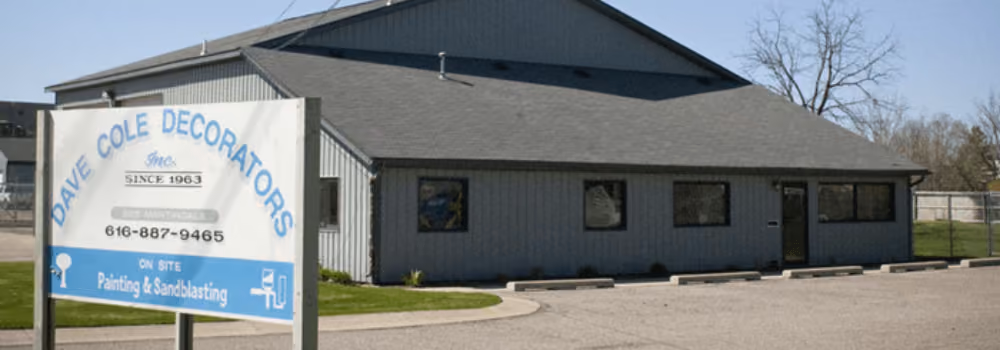




































































%20-%20thumbnail.avif)





%20-%20thumbnail.avif)



%20-%20thumbnail.avif)

.avif)




%20-%20thumbnail.avif)