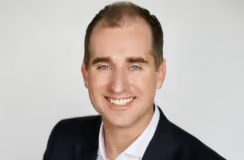
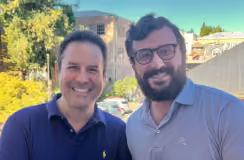
Host: Here's the scene. It's 4pm at the end of the first day of the Self Funded Search conference in Dallas a few weeks ago. It has been a full day. Great content, 200 attendees. By all accounts tons of value. But in general, people are tired by the end of the day at a conference. And there was one more agenda item. The closing talk of the day, A fireside chat between me and Kent Weaver. Kent Weaver has two decades of experience in search. He was a self funded searcher, buying, growing and owning to this day a major home healthcare business in Northern California. He then became a search investor in both traditional search funds and self funded searches. He's invested in over 80 businesses that were acquired by searchers. So Kent is someone with a towering amount of experience in the world of search. Someone people look to for guidance. Someone people listen to. Case in point, despite a long day, the audience was wrapped as Kent shared his insights in the interview you're about to hear. It was a highlight of the conference. My favorite points in the interview when Kent talks about both the upside and downside of search. On the upside, he encourages us all to think bigger on the downside. He makes a great point about what buying a business can do for your career even if it doesn't work out the way you'd hoped. Now unfortunately, the audio quality wasn't great. What you'll hear is actually a big improvement on the raw recording. It works, but you might miss a word here or there. So thanks for your understanding on that. Okay, please enjoy this fireside chat with Kent Weaver of Granite Point Partners. Welcome to Acquiring Minds, a podcast about buying businesses. My name is Will Smith. Acquiring an existing business is an awesome opportunity for many entrepreneurs and on this podcast I talk to the people who do it. Listeners of Acquiring Minds know that for almost any business you acquire, its success comes down to the people and how you develop and manage them as their new leader. Thing is, in addition to management there is also a lot of process and bureaucratic work when it comes to your new employees, payroll, compliance, HR technology, hiring to name but a few. These processes are crucial to get right, but at the same time distract from where you want to be putting your energy in leadership. So Aspen HR is an HR firm and PEO that takes this work off your plate and handles it with the care it demands. Aspen is owned and run by Mark Sinatra, himself a successful former searcher. So Aspen's own leadership understands the HR challenges that searchers have post acquisition. The firm is offering Acquiring Minds listeners a complimentary pre acquisition HR and PEO review for your target business, check out aspenhr.com or contact Mark directly@markspenhr.com this is Kent Weaver. You heard Kent's name. You've heard it multiple times today, not least on the last panel. Kent has a very long resume in the world of buying businesses and search. He did his own self funded search and he has done dozens and dozens. He has invested in dozens and dozens of deals. Self funded and gasp, traditional. So we're here to glean some knowledge from somebody who has seen so much. So Kent, you want to do a quick intro quick Hello.
[3:53] Guest: Yeah, quick hello everybody. It is wonderful seeing this many people this interested in something this crazy. So we'll get to me in a little bit. But way back in the dinosaur ages when I did this, there was maybe eight or nine people I could reach out to. So it's kind of fascinating to see this many people. This is a great topic. I love the energy in the rooms. I was just going to take a quick little poll so I could kind of tune this talk accordingly. Just show of hands, how many people would you say are kind of mid career? That's awesome. I mean that's awesome. Never too late. Like what a great segue. How many people would you say are maybe early career keth Then how many people have an mba? Okay, that has not changed a lot. And maybe my favorite right now, how many women are thinking about doing this? I love that you guys are pioneers. I love. That's the next great force coming into eta, which is just wonderful to see. Okay, thank you.
Host: Fantastic.
Guest: Let's go.
Host: Well, let's hear Ken in brief, your story as a searcher and then we're going to talk about your story as having became an investor. So first the story, the search story.
Guest: Yeah, I'm going to give just a tick of personal narrative. I think it's relevant. So real long story short, I grew up in a very small town, super loving parents, that pretty income light, very, very humble beginnings. Certainly not ghetto or anything but but loving household which really set a model in my mind. So you know, I installed carpet to pay my way through high, you know that first girlfriend, first truck, paid my way through college. And the funny thing is I kind of liked it. I liked being in control of my life. It's not that I loved physical labor, but I liked being an entrepreneur. I liked challenges, I liked working with people and I liked, I'm not a control freak, but I like being in control of my life. I like the harmony of the work I did with the Balance I had personally. So even despite that, I had a bit of an intervention from my favorite undergrad teacher, my dad, who was a wonderful person that said, hey, this is great. High five for everything you've accomplished. Super high on grit, super, super low on polish and worldly skills. So I did like, I did what a lot of us did. I, I came out of undergrad and oh, can you hear me? Okay. I did consulting for three years. I wanted to be around smart people, get mentorship, collect data points, try to get smarter. And I knew I wanted to be a CEO. I didn't know what that meant. I didn't know anything entrepreneurial. I ended up working in a leadership development program at a big Fortune 500 company. And they took a lot of chances on me. I'm forever grateful. And then I got an mba. So when that run was over, it had crystallized and I knew, I knew I wanted to do something entrepreneurial. I had no good ideas, startup ideas. I'm not technologically very advanced, so the idea of something tech. I love the entrepreneurial energy in a tech startup, but the wiring is different. It wasn't me. And I learned about the search fund model again a long time ago, wasn't near as popular. And I knew, I knew within like 30 seconds there was something special here. So again, long story short, I did a self funded search. People thought I was nuts at the time. I looked for a service oriented company. I was very industry focused. I ended up buying a healthcare company in Sacramento and my wife and I moved out there. I hugged the business and ran it very, very hard for nine or 10 years. I'm super proud. I still own it to this day, but we raised four kids and, and, and I think kind of what I was solving for, you know, professionally I felt super fulfilled. But I was able to remove kind of agency out of my life, you know, back to like wanting to be a good husband, be a good father, raise a family and then be at these professionally. I mean this stuff's tough. You got to, you got to really bring it. And so for me to do that, have hard me in my life, I kind of knew. It's not like I love risk. I have an entrepreneurial spirit. But I, I, you know, I, I wanted to, I didn't, I didn't need to have another boss. You know, I could seek out feedback, I could craft my board the way I wanted it to and I could build the life I wanted to build. And that's, that's what I was solving for. And it ended up Being a career
[8:34] Host: and what year was that?
Guest: So I, I did a search a little, it was around 2002.
Host: Okay, great. And you said you ran that for about 10 years and still own it. Did I get that right?
Guest: Yep.
Host: Great.
Guest: So we, we moved there. I was entrepreneurial CEO for nine years, that the business scaled organically around the 9, 10 year mark. We had four kids. I would say I did decent at being present at home but not fantastic. And it was a good inflection point for me to kind of step back and I wasn't sure I wanted to be a healthcare person forever. I love this stuff. I was starting to, other investments come up and I was getting a little bit of fomo. I, I liked what I was doing, but I wouldn't say it was an A industry and, and I thought I'd step back, take maybe six months off and maybe go do another one. Like being a CEO was just rocket fuel for me. And what happened was so we elevated a team to run it. I stepped back and I couldn't sit still. And there's nothing as fun as running and building a company, but the next best thing was investing in people that were doing it, that were maybe just the next generation of B and probably doing it better. And so I made a couple of, of investments. They happen to be traditional search fund investments. And, and I don't know, there was something about the, you know, I think because I had done it, the vibe was pretty special. These entrepreneurs were really, really special. And you know, two or three of those became five of those became 10 of those and kind of like a drunken sailor, I couldn't stop. You know, that became the next career path and my team at the healthcare company was kind of proud doing it without me. And so things were working out and that became like the last 10 years of my journey.
[10:21] Host: And so I said dozens and dozens. What is the exact number?
Guest: Yep. So I, you know, now I'm really showing my age. But so I've invested in over 200 traditional search or self funded searchers and that, that really started to accumulate about eight years ago. It really kind of zenithed out and that's converted into around 80 to 85 operating companies. So like for a while most of those were traditional. But as self funded to mature more and more of my time, capital and reputation's been been allocated to things that are self funded or things that are kind of alternative to the traditional world that, that, that I know about, that I started my investing in.
Host: We all know that self funded has grown a lot. So that's one obvious change that we've, that you have been a party to and witnessed what anything else, maybe less obvious, jumps out at you as being very different today versus when you, when you got started in this space. And maybe the poll that you took informs that answer.
Guest: Yeah, yeah, so, so, you know, you know, again, I, I did this because it just felt like, like it deeply resonated with me that this could be a wonderful career path. I didn't do it to be different or to be a pioneer, but there was literally really nobody doing this back then. The Internet had just started. Now I sound like a grandfather. Yeah, you, you couldn't, you couldn't email outreach out to sellers. I mean, so things moved slower. You, you could do things more in person, which is probably even a good thing. You can make phone calls, but the way to access people is completely different. And there's a value to this many people doing it. Now that there's a lot of data points, there's a lot of case studies, good and bad ways to build a company, almost all the things you go through on this journey, somebody's written a case about it, you can talk intelligently about it with somebody that's all new. So I think that's fascinating. I wasn't used to that and the speed at which things happen is a lot faster now. But, but I would say, you know, probably bigger than that. The, the type of companies that I see get funded down. I think that, you know, it's, it was taboo to. A couple things were taboo way back when, you know, to, to work remotely and run a company just wasn't heard of. To geographically search, wasn't heard of. To do multi site healthcare was really frowned upon and there was no software. So there's a lot more software deals now. There's a lot more healthcare deals and I think there's a lot more people probably in this room just deciding like this is where I want to build my life. This is where maybe my family or my wife or fiance's family's from. And too many people have proven it can work. So it's become more accessible now and more supported than it was before.
[13:23] Host: Having been involved in so many searches, traditional and self funded. And as the investors in these deals, the investor in these deals, we often talk about what it feels like, kind of the qualitative difference as the searcher, if you do traditional versus self funded, being an investor in these deals, what have you observed about the difference from the perspective of the searcher? So I'm asking you to Project A little bit, yeah.
Guest: So there was some good discussion in the last panel about this one kind of glaring thing that I would want to punctuate. I'll stay away from the economics, not because it's a, it's an ugly subject. I think some of that was talked about. I think what's interesting though, most self funded searchers, and this is, you know, I bought a business that was 3 million in revenue the first maybe 24, 36 months of doing something self funded where you probably buy something smaller but own more of it. You know what, what's your motion? Looks like that first 36 months. 24 months. It's, it's different. I mean I put in the company's first accounting system. I hired the first 25 people like personally, the administrative person at the front desk, the people doing the scheduling in my healthcare business, the nurses, the physical therapists. I didn't want to delegate that. I mean everything went through me. And that's maybe you know, the hands on, management intensive part of a smaller business where there's no infrastructure. And that's not for everybody. I mean, some of my best friends who are search funders, they didn't want to buy something with no infrastructure. They wanted to buy more of a platform. They didn't mind paying up for it, they didn't mind taking less equity. And they wanted a ramp from a 10 or $15 million starting point to something that looked like $100 million or more. And they wanted to get there faster, which is fine. I was much more comfortable building something that was earlier stage and kind of ugly and not as mature and embryonic. And I thought it was super satisfying that the gritty part of doing all that and all the detail that went into it. So I think that's something that's personal. There's not a right or wrong. You just kind of have to know that what you're getting into is a little different. If a business is 2 million of EBITDA versus 400,000, that's probably the biggest difference. I'd say the other differences are there's just a lot more investors now and that's not all good or bad. There's just, you know, the spirit, the entrepreneurial spirit of the model. I, you know, sometimes it can feel a little bit like an asset class and I, I kind of stay away from that. I think there's an edge missing when, when it feels a little soft like that. And I don't think this should be something that entrepreneurs fall into because, you know, the consulting job, they Wanted didn't happen like that. That's not a good reason to do this. And I, I hear a little bit more of that than I used to way back in the day.
[16:17] Host: In the debate about self funded versus traditional, we touched on it last panel. The quality of investors or the involvement that investors have in your role as operator is often something that's talked about and generalized or not. Being an investor in so many deals. Do you feel like there is some generalizable difference between being an investor in self funded versus traditional or can we put that to bed?
Guest: Yeah, I think it's always a little bit of caution in over generalizing, but I'll take a cut out of the. Anyway, I think most of my investments, point of fact, are traditional and I love all this and to me this is all like the ETA world and you have entrepreneurs coming into this that chose not to do consulting or investment banking and their passion strong. And you know, I think it's a personal choice that if it's framed properly you just kind of opt into your path of entrepreneurship that's best for you. So I come at it just kind of open minded, super supportive. I think with traditional there is a more established set of economic terms, platform size of a business, there's probably more of an established hierarchy and how your board looks and you know, maybe there's a little bit of, little bit of control that you, that you give up to be part of that, to, to be part of that world. And I think as an entrepreneur you have to really ask yourself the hard question, Am I getting back at or more than what I gave up, am I getting back enough value?
Host: I think
[18:00] Guest: so in self funded, which is what, what I had done and, and you know, so, so it's a little bit less structured, it's a little bit more, you know, a little less bounded and a little bit less controlled. And for me that was pretty refreshing. I hear comments made and it came up in the last panel. You know, self funded CEOs usually don't have, don't always have boards and that might be true, but it doesn't have to be, that doesn't have to be anyone in here's Destiny. Like I think you should be like, like initiating the feedback in the forms of nourishment you want to get. And it shouldn't really matter what model you're in and you should be picking people that are just super value added, that you get energy from, that you think are rock stars that you feel culturally aligned with and, and you're in a safe place to learn and grow and be like a high impact CEO. So a couple of the first thoughts
Host: I had I want to share an update on the Acquisition Lab. As you know, the Lab is a highly vetted cohort based accelerator and community for people serious about buying a business. After going through the Lab's month long intensive, you have ongoing access to almost daily Q and A sessions with advisors, regular live deal reviews with Walker Deibel, author of Buy, then Build Potential Deal team introductions and a very active Slack group with other searchers on the path. Well, the update is that the Lab recently passed 60 businesses acquired and for well over $100 million in aggregate transaction value. Also, all members now enjoy lifetime access to the Lab because when you buy a business, it's often just the first of many and the Lab wants to support you in every deal, not just your first. Lastly, check out my recent interview with Shane Ursum, episode 105. Shane acquired a business with over $1 million in EBITDA in just six months and he attributes a lot of his deal success to what he learned in the lab. Check out acquisitionlab.com or email the lab's director, Chelsea Wood Chelseie. Then build.com let's talk about business types. So we're all more than familiar with the characteristics of an appealing acquisition. When you and I met last week, you talked about the 3am business. The business that if a searcher finds a business that has XYZ at ABC, they should call you at 3am in the morning to, you know, ask you to put money into the deal. What's this 3am business all about?
Guest: You don't have to call me 3am but, but if it's the only way to get all of me. So, so this stuff's so much fun. And what, what will's hinting at, you know, at everybody. You know, we all get educated on this, on this space and what's a good, what's a good target? And it's a combination of industry and company characteristics. And you know, there's always 15, 20, 25 things we're always looking at. But the sweet spot, the things I've never seen not work. I mean now these are dozens of data points and I would encourage all of you to like go for the gold. Like don't miss any of these things. And it's going to sound cliche, but rarely do you see them all in one bucket. So one is the quality of your industry. I mean it sounds stupid, but it'll make you look like a genius or it'll make you look the other way. But. But the quality of your industry, it should feel healthy when you research it. You should see evidence of rational behavior. Pricing's rational. People throughout the value chain. Not just your part of the value chain, the company. You're looking at it. People make solid economic profit. You'll understand how value is added to customers. And these are all signs of a healthy industry. And if you, if you. And maybe there's a Michael Porter analysis or some homegrown thing, we all got our own spreadsheets. But I would, I would like triple down on the health of your industry. Whatever rigor you put into it. It's just so vital. So. And that industry you're going to hope is expanding, it doesn't have to be a high growth. It doesn't have to have a $5 billion total addressable market to it. It's got to be sizable enough for you to go in and build a good business. But it'd be nice if it's expanding and if you can find a great industry that's a little on the younger side. Because when it gets super mature and saturated, it's like Game of Thrones to drive organic revenue and organic revenues like the ticket to drive outsized returns. So you want to find like how many people know what Iron Mountain is. This will haunt me forever. Like, Juan talked about having the perfect industry for consolidation. I never found the damn perfect industry or I would have done it his way. But if I could have found Record Information management in the mid-1980s, when Iron Mountain, the trucks you see all over the world, you know that that was a little upstate New York Cave and $3 million revenue company. And that industry was not national yet. It was very regional. But you could, if it was validated, it had low churn, it had high margin. Every NFL city was starting to have a leading company or two. So if you could find that, or if you could find like the cable, cable television in the 70s or vertically focused software maybe in the 90s or the 2000, 2010. I mean, I would spend time hunting for the right industry. So the second thing I would add is just the quality of revenue. I mean, this is your best friend. This is how you de risk this journey. You want super sticky customers. You know, low churn, the dollar per customer is growing every year. Doesn't have to be perfect, but they call it nrr. Net revenue retention, it's going up a little bit every year. Churns less than 10% every year. So revenue quality and actually understanding, like, how do we add value for customers. Why is it sticky? Keep it simple. If it, if it's too hard to understand, it's probably not your right business. But revenue quality is so important. So now you got two. The third one is just strong unit economics. I mean everybody talk like EBITDA margins, you want to try to find some 18, 20% or more. And you know, why are unit economics and EBITDA so important? It's validating that the industry is healthy. It's validating that, that this company you're buying is in a good market position that knows how to extract economics out of a customer with strong revenue quality. And then maybe the big kicker is when your companies have light asset bases and they generate lots of profit, lots of cash flow. That cash is what you use to fund growth. And when you can fund organic revenue growth or M and A with cash or when you're building high EBITDA and you get debt capacity, if you can build your growth with that and never put more equity in your MOIC's and IRR shoot through the roofs and you create a lot of personal melt. That way those what the hall of fame returns look like. So you want, you want those three characteristics. Sounds cliche, really hard to find them. And the last thing is you as a CEO. I mean these are management intensive businesses. This is not like being an employee at Pepsi. If you learn how to be like a hungry like feedback seeking machine that's learning, that's passionate and a servant leader and it's all about your business. You don't have to even have to know your industry to start but you want to be athletic, you want to pour everything into it. And if you're a learning machine that's coachable and you put all that together like I've never seen that not have an outsized return. But it's rare to see them all four in one. So that, that's the three o' clock in the morning one. Any, anytime I'll be ready to go.
[25:58] Host: Well Ken, let's expand a little bit on, on the individual. So, so the, the jockey. Obviously getting a deal done at all is, is difficult but then you gotta operate and lead this, lead this business. And I know from my interviews that you know, self doubt is a thing. Maybe some people in this room are, are wondering if they have the stuff to, to grow and to grow a business and lead a team. Any ingredients beyond the obvious, I guess you know, beyond just saying leadership ability that you look for in your jockeys.
Guest: Yeah, there's a couple observations that that, that I've made over time. Well, so one, there, there's a, there was an article in Harvard Business for the youth and it was, it was titled something about leading indicators of great like private equity or lower middle market CEOs. And many of the people that were pulled were people that have been around this community that, that were business builders themselves. So it's fascinating to me but not surprising. They honed in on three things. So one was grid resilience. No shocker. And I, I would like triple, you know, quadruple pound on that. On that combat grit. Resilience to ability to build teams like you had like leadership, which is not really taught in MBA schools or a lot of MBA hands that in sales are probably the least taught things that bode well for this world. But leadership, ability to lead people, likability, super important, way more important than people realize. And then the third thing is leadership style and it's authenticity. It's not extrovert, it's not introvert. It's not being charismatic, it's not being computational, it's not having high eq. It's about being authentic. So, so it's hard. You feel like an imposter. You're, you're young or certainly new at leading people build organization, managing stakeholders, employees, customers, investors, lenders, all at the same time. They're never happy at the same time. And so you feel like an imposter. But the key is just be yourself. Because people fleece you. They see right through when you're not. But there's a deep respect and a want to be a company where, where that's, that's what the spirit and the vibe are. So I would say that's like, that's one article worth noting. And then I would just say like, like, like I get to work with a lot of the CEOs. I get the pleasure of that and like what goes through my head when I, when I'm like evaluating them or trying to just share feedback. I think the best CEOs like are passionate. Super passionate. They have energ, they have energy. I mean they work hard. There's no way around it. They grind, they energize back to the people skills. They, they give off energy to other people and they execute. I'll call it GSD get done. Their GSD quotient is high. They get shit done. They don't mess around. They don't get too caught up in strategy things. They drive, they, they constantly drive progress.
[29:03] Host: Another fear or doubt in the room. And the people that I talk to is of course just about the inherent risk in this, right? About the business that you buy and going south. What does that look like in the deals that you've done where things haven't gone well but the searcher emerged with your respect. What did that look like? How to handle this if it doesn't go the way you want it to?
Guest: So I would say right off the bat like, you know, this isn't for everybody. Like I'm excited. I could romance this. My wife will say, you got to tone it down. Sometimes I'll get some of our close friends and our lawyers, you know, excited about doing this. It's like no, no, no, no, that would not be a good, that would not be a good move for you. This can go really bad. But, but I, if I share a couple stories around that do it so like it can go bad. You know, there's one entrepreneur like I'll be classy, the name doesn't matter. But they, they bought a multi site healthcare people intensive business a lot like mine a long time ago. And you know, like, like they came into a people tense of business with kind of an emperor mentality. Like, like it's, it's my way that goes I'm here to build an empire. It wasn't servant leadership. The tone was all wrong. And there's, that's one way to turn off people that, that have worked hard in a company that know an industry. So he lost his head clinician, then he lost his head three salespeople and they were all four stairs. And that business never recovered. That's a $12 million business that went down to $3 million of revenue within 24 months. And then just couldn't, it just couldn't fund cash flow. And the investors lost faith. The employees almost had a mutiny. It was about ready to go bankrupt. And we ended up selling it to a vulture, you know, somebody very vulture like in the industry. And it was really all about the approach toward people. So that's super ugly. And that person probably shouldn't be in this and shouldn't be doing what you all want to do. Then in contrast to that there's a really well known kind of quasi self funded searcher that went to an MBA school, bought an industry where the industry became obsolete in around their third year. I mean the industry just kind of shit on this business. Were doing everything. They were like the, the, the, the buggy whip, the last buggy whip manufacturing and, and it just, it just went sideways and, and, and he handled himself with such class and such grit. The business went to zero. They, they put it down gracefully, but brutal to go through. Brutal. And he took time off, spent some time with his young kid. His family got together, came back and did it again. And 11 of the 12 investors all backed him the next go around. And he, he bought a company for about 20 million and sold it to private equity for over 300. So it worked. I mean, so he had earned it the hard way. But really like, like investors really just want to know your honest, your character and you work hard. That's all you're really being judged by. None of this all goes perfect. So there's an example when it works, right?
[32:40] Host: I love what Ari said this morning. First panel where he said, when I went to my friends and family about raising capital, I said, this doesn't always go the way we want, but I promise you it won't go bad because of my lack of work ethic, my lack of character, fraud, any of the bad reasons that won't happen. But I can't control the universe, so, so that's the end.
[33:02] Guest: There's one more bad outcome I should mention. This is probably the worst of all outcomes. So there was a very talented entrepreneur that was willing to work his butt off that he had an elite MBA and he had worked at General Electric in some pretty hardcore operational roles. So this was a profile, pretty prime to build a company. He bought a company that sells, you know, bibles and things to churches. So stable industry had, doesn't grow a lot, but pretty darn stable. That channel distribution looks super sticky. For years and years, he, he, he, he buys this company and they have a horrible audit with like workforce safety in the first year. They have a fire without all the proper insurance. And for the first time in 20 years, the revenue dips pretty hard and foreign competition hurts pricing, unit economics. So this is getting pretty ugly. So he does the high character thing. He puts everything in, puts relationships at home at risk and pours everything in for three or four years. And it just did turn around. And at that point and I get, I can get super frustrated even thinking about this. Like, like the, the best kind of people around you, the investors that care about you will at that point say, like, this just isn't a good one. Like you're, you're in your prime building business, building years. You're, you're, you know, like, let's just sell this thing. It didn't work. Let's go do another one. And instead they, they made him feel guilty. He stuck around till year seven. That's seven years in a yucky business. So I guess my punchline would be, you know, like get in a good situation, get into it. A A minus or a B plus doesn't have to be perfect. But that, that was a C situation. So again, back to industry and those characteristics. Because there's nothing worse than being in a yucky business and, and losing your self esteem and getting kind of lost and you're not really learning, you're not learning how to leave people with something that like kind of sideways and then be careful who you're around. Like that, that, like yeah, that, that was just that, that, that's kind of infuriating that, that you suck around that business too much.
Host: And Ken, if you find yourself in that situation and you're trying to do the right thing and you're trying to do right by your investors, I'm hearing you say that there is still a moment where you can tell yourself I'm holding on too tightly, I'm holding on too long. Is there a way of knowing that if, if you're unfortunate enough to have investors who want you to just die
Guest: with this business first thing I'd say like just, just PP you know, your first big entrepreneurial CEO decision before you buy anything. Like you know, what kind of people do you want in your ecosystem? It doesn't matter if you're self funded or traditional or whatever. Like, like really seek out like the ultimate de riskers, the people around you and your work ethic. So seek them out to talk to. Nobody tells it straight more than your fellow entrepreneurs. Ask around like, like what are these people? How do they behave in good and bad times? Like what kind of nourishment do I get? How do they culturally vibe but, but get, get people around you that you know, you're energized by, but also kind of know what they're doing. You know, it's okay to, to, to and then you know, be a learning machine, seek feedback. But 1 want to get really, really good at this. And then like no matter what anybody tells you, you're the center of gladly here. Like nobody, like nobody's going to work as hard to feel the pressure like you the entrepreneur, not the investor, not a board member, nobody. See, you gotta find your own voice and steal up at some point. It's a tough journey, but you feel it's wonderful too. But just know what's good for yourself. There's an entrepreneur I'm thinking about maybe five years ago. They, they called. It's a Saturday. Their voice is shaky. I'm like how bad is it? And it's pretty bad. Okay, well bad to me is you're about ready to get a divorce. You're about ready to have mental health issues. This isn't work. It's like if you're not digesting food for a month straight, we probably should talk about it. This journey is not worth it then. So have your boundaries. Know yourself, have your own voice.
[37:20] Host: Now switching back to the happy. So tell us some of the businesses that you're involved in now in your portfolio that you're that jazz you up that you're really excited about.
Guest: Yep. So, so it's dawned on me even here there's been maybe 15 short conversations with, with some of you which are, which is great. It's super energizing and maybe a little bit more than, than I'm hearing a lot of like yeah, I want to buy a $400,000 EBITA business, personally guaranteed my loan. Which, which no, no problem. Like I'm, but, but I'm not sure like if you're willing to put the work in and do this. I, I'm not sure like there's a full picture of what the mountaintop could look like. So I'm not trying to fill you with false sunshine here, but this can go really, really well. Like, like, like turning 400000 of EBITDA into 2.2 million six years is something to be very proud of. But you can win big here too if you put the work in. So there's, when I think of some of the ones that just exploded, you know that there is a self funded search that's over a billion dollars in enterprise value now. 32 acquisitions later, over nine years. They started with a quiet little $6 million revenue business. So I'm not saying that that has to be what success looks like, but it's okay to leave that option open. I think the people that are the catalyst for putting this together, I would ask Rob and Jordan everything you can about what they're doing right now because they're both crushing it. They might be too humble to tell you, but it's going pretty well. Right. You got to see Mark Anderig up here and he did a traditional search but now, now through Newberry Franklin, he's launching super compounding platforms in different industries. And, and I'd want to bet the over on any one of those. And if you put them together that's, that's a pretty big mountaintop. So there's a lot of wonderful things happening There's a, a recent mba, her name's Diana, that, that I'm closely involved with. She wanted, and she wanted to sell, fund. She, she bought a. I, I happened upon a homeowner association business that I really liked. I'm not going to run anything anymore. My wife will absolutely kill me. But I was super excited to see her succeed so I referred her over the deal. She launched a consolidation platform in homeowner association, but she was also super pumped up about medical aesthetics. So she's launched two platforms at the same time or within the same year of each other, which is a little bit out there. But when we break down how to drive value creation in a measured, thoughtful, smart way, there's answers to that. So that's the fun of this. You can be entrepreneurial. I'm not sure it needs to be super bounded. So there's a couple success stories.
[40:24] Host: I love that point, Kent, because what's often said about this opportunity is that it's a pretty reliable way to get to seven figures of, of net worth and even eight figures of net worth. But probably you want to go to Silicon Valley if you want to be cut, you know, if you want to, you know, build a unicorn, build a billion dollar business. And so it's nice to, whether or not that actually does happen very often to just like take the artificial cap off, off of your, the way we think about it.
Guest: Well, this isn't me being Pollyannish and I don't think anybody should do this because they want to make money. I mean it's just you, you should like be pumped up about building a business and all the things that go into it. But I was buried, aware of the money I was going to make. I did it because I loved it. But I wasn't so holier than that. I wasn't aware and I wanted to because money converts into things in life and freedoms and I was aware of that too. So I won't deny that that would be false.
Host: Thank you for saying that. I love that we're bumping up on time. So let me ask you one last question here, Ken. So as you told us, you did your self funded search and then you kind of fell into investing and then that became kind of phase two of this journey for you, of this part of your career. One of the things you'd said to me though is one of the benefits of doing a search is that not necessarily that you become an investor, but that you have a lot of options. So this can crack open your career in really interesting ways. Can you take people into the future beyond just getting this deal done, but what, what their life might look like. 5 and 10 years hits.
Guest: Yet this question comes up a lot. It's part of the risk assessment. If I go down this path, whether I'm earlier career, mid career, what's the consequences if it doesn't work? Which I think is a very rational question. And I would say my pattern recognition and I could say with very high confidence this is an enhancer no matter how it works out for me. I ran a business, it did pretty well. It wasn't like on the front page of a Wall Street Journal, but. And because I had done that, my option set of what I could have done next like grew pretty exponentially. If I'd wanted to go to private equity, that would have been easy. I just didn't want to do that. If I'd run into, run another one, I think I would have been even better suited to do it and it would have got funded pretty easily. I think I had credibility as an investor and that's the path I ended up going down. But I also think even putting my story aside, like the people that had done this and decided it's just not what I want to do going forward. I've seen them going to work in high tech, like work for larger Fortune 500 companies. And the feedback I'll hear over and over again is that this stint, the entrepreneurship of it and what they learned and how they were able to communicate it in an interview usually is very well received. People really respect that you gave something this hard to try. So optionality expands if you go and really try to do it right, which is pretty nice.
[43:35] Host: Downside, fantastic message for us to close our conversation on. Can we do just a few questions? I know we're buffing up against time,
Guest: but we're standing in the way of you and beers right now. I get it. I'll talk.
Host: I ask the audience and say if I, if I didn't forget some questions. Do we, do we have anybody want
Guest: to get a question here to Kent before we go up?
Host: Drinks. We didn't capture the audio of the questions from the audience, so I'm going to interject with the questions here, then flip back to Kent answering them. These won't be the questions verbatim, but approximations. The first question was which specific industries or niches do you see as ripe for roll up or consolidation today?
Guest: I don't have a on a 1 to 10. I don't have a 9 or a 10 to give you some every now and then I do, but I don't. I think super niche vertically focused software was kind of fun and I would rule it out, but everybody, that's not a secret. Everybody wants to find it. And if you access that through brokers, it is like Game of Thrones. Like the multiples are going up. It's super hard. I'd also say, you know, I like measured consolidations or buildups, not, not when they're scotch taped together. And I brought up record information management. Like what, that's an analog for something now. Like, like I wish I could do like waste management pickup at doctor offices, but this company called Stereocycle did it 30 years ago. Or what's the new consolidation? What industry is younger? I'm not, I'm not. If I, if I find a twin or maybe I'll get an analyst and just say go, go for the next 12 months and figure out what's right for consolidation. I mean, gate maintenance for self storage companies is kind of interesting right now. Like that, that maybe that's a little, that that's kind of interesting. Medical aesthetics and home care in the, in the healthcare world was pretty interesting maybe up to four years ago, but I think it's getting a little late in the game. So like I'm always spinning on that stuff, but I, I don't have, I'm not sure I have the one right now. And then I'm not sure I'd even tell you if I did.
[45:45] Host: The second question was what are some more characteristics to search for and identify an industry ripe for consolidation?
Guest: So the question's about maybe where could I, where could I buy and build the next consolidation? And again, I think it would start with, with, with, with my, with my 3am Formula, like industry characteristics. I think you want an addressable market that's, don't have to have a perfect answer, but it's at least 100 million, but probably not more than a billion because then you have all kinds of private equity competition and you want something earlier stage, like it's validated but, but there's tons of Runway left. I mean you could, you could point to targets in your research and know that if you do two or three acquisitions, you're not done. Like, like there's no more to go. And then I think it'd be good like an ideal consolidation. Like a lot of value is created by the programmatic way that you buy and build companies and integrate them. Right? And, and for every 10 companies in the consolidation you buy, you want 10, you want your hit rate to be high and then you want to use leverage like these, these are how, these are how consolidations make money. But on top of it, if you can have organic growth in the companies you buy on top of all that, like that, that's the best kind of consolidations. But again, it's back to industry. Can you find an industry that's not so overdone? You're competing with a strategic buyer that has an M and a team that's beating up prices, but it's not so new, you're not sure if there's enough targets to buy and it's just research.
Host: The third question was with potentially choppy economic waters ahead, how to shield your organization.
Guest: This might be a little, little, when you're an entrepreneur and you're feeling so much pressure, you know there's a little bit of mental gymnastics you do to shield yourself. So there might be a little bit of that in this response. But I never try to economically forecast, you know, I think there's two kinds of economic forecasters. Those who know they can't do it and those that think they can but really can't. So I, I, I never, I never try to, I, I just, I think you always want to be ready. If you're in healthcare you're going to get bad reimbursement rates because they change every year or, or in another industry you might have a bad cycle or a competitor might, might open up, you know, five miles down the street. So like the best ways to de, risk or shield are like try to be super efficient with the equity you bring into your company. Try to be surgical and smart about debt. Don't get like run tight, keep hiring the best team, keep like grinding and running as productive a business as you can. Just, just be, be, be resilient, organizationally resilient, ready as best you can all the time. Just be prepared to absorb shocks and bestie wins. Like that might be the place I would start but I never coiled up in a fetal position when that economic thing was coming up. We just gritted, we just gritted hardy to battle.
[48:56] Host: The fourth and final question came from Robert Graham at the back of the room. Robert was a host of the conference and is a staunch vocal proponent of self funded search. So naturally he asked the following. In your portfolio Kent, which are doing better in aggregate, your self funded search investments or your traditional search fund investments?
Guest: I would say that things, things go in cycles so, so you know I'm going to ever forever have a lot of love for traditional like and some of the wins have been super big and some of the people I got to work for were just like so memorable. I think traditional is a little less sharp. There's a lot of investors, there's a lot of new searchers. I think it's getting bigger and I'm not sure the spirit of it's exactly the same and there could be a little bit of a danger in that. And then I think with self funded or things that are alternative, I think there's a real entrepreneurial edge in general. Like there's a spirit of it and an entrepreneurial edge and a, you know, like, like a, like a strength. And I don't want to be, I don't want to be controlled. I want to do it my own way. I, I'm. And I, I think, I think that kind of serves, there's probably something healthy about that. And I, and I guess like point of fact, like the, the last three years for me, like I'm going to say something that has no disrespect to anything but just point a fact that the, the, the, some of the alternative, the, the, the newer, fresher forms of ETA have had like fantastic returns like, like, like as good a return as I've ever had in my life as an investor. So I'm, I'm paying attention and with, you know, reputation, my time and, and how I deploy my money more and more it's gone into things that I think are alike. That's about the best I'll give you.
Host: I think we'll, we'll cut it there. We're right at 501. People are thirsty. That was phenomenal.
































































%20-%20thumbnail.avif)





%20-%20thumbnail.avif)

%20-%20thumbnail.avif)

.avif)




%20-%20thumbnail.avif)