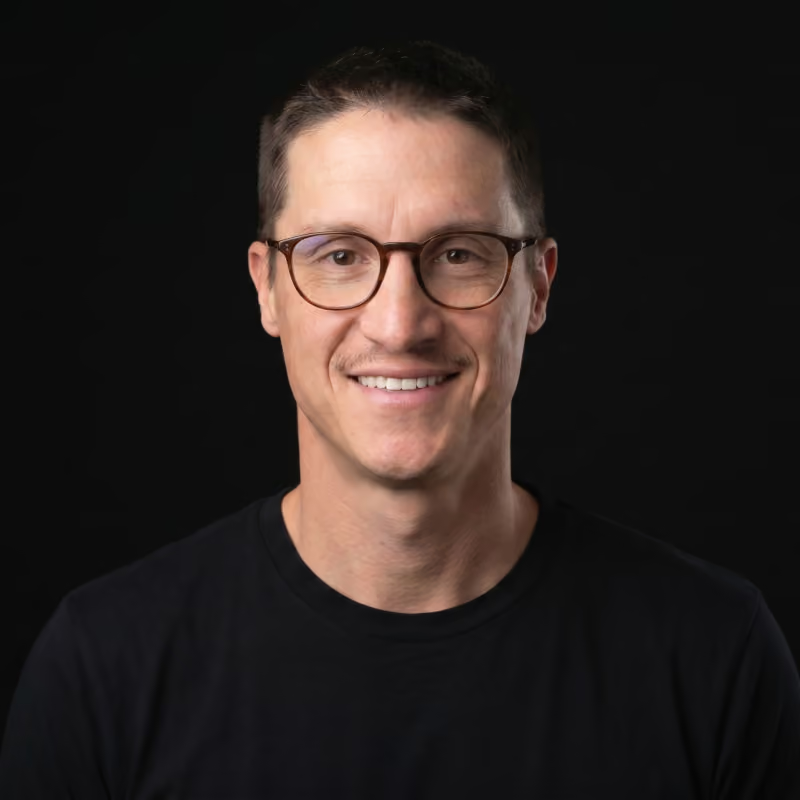
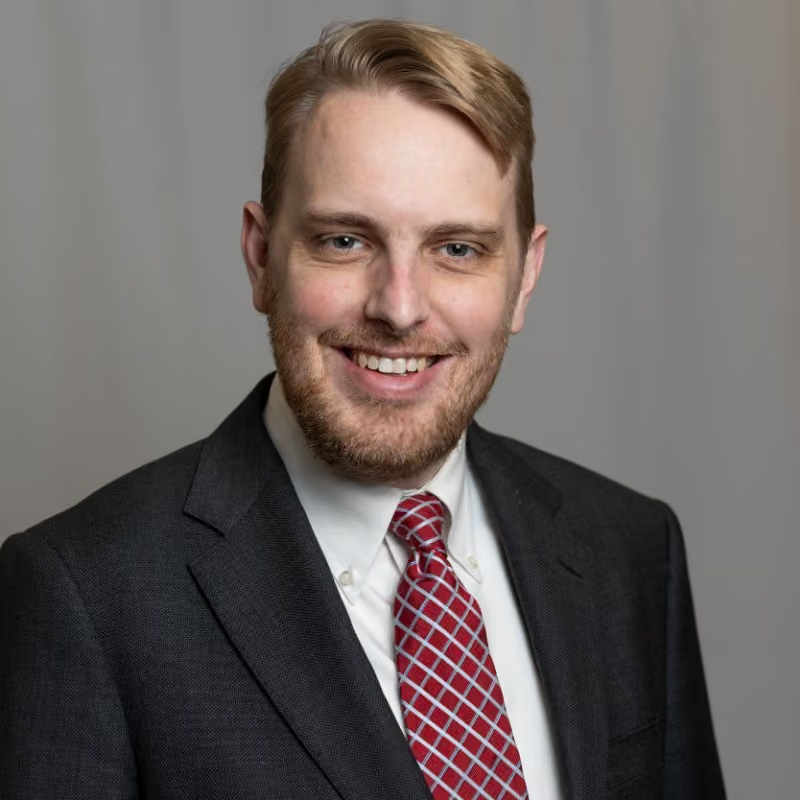
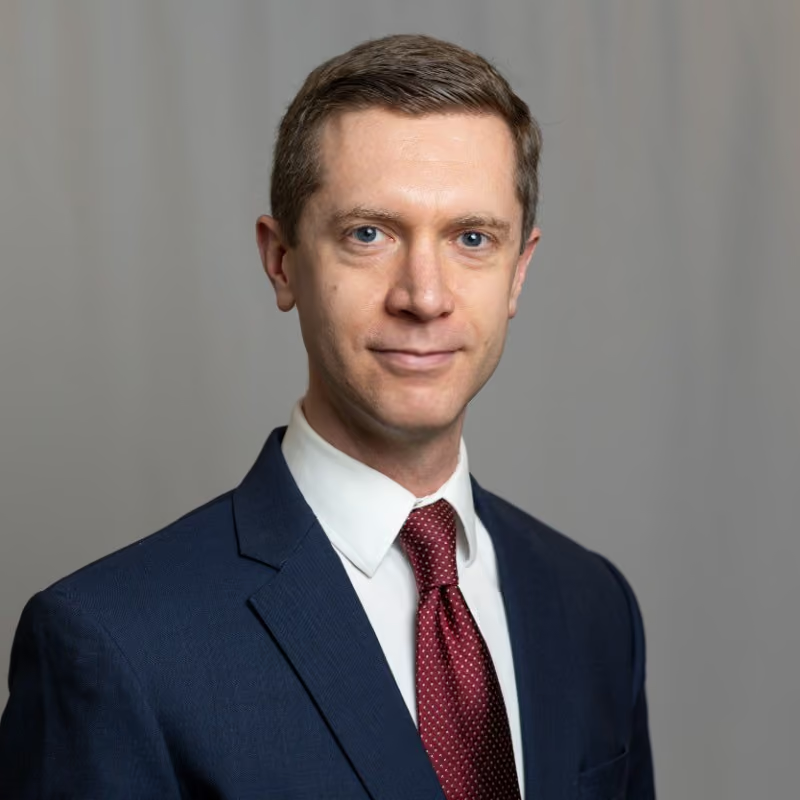
Host: In today's episode, two previous guests make return appearances. Happily, for both guests, things in the businesses they bought are going well. Shane Ursum bought a trailer dealership business with over $1 million in SDE. Shane and I discuss, among other things, how this has been the most professionally rewarding year of his life, what owning a dealership business is like. And my favorite part, we get personal and open up about dealing with envy in this world of buying businesses in Holdco's part two is with Brandon Adams, who bought an ice delivery business with a partner. Brandon and his partner set out to build a small business, Holdco, and that vision looks close to becoming reality. They've hired a general manager for their ice business, which we spent time on, and that has enabled them to get a second business under loi. If it closes, they would officially graduate to Holdco status. Okay, here is Shane Ursum, owner of North Texas Trailers. Shane's first appearance was episode 105 entitled Six Months to Buy a Business with $1,000,000 in EBITDA. There's a link to it in the notes. Welcome to Acquiring Minds, a podcast about buying businesses. My name is Will Smith. Acquiring an existing business is an awesome opportunity for many entrepreneurs and on this podcast I talk to the people who do it. August Felker is a two time successful searcher. First with a traditional search fund. The second time around he did a self funded search. Today August runs Oberle Risk Strategies, an insurance firm with a dedicated practice group for searchers and acquisition entrepreneurs like you. If you've got a business under loi, Oberle will provide complimentary due diligence on that business's insurance and benefits program. A great no risk way to get to know August and team. They love helping searchers. They've worked with hundreds. Oberly is a specialty insurance brokerage for searchers by a former searcher. Check out oberle-risk.com O B E R L E risk.com link in the show notes. Shane Ursum, welcome back to Acquiring Minds.
Guest 2: Thank you for having me. Very happy to be here.
Host: Shane. We did our first interview last October aired in November 2022. You acquired a trailer dealership business in North Texas and I wanted to have you back on for a quick update to hear how things are going 10 months later. First things first, Shane, Remind us a bit about North Texas Trailers, the business you bought.
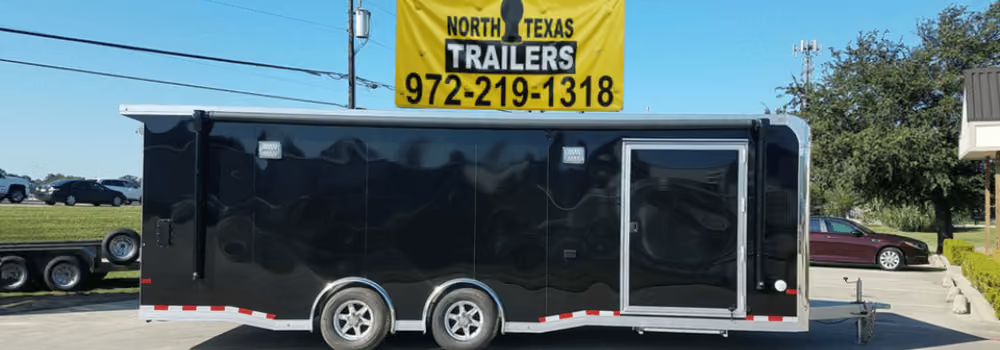
Guest 2: Yeah, thank you Will. North Texas Trailers, it's in the name. We are a three location trailer dealership in the greater Dallas Fort Worth area. We do everything that you can expect out of a Normal car dealership. We sell new trailers, sell some used trailers as well and then we do service, maintenance and repairs. We also have, we sell parts over the counter and we do sell rentals as well. Great.
[3:13] Host: And how old was the business and how big was it when you bought it?
Guest 2: The business was founded with one location in 2007, expanded to the two other locations and a few years after that. So we've been around for 16 years. When I bought the business, I think we had 17 employees. We now have 22. And the business had experienced some tremendous growth as a result of some Covid tailwinds. So in 2021 the business did nine and a half million in revenue.
Host: Fantastic. Well, we're going to hear what has become of those tailwinds. Are they still there or what? We'll get to that. Remind us just a little bit about the size of the business in terms of any kind of. Well, both the deal terms and the size of the business and how those two fit together and then we'll get into the now.
Guest 2: Yeah, I, I had an SBA loan, a highly, highly leveraged. I was able to negotiate a standby seller note with, with the sellers as well as a regular seller note and so brought minimal capital to, to purchase due to the, the structure purchase price was $4 million and EBITDA in 2021 was around $1.7 million.
Host: And as I recall that 1.7 million in 2021, that was, that was the, the COVID bump. It was, it was closer to 900 in previous years.
Guest 2: Yeah, 18 through 20 average around 900,000.
Host: Well I mean 1.7 or 900,000 great SD EBITDA numbers to get as a self funded searcher. And one of the big themes that we talked about in our first conversation Shane was, was how you were able to get your hands on such a fantastic business after a relatively short search. It was a six month search and you were extremely systematic about things and so that interview will be linked of course and so people should definitely go back and listen to that because you really had a dialed in process and were rewarded handsomely for that. So Shane, bringing us up to August 2023. Open ended question. How's it going, Will?
Guest 2: It's been awesome. It's been fantastic. This has been by far the most professionally rewarding year of my life, bar none. I don't want to be cliche but like a lot of successful searchers say we wish we'd all done this sooner but you know, life happens for a reason. As I mentioned in my first podcast, I was laid off. That was what set me down, this journey. Had that not happened, you know, I don't know if I ever would have taken the leap and been had the Runway to do so. So, you know, it all happens for a reason. But that being said, it's been a great first year in business. Financially we're doing well, but personally and just professionally, I've really, really enjoyed being the leader of my own business. Getting to work with such great people impact the lives of people in a much different way than I did in, in the corporate world. So it's just, it's been awesome.
[6:27] Host: Well, when I'm, when I hear you, what I heard you just say about what's been so great about it, a lot of that is kind of the people related stuff. You like being a leader, you like the, the relationships that you've established. Impact is a word that you'll hear a lot of my guests say. You just used it. How you're able to impact their lives. Can you, can you follow that up with any specific examples how you've been able to impact a life or an example of, of, of leadership? Your role as leader, that was particularly gratifying and it just adds a little bit of color to, to the broad strokes.
Guest 2: Yeah, I mean I have a lot of different examples to pull from. You know, it's a very different life. Managing technicians, parts and service advisors, trailer salespeople. I mean it is a very, very blue collar business. Kind of rough around the edges, to be completely honest. And that's a theme within the industry. I'm excited to see some of that changing and I've had a lot of people reach out because of your podcast, people that are searching and come across other trailer dealerships. And I welcome it. I think it's awesome. Love to see people taking a look at this space. It can be great. It can be pretty ugly though too. But getting back to your point, you know, within the first four months I added a 401k company match, which we had never had before. I added health insurance, which we had never had before. I have basically quintupled our bonus opportunity for this year. I've completely changed our compensation and bonus structure to be. Even though all of our employees were, had some sort of incentive compensation incentive, I've realigned that so that it's just easier to follow. It's more focused. People are achieving and making more money than they did before. But it's even more personal than that. You know, I have, I have a family that works for Me where there's four different individuals, cousins, nephews, brothers, sisters that work within the business in two different locations. And you know, and just being able to provide for that family and just stories like that has been awesome. You know, I would say that the one thing that I contrast it with from my corporate life is one of my favorite things in the corporate business was, you know, getting a young hungry person out of college or even out of business school and kind of mentoring them and seeing them develop and you know, aligning their white collar, you know, high compensation promotion interest with my own interest as their leader and helping develop them. And as a small business owner, I don't really have that anymore. Right. It's a very flat organization and until we can grow to multiple locations, there's really no middle management. So it's a very different type of mentoring and development than it is in such a big corporate organization. So I miss a little bit of that. But I think I'm having an impact in a very different way which is, which is also very, very gratifying and probably more real if that makes sense.
[9:27] Host: That's fascinating. And Shane, some of the stuff that you just mentioned that you did. Health, you introduced health insurance. So before you there was no health insurance and now there's health insurance. What a, what an enormous additional benefit.
Guest 2: Yeah, and costly. But I'm, I'm, you know, I think it's really important and it's actually very rare within the trailer industry. So it wasn't, you know, it wasn't as if the, the previous owners were doing anything kind of out of the ordinary. But I felt like, you know, health insurance is really important and a 401k is really important. And honestly, I mean some of what I've been doing is just kind of financial education my employees and trying to get them to understand, you know, what, that, what long term impact that can have. And so, you know, a lot of this has been just education trying to introduce people to these, these concepts that are kind of somewhat foreign to them and explain the benefits. And you know, we've had, majority of the folks are participating in the, in the 401k, but not everyone's participating in the health insurance. And you know, hopefully as we go into our open enrollment at the end of the year that'll increase a little bit and we'll get more people on the program. But it is a lot of kind of education because it's something that's, they've never been exposed to before.
Host: Let's talk numbers a minute if you can. So as you said, the years prior to Covid, the business was doing for a few years there, I think multiple years, about 900,000 in SDE had this fantastic tailwind that got you to 1.7 of SDE in 2021. Where is STE looking at. Looking now understanding that you've added a lot of costs in the form of these benefits.
Guest 2: Yeah. Revenue through July is up about 10 and a half percent, which I think is fantastic. You know, it's not the crazy 200, 300% growth that some of your guests share, but it was a bigger business with multiple locations and. Yeah, so I'm very happy with that. Gross profit's up over 12 and a half percent. And then, you know, obviously my P and L looks a lot different than the previous owners with. I'm paying myself a salary, health insurance, depreciation, interest on the SBA loan, all, all kinds of stuff. But when I back all that out and I really try to get to an SDE number, we're actually exceeding 2021, which was their best year. We're on track too, so we'll, we'll pass 10 million in revenue this year, and SDE will, will surpass what 2021 did as well.
Host: Man, that's fantastic. So, so this Covid bump was not just a bump. It was a. Appears to be, knock on wood, kind of a secular change. You got to this new level of revenue and it appears to be sustaining.
[12:02] Guest 2: Well, the, the biggest difference is that our true trailer sales and the profit we could make on those during COVID was much higher than what they are today. Prices have, have normalized. Inventory is now available within the industry. All the dealers in DFW are, are fully stocked on inventory. So in 2021, nobody had any inventory. You could charge whatever you wanted and people were going to buy it. That's not the case today. Where we've made up the difference is in our parts and service and which is a. Already comes with a higher profit margin as it is. And really tried developing that, increasing our inventory levels. You know, my job as leader, I feel like, is to identify obstacles and problems that are in the business or things that don't, that don't allow my employees to be as successful as they possibly could be and to remove those roadblocks, whether that's through money, whether that's through an organizational change, whether that's through software. And so, you know, quite literally, we're just ordering a lot more parts inventory than we ever did before, and we're, we're buying in bulk and we're getting bulk discounts because of that. And that's allowing us to, to increase our margins on the parts and service side and maintain higher sales revenue. And, and also that's some parts availability that Covid impacted as well. So just a reinvestment on that side. And, and then as we come into this kind of normalized selling market, it's, it's reacting to that and figuring out, okay, well, things have normalized. We can't expect things to continue in this Covid craziness, which is a theme within the industry. In fact, in industry wide, in Texas, the number of trailers sold is about 20% down from prior year. But we're still, we're still up over prior year and up over 2021. And I think I attribute a lot of that to just, to some of the incentives I put in place, some of the managements that I put in place. The way that I am, you know, ferociously kind of following up with my salespeople about their follow up on leads and, you know, just trying to get a kind of a different mindset. We've also spent a lot of time developing a new sales process. So I think a lot of those things are impacting that where the industry is still kind of reeling a little bit. So I'm excited to see how that plays out and if we can continue that momentum despite what most people are projecting is a downturn in the industry or a further downturn. So we'll see. But I'm optimistic.
Host: That sounds great, Shane. Good for you for figuring out ways to, to strengthen the business, even though the industry itself is. They're seeing softening demand. I wonder why there is so much searcher demand, people picking up the phone and calling you about opportunities in this industry, given the slackening demand.
Guest 2: Yeah, and a lot of them have that question and kind of ask my thoughts on it. And you know, I can only tell them from my experience, which is revenue's up for us. So it's possible, you know, and I don't know that I have some magic or secret sauce. I think it's just, it's about how you approach the business. It's how you support and arm your employees for success. And if you're willing to do that and invest in that, I think there's still, you know, there's still a lot of opportunity out there.
[15:20] Host: Listeners of acquiring minds know that for almost any business you acquire, its success comes down to the people and how you develop and manage them as their new leader. Thing is, in addition to management, there is Also a lot of process and bureaucratic work when it comes to your new employees, payroll, compliance, HR technology, hiring, to name but a few. These processes are crucial to get right, but at the same time distract from where you want to be putting your energy in leadership. So Aspen HR is an HR firm and PEO that takes this work off your plate and handles it with the care it demands. Aspen is owned and run by Mark Sinatra, himself a successful former searcher. So Aspen's own leadership understands the HR challenges that searchers have. Post acquisition, the firm is offering Acquiring Minds Listeners a complimentary pre acquisition HR and PEO review for your target business. Check out aspenhr.com or contact Mark directly@markspenhr.com Let's linger on the the business itself here for a second. So one of the kind of types of business that I haven't given a lot of attention, but it interests me is, is a dealership business. So it's not retail? It's not exactly. I mean it kind of is retail. You'll correct me if you don't really consider it retail, but it's high ticket item retail. Generally. Some dealership businesses are exclusive. You're the exclusive dealer for X manufacturer. Others, I guess you serve multiple manufacturers. I'm not able to give a lot of description here because I kind of, I'm not that familiar with the business model. But it intrigues me. If you can generalize not just about the trailer dealer business, but dealership businesses in general as a business model, what's it like? What would you tell people? Is it fundamentally just kind of a retail business or is there more, more nuance there?
Guest 2: It is a retail business, but there is more nuance. And, and this is not, this is not a traditional search fund kind of business. I mean this is, this is really not even what some people are in self funded search to go after. Probably not the right business. It doesn't have a lot of those same characteristics with recurring revenue, contracted revenue, you know, and certain things like that. And really the best way to scale is to add locations and add geography and that comes with its, you know, own challenges. So I wouldn't necessarily suggest this as a blanket for everyone who's looking for a business. It fit what I was looking for really well and I'm very excited to be in the business. But to answer your question, you know, it is retail. You know, all the same things that make you succeed in retail. Quick follow up with customers, great customer service, high, you know, high scores on Google reviews, good SEO, you know, getting, you know, good Marketing, all of those kind of things play into it. Where we're really trying to differentiate ourselves and create a value proposition to our customers is we do a lot of B2B and a lot of B2B 2G business. And as I kind of look at who our top customers are and why they do business with us, a lot of that has to do with convenience and a high level of service and a quick turnaround. And so if I can continue to lean into that and really try to go after more construction related businesses, more municipalities and school districts and maintenance, you know, teams and lawn, lawn care, landscaping businesses, that their trailer is how they make money, it is how they transport their product to and from their job site, it is how they get their work done. And if their trailer is not working, at least that truck is not able to work that day or that crew is not able to work that day. And so where we've differentiated ourselves on our service side is oftentimes we can turn around a trailer repair in one one to two days, whereas some of our competitors will be two to three weeks. So for the business owner, especially a smaller business owner who's maybe has one or two trailers, that's incredibly important. So we've just, we've been really good about developing partnerships with some of these, these companies and I'm looking to continue to expand that. We're actually in the process right now of hiring an account executive, an outside sales role to, to go out and find some of these new customers. Of course, you know, like any retail business, we'll sell, sell to anyone. If you're a homeowner, you want to come get a little utility trailer and it's the only trailer you buy in the next 10 years, we'll sell it to you, but we're not going to target you, right, because you're going to probably price shop us against six or seven other dealers. You're going to do a whole lot of Internet research and all these other things. And if we, if we can find the right trailer for you at the right price point, we'll sell to you. But my goal is to go out to the construction company that has 20 trailers in service and become the dealership for their entire life cycle. When one breaks down, I'm going to sell them a new one. And inevitably when it breaks, they're going to bring it in for repair or when they need replacement parts, and let's say they have their own mechanics and service team, they still need to get those parts somewhere. So they're going to come to me, I have good margin on those, those parts as well. So I want to own that life cycle with those larger clients and by providing a really high quality service and convenience service to them.
[20:43] Host: Sounds like a winning strategy to me. Shane the but, but let's linger on this point about it's not a searcher friendly business in the sense that it doesn't check some of the classic boxes. Big one first one always being recurring revenue. We all love recurring revenue when we can get it. But plenty of people will say don't, you know, don't overemphasize it. There are lots of really great businesses out there that don't have recurring revenue. Yours is not a non recurring revenue business. Does that affect you psychologically? Like is it every morning you're leaping out of bed breathlessly checking what yesterday's sales were and as you kind of, you kind of alluded to hammering on your sales guys sales team to make sure that they're following up. I mean is it always feel like this kind of perpetual race to push sales? Give us a picture of the kind of feeling of that and then does it make, would you then tell people that recurring revenue is more or less important than we think?
[21:45] Guest 2: Yeah, I, I, I absolutely have those thoughts. And it's our sales has been this kind of roller coaster with peaks and valleys in the last 14 months. July for instance, was a really bad month for us. It was the worst month we've had since I took ownership. And there, there really isn't any rhyme or reason to it other than it's hot as hell in Texas and nobody wants to go out and search for a trailer. But it's been hot as hell in August and we're still doing well this month. So it's that, that's the part that's frustrating is that I, there doesn't seem to be much rhyme or reason from one week to another. And you know, we can have a week where we do $200,000 in sales and the next week we sell three trailers for, you know, $30,000. I mean it can really do these crazy peaks and valleys on the sales side. The service and part side stays far more consistent. And so that's really, you know, that's really been beneficial. And the way that I try to look at our business is if I can pay my fixed expenses or operational expenses through the gross profit made on parts and service, then anything I sell kind of is, is gravy or, or falls to the bottom line. From there we're not quite exactly there, you know, we still need sales and if we didn't have sales, we would be in a pinch. But we're getting closer and closer to that point and I think when we can get there, as well as develop more consistency with our sales process, I think that'll be a really good sweet spot. But yeah, I mean, absolutely. If I knew if I could project, you know, November and December and 2024's revenue based on long term contracts and you know, this, the pipeline that my sales team has, that'd be great. But the reality is that's just not the case in this environment.
Host: And kind of related to that, the. You mentioned that you were very levered so you have a big SBA loan. And that SBA loan, from the lender's perspective is a nice recurring payment. You're paying that service, that debt service every month. How does that feel? Have you, is it just one of your costs, one of your big costs like payroll and it's like not, not so different, or does it feel like a burden, a weight that you're bearing?
Guest 2: Luckily, right now it just feels like a normal monthly expense. We, we, you know, ever, pretty much every month we're exceeding, we're making money, we're, we're. I'm able to pay myself a salary. I'm able to put money away into savings as well as, as maintain my debt payments. I'm not paying down debt any early or fast right now, which I would like to do probably a few years from now. Um, right now I'm kind of stockpiling money away in effort to buy the properties that my businesses are on because the sellers are, are still my landlords. And you know, I'd like the autonomy of being able to do what I want to do as far as improving and upgrades to those properties in those buildings. And I'd like to do that as the owner of the properties versus the tenant. So that's kind of my, my number one project in the next six to 12 months and we'll be there pretty soon. But of course, you know, the number one job as a business owner, especially an ETA business owner, is to, you know, you know, is to protect your cash flow. Right. And so I'm just trying to put money away and have money, you know, in coffers to, you know, break in case of emergency. If that, that SBA payment comes up on the 15th of the month and it's looking a little tight, I know I'll have money set aside to make sure that that's not an issue.
[25:07] Host: Two more questions for you Shane, you bought a, your deal was a stock deal, not an asset deal. Unusual in our world. Has that, is that now in the rear view mirror, no tail to that, the structure of that deal or has there been stuff now over a year into the business where you still feel the difference there?
Guest 2: As I mentioned in our first podcast, we were actually served a lawsuit the day before closing. That lawsuit has since been settled through attorneys at the insurance company hired. And you know, I was confident at that time that insurance would handle it and they did and they settled. And you know, but had we not had the proper insurance for that, that could have been a whole different challenge. And, and so I can't say it's in the rearview mirror because any liability from the previous 15 years of business ownership, you know, depending on statute of limitations could be brought up at any point. There could be a trip and fall that happened in 2019 that I'm not aware of and somebody decides to sue now or an employee related issue from an employee that I've never met that comes up. But you know, I think that you know, that's where having the right insurance and, and the right kind of guard, you know, guardrails in place to protect yourself and if you're going to do a stock sale you got to go into it eyes wide open and, and probably do a pretty good risk analysis before going in. And then if you don't have the right insurance, arm yourself with the right insurance and potentially maybe even go a little overkill just with the umbrella policy and everything else to make sure that should something come up from the past, you have insurance in place to handle that.
Host: Shane, you and I had an interesting exchange over email about the. You're still a listener to acquiring mind so thank you for that. And you catch yourself sometimes hearing some of the best, best stories on the pod. And by best I mean just my guest has just been absolutely killing it from a financial perspective. And you know that that creates in all of us a certain emotional, a certain emotion called envy. What did you have to say about that? I thought it was really fascinating.
[27:17] Guest 2: Yeah, I, I, I, I hear your guess and, and obviously you have some really impressive folks on that are doing great things with their business and people that are tripling the size of their business in two years or less and people that are building these $75 million revenue hold cos and you know all these different examples. Right. And, and I'm envious to a certain degree of that and I, I, I, I can see, you know, man, that would be just so Cool to be able to, to be the owner of that. And maybe some of it's, a lot of it's prideful. But then when you really think about what is it that searcher, why is it the searcher, why do they need that level of growth or what, what do they have to put in to achieve that level of growth? You know, I was, I, I, I wanted to be a business owner, to basically paddle my own boat. I wanted to answer to no one, have the ability and autonomy to run a business the way I saw fit. And because I had such a sour, you know, sour exit from the corporate world and experience in the corporate world, I wanted to take my, my life into my own hands. And as a result of that, you know, I get to choose how hard I work and how many hours I put in every day and what my work life balance looks like. And you know, if I wanted to triple the size of this business in the next two years, I would need outside investment, I would need a whole lot more that I'm not doing today. And some may look at me and say, well, why aren't you doing that? But I plan on holding this business for a very long time, you know, hypothetically forever and probably building to it and at maybe adding locations or buying other dealerships or maybe developing or buying into a different type of industry and having an operator run this. But I have such a long term outlook on this business that, and because it's cash flowing, it's doing well. I'm very happy with 10 to 15% growth. You know, would I like to do a little bit better and get to 20, 25%? Absolutely. But to double in such a short amount of time is just, this business is not really equipped for it and I have to be okay with that. And I am okay with that. Because I've gone on several vacations this year, I've been able to step away from the business. I'm working from home today, you know, and I work from home at least once a week, every week to, you know, kind of take a step away from the business and focus on what I need to focus on as a leader, but also to recharge a little bit. Um, and I think if you're, you know, if you have investment, if you have a five to seven year hold period or less, if you are riding some sort of industrial tailwinds, like you have a different outcome that you need to achieve to satisfy that, and that can drive a lot of the decisions that you make both early on and throughout your whole period. Um, and for me, that just wasn't the journey I wanted to go on. You know, I, I don't want to be in a private equity kind of mindset where I have to achieve this 30% IRR. And I have these, all these folks that I have to answer to to achieve some sort of financial outcome just to meet their, their needs. And for me, that's just, you know, that's what I'm more comfortable with, and I'm, I'm very satisfied and happy in that. But I have to check myself on that whenever I hear these success stories, whether it's your pod or elsewhere, and just remind myself that's not the journey I'm on. That's not necessarily why I got into search. You know, I happen to thread a very, very lucky needle in the sense that I got to take ownership of my, my business, I didn't have to take outside investment while also buying a fairly large business at a very good price point. That's cash flowing well. So I, I got, you know, I have to admit, I got very lucky, but I, I put in the work on the front side to, to put that, to get to this point, and also went into an industry like we've talked about, that's, you know, not traditional, and I'm okay with that. So, you know, I think as, as searchers that are still looking, really think about why you're getting into search. Do you want the autonomy of being a business owner? And do you want to be able to. Do you want to work 60, 70 hours a week? Do you want to consistently be under pressure to hit some sort of financial growth target? Or, you know, are you just looking for the best financial outcome, period, and you really don't want to be an operator for the rest of your life? Neither answer is, is right or wrong. It's just something that you, as a searcher should look introspectively and determine what. Why are you getting into the space? We all know that it's a great financial, you know, economic outcome or it's a great economic opportunity, but if that's your only driving factor, then be aware of that versus all the other things that could potentially be driving your motivation.
[31:58] Host: Yeah. And realize when you hear somebody else's story that might seem somehow cooler than yours or than the one you're hoping for yourself, that they had their own decision matrix that they had to layer on top of when they were doing a search and buying a business. And that decision matrix might have been very different than yours. So. So it's really kind of hard to know really how somebody's doing without also knowing what's driving them what their plan is, what you know, what, what their backstory is, what investors they might have breathing down their neck. So very wise words and appreciate the, the transparency and vulnerability there. Shane. I think it's really important that people hear that. Yeah, I love featuring the, the, the Holdco stories with the you know, the eight figure hold cos But I'm, I'm aware of what it does to my own psychology and so I'm, I, so I'm also aware of what it does to the, to the listener psychology. So thank you for, for sharing and calling it all out.
[33:00] Guest 2: Yeah. A.B. absolutely. And I, I would just say there's no right or wrong answer. Right. And there's people you, there's the common theme of don't buy too small but if you're just trying to buy a lifestyle business then that could be okay for you. Right? If all you're trying to buy is a lifestyle and get away from corporate America that could be okay depending on the business. If you are come from a investor background or PE background or investment banking background and you want to, you know, get this outsized return, well then that's going to, you're going to need a look within those guardrails to find the right business and then when you're in the business execute on all those growth levers to hit those metrics and that's a great outcome for you too. So it's just really what is important to you as a searcher, right?
Host: Exactly. Thank you. Shane. How can people, how do you prefer people reach out if they're, if they'd like to. Yeah.
Guest 2: I've had a great time connecting with searchers since the first pod. So Shane, at NTX trailers my email is the best way to get a hold of me. If you're in Dallas Fort Worth, happy to meet up or just get on a phone call. It's been a, it's been a really rewarding experience to, to give back to people who are on this journey and I'm glad to see that it's continued popularity.
Host: Shane Ursam, thank you very much for coming back on sir. Congratulations on your success so far.
Guest 2: Thank you very much.
Host: Hope you enjoyed that conversation with Shane. Now comes my update conversation with Brandon Adams whose first appearance was episode 59 entitled Six Months in the Truck Buying an Ice Delivery biz Link in the show notes Brandon Adams welcome back to Acquiring Minds.
Guest 3: Thanks for having me back Will. It's a pleasure to be here Brandon,
Host: your first episode aired way back in early 2022. You had acquired an ice delivery business the year before 2021. And one of the key parts of your story was how you found yourself behind the wheel delivering ice for the first six months of ownership, which was kind of the perfect image for how unpredictable buying a small business can be. But you rose to the occasion, rolled up your sleeves, and became an ice delivery guy because that's what was needed. Today we're going to get an update on how things have gone in the year and eight months since we had that first interview. But before we get into it, Brandon, please remind listeners who you are and what brought you to the world of buying small businesses.
Guest 3: Sure. Thanks, Will. My name is Brandon Adams. I'm one of the one of two partners of K4 holdings based in Philadelphia, Pennsylvania. My business partner, Don Ware, is down at the ice business right now monitoring things and working in the business still. But yeah, I was in the army for six years as a recon team leader, then found myself pushed into the hedge fund space for 10 years. And the small business space was something that Don introduced me to from his time working in a number of manufacturing businesses for his father. And it seemed like a great opportunity to combine the small team leadership experience of the army with the intellectual and financial challenges and problem solving of the hedge fund world. So it's been nothing short of exhilarating and challenging and it's been everything we've expected it to be and more. So like like you said in the intro, driving trucks and reminded me of one of Chen Mark's weekly newsletters, maybe from two weeks ago, when they're talking about having the correct expectations about what you'll be doing in, in the business. And when Trish talks about manning the the parking lot attendant slot or being up at 2 in the morning to plow snow, that's exactly what we've been thrown into as well.
[36:47] Host: Great. Well, I'm going to have you elaborate on that in just a second here, Brandon, but before we get into it, remind us also about the business that you acquired. We've already told people that it's ice delivery, but give us a full picture.
Guest 3: Absolutely. So we found this business in the fall of 2020, closed in April of 2021. The name of the business is the Philadelphia Dry Ice Company and also operates a packaged ice delivery company that operates under the name Gems Ice. So we do all the above and some related products. So we distribute dry ice to large medical laboratories. So at the hospital systems in Philadelphia, you can Think of the University of Pennsylvania, Jefferson Health, Temple Health, also to large food logistics providers. So folks who would be utilizing the dry ice in their delivery of either frozen seafood or frozen meats or ice cream, think US Foods and some others along those lines. And then we also deliver packaged ice. So you can think of the traditional route based service where you have a merchandiser set up outside of a convenience store. Or in our case, we do mostly construction sites and job sites. So there would be requirements from the workforce to have a certain amount of ice and water on hand at any given time, specifically in the summer, but also through the winter. So we have routes set up where we deliver packaged ice to those types of consumers as well. And then we also sell some related products like insulated shipping coolers and whatnot.
Host: And between the first customers that you mentioned, the kind of big, sort of more institutional and then versus the kind of having the construction sites and convenience stores, what does the pie chart of that breakdown look like in terms of revenue?
Guest 3: Sure. When we bought the business, it was roughly 65% to the dry ice and about 30 to 35% to the packaged ice, with the remaining being the ancillary products. Since the owning the business for the last two to two and a half years, that mix has gone down slightly. So maybe 60% dry ice to 30 to 35% wet ice. Still maybe a little bit higher, 35 to 40% on the wet ice side. And there are different reasons for that. And I think the last time we spoke, one of the growth areas that we may have identified was on the dry ice side and the need for additional dry ice, perhaps manufacturing capabilities. And that sentiment has shifted since we last spoke as well. And we're actually finding greater opportunities on the package ice side.
[39:30] Host: Interesting. Without knowing anything about ice manufacturing, that at first blush seems like good news because I would imagine it's easier to make wet ice than dry ice. But. But cool. Okay. So my instincts are right. Well, let's put a pin in that. Or. Or not. To the next question, if this is, if this is part of the answer to this question, I like to just ask kind of open ended, how's it going? How are you feeling about things I should say in the last 18 months? So how's it going since we talked last year?
Guest 3: It's going very well. I think since we last spoke, I might have been, may have been saying about our goal to hire a general manager in the coming three to six months after we last spoke. We ended up doing that. We hired a gentleman who previously had Been running one of the branch locations for a very large dry ice manufacturer. So he knows the dry ice base very well. He knows all the dry, his customers in our region very well. He's a great team player. He's added a great deal to the company and he's the one that's, that's in the truck that's, you know, operating day to day and he has full responsibility for the team. My partner and I still manage the balance sheet and the financials and you know, coach him along quite a bit and we help out wherever we can and wherever he wants us to. But he's taken, he's taken full responsibility for the day to day actions and I think the next leg of the journey for us is going to be to get him to be more in the office and less on the road in the truck because he's doing quite a bit in the truck as well. But he's a local guy. He's incredibly happy I think with the position and the freedom and autonomy we've given him to operate and run the team the way that he sees fit and it's gone very well.
Host: Well, people are going to be really interested in this, Brandon, because putting in an operator, a general manager is a step in the evolution of owning businesses so that you are able to then work on the business rather than in the business or perhaps buy another business or just kind of work on strategy. Every. Everyone knows, you know, the value of putting in a gm. You've said it's gone well. Is it as. Would you encourage people to be as optimistic about the possibilities of putting in a gm? Has it, has it panned out and allowed you guys to think more strategically about things? Maybe look at another acquisition.
[42:08] Guest 3: Yeah, I think it really depends on your individual goal from the get go. Don, My partner and I have, you know, been striving to create a holding company. You know, not the typical reason why everyone would, would say so, but you know, it's a, it's a diversification thing, it's an intellectual challenge thing. And so it's been our goal to have somebody that can manage these businesses day to day so that we can focus on, like you'd mentioned, buying additional businesses, growing the existing businesses organically and inorganically. And so yes, hiring this gentleman was the right move. It's freed up a lot of our time to focus on finding other businesses to purchase. We have one under Loi currently. We wouldn't be able to do that work without him taking up a lot of the, a lot of the bandwidth in the ice company day to day. It's also allowed us to detach and look at the ice business from a higher point of view, from a, from a wider, wider angle lens. And so that's allowed us to identify pieces of the market where we might be able to capitalize if we allocate resources one way or the other. And you know, if we're in a truck making deliveries, making sure that the customers are happy, making sure that the employees are happy day to day, we don't have all the time in the world to, to focus on those things. And so I would say that you learn different things, you know, buying this, buying the ice business. The most important being that labor is a great challenge, especially in unskilled work. I hate to say that it's unskilled, but I think that's kind of how the market would define it. But it's, it's very difficult to find people who are going to be committed to the team, committed to the, to the job, when you have to find a way to, to give meaning to it. And so John, our general manager, has done a great job of, of creating his own vision, but also under the umbrella of, of our guidance and our kind of intent with, with how we want the business to progress. And I think he, over time that we've, we've turned over a number of the people that probably didn't fit that vision or didn't share the same sentiment about where the business was going. And the team has evolved to be a really great, hard working, high morale, everything that we could have asked for. Maybe we have one or two folks who are on the outskirts and I think seeing the core group really come together has allowed them to see how that might, how they might fit into that broader picture as well.
Host: And this vision that you're talking about, John is the GM's name?
[45:02] Guest 3: Yes, John.
Host: John is the author of this vision. Or did you, you and Don, your partner and John collaborate to articulate a vision?
Guest 2: No.
Guest 3: So Don and I have, you know, our own thoughts, high level thoughts about why we want to be running these businesses. And, and obviously we want the financial independence, we want the intellectual challenge, we want the leadership challenge. But part of it also is we want to be able to give our employees meaning, give them resources and ways to improve themselves. Many of our employees have goals of running their own businesses one day, and we want to empower them to do so however we can. One of our, one of our warehouse guys currently runs a home improvement company on the side. So, you know, he's leaving work at 4 o' clock and he's going to a job site where he's either laying some flooring or he's redoing somebody's bathroom or kitchen or porch. And he's doing this in some not great areas of Philadelphia. And he's really providing a community service and improving these people's homes and their lives. And so we try to do as much as possible to encourage him to keep doing that to see if there's any way that we can help, if there's any way that we can, you know, market his business for him. We have another gentleman who is studying on the side to become a psychiatrist or counselor. And so we're trying to help him chart out a path towards being able to do that independently. So we really want to make sure that we're improving the lives of our employees as much as possible. And so when we brought John in, we, without telling him what our vision and intent was, we asked him, you know, kind of what he wanted out of the job, what he saw with this business and what his overall mindset was moving forward. And so that's something that he shared without us soliciting it from him. He's also somebody who wants to be running a business one day. And he actually, as of last week, just closed on his first business, which is a vending machine business in Philadelphia, which again, great hard working guy. He's, he's managing our business from eight to four every day. And either before work or after work, he's out filling his vending machines now. So we love empowering people, we love seeing them flourish in, in our business and outside of our business. And that's a, a great byproduct of, of owning your own business.
Host: That's fantastic, Brandon. How interesting. A bunch of budding entrepreneurs on, on, on the payroll and everybody kind of helping each other become better ones. I want to. One of the things I liked about your, your trajectory here, Brandon, is that again, lingering on this point of hiring an operator is that you, when you got to the business and you found out that you were going to have to be driving the truck yourself, really doing the delivery of the service that the business provides yourself. And for six months and you, as I said in the intro, you didn't shy away from that. You, you dove in and did so. And yet now you have found a GM and you're, and you're doing kind of the, you've got another business under loi. The first step to building a holding company is, is well underway. You're Thinking strategically. It sounds like you've, you, you, as you, as you look at the industry in which you play the ice business, you're thinking very strategically about it and what opportunities there are and where you should, where you should invest. So I see in you and Don, your partner, guys who are really appreciate both doing the work themselves, being operators themselves, and then also being strategic and stepping out. I feel like many of my guests are either one or the other. They're not, if they're not scared of operating, they like the idea of operating and they see themselves as the operators of the business. Maybe indefinitely, maybe one day they'll, they'll step out. But they, they, they're not in a rush to delegate away the operations. They actually, they run to it. They like the operations. And then I see the other extreme, which is probably more common, where people just want to move chess pieces around. They don't want to do anything operational. They want to get a GM or operator in there as soon as possible or preferably hire a business with an operator so they can just think strategically and, you know, do the fun, intellectual, build the empire stuff. You guys seem like a really great balance. So long preamble to my question, which is when did you and Don decide that it was time? When and how did you decide that it was time to bring in a gm?
[49:50] Guest 3: That's a good question. I think it was going to have to happen all along. If we wanted to accomplish our goal of creating a holding company, owning several businesses, we had to find the time to be able to put in the work, to go out and find businesses to purchase or find ways to grow the ice business. And it wasn't going to happen with us palletizing packaged ice and driving the forklift every day or driving the delivery truck every day, while also, you know, reconciling the books and whatnot. So I think we just worked really, really hard the first year. We took every single order that came in. I would be at home having dinner after work with, you know, my wife and my daughter and my wife was pregnant at the time. And it'd be 6 o', clock, 6:30, having dinner and I'd get a call that one of our drivers who had been on, on after call duty, you know, wasn't picking up his phone and something needed to go out. It was a very small, small order. It was probably a, you know, 300 order of packaged ice going to a restaurant in Philadelphia. And I live about 40 minutes away from the facility. And there were many, many times where I would take that call and be like, hey, I'm sorry, I have to go. I have to go complete this delivery. Because I, at that time, I didn't know if the business really depended on that incremental $300 or not. So every, you know, every other night or every third night over the summer that, that first summer I was driving in after I'd already come home to go make these small deliveries and, and you know, eventually they added up. They did. They were, they were meaningful. I don't want to say that the $300 wasn't self meaningful, but, you know, making sure that you're doing what you say you're going to do for your customer, that was important. And so the company has a really great reputation in the city for, for doing what we say we're going to do. Being reliable when many other people are not. And you hear that, that trope all the time about, you know, all you have to do is pick up the phone and to an agree to a degree that's a little absurd, but there is a little bit of truth in that. And I think when someone does get you on the phone and you're, you're kind and you're empathetic to their situation and you're doing everything that you can for them, I, I think it goes a long way. And our reputation has, you know, definitely, I think we had a great reputation before we bought the business, but we've definitely been able to keep that, keep that up and I, I hope get more of a positive reputation as well through the way that we've handled our inbounds and the way that we've coached our office manager taking inbounds. So putting in the work that first year, we did very well the first year. The year prior to us purchasing the business, they had had a number of COVID tailwinds. And the business was ratably doing about $750,000 of EBITDA even before the previous owner had bought it. And he kind of kept it steady at between 6:50 and 7:50. Covid brought a deluge of demand for dry ice as people were ordering food from home. And the strain on the logistics piece of the puzzle skyrocketed and people were just clamoring for dry ice and paying up for it. So he went from about 700,000 of EBITDA in 2019-2020. He did, did 2.4 million of EBITDA. Incredible. So it's enormous tailwind. We benefited a decent amount from that tailwind. So I think the first year we did right around 1.4 million of EBITDA. So we had a lot of excess cash to, to allocate as we saw fit and we, we set a lot of that aside to obviously purchase another business. But the following year, the second year, we hit probably about 1:1. So it's trend, it's, it's not trending up, but it's, it's sustaining itself well above, you know, pre Covid levels, which is more than we, than we modeled out. So when we were pretty comfortable with the stability of the business, with what we saw as the amount of work that had to go into it, and we got a better gauge for what we needed on a go forward basis in terms of staffing and we just had a better handle on what our expenses were going to be, what revenue we could really rely on, and what revenue was kind of high risk at that point. Once we learned the business intimately, we felt comfortable that it was, it was time to find the right person to be the general manager. And like, I'll just say like I did before, we found the most important thing in this business was, was labor and, and talent management. And it's probably been the biggest challenge for us, but I've also found it to be the most rewarding. Part of, part of owning the business is honing those, those systems for hiring and figuring out how you, how you can find an, you know, not necessarily an A player for, you know, the general population, but an A player for a forklift driver or an A player for someone who's going to greet the customers coming into the facility and package up their ice for them and carry their ice to their car for them and help the drivers and the delivery drivers load their trucks. How do you find those types of A players? And we've not always done a great job. We've probably hired 10 people since we started and I would say, you know, three of them ended up not being all that great. And it was probably because it was early on and we felt a great time crunch to get, to get somebody in the seat. And you know, like you learn in the hedge fund world, if you're trading, you know, you can only do, you can only have two of three things. You can have price, you can have volume, or you can have speed. You can choose two of those. Same thing with, with hiring. You know, you either have to hire someone right away, you can hire the right person, or how much are you going to pay them? Yeah, you can only have two of those things. So at the time we put a premium on getting somebody hired quickly. And I think we found that that was the incorrect variable to solve for. But as we learned that and changed our systems over time, we've hired better and better folks. And that's only added to the morale of the team overall as well. So everything is kind of accelerating exponentially.
[56:34] Host: So one of, one of your learning, I basically, I want to see if we can get for the audience something that you learned through getting better at hiring. Because for many of the businesses that my listeners will be interested in, labor will be the bottleneck for those businesses as well as it is in your case. So this hiring thing is such a universal challenge. You mentioned what was it? Quick volume or
[57:00] Guest 3: essentially. Yeah, yeah.
Host: Price to pick two. Right. And you guys chose the wrong one, which was speed, although it sounds like the circumstances necessitated it anyway, so you've now chosen. So you learn that that speed isn't necessarily getting somebody in the seat as quick as possible. Maybe isn't the right move. These processes that you're referring to, your hiring processes that you've refined, is there any lesson that jumps out there that you might share with other people who are about to embark on, on, you know, a labor heavy business? No.
Guest 3: And, and you know, I've, it's, it's still iterating. Like I said, we've, we've only hired 10 people and to us that sounds like a lot because prior to this business ownership adventure, I hired a grand total of zero people. So 10's a lot more than zero and a lot fewer than, I'm sure. Michael Gurley's hired thousands of people and he's got a great, great process for hiring and I'm trying to learn from him and other people and I'm trying to iterate on my own process. And you know, a lot of it just comes down to the basics. Do you show up on time or do you show up in a presentable fashion? For our delivery drivers? You know, do you not have a suspended driver's license on your record that, you know, not, not like currently, but ever. So it's a lot, a lot of like just doing the basics. I think, you know, prior to that we had just been fumbling, fumbling around and worried about getting somebody in the seat as quickly as possible. So now we, you know, we have them come in, we definitely have them meet with every other team member to make sure that there's at least a basic level of, you know, the vibe is going to match way or the other. Yeah, we like to ask a lot about, you know, challenges they faced in prior roles or just in life and how they manage those challenges. We like to try to screen people for humility. It's not easy to do, especially if you're hiring for a warehouse laborer. How many times you're going to have them come in and how many times are you going to have them go through some sort of assessment where, you know, they're trying to get hired as quickly as possible and they're, they might have five other jobs that they're trying to go to who they're going to screen really quickly. And those might be for companies who don't mind churning through people really quickly. And for us, the marginal team member is meaningful and we want to take our time with it. So we also want somebody who's willing to take the time with us and who wants to be a part of a team like that and isn't just looking for, to get hired as quickly as possible.
Host: Fantastic. And another question, Brandon, on your decision to buy another business, so which is related to hiring your gm, how did you decide that it was time to invest your intellectual capital? You know, your attention, you're in Don's attention, I guess in looking for another business and you got one under loi. So that's going to require, you know, going through the whole acquisition process again, a lot of your attention that, that the best allocation of that attention was to buying another business rather than, rather than focus continuing to focus on the ICE business in growing it or making what other, whatever other strategic moves that you've envisioned there.
[1:00:28] Guest 3: Yeah, it's just a matter of value. So owning the ICE business, making deliveries, we provide ICE to other ICE businesses, funny enough. So we've learned a lot about the local market and what is potentially available and when it might become available. And those are all on our radar. And we spent a lot of time building those relationships and showing those folks that when the time is right, we're likely the right people to sell to. The time just hasn't come for that yet. The thing that might be on the, on the calendar sooner than that would be becoming a manufacturer of ICE for our own branding purposes and for more vertical integration that's being tossed about right now in terms of, hey, does it make sense from a real estate perspective, from, from a plant build out perspective, equipment and whatnot. But we always had our eye on the M and A market to see if there's, if there's value to be had and under what circumstances. And we did find like I'm sure a ton of people have spouted out recently on podcast and on Twitter that, you know, with with SBA rates anywhere from, you know, 9, 75 to 11% depending on what kind of rate you're getting. It makes it challenging, especially when seller expectations for purchase multiples haven't come down all that much. But the deal that we have under a lot right now, it was sourced proprietarily actually. Don came across it from somebody he met in a beer club. So this gentleman happened to be the accountant for this company is local, it's about 10 minutes from where Don and I live and it just came together over the course of about nine months. We met the owner for lunch with her. Accountant and personality seem to match up very well. We met the gentleman who is her general manager, who is fantastic and has been in the business for over a decade. And we had lunch with him and we've gotten to know him quite a bit and we're very comfortable with the team that they have in place. And at the end of the day, like I was talking about resource allocation, the value was right as well. So it was in a business that we felt comfortable with. It's a little bit, it's not as simple as the ICE business bringing ice from point A to point B, but they have a great experienced team in place and I think that we found value in what they were willing to sell the business for, the terms and also our ability to potentially grow the business. And it's funny that we went under ly about a month ago, maybe two weeks ago, another local business popped up that's generally in the same ecosystem that could potentially make for a great combination. So we're working on that right now and we're not taking our eye off the ball with the, with the ICE business expansion either. So we have a decent amount of retained cash that we can put to work and always looking for where the greatest value would be.
[1:03:44] Host: Well, speaking of retained cash, as I, as I recall from the, from our first interview, you, the what you paid for the ice business, the seller recognized that the, the incredible bump that he saw from COVID was likely not to last or it was going to come down somewhat. So he didn't try to do a multiple off of that year, but off of previous years. And so the fact, but the fact that it, it didn't stay way up at 2.4 million year EBITDA, but it, but it has, hasn't come all the way back down to 750, as you said, it's, it's kind of settling out somewhere nicely above where it Was preco, which is great. So you guys bought a business of, let's call it, you know, well, north of a, of a million dollars or let's call it a million dollars in ebitda. It's bouncing around, I recognize. And that's given you cash in the coffers. That's given you the ability to hire a gm. So are you advocates of buying as big as you can? Could you have imagined of buying a, a business with a lot less sde?
Guest 3: Definitely not. As a, as a two person team, I think I, I could have envisioned that as a, as a solopreneur perhaps, but seeing as we're a two person partnership, both with young families to feed, something smaller probably wouldn't have fit our profile.
Host: Right.
Guest 3: But that being said, and you know, I don't want to skip over the fact that having that cash in the bank was, was never a foregone conclusion. You know, we, we bought the ICE business based off of information that after the fact turned out to be quite faulty. And though all those things came together when we started operating and created quite a bit of worry for the both of us, luckily I think the underlying financials ended up being what we were able to get out of the business from a revenue perspective ended up being better than we thought. But that didn't hide the fact that, you know, the seller was, he was paying people under the table, he was kind of doing all the funny stuff that you hear about here and there. And luckily none of it was meaningful enough to bring the ship down. We were able to institute better systems, we were able to, you know, create a normal payroll, much to some of the employees chagrin because they were on the beneficiary end of that and some of those folks had to get cycled out and that was difficult. I don't want to understate how difficult that was at first, but I think, you know, we were able to bring, you know, some semblance of, or hopefully a great semblance of proper business functioning to what was previously probably being run like a pizza shop, like a South Philly pizza shop, but it's much more professional now. And you know, it was, it was not easy, but luckily, you know, the demand for the product was there, the reputation for the service was still there and that was something that we were able to keep and build on and it ended up being a great, a great choice. So yes, I don't regret any second of it, but I don't want to understate how difficult it was to get through the first six to 12 months.
[1:07:20] Host: Well, just a couple more for you here, Brandon, and one just on the, on the heels of what you just said, you know, I'm looking at a couple of guys who bought this small business. As you just said, it was challenging for sure for the first 12 months, but you are well on the other side of that now. Happily. The demand for the service remains strong. The reputation was strong. You have professionalized, so you've added value to the business. And now you're in a position, you've hired a gm that appears to be working out great. You've, you've really put your fingerprints on the culture now, which is something that we talked about in the previous interview, that, that the, that the founding family culture, I think, still had its tentacles in the business. And it sounds like it's very much now Brandon and Don have their mark is, is much more visible and you got a business under LOI to really start the hold Coast. So for. What I'm seeing is a couple of guys who are really doing it, doing the thing, doing it successfully, as hard as it was in those first 12 months and on their way to having really having a holdco and realizing the dream. Is there something I'm missing? Because it seems pretty great.
Guest 3: A lot of long nights delivering ice to a red lobster at 3 in the morning. That's four hours away. Okay, that was that. You know, nothing worth having is, Is, you know, gonna, gonna come easy. Exactly. So. And you can't get to two businesses without having one first. So I've talking talked to a number of other entrepreneurs recently. One who bought a business about nine months ago that actually Don and I were trying to target. And he got in there and got the LOI in there first. Had coffee with him yesterday, and he's. It's Ben. Yeah.
[1:09:07] Host: Yeah, I'm interviewing Ben later this week.
Guest 3: Great. Sandy. Yeah, I had coffee with Ben yesterday and you know. Yeah, you, you find the conclusion is that, you know, it's good to be in business, you want to get into business. And once you're in the business, a lot of other doors open, a lot of things you hadn't thought about open. And a lot of validation comes from just being in the arena and doing it, doing the thing. And not to say that the rest is easier or whatnot, but it's kind of like you open one door and then there are three more on the other side, and you open two of those and then there are 10 more. That's definitely the feeling that we've had. The people that we've met the relationships that we've made. Just being in business to start with, my conclusion is just, you know, if you're thinking about it and you have the confidence to do it, just, just go and do it. Make sure you do it, you know, competently, obviously, and not with too much risk. But anything worth doing is going to carry some degree of risk. But I encourage everybody to do it. It's been, it's been, it's been great.
Host: Well, I'm going to leave it there, Brandon, because you, you, it's a powerful message. What is the preferred way to reach you if people have questions? Do you like LinkedIn? Do you like Twitter?
Guest 3: Oh, you can just email me brandonayaport holdings.com you can DM me if you want. On Twitter, it's Brandon P. Adams. I would say just, yeah, email me or shoot me a dm.
Host: Brandon, congratulations on your success so far. I love the fact that you guys are such good operators and also such great strategists and all while remaining humble. Let me know when you, when you close on that business. You got under Loi.
Guest 3: Yeah, I love to Will. I love to tell you all about it.
Host: Thanks, Brandon.
Guest 3: Thank you.


























%20-%20thumbnail.avif)

%20-%20thumbnail.avif)
%20-%20thumbnail.avif)
.avif)


%20-%20thumbnail.avif)