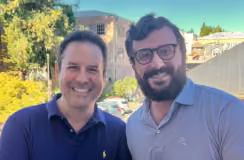
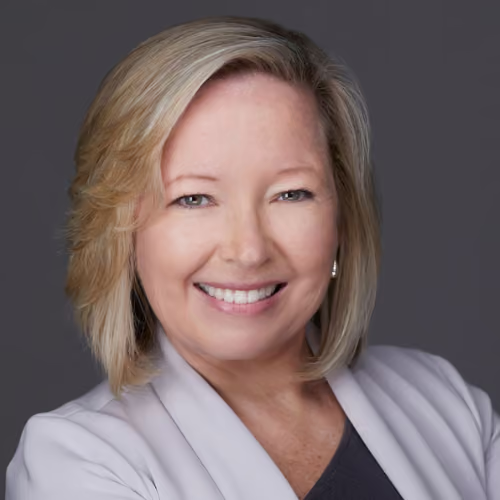
Host: As Today's guest approached 30 and wanted to start having kids, she knew her then career in finance wouldn't allow her the flexibility to be the mom she wanted to be. Entrepreneurship, specifically buying a business would. So Robin Kovitz bought a small gift basket business in late 2014. Since then she's built it into an industry leader with a reported $30 million in revenue. It took Robin four years to find her business and apparently her story floats around the ETA community as a cautionary tale. And while yes, you want to aim for less than four years, I contend there is much to model in Robin, including targeting an industry that seems smaller than it actually is, than dominating it, buying a business for which you can have passion, identifying your three non negotiables and long termism. Robin's story reminds me of the recent interview with Don Grigg, who bought a small plastics molding business and has since grown it into a leading kayak manufacturer. Don encourages searchers to realize that the business you buy can become your life's work. Well, Robin has been in her beloved business 11 years now and shows no signs of slowing down or exiting. Here she is. Robin Kovitz, owner of Baskets with an I Technology Due Diligence when it comes to buying a business, technology due diligence often gets way less attention than it deserves. That gap is frequently what costs new owners the most in their first year of ownership. Well, today, Thursday, Josh Hedone of Preferred Data will host a webinar walking you through what a technology assessment actually uncovers in an SMB acquisition and why those findings so often change the conversation around price and terms and timing. Josh is a former searcher himself, having acquired Preferred Data, so he understands this issue from personal experience. Among many other topics, Josh will cover why technology is the most overlooked step in SMB due diligence, how to inventory exactly what you're buying before you sign, and what a quality of technology QOT report reveals and how to use one. The webinar is Quality of Technology Report protecting your acquisition and and it is today, Thursday, April 2, noon Eastern. Link to register is right at the top of this episode's show notes or on the Acquiring Minds homepage. Acquiring Minds co. Welcome to Acquiring Minds, a podcast about buying buying businesses. My name is Will Smith. Acquiring an existing business is an awesome opportunity for many entrepreneurs, and on this podcast I talk to the people who do it. You know Enzo Technologies as one of the leading IT managed service providers serving the search community, led by Nick Akers, an Acquiring Minds guest who bought the 35 year old business. The team at Enzo regularly works with searchers and their acquisitions. And one feature of acquired businesses that Enzo is seeing over and over is the need to implement cybersecurity promptly during the transition. So many acquired small businesses either have glaring vulnerabilities, lack security best practices or both. That step one to de risk the deal you just closed should be addressing these issues. INSO is your full service IT MSP for post close stability. They assess your target, surface the biggest risks in plain English and give you a day one through 30 plan to cut exposure, prevent downtime and even find cost takeouts like bloated telecom bills. Check out enzotechnologies.com I N Z O or email Nick directly at nickenzotechnologies.com Robin Kovitz welcome to Acquiring Minds.
[4:45] Guest: Thanks so much for having me. Will, what a pleasure and honor. You are like the foremost expert in this world.
Host: Well, thank you. Thank you for saying that, Robin. It's great to have you. I've known of you for a while. So funny that it took us this long to make it happen. But you took a small gift basket business in Toronto and have grown it to be a leader in your industry. You're not even close to done. Your love and passion for the business continue unabated. I think it's fair to say that's a theme of this theme of love for the business that we're going to hear about today and return to. So this is going to be a fun one. Robin, let's start with some background on you. I have this mental image of a 10 year old you want working on the hamburger assembly line back in Alberta. Maybe start there.
Guest: Oh wow. You, you've done your homework. Very impressive. Um, yeah. I am so lucky when I look back to have been, you know, like a third generation entrepreneur. And so I grew up with a family business which was an incredible privilege. Um, so I was really into the business probably more than my siblings and so I would be there evenings and weekends and during my summers. And so yeah, my dad had this rule that everyone started on the assembly line and, and you can imagine in a meat facility it's like temperature controlled. Right. So it's really cold. You know, making hamburgers is not exactly the most glam. It's no, it's no gift basket business.
[6:12] Host: And so you're literally packing patties.
Guest: Yeah, yeah. On an assembly line. And it was a big company so you know, a lot of hundreds of people on the plant and, and you know, I feel so lucky. My dad wanted me to be Just like anyone else on the floor. And so it was tough. And I was 14 and. And, you know, I very quickly learned how difficult it is, actually. I think it's a lesson that stayed with me for people, you know, just grinding every day in the factory floor and. And how. How tough that job is. And it inspired me to, like, really focus on school. I think that was his. His dream was like, if you do. If you get on the honor roll, you can move to the office. I was like, oh, okay. There's, like, heat in there, right? And it's a lot more comfortable. So I, like, really did well in school and. And quickly moved into the office and was able to start learning some of the other jobs and functions of the company.
Host: Robin, I. Speaking of tough, I also remember, though, that just the owning and running the business itself was tough on your dad. It was not an easy business. And that turned you away from small business ownership, entrepreneurship for a time, at least, right?
Guest: Wow. Well, yeah, you've really done your homework. 100%, I think, like, what I've learned and the older I get, I've got a lot of. A lot of Botox. I'm a lot older than I look. I've been around. I've been around the block, you know, worked in investment banking, worked in private equity. I've seen a lot of businesses, a lot of entrepreneurs, and had those. The pleasure of learning from them. I think it's hard for every entrepreneur, and I think that, you know, there's peaks and valleys in every business journey. I don't think anyone has a straight line or any. Maybe like the billionaires, right, who are just insulated from. From the realities of business ownership. But I think, yeah, I got to see that, like, the good, bad, and the ugly through my dad's experience, you know, in. In the meat, raw meat business, you know, you could have like a mad cow or something. They could take you out or overnight, right? There's huge existential threats to your industry, some huge competitors, right. And some really strange industry dynamics. And so I. I got to see the whole, you know, from almost going bankrupt and like, a huge sort of restructuring that they went through in. In the early 90s with the reception to him selling the business for, like, a huge amount of money. So I. And making, you know, a number of people in the company who had been there with him all along the way millionaires, which was an incredible thing for me to see as a young professional. So I just, you know, I've seen from the hardest of the hard to the highest of the high in my dad's experience as an entrepreneur. And that terrified me. I wanted to work for Steady Eddie
Host: bank for a while and so that's what you did. So tell us about your early career.
Guest: Yeah, so I think, you know, I, I saw how the ups and the downs of entrepreneurship growing up and, and the challenges, especially, you know, in a single income home, how that can be stressful. Um, and so I just was really convinced I wanted to move to the big city. So I grew up in Calgary, Alberta in western Canada, went to school in like rural Alberta, like farm, and wanted to move to the big city, Toronto to get a financial education. My dad always felt that his disadvantage in business was not being able to, you know, read an income statement or balance sheet like some other people would. He was an architect by trade who took over, reluctantly took over the business when his father needed him to. And so he really, you know, a lot of my, I wouldn't even call it my progress to date has been because of the, the incredible seeds that my dad has planted, so, and my mom have planted for me. I'm just so lucky, right. He wanted me to come and get a financial education and almost I wanted to be a doctor actually. He really pushed me into business and I'm so grateful that he did. I really understand accounting and finance and that's so important to my journey and where, where I've come from. But yeah, he really encouraged me to get a financial education. And so I came out here and I was determined to have a big steady salary. Right. That's something I hadn't been exposed to. And so I went and worked obviously in investment banking. Right. Because that's, that's where you go.
[9:55] Host: Because what else?
Guest: Yeah, like you paid so much but you know, you're trading 100% of your time, right. Which is, and freedom. And so I lived that in. I worked in the M and A group, so even the most rigorous. I was the only woman. You know, lots of fun stories from that. But then, you know, that really left me longing for my freedom. Right. And what's next? And I was quite burnt out. And so I always dreamt of going to Harvard and I didn't get in. When I was in high school, it was my dream. I wanted to play soccer there. And so I decided to try again and I got in. I don't know. I'm the admissions error. The Harvard Business School accepted me for my mba. It was my dream come true. And I had an incredible two years there meeting some of the smartest people in the world. Some. Some. Some not. Where. Where I got to learn a lot.
Host: And.
Guest: And long story short, I came out thinking, you know, I want to be like my dad. I am an entrepreneur. I'm, you know, even in the bank. I was trying to make changes. You know, it's just who I am in my DNA. But I also have now the experience and the professionalism of learning to buy and sell companies. And so I was sort of infatuated with the guys. It was all guys back then, remember I'm old, who were in private equity. The TPG and kkrs. They were my classmates. And I was like, wow, I want to be them. I want to be in private equity because they think about businesses like operators, but also, like, sophisticated financial people. And so I really wanted to be in private equity. And so I had. Again, I was so lucky. I came back to Canada because my husband is a lawyer here and was able to secure one of, like, 10 seats in private equity. Had a great few years learning from some of the best investors in the country who no one's heard of, who I got to work with. We had a small little fund, and we raised money and bought three companies really fast. And in that experience, I. Learning from my partners, I. It was. It was interesting because going from a big bank, I went to this private equity fund where literally, it was like, set up your own computer. And I was like, what? You do that, right? Well, you set up your own computer.
Host: I do.
Guest: Yeah. Me too, still.
Host: But a big change from a big, cushy investment bank.
[12:02] Guest: Yeah, huge change. And so, you know, fast forward to, like, I turned 30. The magic number for so many women. I guess it's changing now because you can freeze your eggs and do all this cool stuff, but, you know, back then, it was like, if you want to start a family, you got to start at 30. So I decided to start a family. And in Canada, it's. It's kind of different. And back then, like, nobody works from home, right? This is before COVID God, I'm old. Are we old? No, I'm older than you, right?
Host: No, I think I'm older than you, Robin. So when you keep saying how old you are? Well, how old are you?
Guest: I'm 45.
Host: I'm 46. So I got you beat. So can you stop saying how old you are?
Guest: Right. You're right. We're young. But I think.
Host: Thank you.
Guest: I think for. Just for context for some of the listeners, because you. I mean, I. I have the great pleasure and privilege of listening to your show and you. There's so much wisdom that goes on in this podcast, and it's such a gift to the community, like what you've contributed. And I think just for, For. For context, for everyone, this is. The world is very different today. Right? Women can raise capital, you can work from home. We, you know, we're doing this remote. The world was not like that in 2010 when I sort of started having a family. And so in 2011, I sort of looked at myself and said, I don't want to take a mat leave. I also can't go back to work six weeks after I've had a baby. That's not possible because the only reason I was successful on Bay Street, Wall street, was because I'd be at my desk 17 hours a day. And now there's this thing that I need to feed and keep alive, and how is that going to work? And so I decided. Sorry, go ahead.
Host: Just to interrupt. Robin, were there women ahead of you in the financial world? That. Or were I maybe I should say, were there not women ahead of you that provided a model that were older, had kids and. And were able to do it, or provided an anti model? You looked at them and said, boy, I don't want that.
Guest: Wow, you're so smart. Very astute. Yeah, I think Canada is a little bit behind the US and so we didn't have as many prominent female role models in private equity or successful female entrepreneurs. That's changing. And I'm. I'm hopeful that I get to be a part of that for our daughters. Um, but I think, yeah, unfortunately there was. There were a few anti role models in private equity, including one. One female partner who had like a million kids. And I can remember one time just like, listening to her assistant, like, negotiating with the driver to get one of the kids released. And I just remember it was a bit of an. I was just like a lowly associate at the time, but I. It was an aha moment for me being like, you know, I've always wanted to be a mom too. And like, how, you know, if I want to be a private equity partner, does this mean I can't be a good mom? And like, just. Just trying to understand how I. And you know what I think, hopefully for people listening, I think a lot of dads feel that way today too. Right? Like, the world has changed totally. And so, yeah, how are you going to balance this huge life stage of. Of shifting into parenthood and all the responsibilities and changes that come with that with your, you know, being at the height of building your career. It's just such a weird and strange time. So before the search world even existed, I was like, you know what I put up? I, I can put my own computer together and be the receptionist and also raise a fund and like, so why don't I just buy my own little business? I like being on the floor. I like talking to customers. You know, I can't afford much, but why don't I just buy a small business and see what I can do and then I can bring the baby with me and breastfeed from calls and do whatever I want because I'm the boss. And so that was the dream. But then it took me four years to find something great.
[15:16] Host: Pause. Wow, this is just so fascinating, Robin. And to be clear, though, you went to hbs, you did not learn about search in hbs. This was to your point of age, pre probably pretty rick and Royce 2010. They weren't until a few years later. And by the way, on the point of Rick and Royce and hbs, they were lucky to have you. You have now become an exemplar of entrepreneurship through acquisition. Rick and Royce have had you, I guess, in the classroom. I think you're in the book. They've had you on the pod. So they, they made, you know, a good investment letting you in.
Guest: Finally, I think it's, it's me who has the return on investment from them. I'm so lucky. They've been mentors and coaches, free mentors and coaches for years. And so I, I say yes to anything they ask me with glee because every time I go back to HBS or speak with them, they're both so brilliant. I learned so much and it helps the business forward. I really, really feel so grateful to be a part of that community. And you know what? They, they've quietly done so much for women in Search. They have backed, quietly backed or supported or encouraged so many women. And I think Women in Search has completely changed. And I think a lot of women identify it now as a really viable career path. I love what an expert you are. So, yeah, this is all before Rick and Rice. In fact, to take you back, I was at my five, five year reunion and there was this like, session on like, like think big, buy small or something like that. And it was, it was Rick like, saying, like, there's this thing about buying a small business because, because you can buy them at lower multiples. And I had noticed that in private equity, I was kind of like sitting around because I'm always kind of like a big Picture person. And I'm not scared to say what I think, and it gets me in a lot of trouble. Um, but I was kind of, like, looking around the table, and I was like, there's a lot of capital in private equity right now competing for a limited number of deals because everyone wants over 10 million of EBITDA. And multiples are just going up and up, which is really putting pressure on returns. And like, this. This, to me, is like, a losing game. And. And I would say that at, like, our private equity conferences, and they would all look at me like. Like I was crazy. And. And so it was part of my whole thesis of, like, let's go smaller, because if in smaller businesses, you can still buy them at reasonable multiples, in my. In my perspective, like, three to five times as reasonable, right? And I think now 10, 15 years later, we're even seeing even more expansion on multiples, right? People are paying double digits for things. It's just getting worse and worse, which you're chasing a smaller return. And so I guess Rick, being so smart, Rick Ruback, for those of you listening, he's genius professor at hbs. He had taught me finance one when I was, like, a lowly MBA student. He had sort of observed this phenomenon, and he was giving a little talk about. About how there's opportunity in small businesses. And actually, my husband saw it and was like, you should go. That's what you're thinking, too, right? Like, you and. You and Professor Rubach think the same thing. This is. This is, like, 15 years ago. And so I went to his session, and it was before, like, I don't even think search had a name. I think. Well, I guess Stanford really was the, like, search funds. Yeah, yeah, they were the pioneer, right? Like, even back to, like, the 80s or 90s. And they studied them for a long time, but it wasn't really a thing at HBS to the cred of. Of Professor Rubek. So anyways, I connected with him and just let him know that I want. This is my dream and that I want to do it, and that I just had a baby and I was gonna, you know, be smart and slow because I didn't think I could raise a fund. So I was using, you know, borrowed friends and family funds in my life savings, and. And he just, to his credit, like, stayed in touch with me. And Royce is like this. I mean, he's founded Avery Partners, right? Like, he's just one of the smartest people I've ever met. They both are. Um, and, you know, Rick partnered with him and they, they've really built this thing and they, you know, they've, they've really built stuff, hbs and it's now like a very viable. Well, well, you tell me you will because you're the expert. What do you think? Searches.
[18:59] Host: Yeah. Yeah, no, that was a great, that was a great kind of personal history lesson. Your, your early interactions with, with pioneers and in evangelizing this message. And at the time, to the extent that it was talked about at all, it was sort of in, in the business school programs, I assume all that was talked about was search funds. I don't think the phrase self funded searcher was 10 years from being invented, but that's what you were. And so when you said to Rick, I'm just gonna, I'm just gonna cobble together, you know, some loose change and do this on my own, did that make sense to him? Was he skeptical? I'm just curious because we spend so much time now thinking about the model that somebody would approach this with. How did he react to how you thought about approaching your search?
Guest: Yeah, that's, that's interesting. I mean, I, I understood the math, right, because I had, I worked in private equity, so I understood, you know, you, you buy it for a multiple V, but cash flow and then you might be able to get in terms of capital structure. Back then at least it was like a third. A third. A third. A third equity, a third debt, a third. I forget what you guys called in the US Vendor take back or seller note. Yep, seller note. That's right. Um, so I was like, okay, wow. So you only need to come up with a third, right? Because the other two thirds are covered. And, you know, if you might like. I had the good fortune in the Toronto real estate market is notorious. And it was going in one direction. And I had a big investment banking bonus one year and some help from family, and I ended up buying a house that just kept going up and up. So I thought, could I leverage this house for my equity piece? Could I? You know, at one point I thought I would partner with my dad and we would be partners. He would be like the equity and I would be the sweat equity. But I think over time we learned that that was not smart and that we wanted to remain father and daughter first. So he was just a, you know, an advisor on the side. But yeah, I figured out when you go small enough, the numbers are not impossible. Not for everyone, but I mean, I was very lucky and fortunate and privileged and so I was able to make it happen. That said I came with this incredible education and experience and background where being in investment banking I got to see some incredible companies and work with them in private equity too. And to go from that to buying a tiny little business is very, very different. And I think that is why there's a case about me. Because I made so many mistakes, did so many things badly. Because I think what I've learned now is that the skill sets of running a hundred million dollar business are very different than running a $2 million business. Right. And the team and the systems and the structure and I didn't have experience with such a small business and it took me a long time to realize the mistakes I made.
[21:32] Host: Well, making mistakes as the leader of a business is inevitable. So don't beat yourself up too much. You seem to have on the other side just fine. Thank you very much. Buying a small business sounds simple. Find a company, due diligence, get a loan close. In reality, you wear every hat just to get the deal done. And then the moment you close, you have to throw those deal making skills out the window and learn how to operate. You shouldn't have to rebuild this infrastructure from scratch and you definitely shouldn't do it alone. That's why Walker Deibel created Acquisition Lab, which started as an accelerator, has expanded into a complete ecosystem for acquisition entrepreneurs. Over six years, the lab's 1200 members have acquired over $1 billion in businesses. The lab puts everything under one roof. An active community, deal reviews, post close services and a dedicated fund helping experienced operators buy larger businesses. If you're serious about buying a business, come see why Lab members have a 40% success rate. Learn more in the show notes or at acquisitionlab.com/acquiring minds. Let's then hear about so how you approach this. We, we've heard a little bit about kind of the. Your financial resources at the time. It's about 2008. Nine, ten now.
Guest: So this is 2011. Yeah.
Host: Eleven. Okay. And, and are you pregnant? Are you planning to get pregnant? Pick us up with the. On the plot?
Guest: Yeah. So I actually loved private equity and I loved my partners and I loved the companies that we bought. I was, I really loved my job. I, I would have stayed as a partner in the private equity firm forever. I just truly couldn't reconcile between being at my desk 17 hours a day and having to take care of this baby and not wanting to take a year off and then get a nanny. Like I just, I wanted to have it all I guess. And so I, and you must have
Host: read Lean in because this was about the time Lean in was published.
Guest: Don't get me started.
Host: Okay. Yeah, I guess she's fallen from grace. I haven't tracked her lately, but okay, okay. But that really was the message, wasn't it, of Lean In? Like, yeah, women should have it all. We should want to, as opposed to compromising.
[24:03] Guest: Yeah, that book was influential and revolutionary and yeah, the thing was you could, you could have it all. And so, I mean, I didn't know what I'm doing. I still don't know what I'm doing. I just fly by the seat of my pants most of the time. A lot of times I get it wrong. Sometimes I get lucky. But yeah, I think I just, I would have stayed in private equity forever if that had been an option. I don't think it was an option because it was like, you're either in or out and you couldn't work from home. And so I had to be out. And then it was like, okay, what am I going to do? I'm not going to be a stay at home mom. It's not for me. And so just decided to try and try and go for it and write the rules my own way. And so like you were saying, I'm, I guess now what you would call a self funded searcher. I think it's a bit more sophisticated and evolved than when I was just fumbling around. Um, but it's a thing that, that people do that the only difference in sort of my model because I was sort of whiteboarding it and now there's like a system and structure, is that I have no interest in selling the business. So I. In private equity, I think, I think search is the hardest part, right. Of finding the business. And that's why I was saying, like in so many ways I really admire what you've done because you're building this thing that's forever. Right. Whereas in Search, the model is so flawed because you got to sell in like five or six years. Right. And I don't, I don't know any entrepreneur who can really generate like long term value in that short of a time. It's just flipping financial flipping. Right. And so for me, that's not my interest. We're a B corp. I don't know. Do you know what that is?
Host: But tell us what it is for the police, for the audience.
Guest: So for those listening, a B corp, this is like a different way of doing business. It just means that you believe in the highest social and environmental standards. So we were talking earlier about how hard it is to grind on A factory floor, right? Like you read those stories about like Amazon workers that aren't allowed to go to the bathroom, right? Like, it's just insane. There's like this, I've really learned there's this double standard between professional workers and hourly workers or floor workers. And so anyways, long story short, I just really believe in like, like, for example, in Toronto, there's a real problem right now where the living wage, so what it actually costs to live reasonably in a city is like $10 more an hour than the minimum wage. So you have all these people who are like working 40 hours a week or two jobs and they can't afford groceries and rent. And like, it's a good, really real issue, real societal problem. And a lot of us don't even think, anyways, I'll get off my soapbox. But basically, I believe that business can be done differently. I believe that, you know, I, I don't understand all these billionaires who are like, you know, taking advantage of all their suppliers and employees and then creating a foundation. Like, to me it's not just about maximizing shareholder value. Can you be a better stakeholder? Can you do business differently, help everyone rise? And does that actually create value? And that's, that's something that I'm toying with, with long term value, right? Can you build a business where you pay everyone a fair wage, where you treat your suppliers with respect and not cutthroat, you know, price things every year and over time, can you build a sustainable, profitable business? And I believe you can.
Host: And B Corp, Robin, also just, just for the kind of the technical. There's a third party, some sort of certification body, right, that designates. It's not a, it's not a. It's not a government status or designation. It's this third party entity that, that audits you and grants you the certification is how it works.
[27:20] Guest: Yes, thank you for clarifying that. And it's funny, when I actually talked to Rick and Rice, I might get in trouble for quoting them here. They were like, B corp, what's that? And they're like, oh, it needs, it needs a rebrand, right? Like, it sounds like you're like on the B team. And I was like, you're right, that is like, that is the wrong name, you know, for an entity that's trying to like make change. So, yeah, it's really hard to become a B corp. Actually. It took us like a lot of time and money. It's a very extremely rigorous process. They go through every aspect of your business to make sure that you're like doing business the right way, like with people in the environment in mind. And it's very, extremely rigorous and prominent like companies like Nespresso or B Corpse. And so yeah, we finally got certified, which is very exciting. And congratulations. Thank you. Going back, like I want to own this business forever. I don't. I feel like I want to grow and create value and you know, build wealth for my employees and suppliers and, and do other things than just just focus on maximizing shareholder value.
Host: For listeners who are interested in hearing more about B Corp or the intersection of entrepreneurship through acquisition in B Corp's Adam Rao. Actually part of his thesis of going into ETA was kind of bringing the two worlds of B Corp and ETA together. So go check that one out. Adam Rao R A D Rao REO
Guest: I'm going to do that. Thank you Adam.
Host: Yeah. Okay, Robin. And so back to this long termism. Yes, it's in traditional search funds certainly it's less, it's less common because that is a kind of frankly more of a private equity model. Buy something with the expectation of exiting in five years even many self funded searchers will at least pro forma an exit in five years even if they may not totally intend to, to, to do that really because they want to hold on to it indefinitely. Your. So, so just to make sure I understand why you have that orientation, which I love. It's because you feel like you can have more impact that way. It's because it's what you, it's what you knew growing up. It was essentially a family business that your dad, yes, he did ultimately sell, but he wasn't really trying to sell it in five years. Sort of like say more about it please because, because it is a big, a big part of your philosophy and it's one that I share.
Guest: Sure. And I don't have all the answers. I'm kind of figuring out as I go. I think, I think, you know, I'm just a student of the world and the universe and I think that when, when I look at, when I look at private equity like it's just such a flawed model. Right. Like we're just flipping businesses quickly. When I really think about what it takes to build a sustainable, enduring business, it's generations from my perspective, unless you're like a SaaS business or you know, there are a few exceptions. But to build like a sustainable business, it's, you know, the real huge enterprises are, you know, many, many generations old. And so I just don't think it can be done Short term, I think, I think also, you know, you look at the search model and how it's evolved and I'd be curious to hear your thoughts. And like this, this two year, you have to search for two years period. And if you don't, the clock hits two years. And if you haven't found something, you gotta quit because that time's up. Like to me, I just, I just think again, maybe it's being a woman. I don't know what it is, but I just think that's so stupid. Like time is not. I understand obviously, and can calculate the time value of money and the time impact on IRR and all that good stuff. But to me, you know, you spend two years becoming good at searching and you become incrementally better and then the likelihood of finding being more successful in that like next six months. So what does it really matter? You, you might pick a better business, you might have far better returns like it would be. So do you know, is anyone studying like the correlation between returns and search initial search time?
[30:53] Host: Well, not that I know of, no. It's an interesting question. And similarly on this point that you're making an episode that will have aired a few weeks before you. Robin, Megan McGee. Megan did a traditional search fund search for two years. Ran out of the basically of our. And usually that two years is basically correlated to kind of the budget that you're given with your fund and you spend it down. But her investors actually encouraged her to re up and search for another year or whatever because they made the same point that you make, which is like now you're really a really experienced searcher. They have de risked her. They've gotten to see her process for two years, how she searched, how she communicated and so on for two years. So, so, so though we do throw around this two year thing as if as a rule, I encourage people to think about it as not an arbitrary or, or fixed, unmovable time frame. It may be that you're. Even if you don't find something in two years, if you've done a good job as a searcher, even if you haven't consummated on a deal, your investors may be willing to re up. They may have liked what they seen if they de risk you and they want you to keep at it. So interesting that this hasn't really come up at all in 400 episodes and it's coming up twice in a couple of weeks. So anyway, point taken.
Guest: It's so interesting. I know over the years I've had like people who have quit, who would have been great business owners. Right. And they just didn't. They got unlucky or whatever. Yeah. So I really think the two years is arbitrary. And I'm excited to hear that. That's. That's changing. I think if you want to create a sustainable entity, it takes much longer than five to seven years. I think if you. For me, it was like I just became a new mom. I was still figuring out life. Took me a year just to figure out what I wanted to do. Did I want to be in a manufacturing environment, an office environment? Took me another year to just figure out, like, what is a really good business, right? Like, what are the characteristics of a business that is worth, that could endure and be scaled and, and you know, I looked at hundreds of businesses before I developed that, like muscle memory and, and definition in my own mind of what a good business is. And I think every investor has a different definition of what a business, good business is to them. And then it took me another year just meeting with people, right? And then nailing that sort of search process, because that's, that's a thing too. I mean, I've met so many guys at HBS or Stanford who are just incredible assassins at search, right? It's a process, right? You send out thousands of flyers, you get a few interns. Like, there's, there's a. There's a machine to it, right? And so then there's the, the element of learning how to be a searcher. And then there's, like you said, actually getting a deal done is tough, right? There's the whole people element, which I find most challenging. Right. And especially it's incrementally tougher when you go down to these smaller businesses where it's more personal and whatnot for the sellers.
[33:32] Host: Yeah. Well, you went through your four years of search. I don't think we've, we've told the audience yet. It took you four years to, to find it. And of course, you've more than made up for, for lost time to the extent that I don't even. That sounds pejorative. But you, you've anyway been very productive since then.
Guest: I am like, supporter of the underdog. And so I like to shout that I did four years because it's like, honestly, like when I go to hbs, it's like the scarlet letter. They're like, ooh,
Host: you have a big four, a big red four on your shirt.
Guest: And then Rick and Royce are like, don't worry, we'll say it's three and a half And I'm like, no, tell them it's four. Like it took me four. I'm not embarrassed. Like this is, it just is what it is. And you know, I guess that's just who I am. But I think for those of you who are out searching and feeling like it's never going to happen, I know, I've been there. So many of us have been there. Like time is not the metric. You know, you're going to look back in 15 years or seven years or whatever your long term plan is and like focus on what matters and that's finding a great business that you feel you can maximize value on in whatever your investors require.
Host: Such a good message. Thank you for, for emphasizing it. Robin, on the point about a great business. Now I loved what you said here because in our pre call because in some ways your definition of great business is not the clinical definition that actually Rick and Roy kind of canonized in their book. Yours is a more subjective by definition. You feel like a great business can't be objectively defined. It's very subjective to the buyer, to the business owner. And you know that goes by another name these days of business Buyer fit. You had your, your con. You developed this concept of three things. You can choose three things. So tell us what a good business is and what this three things concept is.
Guest: Yeah, so I think because there wasn't a playbook and for those of you who are searching like there, there is a playbook now. So maybe follow the playbook because it's probably a lot smarter than what I did. But okay, it wasn't a playbook in 2011. So I kind of just followed my nose. As my dad taught me, in entrepreneurship you just kind of follow opportunity as it comes. But I, I sort of saw you could boil the ocean searching for a business. Right. And that's, that's, you know, I was definitely there at one point at year three or whatever. Like you can, you can get distracted by every shiny thing, right? The you, you've built this great network and interesting deals are coming across your desk and you know what, could I move to Utah and you know, do this maybe? Like if you are not very rigorous about what you're looking for, you can, you will never be successful. And so I use the, I like to use very simple analogies. And it's, it's like so many of us can relate to finding a life partner, right? And, and I think we all have that friend who like is Single at like 49 and they pull out a spreadsheet there's like 87 criteria. And every day they go on, they're like pretty good on the first 41, but not hitting criteria number 47. I'm joking. But the same thing applies to buying a business. Right? And so I think to get something done, you need to be very rigorous about. I would, I call the three non negotiables. Whether you're picking a life partner or an a business to invest in. What are the three things that are just your non negotiables? Like he has to be tall, funny and rich or whatever it is. Right. That stupid example. But. And then everything else you can work with. And so I, I would encourage every searcher to really define what their three non negotiables are in business and what. And that, that's what I love about this industry. And what I love about private equity is that there's so much alpha. I call her like return to be made. Because we all have different perspectives on what a good business is.
[37:05] Host: Oh, that's a, that's a great insight because, because we in some ways also private equity is, is kind of the science of, of what a good business is. And so, and so we try to codify it. We try to talk about recurring revenue, high quality revenue and not to, not to say that those aren't very, very valid concepts that should be paid attention to. But there's also art to this. It's not all science. There's a lot of art, probably more art than science. And one of the things we do on this podcast is I'll press people on as I will press you when we hear about your business, on some of the weaknesses or weaknesses in quotes and how you were able to overcome those. So let's do that. But let's first hear about what your three were. What were the three things that you developed for your non negotiables?
Guest: Well, I have to admit they also change with time. I still think about the business that way and I use that as a rubric or framework to make decisions. So if I'm remembering back, it was customer concentration is number one. Because I had seen that in my dad's business he had won like 80% customer. And if you have customer concentration, your business can disappear overnight. Right. You can also scale very, very fast. Like great, it's a double edged sword. But for me, I had decided that I didn't want customer concentration. I wanted a business that had thousands of recurring customers that came back frequently with a short repurchase cycle that to me was stability, security. So that to me was A non negotiable that I was looking for a business that had that characteristic. Trying to think of what the other two.
Host: I have them. So if you need help, remind me.
Guest: Yeah, remind me.
Host: Reoccurring. And you've kind. I think you just touched on this. But a reoccurring. Repeat. Repeat customers.
Guest: Yes. And I think, I think like you said, that's sort of like a mantra of the industry now. I think people really see that, that like, you know, the mattress business is a tough. I mean, although there are lots of examples of private equity in the mattress business. But like I can't Even imagine every January 1st going to find a new 50,000 customers every year. Right. Like I have this database that repeats and that's valuable, that has long term value. And so I, Yeah, for me, I think a business where you have an existing customer base that order from you frequently is, is absolutely non negotiable. And I think, I think actually you kind of see that through the theme of, of my company, Baskets. That's Baskets with an I for those of you who need. We ship all across Canada. In the US we have gifts for all occasions. We support, you know, individuals looking for a baby gift and also like corporations looking for big buying programs like employee onboarding programs. Sorry, Will, I had to do it. You have so many listeners.
[39:39] Host: No, no, I, I was going to tee you up to do it. So plug away.
Guest: Check us out@baskets.com but I think in our industry it's very interesting because when you come back to this concept of recurrence, I think a lot of people view this industry as, as an opportunity to do a bait and switch. So you send your girlfriend flowers. She might be in a different city. You're my customer because you pay for it. But then the girlfriend, you don't actually see the flowers because you're in a different city. And there's a lot of bad players in our industry who think, great opportunity, I'm going to charge Will a hundred dollars, only spend $10 and send the ugliest thing of flowers. And you know, the girlfriend will just think will and he'll never know. And you know, I'll make 90 bucks. And I view it very differently again with my lens, that I want to instead not do a bait and switch or I'm all about trust and building that relationship with the customer. I want you to, I want to do all your gifts, not just one gift. I want to exceed your expectations and your girlfriend's expectations. So it's, you know, I have two customers with Every transaction and I'm all about, I have a money back guarantee. Like if, if it doesn't look exactly like the picture and if you're not, it's not doesn't meet your expectations of a high end product. I'm going to give you your money back because I feel so certain in our, our operations and ability to execute and that was like completely novel in our industry. So I'm viewing it instead of a transactional approach like a lot of my competitors view it. I'll just get your one flower sale and move on and find another customer. And therefore my cost of customer acquisition can be pretty high because I'm screwing my customer and I view it the opposite. I'd rather spend a lot of money, have the highest quality stuff and make sure that you're telling all your friends to use baskets with an eye. And so yeah, I think back to the non negotiables. So having that recurring, that long term relationship with your clients and for me too that's also the suppliers and that comes back to the B Corp and everything else. So yeah, I think no customer concentration. Sorry, I just can't deal with that. Other entrepreneurs would be fine with that. I can't handle that level of stress and recurring. And you might have to remind me
Host: on the third and your third one was highly scalable.
Guest: Highly scalable, that's right.
Host: And what do you mean by that? Because everybody wants a business that can scale. But I think you meant something more specific.
Guest: So I think, I think well, you can correct me as the expert. What is the search world playbook is not find a highly scalable business. Find a business like a brick and Rice always say find a business that you don't have to change that much that you just study. You tweak a few things with the financial engineering and whatever you can get to like a 30% IRR. And Bob's your uncle, right? That's the safe playbook. Isn't that what people are doing?
[42:05] Host: Yeah, I would say so. I mean obviously anybody wants to see growth potential in the business but there is a difference between businesses that will kind of grow along with GDP or a little bit faster than GDP at the, you know, just the, the rate of the general economy and because of the leverage and the kind of financial structure you can make that really demonstrate a high return if you can even if you can just grow, increase growth a few points above where it was historically. And then there's growthy businesses which are businesses that can, can grow a lot but those are more speculative and Those start to get into growth equity and into even venture capital. And that's not traditionally where private equity and search plays, which are more steady. Eddy Reliable businesses often what we're buying here is reliable revenue. So we're of course want growth in the future, but just as much we want a sense conservatively that what has happened in the past can continue into the future.
Guest: By the way, I love the term growthy. I'm gonna use that.
Host: I like it too.
Guest: Yeah, yeah, no, I think, I think, yeah. And I think when, when you think about it like that, you're so smart. I think it's, there's more risk with growth, right. Because it's unknown. And so obviously it makes sense for investors to stick with the safe path, which is, you know, a few percentage growth, you know, buy, buy low, sell high, don't, don't break anything. And, and that makes sense for the, you know, the playbook model of private equity when, because the second you raise money for all of you out there, you're, you're starting a clock, right? That's, that's the game. And I've seen some of my friends raise a lot of money and sell big businesses and it's just a different game than what I'm, I'm the game I'm playing. And so the second you take someone else's money, you lose control and freedom and you start a clock. And I didn't want to do that. And so by not doing that or to be honest, actually, well, I honestly don't think I could have, like women in Canada weren't raising that kind of money back then. Now they are, I'm very pleased to say, and my daughter will. But it wasn't really an option for me. And so I had to go small. And so by definition, given my experience and education and you know, was with bigger businesses, I wanted to go from small to big. And the only way to do that would be if it was highly scalable. And so that was an objective of mine. I didn't want to own, you know, a couple million dollar business for my whole life. I wanted to build, you know, a business with hundreds of millions of sales like my, my dad did or like the, the firms that we invested in when I was in private equity. And I think, think I understood businesses of that scale a little bit better, you know, when there's a bit more of a structure, leadership team. And I thought I would be more effective in a business that's a bit bigger. So I, so my goal was to find something that I Could grow. Not in a growthy, I love that term growthy risky kind of way, but in a like yeah, okay, I'm buying this historical recurring cash flow but I could also maybe like do these tech under acquisitions and then with time I could platform it all together and be bigger.
[45:04] Host: Looking to secure an SBA loan to buy a business? Meet Pioneer Capital Advisory your go to partner for sophisticated buyers who want deals closed quickly and on the best possible terms. The Pioneer team has closed more than 100 SBA loans, averaging timelines well below industry standards. Founder and owner Matthias Smith and COO Valerie Stash bring over two decades of SBA lending experience. Matthias and Valerie have built a team that meticulously works your deal from underwriting to close. You'll have a full bench working on your behalf, sales associates who streamline onboarding M and a financial analysts who craft investor grade lender decks and an operations team that manages every step of the closing process with institutional level rigor. Pioneer is not a single person but your true deal team. Visit pioneercap.com or click the link in the notes. Well, on the point about being in a really small market, I would have thought, and I think people still say to you that gift baskets is a very small tam total addressable market. But did you perceive from the outside that this was a business with a lot of potential in it?
Guest: Yeah, it's a great point. I think we're all, and I don't know whether it's like the gender bias or what it is, but I still meet people like on a plane and they'll say like, oh, you make gift baskets. Like my wife does that in the basement and I'm kind of like 100 employees and 55,000 square feet. Like, but nobody thinks of the gift basket business as being scalable or big. But when you take a step back and you look at like the, the closest competitor is the flower business, is it like even Canada is a multi billion dollar business? Right?
Host: Like people totally.
Guest: Thank God we still humanity still has kindness. Like we're the kindness industry, the barometer of kindness. Right? So it's actually a very large business. And then because it's so complex, it's very fragmented. So I remember when I was, you know, early days searching, I kept saying there's something about this business, but. And my dad kept saying, ugh, forget about it. Low barriers to entry, like, you'll have a million competitors, like get rid of it. And Royce kept saying, there's something there. You just don't understand it yet. What the competitive advantage is. And I think finally 15 years later I might understand it. It's that it's such a complex and difficult business. Like I. E Don't go into it that, that it's really easy to get to like 2 not easy, but it's possible for many people to get to like 1 million, 2 million, 3 million in sales. But thereafter it's very difficult. You need an ERP system, an enterprise resource planning system to really understand inventory. And when you think about it it's gift baskets are like the most complex of so many different businesses. Right. We have multi recipient shipping. You know I could have an order that has one sales order, 20,000 ship tos and that there's no software that does that. Right. I had to build all that. There's just a lot of complexity when you think of a gift basket. Like I think about it like a hamburger. You know there's a bill of materials and a recipe that goes into like making a gift basket. You could have 30 different suppliers in that bill of materials. Right. So now you're coordinating the complexity on the supply chain side and on the end side. It's just a very difficult business. It's a very difficult business to scale profitably. You need to be extremely sophisticated. And there's not a lot of people because there's low barriers. There's not a lot of people in our space who are thinking about things the business that way. And so I would say there's easier ways to make money for sure. Do I spend many days wishing I owned a SaaS business with no marginal cost? Yes. But I think there are some industry dynamics and things that are working to my advantage.
[48:49] Host: But you love your business, Robin?
Guest: I do. Well, I love it. Just like you love your business, right?
Host: Yeah, absolutely. No really, I absolutely love it. Third child, the, the thing that Roy saw in the business was it what didn't I also hear you say that it was a pretty high margins and that's always an indication of something when there's good margins or, or no.
Guest: Yeah, I think, I think every. A lot of things are changing right now in the E commerce space and we're sort of like a reluctant E commerce player. I think that was probably true like 5 or 10 years ago. I think it's, it is changing because the cost of acquisition in E commerce has gone up so significantly with the monopoly of Google and all kinds of other things. I think it's going to be very interesting to see with AI how that changes. But I think ultimately it's what you nailed earlier which is like the nature of, I guess, the smart people like Royce and you would call it operating leverage. Right. So your overheads. So we just bought a new facility, and we're only at 20% of capacity. This is like any business, Right. And so therefore, I'm already covering my overhead. But if my next, you know, X million of sales are going to be at gross margin. Right. Because the overhead is fixed. And so it's just that, that concept of operating leverage. I think the challenge in. In a business that has physical inventory is it's in stages. Right. Because there's only. I can only get to X million in this facility, and then I need another facility because I gotta. I gotta put the gift basket somewhere.
Host: Yeah. You know, I've heard you call it E commerce. It's a gift gap basket business. But in some ways, you are in the manufacturing business. Your manufacture and your widget is a. Not to belittle it, but your widget is a gift basket, right?
Guest: 100%. Yeah. And I. That was a lot of. I think, probably why they. In addition to all the errors I made, but, like, why they've written a case about me, because I've taken a really financially rigorous approach to our industry. I don't think there's many other people who have a bill of materials on what they're producing. Right. They just kind of say, oh, that looks pretty. Let's charge 100 bucks. I'm like, this is my cost, and this is what the retail value of the products are. And, like, there's a lot of analysis and thought that goes into it. So, yeah, I think this is why gift basketball are so complex, where I'm an. I'm a manufacturer, I'm in the service business. I'm an E commerce business. I'm D2C. I'm B2B. I'm. I'm everything to everybody at all times, and nobody and nothing.
Host: Well, Robin, we are. We haven't gotten into your operations at all. It's been. You. You bought it when then?
[51:04] Guest: 15, 2000? October 2014.
Host: October 2014. So it's. You're into your 12th year now. We're not going to. We're going to hear pretty abbreviated recounting of those 12 years. But there's still a couple interesting details to the search itself that I don't want to leave. Namely, you're meeting with local owners. And speaking of scale, how you scaled that, how many meetings did you have over how long?
Guest: Oh, thousands. Just thousands. I mean, I think it's funny, when I go back to HBS now. And I hear about how the young guns are doing it with their, like, the machines that they build and their interns, and I'm like, wow, they're so smart. Like, that's not what I did. I, like, literally put the baby in the car, started driving around, finding industrial parks that were like, you know, within 30 minutes from my house, like, very. And then, you know, started, like, dropped off my, like, printed brochure and was like, hey, well, I kind of want to be an entrepreneur like you. Like, do you think you might have time for coffee? Like, I want to. I want to hear what your day is like and see whether that could be for me. And my, like, Ashok's genuine personality or approach is very different from the, like, let's send out 3,000 flyers and see which three email us back, right. That a lot of success, successful searchers are use. And I, I probably would subscribe that that's a better model for people who are on a time clock and want to just find, you know, something that's really ready to transact. The downside with my approach is I got. I had a lot of coffees and meetings where people just wanted to meet me. Not, not necessarily interested in, in selling their businesses. Right. But that really helped me develop that muscle of what do I want to do for the next 30 years? What kind of business do I want to be in, what kind of environment? And so, yeah, I had a very. A different approach to my search. I don't. I don't know if it would work today. Well, what do you think? You're the expert.
Host: Well, I actually think that it, it could work. There are people who are still doing what you do. They're kind of in person, either physical mail or literally. There are a couple stories of people knocking on the doors and talking their way through reception to the owner's back office. Those are few and far between, but they exist. And there seems to be a very high hit rate when you do something like that. The more personalized, always with marketing or outreach, the more personalized, the more you're going to convert or that, you know, that you're going to at least get a. Get a meeting. But it's ultimately all a numbers game. And so those are those more personalized approaches. The top of your funnel is super narrow. You can only do that so many times a day versus sending out 3,000 emails, you know, with the press of a button. So ultimately, what at the bottom of the funnel, what yields the most conversations at the, the bottom of the funnel? I don't I don't know. I don't know. It seems like maybe yours because you actually had literally thousands of real meetings, right, over those four years. And when I talk, when I, when we hear from searchers who do the spam version, the email, thousands of owners version, they are not generating thousands, you know, hundreds, let alone thousands of calls. So, yeah, it's not a very scientific analysis, but it sure seems like your method generated more meetings.
[54:01] Guest: I think that's so interesting the way you think about it. I think it again comes back to this concept of time, right? If you don't have this time clock. Because, like, even in the example of Baskets, I didn't meet Baskets because it was for sale. I met Baskets because I'm lucky to have some of the greatest investment mentors in our country. And one of them taught me, like, when you're looking at an industry, go meet all the competitors, because that's the only time you can do it. And so I was looking at a different business in this space and then I went to go meet all the competitors and I was like, ooh, Baskets is a stronger brand and better run company in this space. I was just meeting with them initially as part of my due diligence in the industry, and then, you know, just genuinely connected with the sellers. And then they called me, like years later, they found, they got into a fight and they called me, they had a shotgun and they found my card. And so I think it all comes back to this, this time horizon, right? If you are developing relationships, which is, I guess, kind of a theme to my approach, genuine authentic relationships, and then they might come back at different times if you have the luxury of time, if you need to do something in two years. I think the spam, I like you called it the spam approach. I think that's probably for sure, way more successful.
Host: Well, yeah, and that is a, that is a, an important point because it's a constraint that many people are operating under, I guess. I guess the only other thing I'd say, and maybe this isn't another version of the same thing, is that your approach, the personalized approach, is differentiated. So it, your message is received by owners in a different way. These small business owners, we hear constantly, they're, they're being hit up, that they're being hit up constantly by searchers, by private equity groups. Anybody with a successful business gets multiple emails a week, apparently from people wanting to buy their business. And so. Yeah, exactly. And so all those searchers who are just one among a dozen of similar sounding emails are just going to be put in the, you know, the same basket. Whereas you, at least. Your method at least is memorable. People react to it. So just this, this advice that you learned from your mentor, I think you said of when buying a business, it's an opportunity to go meet everybody in the industry or other owners in the industry. What do you mean? So, so you, you looked at a baskets business, not the one you bought, and then you did what, you found other basket business and emailed the owners and said, hey, I'm looking at buying a business in your industry.
Guest: I didn't say in your industry because I think that would be very threatening to people. I, I did the. My real shtick, I'm like thinking about, you know, becoming an entrepreneur. And you've, you've, you know, I would do research like you, you've built this business over the last 20 years. And I want, I would love to learn. I know your time is valuable, but maybe I could buy you a coffee. Like, I'd love to learn what that was like. And I'm trying to assess whether that could be for me and whether your industry could be for me. And like, do you have 20 minutes for coffee? Can I swing by? Or. And, and so I think my, the, the guy in Canada, the really famous investor who taught me that. I think, I think this, for anyone listening, it's so important. Like, you, you learn about this niche business, you want to go invest in it. Don't, don't just quickly do that as part of your due diligence. Go meet everybody else because you might acquire something else in that space and then acquire that other one later. Right. Or something. It's really great advice. I think about it all the time.
[57:14] Host: Great. Okay, so you, you just use the same message you'd use to other owners, which is the one you just shared with us.
Guest: I think so. Yeah. Before you make your first investment, go and meet all the competitors, because once you're in the industry, no one's gonna want to meet with you.
Host: Right.
Guest: You're a competitor.
Host: Yeah. And so the way you found baskets, the business you did buy, it was one. Is that it was one of those other businesses that you were reaching out to as part of industry diligence, and you liked it. And, and then. So finish the story again. You, you, you got a call from them later.
Guest: It's a, It's a great story. It was started by two women in a garage, you know, and I think back to 1985. I don't know. I don't know how they did it. Right. Like, it's. If we think there were challenges to women that I faced in 2011, I don't, I can't even imagine what it was like in 1985. Anyways. They. They, like, started this thing. They were the, the leader. The first, like when we talk about out of the box thinking, they, they were like, let's, Here's a beautiful basket. Let's fill it with things and like, sell it for value. And like, you know, the gift basket industry was just evolving, and so they were really pioneers. But then like any, you know, business, there were fast followers. The J curve, right. Margins got tighter, and, you know, the industry dynamics changed. And I think, like I was saying before, you know, it's just someone that started it out of their garage. I think that puts a lot of stress on a business. Right. And I think things were not going well. There was more competition. They weren't making tons of money. And, you know, it was stressful. And so I think the partners, over time, stopped talking to each other. And then that was my opportunity. They had, they had a shareholders agreement. So for those of you listening, if you're ever a 5050 partner, which I would never recommend, what do you think, Will?
Host: No. 5050 is dangerous. I mean, you know, I don't, I don't make hard and fast rules, but that's a. You're. You're asking for trouble in 50 50.
Guest: So they had a shotgun, which is basically like, you make the other partner an offer that you would be willing to take yourself. And so it's sort of a mechanism to make sure that it's reasonable. Right. You're not undercutting the other partner. And so the partner who was pulling the shotgun needed an investor and called me.
Host: Buy, sell agreement is another thing that that goes by. It's actually a great mechanism. Okay, so they called you and said what exactly?
Guest: I'm fighting with my partner and I, it's not going to work. And I, I would like to buy her out. And would you be interested?
Host: And so she was offering that to sell to. To partner with you. So she'd retain a lot of equity or they, or they'd restructure the business and you two would emerge. You and this person who'd called you would emerge as the 5050 or something something owners.
Guest: Yeah, I, I had been around the block enough to know that 5050 is a very dangerous. Yeah, I mean, some people, some people make it work. My dad made it work very successfully. But I knew that I wanted to be the boss. I knew that whatever I was going to buy was going to be transformational and that I needed the. I needed the ability to make those leadership changes unbridled. And so I was very clear from the beginning, I want majority, like, significant majority of ownership. And I'm definitely, definitely interested in having you as a minority partner and handling, you know, XYZ and teaching me the business. But I need to be able to make decisions on my own and be the sole sort of decision maker of this business. So that was the deal that I did. It was actually, from a private equity perspective, very complicated because I did one deal with the 50% shareholder who was selling, and I did another deal with the other shareholder who retained a minority interest. So it was actually 2m and a deals and the partners weren't getting along. So it was completely. Two completely different M and A deals. And then what happened was, you know, when I got into the business, it was so much worse than I expected. And literally, I had to, like, put on my silto boots and run the. Run the factory.
[1:00:42] Host: It was worse than expected. In what way? The. The friction between the two partners or the whole. The quality of the business overall?
Guest: In the way. And I don't mean to be judgmental, because I think. I think what they built is incredible. I think getting from 0 to x is, you know, the first few million is for sure the hardest. It was, like, unsophisticated, I guess I'll say. And that probably sounds so snobby coming from someone who went to Harvard. But I think, like, I would every day, you know, I was the CEO now. We'd close the deal and I'd be like, hey, Will, how many gift baskets did you make today? To the warehouse manager? And they would be like, I don't know. What do you mean? Like, that wasn't. We did fine. Like, it just wasn't a rigorous company. Like, I was used to the businesses that I had previously been around had KPIs and metrics and, you know, but a tiny little business doesn't need that, right? And so, you know, I have this funny story that, like, my first day, I. I asked the receptionist for a contact list. You know, the company contact list. Like, hey, Will sits there and here's his phone number and whatever. It took her, like, three weeks to get it to me, because she didn't. She didn't. Wasn't sophisticated enough to know what that was. So here is me. I just bootstrapped my life savings to buy this thing. And it doesn't even have, like, the basic tools That I dumbly assumed, you know, like a shared system where they save electronic files, like just basics that you would need to get to the next level. And so it was a tough, a really tough slog. And that's, that's the other side of the coin. For those of you listening, thinking of going really, really small, it's like, you better be ready to not only set up your own computer, but teach everyone what a contact list is. And you know, like, there's so much to do to get to the next level. So it was really hard. It was a, it was, I would say, a turnaround. There was just so much to do. And I think ultimately that was really hard for the owner that stayed right. Because it's their baby. And I think it's interesting because the company is kind of going through that right now where these changes are so hard. Right. And the people, you know, who've been with us for the last 10 years are like, but we've always done it this way. And I'm like, yeah, but to get to the next level, we need, you know, this and this. And it's hard. Change is so hard for people. And I think if you are going into something that's growthy, I love that term, and you want to make change, you have to really understand the impact and challenge that that is for so many people. And so it was really hard for her. I ended up on her decision, buying her out way earlier than we had anticipated in our original. So when you do have a minority partner, it's really important to have a great shareholders agreement. And you know, it's like, it's like having a divorce as a prenup. Is that a crazy analogy? Divorce as a prenup?
[1:03:12] Host: No, I'm with you. Yeah.
Guest: Where you have to contemplate everything. If I die, you're gonna get this. What are all the scenarios? So if you are working. So we had, we had already thought through everything. It just, it just. The relationship broke up so much earlier than any of us were expecting because she, she couldn't get out of my way and I needed to fix the things to save the business. So anyways, I ended up buying her out much earlier than expected, which obviously puts way more cash float pressure on the business. So it did not go how I wanted it to go. But when I think back to, you know, what the service that you're doing to this industry and teaching people, that's what you get for getting a small business, for, you know, some of the non negotiables that I, I Was, you know, for, for looking for something growthy, that those are, the, the, the risk is that things could not go as planned, right? You might not grow by 3% the next year. You might take a step back and then really grow by 50%. But that's, that's the risk that comes with a growth your business.
Host: Well, the, the other interesting thing about the, the weaknesses that you encountered on the inside or the lack of processes and, and KPIs and tracking and so on is that while it sounds like you were very disheartened and discouraged by this because it was like, oh boy, what is even going on here? One, one other reaction could be that, you know, this great. There's that much more value I can add because if you're, if you put those systems into place, you, you emerge a year later, two years later with a more valuable business just because now they're, now it's running on systems. Now maybe in the case of a business, an indefinite holder, somebody who's buying it to never sell, that's less relevant because you're not looking to create as you know, you don't have a value creation plan where you're looking to sell in five years. And so you rather just buy a business that already has that stuff so you can just get along with it, get on with it. But it does, it sounds like it was mostly all bad news from your perspective at that, at that point in your life.
Guest: I think, and this is what I, for those of Will's followers and fans who are listening, who are, you know, dream of buying a business. And I would say like, hang on to that dream. It's, it's incredible. It's not going to be easy. But I would just say it all comes down to cash flow, right. And so I think there's no problem creating systems and infrastructure. The problem becomes doing it when you have no money, right? When, yeah, when, when you know, you've already stretched and maybe financed the deal a bit more aggressively than you would have liked if you had had equity investors, you know, all those kinds of things. So if you have, and if you have endless sources of capital and you know, big budgets, I think it's possible to put in systems, hire a team, but it takes time when you're bootstrapping. And so the other side of the coin is that you can just do it yourself right when you're, when you're an owner operator. And so I kind of feel into that workaholic like I don't have at the beginning. I couldn't afford to hire a cfo, but I kind of have that background so I'll just do all the bank reporting and you know, it's a dangerous game to get into. I think like the whole psychology and mental health of search too. It's like, I think and like Steve Devicos, I don't know if you know him, has done a great job. He's awesome Canadian. Talking about this, I think, you know, searching is really hard and you can also end up working 247 doing every job right. If you, if you're not a good time manager or if you're not self reflective and trying to become better go. That's the risk of going really small.
[1:06:24] Host: Yep. To the point about being cash flow constrained and how all of these processes they were felt like low hanging fruit but it was just a question of having the capital to be able to pick that fruit. Can you give us, can you give us a picture of size of business revenue, how much it was earning, how you bought it, Just the kind of bullet points.
Guest: Yeah, sorry. Well, because we're privately held, I, I don't share this stuff publicly because I do get a lot of calls and there's a lot of eyes on us now and there's a lot of equity funds looking at our industry and so I really don't share a lot of numbers but I would say, you know, we were like 12 people when I bought the company and now we're well, well over 100. And you know, I'm not done. Like you said, I want to triple the business in the next few years.
Host: I had seen somewhere a $30 million revenue number reported.
Guest: I. No comment. I would like to be 100 million in the next little while is the dream.
Host: Okay. Okay. Okay. Great. People can do, do some arithmetic there. Okay. So when you bought. So obviously we're talking about today back to when you bought the business, it was 12 employees. So.
Guest: Including the two owners.
Host: Yeah, including the two owners. So that's a, that's a very small business. I'm going to say million to a little bit above a Million in revenue. Million 2 million in revenue. I know that's, that's a wide range. That's one is twice the other. But just to give people a sense of size. So. So six figures in. In earnings, probably low mid six figures. Totally my numbers, not yours. But not a lot to work with there you.
Guest: Not a lot if I can jump in will. Not a lot. Not a lot for, for your listeners. Not a lot to work with if you miscalculate and I Think what I learned now that you and I are so old is that you will miscalculate. Searchers, young searchers out there listening, you will miscalculate because it's very, very hard to get it right. And so what I always tell young searchers is like, over fund the deal, right? Leave yourself, no matter what you do with $250,000. That just is the what if bucket, right? What if I really do need a cfo? What if I really do? And that sounds like a lot of money, but I mean, it depends on the sale of the business. But I just stretched to get the deal done and I didn't realize the like rainy day fund. And so I would encourage anyone who's searching to make sure you have that little extra pocket of cash flow to. For the little things under the hood that you might have missed in your due diligence, which we all are humans and would miss.
Host: Yeah. Yeah. Well, and I think that's another way of saying overestimate how much working capital you'll need. And that is a classic thing that we, we see on this podcast, is that everybody, everybody seems to make that mistake at the outset, even those who, even those who know going into the acquisition that they should need more working capital. It just always seems to be that there isn't enough, at least for first
[1:09:14] Guest: timers, 100% because we're dumb and we make mistakes.
Host: Inexperienced is better.
Guest: Yeah, I like that.
Host: Maybe give us the key plot points and key themes of your ownership over from, from that moment when you bought it to today. Let's do plot points first. What were some of kind of the inflection points as you went?
Guest: Wow. I wish I was like a little more prepared and thoughtful, I think. I guess plot points are like chasing to the next building in stages. Right. So. And what the the case about Baskets is about in the first year is like I realized, and, and this is again something for people to think about. Do you want to buy a seasonal business? Because we do X in off season months and then we do 10x during Q4. Right. And so I. That's very difficult to manage. And so the way the business was set up, which is very smart and scrappy, was like, we're going to be in a tiny little space year round and then we rent a seasonal space during Christmas. And that's, that's how we manage the business and scale it. I was quickly like, that's insane. Because you spend so much time looking for real estate, which was, you know, in hot commodity. And the time and Then, and then there's the inefficiency of driving between the locations. And like my thesis was, let's get a bigger year round space. Let's rock it so that we could grow in the off season. Like obviously, you know, you can't have another Christmas in February, but you can have a D2C strategy where Valentine's Day becomes more valuable to you as a business. So that was my first initial hypothesis. So in terms of plot points was like, get the facilities in order. So I moved the business very quickly, which was like Rick and Rice were like, what are you doing? Like that's just like you don't, you don't move the business within the first year. It's so stupid. And I was like, yeah, I'm stupid. But I think that, I think the lesson for those of you listening is like, get the seller to renegotiate the lease. So we had a very long. Baskets had a very long term lease that only had a year left. And I guess I over calculated and made the assumption that it would be easy to renew even just for like a year or two. But instead the landlord was like no, five or nothing. And I was like, I'm not locking in for five in this tiny little space because then I can't grow for five years. And so essentially my back was against the wall. I had to move the space very into a bigger space and take that financial risk very early in my ownership and journey. And so for those of you who are buying a business, just make sure that you at least have the sellers negotiate options on the leases so that you have more optionality. That was something, a big thing that I missed. So I was really forced to physically move the business within the first year of ownership, which is extremely difficult. But you know what? Well, looking back, I'm so grateful that I did because there's no, no way we would be where we are if we hadn't moved it. Right? We do more now in an off season month than the whole business did when I bought it. And you can't do that, you can't do that without the physical space, right? And so, and to be honest with you, the more I was so naive when I first bought the business and the less you know, the better. I don't know after a year of operating if I would have had the courage or the balls to risk everything to bet on a new space. I was so green that I did. And, and then I worked my tail off to make it work. But I think sometimes ignorance can be bliss or luck. Along the way.
[1:12:27] Host: Excellent. You move the business in the first year. That expands capacity a lot. And so you then I guess embark on this strategy of trying to spread out the seasonality somewhat or, or, or bolster some of these other months. Mother's Day, Valentine's Day.
Guest: Yeah. But you can think of it now I've just added more fixed costs of the business. Right. Rick and Rice remind me every day they make the students repeat, we hate fixed costs. Like, this is like exactly the model of what not to do, right? This is like. And so now I'm just like, I've put the goalpost even further because now I need even more EBITDA to just, just hit my. But I see the path.
Host: Pay the rent.
Guest: Yeah. But if I can do that, then look at what five years from now looks like. And I'm seeing, you know, as a CEO, you have to look, as a CEO of a small business, you have to look short, medium and long term, which is very difficult. And so it's like I always say, it's like juggling or whack a mole. You know, like there's, there's so many different pieces. And so I think in terms of plot points, yeah. One is nailing in a physical business, which I would not recommend in retrospect, go SaaS. You need to secure the facility, right? So I need to secure the facility. The next plot point is team, right? Like I for a long time was doing so many jobs myself and you know, missed a lot of time with my kids and that was all we could afford. So that was a reality to, you know, the entrepreneurship struggle of staying, surviving. Right. Those early years I had, I had to work 20 hour days for many years because I couldn't afford, you know, a CFO and a COO and all the things that I have now. And so, so I think plot points. Get the facility, nail the facility, and then the next plot point is nail the team. And then I think the last plot point I like threes, is, is putting the system. So the next point was like an ERP and a really great e commerce system. And what's so cool about business, what I'm learning is that you get to do it all over again. So you hit X million and then you hit X million. And in a business like this, now I need another facility. So then, then during COVID we pivoted and bought, bought a facility. We had to do it again, right. And I know this facility will only get me to X. And then same thing, right? You need more team. And then you need more systems. Right. I have an ERP right now that will take me to 100 million. But it's like these three themes in a, a physical inventory business that are over and over again. And for me it's Facilities Team Systems. I'm like in this recurring nightmare. Facilities Team Systems,
Host: was the business always or always under your ownership going back to 2014 when you bought it E Commerce?
Guest: Yeah. Well, no.
Host: Or did you. Or did you take it to be more of an E commerce business? Talk to us about that. And the split of the ratio of B2B versus B2Cuz that was a part of this evolution, was it not?
[1:15:06] Guest: Yeah. I have to give credit to the, the, the two women who started this business, they were like early adopters. Like when I look at, back to the, you know, I've really been thoughtful about IP ownership and when I look at like the, the ownership of our domain, just baskets with an I dot com, like they were like there at like 1990. They were like 95 or whatever buying the domain. Like they, they were early adopters obviously, right. They, they created the gift basket industry. They were forward thinking visionaries. But I would say when I bought the business it, you know, and it sounds so funny now and like my kids would laugh. It was 2011. It was like early days in E commerce. Like now it's. And it's, it's evolving so fast with Shopify and what Harley and Toby have done. And like I think. And the world is changing so quickly with A.I. you know, we buy everything now with Apple pay and shop pay and we hardly. It wasn't like that in 2011 is my point. And so when I worked in private equity, I had owned a catalog business. Was, was the lead on one of our investments. It was a women's wig business actually. It was really interesting. But they sold through like circulation. Right. They had a physical catalog. They produced it every year. They'd send it out to people, people would take the catalog and order. And so I knew a lot about that kind of business model when, when you think about it, that's all E commerce is. But sped up. Right. And so when I bought Baskets, it was a physical catalog business that was mostly B2B. But we, you know, I, I think they were early pioneers in getting online. I think I really took it to the next level and where I think we're doing some like really advanced things that nobody in the world is doing in E commerce in terms of the complexity in our industry. And, and I think I really turned it into an E commerce business. I always say we're an accidental E commerce business. So when we were mostly B2B, I think. I think there was this huge shift. I mean, we talked earlier about thinking about customer relationships in longer term. So we'll trusts me. He knows that I'm not going to embarrass him when he sends flowers to his girlfriend. They have to be perfect. And he knows that he can only trust baskets with an eye to do that. And, you know, then all of a sudden, Covid hit, right? So it was big CEOs who were using us, who were like, oh, now my wife needs flowers or my, you know, whatever. And so we really shifted From B to B2B to B, D to C. And so we, through Covid, accidentally grew this, like, big D2C business that we've been able to hold on to, where now we're like. And when you think about the needs of a direct consumer business, you know, dealing with the public, one. One order, one shipment, one transaction is very different than, you know, dealing with a corporate business who's placing an order for a big order for 10,000 gift baskets. So in so many ways or seasonal, we're product and service. We're B2B and D2C. There's just so much complexity. So I would say now Today we're about 50, 50 B2B and D2C. And E commerce is a huge part of our business. When I bought the business, it was very, very small.
Host: That's amazing, Robin, that you built up an entire consumer side of the business in basically the last few years, especially since usually people seem to want to go in the opposite direction from consumer to commercial. And when I hear that you sometimes have orders for thousands of gift baskets from a single customer, you have to make a thousand individual consumer sales to equal that one sale on the corporate side. But you're making it work.
[1:18:15] Guest: Yeah. It's so interesting. And now, like, I'm. We come back to this facilities, team, systems. Like, I have a very sophisticated leadership team, and I have an incredible head of digital who scaled another business. And she and I talk about that all the time and, like, totally nerd out about, like, when you look at the average order value, right. Of just our website, so the D2C side versus the average order value of our B2B customers, you can think about those two customers very differently, right? And what the cost of acquisition is, what the lifetime value of those customers is, and really what the marketing and acquisition strategy and even retention strategy should be for each of those very different Groups. So in some ways we have two completely separate businesses that share sort of a backend that makes the widgets great.
Host: Robin? Well, we're starting to wrap up and I just. But there are a couple things that I see as other key points in the story. You've already mentioned the money back guarantee, but that was, that was a big decision. Is there anything more to say about that or have you basically said what you need to say?
Guest: Thank you so much, Will. Yeah, I think it's a huge differentiator. There are so many, like I said, bad players who just want to, like, take your money for the flowers and never see you again. I sort of struggle with that from a personal values perspective. And so I, I was like, we're always making everybody happy. And I have these competitors who are like ripping people off and like, you know, they're like, Better Business Bureau on probation and they're still like, you know, running ads with my name and stealing my traffic. And I'm like, well, how is this fair or right? And then one day I was just like, you know what? We can offer a money back guarantee. We do it anyways, right? If anyone's ever unhappy, it's so rare because we try so hard and we execute at such a high level. So we offer a money back guarantee and that's the only way that we can differentiate ourselves against some of the bad actors in our industry. So if you are on a website and you think it's badass with an eye and it's not, it's like some sort of copycat who's just trying to show you one picture and send something else, look for a money back guarantee. Because I think, you know, the, the real players who are providing a good service with a quality product really would give you a money back guarantee. And I think it's very hard in our space to send something that's exactly like the picture and that's what we do.
Host: That's amazing. Robin. I'm, I'm reminded of early days E Commerce again. Things like Zappos where Zappos introduced the, the return policy where they would, because they were like, nobody wants to buy shoes online. This is going to be so hard to change consumer psychology here. But if we offer this incredible return policy and they identified that the biggest sticking point was that people need to try on shoe, try on shoes before committing to buying them. So, so they basically created this 365 day return policy where you could order shoes and send them back. And, and so not only did that do the, the OSTENSIBLE reach. The ostensible goal of changing consumer psychology. It also creates this incredible moat barrier to the competition because it's so if you can. It's so hard to implement a policy like that. And I guess, I guess just kind of like prime. Maybe Amazon would be another example of two day delivery. All these things which are to satisfy the customer but also have this great byproduct of being so hard to execute on that it keeps that it differentiates you from, from the competition and yeah the mo. It creates a moat.
[1:21:26] Guest: So I've actually read that book Delivering Happiness. Have you?
Host: By the fans. Yes, A long time ago though.
Guest: So maybe like I love you and I are nerding out. I, I love. Maybe subconsciously I just copied his strategy. You're right. But that's a great book for those of you listening. Delivering Happiness. And there's another one from a Harvard Prof. Francis Fry, just about uncommon service. And it's just thinking another one actually from a bunch of INSEAD professors called Blue Ocean Strategy. And I, I would encourage anyone who's thinking about, you know, I think there's the people who are thinking about search as a, like a, an expression of search and there are others who are thinking about search because they're true entrepreneurs. And I think there's that distinction, right? There's the searchers who want to follow the recipe and make the return and then there's the true entrepreneurs who are just like couldn't work for somebody else and want to find a different model for their. And for those of us who are like those just crazy, I call it crazy entrepreneurs. And I say that with respect and admiration. They're crazy. You have to be crazy to do this. Like it's, you know, for those of us, we need to follow those, those uncommon service Blue Ocean strategy, find different ways to create value. And I think, I think that's what some investors kind of miss that I think you can make alpha or margin in any industry. You just have to think about it differently and really analyze the, you know, the five forces and the strengths and weaknesses and opportunities. And like my dad always used to call it running up the middle. I guess it's like a football analogy or something. You can run up. I'm like, huh? You can run up the middle in any industry, but you just need to be different, think different.
Host: This distinction that you just made between flavors of searchers say more about that.
Guest: I don't know. I'm kind of just thinking about it as we're talking because it's, it's such an honor to talk to the expert in search. I mean you've spoken to more. I wish. I want your job if you're ever. I think it'd be so fun to interview searchers. I think, I think there's, there's kind of like there's different. Yeah, you're right. There's like a spectrum of searchers. Right. And when I think about like some of the guys, mostly guys at hbs who are just following that recipe, right. You send out the thousand. The funnel, which you're right is that's good marketing strategy. Right. You find a big top of funnel, you see what comes down. That's a very maybe prescription was the word I was looking for. It's a very different approach to what I did which is kind of follow your nose because you're really an entrepreneur and you don't you want to do things differently. I think it's two very different ends of the spectrum. And I think it's. What's so cool is that our industry, which wasn't even an industry when I started through people like you and Steve Deficos and others are like really turning it into this sophisticated thing that's a real career path for people like I think our kids will go through and I think this is a sustainable career path for so many people. So it's really cool. I find it really cool that like you were going to search and that you did a whole business that's servicing this industry that's obviously sustaining you, which is, I don't know, amazing.
[1:24:02] Host: Well, thank you, Robin. Acquisition of other businesses. So now you, I think I've heard you use the phrase roll up. So you're now starting to or already have been kind of rolling up the business. So, so now your strategy is beyond organic and going into the inorganic for growth. Talk to us about that. That seems like another evolution in the business.
Guest: Yeah, thank you. Another plot. Plot point you called it. So I've actually acquired five gift basket companies along the way. So Baskets was the first and then in 2018 we did a couple of follow small follow ons like just a couple million in sales just just to kind of test the model. And, and I would say that we as a team like my husband joined the business about seven or eight years ago, so he's a corporate lawyer. And so it's, it's amazing having you know, in the early days I would do every contact, every employment agreement, I would do it myself. Right. You couldn't afford a lawyer. So now it's a great luxury to have like a sophisticated world class lawyer at your beck and call. Right? So the whole sort of point of us doing that as a family where, you know, he, he kind of leaned into being parent number one and I was able, you know, we bet on my career and then he came in to support me. And a big part of that was that we could do M and A right, because doing small deals needs, you need to have like a reasonable structure and legal costs. And so anyways, in 2018 we did two quick deals which were very successful. And, and then it's back to the facilities, team systems. You kind of like put your head down and operate. And the other thing about M and A, as you know, is like people, especially in like a cottage industry like this, people are ready to sell when they're ready to sell. Like there's nothing, there has to be a catalyst to sell. In fact, when I was a searcher, I used to like, I think a lot of searchers do it now, but like, look at the obituaries or like, you know, that whole thing like a partnership has to fail, there needs to be a divorce or death. There has to be some reason to sell. You're just really tired of it. And so the really, the investment thesis for us has always been that we can get big through M and A and that we'll be more successful when the company's bigger because I'll be a more successful CEO of a bigger company. And, and so last summer, last July, we acquired a big competitor and it was very successful. And now with everything going on in the U.S. i mean, the export market is such a big market for us. I would love to acquire a business in the US is kind of the next plot point, I think. So when we talk, in five years, hopefully we've acquired a big business in the US and done some more consolidation in Canada. So yeah, M and A is I think, a huge part of our growth strategy.
Host: And when you acquire these other businesses, Robin, what is the value you see in them? Because as opposed to say a landscaping business, they get the guys and the trucks and the customer lists with an E Commerce manufacturer, let's call it, it's not as obvious to me what the value is of acquiring your competitors. Those customer lists maybe, but you're probably gonna, whatever process they have, you're probably going to totally retire and just bring them into your, into assimilate them into your cyborg, right?
[1:27:05] Guest: We try not to, to be honest. And actually one of my other mentors, he's like one of the most successful Investors in Canada. He started a company called Constellation Software. Mark Leonard, he.
Host: Oh, wow, name dropping.
Guest: Yeah, sorry to name drop. He's like, I'm just like fanning. I have, like, I've been. Jimmy Pattison is another person who's like, given me some great advice. Like, I've been really lucky. I don't know, somehow I get meetings with these entrepreneurs that I really admire. And so Mark thinks Mr. Leonard thinks about acquisitions differently too. Is that, like, that they're better to leave them autonomous? And so I am not. Like, I'm never the smartest person in the room. Like, I will outwork anyone. That's my competitive advantage. I'll stay up all night if I have to. But, you know, I really learned from, from Mark and studying what he's done at Constellation that I don't know better than these businesses I'm buying. You know, in fact, I learn and gain something from each and every one of them. So the first one I bought, they really taught me about design because I hadn't, I hadn't designed to get baskets. You know, that wasn't my background and I had to learn that reluctantly. Anyways, long story short, I guess from each of these acquisitions, we gained something. So I still have their head of design. From the first business that we. Who has, like, completely changed the look and feel of our, our company, you know, from the business that we most recently bought, they had a much better outbound sales approach than, than we did. Right. And so we've, we've studied that, adapted that and implemented it. So I think, I think it's a mistake to think. What was your word? Cyborg. That just because we're the biggest doesn't mean that we're the best. And we have so much to learn from even small guys. And so I just try to be a student and a sponge and learn as much as I can and adapt and, and not ruin what makes a company special. So, yeah, the customer list for sure in our, in our space is sticky, but there's usually something else special about these little businesses, right? Like who are generating, you know, a million, 2 million sales for 20 years or something that they're doing that's really special. And so my mission is trying to figure out what that is and then preserve it.
Host: Yeah. Yeah. Well, and on the assimilate into the cyborg thing, I, I. To integrate or to not when you're acquiring other businesses to get, you know, to retain the existing brand or not. These are all questions that we talk about ad nauseum on this podcast. I guess my. I made the assumption because you're building a brand. You have. Yes, it's a commercial. You have a B2B, a very strong 50% of your business, and your roots are B2B. But now you're building this consumer brand as well. You have this incredibly flourishing D2C piece of your business, half of your business. And so that's a consumer brand. So I just, I guess I would have assumed that you wanted to centralize under the brand, but that was a total assumption.
Guest: So anyway, no, I think. I think you're. You're right on as usual, I think. Yeah. And. And that's a challenge. So, like, for example, we did sort of take out the. Well, we have. Right now we're operating under two. Two brand names. But yeah, we want to consolidate under Baskets, especially because it has so much brand equity. And we've really built and invested millions of dollars in building the trust of. Of, you know, we have tens of thousands of customers who order from us every year. And so, you know, it would be silly not to sort of retain and invest in that brand. So, yeah, we are sort of gobbling up brands and, and sort of retiring their old shingle over time. But we, you know, we still have. We acquire employees or other. Other owners who come and work for us and other things we will be consolidating under the Baskets brand. But we, we want to preserve the things that made those businesses so special.
[1:30:29] Host: Excellent, Robin. Thank you. You have spoken or, you know, you're setting an example for women in a way to provide professional flexibility, but still tons of ambition and growth and potential in their careers. Another market that you could speak to is the Canadian market, which is smaller than, you know, my, My core market of, of Americans of the U.S. anything that you would say to. Directly to your. Your countrymen and country women searchers.
Guest: Yeah, I love that search is really taking off in Canada. As usual. We're like. Because we're 1/11 your size and like your little. Your little sibling up north. I guess sometimes we're a little slower to adapt things. But I love that search is really taking off in Canada. I think there are some challenges to. Our country is very spread out and there are some challenges and also opportunities that come along with that. But, you know, if. If, you know, if there's opportunity in the U.S. there's. There's just much opportunity in Canada and I encourage a lot of people to try and search. And I think especially, you know, we. You always talk about this. There's so many businesses and baby Boomers who are retiring, they're just going to be such a, a wealth transfer. And I think there's such an opportunity for young people to come in and take over these businesses and define their next chapter.
Host: Are you plugged into the search ecosystem in Canada, Robin?
Guest: I am a little bit. To be honest, I've been like heads down building a family and a business for the last kind of 10 years. But now that we're at the stage where I do have a great facility, team and system, I will be coming up, up a bit more and so I'll probably be trying to get more involved in this, this industry that's emerged.
Host: Okay, just a couple questions to close us out on your search journey here. First, just your overall goal that when you were approaching 30 and wanted flexibility, has this realized that goal of fulfilling professional ambition while also giving you flexibility?
Guest: Such a good question. Probably not. I mean, I think, I think one of the tough things about being a high achiever and an ambitious person is that my goal posts keep shifting. So, you know, at one point I just wanted my freedom and to make decisions on my own. And certainly I have that. And that also comes with a lot of risk and sleepless nights and other things that are challenging. You know, eventually when I started, I just wanted work, life balance. I wanted to be the kind of mom, you know, that would pick up their kids from school and take the summer off with their kids. You know, the reality where that the business that I acquired didn't enable that one day it might, it provides that for my husband, which is great. So as a family, it's working. You know, there's definitely like money goals that you set along the way. I want to earn, you know, in the beginning you just want to replace your salary that you're losing. And I would say, I don't know, I never feel like I'm meeting my goals, but I think that's kind of the curse of, you know, being an ambitious high achiever and, and probably I need to take more time to look back and celebrate. But yeah, I don't know. I don't feel successful and I don't feel like I've hit my goals.
[1:33:25] Host: And it sounds like your dad was a big influence on you and positively and has served as a, as a, not a, not a mentor maybe, but some sort of business guide or certainly an early one. Are your. Do you. I don't know how old your kids are, so I guess in their early teenage years. Yeah. Yeah. Okay.
Guest: Yeah.
Host: So are they.
Guest: You go from the diaper stage Will, like you're a one in five, right?
Host: Yeah, yeah.
Guest: You go from that stage to like them telling you like to screw off and coming home drunk. No, I'm just kidding. I'm not there yet. But
Host: somebody, somebody just told me recently that like 4 to 14. Enjoy. 4 to 14. Those are, those are the years you got that it's out of the sweet years.
Guest: Someone told me that because now I'm past it almost.
Host: Are they at all involved in the business? What do you think their perspective is of you?
Guest: Oh, wow. I sincerely hope and dream that they don't resent me for always working. That's always something I'm worried about and it's, it's ironic because I'm doing it for them. Right. Like I'm trying to provide a stability and. But sometimes I forget I can be a workaholic and I forget that you know, some, most people's love language is time, not things. So I'm trying to, trying to learn that I, you know, my dad was my family being like a fourth generation entrepreneur, you know, nothing should be, I don't believe that anything should be handed to you. So that was our philosophy was, you know, you start entry level, you work your way up and it's, it's a meritocracy. And just because you, you know, you're related to the owner doesn't mean you have any advantages. And I really like subscribe to that. I don't think my kids should have any leg up over the professional managers that I hire. If, if they are good enough to be hired by basketball, it's great. I think they, they have been born with privilege and advantage. Right. Like we talk about the business all the time and they're, you know, my daughter knows what Eva does and she's only 15. Like it's, you know, that's, that's privilege and advantage. Most 15 year olds don't understand what that is or what happens when the bank calls and you know, that's, you know, growing up with the business. But no, I, I don't think they're, they're not just going to inherit it. They're not just going to inherit jobs. I think, you know, my dad always said to me, like, go get an education, go work for somebody else and then I'll see if I'll hire you. That was, you can apply. And that was, and I was like devastated. I wanted to like not go to university and just work for the business, but it was the best thing he ever did for me. So I don't want my kids to take over the business. I don't, I don't even know that they like it. I hope they don't resent me for being a total workaholic. I hope one day they see what I, what I'm trying to do. I hope. You know, one of my other mentors always said that everything looks like a mess in the middle. Right. And so as an entrepreneur, as you're going through these different peaks and valleys, you know, it can, it can really feel like a mess sometimes I think. And I just, I hope at the end of my story, my kids are proud kids.
[1:36:09] Host: If you're listening, here's, here's one person who's had a lot of guests and seen a lot of stories. You should be proud of your mom.
Guest: Oh my God. Thank you.
Host: Last questions. Robin, the choice of industry. We actually, I said at the top that we would talk about your, your love and we didn't that much. But you said to me in the pre call that something you advise searchers is to buy into an industry that you love. You also said, well, you said buy into an industry that you love also buy it into an industry that is overlooked, niche overlooked and then dominate it. Those are so two part question. Take each of those in turn.
Guest: Sure. I think again this comes out. I just love this conversation. I knew I would have been looking forward to it for so long. If you are a robot searcher, thank you for bringing me back. Sometimes I'm just like all over the place. If you are a robot searcher and you're buying, you know, the, the Rick and Royce playbook and you, you know, something with 2 million of EBITDA and you just need to grow 7% every year and make sure you, you got, you bought it at three times, you're selling it at five times. I, I don't think love is important. I think that it's just business. Right. And then you're just generating return and that's awesome and great. And there's, I have so many people I love and respect who do that. For me it's very different. And like, like you saw, you know, I'm bootstrapping my life savings and putting everything on the table again and again and again with every stage of growth that, that it's very personal and that it comes at the expense of my private time with my family and my husband. And, and therefore my advice to people searching is if you're going really slow, really small and bootstrapping, you need to love it because when it's three in the Morning. And you, you're at the place and you have to be because you can't afford a CEO or CFO or whatever. To me, I think it would be very hard to do that without passion. And so to me, I really love my business. It's my third child. I'm very proud of it. I always say it's the child that's never going to leave me, which I know is probably like messed up in some way. But I think if you are all in all the time as an entrepreneur, you need to love it or otherwise you're going to hate it.
Host: Great. And what about finding an overlooked, unloved industry that maybe people think is too small, as I did about yours, everyone, and, and choosing to dominate it. That important, important point at the end there, because that's what you're trying to do. Really?
Guest: Yeah. I love how you like, sort of pulled it out of this conversation. I don't know how you did it, but I think it's that what we're talking about with Zappos and Blue Ocean strategy and like there is alpha in any industry. You just need to be do your diligence and really size the industry properly. Really understand the, the players and what the opportunities are and where you can run up the middle. And so, yeah, I think, I think the fact that people underestimate the gift basket space helps me. I think it's great that nobody realizes it's a, you know, billion, multibillion dollar industry. That's changing, I will say, because I talk to people like you, which is very stupid. My husband always says stop it, but I would say there's tons of other gift basket industries out there. Right. And that's, that's, that's the cool and exciting fun thing about entrepreneurship. I mean, you're, you're carving one out yourself.
[1:39:07] Host: Great note to end on, Robin. What a joy. I, I too was looking forward to this conversation. Knew it would be a lot of fun. It really was. I know the audience is going to love it. Thank you for sharing with us. Thank you for coming on and thanking you for bringing all this energy to this conversation. Really, really fun. One, the business is Baskets with an Eye. Baskets with an eye dot com. Robin, we'll put your LinkedIn in the show notes. You're a busy executive, so you may not have time to get back to people, but we'll take the liberty of putting your LinkedIn that. Okay, sure. I guess I'm asking permission, so I'm not taking the liberty. Sure.
Guest: And the basket's LinkedIn too. I think, you know one of the hardest things about getting to this scale is that yeah, I get a lot of reach outs and I wish I could respond to all of them and I just can't for my own health insanity. And you know, I'm looking at hiring an EA and figuring out the infrastructure so I might be able to skill and get back to people quicker. But I apologize, I'm not, I'm just not able to respond to everybody. But but yeah, please. If anyone needs gifts for anything, Baskets with an Eye. If you don't like it for any reason, we're going to give you your money back. If you need 20,000 gifts for your employees or a baby program for all your employees, or if you just need one gift for something personal, we will make you look great. We're all about spreading joy and building connection.
Host: Thank you. Robin Kovitz thanks for coming on Acquiring Minds.
Guest: Thanks for having me.
Host: Hope you enjoyed that interview. Don't forget to subscribe to the Acquiring Minds newsletter. We send an email for every episode with an introduction to the interview, a link to the video version on YouTube, and soon key takeaways, numbers and more essentials from the interview. For those of you who don't have time to listen or watch it, subscribe at Acquiring Minds code. You'll also find all our webinars there on the website, both those we have coming up and recordings of past webinars. At this point There are over 30 webinar recordings, a wealth of information on all the technical nitty gritty of buying a business. Acquiringminds copy.
































































%20-%20thumbnail.avif)





%20-%20thumbnail.avif)

%20-%20thumbnail.avif)

.avif)




%20-%20thumbnail.avif)