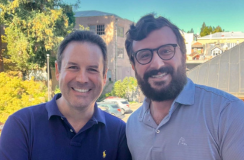
Host: Today's interview is with Jason Andrews, whom you'll remember from his first appearance on Acquiring Minds. In June, Jason maxed out the SBA loan and scraped together every last dollar to buy a business whose enterprise value was in the high seven figures. So as a loan acquisition entrepreneur, this was a very big bite. Well, today we conclude Jason's story. Shortly after that June interview, Jason exited his business, selling it to a strategic acquirer for a life changing sum. What a fantastic outcome. Here is the final chapter to Jason Andrews, acquisition of GroupSource. Welcome to Acquiring Minds, a podcast about buying businesses. My name is Will Smith. Acquiring an existing business is an awesome opportunity for many entrepreneurs and on this podcast I talk to the people who do it. Top of the list for most acquisition entrepreneurs after they close on the business is digital marketing. Is the business doing it properly or at all? Has the website been touched since 2005? In many cases, that website is going to need an overhaul. Eversight is a firm that works with searchers to do custom redesigns of their websites for a flat monthly fee. So you don't need to spend down your precious working capital for a custom redesign of the website. That and all ongoing support is baked into their monthly fee. So your website cost is simple and predictable month after month with the assurance of knowing that you can ping the folks at Eversight for any changes you might need. And you will talk to a human, call or email your Eversight rep, make a request and expect your changes live in hours, sometimes minutes. There is so much going on when you transition that business you buy. Make the website management easy by putting it in the capable hands of Eversight. Check out Eversight.com searchers E V E R S I T E.com searchers Jason Andrews, welcome back to Acquiring Minds.
Guest: Thanks Will. Happy to be here. Appreciate the invite.
Host: Jason, you first came on the POD in June, so not that long ago, about seven months. And I wanted to have you back on now because in these intervening seven months, you exited the business that you bought as an acquisition entrepreneur, the business that we discussed in your first interview. So very exciting for you. Congratulations. Thank you. And so you've now completed the full life cycle of an acquisition entrepreneur. You searched, you bought, you operated, you exited. And what I'd like to do here is of course talk about the exit, have you share what you can and then have you reflect on this path that you chose as an acquisition entrepreneur. You took a big swing to get into this as we discussed in detail back in June, and now here you sit on the other side of all of that victorious for lack of a better word. But let's start off with a refresher. Jason, if you would a brief background on you and the business that you bought, please.
[3:30] Guest: Sure. So my, I was a little bit of an older searcher I guess. I'd spent 20 years in in the corporate world mostly building and developing sales teams in the medical device arena. And anyway in 2015 I engaged a company, a middle market company to do a buy side search for me and that search took about 10 months. We talked about that a lot on the last episode closed in February of 2016 on GroupSource it was a larger company than I was expecting to get into, but it was a max SBA note, a large seller node and I'll say basically every liquid dollar that I had that went into that purchase. So that was early 2016 and operated it. So the company itself is kind of a niched born out of healthcare. We basically negotiate discounts on all the things physician groups buy and then we make a little piece of that. But anyway it's a niche healthcare business and that's how we drive our revenue. A lot of sales and service. So business to business services, type of
Host: company, group purchasing organization, gpos. People in healthcare will probably recognize that. But yeah, as you said, kind of pooling the resources of doctors offices and non acute care health centers and offices and entity entities to secure discounts for our for medical supplies essentially. Correct. And then you take a little piece of all of those transactions. Great, thank you for that. And just give us a sense of how big the business was when you acquired it in terms of revenue if you can or ballpark and number of people.
Guest: Sure. So around 10, maybe 10 or 11 people. And we, we did not grow in people size. We've actually got a little smaller. We outsourced a lot of functions that they used to do in house. We kind of beefed up our sales team and outsourced almost everything else. Had a few operations people that, that handled that. And so I, I don't know. So we, we look at, we look at growth a few different ways. It's either spend under our umbrella or, or revenue and they mostly correlate. But I would say it was, we were probably, you know, 300 million or 280 million in spend under our program when I acquired it, we grew that to about 400, 450. So in six years, six and a half years, we grew about 50 or 60% in spend volume and probably most of that flows through so profitability probably grew roughly the same, that sort of thing.
[6:03] Host: So 50 to 60% growth over the entire duration of your ownership.
Guest: Correct?
Host: Yeah. So that's not huge growth sometimes, you know, if you, you'll, you'll hear some acquisition entrepreneurs get in there and 20 and 30% growth in a year, as rarely is that sustainable over multiple years, but still as a benchmark. So I think one of the interesting aspects to this story. Well, we'll return, we'll return to the growth aspect of that. So let's just get back to where you were when, where the business was. When you decided to sell, were you approached or did you decide to go out in the market? Give us a little bit of the story of the sale.
Guest: So I was approached. So one of the things that people talk about really liking when they do a search is they want a niche business that's very, you know, kind of small and specific in things that they do. That's great. And I had that and that was very valuable. The other side of that is who's gonna buy that business? And that's one thing that you need to be thinking about. Probably not before you buy it, but as soon as you do, it's like you need to be thinking generally about what an exit might look like. And so one of the things for, in the GPO business is there's a lot of consolidation, as there are in a lot of businesses. And so at least it was pretty clear to me that some, the buyer for my business or the ideal buyer for my business was going to be a larger version of me. And so my goal was to make it was to increase the value both in size and in desirability to those players so that in, you know, and build relationships along the way so that inevitably that would transact. I didn't really know when or what that would look like, but the goal of building a business that they would want puts you in a pretty good position. So I, I'd been approached by a couple of different groups and had met with them both about ways we could partner together. And then maybe this one evolved into an acquisition discussion. And that started in actually early last year. So actually when I met you in Orlando, that was my first live meeting around the possibility of a sale. And so anyway, that's kind of where it started.
Host: So were they at SM Bash or they were just in Central Florida somewhere?
Guest: Well, they're actually based out of New York, but because I was going to be there, we decided to meet around that meeting. So we just had a day of meetings, went to dinner, had a Full day of meetings where we went through a lot of things in more detail. So it was still pre loi, but it was, I guess, more than just theoretical.
Host: Great. And so going back to this kind of your, you know, what you just described sounds a lot like built to sell. I don't know if you've read the book Built to Sell, but every business, as you're building it, you should be building it so that it is an attractive acquisition to some other entity, whether or not you actually intend to sell it. Because as you build a business to sell, you're just making the thing more valuable either for some third party buyer or for yourself. So you were going through that exercise, but did you envision that. Yes. Like there would be an exit, you would exit this business at some point, you know, before dying, or, or were you just open to it? Maybe, maybe it doesn't happen. Or were you kind of like, I'm going to hold on to it forever? Yeah. Where did you fall there?
[9:22] Guest: Well, I was never thinking I would hold on to it forever. I also wasn't thinking that I would only have it for six and a half years. So it was something in the middle. But pretty early on I knew when I bought it it was a stretch for an individual buyer. Right. That was going to be sba. It was like pretty good in size. I mean, it wasn't quite an eight figure purchase, but it was close. And so, so I knew that as I was growing it, an individual buyer was going to be a difficult. And so it's like, that's probably a person that looks like me is probably not going to be the buyer. So private equity had been approached. I'm like, I don't really think it's an option for private equity due to private equity wants to put a lot of resources in it, grow it fast and then exit it. And it's not that type of business. I mean it's a steady growing, cash flowing business, but not super sexy, not super scalable in that way. And so it was like, well, the most likely. And then there's another stakeholder that's a part of this, wasn't just me. It's like, well, what about the company? I mean, I do care about the people that are there. They're good at their job, they do a nice job. I want to make sure that they have a future that works for them and opportunities. And so that's where it kind of led me to. Of those three doors, it was probably going to be a strategic and, and so that's. That's the direction it went. And so not necessarily the perfect timing for me if I were to draw it up, but everything else checked the
Host: boxes and, and, but why not hold it indefinitely? Why not hold it for another 20 years?
Guest: Yeah, and, you know, it's a good question. I don't know. I mean, the, the, the consolidation within the industry made me wonder if, you know, it's like you kind of, you. Am I going to be able to pick my timing later? Right. Or is it is, you know, as the options get less and less, you know, if I'm, if I'm convinced that that's going to be a buyer and, and there are only a few of them that are looking to acquire through or build through acquisition. If no one's buying or deciding to build through acquisition. I don't, I don't maybe don't have a buyer if and when I'm ready to sell. So, yeah, that was, that was part of the. I don't know that I was right on that and I certainly wasn't at a point where I needed to sell in 2022, but I don't know that I could have played it forward to 2032 and the game board would have looked the same.
Host: Yeah, well, you know, and that, that's actually, I don't think I've ever articulated this or heard somebody articulate it, but that's a weakness, I guess, of, of, of these niche businesses that, that we searchers look for, which is if you buy an H Vac business, there's all, I mean, okay, maybe not always, but there's, let's just for the sake of argument, there's always going to be a buyer for that H Vac business. So you can put it out to market and sell it at almost any time. Within reason. Yeah. Whereas in a super niche business like yours, there's just maybe a small handful of strategic buyers. And so the timing is much less in your control. On the exit. On the exit in particular, agree you did not have investors when you bought the business. And so you had the freedom, what we're talking about now, the freedom to sell. The timing of selling, even though the market conditions maybe, maybe forced your hand a little bit internally, you could decide when and if you wanted to sell. And one of the big things for small business buyers when they do take an investment, which is many folks, is that, you know, that exit is going to be more of a collaborative decision with their investors and they're going to have to find, you know, they might not agree with the investing with the timing of their investors. And often the exit is quite important to investors because that's really where they see the realization of their return and they get that, that their, their money back. And so I always just have the sense that when working with investors, they, whether there may be going to be less amenable to just holding on to a business forever because they at some point want to see their capital back. That's a huge generalization, but I'll make it. Do you have a reaction to any of that? Like did, like in retrospect, are you glad you didn't have to, you know, talk to yet another party, a third party, namely investors, to get, you know, get their input on whether or not it was a good time to sell?
[13:37] Guest: I'll say yes and maybe a little bit no. I mean, you need to, you need to be thinking along those lines. So maybe investors start thinking about that always, right? They're always thinking, okay, I need to get my money back. And what does that look like? And when it's not a forever decision, if you're somebody like me, you need to be thinking about that with a, with a smaller subset. Maybe it's just you and your spouse or maybe it's a small team of advisors, but you need to be thinking along those terms to understand. Okay, under what circumstances would I be interested in exit? What would it need to look like? Because, because there's two sides. Like there's a logic component and there's an emotion component and they sometimes can battle against each other. And so, you know, you want to, before things start to fly, you want to have a framework and a structure in place maybe for both of those things, so that it makes the decision making process a little clearer.
Host: Yeah, that's a great point. Yeah. Okay, can you tell us some details about the sale itself and the acquisition price and so on? What can you share there?
Guest: Yeah, so it was. So the acquisition, the price was, I guess not double. What I paid for was something between 50% higher and double what I paid for it. So that was the amount of, I guess, the acquisition. One of the things that we had done over time is really aggressively pay down the debt. So we had about six and a half million dollars in debt at the start. And then six and a half years later it was down to just under two. So there was some debt. There was still a note component to it, but we had pretty aggressively paid that down. And you know, that was. So we taken some distributions, but I hadn't distributed. I mean, I kept a lot of cash in the business taking distributions obviously for cash and maybe for some other things, but it was not a drain the bank account at the end of the year type of thing. I don't know that that was the right decision. I could have done that and put it into other things and maybe that had done better. But there was a sleep at night component that was aggressively paying down debt. That was important to me. And so that was the route we chose.
[15:52] Host: Okay. And in terms of the structure of the acquisition, can you, can you share that at all?
Guest: So it was 80% of close and then 20%, most of that front loaded into year one. And so there is a recurring component to our business. There's not a, most of our customers are continued customers, but they aren't contractually obligated to be. And so there is a little bit of a tail to the business. It's probably about a six month lag. So I had a lot of control over year one. So the majority of the earnings, I'll say earn out component, is built into year one. We're a little over six months in. Year one, I would say is pretty well baked. But there is a piece that's in year two as well.
Host: And is that kind of 80% at closing and then 20% earn out, let's call it over, over those two years. Is that kind of a standard structure for a deal like this or, or is there no such thing as a standard structure for a deal like this?
Guest: I think there's probably no such thing as a standard structure. It would be very difficult to not have an earn out component at all. But how much and the, the length of time, I mean, that was a, there's a fair amount of, of discussion in negotiations about that. Right? There's the amount, then there's the amount up front versus earn out. And how does that play out? And what are those, you know, what are those levers to pull? It's sort of, you know, you've had people on your show say this, that you can get your price or you can get your terms, you can't get both. But you need to understand what's important to you, what's important to the buyer and find something that works.
Host: August Felker is a two time successful searcher. First with a traditional search fund. The second time around, he did a self funded search. Today, August runs Oberle Risk Strategies, an insurance firm with a dedicated practice group for searchers and acquisition entrepreneurs like you. If you've got a business under Loi, Oberly will provide complimentary due diligence. On that business's insurance and benefits program. A great no risk way to get to know August and team. They love helping searchers. They've worked with hundreds. Oberly is a specialty insurance brokerage for searchers by a former searcher. Check out oberle-risk.com O B E R L E- risk.com, link in the show notes. And who is helping you through this? I mean, this is the first time you're, you're involved in a sale like this. Did you have counsel of any kind?
[18:22] Guest: Well, it's a great point. And so, yes, I mean, so I had, I guess I have my deal team, my attorney, my accountant that I worked with on the acquisition. I called them both up when we were getting to the loi point and said, let's kind of get the band back together. We've got, we've got another thing. But, but it's like they help with certain things, right? They don't make business decisions. They're not going to say, oh yeah, that's a bad deal. Don't take that, or hey, don't put that over here or you should ask for this. I mean, they've got their, their pieces, but it's not around the deal terms. It's not business decisions. And so you need to have some advisors that you can bounce things off of either. They have experience, they need to probably know you and how you react to things emotionally. That's really important. And they need to have some understanding of some options just so you can have those. I think that's very important to have those people that you can bounce ideas off of to walk you through this. Otherwise you're, you know, you're flying blind. The other part of this is if you're in a business like mine, you, you're running your business while you're doing these things. And so, you know, that's a, that's another layer of complexity that you have to really be ready for.
Host: And so you did have an advisor or advisors who could, who could help you think strategically about this sale?
Guest: Yes, absolutely. I mean I kind of was in a, I don't know, there are some business owner groups. We've got one here based in Kansas City that I had, you know, kept close with 12 of us that meet on a regular basis. And so, you know, I'd known these folks for a number of years. We talked through business challenges and so, you know, that is, they were invaluable to me during the process. And then just other, you know, friends and colleagues.
Host: Great, let's Talk a little bit about just your years of operating quickly, going backwards a little bit. One of the things that you said in our pre call just a few minutes ago was I was asked, I asked how you felt and you said, well, you know, it's, it's, it's hard to sell a business. It's, it's, it's messy deals die. All that we, you know, all the things that we talk about on the show. It's hard to buy a business. So going all the way back to 2016, it was, it was an arduous deal for you to get across the finish line in the first place. What about the, the in between years, the operating. How did you find being an operator?
Guest: I mean it has its ups and downs obviously with. But I, I loved it. I mean it's like it, I was in a very unsexy business. I mean if you were, I mean like if you were sitting next to me at a dinner party, you're probably looking for somebody else to talk to you. It's not a, not a fun, super fun business. But I loved it. I mean the challenge of business and kind of the levers to pull and how do we do this and how can we do that better? I mean it led to some operational changes of, of off or you know, outsourcing a number of functions and it led to how does our sales team and how do we change and pivot and grow and do things like that and those puzzle pieces and putting that together and figuring out how to continue to grow and win and have success was very fun. It wasn't always, you know, it wasn't a straight up path or anything like that, but that was, I always enjoyed that. And so you know that, so the operating part was, was fun. Much more fun than buying or selling for sure.
[21:30] Host: Because you know, you hear for a lot of people that once they get into the, the seat as CEO of a small business, it's, it's a rude awakening. You know, it's a lot more difficult. It's different than they expected. So not always nice to hear when somebody says that they actually really enjoy it. I, I should say that most of my guests are also do enjoy it, but it still bites them in the butt in ways they, they weren't expecting going into it for sure. You mentioned already that you kind of made the organization more sales forward more more and outsourced a lot and, and built up your sales team. I can't help but notice like your own background is a, is as a sales leader, as a salesperson and then somebody who then, you know, ran sales teams. Do you think that you. That that was just kind of your bias to do that because that's what. That's the world that you're comfortable in, or did you see very kind of objectively that that's what this business needed?
Guest: Maybe a little bit of both, probably the first one. So it's like every small business does some things really, really well. And so it behooves you as a small business owner to understand what those things are. Maybe it's you, maybe it's some key personnel. I mean, there were some operational things that we did absolutely excellent and we, and we kept doing those functions. But understand what it is you do really well and hire out the rest of it, you know, or what are the things that really matter in your business? What are the, you know, what are the, the levers that are really going to ratchet value either to your, to your customers or value to your organization? What are those things? And focus on those things and then inherently stop focusing on the other stuff. So still needs to be done, the HR functions, payroll, the benefits, all of those things are important, but they're not. You don't have to do them in house. There are people that are experts at those things, probably better than you. And so if that's not your area of expertise, spend very little time on them and outsource that piece.
Host: You had mentioned that you didn't take a lot of dividends out of the business, but what you did do with the excess cash flow was pay down the debt faster than you need, than you needed to. How did you make that strategic decision? Like, why not hire three more salespeople rather than paying down the debt faster?
Guest: So, so the first thing that was the goal of excess cash was to keep a fair amount of it in the business. The first, except my, my. One of the best pieces of advice that I got early on was don't pay down your debt too fast. Right. So first thing is build up a big nest egg because most small businesses don't fail. They run out of cash. So make sure you've got a war chest of cash. So not going to make you any money. It certainly wasn't. Then it's paying nothing, but it's important. So that's number one. That was the first. The second is where can we use the money to grow the business? And so there weren't opportunities that we passed up on that were good growth opportunities. But, but it was, you know, kind of a decision of, okay, we, we've invested in these growth opportunities and now like throwing more money to try to, it's sort of like it's this cake is going to bake and it's going to take it 45 minutes. If I put it in the microwave, I can't do it in four minutes. It doesn't work. And so once we made those investments, we gave those time to grow and then the other excess cash that we had beyond the stockpile and the investments went to pay down, mostly went to pay down debt.
[24:51] Host: One of the things I just, we've already kind of been touching on, but I just want to address it explicitly, is the power of the buy then build model, the acquisition entrepreneurship model, because you had a very significant exit for yourself. And just to put a little bit of numbers for this for people, as you said, you sold it for somewhere between 50% and 100% more than you acquired it for. We know that you acquired it for we don't know what, but call it 7, 8, 9 million. So you sold it for we don't know what, 13, 14, 15, 16 million. And you had paid down most of the debt. You still had $2 million in principal to pay down. So, you know, call it 15 million minus 2 million. 13 million. Rough number. You're not, you're not, you're not nodding at me or doing it. You know, you've got, you've got a poker face on. But I'm just giving, giving people some sense of what this event, this financial event for you could have looked like. The. So that is just an enormous amount of money. I mean, that's just a wildly successful financial event for any individual to experience in their lives. And so what's doubly remarkable to me about it is that there wasn't a ton of growth 50, 60% of over six years in total. So I think that's just a really, really compelling evidence of how this model, how the Biden Bill model is so powerful because kind of just paying down the equity and getting, you know, some modest amount of growth can still realize an incredible exit at the other side. Care to weigh in on that?
Guest: No, I think that's, I think that's, I think that's right. I mean, the, I'll say one thing, people are buying businesses, they're like, oh, I'm going to do this and I'm going to grow it, you know, and in my model, I'm going to grow it 100% in three years. I'm going to double it in three years. And a lot of people do Those are usually the ones that end up on your podcast. Right. There are a lot that don't. Right. Some it's very difficult, you know, and the things that you think are going to be levers that are really going to ratchet up the business may not be what you think they're going to be. So you know, that's when you're, when the, when modeling, it's probably worth understanding. It's like, hey, this might not, this person that owned it for 20 years might have done a lot of things right. That you're probably not just going to immediately double in three years. That as a. That's possible. Right. So factor that in. And so at least for ours, I mean, so if my, if the business that I had purchased that maybe thought I was going to purchase was significantly smaller, then, then the growth would have needed to be a part of the component. It was a larger business and so it became more, I mean there's growth opportunities and we did grow, but it was more like a buying a large asset and just paying down that asset. And the, and the overall enterprise value came from that as opposed to taking something that was smaller and tripling it in size. It was taking something that was bigger and paying that down and realizing the value at the exit of that spread.
[27:55] Host: Yeah, well, that's a strong argument for, you know, buy, buy bigger rather than buying small. And in fact one of the, one of the interesting things from our conversation first back in June was that you anticipated buying much smaller than you did. You didn't go out looking to buy nearly as big as you did. You thought it would be kind of more searcher style million, two million dollar business. And, and it was multiples of that size. But yeah, all to say that on the exit, you know, you're likely to, I don't want to overstate this or, or generalize too much, but it feels like you're likely to see a more handsome exit if you're getting into a bigger, stabler business because you just don't need as much growth to be there to have it be really material for you, the individual acquisition entrepreneur, when you exit. One of the things I like to ask people, is there anything that you look back on now that you did wrong, could have done better, mistakes, you made anything where as. As great an outcome as all this is and as frankly happy a story as all this is, could have been even happier if you'd done X differently,
Guest: you know, probably right. I mean definitely there are, I guess the main thing I would answer that to is you're going to make a lot of mistakes. Nothing about small business ownership needs to be perfect. It needs to be purposeful effort over a long period of time. And you need to be open to analyzing your decisions. You know, we're trying this. Are we measuring it?
Host: Did it work?
Guest: You know, it's like, well, we did X and Y happened. Well, did Y happen because of X or, you know, was it because Every business grew 30% during the pandemic because there's this flood of cash? You know, not every business is great. Well, how did every business grow 35%? What are the levers in our business? I mean, if you're be. Be as critical as you can on the business piece. But yeah, you're going to make a lot of mistakes. Hopefully you're making a lot of mistakes because that means you're trying different things. But you know, try and measure them. Stop doing the things that aren't working. Do more of the things that are wash, rinse, repeat, and just keep doing that over time and let the, you know, let it, let it build. That's the. So it's like, you know, don't be afraid of failing because the successes come in the same places as the failures. You just got to,
[30:10] Host: you just got to measure those correct quickly.
Guest: That's right.
Host: Well, so just to wrap up Jason, so what do you think is next for you? Are you going to go out and buy another business and become an operator again or are you going to sit back and become a capital allocator and invest in other searchers or a combination of A and B? I know you're going to be at SM Bash in Austin. So you got some sort of plans for yourself?
Guest: Yeah, I think, I mean, so what am I. Do I want to be the one throat to choke again? I don't know. Right. I mean, I know. So I was 49 when I exited and I had a different energy level at 49 than I did at 42 when I bought it. I. The tank isn't empty. I'm still very interested and engaged. I'm looking, but I don't know. I mean, is the answer. I mean, I don't. I feel like I would definitely not do it all alone again. Whether I'm involved or I guess whether I'm the chicken in the ham and egg breakfast or the pig, I probably lean more towards the chicken. I want to be involved, but not as committed as, as I was last go around.
Host: And is that because of. For finance, the financial risk of it or because the energy required in Operating or, or, or what piece kind of is less appealing to you now, specifically?
Guest: Yeah, I think. I mean, so, so I've just got other things that I want to do. And so starting something at 50, that may. So I just look at things a little differently. I mean, I bought a business not to make a lot of money. I want, although I wanted to do that. I bought it for freedom. I wanted to. Wanted to be home. I wanted to be there with my kids. Two of them are in college now, and I've got one still in high school. My dad passed away at 63. I'm 50. And so I want to do a lot of things over the next 10 years that don't involve anything about business. And so what I don't want to do is, you know, but I still want to be involved. So I don't want to get involved in something that then takes me away from a lot of things.
Host: Sure.
Guest: So. So that's, that's what I'm wrestling with in mom height.
Host: So some fingers and pies, but you don't want to be anchored to. To a desk or, you know, into a business. And so just to close this out, Jason, what are some of these things on your bucket list?
Guest: Well, I want to travel some, you know, I just, you know, that's mostly it when. Travel some different places and experience some different things and just be able to. Be able to say yes to opportunities without. Without checking a calendar.
Host: Sure. Well, that's. That. That is the dream. So congratulations for getting there and having the option to do that now. Jason, thanks for coming back on and, and sharing with us details of the sale and how you thought through this. And I guess I will see you in person in, in Austin and be eager to hear, you know, where your head's at at that time.
Guest: Well, thanks, Will. I appreciate you having me on. I had a number of people reach out after the last one and I would encourage anybody to do so. I'm not that active in social media forms, but I'm very happy to have conversations and help anybody that's searching. So I really have enjoyed that part of it. Had a number of people that did that. I don't know if I was much help, but I'm happy to talk with anyone anytime. So thanks for the forum. I appreciate it.
[33:20] Host: Well, great. And one reminder to people, of course, there'll be a link to your original interview in the show notes, and it really was a great interview. One of the things that we spent time on, as you already mentioned, is that you used a buy side advisor which many searchers do, not very few of my guests if any other than you have and we really got into it. It was a really it was really expensive. The kind of the headline was it was quite expensive but it was also extreme like more than worth it and you couldn't even remember exactly what you paid because in the grand scheme of things it was kind of immaterial even though it was, you know, north of probably $200,000. So really a really fascinating kind of conversation around that and I in the group that you use your buy side advisors DVS group has subsequently gotten in touch with me and they also heard from a lot of folks after our conversation. So I'm glad people have really listened to your episode and hopefully your first episode and hopefully this follow up will boost it again. So thanks very much Jason and good luck to you and a hearty congratulations.
Guest: Appreciate it. Well thanks again again.















































%20-%20thumbnail.png)





%20-%20thumbnail.png)


%20-%20thumbnail.png)

.png)



%20-%20thumbnail.png)