Host: Welcome to Acquiring Minds, a podcast about buying businesses. My name is Will Smith. Acquiring an existing business is an awesome opportunity for many entrepreneurs. And on this podcast I talk to the people who do it. Today I talked to Nick Haschka for a second time. Nick was one of my first interviews a few months ago and I had it back on today to elaborate on a Twitter thread that he put out last week, which I found pretty intriguing and wanted to have him kind of talk out some of the points he made in that thread. So without further ado, here is Nick Hashka. Nick Haschka, thank you for joining me today on Acquiring Minds.
Guest: Thanks for having me back.
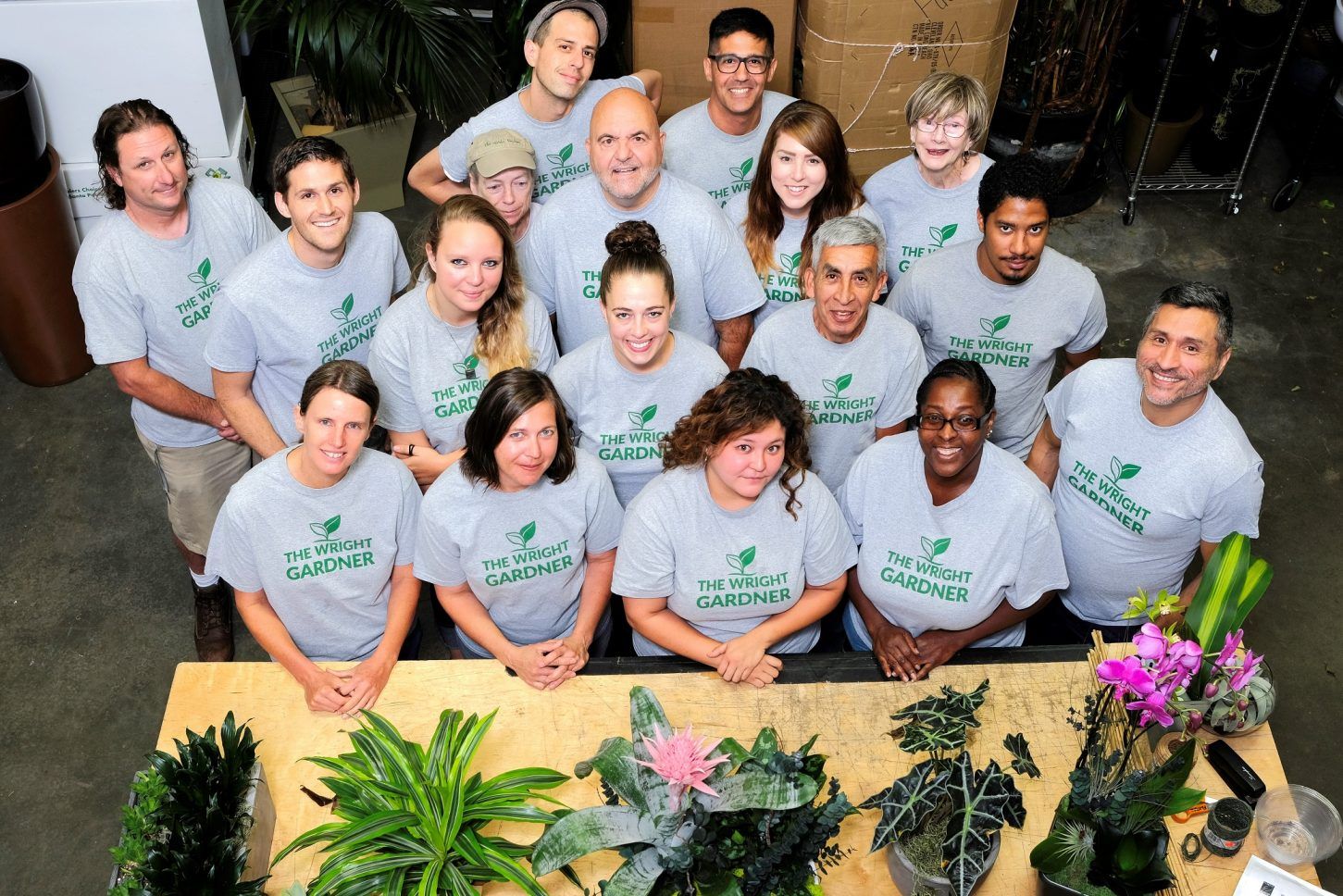
Host: So, yeah, this is your second time on Acquiring Minds, Nick. For listeners who didn't hear your first episode, I recommend everyone go back and listen to that. You acquired an indoor plant services business 2016 about five years ago and proceeded to buy more of them and assembled something of a Bay Area indoor plant services empire in these intervening five years, which is what that whole first interview was about. You are also very visible on SMB and ETA Twitter and it was in fact a tweet of yours from last week that got my attention and what we're going to talk about today. You tweeted about six or seven observations on what is different in 2021 versus 2016 in this small business acquisition world and market. And some very interesting observations, particularly for somebody like me who's very new to this space. So I just wanted to have you on and have you talk through each of these items and we'll just make it a conversation. So without further ado, I'm going to read to you your tweet and just have you expand upon it.
Guest: Sure.
Host: So you say that a huge chunk of the so called Silver Tsunami opportunity is now behind us. Silver Tsunami, of course, is this idea that there's this demographic shift from baby boomers who are small business owners and now want to retire and there are many, many millions of people are looking to sell a business and so that's perceived as a great opportunity for acquisition entrepreneurs. And you're arguing that this is this moment may have passed or we're on the downswing, so please go ahead.
Guest: Yeah, so I mean, if you look at demographics, it would suggest we're probably in the back half. But just in terms of what I'm seeing out there as far as doing proprietary search, like I'm getting more, more and more responses back from people like, oh, I sold the business a year ago or I sold the business two years ago, or I'm starting to really see it and get those kinds of responses that when in prior years or when we set out and started searching, that was pretty rare. I wasn't getting nearly as much of that. And so I think it's possible that I'm seeing more of it. But I kind of think that the last five years have been a major, major turnover. There's been pretty rapid turnover. I've seen it in my market. There's guys buying plant companies in other markets too. And there's more of a searcher led entrepreneurial venture in almost every major metro, just in our industry. And I know the same as we're in landscaping as well, same goes there. A lot of turnover has happened in the last five years. And so my view is that think a lot of the best stuff, the most sellable, the most, you know, the clearest opportunities for owners to have an obvious sale pathway probably happened. And then there's probably a big culling of the herd that occurred because of COVID And businesses may not that may previously have been thought sellable, may not be sellable or may be closed. And so there's probably a pretty sizable shock going on because of that. And I know it's just harder to arrange financing because of COVID as well. And so businesses, it may be more difficult to rope in a succession acquisition with financing on terms that would be mutually agreeable because of this crazy external shock.
[4:33] Host: You're seeing this outside of the Bay Area. So you've looked at other markets in your industry, in the plant services industry, and you've seen, you've seen that there are kind of Nick Hashka, the Nick Hashka of Atlanta and the Nick Hashka of Boston people who are this generate the new generation buying up plant, indoor plant services companies.
Guest: Yeah, and, and I think every market is different in terms of what the geo or like what the demographics of that specific market look like. Every industry even is different in terms of like how old is too old to run a plant company versus a landscaping company versus an electrician. So there's different factors at play here. But yeah, I have a hypothesis that a lot of the best opportunities maybe are behind us. And that's not to say that there's not opportunities. I mean we're still talking about large numbers of businesses and large amounts of turnover. But that said, it's not going to get easier from here. It's going to get harder from where we are, in my opinion.
Host: What I wonder is when we talked on our first interview, you talked about this phenomenon of you acquired the Right. Gardener. And then that owner knew, was kind of friendly, competitive with a bunch of his competitors. And so they all heard that whatever Bob had sold his business and they knocked on your door saying, hey, buy my business as well. And so this kind of domino effect in a very hyper local, and a very hyper local local market might occur where one of the retiring business owners sells his business and then the other ones all raise their hand and want to get by. And so that's a great opportunity for the acquirer. But, but I wonder if that's just what I was going to ask is if that maybe just happened in your market and it's kind of a false positive. But in fact it sounds like you've looked all over the country and it's not just, it's not just the Bay Area where plant services are being bought up, it's. It's other places as well.
[6:26] Guest: Yeah, yeah, I think, I think that, I think there is something to that kind of domino effect idea. And it only takes the first to get the ball rolling and then it can happen quickly after that.
Host: Yeah. Okay. Your second observation, related, just in terms of things getting a little more difficult, the lower middle market is even more flooded with capital. I'm quoting you now. And there's more recognition of the need to go after operator succession plans versus only backing intact management teams to get deal flow. The big scarcity is in well matched dealer operator combinations. So that's really about kind of private equity's role in the market. Please explain.
Guest: Yeah, so when we started, we didn't go into this really knowing what our business model was going to be. We kind of landed on it based on where we thought the best opportunity was. But there was a viable path for us to do what most people would call an independent sponsor pathway. And I think the thing that the advice that we were getting and just from talking to people who were raising money in the space, people who had track record in the space, is that really most of the money was looking at looking for opportunities where the management team was already intact. Like they were investing against a growth business plan. A new ambition for a company maybe, but fairly minor changes at the management level, not for. And they were scared of or not likely to back, especially an industry outsider coming in and taking on a CEO, taking the helm of a new growth strategy for a business that in trying to grow a business at 10% that had only ever grown at 3% or 5% or whatever. The lower middle market was pretty flush with capital five years ago. But I think that dry powder Just continues to increase and pile up. And I think the opportunities for an intact management team to go after and get more aggressive with private equity money, those sorts of opportunities are fairly rare at this point. And the only way for middle market to deploy capital now is to come up is to get a bit more creative and to be willing to take on a little bit harder stuff. And by harder I mean potentially management team rebuilds, kind of new strategic pivots and things like that that maybe in the past they never really had to do because they were kind of evaluating deals and evaluating strategies and kind of putting money and saying no to most things. And now if they want to invest any money at all, it's going to involve more elbow grease, probably more risk in terms of investing against a business plan that is not just a continuation of the recent three years.
[9:27] Host: And so that's not good news for them because they're having to work harder than they did before. But it's also not good news for people who are looking to buy a small business because now you're competing with that much more capital. These private equity folks who traditionally have only bought businesses that are whatever $5 million in enterprise value or $2 million in enterprise value, they're coming, they're buying even smaller businesses, a business that I as an individual might want to buy.
Guest: Right. And they're I think probably being having to be increasingly tolerant of risks that they may have just passed on prior and that in past years those passes create opportunities for somebody who is willing to do some of that, some of that work that maybe they would say we don't need to do that work.
Host: All of this is just because of the macro trend of there just being huge amounts of capital sloshing around the world. The price appreciation we're seeing in all asset classes is now starting to come even into this messy, opaque world of small business acquisition. Okay, well, so that's one more way things are getting a little bit more difficult for a buyer like me and kind of small time buyers. Your third observation is that there's just lots more buyers and non private equity buyers, correct?
Guest: Yeah.
Host: So talk to me about that.
Guest: Yeah, I think the secret's out. I mean there's a lot more community out there. So it's possible that more, there's more connections, there's more resources. The business schools are onto this. They're teaching newly minted MBAs or they're minting MBAs with a plan to do this. I think there's, there's really this, the search fund world was Only the beginning. And now there's more and more resources and reference cases for different ways to attack this SMB entrepreneurial game. And whatever your strategy is, there's probably something, a resource out there and a community out there that is aligned with or informed on that strategy. So that has a compounding effect. But at the same time, it also means that there really is more competition for the entrepreneurs running up against each other to try to get these deals.
Host: I wonder where this. If there's a cycle here or a peak or something in this kind of search path, I wonder if. If we're close to that. That's not what you're saying. You're simply saying that compared to 2016, things are harder. But kind of reminds me, I was talking to a Burning man friend and he was like, the joke is the complaint of Burning man is that always like, oh, five years ago it was so much better. And that's been the complaint about burning man since 2000. It was always better before. Um, and the search fund world is more crowded than 2016, but it's still. A lot of people have never even heard of it. So I just. I wonder what we'll be saying in 2026.
[12:34] Guest: Yeah, probably more crowded. More people. Yeah.
Host: Cool. Well, shifting away from kind of the piece of how much interest there is in this space to your next observation, which was about just a labor market. So talk about that, please.
Guest: Yeah, so, I mean, this has been written about broadly in the. In the mainstream business media, but, like, I think there's some reality to the. A lot of people are on the sidelines, right? The. There's a lot of people in the market overall when you kind of have to differentiate between skilled and unskilled. You know, there's the shortages persist in, say, the trades, right? Those shortages were there before, and they're there now. And they might even be more now because a lot of the people in the trades were older. And so there's retirement going on kind of on the workforce side. And so there's some kind of strange, nonlinear things happening, I think, especially in the trades. And I think the labor market, yeah, it's very, very difficult to find labor really skilled or unskilled who can reliably show up and do the job. And I'd say small business owners in particular are really. Are feeling that.
Host: Is it so bad that that should spook me if I'm looking to buy a blue collar small business, that I should wait a year and see how this crazy labor shortage thing shakes out?
Guest: I don't know. That spook would be the term I would use. But I think you better have a plan for it, right? You better have some tools and tricks and ideas as to how you can do it different or better than your predecessor. And in the absence of that, I would be very cautious.
Host: The best opportunities in our market have shifted away from B2B and toward B2C. What do you mean?
Guest: The B2B market, especially in the Bay Area where we are, is really, really tough because it seems like the businesses that are succeeding are increasingly remote and virtual, increasingly catering to a global audience. So they're selling into a global audience, kind of the local B2B services. It's just a tough place to be. And that's, you know, that's where our niche has been, is in B2B services. And yes, you still have to cut the grass, but there's on the indoor side, like a lot of, like office catering companies and events, and a lot of this is Covid. But there's also some, probably some durability to the increasing challenge and headwinds in the B2B market here, because I think what remains is actually different than looks different and the nature of work is different. And that will probably persist for a while, especially here, because it's so concentrated in tech. And so, you know, my view is that. But the workers, especially on the skilled side here, have never done better, right? And so they're taking in real income and they want to spend it on things, right? Pools, hot tubs, whatever experiences. And I think a consumer oriented play is better suited to this market and what's going on here because I think businesses are still reticent to spend. And so I think if there's been any kind of overwhelming change in flow of funds, there's more tepid behavior on the B2B side, business being other businesses for services, than there is on the consumer side, where everybody in the Bay Area who has done well through the pandemic, what they're looking for is somebody who will show up and who will. And so I think that's a great opportunity for an entrepreneur who wants to come and do that work.
[17:05] Host: And to make this observation a little more concrete, let me reinterpret it and you tell me if I have it right. Anything, when you say B2B, sort of anything that touches commercial real estate and offices and people going to those offices and the footprint of these companies. So anything, you know, commercial real estate directly or any of anything in that ecosystem like yours, which is plant services for offices or commercial landscaping or what have you? Like, obviously 2020 was a huge shock to that, but there's probably a permanent reduction in the size of that market or the demand for those services. So that would kind of be. That's kind of the B2B piece. On the B2C piece you might mean like homes, home service plays like you said, pools, hot tubs. So people are spending more time in their homes. And at least in the Bay Area, these people have, these workers are doing better than ever, as you put it. So they're willing to spend money on their homes and their comfort. And so you see this kind of rising demand for home services and this services around the home, the residential kind of home services and a less slackening demand of stuff that relates to the office, basically.
[18:18] Guest: Yeah. And I'd say you can play B2B as long as you're in the B2B 2C supply chain. Right. You can still do a B2B services business, but it better be selling pool parts to pool contractors or something like that. That's not to say that that hasn't created new tail end opportunities for B2B entrepreneurs. But the, I think the more the obvious first order conclusion there is the is it's kind of the shift for B2B to B2C.
Host: And is the right gardener doing any sort of strategic pivot or recalibration in light of this observation?
Guest: It hasn't, we've, I'd say over the years pivoted away from residential and designed the business away from it. So it hasn't gotten dire enough to start moving, moving back yet.
Host: Okay, your last observation was around no code and the tools have gotten better than I could have ever imagined quoting you. So tell us about that.
Guest: Yeah, so we, especially on the plant side and landscaping as well, we've basically coded our own service operations apps, coded a lot of our own automations, automated notifications, a lot of automated emails, automated checking of data. And it's all pretty simple. Our platform of choice is AppSheet for the businesses we run. But there's great stuff in Jotform and Airtable in Bubble and the whole. I mean there's so many of these where you can automate even what people consider to be more off the shelf. SaaS like Pipedrive or Asana, they're building more and more automation customizability into their platforms and it just allows you to do things at a scale and with a level of kind of consistency that never really was possible before. And we've had to do a lot of that and just retooling our own operations to serve indoor offices almost by appointment, when before everything, it was like totally open schedule, no notifications required. Our person would show up enough to be open and it's administered. What we do now is administratively 100 times more complicated than what we used to do. And we've only been able to get there without 100 times the administrative expense through customizing these tools to do things that weren't demanded of us before and wouldn't have really. Maybe it would have been possible five years ago, but it would have been hard and it would have been expensive and it wouldn't have been nearly as reliable or as, well, easy to execute. Right.
[21:11] Host: So I think the difference is, I mean, in 2016 you could have hired a developer to build all this stuff, which would have been prohibitive, but now you have all of this technology that's custom just to the right gardener and what you all need. And I think the difference is, is that actually you, Nick, did a lot of this, right?
Guest: Yep, I'm the developer.
Host: So that's pretty profound that the CEO of the business doesn't have to be hired, can do this stuff and you don't have to hire a developer or team of developers. And so you, Nick, are building stuff in appsheet. Remind me. I think in our first interview you actually told me one of the cost savings that you got from building one of your appsheet apps. Do you remember what that is?
Guest: I mean, I think the most obvious one was just how much time we were spending on scheduling. I mean, we had like three quarters of an employee doing scheduling for 10 field technicians and scheduling now takes 15 minutes a week. Now there's a bunch of rescheduling and administration work that we have to do now that we didn't have to do back then. But a lot of the workflow itself is automated and we can really make the schedules efficient because of the automations we've put in place.
Host: Nick, what's your opinion on how easy no code tools are, how accessible they are to people who are not maybe as technically inclined as you? Certainly it's easier than raw code, but there's a bit of a debate in the tech world that, you know, no code can be oversold. It still takes a bit of a programming mind. Yeah, it's easier than writing straight code, but can be, can be tricky. So any thoughts on that? Because I think you're a pretty technically minded guy.
Guest: Yeah, I mean, I think if, especially if you've got experience in spreadsheets or doing any kind of work with data at all, it will come very quickly. So I have no real formal like computer science training, but I know how to get, I know how to move around a spreadsheet. I can write formulas and do stuff like that. So any, I'd say anybody who has like any substantial amount of financial modeling experience, any sort of analyst type work, I think could very readily pick up and run with a no code platform without going to a three month boot camp or something like that. If you have no technical acumen whatsoever, I have no reason to expect that you would really enjoy or succeed jumping into even a no code, even the most simple no code environments. But I think the amount of technical know how you need is really not that much. And some of them are easier than others. There's one that's like Glide, I think it's called. You can, you can do it. You can do it really fast. Just get up, get something working that is functional very very quickly with pretty minimal amount of knowledge of Glide.
[24:22] Host: I'd also add that even if you are somebody who's just not going to be comfortable learning a tech tool, the fact that these no code tools exist mean in the hands of somebody who is comfortable with technology, they can build something for you really quickly. So let's say you still have to hire a developer. They can build something for you in a tenth of the time that's custom to your business than they could have in 2016. So there's, even if you're not the one getting your hands dirty in the no code tool, the benefit that you, you talk about, Nick, still is there to be taken advantage of.
Guest: That's right. Yeah. I think the, the age there's almost this like agency model developing for developers where the barriers to entry of or the right to earn the developer title has never get, has never been easier. And you're seeing firms that specialize just in basically executing these no code tools pop up and the level of code knowledge required. You don't really need a computer science resume to work at one of those places. And so you know, they can hire newly minted college grads who have a degree in math or any sort of technical or even non technical. So long as they have the computer skills those folks can. That's a new career avenue that maybe wasn't available a few years back.
Host: Right, right. And you as the small business owner, you can pay $5,000 for something from this agency versus the $50,000 it would have cost.
Guest: And then potentially even once it's developed, then potentially maintain it yourself. So it's not scary. And you can go in and increase the code. They can introduce you to it, show you how it works. And if you need to tweak it, you can go in there and do it yourself.
Host: Yeah.
Guest: Great.
Host: Well, thank you for walking me through those, Nick. Great to have you back on. And I'm sure I'll be reaching out to you again in your DMs to have you back. Just keep putting out interesting tweets.
Guest: Sounds good. Thanks for having me back.
Host: Cool. Thanks, Nick. All right, take care.













































%20-%20thumbnail.avif)



%20-%20thumbnail.avif)

%20-%20thumbnail.avif)

.avif)




%20-%20thumbnail.avif)