Host: Ben Jasper was a guy who'd spent most of his life checking boxes, following a well trodden path to conventional success. Not that it was easy. He worked very hard to get where he got. But at 40 he started to fatigue of his all consuming job in finance and to contemplate how the second half of his career could look different. He wanted control over his time in a way that the 247 world of New York hedge funds didn't allow. He wanted more time with his family. He wanted boundaries. Now I hear you saying boundaries by owning and operating a small business. Ha. Well, Ben did achieve them. Even though the plastics manufacturer he bought requires him to arrive at the factory at 4:30am every morning. We get into it Ben's new lifestyle. He goes out of his way to provide a window into the unglamorous pre dawn work of operating a 10 person manufacturing business with no management layer. But to be clear, almost a year into ownership and it is going well for Ben both as an investment and as a vehicle for the professional path he desired. Please enjoy this conversation with Ben Jasper, owner of a plastic bag manufacturer in New Jersey. Welcome to Acquiring Minds, a podcast about buying businesses. My name is Will Smith. Acquiring an existing business is an awesome opportunity for many entrepreneurs and on this podcast I talk to the people who do it. Moore Staffing has been a sponsor of Acquiring Minds for a few months now. Moore is a talent agency that finds you a players manager level talent in the Philippines and a number of you have engaged them to do just that. Warrick Blunt, a buyer of e commerce businesses, had hired folks in the Philippines before, but then he worked with more to find a customer service manager. Here's what he said.
Guest: Our customer service manager through Moore is the strongest team player that we've hired so far in the Philippines and it's very clearly he's more than a virtual assistant. He's an expert in the field and he knows customer service through and through and that's what his expertise is.
Host: Warwick is now working with Moore again to fill another role.
Guest: We're already working with Moore to hire another team member. We have a live search for a finance manager or a director. So another senior level hire. Someone with over 12 years of experience in finance and confident that more's the right team to help us find that person.
Host: If you are looking for a manager for your business, speak with Moore Staffing about the pool of talent they can connect you with. Check out Morenow Co. That's Morenow Co. Ben Jasper welcome to Acquiring Minds.
[3:04] Guest: Appreciate it. Grateful to be Here and a long time listener and viewer. Apparently I'm one of the few people that actually watches the YouTube episodes.
Host: Well, you're one of the first. So those views are low because you're so early in the morning. And we are, we are definitely going to spend some time on that, that detail.
Guest: Right.
Host: Well, you stepped out of a successful career in finance to buy a manufacturing business that has you at work hours before the sun comes up. Something that you, you just touched on. So you traded finance hard for a different kind of hard. And I'm excited for you to tell us all about that, all about this journey that you're now on. Start us off though, Ben, with some, with some background on you, please.
Guest: Yeah. So, you know, a little bit unique. I was born in South Korea, Seoul, and was adopted at the age of roughly three and a half by a nice family in Kansas City. So I was adopted by a nice German Caucasian couple in Kansas. Obviously, you know, adoption kind of in the 90s was not that normal, but I had a fantastic childhood growing up and in Kansas City and really was enjoyed it. And then like most people, I basically spent most of my life trying to check boxes. I'm not sure if it's in poster syndrome or whatever, just trying to fit in. Obviously I looked a little bit different than my classmates in Kansas, as you can imagine, and was fortunate enough after, you know, studying hard in high school to, to go to Brown, which I know is your alma mater as well, so spent four fantastic years in Providence, Rhode island. Was pre med like everyone else at the beginning because you don't know what else to do. And then I took a biomedical ethics course my freshman year and realized the healthcare system was pretty complex and insurance companies had way more influence than I would have preferred. And so I kind of pivoted and again, lack of imagination. I did econ and did what I felt like everyone smart was doing. Again, kind of in the whole checking the boxes and was fortunate enough to kind of start my career on Wall street working as an investment banker at Morgan Stanley. So again, kind of theme of checking boxes, do well in school, go to a great college, get that Wall street job. I'm kind of checking all the boxes. I should be getting happier, right? So I did three, two years in New York, one year in San Francisco and then the next move for some people, not that there's anything wrong, the investment banking career. I still have a lot of good friends from those times. I went to the buy side and started doing public market investing and effectively without needing to go into all the details, I spent almost 20 years doing public market investing, a long focused fund in San Francisco. Obviously 2008 happened and if you have a long bias that wasn't so much fun. Then came back to New York and invested more in kind of the traditional long short product, including some stints at some multi platform funds. You may have heard of them like Citadel, Baliasney, Millennium, you know, the who's who, which was a great experience. You know, you work with some of the smartest people in the world. It's really hard. It's not like billions. Don't let Showtime fool you. It's a lot of time spent in front of Excel models with a thousand line models trying to figure out what's Amazon going to say Thursday night. You know, Microsoft reported the previous week what was the Azure number? And there's a lot of real grunt work, but I really enjoyed it. It was really engaging and again, just kind of checking the boxes and was very fortunate enough to have had some relative success. I think for me, being in New York City with a young family, I had a three year old at the time, we were both working. My wife who works in the city as well, or we now no longer live in New York, Covid just kind of like for a lot of people kind of changed the perspective of things. One, I'd been working for 20 years in finance again checking all the boxes. And then Covid, you know, you're living in a small New York apartment, you know, you're hearing sirens all day. It was, it was quite a kind of change of perspective. And so we kind of survived that. You know, Covid actually was a pretty good year for hedge funds. And then I remember kind of a year removed from, you know, Covid in New York. We traveled to Florida for vacation when travel was no longer illegal. And I was in Miami with my family. And at this point I was as I was a portfolio manager managing about kind of 500 million by myself. And while my wife and my daughter were out on the beach, I was on my laptop just trying to understand why the book was acting so strange. Because obviously, you know, I think with Wall street bets and stuff, it's been well documented, you know, there's new actors in the market. It's become a little bit different. So I think, you know, after kind of 20 years on wall street, really enjoyed it. I mean, if you're competitive, you want to win, it's a great place to be, there's some really smart people, but also it's a grind. You kind of Self identify with your net worth with, you know, your penal. The time. There's not a whole lot of duration. And I think when I was on that vacation in Florida, it was for the first time I was like, okay, I need to start thinking about, you know, the rest of my life. I didn't, you know, I had friends that are retired and they weren't particularly happy. They didn't have a whole lot of purpose. And I started thinking, okay, what do I want to be doing for the next 20 or 30 years? And even though I was enjoying the work, I wasn't sure I wanted to be tethered to kind of Bloomberg and doing what I'd done for the past 20 years is. I kind of at this point was kind of entering a new phase of my life. You know, being a father, you know, being a husband. I just wasn't mentally present given that the job was 24 7. So I started thinking, actually for a few years I'd been thinking about eta, which you know, now seems to be, you know, there's a lot of help that I didn't have. Even though my search kind of started last May and of 2022. But I effectively left Wall street after kind of thinking about my future. You know, it was a tough kind of couple years managing TMT and I decided if I wanted to do this, I kind of needed to go all in. And I left in kind of May of 2022 and engaged in a full time search in the tri state area.
[9:26] Host: Ben, let me stop you there. The other thing about, in your backstory that I wanted to ask about was this theme, checking boxes. I guess this decision to buy a business is Ben stopping checking boxes for the first time in his life. Just so we're crystal clear, right?
Guest: Yeah, I guess that's one way to put it. That's not unfair. That's not unfair.
Host: The, the plot importance of that is, is, is self evident. Um, probably for a lot of people buying a business is, is really kind of this hard right turn that they take off of some track that they're on. But because this, you, you really saw yourself as somebody who had always checked boxes give us kind of like a window into the emotional content of this decision. Was it? Was it? Yes. You decided that you were at this fork in the road, you needed to leave finance new phase of life. But was this difficult for you to make this decision?
Guest: Yeah, I just think, you know, life changes in, in the sense that your priorities change. I look at, I think about who I was when I was 20, very different from when I was 30. And now that I'm kind of, I got, you know, the good old four handle. Even though I look like I'm nine. Different priorities. And so quite simply for me is I think I was trying to satisfy the ego part or maybe the insecurities of, you know, the imposter syndrome. Like, listen, Asian, growing up in Kansas, I fit in like a turd and punch bowl. I look different than pretty much everyone else going to the grocery store with my parents. There's a lot of stairs, right? You know, you walk in a price chopper in Kansas City and you see, you know, two Caucasian, you know, adults walking around with a eight year old Korean kid. That is not normal. That is not something you see all that often. Maybe even on the east coast. It's just, it just begs questions, right?
Host: Yeah.
Guest: And so I think I spent a lot of time just trying to fit in in a lot of respects. So I'll do well in school, I'll go to a good, you know, so it could be, I don't know, like I haven't gone to therapy. This, maybe this is my therapy session right now. You can send me the invoice afterwards. But yeah, I spent a lot of time just trying to satisfy the whole ego. Like the arrival fallacy of like, oh, once I get X, maybe I'll feel this. And so I was fortunate enough, you know, I checked a lot of boxes. I was actually very fortunate. You think about me growing up in an Orphanage, age 2 in Korea, play my life 100 times, this would be like a sub 1% outcome. Like this is like way on the edge of the tails of the bell curve. Like we're talking two, three standard deviations, you know, so I, I have a lot of gratitude. But you know, maybe at the same time I felt this responsibility since I was given this unbelievable opportunity. Adopted by this loving family in America, living in America as a cheat kid by itself. I just felt the need like I gotta. Because they didn't push me. You know, I wasn't like raised by tiger parents. Like, you know, do your homework and do all this stuff. They're just like, be yourself. Like literally, you know, they, they just thought I pushed myself too hard. I was very fortunate to grow up with fantastic parents. So I thought, I think I just kind of checked all these things in the ego and stuff. So even when you're in my early 30s, I was still trying to, I guess, prove myself.
[12:28] Host: Yeah.
Guest: And then like when I kind of hit these milestones, I was just like, I feel nothing. I feel nothing. And then I think what changed for me was a couple things. One, 20 years in finance, it's exhausting and especially on the buy side of hedge funds. Like, you have a good year. Like, I was fortunate. I had years where I made seven figures. Congratulations. January 2nd comes, you start from zero and if you have a bad six months, you could lose your job. The terminal value of that career path, there's no real terminal value. You're only as good as your last trade. And when you're in your 20s and 30s, I think you can have the endurance to do that. Now that I was a father, there just wasn't the compounding dynamic that I appreciated from public market investing. Right. Like if you just literally buy index funds and do it consistently, you're guaranteed wealth. There's a lot of math behind it, like just buy and hold. Like this guy, Warren Buffett, he's done pretty well doing that. But what I found frustrating and the games changed a little bit was I know Amazon way better than I did 10 years ago. My confidence in terms of my ability to generate alpha because of that is lower than it was 10 years ago. So I have all this history. I've met management many times, but it doesn't necessarily mean my ability to make money. This year. I just didn't feel the compounding. So I was thinking for the next 20 years, the clock starts over January 2nd every year. I'm now a father and what I care about more was the ability to be present for my family. I was fortunate. I've had some savings. And then I think for me, just the ability to compound. What I'm good at is I can show up every day. I can just really work hard. That's always been my strength is showing up every day. And I felt with small business, maybe naively, that if I can just focus and get better 1% every day, anything I do the first year of a business or year two or year three, those benefits should accrue for the next 10, 15 years. Unlike market neutral, you have one good year, cool. And then you have a bad start to the next year, you have a drawdown. You're wondering if you're going to have to be interviewing for a job again.
Host: I want to share an update on the acquisition Lab. As you know, the Lab is a highly vetted cohort based accelerator and community for people serious about buying a business. After going through the Lab's month long intensive, you have ongoing access to almost daily Q and A sessions with advisors, regular live deal reviews with Walker Deibel author of Buy, Then Build Potential Deal Team introductions and a very active Slack group with other searchers on the path. Well, the update is that the Lab recently passed 60 businesses acquired and for well over $100 million in aggregate transaction value. Also, all members now enjoy lifetime access to the Lab because when you buy a business, it's often just the first of many and the Lab wants to support you in every deal, not just your first. Lastly, check out my recent interview with Shane Ursum, episode 105. Shane acquired a business with over $1 million in EBITDA in just six months and he attributes a lot of his deal success to what he learned in the lab. Check out acquisitionlab.com or email the lab's director, Chelsea Wood. Chelseauythenbuild.com so Ben, why buy a business as opposed to any number of other paths that you probably could have chosen given your success to date?
[15:58] Guest: Yeah, I think a few things. I mean I think we're all colored by our own personal experience. So again, I've said obviously a lot of positive things about my parents, but both my parents were self employed. My mom worked at home, she was a direct marketer so she was home all the time when I was in high school. And then my dad, dad, you know, basically he lost his corporate job and then he bought a small business. He bought a this will date him. Obviously it's hard to believe this business model exists, but I was actually talking to him. The company that he bought still is in existence if you can believe it. But he bought three or three or four one hour photo labs in the middle of Kansas in Witton, Kansas. So he was commuting from Kansas City to Wichita kind of once, twice a week. So I kind of seen, you know, the ingredients of self employment. And what I liked about it was my parents are around all the time. So my daughter's five, she'll be six in March. And so I like the ability of, I like the idea of that, you know, if, if I have ownership of something like I can have a little bit more control of my life. Nothing earth shattering, but that appealed to me because I grew up around it and I never really, I had no idea what, how much money my parents were really making. I just knew we had enough and we lived a pretty simple life. You know, my dad would drive a Honda Civic into the ground 200,000 miles or whatever. Like we just never valued stuff. But we did value time together and I kind of got that from growing up around them. We traveled a lot and so for me I thought, you know, buying a business was an interesting thing to pursue. And as I did more work, I read the, I think everyone has read the Walker die, bull, buy, then build. I just couldn't believe from a public market perspective something that's considered cheap is 10 or time 10, 11 times cash flow. It appealed to me just based on the math and the reality of, of the multiples that you could pay for it. And then again, you know, I think when you become a father, the ego goes away. You know, I'm no longer in New York, I'm living in New Jersey.
Host: Let's get to your search. So you decide after this moment in Miami, you decide to move forward. What does your search look like?
[18:02] Guest: Yeah, my search is, I was kind of looking in the tri state, tri state area. I looked at, I looked at businesses in Kansas City as well. And I just went through biz by sell. Even though I know a lot of people kind of poo poo that, you know, I reached out to brokers and I just kind of put my analyst hat on and I went through as many sims as possible, company information memos. And I probably, I left in May of 2022 and I was probably going through, I don't know, five, 10 a day and emailing brokers. So I just basically made it my full time job. I was like, this is what I'm going to do.
Host: And so had you moved to New Jersey yet? Had you guys left?
Guest: No, I had no idea what I was going to do. I spent time in Kansas City. I met with brokers in Kansas City. You know, I thought maybe there'd be some more interesting opportunities in Kansas City. There really wasn't. I did talk to ironically a pest control company and decided to pass on it for a couple reasons. And I was, you know, I was, I was willing to kind of start small to be honest too. I know some people, they go, they put up the website like looking for 1 or 2 million of EBITDA. Like I was thinking again, when you're an investor, you see so many things go wrong for public companies. I was like, I just want to learn how to walk versus running. So at the beginning I was like, I'll just buy like a 300,000 SD business and I'll just pay all cash just because I don't want to personally guarantee stuff and I don't have the pressure of debt payments and I'll just learn a business and if I can do it, I'll do it again.
Host: And why did you decide against that strategy or would you have you just found a business that was bigger?
Guest: Yeah, I think ironically, kind of the inverse of our friend Jesse Sundquist who started out big and he ended up going the franchise route. You know we will go into the details but I started off looking small. I looked at car washes and I looked at, you know, pest control, among others. But the best business I found was kind of, you know, kind of the higher end of what people look for on the self funded search side. But I basically looked at 80 or 90 businesses, no bias. Again, I looked at that pest control business and in Kansas City, the reason why that ended up getting acquired by an H VAC company locally. But I ended up walking away because this was in 2022 and half the business was a termite inspection business that was tied to housing. And the owner kind of said like oh, that piece of the business is already down like 50% for the year. He kind of let that kind of comet. And then I kind of walked through the unit economics and it's pretty high margin, kind of $400 and it's tied to housing starts. And this was last year, May of 2022. So we can imagine what's happened since then. But I was like, I don't want to deal with this housing exposure kind of. I lived through 0708, saw that, but I just was kind of meeting with brokers and I saw a lot of bad stuff.
Host: Tell us about the business that you, that you, the manufacturing business that you found and why did you like it? Because you had mentioned to me on the pre call that actually manufacturing was something that you thought you wouldn't do.
Guest: Yeah, because my, my. What do you. I think most of us when we think manufacturing, we think cyclical and we think high CapEx. So with all the multiples based on EBITDA or SD that's always missing the CapEx piece. So if you have a high, let's say you have a million dollars of EBITDA but you're spending half a million on capex, that's way less interesting than a low capital intensive 800,000 a year SD business. And then when you take into account the cyclicality, it just was scary. So this business, I remember seeing it listed on a Wednesday. Again, this is why I think people that want to do this, you have to, you know, kind of do it full time. It was listed on a Wednesday at like 2 in the afternoon. I went through it, reached out to the broker, I did a call with a broker, he agreed to do a call with me on that Friday. And I wasn't excited about it at all. And again, this was a little bit bigger. You know, as I said earlier, I was kind of looking to go small, maybe pay all cash so I wouldn't have to deal with a personal, you know, the personal guarantee that the SBA requires.
[21:50] Host: How big was this?
Guest: So this company was kind of mid seven figures of revenue, 20 percentage margins. So kind of, you know, a little under kind of a million ish of ebitda. So at the little bit of the higher end, obviously, you know, you would need to fund it. I mean, reality is I could have wiped out most of my, you know, a lot of my liquidity to do it all cash. But that's just not a good use of capital. I don't think anyone would, would recommend that. And so I was like, I'll just, you know. But it was interesting. It seemed like, you know, a lot of the keywords that we all want to hear, like, you know, 20 years old, owner retiring. Because I had met with a lot of owners where they had other business interest. And then when I'd show up on a Sunday to just do a flyby by the business and I saw them working at the company and be like, oh, that's why you have other business interests. You're working on a Sunday. So it had you like, you know, retiring owner, 20 year history. And then you have to keep in mind, because I was looking at a lot of car washes and so I was looking a lot of car washes in the tri state area. In the tri state area. And New York City was literally the epicenter of COVID So when you're looking at, you know, 19, 20 and 21 numbers, a lot of these car washes were, you know, looking to sell because the owners were so. Had so much, you know, so much stress from almost going bankrupt in 2020 because the business wasn't essential for, for five months. So this business was just like this, just fine. It was like 90% recurring. And I was like, okay, if I'm gonna personally guarantee debt live in the tri state area, like, let's pray that there's not another pandemic. You know, only kind of a two years removed from that. I was. And I listened to your Jesse Saphir, if I pronounce it Sapphire. Yeah, Printing company in New York. That sounded incredibly stressful. But that guy's got a great attitude. He's making it work. Congratulations to him. But I was trying to avoid that because I was so obviously overweight that having been in New York while that was going on. So it was, it was flat because
Host: in so stable because it produced what,
Guest: what did it again. And that was another reason I wasn't particularly interested. These plastic bags. There's a lot of secular concerns about that as a form factor. But as I did a call with the broker on a Friday, I became more interested in it because it was mostly repeat and they weren't doing any of the single use stuff. None of this, the single use stuff is really made out of Asia, India or Korea or China. And so this is pharmaceutical bags that make the API for the raw materials to make large molecule drugs. Fish bags, bakery bags, bags for auto manufacturers like GM and Ford, Nike bags, ice bags. So there's really not going to be a form factor that's going to replace plastic for that. You're not going to have ice bags and you're not going to have ice and paper obviously or glass. It's too heavy. And the costs from a packaging perspective is only a few cents per bag. And you can have branding opportunities with it. So 90% repeat, you have some E commerce exposure. So Amazon obviously did well during that period. So I do a lot of, you know, TVH or Philip Van Houston T shirt bags. So despite my concerns, everyone else was pretty stable and it wasn't that capital intensive.
[24:58] Host: To be clear, when you talk about the secular concerns around the form factor. So you still talk like a Wall street analyst. I know.
Guest: Sorry about that.
Host: That's all right. Basically what you mean is the plastic bags that we get at the grocery store are going away.
Guest: Correct.
Host: And so these were the plastic bags that you're producing, as you just said for us, are in different, different contexts. Correct. And they look like they have a long time to go.
Guest: Yeah, yeah. The use cases of these bags, I mean fish bags, like what's the alternative plastic for fish bags.
Host: Right.
Guest: You know, ice bags, pharmaceutical stuff. I have factory audits where they come in and they want to look at my pest control Records for 10 years. They walk around the plant. You know, everything has to be clean. When I make the bags, my team has to wear hair nets like the lunch lady in high school. They have to wear surgical gloves. We have to line the boxes with two layers of poly. There can't be staples on the box. So there are some high barrier components of it. As I dug deeper that I really liked about the business, that it was durable and you know, some of the secular stuff because you know, you have Amazon trying to do more paper stuff. Everyone's trying to do more paper. Like how Many times have you heard people complain about I don't make straws, but we all hate the paper straws that our children get at restaurants because we know that paper straw is going to last for like four steps. Right. But there's obviously, because I'm highlighting what we're all aware of, there's this push to glass, which is probably the most recyclable material, and then paper obviously as well, because everyone's concerned about the ocean as they should be. So I had all the same concerns. But as I did more work and diligence is clear to me, a lot of the use cases for these bags would never go away.
Host: So it's a plastic bag manufacturer. This is something where the types of industries and clients that you're serving have I guess, more stable demand. Although you did mention how you have some E commerce exposure. E commerce has seen, obviously saw a big, a big boom and then it's come back down to earth since COVID but generally a very stable business. So that opened your mind to this, this manufacturing business and got you over kind of the not wanting to do manufacturing.
[27:10] Guest: Right.
Host: You had, you had talked to talk to the broker, I think you said, on a Wednesday. And then I recall from our pre call, things move very quickly. Take us, take us.
Guest: Right. So the listing I saw on a Wednesday, I talked to the broker on Friday and he sent me the this, the sim and we spent a lot of time talking about it. Really good broker had done this obviously before. And then we agreed that I would meet with the seller kind of early the following week. And so we agreed that I would meet the owner after hours, you know, which was three, you know, 3:30, you know, we'll talk about the start time. But they, they start early, but they close early too. And so I met with him, you know, spent an hour with the owner, walked through, you know, looked at the equipment and just kind of better understood the, you know, spend a couple hours. And as I was kind of leaving the factory that Wednesday afternoon, I kind of just asked the broker like, okay, this has been listed for a week. You know, kind of give me some guidelines in terms of kind of what the next steps are. And the response was, Ben, you're the third or you're the third person to meet the owner. Even though it's been listed very, for a very short period of time. They're all basically verbally told me they're going to put in full price offers. And then we have a gentleman who lives locally, but his dad, I guess is a surgeon or Doctor in California who's going to fly in tomorrow to visit because he wants to help his son kind of get in business. And we're probably going to have a fourth offer. I was like, holy crap, that's, that's a little bit faster than this guy was ready to think about. So it was clear to me at that point I had to put in a formal loi and when you have three full price offers, you really have no choice but to match it. So I kind of put together an loi. The, the broker kind of given a template, kind of more or less meeting effect, you know, literally meeting kind of the seller expectations and trying to explain why I felt like I was the right fit. You know, at that point I was also introduced to kind of the hours. You know, the owner had. You know, he liked to get in early, also just had generally trouble sleeping. So he'd get in the factory at like 3, 3:30 in the morning, which obviously isn't what people sign up for unless you're Mark Wahlberg and want to lift weights for three hours before you go about your day. But I felt like I could say pretty convincingly since I was getting into the office around 5:36 in my, for the last 20 years, like I could be like, listen, this is, that's not a problem. Like I'm committed to kind of keeping everything the same, make sure the employees are happy. So I spent some more time just hopeful that I'd be the, the competing bid. And I put an LOI Thursday morning, called the broker, really just reiterated that I'd been looking for a while. Reminded him kind of my personal balance sheet that I was serious. I had already kind of, I had lawyers. I had a lawyer ready, I had an accountant ready. Like I was, I'm not, I wasn't messing around. The broker had already had the business pre SBA approved, which for me made me a lot more comfortable. So bank, the seller had already agreed to go through the SBA process with a bank prior. So I knew that this process, this is a real business. The bank had already kind of unwritten it. Obviously I was going to do my own kind of analysis during diligence. But this, this move fast because I'd been looking for a while and a lot of businesses were kind of taking their time. But this was the first time where the tax returns match the SEM long history seller and the, and the price was reasonable. It was reasonably priced, kind of low threes plus, you know, a little bit of inventory. They kind of made the working capital component Which I know a lot of people spend time on. Very simple, where I'd effectively buy the inventory, the work in progress, plus raw materials, which would take the total kind of purchase price, kind of mid mid threes. So it's reasonably priced. 20 year history had no real volatility through Covid, 90% repeat seller was retiring it checked every box pretty much versus then a lot of not so great businesses.
[31:18] Host: The fact that it was. You were talking to an owner who was getting in there at 3 and 3:30 in the morning. You were willing to do that despite the fact that this business checked all these boxes. I would have thought that that would scare off almost everybody else was the expectation. And I. You put yourself forward as somebody who could, who could provide some continuity with that schedule. Yeah, but was the expectation that who bought this business was going to need to do that or are you just doing this because you've already trained yourself over 20 years to get into the office before the sun comes up?
Guest: Well, obviously any seller that's looking to get maximum proceeds, the obvious answer is like, listen, I had trouble sleeping. So you can change the hours, right, but you can do whatever you want. And so that was, you know, I think that was part of it. But it was clear to me understanding what he was doing every day. And one thing I would encourage all searchers to do is, you know, spend as much time you can on the financials, but also spend as much time you can interviewing the, the owner and being like, literally walk me through every hour of your day. What does that look like? And really spend time, you know, understanding that and why. So, you know, part of this plastic bag manufacturing business is we actually make some of the film in house, which, which involves buying resin. So this company or the company owned now we buy rail cars of resin from Texas, which can take anywhere from three weeks or six weeks to get to me. Around £200,000 each delivery. And then these resin pellets, we actually melt in these things in these old machines called extruders. And then the resin's melted, it goes through a metal screw and then it's blown up in the air like a big tube, three stories in the air and then it cools and then the team kind of cuts it into sheets. And then we take those sheets of film and then we convert them into wicked bags or ice bags or whatever. So the company I acquired, most companies, they run 24. 6 or 24 7, which they meet, which means they have the heats on around 300, 350 degrees, 247 because it's obviously super inefficient to kind of get the heats up and then shut it off and then warm it up. So Most companies have three shifts throughout the day and it's you know, 24, 7 to be efficient. Part of the reason why the seller went this route was he want, he didn't want to work the night shift. So this company only has one shift which is one of the longer term opportunities if you know, macro improves. And I feel confident about managing a night shelf shift because obviously has obvious some challenges as well. But when you're only running one shift it takes about two to two and a half hours to turn on to warm up the extruders because the metal's so thick you kind of just want to just slowly take up the heat so the equipment will last a lot longer. This is hundreds of thousands of dollars of equipment. So you just don't want to ruin it. So he was getting in at like 3:30 and the extrusion team that makes the film, they get in around six so it takes like two and a half hours. But to answer your question, yeah, I was surprised too that I had as much competition and the broker basically said like listen, there's not a lot of businesses that are close at that this size from a profitability perspective in the tri state area where there's a lot of competition from searchers and at this multiple, if you know the competing bids were from searchers, some searchers and other people that had manufacturing backgrounds, I don't know the details, obviously I can't audit. The broker could have lied. There might have been no competing bids but I don't think that was the case. But it's hard to audit exactly. But that was my understanding. There are some searchers, I don't think private equity is involved but some other operators that had more manufacturing background. But ultimately I won the bid because
[35:01] Host: why do you think you were, you were the winner?
Guest: The broker just felt that, I think he saw that I had a very, you know, they liked that I had a pretty high pain tolerance from 20 years in finance and they thought that I would get along with the team quite frankly, because this was unlike our friend Chad the candle man where he basically was a rogue employee for three months and was able to see everything. This broker, because obviously he's probably seen some things break down during diligence. I was not allowed to meet any employees throughout the entire diligence process which for some searchers would be a non starter but you know, I wasn't able to meet them. But it was communicated to me that they thought that the employees would really get along with me better than maybe some of the other individuals they met. They were comfortable with my background and they felt that the transition to kind of a weird hours would be with the ability to change. Of course, Ben, you can do whatever you want. They felt that I would be a pretty good athlete to kind of transition into the role that the owner had been doing for 20 years.
Host: Yeah. And when you say they perceived that you had a high pain threshold, a high pain tolerance. So there was an expectation and understanding on their end that this was going to be a hard business to run.
[36:08] Guest: Not really. I mean for me at the beginning it was. We'll talk about the first two months where I was, I was like, oh boy, yikes. You know, pull up, pull up. You know, like the warning on the, on the airplane, low terrain. But I mean obviously he grew up in it. You know, he had been doing, he's been the plastic bag industry since 14. His dad was in the business. So for him, you know, he was retiring. He'd been doing this for like 40 plus years. Of course it was easy, but for someone like me this was intimidating. It was a lot, a lot to learn. And we can go into like after close and stuff but like there's a lot to learn because despite this kind of being almost a million cash flow business, there was no management layer. And by the way, like it was him, he owned it with his brother in law who was the maintenance guy. And you know, you probably know this from talking to others in manufacturing, but there aren't a lot of people that know how to fix really old equipment that's all custom made. So that was, I had to replace maintenance as well. But most of my time would be spent basically running the business because the remaining nine employees are all either making, you know, making the film on the extrusion side or they're using the back converters and taking that film and converting it into bag. So any customer emails, any customer calls, I was doing all of that. So just, you know, I bought myself a job and I think they, they wanted someone that would be okay with that.
Host: And these other nine employees, or all of the other employees, Ben, they were all working as kind of on the line. None of them were doing any of the management. You were going to take all customer facing, all management, all sales, all of that? Correct.
Guest: I kind of be honest, I kind of like that because it means more control for me. But obviously a lot for me to learn as Well, I was like, this is great. I'll learn how to do all this.
Host: They say when you buy a business with $1 million of SDE at that level, there's, there's, you know, one of the appealing aspects of that, of that kind of threshold is that there's a management layer or, or likely a management layer guess correct in your case.
Guest: Nope, nope, I didn't check that box.
Host: Yeah. All right, Ben. Well, let's hear. Anything to say about the deal process or can we hop in? Because I really want people to hear your story.
Guest: Yeah, the deal process. I'll just say like, you know, when you have a broker that's a real broker, this Philadelphia based broker, I'll just say the names, I think they're fantastic. The Benjamin Ross Group, Mike Meyer there, he's top notch. In this tri State area, they sell about 90 plus percent of the, maybe higher. I forgot what's formally on their website, so they might be offended. But I think most brokers only sell like less than 20% of listings actually get sold. And that's true, at least in the tri state area because I see a lot of businesses on Biz Buy Sell that I saw during my search that are still listed. Yeah, but they, they pre approve everything. They reject most of the business they look at. They won't really do retail at all. And they make the seller get SBA approval beforehand, which is not what sellers want to do because we all know what banks do. They're like, this is what we're willing to lend against it. So when you're assuming 10% down, that's obviously going to be a natural ceiling to kind of what these, of what you're going to sell it at because you have to have a bank basically sign off on it. So what I would say was that my combination of being in finance and the fact that this was a SBA pre approved deal where a bank had already underwritten the business. The loi, I think was accepted in August and this closed in at the end of October and this included purchase agreement. They just had to underwrite me, my resume, my business plan, all that kind of stuff. And then we had a lease negotiation too. So that's a lot of wood to chop in a pretty short period of time. So it closed pretty quickly and so not a whole lot to talk about there because it was pretty fast. But I think when you had a lot of good athletes that were responsive and focused and we were able to kind of get to the finish line very, very quickly.
[40:10] Host: Great.
Guest: So lucky there. I Know that's not the case for a lot of people. I mean just leaving in May and finding a business and closing in October is probably not normal. So I, it's, I have a lot of empathy for friends that are searching, have been looking for a year. I talk to them in different geographies. My search experience is not normal. So I don't want people to think it's easy. It's definitely not.
Host: Yeah, no, no, you're, you're definitely the, the exception that proves, proves the rule less than basically a six month search. Very unusual.
Guest: Correct.
Host: And I, but it highlights when you
Guest: have a good business that's listed by the right people and the multiples. Right. With you know, numbers that match the sim. Like think about it like this deal was, this deal was under LOI within like 10 business days. So for those that think they can do this part time, you might be missing out. Unless you're looking at Biz Buy sell on a random Tuesday and can meet the owner on a Monday or a Tuesday. So you know, the good ones don't last that long is what I find because there's a lot of stuff I looked at. I go oh, they're still, they're still listed and they haven't, the broker still hasn't, is talking about you know, 2020 tracking for 2022. So the broker hasn't updated the numbers.
Host: Yeah, I see those listings. Well Ben, the, the ease of your search.
Guest: Yeah.
Host: You then paid dearly for during the transition. So, so regale us with the first two months of your ownership.
Guest: Yeah, I remember we're closing and again like you have to, if you do this, you have to have your wife on board or your partner or whatever because she had to sign the personal guarantee as well which you know is just emotionally just not easy to do for anyone. But she was there. And I remember just being at the signing it was, it was like a, I think a Wednesday afternoon at like one. Everyone's saying grats. And I was, I'm smiling of course trying to put a, you know, positive spin on everything. But all I was thinking was wow, I have to wake up at 2:30 tomorrow because the owner had agreed to train me for two months. So I was like I have to literally wake up at 2:30. It's cold. New Jersey at this point we have moved to New Jersey. I had to wake up at 2:30 in the cold and drive from, you know, basically right across the Hudson river in New Jersey all the way to my factory in Bergen County. And I was like, wow, okay, so, Ben, despite the.
[42:32] Host: Yeah. Despite the fact that you thought that you had kind of, as you say, an athlete, you were a business athlete who'd been getting up and being in the office at 5:30 when this actually really hit home, it was daunting to be getting up at 2:30 and 3. Okay.
Guest: Yeah. So the first, like, month was just. I was trying to stay calm, but it was probably one of the most stressful periods of my life because, again, the owner's been doing this for 45 years. He thinks this is all easy. So I get to the. Just to kind of give you a taste, I'd get there to the factory around three. He'd greet me, super nice guy. And then we'd spend the first, like, you know, the two and a half hours just turning on the heats for this equipment because obviously no one else is there. Good luck finding, you know, someone making a little bit above minimum wage to come in at four in the morning to turn on the heats. And it's all Frankenstein equipment. A lot of it had been retrofitted, stuff had been added. So, like, half the buttons on these machines no longer were even working. So this isn't like new equipment. Like, you just bring someone in, you read the blueprint warranty, someone you know with the polo shirt with the customer, with the company insignia comes in and fixes it like it's a complete Frankenstein of equipment. And so, like, between 3:30 and 6:00 clock every morning, I was literally just watching them, you know, take 30, 45 minute intervals to turn certain buttons, turn up the heats just a little bit. And basically, I was going through massive, just like decision fatigue just watching him for the first two and a half hours, for the first week, you know, first two months, every single day, to the point where I had to videotape him every day because he was like, yeah, you need to write this all down. You need to do this correctly, otherwise you're going to destroy all this equipment. And obviously, I don't want to destroy this equipment. But think about it. 3. First of all, I'm waking him at three, and then for the first two and a half hours, I'm watching him in his own way for the last 20 years, turning on this Frankenstein, like equipment. And it was not easy to remember all this stuff, you know, security codes. And then you turn on this, and then you open this door and then you push this red button, and then on this extruder, you turn the heats on. But I literally was having to learn, like, 150, 200, you know, decisions before, you know, 6 o' clock in the morning. And then the team would come in. We told everyone there was a change, which everyone was scared about, but I did the whole, like, nothing's gonna change. You know, I'm gonna keep everything the same. I'm not going to make any big financial or compensation decisions for six months. But literally, you know, there's a little bit of shock. But then after a while, people realized nothing was going to change because, you know, the owner was still going to be there to kind of, you know, train me. So it was business as usual. But, you know, the first two months, like, I'm dealing with, like, learning it. And I'd actually spend the weekends rewatching the videotape that I had taken in the morning so I could write down in Excel and Word documents what he was doing every day. And I was training myself on the weekends, just watching the same video over and over again so I could learn how to do it on my own. And then it got to the point where it's like, you know, I want to press all the buttons because I need to, like, get this muscle memory because I'm going to be doing this for two and a half hours every morning. So that was just like, turn on the equipment. And then the team would come in. And then around, you know, 8 or 9am, the emails would come in. Hey, owner would love to get an updated quote on a bakery bag. You know, 11 by 14, wicked bag, 6 inch, open bottom, gusset, 2 millimeter, no print, FDA clear, no blocking, police quote, updated price and give lead time. And so I've just survived just like watching like, you know, all this Frankenstein equipment got turned on. Then the E balls come in and I see one email and I'm just like, I. I don't even know what's being communicated to me. I don't know. Like, you know.
[46:18] Host: And you agreed with the seller for the transition of, of knowledge. So he's meeting you at three. So he's, he's obviously. And he's tell. He's showing you this. So he's being helpful. But what, what was your kind of, your expectation and understanding of how much technical knowledge there was going to. There was going to be to learn and how it was going to be transferred from his brain to yours.
Guest: He just felt like he could train me on how to like, quote and price everything in two months. That was basically it. And when you're going through the, you know, diligence process, you know, I should have spent more time like, no, no, let's, let's, let me, let me. You know, I couldn't go in during the day because he didn't want, you know, the employees to know he was selling. But I should have spent more time understanding kind of what the day to day was like. That's why I always encourage people like literally figure out what they're doing every single day. But you know, what I did is just like any other student, like I've done my entire life. I wrote down everything. So during this process, I was creating like a 30, 40 page Word document. Okay, this is what a side gusset is. This is how, this is what bottom seal is. This is what side seal is. When it's fda, we either do it in house or I buy the film from here. Or if it's an apparel bag, it's cheaper to buy recycled film because it's less expensive because of recycled material. And I buy that film from this and here's the code for that film. And I email this person. So I basically was an intense student for like two months, writing down everything. But it was exhausting emotionally and mentally knowing that I had a two months. Obviously he'd be available for email for four months after that was part of the purchase agreement. But I was just freaking out that I had two months to learn how to run a business that this guy had been running for like 20 years.
Host: What was your sense of how he was reacting to you as the rookie? Did he think you were doing a good job? Was he encouraging?
[48:04] Guest: He was encouraging. Um, but there were moments where I'd get frustrated. I was like, you know, you got to help me out a little bit because even like understanding how to like quote stuff from a shipping perspective because I set up all the shipping myself. Certain customers, they want you to, you know, ship it the best way. So I'm going to different carriers online and figuring out how to ship stuff. And then others, you know, if you're selling backs to a big, you know, publicly traded company, guess what, their, their shipping costs are pretty good. So they don't want you to ship the, ship the, the, you know, thousand pound pallet and then charge them for whatever your shipping cost is. They'll do it themselves. So then you have what we call collect and they arrange. So then, you know, you have to call their third party broker and set it up and give them the account name and set it up. And I was just. So every customer had like different nuances to it. And I was just. Nothing was. All of this was in his head because obviously he had been doing this for 20 years. So there were like a few times when I'd get like, frustrated and he wouldn't snap, but he'd be like, well, you just got to write down everything. I'm just like, friend. I just personally guaranteed seven figures of debt. If you could be a little bit more empathetic to what I'm trying to learn in two months, that'd be helpful. But there wasn't like any real tension. I mean, he's a very nice guy, but I think, you know, you have to be careful that a lot of these owners think that a lot of this stuff is transferable. Just like, you know, when I'm talking finance stuff, I'm sure, like, people look at this podcast and be like, what the. What was that guy talking about? But I'm so facile with it because I've been talking about for 20 years. I think, you know, the owner had that same dynamics, like, oh, this is easy, like this. The math is simple and he's a smart guy. You know, this should be pretty easy for him to learn. But, you know, when you're basically, yeah,
Host: what did you arrive at? The owner manual, the 25 to 35, 35 page document that you wrote and had him sign off on. Tell us what that was.
Guest: That was, that was out of necessity because I had so many of these situations where I basically wrote down. I had, first of all, I had like an Excel spreadsheet and Word document of that was probably, you know, four or five pages of just how to, like, turn on the equipment. And I had him sign off on. And I actually created like little checkboxes. So I had like a little clipboard. So for the last, like two weeks before, you know, he. I was completely running the business myself. I was doing this, okay, 3:30, I do this. 4:00', clock, I do this. 4:30, I do this. 5:30, I do this. And he would just follow me and just be like, yes, that's right, that's right. Because I. The way I learn, I write stuff down, but I also need to kind of do things. And so in the same vein, when, you know, emails would come in, I'd be like, hey, let me, let me, let me take a cut at quoting this. And so in the same vein, I create an Excel model because every time he get an email from a customer, he would, old school, he print out the email. He take out a calculator like this, this is obviously a financial calculator, but he had like the really old calculators. And then he'd print out the email and then just start writing down like little numbers. Okay, this is the cost of the film. Okay, good. Okay, we'll run it like this on this machine. So it'll take this many labor hours and then my overheads, this with rent and stuff like that. And then shipping will be. This will go online and he'll. It was all this chicken stretch to get to a number. So I created a financial model in Excel because I'm like, I'm not gonna have time to do that. I want to be able to create a model where it's like, okay, a 10 by 14 wicked bag. And here's the. This is the gauge or the thickness because everything's priced on a per pound basis in the industry. Oh, it's printed. So if I get this, I send it to this printer in Albany, New York. Like, here's their pricing grid and how do I think about the cost of that? So I created a model because basically I was sprinting right down everything. In the last two weeks before he left, I was demanding that he let me kind of take the lead on responding to all the customers. And the only way I could do that for myself was I was trying to create myself little cheat codes to react faster in a lot of respects. So Excel I'm good at. I had to kind of look at what am I good at to create tools. Otherwise, you know, if I'm just going to watch him for two months and then he leaves, I'm going to be calling him every day. So I basically was like, listen, you got. It's going to slow you up, but you kind of got to let me kind of take ownership for the last two or three weeks. I'm going to write down this manual. And by the way, I need you to read this whole manual over the course of the next week and a half and make sure I'm not forgetting anything. And I was writing down freight dynamics for customers. It was very detailed because I was like, otherwise, guess what, buddy, you're going to be getting texts at three in the morning. You're going to be texted, you know, six in the morning. So I kind of got him on board that this was something that was going to be necessary. Otherwise the remaining, you know, four months, where he agreed to kind of help out, I was going to be annoying him nonstop because I was like, I'm going to figure out how to do this. I have a set period of time. I wish I had, you know, forced you to stay longer.
[53:02] Host: This business sounded so in his head.
Guest: Yes.
Host: It's key man. Risk. But it also just sounds like, I mean, every day there's this kind of production process.
Guest: Yeah.
Host: I mean what were there days in, in the last 40 years when he was sick and everybody couldn't come to work or do work? Like it just sounds so fragile.
Guest: Yeah.
Host: Nobody he knew all of the, the special permutation to turn on these machines. So what about the, you know, what about that? There must have been one day in
Guest: the last 40 years where he got,
Host: he was called in sick.
Guest: Yeah. When he was sick, you know, either his brother in law who was the main in this guy would start the, start the factory for the day. Obviously I didn't have that or there'd be times when he would just not have the factory open. So he might actually manufacturing. When you high fixed costs, that's death. You know, speed is everything in this business. You're just basically trying to outrun your fixed costs every month.
Host: And so Ben, the pull up, the
Guest: pull up, pull up, pull up.
[54:01] Host: How bad did it get psychologically, emotionally have. Is this a fetal transition? I mean, were there fetal position moments?
Guest: I mean the Rex Zeller stuff's unbelievable. And what they've done is unbelievable. And obviously hit the jackpot with finding a good partner. Josh. I guess on Twitter, but there's a few, few days when I called my wife on the drive to work at 3 in the morning, but she could tell I wasn't sleeping while I was like, I'm sorry, I might have made a huge mistake here. Not that I believe in the whole, you know, sunken fallacy costs. I'm very happy with the pivot. I feel like this was the right thing for us as a family to kind of, you know, think about the next 20 years. But this is, this is pretty hard. I mean, I basically threw away, not threw away, that's, you know, a little bit punitive. But I basically walked away from 20 years of building a very specific skill set that was effect that was working for me. And now I'm like basically running a small manufacturing plant where I have no background except, you know, a desire to kind of solve for, you know, different things in my life, which is more control of my life, more predictable hours and ability to be more present. So I definitely had a few phone calls with my wife where I was like, I might have made a terrible mistake. I'm sorry. I love you. But I don't know if I'm, if this is, if I can, if this is the right decision, do this.
Host: And now when did it start? To kind of. When did you start to turn the corner on your confidence that you could do this?
Guest: I think the confidence came in when. And it came actually pretty quickly because there was such a sprint, right? When you have eight weeks to learn everything, that's just overwhelming. Think about that. Eight weeks to learn how to do all this stuff. And obviously I've tried to give some meat in terms of the specificity, in terms of the things I was dealing with, like the little details, like, it's like, oh, there's a lot to learn. But I was like, no, this is like, these are the emails I was getting. This is what I was doing in the morning, I think in January when it'd been two weeks removed from the owner not being there and it was business as usual. And my employees were basically saying, yeah, it feels normal. And customers were sending stuff and I was emailing them back with quotes and they weren't saying like, what is this? They're like, okay, what's the lead time like? There wasn't. You know, most of my customers are in their 60s. I sell mostly through distributors. So they've been selling polymer for 30 years. 30, 40 years. So if I gave him a quote that made no sense, they would have called me out. You know, I've only been in the industry for like eight weeks. So if I gave him a price that wasn't correct or way off market, you know. So I guess I took some comfort that, you know, the business was effectively still operating kind of through January. So it was very scary. And I tend to catastrophize at times because I just like to ace the exam at all times. So I was learning stuff for the first time. It was overwhelming. But I think the first time I started getting comfort was like kind of the tail end of January, it was like, okay, rent's still being paid, invoices are still being paid, orders are still coming in order, volumes are still decent. And, you know, talking to my lot of employees are like, yeah, it's kind of business as usual. It feels.
[57:14] Host: How do you feel now?
Guest: I feel a lot better now. It's a year end. I can, you know, I've definitely changed a few things, but I think for the first year, I basically kept everything the same. Part of it's because it's been a difficult macro environment. So some of the investments that I wanted to do in year one and just didn't feel like the right time to make those investments because I've started to develop relationships with my vendors and my customers, and they're Kind of telling me like listen, you can hire a sales guy but your return on in this environment is going to be effectively zero. It's just, it's not, has nothing to do with anything. It's just you know, kind of a tough air pocket for the industry. So I would not recommend doing that. So some of that stuff has been delayed. But at this point, you know most of my custom, almost all my customers like it's, it's remarkable. It's like it's basically the same except that you're a little bit more responsive. Because one thing that I did that was different than the previous owner, I created an ability for me to remote login. So I leave here 4 o' clock pretty much every day. We close at 3:30, Fridays, we close at 2. And then I pick up my daughter from preschool every day closer to the city around 4:30. And then if any stuff comes up, you know, I may respond to an email when I'm you know, she's doing her homework which is crazy for 5 year olds to have homework. That's another conversation. But you know, I'm feeding her, she's taking a bath or whatever. I can log on and respond to an email that the previous owner may not have gotten to till 8am the next day. So I think people have appreciated that. My skill has always been being very organized and learning how to remote login and all that kind of stuff.
Host: As an outsider seeing this, you know, getting through the crucible of that knowledge transfer. If you can do that, which you've now done, it's pretty far back. It's pretty far in the rearview mirror. Yeah. Like the opportunity here, I just feel like you're going to crush it because you're, you're, you're bringing, if you could, if you could survive that, you're bringing so much energy.
Guest: Yeah.
Host: And you know, need to prove yourself. We know that that's, that's who Ben Jasper is. Yeah. And, and just kind of this just sophistication, business mindedness. I mean this is, this is a classic case of somebody who was just doing the same thing robotically for decades.
Guest: Yeah.
Host: And you know the new energy, a new pair of eyes and hunger that you represent in the level of sophistication not to, not to put down the seller.
Guest: I'm sure he was, he's very good. One thing I would, I would tell, I'd caution searchers and self funded searches.
Host: Yeah.
Guest: The, the golly geo shucks seller who you think you can run circles around is way better than you ever could have thought because if they've been doing.
Host: Elaborate on that. What do you, what do you mean?
Guest: They just, they just know the nuances. Like I can do the superficial, like pricing a bag and stuff, but you know, the seller can talk to a customer about the different types of film and oh, this is why sometimes the color is a little bit different from the printer. So don't be angry because, yeah, I know you ordered a specific PMS color, but the reality is you're not buying these. This PMS die doesn't exist. These print this printer. They're actually mixing it. Kind of like you would get, you know, you mix to get a color at a paint store for, you know, painting your, your, your, your new baby room or whatever. So you're always going to have fluctuations. So you know when a customer is a little bit angry that a certain color is not exactly the same. He was very good at explaining the process of how the printer works. Because I don't, I don't do the, I do very little printing in house. A lot of it's outsourced because it's really hard to justify the cost of some of these printers. They can cost $6 million. And then you have to buy the dyes. There's a lot of environmental issues and you have to hire people. As I've kind of learned about the whole supply chain for my business, I try to think about what I want to may do in the future, but I think that kind of technical understanding relaxes customers a little bit because again, I sell mostly through distributors. B2B. They're definitely taking some margin because people are like, why not go direct? And I'm like, I'm happy to give them 5, 10%, whatever the margin is, because you know what my day looks like. I've kind of given you a glimpse of what my day looks like. I don't have the time to go around and call 25 bakeries and be like, oh, love this, love this sourdough bread. You really should be doing this specific wicket bag with an open bottom gusset and we can do like print on it. You know, I just, you know, you need. That's basically what the distributors provide for that margin. They're basically making these calls and they just have me quote it and then I'm just processing it. Yeah, but my point is, is when they get an angry bakery customer in New England, they want an answer for me, the owner, what can I tell this customer? So they don't want to credit like, help me understand, help me, educate me on the process for why this sometimes happens. So that type of nuance you're just not going to get from a 40 page owner's manual. I can, I can quote everything, but that stuff's just going to take some time. But to your point, yeah, there's clearly other strengths that I have that hopefully will accrue and help the business be way better down the road.
[1:02:15] Host: Ben, you've given us a really good glimpse of what it's like to run a small manufacturing business. But I want to return to these machines, these Frankensteins, and, and because there's obviously exposure there, vulnerability there, and it's going to be hard to, to, to fully overcome that because it would require, I guess, a wholesale, you know, installation of new machines, which probably is on the order of hundreds of thousands, if not millions of dollars. Yes, I don't know.
Guest: Exactly.
Host: So, so talk us through now that you're inside the business, how to think about it and how, how a searcher might think about it if they're looking at a manufacturing business with kind of old, delicate, Frankensteined, absolutely mission critical machinery.
Guest: Yeah, it's, it's scary and it's the stuff that, it's that part of the business that keeps me up at night, but also the part of the business that makes me feel like the barrier to entry to what I'm doing is very high. Most of the manufacturers, everything's custom made, every extruder is different, every bag converting machine is different, everything's custom made. This isn't like buying an H vac or any kind of standardized, you know, machinery where you can kind of have a warranty and stuff. A lot of it's retrofitted or been adjusted and a lot of these, you know, machine operators are no longer in existence. They're basically bankrupt. Which again, you can interpret that, what that means for the industry. But yeah, a lot of parts that we buy are second hand, have been refurbished by companies that came from the manufacturers when they went bankrupt. They created their own businesses and they just find graveyards of old machines and fix them because they have the human capital that knows to fix them and then they refurbish them and then you just retrofit and put these parts together. And so we've bought, you know, temp controls on ebay. You know, we know which kind of vendors to go to to buy parts specifically for bag converting machines. There's a few companies in the northeast that specialize in this, luckily. But to your point, a lot of this is custom made. So you need someone who's Mechanically inclined and someone that just is a problem solver and someone that knows and over time can build the network of contacts to know where to find certain things. Some of the stuff has to be custom made.
[1:04:29] Host: Do you have a guy that you can go to that you inherited?
Guest: I've gone through a few. That's. Yeah, that's probably for another podcast because that's like probably three hours right there. But I've been cycling through. It's been hard to find someone, but I currently have someone. And, you know, he's fantastic. But it's been really hard to find that. That person. But we've had. I've had, you know, pretty much every important machine kind of have issues, but we've been able to fix every single one. So in a lot of respects, I'm much more relaxed now than I was a year ago because this is my big fear. And the good news is, is that with a 5,000 or 10,000, I know that's a lot of money for a lot of people. You know, part fix. A lot of these machines will basically operate brand new. We fixed a machine that was down for, you know, a few weeks, and it had issues before I bought the business, but we actually figured out, kind of took it apart and, you know, put $10,000 into it. And the foreman who's been there since day one said, this boss, this machine works better than it's ever worked in the last 20 years. So it's like a building. Like, if you maintain it and you just. It's a lot of just stuff that's rotating. It's gears and stuff. There's not a lot of electrical stu. Stuff. This isn't, you know, there are not a lot of computer stuff. So if you can kind of just take the time to figure out what exactly is issue, find the right part, willing to spend a little bit of money. The ROI is actually very high. You can spend 5, $10,000 and effectively make these machines brand new. Because the good news about old machinery is it's made with a lot of heavy parts. So they're well made. There's not really, you know, plastic or hard plastic. It's metal. And so if you just maintain it and you just, you know, grease and are consistent just like a building. I don't think people buy buildings and think, well, I may have to replace this building. And unless, obviously there's some real structural issues, if you maintain it, these, these machines should last forever. Which, you know, for. For a business that's doing millions of dollars, if you're spending 30 million, not 30 million that, then that'd be an interesting bankruptcy story. $30,000 a year. Obviously it came from public markets. When you're, you know, covering Amazon, 30 million is nothing. But if you, if you basically commit to spending $30,000 a year on parts and stuff up, you know, just maintaining and you have a, you know, maintenance guy on staff, these machines should last forever. And so that's interesting.
[1:06:47] Host: So it's, it's almost like assuming you can find the person and the parts, it's almost like you see them as a real strength of the business as opposed to liability.
Guest: Again, this is what freaks me out about the business too. I wake up every day like I hope today is not the day that XY's machine goes out. And we have to, it'll take some time but we've, you know, I have enough confidence we figured out how to fix it. But at the same time it's also what keeps me, what allows me to sleep at night in terms of I don't have to worry about like, you know, people are like, oh, you're used to trade Internet stocks. Why didn't you go into E Commerce? I'm like, I've seen so many dead bodies in E Commerce and figuring out kind of customer acquisition costs and there's always algo changes with Amazon and Shopify and stuff. I just would rather, you know, kind of sleep at night knowing that I have to worry about some 18 year old that's figured out the algorithm better than me. But to your point, like if you were to replace, we have 11 bag converters, we have three extruders. If you were to buy that new, the replacement cost for what I have in here would probably be four or five million dollars. And then if you were to buy used equipment, I don't know, three, four, maybe three, two to three million dollars. So let's say you have the capital and you can actually find that, the equipment. Good luck finding people that know how to run an extrusion machine. Good luck finding someone that knows how to take resin pellets, melt it through a hopper through the screw and you know, change the speeds to get the gauge that you want. And then you know, use blades to cut it and get the, you know, the size that you want. And then, you know, I make bags for Nike. So you know, we put resealable tape, it's printed and we put resealable tape and there's a lip on it. Like if you saw like how these things would do, it's not the most sophisticated but it's clear you have to have been doing this for many, many years to know how to put resealable T on a bag on a lip that Nike used to ship, you know, sports memorabilia. So the bare to entry for the bags that we make because I'm not making commoditized garbage liners, I'm not making single use grocery bags, it's really hard because not only do you need equipment, you need to have people that know how to use the equipment. So in a lot of respects, the part that keeps me up at night is actually one of the strengths of the business to your point. Because someone trying to come into this business, good luck, it's going to be near impossible.
[1:09:02] Host: Let's talk about those people and these special skills and understanding the machinery, doing these really custom kind of custom bag jobs. The broker thought that you would get along with the team. You thought one of the, they perceived you as a strong buyer because you would get along with the team. How has that gone? Do you think that you are getting along with the team? Tell and you know these are, these are manufacturing blue collar jobs and you were coming from the whitest of white collar land. So how has that been?
Guest: Yeah, I was nervous because obviously the seller was a, as you can imagine, a Caucasian man, you know, about to turn 60 that had been in the plastic bag manufacturing business. 45. And then you look at me, I mean I'm even wearing the freaking Wall street, you know, bro vest today. It's cold here, got to go in your vest, baby. And yeah, I should be on CNBC talking about my latest thoughts on the Apple quarter, but I was worried about it too and. It's gone really well. Like I have a really good team. So in terms of the transition with the employees, I don't know what normally happens with these small deals, but I had nine employees that were here prior. The two foremen had been with the company since day one when the company was created in 2002. And every employee has stayed and we're now a year removed from closing, which I don't know is normal. I would guess probably not. But you know, probably one of the strengths that I feel about the company and why I have such a high bar for anyone new that we bring in is that I'm really proud of the team. I've never, you know the people that say like, oh people, you know, if you want to make a lot of money, all you have to do is work hard. I've never met a harder working group of individuals and you know, Luck plays a lot in terms of life and. But these people are super ethical. We all get along. We're all team players, we all pitch in. If you know, you know, someone's sick, other people will, you know, pitch in and try to help meet deadlines. So it's a real team environment and I've been very fortunate because the team has been probably the biggest positive surprise for me in terms of interacting with them.
Host: Ben, one thing that you had told me in the pre call was you tried to change the start time, I think from six to five.
Guest: Who wouldn't?
Host: And it was a. And it didn't work out. So I want you to tell that story with the point being this is where kind of there was a bit of a cultural difference between you and your, in your team.
Guest: Yeah, I don't know if maybe culture, I don't know. We can, we can, people can characterize it however they want. I did recommend at the beginning, hey, why don't you guys come in instead of the bag department coming in at 5 because they wanted, everyone wanted to work 51 hours a week. Because in like every state you get overtime after 40, so you get time and a half. So it's, they have real incentive to do that. It's like you guys come in at 6 and instead of leaving at 3:30, why don't you leave at 4:30? And so they're like, okay, we'll come in at 6 but we'll still leave at 3:30. Which to me, like, there's no mathematical model that would say, you know, let's change the hours. And then the person would say, okay, I'll make less money. But you know, a lot of the individuals, you know, they all have young families and that's super important for them. And as you can imagine, the tri state area, especially in certain parts of New Jersey, especially as you get closer to the George Washington Bridge, traffic can be a nightmare. So they were just like, no, we have to pick up our fam, we have to pick up our kids. That's more important than, you know, an extra hour or so. So if you want to do that, it's fine, but we're, we have to leave at this time. So in a few ways it did frustrate me at the beginning, but now I'm used to the hour so I wouldn't change it. But also at the same time it made me feel a little bit less more comfortable that the opportunity at the company in terms of the hours probably made my employee base stickier than, let's say If I had normal hours because, you know, these individuals are making above minimum wage but not meaningfully above it. Most of them been with the company for 10 to 15 years. Where else are you gonna get 51 hours a week where you can leave at 3:30, Monday through Thursday and 2:00 clock on Friday and have weekends and two paid vacations a year? Again, one of the talking about boundaries in my previous life, the industry in my business, we shut down the first week of July and the last week of December. So this year will be the first time I've taken two vacations since college.
[1:13:42] Host: Wow.
Guest: So. And I get that for the rest of my life. Again, these are like little, We've talked a lot of bad things. But this job really has given me boundaries. I'm home every night for dinner. I pick up my daughter from school every day. I don't work weekends. And I have two vacations where my customers leave me alone. And most of the industry shut down. So I could operate that week, but there's no point. So that was just an interesting in terms of the values of my employee base. And I knew right then, like, you can't, you know, I was like, oh, I'll do like profit sharing stuff. They just care about family and being at home and you can give them like cash bonuses and stuff. But it just made me think, okay, you know, the driving shareholder value, one on one for a public company and profit sharing, that's probably not going to work with these individuals because that's not as tangible as I need to be able to pick up my daughter every day at this time because my wife, you know, she, she has to go to work at this time. She might work the night shift at a hospital.
Host: Yeah.
Guest: And so I've had to learn how to navigate what's important for my employees. And it's not, you know, the most intuitive thing because it's different for every single one. But they've been fantastic. I can't say enough about my employee base. That has been without question the most positive surprise. And I know that's not the case for most people that buy blue collar jobs. There's a lot of horror stories out there especially and I'm sure service businesses, et cetera, people not showing up and you know, maybe there's a beer can and you know, in the car while they're driving with a company vehicle. I've been very fortunate. The team is, I feel very grateful that the team is as good as they are.
[1:15:07] Host: That's awesome, Ben. Well, thank you for also sharing kind of all the benefits that this path has afforded you, the very benefits that you were hoping it would. But what about, let's do some quick financial analysis back in your, in your wheelhouse. How is the math working out for just looking at this as an, as an investor and looking at the, you know, the return on the money you
Guest: put into it, what's really amazing and God bless America, just for the sba. I know some people have very strong anti SBA with the PG and all that, the personal guarantee. But you know, you buy this business at, you know, three, three and a half times, by definition, you're going to get an unlevered return without leverage. If you paid all cash, kind of 25, 30%, that's just the yield on the cash flow versus the multiple that you're paying. And then you put on some leverage and you know, the returns can be really nice. I don't have a growth story of like EBITDA doubling, which was your podcast this morning. That's an unbelievable story. Congratulations to him. I'm in a little more mature market and I don't see the population growth here in the tri state area than, you know, parts of Florida and Texas, which, you know, that's, that's a lot of fun. Those are some fun stories to listen to. But I would say the return profile and we didn't really talk about the cap structure, but I went conservatively because, you know, I'm a guy that has never paid interest on a credit card. I pay in full every month. I really, you know, I don't own my home, I've always rented. I just am not someone that likes debt. I don't know why, just who I am, I guess. And so obviously I kind of took an extreme with, with the purchase of the business, but I was buying, you know, an asset and solving for different things, obviously. But I put in, I put in close to 20% equity and then 67% SBA note. And then the balance was some fixed interest rate debt from friends and family that was non amortizing with a bullet payment for 10 years. From their perspective, the terms they gave me probably didn't age well because obviously there's been a few interest rate hikes since then. But they were solving for, they know me and they're solving for some yield. And so, you know, was like, I'll get some yield, that's fine. I'm pretty high in the cap structure. And obviously that's aged a little bit against them given what we've seen in the interest rate environment. But My cap structure wasn't, you know, 5% equity, 5% stand full, standby. So I. My cap structure is pretty conservative. I know Chad took it to a little bit more of an extreme than I did, obviously.
Host: Let me just confirm when you say your friends and family were solving for yield. Let me translate that for those who might. Basically, you went to your friends and family and you said, invest in me. I'll give you. It was debt. I'll give you this. I'll pay you this interest rate, which is.
Guest: Let's call it 6%. And they're like, that's better than I'm getting.
Host: Exactly. Okay.
Guest: Yeah.
Host: And they were investing in Ben. They know Ben kicks ass.
Guest: Yeah.
Host: So it seemed like a safe investment. So basically you're just offering them, you know, lend me some money and I'll give you a. I'll give you an interest rate better than you can find currently now. Things have changed.
[1:18:05] Guest: But that's exactly right. Yeah, yeah, obviously. Yeah, that's exactly right. Because I just wanted to remove some of the. Remove some of the amortization to reduce some of the, you know, that I'm building equity, obviously. But, you know, it gave me a little more cushion to kind of have some more options from an investment perspective. And so in terms of.
Host: So what's it look like? 14 months.
Guest: So it's not how I expected. I don't think anyone models negative revenue growth. But that's effectively what's happened as a function of the industry. Manufacturing has been challenged. I think if you look at. It's not as bad as the ltl, less than truckload trucking guys. But those guys, you know, ABF just came in, but, you know, Cy Estes, those guys are. I get folly, you know, three, four, sometimes six trucks a day. So a lot of my volume matches, kind of what the volume trends you see from the publicly traded trucking companies. It's not great, despite the yellow bankruptcy, which gave them a little bit of a lift in the third quarter. But manufacturing has been very challenged. And it might just be, you know, the Northeast. But, you know, I talk to my vendors who I buy film from, like IMFlux, which is in Canada. They do about 100 million of revenues. And I buy, you know, ice bag film, among other type of film from them. You know, they're publicly traded. I don't think they've reported the third quarter, but business for them is probably down 20 or 30% year over year. You know, I have customers that come in and they are like, we're flat. And that's them, that's them. Flexing is that things are flat. So I think there was a little bit of a Covid lift but manufacturing has been challenged. So business for, for, for my business is probably down 10 or 15%. But I've managed working capital pretty tightly and you know, I've done some stuff on the cost side in terms of renegotiation with some key vendors. But so cash flow is going to be, or EBITDA is going to be down a little bit. But some of that's just for me just kind of pre buying a little bit of excess resin because I just don't like the volatility of when the rail car shows up, it can be three to six weeks. So I bought an extra 40 to $50,000 worth of resin this year just so I have some excess inventory in case the next rail car is late. So that's in the numbers. So if you strip that out like ebitda, despite revenues being down, cash flow will be relatively flat. And then when I look at my equity investment, I effectively will have made back all of my money in about 12 months, which is a pretty good outcome. So I basically worked for a year and now I own a business with no money in it. Obviously I've kept it in there because I just want to maintain a simple cap structure. But I just want to highlight despite all the stress that I've gone through in a more conservative cap structure because obviously I would have made more than 100% if I'd put in less equity. But I just prefer this from a sleep at night perspective. And also I got lucky to close a search within six months of me starting it, which is not normal. The financial dynamics, it's really hard to argue that hasn't been. And I own 100% of it. It's so far it's working out. Now I'm gonna, you know, well, who knows what next year is going to be. But now I'm starting to put some more. I'm actually talking to the team. We're going to put some more money back into the extrusion side to help make the machines more efficient. Because if you can have a machine go from £250 an hour to 300, the payback on that will be significant. It's like adding two or three more people. So next year, you know, there'll be some more capital investments. But now that I've kind of made my money back, I'm in what's been a tough Mac environment. Who knows what next year holds? I have A little more comfort to start making some of the investments that I think the previous owner just didn't want to do because he was going to retire. So financially it's really hard to argue despite what's been a really tough operating environment from a macro perspective. I think one of the big take,
[1:22:04] Host: Ben, what about adjusting to making seven figures a year in salary every year?
Guest: There are some years you make your base salary and you hope you don't get fired. So there's a lot of volatility. And then in the years that you have, you have, you know, really bad years. Some of that, because a lot of the compensation in my old industry is deferred. So then they claw back some of your deferred income from the previous years if your P and L isn't good. So it's just, listen, I was fortunate.
Host: Still, the salary that you're paying yourself is going to be a step down pretty significantly.
Guest: No, but significantly.
Host: Not significantly. Okay, great, great.
Guest: And I probably shouldn't do that. I probably shouldn't because it's the least tax effective because obviously you'd rather pay yourself distributions because you're not paying Medicare and Social Security on that when you're doing a, you know, salary. But I'm just, you know, I just want to make sure the IRS knows that I'm doing the LLC s corp correctly and I'm not playing any games. So if they're listening, I'm paying myself a reasonable salary.
Host: Ben, at the top, you said maybe it was naive to think buying a business would be better in many ways than the life that you had under in finance. Why were you naive?
Guest: I think I kind of went in, you know, eyes wide open. But it's. I don't care how prepared you are. Just like I remember, you know, like the summer, like the months before I started my first year as an investment banking analyst at Morgan Stanley. I knew it was going to be hard, but Talking about working 100 hour weeks and hearing the individuals that were a few classes above you tell you the horror stories and you just hear it and you're like, I know it's going to be bad. I'm going to be working nonstop and be on call and work on Christmas, which I did a few times, experiencing it is completely different because obviously not only is the, you know, you're right out of college, you don't know anything, and then you're having to like, you can't leave until it's done and it's perfect and you don't have control of your time. So that's mentally, obviously taxing you. Just. It's hard to know kind of how you're going to react. So naive might. Might be the wrong characterization, but there's just no way that any previous experience that you've had can really prepare you. Because each, each situation is going to be different. Because I've talked to people that are like, maybe I should bring in a partner. And I'm just like, I don't know if I'd recommend that. Because you yourself, you don't know how you can respond when, you know, an employee steals. I've had that happen. They're not, you know, that's, that's, that's another story. But that's not. None of the employees that were, you know, that's someone I brought in on the maintenance side. But, like, you know, how are you going to react to when that happens? Or your most important piece of equipment breaks, or, you know, you have a $4,000 order with the pallet broken, Estes broke the pallet and the customer wants a credit. How are you going to react to that when the customer is calling you and once a demands like, what are you going to do about it? You just don't know how you're going to react to that. So if you invite someone else, you don't know how they're going to. It's just a lot. Another variable. So there's just no way to prepare for it. I think a lot of people have said the same thing, but I try to provide as many antidotes and stories, which you do very well with your other interviews. But there's just really no way to prepare for it, even if you've heard all the stories and all the antidotes, because I don't know if people really know themselves how they're going to react to these situations, because I think I've generally acted better than I thought. But definitely there are periods I was like, if you had told me, this stuff would have happened. There's no way I would have done this. But I'm glad I've done it. Like, I don't regret it. There's not been a day that I'm like, I kind of wish I had my old job, because I feel like I'm going through this. But again, as we talked about earlier, the power of compounding, now that I've seen every major piece of equipment break down, I've had employees steal. I've had the rail car delayed, so I had to spend $20,000 worth of film to get into the into the warehouse immediately so I could meet deadlines because I didn't have resin to melt to make, you know, the film. So $20,000, that's a lot of money. But I had to, you know, order it and get it immediately. And you just, you just have to just show up every day and you got to be a problem solver. You don't know what's going to happen. So, yeah, naive is not naive is probably overstating it. But my whole point is, like, you just. I don't. You don't know your. No one really knows themselves how they're going to react because you've probably never experienced half the things that you experience when you're W2 employee. You have a lot of control. But the one thing I've. The one big muscle that I've had to develop is that every day I'm putting out a fire. I'm a fireman effectually, effectively, and I've had to learn to just tolerate bad things happening every day. If you can't tolerate that and a lot of it's out of your control, I'm not driving the side truck that took a shipment that's supposed to go to Delaware for some reason, going down to Atlanta and then showing up a week later with half the pallet broken to my biggest customer. That's not me. But guess what? The customer's calling me. They're not calling Siah. They're mad at me. What's a pro number? Why isn't this here? Oh, we got it. Look at this picture. Like, that's stressful. So it's just small business. A small business. I mean, how many antidotes have we all heard on online and these, these wonderful, you know, interviews, which is why I think everyone listens to them, because each story is different and there's different antidotes, but you just have to have the right mindset and accept it and be like, what are you trying to solve for? And for me, it's very simple. Like, I want to preserve the. The, you know, the financial assets that I've created. I want to create sustainable income for my family. But at the same time, like, I know what, I kind of know what enough is. And I don't need to make the money that I used to in the past, even though over time I can, once I pay off the debt, I'll be making pretty good money, right? And then at that point, the plan is for me to bring in a GM and basically run the whole business. So in 10 years, like, I'm kind of just checking in every once in a while because I've trained that person like I was trained to basically run the business. And I'm collecting set amount of income. You know, maybe that'll change, maybe I'll want to grow bigger. But I, I don't need, as I think people overestimate how much they need to be happy. And at this point in my life, when I look at the next 20 or 30 years, I'm prioritizing time. Even though that sounds silly, given how we talk about what time I wake up, what I'm doing, but I'm working 60 hours a week. But that's way better than the 80 or 90 I was working in finance and I was spending time on Sundays because when you're walking on Wall street, it's really hard to do real work when you're seeing your P and L fluctuate minute by minute and you're having to prepare for earnings. So I'm walking 10 to 15,000 steps a day in the factory, moving around. I'm home 4:30, picking up my daughter. And I have weekends with my family, every weekend. And I'm not working. So for me, what I'm solving for, I solve for it. Good income, predictable hours, two vacations a year. Never done that before, not since college. Think about that. Two vacations a year where I'm left alone, I can really take off. That's kind of a. That's unbelievable. So I'm at a different point in my life and it's working for me, despite some pretty scary moments.
[1:29:06] Host: Ben, if people want to reach out to you, how do you prefer they do that?
Guest: LinkedIn. I'm pretty responsive on LinkedIn, if you want to message me on that. Some people have found me. A lot of my old finance people have reached out via that. But yeah, LinkedIn's the best way to reach me. I'm not really on social media, so that's pretty much the only way you can find me. Perfect. I'm not on Facebook. Despite covering the stock since it went public, LinkedIn's the best way to go.
Host: Got it, Ben. Jasper. What, What a story. What a tra, What a transition. But as you said, I think where you're sitting now, you're, you're, you're sitting pretty. I mean, I think you're, you, you paid your dues and I think you know that the, the coming years are going to be good ones for you.
Guest: I hope so. I'm just focused on what I can control and trying to get the business in a better position when hopefully you know, the macro environment improves. But yeah, I'm. It's been, it's been quite the ride and hope hopefully all my endnotes have helped people in their journey and stuff that they should be thinking about as they go through their search process because there's this big community that probably existed a year ago, but that whole search process that I described earlier, I was pretty much doing it solo. No one else was. I wasn't on LinkedIn or Twitter really like listening to your. I was brand new. I was by myself. So hopefully people find this helpful and they can learn from my mistakes. Because I think some people would look at my, my story and be like, pass. You know, that's not for me and that's perfectly fine. So hopefully they can learn and avoid some of the stuff that they don't like about my story. But, you know, hopefully I was helpful. So I appreciate it. It's been, your, your content's been very valuable and I learned stuff. Even though I've gone through it, I learned stuff. Every time I listen to one of
[1:30:46] Host: your interviews at 3am in the morning, one of the very first people looking at the YouTube video.
Guest: Yeah, I'm usually one of the first 13 views when it hits at 3am on the east Coast. I love that. Yeah. Midnight Pacific time Now whenever I, I
Host: get those YouTube videos up there, I think Ben's going to be watching this, you know, in the dead middle of the night.
Guest: Yeah. Chad was like, you watch them? I was like, yeah, I love watching them. You know, when I'm like, you know, I'm warming up the plant in the morning. Will Smith is keeping me, is keeping me company. When I'm here by myself. People, people show up at 5 o'. Clock. I'm here by myself in a dark factory by myself. I need, I need company. So. Yeah, well, well, we'll have to see
Host: how you react to your own episode when it's you and me talking and you're watching.
Guest: I know Chad was nervous, but I think he was okay with how it turned out. But I appreciate the time.
Host: Good deal. Me too. Back at you, Ben. Thanks a lot, sir.
Guest: Okay, likewise. Okay.


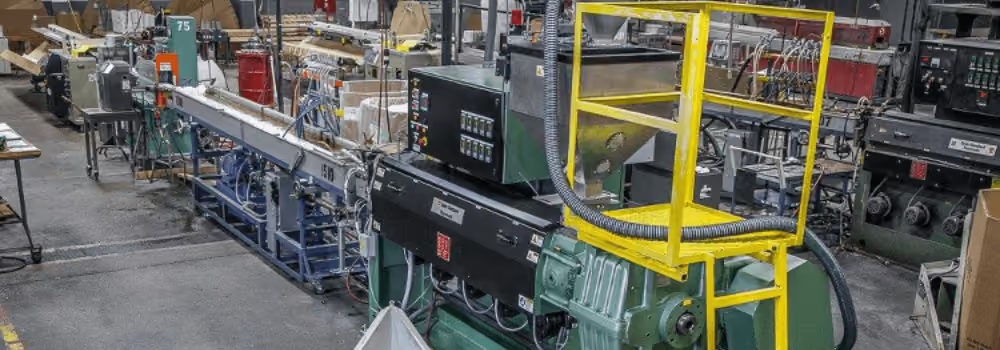


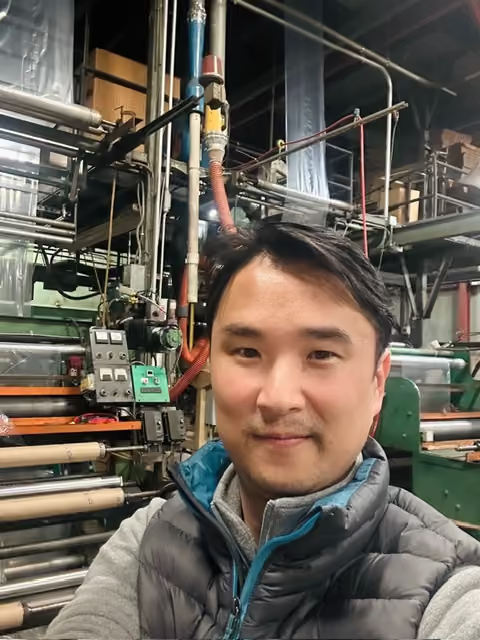































































%20-%20thumbnail.avif)





%20-%20thumbnail.avif)



%20-%20thumbnail.avif)

.avif)




%20-%20thumbnail.avif)