[00:00:00 - 00:03:08]
Host: Today's guest wanted to move from tech to manufacturing, which as Caleb's stander for jokes, was the opposite direction of many of his peers. But pivoting his career into manufacturing wouldn't happen overnight. Caleb had taken a class from Noah Wasserman in business school where the concept of experience versus risk had left an impression. Essentially, there are some domains where you can drop out and start a business, say building an app, but other domains where your prospects are far dimmer without some real industry experience.
Manufacturing is like that. So Caleb laid the groundwork for his search over years working in manufacturing and he ultimately made it all happen. From gaining experience to searching part time over five years, to acquiring and now owning a metal machining business. Springfield's Tool Die had 5 million in revenue when Caleb bought it in July 2024.
In his first calendar year of ownership, 2025, he pushed the business to 7 million in revenue and grew headcount from 17 to the mid-20s. We learn how he did that and we get a lay of the land for the diverse and vast world of metal manufacturing and machining. We also hear Caleb address customer concentration. One of the business's customers represents over 70% of revenue.
Here he is Caleb Standifer, owner of Springfield Tool and Die. Welcome to Acquiring Minds, a podcast about buying businesses. My name is Will Smith. Acquiring an existing business is an awesome opportunity for many entrepreneurs and on this podcast I talk to the people who do it.
If you ask owners in the ETA and search community which insurance broker provides highest quality work, great outcomes and has a practice dedicated to searchers and acquisition entrepreneurs, one name comes up again and again. Oberle. Oberle Risk Strategies has worked with hundreds of searchers over nearly a decade and is in fact led by a two time successful searcher, August Felker, which makes Oberle a specialty insurance brokerage for searchers by a former searcher and if you've got a business under Loi Oberle will provide complimentary due diligence on that business's insurance and benefits program. An easy no risk way to get to know August and the team at Oberle.
To take advantage, check out oberly-risk.com that's O B E R L E- risk.com link in the notes. Caleb Sandifer welcome to Acquiring Minds.
[00:03:08 - 00:03:10]
Guest A: Thanks for having me Will Caleb, you
[00:03:10 - 00:03:31]
Host: bought a hundred year old machine shop, you wanted to be in manufacturing. You'd said to me on the pre call that you had colleagues who were trying to go from manufacturing to tech and you wanted to go in the opposite direction. We are going to hear your journey to do just that. Start us off with some background on you, please, Caleb.
[00:03:32 - 00:07:28]
Guest A: All right. Well, I'm from Southern California originally. Grew up out there with a father who was in manufacturing in finance. He did corporate corporate tax, but worked for companies like Lockheed and Teledyne, which have long storied manufacturing histories.
But never thought that I would be in manufacturing. Took a winding career path through labor, litigation, consulting and big data and programming. Then I was in tech, healthcare tech, doing cloud data, big data analytics solutions as a product manager. But through the whole, that whole abbreviated history, I was really struggling to find what I wanted to do in my 20s.
And as I had gotten married, had one kid, one on the way, so was really thinking about what do I want to do for the rest of my life. And I thought back to my father and his experience in manufacturing. And I grew up around the dinner table hearing him tell stories about going out on the factory floor with plant managers, general managers, to walk around to find out what they were actually doing so he could tie that into the tax law and save the company on taxes. So that was kind of how I was brought up, and I didn't even really realize it.
The other key part of this is I grew up with relatives in the Rust Belt, and I had gone back to the Rust Belt and seen places where like AC Delco had been the major employer but had left. My grandfather had grown up in Middletown, Ohio with the steel mills. And I had heard about how vibrant it had been and then what it had become. If you think about things like Vice President Vance's biography talking about that history, that was not, when I read that, that was not what I had heard about.
So I really was driven by this sense that we need more people going into manufacturing. Everybody wants to go into tech, but manufacturing is important for our country. It provides great jobs for people. And I wanted to get into manufacturing.
So I went back to business school, not really knowing how I would get into manufacturing. And like I said at USC in Southern California, most of my friends were going from manufacturing into tech. But I had always also been entrepreneurial. And I took two classes there that were very interesting.
One was acquiring your own business, which was the classic one that lots of searchers take at different MBA programs. And so I had found out that, hey, to be an entrepreneur, you don't have to start something from the ground up. You can buy and then build. The other was, was a class called Founders Dilemmas, which talked about the organizational behavior and psychology of entrepreneurs.
And there was something about the risk reward curve there. And it talked about how that's different for different industries. So one of them talking about, hey, if you want to start a viral app, drop out of school, go start it. But if you want to get into telecom or manufacturing, these are complex businesses that you have to know a lot of different things.
You really decrease your risk by going to get some experience first so you can learn those things. So I got the opportunity to join a large manufacturer, Jeldwin, in North Carolina, so relocated my family across the country and proceeded to spend about seven years learning in two different large manufacturers, culminating in running a $500 million business for one of them. But meanwhile had been searching for four years to buy something eventually with my father, strangely enough. And that's when we found Springfield, and that's when I jumped in.
[00:07:28 - 00:07:53]
Host: Great, Caleb. That was awesome. A few follow ups. First of all, your interest in manufacturing was so timeline here.
This would have been well before the national conversation driven by tariffs and so on that we're all now having. This was kind of of your own. You originated this idea all on your very own, not because it's. It was part of the national conversation.
[00:07:53 - 00:07:58]
Guest A: Yeah. This was back in 2014, 2015, that I was starting to think about this.
[00:07:59 - 00:08:24]
Host: What do you think makes you different than everybody else who's interested in tech? Because we all understand even then that the manufacturing core of the country had been hollowed out. But most people probably just thought, well, that is just the nature of how things are and are going to be, and tech is the future anyway, and is what it is. Sort of.
Sort of shoulder shrug. What do you think makes you different?
[00:08:25 - 00:08:46]
Guest A: You know, I. That's an interesting question. The first thing that pops to mind is one of my team members when I first took over Springfield said something interesting to me, where he said, nothing in our life was not touched by something that was made out of metal.
[00:08:47 - 00:08:48]
Host: Right.
[00:08:49 - 00:10:08]
Guest A: And the whole point being that I think. I don't remember consciously thinking this, but I think I had this sense that everything that we interact with in a daily life, put tech aside, is all touched by something that's made right. And even tech is delivered to us or done on things that are made right physically. And so this deep sense that a culture has to make things.
Now, certainly a believer in the law of comparative advantage and free trade and things like that, but fundamentally, we have to be able to make things. And I was also a huge World War II buffalo growing up from a young kid. So I had read about the industrialization of America over Time. So I can't tell you exactly how all these things came together, but it was just this deep sense that, hey, tech's got a lot of people going into it.
And certainly I wanted to use my tech background in manufacturing to bring better practices to do what I could there. But fundamentally, we have to be able to make things. And so I just felt a strong mission to be involved in making sure our country could make things
[00:10:11 - 00:10:24]
Host: great, well ahead of the curve. You were, Caleb, I heard you say your search was four years. Yes, but I didn't, I didn't track when it began in the story. So clarify that for us began in
[00:10:24 - 00:11:21]
Guest A: late 2019, early 2020. I had been bouncing around this idea for a while, felt like I had learned a lot, certainly learned a ton in the four years after that. But I had been in manufacturing in a corporate environment for three years. And so my father had since retired and I had been discussing this with him and he said, well, maybe we could partner to do it together and our skill sets are complementary.
He's not involved in the business day to day, though he does help out. He knows the, the team here well. They ask about him. We're even asking about him today.
And so that's a. So when he said that, that's when we started to search. And certainly the search was prolonged by Covid, but it was also prolonged by the fact that we had a very specific set of criteria that we were trying to fulfill in, in the business we bought.
[00:11:22 - 00:11:28]
Host: And that four years was all after your being in business school or some of that overlapped.
[00:11:28 - 00:11:43]
Guest A: So I graduated from business school in 2017 and then moved, relocated across the country. And then I was. The search was from late 2019, early 2020 through 2024.
[00:11:43 - 00:11:45]
Host: And you were searching on the side?
[00:11:46 - 00:11:48]
Guest A: Yes, I was searching. While working full time.
[00:11:49 - 00:12:03]
Host: While working full time. Okay. And also your parents are now started in Southern California where you grew up, but they're now also out there with you, or I should say back here, back east here in the Carolinas in your case.
[00:12:04 - 00:12:12]
Guest A: Yeah, they live around the corner from us and my four kids are homeschooled, so my dad teaches them piano. So it's great to have them around the corner.
[00:12:12 - 00:12:20]
Host: Great. Anything to say about your. The search itself, Caleb, and how you ultimately found Springfield Tool and Die?
[00:12:21 - 00:13:30]
Guest A: I would say that the search was. Was somewhat. It was not extremely active. We were not reaching out to existing business owners to ask them if.
If they would be interested in selling. It was. It was really through brokers and networking. So we kind of put some advisors in place and then we started just screening and it was somewhat episodic.
You know, these things comes in waves in terms of the listings. It certainly got slower for part of COVID but it was really just screening the broker websites, looking through, finding things that were interesting. Part of my M. And a background in corporate help with this because I was used to seeing a lot of teasers on things.
And so we, we screened hundreds of businesses, right. And then got deep on 10 to 20. We ended up making an offer on one that fell through and, and did not work out. And then it was about a year and a half after that that, that we found Springfield.
[00:13:31 - 00:14:35]
Host: Oh, I, I can imagine, Caleb, that given that you kind of knew what you wanted, something in manufacturing, that focus is, is a lot tighter than a lot of searchers who, particularly if they're searching part time, kind of the search drives them. When some business that interests them come across, comes across, they'll pounce, they'll. They'll double click, they'll try to learn about it and maybe go after it. But when you're somebody who really has a vision for where you're going in your search and the type of business you want to buy, that actually lends itself well to proprietary outreach because you can, you can make this credible point to sellers or to owners, hey, I want to get into this business for my career.
I'm interested in your type of business specifically, sir or madam. Let's talk. And so, and then the other thing too is if, if you're narrowly defined as you were, you could wait a long time for the right business to come across, to come online, hit biz by sell, whatever, hit the broker websites and come across.
[00:14:36 - 00:16:53]
Guest A: Yeah, absolutely. I mean, I won't bluff and say that. There was never the squirrel moment where I saw something that was a little bit outside and you got interested and said what if? But it was very tightly focused and my wife had said she was settled, she didn't want to move.
Right. We have family around. So there was a geographic area, there was one up in Michigan that was interesting where because of the sba, I think we could have gotten that. I think we could have been very successful.
But because of the SBA regulations around having the entrepreneur involved in the business, they did not feel comfortable with a flying commute. So that was part of it. We were very tight on our financial metrics because the business had to be something that could support me and my family in addition to the debt load. It also had to be something where, you know, I'm no, you probably figured out that I'm not a machinist.
So there had to be something in the business that I could do to add value at this stage. Even though the eventual long term vision is to evolve up to be back more where I kind of was in corporate from a management perspective. But there had to be something I could do to add value from day one and there had to be a strong team, right, Because I do have some technical skills, but there's others I don't have. There had to be a strong team there that had Runway that believed in what we were doing.
So again, all of these things plus cultural fit is something I should mentioned. We were not interested in in taking a business and certainly there's a cultural evolution that we can talk about that that a business goes through when it's bought. But we didn't want to have to come in and take a business that was completely antithetical to our beliefs and the way we think that a business should be run and have to turn that all around while you're trying to get your hands around the technical aspects and all the normal business stuff that would have been too big of a lift. So we were very tight on that.
[00:16:55 - 00:18:15]
Host: Running payroll, paying your bills, closing your books and producing financials. These are critical tasks every business owner must do or oversee. But spending time on them distracts you from the leadership in growth work you want to do. So let system 6 do it for you.
Owned and led by a former Searcher, Chris Williams, System 6 is a leading outsourced finance team for hundreds of SMBs, including over 50 searcher acquired businesses. Chris, Tim and the System 6 team understand firsthand the challenges, the opportunities of jumping into a business as its new owner. So whether you own your business already or have one under LOI, talk to System 6 about how they can give you time back and improve your financial operations. Mention acquiring minds and they'll provide a free review of your books and Financial Ops.
A $500 value. Check out system6.com link in the show notes or email helloystem6.com and how did you define that? Whether the values that you needed to be there were there, gut feel or something well defined?
[00:18:16 - 00:20:09]
Guest A: Well, there's something one is very simple is in manufacturing called going to Gemba, which is the place where the work is done and so tours help with that. Right. Like I've been in hundreds of manufacturing facilities, my father has too. So you can walk through a manufacturing facility and there's tels where you can, you know, you're only seeing maybe 20% of what's on the surface.
Right. But you can also look underneath and say if, if this is what you can see, then you have an idea about do they take pride in their work? Are there some systems involved? Do they take care of the equipment?
And those things tell you, I mean, they're technical things, yes, but they also tell you deeply about the type of people who work there. Right. Because conversely, manufacturing facilities can be a mess. Right.
And that tells you something too. The other thing is, you know, the face to face meeting is so important because many, many people will say that they care about their people, but it's only by talking to that business owner and talking through, well, how does that work itself out in your, in your day to day? How do you actually care about people? What is that?
Do you just drive them and churn and burn them or do you, do you actually care about them? And I think you can also tell that by the length of tenure of the people there. Right. And one of the unique things about this business was too that typically a lot of manufacturing, the skilled workforce is aging out.
We actually have a relatively early career workforce, especially for a business like that. And so that told you something about how they develop people, how they bring people along and the fact that people actually wanted to make a career here. Right.
[00:20:10 - 00:20:58]
Host: And so then the, the sort of values that you were, look, these tells, these signals that you were paying attention to, to indicate what you're looking for are values that are values of quality. So the quality of the product, the at which tell would be kind of the quality of the facility. So a high quality shop and then treating people well there, treating the employees well, cultivating employees. Does that sound right or is there something even more specific?
And the reason I'm pressing on this is because you did emphasize in our pre call, as you are now, values. And, and that's not necessarily something I hear very often. So I'm just trying to tease it out.
[00:20:58 - 00:25:36]
Guest A: Yeah, I mean, I think it's the fact that deeply, a lot of businesses say that they care about people again. And obviously the job of a business is to make money. Right? A business is there to serve its customers and to make money.
And that's how it's mostly talked about. But we believe that there's a third pillar, which is the business is there to care for its employees and be a steward of those employees. Because none of us lives to work, we work to live. Now, we may have different views of what that looks like.
I work a lot and There's a lot of people who don't want to work as much as I do, and that's fine, but that's something that we believe is important. And so that value there, you know, probably the third value that we have, I mean these, these are our values that are on the wall. But it's create value for our customers, care for each other and continuously improve. And, and the continuous improvement is the one that we've kind of had to add.
But that one in some ways is, is the easiest one to add, right? Having somebody who says, you know, one thing we heard over and over was that we put the Springfield name on these things and you can walk around our customers facilities and see our name on it. We want you to be proud of what they do and we want the employees to be proud of that. And you could tell that they were.
And so those are really big things. The other thing I'll say is from the beginning, one of the things my father and I talked about is one of the reasons we wanted to get into this and one of our key metrics is how many families are we blessing, right? Because having a, we're Christians, we tell people, you don't have to be a Christian to work here, obviously, but that's, that's the source of our values. And so saying obviously you can tell that family is very important to me.
And we want to make this a great place for somebody to work. And it was said to me early on in my career that one of, and I believe this, this is Clayton Christensen at Harvard has, has talked about this in, you can read it in How Will youl Measure your Life? But he says it most succinctly where it's when you're owning a company or a manager in a corporation, you get to determine not whether somebody works hard, right? Working hard is, is kind of the baseline.
We show up and we work. But you can determine whether they leave that day or most days feeling drained. And so they may lash out at their spouse or not have energy for their children or their friends. Right.
Or you can set up an environment where they leave feeling tired but full. Right. And certainly we all have days, right. This isn't a strict law, but, but on the whole, that's, that's the power of being in a leadership position.
And so we really wanted to create a place where, you know, we work hard, we've got big goals, we achieve those goals. But we wanted people to become better people because they, they work in this company than they would have been if they worked in A different company. And we want them to be able to say, I' thankful that I work there because it's made me a better wife, a better husband, a better father, a better mother, a better friend. Right.
And so we put a lot of effort into that, not where we want to be, but into that sort of leadership development even within the company to date. And we put a lot of work into building that culture. And so to go back to the search, we were really looking for something we knew we wouldn't find, or it was very. Going to be very rare to find something that fully fit what we were trying to create.
Right? Yeah. But we wanted to find something that was a platform, to use a word that's, that's used a lot in these circles, a platform for culture building. And we believe that if we, we created that culture with a, an environment of excellence, that, that would create a fantastic business as well.
[00:25:36 - 00:26:44]
Host: You know, Caleb, I'm, I'm struck at your forethought about culture and below that impact on your employees, on their families, because one pattern from this podcast is that a happy discovery by many searchers is in fact how much impact they can have on their employees. They don't get into this game with that being the motivator. They get into it for a lot of the other reasons that we all know. But they, they learn that this is this incredible byproduct that is deeply gratifying.
In fact, you'll hear people say that it is, has been the most gratifying part of the journey. But you saw that in advance or you went into that with that, with that as a, as a, as a key driver. So that's cool and differentiates you. Now back to money.
So you talked about the business or your criteria, financial criteria, that the business be able to support your family after debt service. Can you be more specific?
[00:26:46 - 00:28:42]
Guest A: So we were looking at, I took a step back from a corporate salary, but I was at vice president level. So we, we're talking. I wasn't going to make a hundred grand a year. Right.
For my family when we. So there had to be that environment. But then the debt service had to work out on top of that. So we were looking for something that was fairly good size.
And this business ended up being about just under 5 million in revenue when we bought it. And we were also able to tie the real estate to it. That was an important part because stretching out the amortization allowed us to decrease that debt service to the point where we could do all the things that we needed to do. A third component that I was also remiss in not mentioning was a lot of these businesses, they need some investment there.
The seller may not have have been quite as engaged for the years because the fire has been lost. Right. They're not trying to grow it necessarily anymore or something like that. And the seller who we became friends with was very open about that.
Right. So we knew that there was investment needed going in. So it also had to be able to, to handle reinvestment in the business that was necessary because ultimately the goal is to grow it. And in manufacturing it's not a capex light business.
Right. So you know, you're going to need funds to be able to reinvest there. And there's off balance sheet liabilities that you, you never discover. All of those.
Right. Like deferred maintenance or things like that that you have to keep in mind and include in your financial calculations to make sure that you're safe.
[00:28:43 - 00:29:36]
Host: Sure. Well, those are the kind of traditional three tranches that an acquisition entrepreneur considers when they do the napkin math of a business. It's the debt, the, the earnings need to support debt service, their own salary, take home expectations and then reinvestment and growth and maintenance and you know, everything else but, but not just the maintenance, but in fact growth because that's what most people are going to try to do with their business. And yeah, I mean that as you point out in a manufacturing business, that last one, the reinvestment can mean that it's going to be, it's going to require quite a bit of earnings coming out of the business to do that.
So you were looking for probably a business that had earnings in the typical range that we hear, 750 to, you know, one, one and a half if you could get it sort of thing.
[00:29:36 - 00:29:38]
Guest A: Yeah, yeah, yeah, great.
[00:29:39 - 00:29:47]
Host: You've already started touching on it. But tell us, tell us the reasons that when Springfield came across, you liked it. Springfield Tool and Die.
[00:29:48 - 00:32:06]
Guest A: Well, like I said, I had been running manufacturing businesses, mainly large extrusion or stamping businesses. And so we used a lot of machine shops as vendors for us. And what I had noticed through that time is, you know, time and time again projects would be delayed due to the machine shops we were using. And as I dug, as I dug in on this, not this was unrelated to purchasing the business, but I had found that the common reasons that were given were, hey, in the past five years a bunch of our really skilled employees have, have retired.
And so over five years quality had decreased on time had decreased. And when we, you know, Naturally, the question came up, where can we find other shops to do this? These must not be the only ones. And we had trouble finding any others.
Right. And so that kind of put in the back of my mind that there was a real market here, a real need, and it wasn't fully being serviced. So when Springfield came across, the first thing I thought was, well, I don't. I've never worked in a business like this, right.
But I understand it about as closely as you can, not having worked in it, because we had to work closely with a lot of those, those players. And then as we dug in, we, we really. I started to. The thing I kept saying was, wow, this is the supplier I wish I had had.
Right. They care about the customer, they care about getting things right. They care about being on time. And, and they really are the type of person that I would have wanted to work with.
Right. They're technically excellent. They've got the technical skills so they can step into the gap where your own technical people can't. And so those were, those were great things.
And they came directly out of, unexpectedly out of my experience in corporate.
[00:32:06 - 00:32:08]
Host: What value did you expect to add?
[00:32:10 - 00:34:12]
Guest A: So the, the thing that we saw was that the business was run in a, in a very old school way. It was run on technology that was 1970s technology. And while there was machining process, there was a lack of business process. And so there was a ton of transactional work that was being done by folks in the absence of technology and in the absence of business process.
And so that's really besides the normal things like financial management. Right. I'm the de facto CFO besides, you know, just general overhead and management. There was really the idea of we can put technology into this business.
We can use lean techniques in carpet land, as it's called, in the office, as well as out on the factory floor to really smooth out the workflow. And that has proven to be very true. And really the folks who are on the end of the machining, right, they know what they're doing, but they are subject to the variations and the whiplash that happens from all the transactional work that's done up in front of them, whether that be the sales work, whether that be order entry and bom, bill of materials and routing definitions, all of those things impact their lives, right? So while it may sound like I was removed from the machinists, it was really a focus that I could make the place where the work is done fundamentally better by making all the things in front of that better.
And that would Also eliminate a lot of, a lot of just scut work, right. That's not pleasant to do. That's just mind numbing day to day. But it would also ultimately make us a better business.
[00:34:13 - 00:35:07]
Host: And how much of your own understanding of manufacturing was that were you going to bring to bear? Because, because we're hearing that your ever. All the changes that you were going to make or value that you were going to add were sort of upstream from the factory floor. But, but it also sounds like those decisions trickle down to the, the factory floor.
So you really kind of benefited from understanding this stuff. And kind of where I'm going with this is could somebody without manufacturing experience, are you just talking about doing the kind of the, the typical searcher stuff, put in some tech, you know, take a new set of eyes on processes and kind of. Any smart, diligent, hungry person can kind of figure out where the opportunities lie to make the business more efficient or are we talking about something much more specialized?
[00:35:09 - 00:37:59]
Guest A: I don't want to say that it's impossible to do it as a smart person without manufacturing experience, but it would be much more difficult because manufacturing is not just when metal touches metal and you're making something. You've got to define what you're making. You have to define what quality is. You have to make sure, especially in a job shop environment where you're doing new stuff every day, that what you're defining actually meets the customer expectations.
Right. And so it really is an end to end process and not knowing manufacturing. The struggle would be that. And I'm not saying I didn't make any missteps.
I certainly, you know, there, there are always missteps, but I would have made a lot more of them if I had just come in straight out of tech saying, oh, we can just throw in a new accounting system. Oh, we can just throw in a new erp, right. Without really understanding. Like we chose an ERP, for instance, specifically because it was suited to the type of work that we do.
And I could see how end to end it would. You know, technology has to fit process, right? That's one thing that was beaten into me as a, as a product manager. But I also saw in Living Color in manufacturing where they tried to switch ERPs and it just didn't work because fundamentally underneath they hadn't changed the process.
Right? So throwing a new piece of technology that looks sexier at it, all it's going to do is cause more errors and frustrate people and it's going to do it in ways that you never expected because you can never see all the different tentacles that that has throughout a business as complex as manufacturing. And so having that experience in those eyes that were created over those years really helped me say, okay, where's the right place? And we said no to a lot of technology because I said we're not ready for that.
And we still say no to a lot of technology that we know will help us one day. But one, we're not ready for it. Two, we can make a lot of improvement with just things like Excel or process to do that. And we can lay that out in such a way that when we are ready for technology, all we're doing is putting a piece of technology on top of our process that we already have.
And that does the magic, right? Because at that point all you're doing is eliminating transactional work that people do. So you're increasing velocity through a process. You're not trying to replace a process with technology which never works,
[00:38:01 - 00:39:27]
Host: you know. Enzo Technologies as one of the leading IT managed service providers serving the search community. Led by Nick akers, an Acquiring Minds guest who bought the 35 year old business. The team at INZO regularly works with searchers and their acquisitions.
And one feature of acquired businesses that Enzo is seeing over and over is the need to implement cybersecurity promptly during the transition. So many acquired small businesses either have glaring vulnerabilities, lack security best practices or both. That step one to de risk the deal you just closed should be addressing these issues. Enzo is your full service IT MSP for post close stability.
They assess your target surface, the biggest risks in plain English and give you a day one through 30 plan to cut exposure, prevent downtime and even find cost takeouts like bloated telecom bills. Check out enzotechnologies.com I N Z O or email Nick directly at nicknzotechnologies.com okay Caleb, let's just take a second to learn about broadly machine shops and I'll and I'll just start with this
[00:39:29 - 00:39:29]
Guest A: is
[00:39:29 - 00:39:52]
Host: a job shop, machine shop, tool and die, metal fabricator. Are these different things? Are these all essentially the same thing? Can I use them interchangeably?
I do use them interchangeably. Am I doing it wrong? How do I think about this?
[00:39:53 - 00:46:01]
Guest A: Well, from my previous experience I knew some of the differences, but I've learned a lot more. More. I mean fabrication and machining to start with are two very different things. Fabrication is welding, it's bending metal, it's cutting metal.
Right. And that tends to be very different. A lot of the tolerances involved are not as tight usually. I'm generalizing here.
Right. But they tend to not be as tight and you tend to have larger structures. There can be smaller fabricated metal parts like brackets or things like that. But generally speaking, it's, it's very different than machining, which is fundamentally taking a hunk of metal and making it into something.
Right. And so you're cutting away metal, you're not shaping it, you're not bending it, you're, you're cutting it away. And within that there can be, you know, fabrication has different, different types. Like there's structural fabrication that's really for buildings.
You know, think of I beams or things like that. There's also people call themselves fabricators, but they're making those little brackets, right. So they've got big laser cutters and they're cutting out small little pieces from that, punching holes in them. They have brake presses to bend sheet metal.
So that world kind of lives on its own. We do some fabrication at Springfield, but it's a compliment to our machining. It's not the core. So there is crossover sometimes in those things usually because end assemblies for some applications include parts that are fabricated and parts that are machined.
Right. But then on the, and then welding is key in fabrication there's, there's a lot of welding. So whenever you hear welding, you can think fabrication on machining. Machining is so broad.
I, I, it's really amazing. There's everything from a guy in his garage with no overhead and a machine who will just knock parts out as they come in to, and there's, there's really no process. It's just he's really smart and talented at machining and he can, and some of those guys can do amazing things, but it's really a dying breed. And then there's machine shops that are at the other end of the spectrum where they do a lot of high volume stuff or, or things that are pre programmed.
So they have some engineers and, and programmers at the front and then they may have a setup tech or two on the floor, but the machinists who are out there are, you know, they press the button and they babysit the program. Right. They're not, they're a lower technical level and that's where a lot of machining has actually, has actually gone. And, and within that there's production machining, right.
Which, which runs thousands of parts and you can have aerospace or medical or all with different, different requirements. Right. Or basic industrial and, and it's very segmented. Right.
Because if you have a cost Structure that's meant for Aerosp, normal assembly line type operation, needs spare parts because they wear through them regularly. You're probably not going to be able to touch that pricing because of your overhead, right? So there's, so it's, it's very segmented and then where we kind of live is in an interesting niche, which is we do design, we do some fabrication and we do a lot of machining. So.
And it's, it's not uncomplex, but it's not like Aerospace 5 axis complex, right? So it's, it's a very interesting niche in the market because especially you'll look at some of the stuff we make and say that doesn't look that complicated. But then you get into it and you say, well, the threads have to be right and they have to mate properly. And we're also used to screen screws, right, that we don't.
Nobody, nobody knows what custom threading means anymore. But everybody's had the experience where your screw doesn't go in or your bolt doesn't go in cleanly, right? In our applications we want that to go in cleanly, but we're making one offs, right? So it's got to be right the first time.
We're also dealing in tolerances of a thousandth of an inch, right? So to be able to put that hole and make sure that the edges are within a thousandths of an inch of the reference points and sometimes there can be two, three more reference points. That's not an easy thing to do. And then it may be funny, but we actually prefer to design things because our designers were machinists and have grown up through, through our culture.
And so we get a lot of drawings sent to us that they may have things that are unmachinable, right, because they look cool to make and as an end product, but you can't actually, like there's physics involved. You have to actually be able to put a tool in that position and you have to be able to do it. There's also different types of metal, right? So something may have been designed for certain tolerances, but the metal itself that they specked out cannot hold those tolerances, right?
Because metals actually, it flexes and different metals flex differently. And so there's all sorts of different things that are components of this. And that was really. Not that there aren't other shops that can do pieces of this, but it was very interesting to me because there were just all these different pieces that when they came together meant that we could solve problems that there aren't many people out there that can solve.
Right.
[00:46:01 - 00:47:13]
Host: Well, to, to that point, the other thing I wanted to understand was why it was hard for you in your other role to find a good service provider. And, and, and just to preface that more, I have the impression with knowing so little about this world that there are, that there are a lot of job shops, machine shops now I'm again probably not using it well, but that this is a very competitive space and that there, there's not a lot of differentiation often. And so you can, you can address why Springfield did. But, but just broadly again from the perspective of searchers listening.
And in fact I talked to another searcher who, who I had a pre call with a couple days ago who will come on the podcast here in a couple weeks, bought a metal fabrication business and talked about how it's a very difficult business, it's competitive. So how, how can it be both competitive but also from your experience as a customer, hard to find good service providers.
[00:47:13 - 00:49:57]
Guest A: Yeah, I think you, you have to carve out some sort of technical niche, right. Something that you can do with whether that's, and that could be process, right? If you have process, if you're a high volume shop, you could potentially say, listen, we're just so good at process that everything just flows. So our overhead is low compared to actual production.
So we can just pump things out and it flows through very, very quickly. That could be a competitive advantage. That one, in my opinion is going to be a bit harder sometimes. But if you go back to my prior experience, take one example, extrusion, right.
For an extrusion die, there's no, there's no software that tells you how something's going to flow through an extrusion die. And there's, whenever somebody makes a drawing, it tells you what they think they want, but it doesn't tell you how that part is going to interact with the, the real world. Right. So for instance, in extrusion, the reason why it was difficult to find a supplier is because you had to find somebody who understood if you, if you sent them a part that had come out of that extrusion die and said it was out of tolerance by x amount, they would have to be able to look at that and then translate that into fluid flow in their mind of a melted substance, pvc, and then say, where do I take off or add metal to actually change that flow to get that back intolerance, right?
So it's not that cutting thing. There is technical experience required in cutting things out of, out of metal. Don't get me wrong, but it's that combo of where do you understand the end application. And you can add value by how you cut things out of metal.
So you can either get to the, the correct answer faster or even just getting to the correct answer. Right. Because in some applications we were finding people who, who struggled to even get to the correct answer right. And so those are ways that, that you can make what is.
I mean it is a competitive industry. But I think you have to take away, you know you talked about earlier during the search that tendency to say I can go after anything that looks interesting. You have to do the same thing when you're operating the business. To say just because it's metal and just because I could make it doesn't necessarily mean it's the right thing for us to make as a business.
And having that focus is, can be difficult.
[00:49:58 - 00:50:17]
Host: Great Caleb, Great window into, into this world. Let's return to your deal and then learn how the, your ownership has been. So can you give us some numbers around this business and your, your, your offer to acquire it?
[00:50:18 - 00:52:19]
Guest A: Yeah, so we, the business was about 5 million in revenue when we bought it. About 17 people. We had some retirements. The owner and a couple other employees retired and so we were able to hire behind them.
These were all planned and we knew that these things were going to happen when we came in. And then last year we were able to grow to just shy. We grew about 40% just shy of 7 million. And we were able to also grow our headcount into the mid-20s.
It fluctuates but, but that's where our headcount is today. And so that was pretty significant growth. At the same time we were trying to, to build process. I think going back would I have done it the same way and push so hard on growth before building some more process?
Maybe not, but I don't know that you can ever time those things perfectly. But perhaps the biggest thing about this business that, that we had to work work through as we bought it was about three quarters of the business is a major large customer that has been a customer of the business for over 50 years. It's why the business moved down from Michigan to South Carolina in the 70s. And that was something we really did have to work through.
But that was something that. To go back to your previous question, when we talked about it, it was really that technical expert that, that we have and the fact that we're not just making a thousand of a part, we're making highly specified, semi complex, I'll call them Fixtures and, and assemblies that really require a level of technical understanding and an understanding of the end application to be able to, to service.
[00:52:20 - 00:52:24]
Host: Can you share how you structured the deal to acquire the business?
[00:52:24 - 00:52:36]
Guest A: We used SBA debt. We put about 10% down. We had about a 15% seller's note and then the remainder was was SBA secured debt.
[00:52:37 - 00:52:46]
Host: And that you had mentioned that there was property involved which allowed you to stretch out the amortization. Talk us through that.
[00:52:46 - 00:54:20]
Guest A: Yeah, so the property was about 30% of the value. That was an interesting part of the deal because we actually towards the end had a, an adverse finding on our, our phase two environmental study on the property that threatened to, to prolong the time to close. It was something that was very minor and ended up in the end being very minor, which everybody would have said. Our banker said if this was not an SBA deal, it would have just flown through, it would have been a non issue.
But with the SBA there's higher. Whenever there's an environmental finding, what they do is they hold up the closing of the loan. And this is what we learned. Until either that finding is, is resolved with the state agency or you have to escrow the maximum amount that could in worst case scenario be needed to remediate that from the deal.
And so fortunately we had a great, there was a great broker involved. Our, like I said, the seller we had a great relationship with and we were able to work through that. And actually the seller was, was willing to escrow that amount so that we could get the deal closed and move on. And then ultimately that was resolved with the state and, and he was able to get the full escrow released.
But that, that was definitely a curveball.
[00:54:21 - 00:54:27]
Host: So the, so and explain what a phase one and a phase two are for the people who don't know.
[00:54:27 - 00:55:24]
Guest A: Yeah. So in a commercial real estate deal there's a phase one, which is just a basic overall environmental screen of the property to see if there are any potential issues. And then what a phase two is, is a deeper analysis where they actually do a lot of soil sampling and different things like that. That's only if there's an item of concern that's found in the phase one.
And the level of concern is determined by who your lender is. Right. And what that is is my understanding. And so in our case there was a small thing that was found.
They did the phase 2. Sometimes the phase 2s can be automatically triggered as well by the state, but that was triggered and then through working that out there was a lot of Just back and forth. That just took time because you're dealing with a state agency.
[00:55:24 - 00:55:41]
Host: And Caleb, to your awareness, how often are there issues, phase one or phase two issues in commercial, commercial real estate transactions? Do you have any sense? I mean, is that, was that, was this like, oh my gosh, this is a crisis or actually this is not uncommon.
[00:55:41 - 00:56:38]
Guest A: So there's the two data points. One is my friends who are in commercial real estate say it's not that uncommon. Our banker said that it was the first one like this that he'd ever seen that went this, there was this difficult to work through. I think that they're not uncommon.
What I think that a lot of people aren't used to seeing is those in a, an SBA deal which has, I think that's what's more uncommon. Unfortunately. We were able to have an environmental, we found an environmental attorney who's been fantastic and she, she sees this all the time. Right.
It's one of those things where if you're an expert in an area, you see everyone. Yeah. But typically what they said is in SBA deals they see it more with like dry cleaners or, or things like that, that use a lot more chemicals.
[00:56:38 - 00:56:39]
Host: Yeah.
[00:56:39 - 00:56:44]
Guest A: But a manufacturing site that's been around 50 years. I mean, you never know.
[00:56:45 - 00:56:50]
Host: Yeah. Okay. And so the phase two came back
[00:56:50 - 00:56:50]
Guest A: with
[00:56:53 - 00:57:45]
Host: a conclusion that there was going to need to be some remediation and so that was going to hold things up. The way that the SBA tolerated the transaction was that you had the, your, some amount of your purchase price, an amount that was the most that the remediation might cost. You got some estimate of a worst case scenario remediation cost. You put that in escrow as part of the purchase price.
And so that if whatever the remediation, there was going to be some remediation needed, whatever it cost, it was going to come out of that escrow, your purchase price, effectively reducing the purchase price by that amount to the seller. But the fact that it was set as kind of set aside, carved out in this escrow with this mechanism was, was the workaround, it was the solution.
[00:57:45 - 00:57:47]
Guest A: Correct, Correct.
[00:57:47 - 00:57:55]
Host: Great. Well, glad to hear that. The remediation ended up not being that bad for all involved. I guess mostly that was good news for your seller.
[00:57:55 - 00:58:01]
Guest A: Yeah, well, it was good news for everybody because we have to live with the property. Right. And so.
[00:58:01 - 00:58:01]
Host: Right.
[00:58:01 - 00:58:05]
Guest A: Buying a clean property is, is important, Caleb.
[00:58:05 - 00:58:19]
Host: The 75% revenue concentration, the all from, from a single customer, that's a very high number for concentration. We, we consider a business to be concentrated at around the 20% mark.
[00:58:19 - 00:58:19]
Guest A: Right.
[00:58:19 - 00:58:26]
Host: So 75 is just a little bit above that. How did you get comfortable with that? How did your lender get comfortable with that?
[00:58:26 - 00:58:47]
Guest A: Yeah, I mean it was certainly one of the first things we looked at because we had to wrap our, our head around that. I mean, I think, you know, the first, the first thing to remember is a lot of, I would say almost all of the deals, it would be rare to find one at this size that doesn't have something that's not ideal. Right.
[00:58:47 - 00:58:48]
Host: In manufacturing.
[00:58:48 - 01:00:19]
Guest A: This is common in manufacturing for certain. And so there's a sense in which looking at that and saying, okay, let's break that down and say, what does that mean? Well, when we looked, it wasn't a central purchasing arrangement. Because of what we do, we have relationships with lots of different engineers in the company that, and frankly around the world.
And so when you look at it, it's one, it's one customer and we have a master agreement with them. And but beneath that, what's driving the purchases every day is our ability to service that engineer who has a problem and needs it taken care of or has something that they need made that's a one off fixture. Right. And they need us to make that or they broke something that we made for them five years ago and we have to remake that.
Right. And so it actually operates in some ways like a single customer, but in a lot of ways we view every single person we interact with there, of whom there's probably 100, as an individual customer. Right. And so when you think about it like that and, and the number of different facilities and things that we service, it, it got our mind wrapped around it a bit more.
[01:00:20 - 01:00:52]
Host: You know, it's interesting, Caleb, because you are talking about what is now a theme that we talk about with customer concentration, but a slightly more nuanced way to think about it is sort of how many decisions need to be made for that revenue to say go, go away. And in your case it would need to be all of these different engineers for whatever reason would stop doing business with you. So there's multiple, that revenue actually represents multiple people making decisions to use your services every year. So far so good.
[01:00:53 - 01:00:55]
Guest A: I would say yes, yes, definitely.
[01:00:57 - 01:02:06]
Host: On the other hand though, that, that you can also take that logic a little bit too far because you're still, your fortunes probably are rising and falling with the fortunes or the, or the, or the, the market of that customer. So if there's a slowdown in that customer's business broadly, maybe you'll you know, their business shrinks 5% a year, that is likely to trickle down to you. And in one kind of, in a similar way, maybe, and maybe it's one of these where when the US economy sneezes, the rest of the world has, gets a cold. It's one of these where in fact your fortunes are, are, are the effects are more extreme based on the, the, the ebbs and flows of that businesses, your customers, sales in a given year.
Okay. But anyway, you, I also heard you say that there's a master agreement. So in some. What does that mean?
And is that, is that a kind of a choke point where if you lost this or there was something, some problem with that master agreement, all of that revenue could go away?
[01:02:07 - 01:05:41]
Guest A: Theoretically, I, I mean, theoretically it's possible. I, but I think that if that's, if that's the case, then we've stopped servicing them because we've serviced them for 50 years. Well, right. And so if that's on us, if that happens.
Right? Yeah, theoretically, yes. You could, you could imagine anything where somebody just comes in and, and, and have I thought about that? Absolutely.
But it's, you know, you'd be crazy not to. But at the same point the question is this is your customer, right? If you are serving them well, not perfectly, nobody's perfect. Right.
But if you're open and transparent when you, when you mess up, if you have conversations about where they're not happy, where you can improve and you take those seriously and you show real signs of, of improvement. I've never met a customer. I've been in many different difficult customer conversations with concentrated customers. That was something that I was strangely prepared for, that I didn't expect, but it was, and I found our largest customer to be very, very, very reasonable.
Right. And we just have a good relationship where we talk and we sort through these things and we try to find something that is mutually beneficial. I think an example of that is one of the big things that we had was one of the struggles in the business where since we're project based, we can have everything from an order that's $1,000 to up to one that's several hundred thousand dollars. And the history of one of the things with this business had been that there were long payment terms and we were able to talk to them through as we talked about that agreement because in an asset sale you have to renegotiate or re sign all agreements.
Right. And so through that process we talked to them and we were able to give them some of the things that they wanted. And we said, hey, you know, the biggest thing you could do to help us out is payment terms. And we were able to go to some pretty, pretty good payment terms with them that really just, I mean it's been huge for us to have that predictability because we are, you know, we're buying in some cases material and putting time into things months before we ever ship them.
Right. And so if you're on six month plus payment terms rather than one to two month, that really becomes problematic very quickly. And so I think that that's something where we've really had a partnership there where it's saying they really believe that they're only successful if their suppliers are successful. And there's certainly things that they ask for that we have to accommodate.
But we've also been able to have the conversation back with them and I don't think I would have known that had I not been on the other side. Right. Having had these conversations with small businesses and having to say, yeah, I know we're trying to reduce working capital but making your supplier, a good supplier insolvent is not the way to do that. Right.
[01:05:41 - 01:06:28]
Host: Yeah. Although I even you understanding well what their kind of, what their motivations would be and that they are incentivized to see you be successful. I still have to hand it to you, Caleb, that, that, that making an ask at all of a big customer in kind of your first interactions with them as you're moving these or getting these contracts, these agreements. Resigned as the new owner would have made me nervous.
You know, as new owner, you just don't just want to just get those signatures. Don't want to rock the boat. It's so delicate. Especially when we're talking about a customer that represents 75% of revenue where you know, I'm so, I'm impressed that you, that you were willing to negotiate from, from that position so early as the new owner.
[01:06:28 - 01:07:19]
Guest A: Well, I think it comes back to values that you talk. One of our value, corporate values is integrity and the idea that, that we're, you know, that doesn't mean that you just spill everything. Right. You don't have to share all information.
But being open and treating people the way that I would want to be treated. Right. And how can I turn around and ask my employees to say I want you to share difficult things with me. Right.
I want us to have real conversations and come to real paths forward that are mutually beneficial if I'm not willing to do the same thing with in the situations that may be uncomfortable for me Right. That's, that's, that's a point of integrity for me and, and certainly helps push me to do what I know I need to do in those situations.
[01:07:20 - 01:07:56]
Host: And so your posture with the customer was more like not a, obviously adversarial is too strong, but not sort of a negotiating zero sum, but more like, hey guys, this, our business will be a lot healthier if we can improve our working capital situation. You know, what, what can we do to, what do you need from us? What can we do better that helps you? And, and you know what we would ask is, is some better terms that would help us tremendously, which I think we'll all benefit from sort of thing.
[01:07:56 - 01:09:04]
Guest A: Yeah, yeah, definitely. And that extended even to negotiating. You know, again you talked about this. This was not an adversarial negotiation.
I really respect the people who, who are at the customer who I was having this with, but they, you know, even going down to say, okay, this, this agreement is structured. You know, big corporations have form agreements. And so it was structured more like somebody who's just feeding parts in to them and trying to say, okay, I understand what you're going for here with this language that protects you, that doesn't reflect our business and that doesn't reflect our relationship. Right.
And may not even protect you in the way that you think. How do we come to language that actually achieves what we both agree is the goal of the relationship? Like, I'm not trying to ship you bad product. We want to ship quality product, we want to ship it on time.
That looks a little bit different than if we're just shipping a thousand parts every month. Right?
[01:09:04 - 01:09:04]
Host: Yeah.
[01:09:04 - 01:09:13]
Guest A: How do we craft that? And, and so it was, it was very collaborative, I'd say. Yeah. And, and that I think just led to a better outcome for everyone.
[01:09:14 - 01:09:35]
Host: Yeah. Well, certainly reducing payment terms from just as an example, 180 days to 60 days for 75% of the business's revenue is going to have an utterly transformative effect on the working capital needs of the business. So good stuff.
[01:09:35 - 01:09:49]
Guest A: I would say it's still, it's still more up and down because of the project nature of the business. It still fluctuates, but it has made it far, far easier to manage the, the business, which has been a huge blessing.
[01:09:51 - 01:10:35]
Host: Before we leave this point of concentration, the one of the things that you would do if you're starting to get comfortable with a business you're looking at acquiring that has customer concentration is diligence that customer to the extent that you can. Obviously that Gets very delicate very quickly. The seller is, is, is going to be very protective of that relationship. And even if they're willing to introduce you to that customer before close, during diligence, when you have a situation like you described here, where there isn't a single point person at the customer, there's a hundred different people that you might be working for at that customer or doing jobs with at that customer.
How do you diligent. How did you, Caleb, diligence this customer?
[01:10:35 - 01:12:15]
Guest A: So we asked a ton of questions and poured through documents and looked because, you know, I'd say one, one thing is you have to read the tea leaves. You're right. You can't just ask them to say, hey, signal to your largest customer that you're selling the business by. Right.
By introducing them to somebody who may not buy the business. You can't. Exactly. Right.
But you can see the pattern. And this gets back to the cultural conversation from before. You can see the pattern. Like if it's been 50 years.
Right. If you see repeat business, if you look through the order book and you see repeat names, if you understand the work that's being done and it's not, there's some sort of service that's being offered, that's why they keep coming back. Right. You can see the story that's in there.
Yes. You're not hearing it directly. And yes, the seller, you know, our seller was very open and transparent in anything he said turned out to be true. But that's not always the case.
Right. And so you're always trying to judge that. But being able to go through and see the pattern and does the pattern that they're describing, do you see that played out in the data? And if you do that, then you can make assumptions about how the customer's behaving.
Right. Because the customer wouldn't have behaved that way. And in some ways that's better than talking to the customer. Right.
Because they're, you know, don't, don't listen to what I say. Look at what I do or whatever.
[01:12:15 - 01:12:16]
Host: Exactly.
[01:12:16 - 01:12:19]
Guest A: Yeah. Yep. And so, so that can be very powerful.
[01:12:20 - 01:12:47]
Host: That's a, that is a great application of that little cliche. Listen to what I say or pay attention to what I do, not what I say. And nothing speaks. So nothing speaks louder of a customer than its historic buying patterns.
So that's the strongest signal of all. More than what they might tell you, even if you were able to get them on the phone pre close. Great insight there.
[01:12:47 - 01:14:11]
Guest A: If I can add one thing, the other thing, component of that that you have to ask is can we continue to deliver that after we purchase the business? Right. So what's kept them coming back? Is there a.
Is the business in such a place that you can continue to deliver that? Because if you can't then, then all bets are off. Right. And I think that's why it was so important that there was this mid career group of, of technical folks who were there and it really was.
I mean one of the first things we did was went with the seller and with some of these folks to, to the major customer and just had a ton of meetings and he explained to them, hey, I'm passing off the business. And they actually said we knew this day was coming and we're glad that it's this team member who's going to be. And they're like, here's Caleb. And it was important for them to be able to trust me as well and look me in the eye.
But really they need to trust the people who solve their. They need to trust that I will run the business with integrity. Right. And not screw up what the technical people are doing that they appreciate.
Right. And so we were able to do that and thus we're, we could see that even before. So that is one thing that we did do before the, the sale closed is we actually met some of the key people.
[01:14:13 - 01:14:18]
Host: Okay, great. You'd also secured a working capital revolver when you bought the business.
[01:14:18 - 01:14:19]
Guest A: Yes.
[01:14:19 - 01:14:28]
Host: Just what was that? Why did you do that? How do you think about that? Do you touch it, define it first and then answer those questions?
[01:14:28 - 01:15:58]
Guest A: Yeah, so we, we have a working capital revolver that was fortunately we had a very great banker who from the get go put that into the package. And that has been phenomenal. I mean in this business, I don't. If there's one thing I'd say that we did not understand well enough was it was how much working capital moved in this business.
Right. And when you take out debt to buy a business, it just amplifies all the fluctuations. Right. And so this was the working capital revolver has been essential and we do use it.
You know, it's funny, I've heard bankers laugh when I tell them this because they're like, wow, you use working capital revolver like a working capital revolver because they typically see a lot of people using it as equipment financing or something like that. We do not, not do that. We truly use it to say, okay, we've got a large order out there, we've got to make down payments on, on components for that. We've got to buy a large amount of metal, our working capital is fluctuating.
Do we will draw down on the working capital revolver to cover those things. And then as, as those orders actually ship and we get paid for it, we'll pay down the working capital capital revolver. So we're very disciplined about that. And you know, that's, that's just key, key for us.
[01:15:59 - 01:16:03]
Host: And how is a working capital revolver different than a line of credit?
[01:16:05 - 01:16:36]
Guest A: They are, they are very similar. I mean essentially it's just a revolving line of credit that you pay down, you pay interest only it does have a term. So if you got to the end of the term and still had a balance on it, that you'd either have to refinance it or do something else or pay it off. But the nice thing is we only pay interest on that during the time that we're having it.
So it's just a revolving line of credit that's interest only.
[01:16:37 - 01:17:06]
Host: I heard only recently that some characterize a line of credit as a in case of emergency, break glass sort of instrument. Something that's really only there for an emergency as opposed to something that you're using with some regularity in the motion of the business. Is that's obviously not how you see your working capital revolver that you, that you make regular use of it. It's not just for emergencies.
[01:17:06 - 01:18:38]
Guest A: Well, I, we've had to. Because in this business, when you buy a business, as much as you try to have working capital intact, it's. And the more volatile working capital is, the harder it is to peg that. Right.
And so as we're building up and growth also stretches working capital. Right. So if you have a somewhat volatile project based business, right. It's not extremely volatile, but it definitely has swings based on large projects and you're trying to grow, you're definitely going to need some working capital.
And you've either got to just be patient and let that build up or you've got to use the revolver. In our case, you know, because of how much it fluctuates, it was really, you know, it's something that we've, we've had to do. So. But, but that's been a great asset to us and allowed us to, to make sure that we maintain a measure of liquidity at all times that keeps us safe as a business.
So again, I don't think in an ideal scenario if you add all the cash in the world just sitting around, would it be in a break in case of glass or break glass in case of emergency only? Sure. But different businesses are different and some businesses working capital revolvers have a real. A real place to help you smooth that out because of just the nature of them.
[01:18:38 - 01:18:47]
Host: Okay, let's turn now to your ownership. You've already teased that 40% growth and that. Now that. Sorry, when did you close?
[01:18:48 - 01:18:51]
Guest A: We closed end of July 2024.
[01:18:52 - 01:19:02]
Host: Okay, so you're coming up on two full years, but your. It was calendar year 2025. That revenue. You pushed revenue 40%, was that right?
[01:19:02 - 01:19:03]
Guest A: Correct.
[01:19:03 - 01:19:07]
Host: Which is. Which is a ton of growth. How did you do that?
[01:19:08 - 01:22:00]
Guest A: So really, it started just working the process, you know, from the front end back. We. We had a. I started with quoting, and we really, you know, there were.
I talked about how there was a lot of transactional work that was not. There was a lot of duplication in terms of the transactional work. So we just did a few simple things. One is, I like calling, going from a horizontal structure to a vertical structure.
So one of the pitfalls of being. Having a lot of technical expertise was that they had. There were. And it worked very well for them.
But they had multiple different people who would, quote, they would be the manufacturing engineers who would get the jobs ready for the shop, and then to some extent, they would go out on the floor and look at that work and make sure it was being done correctly and all of those types of things. And when you have three people doing that, that requires a lot of experience and a lot of. A lot of just time to be able to do. And so I knew we wouldn't be able to do that.
So what we did is two of those gentlemen were. One was the owner and one was a longtime employee who was retiring, one of the ones we knew about. And so what we did was we took another longtime employee who's been here 24 years and put him in a position of leadership and then put people to do transactional work underneath him who were skilled, but not quite as tenured or as skilled as he was, and then set up systems so that they were quoting on paper. We started building Excel tools to quote, to make that faster, less error prone.
We were able to get our, quote, turnaround time down significantly. We dropped it probably by about two weeks. We were able to quote a significantly higher amount of business with fewer resources by focus. Right.
And then similarly, then we went back into the shop and started to look at things like visual management, and we're still working on those things. But how do you actually manage the workflow through the shop to make sure that it's getting done? But a lot of it was just old fashioned outreach to customers who maybe we had tailed off with over the past five to 10 years and just said, hey, we're growing. Here's what we're doing, come by and see it.
We'll respond to your requests quickly. And that really started to build a
[01:22:00 - 01:22:24]
Host: lot of the improvements that you've made under your ownership, Caleb, are very specific to manufacturing this business and we've already touched on that a lot. So the question would be, have you made any improvements to the business optimizations that we haven't yet heard that are kind of generalizable or that other searchers and non manufacturing businesses might learn from?
[01:22:25 - 01:26:37]
Guest A: Yeah, there, there are a couple. One is, you know, very basic. We took a business that had a two month financial close process to. We closed the books within two days and we can close end of year within a few weeks.
And so that's been huge. Just, you know, part of that was technology, but part of that is just process, how we step through the month, what data we keep up to date on a regular basis. And that's just very important to us because those are our eyes on the business to know where it's at and we don't want to be making, especially in a small business. I have a friend who calls it, he says a large business is a battleship.
It's got a lot of inertia, a lot of firepower, but it takes a long time to turn. Small businesses are PT boats and so you have to have a really good radar to navigate a PT boat. So you can take advantage of opportunities but also avoid dangers. And so we need that data quickly.
So that has been, that has been huge. Relatedly, we also put in in place a lot of financial controls and we kind of view financial controls maybe a little bit differently. Yes, everybody thinks of financial controls as something to keep the business safe. Right.
But we actually view financial controls as something that protects the good people in the business from any accusation of wrongdoing. If things are transparent, if we have systems where nobody has to handle checks, where there's double approvals needed for cash going out of the company, all of those things, it just allows people to operate with a clear conscience and above suspicion at all times, which just creates an environment of trust and an environment where we can go faster. So we view those things as very important. And that's one area where my father with his background was, was, was essential because he was able to step in day one and just say he actually asked our banker and they said, yeah, we've got this technology available and we don't typically use it with a business your size, but here's what you can do.
And so we set up all of those things, and our business operations manager was great about adopting them. And it's been. It's been great. The third thing I'd say is that any searcher can.
Can really adopt is probably on the culture. So I spent the first six months going out and talking with every single employee in the business, every single team member, every single day that I was here, and finding out about their life, what they liked, what they didn't like about what work, all of those things, and then really taking my leadership team and investing in them. So one of the key things in our weekly meeting is we go through a book on leadership, and we read a chapter a week, and we spend a half an hour discussing it. And really the idea is that ultimately we're not molding things out of metal, though that's what we do and what we get paid for.
Ultimately, we view ourselves as we're molding people, including ourselves. Right. I spend a lot of time on personal development as well, because I believe that I'm the cap on the business. Right.
And if I don't grow, the business won't grow. And so we really take that seriously. And that's something any searcher can do, is really invest in your people and take that time, and it can feel like you're taking time away from the real work. Right.
But I would argue that fundamentally, that is the real work. It may be a little slower, may take a little bit more time, but we really do believe that, one, it fits with our values and. And our mission. But two, we really do believe that that will be what creates a great business.
[01:26:38 - 01:26:48]
Host: Speaking of creating a. A great business here, Caleb, so what. What is the vision here? Do you have a picture of what you're building?
[01:26:48 - 01:29:28]
Guest A: So we want to grow. We want to grow this business more so that we can serve more customers, serve customers more as well. But we also want to acquire other businesses and run them again. My father was at Teledyne almost the entire time of its second generation.
Many of your listeners may know of Teledyne. And so I watched that grow by acquisition. He did 55 acquisitions over his career. And so I watched that model, and what I really loved about that model was their GM led each of these businesses.
And so it gives a lot of people the opportunity to grow, to take leadership positions, to mold something, to care for people, to deliver results. And so that's a big thing, is we want to Grow. Because again, if I'm here and just doing this, there's going to be a limit to how much opportunity there is for everybody else in the business to shine. And we've got several early folks early in their career who are very talented, who have expressed the desire to do more.
They want to run businesses someday. They want, want to grow and run operations or go do sales or do something like that. If we don't grow, we're not serving them because they're going to have to wait for somebody to exit the business, whether due to retirement or other, for them to get an opportunity to do something new. But if we grow it, we are able to provide those opportunities to them.
And beyond that, you know, beyond it being manufacturing, I mean, certainly there are things like would it be great to, to have a dedicated fab shop? Would that really help us? Are there some other things that I can think of, of capabilities that would be very complementary to our existing business? Yes, but there are other businesses that we can think of.
You know, I come from a product background in manufacturing. I would love one day to own a business that was more product based because there's a whole set of skills and interests that you have there that you don't really get to use in the design and build space. Right. So that would be super interesting.
But really. And as far as what it looks like, I mean, a lot of what I've learned is you just have to look at a lot of different things, talk to a lot of different people and then be creative when the right opportunity comes together. Because usually it's not how you thought it would be and not what you thought it would be. So really under that umbrella, we're pretty open long term.
[01:29:29 - 01:29:32]
Host: You are driving an hour and 20 minutes each way?
[01:29:32 - 01:29:33]
Guest A: Yes.
[01:29:35 - 01:30:06]
Host: The search radius for searchers, it can often be they think they can have a longer commute than they actually can. They during their search, go to see a business two hours away thinking that this is something that they'll grind through. And then once they do the trip, once they realize that no, that is way too generous a radius. An hour and 20 is serious and probably pushing it and probably over the threshold for many people.
How is it actually day to day for you?
[01:30:07 - 01:31:51]
Guest A: I mean, they're long days. It's no doubt about it. I think what makes it possible is I'm from Los Angeles, so I'm used to spending a lot of time in the car. It's, it's a, it's definitely longer than if I had my ideal.
I would like but it's been, it's been good. Lots of time for calls in the car, lots of time to think. That's my thinking time. You know, listen to stimulating podcasts.
There's, there's, I do a lot of work in the car, strangely enough, take voice memos. The other thing is I spent years in corporate traveling. Well, in one year I traveled 125,000 miles through the air, domestic. And so I would be remiss in saying, like, you've got to have a supportive spouse.
And my wife certainly is, she's wonderful. She not only homeschools the kids, but, you know, her dad was a surgeon. And so she said the fact that you're home every night now, you're not on the road, and she said, all I ask is that you're present when you are home. And so that's been huge.
But I mean, I'm very blessed. She makes me breakfast and dinner and it's waiting in the car when I hop in or breakfast and lunch. Excuse me. So I would say you have to have the support of your family because if you don't, it's just going to SAP you.
And if I didn't have that, it would be too long. But the fact that I can still participate in my kids lives, in my family's life because my wife's bought in and my kids are bought in too, has been, has been huge.
[01:31:52 - 01:31:54]
Host: How much are you working on the weekends, if at all?
[01:31:55 - 01:32:15]
Guest A: I'll work from home. I don't go. We don't, we haven't had to run much on the weekends and I've got a good team here that when we do they, they've taken care of things. I'll work from my home office on the weekends some, but it hasn't been overly, overly burdensome.
[01:32:15 - 01:32:35]
Host: And Caleb, what about working with your dad to the extent that he's active in, in his ownership, what did the structure of that look like, by the way? Is he, did he contribute equity to the acquisition? Yeah, it was that part of, kind of what this partnership was, was about and, or his active involvement or say more about that.
[01:32:36 - 01:35:03]
Guest A: Yeah, he's, he's definitely an equity partner from that perspective, which allowed me to go faster. I think it also, you know, when I was first thinking about it, I thought I would have to raise investment to do this as quickly and soon in my career as I wanted to do. But having my father allowed me to go faster because I also knew we were on the same page about the vision and the values. And so that was Extremely critical, as with any partner.
And then he's extraordinarily, I would say, deferential to me, which has been amazing. I mean, he just tries to support. He has a lot of wisdom. So it's been a huge blessing when I'm thinking through something in my head to have someone that I can talk to.
Right. And bounce ideas off of who has a business background. Like I said, his skill set is very different than mine, but complimentary. And so in terms of speaking with our CPAs, I mean, he can handle reviewing the tax return.
Right. Which seems like a small thing, but to be able to hand that off to him and he can rip through it and say, yeah, it's all good and send it Back to our CPAs is. Is fantastic. And then just that trust, I mean, I can't say it enough to have to have that trust from him where he doesn't meddle.
He's not all up in the business, but he also knows what's going on. Right. And he knows the people and he really does care. And, and you know, funny story, they said, what do we call you?
Because his name's Caleb as well. I'm actually Caleb iii. And. And he said, I.
Well, this was when we first bought the business and, and one of the employees said, so what do we call you to him? And he said, well, you can call me dad. And he said, well, what if my dad already works here? Because there was another father son duo.
But that's just the relationship he has. It's very friendly and he really does care about. About the team and, and he'll also help with some leadership things. He's given people books to read when they say that they're struggling with something.
He's like, here, this book helped me. I think it would help you. Right. And so he's involved in those ways.
[01:35:03 - 01:35:11]
Host: What a blessing. It sounds like a great way to be having your father in your life and being in each other's lives.
[01:35:11 - 01:35:11]
Guest A: Absolutely.
[01:35:12 - 01:35:23]
Host: Well, thanks for coming on, Caleb Standifer. We'll include a link to your LinkedIn in the show notes that can people reach out so that people can reach out if they have any questions. And we appreciate your time.
[01:35:23 - 01:35:25]
Guest A: Absolutely. Thanks so much. Will take care.
[01:35:26 - 01:36:10]
Host: Hope you enjoyed that interview. Don't forget to subscribe to the Acquiring Minds newsletter. We send an email for every episode with an introduction to the interview, a link to the video version on YouTube, and soon, key takeaways, numbers and more essential essentials from the interview. For those of you who don't have time to listen or watch it.
Subscribe at Acquiringminds Co. You'll also find all our webinars there on the website, both those we have coming up and recordings of past webinars. At this point There are over 30 webinar recordings, a wealth of information on all the technical nitty gritty of buying a business. Acquiringminds Co.


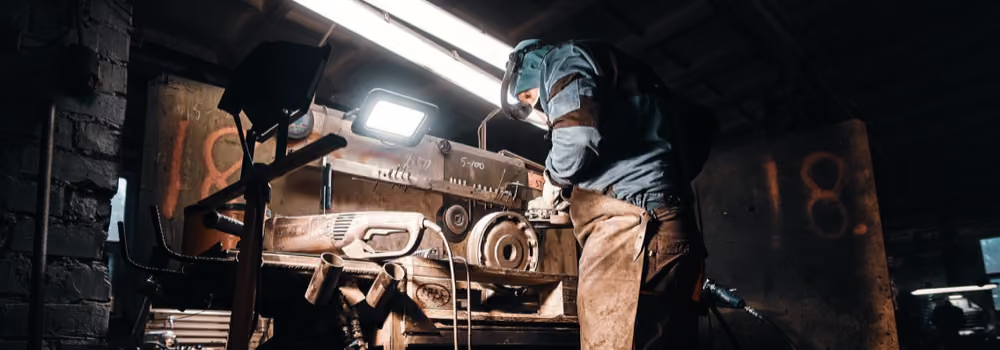


































%20-%20thumbnail.avif)



%20-%20thumbnail.avif)

%20-%20thumbnail.avif)

.avif)



%20-%20thumbnail.avif)