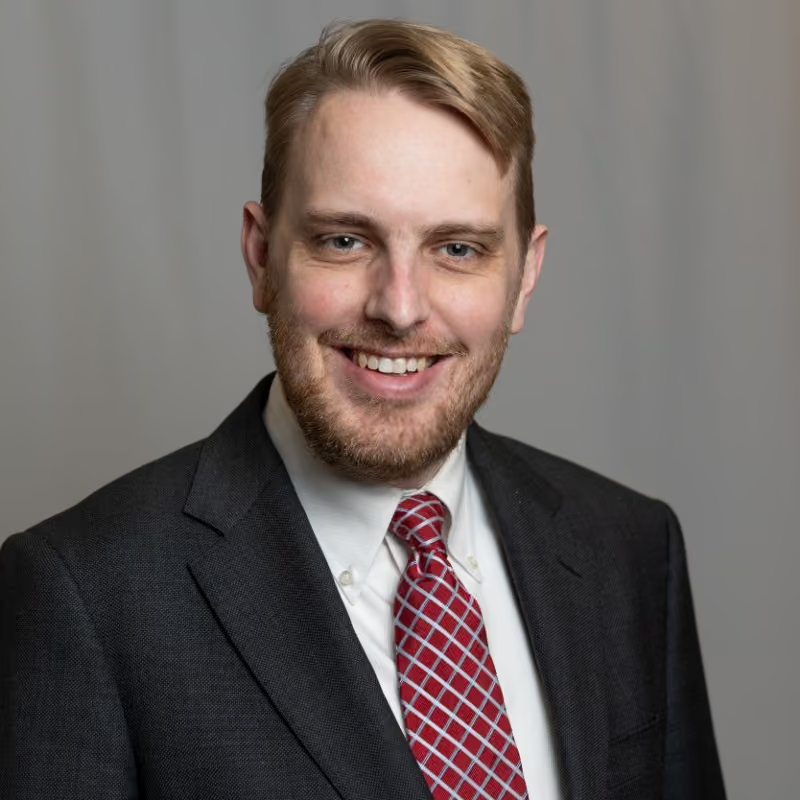
Host: Many Acquiring Minds guests are in their 30s or early 40s, some even in their late 20s, and I worry that this age pattern may lead listeners who are further along to feel like maybe this path of entrepreneurship through acquisition isn't for them. Well, today's guest begs to differ. Greg Hirsch bought his business at age 49 and he believes that his years of experience set him up much better to succeed than a young gun early their career. And succeed he did, partnering with the operator of a $40 million business to buy it from the owner, more than doubling that business to $85 million over four years, then exiting his position for a life changing outcome. Now 54 with a win under his belt and cash on his balance sheet, Greg foresees decades for himself of buying and building businesses as an acquisition entrepreneur. We also hear from Greg's wife Barbara. Today she joins us for a segment to speak about the impact that Greg's decision to go buy a business in his late 40s had on the household budget, on the family, on the marriage. You know that buying a business is an all in proposition that affects partners. It was so valuable to hear from one directly. Please enjoy this interview with Greg Hirsch, former co owner of Pella Windows and Doors DFW. Welcome to Acquiring Minds, a podcast about buying businesses. My name is Will Smith. Acquiring an existing business is an awesome opportunity for many entrepreneurs and on this podcast I talk to the people who do it. Running payroll, paying your bills, closing your books and producing financials. These are critical tasks every business owner must do or oversee. But spending time on them distracts you from the leadership in growth work you want to do. So let system 6 do it for you. Owned and led by a former Searcher, Chris Williams, System 6 is a leading outsourced finance team for hundreds of SMBs, including over 50 searcher acquired businesses. Chris, Tim and the System 6 team understand firsthand the challenges, the opportunities of jumping into a business as its new owner. So whether you own your business already or have one under LOI, talk to System 6 about how they can give you time back and improve your financial operations. Mention Acquiring Minds and they'll provide a free review of your books and financial ops, a $500 value. Check out system6.com, link in the show notes or email helloystem6.com Greg Hirsch, welcome to Acquiring Minds.
[3:13] Guest: Thank you Will Smith, Glad to be here. Thank you Greg.
Host: You were instrumental in a very successful rollup, one that resulted in an ipo. And then you decided it was time to build your own business. So at 49 years old, you bought a business. We're going to hear about both of those journeys today. And a bit later, we're also going to hear from your wife, Barbara, for her perspective on this whole journey. But let's start off with some background on you, please, Greg.
Guest: Sure. So the long story short, I actually grew up in Houston, came up to the Dallas area to play football at the University of North Texas. I did my undergraduate master's degree and then didn't even know that owning a business was totally a thing. And so I started a long career with Cisco Foods as sales and sales leadership. You know, great, as my father would say, a great academy company. That's the word he loved to use. And, you know, just a long career of learning, you know, how to do business, how to be in a system, how to grow. Back in those days, Cisco ran a very autonomous process, right, where so the Dallas office really ran very late. And so. And there was a great focus on growth, you know, 20% growth in sales and 20% growth in gross profit. And if you weren't doing that, you probably were not desperately welcomed. And so fortunately had 15 long, great years of doing that. In the middle of that, other than meeting the lovely Barbara Hirsch and getting married, I found out that I don't have a lot of hobbies. And so turns out my hobby was joining things. And so I started getting involved with the town of Addison. And for those that aren't familiar here in the dfw, Addison is what I would call the kind of crown jewel you've got Dallas, and right up here is Addison, and It's got an 88% business basis for its taxes. So four square miles a GA airport, a million square feet of office, 175 restaurants, 2,000 hotel nights. So it's a very different kind of a city council that's on there, very business focused. And I met in there a lot of great folks, a lot of really good folks, be my mentor for many years to come, started building in there, ultimately ran for city council, came mayor pro tem along the way, and learned a lot in that process. I'd found a mentor by the name of Don Vaske. And Don would buy companies and grow them. He was sort of in the second part of his career at that point. He would just buy an individual company, hold onto it, grow it, encourage them. And I was like, well, how do you do that?
[6:09] Host: Right?
Guest: Because for the couple years before that, I was living on biz, buy, sell and try to figure things out. I had a super smart startup that Basically just kind of ran up the credit cards. And so then the recession hits and then everything got very real, real fast. We had two kids on the way, so I kind of put a pin in it, got myself organized. But on the backside of that, I was coming out of six years on council, kind of recovering from the recession. The kids were 5 and 3. And Don had purchased a trucking company up in the Northwest. And what would now it was called just joining the company. Back then it was called joining the company. Now it would be called, we call it coming an operating partner. So I became an operating partner and Greg, let me.
Host: Before we get into the dasky piece of the story, let me pause you to ask. You said you had your biz buy sell phase. You said you tried a zero to one business, kind of a startup that was mostly credit card bills. What was going on with you that you were kind of, what, did you have the entrepreneurial itch after a certain age or, or what?
Guest: Yeah. So, you know, my father always had his own, was a partner in companies. You know, I lived inside of that world is right. But I think I just got to the point where I realized that, you know, I was always going to have this independent, strong, fierce spirit. And that doesn't always fit inside of corporate America. It's not always their favorite. It absolutely helps drive a lot of productivity, but it doesn't necessarily allow you to grow the way that I wanted to grow. But I'd never done it before. And so it was kind of a grind out for a bunch of years trying to figure out who I am in a independent world and how do you even go buy a business? I mean, there's seminars I took and things you did and you're just like, I this complicated and then how do you really fund it? You know, I was not a grocery millionaire. Right. It was, you know, I had a good corporate job and we were living our lives.
Host: Yeah.
Guest: Where the, that's where the startup came along because I could afford to try that. I found out I'm not a startup guy, which this, which plays out in the rest of the story. But sometimes you have to figure out who you're not. And what I found was I can really take something that exists and get a sales culture and drive processes and really grow. So that was my period of figuring out what I could do. And for me, just straight up buying a job was not my skill set. Right. So I needed a little bit more meat on the bone that I could really use my, you know, specific set of skills that's helpful.
[9:20] Host: And, and that. That only became that much more true when after the Daskey experience, you had all this other incredible experience. And so the company that you did buy, which we'll get to, was really quite large. Very far from buying yourself a job. We'll get there. Okay. Thank you for that, Greg. So you meet. Is it Don Daskey? It is Don Daskey, and he has acquired a trucking business in the Pacific Northwest. And you guys didn't call it this, but you effectively became his operating partner. Pick us up from there.
Guest: Yeah, so I went up there, you know, we. We struck a deal for some from equity and, and the kids were little. Today they're soon to be 21 and 18. Back then they were 5 and 3. I always say, you know, they were easier to move than the furniture. Right. So, you know, but I came home through the door one day because my lovely bride Barbara had known I'd been working on these things. And I was like, hey, how about we move to Seattle? And she's like, hey, what? And so that, you know, opportunity for us to kind of change it up in a. Especially in a post recession, post council world, it was time for something new. We just didn't know what it would be. And so she ultimately agreed to go on this grand adventure with me. And we picked up the kids and moved to what I always said the Hershes had their own manifest destiny on the west coast and got out there and it was a great company. It was purchased right in the middle of the recession when everybody else was having a panic attack buying companies. And we joined it and I really became the vice president of business strategy. That was the negotiated term, which worked out great for me because at a trucking company, being a vice president is not very useful. But being the VP of BS was great. The guys love that. And so I really went to work on the back end. There was a great CEO and a great team, but growing it, building out the processes, building out the structure so we could scale it, that was really where I was able to go and shine.
Host: And Greg, what kind of say more about what this platform business was, what kind of trucking business? And then what was the opportunity that you all or Don or whomever spotted to go out and roll this industry up? Say more about that.
Guest: Yeah, absolutely, will. So we. That particular one was he bought a really cool company and we're gonna. And needed to scale it up and grow it. So that's where we started. And then about a year or two into it, there was a conversation of hey, this flatbed specialized trucking business industry had never been rolled up. You know, dry vans have been rolled up, reefers have been rolled up. A lot of things have been rolled up, but not specialized trucking. And that was just primarily because it was a unique group of people. It's a lot of mavericks that do that, A lot of strong willed folks and bringing them all together. I also think we hit a part of the market. I mentioned the recession a couple times because that just changes everything. There's these moments in time that changes things. And those were all mostly second, third generation companies. And I think they said, hey, we just survived that recession and maybe, you know, linking up with others and making ourselves bigger and stronger would make some sense. So there was a market there that maybe not had been there a few years before of folks looking to band together for resiliency. So we continued to grow the platform company. That was my day job and we scaled that in about four years from about 38 million to about 90 million. And that was processes, people building a growth mentality. Knowing that 20% growth a year is very viable. You have to build out the infrastructure to catch it. And you've got to have the right team mentality. And you might need some either new team members or a shuffle of the deck of a little bit of what everybody's roles are. But it's very doable.
[13:41] Host: Let's hear more about that, Greg, because you said it earlier, that kind of coming of age professionally in the 90s, the expectation, at least at Cisco, in the corporate environment where you were, was an expectation of growth, 10 and 20% a year. When you and I met, I said, Wow, 20% a year. That seems like not only does that seem like a lot, you seem very sure that you can just deliver that, you know, given the right ingredients. And I'm like that how can you just be so sure of delivering such growth? That's quite a skill to have. And, and so, so anyway, I, I was struck by that. So, and so you, you and you proceeded to do it at Daske and then at your later company that we haven't gotten to yet. You've so you've done it multiple times. So how is it, so is it such a formula to, to build, to grow a business 20% year over year?
Guest: Yeah, well, I would say that that one thing that, you know, you and I had talked about, you know, with this episode, was this concept of, you know, the being in your 40s and buying your first business. Well, here's. And feeling risky. Is it risky? Is it, am I too late? You know, all the cool kids who got a spreadsheet and found one in their 30s and crushed it, we put them on pedestals, but we forget to talk about the guy said know really earned their stripes. And so my stripes were earned in a very focused 20% growth. It's like that's all I know. I, I, I tell people all the time, please don't teach me anything else. So when you have your own life experience and you're coming into some of these business ownership opportunities at a later time, you're a seasoned vet, you know what you know. It's also important to know what you do not know and then find team members who can help you. But for me, that was 15 years of that. So I mean, somebody else might have learned something else along the way, but for me it was the fact that that could be done and you could overcome. And honestly, it was double tested because definitely during the recession it was negative. 20 would have been a good day. Right. And then having to dig out of that all the way back up, you just, you just start to trust yourself and you start to know what works and what doesn't.
[16:04] Host: But the core of it, Greg, is it that you are a salesman? Is it essentially sales? When you want to grow 20%, it means a super aggressive sales quota goals, team built out. No, it's, it's more than just about sales.
Guest: Yeah, I, look, everybody comes from a tribe. Well, I come from the sales tribe, but I can also laugh at the sales tribe like nuts. Right? But it's that you have to gain the respect for the other tribes, the accounting tribes, the operations tribes. And honestly, I went up to that trucking company thinking I was going to be taking over sales, but they had a great sales leader. We were lacking an operations strength. And then the day I found out that I was like going to be in charge of operations up there, I was like, oh, those people, right? And so all of a sudden, like, I want to go on that team and what you know is a great team. And that's how I was able to grow the 20% at Cisco every year was having great relationships with the operations team, with the credit team, with the merchandising and buyer team. You have to build all those out. It wasn't just magical sales. It's building out the infrastructure and the relationships that can catch the sales and you can grow. So that was really the key is all of those years at Cisco wasn't just selling. It was about building out the infrastructure and the relationships and taking care of the processes to get the growth. Because growth is usually held up by mainly one thing and that's some kind of friction or, or four or five types of friction. And the more that you can go find the friction, the sales will, will grow. It's usually the internal friction that's holding you back. It's not the market. And if you sell something the market wants, if you're selling some random widget that the world doesn't care about. Okay, that's a separate problem. Yeah but if you're selling a straight up product, it's more than likely your systems, processes and team are in their own way creating their own friction. So when I took over ops, when I was voluntold to take over ops, I okay, we're going to build this to shake hands with sales.
[18:29] Host: Yeah, right. Okay.
Guest: Not fight. Right. And so the more you can do that and look at it from both sides and they come together, the friction starts to melt.
Host: The team at Aspen HR recently published a short white paper targeted at searchers Entitled A New CEO's Guide to Human Resources. It lays out the key items you should be thinking about as you transition into CEO and owner of the business you bought. The link to download that is in the Show Notes Aspen HR is a professional employer organization or PEO which provides HR compliance, flawless payroll, robust HR technology and Fortune 500 caliber benefits all for a fraction of the cost compared to using multiple vendors. Reach out to Aspen HR for your complimentary HR diligence checklist and benchmarking analysis. Go to aspenhr.com or contact Jenny Theere directly at jenny aspenhr.com your other point there about, you know this is in the context of a, of a business in an industry that's of a certain size. So this was in trucking. There's just a big market there to be had. Your later success that we're going to get to is in Windows. There's a big market there to be had. So we are talking about 20% growth in industries where the ceiling is quite high and you can, you can grow into that. And, and that also comes down to why buying a business is great. Because generally a business that is has existed for some number of years and that would be appealing to a buyer is playing in such an industry 100%.
Guest: And what I always tell people is I look for blue collar roots businesses, products that the world needed 40 years ago and is going to need 40 years from now. Like, like that to me is super important. And if it doesn't pass that smell test Then you know, look, you're going to need groceries, trucking and windows in 40 years from now. I don't know exactly what they're going to look like, but all of those things are fundamentally B2B businesses. You know, I joke, I'm like, yeah, groceries, trucking, windows, isn't that how everybody does it? Right? And. But at the end of the day, they were B2B businesses where you've got to make relationships and get the systems and processes and have a, have a sales mentality.
[21:05] Host: Give us the bullet points of the entire Daskey journey. You've already told us, first acquisition was 38 million. You guys built it up to 90 million and then kept going. So kind of close out the entire, that entire piece of the journey.
Guest: Sure. In the middle there, you know, that second year we weren't 90 then we're probably 50. You know, we, the discussion about, hey, what if you bought a second flatbed specialized trucking company? So that was purchased. Then Dasky was formed and that's when our, my second mentor, Scott Wheeler came on as a cfo. And then we really started going after not for sale companies and talking to them directly. So I got my new night job, which was looking up the best specialized flatbed trucking companies in the country and feeding them over. And then during the day I'd be building up the platform company. Ultimately we purchased 2, 3, 4 companies in the next couple of years just by going at it one on one. And the platform company had been built up. So I came back to Dallas and focused on business development of the acquisitions full time, along with taking over some of the marketing pieces and then helping me on the team to take us public. And so we spent the next year or two identifying companies, bringing them on. Ultimately we were going to go public in 16. That didn't work out because that was a weird year in the market for multiple reasons. And then we ultimately went public via a spac. So a special purpose acquisition company, reverse merger. Sometimes they call blank check companies. And that was its own very different journey. But we went public that way in 2017. We brought on the eight or nine companies that we had sort of warmed up over the years, over the next couple of years. And then ultimately it was decided, hey, we're really just going to focus on getting good at being a public company and we're going to hold on to M and A for a while. And that was my opportunity to say, okay, I came here to learn how to buy and grow a company. That's why I joined this whole Thing. The fact that this thing serendipitously turned into a big public company was unique but unexpected. And I want to go back to the roots of finding a blue collar roots company in dfw because now the kids are junior high, high school. I don't want to be on planes. I want to focus, I want to be around and I want to go live my dream of trying to do that. And now I have multiple different types of experience. How can I go apply it?
Host: Great. Thank you for that, Greg. And one last question on that experience with Daskey. As you said, your night job was basically sourcing deals, right? Sourcing potential targets of these other flatbed trucking business owners. So you got lots of reps in cold outreach and proprietary outreach as we call it, and talking to owners and sellers. Any learnings from so many reps at doing that?
[24:18] Guest: Yeah, reps matter. Right. And you're going to need all. And you're going to. It's going to take a ton of reps. Right. Barbara and I always joke about, you know, flipping rocks and kissing frogs. Right. And then you just never know where it's going to come from. You know, where the relationships are going to happen, who's ready, who's not ready, what their circumstances are. So you just have to be prepared to be very flexible. You know, one of the things that I always try to tell folks, probably a little bit more on this, this next leg of the journey is, you know, the best place to find the next great idea is probably in your Heck no pile. You looked at some deal and you're like, oh, heck no. And you threw it over there. When you can't seem to find why you're not having success, I always suggest you review your heck no pile because you may have a few months earlier, when you were maybe higher on yourself than you should have been, threw something off to the side. You might every once in a while just review what's over in that pile because there's a really good chance you already saw your deal and there was something about it that you were just not going to be a part of. And you have to start embracing some realities of finding deals that will actually work. And usually there's something you looked at that was close, but you didn't really want to be a part of X, Y or Z, so you discarded it. Really good chance it's over there. And with a fresh perspective, you can make something work.
Host: That sounds a lot like lowering your standards, Greg.
Guest: I'll take on that challenge. You know, some of us have Standards that we just dreamt up when we woke up this morning. Where did we get that standard from? Who assigned that standard? Right. You know, you also. There's a thing called reality and getting deals done. Right. And so sometimes you have to go back and go, I was a little pompous about that subject. Right. Are you lowering your standards or are you discarding your own pompous and hubris in order to figure out what really works in life? And so. So look, I'm gonna hold with that. I feel very good about my pompous and hubris have absolutely been in full force on many occasions and climbing over yourself because you have to be a confident person to wander out, to be a searcher, like not a lot of like wallflowers wandering the earth seeking a company to go by. And so your confidence, while it's a strength. Big fan of the following will your, you know, strength finders. Huge fan of it. We don't have to go down that road, but highly suggest people go down it themselves. And what you find is your greatest strength is one thing. Your greatest weakness is fundamentally your greatest strength. Overplayed. Right. Everybody always looks for what I'm not. Well, it may be what you are applied incorrectly. And so when you can back off some of that I'm too cool for school moment and you go, oh, okay, that's what it takes to get a deal done. And you start embracing that, then all of a sudden, magically, the board changes, deals look, different opportunities arise. That was my experience.
[27:47] Host: Great. The heck no pile.
Guest: Heck that we're just going to keep it clean. Well, I, I don't call. We're keeping it PG today on the Acquiring Minds podcast.
Host: Okay. All right.
Guest: There's two levels above heck no for the record, Will.
Host: Right, Right. Yeah. That heck could be one of two other options.
Guest: There's a couple other choices.
Host: Okay, Greg, so you told us how Daski went public via a SPAC and through some more steps there. But basically this was what you felt was the. Was the time for you to strike out on your own and buy a business and as I think you put it, kind of get back to your roots or get back to what what motivated you the most, which was building up a smaller, not too small, but smaller than what Dasky surely had become. A smaller business, blue collar business, motivating the team. 20% growth. That was kind of what you envisioned. And so you set out to buy a business like that. Correct?
Guest: Correct.
Host: Okay. At what point have you let Barbara know that this is what you want to do? And if so, this is probably the time. Cue Barbara.
Guest: All right, so here my lovely wife, Barbara Hirsch.
Host: Hi, Will Smith. Welcome. Barbara Hirsch, thank you for coming on Acquiring Minds. You're welcome. Happy to be here.
Guest: So you're going to find out very quickly. I married up and I always tell people you'd ask if I have. I do come from the sales tribe. And I always consider that, Barbara, is my proof that I can not only, you know, get the account, but I can keep it. You know, we're very blessed to be together, for we'll be married for 25 years this May, and she is a patient, kind woman who took on a project from God.
Host: Okay.
Guest: All right, Greg.
Host: Well, I see that. Yeah, you, you convert and then you retain the client very well.
Guest: So good, Good work.
Host: Yes, Barbara, as we talked about in our previous call, the so often in our world here of buying businesses, the guests on the podcast, we hear that the journey is difficult and so difficult that it bleeds into the family life, the personal life, the life with a partner, if there is a partner. And so therefore, searchers and would be business buyers who have a partner need to really tell them what they're signing up for or get them on board, be totally transparent about what this could look like, because it's going to be a roller coaster. It's likely going to be hard. It's likely going to affect the partnership, the family. So we know this, we hear this a lot, this advice, but it's very rare that we actually hear from the partner. Okay. We're usually just talking to the protagonist, the Greg, but he had the great idea to get your perspective of these events, which I loved. And so we invited you on and you graciously said, yes, we're not going to keep you very long. Barbara, I got a few questions for you, but that's the context where we are at the point in the story is that you guys have come back to Texas from Seattle, Daskey's gone public, and Greg is now itching to go do his own entrepreneurial journey and buy a business. Enter you. And in that conversation with you, how did you react to this project? Yeah. So, you know, this was not new news to me. We, you know, we've been building towards this for a long time. You know, moving to Washington was a big change for us because Greg was changing industries, but he was going to a job. He. We were going to have benefits. We were going under the guides of a trusted advisor or trusted mentor. So that was a big change, not necessarily big risk, but the next Step was going to be a bigger risk when he was going to solely 100% of his time be looking for deals. And I do want to frame everything I say with that. I trust Greg 100%, but I am very risk adverse and I grew up with, my dad was an entrepreneur and I know how hard the work is and there's ups and downs and you really ride the ups and downs right when you're the, the owner. But one thing I do know about Greg is he will never be outworked, ever. And, but this was very, the concept of doing this was very uncomfortable. We had young kids and you know, when I say uncomfortable, I think itchy, itchy sweater that you wear for months and months and months. I like the metaphor. So that's, you know, not terrible but not wonderful feeling for me.
[32:56] Guest: Right.
Host: Although, you know, I was on board. So you mentioned trust, you mentioned Greg's work ethic. Is that essentially what it came down to, that you'd seen his performance for whatever 20 or I guess 15 years is at that point of your marriage and, and you trusted that he could do what he wanted to set out to do? Absolutely. Let's hear a little bit about the actual dollars and cents of the decision. So this was going to be no income until Greg found his business. Health insurance is a feature of a four person family. You've got life savings that he was going to be spending down as he searched with no income. Did you guys ratchet down your monthly spend? What, what, what did the, the, the family finances look like? How do they change? Well, I think it's a little bit of all of those things and we've always as many families do we have a family budget and, but we really had to take some hard looks at that and how could we make it last longer? So yes, there were trimming things and you kind of had to agree on what that spend was going to be monthly or whatever. And then that kind of built us our timeline. Like how long was the fuse going to be for Greg before we really had to pivot and you know, do something different in order to take care of the family? So, so that provides a very focused effort for the entrepreneur. You know, when there's a timeline and a date. So, and health insurance is, you know, always a high priority for families. So I am always talking about, you know, what are we going to do about health insurance. We had a COBRA opportunity. We knew when that date would end. That didn't necessarily coincide perfectly with our timeline. So I did the deep dive on short term Health insurance if we had to get something in the meantime. So I was secure in that. Like I could press play on that if I had to. So I was prepared for that. And as far as like, you know, spending down the savings, you know, we weren't going to burn it to the ground or I wasn't going to let it burn to the ground. So I think it was important that we just had to agree upon that and that was to agree on that expectation of at what point, you know, how far could we go, how long could we go before we had to pivot? And what was the, how long was that fuse? Do you recall what the timeline was? The ticking clock? A year?
[35:37] Guest: No. Yeah. Now years. I, I would say years. Gonna, you're gonna get yourself in trouble if you say a year. Right. So we, we knew based off the life experience, Right. That you know, you, you need two years because you don't know where it's going to go. You don't know what's going to happen. Right?
Host: Yeah.
Guest: And so I would say it was two years with a really hard look at the 18 month level. Like if we got, you know, every six months, it's like, where are we and are we being realistic? Right. Are we being ruthlessly and practically realistic on how this is going and what's happening? But I think if we got to 18 months and nothing was surfacing, I would had to have answer some tough questions.
[36:20] Host: Yeah, yeah, I like it. I mean I, I think that makes a lot of sense having kind of a two staged look at the fuse. 18 months is, you know, because if it doesn't look like you're going to get anywhere after those 18 months, call it then. And Barbara, your sense of the risk of this whole proposition was about the search and him finding a business. Were you worried once he found and acquired a business, Were you worried about the ownership period or was it. No, most of what you perceived as the risk was in his ability to find a business to buy it wasn't in his ability to find it. It's, you know, it, it's just like, is it going to happen? Is it going to come to fruition? Many deals get so far and then they melt. Right. So no, it was not in. Once he was in place, it's something like I said, nobody will out, outwork him. But it's just that how long is it going to take to find the right opportunity? Yeah, yeah. This fact that, that Greg is the entrepreneurial and that you're a self described risk averse person, was there any Were there compromises, you know, that, that he made for you to go on this path? Oh, for sure, yes, of course. No, there's many. But he definitely is very, you know, aware of my risk aversion. And I'm also more of an introvert than he is. So I'm for yin to yang, opposites attract, whatever you want to call it. I'm a good balancer for him, too. Sometimes, you know, you got to keep each other out of a ditch, so to speak. But I also don't want to be a dream killer. Right. That's not my goal either. But there's reality, right? And we're just living our lives. We're a family like everybody else. So the, the root word in, in reality is real. So you have to be real about the. Where you're at. And coming to that compromise isn't through always comfortable discussions. Will say politely, but, you know, you have to have those. And that's relationships. I guess that's a whole nother podcast, but. Well, hold on, that sounds interesting. Were there 10. Were there tense conversations? Was there agreement? Was there disagreement? Yes. I mean, just. Okay, it's just because it's stressful, right?
Guest: Scary. Well, it's scary as hell. I mean, you're just.
[39:00] Host: It's.
Guest: If, if I may. You know, I say this a lot, but I think people think it's figurative. But it's literal. If you're doing this and you don't kind of find yourself balled up in a corner somewhere at some point, just kind of needing a minute. Right? I mean, everybody loves to talk about how it's so sexy. It is not. It is hard and weird and yuck half the time.
Host: All that being said, he pushes, you know, he is. He pushed. I am risk adverse. I probably pull reigns more. Try not to kill dreams. But he pushes our family in a good way, too, so. Yeah, yeah, yeah. Yin to yang, opposite the track. Exactly. Yeah.
Guest: So, Will, the way we really landed on it was there's a lot of questions and a lot of rules when we first started. And it's like, I, I. Because you know, when you're out there searching, you don't know what's going to happen next. I'm like, I wish I knew. I don't know. So we landed on the number one rule. And actually everybody I've done business with could probably tell you what the number one rule is, because I don't start a meeting with new clients, vendors or partners, banks, anybody, without them understanding the number one rule. So first of all, I really like being married to Barbara Hirsch. Okay, so that's my level set. And so we ultimately landed with the number one rule, which was, you know, don't screw it up. Right. And I know that sounds really simple, but, okay, I won't screw it up. So every time I looked at something through a lens is like, is this going to screw up the family? Is this so edgy or so beyond belief that we're going to do something and put ourselves in jeopardy? And the don't screw it up rule allows us to have like one touch base, like, great, is this going to screw it up? And I'm like, yeah, it's going to screw it up. I'll stop touching that. Right. And so that not having a lot of rules, but having clear boundaries of what matters to the family has been blessed. And I know it sounds a little silly, but that number one rule has been our cornerstone.
Host: And it sounds like you really do run a lot of decisions through that filter. It's in your mind. Yeah, yeah, yeah. And we're. And it also sounds like you're sanitizing it for the podcast and that it might not be the word screw.
Guest: She is a very sweet lady from a small town. 200 people. And I, I think they bumped their numbers from Iowa. And so there are certain, there are certain language that folks who originally came from the east coast use that the folks in the middle of America don't. But in a private board meeting with the Hirsch Ventures, the number one rule is less sanitized. So it's very clearly heard by Mr. Hirsch.
Host: Well, and I was also going to say we're also.
Guest: I don't know if we're unique, but,
Host: you know, there's kind of two different teams of this. Like some married couples are in a business together. I was very unlikely to be working in the business he was going to purchase. I'm just more of an advisor, you know, on the side. So I think a lot of these conversations are really different if you have a couple that is, you know, going into work, you know, on something together. So, yes, for sure, for sure. Yeah. So that's a, that's a different mindset for this conversation. If you ask owners in the ETA and search community which insurance broker provides highest quality work, great outcomes, and has a practice dedicated to searchers and acquisition entrepreneurs, one name comes up again and again.
[42:38] Guest: Oberle.
Host: Oberle. Risk Strategies has worked with hundreds of searchers over nearly a decade and is in fact led by a two time successful searcher, August Felker, which makes Oberle a Specialty insurance brokerage for searchers by a former searcher. And if you've got a business under Loi, Oberle will provide complimentary due diligence on that business's insurance and benefits program. An easy, no risk way to get to know August and the team at Oberle to take advantage. Check out oberly-risk.com that's o b e r l e-risk.com link in the notes. Barbara, one last question for you before we let you go. Really just is there anything from now that you're on the other side of this experience which spoiler went well, not only did Greg buy a business, but he's now also exited his, his position in that business and done well by it. But is there anything that you would advise to partners out there listening from your, from your personal experience? Well, what worked well for us was once it, you know, once a deal became, it's not an easy road, but once a deal became viable, like really viable, then that's when Greg would bring me into the process and kind of warming me up, so to speak, to concepts and ideas, maybe meeting some of the people. I have a business acumen too. So just being able to see the numbers, due diligence that's being done so that I could get a sense of what it is. But I would also say, I don't know if this is advice, but it was important to me.
Guest: And you heard Greg already talk about
Host: how it's important to build teams. Right. You know your strengths, but there are things that other, you know, you need to know what your weaknesses are and backfill those. So he would always operate with a small team around him of specialists who were going through this process that had knowledge and experience that neither of us had had. So that was really important to, to snip out things maybe we weren't seeing or pointing out opportunities. So it's important to fill those gaps. So with all that being said, the advice is, I mean it's just a lot of communication and again, that's another podcast, but it is an exciting adventure to be on and, and being in control of your own business is a lot of peace and freedom too for your families. So even for somebody who's risk adverse and I probably didn't foresee this, you know, coming out of the gate for me as a grown up, you know, it, you know, also makes you flex and grow in all sorts of different ways. Yeah, yeah. Well, and I also just want to underline what you said there, Barbara, that you were involved in some, I mean you looked at some of these businesses with, with Greg, so once they pass a few of his filters and it got real lure that particular target, he'd bring it to you. So that, that actually is probably. Well, I don't know in general if that's something searchers do or not, but it sounds like it was something that you valued to actually when things got a little bit more real to, to look at the actual target company alongside Greg and provide your. Your opinions. Yeah, well, I mean, because you gotta have belief, right. And you've gotta. I have a really a true understanding of risk, reward and all of the things, the actual risk and reward when you start looking at an actual opportunity. So, yeah, yes, definitely bring me in on that process. But not every deal every day. That is not something I can digest on a regular basis. That's. That's too much of a roller coaster for me. Yeah. Personally. Yeah. Barbara, thank you so much for doing this. We, we really appreciate it. Very generous of you as the introvert in the relationship. You were, as I said, a good sport to come on a, on a podcast introvert today.
[46:51] Guest: Oh, good.
Host: Well, you did it. You did a great job with it. So thank you. All right. Thanks for having me.
Guest: Thank you, wife. Well, thank you for that. I think it's really important that people understand that the whole family is affected by this journey. Right. It is a journey and you don't know what's going to happen next and you've got to take everybody along with you or you're gonna wind up having a massive problem on the home front, which will then greatly risk the business. So these are just constant de risking. You know, we talk about the whole doing this in your 40s. You have a wife, a mortgage, health insurance, kids, a life, you know, and you've got your own experience. So while sometimes it looks like the risk goes up, if you are aligned with your bride or your spouse or your partner and you are using your years of experience, you can actually de risk. You can be less risky than somebody who doesn't have that level of life experience because the realities of having a family kick in. So that just makes you stronger. Having all those years of different types of experience kicks in so that you stronger and all those things de risk. So I think sometimes we get to that later that 40 stage and you're like, oh, my gosh, now we're doing it so risky. But I, I'm just going to disagree with that.
[48:20] Host: Well, you, you had said as well to me, Greg, that you thought that buying a business at this st. At this stage in your career. So now you're late 40s is mid. Late 40s was less risky than getting a job, than going back and getting a job somewhere. What did you mean by that?
Guest: Well, that's probably a personal thing, right. So I, I found that over the years, I did much better in a smaller entrepreneurial type situation where we could hard drive and grow if the. So that, that's just a me thing. I just know that, that, that works really well for me.
Host: Okay.
Guest: But Will, I'll also tell you that, you know, we. I saw a lot of folks, not just in my generation, but really watching my father's generation, but sometimes when you just had a job in the mid-50s, like, the world kind of shifted away from me a little bit. Like, no matter how much experience you had, no matter how awesome you are, there's a, there's a shift. And whether it's right, wrong, or different, it exists. And it exists in every generation. So as I'm looking at the mid-50s, you're like, well, that, that too is going to be a problem. So now you just have to kind of pick between two different roads. One that might look calmer now but have some challenges a few years down the road, or one that sort of, hey, I've been preparing this thing. So I left to do this when I was 38 years old and joined as an operating partner. Right. And so I went from kind of 38 to 48 and had all those cool experiences of growing a platform company, getting the chance to go to look for businesses, taking a business public. All of that experience wrapped into now bringing it back to the middle market and going to work. And not a lot scared me after having those different experiences. You meet a lot of. You bump into a lot of scary things along the way, and so you don't get rattled as much. You start to rattle, but not as much. And so that's where the experience de risks.
Host: Well, given this, Greg, given this point that in fact you have so many more assets to bring to bear on buying a business after accumulating so much more experience compared to, let's say, a freshly minted MBA who's in their late 20s, early 30s.
Guest: In my next life, I'm going to be a smart kid currently on this one. Right. So go ahead.
Host: Okay. So, well, you've done all right, Greg. So why do you think it is that more people in their late 40s or early 50s or whatever don't pursue this path? Why. Why is it perceived as something or why are like the more of the people who do it, 30s, 40s, early 40s, because I mean, you're just making a really compelling argument for doing it a little bit, a little bit later, all that experience.
[51:13] Guest: So what I found, I'm going to try to answer your question succinctly as possible. What I found is that there's this, there's this flex, the first flex point, right? I call it the eights, right? So 18, 28, 38, 48. When you, when there's an eight on your age, you start thinking different. Sometimes it's a seven, right? But to an eight and you're like, where am I on the map? Right? And so the, for me, I started a lot of my 30s was that looking around the biz, buy, sell to try a startup that do something different kind of age. And so by the time I got through that and got a chance to enjoy the recession, if I hadn't mentioned that part, I was 38. And this opportunity came, something I might have said no to three or four years before, but it was in the heck no pile. I'm not going to move my family across the country and then take a secondary position. And you're like, no, wait, hold on, let's step back for a second. I can pick up with a trusted team and a stable company and go learn a whole new set of skills that will rise me up. So my, for me, I said, okay, how am I going to spend my 40s? Whether that's the right way or look at it or not. But you're spending your time, so how was I going to spend my 40s? And I decided when my late 30s, I can afford to spend my 40s learning how to do this and do it really well and then maximize that experience. So that was my very distinct decision because I was risk adverse. I didn't have cash to burn. I didn't know how to do those things. I wasn't tied into the network of the deal makers, right? So to me, it was just that long, deep dive into how does this really, really work? And then I could feel stronger and I could look Barbara in the eyes and go, I can do this. I know I can do this.
Host: Well, Greg, it's. We're an hour into the interview and we haven't even heard about the business you bought. So I'm going to move us along here. Tell us about the business that you found. How'd you find it?
Guest: So that I think that it all ties together because, well, one of the exciting things I thought about doing this Podcast, when you and I were first talking about, it was just getting in there and helping folks understand that all those years of experience matter, right? And that's the big one today, right? There's always the deal and those kind of things. But I. The other thing you asked me, what I learned from Don is I learned you can do deals deep into your 80s and beyond. I'm like, wait a minute, you know, I, you know, I played collegiate football, and there's a lot of people who are competitive, and you're like, wait, this is a sport we can go play, right? We can get good at. So I didn't have the whole I got to go get a business thing. It was like, look, how do I learn what I need to learn so I can do this for another 30 years, right? This is that there was a very different mentality. It wasn't a go get a business. It was go learn how to be that person, right? And how to do that. So that was the other reason why that sort of eight or nine year even wind up into that was for me, that was just the first quarter of the next part of my journey.
[54:38] Host: So the story that we're about to hear of your acquisition and growth and then Exit, you didn't see that as, you know, kind of the only thing you do, you. You see yourself as being a serial entrepreneur in acquisition. A serial acquisition entrepreneur, yes.
Guest: 100%. That's what I was. That's what I went to go build myself out for. Then you got to do your first one, otherwise you're not one. Right? And so, right for me, I did what I knew how to do because everybody's got their strengths and so stepped away from Daskey and the kind of the summer of 19, and, you know, kind of went straight at it also the six months prior to that, you could kind of feel like it was going to be time to shift. And so I'd already started, you know, getting my personal financial statement together, things I had never done before, right. And talking to folks. I took a class. It's a great group. It's called the Exit Planning Institute. It's. And they, they, they do something called a sepa, right? And so I went and got my SEPA because I had been on the team buying companies for the last eight years. But what is it like on the other side of the table? How do you prepare that business to maximize your value? So I thought the Exit Planning Institute group did a great job. So I went and got my SEPA, along with a bunch of financial advisors who I think use it to help, like, you know, gain new business. But I took it strictly for my own fundamental understanding of how to go work more on the business. So all of that prep, it was finally time. And so August of 19th stepped away. And then within a week or so, I just started loading up my calendar with anybody I could think of who I could call and start telling my story to. I had already prepped out this sort of, hey, blue collar roots company focused in DFW with a product the world needed 40 years ago. Go, we'll need it 40 years from now. And just trying to find that opportunity. And then reality kicked in. Humorously, I think we finally got rid of the word. But then I found out I was a funless sponsor. I didn't know that. And then I found out that that's not really fun to run around telling people. I'd had a few backers who said, hey, if you find something good we got, you come bring it to us. So I wasn't wandering the earth, right, alone, but I was on my own. And they didn't. It wasn't a fund, right? So I just had to start beating the streets and telling my story and making sure people know I could, I could do this and I can execute and we can get it done. But it was 6, 7, 8, face to face a day, and, and I, everybody I talked to, I'd ask who else I could talk to. And it was just endless, endless meeting people and telling that, that focus story. I see a lot of searchers who, who tell a story of their kind of like wide open. I think that's very dangerous. If I was going to give a piece of advice, the universe favors focus, and so you need to know what you're looking for and what you can accomplish. So for me, Blue Collar roots focused on DFW 40 years ago. 40 years from now.
[57:49] Host: You tell that story about size, Greg?
Guest: Yeah, I kind of left that one open. I was looking for something. For me, I know it's probably got to be about 20 million-plus because it's got to have meat on the bones. I learned in those early days that I was not a startup guy. And I also knew I didn't want to just buy a job. So for me, I'm going to say 20, 25. Heck, I'm out there telling that story now. That's my. I'm telling the same story today that I was six years ago because that 25 million plus for me is enough meat on the bone that we can go to work. Because my Run is that sort of 25 to 75 or 30 to 90 or 40 to 90. There's, it's a different zone than God bless the people that can get it to 25. I'm not that guy. I have the utmost respect for people who can build that from scratch. I have the inability to do that. But if we're going to go from 30 to 100, like, I know how to do that one, two years of experience. So I started beating. It's. Yeah.
Host: Circling back to your point about the 20% growth year over year, this sort of expectation that you had learned from a young, young age, is this, is this part of the kind of 20 million to what. What you just said? 60, 70 million. This plays back to that point about like a certain size of business. If it's, if it's a 20 million business, it's a, it's operating in a, it's a big enough business, it's operating in a big enough market that this kind of 20% growth threshold mentality is possible. Because if it's a $5 million business or less, you don't even know if the market is big enough to support 20% growth. Is that, am I making a connection that's not there or the, Is that okay, all right. Nope.
Guest: It's, it's, it's not complicated.
Host: Right.
Guest: So my passion, like, I'm never going to have a tech company. That's the other thing I want to grow up and do. I want to grow up one day and be a tech guy. But way better margins than windows, doors, trucking and groceries. But, but, but these companies exist because the world needs them for sure. So I like to go find smart tech and apply it. This is how we're going to get the friction out, do those kind of things. But I'm going to go find something that's got, that, you know, is focused on the people. You've got a group of people who are from there. You know, usually these kind of businesses, they got people that work there 15, 20 years they love. I am also very focused on keeping it in the hands of the team. That's not everybody's mentality. And it often helps me not win. Right. Because I don't really want to have it kind of go into the grind of we're going to sell it off. I mean, my goal is to find a company and hopefully get it back MBO style into the hands of the team who loves it. And that team loves being together. That's a different mentality than most versus, hey, I'M going to go find it, I'm going to flip it, I'm going to work on this multiple or that multiple or send it to PE and God bless it. That's a whole world and it exists and it's real. But there's this other sliver where you can really change people's lives, right? More people who love the business, who can go to the meetings, be in there. So that's my love and passion. So I took that into the streets. And when you're talking to an owner, right, depending on the situation, then if that's for me, that's where I can win. Because I mean it, I want it. I want this to be.
[1:01:28] Host: And to be clear, Greg, that what it is is you wanted to buy a business where your exit from that business some number of years later would not be to private equity or outside buyers. It would ideally be back to management. We got to hear what the business is. Yeah.
Guest: Beat the streets all throughout August. So this is important. So did all that. And it's endless, right? Nonstop, nonstop, nonstop. Salesman hat on 100%. Then. Then there was this thing that happened in March of 20th, which really created some challenges to everybody gathering and chit chatting. So that was a little shocking to not be able to beat the streets and talk everybody up during the COVID period. Fortunately, six months of hard work on the fall led to a phone call from a gentleman that said, hey, I've got this unique situation. And that particular unique situation was a independent door distributor that was part of a large oem. And that OEM was focused on these things being independent, owner, operator, owned. And so we started having a really good conversation there. So private equity wasn't invited to the party. So. Okay, now we're rolling. So I'm going to tell you, Will, this is my first heck no moment. I was like, I don't want to be the owner operator. I want to be some genius that drops in and helps and, you know, brings my joy. Right? You're like, so. But that, that was the main heck no pile was, oh, okay, I'll go run it now. This particular one, I was able to partner up with a gentleman who had been running that business very successfully for 10 years that did not have ownership. And we partnered together, right? And so that was a blessing. You know, we strapped our two families together and we went to work, but we were able to do that with. But then you had to get a deal done, right? And I think that's the years of experience of the BD and getting deals done At Daske, that helped me understand this is how we're going to maneuver this. This is how to talk to the banks. This is who we're going to get done. This is how we're going to go find the right attorneys to help us get it across the line. Getting the deal done is its own job and it's its own skill set. And that is where my first abilities came in to be, bring value to this situation. So we got that deal done.
[1:03:52] Host: Hey, Greg. But, Greg, let me pause you for a second just so people understand what the business is. It's a distributor of Pella Windows.
Guest: Yeah. So Pella Windows and Doors. It was the independent. Yeah, Pella Windows and Doors, independent distributor in the DFW North Texas region.
Host: And so you have the exclusive territory. So it's sort of a dealership model where you guys are the. Have your territory for this oem, for this manufacturer, Pella, which is, of course a big name in, in Windows Doors,
Guest: very high quality, wonderful people. It was, it was not an exclusive chain. There was other channels that they could, that you could purchase through. So similar to the Cisco days. But I, you know, I had to sell Heinz ketchup when everybody else had Heinz ketchup. So it's a question of how well can your team execute, what can you bring to the table that's different from a service mentality? But yes, the short answer, your question is yes, an independent distributorship. This particular one had two businesses inside of it. One was the B2B model selling to custom home builders, and the other one was home replacement, where we'd sit down with Mr. And Mrs. Smith and talked about your Windows and, you know, and have that direct relationship selling you and installing your Windows.
Host: Right. And the business was what, in revenue?
Guest: Right. About 40 million.
Host: 40 million. Okay, so a sizable business. And how many employees?
Guest: It was about 90 when we started.
Host: Okay, so sizable business. Yeah, that is definitely what we would say today is independent sponsor territory. Not so much search or territory. And so there was an operator there who'd been very successfully operating it, but did not have any equity, was not an owner. And so the opportunity was this gentleman wanted to step into ownership, and I guess the owner. Owner was. Was looking to exit the business. And so you would come in and work with the operator and the two of you would partner to acquire it together. And, and, and as partners grow it.
Guest: Great.
Host: Okay.
Guest: Yes.
[1:06:00] Host: And the putting the deal together and that being its own skill set that you were just telling us about, is there anything that you can, can share there? Any Anything to learn from the actual structure.
Guest: One thing I learned, so I talked to because there's a few things that I did at Dasky and things I did not do right. And so all of a sudden you're wearing all the hats when you're doing it for yourself. And so I was able, I, well, I talked to 40 banks. Like that's not an understatement. Like Barbara says, I'll outwork you. But I, I just, we want, I'm
Host: not going to stop.
Guest: Like, we're going to have to get to a yes, we need to get this deal done right. The time's ticking. The world's going by. What I learned there was the banks. Like the number one thing I would tell a searcher is know what the bank actually does. This was a strictly a cash flow slash enterprise loan, depending on what they want to call it. Right. There was not. It's a very asset light business. And so there's a lot of banks that just don't do cash flow. And what I found was after talking to 40 banks, a lot of banks say, oh we absolutely do that. And then there's all these really clear restrictions on how they'll actually get it done. When for me there was probably about three or four banks in even now, I would tell you there's sub a dozen in Dallas who truly make cash flow loans happen. So understanding the banks and what really makes them tick was really, I climbed over that needlessly. Well, not needlessly, but I had to climb over that all by myself and have a lot of trial and error. So that was, that was a big time there. Plus, you know, we also had to get them to believe that two very experienced people, but had not owned it, had this Right. And so that also those years of experience played well with the banks. They My, my time with being a part of this growth in this particular situation, the operator's time of running that business successfully coming together. So you have to be ready to tell your story, tell your narrative and talk about how this is going to get done and it's going to go well. And we were fortunate, I would say it was hard, but fortunate that we were able to do a bank, a sizable seller note and then the money that we could bring to the table to get a deal done. And so that was a big blessing because then we didn't have a lot of outside partners. It was just us and the bank at the end of the day and the seller note, but primarily us and the bank.
Host: So you didn't go back to those folks who had said they'd be willing to back you if you, if you found a deal. No. Okay.
Guest: No, I did not. In that particular case was super interesting. Part of the reason that the seller note was super available is because you couldn't really bring in passive, passive dollars at that time. The world's changed. But that those are, at that time there was no passive dollars. So that did bring the seller note to bear more. So all of a sudden the heck no. For wanting to go, go knee deep in operations, traded off to oh, okay, we're going to own it.
[1:09:06] Host: Own it.
Guest: Because I was running around in that independent sponsor model. Right. Which is great, but you're kind of on the back end and you're getting your, your piece on the back end after everybody else gets paid off. I mean there's all types of pluses, but there's all types of minuses. And this was an opportunity to have a sizable business that I knew that we could grow and attack and at the same time have very few equity owners. So what are the, what are the
Host: minuses of the, of the sponsor model not being operationally involved? And I guess that's a question of personal taste because some people, I mean, don't want to be operators.
Guest: You know, you and I joked a little bit this whole, there's this delineation between a sponsor and a searcher. I, I, I'm, I'm a little lost in it so I'll just smile at it. Yeah, you can't, can't. The business aren't going to magically run on their own. Right. And so I, I guess I would fall more with the, I fall more with the searchers. Right. We're going to go and we're going to go and we're going to go get this business and we're going to go put our hands on it and make it happen. That may not be somebody else's skill set, it just happened to be mine. And I know that I can instill the 20% when we do. That way somebody else may have a really cool other set of skills and it works great for them. But for me that hands on and the ability to truly be the owner was a big deal. I would say the other side of that is if you are going to do the sponsor model, right. Which is a great model. Nothing wrong with going to get equity partners and those kind of things. But you know, Will, you and I had talked about it is really important to understand your paperwork and what you control and what you don't control. And make sure that, hey, you didn't just find a deal, but you're the tag along guy. Right. And because you can get whipsawed in that. So I'm just a fan of knowing and understanding what your controls are so that you can actually drive and go grow that business. So it's really more about do you have the ability to say we're driving forward and you control your destiny. And sometimes with the different infrastructure, different structure models, you don't control what you think you can. You're just the guy that found the deal and that's, that's different.
Host: Yes, yes. And so obviously then in your case with the Pella distributor, you, you had all total control, which probably means you had. It was either written that way or you had more than 50% or both.
Guest: Yeah, I hadn't, I had the majority ownership. But that is not how we, that is not how we decided to go about it. Right. I mean that was, we. I was in a fortunate partnership where we attacked everything together. Right. And so, so that was a blessing within itself. I would also say that that whole part that Barbara was talking about, about meeting people and understanding them and making sure you have an aligned vision in this particular situation, we did. Right. And we were able to go to work with similar backgrounds, but the same vision, the same passion for people, but very different strengths. So that, that particular situation worked out here. And then we went to work and we were the first we had there was. So I started in 21 and I, you know, just for the, for the bookend, exited in the fall of 25 through, through an MBO, right?
[1:12:30] Host: Through a management, a management buyout. You sold your equity to this partner that you'd had at the outset.
Guest: And so. But what happened in between was, you know, you know, oh, is always a wild ride, right? You've got to then go, okay, we're built to, to be this size, but we have this growth mentality, we have these restraints. Where can we start growing, right? And start moving. Very blessed that there was a core group of people at that business who love that business, who, who just amazing, right? And then those folks grew with it or grew to the point where that's was the right level for them. We imported some other talent that would come in, but in that situation, a lot of those folks were really had the horsepower to go grow. And that has just been a blessing to watch those people arise. You know, we had a operations manager who today is the president. Right? And rightfully so. Like, you know that really strong players brought in an Operator who was new to the business, but not new to the brand. And that gentleman grew like wildfire. And we had a sales leader who just had a magical touch. And he, you know, just gained the experience of being able to work on the business. But that was the big thing, is teaching everybody how to work on it. And so it was just years of doing that. Plus, I also found that inside of a business cycle, everybody can learn how to work, live and be on it. If you were smart enough to go run a business and work in it, you are beyond smart enough to own it. But I go back to you asking me that great question about what did Don do for you? Don took me to the meetings. Exposure, understanding the ability to discuss it afterwards so you get less scared or not scared is not the right word, or less intimidated by banks, lawyers, insurance, health insurance, 401k. You just know, hey, it's just another process and we're going to get through it. And I find that after everybody getting exposed to that, after about four or five cycles, I'll call it four or five years or a debt cycle or however you want to look at that, everybody goes, oh, I got this. Yeah, you got this. I mean, it's not, it is hard. I mean, we had spikes and then we had slumps and we had Covid and then we had supply chain, you know, scariness, and then we had administrative changes and then. But if you've got a team that's focused and cares, you can block out the noise and focus on how to move everything forward. And I've got a few philosophies on that if there's time to discuss. But that's, that's a big part of it is just getting a team rallied and we were blessed.
[1:15:30] Host: Greg going to the decision of partnering with the operator who was at the business but didn't have any ownership, who became your partner. On the one hand, that's an incredible way to de risk this because he's already been operating the business for 10 years. So so much of the risk in these acquisitions is the, at least on the searcher, smaller acquisitions is the transition of ownership and the disruption that that causes. And is the new owner or the searcher generally going to be able to. Going to be able to operate effectively. And you didn't have that because the operator there was just going to be the continuity of operator who was your partner. On the other hand, you were partnering with somebody that you didn't really know. Correct. And so, yes, so there was risk there. How did you, how did you Kind of vet each other. How did you vet him to make sure that this was somebody that you wanted to hit your wagon to or partner up with?
Guest: Yeah, I think with any deal, right? I mean, I can, you know, this particular situation is what we're talking about. But with any partnership, right, do you share core values and do you share the same vision? And in a business that's blue collar roots, do you believe. You both believe in the same way people should be treated and. Because that's not always the case, right? I mean, there's other people have different agendas. And so in this particular case and in any case that I would look at going forward, and I'll go back to the. When I went up to Washington to be the BP of bs, right, all those philosophies were fortunate enough to be in place because then you can go to work because you're all rowing in the same way. Look, and you have different perspectives. So it's not one way or another. Everything has to be discussed, but you have to be in it for the, for what is best for the overall business. And that's any business. Look, if you get equity partners, you need to do the same thing. Like this is regardless. Like, you need to be partnering with people who have the same vision that you do. Don't just take the cash because, you know, hey, this equity group said they could do it, right? And you, you won't like it, right? That's the hard part, is aligning everybody to have the same vision. And that's where you can lower your standards. Will, you asked a great question before. That's where it can get ugly, right? Getting over your own hubris is one thing. Lowering your standards on what you'll accept from people and the partnership in it, that gets ugly quick.
[1:18:16] Host: What do you mean?
Guest: I mean, if you're not aligned, I mean, I will tell you, that's the beauty I've been. Barbara Hirsch has taught me how to be a great. I'm also very fortunate. My mother and father had a great marriage. Like, I came from a great marriage, okay? And I am in a great marriage. But you watch with all those things, those great marriages are filled with tension and questions and pushing each other and asking those things and how to, how to be in a great relationship, business or otherwise, requires flexibility and respect of strength and respect of different perspectives. And you can dig in too hard, you know, you can give up too easy. You can do all those things. So you just have to be in it and be present and. But if you don't Start off with core values being the same. You're going to be in trouble.
Host: Yeah.
Guest: Because you're going to get tested.
Host: Greg, we're about at time, but tell us what it looked like at the end of your role at the. At the Pella Distributors. At the Pell. I don't know which. We want to call it the Pella Distributor.
Guest: Distributorship. We'll go with it.
Host: Distributorship. Okay. Okay, great.
Guest: So the. So we took that 20% mentality, and we took the ups and the downs, you know, and we were able to do that over the years. Right. We were fortunate to get on the Fast 50 list with the Dallas Business Journal and, you know, really just have the team grow. We ultimately created, you know, an outside board so we could start having board meetings and just really evolving the business. And then it just got to a point where it was. It was time, right? It was. It was time for. I. He had a passion for owning that business. That. I mean, he. Passion. I had a passion for buying a business, scaling it up. He had a passion for owning that business and that just the. The time had come for each one of us to execute on our passions. And we're able to do it through a management buyout.
Host: And the time had come because you were itching to go to another project
Guest: or you got up to that mid-80s, you know, that 80, 90 million range that, you know, you have to know your skill set and where you belong, right. And that run from 40 to 80, I bring a lot of value. I also have a lot more fun. That's a fun run. Like, that's. That's what I did at the trucking company. It's what I've done here. This isn't random. This is my second go around on that run. And so I know what to do. I'm good at it, Right. You start getting an 80. That's a different level of management. That's a different kind of perspective. Right? So the great folks that can take it from 0 to 25 or 30, it's a different group, God bless them. And the group that can take it from 80 and beyond, it's a different group. So I have found that my joy comes in that zone, and I can bring value to people and help them learn and see and gain mentalities that they may not have gotten before, and I can bring them value. So you have to. I think you have to know where you fit.
[1:21:43] Host: So you got in there, and it was at 40 million in revenue. And over the next four years, you and your partner grew it to mid-80s of revenue. And then you sold your equity to him and the whole team. And it was about the employee count. What was it? Where did it start?
Guest: Yeah, closer to 200. So then you start learning, you know, will as you go things you learn what you're a certain size of a 401k. You have to do a 401k audit. I did not know that one. Right. So there's things that you, you do as you grow that the business gets bigger and next thing sometimes it gets more complicated. Like I just say that like there's a certain threshold of employees where your 401k has to be audited. And we're like, okay, well we'll stop our day and learn about that one. Right. Didn't know that was coming. So you just, you know, you go on the journey. You know. One of the things I like to say and I think it's kind of a reminder to myself more than anything else is you have to enjoy the journey and these And I also have seen because I've had my time at Smoky Point and my time at Daskey Corporate and my time searching and my time at Pella Windows and Doors is you have to have a real respect for the fact that you're on a journey and other people are on a journey. And man, when you can get those magical cross times where you guys can go do something amazing together, that's awesome. But that those times will pass through. Right? But if you can, you can get an alignment for some amount of time where it's, it can get really magical. But you can't give up on your, your core values or their core values or treating each other with respect. So it's not every day is not pretty. Right? But you have to have a core respect for those around you and, and hope that you can get a core respect for your yourself while you're doing what you believe is correct. And I underline believe because sometimes it's not correct.
Host: Right.
Guest: You're like, oh, okay. And you have to be able to admit that you just kind of screwed that one up. Right. And own it and then move forward. And that's going to be a lot of that. I mean that's in the searcher world. Every day is a world of I had no idea that's how that worked. But if you can thrive on that, that's great.
[1:24:10] Host: Greg, just to round out the story here, so when you exited to your partner, that was a, a life changing outcome for you. I know you can't say a lot,
Guest: but just it was, it was a. It was a fair day at the park. So what it did was allow me to go back to. Well, like, you know, we talked about, like, what was my goal? My goal is to be able to do this permanently. Right? And so now you're set up and ran like hell. Now it's like, okay, how can I do this again? But with a, you know, a methodical, caring pace. So to me, it was really about the ability to create a foundation where we can repeat this again and again and again. So to me, that's the fun part. Right? And so that the ability to then, you know, kind of rest and relax over the holidays. And then, you know, Greg Hirsch and Hirsch Ventures are out the door, beating the streets, doing the same thing I was doing in 2019. There's fundamentally nothing different except telling your story and trying to find those unique opportunities for you that can match up and where you can help each other. Let me leave you this one for sure. Well, I had this conversation with a few folks. Somebody called me the other day and was like, hey, I. I want you to look at a deal and give me your opinion. I'll pay you. I'm like, dude, you can't. I mean, not. You couldn't afford me. You can't afford to pay anybody to look at a deal, right? So it's like, look, we have to be helping each other out here. This searcher community, the independent sponsored community, these are all folks that are sticking their neck out and trying something different. And this has to be a community that helps each other. And if we can't help each other, then what are we doing? I mean, we're not all fighting over the same exact deal. God knows where each one of these deals we all find come from. I mean, it's serendipitous half the time, but the ability to help each other and share knowledge and make sure that somebody else succeeds is critical to this community, Will. And if I may, I mean, you're a cornerstone of that. Having everybody tell their story and share their ideas here is massive. And we have to introduce each other and help each other and tell each other where the, where the scary edges are. And, and if we do, and the more you do that, karma points also build up so we can all watch each other succeed. That's fun. So that's. That's what I'm in it for. That's. That's where joy comes to my day.
Host: Well, Greg, I also will just say that it's. It's inspiring that you kind of at Your theory of the eights. So you were 38, kind of reevaluating, and you had a vision of a career you'd like to build for yourself. And here you are. What, how old are you now?
[1:27:00] Guest: 54.
Host: 54, 16 years later, and you're well on your way. You spent 10 years learning how to, you know, build a roll up. Then you went out and did your own deal and, and grew that and then exited that to your partner. And now you've got Hirsch Ventures and a little bit of a balance sheet here, more than a little bit of a balance sheet to go out and do your next. And as you said, Don is still doing deals in his 80s. So it's just, it's, it's, it's really, it's really neat to see, it's always great to see somebody who kind of has a vision and then in a longer term vision, because this has been years in the making and executes on it and does so successfully. I mean, you're now that, that, that serial acquirer vision that you had for yourself, you have, have, have come to pass. I mean, you've got more deals to do. You've only done your first one, but it was a success and here you are. So I think, I think that maybe is, is my biggest takeaway from your story. And then of course, the fact that, you know, you're, your big point that you really want to land with people, that if you're in your late 30s, your late 40s, and you haven't started and you're about buying a business and you're hearing all these other stories of people doing it in their early 30s, don't undersell all the experience to yourself. All this experience that you've accumulated. Pour that right back in. And in fact, you may surprise yourself that you actually have more to offer a business than some freshly minted, freshly minted mba.
Guest: Yeah. You've got to step back and go, okay, wait a minute. What am I learning at my job? Right? What am I learning being this executive, Right. Sometimes people get caught up and this is my title, this is my role. Great. Show up, feed the family, take care of yourself.
Host: Right?
Guest: But step back for a second and go, oh, wait, I'm learning how to work through this giant bureaucracy or deal with these vendors. And then you got to step back and give yourself more credit for what you're really doing. And so often we don't do that enough to ourselves. And if you step back, you're like, well, I'm kind of a badass. And the answer is you kind of are right. And there's ways to apply it if you'll just give a different lens to it and mentor it when possible. They're not all great, right? I had a gentleman recently and he, it was, I don't have this. I'm like, that's really good advice. He's like, he said you need a mentor for like each age group. Like you need, like if I'm in my 50s, I need a mentor who's 20 and I need a mentor who's 30 and one who's 40 and then one who's 60 and 70 and 80. All because you're going to learn all these different perspectives at Daskey. One of the fun things I'll tell you is there was four of us, four core people in that corporate office there for a while. We were all 15 years apart. And so when you sat down at that table and you had a 28 year old, 40 something year old, the 60 something year old and the 70 something year old all sitting there, man, magical stuff can happen. So fresh perspectives, respecting all these different ways that things can be done is, can be really magical.
[1:30:18] Host: We'll leave it there. Greg Hirsch will link to your LinkedIn Hirsch Ventures as well. Would you like to send people there?
Guest: Okay, we'll do that. LinkedIn is probably the strongest place to go at this time and I'll happily chat you up. And if you, if you know a business that's like 25 million and it's got, you know, blue collar roots and it's product the 40 world needed 40 years ago and 40 years from now, call me.
Host: Great. All right, Greg Hirsch, thanks for coming on Acquiring Minds. Thanks for your idea to bring Barbara on and thank her on our behalf.
Guest: Thank you for having us both. Appreciate you will hope you enjoyed that interview.
Host: Don't forget to subscribe to the Acquiring Minds newsletter. We send an email for every episode with an introduction to the interview, a link to the video version on YouTube and soon key to takeaways, numbers and more essentials from the interview. For those of you who don't have time to listen or watch it, subscribe at Acquiring Minds Co. You'll also find all our webinars there on the website, both those we have coming up and recordings of past webinars. At this point There are over 30 webinar recordings, a wealth of information on all the technical details. Nitty gritty of buying a business. Acquiringminds copy.






















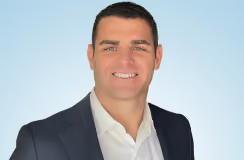






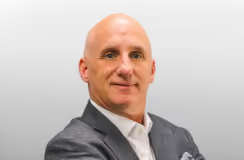












%20-%20thumbnail.avif)

%20-%20thumbnail.avif)

%20-%20thumbnail.avif)

.avif)



%20-%20thumbnail.avif)