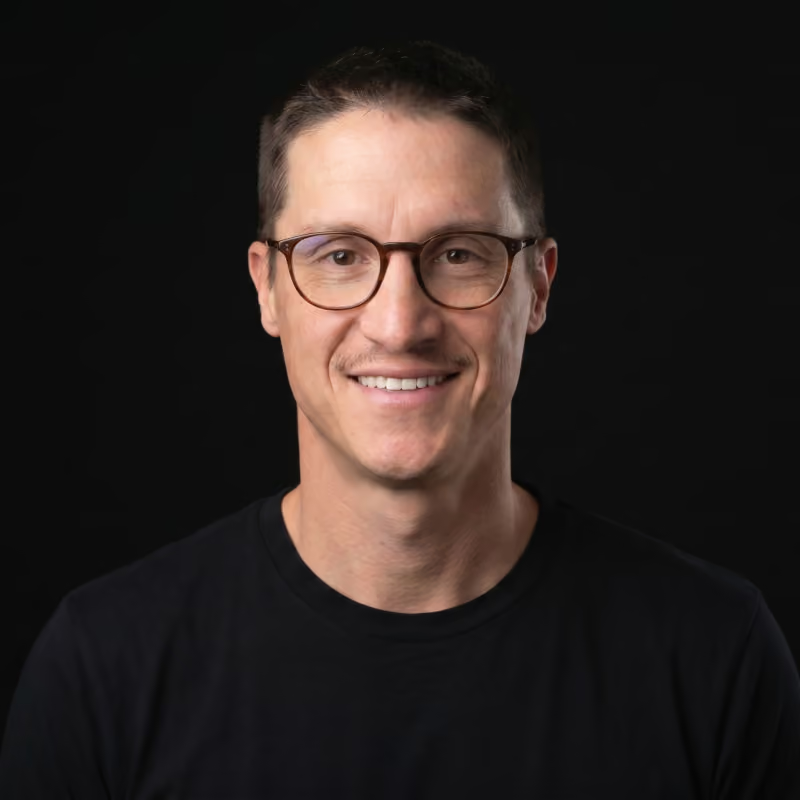
Host: Regular listeners of Acquiring Minds know that while we celebrate fast growth and big numbers, we also champion long termism, going slow to go fast, and success factors that go beyond EBITDA and irr. So we were excited for today's interview with Brendan Dubner. Brendan's vision for his business is not to grow as big as possible. Instead, his target is a certain modest size, 20 to 40 people. This number is akin to the tribes of prehistory or army platoons. It's a number where mutual dependence, shared purpose and cohesion more naturally occur, all properties sorely lacking in modern life. Now, Brendan is also a capitalist. Building wealth is certainly part of his project as well, but it is neither paramount nor unbounded. He seems to already perceive something that many guests do not perceive before they get into their businesses, but only later learn that there is deep gratification in the impact you can have on your employees. As owner of a business, Brendan bought a very small business. Just $300,000 of SDE for employees and we talk about how his long term vision influences his thoughts on size. We also unpack his deal structure. Listen closely there to learn how structure can mitigate the risk in the acquisition of such a small business. Here he is. Brendan Dubner, owner of IT Total Care. Welcome to Acquiring Minds, a podcast about buying businesses. My name is Will Smith. Acquiring an existing business is an awesome opportunity for many entrepreneurs and on this podcast I talk to the people who do it. The team at Pioneer Capital Advisory has started offering peripassu debt for SBA business buyers. That means they can help unlock up to $3 million of conventional debt on top of the $5 million limit of SBA 7 loans so Pioneer can structure larger, more complex acquisitions. Listen to our story with Anika John for one of their clients who did just that, buying a $10 million business. As a first time self funded searcher, the Pioneer team has closed more than 100 SBA loans, averaging timelines well below industry standards. Founder and owner Matthias Smith and COO Valerie Stash bring over two decades of SBA lending experience. Matthias and Valerie have a full bench of analysts and associates who work your deals with them. A true deal team. Not just a single point of contact. Visit pioneercap.com or click the link in the notes. Brendan Dubner welcome to Acquiring Minds Will.
[3:16] Guest: Thanks for having me.
Host: Brendan. You bought a very small MSP in the Bay Area. Your metaphor for buying small and learning the business deeply, intimately versus buying a larger business was turning a sailboat versus a cruise liner. I love that metaphor. I'm Going to use it. We have a lot of ground to cover today, so let's dive right in. Some background on you to begin please. Brendan.
Guest: Sure. Yeah. So, born and raised, San Francisco Bay area. I went to college on an army scholarship, did ROTC in college, graduated commissioned, was a field artillery officer on active duty for a bit out of Fort Bragg. But I've always been entrepreneurial. I started my first company in high school. I had a side hustle in the army until I got deployed. After the army I went straight to business school and even during my mba I started another company. When I was in the army I also started nonprofit that, that still exists. So always been entrepreneurial. But when I was matriculating to business school, I heard about this weird thing called eta. And instantly when I heard about it I was like, well I, this is interesting. I had to learn more about this. So really spent the two years of my MBA program just diving into search. I did a couple of in semester internships with traditional searchers. I did my summer internship with actually one of your former guests, Josh Meadow, who's a self funded searcher, another army guy who acquired a business. And that summer internship was really transformational for me in terms of I sat next to Josh all summer and just really saw what the day to day looks like and of doing a self funded, running a self funded company. And it gave me the confidence to do self funded. Otherwise I thought I need to do traditional. I didn't even know what banking was when I showed up to business school. I thought a banker was like the person at Wells Fargo that gives you your money. I had no concept of anything but did that.
Host: So Brendan, wait, what was it that you saw working at Josh's elbow that gave you confidence? Be more specific.
Guest: I think it was two things. One was Josh was very gracious to really coach me and he had a couple other interns through what his search process, process look like in incredible depth. So just understand like, okay, like this is how I try to find a business, this is how do I put a deal together, all that kind of stuff. But then probably even more important was just seeing what the day to day of what running a small business actually looked like. And I was, for me, I never had a real job outside of the army and summer jobs. So just seeing what that looked like and understanding this is not that different from, you know, leading people in the military. Like this is, this is something I can do.
[6:11] Host: It's interesting. I, this is a theme that's come up lately where there's a Lot of things about business ownership that intimidate people and it's interesting what intimidates them. I think you're. What I'm hearing you say is that it was kind of the. Well, maybe the leadership.
Guest: But.
Host: But just as an aside, I've. I've heard in recent weeks people talk about the kind of paperwork, business ownership. The. Jeff Flannery who bought. Has bought 17 spas in a franchise system talks about how he loved the. The support that he got from the franchise system because he'd never, for example, negotiated a commercial lease. So those, those little things like that can really intimidate a person, I guess. And it's. So anyway, it's just interesting to hear what intimidates. What specifically intimidates people. And that by the way, at least my guest, I guess it's the people who go through with a. Buying a business and kind of have the wherewithal to do that. That. So it's self selecting, but they. They find that it's maybe not as intimidating or as hard as it looks from the outside. Not to say that this path is easy, but it's maybe not as mysterious once you're inside.
Guest: I think that's right. I think, you know, there's always. When you have no context on something, the unknown is just so
Host: it can
Guest: go in so many different directions. And sitting next to Josh and hearing what the search process was like and then seeing what the day to day was like on the other side was just very enlightening for me of understanding, okay, this is what this actually means.
Host: Great. And listeners should go check out that episode. Josh Meadow M E D O W As I recall, Josh's story is quite something in his search. He also for Acquiring Minds goes into depth about how he searched and took advantage of the resources available to him at the Boston Public Library and really was. Really was a hustler about it and it paid off for him. So back to you, sir. Yeah. Okay. So. So you. So this makes you comfortable that this business ownership thing is. Is within your reach?
Guest: Yeah, it just made me comfortable. Yeah. This, this just. This feels right. It feels possible. It feels like something I would enjoy, all that kind of stuff. So then I graduate from business school and start actually leaving business school. I was kind of doing three things at once which I would not recommend in retrospect. I had the nonprofit, which I was kind of growing aggressively. I had a government consulting business that I started in business school. We had a couple of Department of Defense contracts that was kind of going nicely. And then I was Doing a self funded search just from the side of my desk and really just running Josh's playbook, which was, you know, high volume, low touch, a style of search that I think worked really well when he searched in, you know, 2018, 19ish, but not so much when I started searching in 2022. But so I did that for probably about a year and a half. And then at that point, you know, I just decided, uh, no, government consulting is great. It was frankly good money, especially, you know, on a comp to effort ratio. Um, but I, I just said, I don't want to do this forever. Uh, so decided to double down on the search. This is right at the end of 2023. Um, and then from there within,
[9:54] Host: I
Guest: think it was nine months later, I was under loi with it, total career. And then we closed in early 2025.
Host: Brendan, why did you not want to continue double and triple down on the business that you had that was working that was zero to one consultancy? Was it just simply because the sort of subject matter didn't interest you, the motion of the business itself or something else?
Guest: I think it was a few things. One was, the subject matter was like, was okay, interesting. I think the biggest thing was just the pace, like government moves extremely slowly and can be very political and it can be hard to feel like it was just, it's just not what I wanted to do forever.
Host: Okay. Okay. Well, as a guy who lives in the D.C. area, I know that there can be great businesses, I shouldn't say great, highly profitable businesses built serving the government. I don't think you need to live in D.C. to understand that, but I see it with my own two eyes. So interesting. I, you know, it's, it's. But really, really where I'm going with that question is the fact that you had what sounds like the makings of a business there and it was a zero to one effort. And so often people are drawn to ETA because they don't have an idea or they, you know, they don't know what they would start or don't want to start something from the absolute scratch. But given that you had and had done so somewhat successfully, I wanted to ask.
Guest: And actually I should probably add. There's another wrinkle I should probably add. Important for context. Yeah. So I'm from the Bay Area and after school I came home, but it was supposed to be temporarily, you know, just because I'd been gone for a decade, spent some time like with family and whatnot. But between the nonprofit, which is focused on the Military and the government consulting business. Really, the plan was to move to D.C. that was where all my things were pointing. That was the plan. But while I was back here, met a girl, her family's from the Bay Area, my family's from the Bay Area. And so that also added just more of it probably makes more sense to stay here.
[12:20] Host: And so that was the nail in the coffin of the consulting business, in other words.
Guest: Yeah, it was the nail in the coffin of DC which is the nail in the coffin of the consulting business.
Host: One thing that you had said in our pre call about the mechanics of your search is that you embraced cold calling and you advocate that. Tell us a little bit about that. What's your, what's your pitch on cold calling? The least pleasant thing in the world for most people.
Guest: Yeah, I think, you know, like I said at first, I ran Josh's method, which was high volume, cold email, low touch, just send a lot of stuff out, see what comes back. And I just. That wasn't super. It was decently effective at the beginning, but it steadily got less and less effective. So in that early 2024 when I was like, when I decided to double down, I realized I have to do something different. And I tried doing a few different things, but the thing that worked by far the best was cold calling. And yeah, it sucks, like, and it's never fun. It's not like you get used to it and you just, ah, you know, this is just a thing that I do. It always sucks. But it was by far the most effective thing I did. And, and not only did I source this deal from a cold call, but there was another one. There was a, you know, $4 million EBITDA fire protection business that I sour from a cold call. And they ended up selling to private equity, but, like, got pretty far along with. And there's a couple other, like, really interesting ones. I just found that while it wasn't fun, when I actually did get to an owner, 99% of the time, their response was something positive. Most of the time, you know, they weren't actually looking to sell, but they would at least be like, you know, like, I respect what you're doing, like, keep at it kind of a thing. Yeah, there's only maybe one or two times where somebody was like, you know, like, you know, f off or, you know, those kinds of things. Beyond that, it was like, look, like, I get it, like, what's your email? If I come across somebody, you know, I'll try to let you know kind of a thing. So it Just felt like the best way to genuinely. Yeah, well, as genuinely as possible via a random phone call. Like kind of connect with an owner and look at a possibility.
Host: Yeah, well, and let's, let's not forget that when you are an individual young entrepreneur looking to buy a business, the nature of that cold call to the recipient is way different than the typical cold call which is something they're trying to be sold, something that they don't want. And it's just a smile and dial situation. So you can see that if you can just get their audience that they would be, you know, it's an unusual call to get and, and, and you know, they might see themselves in you. That sort of thing happen to remember your script or the essence of what your opening was.
[15:17] Guest: Yeah, yeah, basically. So at first I tried to find owner cell phone numbers, which is incredibly difficult to do. So I just started calling front desk and basically when I got the front desk person I just say, hey, my name's Brennan, I'm a local army vet. I'm looking, I'm really interested in the fire protection industry. You know, I've heard that John is an expert, so I was just hoping I could talk to him. And then if I actually got to John I'd say, hey John, my name is Brennan, I'm a local army vet. I'm looking to buy and run a business for the rest of my life. Like, are you at all thinking of selling whatever the company name was? And that was it.
Host: Great. Well the army vet thing I notice. And so for, for non vets listening, they won't, they won't have. That does open doors, I hear from vets to be able to cite that if you ask owners in the ETA and search community which insurance broker provides highest quality work, great outcomes and has a practice dedicated to searchers and acquisition entrepreneurs, one name comes up again and again. Oberle. Oberle Risk Strategies has worked with hundreds of searchers over nearly a decade and is in fact led by a two time successful searcher, August Felker. Which makes Oberle a specialty insurance brokerage for searchers by a former searcher. And if you've got a business under Loi, Oberle will provide complimentary due diligence on that business's insurance and benefits program. An easy, no risk way to get to know August and the team at Oberle to take advantage. Check out oberly-risk.com that's O B E R L E hyphen risk.com link in the notes. Okay Brendan, well tell us about the business that you found and how that, how you first found it and then tell us about the business.
Guest: The business I found is called IT Total Care. I actually had been, I had cold emailed the, the owner for a while, but when I actually, when I finally cold called him and got him on the phone and did my little spiel, he, he, his first response was, have you been emailing me? And I was like, actually, actually I have. You know, he's like, wow, you know, I respect, I respect the hustle, you know.
Host: Yeah.
Guest: And he started asking me some questions. I kind of, you know, we were going back and forth and he's like, hey, why don't you come in? Like, why don't we get lunch and let's just go from there. But the business itself started by a guy named Tony Moraros, who was a former kind of IT engineer in various big tech roles who decided to go off on his own one day. And the business started actually as Tony the computer guy, just kind of going off doing odd jobs. And I think he did that on his own for a few years and then slowly started hiring and building and over his 20 year career built it total care into what it was. And the business had been growing kind of consistently from when he was Tony the computer guy to really up until Covid and then in Covid, you know, Tony at that point was in his mid to late 60s and, and I think, I think it was just enough where, you know, he moved to his, his vacation home in Tahoe full time and, and that the business just started really like slowly shrinking essentially because there's no, there's no new labels being at, there's no sales and marketing effort. It was just the, they had their current clients and the clients were slowly churning over time. So by the time I talked to Tony, the business had been slowly shrinking, maybe like on average 5% of revenue for three or four years. And Tony was very much, he was already one foot out of the business, but you could tell one, he really loved the IT part of it and he really cared about his team. They'd been with him for a long time. I think the average employee tenure was like seven to eight years when I had gotten to them. And so it was just a small business that had been, been around kind of hobbling along.
[19:40] Host: How big was it? Can you give us some numbers on total revenue?
Guest: Yeah, so the business I think peaked at around, I think it's somewhere between 1.4, 1.5 million of revenue. And then by the end of 2024, I think it was like 1.15, somewhere like that. And the team was I think at its peak, roughly 10 people. And then when I got there it was a team of Tony +4.
Host: What do margins look like or what is SDE on that revenue?
Guest: So and I had to, I had to go back and look at all the numbers between our pre call on this to really nail this down. But so 2024 EBITDA was roughly 150,000 and. But it had all of the, the characteristics you know, you hope for in a small business. Right. It was somewhere between 80, 90% recurring revenue. The top customer was about 10% of revenue. There's basically no capex in the business. It's just, just small business.
Host: Yeah. Well, I did want to comment on the recurring nature of the revenue which regular listeners will have heard talked about ad nauseum. The, this is a, this is a demonstration though of why it can be so valuable. Because he was taking his foot off the gas. And yet because 80 to 90% of this, of the, of these, of this revenue was contracted and it was probably just automatically dinging customers, credit cards. It just, it just kept going without anybody focusing on sales and marketing. And it would churn, you know, some of those customers, but only a few would churn year by year a little bit. So it was dwindling but ever so slowly. If this had been some other, you know, business where they were selling project work or whatever and the owner was that uninterested in sales and marketing and pushing the business, that revenue would have declined much more rapidly we can assume so. Good, good demonstration here of why revenue, why recurring revenue is so appealing. Gotta press on those margins. So 150 on, on 1.15. So what is that, 15? Yeah, a little bit. 13. 13, something like that. Yeah. I do feel like though that that is, that is small or low margins, tighter margins for a very small team. You know, the smaller the team usually the higher the margins. It's a very lean, he's running it lean and an MSP land which is, you know, it's a white collar service usually again, their margins are a little fatter. How did you respond to that or how do you respond to that? How do you think about at the time?
[22:25] Guest: I think really maybe a better way to look at this business is really more SDE because Tony was still taking a salary and whatnot. It's not that he wasn't doing anything, but he was definitely not his full time thing anymore. And so the SDE of the business was more roughly 300,000 ish.
Host: I'm sorry, Brendan. So he was taking 150 for his quote, salary and then there was another 150 left over as just pure earnings.
Guest: Yeah, more or less.
Host: Oh, okay.
Guest: Yeah, okay.
Host: So, so 300 of SDE.
Guest: Okay, 300 of SDE is probably the better way to look at it. But my thought was, okay, there's something, something is going right here. I don't really know what it is, but the fact that I, I really believe that the owner, you know, every owner is going to tell you, oh, I'm not that involved, blah, blah, blah. Most of the time it's just not true. But I really believe, you know, Tony is not that involved in the day to day anymore. But the business had only been shrinking slowly despite adding zero new customers for multiple years. Like something is going right. And I figured, look, even if, even if me and Tony are just a one for one swap, like, I think even though I know nothing about the IT industry, I think I can add enough value where this will makes sense and I'll just, I'll learn as I go.
Host: By the way, another nice little detail here is that he had a vacation home in Tahoe. Always a good proxy for quality of business is looking at the owner. The life's, the, the lifestyle that the business has afforded the owner. And so if he's living in the Bay Area, first of all, if you're, you know, making a living in the Bay Area at all, you're ahead of the pack. But then if you also have a house in Tahoe, he's done well by this, this, by this business. It's a, says something at least, of course. So I also think now, Brendan, is a good time to introduce your kind of philosophical approach to building this business. And, and you know, here I am kind of picking it apart. It's, it's, it's a good analysis to do on recurring revenue and margins and so on. Of course you have to do that. But it's also, I, I, I don't like to forget that your own motivations as an entrepreneur are as important as anything else. And so what you want to build here and in the time over which you want to do it, I also think factors into your decision to buy such a small business. So please, what's the big picture?
[25:10] Guest: Yeah, I think when I started searching, I was kind of like everybody else. Originally it was 750,000 to 3 million of EBITDA, blah, blah, blah, blah, blah. And actually that made me miss a couple of good opportunities. Abby. Abby. Ravi Shankar, the with the pools etc business. Like yeah, we are. I, I, I got that sim from a broker like when it was coming to market and I passed on because I was like oh it's just too small, you know and, and ABHI and I are friends now and, and I'm like oh man, I should have bought your business. But, but you know, with this kind of reset again in, in early 2024ish was part of that process was thinking they're like what am I, what am I doing here? Like what is the goal? And really I knew that you know, I wasn't trying to do kind of like a private equity thing. This was not a buy and flip situation. Like I, I'm, I'm an operator, I am not a finance guy. And so I, I guess I reestablished that the best case scenario is if I could buy something that I could grow for my entire career for the next 30 years and something where I could have control and I would have the ability to dial up and dial down as I chose to in life when I have kids, maybe dial down and then as they get older dial up or whatever, just have that flexibility. And I kind of realized through my search that there was more and more of an opportunity in the smaller businesses that were being overlooked by most searchers and by private equity and all those things. And especially when I was digging into it, total care, like I just realized, yes, the numbers are small and it's going to take years of compounding to make this really interesting. But that's okay. Like I don't think there's anything wrong with that. You know, I'm not trying to become a billionaire or anything. Like I just want to, I want to have a good life. I want to have flexibility. I would love if I had something that I could pass off to my kids one day if they're at all inclined. You know, that was really the goal.
[27:28] Host: And Brendan, why long termism versus trying to make $7 million in, in a few years and then you got $7 million and you can, you know, then decide what else you want to do. Why, why do you, why do you think you take a long term view where others don't?
Guest: A couple things come to mind. One is that I really, I try to value balance. Like, you know, do I have balance in my like work life balance? Like hell no. And do I think that's going to happen anytime soon? Like no, but I just balance.
Host: By the way audience, it is 6:30 in the morning where Brendan, speaking of.
Guest: That's right, he's a hard worker, you know, like. But I, I think more so balance in terms of like I, I have a fundamental philosophy that in, in life there's only two things that really matter. If you boil it down, one is what you're doing. Yeah. And usually that's what you're doing professionally. Like what you're spending your time on. Is it challenging? Is it making, helping you grow? Is it. Do you think it's important in some way? And then two is, is who you're with, you know, close friends, family, but primarily like your partner. So those are. I knew that kind of, that was my North Star is I just got to figure these two things out and everything else will kind of fork itself out. And I think that when you look long term, it's more likely that you'll be able to have some semblance of balance. And then I think the other thing was just from my time in the military, like there's an early job when you're an officer is being a platoon leader. And it's kind of like it's often coined as like, oh, this is the best time you're going to have in the military, but all that kind of stuff. And one of the things I saw is when you're a platoon leader, usually you're a platoon leader for like maybe a year and then you get swapped out for the next, the next guy or the next girl, whatever. And the way it breaks out is, you know, for the first three months you have absolutely no idea what you're doing. For the second three months you like kind of maybe sort of have an idea. You know, it's not until the last three months where you're really cooking and then, and then you leave. And so it always. I was lucky enough to be a platoon leader twice and both times I was like, you know, if I just had another year, like we could really transform this thing. And so I think that's always just kind of stuck with me of having more time just being able to compound being able to build culture, build relationships, build process, build all those things over time. Is true. Really, really powerful.
[30:03] Host: Yeah. Yeah. Just had a pre call yesterday with two guys at the Elmore companies, which is kind of a quasi family office but also serial business buyer. And they also take a long term view, buy and hold businesses forever sort of thing. And we were talking about this topic and they said that in their own portfolio they really, as a, as a good rule of thumb, the businesses that they buy and hold only really take flight in the out years, in years Five, six and seven. That's really when they're, the inflection point occurs. And from years zero to five, it's just, you know, they're improving. I'm sure they're probably growing, but it's all kind of being still being baked in. The real interesting compounding doesn't happen until, until even a couple years after that. So there is this. And that wasn't the first time I'd heard that there is this. In fact, they cited, I think it was a venture capital, a VC who was saying something about startups as well, that it's really kind of, there's this something about year seven that, where the big stories, those companies hit. It's not until year seven. There's of course the old, the old cliche of it took us 20 years to become an overnight success sort of thing. There's these companies that like are around forever and then all of a sudden one year everybody hears about them and people just, the general public thinks that the business is really young when in fact it's been, it's been there for a long time. It was just to hit this inflection point. So anyway, yeah, so this is a common theme in business and it's, yeah, I just think a healthy one to explore. And, and, and of course compounding itself the very fact, the very mathematical fact of compounding. The graph looks uninteresting in the early years and it's in the sort of middle years where you, where it goes parabolic. I'm putting words in your mouth, so correct me. I, I just, it seems too like you, your goal isn't riches. You are an entrepreneur. You care about money. You, you want to have a good lifestyle. But you also, you're not that, that's not the only goal. Being a business owner to you is, is something of an end in and of itself. So it's not something you're trying to get through to get to the other side where you don't have to do anything and you just have a big bank account. You actually, the, the motion of being a business owner is something that feels like where you want to get to and not leave.
Guest: Yeah. You know, yes or no or no.
Host: Stop me if that's not right.
Guest: No, no, I, I, I think if we zoom out, my personal thought is I listened to this podcast a long time ago by Sebastian Junger, who was, he made this documentary called Restrepo about the Afghanistan war. He's basically a war reporter for a long time. And he also wrote a book called Tribe and essentially the kind of conclusion he's come to is we are still designed to live like we did thousands and thousands of years ago in small societies, egalitarian societies, where everybody has to work together. And that, that is what really produces the most meaningful life. However you want to define that, that's what we're designed for. And he, he likened that to a platoon in combat, right? You know, 40, 50 people out in a harsh environment. They have to rely on each other. Like he based off his following of this platoon that was in heavy combat, he was shocked that when they got out of it and they got back to their base and got back to normal life, they all, all wanted to go back, even though, you know, it was terrible. Like they lost men, they didn't have running water or electricity. And I do think there's, you know, I may be not that extreme, but I do think there's a lot to that. And I think that I selfishly, I think my life would be much better working building a company of somewhere between 20 and 40 people and trying to make the best possible thing that, that I can make for all of us that would produce actually the most interesting, meaningful, fulfilling life that, that I can build. And I think that we are designed, you know, to work together and want to help each other. And I think, you know, having done the nonprofit thing, I think if you really want to have an impact on people's lives, the best way to do it is, is actually business and potentially small business. And so I just think, I think that is, I think that's more the goal. Like, don't get me wrong, I want to make money, right? Like, yeah, I want to make enough to passively generate cash flow, needed to live an upper middle class life here in the San Francisco Bay area, which, you know, is, is upwards of $10 million, right? Like, like I'm not Mother Teresa over here. But I also think that I don't need. Once I have a certain number, and my fiance and I do, and once we hit that number, the plan is never to do something strictly for money again. I think it's very easy to get lost in those kinds of things. I think success, once you reach a certain level of success, you want more. You can get addicted to it just like you can get addicted to anything else. And then, you know, years can go by and you can look back on your life and realize, you know, you don't really have the relationships you wish you had. There would be a lot of things you do differently. And I just think that if you, I think that owning, running, building a small business, again, like 20 to 40 people, can produce not only the cash flow needed to live well, but also just the, the meaning, the purpose, the, the, the interpersonal relationships that are, I think, overlooked a little bit these days.
[36:13] Host: That's great, Brendan. And so, and so that is actually where you'd like to grow this business too. You, you've now told us that the vision that you just gave us, a 20 to 40 person tribe that makes whatever amount of revenue that is. You're not somebody who's trying to grow to 100 million in revenue just because that's a nice big juicy round number. It's more about, it's a more nuanced vision that you're working toward. That's, that's fantastic. And so returning all the way back to the beginning of this philosophical digression, buying something really small, you know, you're not obsessing over getting rich as quickly as possible. So you're. There's just more time in your Runway. And also you're not looking. Your goal here is, I mean, not really to sell. I know you probably don't want to be pinned on, oh, I'll never sell. But the vision that you just painted sure sounds like this is going to be your life's work. Is that a fair characterization?
Guest: That's the goal, you know, that's the dream, I think, where the difference between the goal and execution, who knows? I think the biggest thing to figure out is just like right now, I haven't taken a vacation in a year. I've been operating under a one less day rule. If everybody has a three day weekend, I have a two day. If they have a two day, I have a one day. That's just not sustainable forever. But the goal is to get to a place where my workload is more sustainable or more in line with what I would like it to be and still have the business be growing. If we can get to that place, which I feel confident we can just based off things have gone so far, which I'm sure we'll get into, then, yes, that is the goal. If as long as this is fun and interesting and I can provide a good lifestyle for the people who are working for me and for myself and my family, why. Why would I not want to keep. Keep going?
Host: Let's return now to the plot. The business, it Total care you told us about. The size, the structure here is also interesting. And actually before even we get to that, the fact that you worked in the business before buying it. So let's let's get into the weeds here, please.
Guest: Yeah.
Host: So.
Guest: So when I talked to Tony and. And we started going down the path a little bit, you know, it became obvious to me that, one, this was a small business, two, this was a shrinking business, and three, that it was not going to really be a financeable business because it's just too small. And so because of all of these factors and the fact that, you know, really small business also has a lot of risk, like, a lot of risk. And so, you know, my pitch to Tony was kind of like, hey, you know, I know you really care about this business and the people in it, and you really want it to succeed, and so do I. Why don't we. Once we get through a certain level of diligence, why don't I come work in the business until we close the deal so I can meet the people, I can understand the systems. They can get a feel for if I'm right for them. I can get a feel for if this makes sense for me, all that kind of stuff. And he thought, he's like, I think that makes a ton of sense. I think that's a great idea. So once we got past kind of the financial due diligence, I started working in the business and met everybody and did all those things and got more and more comfortable of, okay, you know, this is what's actually going on here. These are the things this business actually needs. And Tony and his team got more comfortable, like, this is who this guy. Initially, I know everybody's reaction was, okay, wait, so you're telling me there's this, like, late 20s, early 30s, guy with no background in it who's gonna run this IT business? Like, how does this make any sense? And through that time before close, I was able to kind of, you know, build some rapport, build relationships, and just communicate the general vision. Like, look, like, I'm not an IT engineer. I have no desire to be an IT engineer. You know, my job here is to empower you to be able to do, you know, what you guys need to do. Like, my job is to handle the business side of things. So it was.
[40:51] Host: And that res. Did that resonate.
Guest: I think at first, people don't get. They're like, but you. So you don't know anything about it. We kept coming back to the state park, but I think between, you know, my being the first person there every day and being the last person to leave, my just consistency and, you know, Tony's back backing of saying, like, hey, guys, like, I think this is the Right thing. The reason this business has never been able to grow past a certain level is because of my inability to do the business side. My inability and my lack of interest in doing the business side of things like this is. I feel strongly that this is the right move. So I think between those two things, you know, people started to get it, but initially, no, that it was just totally like, it was all about the IT experience.
Host: And you were, you were prepared to walk away if it hadn't been a fit. Like you would have gotten in, obviously. I mean, that was the exercise.
Guest: Yeah, yeah, it would have been hard, but I would have, yeah.
[42:02] Host: The team at Aspen HR recently published a short white paper targeted at searchers Entitled A New CEO's Guide to Human Resources. It lays out the key items you should be thinking about as you transition into CEO and owner of the business you bought. The link to download that is in the show notes, Aspen HR is a professional employer organization, or PEO, which provides HR compliance, flawless payroll, robust HR technology, and Fortune 500 caliber benefits, all for a fraction of the cost compared to using multiple vendors. Reach out to Aspen HR for your complimentary HR diligence checklist and benchmarking analysis. Go to aspenhr.com or contact Jenny Theere directly at jenny@aspenhr.com. so after that exercise, you liked what you saw, you built some rapport with the employees, and so you decided to proceed. Was there anything else to say about what you learned about the business before we turn to the deal structure?
Guest: Yeah, I think the, the, the only other thing to say was it was clear to me that this was gonna be a lot of work and that, and that two things needed to be done kind of as soon as possible. One was there needed to be a sales and marketing effort. Like we needed to do something, you know, like the business had been shrinking for a few years. It could not shrink for that much longer before, you know, somebody would have to be let go. And I think at that small of a size and with how, how long the team had been together, if one person was like, I think the whole thing would have fallen apart. So that was clear to me. And the other thing that was clear to me was there was a lot of just infrastructure work to be done. Like there were, like the contracts were. There was no uniformity among the contracts or the company's, you know, PSA software. Like, there's a lot of things that just needed to be standard, things that just needed to make sense.
Host: Yeah, yeah, classic sort of professionalization type stuff, which is, you know, always we always talk about that as kind of a weakness of a business. But in fact, in some ways, you like to see it because it's something. It's something where you, the entrepreneur can really add a lot of value. It's almost like you. You know, where you can turn your attention to at least add some value to the business. But, you know, going back to. If one person were to leave, part of a big Part of the reason why the conventional wisdom says to buy larger is not just so that there's enough earnings coming off the business to be able to reinvest and grow the business that much more quickly, but because it's a. If it's a business that's larger, it's probably sturdier and there's less risk in it. So if one person had left that was going to be, or, and I think maybe even still today, that could throw the business into crisis. That was just a risk you were willing to take. Any. Anything to say to that?
[45:21] Guest: Yeah. Oh, and actually, I'm glad you brought this up, because I was. I felt confident that nobody was going to leave because one, they'd been there. They'd been there for a long time and they'd worked together for a long time, and they liked working together. And two, because everybody in the business was overpaid. Every. Everybody. Like, if you just looked at purely at market wages, which I took as a huge green flag, because, one, not only did it make me more confident that people weren't just going to jump ship, but it also. One of the things. I think one of the biggest things I tried to diligence and that I would definitely recommend people try to diligence is like, are you buying from a good person? Right. Because inevitably, when you're buying a small business, the seller is going to know infinitely more about that business than you will ever, you know, than you will ever be able to figure out. During diligence, if they want to hide something from you, they can and they will. But one of the things, getting to know Tony, you know, I just got a really good feeling about him. And he, you know, he volunteered at his local church. He just seemed like a good guy. And when I saw the numbers of, you know, what people were being paid, you know, it was clear, like, he. He really. He really cared about these people. He wanted them to. To be able to have a livelihood here in the Bay Area. So that made me comfortable that. That, you know, I was buying from a good person and that I would at least have some Runway before people would leave.
Host: That is such a great little insight there, Brendan, because seller integrity is one of the biggest risks. And we all know that and we all test for that. We're all looking for that. But as I heard it put, if a seller wants to deceive you, you, they will be able to, they'll know that you're trying to suss out their integrity and they'll know what to, what to cover up. So if they, if they mean, you know, negative intent, they'll, they'll likely succeed in that. So just to say, I just got a good vibe from them. I just, I just felt like I could trust this person. I've heard many guests say that happily, they usually turn out to be right. But there's also guests where their integrity, their seller didn't have integrity, and yet they seemed like they did on the, on the going into diligence. So you look for other, you look for other evidence of their goodness or badness. And, and what you just shared there is a great, a great signal of goodness. You can look at hard numbers on the spreadsheet, on the P. L that say what people were paid and, and then triangulate that with what market is and see that he was actually overpaying his people. That's probably not what a slimy seller is going to do. That, that, that's a great signal. I love that, that insight.
[48:13] Guest: Yeah. And okay. And the fact that people, you know, had long tenures, I think that's another thing. If, if you're working with a slimy seller, people are probably not staying there a long time. I, I, that would be another signal I'd look out for.
Host: Yes, but because I feel like I have definitely heard stories where people just, employees just suffer through a toxic environment for years.
Guest: That's true, but sure, sure.
Host: I guess one, one more definitive way to put it is if there's a lot of employee turnover, you know, where there's smoke, there's probably fire there. So definitely use that as a negative signal. Okay, the purchase price, please. Yes.
Guest: So the purchase price, the whole structure is a little weird. So stay with me here. So the purchase price was roughly 615,000, of which about 100,000 was me assuming unpaid lease liabilities because we did a stock deal and then the structure was about 85% was a seller note. And the purchase also included roughly 175,000 of cash being left in the business. Because I was, you know, talking to banks. It really wasn't going to make sense to do a loan and working capital and all that kind of Stuff and I, I, you know, Tony and I had talked about this and that's where you know, originally I'd been speaking about doing the classic self funded search, SBA loan, blah blah, blah, blah, blah. But as I went down that path, I just told, I, I was just honest with Tony. I was like, hey, you know, this isn't really going to make sense this way. We could still do it, but it would look, look, you know, something like this. Actually originally we started with 100 sell it out and, and originally he was like, oh yeah, you know, okay. But then he's like, you know, I talked to my wife and she was like, well wait, so you're telling me this person's not giving you anything like up front, like, you know, like wanted money down more as a gesture of goodwill than anything, you know, made a lot of sense. So that is, you know, at a high level the structure that we came to.
Host: Yeah. And oh, and what was the, what were the terms of that seller note?
Guest: The seller note was so it's 10 years, 10 plus years, 5% interest rate, straight line amortization.
Host: Okay. So this is a very small business. There's a lot of risk in it. But this is a very strong purchase price. And, and in particular structure, so the purchase price was, you know, depending on how we define the earnings, something over 2, a little bit over 2 of SDE. If we talk about adjusted EBITDA, that 150,000 true kind of free cash flow coming off the business, it's more like 4ish. But we should really reduce that purchase price by the 170, 175 that was left in the bank as working capital. Usually these, you know, these businesses are debt free, cash free. So there's no cash that's, that's coming along or you, or you have to negotiate it. But the idea that you'd step into a business with $175,000 just sitting on the, on the bank, bank balance sheet of the bank of the, of the business is effectively like the purchase price was, was reduced by set amount. So that's incredible. Then huge seller note. So which you know, we, we, we kind of the naive way of looking at that is the more seller note the pot the better. Not always, not necessarily. I think, you know, people think that way because it's like, oh, if you could just get 100 seller financing, then you don't have to bring anything to buy the business. Which his wife intelligently pointed out was a bad, bad would have been a bad approach. There's no skin in the game for you, the buyer. So you can just fold up, you know, you know, fold up shop, go home if things don't work out. So you did have to bring some skin in the game, but not a lot. 15 of a purchase price of 600ish. Right. Is 90 or thereabouts.
[52:26] Guest: Yeah.
Host: And then the terms of the seller note are, are better terms than you would have gotten for an SBA loan, which are themselves really good terms. 10 year amortization. And, and you got this similar amortization or longer. What does 10 plus years mean? 10 years or.
Guest: I always, it. The seller knows either 10 or 12 years. I, I can't exactly remember.
Host: Okay, well 10 years is same as SBA. 12 is even longer amortization. So that's great. And then of course a lower rate, 5% straight line. Great. That's a fantastic rate. So. Oh, and we haven't mentioned, was there a personal guarantee.
Guest: No personal guarantee.
Host: So really just a great structure here. But we do, you know, this is a great structure, but not for no reason. There was as we've, as we've mentioned, and I will just mention again, a lot of risk to this small business. It was declining, first of all, even if very slowly. A declining business is often just a total red flag. I mean people will just, buyers will just walk away from any decline at all. So there was, that's going in the wrong direction. And there was, you know, four employees, I guess four plus Tony. Tony's. And Tony was generating revenue. He wasn't super active in the business, but he did generate some revenue. Or did he not? Was he.
Guest: He would still get involved in some client things.
Host: Yeah, yeah. So, okay, so it's one less person than, or whatever Tony was doing. And so you had four people who were generating revenue. If one of those people walked, there goes 25% of your revenue. So awesome structure, but also totally justified to make a deal like this happen. You guys really were both going to have to compromise here to make, to make a deal happen happen. So. But super interesting and, and I think a good case study in how to make a deal like this happen if, if you business, buyer, listener, find a business like this that, you know, violates some of the best practices as, as the sort of business one might buy. A structure like this that really protects you is how you can, how you can make something like this work and justify it to your spouse.
[54:45] Guest: Yeah, yeah, definitely. Okay.
Host: All right, great. By the way, how, how does your partner think about this project?
Guest: I mean, she, she's been incredible. The Whole journey. I mean, she, when we met, you know, I was kind of in the search and I was telling, you know, like, I'm trying to buy a small business with her. And she's like, I don't really know what that means, but you seem like a nice guy and you seem passionate, so that's fine. But she, you know, searching is hard, as anybody who's ever done it knows it is hard. And she really saw that whole journey and, you know, kind of continuously I was like, well, this is why I'm doing it. Like, this is, this is the plan, blah, blah. And, and so I think she, she's been phenomenal. I, frankly, I, I don't know if I could have done this whole thing without her. I, I think having a spouse that's, that's on board is, is definitely a superpower in this.
Host: Great. Brendan. Well, got you for just a few more minutes and want to hear now about what your ownership period has looked like. It's been. When did you close?
Guest: We closed in March 2025. So it's been a touch over a year.
Host: Touch over a year. Okay. High level. How, how have things gone and, and match. Line that up with your expectations.
Guest: Yeah, I mean, so far things have gone really well. They've beat expectations significantly. I would, going into it, I would tell everybody I'd be happy if in the first year, if we were flat and then kind of grow from there. Fortunately, we ended 2025, so I didn't even have, I had what, nine months, nine and a half months in 2025. We ended 2025 up 25% in revenue, EBITDA up roughly 40% and just getting a lot of the building blocks in place like implementing EOs, establishing a leadership team, establishing regular weekly meetings and some key processes that we needed to create. So definitely a big success so far. And so far in 2026, we want to grow another 25% this year. Really what we're trying to peg our growth to is we want to grow by net new one to two people per year.
[57:07] Host: Year.
Guest: Like that is the goal. And for now, yeah, that looks like 25 growth. And, and we're a little, we're actually a little bit ahead of schedule now. I would caught like, don't get me wrong, we are killing it so far and it's having success early on post acquisition is such a total blessing because it gives you a lot of, you know, my guys look at me now and they're like, you know, still don't fully understand all the thing he's saying but, but it's working. So which is, which has bought a lot of goodwill. But I would also just part of the reason we were able to grow EBITDA 40% in the first year is just because we had excess capacity. We're not going to be able to do that every year. That's not a repeatable thing. But it does show just how much slack there can be in these businesses. Especially I think when you buy small.
Host: I'm just trying to see what my intuition says to that because I just feel like the smaller the team, the more likely it is to be overworked. Usually big team suggests bloat, small team suggests overly lean. Need to hire people to, to absorb some of the over capacity.
Guest: Yeah, I, I do, I, I, I agree with you there generally, but I, I think the smaller you buy, well, maybe not always a smaller buy, a combination of, you know, buying smaller and finding like a one in a million scenario like I found where you know, the owner was living in Tahoe and, and the business was shrinking, but slowly, all that kind of stuff. When you find a scenario like that, I, I, first of all, you'll definitely find costs that can come out that are, that are effectively doing nothing, which I definitely found, you know, a bunch of that. There was also things that like, you know, we resell Microsoft licensing and for, they just missed the last Microsoft price raise. So we were selling licensing like basically at a loss. You know, like that's really low hanging fruit. But I also think that at least for us, like I said, like I, I don't think we could afford to lose one engineer. I think that would kind of cause the whole thing to collapse and because, and I think Tony knew that. So, so it was better to just keep the engineers, even though they weren't busy all the time than it would have been to try to, you know, remove one. And therefore we had excess capacity. Yeah.
Host: Yeah. Okay. And, and then so to be clear about how you filled their excess capacity was, was, was what you started pounding the pavement and selling.
Guest: That's right. Just, yeah, sales and marketing, getting out there, building relationships. Really, you know, the vast majority of our sales effort is just through partnerships of various kinds.
Host: So just is it, is it, was this you doing the work, Brendan, or did you hire someone?
[1:00:03] Guest: No, no, no, I, I was and am and frankly for the foreseeable future will be, you know, kind of the, the, not only the sales guy, but kind of the business. Like I have an office manager to do like the bookkeeping and whatnot. But you know, I'm the, the business guy.
Host: And is that a capital allocation decision where you, you feel like that's the best way to spend this money or is this sort of more of a philosophical. I want to learn this is, this is there's some sort of self education in you doing the work for the next couple of years, that work. I think it's building the relationships.
Guest: Yeah, I think it's the, it's more of the, the education like by doing the sales and marketing and by being me and an engineer will do our new client onboardings or any bigger, more impactful projects or our technology business reviews. Doing all those things helps me get a real insight into what is the value we are providing. Why do our clients pay us? What are they looking for? Especially these days as things are changing so quickly with AI and whatnot. Being able to really understand that I think is super valuable and is allowing me to build out the processes and everything so that one day when, when it is, when I am ready to bring on somebody to do the sales or the what have you, I, I will know very in depth like what we need to do and why.
Host: And I, this resonates deeply with me. But for a lot of people who really don't want to be in the weeds, they want to steer the cruise ship as opposed to the sailboat. By the way, I, I invite you to elaborate on that metaphor which I like so much. But they'll, you know, and for example, the whole sort of independent sponsor or private equity approach to buying businesses is that, you know, is the moving the chess pieces around, the hiring people to do this stuff and that you, you, you almost always are. Or the default is that you're arms length from the business and you're making big strategic decisions and then the actual implementation is beneath you. I don't mean that in a judgy way. I just mean sort of on the hierarchy, literal way. Why do you think that those people are comfortable doing it that way and you're not?
Guest: I guess the reason why I think it's best to do it this way is just it. It's most like what I learned in the military where in the military the, the first of the best leaders were always the ones who have been there, done that, right? They, they could not only say why we're doing something in theory, but they could give you 10 examples of, of why it's important to do things this way. And they understood the, the real nuances and that not only led them to, to be good at executing the mission, but it Just gave them so much credibility with their people. And so I think, you know,
[1:03:00] Host: in
Guest: with me taking a long term view like that, if I spend 2, 3, 4, 5 years doing this, in the grand scheme, over 30 years, that's really not that much. And I also think, you know, at this size. Yes. Could I afford to hire a salesperson? I absolutely could. But do I think I could hire somebody who would probably do a better job than me at this point with the cash flow that we have? Like, probably not. And especially if I couldn't very specifically tell them like this is what we do, this is why we do it. Kind of here is our, our differentiators, all those kinds of things. So don't get me wrong, like if, if I, I don't think there's anything wrong with, you know, as much as you can trying to passively run a business. If you can find the right people, great. Like, like, like I'm essentially doing that with the engineering side of things. Right. Like, am I an engineer?
Host: No.
Guest: Do I have the time to learn all the engineering? No. Do we already have a good team? And do I already know the people who are really hungry to take on more and are going to grow into the future senior leaders in this business? Yes. And am I doing everything? I tend to kind of feed them and to grow them and develop them. Absolutely. But I think that as a new business owner, one of the things you should do as soon as possible is identify what is the biggest thing that this business needs at this point. For us it was sales and marketing. And you should try to as much as possible own that. As long as you're not just totally trampling over somebody who's already there. But that should be, if you really own that, you're going to learn way more about the business and earn way more credibility than if you just try to delegate it out.
Host: Two other follow up thoughts to that. I also think that because you're not building to sell, you don't need to demonstrate. You don't, you're not in such a rush to demonstrate that the business can run without you. You're, you're in it for the long haul. So you're not trying to necessarily build something. I mean eventually you, you do, you want to have a business to your point of balance that you can step out of a little bit or turn the dial down as you said. So it's not that you always want to be working, whatever you're working now, 60 hour weeks, but, but you're not, you're not all hot and bothered to just show that the whole thing is del out so that some new buyer could just, you know, slot you slot out and some new buyer slots in. You're not playing that game. The other thing I would say is just as a kind of a happy, you know, effect of all of this is that the function where this business was, was, was lacking was in sales. So that's where you stepped in to your point about whatever the business you buy needs that's you should, should go own that new business buyer. And in your case it was sales. People like in small business land like to buy from the, from the owner. They like to know the owner. So it actually is, it works well for now. So, you know, not scalable, not a big business. You know, the owner can't be doing the selling. But for now, you know, go with it, lean into that. You know, probably you probably have a higher conversion because people are buying from you. The, the, you know, the young random vet guy who bought this business. It's good pitch.
[1:06:25] Guest: I do think it helps and I think you actually touched on something really important that will, that I've never thought of. But I think that when for a lot of buyers, the whole purpose of the acquisition is to prepare it to sell, preferably sooner rather than later for the highest RR hurdle you can possibly hit. And I think when you're building that way, you're going to make decisions that are very different than if your, your thought process is just I'm trying to make this business as good as humanly possible. Like what do I need to do to make that happen. Right. So I, I, I think that'll cause a million different decisions that'll, that'll just take things in, in very different directions.
Host: I think that that was a profound comment there actually Brendan. You know, but yeah, if, if you're kind of, of if you're kind of always positioning the business to exit, it may in fact, I mean if, you know, the crude version of that is you're just trying to goose EBITDA in any way you can. So, so reining in expenses and, and you know, as much as possible. And that might not set up the business in a healthy way for the long term. On the other hand, there's also the, the whole built to sell concept and book based on a book where if you build a really healthy long term business, one that would be appealing to a buyer because it has systems and it can run itself and it's not all in the owner's head and all of that stuff, you should be Doing that, but almost as an exercise to build just a better business for yourself. You know, the idea is if you build this really high quality business that somebody else would want to buy, you may turn around and find, well, I don't actually want to sell this. This is amazing. I have this really high quality business that kind of runs with my light touch sort of thing. Anyway, anything to say about EOs?
Guest: I think EOs is, is awesome. I'm a big proponent of eos. I think that's another thing that new buyers should, should, should do. Maybe within the first year. Definitely within probably the first two years. I know it's been transformational for our business. We, we self implemented. I saw it when I was interning for Josh. That was when I was first implement introduced to eos and I saw kind of how powerful it was there. So we, that, I did that frankly like very soon after we closed just because I, I recognize we had a long way to go and kind of the sooner we could get started, probably the better and it's been great. Don't get me wrong, we're not perfect yet, but where we were a year ago to where we are now in terms of structure and meetings and goals and just rowing, everybody rowing in the same direction is night and day. And EOS was very helpful to, to just build the structure to make that possible.
[1:09:30] Host: And you self implemented, meaning you didn't hire a consultant. There are a lot of EOS consultants. You didn't do it that way. You read the book, you read Traction and went from there.
Guest: Yeah, basically read Traction and I made a PowerPoint that broke it out over, I think it was like 13 weeks or something. Every week we'd go over like, okay, read this part of the book, answer kind of these questions on your slide and then we're going to go through everybody's slide and then we're going to come up with our group answer and then we'll do the next one and the next one and the next one and the next one and the next one. Usually I know us, they try to knock it out in, I don't know, maybe like two or three one to two day sessions. We, we just couldn't do that so we just broke it up kind of week by week.
Host: And was your team receptive?
Guest: They were, they were. I think I, I don't think they fully grasped kind of what we were doing in the beginning, but I think over time it, at first I think it seemed like a cool like just kind of thought exercise conversation like what are we trying to do here, you know, what is the ten year goal, what is the one year goal, you know, what is our reason for being all those kinds of things. But I think over time, I think definitely now it's more and more of like oh like you know what we say here is going to have ripple effects across many, many, many other things. But I will say I'm very glad that we did it and that we did it it with we kind of took a broad interpretation of leadership. You know, with a five person company like more or less everybody's kind of a leader and I'm glad we did it that way because now when the hard things come up and they do come up pretty regularly, you know, we, everybody kind of now points to like this is the why we are doing this because we're trying to get to here and we're facing this impediment and so to get past the past this, you know, hurdle we need to do this uncomfortable thing.
Host: Do you recommend people self implement as you did? Did you do that to save money or because you in classic Brendan fashion wanted to just, you know, run the sailboat?
Guest: It was really, it was, I, I, I did think there would be value in kind of running the sailboat, but it was more so a little bit of money saying, you know, especially right after the acquisition, just not knowing like what's going to happen, like our clients going to leave. In my mind I was like this thing could fail in the first year pretty quickly or you know, this is, this is going to go in the right direction and we'll have a good platform to start growing from. So I definitely didn't want to spend money but the biggest thing I think was just doing it. The classic EOS style was just not going to be. We couldn't take the team out of work for a full day or for two days to talk about these. Like then there would literally not be somebody to answer the phone. Right. So we had to find, we had to morph it to a way that would actually work.
[1:12:21] Host: Okay Brendan, just two more quick segments here. NMSP Land. As you explained to me, that's a very popular category both among searchers and private equity. The B2B recurring revenue nature of it is probably the, the one, probably the, the key reason why highly fragmented as well. Why. So there's a lot, there are a lot of acquisition targets out there. Also probably less advertised is the fact that this is a business where a lot of the talent can be offshored and you can create instant margin there. And in fact you See it now among other MSP owners. How are you approaching this question?
Guest: Yeah, so I think we, we. You're really kind of going against the grain here. MSP is such a broad term and encompasses so many different things that I think the offshoring makes most business sense for a lot of MSPs. I actually, I don't think it makes the most sense for us for a few reasons. One of which is the businesses that we serve are all local, local small businesses, kind of between 10 and our largest client is 500 but that's really kind of an outlier. I think where we are positioned in the market is we are a high service MSP and I think where things are going, the trends that I see is I think we want to go from our client's IT partner to really their technology partner, kind of taking over the whole tech stack and helping design, implement and manage what their technology side of their business looks like. Especially in the age of AI and know where should we put an AI agent? What, what kind of workflow can we automate versus not automate? Are all of our systems integrated? Like I think that's the future and I think that to best move towards that future and frankly to, to run the kind of business I want to run. Like I don't want to run a sweatshop, right? Like I want to run a business that gives people the opportunity to build good livelihoods. And because of that we're opting for at least at this point and this could change at some point, but we're opting for all local team. And really one of the big things we're doing right now is moving more in office. During COVID everybody was working remote and a number of the employees still work remote most of the time. And we're moving to more and more in office because again kind of going back to the EOS and understanding the why, you know, for us to get to 20 to 40 people and have a high quality business, we call it, we want to be the Costco of msps, which is the whole thing. We could unpack that if you want. But we it is, we can't do it without in person training new people, building camaraderie. Like there's just so much nuance in the MSP world and understanding your clients, IT environments and all these kinds of things that it's just really hard to do. Not in person at least, you know, the segment of the MSP world that we live in. So I think going against the grain here, most of the I'm in a Couple of different MSP peer groups. Most people are looking to offshore more and more and I can totally understand why. But you know, we want to be more of the high quality provider which I think is just really hard to do with the overseas model and the
[1:15:53] Host: in office piece to that also means that you're limited. You're. You're not only, you're not only just hiring domestically, you're limiting your talent pool to the Bay Area and even really less than that because they people are going to want to be within 30 minutes drive of the office. So where is the office by the way specifically?
Guest: So we're In Foster City, California.
Host: In Foster City. Great, great place. So 30 minutes of within Foster City. Now obviously there are a lot of people in the Bay Area and happily a lot of them are technical so there could be worse markets to hire from. But they're also, you're actually, it's probably, actually it's probably one of the least hospitable markets to be hiring from because everybody's being hired away from you. The big tech is. You're constantly competing with big tech and so on. So difficult. So also so on the quality of life point, they may be wrong but many employees believe that quality of life comes from being able to work from home and not being forced to go to the office. So respond to all of that please.
Guest: Yeah, no, I think we're not going to be the right place for everybody to want to work at. And we're not trying to be really. We are looking for people who. One of the things that's just naturally worked for the business is for actually for all of our engineers, they IT total kit was the first IT job they ever had. Right. Most of them were actually were like waiters before or were in some kind of customer service role. But they were the kind of people who just naturally were interested in it. They did it in their free time. Maybe they set up their own server at home or whatever it was. And there are people who just have drive, right. Who, who just when they were presented with the opportunity to get into it, they really latched onto it and were, were appreciative of it, you know, and, and that's really what we're looking for. We're looking for people who just like to do it. Like that is their thing and people who, you know, they just want an opportunity. Like, like are we ever going to be recruiting from Stanford or, or Cal? No, of course not. We're going to be recruiting from you know, the local community colleges or the people in Various kind of retail jobs who get their IT certificate, you know, like, like those are the people we're trying to find and where I think we're best fit for. And I think those kind of people I mentioned, we want to be the Costco of msps. One of the core tenants of that is, I think one of the things Costco did really well is they like to hire at the bottom and kind of grow from within. And if you look at most of the senior leadership team, you know, they started short shock stocking shelves, and we're, we're really trying to emulate that. And, but to do that effectively, you need to, you need to get really good at training people. And I think it's really hard to train people remotely. I think there's just so much training and just camaraderie, building, culture, building, all of that. That just happens when, when you're in the office together solving problems.
[1:18:52] Host: And what are you seeing, Brendan, from some of the people you're in your MSP groups that are choosing the offshore path?
Guest: I think it's done with varying levels of success. If you set up the right structures, I think it could be very successful. I think you need to have really, really strong KPIs. You need to have really good numbers that you can hold people to. If you have that, I think offshoring can be really powerful. I mean, there's a huge arbitrage opportunity in terms of salary, right? Like, I could hire somebody in, in Mexico or the Philippines who has a master's in IT for a fraction of the cost of somebody who has an associates here. But, you know, I don't. I think our clients, they hire us because we give them peace of mind that whether they're facing some cybersecurity issue, whether they're onboarding new employees, whether there's some kind of Internet outage, like, we will figure it out. We're going to be there quickly. And I think the best way to do that is just being local. So I guess some of the MSP owners I see doing this are having a ton of success and some of the ones I see doing this are really struggling because I just don't think they have the right structures in place.
Host: I found you, Brendan, on LinkedIn. I mean, I was just starting to see some of your posts pop up, which were great. So I encourage people to follow you there. We'll put a link in the show notes, but I just wanted to hear why and how you're using LinkedIn. And is there a strategy or is it just the, you know, good old fashioned getting stuff off your chest.
Guest: Yeah, there's kind of two aspects to it. Part of it is, you know, for lack of a better term strategy just in terms of, I do think the world is moving in a way where people don't want to buy from businesses, you know, they want to buy from individuals. And I think it's, it, it's becoming more and more important for business people to have some kind of a presence and some kind of a voice and some kind of like a, you know, things that they're known for. And the other part of it is just, you know, frankly it's just kind of cathartic. Right. Like running a business is hard and it can be lonely and you know, all the things that everybody always says. So it's just, it is nice sometimes to be able to just put pen to paper and get some thoughts out there. Especially that, you know, the intent behind it. I think the only way to do kind of LinkedIn or social media, well as, as a business person is, is if you're actually putting helpful content out there that, that's actually like interesting to people. So it feels good to be able to do that Now. I do think it's unfortunate that you have to, you know, you can't just be like here, here's something really valuable that I learned today. Like, hopefully it's helpful for somebody like, you know, you have to, here's the top three things I learned in the last quarter. You know, like that's just kind of nature of the beast, but that's why I'm doing it.
[1:21:50] Host: Anything else we didn't get to.
Guest: Overall, what I would leave listeners with is that one, this path is hard. This is not easy. It's not as easy as some of the social media influencers out there will make it seem. But it can be incredibly rewarding both in terms of financially and control of one's life and just doing, doing work that, that people find meaningful. So I am definitely a proponent of eta. I'm a proponent of search. I think it's a lot different than what most people think it is and I would highly recommend, you know, doing your homework before just jumping in. But, but I, I think it's a good space.
Host: Right, we'll leave it there. Brendan Dubner. Congratulations on, on the acquisition and a successful first year and on, you know, the first few steps toward this life's work and vision for your life that you're, that you're building and for, you know, the, the tribe that you, that you hopefully build around you. A really great model. Thanks for joining us.
Guest: Thanks Will.
Host: Hope you enjoyed that interview. Don't forget to subscribe to the Acquired Wiring Minds newsletter. We send an email for every episode with an introduction to the interview, a link to the video version on YouTube, and soon key takeaways, numbers, and more essentials from the interview. For those of you who don't have time to listen or watch it, subscribe at Acquiringminds Co. You'll also find all our webinars there on the website, both those we have coming up and recordings of past webinars. At this point There are over 30 webinar recordings, a wealth of information on all the technical nitty gritty of buying a business. Acquiringminds copy.































































%20-%20thumbnail.avif)




%20-%20thumbnail.avif)


%20-%20thumbnail.avif)

.avif)




%20-%20thumbnail.avif)