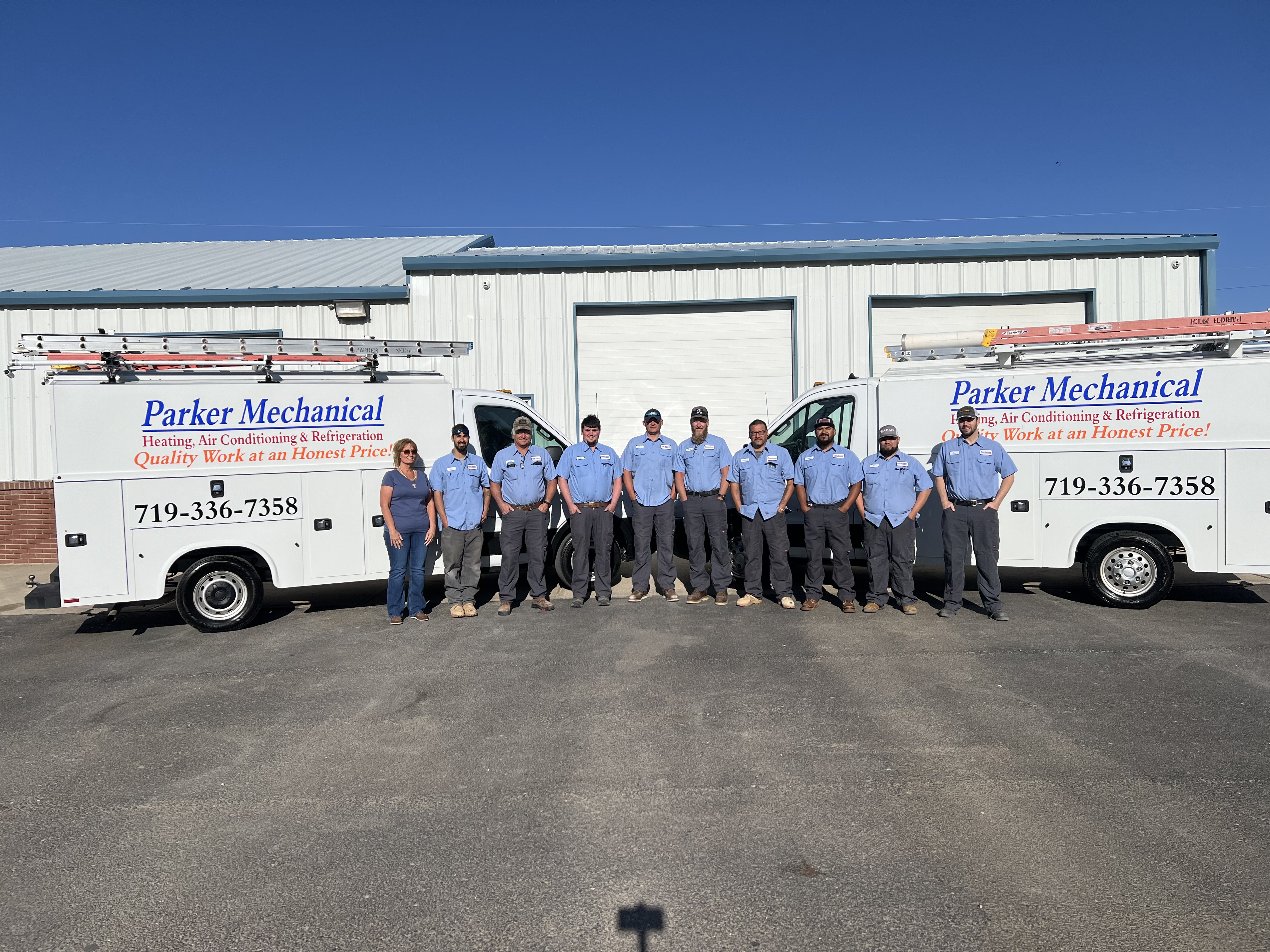
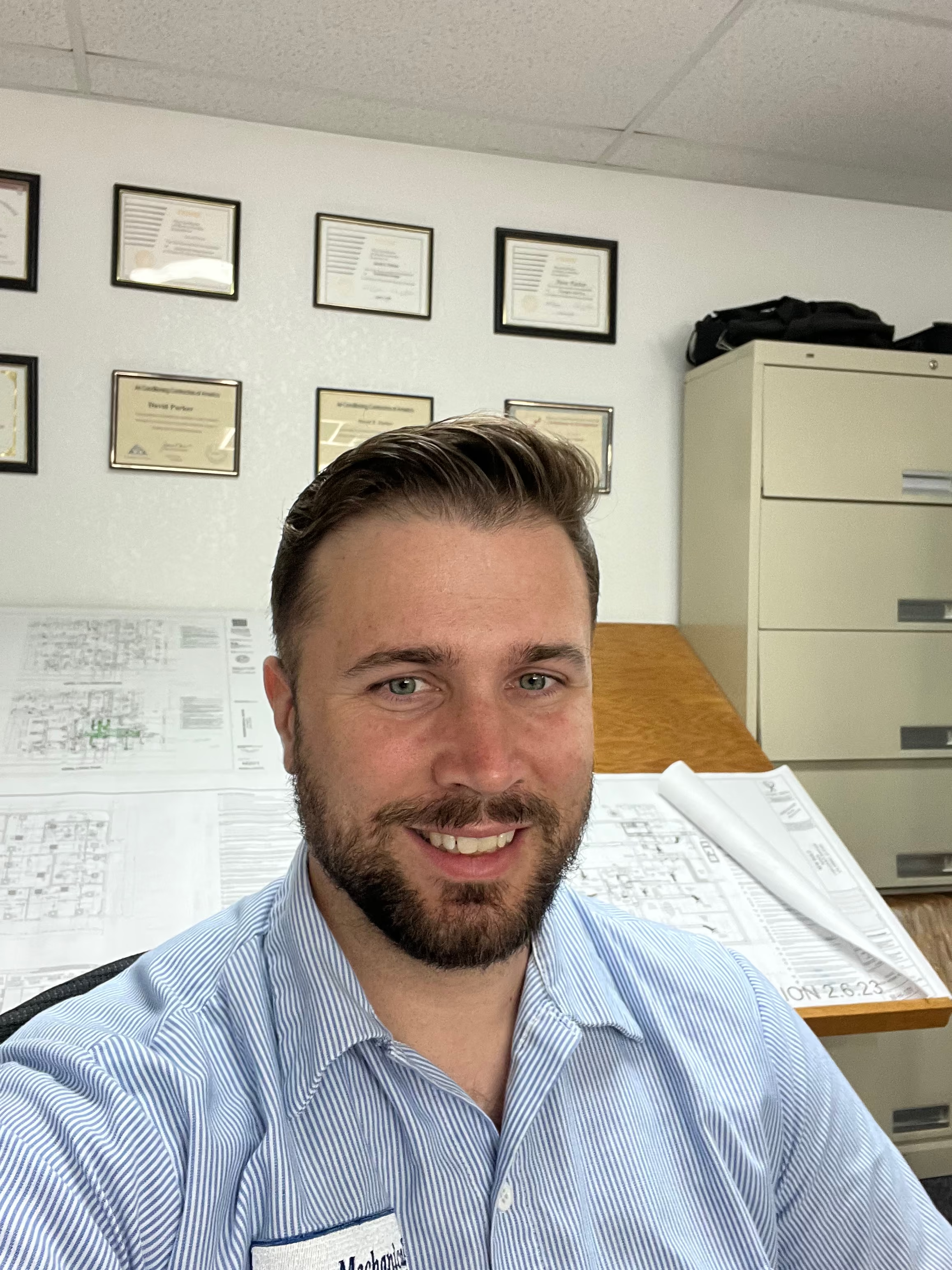
Host: Today's guest thought he was getting a great deal. The H Vac business that Dan Burnside bought generated $800,000 of SDE and Dan acquired it for only 2.1 million. That's under a 3x multiple for a business in a hot category with a hefty amount of earnings for an SBA acquisition. Well, all was not what it seemed with the company. Dan closed on a Friday and the very next day, Saturday, before he's even formally announced the news to the team, he uncovers some questionable activity, a harbinger of the disappointment to come among the challenges Dan dealt the business doing work for which it was not licensed under the table unaccounted for bonuses to employees, key people who were toxic but couldn't be fired, the worst summer for H Vac in 25 years and employees leaving to compete with him. And in the background to all of this was trying to establish himself in an insular community. The business was located in a small rural town, a place where the new guy is seen as an outsider. So if you're someone drawn to so called tertiary markets to buy a business because you perceive them as being less competitive for searchers, listen closely to Dan's experience. It may be true that very small markets are less competitive, but they could also come with their own set of idiosyncrasies. So don't forget to diligence that ultimately, despite Dan's heroic efforts to salvage a terrible situation, the confluence of all these challenges overwhelmed his ownership of the business and he shut it down and filed for personal bankruptcy. He shares what that's like with us too, and we thank him for it. Here he is, Dan Burnside, former owner of Parker Mechanical Webinars Today Thursday, SBA loan broker Heather Anderson returns for a lender Office Hours on add ons and carve Outs Banks take a different approach when underwriting a loan for an add on or a tuck in. This is something you need to understand if you're considering buying additional businesses to grow inorganically. Banks also analyze loans differently for any business that does not have its own tax return, aka a carve out. So today, Thursday, April 30, Heather will explain how lenders assess both of these acquisitions. Special Cases Add Ons and Carve Outs the webinar is Add Ons and Carve Outs how to Get Banks on Board. It is today, Thursday, April 30, noon Eastern. Link to register is right at the top of this episode's show. Notes or on the Acquiring Minds homepage. AcquiringMinds co. Welcome to Acquiring Minds, a podcast about buying businesses. My name is Will Smith. Acquiring an existing business is an awesome opportunity for many entrepreneurs and on this podcast I talk to the people who do it. If you ask owners in the ETA and search community, which insurance broker provides highest quality work, great outcomes and has a practice dedicated to searchers and acquisition entrepreneurs, one name comes up again and again. Oberle. Oberle Risk Strategies has worked with hundreds of searchers over nearly a decade and is in fact led by a two time successful searcher, August Felker, which makes Oberle a specialty insurance brokerage for searchers by a former searcher. And if you've got a business under Loi, Oberle will provide complimentary due diligence on that business's insurance and benefits program. An easy, no risk way to get to know August and the team at Oberle to take advantage. Check out oberly-risk.com that's o b e r l e-risk.com link in the notes. Dan Burnside, welcome to Acquiring Minds. Thank you, Dan. We have been in touch for a couple of years. When we first connected back in 2023, you were just a few months into the business already. At that time it was not looking good. Sadly, things kept going downhill and you did ultimately lose the business. We're going to hear the whole story today. You are a mensch for doing this, so thank you. Let's begin with some background on you, please, Dan.
[5:05] Guest: Yeah, so I spent a lot of my career doing analytics of some sort of, um, and after my mba, I went and decided I wanted to be in operations. I did that for a little while at Amazon and then right before I decided I wanted to buy a business, I was working what I would have considered my dream job. I had a great boss, things were awesome and I really liked what I did. It was really fascinating. I was like getting to implement some at the time, what was like cutting edge analytics. My boss then left and things quickly changed. Um, and I no longer love my job. My boss reached out to me to have me come follow him to the place he went. And I was like, no, no, no, I'm gonna buy a business. You've interviewed him in the past and you've interviewed his roommate in the past. So they did end up going and buying businesses.
Host: This is Yan Roll for people who might remember. Yeah, Yan Y and Yan bought a business in. In Georgia. Go ahead.
[6:01] Guest: Yeah, I started down that path. It took me about seven months to find a business from the time I started to the time I actually closed. In that time I Made four, Lois. Twice I got outbid, and then two other times I ended up pulling out. During due diligence, you just discover things and you're like, oh, that's enough to spook me off. And so I don't know, maybe, maybe I should have just dealt with those things because it's always the devil, you know, versus the devil you don't. But one way or the other, I was gonna go meet the devil. Right.
Host: And Dan, why did you decide to buy business? What was that all about? So you had a bad boss? But, yeah, say more.
Guest: So I'd had like, throughout my career, I've always been like, semi entrepreneurial. Like, I ran a Turo car on the side, which is like Airbnb for cars. My father's an entrepreneur. My grandfather was an entrepreneur. My grandfather on the other side was an entrepreneur. And I had like always kind of thought I was going to do that, but didn't like, know exactly what skill or what way I should go. And I, like, I don't know, I think growing up as a millennial, there's this sense of like, I'm really good at taking tests, I'm really good at taking information and then doing what's ahead of me. And buying a business is very ambiguous. Running a business, being entrepreneur is very ambiguous. And so what I think pushed me over the edge was I met this team of people who sold a service where they like, helped you buy a business and get it up and running and be hands off. And I said, oh, that sounds like a great idea. That's what I think I need to, to pursue this endeavor.
Host: So this service, this is sort of a buy a business with you for you, help you service. And the promise was not only that they'd help you buy a business, but that you would be able to not be the operator. Yes, it would be pretty hands off. That's a, that's a big over promise that we, that, that we don't subscribe to here on, on Acquiring Minds. Go ahead.
Guest: Yeah, pretty, pretty, pretty big red flag. But, you know, you don't know what you don't know. I'd been investing in stock. Those are, those are passively owned businesses. So, so I was like, okay, well, let's, like, let's. I, you know, I had a couple of discovery calls with them. They had like a use case of something they'd considered success. And, and my plan had been I was going to do a roll up. I and Jan talked and we talked about like, oh man, it'd be cool. Like, I Loved working with him. He enjoyed working with me. Like, oh, it'd be cool if eventually we merged and we had a very large roll up of multiple businesses and multiple locations and we could be like a private equity firm. That seemed to make a lot of sense at the time. The bank that I worked for banked private equity and venture capital. And so it was a world that I was like, had been exposed to at least somewhat.
Host: Mm, mm. Okay, okay. But anyway, back to why you bought a business to begin with. You were semi entrepreneurial. Buying a business was better than 0 to 1 because maybe you didn't have an idea all the reasons that everybody already knows and why people are listening to this. Okay. And then you see probably something on social media where there's this service that will really help you, help you get that done. And you do start working with them. And you just told us how many Lois, you submitted, tell us about the business that you did buy and also tell us what work were you doing? You said working in analytics.
[9:24] Guest: Yeah, so. So like, fun little caveat which plays somewhat in the story here. At that time, I was working for this bank no one had ever heard of, called Silicon Valley Bank. And I was a liquidity analyst. So I became like Manager of Business intelligence, I think was what my title was around the time I left. But I was looking at cash inflows and outflows of the bank and looking at these private equity firms, investments. And mostly they were mostly venture capital, not private equally. But it's similar concepts. And so, yeah, I had a view into that. And another part of me too in winning a business is I, you know, in college I ran wires, I installed security systems and home automation. And at that time, that was like cutting edge. And I really liked working with my hands. I thought it was something that I was good at. I worked at Jiffy Lube in high school, and then I worked at CarMax as an apprentice. Later I had some good, like, working with my hands, technical chops. And I was like, oh, you know, if I could make enough money, that would be a fun job to do. And so buying a business seemed to be like a viable path to doing that.
Host: Yeah.
Guest: And so that. That pursued that option and found a Parker Mechanical, which was the business I ended up buying. Great.
Host: Well, we're about to hear about it. But just to be clear, your point about working at Silicon Valley bank as and. And looking at the in and outflows of venture capital clients in general. Right. Is that to say that you were seeing how the, the hit rate of success in startup land is low, Is that what you're saying?
Guest: I think what I was seeing.
Host: Front row seat to that sort of thing, yeah. Front row seat or are you talking about the crash of Silicon Valley bank in general?
Guest: That piece, the timing of the crash of Silicon bank had a lot of, like, pushing me right into buying this. But I think, like, the big thing I drew was working for someone else was, was I was always going to be trading time for money. I wasn't going to be building equity in anything. I wasn't going to build anything that I could hand out on my children. And I saw these firms that were doing that, that like, you know, they got money from like, retirement funds or pension funds or different, different things. They got money from different sources. But those, those owners were building something as they're doing it, and those, those private equity guys were, were doing that. And I was like, oh, you know what? At the time, I was like, oh, those guys aren't that much smarter than me. I could do that. Turns out they are a heck of a lot smarter. But at the time I was like, okay, well, they're essentially buying something that's already cash flowing and then they receive the future cash flows. And in the small business space, the multiples are much smaller than what you would buy a stock for, especially now. And so it's just made a lot of sense as an investment.
[12:15] Host: And you were based in Silicon Valley when you were working in Silicon Valley Bank?
Guest: I lived in Phoenix. I've actually never lived in California, but yeah, when I moved to rural Colorado, everyone assumed I was from California because my previous employer was a Silicon Valley bank. And yeah, if you've ever been to rural, rural America, that's like the second worst place you could be from. The worst being New York. One of those two people meet and assume I have all sorts of preconceived notions if you're from one of those two places. So.
Host: Well, that, that is a little taste of what's to come in terms of the cultural misalignment. Okay, Dan, so now tell us about Parker, where it is, et cetera. Give us the bullet points on the business. And why did you like it.
Guest: So Parker Mechanical is in rural Colorado. And when I say rural Colorado, people are picturing, like, beautiful rolling mountains, but it's actually on the other end of the state. Think of like, western Kansas. That's. I was 30 miles from the Kansas state line, middle of nowhere, flat plains. I was right next to a feedlot, and there are feedlots around me. So it smelled wonderful. And, and then there was also some, some like ag business. So that, that was mostly what went on out there. Parka Mechanical was an H VAC contractor. And the, what I was presented in, in the information was they were mostly residential. I was looking for a residential H VAC business. Living in Phoenix. My thesis was like, the world's only getting hotter. People are gonna, this is gonna be a growing demand area. I should like, I should do this. And also because I had an insight into what private equity was doing. They were buying in large cities and rolling up entire markets. And I was like, I don't wanna compete with those guys. They, I will burn out. So I want to go away from where all of that action is and start in rural communities. I'd never lived in a rural community, but I did some research and thought I knew kind of what that would be about. Spent a lot of time looking. Colorado was kind of convenient. My parents live like three and a half hours away from this business. So we're like, oh, okay, that'll be kind of nice to be closer to family. And so when I went and looked at the business, there were a lot of things I really liked about it. When I went and toured the shop. You know, I've been around my, my, my grandfather owned a driveline shop. I've been around like blue collar businesses. This was like the most immaculate, well kept, clean shop. And it wasn't like they cleaned just before I got there. Like inventory had spots that it was always in. And there's, you know, having worked at Amazon where things are like 5 EST and very clean, I was like, man, this is like immaculate for a small business. And as I like talked with the owner, you know, me and him connected on a bunch of things. He was an Eagle Scout, I was an Eagle Scout. Like he wrestled in high school, I wrestled in high school. We'd like pursued a bunch of similar things in our lives. And so I felt a real connection with him, which was a great job on, from sales on his point. The broker also was one of the best brokers I'd come across. And by this point, you know, I'd been searching for a while. I talked to a lot of brokers, but the broker was really good, just not super salesy, just very straightforward. And this is what it is and this is how it works kind of thing. And I really like that. So I, you know, I, I continued pursuing. I actually had concurrently another business that I was very seriously considering that was closer to me in Arizona. At the same time I was pursuing this and so I was, I got to the point where I had to choose between one or the other. Like they like loi got accepted and the other business came back and showed that they're when they did their like because this was around December when they did their January taxes, their profits had dropped drastically. And he said that's because he always bought inventory at the end of the year to lower his tax burden. But that like lowers it was like it's like $300,000. It was something material. And I was like well that like lowers the value of the business because I mean that's, that's a purchase you would make every year and that's like recurring. So I backed out of that one and I went over to Parker Mechanical and so yeah, looking at Parker Mechanical, I also
[16:36] Host: running payroll, paying your bills, closing your books and producing financials. These are critical tasks every business owner must do or oversee. But spending time on them distracts you from the leadership and growth work you want to do. So let system 6 do it for you. Owned and led by a former Searcher, Chris Williams, System 6 is a leading outsourced finance team for hundreds of SMBs, including over 50 searcher acquired businesses. Chris, Tim and the System 6 team understand firsthand the challenges, the opportunities of jumping into a business as its new owner. So whether you own your business already or have one under LOI, talk to System 6 about how they can give you time back and improve your financial operations. Mention acquiring minds and they'll provide a free review of your books and financial ops. A $500 value. Check out system6.com, link in the show notes or email helloystem6.com well tell us Dan, about the size of the business, both in terms of numbers employees. Give us a picture.
Guest: So the previous year they did about 2.1 million in revenue, about 800k in EBITDA. They had, I believe it was 12 employees at the time. My like threshold had been 10 employees. I wouldn't buy anything smaller than 10 employees because my thought was if I'm going to grow someone's going to have to train those employees. It can't be me. So I need at least 10. And then you know, most, I think most acquisitions you probably know this better than I would but I think most of the time about you can expect about half the employees to churn and so that's what I was anticipating. I assumed about half of them would disappear and I'd have to like rehire and train half. And I figured five would be A safe number that I could survive with.
[18:34] Host: I've actually never heard that, Dan, that rule of thumb in a pretty small business, half will churn. You're. I mean, I don't think you're. I don't think that's the average. I think that, that, that. But that's not uncommon after a certain amount of time. Not on week one, but maybe, you know, after the first couple of years, you look at the staff and it's like, wow, half of these people are. Since I've joined, since I became owner.
Guest: I don't know if that's from, like, small businesses, but early in my career, I worked for US Airways when they merged with American, and that was the stat they told us was that about half of us wouldn't be there a year after merge, which turned out to be about true.
Host: Yeah. Yep. Okay, Dan. And so. So an $800,000 SDE H vac business that is a coveted asset. Although to your point, you're in a. Not even a secondary market or a tertiary market. This is a very rural market. Hard to get to three hours from an airport. Is that. Do I recall that.
Guest: And that's three hours from like, Colorado Springs Airport. It's like three and a half hours to Denver.
Host: Yeah. Yeah.
Guest: So.
Host: So pretty hard to access place. And, and you know, by the way, Dan, your story actually came up in a webinar last week where somebody was asking about the strategy of buying in tertiary markets because there's less. Less competition there. And I said that that is a strategy that people use. And there is a lot of logic to it, but that, and that generally it's fine if you're somebody, if you're a searcher who is prepared to, you know, if you're from the city, if you're prepared to have a big lifestyle change, as you were. But then I, I mentioned your story as a cautionary tale that I guess in some cases we're going to really explore this. In some cases, that cultural divide could be unbreachable. So we're gonna, we're gonna get into that. But anyway, so this looks like pretty appealing on paper, but how did say more, though, about. About the prospect of moving to Lamar, Colorado.
Guest: Yep.
Host: So from Phoenix. So what, you know, the implications for your family. It's big lifestyle choice here. So what did you think about that?
Guest: Yeah, in, in retrospect, I really regret that that was very hard on my children. So I, I had a daughter that was. That entered kindergarten. And we actually, due to the timing of Silicon Valley Bank's Collapse. That was the day I was supposed to close on a house in Lamar. My loan officer called me and said, hey, you work for Silicon Valley bank, right? And I was like, well yeah. And he's like, yeah, no, we can't close on your home. And I was like supposed to close that day to move there. So I was like, okay. Well that like held up because I had to have a local address there that held up the acquisition a little longer. So I then ended up renting in a town that was like 20 minutes away. When my family of four people moved there, we increased the town population by 1%. It was a 400 person town and that's where my daughter started kindergarten. And it was really hard on my daughter and my son was preschool age at that time. And my, my wife, you know, we, we'd moved around, we'd been members of religious communities everywhere and that's usually how we'd made friends. And we assumed, you know, it'll be the same there. And that was not how things played out. And it ended up being like super lonely for her. She was just sitting in this like rented duplex in the middle of nowhere and we didn't have a yard and most of the day she was just kind of confined to the home. There wasn't like places to go take the kids or things to go do. And I always thought like, oh, rural America, like I can play outside. I like outside. What I didn't understand was like, yeah, when I go outdoors, I like go to a national park there, all of its private farmland. It's like you can just go play on some farmer's land. So it ended up being very difficult on the family as far as like what they could actually do. And as my daughter started school there, it just, it was clear that like we were not going to fit in. She was probably the only child who wasn't related to at least one other child in that school. Most of those parents worked as like ag workers on farms that were nearby or related businesses. And I was also the only person in town that had like out of state plates when I came there. And the only person in town that was driving a Honda. Everyone else had, you know, rural trucks. So I stood out pretty quickly in the rural setting there. There were things I think I like, I probably could have like done a little more to have pre prepared that. But like, you know, when you're closing on a business and you're moving cross country and you're like trying to situate your family things that are like maybe social Signals to people weren't the top of my mind, and that did no benefit to me.
[23:18] Host: Yeah, well. And I'm not even sure what you would have done. I mean, you want to be true to yourself. So you weren't necessarily gonna sell your Honda and buy a pickup, or were you?
Guest: Well, I. I did.
Host: You eventually did.
Guest: Well, I ended up. I needed to pick up for work, so I drove my work truck once I, like, acquired the business. But we moved there about a month before we closed. It was a very difficult time to close. SBA was moving really slow. And my broker mentioned that was like every single one of his deals. The SBA was just a little slower at that time period. And that is what it is.
Host: And so what were the terms of your acquisition?
Guest: So I. I was supposed to have the owner stay on for three months to kind of train me. We were going to have I. Because the bank was willing to fund it then. This was really stupid in my part. In retrospect. I did a, like, all payout. He didn't carry any equity. Um, So I funded 10% and then he walked away with a fat paycheck. He retained the building, and I rented the building for him at was like a really decent rate. So I, I was kind of there. And like, you know, in retrospect, I've. I have a friend that's looking at acquiring right now. I was talking to, and I said, I. If I could have held some. Something over him, that would have been really helpful because like, two week or maybe a week before we closed, he said he was no longer going to stay around three months. I had two weeks. But at that point I'd moved cross country. I'd quit my job and sold my house. And I was pretty all in. Now I should have been like, oh, no, I'll quit and walk away then, but. But I didn't. I was like, well, that sucks. And I tried to go back and forth, but he was really solid on that. And he's like, ah, my guys are fine. They don't, like, they don't need me. I don't want to be here. Later on, I learned there was, like, reason for that. But his. What he communicated was, summers are really busy, you're slammed, you're working super long days. And he didn't want to do that again. And if that had been the case of my first summer, I probably would have been fine. But that was not how things played out.
[25:26] Host: Okay, and what was the. What did you buy it for? What was the multiple. Etc.
Guest: So I bought it for a multiple lower than three. So I paid all. All in. The purchase price was $2.1 million. I then had a $400,000 revolver that I ended up tapping over the course of that as well. And I got, like. It was, like, close to 115 working capital.
Host: So on paper, a good deal.
Guest: Yeah, on paper, the deal was amazing.
Host: Yeah. Okay, let's get into your ownership. So what happens first?
Guest: So we close on, like, a Friday, and that weekend, I go into the office for the first time and start digging into things. And, like, I haven't even had day one. This is a Saturday. I'm there in the office, and I'm going through, you know, trying. Trying to get acquainted with. Yeah. These price books and trying to learn everything I can about this. And I noticed that there's some. Some. He has a board that has all these jobs on it that they're going to go to the next day. And. And, you know, a lot of them say AC or heater next to them, and there are a lot that had, like, water heater. And I was like, oh, that's weird. Like, I happen to know that you need a plumbing license to do that, and no one here has a plumbing license. I was like, one of his suggestions to grow the business was to hire a plumber. And so I was like, that's weird. They're doing that. So I approached him about it later, and he's like, oh, yeah. You know, in Colorado, we used to be able to do plumbing, but, like, two years ago, the law changed, but no one checked, so we just still do it. And so, like, right away, I'm like. Like, I'm. What's the penalty for that? Is this small fine? Like, oh, it turns out it can actually be jail time. So I was like, okay, well, I'm not gonna, like, play with doing that. But because he had kept his business on paper, and I think because my background, I'd, like, been so inclined to work in analytics, I was like, well, like, what is the impact of that? Like, how much of your business is this? And he's like, oh, it's small. Maybe 1%. Like, once I actually was able to, like, go through and dig and figure things out, it turns out it was about 15% of revenue came from work that wasn't legal to actually be performed. And I found that before I even, like, started running the business, but after I'd closed, so I was like, well, crap. Okay. But, you know,
[27:46] Host: and Dan, it. What? Like, he kind of reneges on the three months that he was Going to give you this water heater thing. 15 of the revenue. Now you have to let go when, like, the chemistry that you had with him, the rapport that you had with him, is that now out the window? Is he, Are you, Do you guys have a kind of semi hostile relationship by now?
Guest: You know, I'm, like, really nice to him, and he's really dismissive of me. I should have turned into a dick right away. But I, I was, I, I, I thought he was going to help me. And he was like, oh, yeah, I'll still be available for phone support. You know, the. He still said he'd be available for phone support for a year. And, like, sometimes I did have to call him and figure stuff out. Another thing I did not realize about rural America is people. And, and this may be true in some pockets of, like, metropolitan America, too. But people, like, relationships matter a lot more than the business they're buying from. They want to know the owner. People came in and physically paid in person so they could meet me, which I thought was weird. Like, if I had H vac dent in my house, do it, and then hopefully I never hear from you again. Right. Like, that was how I always thought about it. And I'm gonna look up online, see who has good ratings, and go, that person. That is not how they operated. So my relationship with him had to look good because if I soured that relationship, I was dead in the water. Which was why I didn't go on your podcast initially, is I didn't have many positive things to say, and it wasn't gonna, wasn't gonna turn out well for me. So I, I strategically bit my tongue till it bled.
Host: Okay, all right. And was that what you just described? Was that your relationship with him for the duration, that you kept being a nice guy because you, you needed that continuity and, and he kept kind of, yeah, being dismissive, as you put it.
Guest: Yeah, I, But I didn't, I didn't just, like, roll over and take it. I called my lawyer right away, and I asked him, like, hey, like, what can I, Like, I want to get out of this. Like, this, this was a bad idea. I need to get out.
Host: Oh, really? Did you really?
Guest: I, I called my lawyer, and he's like, that's not gonna happen. Like, you're, like, you may be able to get if you can. And at that time, I didn't know that it was 50. It's hard to know what the scale was, but, like, like, flags are going off. This is, this is bad. Like, like, I've Been lied to and there's probably more things which turns out there were, but what am I going to do about this? So I called my lawyer and he said, well, here's like the reality of the situation. You could sue for a portion of the purchase price that they deem that to, to have impacted. That's possible. But you're going to be in court for a couple years doing that and it's going to be, you know, maybe a couple hundred thousand bucks. And at that time, like I didn't know if it was worth doing that or not. So I had that initial consultative call with my lawyer, like with not even having owned the business for very long at all. Like I, I, I, I.
[30:40] Host: And was that all, was that all in relation to the 15% lost revenue because of the water heaters? Because they can't, you had to walk away from plumbing business or was there something more that precipitated your call to your lawyer?
Guest: Well, so, so we'll fast forward through the first weekend. I, because I probably didn't call my lawyer till like after a week. Day one I, I meet the team, okay? And the, you know, I, I shake everyone's hand and I, I out of the bat, gave them all like 10% raises. Just as like, hey, I'm the new boss. Things, you're, things are going to be better with me. I also gave them 401ks, which they didn't have before. And I also eventually set up healthcare for them. That wasn't like day one, that actually a minute to figure out. But I set these things up for them. And they all had like such gloomy looks on their faces. They all had personal relationships with Dave. But you know, as I'm going around shaking their hands, one of the, one of the guys, he's like probably the youngest guy there, he's like 19, shakes my hand, he's like, hey, I just want to let you know, I'm like, I applied to another job. I'm g be out of here in like two weeks. And I was like, okay, quitting the day I meet you. All right. But I thought that was weird because his father worked there and his father was off the day that I like acquired and then his father was off that Monday and Tuesday and then came in that Wednesday and like avoided me. Wouldn't talk to me, wouldn't say anything, which was weird. I like kept trying to like be in the same. I like, you know, you have like a stand up in the meeting and in the morning and then everyone goes out to jobs like, he came in late to the standup and then went straight to jobs. And I was like, okay, that's kind of weird. And I was asking. And then I. So I showed up on one of the jobs he was on and got up on the roof and went and talked to him and was like, oh, hey, how's it going? His name was John. You know, he shook his hand. I don't know. Do we have to, like, change the names to protect the guilty?
Host: But anyways, no, but maybe don't use last names. Okay.
Guest: All right.
Host: But Dan, you. You basically kind of track him down.
Guest: Yeah. On a job and, you know, start talking to him and he. He told me. He's like, oh, yeah, I'm. I guess you met my son. I'm going to leave in two weeks, too. I'm starting my own business. I was like, oh, okay. He's like. I was like, oh, what are you gonna do? And the owner had mentioned that he may be retiring to start an upholstery company that he, like, did upholstery. And he's like, oh, you know, he's not that important of employee. He only works a couple days a week. Well, the reason he only worked a couple days a week was because he was doing H vac for his own company that he was building. And the owner had gradually let him siphon off customers over the years. Some of the, like, really large customers in the rural area, like the Sonic and the McDonald's, and they didn't have a good CRM, so I couldn't track and see, like, what jobs, who this guy knew or what the thing was. But, you know, I. I was like, crap. But I didn't want to, like, make it a bad relationship with this guy. So I talked about, like, hey, maybe like, there's a world where, like, if you get slow, I could sub work to you. I, you know, I have like the, like, lead generation engine. Essentially, like, people call my number. He's like, oh, yeah, that'd be good. You know, talk to him a little bit. But like, okay, so first week, my business splits and that guy leaves. And he. I later found out, like, when I went through and did the math and I did a bunch of what's called OCR to read a bunch of old invoices, put them, parsed out the data, and found out that guy walked away with about a third of the profits of the business. When he left, he also took with him the hospital. And the reason why he walked away with such high portion of profitability was because all the high margin jobs were refrigeration. Those are specialized. And he was one of two people who knew how to do that. Now, when I bought the business, the owner said everyone was trained, they could do everything. When I talked to the guys and I went on jobs with them, that was clearly not the case. This guy was one of the only ones that could do refrigeration. And that really burnt a lot of my revenue stream. Year one, unbeknownst to me, the same week I bought, and this was, like, unreal. This had nothing to do with me buying. But there was one other competitor in town who had been the former owner's brother. That guy got in a fight with his guys and they split. And so over the course of a week, I went from having one large competitor, well, one competitor probably, like, I don't know, less than half the size of me, to having three competitors in the market. So competition tripled week one, and they. Eventually that guy had another person split, and then another person split. And so the, the market became a lot more fragmented, and I was competing with a lot more people who were, you know, they were H vac guys. They were charging as little as they could. And so it. If I was going to compete, I had some serious margin compression. I was going to deal with.
[35:19] Host: Gosh, Dan. So this is an example of, you know, we hear that the risk in many small businesses, trades businesses, is that. Is that, yeah, you'll lose a guy who will just start competing with you. And that does happen. We do hear the horror stories. But this is just like this extreme case where if the stars align in a bad way, you literally went from two competitors in town, you and somebody else, to four, to six, to four new ones, or to three new ones,
Guest: four new ones within, to four, four new ones.
Host: And, and, and it just. All these people could just hang a shingle and get to work and start taking leads in a tiny market. So it's not like you're in Phoenix where there's enough work to go around. This is a small pie that now six entities are all beating each other up to, to fight over.
[36:06] Guest: Yeah. And these guys are only competing with their, like, their need to support themselves. They don't have a bank loan they're trying to service. Right, right. So what I was trying to avoid with private equity, I actually think I put myself in a worse situation with, with those guys, I think.
Host: Sorry, what do you mean there?
Guest: Well, so I didn't want to compete with private equity because they could, like, last me out because they have deep Pocket. These guys didn't have pockets. They, they didn't care about that. It didn't matter. And they could underbid me like below what my cost to do business was.
Host: Well, and, and, and actually, if I may, that was, that was something that in the Mind's Capital podcast, our sister podcast, which is more focused on private equity. My co host and business partner in that, Nicholas James, who's bought H Vac businesses, and our guest who also bought H Vac businesses. We're talking H Vac. And that very, the very thing that you were experiencing was one of the things that they said that is a weakness to this entire category. The Chuck and A trucks can always compete with you. They, they always anchor the market at a, you know, at a low because they're willing, because they don't have the infrastructure or in the case of a business buyer, the debt service, the, the number of employees, etc. They're just expense structure is just themselves. And so they'll, they're, they'll happily do the work for less. And there's just. If they have the expertise, that's really the only moat to get in. But if they just, if they already have the expertise to go out and be technicians, they can literally turn on a business tomorrow and be competing with you and, and pulling down the prices you can charge. So this is just a, an inescapable structure of this industry.
Guest: Well, and to what exacerbated this problem is that in a rural area, this guy has known these people his entire life that are his customers. I'm someone new. It doesn't matter how much marketing I spend, it doesn't matter how many hands I shake. This guy's kids played sports with those people's kids when they were young and now they've grown up. And so it's like I'm not going to overcome those relationships that he has. It's not like I tried. It was not, it's not a like winnable path. He also, so he tried to get all of my employees to follow him. He reached out to all my employees and offered to pay them all more. Conclusion was that guy was a really big dick and no one wanted to go work for him. Like one employee left and then quit that guy like a month later. So that at least, at least there was one thing that went in my favor. However, when the only other guy who did commercial refrigeration knew he was the only other guy that did commercial refrigeration.
Host: Yeah, exactly. Oh boy.
Guest: So he, he, he asked me for a 25 raise, which, you know what I did, I, I was like, okay with that, because the reality was I didn't. I, I probably could have said no, and he probably still would have stayed, but I wanted to build a relationship with this guy. This guy was now critical to my business. And this guy happened to be the former owner's son. So that was really weird. And initially, when I talked to the former owner, the former owner had made some comments about his son's inability to run a business. And his son, his son didn't want to run the business. At least that's what he told me at the time. And he didn't want to do that. And he was happy to have me do the office. However, that 100% was not the case as soon as I got in there and he threw a fit over anything I tried to do. So it was a. It made for a very difficult cultural couple years. And so it. I also found out, like, over the course of the first week that people weren't too thrilled about the raise I got gave them. And the reason was that some of that, like, large 800K EBITDA I've been looking at went to pay employees under the table in the form of cash payments that the owner drew from his account and paid them cash under the table. And they're like, well, are we still going to get that?
[40:02] Host: Which was, of course, completely unreported.
Guest: Unreported. And I also had no way to know how much he paid them. And so I'm like, I'm not going to ask, like, oh, how much did he pay you? And they'd be like, oh, $100,000. Like, okay, well, crap, how much did he actually pay them? So I went through, I was able to, like, solve some things. And I, and like, I, I built what I think is a decent relationship. Was. Well, the office girls are another story. Talk about that later. But one of the office girls, eventually, I, I was able to pull out kind of what would be fair amounts to pay them bonuses. And then that got paid in a payroll. They were pissed because they got taxed on it. So it still wasn't as much as they brought home before. But I, I couldn't, I could not pay them as much as, like, he did after I. And this is like, after all the other things have occurred. So that ended up being about 15 of EBITDA, maybe up to 25 that I took a hit there. So if you're keeping track, as of day one, without doing anything, I'm already down roughly 55 profit of the records that were on paper. And I knew, I knew I was going to be in for a rough, rough little bit here. And I eventually, like, I didn't know that number at the time, but I was gosh darn determined to figure it out. So I eventually, you know, figured all that out and I, I, you know, like I said, I talked to the lawyer. The other thing too was like the business had to stay profitable if I was going to do a suit during that time, which I was like, I don't. And he said it's going to be about the equivalent of full time job doing a lawsuit. So I'm like, okay, well, running a brand new business that's fledgling, like with all of these complications right away and trying to do lawsuit, it's not going to function well.
Host: And also all, there would be all the political ramifications of, for example, his son quitting probably if you sued his dad.
Guest: Yeah, oh yeah, that would have happened that day. So that was a.
Host: So wait, wait, Dan. So 50, what did you say? 55% of EBITDA right off the top? Yep. Of the 800 number or of your EBITDA. Okay, but if you're, you're generally, rule of thumb, the SBA loan service debt service is about half of EBITDA. So that's half of. That's half. And then the 55% that you just said you lost is the other half. So are you down to zero in earnings?
[42:21] Guest: I got a deal though, remember, I bought it for less than four. So, so that, that was good. I guess that worked out or just prolonged my inevitable demise.
Host: One of the two just made the hell last longer.
Guest: Okay, so, so at this point, one of my assumptions that I thought I was going to do, and I think you hear, you probably talk to so many people that are going to do this, but I was like, I'm going to digitize the business. Everything is on paper. And then I'm going to scale and expand geographically to neighboring, neighboring towns. And which I did do to some degree, but holy cow, that was way harder than I thought.
Host: Um, and one, which digitization or geographic expansion?
Guest: A digitization. So one thing I didn't think about, like rural towns don't have like high speed Internet that that wasn't available. I got Starlink and I got VoIP and the latency in Starlink made it so that no one could hear me on my calls. So I run my phones for a couple of days until I could get them back up running and get with the local phone carrier. And then my guys, a lot of the areas we covered didn't have cell coverage service, which, I mean, I don't know. I, I hadn't driven anywhere in America in a long time that I had that. And I do like cross country road trips quite a bit. So I was like, I guess I'll have to drive off the interstate sometime. I also had some of what I considered to be one some of the most ridiculous resistance from employees on anything technology related. They had a, a time clock that they like punched in a manual piece of paper and then the secretary added it all up each week. Took her about four hours to do payroll. And I was like, this is ridiculous. Like, why don't we just, there's an app we can download on our phones and then it sends it to her and we know the time and then she can just like save four hours of her time. The amount of fight I got on that guys like threatened to quit. They, some guys walked out, they like stormed off and threw stuff on the ground. It was ridiculous for like just changing what you clock in. It's not like changing how you're paid.
Host: Dan, Dan, let's linger on this because this is a classic pattern and we're told that any change, but technology change in particular can be, it can be surprisingly shockingly resisted.
Guest: Yeah.
Host: And, and so just, and it, and it, it's, it is kind of mysterious because this is such a good example because it seems like such a minor change and to everyone's benefit, you know, but as we know, humans don't like change. But so what I want to ask you is like just having gone through that experience and seeing this like eruption, this protest, do you understand, like help, help listeners understand what that's about? Do you understand what that's about?
Guest: I think, you know, for me, one of, one of the, the things that I was woefully unprepared for is most of my career in corporate America, you do things to provide return to shareholders. When you're the only shareholder. It's really hard to justify any sort of action to other people that may change their life. Like this is, I can't go tell them this will provide better return to shareholders, which is me like the, the level of fight I get on that I can say this is good for the business, this is what the business needs. This makes us sustainable. I didn't let them in on like, hey, we're down 55% EBITDA and like the other 50 is going to, to the bank like this. We're going to Close. If we don't do things like this. Um, I, I guess I could have gone that route, but I don't know that it would have been helpful. Um, I think one of the. You, you have to get people's buy in when you're doing any sort of technology change. And I think that the way to do it is to talk to people individually. I made the huge mistake of that. I like made an announcement in a standup and then I just became the punching bag for the like there's two really whiny people and those were the ones that like through big fit. But the, you know, getting people.
[46:10] Host: So it's, it's that part of the psychology is that I guess I'm pressing because I don't. I, I want to understand it beyond just like people don't like change which. And maybe that is, maybe that is the answer. But I'm just. What I also just think I heard you said, is that like a change like this they all perceive as benefiting just you.
Guest: Yep.
Host: So it's just like, it's just like it seems like you as new owner are disrupting their lives to line your pockets and it's just kind of this selfish move by you. And so is that kind of how it lands, you think?
Guest: That is how I think everything landed. I think also there was like a like preconceived distrust and I, I did everything I could to try and overcome that. I spent time riding around with them in trucks, getting to know them, getting to know their kids. I threw end of summer party and like a holiday party. I tried to really connect with them. And I think I connected pretty well with all but two of them. But those two were the loudest, most vocal and they were the only ones who had certain skills I needed. One of them was the former owner's son who was the only one who could do refrigeration. And the other one was the, the new construction foreman which turned out to be the only like profitable line of business I had. And if I, I didn't have guys that I could replace them with and in a metro area, I would have just fired them and got new guys like that. They would have been gone the first week. But I knew if I fired them that like, okay, I can't go redo that business that, that I lost. Like, I, I don't know how to do that. And I also don't have the connections in this town. So it doesn't do me any good long run. And if I fire them, like lost revenue at this point is, is going to destroy me. So I, I, I feel like I had to suck it up and keep them, which sucked. It was very unpleasant for me and it made for like a not great cultural situation for the other guys in the group. And my plan was I was like, well you know what, these guys know how to do this. But there's these other guys that like me. They can get trained up and then I can just fire these guys, these two guys once the other guys get trained up. And you know, maybe if I was lasted two more years I could have done that. And I eventually did fire them, but that was when I knew I was already going out anyways.
[48:33] Host: Buying a small business sounds simple. Find a company, due diligence, get a loan, close. In reality you wear every hat just to get the deal done. And then the moment you close you have to throw those deal making skills out the window and learn how to operate. You shouldn't have to rebuild this infrastructure from scratch and you definitely shouldn't do it alone. That's why Walker Deibel created Acquisition Lab which started as an accelerator, has expanded into a complete ecosystem for acquisition entrepreneurs. Over six years, the lab's 1200 members have acquired over a billion dollars in businesses. The lab puts everything under one roof. An active community, deal reviews, post close services and a dedicated fund helping experienced operators buy larger businesses. If you're serious about buying a business, come see why lab members have a 40% success rate. Learn more in the show notes or at acquisitionlab.com/acquiring minds. Dan, going back to this theme of the kind of rural you not being received, welcomed by the local community, it sounds like you did eventually make inroads with everybody but these two guys. And these two guys might have just been prima donna problematic types that you could have found that you might have encountered anywhere. So, but so do you, do you do think it was about the fact that you were this outsider city slicker guy or, or maybe was it just that that you just had a really small team and two bad apples can kind of ruin everything?
Guest: I, you know, I think it, I think it probably was the two bad apples I did a lot to embed with the community outside of this and to show those two guys as well that like hey, I'm like committed to this for the long haul. I, I joined a local church, I joined the economic community development board and was like a super active member. I went to meetings. I, I don't think they're like every other week. And there were some really good people I met through this process who were really trying to make that community better. I volunteered at the local community college on the trade board that actually did me nothing. They went with another contractor when they had a remodel that ticked me off. I volunteered on the airport board. They never actually had meetings. And I donated to local high schools and. And those local high schools still went with other people over me to do, like, work when they had it. And so, like, I tried to do everything I could to really get in. I attended chamber of commerce meetings, but it turns out, like, all the chamber of commerce in that town really did was, like, plan parties using government funds. But I really tried to, like, bet in. Also, like, socially is super freaking isolating. Like, I wanted to make some friends, man. So, you know, I tried really hard to get in. And I think. I think I was, like, okay with, you know, I think a lot of the guys on the team, those who had had other bosses, appreciated me as a boss. Those two guys who were really difficult had only ever worked for the previous owner. And I. I just don't think they had any, like, idea of how businesses generally work. Like, the one way they'd done things was the only way it could ever be done. So.
[52:10] Host: Yeah, well, you're. And you heard the father say of the son that, like, he's not. What did he say? He's not equipped to run a business or doesn't want to. And maybe this is he. This. That was like a veiled way of. Of calling out the behavior that you are now having to deal with.
Guest: Yeah, he. He kind of made it sound like his son was on the spectrum. But after, like, getting to know his son real well, I don't think that's true at all, but.
Host: I see.
Guest: But he kind of made it sound that way. So I was like, okay, well, whatever. So, you know, I go through this and. And we close. I closed in April. And I'm, like, getting ready to come up on summer season and to make things really great for me that, you know, my thesis had been like, the world's getting hotter. Well, that year when La Nina hit, it forced the jet stream down. And that was actually the coolest summer that region had seen in almost 25 years. And we didn't have any 100 degree days until September of that day, of which we only had three. And normally this. This region has multiple hundred degree days starting in May. And wow, AC equipment doesn't fail unless it's running. So people, like, demand just shrunk because people didn't need us. Like.
Host: Yeah.
Guest: And that's not. It also didn't help the former owner because he didn't stay on dinner to introduce me to anyone. So I didn't have connections with things that were going on. I had to, like, go figure that out. I spoke with my suppliers about this, and my suppliers said, like, that was the hardest summer they had seen in years.
Host: Oh, man.
Guest: And they were telling me some of my. Some of, like, the competitor, or I guess not my competitors, but like, peer companies in Denver and other regions of Colorado were going out of business as a result. So I was like, okay, well, like, I got a kind of a bad sweep. I also. This was, like, stupidness on my part. I didn't understand due diligence well enough to do this correctly. But a lot of the numbers from that, like, 800k EBITDA came from COVID money that was given to schools to replace things on schools. He did a lot of work, and that. That expired right as I bought the business. So I. I just saw he did a lot of work for schools. I didn't know how to dig into what kind of work that was and where those funds came from.
[54:25] Host: And. And how far back did you look at his revenues?
Guest: Three years. Three years. But I bought in 2022, 2023, which those had been great years for home improvements. So the last three years he had looked really good. Um, so I also, really quickly that summer saw that, like, the residential service side of the business actually barely made any money for, like, how many technicians we had doing it. They. We had such small margins on it, which is the opposite of how it is elsewhere. But because of the competition, I couldn't raise prices and there wasn't much I could do. So I was like, if, if this is going to work, I have to do something. So I put on my big boy pants and I went and I met local GCs in the area and said, like, look, like the. The service calls, if they're not coming in, like, I. I don't know what I can do to control that advertising doesn't really matter here. I had, like, a radio ad because people surprisingly do listen to the radio there. That blew my mind. But I went and met gcs and that ended up being the most valuable thing I could have done. I. I hit it off really well with this one gc. He was a great guy and we started partnering together. I had a job that the previous owner had bid that I went and met him on, and right away he sniffed out, you're not from here and you're not from ac, but you're going to be my AC guy. And we hit it off really well. And I think what he liked about me and the value I brought that other contractors couldn't was I could be Johnny on the spot. I could show up when he asked for something, I could research it, I could figure it out and I could make it happen. The first job we did with him, we did a commercial kitchen. And he'd never done one of those before and he didn't know that the duct for commercial kitchen equipment is multiples more expensive than regular duct. And so like, you know, I researched it, we made a deal and that ended up being a really strong relationship that got me through the next couple years. I also, I partnered with a electrician. There was another just really great guy. And it's not like we had a lot of business for each other, but when we did, it was really nice. You know, he would go service something and they would need their AC looked at and he'd call me or I would set up a new system and need to run electrical wires to it and I'd call him. And that worked out really well. Me and him ended up doing. We built an Arby's together and it was, it was also just really nice to work with some like level headed guys and they were in a town over for me, about an hour away. But I'd probably go see them, you know, every other week and maybe it wasn't that much, but we'd see each other on job sites and do stuff together. So that was, that was really nice and that was part of me trying to get into the community when I like look back at what that contributed economically to the business and it accounted for about a third of my revenue the second year between those two relationships.
[57:22] Host: And so, and Dan, can we extrapolate from that, that that's a technique others, other people listening should, should explore figuring out kind of referral? I mean it's not, it's kind of an. I don't mean to belittle it, but it's kind of an obvious thing to develop kind of referral relationships. But I actually don't hear many people talk about pursuing it aggressively and, and it was so fruitful for you. Do you think it's, do you think it's a technique listeners should pursue themselves in their own trades businesses?
Guest: 100%. You know, if I, if there had been more opportunity to build with them, I would have switched entirely to like building. And like I think anyone who acquires an H VAC business, it Is it is more work to figure out how to do commercial. Commercial is a lot harder, but it's, it's better work. And if there was enough demand, I probably would have done that with other GCs. The thing was, this was the only like legitimate GC in the area. He did all the jobs that were state funded. If they didn't go with some contractor from Denver, it was all this guy. And so, you know, we like built some mental hospital housing together. We built hospital. I actually designed a hospital AC system which probably should have been a mechanical engineer doing that. But school, I figured it out and did it. Did a bunch of really good stuff with him.
Host: Dan, hold your thought. Because you keep almost saying something and then I interrupt with a question. So they're probably good things you were going to say, but I don't want to get beyond this point, which is you designed it yourself. What? So. So talk to us about the fact that you were completely new to H vac and what it was like to actually have to learn the trade, which it sounds like you learned enough to be not only dangerous but actually to do some jobs. So talk to that.
Guest: So there's an interesting nuance that like I specifically wanted to buy somewhere where I could get away without having to rely on a key man for licensing. Turned out that didn't matter anyways because I was relying on these two key men I already mentioned. But so Colorado, it's done by municipality instead of by state. There's only like I think two states that do that. Colorado is one of the two. The other 48 states in the US it's a state licensing board. And so I went. This is also why my competitors were able to spin up so fast against me. They didn't have any licensing that they had to worry about. They just went and did you have to get your EPA license? But if you're going to do these commercial construction jobs that are funded by the state, you have to be like a mechanical contractor. Most people, it takes like five years to go through and take the test and do that. I did it in 18 months. I got that so I could bid on jobs anywhere in the state. So that opened me up to be able to bid outside of my region to do long term expansion.
[1:00:04] Host: But wait, so I'm sorry, what did you do in a year and a half? You got licensed as a mechanical engineer?
Guest: Yeah, so I'm a, A master, master mechanical contractor. I'm not a mechanical engineer, but I got my like master mechanical contractor license.
Host: Does that mean you know how to do the work or that at least the state thinks so.
Guest: It. Yeah, it means I know enough to read the plans and bid the jobs and direct the work and be sure it's, like, done appropriately. It means that I will pass city inspections or whatever municipalities inspecting it, that it will be to code and.
Host: Do you feel that confidence in yourself? Did you feel that confidence in yourself? Obviously, you were doing jobs, so I hope you did.
Guest: You know, I was a little shaky until I went and I saw what my competitors did, and I was like, oh, good grief, they've been doing this 20 years. Are you kidding me? Like, I grew confidence pretty quick once I saw the work that we did versus what our competitors were doing. I physically didn't do the work. Like, sometimes I'd tag along and ask the foreman to put me to work, and I'd do that. But I. I know enough that I can bid jobs pretty well and. And compete in that area. And so that was. That was like. That was what I saw. I was like, if it was going to survive, that was a vector of growth. The other thing that I did, because, you know, like, okay, I was gonna have to make up a lot of lost revenue here. I went out and I heard that there was a program where the Fed. Well, it was the state government would pay for people's furnaces to be replaced in the winter if. If. If they were broken, if their heater ran out. And so it took a lot of beating down doors, showing up at, like, offices in downtown Denver and hunting down people and finding them to figure out how that worked. I got in with that, and then that became the second year I was in business that became 20. 1 of my revenue in the winter season was this program called leap, or Crisis Intervention Program that I did. So that was like, you know, I. I didn't just sit there and take all these, like, blows that were coming my way. I thought back a little bit.
Host: Yeah.
Guest: Unfortunately, that was shortly after Trump got elected. And Doge, that program was funded from a federal level, and DOGE cut that. So that was like, the last nail in the coffin for me. I was like, oh, good grief, you know how hard this was to get. But, yeah, so I went and I got all the certifications to do all these things with the state, to bid these jobs and to compete in that arena professionally and show up and have a degree of professionalism. The original question was about the hospital. I've gone on a huge tangent here, but, you know, I. I learned how it worked. I spent a lot of time Googling Things, reading books. I bought several, you know, books on how mechanical systems work, different code books, manual j. Those sort of things and, and just kind of taught myself. I called the owner sometimes, but he was never very helpful. So I kind of gave up doing that within before the first year was out and just kind of figured out how things worked on my own and did it. I designed all of the housing for the mental hospital that I mentioned was these mobile units that were built. They were supposed to have a type of AC system that that company went out of business like halfway built them and it wasn't in there and it wasn't going to work for the situation. So I like designed one that would work, that was cheaper and save that GC like 60,000 bucks on that job, which isn't a lot on like a. It was probably like a million dollar job for him. But you know, like I went to bat for him and I guess I'd say it worked out well for me, but for the time I was with him, it worked out well for me. I and him had a good enough relationship. When he heard, when I told him I was going under, he asked me what I was going to do next, if I'd go work for him. I like, he was a great guy.
[1:03:54] Host: So. Yeah. Yeah. Well, Dan, I'm, I'm somewhat heartened by hearing a lot of these stories because. Because I'm hearing more of, of some of the positive things that happened to you versus our, our previous calls.
Guest: Yeah.
Host: Now we, we know where this ends. So I'm not trying to, to say that, you know, in the grand scheme of things this was all really devastating. But it sounds like you did meet some people that were good people and, and did business with people that you had mutual respect with and you learned how to be a mechanical contractor. We'll have to return to that. I want to ask you about that industry broadly because it's an enormous one. And a couple of the big acquiring mind stories in the last year were actually mechanical MEPs. Okay, back to the plot. What's going on with your family during all this?
Guest: So the first summer, you know, it was pretty boring for my kids. We went up to see my parents a lot. You know, I said they're like three hours away. We, we're going up there to see them a lot. In going.
Host: Colorado Springs.
Guest: Yeah, Colorado Springs. And going up there to see them. That's also where my supplier was at. And I was like, I don't know. I, I was looking at the P L and I was like, oh, man, we like spent like 60k on shipping the previous year. I'm coming up here every weekend. I'm not going to order stuff anymore. I'm just gonna go pick it up. So I started doing that and doing a milk run every week, which, I mean that's like the equivalent of someone's salary. I saved. That's the equivalent of my salary I made. I didn't take any, anything from the business. I didn't take any salary or anything throughout the first nine months, which in retrospect, like that was the whole reason I bought a business was so I'd have a cash flow. I'd like at that point I could have just started something and bootstrapped like super frustrating. My wife was pretty frustrated with the situation. And then that fall when my daughter started school, it was really difficult. Yeah, she was the only child in her school that wasn't related to some other kid in her school. We were like immediate outsiders. We like physically look different than everyone else there. And it was, it was.
Host: Wait, why?
[1:06:00] Guest: We were not Hispanic and we were in a small Hispanic community that was like farm day laborers. And that was the only place I could rent an apartment. And so this was. I'm fluent in Spanish. I love that community, I love being in it. But like, you know, it's, it was, it was hard on my family. Yeah, my, you know, my son started school, he has a. Had a speech impediment and. Oh. Turns out in rural communities they don't really have great services for that and maybe someone will come by once a week. And so that was pretty frustrating. By December of that year, like my daughter was having enough trouble in school and this is like her kindergarten year. My wife's like, hey, I'm pulling out. We're just going to homeschool. This is, this is awful. This, this sucks. My wife was really unhappy and we also. I had this like weird situation in my life where my parents were going to vacate their house for 18 months to go serve a mission. And my wife was like, this is terrible. We hate it here. We're gonna go live in your parents house and you have 18 months to figure this out. Which was the right move on her part. It was really sad.
Host: I.
Guest: It was like devastating for me for like the kids to leave. But I was going up every weekend anyways picking up equipment. So I would like see my family on the weekends, then be all and committed to the business during the week. Was kind of what.
Host: And Dan was, was the, was the marriage threatened?
Guest: You know, I think A lot of people would probably have very hard times in their marriage. My wife is super supportive and just had the confidence that I would figure something out.
Host: She.
Guest: She was like, you'll figure it out. It was a little stressful, but I would say we're actually, like, stronger for the experience. And, you know, I, I, it previously in our marriage, like, I quit Amazon at the height of COVID when it looked like there was going to be no other jobs, and that was going to be the only thing people were going to do was order things from home, and I didn't have a job to go to. And then I found another job I loved, and it was awesome. Within, like, I don't know, a couple weeks. And so she's, she's pretty secure that, like, I'll take care of her. And so I don't think, like, it caused the strain that it would for most people.
Host: Yeah.
Guest: That being said, it's still really unpleasant doing distance.
Host: Yeah.
Guest: And then to make this really fun, that winter also ended up being one of the mildest winters that that region had seen in years. I, I looked back, it was instead of 20 years, it's only 10 years that that had a winter that bad. But, you know, nothing's needing repaired. And it was just really difficult to go and win work. Just, you know, there are days where my guys were standing in the shop, so I had them take trainings. I, the previous owner had them clean all the time, so they did a lot of cleaning.
Host: Ah, Hence why the warehouse was so well organized. Yeah.
Guest: Yep. You know, we did inventory counts trying to keep them busy. I had them do some, like, odd, not H vac jobs a couple days just because, like, okay, like, if you show up to work, you need meaningful work. And the previous owner had always guaranteed them 40 hours a week, so I was going to do the same. I felt it. Although I probably shouldn't have done this, I felt it my responsibility to my employees to provide them with a job that could sustain their lives. And so I. And because I also had already kind of come to the conclusion, like, I was going to be going down, like, I may as well not make their life suck anyways, like, with me going down and, like, have a slow burn, if we're gonna go down, it's gonna be a snap all at once, so.
[1:09:31] Host: I see. Yeah. Yeah. So, by the way, so when is this? This is the, this is the. You're now a year and a half into it. You buy in 23. And this is the winter of 24.
Guest: This is the winter 23, 24. So this is the first winter.
Host: Oh, the first winter.
Guest: Okay.
Host: So you're, you've already decided after, what is that, seven months in the business that you're not going to make it.
Guest: Yeah, I mean, I was losing money and not taking a salary and I'm like, this is not sustainable. So I went and talked to bankruptcy lawyers at that point and I was like, this is just not going to work. And I talked to one lawyer who said something that like, sticks out with me. He's like, you know, guys like you, sometimes they pull a hat trick out of their butt and they make it. And then I see them the next year and I was like, ah, well, maybe. And then I went on, I won some really big jobs and I was able to, like, I got some commercial construction jobs and was able to push us through that winter. And had I, it was with that contractor I mentioned, had I not done that, we would have, we would have gone out that winter.
Host: But, but Dan, by the way, this, sorry, this comment by your, the bankruptcy attorney, you said, yeah, the point is if you're really brilliant or lucky, you'll, you can maybe survive this season. Yeah, but you're gonna, but if, even, even if you do that, you'll die next season.
Guest: Yeah.
Host: Next year. Yeah, that was his point. Like it's, you're gonna, you're gonna not make it.
Guest: Well. And at that point I, I hadn't at this point in time, sorry. We jumped around chronologically a little bit. I hadn't gotten my master mechanicals yet and I was like, I got to do everything I can to get this going, get this going everywhere. So I went and just really did everything I could to build up business in any areas I could. It was hard because I couldn't move, move into a metro area because I didn't meet the license requirements yet. But in my head, what I was going to do was meet those licensing requirements and as soon as I hit that move the, the trucks and the assets of the business that I could to a major metro and start competing and playing in that market. That, that was like the plan. That was the only way I was going to survive. But in the first winter, I, there's like a time duration you have to be a contractor for before you can license in most of the major areas around there. So, so that wasn't, that wasn't available to me that winter. It was, it was a hard, hard, kind of hard decision. But we're like, well, I've stuck it out this far. I may as well, like keep doing it. And so it became apparent to me that the service side of the business just wasn't going to be long term viable. So I was doing everything I could to kind of get things going. The next summer was better than the first summer. We did more jobs, we built a couple large construction projects. I still had, you know, the difficult relationships with a lot of the guys on the team. It was still a fight to win any new business because one of my other competitors that they'd known since high school and was their drinking buddy had already bid them on the job. And so it was, you know, it was really hard. But I, I got, you know, I, I figured out the mechanical contractor thing and I started bidding outside of my region. And at that same time, right as that happened, I started having trouble with my accounts receivable. People in that area I mentioned, they like, come to pay. This was a really weird payment environment. I assumed everyone in the world used cards. No one there uses credit cards. Credit cards accounted for like 6% of my sales. Everyone paid with a check or with cash. And a lot of them would come into the office and pay. It is just very different than anywhere I've done business in my adult life. But I noticed less people were coming to the office, we were getting less pays, and we started getting overextended on our accounts receivable. And so I tapped the revolver for what was going to be the last time so we could cover ourselves going into the slow season in the fall. It turns out that was actually the, like the, the tip of the iceberg of a much larger problem with delinquency. And I, you know, I would call people and talk to them and sometimes they'd pay, sometimes they'd say they'd pay, and we'd never see it. But I actually think it was part of a broader macro trend going on in that region where a lot of people started falling behind on their bills. I just think inflation hit this area. People made very little to begin with and you know, when they had to make tough decisions with who they were going to pay, I was very low on that totem pole until they needed my work again. But, you know, it was, it was a very difficult time. And I got that also, anecdotally speaking with these people on the phone, you know, hearing that they were struggling as well. So at that time I concluded I'm no longer to be able to draw any income from this business and I need to get a full time job. So this is like winter of 2024 so like, also like I preface this with, I spent my career in analytics up to this point. Every weekend I'm spending 6 hours round trip in a car listening to podcasts about this cool AI coming up. And I'm like, well, I'm sitting on the sidelines for what would have been the coolest like wave in my career. Fixing ac, not making any money, doing this like this, this seems crazy. So I reached out to a friend who had a company and that's what I started doing that on the side, which eventually became a full time job. So at one point I was working two full time jobs keeping this going and I hired, I had like one Hail Mary left to throw and so I hired someone who was super experienced. This guy was like pushing 70 to be an estimator and project manager. He'd been in this industry his whole career. His father had done it. And I just needed someone to estimate and get, get bids out because I couldn't do it. My time was sucked just on the day to day of the business and that was the way we were going to grow. And because none of my license, my guys were licensed to work outside of Lamar. I went and I met with unions, both sheet metal workers and pipe fitters and I got them lined up to execute on the work this guy would bid. That took a little bit of, a little bit of like figuring things out, but it was going to be awesome if it had worked. And then like it was probably like February that year. That one foreman who had been like just a nightmare to have as an employee eventually boiled and I fired him. You know, he threw a fit, whatever, and kind of like I suspected after he quit, roughly half the other team quit and they worked, went and worked for the remnants of one of my competitors in town and which I think, I don't think any of them are still working there. I've, I haven't really thought about this too much since I left. But they, they left and so it sucked up a lot of my ability to execute on commercial construction in the short term. And the thing with commercial jobs is there's a pretty long lead time from the time you book that job to the time you get to do it. We had one job that was lined up. We were going to renovate old historic library. But unfortunately that kept getting pushed. Like if you've worked in construction, you know, like, I mean can't charts are like a joke. They like make them and never are on time. So it got pushed to the point where I wasn't going to receive Revenue enough to cover my loan and I was going to start falling behind on the loan and at this point I knew it was the end. So we started saying okay, what do we do? I went full time in my other job and I started looking at bankruptcy lawyers. And then it was also we were probably like six months away from when my parents were going to come back and my wife was going to have to move out anyways. And we made the conclusion. Let's, let's, let's pack it in. This has been awful and I don't need to do this anymore with my life.
[1:17:41] Host: Let me stop you there Dan. So a couple of things. First, the full time work you're talking about was becoming an AI consultant to be clear.
Guest: Yeah, so it's doing analytics consulting. Wasn't our client at that time wasn't mature enough yet to do AI. We're now doing AI for them but is building up the foundations so they could do AI and it like really awesome role. I'm really fortunate to have gotten that. And it's just like like 1099 contractor work. So it's okay that that's what made it flexible enough that I could do this and, and that at the same time like I think if it had been like a regular W2 it probably wouldn't have worked. But yeah, this ended up working out pretty well.
[1:18:26] Host: And then what about the any. I mean this just is a nightmare, Dan. Kind of from, from the, the, from that first weekend. The first, the Saturday that you go in after closing on Friday. How was your headspace? I haven't heard you use the expression fetal position moment yet. Did you, did you have them and the way you tell this is, is relatively upbeat. Maybe I assume that's just kind of your personality. But how dark did it get in your head?
Guest: The first week was that first weekend when I came home after that Saturday I was like I was pissed. But I realized, you know like I have other people that are dependent on me. It doesn't matter what's going on in like for me. Like my family's dependent on me and then all these people who's who work for me, their jobs are dependent on me. And so me crying isn't going to fix my situation. And I also like oh no, this was really hard. I've also done a lot of other really hard things in my life and I don't know that this was as hard as those other things. Such as I was a missionary for two years. That was in. I went to the exotic land of Salt Lake City. So what? Yeah, I.
Host: A mission in Salt Lake.
Guest: Yeah.
Host: I don't even understand how that works.
Guest: Yeah, As a Spanish speaking missionary there, this is like pre housing crisis speaking to immigrants. And that, that, that was hard because one, it like wasn't very fun and two, you know, like you're people are unloading some of their most stressful life problems on you every single day and you're like, oh gosh, I'm sorry you had to deal with that. Like that that was more mentally crippling I think. You know, I also, I moved out really young. I moved out when I was a teenager before I finished high school. That was hard, you know, like I've done hard stuff. I can do hard things. And some people tell me like, oh, this experience will give you grit. And I'm like, no, I think grit is what helped me survive this experience.
Host: Yeah. Yeah. One really interesting thing that you said to me, Dan, in the pre call was that running a business was easier than you thought it would be. And what, well what did you mean there?
Guest: I think the actual day to day, like if I wasn't putting out some tremendous fire, like I thought some of the things I thought were going to be hard with running a business was going to be like the like bureaucracy, the filing, the taxes, this, that and the other, that part was not as difficult as I had anticipated. The, the, the people problems. I, I guess I, I just anticipated that people would leave and that I'd either be screwed or I wouldn't. I didn't anticipate that they'd stick around and be a thorn in my side until I had to fire them. That was a, that was probably about what I anticipated. I'd worked with like blue collar workforce before. I kind of understood that demographic a little bit. And on there there were things that were like really fun. Like it feels good to drive by a building and be like, yeah, that building exists because like we did the work or people are willing to dwell in that building because we did the work to make it like air conditioned. Like no one wouldn't be there otherwise. And then you know, like I said, like the forming the relationships. If there were more opportunities to form more relationships with general contractors, I think I would have done well in that arena. There just weren't many professional shops around in the areas. And so I think the actual doing it wasn't that bad. It was dealing with all of the like things that went wrong. And I actually think the harder part for me was being in a rural area that was, it was also like after I got out of work, like, okay, I know which four restaurants in town's ice machines aren't working and if I show my face, there's. They're going to expect me to fix it. I guess I'm cooking at home tonight kind of thing. We're waiting on parts for these kind of stuff. That was what was really hard. You mind if I actually shout out a couple people? This was a really difficult experience. It was difficult. But I did have a couple people on my team that were great. I had an employee named Cody who was awesome, really helpful, just great. When you think of like the stereotypical, like good, like hearted, like middle America kind of guy that, like, this is him. This is what, like we hope these people are like. He was a great guy. And then I had an office secretary, Christie, who was she? She, she was great. She was, she was really helpful. She got on board with things and she was, she was just a pleasure. You. A lot of, a lot of the rest of the team, with the exception of a couple guys, were really good too. And then, yeah, I don't know if I shout out my partners by name in this, but Craig, the general contractor I worked with, was an awesome guy, just really good guy. And Scott is like, he was the electrician I worked with. He's like the kind of guy, someday I hope I grow up and become. They were just really great people to work with.
[1:23:18] Host: Great, great. Cool. So, Dan, let's, let's revisit this once and for the final time on the rural nature of where you're doing this. So, so we've heard you talk a lot about it in, in the challenges, both the, just kind of like the small market challenges, but also the cultural challenges, and that you and your family and wife just had a hard time penetrating the, the community you thought or making relationships. Do you think that that was. I, I guess I, I, I. It's a sample set of one. You know, it's your, it's your experience in this one town. And so, so I'm hesitant to leave the audience with too strong an impression on, based on one guy's experience. Of course, you know, the whole point of this podcast is to show everybody's experiences and to get a flavor for what this can look like. But do you think your experience is generalizable? I guess. I mean, you, maybe you wouldn't know because you'd have to go have experiences in other similarly sized rural towns. But is it possible that your experience was tough just because of the particular characters you encountered along the way, as opposed to there being some structural thing with a rural community.
[1:24:31] Guest: I think the thing that would be universal of my experience is that marketing is going to be very difficult for an outsider in a. In a rural community. And. And I think it depends on the rural community itself. But a lot of rural communities have lifelong residents. I've lived in, I don't know, like, 15 different states over the course of my life. I've moved everywhere. Like, I don't consider myself, like, native to anywhere.
Host: Yeah.
Guest: But I think coming as an outsider in those, it's very hard to break into those communities. And. And I think that is something that someone would struggle with anywhere. I think there's some things that, like, you know, maybe if I was in like. Like Breckenridge or a ski town, there'd be tourist churn and there'd be other things, there'd be more amenities, but it. It is. It was really difficult breaking the rural community. One thing, like, I had underestimated during this is, like, I'm. I'm pretty social, you know, In Phoenix, I used to have, like, guys nights at least once a month. I did jiu jitsu. I, like, knew a lot of guys. It was super isolating moving somewhere where everyone knew you as the owner of this business and that's who you were, and they had an opinion of that business from whatever it was before. And if it was good, that's cool. I hope you can live up to that previous guy's reputation. If it's bad, well, we don't like you anyways. It was just. I don't know that that'd be everyone's experience, but that was my experience, and I do think everyone. If you're moving to a community that's lifelong residents, I. I don't think you'll ever fit in. Your kids may, but I don't think you'll ever, like, fully blend into one of those towns.
Host: This is just kind of a smallish detail, but maybe not so much for SBA borrowers who are looking at trades, businesses. You said to me that you were glad that the SBA has tightened up the rules on licensing. What? Why?
Guest: Well, I think one of the things that a lot of the deals I looked at, if I was going to do one of those trades, I looked at some outside the trades, but was that it was going to require a key man to stay on, and usually you try to give them some equity or something for that. And I feel like I just heard a lot of stories of that not working out for people. And it turning bad, and then I didn't want to be beholden to anyone. Turns out that is what ended up happening to me. And I think one of my big takeaways is if I, if I was smart and I was doing this over again, I would go look for a business like this, figure out how they run, and then just go build it on my own. Like, I think if you had a license in the trades and you were already good to go, like, you don't need to acquire a business. Just go hire some of your former peers and stand this up. And you will always have an advantage over someone coming from outside the industry, like me. I think coming from outside the industry, like, I, I know a little bit about a lot of things, but I don't know a lot about the one subject matter. People want me to know a lot about coming in as an outsider buying here. And so I think it's actually probably beneficial to a lot of searchers to not spend their time looking at trades businesses that they don't have the experience to run, that they aren't dependent on someone else to do. Because I think the reality is this small business is like, you're gonna have to be hands on at some point. You're gonna, like, I went out to the field and fixed stuff a couple times when my guys weren't available. And it sucks when you don't have phone service to look the answer up on Google and you just gotta figure it out while you're there. But, you know, I think as a, as a small business owner, you gotta, you're also gonna have to show up places and like, you know, if you're gonna go into commercial construction, like, you'd have to know what you're talking about. When you go to bid walks and they start asking questions about like pipe sizes and things like that, you're just gonna have to know. So I would hope other people don't relive my state mistake. And I think another thing one of the lawyers I talked to during bankruptcy said that I think was actually pretty insightful, was whenever the government's giving money out, that's how you know a market's probably saturated and overpriced. The same thing happened with student loans, and it happened with the SBA market and H vac, and that's why you're talking to me now. And I was like, shoot, Phil, for both those scams.
[1:28:49] Host: That's a, that's a really profound observation, though, that he makes.
Guest: Yeah.
Host: Okay, Dan. Well, I, we want to hear about the bankruptcy process. Itself. And then I also do want to hear a little bit about what you're working on now and your thoughts on technology and AI and the opportunities there.
Guest: Yeah.
Host: So let's close out the story with your experience of bankruptcy, please.
Guest: So bankruptcy actually is not as bad as I thought it was going to be. I was like, all right, well, they're going to take everything and my family is going to live in a tent by the overpass or something. Yeah, it turns out that's not really how it works. There's a lot of laws. Every state's different. It's done state to state. One thing that was difficult for me is I wanted to get the heck out of Colorado. I certainly wasn't going to stay in Lamar and I needed to go to some metro area if things didn't work out with a job that I was doing that I could get a new job because I knew once I got into a house, I was going to be committed till bankruptcy was off. So we, we bought a house and we moved to Texas, where I'm at now. And we chose here because my in laws live here, all of them. So made sense. I, I made a bad choice with the last move. We'll let the wife choose this one.
Host: So wait, but you bought the house?
[1:30:00] Guest: Yeah, we bought a house because we hadn't filed bankruptcy yet. So bought a house with.
Host: And, and, and specifically buying in Texas means that you're. That the house was going to be protected.
Guest: Pretty much every state has some sort of homestead exemption protection. It's different amounts by state, how much they'll protect. But like I didn't have, I barely had enough for the down payment. There wasn't a lot of equity that was going to be in the house. We'll like, we'll go do that. And that was like the last of my savings for my house sell when I bought my business is what I used to buy that, that I'd been sitting on in case worst case scenario played out. Which, which it did. I mean, it was pretty stressful. I put on. I've lost a lot of it now, but I put on £70 last year going through bankruptcy. Just there's a lot of stuff they ask for that you're like, well, shoot, that's in the old office. That is like locked and I don't have access to anymore. Let me figure out how to get you that information. So I did that while working this other job and I helped this other guy like forex his company in a year while going through bankruptcy. So it was A busy year last year. And what I learned in the bankruptcy process, my first thought was like, okay, I talked to the lawyers and I called them one more time before I went under, I called a different set of lawyers and, you know, shopped around and they all kind of said the same thing is like, you're going to end up claiming bankruptcy if you try to sue him anyways for the amount to pay back the bank, it's not going to matter. The bank is probably already recouped because they only, I think they only have to put up like 20% of the loan and the SBA puts up the rest. Something like that.
Host: 25, I think. Is it 20? Yeah, 20. 25, yeah.
Guest: I don't remember what it is, but he's like, the bank's already recouped. They don't care. Like, you'd be doing this for no one. Because I would see no proceeds of it. All the money would just go to that anyways. And the lawyers told me, like, you should probably just file bankruptcy. Don't bother pursuing this. So I did. And bankruptcy laws are really weird. It like takes a long time to do. Interestingly, in, in bankruptcy, like courts, it's very few business cases. It's most of the time people like just gotten medical debt seemed to be the most common thing. But I, one of the big conclusions I had was like, the former owner, I think, definitely committed fraud. Like a lot of lawyers, like, yeah, that sounds like that'd be viable fraud, but like, the justice system is kind of a pay to play. That's like one of my big takeaways. And to anyone making Lois or offers, I would really encourage them not to lean too heavy on any of the legalese. None of it's going to protect you when it comes down to it, unless you're willing to cough up the cash and the time to try and legally pursue those things in court. That's just fluff. I should have just had AI write my legal documents. You know, you can negotiate things back and forth, but if you don't have teeth to it, it means nothing. And that's why I should have taken like an equity role from the owner or some sort of equity from him and had a retainer or something that he could have lost out to.
[1:33:01] Host: Well, Dan, I, I, I got a, I got a push back on the idea of don't worry about what your legal documents say. Just have Chat GPT write them.
Guest: I would have been in the same spot.
Host: I hear you. And, and I, I'm not saying that legal, well, Written properly written legal documents will protect against calamity, but they, they offer more protection than not which you want. And also the better written it it is it they can act as a deterrent to the counterparty that they. Not that they, that they not misbehave or they at least look at what the consequences might be. What you really want to do is avoid the need for a lawsuit to begin with because it's often just not going to be worth it. And that's what you found out the hard way. Yeah, so, so don't comfort yourself that like oh my legal documents are so. Are so tightly well written that I'll just sue if, if any of this stuff is violated because it's almost certainly not going to be worth your time to sue and you're just gonna have to take it on the chin but wholeheartedly.
Guest: Yeah,
Host: but you. Okay, but, but you still want great legal documents and you want to have had a professional attorney help you think through all of these eventualities. All of the places where you could, you know, misstep or there could be a pitfall and, and write them in such a way that you're deter. That there, there's a strong deterrent effect where you know the, your, your seller is going to be. Think twice before violating or, or you know, trying to pull one over on you. That would be my position.
Guest: Yeah, I think too it may, it may vary by geography. One thing I that like really opened my eyes in the world of small business is how wild west small business is, how many regulations there are that people just don't follow. And I don't know if that's because I was in an area where they couldn't fund enforcement for things or if that's just how it is generally speaking. But you know, I think, I think there's a lot of things out there that are like supposed to be fail safe, catch alls that just aren't. And I think like inspections are a good example. Like the guy doing plumbing for years and no one checking. You know, I think that's. Yeah, I think that just happens a lot. And I think I had been in corporate America too long and just assumed, you know, I helped compliance departments do audits and things. I just assumed everyone was always playing by the rules. And the reality is they're not like you're, you're wearing chain mail into a gunfight. It's not going to turn out well.
Host: Say what the implications of, of having filed personal bankruptcy are and, and how you said it's not that bad. Or maybe you meant the process. Yeah. Or do you mean the aftermath or all of it?
Guest: The process is terrible.
Host: Yeah.
Guest: It takes forever, and you're in limbo for a long time. The thing that I would say is not that bad is I, you know, I, I passed the point where I can start saving money again and it won't, like, be gone forever. I, you know, it sucks. You know, I'm, like, pushing forward. You're going to be, like, starting back at zero. But I don't know. I did, like, I still, I, I was able to land what is, like, a pretty good job. I enjoy what I'm doing now. I think there's, like, cool things on the horizon and, like, I'm probably, like, overly open about, like, oh, yeah, I filed bankruptcy, whatever, and people are either going to like me or judge me for it, or they're not. And I, I'm just not someone that, like, cares about that. Like, I'll wear my scars, whatever. It does make it, like, love that it'll make it difficult to get loans and get funding for things. But I think, like, one of my big takeaways is, you know, kind of what I said, like, if, if money is easy to come by and get, like, it's probably not, probably not a good idea to go get it. And so I think, you know, my, my next venture will be bootstrapped. And I, I learned some things about how to do that. And that's just, you know, I, I, it. I do think one of the big negative implications for me is I did really enjoy my job at the bank, and I know claiming bankruptcy, it's usually a lot harder to get back into finance, so I imagine that door is probably closed. But, you know, such as life yet, whatever, like, the economy may completely change in the next 10 years, and that may not even matter anyways.
[1:37:25] Host: And being back under the same roof with your family, well worth it.
Guest: I, you know, at the end of the day, like, it was decidedly the right call to go do that. My kids are doing much better in, you know, in school now. They're doing, we're doing a lot better as a family. I, I now, I now have a much more flexible schedule, and I, like, see them when they come home and play with them, and it's awesome. Instead of just seeing them on the weekends and trying to cram everything in. And for me, that's like, one of, one of the really big valuable things. And I think I've probably always been this way. Like, this is probably bad to say to, like, a business Audience, but I will always put my family first. That's just going to be what I'm going to do.
Host: You're allowed to say that to a business audience. There will be a person or two who agrees, I hope.
Guest: Yeah, I think, you know, at the end of the day I realized like, you know, I'm going to hurt a little bit from this personally. The bank's going to be fine. The US government can just print more money. It's not like they really lost out too much on me. Right. Like I don't think it was that, that like negatively impactful. I learned some things from the experience, but the value of being back with my kids. I should have filed the first year when I talked to that lawyer the first time that told me he'd see me back because he was right.
Host: Well, Dan, maybe you should have, but it just seems heroic what you then, how you then tried to salvage the situation, the hand that you'd been dealt. And so from our perspective as listeners to your story, it sure seems noble that you stuck it out as long as you did. All right, Dan. Well, any lessons learned from all of that? I mean we've heard you say a few, but any big takeaway lessons for would be searchers.
[1:39:19] Guest: You know, we were talking about this a little bit before we started recording, but one thing I think I would share with searchers is don't rely on business services to do some of your job for you. I, I relied on someone to do my financial due diligence. That was a mistake. I relied on help to go search and find these businesses and like that ultimately didn't work out too well. I think if you're going to do it, do it with either someone that you know and you trust. But, but I wouldn't pay for business services especially if someone, if they've only had success in the space, they may not have had the problems that you're going to deal with yet I would be biased now having told myself looking for someone who things didn't go well and be like, oh hey, what should I be on the lookout for? I think you learn more from failures than you do successes.
Host: So to be clear about the advice during, in particular during the search itself or the, the transaction process, you're going to use third party providers but don't lean on them too heavily. Don't outsource ultimate responsibility to them because ultimately the responsibility is yours. So use a third party due diligence provider use of course your attorneys, but don't just rubber stamp what they come back with. Look at it, scrutinize it, own it.
Guest: Yeah, I, I think the other thing, if not like very apparent from my comments, is buy in a large market. I think I would have been fine if I'd bought in a large metro. I could have cycled guys out, I could have hired. My hands were tied on a lot of things that is just geographically constrained.
Host: It.
Guest: I think you're. And I, I thought my total addressable market would be bigger. I was like, oh we'll just drive further. And like the reality was that that wasn't feasible. But I would, I would not. You know, there's some searchers like you said, may have strategic reason to go to a rural America. I would, I would recommend not doing that.
Host: All right, Dan, last little segment before we let you go. Just because everybody is thinking about AI. Today's webinar was on the use of AI for, for operational leverage. Heard you say that in this consulting or kind of quasi full time consulting work that you're doing now that you forexed your friend clients business, you know, give us your kind of whatever you're doing in AI that is moving the needle like that.
Guest: So right now I, the last year I've been consulting like major utilities on implementing analytics. Analytics is growing a lot. I'd worked in analytics a lot prior to this and moving into AI and I think like it kind of AI is the buzzword but like you start with like building data to do that. So right now I'm an independent consultant. I, you know, having just finished bankruptcy, I'm able to file a new llc. If I had done that before bankruptcy, I, it would then subject to be taken. So yeah, over last weekend I started standing up and filing AI for service businesses. I think like I learned a lot from this experience. I have a lot of like knowledge in the AI space is that's like what I've been doing and what I did before. And I think there's just so many opportunities in small businesses to automate things. One thing we didn't really talk about in the podcast is I automated out my office. I, I had three people.
[1:42:54] Host: Say more please.
Guest: I, I had three people in my office at one time and I automated out two of them. Um, just because there were jobs they were doing, there were tasks that I'm like, you don't, I don't, I don't. And I didn't like fire em right away or anything. Like they eventually left and I just didn't replace them. But there's just a lot of things that like people do Processes that are manual, that can be automated. AI has come to such a level that it can run step by step processes. And so if you know what your process is, there's a good chance it can be automated. You know, if it's a physical process, probably a little ways off from Elon Musk's robots coming out and doing those things. But you know, for a lot of your digital processes like inbound calls, outbound marketing, customer communications, billing, those sort of things, those can be automated. And I did a lot of that. And you know, when I bought the business, there was some office ladies that did a bunch of like really manual tasks and I sat down and I like charted out all of the things they did and I was like this is like a 30 step process for what can be what, what I know just with my knowledge being new to the space, I know there's like a software for this that's going to be 40 bucks a month and I'm paying you a salary. Like let's do that. And as I, you know, I gradually did those things and then left, we just consolidated that role and moved to the other people. But yeah, so that's, that's the space I'm kind of going into now is automating small businesses where, where they're willing to save some money. I, I think.
Host: But, but on the other hand you had your, your other story about the punch card trying or punch clock. Punch card. Punch cards.
Guest: Yep.
Host: Into the time clock. Right. Where and, and the resistance that encounter just trying to make digitize that. So um, so. So reconcile those two. For me there, there's a lot of opportunity in automation, but it's. You still may encounter resistance is basically the sum of it.
Guest: What I did was I abandoned trying to automate things with my technicians and I just automated the office for there's things I could.
Host: So if it doesn't touch people's. Yeah. Like the technicians, you, you can just do it behind the scenes and they're none the wiser.
[1:45:02] Guest: Yep. Yeah. And that, that's exactly like the customer stuff got automated. I, we didn't have a website before. I built a website ended up not mattering in an area where people don't use the Internet. But there are a lot of things that can be automated and is for the technicians. There are things that would have been very valuable if I'd like stuck in it. The next thing that was on my list to automate was our inventory tracking. We had to carry a lot of inventory being rural because we couldn't just go to a supply house. And I, you know, I probably had 20 times what someone in a city carries for inventory just because I needed it on hand so I could get that person up and running that day. But I went through and consolidated a lot of inventory just looking at like okay, what are my like most used SKUs, which ones can replace others did that. And I, I mean that this is a story we didn't talk about but like you know I, I reduced my like working capital by like 100k reducing duplicate inventory and ordering less frequently certain parts. But yeah, I mean a lot of that can be done through automation.
Host: And so you are as bullish as ever on the prospect of layering in tech and specifically kind of automation, AI driven automation into these small businesses.
Guest: I think there's going to be two types of small businesses that exist in the future. I think there's going to be those that adopted AI and succeeded and those that are like so niche that they don't have to, that they're, you know, if you are the only person that does something, you don't have to do it. You can make more money by doing it. But you know those Chuck in a truck guys that may have some specific skill that you know, AI can't automate but I think you know, you're from a margin standpoint where you can automate, you probably should. You're going to save money, there's. And then that's what's going to make you competitive during downturns when you have like the worst summer an area's had in 25 years. You know when competition comes in, your pay per click goes through the roof. Having automation is how you survive those times and those that don't have it. I think you're going to get washed out.
Host: And for your, the services that you're offering out there, who's your ideal customer profile? What kind of business are you looking to work with? Business owner? Are you looking to work with size of business, Type of business? 12 person h vac trades businesses in rural America or what?
Guest: Yeah, yeah, it's gonna blow your mind. I think, I think home services, H Vac or electricians, plumbers, that that space is kind of who I'm targeting small businesses and really anywhere between like one and a thousand employees. Beyond a thousand employees you're probably gonna do like an enterprise solution which is I can consult you on like who to go with for that. But that's probably a big, a bigger thing. A lot of the smaller kind of H Vac players getting very niche. It's a space I learned quite a bit about. I know a lot about how that works and a lot of the pain points and I think I can add a lot of value there. I think generally though, I mean, I've bounced around different industries doing analytics. Most of my careers I worked for airlines and banks and food distributors. Every process, everything has a process to it. And like, once you learn that process, you can then apply technology to it. And so I think like, generally speaking, small business is a great space to go after. And one of my like core fundamental beliefs and why I like pursued this is I think like wealth and equity in America is built in small businesses. There's like large corporations that have highly concentrated capital amongst a few holders. And I would like to make small businesses competitive with those people who seem to have like endless bank accounts. Yeah, it's kind of like my founding belief and yeah, surprisingly my foray into small business didn't seem to change that opinion. If anything, it solidified it more.
[1:48:57] Host: Yeah, no, same observation. And Dan, hot take here. Do you think the play for somebody listening, somebody who's entrepreneurial, who's drawn to small business, drawn to buying a business and also understands that there's this window of opportunity with AI, is the play for that person to buy a small business and be very progressive in, in, in adopting AI, or is it doing what you're doing, which is basically becoming an AI consultancy to small businesses?
Guest: I think you should do what you have skills in and what you're passionate about. If, if I were to do it over again, you know, I have a friend who I worked with who is currently in the process of acquiring an analytics business and I should have acquired something that I knew about. That's what I should have done. I think if you already have skills and you're pursuing, do that and then use then, then leverage AI to make it better. I don't, you know, whatever business you pursue, have it be something that you want to do because you're going to be really into it. You're not going to be able to like step away. That's like how that works. So I, I think I, I don't know that I'd like necessarily give advice one way or the other. I think, you know, you could, you could acquire a business or start one. I think probably given my experience with cash flow, like it's not going to be that much difference. I think the, the large thing is like going from zero to one. I think one of my takeaways is I like building more than I like like changing. And so I'd rather like build something for someone that's new than try and change something that someone believes works. And I understand like consulting coming and doing AI, there's gonna be a lot of changing things, but it's like building the new future. That's, that's really where things are gonna go. And so it's. Yeah. Yeah. So I guess, I guess that's a non answer.
Host: No, not at all. I mean, what I take away from your answer is buy a business that you're interested in. And I think that that is sage advice that it's not new advice. We've heard that before. But it's, I think it's easy to overlook and a lot of people do overlook it. But if you're doing this model of owner operator acquisition where you are going to be in it, you really got to be interested in the subject matter.
[1:51:22] Guest: Yeah.
Host: Passion is a. Passion is a dangerous word. So I don't think the takeaway is, oh, you know, follow your passion into a small business that does that thing. But you need to be interested in the subject matter and, or ideally know something about it already, of course. But that's just frankly not going to be the case for most searchers. They're probably going to buy something outside of the industry from which they come. So at least they can and should try to check the box of being interested in the target acquisitions industry. So. All right, Dan, thank you again for coming on here and sharing so openly. I take solace in the fact that you've landed on your feet, that you seem optimistic about the future, that you tell this story with a smile and a twinkle in your eye. Somehow miraculously, you're, you're, you're just, it seemed like a positive person and are taking this, this very, very trying experience in stride. So we can all be inspired by that. Thank you for joining us.
Guest: Appreciate it. Will. Thank you. If anyone wants to reach out, they can feel free to message me on LinkedIn and talk to them.
Host: So we'll, we'll put your LinkedIn in the show notes.
Guest: All right.
Host: Thanks, Dan.
Guest: Appreciate it.
Host: Hope you enjoyed that interview. Don't forget to subscribe to the Acquiring Minds newsletter. We send an email for every episode with an introduction to the interview, a link to the video version on YouTube and soon, key takeaways, numbers and more essentials from the interview. For those of you who don't have time to listen or watch it, subscribe at Acquiring Minds co. You'll also find all our webinars there on the website both those we have coming up and recordings of past webinars. At this point There are over 30 webinar recordings, a wealth of information on all the technical nitty gritty of buying a business. Acquiringminds Co.




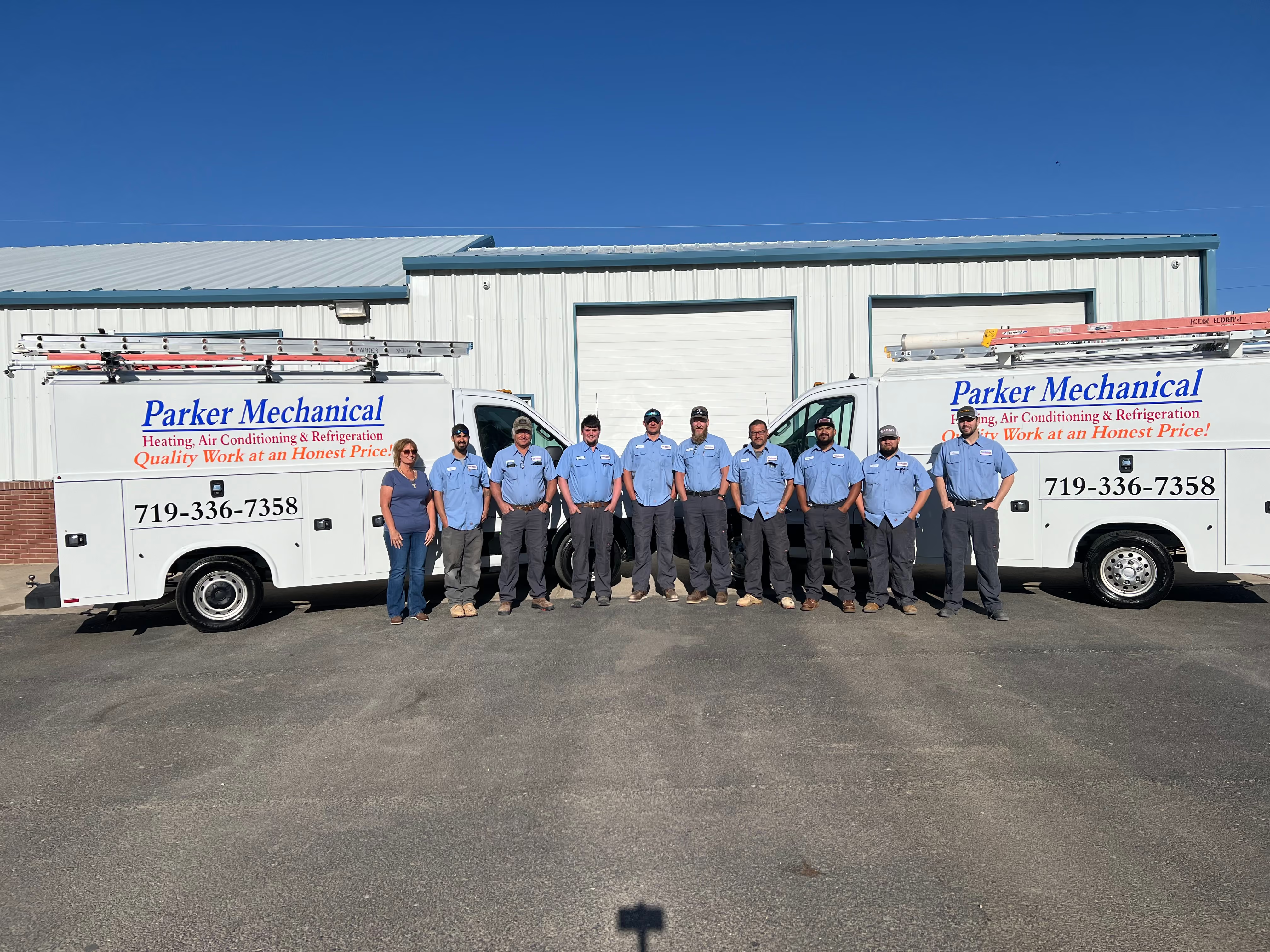































































%20-%20thumbnail.avif)





%20-%20thumbnail.avif)



%20-%20thumbnail.avif)

.avif)




%20-%20thumbnail.avif)