[00:00:00 - 00:05:17]
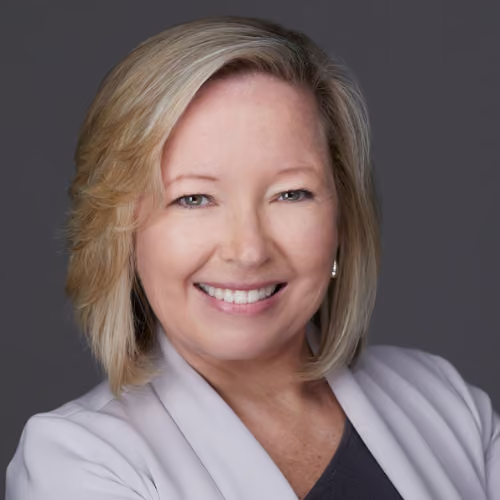
Host: Today's guest joins us on her birthday. And boy, it makes a great birthday when you love what you do, love where you are professionally. Which is the case for Gina Rosen, who bought a small jewelry wholesaling business in July of 2023, starting her pivot away from a 25 year corporate career. Now, despite that long tenure in corporate, Gina was always aware of how precarious W2 income is.
Early in her career, she'd been laid off three times in 13 months. So having experienced the W2 rug pull so early and so often, she had had her eye on income diversification and had dabbled in side hustles. Well, the dabbling became much more serious when she got a call from a couple owners looking to sell their business to her. And so begins today's story.
Now, despite Gina's entrepreneurial pivot, she is conservative. She didn't actually quit her day job for the first year of owning the business she bought and only then because she felt forced to. Also, she's plowing all profits from the business back in and expects to do so for a number of years. She's intent on building the business foundation before taking earnings out.
Listen for the deal terms which we unpacked to the dollar. Gina didn't do the typical SBA acquisition. She bought the business in cash with the help of a heloc. It's always valuable to learn about alternative deal structures.
Here she is, birthday girl and owner of Seasons Jewelry Gina Rosen Webinars Most first time business buyers spend months finding the right deal and securing financing only to reach closing without a clear plan for the financial processes and stack they'll need. As new owner in a webinar today, Thursday, July 9, Ryan Johnson of Acquisition Lab will walk through the finance and accounting decisions that matter most before and immediately after your closing, including setting up banking and payroll and payments before close. Building your financial stack from day one Understanding cash flow versus profitability so you don't miss a loan, payment or payroll what SBA lenders will expect after closing and on an ongoing basis, and why bookkeeping alone isn't enough. The webinar is Finance Essentials before you close and it is today, Thursday, July 9, noon Eastern.
Link to register is right at the top of this episode's show notes or on the Acquiring Minds homepage. Acquiringminds co. Welcome to Acquiring Minds, a podcast about buying businesses. My name is Will Smith.
Acquiring an existing business is an awesome opportunity for many entrepreneurs and on this podcast I talk to the people who do it. Buying a small business sounds simple. Find a company due diligence, get a loan close. In reality, you wear every hat just to get the deal done.
And then the moment you close, you have to throw those deal making skills out the window and learn how to operate. You shouldn't have to rebuild this infrastructure from scratch and you definitely shouldn't do it alone. That's why Walker Deibel created Acquisition Lab. What started as an accelerator has expanded into a complete ecosystem for acquisition entrepreneurs.
Over six years, the lab's 1,200 members have acquired over a billion dollars in businesses. The Lab puts everything under one roof, an active community, deal reviews, post close services, and a dedicated fund helping experienced operators buy larger businesses. If you're serious about buying a business, come see why Lab members have a 40% success rate. Learn more in the show notes or@accentlab.com acquiringminds Gina Rosen welcome to Acquiring Minds.
Thank you Will Gina After a multi decade career in IT and project management, in 2023 you started a pivot out of that corporate life to business ownership partners by acquiring a jewelry business, Seasons Jewelry. And today you are full time in that business and dedicated to IT for the long term. Also, today is your birthday. Happy Birthday.
Gina Rosen thank you. I'm tickled that we're doing this on your birthday. So let's begin with some background on you please.
[00:05:17 - 00:06:37]
Guest A: Gina sure. So I studied finance at the University of Georgia and went down that path after college, worked at E Trade Financial, got my brokerage licenses, but really just didn't enjoy it. Transitioned from that into kind of the IT space with systems documentation and that led me to my eventual career in IT project management. I had a great career, was well compensated, just didn't feel fulfilled and really did not know that ETA was a thing.
I always thought that that was out of reach. I could never afford to do something like that. And so I tried to start my own businesses as a side hustle because I wanted the air quote stability of corporate job. I say air quote because I suffered three layoffs in a 13 month period that really shook me early in my career and so I started side businesses.
My most recent one was a jewelry business where I was wholesale buying jewelry wholesale and selling it on my E commerce website. And that's where I met Seasons Jewelry.
[00:06:37 - 00:06:55]
Host: Gina let me pause you there just a little bit more in the background. So you, unlike a lot of people who think of corporate as the safer path, you learned early that in fact one decision can mean the end of a job. You were laid off three times in 13 months.
[00:06:55 - 00:06:57]
Guest A: Did you say that's Right.
[00:06:57 - 00:08:22]
Host: So you never took for granted that that corporate means stable. In fact, yeah, just the opposite. And one good framework that people will have heard me say about to think about this is that if you think of yourself as a single person business and you think of your corporate employer as your customer, that relationship, Your business has 100% customer concentration, a very precarious, fragile quality of revenue, let us say, in your W2. So in fact, not to say that business ownership doesn't come without its own huge set of risks, but in some ways, and usually people further along in their careers.
Gene, it sounds like you realized this earlier, but in some ways it starts to feel safer actually to own your own business than to remain on a corporate track that you think is going to take you through to retirement. Anyway, my little soapbox thing on thinking about the two options. Okay, so back to you. You start little businesses, e commerce side hustles to hedge this possibility that you knew could happen at any time in corporate life.
And so you already had your own small jewelry business. How big was that before Seasons? The subject of today's interview enters your life very small.
[00:08:23 - 00:09:05]
Guest A: Very small. So it was almost negligible when it came to really sales and revenue. But what I gained from it was building websites, working with SEO, learning those foundational things that have served me now with Seasons Jewelry, learning what sells, how pricing works, social media. So a lot of things that really connect the dots for me now, even though as a business it was not something that I could jump from my corporate job and, and run with nominal amount of.
[00:09:05 - 00:09:06]
Host: Of sales of revenue.
[00:09:06 - 00:09:12]
Guest A: Yes. I mean, and it was hard too because I'm working, you know, full time and have a family and whatnot.
[00:09:12 - 00:09:44]
Host: So sure. Well, and the only reason I'm underlining that is in case people wonder why you're on acquiring minds. If you already had a business, is this just you acquiring a business from the base of your. From the base of an existing business?
And I think it's fair to characterize this as that was the seedling of a business, but it only really became a business with the acquisition that we're going to hear about today. So anyway, that was what my interest there and also it tells the story of how you were introduced to the business you did buy. So carry on with the plot, please.
[00:09:45 - 00:10:50]
Guest A: So because of that business, I attended a wholesale show where I met the owners of Seasons Jewelry and just I hit it off with them. It's the product that I was selling is collegiate jewelry and I'm a really big college football fan. So we were able to talk about just all things college football and just had a connection, just really, really liked them, continued to purchase from them. Like I said, my best selling products were from Seasons jewelry.
And in 2023, in May, I placed an order, nothing huge. And the owner reached out to me and said, you know, hey, we're looking to exit the business and was wondering if you'd be interested in buying. And I was dumbfounded. Literally speechless.
Asked if I could just call him back, matter of fact, because I didn't know how to respond. And then in less than two months, the deal closed and I was the owner of Season's Jewelry.
[00:10:51 - 00:11:57]
Host: Well, that was a quick, quick assimilation of the offer and moving forward from speechless to owner in two months. That's pretty good. Okay, just a couple of little details here. Okay, so your original little e commerce business you would buy, you were, you're not a jewelry designer maker, manufacturer, so you would go to a trade show where the wholesalers of jewelry were and choose products that you liked and then sell them D2C right.
On your website to direct to consumers individual units on your website. Okay. And these, these trade shows where this sort of business to business between jewelry manufacturers and jewelry and sellers happens is kind of key to the timing of the entire business really as, as we'll hear. So that's why we're giving it some time.
And, and so their business then would have been something buying their business represented, if you will, vertical integration. You were buying sort of further upstream in the value chain of jewelry manufacture and sale, Right?
[00:11:58 - 00:11:58]
Guest A: Correct.
[00:11:59 - 00:12:13]
Host: Okay. All right. Okay. So before we start really unpacking this, talk to us about the decision to, to, to do it.
Like why did you do it? Give us the whole emotional journey of the decision.
[00:12:13 - 00:13:29]
Guest A: Yeah, so the timing was actually impeccable. I had, this was post Covid, so I was working from home, really reflecting on so much of what I really wanted to do with my, the rest of my career and just being home and spending more time with my children really underscored how much I was missing by commuting into an office and not being home for a large portion of my weekday. And so that really became my driving force of I want more time equity. I want to be able to control where I'm spending my time and when I'm spending that time.
So for me at the time, it translated into going all in on my side business and really wanting to make, make that work. So I was doing that starting, you know, in that 2020, 2021 period. I decided that I really did not want to go back into an office, so I had. This was my only choice at this point to really make this work.
And so I was doing a lot of things, and business was going well for my side business. And then this call came, and it really just sent me, you know, in that other direction.
[00:13:31 - 00:13:41]
Host: I had you. Had you before this chapter of your life, done entrepreneurial things, or was the jewelry business the first kind of inkling of entrepreneurship in you?
[00:13:41 - 00:14:26]
Guest A: Yeah, I had actually started another jewelry business in 2008 where I was actually making jewelry. So ironically, I have a background in jewelry only because I like it. And so I went and actually was soldering jewelry, buying the raw materials, very time consuming. And then I had a family, so that.
That all stopped. So, you know that between making the jewelry and then deciding that's too intense, I can't do that, I'll buy the jewelry made wholesale and then resell that. So that was that next step. And so those two businesses together have really helped me in my current role with Seasons.
[00:14:26 - 00:15:07]
Host: Yeah, yeah. I mean, talking about business buyer fit, because you really understand having kind of been actual. An actual business person in the manufacturer, albeit small numbers, and then later in selling to consumers. And now, as we'll hear, as a wholesaler, you had decades.
You were decades into your career at this point. You. You. I heard you say that you.
It had been a financially remunerative career. You had earned. Well, can you share what your W2 take home was that you were walking away from if you went all in on this?
[00:15:08 - 00:15:09]
Guest A: 215.
[00:15:10 - 00:15:31]
Host: 215. Okay. And did it. Was that.
Is that the right way to think about it? Were you asking yourself, I need to make. What is it? What do I need to do to make $200,000 in this business?
Or was it not that. Not really the calculation? The calculation was more about, I want to just have a business that's viable and gives me my time back.
[00:15:33 - 00:16:48]
Guest A: Both. I think I spent so much of my career defining my worth based on my salary, but wasn't fulfilled. So it was more about what. What lifestyle do I want to have to still be happy?
And, of course, a lot of conversations with my husband, because he's the other piece of this puzzle of making sure that we're both on board. We have always lived in a way where we don't exceed our means. So it gave us the flexibility to make a decision like this. And I tell you, well, the hardest part of this whole journey is shaking the association of my value based on what I'm.
My Salary is. And it took, I would say it took a good six months of not seeing those direct deposits hit my account and really having to reframe like what happiness and fulfillment means to me. And I think the default is how much money you're making. And once I was able to free myself from that, I just feel like this box of creativity and enjoyment was just, you know, opened for me.
[00:16:48 - 00:16:49]
Host: Wow.
[00:16:49 - 00:16:53]
Guest A: Yeah, well, it's been a good listen for my kids also, you know, that.
[00:16:53 - 00:16:54]
Host: Say more.
[00:16:54 - 00:17:19]
Guest A: Yeah, just the difference between the value of something and the cost of something, you know, so I've, I've really reinforced to them of, you know, this little thing that they might want. It's not that it's too expensive, but it's not worth it, you know, and so just making sure that they are cognizant of that, that as they go through their lives to really think about things in that way.
[00:17:20 - 00:17:40]
Host: So to, in other words, in a high, a well paying salary job profession, there is. Because you feel that you want the money or associate your own value with the money that it generates for you. There's a, there's also a cost to that.
[00:17:40 - 00:18:51]
Guest A: Huge cost. Huge cost. And getting back to the layoff track that I worked with a chip on my shoulder for my entire career, never really knowing when the other shoe was going to drop. I worked very hard.
I knew that that really didn't matter, sadly, because ultimately you were just an item on their cost. Right. With owning your own business, there will be signs, there will not be a 6am email that says you've lost your job. You know, so you're going to know as a business owner how things are tracking.
And as I proceeded to evaluate this business and decide to buy this business, one of my mentors gave me the biggest, biggest tip and that was manage your downside risk. You know, what is the worst possible thing that could happen and what will you do? And my response to that was I'll just get another job because that's what I had. I just had another job.
So. But I didn't think that I would have another opportunity like this and, and I did feel that this would be a life regret if I didn't try.
[00:18:53 - 00:19:12]
Host: And your state of mind now is, is, is what? We'll, we'll get way into the weeds on the business itself. But in terms of this kind of where you derive personal value question and how you're spending your time and the enjoyment or not of that, how would you, how would you distill all of that?
[00:19:13 - 00:19:27]
Guest A: I'm extremely Happy, extremely fulfilled. And, and I mean genuinely, I don't regret the decision. So I'm just very happy that the opportunity presented itself.
[00:19:27 - 00:21:03]
Host: Well, that's a great thing to say, especially on your birthday. Let's not forget what today is. It's a wonderful thing to be on any birthday to be able to say what I am doing right now with my life is deeply fulfilling. So if you ask owners in the ETA and search community which insurance broker provides highest quality work, great outcomes and has a practice dedicated to searchers and acquisition entrepreneurs, one name comes up again and again.
Oberle. Oberle Risk Strategies has worked with hundreds of searchers over nearly a decade and is in fact led by a two time successful searcher, August Felker, which makes Oberle a specialty insurance brokerage which for searchers by a former searcher and if you've got a business under Loi Oberle will provide complimentary due diligence on that business's insurance and benefits program. An easy, no risk way to get to know August and the team at Oberle to take advantage. Check out oberle-risk.com that's O B E R L E D hyphen risk.com link in the notes.
Back to the story. Okay, so you meet the season's jewelry guys, pair of owners at this trade show some months later they call and say, say why don't you buy our business? Give us more detail on, on that. Did they only call you?
Was it just for sale? Why were they selling, etc.
[00:21:03 - 00:22:05]
Guest A: Yeah, so the company, just a little bit of history on Seasons. The company is a little over 30 years old. So it's been around a really long time. Got a very established customer base and so the gentlemen that I purchased from were the second owners.
They had owned the business about five years at that time and I met them probably a year into their business ownership. So about four years had gone by between the time we met and when they reached out and they, I think they are just ETAs by, you know, trade. They owned several other businesses, two of which were more profitable than Seasons Jewelry. And so I think they just wanted to focus their efforts on those other businesses reasonably so.
They, they also commented that it felt weird for two guys to be selling jewelry and they, they felt that, you know, it needed to be in the, in the hands of a woman. So I, I get that just from the, from a design standpoint too, you know.
[00:22:05 - 00:22:06]
Host: Sure.
[00:22:07 - 00:22:52]
Guest A: And, and the, the business I believe they said had been for sale for about a year. I don't know how many Offers they received or, or, or what happened from that standpoint. But I was the only person that they reached out to during my FL asking if I wanted, if they wanted, someone wanted to buy the business. They were very focused on making sure that the business ended up in the right hands.
There was a team of people who had been with the company for a long time and they wanted to make sure that those individuals would be taken care of. It was a very, I'll say, family oriented business. Yeah.
[00:22:53 - 00:23:06]
Host: So they like you. They, they call only you. You had met them four years prior. Had you been cultivating a relationship with them in the interim for those four years, or was this like a blast from the past phone call out of the blue?
[00:23:06 - 00:23:23]
Guest A: A blast from the past? I really. Yeah, yeah, we, I continued to regularly purchase from them. I think that they were following what I was doing with my other business and seeing, you know, some of the changes in growth there.
[00:23:24 - 00:23:32]
Host: So. Yeah, and so they probably, presumably they liked what they saw. Why else do you think they picked you?
[00:23:33 - 00:23:59]
Guest A: I'm in Atlanta, well, just outside of Atlanta, and our wholesale wholesale showroom is in downtown Atlanta. So that's where we transact a lot of our business during these, these two wholesale markets. So proximity to the showroom was huge. They lived in Kentucky, so they didn't have the luxury of being able to work on the showroom, make improvements, things like that.
[00:24:00 - 00:24:13]
Host: Ah, seasons. The business that you bought already had a showroom in Atlanta in, in the mart. What is a mart? And, and say more about this showroom and what a mart is.
[00:24:14 - 00:25:03]
Guest A: So America's mart is three buildings of. I don't want to exaggerate, but it is, I think it's around 7 million square feet of retail space. And wholesale businesses have either permanent showroom or you can have what's called a temporary space during the shows where you show your products and buyers, wholesale buyers come in, it's only open to the trade. And they come in and place, they write orders for their businesses, usually boutiques.
And so I'm in one of those buildings. I have my own showroom. It's about just shy of 800 square feet. And I have all of our product on display there where those buyers can come in and see our newest styles and we can work with them on best product for their store.
[00:25:04 - 00:26:24]
Host: And so your proximity to this was what was attracted them. They already had all of that. And you were a local woman with a growing jewelry business and they had kind of watched you work for a few years. Great.
These mart complexes are interesting because you could go your whole life and not even know that they exist or what they are, but then you learn that they're in most major cities. I think in, in D.C. we have, or used to have the Washington Design center, same concept. The, In Chicago, there's the, is it the Merchandise Mart?
It's, it's one of the, the gorgeous, that big, gorgeous, huge prominent building right on the, right on the river. Very prominent in the city. But it's one of these, it's just, I guess, millions of square feet of B2B retail. Really only if you're in industry, anybody can go in.
But it's not targeted at the consumer, it's targeted at, at industry people. So there are kind of these, this interesting phenomenon that, yeah, if you're not in the trade, you might not even know they exist. The fact that they called you personally and, and told you that the business had been for sale for a year, you know, probably gave you some leverage in the negotiation. How did you, how did you react to that?
[00:26:25 - 00:27:24]
Guest A: I definitely thought about that. But I, I've always been of the mindset of there's a place called fair and just make it where neither side has to lose. You know, so I really looked at this as, let me review the financials, let me offer a number that feels fair to me and then, you know, they can decide if, if that's fair to them. I, I did offer less than what they were asking for.
Um, and, and I tapped into my network just to help with the evaluation of the financials. It did become emotional for me and I didn't want it to be emotional. I wanted it to be fact based. So that's where I reached out to actually a couple of CFOs that I had worked with in my, my previous roles to get their unbiased analysis of the numbers and make sure that I was not seeing through rose colored glasses.
[00:27:25 - 00:27:29]
Host: When you say you got emotional, you just became very eager to own this business. You got excited?
[00:27:29 - 00:27:31]
Guest A: Yes. Yes.
[00:27:32 - 00:27:45]
Host: Okay. Okay, great. So, yeah, so my point about kind of the negotiating leverage you may have had was more than overwhelmed by your desire to buy this business. Pretty much.
[00:27:45 - 00:27:46]
Guest A: Pretty much.
[00:27:46 - 00:27:53]
Host: Let's hear more about their business. So it's a wholesale model, meaning what, what exactly? Who do they buy from and sell to?
[00:27:54 - 00:28:47]
Guest A: Yeah, so Seasons Jewelry designs all of the pieces in house. We have our own team that does that and we have a few manufacturers offshore that makes the jewelry and then we have those imported in. We have two primary lines. There's the seasonal side, which includes Everything from Christmas, Christmas, Thanksgiving, fall, to coastal styles, and then licensed collegiate jewelry.
We've got 27 collegiate licenses. And so the business is really split between those two types. Product types. Now, when I bought the business, there was also a fashion, just a generalized fashion line.
But I eliminated that about a year into owning the business. It just wasn't something that I felt fit with the direction of the. The brand that. Where I've wanted to take the brand.
[00:28:48 - 00:29:24]
Host: Yeah, well, let. Let's return to that decision, because it was a big one. Okay. But at the time you buy it, they have these three product categories.
Seasonal jewelry, licensed collegiate jewelry. Right up your alley, and fashion jewelry. Okay. And so they had these offshore manufacturers, but they would do their own designs.
So they designed the jewelry, send it offshore, and back the pieces would come, and then they would sell those at these trade shows to retailers online or offline. Like you. You were an online retailer.
[00:29:24 - 00:29:25]
Guest A: Right, Right.
[00:29:25 - 00:29:34]
Host: Okay. Okay. And this trade show, again, what's the. What's the role in the value chain here?
Why is that such a big deal? And why is the timing of it such a big deal?
[00:29:35 - 00:30:06]
Guest A: And the. There's two big wholesale shows every year in Atlanta. One is in January and one is in July. So from a timing standpoint, you know, he contacted me May 10th.
And so the next big wholesale show was going to be July. I think it was like July 11th. So in order for me to recognize the revenue from that. That show, I needed to own the business.
So that really was the deadline that we were running against.
[00:30:08 - 00:30:16]
Host: Okay. So much of the sales come in during these. The. During January and July.
[00:30:17 - 00:31:03]
Guest A: Yes. The business is highly seasonal. I would say the bulk of revenue happens in the second half of the year. Really timed around this show, because with wholesale, it's not just about writing that initial order.
It's the reorders, so the subsequent sales that happen after the show. And then sometimes people come to see you at the show. They don't write an order there, but they will submit an order later. So it is a very critical part of the business.
In addition, our products themselves, the holiday pieces sell the best. And college football is the biggest driver for our college jewelry. So those two things combined just really make the second half of the year explosive. The first half is a bit anemic.
[00:31:04 - 00:31:19]
Host: The. The holiday. Yeah, we're gonna. We're gonna hear about life in a seasonal business.
I mean, the business has season in the title, for crying out loud. The holiday items that you sell for. Which holidays do you sell for this?
[00:31:19 - 00:31:43]
Guest A: The. Everything from Easter Valentine's. Those are kind of our smaller. Those are very time boxed seasons.
Holidays. But fall, Thanksgiving, you know, people start wearing those pieces late September, October through November. And then for Christmas, people will start wearing Christmas jewelry in November and carry those through December. So much longer seasons for those pieces.
[00:31:44 - 00:31:46]
Host: And Halloween, or is that. Or not Halloween.
[00:31:46 - 00:31:55]
Guest A: Halloween. We tend to try to do more fall theme so that you have a larger window so to sell and to wear.
[00:31:56 - 00:32:26]
Host: Yeah. Okay. Okay. So you got Valentine's Day and Easter, but they're small.
And then you got fall, broadly Thanksgiving, Christmas, big seasons, big holiday season and just season overall and then also football season. So it's a big. Those last three months of the year are big. Big for you.
Got it. Okay, so can you share the numbers of the business and then let's get into how you structured the acquisition.
[00:32:27 - 00:33:20]
Guest A: Yeah, so at the time that. So I evaluated three years worth of financials. It was unique because it crossed over Covid. So that, that was something that was difficult.
I didn't really know how much of the dip in sales was really a result of COVID or something else that. That did make me nervous. But the reality is during COVID college football games ceased. So there were no games, there was no minimal jewelry purchased.
But you know, prior to. So in 2019, they were right around the 650 mark of revenue. And then sales. Right.
Sales dipped to about half of that in 2020. You know, their, their P and L showed higher. I'll call it revenue because of the PPP loans, but.
[00:33:20 - 00:33:20]
Host: Right.
[00:33:21 - 00:33:39]
Guest A: I eliminated those for my analysis. Yeah, that, that. Yeah, it doesn't count. So.
But by 2022, their sales were almost back up to that 600 level, just over the 600 level. So I kind of felt like that that was a good number as kind of like a base. So.
[00:33:39 - 00:33:53]
Host: So they had almost fully recovered. That is a very good sign for the business. Okay, can you share what profitability was from this? 600 ish.
6. Between 6 and 650 of revenue. How many, how much earnings did that generate?
[00:33:53 - 00:33:57]
Guest A: I. Their. Their SDE was about 200.
[00:33:57 - 00:33:59]
Host: 200. Okay.
[00:33:59 - 00:34:00]
Guest A: Okay.
[00:34:00 - 00:34:38]
Host: And your view on that? So that's a small business. Revenue wise, the earnings of the business are less than what you were making at your salary. And.
And it was going to be less still what you took out of the business. Because there was. Well, we're going to find out if there was a loan or not. Often there is.
So the debt service can eat up a third to a half of the existing earnings. And presumably you're Going to want to grow this and reinvest in the business. So how did you think about the, that earnings number overall and specifically with respect to your family needs and your own kind of what you become accustomed to taking home?
[00:34:38 - 00:35:29]
Guest A: Yeah, I had to go into this again working from the worst case scenario of taking nothing out of the business and really how, how long would I be able to do that? So again, that's where that mindset really comes in. Long conversations with my, my husband, super supportive and we knew that we could maintain our lifestyle on his, his salary. I mean obviously there were, we would have to think differently about some things, but we knew that it was something that we could work through and, and really I would say for about a three to five year period, my mentality is just reinvesting everything back into the business to continue to help it grow.
Knowing that I do believe that the payoff will be there after that time period.
[00:35:29 - 00:36:38]
Host: Okay, okay. But no, this is good. So to be clear because that is a big decision and a very specific way of approaching the business that you're not going to take anything out of the business. So your own income, your own income for, or your contribution to the family income is going to drop to zero for a period of three to five years.
Husband is going to financially carry the family in the interim and it's all just going to be aggressive but conservative reinvestment and, but also of course not for the sake of it, but with presumably a payday. You are trying to grow this small business. Great. And just about the size of the business purely from kind of a business plan or TAM total addressable market perspective.
600,000, 650 in revenue. Did that seem, I mean what, what did, what did you think the potential was there? Did that seem impressive, still small, like contextualize the size of the business in the jewelry market that you knew?
[00:36:39 - 00:37:33]
Guest A: Yeah, I, for me, I mean coming from my experience with my smaller business, I felt like that was big enough to grow. I felt like the foundation was solid and, but it wasn't too big to scare me. I. Knowing what I know now and thinking back to purchasing the business, I do think that if it were too big, my imposter syndrome would have kicked in and I would have thought oh gosh, there's no way I can do this, you know, so.
And I, I do see that, you know, the other thing is the, the gentleman that owned the business, they were largely absent operators in the past year or so. So I felt like if, if I really came in, muscled various things to to grow the business that there was a good bit of upside potential.
[00:37:33 - 00:37:42]
Host: And today when you think about 600, 650 in revenue and now that you've been inside the business, what do you think the potential is for this business?
[00:37:42 - 00:37:46]
Guest A: Yeah, I, I, I, I'd be thrilled with, with 5 to 10 million.
[00:37:46 - 00:38:14]
Host: So 5 to 10 million now. Yeah. So that's significant. A business like yours probably if their margins 200, 000 on 650.
So those are 30 margins. 30% on 5 million is $1.5 million million. Right, right. 10 million, it's 3 million.
So now you'll maybe have a different cost structure than them. And that is some years away, but that would be a phenomenal outcome.
[00:38:14 - 00:38:51]
Guest A: Yeah. The other detail is in the earlier stage, so the, you know, they were the second owners. So in evaluating documentation from the years where the original founder had the business, their sales were 2 to 3 million. So it's not out of reach.
Yeah. And they had a dedicated sales team. There was no sales team. This company needed sales.
They needed people to get out there and actually show the product. When people see the product, they generally like it. When we're not for everybody, but for the most part, when we know we're hitting our niche, people like our, our products.
[00:38:53 - 00:38:58]
Host: So there was a time where this business was generating 2 to 3 million dollars in sales, correct?
[00:38:58 - 00:38:58]
Guest A: Yes.
[00:38:58 - 00:39:07]
Host: Oh, that's very encouraging. Okay. Okay, great. Okay, back to the structure of the deal.
We're going to unpack this, if you would.
[00:39:08 - 00:40:07]
Guest A: Sure. So my offer, I did not do an SBA loan. I offered 165 plus there was a $60, a $60,000 seller note paid out over three years. So I self financed, in addition to using a HELOC to cover the cost of the business, inventory was 172.
And I also paid 100% of all of the open receivables, which was 21,000. I paid half of the open sales orders, which was 25,000. And then we reduced the, the open payables which was 18,000. So that, that shook out to an additional $28,000.
So the final numbers were the 165 plus the 60 plus the inventory of 172 and the shakeout of AR, AP and sales orders of 28,000.
[00:40:09 - 00:41:17]
Host: What is that total? 425,425. So a couple things here. That 28, the receivable, sales orders, payables, that's effectively a working capital.
That's a working capital calculation. Although inventory arguably, you know, is also working capital. Because the, a business with like yours without inventory isn't a real business. So we should probably throw that in and count that as working capital and not something separate.
Anyway, you did pay for it. Uh, the, it sounds like they were treating the inventory or you guys in this transaction treated the inventory as sort of as separate, which is, you see commonly. But the accountants would probably say it's inventory is working capital and shouldn't be treated separately. You know, tomato, tomato.
Because ultimately it's still just being paid for one way or the other. The open sales orders, what does that mean? Money that had been collected but you hadn't delivered. The, the, the, the items actually just
[00:41:17 - 00:41:37]
Guest A: orders that had been committed orders. So no money collected yet. We, we realized our revenue when the order ships. So a lot of the wholesale buyers come to that January show and they place orders for shipment in August.
So these are committed orders on the books for a later ship date.
[00:41:38 - 00:41:43]
Host: And how solid are those? That's a six month lag between saying I'll buy it and then actually buying it.
[00:41:44 - 00:42:00]
Guest A: Yeah, it was a risk. We did incorporate a $15,000 holdback that was paid out three months post closing just to make sure that those sales orders that I had paid for would materialize and everything did.
[00:42:01 - 00:42:27]
Host: Oh, wow. Okay, great. And that was obviously very savvy. You did not take that revenue for granted.
So sorry. The 15,000 holdback, that was the same thing as where you said the. You split the $25,000 in open or sale open sales orders. That was the, that was the holdback piece.
Okay. The inventory. Do you feel in retrospect that you handled that correctly?
[00:42:28 - 00:43:08]
Guest A: No, that's one of my biggest lessons learned. There was a lot of old inventory. I definitely would have either not paid for it or paid a lot less than the cost of those pieces. I think if I again, if I knew now, then what I know now, I would have looked at the sales by product to see the sales velocity of the different items.
And I think that would have factored into how much I paid even for pieces that were not. Were more current but weren't moving. So I definitely would have handled that differently.
[00:43:09 - 00:45:11]
Host: The team at Aspen HR recently published a short white paper targeted at searchers Entitled A New CEO's Guide to Human Resources. It lays out the key items you should be thinking about as you transition into CEO and owner of the business you bought. The link to download that is in the show notes, Aspen HR is a professional employer organization, or PEO, which provides HR compliance, flawless payroll, robust HR technology, and Fortune 500 caliber benefits, all for a fraction of the cost compared to using multiple vendors. Reach out to Aspen HR for your complimentary HR diligence checklist and benchmarking analysis.
Go to aspenhr.com or contact Jenny Thier directly at jennyspinahr.com Great. That's really a good window into how to think about this. So there's a lot of inventory. You don't know what you don't know coming in.
So your metric that you look at to kind of consider the, the likelihood that this inventory has value is how is its own sales velocity and the stuff that is old probably, you know, that kind of speaks for itself. But even stuff that is new but not selling indicates that it will take longer to sell or may never. And so then you would have had some, some, some graded or gradations of, of, of percentage of value that you would have paid. You would have maybe kind of created tranches of inventory.
Stuff that's, you know, the 50 of stuff that's clearly selling well, the 25% of stuff that's like iffy and then the 25% of stuff that is kind of like never going to sell. I'm not going to give you much for sort of thing.
[00:45:12 - 00:45:13]
Guest A: Absolutely.
[00:45:13 - 00:45:18]
Host: Any other bits of this transaction that you feel like you could have done differently?
[00:45:18 - 00:45:52]
Guest A: Not really. You know, I think that there are moments really when I was preparing for this, this interview with you where, you know, you question did I pay too much? You know, but I think that's a little bit of me getting into my own head because I, I'll do that with, with cars or anything else that I buy. You know, should I have negotiated better?
Um, but ultimately, you know, I think this is, this is my, this is it for me. This is my last hurrah. So I just want to focus on everything that I'm going to do to grow the business. And, and I really do have a lot of optimism there.
[00:45:53 - 00:45:59]
Host: Yeah. And, and sorry, one more time, what was the final consideration of everything when you added it up?
[00:45:59 - 00:46:00]
Guest A: 4:25.
[00:46:02 - 00:46:05]
Host: So really that was a 2ish or less multiple.
[00:46:06 - 00:46:06]
Guest A: Right.
[00:46:06 - 00:46:33]
Host: Multiples can be a little bit deceiving, but by any, no matter how we calculated the final purchase consideration or the final multiple that is a low multiple, if we think that kind of the three to four or four and a half range is typical. And so hard to, despite the anxiety that I created in you as you did your, as you refresh your memory coming into the podcast, hard to argue that you overpaid for this business.
[00:46:34 - 00:46:43]
Guest A: Yeah. Yeah. And and that it actually you, you're my, you're my ETA therapist now I feel a lot better about, about everything.
[00:46:44 - 00:48:07]
Host: Yeah. Well, and just to, just to, now I'm going to reverse myself a little bit just to, for the audience's sake. You know, I, I, I, I maintain that it, that I, you know, you're a multiple of two is the very uncommon now in a small business like this where though you weren't trying to drive the hardest bargain you could, you did have leverage. Whether or not, you know, you, you wanted to exert max leverage is justifiable.
This was a, this was a small, you know, this was a pretty small business, but there was a lot to like here. The business buyer fit was great. It was a business that had at one point done 2 to 3 million. So there was clear evidence that this thing could, could get there again and beyond absentee owners.
So it was a business that could run itself. It was probably declining a little bit. Maybe, maybe not. It wasn't as strong as it could have been.
But the fact that for a year and a half they hadn't really been that involved speaks to the strength of the business actually. So yeah, I mean there is a lot to like here, but just I guess going in circles a little bit. Just point is for the audience, when you have a really small business, it is just by nature much, much more fragile of course. And so there therefore demands a lower price and you got a lower price.
So anything to add to all of that?
[00:48:07 - 00:48:08]
Guest A: No, no, that's perfect.
[00:48:08 - 00:48:27]
Host: Yeah, Great. All right, thank you for all of that, Gina. So how has the transition gone? Tell us kind of what you got when you got inside, what did you find?
Was it the business that you thought it was from the outside? Give us a flavor of the transition.
[00:48:28 - 00:50:13]
Guest A: Yeah. So the first year of ownership I kept my corporate job. So I was still a little, I was trying to hedge my, my bet a little bit. Had regular communications with the team that was in place.
They were the ones that were really running the business for that past year and a half anyway. So I figured this was a time for me to work on some things, foundational things. So one of the first things I did was I put in a whole new tech ecosystem. It was my background, so I came with that helped tremendously.
I still knew people that, that could help me integrate five years worth of data from the legacy system into our new system and really just put all of those processes into place again while working my full time job. The, you know, from, from the business standpoint, I Think everything. There weren't no real big surprises from an operational standpoint. I think there were things that I underestimated regarding collegiate licensing specifically.
There are. It's, it's, it's regulated it. And it should be. I'm glad that it is.
We, we do things properly with making sure that we're licensed and not everybody does. But what comes with that are audits. And we had a manufacturing audit. It's part of just making sure that labor standards are up to par, that safety standards are up to par.
So we got selected for a manufacturer audit a couple of years ago or actually last year and successfully passed that and then this year.
[00:50:13 - 00:50:15]
Host: But it's a grueling process.
[00:50:16 - 00:50:33]
Guest A: It is and it's very stressful because you're relying on your manufacturer to make sure they're communicating. It's an in person audit. So there is an auditor abroad that actually goes to the facility and sets eyes on everything. So.
[00:50:34 - 00:50:48]
Host: And your manufacturer. So. But why are you responsible for them or is that basically the license? The licensor wants it that way.
They want you to. Yeah, it's by design. And your manufacturers are in China.
[00:50:48 - 00:50:49]
Guest A: That's correct.
[00:50:49 - 00:51:27]
Host: Which. And we're going to, we're going to touch on that and tariffs and US versus China manufacturing toward the end here. Okay. But that's a grueling process.
You, you passed it. I, I would, I would, I would think that the, the licenses that you had, that in fact, that was a big value of this business. This whatever the, the, I don't want to call it, it's not intellectual property, but you know, it's this sort of untangible but very valuable relationship, formal legal relationship that you have and a right to sell items with the names of these schools. Did you perceive that as being part of the, part of the value huge.
[00:51:27 - 00:52:27]
Guest A: And the fact that there were so many licenses that the, the company was established in maintaining and being compliant with, there's generally monthly reporting for royalties. If I were to try to seek licensing on my own, I probably wouldn't be approved because you just, you know, these, these colleges and institutions want to make sure that you are going to be able to fulfill your part of that licensing agreement. So from actually just going back to the deal, it was a stock deal specifically because of these licensing agreements. Because for continuity, you know, the licenses were for Seasons Jewelry.
You know, now operationally I also acquired all the assets of the business. So everything in the warehouse, everything in the showroom. But on paper it was structured as a stock deal. So.
Yeah. And I was nervous.
[00:52:27 - 00:52:49]
Host: And Gina, I forgot to emphasize. You did not use an SBA loan. Very little seller. There was $60,000 of seller debt.
Pretty short amortization of only three years. So you paid approaching 400 grand out of pocket. And, and a lot of that was from your heloc. You took a heloc?
[00:52:49 - 00:52:51]
Guest A: Yeah, it was, it, it, it shook out to about 3:50.
[00:52:52 - 00:53:26]
Host: Yeah. Okay, okay. But big commitment, needless to say. Okay, great circling back to these licenses.
And so the, you had said, like getting these from scratch would be almost impossible. Is that going to be the case for you now as you try to get net new licenses from other schools or licensors or because you're in the game and have licensing relationships, they'll see that you have credibility. They're likely to work with you, at least be open to working with you sort of thing.
[00:53:26 - 00:53:45]
Guest A: Yeah, that's, that's key is, is that is the history that the company has with being licensed, with being compliant. You know, they look at sales, you know, of if they, they want to make money also. So you have to hit certain sales threshold. So all of those things are, are very critical.
[00:53:46 - 00:54:03]
Host: And so, Gina, you, you continued in your corporate job for a year after buying the business. What was it that allowed you to step off that ledge and quit and go full time in seasons, even though you weren't even actually going to pay yourself from seasons and still haven't.
[00:54:04 - 00:54:43]
Guest A: Yeah. Seeing that it needed sales, there was absolutely no sales function. So I had kind of got through the hairier operational things that I really saw needed to be done mainly in the way of the system. But the people that we had in place were so busy doing so many other things to keep the business going that I really felt like if I could jump in there and have more of a sale sales role, that things would start happening.
And, and that first full year after I quit my job, sales were up 42%. So it, it works, right? It's just doing it.
[00:54:43 - 00:54:51]
Host: Yeah. You know, so how validating that it does work when you just apply yourself. And so where is revenue today?
[00:54:53 - 00:54:55]
Guest A: We were just shy of 800,000 last year.
[00:54:56 - 00:55:02]
Host: Oh, wow. Wow. And just shy of 800 and you were about just above 6 when you bought it.
[00:55:03 - 00:55:06]
Guest A: Right. And we're up almost 20% year to date.
[00:55:07 - 00:55:11]
Host: So you're, you're going to come dangerously close to a million bucks.
[00:55:12 - 00:55:13]
Guest A: Yeah. Yeah.
[00:55:13 - 00:55:13]
Host: Great.
[00:55:14 - 00:55:15]
Guest A: Makes me smile.
[00:55:15 - 00:55:27]
Host: Tell us about this decision to eliminate a one full third. I don't know if it was exactly a third revenue, revenue wise, but Sort of one of the. The product lines.
[00:55:27 - 00:55:27]
Guest A: Yeah, yeah.
[00:55:27 - 00:55:28]
Host: Product categories. Thank you.
[00:55:30 - 00:56:14]
Guest A: Yeah, I just. Ultimately, I didn't like it. It really boiled down to I can't be behind a product that I don't feel passionate about. So there was nothing unique or distinct about the fashion jewelry that we were selling.
Generally, it's a race to the bottom where you are competing strictly on product price. And it was. It was just a red ocean. There's too many competitors.
It was not a place that I wanted to tie up my cash or my creative design team's energy pulling designs together. Because when you say yes to that, you're saying no to the other elements of the business that were stronger contributors to. To sales.
[00:56:15 - 00:56:48]
Host: I would think jewelry is a very competitive red ocean, as you said. Yeah, broadly, but particularly in just sort of general. This word sounds generalist fashion. Yeah.
I was going to say generic, but that sounded harsh. But generalist, generic, broad, whatever. But, but, but it's such a large category, jewelry, broadly, that I would think that even in these niches of collegiate, of college brands and holiday, that even there it would. It still be very competitive.
Is. It is.
[00:56:49 - 00:57:26]
Guest A: Is. Yes. And so I really have done a lot of work on marketing and positioning for the brand and emphasizing those things that make a season's jewelry piece distinctly seasons. Right.
So without seeing our jewelry cards, you can look at a piece and go, that must be seasons. And it's the design elements. There are things that we do that you do not see very often. There might be one, maybe two other companies that have a similar esthetic, but for the most part, you know, our pieces are.
Are unique.
[00:57:27 - 00:57:34]
Host: And can you articulate what that is? Or is it. Since it's visual, I assume it's not a trade secret because you can see.
[00:57:34 - 00:58:12]
Guest A: Yeah, no, yeah, no, just using really 3D molds. A lot of our pieces are casted. We use crystals. The enameling techniques.
We have several different enameling techniques just to give pieces depth and dimension. And we. We like to have just variety in components, you know, for earrings, whether it's a stud or a hoop or a huggie, you know, so just really looking at how a customer could build and grow their collection and not feel like, I already have a necklace, I don't need another one, you know.
[00:58:12 - 00:58:34]
Host: And now is this something that you're in sales mode now? And it's very compelling. I imagine this is what you say when you're at the wholesale trade shows. Is this something that.
That the consumer. Actually your real consumer behavior would come of this, that they would recognize the look and feel of your pieces and get more season after season.
[00:58:35 - 01:00:00]
Guest A: I think we're getting there. I know on the holiday side, we have an extremely loyal, very loyal customer base. I would have never believed it if I didn't see it with my own eyes. But there is a retail show that the company has done for 25, 28 years, and it's a Christmas show.
And we get mobbed. Mobbed by people who come and collect our pieces. Their mothers have willed them the pieces. Not because they're.
Oh, you just wouldn't believe stories of. It's a tradition thing, a mother daughter tradition. So they come shopping and they want the newest dangle beard Santa, you know, and so it just becomes this emotional connection and collective because of the sentimental value. Not necessarily because it's an heirloom piece, you know, And I took a picture last year with three women, three generations of seasons jewelry shoppers.
And so it was the daughter who looked like she was maybe 13 up to her grandmother. And it's. It was such a moment, you know, and that. That is our end customer.
Right. Is. Is that person who has that kind of emotional need to buy the latest holiday or the latest collegiate piece of jewelry.
[01:00:00 - 01:00:02]
Host: That's wild, Gina. And so how old is the business?
[01:00:03 - 01:00:05]
Guest A: 31 years old.
[01:00:06 - 01:00:17]
Host: 31 years. Okay. And the last owners had it for five. So it was five, I think you said.
So it was founder owned for the first 26 years.
[01:00:17 - 01:00:46]
Guest A: Yeah, that's right. Yep. And will people come with pieces that are like 20 years old? They will come to these shows and they'll show us like, look, this is one of your pieces from, you know, 2000.
And I always just take pictures, and I'm building a kind of a memory file of all of these things. But just to see these customers see. So excited about our pieces is. That is so fulfilling to me.
[01:00:46 - 01:01:06]
Host: How do these pieces actually get in the hands of all these enthusiastic buyers? You're not D2C. You're a wholesaler. So I'm just, you know, in other words, I guess it's like, it's not.
You're not such a big business that the product is ubiquitous and they can find it anywhere. So where can they find it? It's just a direct question.
[01:01:07 - 01:02:21]
Guest A: Yeah, our. Our really niche wholesale buyers, our gift and apparel boutiques, specialty boutiques like Hallmark, even Ace Hardware, the gift shops within Ace Hardware have been a really great channel for us. Hospital gift shops are a huge channel for us. And then collegiate.
Yeah, it's. It's even museum gift Shops. So really those. We position our jewelry as gift.
We are in the gift building at the America's Mart. We're not in the jewelry building, you know, so that. That's really our positioning is. Is gifting and collectibility.
For Collegiate, it's the fan shops, right? The Collegiate bookstores, the larger chains like Rally House and Alumni hall and Lids, those companies, you know, really carry our jewelry out for. For the Collegiate space. Now we do have a DTC channel.
We have a retail website. That is one of my growth strategies is there has not been a lot of effort put into growing that channel, but it's all lift if we can have the time to dedicate to that. So working on hiring someone who can kind of fulfill that.
[01:02:23 - 01:02:48]
Host: And so these three generations of women who all have the product, so presumably they all have. There's a store in their town where they know that has been carrying seasons forever. And they just know to go there to get their seasons jewelry. And they actually probably know your brand.
Even so there is some brand awareness in the mind of your customers.
[01:02:48 - 01:03:22]
Guest A: Right. And these shows. So there's a couple of Christmas shows. One's in Nashville and this show that I'm referring to is actually in Richmond, Virginia.
Um, when I, When I bought the business, I was shocked at how many thought they could only buy our products at these shows. So I really worked hard to building an email list and marketing to them via email and making sure that they knew we did have an e commerce site. Uh, you know, we are also in boutiques, but that can be hard to find. They might not carry the design that they want, you know, but that design is available our website.
[01:03:23 - 01:03:24]
Host: And so. Sorry, right.
[01:03:24 - 01:03:25]
Guest A: You.
[01:03:25 - 01:03:39]
Host: You said of the women that they showed up at the Christmas. The Christmas show is where you're. You get mobbed. So end consumers know to find you with this Christmas show.
I guess the Christmas show is not just industry. The Christmas show is, is. Is for consumers.
[01:03:39 - 01:03:40]
Guest A: The retail show.
[01:03:40 - 01:03:49]
Host: Yeah, that's a retail show. Okay. Okay. How interesting.
And then so business is 31 years old. How many people work in the business?
[01:03:51 - 01:03:52]
Guest A: Four and a half.
[01:03:53 - 01:03:57]
Host: And how many of those four and a half are designers?
[01:03:58 - 01:03:59]
Guest A: Three.
[01:03:59 - 01:04:01]
Host: Three. Okay.
[01:04:01 - 01:04:19]
Guest A: We straddle a lot. There's very, you know, the team is so small that we can't have a quote, one job. But my head, my lead creative person does design as well as all of our graphic graphics, graphic design elements, our catalog, website, things like that.
[01:04:20 - 01:04:36]
Host: And the signature kind of look and feel of the product is something that isn't all locked up in the head of one or two of your designers that can be replicated by future designers. I'm getting it. I'm getting it. Key man, key woman risk here, right?
[01:04:36 - 01:04:55]
Guest A: That's right. And that's one of the things, too, I did with the tech ecosystem is making sure that we had shared files that were saved not on one person's local machine, but, you know, to our. Our cloud, where it was accessible, regardless of whether that person left or their machine crashed or whatever else could happen.
[01:04:55 - 01:05:44]
Host: I guess the way you grow a business like this is more channels, so more. More retailers that will carry your product. And. And.
And then the other interesting layer here is the whole licensing piece. So more schools, but you got to have relationships with those schools to be able to sell their products. But then once you have those licenses, you can. They're obvious places to say, you know, the college bookstore or whatever.
Are those. Is that. Is that it talk. And then you.
And then building out sort of a D2C presence as well, a website presence as well, and doing traditional kind of email marketing to customers and stuff like that. And then you've got the showroom. So, please, what are all the growth levers here?
[01:05:45 - 01:06:43]
Guest A: Yeah, I've narrowed it down to three channels. I've got wholesale, which is really what everything has been focused on up to this point. We have the retail side, which is generally largely untapped. That's huge potential there.
And then custom jewelry is something that we've got full capabilities to do that really hasn't been leaned into. So I created an entire custom jewelry process. We did really well last year with landing some pretty large custom jewelry lines, so complete lines, and these from some large companies and institutions. So it gives me so much confidence, you know, that.
That, you know, our credibility is growing and our ability to fulfill these types of orders to start from scratch with virtually no design direction and come up with, you know, a variety of different products that they agree to. To purchase.
[01:06:43 - 01:06:50]
Host: What do you mean? Give us an example. An institution comes to you and says, what? And then what do you deliver?
[01:06:51 - 01:07:59]
Guest A: So one of the first ones was the Coast Guard. So the buyer for the Coast Guard said, hey, we need Coast Guard jewelry. And I can't find it anywhere. And so she actually had a background in jewelry.
So we worked together on different styles and kind of what she wanted to see. And so she did a. I think it was a 9, 9 or 10 SKU collection and shipped it out across all of the Coast Guard locations and the Coast Guard Academy. And the beauty with custom is that we manufacture the pieces, we ship everything out.
We're not sitting on inventory waiting for it to sell. So it's an immediate recognition of revenue. We also worked with the, with a global entertainment brand with that was a white labeled initiative. So our jewelry cards are not on the product, but these products can be found at all of their shows.
They have some shows in Vegas and New York and so our products are there, but it's on their branded cards.
[01:07:59 - 01:08:11]
Host: Too bad. Say the name. I know the name, but we won't say it. But it's a big entertainment company that particularly visible in Vegas.
[01:08:12 - 01:08:12]
Guest A: That's right.
[01:08:12 - 01:08:14]
Host: Okay. Yeah, great.
[01:08:14 - 01:08:31]
Guest A: Yeah. And then a couple of colleges also, you know, Nevada and Fresno State, we did complete lines of jewelry for them. So. And, and well, they always come and they say, we like your stuff because it's unique, you know.
So that again, lends credence to all of the effort that we're doing to really make our product kind of stand out from the past.
[01:08:32 - 01:09:05]
Host: Yeah. Custom jewelry. I, I understand all of the, the benefits you said about it. It is a different business model.
It ends up being a project based, if you will, sort of sale or motion of the business. It's not. Well, maybe it is. Maybe it, maybe you hope that it does become recurring business because you've already developed the 10 SKUs.
What did you say? 9, 10 SKUs for the coast Guard. Those will sell out and then they'll come back to you for another shipment is probably what you hope happens.
[01:09:05 - 01:09:07]
Guest A: Right, Right.
[01:09:07 - 01:09:08]
Host: Okay.
[01:09:08 - 01:09:22]
Guest A: We do smaller things as well. So we did some custom pins for Florida State that they gave out to the president's suite. So that's something that it was, it was a much smaller scale, but that's something that would more likely be a recurring purchase.
[01:09:23 - 01:09:28]
Host: You don't think the Coast Guard thing or the event business will come back to you for more?
[01:09:29 - 01:09:47]
Guest A: I just don't know enough about their sales volume, you know, of, of what moves within their stores because that's. They, they have to order a good volume to get to have custom jewelry created for them. So they have a lot of stock. I would say, I see probably a year or two minimum before they would be back for more.
[01:09:47 - 01:10:06]
Host: I see, I see. Okay, but how do. Okay then, so how do you think about any, any of the cons to this custom jewelry as opposed to, as opposed to your traditional model where you're regularly selling through channels and kind of can expect that to be a recurring relationship?
[01:10:07 - 01:10:12]
Guest A: Yeah, I really, I don't think there's many cons to Going the custom route.
[01:10:12 - 01:10:12]
Host: Okay.
[01:10:13 - 01:10:19]
Guest A: It's. Yeah, it's a nice, nice injection of revenue in that year.
[01:10:19 - 01:10:38]
Host: You know, establishing relationships with bookstores, college bookstores of course is, is, are, are usually a giant source of school paraphernalia. So tell the story about generating a new relationship there in, in Alabama.
[01:10:39 - 01:11:36]
Guest A: Yeah. So I went on a two day tour of my customers in Alabama, primarily Tuscaloosa, where University of Alabama is, and Auburn, University of Auburn. And I peppered along the way, visits to other customers and like smaller kind of boutique and gift customers. But I had been emailing the buyer for the University of Auburn bookstore for over a year.
No response. And I thought I'm going to walk in there and I'm going to ask to meet with her and if she says no, that's the answer I have right now. I have absolutely nothing to lose. And so I did.
And it turns out I had the buyer that I had been emailing wasn't there anymore. I didn't receive an email. Bounce back. There was nothing.
So my email wasn't being received. But the buyer was extremely gracious. She spent at least 30 minutes with me looking through the product line and I think about a week ago we got a PO from her. So.
[01:11:36 - 01:11:38]
Host: Congratulations. I love it.
[01:11:39 - 01:11:41]
Guest A: Yeah. Yeah. You know, I also, I stopped door
[01:11:41 - 01:11:42]
Host: to door sales Gina.
[01:11:42 - 01:12:28]
Guest A: Yeah, you know, it's with AI and everything, you know, technical. I think I use this as a competitive advantage. It's not scalable for the long term. But for now, you know, I get to get to know my customers better.
I walked into a boutique and the owner was shocked that I was the owner. You know, they look at me as though I'm a sales rep. And just through conversation she said, you know, we don't get many people that come in to see us anymore. And the fact that you as the owner is coming out to meet us is really impressive.
So, you know, it's something that I want to continue to do a little bit at a time because I really believe that that's how you establish those solid relationships.
[01:12:29 - 01:13:01]
Host: Well, just to understand your business a little bit more. It does. You know, this is a do things that don't scale sort of thing from the Paul Graham school of getting growing a business, but, but eventually it won't scale. And so the typical model here is sales reps.
Is that, is that. I mean it lets your fantasies run wild. And you're at 5 million to get to 7 million a year in revenue, you'd have. There's a whole architecture of salespeople that will do this on your behalf, right?
[01:13:02 - 01:13:37]
Guest A: That's right. And I'm working with a now who's helping me grow a team of independent sales reps. You know, another strategy is in Dallas we are in what's called a rep group showroom. So it's a showroom that has dedicated sales reps that rep the brands within that showroom.
So we, we're starting to get that presence again out in that Dallas market, which is huge for that part of the country. Um, and then I also want my own independent reps in certain geographies where I know that we need some sales lift.
[01:13:37 - 01:13:57]
Host: And then when you make a sale like you did at Auburn, you probably don't want to share the exact numbers. But a hypothetical sale like sale or like new customer, like how much revenue does that represent and what are the margins on the revenue? I just, I don't have a sense of like how many of those you have to do to move the needle.
[01:13:58 - 01:14:36]
Guest A: Yeah, I think the order wasn't as grand as some of our others, but it's, you know, it's a tester order. She's. They haven't had our product in there for six or seven years. So they're kind of seeing what sticks, seeing what resonates with their customers.
It's in the thousands, you know, but we have a lot of the collegiate bookstores are run by either a company called Follette or Barnes and Noble actually runs other collegiate bookstores. So you know Fallette, we've got a good number of those bookstores and you know that account can bring in 50 to 60,000 in a year.
[01:14:37 - 01:14:41]
Host: And then what are your gross margins on pieces?
[01:14:43 - 01:14:44]
Guest A: 30%.
[01:14:45 - 01:15:02]
Host: That's the 30% is the margins of the overall business or no. Yeah, yeah, okay, okay, yeah but like if you sell a piece to for 20, like an individual piece for $15 to a retailer, it costs you how much to make that piece.
[01:15:03 - 01:15:28]
Guest A: Are, are all in fully landed, we average I would say around a 55% margin wholesale and for retail that you know Those margins get 75, sometimes 80%. Obviously our non licensed pieces have a higher margin because we're not paying royalties on those. But, but blended it's I would say about 55 wholesale, 75 retail.
[01:15:29 - 01:15:42]
Host: Okay. And then, and then going back to the 30% number, which is what your predecessors were getting margin wise as I recall. That's also carried through with you even with now you're not paying yourself so.
[01:15:42 - 01:16:03]
Guest A: Right, right, right. So not, not in salary. But you know, I do have some, some benefits Rolling through the business. I've got a strategic CPA that really helps me maximize the, you know, above board ways to take money out of the business without being taxed as income.
[01:16:03 - 01:16:27]
Host: But back to my other point, and not to take away from all your progress, but that you, to truly evaluate the financial health of the business. For example, if you were taking it to market to sell to some other entrepreneurial buyer, they would consider the cost of replacing you, what, you know, what your market value is. Because right now it's, you're basically working pro bono for your own business.
[01:16:27 - 01:16:28]
Guest A: Yeah, right.
[01:16:28 - 01:16:51]
Host: Okay. But you think the margins in the business will be good? Like when you get it to a certain level of revenue and you're comfortable being less conservative and, and paying yourself whatever it's going to be. Year three, year five, year seven, you feel like this is the, the margins are comfortable in, in this business and good.
30 is good. Now again, that doesn't include you. So maybe they're more like 20 fully loaded sort of thing.
[01:16:52 - 01:16:53]
Guest A: Yeah, yeah.
[01:16:53 - 01:16:53]
Host: Okay.
[01:16:54 - 01:17:20]
Guest A: I want to, I definitely want to see that increase. It's, it's really, it's a, it's a volume game at this point, you know, so it's a making sure that we raise that top line number and you know, really get some, some additional larger accounts, but making sure that we don't have all our eggs in one basket either. So I don't like to have any one account carrying more than 10 to 12% of total sales.
[01:17:20 - 01:17:53]
Host: Yeah, for sure. Just a couple more questions for you, Gina, and then I'm going to let you go. Enjoy your birthday. The seasonality of the business, we all understand that that's, you know, everyone, we'd all prefer a business that generates the exact same amount of revenue month in, month out, but we can't always get that season.
A seasonal business is the opposite of that. Much of the revenue comes clustered in a couple of months. What's it like being in a seasonal business?
[01:17:54 - 01:19:09]
Guest A: Extremely stressful in those drier months. You know, I have to remind myself this is the pattern that has been and that it's, it's just, it's what goes with the territory. But yeah, you know, our sales from July to January carry us through February to June. We are negative net income from February to June.
And it's just, it's very difficult to see. Even though I know that this is the pattern and this is the trend and, and we certainly, you know, we, we bring in the, the sales to, to be. Okay, but I don't want to Accept that just because it has been that way doesn't mean it needs to stay that way. So I'm thinking of ways where we can create demand in those drier months that are not tied to Christmas and fall and college football, you know, so for example, really expanding on coastal and kind of spring summer pieces.
So that's really what the draw is in those earlier parts of the month where then these boutiques and customers would want to buy those pieces. And again, you're looking at pieces that have a longer time for selling and wearing as opposed to those small time boxed holidays.
[01:19:10 - 01:19:35]
Host: The manufacturing bit here, this is. We heard you use the term fully landed, which is anybody who's bringing stuff in from offshore will understand what that is. Define that term for us. And then let's hear about how you think about offshore manufacturing, how it's affected you, and whether or not you could ever bring it onshore.
What does fully landed mean?
[01:19:36 - 01:20:19]
Guest A: Fully landed is not just my cost to manufacture, but it includes getting the product to our warehouse. Right. So the globe, the freight, whether that's ocean or air. Air is a lot more expensive.
Ocean takes a lot longer, so it's a trade off. And then getting it trucked from the port to our warehouse also for collegiate, there is a licensing fee. And so all of that rolled up together, you know, I calculate what our actual cost is, which is generally roughly three times what my cost from the manufacturer is.
[01:20:20 - 01:20:20]
Host: Okay.
[01:20:20 - 01:21:15]
Guest A: That's what it averages. As far as bringing products onshore, I looked into that, especially when the tariffs hit. It is not. It is cost prohibitive with the business model I have, my retail price points don't exceed $35.
In order for me to manufacture in the United States, that would probably double. And this was after several conversations with a manufacturer in the United States. The cost is higher. And they also send items offshore for different finishings and then bring them back on.
I have a direct manufacturing relationship, so I don't need a middleman that would just add costs that I don't necessarily think would add value. So it's, it's a little difficult. I may move out of China into another country, but I don't know that it's ever going to be possible to bring manufacturing to the United States.
[01:21:16 - 01:21:30]
Host: And sorry, what you said of this manufacturer that you spoke with was that what you learned is that part of the manufacturing process that goes into your products isn't even available here in the US Even if you wanted to pay for it. It.
[01:21:31 - 01:21:31]
Guest A: That's right.
[01:21:32 - 01:21:49]
Host: So some, some stuff just. You can't get done here, period. No matter, no matter the cost. Which is a striking thing to realize.
And then what was the little, the little kind of threshold number the guy in Rhode island gave you about, you know, tell that little detail.
[01:21:49 - 01:22:12]
Guest A: It was, it was basically one of our best selling pieces where our cost is three and a half dollars. We wholesale for 13. He told me that he would need to make it for 13, so my cost would go up to what I was wholesaling the item for. So again, it's just a completely different business if we were to go that route.
[01:22:13 - 01:22:22]
Host: He was basically saying the cheapest I can get this to you for is 13 bucks a unit. So if you can get it for less than 13 bucks.
[01:22:23 - 01:22:25]
Guest A: Yeah, you have to keep doing what you're doing.
[01:22:25 - 01:22:56]
Host: Yeah, keep doing what you're doing. And he didn't know that. In fact, what your cost was, was third was three. It was fully 10 of 25% of what he was saying.
So just a huge, frankly insurmountable delta for an American manufacturer, which is a bummer. You mentioned tariffs. Did they affect you? I guess they did.
You went looking for alternatives, which is exactly what the policy was designed to make you do.
[01:22:56 - 01:23:58]
Guest A: Yeah, yeah, yeah, yeah. Our tariffs, what, what most people don't realize is tariffs that hit last year were additive to existing tariffs. So our net tariff went from 10 and a half percent to 48 and a half percent. And in addition to that, freight forwarders stopped offering terms.
So as soon as your product hits port, you have to wire the customs and duties fees before you had 30 days. Generally, you know, we've got over $100,000 of orders sitting on our books waiting for our shipment. So that 30 day terms is nice, you know, because we can realize the revenue from these orders on our books and then pay our freight forwarders. And now we don't have that luxury.
Matter of fact, I just sent a wire two days ago for our shipment that, that, that has arrived. So the tariffs did go down. It. The 20% was eliminated.
But then we've got fuel surcharges and other things that kick in. So the net savings is sadly less than the 20% to close us out.
[01:23:58 - 01:24:09]
Host: Gina, what is your, do you have a, a big vision for this or is it just sort of grow it as much as you can and see what happens sort of thing?
[01:24:11 - 01:25:05]
Guest A: Yeah, I, I have a really grounded goal is to give my daughters a safe place to fall. Really? That, that's something that I've always wanted. If their job search doesn't pan out, my Older one wants nothing to do with the business.
My younger one has expressed more desire in the business, but if I can give that to them, that makes me feel complete, you know, so it's a positive cash flow business. It's got a strong history. I think the things that we're doing are really going to push this business up back at least to where it was under prior, you know, the original owners. And I'm happy with that.
I'm not looking for a big, you know, acquisition buyout at the end. I enjoy what I do, and if I can keep, I can gift that to my daughters, then that makes me happy.
[01:25:05 - 01:25:12]
Host: And do you think that this is what you'll do for the duration of your career? Assuming it goes well and is viable?
[01:25:12 - 01:25:18]
Guest A: Yes. Yes, for sure. This is. This is it for me.
I hope I don't have to go back to corporate America.
[01:25:18 - 01:25:22]
Host: And how old are you? How many more years of your career do we have?
[01:25:23 - 01:25:51]
Guest A: So I turned 51 today, so I hope that I never feel like I have to stop working. I hope that I can stay in some capacity. I listened to your podcast. It was a couple days ago where the gentleman was, I think, 92 years old.
I don't know if I want to be working until I'm 92, but. But just staying involved and, and just enjoying it still. You know, I think I kind of feel like people feel like they have to retire when they're escaping something.
[01:25:52 - 01:25:52]
Host: Exactly.
[01:25:53 - 01:25:56]
Guest A: So I. I don't want to feel like I have to retire.
[01:25:58 - 01:26:09]
Host: And do you feel like today Seasons is your business or does it still feel like it's not quite yours yet? Meaning sort of like the impact you've had. Your fingerprints.
[01:26:10 - 01:26:30]
Guest A: Yeah, I love that question. Because I finally feel like it is. It took a little while. I didn't feel like it at first, but I've done enough things with the business from branding and even I scout sketched out the logo icon that we have now.
So those little things just really make it feel like I've put my. My print on the business.
[01:26:31 - 01:27:00]
Host: Well, Gina, that's a great note to end on. As I said, I. Birthdays are a time to reflect and you seem very, to use your word, fulfilled at the path that you're now on. So it's a wonderful gift to yourself.
Not that you haven't earned. Came with a lot of vision and initiative. So congratulations on the business, but especially here on your birthday. And thanks for sharing with us on Acquiring Minds.
[01:27:01 - 01:27:03]
Guest A: Thank you, Will. It was great to be here.
[01:27:03 - 01:27:47]
Host: Hope you enjoyed that interview. Don't forget to subscribe to the Acquiring Minds newsletter. We send an email for every episode with an introduction to the interview, a link to the video video version on YouTube, and soon key takeaways, numbers and more essentials from the interview. For those of you who don't have time to listen or watch it, subscribe at Acquiringminds.
Co. You'll also find all our webinars there on the website, both those we have coming up and recordings of past webinars. At this point, There are over 30 webinar recordings, a wealth of information on all the technical nitty gritty of buying a business. Acquiringminds Co.





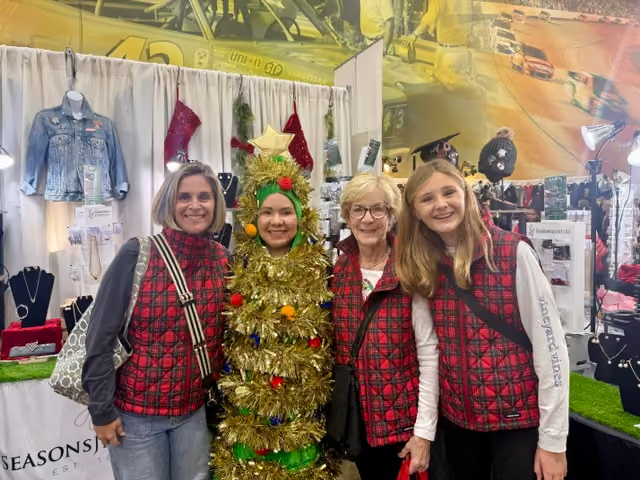
























































%20-%20thumbnail.avif)





%20-%20thumbnail.avif)

%20-%20thumbnail.avif)

.avif)




%20-%20thumbnail.avif)