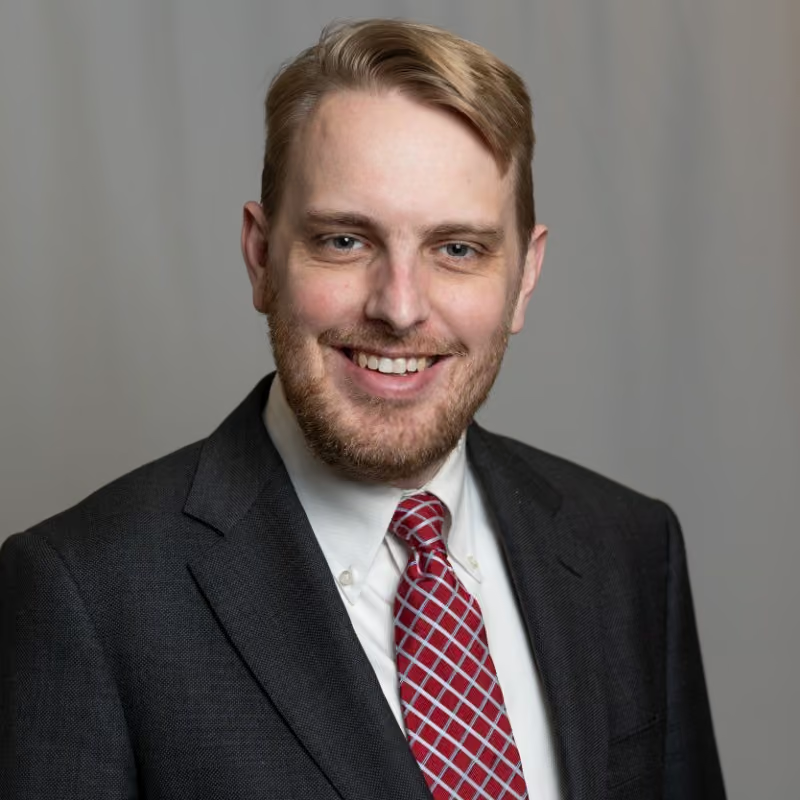
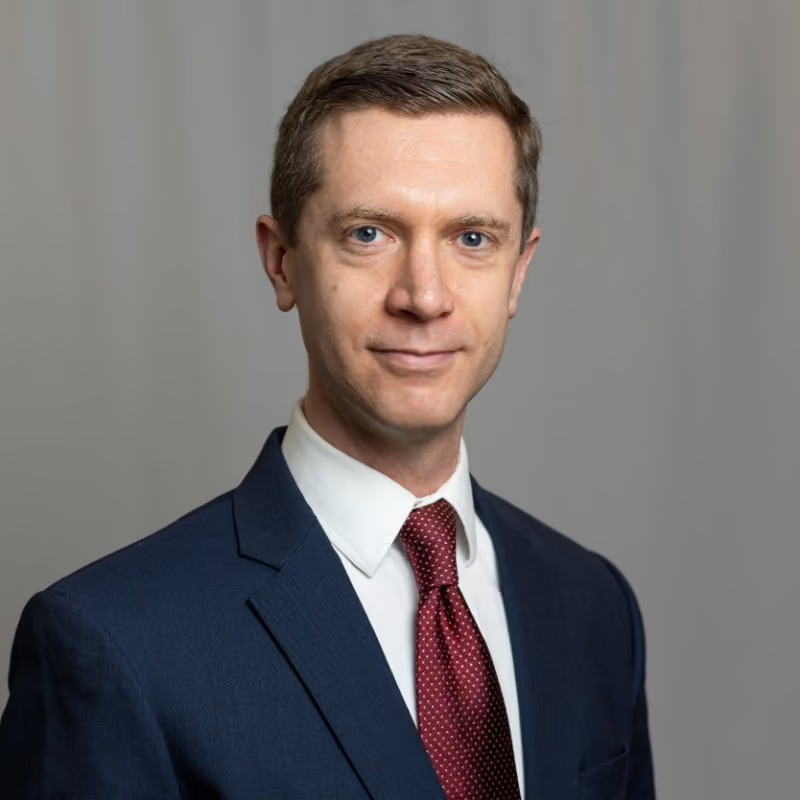
[00:00:00 - 00:05:58]
Host: When wildfire tore through Yellowstone, it destroyed every park sign in its path except the porcelain enamel panels made by today's guests. Business. The Park Service just wiped those panels clean and reinstalled them elsewhere in the park. That durability is the calling card of Windsor Fireform, a 40 year old fabricator of signs and public art in the Seattle area, acquired in December by Andrew Sova and Alex Clark.
Andrew and Alex met at bcg. Andrew, a finance guy with years in small business credit. Alex a former army infantry officer, watching AI erode the moats of software and professional services. From their perch in the Bay Area, they went the other direction.
A niche manufacturer whose product porcelain enamel fused to steel isn't going anywhere. Their signs are in New York, subway stations, in Yosemite, even underwater at dive sites. Listen for how conservatively Andrew and Alex structured their SBA deal. 30% equity cash on the balance sheet, a line of credit at closing.
That prudence reflects the project based revenue of the business they were buying, but also their long term vision. Windsor is the first acquisition of their Holdco Novo foundry, which they intend to hold indefinitely. Also listen for the working capital segment in a business that takes 40% deposits. The works in progress negotiation was, in their telling, a manifesto generating saga.
Here are Andrew Sova and Alex Clark, owners of Windsor Fireform. The SBA released rule changes week before last and they are meaningful. Some welcome, some not so welcome. In a webinar today, Thursday, leading SBA loan broker Heather Anderson will walk us through the key changes that affect SBA business buyers the new minimum equity requirements, the new debt service coverage ratio requirements, new requirements for acquisitions with a purchase price of 3 million or more, the expanded seller transition period and more.
This is invaluable knowledge for the SBA business buyer and Heather is the expert to explain it. The webinar is New SBA Rules what Business Buyers need to Know and it is today, Thursday, August 27th, November noon Eastern. Link to register is right at the top of this episode's show notes or on the Acquiring Minds homepage, Acquiring Minds Co. Then on Tuesday we're hosting Jeff Homer, founder and CEO of Ensemble Performing Arts.
Jeff's original interview on Acquiring Minds is a classic and his update episode aired just this past Monday so you may know his story. From buying a single music school to building a platform of 125 plus locations. On Tuesday, Jeff will break down the architecture of a roll up and the financing strategies that make repeated acquisitions possible. He'll cover why fragmented industries can create compelling opportunities for rollups, how consolidation creates value as a platform grows how committed capital vehicles allow you to raise once and deploy across multiple acquisitions how seller rollover equity can reduce capital needs and align sellers with the larger platform the role of debt from SBA and seller notes to conventional financing and delayed draw facilities.
The webinar is architecture of an entrepreneurial roll up and it is this coming Tuesday, September 1st noon Eastern. It's going to be fantastic. Link to register is right at the top of this episode's show notes or on the Acquiring Minds homepage. Acquiring Minds co.
Welcome to Acquiring Minds, a podcast about buying businesses. My name is Will Smith. Acquiring and existing business is an awesome opportunity for many entrepreneurs and on this podcast I talk to the people who do it. You know Enzo Technologies as one of the leading IT managed service providers serving the search community.
Led by Nick Akers, an Acquiring Minds guest who bought the 35 year old business. The team at Enzo regularly works with searchers and their acquisitions and one feature of acquired businesses that Enzo is seeing over and over is the need to implement cybersecurity promptly during the transition. So many acquired small businesses either have glaring vulnerabilities, lack security best practices or both. That step one to de risk the deal you just closed should be addressing these issues.
INSO is your full service IT MSP for post close stability. They assess your target, surface the biggest risks in plain English and give you a day one through 30 plan to cut exposure, prevent downtime and even find cost takeouts like bloated telecom bills. Check out enzotechnologies.com in Z O or email Nick directly at nicknzotechnologies.com Andrew Sova Alex Clark welcome to Acquiring Minds.
[00:05:58 - 00:05:59]
Guest A: Thanks for having us Will.
[00:05:59 - 00:06:25]
Host: Excited to be here Will Andrew Alex, you guys bought a 40 year old niche manufacturing business back in December 2025. The long term goal here is to build a Holdco. So we're going to unpack this first acquisition, how it's going and how it has affected the vision for the future. Holdco.
Let's begin with some background on both of you. Andrew, if you could go first and then Alex will go to you.
[00:06:25 - 00:07:59]
Guest A: Yeah, I'd love to. So I came out of college and wanted to get into finance and financial services. Worked at a small investment bank that was focused on wealth managers. So we had helped wealth managers buy and sell their businesses that was very very focused on one industry, wanted to broaden out so joined a credit fund where we did special situations and distressed lending to small businesses, usually in a second loan capacity.
This is where I had my first opportunity to see search funds in action. We actually financed a few search funders to buy their businesses. That's when I had this realization that this could be a really cool opportunity for me to do something like this. From there I went to business school at Berkeley.
There I was looking for meeting a business partner like Alex, who I eventually met not at Berkeley, but was really interested in rounding out my finance experience with sales and marketing and leadership. And then from there went to Boston Consulting Group. I felt like it was a opportunity for me to see what the kind of gold standard largest companies were doing in sales and marketing, in project management, all of that stuff, and to actually bring those skills back to lower middle market businesses. During that time I was really keeping an eye out for someone to partner with and that's when I met Alex.
And I think this would be a good time for Alex to give his background.
[00:07:59 - 00:08:01]
Host: Great. Yes please, Alex.
[00:08:01 - 00:08:01]
Guest A: Sure.
[00:08:02 - 00:09:12]
Guest B: Originally from the Midwest. Midwest, born and raised. I think that's important because I got some blue collar roots there. That my escape from the Midwest, as I like to call it, was through a military academy.
So I said undergrad at a military academy in New York, which naturally led me to become an officer in the US Army. So I was an infantry officer for about five years. Decided it was time for me to get out. Wasn't quite sure how to get out, how to get into the private sector, how to get into roles like Andrew described.
He was doing all those cool, sexy finance roles and so used business school as well to pivot. So I did my MBA at Stanford, just up the street from Andrew. And post business school I too went to Boston Consulting Group. I thought it was going to be a moment for me to learn.
You know, I've had some people skills, I had some leadership skills, but I didn't quite get a chance to apply these business strategies that I had learned at school. So I went to Boston Consulting Group for about a year to two years, met Andrew and luckily we were able to both have a friendship but also a professional relationship that we thought were founded on some of the same values, kind of where we're from, our families, what we wanted to do, impart upon the world and that let us, let us here. Great.
[00:09:12 - 00:09:13]
Host: Thank you for that background.
[00:09:13 - 00:09:13]
Guest A: Guys.
[00:09:13 - 00:10:20]
Host: I'm going to circle back on the, on the partnership here in a second, but first on the consulting bit that you both went to into consulting to bcg, of course, one of the premier consulting firms with the idea that you would absorb, learn what you could and then apply it and then Apply it in your own future careers. And that is sort of the value proposal to ambitious young things. And then also I'll say that often on the podcast people, or just in our world, people are feel most lacking if they don't have a financial background and they think that they need that to go do this. More recently, I've had a few former consultants on who've, who've really talked about how valuable their consulting experience.
So not hardcore financial background, not private equity or banking, but consulting and how that served has served them very, very well here in this world. How do you, how do you react? Did BCG give you what you wanted? And have you, have you found that in fact you've been applying it in this project?
[00:10:20 - 00:12:49]
Guest B: I could give just my perspective. It's probably slightly different than Andrew's for bcg. For me, it was kind of twofold. It was, you know, frankly, it was a massive confidence builder for me coming out of the infantry, coming out of business school.
It was a lot of again, people stuff. But in terms of the actual business strategies, how to think like a business person, how to think about numbers, how to think about the hard decisions you have to make when you actually have a pnl. And it's not just, you know, in the military, everybody has to be there. There's no hiring decisions or firing decisions or budget adjustments.
It's very limited there. And so I had a lot of those, what I would consider soft skills, which I think are very important for any leadership position or management. But the idea of these more harder skills, I didn't have a chance to implement them prior to bcg. And so I'd say post bcg, the number one thing it gave me was just a lot of confidence that I can hang with, with, with the people at BCG and at some of these premier consulting firms and these premier companies that I did have what it takes or what it took.
So I think it was one. The second thing I'd say gave me was reps at some of this consulting or business framing. And, and so, you know, the idea when you're preparing for a consulting role is creating these frameworks, which is a very vague and word that we use so much in the consulting world. But the idea of saying, hey, here, what are all the possibilities?
What levers could we pull and then start pulling them? You know, that's a whole different skill set of execution. But getting reps at practicing, hey, what is everything we could be looking at was, was really important for me because it's just something I haven't Quite done outside of, you know, a very offensive defensive type of tactical metrics type of way. So that was very helpful for me.
Just to touch real quick on your, your finance point of your financial piece about some people being concerned about that I fully admit, definitely was. You know, even after doing one acquisition, I think there's a world where I could get a great Q of A provider, maybe a great fractional CFO and maybe I could do this on my own. But I promise you I would not feel nearly as comfortable as having been partnered with Andrew. With his background, it gives me a lot of comfort at night and allows me to sleep at night.
I couldn't imagine doing it without his background, obviously his present brain and mindset, but without even just knowing his background exists. It would be something that makes me concerned if I didn't have that experience in the financial world.
[00:12:51 - 00:14:08]
Guest A: I think one telling factor, what happened when we were going through the process, we used an SBA loan and part of that is signing a personal guarantee. Both Alex and I especially Alex, comes from a background where any amount of debt is bad, never wants to have any amount of debt. And so signing a personal guarantee for multi million dollars is very, it's scary. So you know, my background working in credit and small business lending, we, you know, I was fluent in personal guarantees and what it takes to underwrite a business and looking at the, really the worst case scenario and figuring out what our path would be to repaying back this debt in a worst case scenario.
So, you know, I think he put a lot of confidence in me to say, hey, this is a serious thing that we're doing. There is definitely risk associated with it. But as far as all the companies I've seen in the past and underwrote and you know, I was working in the space that was underwriting cash flow and second lien positions, I feel pretty confident, very confident in signing this guarantee. So, you know, I had to do some, you know, walk Alex through some of the financial implications of what I was seeing and what made me feel comfortable and that ultimately got him on board.
[00:14:09 - 00:14:27]
Host: That's interesting. Oh, let's, let's linger here for a second. Andrew, my impression was that because you had come from private lending, you were more conservative on the debt piece because you'd seen up close and personal many times, bad situations, distress situations.
[00:14:27 - 00:14:28]
Guest B: Right.
[00:14:28 - 00:15:12]
Host: But now it sounds like Alex, you're, you're actually the conservative one. I have also a buddy from the Midwest who just thinks debt, if you have debt, you got to get, get rid of it. No Matter what, debt is always bad. He's unable to, to see it as an instrument.
Obviously it's a, it's a inherently more risky instrument that should be handled with care, but it. Sure. I mean, without debt, you don't have leverage. Debt is leverage.
So I have been, I've hit my head against the wall a few times trying to explain this concept to him and he just, he is just constitutionally unwilling to, to accept this. Now, I'm not saying that you're that way, but, but it is interesting. It's. Maybe there's that kind of Midwestern conservatism running through here.
[00:15:12 - 00:16:43]
Guest A: I think that's, I think that's right. I think I am very conservative when it comes to debt. And that's what made Alex feel comfortable that I was on board. You know, I did a lot of work before we bought the business to figure out what that downside would look like, to make sure that we had a line of credit and the right amount of liquidity going in, that the backlog was strong.
All these things from a credit investor would want to see. I was making sure to check those boxes and then helping walk Alex through all of those and helping him understand, okay, this would be worst case scenario if this happened and what we would do if we did that, what our levers would be. So that was an exercise that we had to go to. I think one of the things that helps him understand or really got me on board as well.
Cause I wasn't lining up to sign a personal guarantee generally. So thinking, okay, this is going to be a temporary and it is a tool. And if we're going to make a bet on ourselves and we believe in ourselves, we should have no problem guaranteeing this loan because we're going to be successful here. And if we didn't think we were going to be successful, we would definitely not sign up for that guarantee.
So part of it was making sure the business could support the loan, making sure we crossed our or dotted our I's, crossed our T's and make sure we are really tight on that. But then another part of it is like you are taking a bet on yourself. And if you feel confident enough to go out and buy a business and feel like you're going to be successful in that, then that is just another tool for you to use in that process.
[00:16:44 - 00:17:14]
Host: Very interesting. Well, well, this how you used debt or how you structured your deal prudently. And we're going to hear about the working capital of this business is going to, is going to, is going to be a theme that we keep coming back to. So for now, let's carry on with the plot.
I do actually just want to hear two other things on the partnership piece. Andrew, so it sounds like you were as you, the earliest moments you knew you wanted to do this with a partner. Anything more to say there? Why were you so partner oriented?
[00:17:15 - 00:18:07]
Guest A: I think, you know, there was always in the back of my mind since I was working at this credit fund that I wanted to go out and buy a business. It was always just a question of if I was going to do it with a partner or without a partner. I think the now that I've done it with a partner, I don't think I would want to do it alone. I think going through the search process alone would have been incredibly difficult, challenging.
Added a lot of question marks of like, am I doing the right thing? Should I do this? But having a partner through that process to just bounce ideas off of and stay involved in the ups and downs of the search process was helpful. And then actually once we're in seat here, Alex and I both have very accretive skill sets or complimentary skill sets.
So being in seat here, we've been able to do, do so much more than either one of us would have been able to do alone. And we're seeing the results of that now, which is very exciting.
[00:18:07 - 00:18:08]
Host: Great.
[00:18:09 - 00:19:42]
Guest B: Alex. Yeah, I was just going to say if I take the same question, search was not on my radar or business acquisition was not on my radar prior to business school. Again, you know, different world that I was in. So it wasn't even something I was exposed to.
Got exposed to it very quickly at Stanford. It's one of those hubs that, that teaches about search traditional, self funded. You know, they have all the reports which Andrew and I have read all of them through and through. What was interesting for me though, coming out of business school and kind of BCG wasn't that I needed to get into acquisition.
It was more so I wanted to be back at the helm of where the responsibilities that I had actually impacted people in a positive and or negative way. I think advising in a very strategic way at bcg it's exactly that. It's advisory and you know, you advise to make this move or this move and maybe they make the move and it's a great, you know, half a billion dollar revenue lift or whatever it is. But getting to see that impact on people has always been important to me from my upbringing, but also the military.
And so I knew I needed to get back to that, you know, working with Andrew and talking about what our next steps post BCG and hearing his thoughts on ETA and searching. You know, it obviously resonated with me where if you own the business, at the end of the day, it's up to you to make sure that the team there succeeds and benefits from the success that you guys are able to achieve. And so that's really where it resonated with me. It was something I was interested in but didn't quite realize how exciting it was until talking with Andrew.
[00:19:44 - 00:20:51]
Host: Longtime acquiring mind sponsor Aspen HR is now part of Engage peo. Engage helps acquisition entrepreneurs, business buyers like you, take care of their new employees and build trust from day one. Whether it's an asset or stock purchase, Engage provides a turnkey solution for payroll and taxes, hr, admin and technology, employee benefits, retirement plans, workers comp, and more. They're also always a phone call away so you can receive HR guidance from licensed employment attorneys promptly as those inevitable people issues come up.
With Engage managing your people infrastructure, you as new owner of your business can focus on building relationships, operating the business and driving growth. To learn more, contact Jenny thierno directly at jth j t h e a r engagepeo.com or click the link in the notes.
[00:20:53 - 00:22:22]
Guest A: I would echo on that if I, if I can will the the time working at this credit fund. You know, there was a lot of times where the, you know, you're working with small business entrepreneurs. They have a business that's a, a gem of a business and sometimes it's successful despite them. And I don't want to talk any crap about those owners or anything like that, but I felt like if they could do it, I could do it.
And so I always had that in the back of my mind. I am lending money to these people. There's a lot of opportunities, just kind of basic blocking and tackling that they could be successful and grow their business or do XYZ to be more profitable. But there's only so much you can do as a lender in those situations to influence that.
And I felt the same way at bcg. When we're advising companies of, you know, we can do all this analysis, we can understand the market through and through. We can, you know, know exactly what they need to be successful. And then you ship them a document and then you have a big meeting and then that's really the end of it.
And everyone kind of, you know, wipes their hands and they're done with it. And I just thought if we're going to be Doing all of this work, all of this intellectual, rigorous work and not actually benefiting from it ourselves. Of course, you know, BCG got a giant fee for doing that, but you know, the best way to benefit from, from this, doing this analysis and actually executing on these things is actually to own the business and be able to make those decisions. Once you do the analysis and understand a market through and through.
[00:22:23 - 00:23:08]
Host: Yeah, well, this, that feeling or that that pattern of being one step removed from the result is something that I've heard consultants dislike about consulting, that ultimately you're, you're making recommendations but don't get to have your hands on the actual implementation. You hear it from investors, investors also will feel a little bit removed. Maybe the occasional podcaster might, might feel something similar. One other thing, guys, on business school you had said, I don't think we touched on this in our pre call, Andrew, but you'd said in your, in your note to me about the explosion of AI happened while you were at business school.
This shaped both of your thinking. In what way?
[00:23:09 - 00:24:29]
Guest A: Yeah, for us, you know, we went to business school at Berkeley and Stanford, which is really the epicenter of the AI boom. And I think ChatGPT came out in 2022 and or 2023, right around that time. And the writing was kind of on the wall of many of these software and professional services companies. We felt like their moats would disappear.
We didn't have solid evidence of that, but just seeing where the trajectory of things and how quickly those tools were advancing, we thought there's going to be massive amounts of disruption in software and professional services. And that really let us, combined with our background led us to start focusing on finding, you know, niche industrial services companies and niche manufacturing companies. So that sort of background was kind of a zig and zag. When we saw everybody moving into AI, we thought we need to go find something that's been around for 40 years that we feel like isn't going to change and so that we could get comfortable that that business has staying power and that the things that we're building actually has a competitive advantage and build some sort of moat there.
And we felt like the professional services software side of things was, you know, that moat was deteriorating kind of in front of our eyes.
[00:24:29 - 00:26:01]
Guest B: I would just echo the same. I think being at being at that epicenter, as Andrew called it during that time. I think it built confidence. I think the other thing is transitioning to BCG right at that time and watching how BCG and our other consultant cohort and friends at different firms were integrating AI in a very serious way, getting to see how that AI was getting utilized for client needs as well.
So understanding, hey, here's all the stuff we've been doing in the past for customers, for clients, here's all the stuff we're doing at an even greater capacity for clients and customers due to the fact that we have AI. You know, kind of, it gave us, it gave us a little bit more power in the sense of we can do more now in terms of due diligence or analyzing companies, understanding market trends, even analyzing financials with some of these tools that are now, you know, democratized for us. So I think it allowed us to even move a little quicker. And then I think at the same point as Andrew mentioned for me was, you know, I have a lot of friends that are at these massive AI firms or have their own startups and trying to think, do I think I can outcompete them in, in a search capacity or an ETA capacity if I'm not fully focused on some of these frontier technologies.
At the end of the day, it helped us dictate what are some of the industries we want to look for. We've had a lot of friends that are in search. We're rolling up different software plays over the last five years, the last 10 years they'd have a software platform roll up. We decided that wasn't for us.
As Andrew mentioned, we want to find things that had historical value, staying power and aren't going to be replaced anytime soon by AI andor robotics.
[00:26:02 - 00:26:21]
Host: Sure. Well, it's interesting, I, I think that AI has probably been a boon to eta to the extent that ETA is often the profile of target business as a trades kind of blue collar, very physical business. AI has been a boon to that
[00:26:21 - 00:26:23]
Guest B: because for the very thesis that you
[00:26:23 - 00:26:48]
Host: just explained, software is threatened by AI. And so where in the economy is AI going to reach its tentacles last? And it's probably in kind of very manual stuff, types of businesses that we talk about most commonly here. Okay, let's turn our attention now to the business that you did buy.
Tell us how you found Windsor Fireform.
[00:26:50 - 00:28:28]
Guest A: Yeah, so we chose to go through a brokered search to find businesses that were listed and had, you know, sellers that were actually intending to sell. We found, or we thought about this a lot and we wanted to move quickly and we felt very confident that once we got on the field that we'd be successful. So the most important thing for us was actually transacting if we were going to make this investment at this time in Our careers, we sort of gave ourselves 12 months and we said, we're either going to buy a business in this 12 months or we're going to go off and do something else. So having that sort of threshold and pressure to actually go out and buy a business during that time, we decided to do brokered.
The reason that was important for us was to get on the field. But we also saw a lot of our classmates during this time struggling doing traditional search, struggling to actually close and find a business. And a lot of those traditional searches, there's a lot of pressure and it's sort of the default is to go and do proprietary search. And we just heard a lot of stories about how difficult it is to first identify a business, second, make contact with someone, and then third, actually convince someone who wasn't actively looking to sell their business to actually sell it.
And so all of those things combined led us to make the decision to focus more on the brokered search. And we felt comfortable that even in a auctioned business, that was priced to, not necessarily perfection, but at the market rate, we felt comfortable buying that business because we felt confident in our ability to grow it and improve it after buying it.
[00:28:28 - 00:28:40]
Host: Great. And what about the Holdco vision? Where did that enter the picture as opposed to just buying a single business? It seems like you had a grand vision from kind of the earliest points in your search.
[00:28:40 - 00:29:32]
Guest B: Yeah, that's right. Andrew and I, before we decided to actually actively search, which I remember the point I think was March 2025 specifically, we had about two months where we were just talking regularly, if not once, maybe two or three times a week. And it was really about values, alignment. It's very Stanford and Berkeley of us, very fluffy social dynamics.
But values were important to us not only because of the schools we went to, because of our backgrounds. One of the biggest things we aligned up around really quickly was people. And I know a lot of people say that, but here's how it tangibly and tactically came to life was Andrew's background in lending, but also being at BCG together. There's a lot of cool projects you do with these cool euphemisms like reorg or something, or headcount adjustment, which ultimately
[00:29:32 - 00:29:34]
Guest A: means at the end of the day,
[00:29:34 - 00:30:51]
Guest B: there was individuals at the bottom who were getting let go or who were going to kind of suffer the consequences to hit these ROI numbers for some PE firm. And not saying all that's bad, not saying all PE is bad. I know there's give and take, but it was something with us that was A little uncomfortable, especially because of how we aligned around people that we grew up with and our families and kind of the blue collar roots. And so for us what was most important was that we would always have the decision making power to, to the greatest extent we could in order to do what's best for our teams that are at our portfolio companies, which we do in turn think would be best for the company and the investors and yada yada, yada.
And so for us to do that, one of the biggest things was to not have dedicated liquidation events or expectations where we were expected to sell at a certain timeline which would force us to make certain decisions that might affect employees. We don't know who's going to buy from us. Is it going to be a big fund that's just going to come in and chop people like oftentimes we were hired to advise. We really wanted to stay away from that.
The best way we could stay away from that is let's eradicate to the best of our ability the pressure to have to exit. And the only way to eradicate that is have an indefinite Holdco period or holding period. And that's how we landed on holding company.
[00:30:51 - 00:31:13]
Host: But to be clear, when I think Holdco, I think multiple businesses that you'll assemble a basket, a portfolio of small businesses. Often that does also imply long termism, but not necessarily. What you're talking about here is the long termism specifically but not necessarily buying multiple businesses over the years or. Yes, both.
[00:31:13 - 00:32:09]
Guest B: Yes, both, you're right, I honed in on indefinite hold period. But Holdco in terms of having multiple businesses portfolio is important for us just for having that team specifically in that industrials blue collar piece. We think we have some of the experiences that we've been lucky to have that we think can be transcended amongst multiple companies, benefit multiple people. One of the KPIs we have internally is just employee count.
Not against revenue, not against profit. Obviously, you know, just hiring to hire it. We know it's not a good strategy, but that's something internally for Andrew and I to keep track of because the idea of having an increased employee count over the next year, 10 years is important to us because we like to think about as you know, providing food, providing scholarships, providing education, providing a life for people. That's what's really important to us.
And we think of the best way to do that and kind of de risk a singular company portfolio is, is multiple companies.
[00:32:10 - 00:33:09]
Host: I just heard a recent definition from, from a friend for entrepreneurship. We were talking about what is it, you know, what, when are you an entrepreneur? When are you not? Whatever.
And she said that my definition of an entrepreneur is that you create jobs. And that sounds kind of like the politician's definition of an entrepreneur. But of course, that's not, that's not what she meant at all. And I had never thought about it that way because kind of underlying so much of entrepreneurship and sort of high, you know, business at the most elite levels is purely how efficient the business is and how much return it's generating on invested capital.
And usually that means more with less people. It's almost, it's almost always the more people, you know, the worse, not the better. So anyway, I thought that was. I really, I never heard that definition of entrepreneurship.
I really liked it. And here I hear you saying something in that direction.
[00:33:09 - 00:35:06]
Guest A: Yeah, I think that's a, you know, KPI that we track that would measure our, you know, impact. And we like to think that we're creating a culture here where people are helping each other and they have fulfilling work to the extent that they can and that that will, you know, reverberate through the societies that we, we operate in, in the local communities here. I was going to go back to the, the Holdco piece and one of the things, when I was in college, I got really into value investing and, and read, you know, Benjamin Graham, you know, the Intelligent Investor, and you know, Warren Buffett often talks about diversification and, you know, putting all your eggs in a small basket and watching that basket closely. And I think when you look at the math, if you get up to something like 12 to 15 diversified uncorrelated assets, that that is kind of the optimal amount of diversification while also being able to increase returns.
And that was just really appealing to us. I think the way I think about it, when we're working in these industrial companies and wanting to buy more of them, the idea of being sort of an invincible industrialist where whatever, you know, whatever waves of disruption within the industry, that we would end up being able to benefit and being able to weather through that and that we would ultimately be able to be a secure employer to people, to make sure that we are a place where people can depend on coming into work and all that stuff. So that was really important for us from a diversification standpoint is if we have multiple companies that are in uncorrelated industries or end markets, that we would end up being able to endure all of the hardships and hard decisions that ultimately trickle down to the frontline employees.
[00:35:07 - 00:35:14]
Host: Two reactions to that. First of all, Invincible industrialist. Was that off the tip of your
[00:35:14 - 00:35:16]
Guest A: tongue or is that, is that, is
[00:35:16 - 00:35:19]
Host: that a working phrase that you guys use internally?
[00:35:19 - 00:35:21]
Guest A: Because I love it. Yeah, work, working phrase that we're working on.
[00:35:23 - 00:35:50]
Host: The invincible industrialist. The other thing I like about your hold coat, your whole explanation there, Andrew, was that it's about diversification and that is the true pure reason for a hold coat. So good to hear that the reason you're doing it is not because it's sexy, but because it actually serves a purpose. Holdco model.
Okay, we got to get to the business itself, guys, so I'm going to start moving us a little bit more quickly. Okay, tell us about Windsor Fireform. What is this business?
[00:35:51 - 00:37:35]
Guest B: All right. Windsor Fireform is a fabricator of signs in public art. The best way to think about it is if you look around you outside, you'll see stop signs, you'll see signs on windows, you'll see massive murals installed on the sides of skyscrapers. Whatever it may be.
If you look outside and you see graphics of any kind of, it's applied to some material. Could be high pressure laminate, could be vinyl, it could be powder coated aluminum. These are all things that Andrew and I have come to learn and love and or hate over the last 12 months. But what's important to know what makes ours different, we do the same thing in terms of applying graphics.
What makes ours remarkably different is that it's porcelain enamel fused to steel. What that means in terms of, to customers of the rest of the world is that our signs will never fade. So the colors never fade. They'll be color true.
And if they were to ever get graffiti or anything like that, you can wipe it off and clean it. Or if you look at any of those other signs that we mentioned, you look outside. If it's not porcelain, Namalon steel, none of those attributes are true. They get graffitied.
You can't wipe it off within three years or five years. That's going to fade, if not completely deteriorate. And so the best way to think about it, it's the most premium material there is in terms of signage and public art. When putting any type of graphic or design on a permanent material.
So that's what we make here. There's very few people in the world, very few companies in the world that do it, very few in the United States. It's a, a niche because it's not something, you know, that we would know about unless you dug into materials or you're an architect or a designer and truly knew the specs. Of these substrates, but not a niche in terms of the application.
I mean, the application of real life signage will. Has been around for, for hundreds of years. And we are very long that it will be around another 100 plus years.
[00:37:36 - 00:39:00]
Guest A: Yeah, it's. It's sort of the gold standard. Well, it is the gold standard in outdoor graphics. And when we were doing our customer calls, going into this business and doing our due diligence, One of the things that a customer told us is, you know, porcelain enamel and Windsor fireforms.
Porcelain enamel. It's like the Ferrari of signage. You know, it's not right for everybody. But there are applications that it is perfect for.
Certain especially very high traffic, very high profile institutions that are gonna need something that is gonna stay around for a long time and also look ultra premium and give the place a sense of being a special place. That's one of the industry that we're in, is in placemaking. We're just a subset of that. So that was one of the things that was sort of a green light for us, especially knowing that the company did not do a lot as far as marketing and sales and outbound of being able to have this story that, you know, we are the best.
We're ultra premium. We're not the best for. We're not the best for every application, but we are the best. And we can, we can hang our hat on certain attributes of our signage and our panels that are undoubtedly and undeniably the top of the market, which is a marketer's dream, because you can do all sorts of things to demonstrate that and show that and actually position yourself of, you know, we are, you know, standalone here and the super ultra durable signage space.
[00:39:00 - 00:39:06]
Host: Give me some examples of applications. Where are your signs installed?
[00:39:06 - 00:40:19]
Guest A: Yeah, so we're very large in transit authorities. So for example, we're up in the Seattle market and sound transit is a large dominant transit authority up here. We do all of the transit signage for them. So all of the station signs, all of the wayfinding signs for them.
And then we also work with them to fabricate their public art. So each station, because of the percent of the arts programs that are in a lot of different states, each station will actually have public art installments. And those can be panels, they can be clear glass, they can be tile, they can be all of these things. And we're one of their preferred fabricators to actually fabricate that because the material for several reasons is very, very great.
So one of the things that we're really well known for is being able to Custom color match. So we've matched 20,000 colors over the 40 years of this business. So we can do that, we can do photographic fidelity. So capturing little painters strokes and everything that they do, we can capture all of that.
And then it's in a permanent medium. So scratch proof, vandal resistant, UV fade proof. And we have a 25 year fade free warranty on all of our products.
[00:40:19 - 00:40:55]
Guest B: To your question of where it's at, will you know some of the customers we can name? You know if you look at New York City Metro stations, we're in there, Seattle Transit, as Andrew said, we're in Yosemite. You see those interpretive signs behind Andrew's head. Like those are the type of signs that are all around parks.
We also are in deserts. We have a couple signs in the ocean for scuba divers to know where they're going. We have a couple signs top of mountains. We're in New York, Yankee Stadium.
We're anywhere and everywhere. Which was quite incredible for us to come here and realize we've seen so many Windsor signs and had no idea.
[00:40:55 - 00:41:08]
Guest A: It was one of those things where we put together the customer logos for the investor deck that we were putting together. And I sent it to Alex after I was finished. I was like, if we were a software company, we'd be able to raise $100 million off of just this logo sheet right here.
[00:41:10 - 00:41:11]
Host: Those are amazing logos.
[00:41:11 - 00:42:14]
Guest A: Yeah. And then two proof points, just about the durability. So Alex mentioned that we have multiple signs installed, interpretive signs installed underwater at different dive sites to show people where they're going while they're diving. Which just proves to the, you know, non porous nature of them and how durable.
You know, totally waterproof, totally fade free. And then we also in, in Yellowstone that we have installments there, there were huge forest fires, wildfires that went through there and there were multiple sign types down in a row. And the National Park Service actually did a report on this. There were R signs and then there was high pressure laminate.
Then there was fiberglass embedment. The fires came through, they destroyed everything, melted everything, melted the frames on our sign. So the aluminum frames totally melted that they went through. They picked up our panels, they wiped them off and then they reinstalled them in another place in the park.
Wow. Wow. So just goes to show that these are incredibly durable products and customers very really value that.
[00:42:16 - 00:43:44]
Host: If you ask owners in the ETA and search community which insurance broker provides highest quality work, great outcomes and has a practice dedicated to searchers and acquisition entrepreneurs, one name Comes up again and again. Oberle. Oberle Risk Strategies has worked with hundreds of searchers over nearly a decade and is in fact led by a two time successful searcher, August Felker, which makes Oberle, a specialty insurance brokerage for searchers, by a former searcher. And if you've got a business under Loi, Oberle will provide complimentary due diligence on that business's insurance and benefits program.
An easy, no risk way to get to know August and the team at Oberle to take advantage. Check out oberly-risk.com that's o b e r l e-risk.com link in the notes. What about the, the market here? So, so now I'm going to pick at the business a little bit as, I mean as high value as the, as the product is and, and those logos are just amazing and the value prop clear how many use cases are there?
In other words, how big is this industry? It sounds like you guys might be a leader in the industry. That sounds good from a growth perspective, maybe it's not so good. How did you think about the TAM here?
[00:43:44 - 00:45:29]
Guest B: Well, I, I think the question about the market was something that Andrew and I thought about a lot and it's still something we think about a lot. Obviously the tam is the market growing. There's two things to think about is what's the overall signage and public art market. And that's one of those where the TAM is massive.
Again, if you walk outside and you look around, there's the market. Anything with a graphic on it could be porcelain enamel. Now if we were to zoom in a little bit more, it's, well, why isn't it porcelain enamel? Obviously there's a lot of cost prohibitiveness that people need to think about and that's also probably why the number of manufacturers that exist is less than the number of manufacturers for stop signs, for example.
So there's less people necessarily willing to pay that premium. I think that's due to a lot of things. Maybe it's, you know, corporations becoming more financially tight or financially savvy, giving the pressure to find the cheapest thing and also maybe the idea of having an old porcelain enamel chevron sign, you know, 30, 40, 50 years ago was this cool idea and now it's a little bit different now it's not people wanting that necessarily retro look. They want the premium material even though we can do modern looks.
And so back to the market question is, what's the market for porcelain enamel? Something Andrew and I think about constantly is we still think it's massive. We still think it's closer to looking at all the other signs in public art. How much can we capture of that?
A lot of times what we have to think about is who truly values that the most. And that's oftentimes the designer and architect. The person who's truly designing to spec something that's going to last forever. We spend a lot of time there and we find a lot of success that they're still hungry for it.
They're just looking for the right manufacturer that can hit the spec and that's us.
[00:45:31 - 00:47:10]
Guest A: And one of the things too, just to. Just to extend off of that when we're looking at the different applications. Because one of the things we are concerned with is that maybe their allocation and wayfinding, for example, is too high. And for whatever reason, new projects that don't need wayfinding are going to go away or whatever.
We got really comfortable in the fact that they work with national parks, regional parks, state parks. They also work with transit authorities. They also work with schools and universities. So the end markets were diversified as far as what they're working on.
So we felt really comfortable that there was going to be this core market that existed for this business and what we can provide and it was going to be diversified across different end markets. That said, I think there is something to say about the segmentation. So public art is kind of one animal and signage is another whole animal. And so we kind of have to think about our marketing functions and channels and what we're actually doing to focus on those different markets.
What we're finding is that the public art market, the projects are usually much larger, which is great, except for they're a little bit longer lead times to actually do them. So they can be more complicated and demanding for the team. And then you're working with usually public agencies that are sort of difficult to work with. So there's a little bit of that and then there's a little bit of the signage space that like Alex says, we're focusing on the designers and architects who specify us in by name.
And then once it gets to actual construction, we'd get specified in to be the vendor for that porcelain enamel.
[00:47:11 - 00:47:18]
Host: And what about the fact that this is a project based business? Is there. How did you think about that one?
[00:47:18 - 00:48:50]
Guest A: Yeah, that was one of the risk factors that we knew going in and had to get comfortable with it. Of course, many of your listeners will be looking for a recurring revenue, contracted revenue, all of that stuff. Check all of those boxes. This company really checked Most all of the other boxes that an investor would look for, search fund investor would look for.
And so we, we just had to get comfortable with the project based function of it. And one of the biggest risk factors with project based business, at least in our experience, was that the seller was so closely intertwined with the pricing, with the actual design of the fabrication and all of this stuff. So the thing that we hurried to do, we really sprinted to do as soon as we closed, was to put together some sort of pricing model so that we could extract all of that out of his head and, and put it into some sort of tool that we can use to actually price projects. I think that was probably the biggest risk for us going in and something we knew we had to mitigate within those three months when he was here in person with us full time.
So I think we have done a good job of mitigating that by designing a tool. But there were just so many rules of thumb and things that were in his head and just kind of hunches that he had that we had to put into kind of a formulaic function because there was no way that we could develop those rules of thumb or hunches like he had from doing, you know, 27 years in the business prior to us taking over.
[00:48:50 - 00:50:01]
Guest B: Yeah, that's right. Will, the only thing I'd add is yes, project based. Yes, Something Andrew and I lost a little sleepover during the diligence process. Always going to be risks.
The best thing we can do is just how can we de risk everything? Andrew said 100% on how we thought to de risk it. The other thing, how we de risk during diligence is just checking how many of these customers know the seller by name. You know, as Andrew said, a lot of the project based businesses are out of a seller's cell phone.
They're all his contacts, their lead gen is all through him or her. And so we want to just verify that's not true. As long as these customers were truly in love with the product and coming to Windsor for the product and not the seller, in looking at historical financials, as long as those have been stable and or growing, our thought was okay, those projects will still be there. We still think we can win them.
Now we think about every day, can we make anything a little bit more recurring or closer to recurring? What are like institutional relationships or franchise relationships that we can be vendor of choice or exclusivity. But at first it was, hey, how do we ensure it's not out of a cell phone? Great, now that it's not out of a cell phone.
How do we quickly get everything that was in his head on a model, which we did. And now it's can we create any type of exclusivity to get us as close as we can to recurring without being H VAC maintenance, contracting company?
[00:50:03 - 00:50:12]
Host: Right, okay, great. Guys, can we have some financials about the business, how large it was, also number of employees, et cetera, please?
[00:50:12 - 00:51:50]
Guest A: Yeah. So the business has 16 employees. 18 if you include Alex and myself who are there day to day. They do about 100 to 150 projects each year.
So a good number of projects and good number of customers that are somewhat diversified and there's a little bit of customer concentration. And then the company does about mid single digits of revenue. What was attractive to us with this company being a manufacturer, kind of notoriously has lower margins. This company actually has gross margins around 55%.
And then we were looking at historical net profitability and it's actually closer to 25 to 35 or 30% for EBITDA margin, which was really attractive to us and showed us a couple things. First, that the business was being run in a way that was pretty disciplined to start out with. There's always opportunities to improve that. But we wanted to know that that cash flow would continue.
And then another thing, that when you think about those margins, the top of those margins are really what price a company charges their customers. And if they're continuing to be able to achieve that price in the market, that is a signal that what they're providing is valuable to those customers. So that was a great indication to us that the company was unique, it was a niche manufacturer, but they were providing something that was of so much value to their customers that they were able to charge a premium versus other sign providers.
[00:51:50 - 00:52:59]
Host: Exactly. Premium pricing usually suggests pricing power, which usually suggests differentiation of the. Of the offering that you can command higher prices because you are differentiated. It can also suggest, as my partner in Mind's Capital always likes to point out, that he actually sees margins that are too high.
I don't think, you know, 25 or 30% is a red flag. But if, if margins start to seem really high in a business, that can actually be a negative because it just usually doesn't add up. Something is amiss, Something is amiss there. And then in either case, high margins can indicate an underinvested in business, an owner that's in harvesting mode, not investing in the future, and that there's going to be a more significant J curve when you get in there.
When you business buyer get in there because you're going to have to start presumably making these investments if you're, if you're thinking about setting the business up for success in it going forward. So, so those margins. So it could, it could suggest an underinvested in business. We're going to hear if that's the case or not here.
The deal structure, please.
[00:53:00 - 00:54:13]
Guest A: Yeah, so we use the SBA loan. We thought that was an incredible opportunity and vehicle and tool that we could use the acquisition loan, the 7A. We use that for about 60% of the purchase price and then we had investors come in for around 30% and then a seller note that was for 10%. So for most businesses that are highly recurring, I know a lot of H Vac owners or H Vac services contractors, they will, you know, capitalize the business a little bit more aggressively knowing that they have high recurrence of revenue and high contracted revenues.
We didn't feel so comfortable in doing that. And I think a lot of that comes from my background being a lender. Knowing that project based businesses do go through, you know, somewhat seasonality or you know, there's sometimes just downtime between different projects or large projects can be a drain on working capital. So we wanted to make sure that no matter what that we could, we could endure and continue to pay our, our debt payments for, you know, six, nine, 12 months into the future based on how we capitalized it.
[00:54:14 - 00:55:20]
Guest B: The one thing I'll say on the capital structure will just interesting for the listeners who don't have the finance background going back to that point. All this still a little bit to admit. A little, a little bit, I'll be honest here, a little bit. Still a little bit foreign, but definitely 12 months ago, all these words that Andrew just said in terms of capitalizing it in the debt, the debt service coverage ratio, all that was foreign to me.
The one obviously having Andrew was the huge comfort in terms of getting, figuring out everything and making sure the deal worked and having confidence in them. The other thing is the lenders that we were speaking with, you know, whether it's live oak or a loan broker like a Pioneer Capital, they all have their own checklist. And that checklist is, you know, it's a great checklist. They're not going to lend if they think there's these problems in the company as well.
And so it gave me a little bit more confidence even if I didn't have a finance savant that I was, you know, tied to with an operating agreement that, you know, nobody's going to lend to us. Likely there aren't going to be many people who are going to lend to us if, if it's a really, it's a business that can't support that. So it was very helpful for us, very helpful for me, very helpful for anybody who doesn't have the finance background.
[00:55:21 - 00:57:28]
Host: I will echo that. It is great that these vendors serve in some sense as their own sort of backstop. They're not interested in seeing you get into a bad deal. But of course, you know, don't lean on them too much.
You know, buyer beware. It's on you to make the final call. This is ultimately your decision. But yes, it is nice to know that there are a couple other brains around the table who see these, all these deals all day long and can give you some input and push back if you're being too aggressive.
On the point about being too aggressive. Let's just. Alex, to your, you know, because you were saying a year ago these terms would have been difficult for you. So, so you know, an acquisition is some blend of equity, cash and debt.
And so that debt to equity ratio is, is, is kind of the core of a, of, of, of a deal structure. And what we often hear in SBA land is that one of the things that's so appealing about the SBA loan is that it allows a very high ratio of debt up to 90%, which is pretty unheard of. And most of most other contexts of, of, of, of loans, whatever it might be, business acquisition, real estate acquisition, what have you, you got. And so when a deal has less leverage than that it might otherwise get away with, and there's a lot of equity in it, we call it, you know, an over or highly equitized deal.
And that's considered more safe, of course, because you basically are putting less debt on the business. The counter would be that, that you're not juicing returns as aggressively as you could. So this is all about finding the right risk reward. Okay, so in your case, the 30% equity for an SBA deal is on the higher side.
That's a, that's a, that's a generously equitized deal. So I'm just kind of restating a lot of what you've already said. The reason that you guys did that was to be because it was project based, because you're both kind of more conservative on your risk appetites or debt appetites. That's what that was all about.
[00:57:28 - 00:59:00]
Guest A: That is correct. And one of the important things to mention on this is that not only the debt to equity. But the closing liquidity was very important for us, and that's what we were dialing into throughout the entire underwriting process was how much closing liquidity would we need? How do we get that?
We are very communicative with our bank and lender to help them understand, hey, we're going to want to have cash on the balance sheet to first weather anything. But, you know, if we want to make investments in xyz, things that we identified before closing, we're going to want to have the cash to do it upfront as opposed to waiting for collections of, you know, outstanding AR and things like that. So that was very important for us. And then another thing that we took advantage of is a line of credit through the SBA.
So we had, we ended up closing with about 200,000 of cash on the balance sheet and then we had a line of credit for 250,000 beyond that. And there was a little bit of back and forth about the lender wanting to fund the whole amount upfront versus doing the line of credit. We really wanted the line of credit. From my background, I wanted the line of credit because, you know, if I'm not using the money, I don't want to be paying for it.
So that was very interesting for us and proved to be useful in the first couple months as we were managing the transition from work in progress projects that had deposits attached to them to actually doing the work on those projects and then ultimately collecting them from the legacy projects that the previous owner started.
[00:59:00 - 00:59:55]
Host: Andrew, there was a lot there. Let me ask some follow ups. So first of all, the liquidity in the business that you wanted post acquisition was something that you were really attuned to, very prudent. Something that first time business buyers might get wrong or not think about.
So you want to have, you know, regular listeners know, we harp on the working capital point. I don't want to call it the same thing because working capital means something very specific, but it's all of a piece. Okay. The acquitted, the liquidity that you have as owner.
Okay, so, so you were very, you were, you were really careful about that. The, and then the, so the two parts of the liquidity in this case were cash on the balance sheet, you said was $200,000 and then separately beyond that, a $250,000 line of credit on the cash on the balance sheet. So where did that come from, that $200,000 exactly?
[00:59:55 - 01:00:11]
Guest A: Well, it's, you know, kind of fungible when you get to having equity and debt, but ultimately that came cost or closing funds. So that was funded from the bank, essentially. So that's where that came from.
[01:00:12 - 01:00:28]
Host: So when you're doing your sources and uses, basically you're just throwing on another $200,000. And so that, as you said, it's kind of fungible, but, but essentially your. It's either coming from your equity or your debt, but you're, you're paying for it. Yeah, you're.
[01:00:28 - 01:00:28]
Guest A: That's great.
[01:00:28 - 01:00:46]
Host: Because, because it's financed. It's, it's, let's say it's kind of part of the SBA loan versus. And you said this point kind of in passing, I want to double click on it, versus the line of credit. You have access to that $250,000 of liquidity, but you're not paying for it until you tap it, right?
[01:00:46 - 01:00:49]
Guest A: That is correct, yes. Okay.
[01:00:50 - 01:00:58]
Host: Did you maximize both of those? Could you have gotten more than 200? I guess you could have, but then you would have had to pay for it, to your point.
[01:00:58 - 01:01:27]
Guest A: Correct. Yeah. And I think one of the ways that we had flexibility, I don't think we necessarily maximized it with our lender, but one of the way that we were able to get what we got was because we brought a lot of equity to the table. If we were 90% financed and then also asking for a line of credit and then also asking for 200,000 on the balance sheet to give us that really strong liquidity when we close, I don't think it would have been as easy and maybe not even achievable at that point.
[01:01:28 - 01:01:31]
Host: And why do they. Why is that where.
[01:01:32 - 01:02:01]
Guest A: Well, it's all a function of the debt service coverage ratio. Right. When you get down to it, since we over equitized it, we had a little bit more room in our debt service coverage ratio to access that opening liquidity, because ultimately any of that 200,000 that we had at closing, that was going to be part of the SBA loan that we're ultimately paying our interest rate on. So that goes into the calculation when they're underwriting their deal to get it approved with their credit condition.
[01:02:01 - 01:02:49]
Host: Thank you. And one also important note to circle back to the deal structure, essentially boiling down to a ratio of debt and equity. And when you equitize a deal, that can be great for the reasons we already talked about. And one other con, if you will, of a deal with a lot of equity in it is that you have to bring the equity.
So if you don't have that in your own pocket, that means that you're Raising money from investors, which means you're diluting your own ownership. Key, key point. And that's again, this is all part of the kind of the, all the moving pieces of a deal and you feel out what feels right and fair and worth it to you. So you guys brought in a significant amount of equity.
What did that do to your own ownership?
[01:02:51 - 01:04:24]
Guest A: So that, you know that, that diluted us. So we own about 60 to 65% of. So bringing in that equity obviously diluted us in there. I think to just widen the aperture a little bit about our kind of grand strategy here and why we were okay with that is because we weren't maximizing returns on this investment for ourselves because we knew that down the road there would be more opportunities to buy other businesses.
We also wanted to give a great deal to our investors and our friends and family that got involved. So there was a lot of opportunities where we could have potentially squeezed more out of this deal. And if this was the one and done and the one that we were going to do, we would have potentially tried to pursue that. But we know that we're playing an infinite game here and our investors that we have for this deal could potentially support us on the next one.
And we knew that we wanted to have something that was completely safe. One of the other things that kept coming back and the reason we wanted to over equitize it was just this kind of risk rating. When we think about starting a holding company and buying multiple businesses, you can have a very short tenure if you don't succeed on the first one or if you, you know, crash and burn on the first one, there's really not another opportunity outside of that. So getting the first, first investment right and doing it well and doing it in a way that was safe and conservative was more important to us than trying to maximize our percent ownership in this business.
[01:04:24 - 01:05:06]
Guest B: I laugh every time I hear you guys say over equitized because still the blue collar me is like, man, we still have way too much, way too much debt. I know that's not the case, but that's what I think in my head. Nothing major to add there. I think I totally agree with everything Andrew said and kind of to your point, Will man in the arena, it was important for us to get in, get in fairly, get in in a way that can support the business, support the employees, support our investors in a very fair way.
You know, obviously Andrew and I want to do well for ourselves and I think we will. But when we think about the infinite game, you know, having a A piece of the pie of one portfolio company or a piece of the pie of, of a hundred or twelve or fifteen, whatever it is. I think that's what's more important to us and ensuring that everybody gets a fair piece and as they should.
[01:05:07 - 01:05:57]
Guest A: The, the piece that was non negotiable for us is we wanted to have majority control and decision making in the business. So our investors are all passive investors. They're friends and family. They're people that entrusted us on the merits of the business, but mostly on the merits of our track record and relationships with them, if we're being frank.
So one of the things that was important just to step back to that whole like, you know, we want to invest in the community and make sure that there's no decision making authority that's outside of Alex and I, when we're having to decide, you know, make the hard decisions, that we're not influenced by any outsized investor or having to force our hand to make any decisions that we don't want to do because we're looking at this from the very long term horizon. So that was a very important piece while we were raising money.
[01:05:57 - 01:08:18]
Host: I love this segment guys. Very, very wise, if I may say. The, the infinite game, I've heard you both say, now that's a phrase that I know but I haven't heard used for a while. But I've always loved that framework of thinking about business as an infinite game.
Very thinking very long term about it. Not trying to be too transactional and squeeze and optimize everything from your, from your first acquisition. Especially if you, if you are explicit about the fact that you're building a long term hold co here, you don't need to be greedy, you need to be successful on the, on the first one. And by the way, even not being greedy, you're still going to do quite well if this works out even on this first deal.
Thank you very much. You own 60, 65% between you. So 30, 30 each call it. And yeah, if this first one goes well, this first one by itself without the big hold co vision will set you up nicely.
So I, I just love, and I just think that this really shows the power of the model. We, we so many of my guests are doing the 10 or 20% to own as much of it as they can. And I get it, I don't mean to judge that because that's kind of my own instinct to be honest, is to own as much as I can. But if you're willing to come down from 90% or from 100% ownership to 90 to 80 to 70 to even 60, 65.
And protect your own governance, protect your own control, which you just said there at the end. Andrew, you can. It still feels like it's your company. It is your company.
You are the owner and you've set yourself up way more for success with all the equity in there and that much more roomy debt service coverage ratio, all that, all that cash on the balance sheet. It just feels like a conservative, and I mean that as the highest compliment. A very conservative, a very conservative structure. So good stuff, guys.
Not that you needed my approval, but I'm expressing it anyway. Okay. The. So on the Holdco thing and the current, your current ownership, how does that play out in your next acquisition?
Does that 60, 65%, what was it I keep saying? 6 or 65. Did you tell me the exact number, Andrew?
[01:08:19 - 01:08:22]
Guest A: It is about 60%. We can just go with that.
[01:08:22 - 01:08:31]
Host: Okay, 60%. Does that carry forward? That's not permanent. In forever.
For every subsequent business that you buy. That's just for this one. How does that all play out?
[01:08:31 - 01:09:43]
Guest A: Yeah, so this is something that Alex and I are footing with right now. I mean we've, we've, we've had six months in the business and we've been laser focused on making sure that the business is successful and that we're doing everything we can to, to ensure the success. So frankly and honestly, we've spent maybe 2% of our time or 1% of our time even kind of considering this and doing some projects to think about what the next one looks like. So we're still very early in trying to figure out what that looks like.
It could be a variety of things. We could do another self funded deal and run it back like that. We could potentially acquire another business within the signage public art market through Windsor Fireform and kind of bring the same capitalization to the next deal with our investors approval of course. Or we could, we've toyed with starting a fund or doing something like that.
So we're pretty early. What it will most likely be is probably running it back with another SBA loan and acquiring a business that way. And I think once we hit, you know, three, four companies, then we have sort of a velocity where we can, we can start to raise a fund and do something more permanent in that realm.
[01:09:43 - 01:09:53]
Guest B: And so will maybe just. You guys probably have already mention in pre notes as well. But for the team or whoever's listening, you know, the capital that we raised isn't at the Holdco level.
[01:09:53 - 01:09:54]
Guest A: Right.
[01:09:54 - 01:10:31]
Guest B: It's at the Portco level. And so the split between Andrew and I, that 50, 50 of the 60%, that's a, that's our Holdco stake in that portfolio company. So whatever the Holdco goes off to do next in any of the many different avenues Andrew just described, we're kind of a blank slate again to determine, you know, do we want to do the deal by deal, the sba, raise a fund and completely, you know, I don't want to say rewrite the playbook. I think there's a lot of things that we've written down that we're going to continue the same, but we have a blank slate in terms of how we acquire, what entity we acquire under.
Is it under our portfolio company number one or is it a completely different. Different segment?
[01:10:31 - 01:10:59]
Host: Okay, guys, I, we're, I'm watching the clock here and I still want to hear about working capital and works in progress. And I also want to hear all the things that you've done in these first six, seven months of ownership. One last little piece on the process of buying the business itself. Andrew, you emphasized that how important the trust you had with the seller was and how that played out.
Share that with the audience, please.
[01:11:00 - 01:13:13]
Guest A: Yeah, so one of the things that was very important for us, just from my background in lending to companies, usually you get a deck and it's very pretty and, and that's usually the best you'll ever see that company. From there on, as you start unturning stones, you'll discover things that will sour you a little bit towards the company. So I told Alex when we first started, I'm like, this is as good as it's going to get. And then we're going to discover things in due diligence that are going to make this deal worse and worse.
And then we'll have to figure out if we're ready for that. What happened was completely contrary to that. So we started working with the seller and had conversations with him and we got some signals that he was high, stand up guy that really cared for his employees and the legacy of the business. And there was just so much that we uncovered that was more positive throughout the process and actually made us more excited about the opportunity.
And a lot of that, I think, was the seller knowing that he wanted to sort of under promise and over deliver. And one example of that that wasn't disclosed in the beginning was when they're, when we sign up a new project, the typical norm for the business was to do a 40% deposit before they do any work. Before they cut any metal, anything like that, which from my years as a lender, that's amazing. You know, you want to bank a lot of that capital up front, so it makes it a lot more efficient from a working capital standpoint.
So that was really, really great learning that we had throughout the process that wasn't disclosed, but throughout everything, I think the focus on the employees, the focus on, you know, he was just very open with everything that he had to share. He wasn't hiding anything. I'd never get a sense that there was anything malicious that he was trying to keep us away from. And very forthright with all data that we asked for.
So all those things together really, really made it important. And that was a. A big green flag for us. You know, there's the saying that you can never do a good deal with a bad person.
And I am a big believer in that. And we, I think we got very lucky having a great standup seller to buy the business from.
[01:13:14 - 01:13:26]
Host: Well, Andrew, you're Not only did you take a big risk on buying the business from the seller, but you actually bought the house before the business.
[01:13:27 - 01:13:27]
Guest A: Yeah.
[01:13:27 - 01:13:42]
Host: Closed. So. So. And I think this is a testament to how confident you felt not only, but in large part when the seller and.
And the relationship and deal that you had that you were building toward with him. So tell that, please.
[01:13:42 - 01:15:04]
Guest A: Yeah, so one of the things that we were trying to figure out our housing situation while we moved up here, and my wife actually, we found out we were pregnant on basically two days before the flight up here to come and check out housing for the moving up here. And we looked at a few places to rent, and then we found out she was pregnant. That sort of changed our whole calculation. So we decided we'd find a house and buy a house up here.
So obviously, when you're thinking about the seller's discretion and his judgment and trusting the seller, we told him that I bought. Had bought a house, you know, in passing. But actually volunteering that information is not something that I would envision in any deal process with any other seller outside of the seller that we worked with. You know, he was someone that.
I knew the deal was going to happen. I knew he was going to make it happen. I knew he wanted it to happen, and I knew he wanted it to be Alex and I to buy the business. And without any of those things being true, there's no way that I would have.
Would have purchased a house in a city that I don't currently live in for a business and told him. Exactly. And Then disclose that to him and the broker. So, you know, I think that's, that's a huge, that's probably the biggest testament to the trust that we had in the seller.
And then his, his trust in us as well.
[01:15:04 - 01:15:20]
Host: There was also an element here where, where the business was, revenues were declining as you approached closing and you needed to retrade. Right. Remind me on that and how. And again, the seller rapport that you had with him was very useful.
[01:15:20 - 01:17:15]
Guest A: Yeah. So one of the things that was happening, and I think part of this now being in the business, it, it may make sense he was very focused on, on selling the company to us and that, that took a lot of time for him to do and, and focus. So the revenues started declining. You know, it wasn't like something that was five alarm fire of.
We weren't interested in this deal anymore. It was really the reality of working with our lender to share the monthly financials with them each month. And we saw just some softness. And we were looking back and we're thinking, if the company continues at this rate, we will need to figure out our debt service and to continue to be very conservative there.
So ultimately that required us to go back and sort of retrade. And what we did was we just were very open about what we were trying to accomplish and what we were sort of optimizing for in our closing and why that was valuable to the seller was a very important thing that we hit. So he, he understood that, you know, the liquidity at closing was very important to us, very important for the business, very important for all of his employees that he had worked with for 10, 20 years. So we were able to convince him that take a little bit more seller note.
Let's put the seller note on full standby for. Ended up being 30 months. And then we brought the purchase price down somewhere in the realm of 10 to 15%. So it wasn't, it wasn't, it was pretty meaningful.
And we were, you know, that was tense in the, in the negotiations, but I think the way that we communicated that was, hey, this is what's in it for you. We know that you care about the legacy, we know that you care about the employees and you understand where we're coming from. We're just being very forthright and honest about what we're seeing and we need to protect our end to make sure we can move forward on this deal.
[01:17:16 - 01:18:24]
Guest B: The only thing I'd add is, you know, it's easy to say find a seller you trust, do a deal with a seller you trust, but there's no, you know, there's no box to check where it's like, yep, this is a trustworthy person. Yeah. But it's just always keeping an eye out for the little things. I mean, when we came to the table and renegotiated or retraded Andrew and I's, you know, our personal ethos, our operating agreement was, let's just be as transparent as we can.
Let's harp on, hey, these are the things that are going to be required to get our bank to get the deal done. But also, as Andrew said, like, for thinking about the employees, there's some things that need to happen to ensure, if the softness continues, the team stays around. And he, he understood, yeah, I want to get the deal done. So that was a good indicator for us that he's committed to the process.
But two, he understood the having the liquidity to keep the team around and just him acknowledging that and showing that was important to him. It's just another green flag of like, yeah, he truly does care about the legacy. He's less incentivized to have something hidden. So there's never a perfect moment where it's like, yep, he's a trustworthy guy.
But everything that builds over the diligence process all pointed to we, we should trust him, you know, the most you can in a deal like this.
[01:18:24 - 01:18:46]
Host: Yeah. You mentioned that he really wanted to sell to you guys. As I recall, there was, there was a number of otherwise in the business, so he really had chosen you. There was something in.
In you guys that he liked, and that itself was. Was valuable. What was the line that you'd heard, Andrew? Make sure you're buying a business from somebody.
[01:18:46 - 01:20:07]
Guest A: Yeah. Early on, we had a few advisors that we were talking to that were in the search fund space and pretty prolific in the search fund space. And one of the sellers gave us a little bit of wisdom and he said, you want to make sure that you're buying a business and that the seller is selling to you. They're not just selling the business to sell the business.
Which really resonated and kind of reverberated as we went through this whole process. And that kept ringing in the back of my mind of, wow, we actually found one who wants to sell to Alex and I because of who we are. He's not just trying to offload the business to the highest bidder. And there were multiple opportunities to validate that through the number of bids they got, the number of people that came in and looked at the business, and all these things.
And he ultimately ended up choosing us, even though we didn't have an initial highest bid price. And then through the negotiation was also just another validation point for that saying. And I would highly recommend that to anyone who is pursuing this path. You really want to have a strong relationship with the seller.
It doesn't solve all your problems, but it will make your process and your acquisition a whole lot smoother and reduce a lot of anxiety that you might have had about different things that I've heard in other scenarios where the seller maybe was not so forthrighted with information.
[01:20:10 - 01:20:37]
Host: Yeah, I really loved that. Make sure you're buying from someone selling to you, not just selling to anyone. Now let's get into, in the few minutes that we have left, your actual ownership period here. These last seven months, starting with working capital works in progress in a manufacturing business.
The way you had structured things, the $200,000 on the balance sheet, the 250 line of credit, was that the right amount? How has that played out?
[01:20:37 - 01:23:01]
Guest A: Yeah, so this was a contested issue and probably the biggest thorn in the whole process of convincing a business owner that has run his business for 27 years that the working capital peg should be something else than he thinks it is. So we worked with Cane Crossing and when I give a shout out to Chris Williamson, Alex and I had a thread of emails that was about 160 emails long going back and forth on this exact point. So he had a lot of patience and really helped us think through all the implications of how we would actually treat the closing working capital peg. But what was interesting with this business is that it is a project based business and the company gets a 40% deposit up front before they do any work.
So when the biggest contention and area of challenge in it was to convince the seller that 40% is money that should be used to complete that project for the life of that project. So we went back and forth on that a ton about how that should be treated, how the deposit should be treated in that situation. And you know, I feel like I now have a PhD in this. But my, my conclusion is almost that there's no perfect way and that this is actually just the negotiated area in a lot of project based businesses and that's sort of how it goes.
But this is something that we went back and forth on a lot and the swing was pretty large because there were some projects that had a decent amount completed, but they were in kind of a holding period with one of our large customers and sort of at the 80% to the finish line. Point. So those are areas where you really have to get that right because there could be a lot of work to be done and the deposit still needs to be allocated to that. So that was a very challenging part and there's a lot of moving levers.
And then the point with actually communicating that to the seller who thinks about his business in a completely different way, doesn't really think about working capital at any point and just kind of considers the deposits earned once they're in his bank account versus actually used to allocate towards the business which is sort of the, you know, the gap way to appraise it.
[01:23:01 - 01:23:17]
Host: So unfortunately it sounds like there weren't any learnings about how to communicate this effectively to the, to the seller. It's just one of those things. Did you do the gas and the old gas in the tank metaphor? Do you know that one?
[01:23:17 - 01:23:18]
Guest A: No, I don't know that one.
[01:23:18 - 01:23:44]
Host: Actually seller working capital is gas in the tank of a car that I'm buying. So if you sell me this car and it's on empty, the car isn't any good, I need to promptly go out and put gas into it which is additional cost. So to sell me, to sell me a really a real working vehicle, it's got to have gas in the tank. So too with working capital in a small business, particularly one that's working capital intensive.
[01:23:45 - 01:24:00]
Guest A: Yeah, I used a, I probably should have used that analogy. I use the bathroom remodel as an analogy and someone selling us the project to be completed versus the gas in the tank, which is probably a better analogy, more useful.
[01:24:01 - 01:24:37]
Guest B: I got to have a great feat to this conversation between Andrew the broker, seller and Chris at Canes Crossing. I mean at some point there was manifestos written about working capital and work in progress and how it should, should be allocated, how it should be tracked. It was incredible. But I think as Andrea mentioned, you know, there's probably some part of that's always going to be negotiated as much as we would love it to be black and white and kind of fair and.
And again, luckily the seller was such a, a stand up guy that I think everybody was just wanting to do the right thing, the fair thing rather than trying to, to get the most out of it.
[01:24:37 - 01:25:16]
Guest A: Yeah, yeah. And it, it didn't help. The broker had sold his business, that was actually a signed business several years before and he treated the working capital one way that we didn't agree with, that was the right way to treat it. So he had this strong point of view that that was the way that it Is.
It just is. So we had to communicate and convince him as well as the seller that there was a right way to do it. And to Alex's point, that took a lot of spreadsheet jockeying, that took a lot of manifestos, that took a lot of phone calls to, to convince them that this was the right way and just what we needed to be able to close the business.
[01:25:16 - 01:25:30]
Host: How have things gone in the business? What, what, if any, changes have you made? Are you taking the tack? Or have you taken the tack of don't touch anything, just learn or no, you have been more proactive in making changes.
What's it looked like?
[01:25:30 - 01:28:34]
Guest B: I can start at high level and then I'll just focus on what I'm focused on in terms of changing Andrew and let you take over. When we, we first came in, we, we've, we phased it kind of threefold. There was going to be a period where we're just here to learn, as you mentioned, and what that looks like specifically for us is literally shadowing everybody at the company, whether it's the front office or whether it's the folks in the production floor and standing next to them and doing the job with them, not nearly as good as them, but attempting to do it with them and probably slowed them down a little bit. The second phase was more about, okay, here are early thoughts on, you know, maybe there's some more efficiencies or something we should be focused on, but kind of developing that with the team.
So asking them very inquisitively after we've worked next to them, like, hey, what's working? What's not working? What should we potentially focus on now that Andrew and I are here and we have two people instead of one person, how can we help kind of building a collaborative solution or, or ways forward? And now we're kind of in that third phase.
So how we kind of phased it was about 30, 30 to 90 days in phase one, 30 to 90 days in phase two, and now this full phase where we're full on trying to implement changes, trying to establish ways to validate if they worked out, they haven't worked out. Now that we're that kind of third phase of implementing changes, I'm more focused on internally in terms of the team, the efficiencies. Once a quote or a quest for quote comes in, it's kind of in my realm of operational responsibilities. And so some of the big things we focused on at a high level is digitization of our assets with the world of AI.
And coming from that background Having filing cabinets and filing cabinets of quotes and all these records and it's data rich, incredible stuff to figure out how we've converted sales. What are our biggest customers? All those things that you'd want to know. Especially when evaluating a company, it's tough when it's in filing cabinets.
So we've about 90% digitized that which has allowed Andrew and I to think are the things we're doing right now working. And I'm sure he'll get into that in a little bit about quotes coming in, sales coming in, conversion rates, lead times. That's all stuff we couldn't evaluate prior to digitization. I would say the second big thing without going too deep into it is on the shop floor at a very high level.
We have a incredible shop, a 20,000 square foot facility. It says incredible machinery. More important is the incredible team at times it was a very, very, incredibly elaborate garage, if you will, versus being a very buttoned up shop. And it'll never be, you know, conveyor belts and assembly line.
That's not the type of products we make here. But having in a way where the team sees, you know, workstations, choke points, things that are truly slowing down workflow. Hey, should we just tag this with a green sticky or a green indicator saying it's been QC'd versus red so things don't slip through and being shipped without with defects. Some of these little things on the shop floor mostly around processes and workflows and QC in preparation for some of the scaling we're seeing coming.
So digitization and some workflow, QCing processes on my end.
[01:28:34 - 01:29:02]
Host: And Alex, did you these kind of manufacturing floor improvements or efficiencies that you're making, neither of you are manufacturing specialists. Are these all kind of common sense or you know, new set of eyes can come in and pretty, pretty quickly pick out opportunity where their bottlenecks are opportunities for improvement or was or with it was this real subtle stuff that, that you figured out or had a consultant help you figure it out or what?
[01:29:02 - 01:30:35]
Guest B: Yeah, I'd say a little bit of both. I think one, the mindset prior to Andrew and I showing up was more of a, of a lifestyle business. Right. Didn't need to need to and didn't have the intensity and desire as us to let's, let's make this the best it possibly can be.
And so I'd say that one, it's just a mentality thing and it's just different stages in our life. And you know this is one of 100 Port GOs and it was different for the previous seller. The second thing is I think a little bit of our, our backgrounds, my background as well in terms of what was expected of, of me and my teams, anywhere from 40 to, to 100 in the military, of, you know, delegating responsibility for certain areas or for certain tasks and holding those expectations over those individuals. I think that was different than was previously done here where everybody was just trying to do everything, which kind of made it impossible to do everything.
And then I would say the third thing is, yeah, you're absolutely right. No hardcore manufacturing experience. But as we started to digitize assets and kind of have, or digitized our information and kind of have a higher, you know, third person point of view, we started to see, okay, well, we roughly have five departments. We have a bunch of stuff backed up in this department.
Why is that? You talk with some of the individuals that have been here 15, 20 years and they start to say, well, we struggle with X, Y and Z. I think just being active with them, hearing what they struggle with, and then being eager to help them solve it has created these efficiencies and solves. It's no, it's no PhD in manufacturing or lean six sigma or anything like that.
[01:30:36 - 01:34:11]
Guest A: I will, I will hop on that. I'll say one thing first, is that Alex is being incredibly modest about the, the activity and participation he has and organizing everything that down to the smallest little detail. I think generally I'm a little more of a high level person and don't get into the super nitty gritty details. Alex wants to know where every single nut and bolt on our shop floor is and to make sure that it's accounted for.
So he's done an incredible job of just organizing everything and making sure that when we do start to see more projects that we can start to digest them in a very organized way and make sure that we're making sure that the product stays very high quality and that the customers stay very happy. As for myself, I've been more focused on the marketing and finance realms. So on the finance side, we had QuickBooks desktop version, which we wanted to get into a cloud application. So we got into QuickBooks online.
So that was a big project. Another one that we did was on the finance side was the pricing model. So figuring out what the pricing would be, taking all of the sellers, 27 years of knowledge and rules of thumbs and putting that into a pricing model for us. And then outside of that, those were like the kind of two big things that we needed to figure out up Front.
And then for me, now I spend about 90, 95% of my time on marketing and sales. So doing everything from. We built a new website, we started doing more stuff on Instagram and LinkedIn. We started doing Google Ads, which we're already seeing a pretty big return on that.
We make a bunch of, like, sales content. We're doing like email sequences, email marketing. So we basically went from zero marketing investment. There was no outbound, no attempts to be proactive in getting customers to now we're developing sort of a marketing infrastructure that has stuff that I can kind of control here, light touch and kind of point, you know, AI or something else to go out and do the actual content generation and then I just post it.
But we're seeing pretty good returns already from those efforts on the marketing side, which I think is helpful for people to remember. A lot of these entrepreneurs and owners, they get into kind of a rut and they just want to do the work that comes to them and the easy stuff. But that's really not going to work for what Alex and I want to achieve. So we're a lot more proactive in getting out there.
The results so far that we've seen have been pretty positive. And these are all leading indicators. So we still have to convert a lot of these. But historically we've gotten quote value anywhere between 7 and 9 million per year.
As of June 30th, we just hit 9 and a half million. So we're already on a record year for quoted volume. Same situation for quoted. Quoted value.
Sorry, it was quoted value. And then quoted volume is similar story where we're anywhere, I think two and a half times or two times what we would be on pace for at this time. So all that is to say is that from those perspectives, we're getting a lot of traction as far as getting inbounds. It's just a matter of actually executing and converting those into revenue and projects for us.
But those have been two really good indicators that we're in a strong position from the, you know, marketing.
[01:34:11 - 01:34:29]
Host: Andrew, hold on a sec. So you're halfway through the year. We're recording on July 20th, so we're just a little bit over halfway through the year. And your volume of leads is.
Exceeds what the top year has been. Now you got to convert that. Okay, the last.
[01:34:29 - 01:35:03]
Guest B: But the last five years, because I'm deep in these numbers. The last five years, you know, we've done X amount of quotes annually on average. As of as of June 30, we're sitting over two times those right now. And I would say our marketing efforts, Andrew's marketing efforts, particularly his outreach, started January, February, full out.
You know, those first 60, 90 days we were just here. And so it perfectly lines up with everything that he's been pushing when he started. We're sitting at double right now and we're looking to finish at about two and a half or three times this year in terms of number of quotes.
[01:35:04 - 01:35:43]
Guest A: Yeah. One of the promising things too is we looked at our production log and we have, we have projects and assuming we make zero new sales for the rest of the year, which is, is, is it's going to happen, we're going to make new sales, but assuming we make zero new sales, we'll be sitting around 7% revenue growth for the year. So we're on a pretty great trajectory and things are starting to, to get some traction here. We just need to continue on with that path as we, we continue to grow.
And part of that is we're actually making some hires right now for people on the shop floor and potentially some designers to help us process some of these inbound projects.
[01:35:43 - 01:36:07]
Host: Where is all this new business or hoped for new business coming from, Andrew? Because given that you guys are a premium offering in the market leaders in the market, I'm surprised that there is so much new business to be had. Is it net new customers or is it existing, potentially repeat customers that you're going back to and kind of nudging to initiate new projects?
[01:36:07 - 01:37:54]
Guest A: Yeah, it's a little bit of both. It's hard to tell right now, but a lot of the new stuff is just new customers and new potential projects. I think one of the things that we've seen a lot of success on is the Google Ads and a lot of that is just capturing people with, with buyer intent at the right time. So we're seeing some good returns there.
And all of those are for the most part net new customers. Not many people convert there that are an existing customer or past customer. And then we're doing a lot of work in the public art realm, which has been a space where we've sort of by happenstance fallen into because of our capabilities, what we're able to do. And we've been doing public art for 20 plus years here and there's a lot of benefits of murals and stuff being developed in our medium, but we've never made any concerted effort to go out and attack those areas.
So one example is just through Instagram alone, we're posting more to demonstrate what we can do and then we're following a lot of artists so that they can see what we can do. And then we'll direct message them and say, hey, do you have any projects that you're working on in the public art realm? And then we also track some of the requests for artist calls which are posted by Dallas Transit Authority or New York Transit Authority, so they have actual calls that they have. And we'll say, hey, we think your artwork would look really good on this.
Why don't you come and partner with us and we'll co apply to this. So that sort of stuff is really way more proactive and active than what the previous owner was doing. And I, I don't think he has an Instagram or LinkedIn or anything like that.
[01:37:54 - 01:39:41]
Guest B: So. Well, what I would just say the 30 seconds I'd add just as the guy who gets all these quotes from Andrew's marketing efforts, you know, he just passed them off to me and says, good luck. I would say a lot of net new and kind of two ways to think about it. We also, we make it on steel as we mentioned, but we also do it on tile.
Tile obviously massive market, massive tam. Every household there's tile. Because of some of the SEO stuff that he's doing, we have a almost double, I don't know, probably at least double net new request in that product alone. And so the idea that we do this product that's more applicable to residential or commercial or whoever it may be, we have a lot there.
And that's, I would guarantee it's strictly from just having better SEO. The other net new one that I would say is if you think about an artist, they want to, you know, they see a commission by Sound Transit, they see an awesome stadium that they want to put their artwork on, they immediately get on Google as well and they say custom metal work or something because they want to put their art on custom metal work. They're not familiar with substrates and nobody would expect them to be. I wouldn't expect anybody to be.
Unless you're like a true architect. But when we come up from custom custom metal work or custom artwork now they're not looking for aluminum, they're not looking for vinyl, they don't know any of those things. They're not looking for porcelain enamel on steel. When we come up from custom work and then they see our portfolio, they say, wow, I want that.
And then they learn about the true attributes that make us special to permanence. Just being more visible regardless of the product, the substrate more. So the use case of artwork or signage that I think has been what the net news coming from just people finding us, this is what we can do. How we do it, they care less about.
And then when they figure out how we do it with enameling steel and it's permanent, they get really excited about that.
[01:39:42 - 01:39:51]
Host: So I take it then that you guys are feeling pretty good about the market size here, that it's. There are more opportunities than maybe you even thought coming in.
[01:39:52 - 01:41:36]
Guest A: Yeah, I think from what we've seen so far just on the projects, incoming and request for quote, that there's gotta be more juice here than what the previous owner was able to get out of this market. We also, we've done some analysis now that we really understand the public art market, and we've had some time to do some analysis. And, you know, the signage and design market and what those look like, we think the. The market sizes for those are a lot larger than what we're currently hitting.
And we feel like there's a lot of Runway there. One of the things that was interesting is that the seller, he told us, you know, we. We have great relationships with our customers. Like the designers that know us use us, and they really like us and they always return.
I maybe conflated that with everybody knowing him and only a few actually doing that, but what we found out is that there's actually a ton of designers, ton of architects who are unfamiliar with porcelain enamel for whatever reason. Alex and I like to go back and forth and debate what the reason for that is. But we do realize that there's a lot of opportunity for just sort of education out there of what's available and what our material can accomplish. Not to say that that's a good thing because education is very difficult, but it just goes to show that there's room for us to grow and just to get out in front of people.
And a lot of the marketing and stuff we're doing right now is like, let's just get out in front of people so we can get lucky and convert them. So, yeah, all is to say we're feeling good about it, but there's a lot more to do here as far as growing, growing it, getting more inbounds, and then also converting more of them.
[01:41:36 - 01:41:50]
Host: It's always nice too, I think, when. When thinking about marketing or turning on marketing, if the product or service that you provide is an inherently visual one. Right. That makes it easy.
I assume a lot of this is showing. Showing visually your.
[01:41:50 - 01:41:50]
Guest B: Your great.
[01:41:50 - 01:41:54]
Host: Your great artifacts from previous projects.
[01:41:54 - 01:41:58]
Guest B: Yeah, that's right. Product LED sales Is much easier than trying to teach somebody something.
[01:41:58 - 01:41:59]
Host: Yeah.
[01:41:59 - 01:42:02]
Guest B: You know, when I can just show them a picture and be like, this could be you. They're about it.
[01:42:02 - 01:42:03]
Host: Yes. Yeah.
[01:42:03 - 01:42:04]
Guest B: Great.
[01:42:05 - 01:42:22]
Host: We touched on earlier guys, the margins, net margins, and talked about how that can be because of some. Because of pricing power, because you're differentiated in the market, et cetera. Or it can be because there was a lack of investment because previous seller was in harvesting mode. What have you found?
[01:42:23 - 01:43:53]
Guest A: Yeah. So what we're seeing is the product definitely, definitely gets or earns a higher price in the market. So there is some pricing power. We've also.
So we have this pricing model and we're. We're much more consistent now, which I think is another opportunity for us to grow our bottom line. You know, there was. The seller had different ways of calculating the prices and quotes that we would give out.
But the end of the day, a lot of that stuff lived in his head. And he had some. Some formulas that he used, but then he'd have a formula and then kind of use that as a basis and then go up or down from there based on what he wanted to do. We've been a lot more consistent with following that and tracking that.
So we can see over time, we have a financial model that shows us what we would expect on our contribution margin for each project. And we've been much more consistent and disciplined as far as staying within that realm. So what we should expect to see is that our gross margin should stay consistent or even raise a little bit. And we actually, for the first half, our gross margins were around 58, 59%.
So we've actually seen a little bit of a bump there, which is exciting. So all that is to say is that I think the pricing consistency and having a pricing model that is consistent and gives out the same price and make sure that we're protecting our margin and what it costs to actually produce these different projects has been really fruitful for us and very important. When we first started, was he under
[01:43:53 - 01:43:54]
Host: investing in the business?
[01:43:55 - 01:45:11]
Guest B: My take on that will is it's really no. And the reason I say no is because he was comfortable with where it was at. And so instead of trying to push and grow it, I mean, I don't think he had any intention of doing marketing by any means. But, you know, even if more quotes came in and he felt the business, the shop, the production floor is at max capacity, which I think he was actually very conservative, but if he felt it was, he would either price that project so high that he wouldn't win it or just wouldn't pursue that lead.
And so keeping the business at its historical financials, that's been the same for the last four years, has been, I think, top of mind for him. Therefore, there was no investment truly needed on the production floor. I would say he wasn't investing to scale. He also wasn't just taking his foot off the grass, letting gas, letting you know the H vac system fall apart or any of our equipment fall off.
I mean, he was replacing that. But we've already started to see. We truly think there's a 10 to 20% lift in projects and revenue. We could do without any true capex, maybe, maybe a personnel hire.
But after that, you know, there's going to have to be real investment into actual equipment. And so no, didn't under invest but definitely was not pushing, investing in or planning to grow at any by any means.
[01:45:12 - 01:45:38]
Host: Yeah. And when you say he was, you thought he might have been even a little bit conservative about capacity. Yeah. So you guys are, are leaning in here obviously as new owners.
Are there any or, or what are the downstream effects of that in terms of kind of the organization itself culture, Your people, are they, are they excited about this new growth or is this a bunch of annoying changes to them?
[01:45:39 - 01:48:07]
Guest B: Sure, I think it's, it's a little bit of both. I think no matter what, whenever there's a transition in an organization, there's always the I don't want to change. I'm annoyed. That reluctance is always going to be there, no matter how brilliant Andrew and I think we are at change management.
So I wouldn't expect us to ever get away from that. That said, a lot of them are excited. You know, in particular, there's, there's two or three employees out of the 16 that have been here 15 plus years. Some have been here since they were 18 years old.
And so the idea of the company growing is exciting for them. Not just because of how we've talked about everybody's pocketbooks getting a little bit fatter and everybody being a little bit happier there, but also the idea of truly growing when the employee count has been the same or doesn't grow at all. There's no real leadership opportunity or growth opportunity in terms of your social status or social dynamics. And so explaining that to him early on of like, this is why we want to grow.
This is what we're focused on clearly communicating. You know, it's not all just going in Andrew and I's wallet. We have investors, we're putting together performance bonus plans Wage increases or wage and salary comp reviews will be every summer. You know, showing that we're trying to give back to them and bring them along with us I think has gone a long way.
There is still some of that reluctance in certain things in certain areas. You know, digitizing data, of course, is always one thing that could ruffle some feathers of, you know, we've done it handwritten notes or whatever our whole way. Why do we have to do this? It's worked.
Hey, we've produced this type of sign this way. Why do we need to change it? Are these, We've had stuff all these bolts all over the floor this whole way. Why do we need to put them in this labeled container?
But I think we're getting there. And as projects continue right now we're in a very, very high velocity time. We are very slammed with tons of projects. And I've, we've, we've continued to tell them, you know, this is going to be a feeling we have and let's not shy away from it.
And so reluctance, to your point, excitement. Excitement also I think because we've tried to be clear and communicate that it's not just at their expense, it'll be to their benefit and then be there with them as these pressure moments. You know, 6am they showed up today, which is hour earlier than we normally do. Andrew and I were here prior to that and we'll always be.
So it's us coming in on the weekends if they do, we come in with them. Just being there and showing them that this is the pressure we want and this is the pressure to lead to growth. We just have to stick to our word. You know, in 12 months, six months, when some of this growth actually hits the bottom line, how can we show them and share it with them in a very meaningful way?
[01:48:07 - 01:50:49]
Guest A: There's also two other things that we did early on. First thing, when we bought the business, we wanted to use retention bonuses because we felt like multiple employees were incredibly integral to the company. The production manager's been here for almost 20 years. Design Manager, same situation.
Some of the other employees just very key in the company's success. We didn't want to lose them, but we decided that, you know, we didn't want to just give out retention bonuses to one or two people. We wanted to do it for the whole team. And we felt like, even if it was an amount that was, you know, pretty big for some of these employees, but something that didn't really move the needle for us or our returns and we're Thinking about it from like an investor standpoint, that that would go a long way in building that initial trust with our employees.
The second thing that we did is we're incredibly transparent and I think this is something that Alex and I share that we want to do. We had off sites in the first, was it the first month or two months here and we took the team to a nice lunch and then we had a projector and we showed them, hey, this is where the revenue has been historically. This is what our gross profit is, this is what our net profit is. We have this much debt and telling them some of that money is going to go to pay the debt, some of it's going to go to investors.
And then we're putting together a piece that would be for the team here to grow and trying to communicate that with people who never saw that under this business especially everything was held pretty close to the chest. So giving them that view of what's going on, the realistic situation and then showing them how profitable we are and kind of coaching them like, hey, if we do this this way or this that way, that we will be more profitable and that will be beneficial for the team at the end of the year. I think that went a long way as far as building trust with everybody and buy in and saying, hey, you know, Alex and I, we, we're not manufacturers, we don't know like that. We know other things that we're bringing here.
We're going to work our asses off. We're not going to ask you to do anything that we wouldn't do. And here's what we're planning on doing. You know, not saying that anything, any of it is a guarantee or promised.
But this is what we're going to do. And over time we just have to build that trust and continue showing up, continuing doing what we can to improve the business and drive it forward. And I think that's earned a lot of trust over time. And we actually, we track this.
We have a quarterly employee survey that we have and we have eight different dimensions that we track. So we're just making sure that we're in an improving situation with those, those dimensions as we continue to roll here.
[01:50:49 - 01:51:35]
Host: Guys, we're way over, so I gotta let you go. I'd love to hear more about the retention bonus, how that was structured and the eight question survey. Both of those sound like really valuable. People will have to reach out to you directly.
Last question, the vision of the Holtco. Now that you're seven months into your acquisition, how and I and I, and I know Andrew, you already said that like you're not really thinking about that now because you got, you know, the, the business in this business in front of you. But has your vision at all changed or evolved now that you're actually in your first business or, or only become, you know, have you only become more confident in the long term vision? That too is a, a valid response.
[01:51:36 - 01:54:02]
Guest B: Yeah, for me I would just say more confident in kind of the vision and what we establish the vision on some of the shared values and you know, we have a publicly non negotiable shared values between Andrew and I, which is Novo Foundry, but also our operating agreement. I've only grown more confident that it's what I want to do. This is who I want to do it with and this is how I would like to do it. I think it's the right avenue and just having the team here that we're working with growing it right now, I mean that's all the pressure that I've wanted to feel, you know, that I've lacked since business school and at BCG and kind of gets me back to the pressure I felt as an officer in the army.
It's all the pressure I want to feel and then all the impact that I want to have. For better or worse. I hope it's always better impact on the team, but that's all the impact that I'm going to have. So I'm full steam ahead.
I think the two things that have made me changed in my mind is my thought was always, you know, anybody could go out and do it and I truly believe that. But as we've had a couple of our investors and friends and classmates reach out about the idea of hey, can they do it with us or under the Novo umbrella. It's been really interesting to me to think all the stuff that Andrew and I went through during the nine months of searching and transacting and killing Lois because of X, Y and Z reasons and renegotiating, retrading that was really valuable I think. I mean even when I talk to other searchers or people in the LOI stage, the idea of providing that value to them in terms of helping them transact factor faster if they join us has been really interesting to me in terms of catalyzing novo's vision to multiple acquisitions.
And then the second thing I would just say I the only additional like learning is that the person is so important again. I know it's very fluffy. Stanford of me and Andrew and I have talked about our partnership and how that was important to us. But you know, of course having somebody that's competent at the Novo level, but also just having somebody we really trust, it is something we think we can get after acquiring a business was hard work, but it's really just about us getting into the trenches, getting into the arena, transacting and now same thing, getting into the trenches here, getting into the arena, being here with the team.
We would love to catalyze that. I would love to catalyze the way we can do it. And for me it's as long as the right people are on the Novo team and people we care about and trust and are willing to sign pgs with, you know, that, that, that was I think my learning of okay, that's the fastest way to catalyze to multiple acquisitions.
[01:54:03 - 01:54:22]
Host: Yeah, sorry to bring in a searcher who works with you guys and they become the primary operator of that business that they're kind of under the Novo name. You know, you guys are on the board, you're helping them and you're invested in it and taking ownership in it.
[01:54:24 - 01:55:43]
Guest B: A world of that. Not quite that. An example is of a close friend of ours or somebody that we trust greatly. A classmate as at a consulting firm is thinking about leaving.
He's thinking about eta and so we just discuss with him, well, these are the things you need to consider and his concerns of being able to transact and transact quickly. Finding Q of E, finding legal, how to structure a deal, seller notes, estimate sba. These are all the headaches that Andrew and I did for, you know, 12 plus months. And helping him catalyze to actual ownership or acquisition or a GM role is a real value we, we think we can provide.
And so I don't think it would ever be where he owns it fully and we just invest. I think it's, hey, what does it look like to have somebody join us at the Novo level? Truly higher at the Holdco level. What would we expect of them?
What would that partnership look like? Those are things that I didn't know I'd ever be really open to. And just when I think about trying to get to a velocity of acquisition at the speed we want to move, we really can't do it with, you know, out brilliant minds, but particularly brilliant minds that we trust with our financial lives. Very happy by the way that Andrew got married and a house and a kid because that just makes my personal guarantee business partner more motivated to make all this a success.
So that's right. That's great.
[01:55:44 - 01:56:44]
Guest A: Yeah, I would, I would echo all of those same things. I feel, you know, more confident just working with Alex so closely. I mean, we literally share a room here for the last six months and we're here, you know, 6, 5am every single day. So being side by side with someone you can trust, I couldn't recommend that enough.
If you. And just that kind of goes off to like finding great partners. And I would say one of the recommendations I would have for anybody going on this process is, you know, go out and find a deal. But as soon as you find a deal, you've got to find the right partners.
I would, I want to say Rob and Christina at FMJ Law, incredible partners for us on the legal side. Matthias Smith at Pioneer Capital, amazing partner for us to find financing. And Chris Williamson at Cane Crossing, Just incredible partners. They made the whole process very easy.
They have a lot of experience and they know this space inside and out. So couldn't recommend that deal. Team enough, guys, let's leave it there.
[01:56:44 - 01:57:14]
Host: A great note to leave on. Thank you for staying over with me. This one went long, but so much to what you're doing, so much to share. Congratulations on this early success.
The first seven months going well. We'll provide a link to each of your LinkedIn in the show notes as well to NovaFoundry, which is the HoldCo and Windsor Fire Forum, which is the OpCo. In the acquisition that we spent time talking about today, I'm racing to get out of here. Thank you both very much for coming on Acquiring Minds.
[01:57:15 - 01:57:16]
Guest A: Thanks Will take care.
[01:57:17 - 01:58:04]
Host: Hope you enjoyed that interview. Don't forget to subscribe to the Acquiring Minds newsletter. We send an email for every episode with an introduction to the interview, a link to the video version on YouTube. YouTube and soon, key takeaways, numbers and more essentials from the interview.
For those of you who don't have time to listen or watch it, subscribe at acquiringminds Co. You'll also find all our webinars there on the website, both those we have coming up and recordings of past webinars. At this point, There are over 30 webinar recordings, a wealth of information, information on all the technical nitty gritty of buying a business. Acquiringminds copy.






































%20-%20thumbnail.avif)




%20-%20thumbnail.avif)

%20-%20thumbnail.avif)
.avif)




%20-%20thumbnail.avif)