[00:00:00 - 00:03:30]
Host: Most roll ups run on a clock. Outside equity is raised and it comes with a return to deliver and a date to deliver it by. That pressure shows up as velocity deals done fast, debt that never amortizes an exit at the end. Well, today's guest is building one with no outside equity at all and so no reason to hurry.
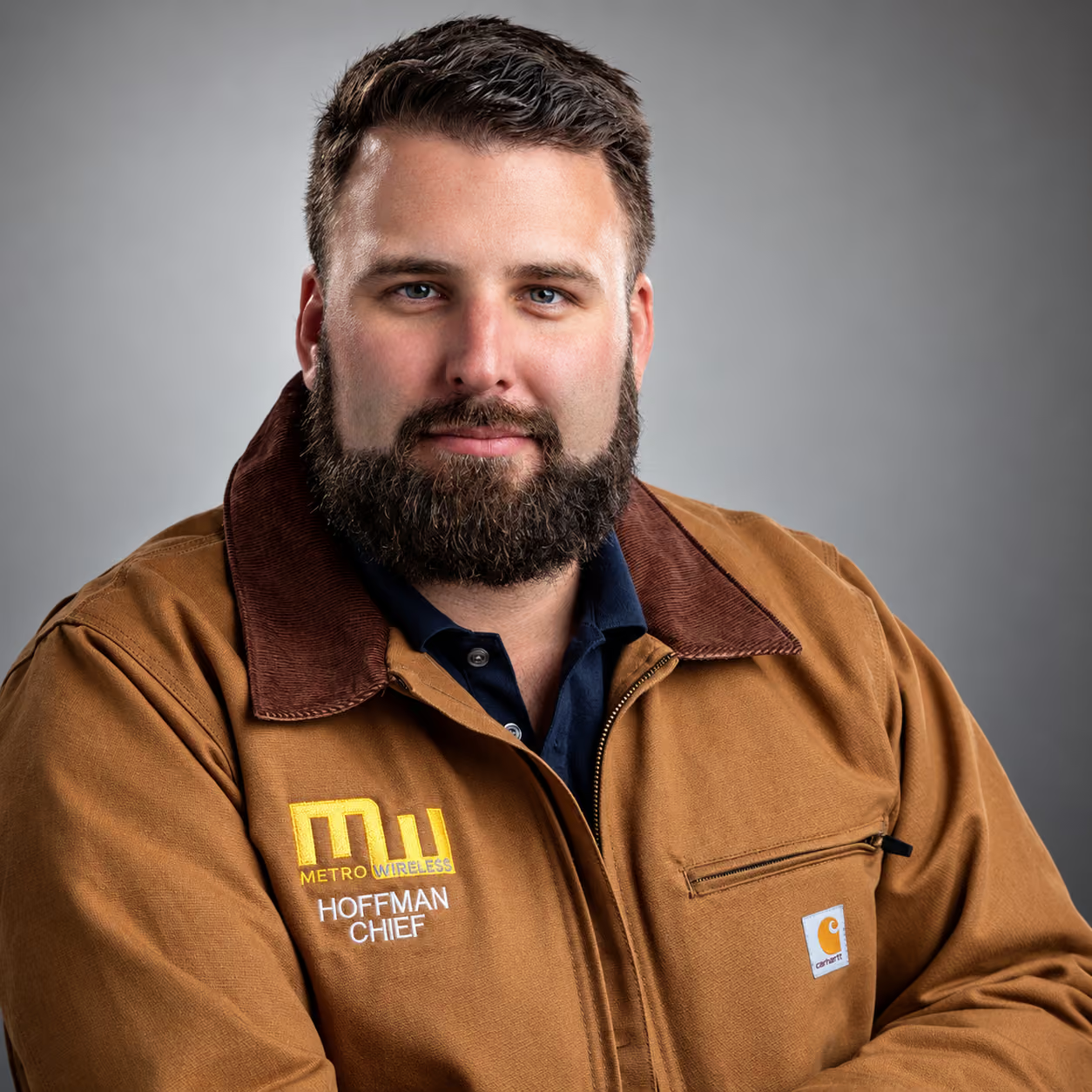
Tyler Hoffman bought Metro Wireless, a Detroit managed IT and connectivity company in late 2021. At 28 years old, eight months in, his largest customer gave 30 days notice and walked, taking 25% of revenue and half of earnings with it. Which meant Tyler had effectively paid twice what he thought for the business. The 3.7x he'd been proud of became more like 7.
Overnight revenue fell to $3.6 million and there were Fridays he cleared payroll only because of the check that landed on that Thursday. It took him two years to climb out. Today, Metro Wireless is at $9 million of run rate revenue and more than 2 million of EBITDA, with 3 tuck in acquisitions behind it, 2 of them bought at 2x. Tyler's plan is to reach $50 million in revenue by 2035, mostly by acquisition.
And listen for the pace he's setting. A president he promoted from within runs the day to day. So Tyler spends 10 to 15 hours a week in the core business and he's not building this to sell. An entrepreneurial roll up.
With Tyler as sole owner, here he is, Tyler Hoffman, owner of Metro Wireless. Welcome to Acquiring Minds, a podcast about buying businesses. My name is Will Smith. Acquiring an existing business is an awesome opportunity for many entrepreneurs and on this podcast I talk to the people who do it.
Running payroll, paying your bills, closing your books and producing financials. These are critical tasks every business owner must do or oversee. But spending time on them distracts you from the leadership in growth work you want to do. So let system 6 do it for you.
Owned and led by a former Searcher, Chris Williams, System 6 is a leading outsourced finance team for hundreds of SMBs, including over 50 searcher acquired businesses. Chris, Tim and the System 6 team understand firsthand the challenges, the opportunities of jumping into a business as its new owner. So whether you own your business already or have one under LOI, talk to System 6 about how they can give you time back and improve your financial operations. Mention Acquiring Minds and they'll provide a free review of your books and Financial Ops, a $500 value.
Check out system6.com, link in the show notes or email helloystem6.com Tyler Hoffman welcome to Acquiring Minds.
[00:03:31 - 00:03:34]
Guest A: Will thanks for having me. Longtime listener, first time caller, right?
[00:03:35 - 00:04:06]
Host: Love to hear that. Tyler, you've gone from a desperate moment in your business that you barely survived to just a couple years later, 9 million in revenue and over 2 of EBITDA and a goal to reach 50 million in revenue by 2035. Not only that, this is actually something of a lifestyle business. You're not killing yourself, at least not currently.
We'll get into that. Start us off with some background on you, please, Tyler.
[00:04:06 - 00:05:01]
Guest A: Yeah, thanks, Will. So I'm a Midwestern boy through and through. I grew up right outside Detroit, eventually going on to University of Michigan to study business as an undergrad, after which I moved to Chicago where I was a strategy and operations consultant with Deloitte for a couple of years. After that I ran the operations for a mail order pharmacy, which is where I really kind of got a good sense of operating a small business.
And then after that I went back to Kellogg as a part time student in their evening and weekend program, upon which I had known that I wanted to get into search. And I, of course we'll get into this, but had different thought cycles of whether to do a funded search or a self funded search. But at any rate, during my time at Kellogg, I was an evening weekend student, had gone back into consulting and also started performing my search. And then about five years ago now, I acquired Metro Wireless, which is a MSP based out of Detroit, Michigan.
[00:05:02 - 00:05:13]
Host: Great, that was concise. Appreciate it. Some follow ups. Tyler, first of all, there's something about you and your sense of somebody who's employable.
Are you employable?
[00:05:15 - 00:05:55]
Guest A: It depends on how you look at the phrase, right? At Northwestern, when I was getting my MBA at Kellogg there, there was a nice way to say when you got let go that you were failing forward or failing upward. And so in a traditional sense, I was actually let go from all three of my jobs. I know we discussed this previously and it was not due to a mass layoff.
It was truly an actual firing from each role that I had. In hindsight, it was the universe being polite that I had to go pursue my own entrepreneurial path. But at the time, trust me, there was a ton of imposter syndrome. And frankly, there was even in the early days of running Metro.
So yeah, it's been an interesting journey with that in mind.
[00:05:56 - 00:06:08]
Host: And so was your decision to become an entrepreneur to buy a business because you felt that you just couldn't work for somebody else, or was there always an inkling that you would do something entrepreneurial?
[00:06:09 - 00:07:07]
Guest A: You know, my Parents were small business owners, right? For. For much of my formative years. When I was younger, my dad had a small marketing agency.
He's a man with a lot of charisma, so I call him like the John Hamm writer from Mad Men. My mom had a small law firm for a number of years, and so the autonomy they had in their lives was pretty cool. And in fact, a cute little story Recently, a couple years ago, I was digitizing old family photos and I became very aware at how present my parents were in my life, right. And especially, like, raising me.
And so with that in mind, that really drove my desire to kind of run my own shop. And that's what I wanted to pursue. Right. And, you know, that was a very staunch contrast.
What I had thought the working world was going to be working safe for Deloitte or another consultancy in another firm versus seeing my parents work for themselves. Right. And the autonomy that they got to have, that really left an imprint on me and ultimately impacted, like, the way I wanted to go with it. Yeah.
[00:07:07 - 00:08:04]
Host: Yeah. Well, it's interesting, isn't it, because many small business owners are run ragged by their businesses. They have no time, they're completely overworked and underpaid. In fact, many of the sellers that we encounter in from our side of the table are like that.
So being exposed to small business can. Can either be. Can be being exposed to a horror show or being exposed to the ideal, which is actually autonomy, as you put it, or freedom of time. And in fact, you.
You in your own journey so far have tasted both. Happily, where we catch you today is more on the autonomy side. We'll get there. Okay, so you decide that buying a business, as opposed to, as opposed to, say, starting one, is your path.
Is that because you're exposed to search in business school and you say, huh, this looks like a good model or, what? How did you decide on how you would approach this project?
[00:08:04 - 00:08:34]
Guest A: Yeah, so back, and it would have been early 2019 at this point, and again, search had not really kind of taken it off in the way that it has now, which has been really fun to see over the last seven years, of course. But for me, I entered Kellogg knowing that I wanted to pursue a search. In fact, I have a fond memory from my business school interview telling the interviewer that, like, I wanted to go out and buy a porta potty business because I was going to be the shit king of Michigan. I was going to be number one at number two, right?
And so I, I, you know, you should have.
[00:08:34 - 00:08:38]
Host: You should have pursued that thesis just so you could, you know, have that catchy.
[00:08:39 - 00:10:29]
Guest A: I know it. I could, I know if my name was Scott, I could have had Scotty's parties, right? But at any rate, so that's how I described it to my friends and the interviewers and all that. But so I, I entered Kellogg knowing that I wanted to do search.
And what I was kind of oscillating thought cycles on was what type of search, right? So the prevailing wisdom seven years ago was you had to go get a top tier MBA to go raise capital to do a traditional search if you wanted to pursue the EIR model. I'm a huge fan of next gen growth partners here in Chicago. I think Brian o' Connor runs a phenomenal program there.
And so I spent a lot of time diligencing the various paths. But what brought me back to choose self funded search was I wanted to own every decision, right? I was very tired after losing three jobs of having to report to different people and not own the decisions and have the accountability. What was also happening in my mind was that I was a guy who had to buy a business.
I had a colleague at the time, a classmate, you know, he was the type to do a traditional search, was going to go buy a company if it was the right deal but didn't have to do it. Whereas in my core I had to do it and become an operator and get into the seat as quickly as possible. And so with that in mind, self funded made sense. Because even if I did a smaller deal, there's obviously a larger volume of opportunities on the smaller end of the market.
And so I knew I had a higher probability to close if I chose a self funded path versus doing a traditional path. And so that's what really kind of led my thinking at the time. My final note on that is there was a mentor I had who said to search before you search. And what he meant by that was during your time in business school, start getting some cycles and some reps in talking to brokers, talking to business owners, really understanding if you're going to enjoy the grind of search.
And it's well documented how much of a grind it is. And I did that. I found out how much I loved it and so that kind of helped me inform my decision to pursue self funded too.
[00:10:29 - 00:10:31]
Host: You loved the search process itself?
[00:10:32 - 00:11:29]
Guest A: Yeah, I did. I love talking to the brokers. I love learning about different businesses. Like there was commercial kitchen repair and like the lawn cares and the trades and all of that and the different ways to look at Companies and then the seller stories were all super cool, right?
Typically like first time business owners, right, in their own generation, the retiring baby boomers. That whole Persona I thought was super cool. I resonated with a lot of these owners on these owner calls that I was taking. And so I think one of my competitive advantages is the charisma that I bring to a seller, right?
And it certainly brought it to my first deal. And so all four deals that I've now run. And so I just, I really enjoyed that process. It was also the first time in my life that I got to do kind of traditional sales in the sense of like I'm selling myself and my ideas, trying to convince a broker to get me onto a call with an owner, convincing the owner to sell to me, getting a bank, right, to lend you the money.
And so all of that was super energizing to me.
[00:11:31 - 00:11:48]
Host: When you said that you were somebody who had to buy a business versus your buddy who was, did a traditional search fund and was prepared to let his search run out and not find a business, what was the difference between you two there? What did you say more about that difference?
[00:11:49 - 00:13:40]
Guest A: So for me, I knew that I had to become an operator, right? And if I think about like the hierarchy of needs in my own life, to me the, the thing I need first and foremost is autonomy. And I knew that if I could buy a business and become an owner, I could sustain myself being independent, achieve some level of financial freedom, regardless of how fancy of a life I would have. I guess you could say I just knew that I needed to own my own time.
And so doing a deal at all costs was the driving factor at that time. I think my colleague or my classmate was more so someone who, if he found the right opportunity and he could see a pathway to call it a top decile outcome, right in the traditional search world, like he would pursue that opportunity. For me, the economics were less important at that time and they still frankly aren't that important to me. But I knew that I had to be an operator.
It was funny towards the end of my Kellogg journey, my MBA journey, just for fun, I did take a couple interviews with some consultancies. And here I am a month before graduation, I have this brand new job offer in hand. I got the offer. I loved case interviewing, so it was fun for me at the time.
So I have the job offer and like, you know, when you graduate your MBA school, like that's your point of like you've never had more or higher market value in the job market, right? I have this job offer that was a lot more money than I'd ever made in a W2 capacity. And I was saying to myself, if I. And this is just when I got released from the most recent job, I was like, man, do I continue doing my self funded search or do I go take this job offer and punt the.
Punt the dream, right? Punt it a few years down the line. I'm very glad I did not take that job offer. And luckily I was with dating someone at the time who seemed to enjoy beer flights over tasting menus.
And so we were able to kind of live the rice and beans lifestyle for a while, which was able to, of course, then help me get across the finish line.
[00:13:41 - 00:13:45]
Host: Curious if your small business owner parents had an opinion on your chosen path.
[00:13:46 - 00:14:22]
Guest A: They were uniquely supportive, right? I mean, from their own perspective, they had run small businesses and they understand that the roller coaster of life, right, there are some richer years and there are some leaner years to things. And so they knew that this is something that I had to do and to pursue and they were certainly very excited for me and we'll get into the deal structure, right? But they actually participated in my first deal from a debt perspective and were ultimately super helpful to me.
So I earned their trust. Obviously I got a little nervous at some points, right, in my first couple years of operating, but they were thankfully very supportive.
[00:14:23 - 00:14:34]
Host: Tyler, you were on the youngish side. I mean, a lot of searchers, I've interviewed a lot of people who do this, coming right out of business school. But even for a business school grad, you were a little bit younger, right? 20.
What?
[00:14:34 - 00:15:01]
Guest A: Yeah, if I recall correctly, I was probably 26, entering business school. So yes, definitely on the younger vintage of that. And then by the time I graduated and then I did my deal six months later post graduation, I was only 28. And so I was 28.
I never managed someone formally before and here I was at close taking over. We had 11 employees at that point. So it was certainly certainly a contrast to any professional experience that I had had, you know, up until that point.
[00:15:02 - 00:15:33]
Host: And, and so for somebody who says he enjoyed connecting with sort of boomer type owners that, that profile and being even younger than Your typical searcher, 28, not having management experience. But it sounds like, as you said, you brought charisma to these conversations. It sounds like you were able to connect with these owners. What do you, what is it?
What is the secret there or what, what is it that you, that you bring that allows you young and unqualified to, to Connect with these, these probably mostly men.
[00:15:34 - 00:17:19]
Guest A: Yeah, keyword is unqualified there. So for me. And I'll, I'll give you one example, right. So when I was doing it was under LOI on my first acquisition.
Again this would have been five years ago. I remember I was renting a car every couple weeks to go from Chicago to Detroit and going to meet my seller at the Detroit office. And we went to go and you know, a lot of what we do is put equipment on top of cell towers and rooftops and things like that. And he was a guy who helped install his own first sites on these, you know, these radios and antennas on the rooftops.
And he said, Tyler, do you want to go check out one of these, we call them pop sites. Do you want to even go check out one of these network pop sites? I was like heck yeah, I'll climb on the rooftop with you. And so we get on.
I forget how many stories. It has to be at least 30 stories on a rooftop in suburban Detroit. And we climb on the rooftop and I still have the pictures from that day. It would have been 2021 and it was awesome.
And I felt so excited and energized about not just the financial opportunity of the company but the actual operations and what they do. That was a really cool example. And so, you know, with that in mind, like that type of experience and meeting owners in person and again I ran. Now I run a much more proprietary focused search process for my tuck in deals.
But again my ability to connect with owners in person and drive a relationship there is really a differentiating thing for me. I have no doubt that someone from Stanford or Harvard can beat me at an AI cold outreach process with an email campaign and postcards and stuff like that. I'll never claim to be the genius there's but I do think that I can out compete based on charisma. Bringing energy, excitement to an owner's company which at their point in life means a lot to them versus the final dollar.
[00:17:20 - 00:19:12]
Host: It's so obvious to hear you say it and yet still so many people get it wrong. Just showing. I guess the point is it has to be genuine interest and your interest in their business is authentic. So they just see a younger person who's really, really admires what they built, is really excited to maybe have the, you know, at the prospect of taking it over and that that will resonate with them for sure.
We hear that a lot. But, but I think a lot of people don't, don't get it right. Buying a small Business sounds simple. Find a company, due diligence, get a loan, close.
In reality, you wear every hat just to get the deal done. And then the moment you close, you have to throw those deal making skills out the window and learn how to operate. You shouldn't have to rebuild this infrastructure from scratch and you definitely shouldn't do it alone. That's why Walker Deibel created Acquisition Lab.
What started as an accelerator has expanded into a complete ecosystem for acquisition entrepreneurs. Over six years, the lab's 1,200 members have acquired over a billion dollars in businesses. The Lab puts everything under one roof. An active community, deal reviews, post close services, and a dedicated fund helping experienced operators buy larger businesses.
If you're serious about buying a business, come see why Lab members have a fundamental 40% success rate. Learn more in the show notes or@accentlab.com acquiring minds okay Tyler, you've given us a peek into Metro Wireless, but now tell us formally how you found this business and what this business was.
[00:19:13 - 00:20:42]
Guest A: Sure. So I was running mostly a brokered focused process at this point. Again, because I was balancing a full time consulting job with travel or it was during COVID so it was travel had submitted subsided, but still a lot of hours going to school nights and weekends and running a search process. It led me to focus mostly on brokered opportunities.
Within that I had a small thesis going on these wireless Internet providers which instead of running fiber coax cable lines to homes and businesses, they rely on different forms of wireless antennas that are mounted on rooftops and cell towers and things like that to provide Internet via line of sight to businesses and to residents. And so I found a brokered opportunity in Michigan in 2021. Again, my self funded search was constrained mostly in the upper Midwest at this point, so it was a natural fit for me. I had no intention to move back to my hometown, but it just happened that way coincidentally.
And so I found this opportunity. It actually was under loi the first time I had found it, but I had stayed in touch with the broker. If we're being candid, right. It was probably a lightly marketed opportunity.
It was a broker's first time dealing with and so there was some newness right to his process. And so I think that gave me a sense of a competitive advantage in the process. And then by the time I had met the owner and expressed a desire to go meet him in person, bring the energy and charisma that I have, it was pretty quick that I was able to win out on that process. And so that was a really cool opportunity.
On finding the deal itself.
[00:20:43 - 00:20:45]
Host: Why had his first LOI broken?
[00:20:46 - 00:20:56]
Guest A: The buyer at the time, as I recall, had two deals under loi, ended up pursuing the other opportunity and then released the Metro Wireless, the one that I was working on.
[00:20:57 - 00:20:59]
Host: And say again, exactly what Metro Wireless does.
[00:20:59 - 00:21:56]
Guest A: Yes. So Metro Wireless is a managed IT provider. We focus a lot in connectivity in the telecom space. So the legacy business had been this fixed wireless Internet that I was describing.
We're a commercial only provider, so we don't do any residential, but think of things like wireless Internet. So 4G, 5G. We're an official Starlink partner. We do a lot with microwave point to point fixed wireless which people in our industry know about.
And then we have a slew of managed services that we do like manage WI FI projects and SD WAN and some other kind of managed IT things of that nature. Other projects like cell boosters. We also do a lot of hosted phone systems and telephony, SIP trunking, things of that nature. So probably not your traditional like msp, like from a break fix help desk perspective, but more so kind of managed connectivity and IT specifically for the commercial market.
And then our niche is kind of that middle prize and now enterprise client base.
[00:21:57 - 00:22:02]
Host: So give us an example to drive this home. Like who's an example customer and what do you do for them?
[00:22:02 - 00:23:19]
Guest A: Exactly, sure. So an ideal customer for us is probably like an oil and gas firm, you know, say in Texas. Right. So we use, we sell nationally and now internationally, which is pretty cool, doing our first deals in Australia and Mexico this year.
But what we do is say there's a client, it's an oil and gas substation in Texas, as I just had said. And what we will provide to them is they need 100% uptime on their Internet connectivity. Going down for 10 seconds is unacceptable to them. And so what I sell them is unbreakable Internet in the sense of I will bond a Starlink connection with a Verizon connection, with an AT&T connection and a T mobile connection.
And I can have carrier diversity or offer that to my client so that even if the Starlink network is down or the Verizon network is down, I can still provide a pipe to the Internet to that client. And so we will design that solution, install that solution and then manage that solution on behalf of the client. A common question I get is well, why doesn't a client go get their own Starlink dish? You absolutely can.
Right? But these clients want a whole managed white glove customized solution tailored to their needs and they're happy to pay a few hundred dollars more a month for it. And that's the niche that I play in. I'm not competing with the mass market providers like AT&T Comcast, things like that.
[00:23:20 - 00:23:24]
Host: And so is every engagement custom, like some sort of custom implementation?
[00:23:25 - 00:23:40]
Guest A: I would say that we've productized most of our offerings. Yes, there are some custom SKUs and things that often happen on a deal by deal basis. We try to make it as streamlined as possible to produce chance for error. But yes, in most cases it is a customized, tailored solution for our clients.
[00:23:40 - 00:23:50]
Host: Okay, back to the plot here, Tyler. Okay, so give us some numbers. What can you share around the size of the business to give us a sense of scope, number of employees as well. Yep.
[00:23:50 - 00:23:56]
Guest A: So, and Will, are you looking for current or at back at the time
[00:23:56 - 00:23:57]
Host: that back in 22.
[00:23:57 - 00:24:10]
Guest A: Sure. So back in 2021, late 2021, the business had closed out the year with about 4.5 million in revenue, about a 1.2 million in earnings, and it had 11 employees at that point.
[00:24:11 - 00:24:28]
Host: So 1.2 million in earnings, that is really the larger, that's kind of in the sweet spot or on the large side of the sweet spot that self funded searchers look for. It's it a recurring revenue business? It sounds like. I mean these are all contracted, correct?
[00:24:28 - 00:24:50]
Guest A: So it is a monthly recurring, contractually recurring revenue. We do have auto renewals for initial term length on our contracts, which is super nice. Again, churn is, you know, five to seven points a year. But to answer the other question, about 85% of our book is recurring.
And then there's like that 15% tail which is project based. Think large WI fi installs things of that nature.
[00:24:50 - 00:25:13]
Host: MSPs. I know you said you're sort of an MSP or MSP adjacent or not a traditional MSP. That's a extremely hot category. Now I don't know if, if it was back then, but I would expect a $1.2 million SDE business to sell for a pretty rich multiple even then.
Although, you know, five years ago, six years ago was a different time. So what was it selling for?
[00:25:13 - 00:25:51]
Guest A: Yeah, so I was able to secure it for about 3.7 times of earnings, which is obviously a phenomenal deal. Right. Again, as I had mentioned, the deal was lightly brokered, lightly marketed and the opportunity again, MSPS in this space was probably not as well understood or recognized as being a good industry to be in five years ago. And so with those two kind of levers in mind, I was able to get it under LOI for a good price.
Further helping matters is I did match the price that the other potential buyer was having. So I was able to not create any tension with the, with the seller on during that diligence process.
[00:25:52 - 00:26:04]
Host: Yeah, on the surface it looks like you bought. Well, there's going to be a twist as you get into operations here, Tyler. And what was the structure for the. So the purchase price was 4.5?
[00:26:04 - 00:26:05]
Guest A: Yep.
[00:26:05 - 00:26:10]
Host: Correct. Okay, so what was your structure to take down this $4.5 million business?
[00:26:11 - 00:27:54]
Guest A: Yep. So initially I had intended to do a raise. Right. And so in the self funded space you can of course still do a raise.
My structure as I recall was about going to be about 75% SBA debt. Right. About 10% investor cash. Right.
So between or I was performing a raise process. I was very fortunate. I was oversubscribed pretty quickly. Again, this was a great time in the market in 2021 with record M and A activity and then the balance being seller notes.
Right. So there was a good chunk, probably about 15% left that was seller financing on the deal at the time. After we got under loi, about a month after, I approached my seller and I became aware of a model called the full standby note, which I'm sure your listeners know about well, and that he and I kind of recut the deal where he would take a portion on full standby and, and that allowed me to bring less cash to close. And so when that had happened, I was fortunate enough to call my investors and say hey, thank you.
However, I retraded the deal with the seller. I don't need to raise cash because I then called my parents and I said, hey guys, you know, my parents don't understand, you know, some of these topics like what IRR is and how the step ups work and all of that. But I said, you know, mom and dad, I'm looking at say if you know the average IRR model that the base case was like 30%, like hey, here's what a 30% interest rate on the money looks like. And they were kind enough where I could pay them a 30% one time interest on.
See, I think it was like low six figures dollars that they were lending me to help get the deal done. So I, in that case I only had to bring 5% to close. The balance being in the SBA for most of it and some seller financing.
[00:27:55 - 00:28:12]
Host: Okay, so let me just unpack that again. 75% SBA, 15% seller note and then in version one, 10% equity. And that was going to Be from your own pocket, maybe a little from your parents and then outside investors.
[00:28:13 - 00:28:19]
Guest A: Yep. With one final correction. My parents were probably not original. Part of the first version one, if you will.
Yeah.
[00:28:19 - 00:28:22]
Host: Okay. Okay. So it was just going to be whatever you brought to it.
[00:28:23 - 00:28:23]
Guest A: Correct.
[00:28:23 - 00:28:59]
Host: Maybe none. Plus, so that mostly going to be investor third party, outside investor capital for the 10%. Correct. You learn that if you can get a seller standby note that you only have to actually bring 5% equity, then seller note the other 5% to get you to your 10% equity is a full standby seller note.
And then. And then the rest of the structure was the same. 15% conventional seller note, 75% SBA. Correct.
Okay, Tyler, thank you for that transparency. So you get into the business, tell us what the transition looks like.
[00:28:59 - 00:30:57]
Guest A: Sure. So my seller was very gracious. He was willing to spend a full year with me on the transition. The business was largely as I had expected.
I got pretty good access to a lot of the data and the information that I needed during the diligence process. But again, there's always things that you learn. So in my case, one big example was, candidly, the seller's wife was way more involved than was disclosed to me prior to close. Right.
And I think a lot of people who go and acquire businesses see that in a lot of these situations. And so one of my first transition items was getting the seller's wife, you know, successfully off boarded and transitioned out of the business. The seller himself was able to stay on for a longer term, so he was not as big of a concern to off board. Right.
But getting his wife Transitioned out within 6 weeks Post close did require some changes. Right. And so we, the team and I had to work on that pretty immediately. The other unique thing that we did, which I don't know if I would recommend to other searchers, is the seller was very concerned about the perceptions of him selling the business.
And so the seller was very keen on making sure that I was announced as the chief operating officer and that we did not tell the staff, the clients, et cetera, that I was the new owner of the business. And so, so it was a little bit of a unique model there. And again, people in my circle and my mentors recommended against it. I probably should have taken their advice in hindsight.
Right. Because all it did was create a little bit of pain and mistrust with the clients and the employees six months down the line or 10 months down the line when everyone kind of found out. But that was the path that we chose. And I committed to the seller that I would do that for him.
And so yeah, again the first few months were just getting my training wheels underneath, me starting to lead the team, me trying to learn things. And so that's really what the initial process looks like for us.
[00:30:59 - 00:31:17]
Host: Really interesting wrinkle about the seller not wanting to announce you as new owner. Yes, it doesn't get the sort of trust off on the right foot and it also creates complications where they're continuing to report to him when in fact you are the owner at that point.
[00:31:17 - 00:32:05]
Guest A: Well, that's where it fell apart. Right. Is that quickly post close again. And I can support from his perspective, again, if that was his perception, was amongst his colleagues in the industry knowing that he had sold and the customers and the staff that he had for many years at this point, if that was his concern, I can see from his perspective how he perhaps wanted to manage that.
However, where it really fell apart was within a couple months employees could see that I was kind of leading the ship at this point and not being deferential to the seller and our day to day operating. And so again it fell apart pretty quickly. And I think I said eight or 10 months, but really within the first few months, even if the team didn't directly address it with me, I think they could see what was happening and that that really led the conversation with the rest of the team.
[00:32:06 - 00:32:12]
Host: And so was there sort of a moment of truth or did it just gradually become clear what the situation was?
[00:32:12 - 00:32:53]
Guest A: There were, there was no large meeting, to my recollection. It was really more so one on one conversations with the staff over how things were going. Because again, as, as it typically goes with the a change of ownership conversation, staff get nervous. Right.
And so the fact that they could tell that things were changing, something was clearly going on with the ownership of the company. There was a number of one on one conversations that I had to have including with we'll get into this, the operator that I now have in my business, who was promoted from within, that created some mistrust for years with him. And so we had to work through that ultimately. But yeah, it was not something that I would recommend to any, any new searcher looking to buy a business.
[00:32:54 - 00:32:57]
Host: And what was the seller trying to protect against?
[00:32:58 - 00:33:45]
Guest A: He. So in this case he was a younger seller. Right. So he was about 40 years old at the time of the sale.
He wanted to get out of the business for a few reasons. He had a couple, you know, personal items that he was working through at the time. Again, his wife wanted to get out of the day to day of the business. Right.
She was pretty ingrained in the operations. I would learn post close. And so for them as a family, it made sense for them to get out of it. But a lot of his close personal friends were very much.
If they did not work at the company, they were involved in his industry within the southeastern Michigan area. And so for him, I believe it was a mental block of hey, you know, this is. Yeah, this is something that he wanted to be very protective about and same thing to the staff that he had for a number of years too. So that was I believe, the driving factor.
[00:33:45 - 00:34:36]
Host: I wonder to your point about his age if that was a thing because usually for. Well, no, I would say for really for any seller there can be some trepidation about what they're going to tell the staff. It's not really age dependent. Often you'll hear for a kind of an older retirement age seller that they're not so worried about the staff learning because they expect that the staff was expecting it at some point.
I mean somebody's in their 60s or 70s, it shouldn't come as a surprise that the business was sold. Of course, in that case, what a seller might worry is that somebody within the organization thought they were going to get the chance to buy it. And if they didn't or weren't offered that chance, then there can be resentment there. Too many variables to generalize, I guess really.
But interesting, Tyler, that this was a 40 year old seller, given your earlier comment that it was really with the kind of retiring owner that you were, that you would build their rapport and you ended up not buying from such a person.
[00:34:36 - 00:35:03]
Guest A: Yeah, absolutely. And the three acquisitions I've done since have all kind of followed that more traditional, you know, retiring owner Persona. But to your point, the first one did not. Right.
So it was definitely a bit different. And there's. And I think we will see more of that frankly in the ETA space going forward as there are like newer companies that get transacted on and things of that nature. But to your point, Will, this first one did not have that traditional profile at all about it.
[00:35:03 - 00:35:19]
Host: Okay. Other than that detail about the transition, we're also going to hear about a large some customer concentration. Anything else between those two points to share in your. In your early days at the helm as owner, was it otherwise the business that you thought it was.
[00:35:19 - 00:36:51]
Guest A: You know, thinking about the two points in time between when I first closed and we'll get into the big customer churn story here in a moment. There were Some things I was learning about the space that I don't think I appreciated at the time. There's only, I can only think of LCD TVs as an analog to this. But in the, we, you know, at the time the business was very focused on selling bandwidth via the fixed wireless network.
And there were clients in our book who were say paying $1,500 a month for service, whereas the new market rate margins had compressed greatly. So a new customer in that same profile would Maybe only pay $500 a month. And so unfortunately I can't think of many other things in the world that have gotten cheaper over time except for bandwidth and broadband and LCD TVs. But that is something that we had to deal with.
And so that was a challenge. However, and we will go on to this, there was obviously a lot more exciting opportunity. But just to give you, I guess the headline, right, the products that we sell today as far as net new sales and contract value being sold do not tie really at all to the legacy business that we used to do. And so there's been a huge kind of transition in the book over time and there will continue to be in sales there.
And so that did lead to some issues, right. And things of that nature. But yeah, so I, I did learn a few other things in my first few months of operating. And I look back, right, I mean it's easy to play Monday morning quarterback, but I'm not really sure what I could have diligence better at the time.
I probably still would have done the deal at the end of the day.
[00:36:52 - 00:37:07]
Host: But, but so you get into the business and find that the business model or, or at least the, the core service offering is in a moment of transition. I mean that it's what you're going to sell going forward is going to be different than what the revenue looking back was generated from.
[00:37:07 - 00:38:16]
Guest A: Yeah, and my, my other cute short story on that was, you know, the network was not in the best place either. Right. I had thought the network had high reliability, high availability is what we would say, you know, good uptime. And then unfortunately I learned post close, the network would go down at least once a month and any customer of ours would have an Internet outage.
Right. And that led to a lot of angry phone calls, cancellations, things of that nature. I can say fortunately now we're past that point. But five years ago, I was not a technical guy by trade.
I had never worked on telecom before. I obviously didn't know servers from networking routers and things of that nature. And so that Was a pretty scary moment, honestly. And very fortunately I had the seller to be by my side in the operations.
But again, he was only as you know, he's only knew what he had known right at the time, of course, and the way he set up the network and the company and all of that, it would take me at least 2, 3 years to understand what industry best practices are. And frankly, I'm still learning. Right. I'm talking to my competitors and my peers in the space to understand, hey, what does good look like?
Right. So I try to come in with low ego and a beginner's mindset and you know, try to figure it out
[00:38:16 - 00:38:29]
Host: from there to the point of being an outsider to the industry and the industry sort of the technical knowledge here. Is this a, a blue collar kind of field technician in this industry?
[00:38:30 - 00:39:34]
Guest A: Yeah. So it's, it's definitely not your traditional trades business or like a blue collar, like I would call it, like the way I think of it is like it's, it's not a highly human capital intensive business. Right. I have friends, friends who run commercial cleaning businesses or H vac businesses.
Right. And for them to double revenue, they probably have to almost double their staffing count. It's a very again, kind of almost linear relationship there. What I think one of the better parts of my business is if I were to double revenue tomorrow, there's not that direct of a linear relationship on that.
And so, you know, we have two field guys. We always have. And this is actually a great example. We had two field guys when we were, you know, when I first bought the company at 4.5 in revenue, when we dipped down to 3.6, which we'll get to in a few minutes here.
And then now that we're eclipsing 9 million in run rate revenue, we still have two field guys. And so, you know, that's just gives you a sense of how the business can kind of scale in different ways. Now of course we have a higher total headcount, but it is not traditionally a highly human capital intensive business. Yeah.
[00:39:34 - 00:39:40]
Host: Okay, let's hear about this customer, this large customer churn and what it meant for you.
[00:39:40 - 00:41:32]
Guest A: Sure. So, and this is probably my best war story, the one that I talked to, you know, fellow business owners at the trade shows these days. Right. To kind of show that I've gotten beaten up a little bit.
But it was August 2022, I was eight months into operating again. Most of the team, if not all the team, knew I was the owner at this point. The seller was starting to Take a step back right as we had planned and we had a very large customer. As I understood it, it was 20 points of trailing revenue from what the quality of earnings report had shown from, you know, the year prior.
However, this was a client that was under contract at close. They were growing monthly billings, Everything looked good. They were a profitable customer of ours. They seemed happy, things were good.
Unfortunately, eight months post close, the client had grown to about 25 points of revenue, which I would later learn was about 50% of our cash flow because of a negative operating leverage concern when they left. Obviously your rent payment doesn't drop when you're, when a large customer leaves. And so I had learned that they were 50% of cash flow. And so they called us one day in August of 22 and they said, hey Metro Wireless, like we like you guys but we're month to month now and we found a new vendor to work with and we're going to switch off the entire relationship and walk it 30 days notice.
There was not a ladder or a stair step down. It was we're pulling the entire business in 30 days. Nothing we could do about it. And to my team's credit, right, it was not an execution or an operational issue.
To my seller's credit, it was not a relationship the seller managed. It was actually one of the sales reps there. And that sales rep did his best job to keep the account as long as we could. But at the end of the day, my cash flow was halved, right, which means my purchase price was effectively doubled.
And you know, it was a very scary time.
[00:41:34 - 00:43:41]
Host: The team at Pioneer Capital Advisory has started offering peripassu debt for SBA business buyers. That means they can help unlock up to $3 million of conventional debt on top of the $5 million limit of SBA 7A loans. So Pioneer can structure larger, more complex acquisitions. Listen to our story with Anika John for one of their clients who did just that, buying a $10 million business as a first time self funded searcher, the Pioneer team has closed more than 100 SBA loans averaging timelines well below industry standards.
Founder and owner Matthias Smith and COO Valerie Stash bring over two decades of SBA lending experience. Matthias and Valerie have a full bench of analysts and associates who who work your deals with them. A true deal team. Not just a single point of contact.
Visit pioneercap.com or click the link in the notes. 20% revenue concentration when you bought the business it grew. That grew to 25% but in fact just such a key learning here for People who know, they'll know. It'll be basic, but.
But it's an easy miss for people who, who. Who haven't thought about this kind of. With a little bit more nuance. Revenue concentration is not EBITDA concentration.
So they represented half of the actual profits coming out of the business. So you lose half of the business's earnings in one fell swoop, which by itself is painful enough. I'm going to ask you if you were able to service debt and pay everybody with that, with that chopping of. Of earnings.
But even if you are, even if you survive it, which you do, it also effectively means that you basically bought the business for twice the multiple because you basically bought half the amount of earnings for $4.5 million that you thought you did a pretty, A pretty, you know, kind of double dipping on the pain there. Tyler. Yeah, okay. Yeah, please.
[00:43:41 - 00:45:06]
Guest A: So, you know my awesome deal, the one that I was bragging to, to my buddy is at the annual Kellogg golf trip, right. Certainly turned out to be quite the opposite of that. Come then. And again, eight months in.
This is at a point in the business where, you know, deep in the J curve, right? Making a lot of investments, CRM process changes, technology changes, hiring new team members. We had launched company sponsored healthcare, right? Where we were contributing materially to the cost of our medical, dental, and vision for our employees.
Trying to do all these cool things and selling this vision to my team. And we had this large customer walk, and it was very scary. I'm lucky to say that I didn't lay off a single employee. I never missed a debt payment.
I never missed a vendor payment, right? But there were months and weeks where I would wait on customer checks to come in on a Thursday so I could clear payroll by Friday. And I'm thinking back to that. I'm getting goosebumps as I talk about it.
I thinking about that time and all I could think about was the imposter syndrome. I had been fired from every job I ever had. I borrowed some money from mom and dad, and I was highly, highly embarrassed that I was failing, right? Or I felt like I was failing and I wasn't going to come out the other side.
And so there was no one that I could hold accountable except for myself, right? And so that was a moment in time that was deeply, deeply scary for me. And it took some time to recover.
[00:45:06 - 00:45:21]
Host: Well, Tyler, I do have to ask you this despite the fact that I don't want to meet, don't want to pick at this scab, but was this a diligence. Ms. Was there something here that you did wrong that the audience can learn from?
[00:45:21 - 00:46:44]
Guest A: I go back and forth on this and I'm certainly willing to take accountability for it. I believe that the, the proper answer probably would have been to still do the deal, but to put some sort of seller note contingency on it. Right. I'd understood with the SBA at the time that you couldn't do a, like an earn out model, right.
And predicated on future revenue growth. But as everyone should know, of course you can create a contingent seller note or a forgivable seller note that if this larger client churned for any reason, there would be some sort of mechanism or formula, Right. To not pay out the rest of that note even still, right. I mean, the seller is not going to take a deal on a 50% note, typically.
And so again, I struggle and I go back and forth on it. Right. Obviously I got a great entry multiple at the time and so yes. Did I double my multiple overnight?
Absolutely. So it's really tough for me to tell and it's obviously unbiased because things are turning out for the better. But yeah, I think it's fair to say it was a diligence. Ms.
I obviously paid for a quality of earnings back then. The narrative on the client my lender got comfortable with, it was under contract client that was growing in monthly billings and was happy. But yeah, I definitely think I have some accountability there and I'll own that.
[00:46:45 - 00:47:09]
Host: And Tyler, say more about this, this dynamic that While it was 20 or then 25% of revenue, it was twice that in EBITDA concentration. Is that something about how profitable this particular customer's revenue was or. No, this is just, this is just how the numbers fall when you, when you lever up a business. So what, what, why is there such a disconnect there?
[00:47:09 - 00:48:23]
Guest A: Sure. The, the customer profitability was about in line with the rest of the customers. Really what the story was on this deal or this particular scenario was another term before it would be operating deleverage, right. So when my cost base does not shrink as quickly as my revenue did because I can't cut my rent payment in half, I can't take a half a support technician and cut a salary in half.
Right. I can't, you know, cut a lot of my fixed expenses when you decline in revenue and so things, you know, costs shrink slower than they, they increase. And so for me, that there was nothing I could do because I still had this entire other chunk of my business that I needed. All of these things For Right.
The software, the people, the, the physical space, things of that nature. And so I got really into a sticky situation on, on that. And so I think that's something to think about as with customer concentration is like okay, what can you cut beyond just cogs in a situation when you have reverse operating leverage or declining operating leverage and to really model that pre close because I think that that's something very important that perhaps searchers may not think about. Especially because I was a rookie dealmaker at the time and it was something that I didn't fully consider and appreciate.
[00:48:23 - 00:49:29]
Host: Yeah. So I do want to underline it for people that when you. A lot of this has to do with the fixed expenses in a business that if you, if, if revenue drops 10 or 20%, that doesn't mean that that's what your earnings are going to drop. Your earnings are likely to drop a lot more than that because as you put it, your expenses don't drop.
So, so the, the gap between your, your revenue and expenses is your profitability. But if your expenses stay in one place and your revenue drops, the, the, the earnings drop is, is amplified. So you really need to look at what a 10 or 20% drop in revenue does to a drop in your earnings. This is for some people will be basic.
But for some people, many people probably listening, Tyler, they also don't quite realize this dynamic and it's a treacherous one. Thank you for indulging us. Okay. And so, and by the way, so I'm surprised that you, you were already in a J curve because you were making investments in the business.
Did I hear heard you say that?
[00:49:29 - 00:49:29]
Guest A: Right.
[00:49:29 - 00:49:52]
Host: So there were, there was new spend. Net new spend. As you knew as new owner, you now had debt on the business. I'm surprised that you were that it didn't put you underwater when you to lose half your earnings.
Was that. Yeah. Just how did the math work that you didn't go underwater? Because my napkin math would suggest that you did.
[00:49:52 - 00:51:27]
Guest A: Yeah. Again, it was very close. Right. For a time there back in 2021, you know, prime was very low.
And then my, my interest rate I was got locked for three years. So I was on a 5.05% interest rate for three years there. That saved me. Right.
If I was. I think my blended interest now and at least my SBA debt is probably about 8.2 right now. That probably would have been a near death experience. Right.
If I had that kind of interest rate back then on my large SBA payments. The other thing, and I laugh when I say this. But the entire team knew it happened, right? Obviously.
And so we went through a lean and mean phase and we took pride in finding ways to cut costs, right? So I remember negotiating the credit card processing rates and I went after every little line item on the P and L that I could. I went after the dumpster guy, right? And tried to save 50 bucks a month on the dumpster guy.
And so. And like, hey, can we cancel some subscriptions that we don't need anymore, right? And so everyone leaned into the conversation because by this point they saw the vision of where we were going to go. But for two years there, I would love to tell you, there was a single clever move that I had, but it was hand over fist for some time, right?
And so it was a. We had to grow revenue organically. And again, this was at a point when the average new customer was probably paying less than the average legacy customer. And so you had to make up for it with volume and, you know, bringing some charisma to the sales side and getting things done and building relationships with our commercial clients and on the sales side.
So it was a scary time. And again, as I just said, there was no single clever move. But it was hand over fist for some time.
[00:51:27 - 00:51:43]
Host: But it didn't cause you to question the viability of the overall business or market. It was just, it happened to be a big customer that you lost. You still believed in the overall thesis of the industry and in the long term viability of the business. It was just surviving until you could breathe again.
[00:51:44 - 00:53:14]
Guest A: You said it exactly. The way I think about it, the book of business perhaps wasn't the highest quality at that point in time. However, I did at that point develop a more thoughtful thesis on the industry. And this was a space I wanted to be in.
And I saw what good competitors were doing and I wanted to emulate that. And so I knew that if I could just get through the J curve and get to the other side, that this was a space and a business that I wanted to build. And again, like I'll bring up one small example, we invested in Salesforce as our CRM system. And not just as our CRM, but it's our marketing tool and we do quoting out of it.
And now it does our billing and then so does our project management system with the Gantt charts and all the projects. And then it has support tickets, right? And so it does all of these different features for us. No one, no, no sane person should probably be putting in such an expensive Salesforce implementation into a $3.6 million revenue business.
That's where we had dropped to, you know, at the. At the bottom. Right. You know, way too much investment for such a small company.
But I knew I had a vision that long term, like, hey, this is going to be worth it. Right. And so doing things ahead of revenue was kind of a theme I had as far as the decisions that I was making at the time. Again, you know, was I.
Did I have foresight? Was I right to do that, or did I just get lucky? It's tough to say. And I do think lock has played a major role in my.
And, you know, where I've gotten to. But, yeah, that's kind of where my head was at the time.
[00:53:15 - 00:53:20]
Host: How long did all of that take, Tyler? Until. Until you were able to feel like, okay, we're.
[00:53:20 - 00:53:20]
Guest A: We're.
[00:53:20 - 00:53:22]
Host: We're back at sort of a cruising altitude.
[00:53:22 - 00:54:37]
Guest A: Yeah, it took two years. So by mid-2024, that's when I felt in a better place. And by that point, we had started selling a lot of the new, different kind of differentiated products that we were selling before. There was an opportunity to become an official Starlink partner and to sell their satellite service alongside our 4G and 5G Internet and kind of bond the connections together.
That was something that was really exciting. And frankly, a lot of our competitors did not do and still don't really do. So that's a niche in the marketplace. Actually, T Mobile just kind of came out with a similar offering.
Ours is kind of more customized in white glove, but I think they're kind of seeing. Not from us, but they're kind of seeing that need in the marketplace. Right. And so these kind of more differentiated solutions that are more customized and tailored to an enterprise customer who's willing to pay more margins are better.
Those customers are easier to support. Right. And so it took me at that point. Right.
It would have been two and a half years to really get comfortable with the business. How to sell it, how to position the product, how to market it, how to price it. And so that was at that point that I got really comfortable. It was also at that point, two and a half years in that I started thinking more deeply about additional acquisitions, too.
[00:54:38 - 00:54:48]
Host: Great. And just before we get to that chapter, what did your personal life look like during those two hard years, Tyler? Because I want to set up a contrast here for what it looks like today. Fair.
[00:54:49 - 00:55:44]
Guest A: You know, I'll be honest. Like, I was. I was living. Living in Detroit at the time.
A huge fan of the city, by the way. I'm a huge Fan of the resurgence and how the city is really doing well these days. So I lived downtown at this point and I was going to the office every day, you know, negotiating. Right.
With the dumpster guy and all of that. The team had probably you know, by, you know, early to mid 24, were probably about 15 people. So we had turned over some bad apples, gotten some new talent in there. Right.
Which was helping the business to perform better. The network had gotten fixed. But yeah, I was deeply involved in the day to day of the business, down to involved in many of the sales cycles, leading kind of the operational improvements, of course, and the technical network stuff too. Right.
Getting involved in on that to some extent. So yeah, it was very operationally involved for me on a day to day basis probably through mid 2024.
[00:55:45 - 00:55:56]
Host: Okay. And so at that point, why do acquisitions become something that piques your interest or you see as an area of growth as opposed to just continuing with traditional organic growth?
[00:55:57 - 00:57:42]
Guest A: Yeah. So I got bit by the long term hold concept. Right. And it's probably too early to say whether I'll do like a traditional hold co with like a diversified, you know, the Chenmark model.
Right. With diversified businesses. You know, I do want to stay right now, at least in telecom and telecom adjacent, you know, IT type things. But I thought it was such a cool concept, right.
If I, if I don't have any investors on my cap table, why not do a long term hold? I love to do what I do. My parents had their businesses for a long time and you know, talking to these sellers, right. They had phenomenal lifestyles compared to what I saw the partners in my consulting days.
Right. With all the long hours and the travel and the canceled flights and all of that. And you know, it's no secret at this point that I want to be a husband and a father. And so doing this type of work allows me to have that lifestyle but to live a good life.
And so for me, I'm not building for an exit. I want to retain my autonomy. Frankly, I'm not sure what I would do with the liquidity. And so with that in mind.
And I'm also playing in the right industry, Right. I hate to pick on E commerce, but I'm not sure I'd want to run a fidget spinner business because what happens if fidget spinners become out of trend, you know, and things of that nature? But the space that I'm in, I see a lot of owners who have been doing this for a number of years, building that recurring book of business and There's a moat, right. There's some durability to these types of businesses that are built.
And so, you know, both my personal goals as well as the nature of the business I'm in are very friendly to long term holds. And so that's, that's really what my ethos was or is. Excuse me. I now since mid 2024, I've been kind of putting more time into the M and A and inorganic side of the house versus just the organic side.
[00:57:43 - 00:58:05]
Host: But why was your kind of decision that you wanted to do a long term hold here, why did that then lead to, okay, buying up other businesses is the way that I'll achieve it as opposed to just growing organically because it was faster, because it's faster to start buying other ones. And you'd bought your first business so you knew what it looked like to buy business.
[00:58:05 - 00:59:17]
Guest A: Yeah, well said. So the, I think something that is maybe underappreciated by, you know, in our space is the fact that once you do a deal, you know what a deal looks like. Right. And so there's a lot of people in our industry, you know, mine in the managed IT and telecom space who are owners, who had never done an M and a transaction, who had never gotten bank financing and run a process like that and a transaction and working with attorneys.
And so now I have this skill set that a lot of people don't have in my space, which makes me dangerous. Right. So I can go out to owners, have a qualified conversation with them. Now I have social proof, right?
I've done a deal and so I can actually talk about it. And so that makes me very dangerous in the space. Also growing organically in my space is hard, right? I can fight for every 15 points of growth or 10 points of growth.
Luckily we grew 23 points of organic last year. But I can't promise that's always going to happen. And so in MySpace it's much more common to grow inorganically than it is organically. Unlike E Commerce or H Vac where you can put a lot of money through Facebook and Google Ads and things of that nature, the growth path for us is going to be much more inorganic focus in addition to the organic growth.
[00:59:18 - 00:59:24]
Host: Because customer acquisition is slower and more difficult here.
[00:59:25 - 00:59:54]
Guest A: Correct. Just because it's. The B2B landscape is a much more slow, drawn out kind of sales cycle and sales process. And the partnerships that we rely on to help us co sell these deals are relationships that get built over years and not just days and months or things of that nature.
And our clients have buying cycles. Right. Things like that. And so for me, and it took me two years to figure this out, right.
But you have. Chasing inorganic, especially with my skill set, is probably the. The bigger lever that I have than just the organic growth.
[00:59:56 - 01:00:14]
Host: And at this point in mid-2024, were you. Was the business throwing off so much cash that you thought you could redeploy that into acquisitions, or were you going to raise now actually contemplate raising investor equity to go do acquisitions? Or how did you envision approaching these deals?
[01:00:15 - 01:01:58]
Guest A: I had a lot of thought cycles on this as well. The way I looked at it then in 24, and I still look at it now, is that investor equity is like rocket fuel. Right. Like, if you want to go fast and hard and have the bragging rights at every golf outing for the rest of my life, yeah, I would go raise investor dollars and do more deals, do more deals faster, probably pay higher multiples like all of this, just to have the bragging rights that I have the most assets under management.
And there's no shame or hate or judgment for people who go and pursue that. But for me, again, and my hierarchy of needs, maintaining my autonomy and my lifestyle is the most important thing to me. And so adding a lot of headache through having to do the investor raise and then the quarterly meetings and the monthly email updates and all of that was not worth giving up the autonomy that I'd worked so hard to build. And so for me, I knew that Metro Wireless was not throwing off enough cash still.
Right. We're still kind of in our recovery, doing better. Right. Debt service coverage continued to improve, could actually afford some of the improvements that I wanted to make.
But we were still not throwing off a ton of cash at this point. So for me, I had to chase deals that were smaller in size. So deals two and three we'll get into, but we're only a quarter million or 300k in earnings and from there paying reasonable multiples. Right.
So by then, the MSP and the managed IT space had kind of gotten discovered by private equity, and I can't afford to pay these brokered multiples. Right. So that was kind of a leading thought in my mind is I have to be very disciplined about any deals that I do, certainly back in 24, and frankly still now.
[01:01:58 - 01:02:03]
Host: Great. Well, to illustrate that point, let's hear about deals two and three. Sure.
[01:02:03 - 01:03:13]
Guest A: So deal two came about in July of 2025, when the transaction was consummated. It was a Michigan phone system business. It was a seller that I had met just one month prior to after close back in February of 2022 at the trade show. I was a salary relationship.
I worked for three years and so I called him every quarter or two. He had recently retired to Florida or semi retired to Florida versus staying in Michigan. He had built it over 20 years. Great guy.
Had just turned 70 at the time. The classic kind of seller profile, right. And so he really wanted to make sure that his book of business and his clients. And I tell you what Will, I've never seen someone more passionate about keeping their clients happy than this man.
I was taking over this man's baby, right? Purchase price be damned. And so at the time he had about 300,000 in earnings there. We struck a price for 600k so representing about a 2x SDE multiple.
And very fortunately, he seller financed 80% of the deal. And so I was able to bring only 20% to that transaction. Luckily I was able to use recycled cash flows from Metro Wireless at this point point to fund that transaction. And so we closed that in July of 2025.
[01:03:15 - 01:03:31]
Host: But really, and Tyler, that business, that multiple of 2x is a really low multiple and 80% seller financing is extremely generous structure. That's all. I assume because it was such a small business, you could command those kind of terms.
[01:03:31 - 01:03:33]
Guest A: That is correct, yeah.
[01:03:33 - 01:03:35]
Host: Okay, just confirming and calling it out. Continue.
[01:03:36 - 01:05:23]
Guest A: So but really the point of the deal was not the money, right. Or the creative earnings. It was proof that my company at the time and my team could purchase another company, tuck it into our business, integrate it. Right.
So the integration to me in my industry is two kind of main focuses. Well, three I guess. Right. So you have the sales side, right.
Making sure you have sales continuity. The big one we think about is billing continuity. Right. So you have a monthly billing cycles, making sure the terms match.
Taxation is a huge item and. Right. Telco taxes are very complicated. Right.
So making sure you're getting the tax rating done for the client properly. And then on the support side, right, you don't want your clients to have to call into your knox, your support center and have a technician on the other end of the line who's not well trained on the phone system that the client has. And so getting those three things right. And I won't say that we always got all three things right at the same time.
Uh, but that was, that was a big piece of it. The other big interesting thing was that of course I was excited to do the deal but my team was a little nervous and they were a little Apprehensive. The reason was, is that they saw that, okay, one, Tyler already did bought Metro Wireless a couple years ago. Now he bought the second company.
Is Tyler going to go now, sell the combined companies, Right. Am I going to go flip this thing to private equity, lower middle market pen and get out? And then are their jobs at risk? And so it took me months, months, not days, months to convince the team that, no, I'm sticking to my guns.
I have no desire to sell this business. I want to keep growing and doing more acquisitions, right. And we're going to keep running with it. And so that was an interesting reaction from the team that I frankly didn't expect.
Of course, met them where they were at, right. And really kind of worked with them to make them kind of assage any concerns. But that was a scary thing at the time, for sure.
[01:05:25 - 01:05:41]
Host: We're used to the employees of the target business being uncomfortable and worrying about their jobs, but not usually about the platform, the one that's receiving the bolt on. So that is, that is kind of an interesting reaction by the. By the team. Great deal number three then.
[01:05:42 - 01:07:20]
Guest A: So this is where the moment the momentum starts to build, right? So it was August. So I closed the deal the month prior to it was August. I was talking to my key phone system vendor at the time and I said, hey, look, I just closed this deal last month.
If you hear of any business owners looking to retire or sell, now, I have the social proof of two deals, right? And so he said, actually, as a matter of fact, I know a gentleman in Indiana who's probably looking to retire soon and let me introduce you to him. And so, sure enough, I meet with him and he had about 250,000 in earnings and we struck a deal for 500k, so another 2x multiple, right? On earnings.
He had two employees in this deal that he was pretty concerned about making sure that they were going to get taken care of. And so on this one, we did a partial SBA note and then a partial seller note. I believe the seller note was 40% of the transaction. Again, he actually did have two large customers on his books.
And so we did a forgivable seller note contingent on maintaining that revenue, right? So I've learned my lesson, right, over time. And so he was amenable to that structure. And of course, my SBA lender was amenable to that structure.
And so by December, we closed that deal. And so now that I had done two deals within six months at that point, you know, July 2025 and December 2025. The world started to pay attention. Right.
And so people could see that we're going to continue to do more deals. My team certainly knew about it. They were getting more comfortable with it. People in my industry, in my space were starting to pay attention that, hey, okay, here's what Metro Wireless is all about.
And yeah, that's, that's what happened with that one.
[01:07:22 - 01:08:07]
Host: Those were also two pretty small deals. So they were, they were kind of great for you can, you can sort of signal to the industry that you're this acquisitive player and that you're out there buying businesses, but kind of behind the scenes, you know, the rest of the industry doesn't have to know that these are really quite small tuck ins and, and you can kind of, you know, get your, what's the expression, get your wings or whatever, learn how this is done before you take on, like, take on more ambitious acquisitions. Because it would take a lot of these to move the needle. I mean, if, you know, a 250 here, 500 there of revenue, it's going to take a while, you know, to, to, to, for this to really move the needle.
Right. Am I thinking about that?
[01:08:07 - 01:08:08]
Guest A: Right.
[01:08:08 - 01:08:16]
Host: Or no, you could, you feel like you could do these at high velocity and really start adding on revenue more quickly than I'm giving you credit for.
[01:08:16 - 01:09:11]
Guest A: Yeah, the, I guess there's two ways to look at it, right. So the fact that I don't have any outside investors, you know, all those earnings will accrete to the business. Right. And, which is great.
And you can recycle the cash flow to do more acquisitions. To your point, as we grow a business, doing 250k in earnings will not move the needle, you know, on EBITDA than it will than it does today. Right. So to your point, yes, it's very helpful to do these small deals to learn how to cut my teeth.
Right. To get my team to learn an integration process. And we'll talk about deal 4 here in a moment, which was a larger deal. And so yes, it's very helpful.
But at the end of the day, I do have a small working thesis that there are a number of owners out there in that say quarter million to 400,000 earning space that because we built this great platform, you know, technology wise and people wise, et cetera, those opportunities, especially at those multiples will continue to be very appetizing to me. And we will chase those. Yeah.
[01:09:11 - 01:09:52]
Host: Okay. Well, you figure also like, if you can digest them quickly enough, I don't know how long your integration for One of these businesses is. But if you can do two, three, even four a year, you are starting to add, call it a million of EBITDA a year. And you know, after five years you got, you've, you've just, you know, you've got $5 million of EBITDA that you've bought at a very low multiple inorganically.
And that's a, you know, that's pretty product, that's a pretty productive five years to come out the other side with 5 million of EBITDA. So maybe two to four of these little deals a year is unrealistic or do you think that. No, that that's kind of what you're
[01:09:52 - 01:10:38]
Guest A: trying to achieve as I'm now getting the, I call it from a organizational readiness perspective, which I guess is a buzzword for my consulting days. But in layman's terms, my team is more ready and prepared to do M and A integrations than they were. Right. So yes, now we can reasonably expect to do two or three a year.
Right. Especially if they're on the smaller side than we were say a year ago. We're certainly more ready and more prepared. Prepared.
And we have the playbook. Right. Which is certainly helpful. And of course the lower middle market PE firms we go toe to toe with or we like to say we do have their integration playbooks.
Right. And so yeah, that is part of the thesis and what we'll go after and it does get easier with time. And so that's a big part of it.
[01:10:38 - 01:10:51]
Host: You've done two more. There's acquisition four and five, or was four the last one. Four. One more.
Yeah, and this one was a step up. Speaking of smaller deals, this one actually you did then go for a bigger one. Let's hear about this last one.
[01:10:52 - 01:12:51]
Guest A: Yeah, so this, this most recent acquisition we completed in May, May 2026. Here was a relationship with the owner son that I've made over a number of years in the industry, probably three. We have co sponsored events together. I always really thought highly of him and his team that he, the business he ran.
And so he had called me when an opportunity came about to be by his business, his family's business. And so at this point, just to give a sense of size, this is a company with a team size of 10 doing about 900k in, in earnings that, that we would take over. At this point about a $2.5 million price was struck, so representing about a 3x multiple. Right.
A bit underneath that. It was a really cool opportunity. They were based, they were based in Ohio, they do a lot of phone systems. Like we do a different kind of cut of phone systems.
But again, the theme that kind of was the through line on this deal was very much a customized white glove kind of process to their phone systems and the way they do it, you know, ideal client for them is one that we're working on right now to Onboard. It's a large casual restaurant chain that's across the US You've certainly been in a number of their restaurants, and I have, too. And so they have a kind of a unique quirk with their phone systems and what we do for them there. And so we're able to kind of land these kind of large deals through that.
From that, we are not a churn and burn shop of, you know, competing with Comcast or Vonage or something like that. It's more of a customized solution. And so once during diligence, I got to learn more about the family business. It gave me a sense of what they do and how they go to market.
Right. And so sell it and manage their clients and their NOC team, the support guys and how they do it. And it got me really excited. And so, yeah, by this point, right.
So I had done deals two and three. They were smaller to your point. Now I was ready to do a larger one and say, hey, we can roll up our sleeves. Like, we can figure this out.
Which was very exciting to me.
[01:12:52 - 01:13:02]
Host: So for a bigger deal, Tyler, is that. What does the structure look like? Is it the same? The same, the heavy seller note that you were getting for the two smaller ones?
[01:13:02 - 01:15:38]
Guest A: No. So the seller didn't have appetite at the time for a large seller note portion. I'm laughing at the. Because obviously that came back full circle.
So on this deal, I'd worked with my initial SBA lender. On the first two deals, I had four notes with this SBA lender. It's one that all the searchers know and use, of course. And so I was working through the SBA process and doing my due diligence.
I gotten a term sheet from the lender, gotten the commitment letter from the lender, went through the full underwriting and credit process. Right. Because the initial structure was going to be a 95. 5.
So there's going to be $0 of equity contribution from me because the lender was going to give me credit for equity that I had essentially earned from pay down in my existing business. And the seller was going to take a small contingent or a small note. And we get to the notaries. And so the notary Comes to see me in Michigan, they go to see the seller in Ohio.
Then we get to wiring day. Then the following day, I'm driving my car from Detroit to Ohio and the bank calls me and says, hey, you know, we're looking at this legal issue in the purchase agreement that you kind of mentioned. And even though that it's gone through the full underwriting and credit process, like our chief, like legal officer or whatever the role was in the bank said like, hey, we can't disperse the funds. Like, we don't like the look of this deal.
Hugely surprising to me. Right? Because what large volume SBA lender waits until wiring day to communicate that information to you? And this was a legal thing that we had already addressed.
So I had full unlimited identification indemnification on this particular legal matter. There was a set off disclosed put in the seller note. Right. So for any kind of damages particular to this legal claim, as well as an escrow.
And so for me, I had priced the risk, I had managed the risk and provided, you know, took care of it in the purchase agreement, but. And the bank had approved it. But it was just upon a final desktop review on the wiring day, the bank pulled out. And so here I am about to drive into Ohio and I have to go meet this seller and we're all going to celebrate over dinner that night, and I have to go meet him in person.
And I say, hey, I'm so sorry, I don't know what's happening. The bank just communicated to me that they're not going to wire the funds. And of course it was a huge disappointment. And I didn't know what to do at this point.
And so it was a scary, very scary kind of thing.
[01:15:39 - 01:15:49]
Host: How did he react? Did he. I mean, because he immediately made question your motives that he thinks this is some negotiating tactic, right?
[01:15:49 - 01:19:33]
Guest A: That was my fear. And I want to be very, very clear that I would never intentionally retrace seller like that. And the story that came about is something I'm not super proud of, but I had no choice. And so this is a gentleman, kind of fitting the traditional seller profile.
About 74 years old, if I recall. You know, I take the night away. He, he answered he was very stoic and he is a very stoic person. And I think you can only become this stoic as a business owner after 30 or 40 years running a small business.
He frankly taught me more about business that day than I had learned in some time as far as handling adverse news and adverse situations. So I said, look, let me take the night to kind of think through some solutions and meet me for coffee and breakfast at the Bob Evans around the corner at 8am the next day. So that night I take a look at the operating account, the Metro Wireless operating account. I called my GM who was running the business and I say, hey, here's what happened at the bank.
They pulled out. I can't just go find another bank overnight. There's no way that this deal will live unless I give him as much cash as I can down and he takes a note on the rest. And so sure enough, I talked to the GM and I say, I need the 500k in the, in the operating account.
And he says, you can have 250k. And I say, I know, I need, I need all of it. I need to kind of wipe the account. We were very proud because we finally have excess cash flow, right?
We're getting excited and I was getting smart. I was going to be Mr. Capital Allocator and set up a Treasury account, all this kind of thing. I thought it was pretty slick, I thought I was pretty clever.
But anyway, so I go to the Bob Evans in the morning and over hash browns and mediocre coffee, I say to the seller, I say, hey, look, like I can't get another, I can't get any investors. Like that's just not a path forward for us. There's no other bank who's going to go get this deal done now like he want, you know, he's fatigued from the sell, the process, right? As many sellers are at closing day.
The only thing I can offer you is this amount of cash that I can wire to you today. And then you take a note for the balance. And will, I tell you what, he looks down at his coffee and he looks back at me and he just says, okay. And I go, I am so sorry.
I did not come all the way down here to retrade you on this deal. Frankly, I'm embarrassed. And this is not the reputation as a acquirer that I want to build. And he understood.
He knew that I was acting in good faith and all of that. And this wasn't something, some, some sort of like tactic, right? But that was something I felt really odd about and I still do, of course. But you know, this is something that, handling those types of situations is not something that you learn in business school.
And frankly it only comes from operating and, you know, flying by the edge of your seat. But yeah, that was, that was a really interesting day. Making it a little bit more interesting were there were some Family members that were in the business that had roles that didn't correspond with like duties and needs in the business. And so I actually had to let go of a few family members that closed.
So going from the roller coaster of getting the deal signed to then two hours later kind of announcing to his team, hey, the changes and what was going on to then after going to announce to my legacy, my own Metro Wireless internal team saying, hey, we just closed this deal. It was just a, a nutty day. And so I was certainly exhausted by the end of it. I was staying in this cute little Comfort Suites hotel in suburban Columbus, Ohio, or the Exurbs.
And so, yeah, it was quite a day, let me tell you.
[01:19:34 - 01:19:43]
Host: Okay, I'm digesting here. Tyler, were you going to need the seller to work with you at all during the transition?
[01:19:44 - 01:20:14]
Guest A: The seller himself, the father, was not in the day to day operating of the business. So I was fortunate from that perspective that it was the balance of his team that I needed to work with and against the, the folks that we knew that we weren't going to retain in a permanent capacity. We set them up with the generous severance. Right.
And they helped us with the transition and off boarding for some time. We were happy to be a reference for them on interviews. So we did the best we could to take care of them. But the seller himself, no is not needed for any kind of operational transition.
[01:20:16 - 01:21:15]
Host: And Tyler, this is something that is always sort of hinted at at the margins, but we don't talk about directly letting people go. When you, when you buy a business, usually I'm interviewing people who are buying their first business. And so if somebody is let go, it's gradual. It's, you know, getting people who are not on board for the new vision off the bus and new players on the bus.
And it's, it's, it's, it's sort of a more natural thing. But coming in day one in letting a handful of people go in one fell swoop as a first act, those stories we don't hear about very often. So what was that like? Is there anything the audience can, can learn from that?
That sounds excruciating for them and for you. Why were you so sure that, you know, that was the right move to do in the first hours of owning this business? What more can you tell us about that piece of this?
[01:21:16 - 01:23:22]
Guest A: Sure. So it became clear during due diligence that to meet the EBITDA number we needed, we needed to take a look at staffing, amongst other things. Right. There are other synergies now that we are realizing during the integration process turning off systems that we don't need vendor relationships, things like that.
In addition to those, of course, was a need to kind of look at the staffing of the company and eliminate any redundancies, right. In order to run like a healthy, optimized business. And so I knew at closing, which few people were not going to be required in a long term, you know, in a long term capacity. And in my, the, the coaching that I had received was that letting these people know at close was probably the most respectful and dignified way to handle this.
Right. I didn't want to go announced to the new team, hey, everyone's going to be hired, you know, welcome to the team. There aren't going to be any layoffs or things like that because then if I were only to go tell those people three months later that they then get let go, that's going to create a lot of mistrust, right? And I had already known from years ago when I got brought onto my initial deal, like I, you know, had some mistrust there and I had to work through that.
But I thought the most humane way to do it was to let the people know at close, hey, we're going to transition you out. However, here's this severance. We'd like some help with offboarding you and the transition to the new company. And we're happy to be a reference check for you and however we can support you if you need to go, you know, cut out half a day early sometimes to go interview, please go do it.
And so that was the way we handled it and it largely worked well. I would probably consider repeating it again, but again, there's just no good way to do it. And it was already such a tough day from the financing of the deal to then go, of course, let some, let some of these staff know. It was, it's, it's the worst part of the job, right?
By far and away the worst part of the job. And so you have to find the most dignified way to do it and still be a leader at the end of the day. And that's just part of the, the responsibility of playing the game.
[01:23:22 - 01:23:26]
Host: How has the integration of this larger business gone in the four months since Tyler?
[01:23:27 - 01:25:03]
Guest A: The highlight and you know, thinking about as compared to my first deal is that from a sales and growth perspective, we're ahead of forecast. We are growing and adding really high quality, good revenue on the voice side of the business and the telephony side, there's a couple large Deals. One is that restaurant chain that I was just bringing up. This is a client that will pay for five years of service upfront.
It's just the nature of the way this deal was sold. And so that creates. If we say that compound interest is, is the eighth wonder of the world. I think negative networking capital is the ninth.
Right. Wonder of the world. And so we expect a very large wire coming in this year for it'll be a seven figure wire to pay for services up front, which is super cool. And the rest of the business looks really healthy.
Also I had forecasted probably about 800k of earnings that we're going to accrete to my, my platform if you will. I think that number within 12 to 18 months is going to eclipse a million just because from additional synergies. Right. Nothing that I can realize overnight.
But there's a lot of cool things that we're doing now to save money on the expenses and the OPEX and all of that and SG&A as well. And so that's, that's something that's super cool. And the team is super high quality as well. We got some great people that are coming over in talent and so we're excited to work with them.
You know we're already talking about like raises for them. Right. And the healthcare model and the 401k we just launched as well. And so the team's super jazzed about it.
Great.
[01:25:03 - 01:25:38]
Host: Congratulations. That's great to hear. I only have you for a couple more minutes so let's kind of zoom back out now and hear just a few kind of themes for where you are and where you're going. So you said to me during the pre call that you see M and A as your kaisen.
Best use of your own time today. Flesh that out. What does your day to day look like, your involvement in operations or not? What's a picture of this business and how it operates in Tyler's role there?
[01:25:38 - 01:27:50]
Guest A: Yeah, so I'm at the point now and I think I mentioned this earlier, there's a day to day GM or his title is the president of the business that runs the day to day for my, for my core business Metro Wireless today. He is a man who had been in the business when I acquired it five years ago in an individual contributor capacity and he's kind of since rose through the ranks of running the support team to running of all of operations and now he's the President. Really cool guy, about 40 years old, has a wife who's a nurse and two kids at home. He is an Iraqi refugee, came over to the U.S.
i think about 20 years ago. And he's frankly living the American dream, right? He has the Christmas decorations and a cool home and all the things in suburban Michigan. And so he wants to build this business with me.
And so I look at him as a partner. He called me last Saturday just to shoot the breeze, right? And so we're very close to each other and I have his back and he has mine. But that has allowed me to really only spend 10 to 15 hours in the corner core business on a day to day basis.
Because what I've realized, and it took years to figure this out, that me focusing more time on the core Metro Wireless business would maybe only result in a point or two of incremental earnings growth per year. However, if I allocate my time to inorganic growth, right? So direct sourcing, building lender relationships, right? Because I'm beyond the SBA cap or soon will be.
And I need to think about what does senior leverage look like after that in driving that M and a process that is a much more higher leverage usage of my time than focusing on my core business. And so with that in mind, I've gotten this additional flexibility that I did not have two years ago when I was going into the office every day and helping out and support tickets and things of that nature. And it's super cool. And my last comment on that is I'm trying to build a business that's sustainable for me to run.
I do not want to build a business that I feel like I need to escape from and sell within two years. And so there is a very deliberate usage of my time. And the way I look at it, that that probably looks different from many other operators today.
[01:27:51 - 01:29:00]
Host: And so what you mean there is the fact that you're working 10 to 15 hours a week is not. There's actually a method to the madness. It's not madness, it's brilliant. But there's a method.
Method to the madness, which is that is kind of managing your own energy. You're in this for the long haul. You're not doing a sprint roll up. I just came out of a webinar with Jeff Homer which was fascinating and just really great content.
Jeff Homer was the music school roll up and we were taught. And so the whole, the whole webinar was about kind of the financial architecture of doing one of those. And a key, a key ingredient in, in one of those kind of committed capital vehicle style rollups is velocity as just just breathlessly trying to do M&A. For five years.
And so you're, you're decidedly not doing that. You're, you want this to be manageable. You want this to be indefinite. To be indefinite, it needs to be manageable.
Meaning your own lifestyle and your own, your own sleep, your own hours per week. Right.
[01:29:01 - 01:30:14]
Guest A: Well said. So, yeah, I mean, and again, because I have no outside capital, I personally guarantee every note that I have and that's currently sitting north of $6 million and personally guaranteed debt out there. So when I do a deal, I have to be very disciplined and certain it's the right deal for us. So yes, I will go slower, I will do smaller deals, at least initially.
And that's okay because the thing that I'm trying to build is my own shop with no outside capital. I'm going to be permanent in mindset. Right. And that's, that's the life I'm trying to build.
I don't want to go do a bunch of deals for five years, not amortize any of the debt down and then just flip it to private equity. That's just not the model I'm trying to build. And yes, it's less sexy. Right.
Because I, I know about some of these stories that you've referred to, but ultimately it's just not, it's just not who I am at the end of the day. And I'm solving for my autonomy and my, the sustainability of it and you know, it's, it's great. If I want to go do a deal that comes across my desk right now, I'm looking at a potential like turnaround one that looks interesting to me. I'll do it.
But I'm not going to become undisciplined and overpay for brokered opportunities just because I need to hit an assets under management, you know, to, to then go flip it. It's, it's, that's just not my model and who I am.
[01:30:14 - 01:30:34]
Host: I did say Tyler at the, in the intro that you're, you're targeting 50 million. So it's not like you're 50 million in revenue by 2035. So it's not like you're without ambition here. That's a big number that is nine years away.
But you also have the advantage of age because you started young in 2035 you'll be how old?
[01:30:35 - 01:30:36]
Guest A: 42.
[01:30:37 - 01:31:20]
Host: So even if you kind of take your time at this or go at a manageable pace and get to 50 million by 4, you'll be a 42 year old with a 50 million dollar business. I imagine revenues, let's just assume they're 20%. I don't know what they are, but that's a $10 million EBITDA business. I don't know why more people don't, don't approach it this way.
That 50 million revenue per year number though, is that, how ambitious is that? I mean, how much acquisition revenue acquisition do you need to do over nine years? Well, I guess we can do the Math. You're at 9 today, 9 of revenue today.
So you need to get another. What does that kind of add another 5 million of revenue a year? Is that math right?
[01:31:20 - 01:33:41]
Guest A: Yeah, I believe the way I looked at it was I need to grow between 24 to 26% net per year to get to the 2035 target of 50 million. That is a mix of organic and inorganic growth. And so we're going to actively chase both forms of revenue growth. Again, we've been very fortunate.
We've averaged about, you know, aside from the step down that we took a few years ago, averaging at least 15 points of organic growth per year. And then now the acquisition should really start helping us accelerating that. So we're already a little bit ahead to plan, you could say on from a revenue growth perspective. But I need to stay diligent and kind of keep the sourcing pipeline going.
And yes, there's some, some leads that I'm working now. Right. But it would be surprised if I could say, hey, you know, will, for a 12 month period I did three deals. I don't think that in the coming 12 months, in the next 12 months, I'm going to go do three more deals again just because things take time to integrate and I'm very opportunistic when things come along.
But yeah, getting to 50 million revenue and trying to maintain the EBITDA margins where we can is very important to me. But the last part we haven't talked about is the impact and the altruistic level. I've, I've, I've solved for my autonomy and you know, we're talking about the numbers openly, right. I'm, I'm, I've likely solved for the economics of, of life at this point.
To me it's like how do I give back and how do I create an impact on the world I'll never be at and t. And I can, you know, maybe not touch that many people, but there are 33 people on my team today that rely on me to execute in order to make the rent and mortgage payments every month. Right. I recently moved back to Chicago Because I want to be part of the Kellogg ETA community and try to encourage other people like me to go pursue this path.
Because I stood on the shoulders of people who paid it forward to me to get me excited about this. And so it's time that I started doing that. An example is tomorrow I'm sitting on an ETA panel for the Kellogg Chicago Alumni Club. So I'm starting to focus more of my time and like, how do I make a difference in the world?
Because economics are going to take care of themselves. Uh, you can't trust the spreadsheet math too closely. But things are trending the right way. Um, so now I'm kind of thinking about the, the nec, the other things in life and that gets back to running, you know, the lifestyle that, that we had talked about.
[01:33:41 - 01:33:58]
Host: Tyler, when you talk about ETA and, and I guess encourage ETA for the right sort of person, do you also advocate your particular model or no. Are you kind of model agnostic when you're, when you're talking to a person considering eta?
[01:33:59 - 01:35:08]
Guest A: Yeah, my general guidance is to evaluate all the models. Right. Again, I flirted very heavily with that EIR model. I thought that was a cool concept.
The search fund studies. What you're seeing in the math as well as what you're hearing anecdotally is that acquisition rates are down, average multiples are up, deals that are getting done and seem to be a little bit lower quality in some ways. I think self funded search is probably going to become the predominant way to do a deal. And I recommend that simply because there's less competition, more deals and volume and you can get into the operator seat quicker.
That works for someone like me and I think that that can work for a lot of people, especially doing a rookie deal. There's no need to go swing the fences sometimes and taking on a large personal guarantee. You know, candidly my first deal was a little bit larger than the strike zone that I was looking in at the time. And so yes, would absolutely recommend the path, but go in eyes wide open because I'm aware of two, you know, searcher deals that have gone sideways and they're looking at workouts with the banks right now.
And so it's, it's. You got to be careful. But absolutely on the whole it's been a phenomenal experience and I'd recommend it.
[01:35:08 - 01:36:07]
Host: Tyler, the way you did it, intentionally or not, where you're looking to build something big, inorganic, rolling up is a big, is kind of a core part of the motion now, part of the long term strategy. But you started not being too cute on acquisitions. You kind of earned your stripes. And there is the temptation for many searchers that they just want to be working on, not in the business as quickly as possible.
In fact, they want to do what you're doing today, just the strategic stuff, M and A, you know, not. You've got the, the kind of, the day to day, the operations. Your president is handling that stuff. For a lot of searchers, that's the dream.
And they run as quickly as possible toward that. I feel like I see the model, that model work well, only once you did work in the business and got, you know, got your education in the business for the first 1, 2, 3 years. Do you agree with that? How do you react to that?
[01:36:08 - 01:38:27]
Guest A: Yeah, earning the stripes is certainly a big component of it. And I'm laughing because, you know, only recently did we think about setting up a Treasury account and the operating account sweep and all of that. That is a conversation that I thought I'd be talking about in 2022 when I first bought, but obviously we were talking about saving on dumpster fees and credit card processing. And so, yeah, there's definitely.
You have to earn your stripes. Right. Because the, the conversations I'm having, I'm having with these owners at the trade conferences is not, hey, you know, talk to me about your treasury suite process. It's, hey, how are you handling this operational issue and how are you installing this dish for this client and the antennas and all of that.
So you have to be able to talk the talk and walk the walk with the sellers in the industry and the staff too. Right. Because you're going to lose trust from your staff if you don't actually know how to operate and run the business that you acquire. And so there was a time where I had to really be involved in the business and I still can get into the weeds.
And I take on operational projects we run on eos, the traction system. And so I have quarterly rocks with my team and I, I take a chunk of the business each quarter that I want to work on myself. And so I still definitely do get in the weeds. An example of one right now is with this new phone system business we took over.
You know, I have pockets of vendor bills everywhere from all the acquisitions. And so now we're running a vendor consolidation strategy and I'm going to go try to save, you know, 80 to 100,000 a year on our upstream cogs. And so by me doing projects like that, I'm showing to the team that I'm still deeply involved, but you don't earn that on day one. Right.
It takes time. And so that is something that I was probably too quick to want to get away from the day to day operating initially. But in hindsight, years later, I'm very glad that I had that time in the seat. And frankly, I miss it.
I do miss parts of running the day to day, especially because it's frankly running so much smoother than it did years ago. There are certainly days where I reminisce on it. And I think that that's something that a lot of sellers talk about, is that, you know, you don't talk about the glory days and the treasury accounts. You talk about, hey, when was that time where you had to wait on a big customer payment to come in on a Thursday so you can meet payroll by Friday?
Right. Those are the war stories that you talk about. It's not, it's not the other stuff.
[01:38:27 - 01:38:59]
Host: Last question for you, Tyler. The industry overall, it's a, it's a broad industry, so I guess speak to your niche within it. But we do, as we've kind of been touching on in this conversation, we do see a lot of private equity activity, a lot of searcher activity in managed service providers broadly, I guess across all niches, or maybe there's certain niches that are favored and others that are unfavored. But speaking now to the searcher audience, what is your, what is your sense of, of the opportunities here for a searcher?
[01:39:00 - 01:40:58]
Guest A: Yeah, the, so the, the msp, the kind of. To your point, keep it broad, right. Managed IT, telecom services, things of that nature, especially in the B2B space. Right.
We'll keep it at that. Really good profile. Contractually recurring revenue, again, I'm, I'm lucky to say I only have a few points of churn a year. I think many firms are like that, though.
A customer can go 3 months without ever calling you. Right. So it's, it's mailbox money in a lot of senses in a lot of cases. There are some projects, right, which help kind of juice the cash flow numbers, but again, mostly recurring.
Typically a good candidate's 85% or higher in recurring book. The fundamentals of the industry are very strong and I think will always will be. And I'm not someone who's concerned about AI risk at a, at a high level. It's something that I think is perhaps a little overblown.
Time will tell if that was the right thought. But at least in the near term and the midterm, I think what's challenging though is the multiples are so much higher than they were a few years ago that for a searcher to get into an MSP style or a telco kind of business today leaves very little margin for error and frankly upside when you're paying 6, 8, 10 times for these platform businesses that are doing north of 2 million in earnings per year. And so yes, the businesses are great, but the multiples have been bid up by lower middle market PE and Searcher and Trust and all of that. And so definitely get into it, ideally via a proprietary run model where you can have a little bit more margin for error.
And then look, a lot of my deals have hair on them. Right there was that legal issue I mentioned on the most recent deal, Metro Wireless had that large customer. And so you might have to take on a little bit more hair and roll up your sleeves like I did for a couple years in order to get in a better place. And then you can start thinking about deal 2, 3 and 4.
That is the way I think about it. Yeah, enter it, but just go in with your eyes wide open and be disciplined about purchase price.
[01:40:58 - 01:41:04]
Host: Great. Tyler, any final thoughts? Is there some way that you prefer people contact you?
[01:41:04 - 01:41:32]
Guest A: Yeah, and I encourage folks to reach out. The best way for me is on LinkedIn, just my name, Tyler Hoffman, of course. And then I have a website, hoffmancap.com that's Hoffman H O-F-F M A N C A P.com and then my email's on there too. So happy to talk to folks, sellers who might be interested searchers, prospective searchers.
Again, I'm trying to spend more of my time giving back and so yeah, happy to chat. Thank you for that offer.
[01:41:32 - 01:41:38]
Host: Tyler, thanks for coming on and sharing your story. All the transparency here on Acquiring Minds. Appreciate it.
[01:41:38 - 01:41:39]
Guest A: Thank you Will. Glad to be here.
[01:41:39 - 01:42:27]
Host: Hope you enjoyed that interview. Don't forget to subscribe to the Acquiring Minds newsletter. We send an email for every episode with an introduction to the interview, a link to the video version on YouTube and soon key takeaways, numbers and more essentials from the interview. For those of you who don't have time to listen or watch it, subscribe at Acquire acquiringminds co.
You'll also find all our webinars there on the website, both those we have coming up and recordings of past webinars. At this point There are over 30 webinar recordings, a wealth of information on all the technical nitty gritty of buying a business. Acquiringminds copy.