[00:00:00 - 00:05:03]
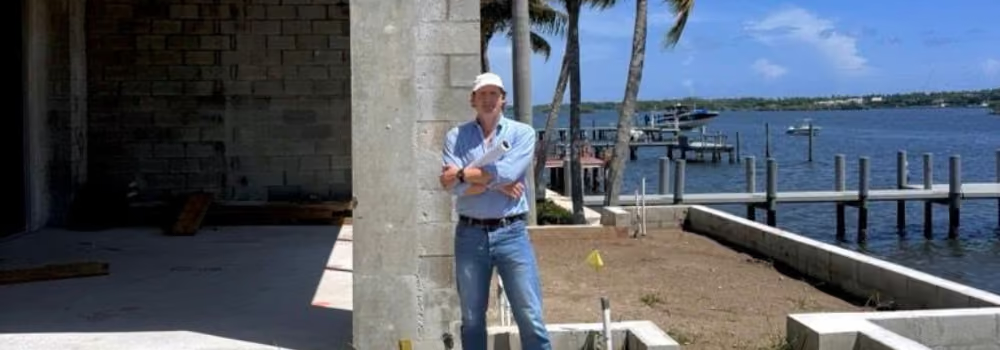
Host: Stroke of the pen risk. It's what you take on when the business you buy benefits from a law or regulation because a law can be unwritten. Today's guest bought exactly that kind of business, then went to the state Capitol to make the law better. Jack Rao and his brother bought two and Taylor in West Palm Beach, a quote, private provider.
That's Florida's privatized alternative to the building department for plan review and inspections. Most of you have never heard of private providers. Neither had I. They bought it as a side hustle and kept their day jobs.
That didn't last. Jack doubled revenue in his first year, doubled it again in his second, left consulting in New York behind, and today runs four offices across Florida. As for that pen stroke risk, Jack took leadership of the industry's trade association and lobbied Tallahassee, winning a mandated 50% permit fee discount for customers who use a private provider. I haven't heard of searchers going on offense like this with regulation.
Also, Jack bought the $2.1 million business with no SBA loan. No bank would touch him, so he had to find the money elsewhere. It's a great example of finding debt if your deal does not fit the SBA box. Finally, listen for his in House AI hire a young developer building with Claude code.
What Jack says would have cost millions pre AI. This is a picture of where small business is going to Here is Jack Rao, co owner of two and Taylor. Tomorrow, Tuesday, leading SBA loan broker Heather Anderson will host a webinar explaining how a bank will decide on the amount of SBA debt they'll lend for your acquisition. Because a deal may look affordable based on the broker's numbers, but the lender's math can tell a very different story.
Heather will take one fictional deal from start to finish to show you how banks actually size an SBA acquisition loan, including how to rebuild adjusted EBITDA from the business's tax return, which add backs lenders accept, question or reject why the EBITDA a bank will accept is often lower than the number in the simulation. How lenders use cash flow and DSCR to determine the maximum SBA loan how seller notes, working capital fees and equity fill the rest of the financing gap and what the deal would need to earn for the buyer to get a 30% annual return on equity, the webinar is sizing an SBA loan to the cash flow and it is tomorrow, Tuesday, September 29, noon Eastern. Link to register is right at the top of this episode's show notes or on the Acquiring Minds homepage. Acquiringminds co.
Welcome to Acquiring Minds, a podcast about buying businesses. My name is Will Smith. Acquiring Mind, an existing business, is an awesome opportunity for many entrepreneurs. And on this podcast I talk to the people who do it.
Buying a small business sounds simple. Find a company, due diligence, get a loan close. In reality, you wear every hat just to get the deal done. And then the moment you close, you have to throw those deal making skills out the window and learn how to operate.
You shouldn't have to rebuild this infrastructure from scratch and you definitely shouldn't do it alone. That's why Walker Deibel created Acquisition Lab, which started as an accelerator, has expanded into a complete ecosystem for acquisition entrepreneurs. Over six years, the lab's 1200 members have acquired over a billion dollars in businesses. The lab puts everything under one roof.
An active community, deal reviews, post close services, and a dedicated fund helping experienced operators buy larger businesses. If you're serious about buying a business, come see why Lab members have a 40% success rate. Learn more in the show notes or at acquisitionlab.com/acquiring minds. Jack Rao, welcome to Acquiring Minds.
[00:05:03 - 00:05:07]
Guest A: Thank you, Will. Great to be here. Yeah. Longtime listener and excited to be on
[00:05:07 - 00:05:27]
Host: Jack, you bought a private provider business. Most people probably won't know what that is. I didn't. We'll get to it.
But you doubled your first calendar year, I think of ownership, then doubled again your second year. So things are going well. Let's start with some background on you, please, Jack.
[00:05:27 - 00:07:22]
Guest A: Absolutely. Thanks. Yeah. So I was not, you know, a traditional searcher by any means.
My interest coming out of school and growing up was really in politics. So all of my childhood internships and things like that in college were, you know, all political related. So when I graduated college, you know, my dream really was to work at the White House and, you know, someday make it there and go through the whole process of being in D.C. that sort of got expedited.
And, you know, I got a job out of college at the State Department and then found my way over to the White House shortly thereafter and, you know, spent the next three years working in the Trump administration. And, you know, that was the experience of a lifetime. Really enjoyed it. But when I, you know, when that ended, I was, you know, ready to find something else.
There were, you know, a lot of reasons behind that, but I was, you know, ready to change it up and do something different. So I found my way to, you know, as some do when they don't know exactly what they want to do, found my way to management consulting. I was on the M and a team at one of the big four management consultant firms doing integrations mostly and then diligence for private equity deals there. So third party due diligence that they could provide to, you know, financing partner to say, you know, that we got the stamp of approval, that type of work.
And while I was there I was, you know, really looking for something else to do. And I did not come at it as, you know, a traditional search. I was really looking for sort of a side hustle, you know, and that made me comfortable buying, you know, a business that would be on the smaller side. So, you know, I start, we started looking and really for not something that I wanted to quit my job to do, but just something that I could manage on the side.
And that's really how we got into it.
[00:07:22 - 00:07:28]
Host: And so what was that vision, Jack? Exactly. The business acquisition as side hustle?
[00:07:29 - 00:08:19]
Guest A: Yeah. So it was to eventually turn into something into Holdco and manage it on the side and have a small portfolio. So when we bought two and Taylor, we never thought that this would be a full time job. And I was doing this with my brother in a partnership and we never thought that this would be a full time job for either of us.
We both kept our jobs and we're, you know, for the first six or seven months of ownership we were you know, just really just running the payroll, making some hiring decisions, not many, and then managing the books. And I was checking invoices as well, you know, once a month before they went out, just doing, you know, a qc, make sure it all looked right. And that was, you know, that was what we were doing. It was, it was never with the intention that this would be my full time job.
[00:08:20 - 00:08:27]
Host: So you were going to buy a business and not operate it, have a, have an operator operate it?
[00:08:27 - 00:09:17]
Guest A: Yes, that was well at the, at the size that 2 and Taylor was when we bought it, there was never, there was not at that point like a, a goal to have, you know, a general manager come in or anything like that. We really just, you know, saw this as a good, consistent business that is going to, you know, we had done a lot of diligence, particularly on the customers. And we knew even if we don't grow this thing, you know, we've got, there's an incredibly loyal customer base. It's very interesting niche business line product and you know, if, if nothing else happens, you know, we can clip a pretty consistent quarterly dividend and eventually, you know, if we package together a couple of businesses of this size, you know, maybe it becomes a full Time job and leave consulting.
But I, you know, at the time it was just, you know, I'm going to do this on the side.
[00:09:17 - 00:09:19]
Host: Okay. And you were living where?
[00:09:19 - 00:09:55]
Guest A: At the time I was living in New York and the business was in, in Palm Beach, Florida. And so I really, for a lot of reasons wanted to stay in New York and you know, that maybe that was coloring my decision there. But my brother was living in Wellington, Florida and he was much less involved. But you know, if there was an emergency, I could, you know, know call him and say, hey, would you mind stopping by?
And you know, my hope is that he would do it. But it was, you know, it, that was, yeah, that was the setup. And I, I did come down, you know, here and there, but I was not, you know, my job and life was in New York.
[00:09:56 - 00:10:10]
Host: And why did you want to do. To buy a business as a side hustle as opposed to doing what you've now done actually and get in there and have it be your full time thing. Why, why, why the on the side approach?
[00:10:11 - 00:11:26]
Guest A: Uh, I don't, I think it. Part of it was I wasn't really ready to make the entire, the full leap and do, you know, go all in on, on this thing. And then part of me was thinking, you know, I don't know if I did go and for this business, like if I did do this, you know, what would I even do? This is such a small business.
There isn't really enough like it runs itself. There's good, you know, good employees. The owner's going to be still involved for at least two years and you know, there's really aren't a lot of day to day decisions. So aside from getting in the way, I'm not sure what I would, I would necessarily do.
And so, you know, we observed, I observed the business. I would go down there, I'd talk to the employees every week and you know, just get a. How did it go? And was observing the books and things like that.
But aside from a key, a few key decisions that we made, you know, I wasn't really doing much. And so yeah, that was, that was sort of the thought process was like one, I don't know what I would do. Two, I'm not really ready to make, make the leap. Three, you know, I, I'd love to see how this pans out before, you know, if it goes well and I'm good at this, then, you know, I'll make, make the leap.
If not, you know, I'm enjoying what I'm doing a bit or I can pivot and do something else interesting that's a little safer. But, yeah, I didn't. I didn't make the entire leap all at once.
[00:11:27 - 00:11:47]
Host: Yeah, but. And that was your criteria going into the search. That's the way it panned out for this business. But you were looking for a business that would allow that this.
Right, so. So were you just kind of looking on Biz by Sell for small businesses that you could have on the side? And. And then this, when you got through your network, as I recall.
Is that. Is that how you were approaching this?
[00:11:48 - 00:12:29]
Guest A: Yes, we were. I was very much looking for something to do on the side. And I would say not so much Biz by Sell. I, you know, my experience with Biz by Sell was that it was very hard to get, you know, particularly broker deals.
It was very hard to get to establish a relationship with the seller. And if you're sort of criteria is relying on a lot of the key people to remain and including the seller, then you probably don't want to get a broker deal where the broker's gonna not really allow you to talk to some of the key people, including the seller, as much as maybe you'd like to get that comfort.
[00:12:31 - 00:12:35]
Host: So what were you doing to. To generate deal flow or to find something?
[00:12:37 - 00:12:47]
Guest A: It was a lot of, you know, asking people to introduce me and my brothers doing the same to small business owners in Florida. So it was just a lot of fun.
[00:12:47 - 00:12:49]
Host: So you were targeted at Florida?
[00:12:49 - 00:13:09]
Guest A: Yes, definitely targeted at Florida. If I was ever going to make the move, it was going to be to Florida or South Carolina, where I'm from. And. But I was really hoping to stay in New York.
And so, as you can see, I'm not there. But, yeah, that was the plan was, you know, Florida or South Carolina really were the two areas that I was looking for.
[00:13:10 - 00:13:14]
Host: Great. Okay. And so then how did you find this business?
[00:13:15 - 00:15:15]
Guest A: So my brother's wife is a, you know, general contractor, works at one of the large Palm beach general contracting firms that do, you know, some of the very custom homes on the island. And they were a customer of two and Taylor. And so when, you know, the seller had been going around telling the customers, hey, you know, I'm really trying to, you know, go on more cruises. I'm trying to take a step back.
And there was, you know, there was sort of, you know, they. The customers sort of got together and they were looking for someone to come in and buy to and tailor and sort of maintain it, because at that point, it was a pretty small operation. The seller didn't really need some big exit. He had been doing this for a while, and it had been a pretty consistently profitable business.
And so he, you know, if he didn't find someone in time to take over the business, then he was going to, you know, exit and just close. Close it down. And so the. My brother's wife knew the business really well and introduced us to some of the customers.
And that's how we really got excited about it, was, you know, talking to them and they really explained, you know, this is a. This is a very niche thing, but it's a very valuable thing. And this business in particular has a lot of great customers. There's not a ton of competition.
And the, the competition that there is is pretty weak. And, you know, for. There were a lot of, you know, good features and a lot of folks that we talked to. And then, you know, we were introduced to the seller and had a lunch with him.
And we, we sort of came out of lunch with a handshake agreement on the price on some of the key terms. You know, he wanted to stay in the business working as. As an inspector and plans examiner, but he didn't want to, you know, maintain any of the management aspects of the business. He really just wanted to focus on the work that he was doing.
And he, you know, key item was he wanted at least a month of PTO each year.
[00:15:16 - 00:16:05]
Host: Jack, let me, let me pause you there, because we're going to get into. Okay, we're going to get into more of those details, but I want to hear what the business is and also want to make the observation that what a testament to the business that its customers are sitting there telling the seller, telling. Then you guys, like, please don't let this business die. We really need this service.
It's really valuable. Boy, that's, that's appealing to. There's not a lot of competition. Like, if this guy goes away, there aren't.
There aren't other folks around who we can necessarily turn to for this. So what is, what is the service that. That Taylor of Two and Taylor? And by the way, audience, It's.
It's Tew. Tew 2 and Taylor. We're going to hear the origin of that name. The gentleman is Taylor.
What, what was this business, this Two and Taylor business?
[00:16:05 - 00:19:31]
Guest A: Absolutely. So Two and Taylor was. Was founded by Doug Taylor and his wife Beverly, too. Beverly, you know, had.
Or Doug rather had been divorced four times, so Bev wouldn't take his name and she insisted on. On having her name first in the business. So you have two and Taylor and Doug was a longtime municipal inspector and plans examiner and, and building official. And in Florida, in about 2002, a law was passed following some, you know, some terrible hurricanes.
They passed a law. They did a lot of, you know, investigations into what's going on with the building departments here in Florida. That's, you know, a lot of these buildings were not built to code. You know, what's, what's going on here.
And they found that the building departments in Florida were not sufficiently staffed to meet the, the demand for all of the construction and building in Florida. And so there had been a lot of, like, phoning it in by inspectors or missing inspections or just saying, that's, that's fine, you know, we can't get there today. We don't want to hold you up. We.
That type of thing. And so they allowed Florida pass, what is, you know, pretty, you know, right now, exclusive to Florida law that allowed any fee owner, so that's, you know, the developer, the homeowner to, you know, select to use a private company to provide the same services that the building department would otherwise provide. So your plan review and your inspections. So you would submit your documents to us.
We would do the plan review. The building department would still do their zoning review and fire review. And then the. Then once you get your permit, you know, they sign off on zoning and fire.
They only have 10 days to issue your permit once. Once. Everything's. Once we've done the review.
So there's, you know, a timeline that's associated with that. You know, they're doing. They're not doing most of the work, so they have to kick your permits back faster. And then that you could call.
You basically call us to do your inspections. So we have a team of plans examiners, inspectors who used to be building officials or inspectors or plans examiners at a building department. So they have all the same licenses and experience. Typically it's more experienced, I would say, on our.
At our company, but doing, you know, all the same work. And then you would call us and you get an inspection the next day. And so that was incredibly valuable service to the contractors who had grown accustomed to using it because they were not having to schedule around the building department. So sometimes you call a building department, they'll say, you know, we can't get.
We don't have a commercial electrical inspector available for six days. Like you're, you know, we'll do it next Tuesday or something like that. And that can really hold up a project. And so this had become like a Very valuable service to a lot of people.
And the law had also mandated that the building department give these customers discounts on their permit fees. So, you know, the cost of our service was being offset by a discount in their permit fee. So it was essentially, you know, in most cases free to use a private company instead of using the building department. So people who had grown accustomed to that were now really ready to let it go.
And so that's why the customers, you know, not wanting to go back to the old ways, really banded together to find a buyer for this business.
[00:19:32 - 00:22:19]
Host: If you ask owners in the ETA and search community which insurance broker provides highest quality work, great outcomes, and has a practice dedicated to searchers and acquisition entrepreneurs, one name comes up again and again. Oberly Oberle. Risk Strategies has worked with hundreds of searchers over nearly a decade and is in fact led by a two time successful searcher, August Felker, which makes Oberle a specialty insurance brokerage for searchers by a former searcher. And if you've got a business under Loi, Oberle will provide complimentary due diligence on that business's insurance and benefits program.
An easy, no risk way to get to know August and the team at Oberle. To take advantage, check out oberly-risk.com that's O B E R L E hyphen risk.com link in the notes. I'm just going to make sure I got it. It's.
So the business is called, it's a private provider, which is the most ambiguous. It's not private building inspection provider, private permit provider. No, it's just private provider. It's called a private provider.
Okay. And the origin is that areas of Florida were, their building departments couldn't keep up with the inspections and, and would just rubber stamp a lot of inspections. And so buildings were not up to code and so there were bad hurricanes and buildings didn't withstand the hurricanes like they were supposed to. So there was a capacity problem.
And so they enabled these, these privatized, essentially privatized building inspection is really what it is. And, and so developers in particular who have really high carrying costs of their real estate projects are eager to get, you know, their, their, their, their inspections done as quickly as possible. But of course, dealing with the bureaucracy of the municipality or the county or whatever is expensive and takes forever and is, you know, who wants to deal with government bureaucracy? It's that sort of story.
And so there's this, there's this industry, your industry, that solves that problem. Really interesting. And it sounds like the developer Community, the real estate developer community has come to. GCs have come to rely on it.
They really were loath to see it go away and then have to go back to dealing directly with the building departments. I wonder why this sort of thing doesn't. And maybe it does. This sort of thing doesn't exist privatized, you know, driver's license renewal.
That dealing with bureaucracy and waiting for your approval for whatever it is is an old, old story. I wonder why. Here there was this interesting private market solution, but you don't see it elsewhere much.
[00:22:19 - 00:23:25]
Guest A: Yeah, so they have similar laws, but not to the extent of Florida. So Tennessee has a similar law. Texas, Georgia have similar laws, but not, not to the extent where any project would qualify. So in Florida, you know, we're doing, you know, we're doing the Palm beach airport, but we're also doing H Vac change outs or re roofs.
So it doesn't matter the scope, anything like that. So, you know, that's, that's a nice thing about the Florida law. And there this is in front of a lot of local or state legislators, legislatures rather. And you know, I expect in the next couple of years this has become sort of a very large industry, particularly post Covid, and I'm happy to talk about that.
But now it's getting a lot more play. Whereas it used to be sort of niche for, for developers and certain projects that made sense, you know, faster timelines, things like that, people needed weekend inspections. But now it really is to a point where a lot of, a lot of people are relying on this. And it's not just, you know, because of, you know, this certain project has this particular timeline or whatever, what have you.
So.
[00:23:25 - 00:23:34]
Host: Yeah, okay. Okay. It ends up being just a better solution for many kind of projects and people doing any sort of development or replacement work.
[00:23:34 - 00:23:51]
Guest A: Yeah. And I would say last one is be careful what you wish for. On privatized businesses. In Charleston, they have privatized.
Where I'm from Charleston, South Carolina, they have privatized parking people. Or they did for a while. They got rid of them. But I found that I was getting parking tickets far more often.
[00:23:52 - 00:23:53]
Host: Right, right.
[00:23:53 - 00:23:55]
Guest A: So just be careful.
[00:23:55 - 00:24:40]
Host: Yeah, sure. No, the, the incentives. Well, yeah, we could have a philosophical conversation about that one. The motion of the business, so then is that contractor developer calls you and says, here's my, here's what I'm building or what I have built, I need it inspected.
And you guys will send somebody out to do the inspection and then send whatever your, your inspection results back to the city and kind of move that paperwork or send somebody out, send the technician or the inspector out. They come back, they give the approval, move the paper around, charge the customer. That's it. Right, that rinse and repeat sort of thing.
[00:24:40 - 00:24:46]
Guest A: Yeah, with a lot of paper being moved around. It's, it's very highly regulated, but yes, with a lot. Yeah, that's essentially it.
[00:24:48 - 00:24:58]
Host: And so how big was, how big was the business? And you know, as a, also how big is this industry? So start with this particular business and then let's understand the industry.
[00:24:58 - 00:25:38]
Guest A: So this business and I, I've told my partners now I won't talk about revenue, but it was about a $700,000 EBITDA business and it was five full time people with you know, two part, part time inspectors that were like surge capacity during sort of our high season down here. And as far as the size of the industry, you know, I think it's, it's probably about, you know, a $200 million industry right now in Florida and with, you know, opportunity to maybe a little bit smaller than that, with opportunity to grow a lot.
[00:25:39 - 00:26:13]
Host: Okay, so this, and so this particular business was 700,000 of EBITDA of earnings every year. You, you're not going to say revenue, but you know, people can do their own math on, on, you know, what margins typically look like in small businesses. And with five full time employees, two part time. So that seems like a, that seems like a pretty good economics for this business.
I mean you'll see a trades business that needs many more employees than that to get to a 700 in earnings.
[00:26:15 - 00:27:22]
Guest A: Yes, no, it's great economics. And I can, you know, there was, it was very high margin. We, we bought it particularly and didn't require a lot of people, mainly because of the selectivity that the, the seller was, you know, having. And that's a big reason we were able to expand the business very quickly was that the seller was not, he was not taking projects that were more than like a 15 minute drive for him from any of his other projects.
So he was really maximizing the amount of revenue he could do without hiring any additional people. And we, you know, we'd asked him and any additional full time people and we asked them, you know, in diligence, why are you not taking some of these projects? Like we've, we've heard from some of the customers that you've turned them down on like, you know, very significant size projects for you. And he just said, you know, I just, at this point I don't want to hire any More people.
More people is more problems. And I've definitely found that, you know, in, in trying to, in expanding the business, that more people is more problems. I think many of your listeners might agree, but, you know, for us to grow, that was, it was a big part of it.
[00:27:23 - 00:27:52]
Host: Yeah, of course. And by the way, what a. That's the thing that you want to hear from a seller, that, that they are choosing to throttle the business and that, you know, if you get some eager young blood in there, there's a lot of growth to be had. And so you serve West Palm Beach, Palm beach area, and within 15 minutes of that, I guess when you bought the business, that, when we purchased the business, his radius of coverage, he.
[00:27:52 - 00:28:42]
Guest A: He was in some cases turning down projects that were in West Palm Beach. So now just for dynamics unique to him, you know, a certain individual had shut down one of the bridges here due to Secret Service. And so he was, he was just sort of unwilling to make, you know, go the longer drive. And so he stopped taking projects that would, you know, have taken a little bit longer and required him to use like a different bridge.
He was, he wasn't even taking those. So. And we, we knew that going in, having talked to some of the customers that, you know, he, he is being incredibly selective about the projects that he's taking to the point where, you know, growing this business would almost be like comically easy by just hiring one person who. So he doesn't have to, you know, drive where he doesn't want to drive.
[00:28:42 - 00:29:20]
Host: And so he's basically servicing 15 minutes or less from Palm beach when you, when you are looking at the business. So that doesn't include, for example, over to Delray. That'd be way too far. In Fort Lauderdale, in Miami.
No way huge markets just to your south or an hour and a half to two hours to yourself, then all the other markets throughout Florida, from Tampa to Orlando to all the way up north. Do you look at this as a scalable business or are those markets, do they already have their own two and Taylor and it would be hard to break in. Or how do you think about geographic expansion when you're on the outside looking in at this business?
[00:29:21 - 00:30:01]
Guest A: No. I mean, absolutely. So a big part of our growth plan was to open more offices in larger markets and then serve service a larger area from our existing offices. So, you know, Port St.
Lucie to our north is I think, the fastest growing county in Florida. So by not servicing that, you know, we were giving up a ton of revenue and a lot of our customers who we were, you know, working with down here, were doing projects in those areas. And so, you know, just by saying yes to those and hiring additional people, we were able to grow it and then, you know, opening additional offices. So we bought it with one business, one office, and now we have four.
And, you know, great.
[00:30:01 - 00:30:16]
Host: And we're going to want to hear about that. But as you were evaluating the business, you did feel that, that you'd be able to. To turn this on in other markets and that would be a key and obvious growth lever. And in fact, as we're going to hear, you have absolutely.
[00:30:16 - 00:31:32]
Guest A: I mean, the, the cost of the service was such that. And the economics for the general contractor were such that they would use the services off. Someone who had used the service was very likely to continue to use it once they had started. And I can, I'll talk about, you know, one thing that was exciting about COVID was a lot of the building departments refused to do inspections during the, the, you know, during the COVID lockdowns.
And so a lot of our customers were pushed, pushed to private provider for the first time because private providers were doing inspections, you know, with social distancing and some of the normal things that we had back then, but they were using the service for the first time and they were like, you know, I didn't realize that, you know, a big part of our sale is a lot of people don't know that it's even legal. Most. I bet that 99% of your audience didn't know it was legal. So, you know, a lot of people just don't know that it's available.
And so, you know, moving in, doing that education piece, you know, we were able to, able to grow the market there for us. And then, you know, we knew that if we offered the services in other areas that our customers who are using us in this very tight, you know, circumference around the office would use us, you know, in other areas as well if we had the, had the capacity.
[00:31:33 - 00:31:43]
Host: And so some of your existing customers had footprints in other markets. So you could, you could basically sell the same folks, but in, in new markets.
[00:31:43 - 00:32:08]
Guest A: Yeah, and I wouldn't even call it necessarily new markets. Like 15 minutes from, you know, our office is. This is the same office is the same market. But yeah, exactly.
Like going to like Fort Lauderdale might be considered a new, new market. Like we're doing very large projects down there now and, and up, you know, up north. So servicing those for sure. We knew that, you know, that would that be a huge lever and turning
[00:32:08 - 00:32:30]
Host: on these new markets, growing into this, into this perceived demand from other markets, where you were going to go was amounts to basically hiring inspectors. There's no capex in this business, obviously or not obviously. I assume there's no capex. Right.
Is it, is it basically just as the limitation or the inputs are the inspectors?
[00:32:31 - 00:33:17]
Guest A: Exactly, it's, it's inspectors. We, you know, we have company cars. So you know that. But it's really, that's really it.
And you know, there are nuances. You know, anyone who's built something in Florida will know that there are nuances to each building department. So you know, you have to learn how people do things differently and you know, Miami versus West Palm beach for sure. But you know, it's really just getting that knowledge and then once you have it, you can create the, you know, SOP around it, then you've got it forever.
And you know, establishing a contacts in that, in that building department in the same way we have contacts and you know, the ones we have where we have hundreds of projects, you know, that's, that's really the, you know, the scaling up of it. But the inspector piece is very difficult because of the licensing aspect.
[00:33:18 - 00:34:02]
Host: And we're going to get into that when we talk deal terms, which are very interesting in this business, in this acquisition. Something else that will, that strikes me Jack about this business is some of the weaknesses would be that it's tied to development or construction sort of almost explicitly. I mean it's part of the process of construction and development which is cyclical and project based. And it's also got this regulatory, I mean it was the inception of the business was based on regulation.
So you know what, the pen giveth, the pen taketh away. So there's pen stroke risk as well. How did you think about all the above and then the licensing?
[00:34:03 - 00:35:44]
Guest A: No, absolutely. And this is where, if I had listened to some of my friends in private equity, I certainly never would have done this deal. The stroke of the pen risk being the main one. I think the dynamics of building, of being relying on construction in Florida, like, you know, I, I liked that particularly at the time and I like it even more now.
I don't think that, you know, I think the way things are going in Florida, there will continue to be a lot of building and rebuilding and, and things like that. But absolutely, we're, we have, you know, that cyclicality for sure. There's also, you know, sort of a, a boom for us in the summer when the snowbirds, as they call them, leave their homes and they Want to all redo their bathrooms and, and you know, kitchens. And then it really, the business slows down a bit in the, you know, from Thanksgiving to Easter.
And so there, there's a lot of, you know, things not to like around the business when we were, you know, diligencing it and that was where getting, you know, really close to the customers and the seller and having a really good sense around like, you know, what can we do once we take the keys to, you know, offset some of this risk are you know, we, we had to have a, a strong plan around each of each of those things and you know, if we have enough time, happy to get into whatever's interesting there. But yeah, there was definitely a lot of risk in the business and you know, we knew pretty much all of it going in. There were, there were some, some things that we, you know, we had hints of that came to pass later. But you know, yeah, definitely tell us
[00:35:44 - 00:35:47]
Host: what the acquisition price was and how you looked at structuring the acquisition.
[00:35:48 - 00:37:09]
Guest A: The purchase price was definitely an attractive thing about the business. So we agreed at our lunch at Flanagan's that it would be three times Ebitda and we would agree on EBITDA together with the add backs and they would, you know, we would discuss them all together and be, you know, transparent about it. We knew that the books were not, you know, the, it wasn't the easiest books to get through. So there was going to be a lot of effort on our side.
And that was where, you know, some of my consulting experience and quality of earnings experience had, had, you know, came into into play at a, at a very small level. And then you know, there. So that was, you know, that, that was the purchase price and then that there would be a $300,000 seller note and that would be paid. That would be zero percent interest and it would be paid each year at the anniversary and you know, platform or one, one of three payments at the anniversary.
The one year, two year, three year anniversary of close. And that was sort of because we had that the seller was continuing to license the business and work in the business for those three years that we would, you know, sort of keep him with some skin in the game there. So that was, that was that piece of it that we agreed on and then having to get into financing now if you wanted to get into that or you know where.
[00:37:09 - 00:37:53]
Host: Yeah, well, let me just underline this. The seller note piece and the purchase price. So 3x of 700ish was about 2 million to 1 to 1 to 1. Okay, 2.1 million.
And then 300 that. You just said that 300 of that purchase price was in seller note. So that is 15%, I guess. And the idea was to keep.
As often with seller notes is to keep him engaged, not. Not just motivated to have a successful succession, but in fact, he would be active in the business as a technician and with his license. So he would be. This.
Would check the box for the licensing you needed.
[00:37:55 - 00:38:39]
Guest A: That's correct. So he had every license available. So for us, you know, each inspection requires a certain type of license, and they're dictated by the Florida building code, so structural, mechanical, electrical, and PL plumbing. And then there's residential, and then there's a higher bar for commercial.
And he had all those licenses. So we knew that we could plug him in on any inspection where we were missing a license and we could go and fill the rest of it. So he had that. And then he was also licensing the business as a building official.
So he was able to, you know, provide all of the licensing that we needed at any given point. And, you know, we could fill in the rest while he was there. And then with the, you know, knowing full well that we had to replace him in the time he was, you know, we'd agreed.
[00:38:39 - 00:39:08]
Host: So as you dispatch these inspectors to go out, they. They need individual licenses from one of those four categories, as you said, and maybe there's some variation in there, but then the business itself also has. Needs to be licensed. The business entity needs to have some licensing.
And he, while he was going to continue to work for you for three years, was going to be the stopgap as you guys got the business licensed under your own names or not tied to him.
[00:39:09 - 00:39:28]
Guest A: Yes, that's exactly right. So he was able. Yeah, he was doing the umbrella licensing for the business. And then if we needed, you know, him to fill in on any inspection where we didn't have a licensee or an inspector available, he could do that.
And he was, you know, he'd agreed to make himself available for those inspections.
[00:39:28 - 00:39:40]
Host: Great. Okay. And you were effectively. He was getting $100,000 a year for this.
A $300,000 sell paid once a year. A third or third. A third. 100 grand a year?
[00:39:41 - 00:39:52]
Guest A: Well, for his inspection work and any. Anything he was filling in, he was also getting an hourly cost. But to license the business was, you know, he was getting the 100,000. Yeah.
[00:39:53 - 00:40:10]
Host: Okay, gotcha. So that. That answers for 300 of the 2.1. Let's hear how you structured the rest of the deal, starting with the fact that you were not going to be able to use the sba.
So this is a, a non SBA deal. So I want to spend some time on how you can buy such a business without the SBA.
[00:40:11 - 00:41:42]
Guest A: Absolutely. So we, to make up the remaining seven. So we put 10% down as the equity partners and I'll say who those are. So we then, my brother and I, you know, we knew we needed non, you know, we couldn't use the sba.
And we had some conversations with banks who said, you know, you don't have this license, you don't have this experience. It's, you know, good luck. We, you know, won't touch it. So we knew we had to go out to an individual at that point to or multiple individuals to get the debt financing or, you know, raise some additional equity.
And we went to, you know, a personal friend. We interviewed or talked, not interviewed, but talked to a few folks about, you know, potentially filling the gap for us. And one person was very interested, more so than the others. There were some others who were interested, but, you know, once we found the person who was very interested, we stopped having conversations.
But his ask was, you know, I'll take down all of the remaining 75%, he's 76%. And you know, my ask is that I also be on the ups, you know, get equity upside and 33%. And so, you know, without him the deal would not be possible. And so we said, and that was, you know, that was a person who had a family office and so the family office was, you know, willing to do it for him and, or he just told them to do it.
And so that, that was how we got there.
[00:41:44 - 00:43:22]
Host: Running payroll, paying your bills, closing your books, and producing financials. These are critical tasks every business owner must do or oversee. But spending time on them distracts you from the leadership in growth work you want to do. So let system 6 do it for you.
Owned and led by a former Searcher, Chris Williams, System 6 is a leading outsourced finance team for hundreds of SMBs, including over 50 searcher acquired businesses. Chris, Tim and the System 6 team understand firsthand the challenges, the opportunities of jumping into a business as its new owner. So whether you own your business already or have one under LOI, talk to System 6 about how they can give you time back and improve your financial operations. Mention acquiring minds and they'll provide a free review of your books and financial ops, a $500 value.
Check out system6.com, link in the show notes or email helloystem6.com. So to be clear, you guys had a problem because you couldn't find debt for this deal. You couldn't do sba. And you also talked to banks about conventional debt and everybody was like, no.
So you needed to be fined. How much was it of the full 2.1. You brought 10%. So that's 210, plus the 300 seller note.
That's 510. So you needed another 1.55.
[00:43:22 - 00:43:26]
Guest A: 1.59. Yeah. So 75% of the deal.
[00:43:26 - 00:44:23]
Host: 1.59. Okay. And you wanted to finance it, so you needed that debt. And so you got some interested people.
He was particularly interested, but his ask in return was he didn't want to just give you the credit, the debt for this. He also wanted to participate in the equity, in the upside. So you weren't actually looking to do that because you guys could, you and your brother together could, could, could, could provide the 210 in equity out of your pockets yourselves. But this is what he negotiated for himself so that again, because he, he was tying his debt, his issuing debt to you guys to also participating in, in the, in the cap table and to get some upside.
So you ended up at a third. A third, A third. He got, he put in a third of that 210. You and your brother each put a third in respectively, and you're now each 33% owners of the business.
Did I get it right?
[00:44:23 - 00:44:24]
Guest A: Exactly right. You got, it was perfect.
[00:44:25 - 00:45:02]
Host: Okay. Now, I had said to you in the pre call that, that seems, you know, rich because he got 33% of the business for 7:71 for $70,000. And you pushed back saying, and you know, in the businesses going gangbusters now. So he's, you know, he's sitting pretty.
You pushed back pretty hard on that. You were like, yeah, but let's not forget what this, what this proposition looked like going in. You, you perceive that he really took a big bet on you guys and you're as you, I've already said you feel a lot of gratitude for his participation. So elaborate on that and your push back to me.
[00:45:02 - 00:46:25]
Guest A: Absolutely. And I, you know, I think the common refrain is it's a small deal, like, why didn't you guys just go 50, 50? And I would, you know, I say that and say all the time, like, without this person, we wouldn't have been able to take down this deal. The debt financing on its own is a pretty unattractive, you know, unattractive proposition.
And so we didn't know. And no one that we Talked to was willing to just do the debt. And you know, they want, they all wanted to be along for the ride. And particularly people wanted to just participate in the equity and not do the debt.
And so, you know, that was, you know, and at the time, very risky deal. Like, you know, Jack, you're not a building official. What do you know about the building code? You know, you've never been on, you've never done an inspection in your life, that type of thing.
And so there was, there was a lot of risk at the time, I think, you know, we've done a lot in the, you know, last couple years to offset a lot of the risk in the business. But I would say, you know, at the, at the time of close, you know, this was more of a, you know, coin flip than I would from his perspective, not from my perspective, but, you know, from an investor's perspective, they would say, you know, I don't like this particularly. And that was, you know, I got the same comments from all my friends in private equity who are like, what are you thinking? So I would say, you know, I'm especially appreciative because of that.
[00:46:26 - 00:46:53]
Host: Yeah. And not to mention just the structural, macroeconomic weaknesses about the business that we talked about, the cyclicality of IT, the project, etc. And so, so to this point, Jack, how much do you feel like you, as the owner of this business, need to know about the building code versus just being good at hiring, hiring the people who know about the building code?
[00:46:54 - 00:47:55]
Guest A: I would say need to know is, is very, is not. I don't need to know a lot. I've come to know a lot just because, you know, for my involvement in the industry and wanting to push some of the, push the industry forward and getting involved there. But in terms of like day to day decisions that I'm making that way, I would never, you know, I've never overruled an inspector or plans examiner if there's a second opinion needed.
We have very incredibly senior people who have been, you know, decades long, building officials who work in the company. And I' always go to them and I'll say, you know, will you give this person a second opinion? Will you look at this, tell me what you think? But you know, I'm never overruling someone on codes or, you know, hey, I really wish you would pass this guy.
You know, I would never do something like that. So I would say I don't need to know it. But in terms of, you know, getting involved in the industry and wanting to push things forward, I'VE come to know a lot about the codes, the laws, you know, different things related to that, just so that I can speak knowledgeably when I'm, you know, talking to folks and pushing the industry forward.
[00:47:56 - 00:48:10]
Host: And in fact, when you bought the business, you did stay in New York for a while. So talk to us about that transition period and how it was you decided, no, this is not going to be a side hustle. This is going to be what I devote my career, the next chapter of my career too.
[00:48:11 - 00:50:08]
Guest A: Yeah, absolutely. So the first seven or so months I was, you know, coming down and seeing the business, you know, once a month, maybe just depending on my work schedule and things like that. If, you know, oftentimes these consulting projects are remote. And so I was able to, you know, go down and work from the office.
And really nothing was requiring a ton of my attention. I was, you know, pretty focused on changing some of the processes, you know, invoicing. When we got, when we took over, the business was happening. You know, they would do every invoice individually in Excel and then print it out and mail it to the customer.
And then the customer would, you know, there was no ACH or anything like that, QuickBooks. So they would mail a check back once they got it. And so, you know, the accounts receivable was massive and we had purchased the accounts receivable or it came as part of the deal. There wasn't like a cost adjustment adjustment for it.
But I knew like, we need to get this down and collect this because I, you know, the plan here is to start clipping, you know, 50 grand to each of the owners here every quarter. And you know, I'd like to have some cash stored up. So there were some, there were some items like that operationally that I, you know, I was quick to move the business to QuickBooks and you know, change the invoicing processes and some of the low hanging fruit. There wasn't a website, you know, so quickly got up, you know, spun up a website and things like that, payroll, because I just didn't want to mess, didn't want it to get messed up and people to think that, you know, I wasn't going to pay the people and go look for other jobs.
I was, you know, focused on getting that right. But really outside of those small things, the business was just running incredibly well and I knew that we needed to take on more projects outside of the area that we were already in. So, you know, we started looking for that for an additional inspector who was, you know, willing to go, you know,
[00:50:08 - 00:50:10]
Host: that more than 15 minutes away.
[00:50:10 - 00:50:59]
Guest A: Yeah. Which was very easy to find at the time. And then, you know, one other, you know, big changes we made was that each contract had a two hour minimum written into it, but the company had made sort of a decision that they were only going to charge the one hour unless it was a project that was really far away. And they weren't taking any projects that were really far away.
So they were only charging the one hour. So overtime or. Well, not really overtime, pretty quickly we started charging the two hour minimum and there was virtually no customer pushback at all, just because, I don't know, no one complained. So that was a pretty quick change to really increase the margins.
And we didn't expect that to work as well as it did. And it did.
[00:51:01 - 00:51:26]
Host: Probably a testament to how the value that, that you were providing or that your customers perceived in the service that you, I understand you were basically just charging them that what was already contracted that they were to be charged, but your previous seller hadn't been doing that. So effectively you raised prices and heard not a peep. That's, that's nice.
[00:51:27 - 00:51:53]
Guest A: It was, I mean, it was incredibly nice. We were, you know, that day we came into work, we were like, this is the first invoice round that's going to go out with the two hour minimum included. You know, we'll all be ready to man the phones if things start blowing up. And, you know, no one called and, you know, it was the most boring day ever at work.
And you know, I just thought, this is incredible business. We're incredibly lucky that we got this. I don't know anyone else who's ever, you know, experienced this.
[00:51:54 - 00:51:56]
Host: At which point you moved to Florida?
[00:51:57 - 00:52:00]
Guest A: Sort of. Not yet. Not yet.
[00:52:00 - 00:52:00]
Host: Not yet. Okay.
[00:52:00 - 00:52:01]
Guest A: Okay.
[00:52:01 - 00:52:02]
Host: So what was the final.
[00:52:02 - 00:53:59]
Guest A: The impetus for the Florida move was, you know, the west coast. So we had an office on the east coast of Florida that was servicing a large area surrounding West Palm Beach. And, you know, we knew that if we wanted to grow and make this sort of a meaningful business for us and for it to ever be worth being a full time job for me, and, you know, I was beginning to really love some of the characteristics in the business and wanting, you know, getting the itch to go full time and sort of had given up on looking at other businesses instead and, you know, was really dedicating my time to this and, you know, I felt like it had to grow. Like there, there's no need for a CEO of such a small business or a president to come in.
And so it had to grow for me to like, for it to make sense for me to come in and start, you know, taking a salary to replace, you know, what was a pretty nice salary at the time. And so there was, you know, an oppor. Opportunity was sort of an unfortunate thing. But there were two back to back hurricanes that you know, touched down in the west coast of Florida in the Tampa Bay region and really crushed the Pinellas beaches.
And you know, there was, there was just, it was very clear that there was going to be a lot of plan review and permitting and inspections that were needed. And this was something that was going to take them years to get out from under. And so I, you know, we had been talking about a Tampa office for a long time just because of some of the similar and some of the qualities of the, of that area, some of the growth. And so, you know, I, my thought at the time was, you know, if not now, then when, you know, there's not going to be a time like this.
So instead of moving down to Palm beach where the office was, I was commuting every week from New York down and staying in a, in a hotel in St. Petersburg and we opened up an office there, you know, servicing the west coast.
[00:54:01 - 00:54:52]
Host: And so the idea was that there was going to, that the St. Petersburg Tampa area was going to be having been slammed by a hurricane, which of course a lot of people will remember that was a big one and was a national news story and was really devastating. The area was going to take a long time for them to get out from under all the new building inspection work. And so this was the moment to enter the market with the idea that you would, that you would try to service that demand.
But that's, that's kind of one off demand. And then you would, and then, and then. Because eventually you're going to work through that, but you want it to be in that market anyway. What was the kind of strategy beyond getting through that hurricane related capacity crunch?
[00:54:52 - 00:56:34]
Guest A: Well, there was another business line that we wanted to get into which is, you know, we talked about, you know, cyclicality of, you know, building construction. But there are, particularly on the west coast, there are a lot of small municipalities who outsource their building department to private companies like ours. So they don't have enough, you know, inspections or plan reviews to have their own building official or plans examiner inspectors. So they'll share them or just contract for part time with a company like ours.
So we like the qualities of that business a lot because, you know, you would sign up like a three year contract or a two year contract with one of these building departments and you would supply them with people at margin and, you know, it was lower margin but you were able to maintain it for longer period and it was sort of more contractual. So we wanted to get into offering that. And so the first thing I did when we opened up the office over there was, you know, I emailed every single mayor in the area and said, you know, we have excess capacity. You know, would you, if you're ever interested or you need it, you know, let us know.
And we got, you know, I think I got five responses out of like 40. And then we signed up four of the five to, you know, outsourced building department contracts. They were not all long term contracts. So, you know, eventually we got fired on most of them, but it got us into that market and now, you know, we have a lot of those longer term contracts that, you know, are a big part of the revenue here and, you know, sort of diversify things for us.
But yeah, that was, that was a big part of it.
[00:56:35 - 00:56:49]
Host: And those contracts are, are different than what you had in Palm beach because they're, they're, they're contracted, they're not one offs. And are you the sole provider for the municipality or how does that work?
[00:56:49 - 00:57:34]
Guest A: The local government is the customer instead of the homeowner or the contractor or the developer. And so we are, you know, we're providing four or five people full time to one building department for different services. And a lot of that at the time was remote plan review. And so it was just, you know, retired building officials sitting at home who worked for us, and they were just reviewing plans all day.
And then it moved to some inspection work as well. So that was the main difference was instead of it being one project here for this customer, one project here for this customer, it was one customer providing full time work for a number of our employees to offset their surge demand.
[00:57:37 - 00:57:42]
Host: And how did you find hiring building inspectors or retired building inspectors?
[00:57:45 - 00:59:11]
Guest A: With a few exceptions, you know, we were able, we had brought in enough like technical expertise where we could, you know, identify who's going to be good and who was not. It's, you know, it's not a big, it's not a big pool of people. So a lot of folks have worked with each other. So we were getting good referrals from our existing staff saying, you know, I used to work with this person at this building department and he's retired, but I think he would do something part time or I think he would do something for the Next couple months or something like that.
And so we got a lot of folks that way through referrals. And then there were some people who applied online who made it through the technical interview. And then we were catching mistakes throughout the process, like part of our auditing process to make sure that we're providing people who are actually doing a good job. And so, you know, we caught a couple people who were, you know, not doing a good job even if they had the, the prerequisite experience and things like that.
But for the most part, yeah, the people worked out. So it was, it wasn't as difficult as I thought it would be. Hiring people in person is very challenging because, you know, it's. To do the inspections, it's logistics, it's a lot of driving around and things like that.
So you're finding the right licenses in the right areas. But hiring people, you know, at that time to do, you know, remote plan, plan review work was not as challenging.
[00:59:12 - 00:59:25]
Host: Okay, okay, okay. So to be clear, the two key services are plan review, which can be done remotely, building inspection, which of course is done at the building.
[00:59:26 - 00:59:51]
Guest A: Yeah. And some, some inspections are done virtually for simple scopes, like, you know, if you're doing like an H vac, like for like a re roof. Things like that are commonly done by private providers and building departments virtually. And so we offer that for like certain very simple scopes.
But for the most part, inspections are happening in person. And so it requires having the license of the person in, in that area.
[00:59:51 - 01:00:04]
Host: Great, Jack. So now that we understand you start going after a larger area in your home market, you stand up St. Pete, what is revenue doing during these, during these moves?
[01:00:05 - 01:01:15]
Guest A: The first year was the first full year that I, that I had been, you know, working remotely. And what we did, we doubled the revenue that year just by virtue of, you know, expanding our service area and then grow, increasing our prices through that, you know, contractually obligated two hour minimum and then, you know, hiring additional folks to, to do that work. So that was the first year was, you know, the initial, initial double. And then the second year was really the growth of the Tampa office.
Well, you know, our Palm beach office was really still continuing to grow the Tampa office and that, you know, the, the outsourced building department work doubled the, you know, doubled the revenue again. And so it was a real, it was a very exciting first two years. And we, you know, we were able to distribute within the six month, first six months, we were actually able to distribute all of everyone's equity checks back. And then we Continued to distribute a similar amount the, you know, the next six months.
So we were able to return somebody to shareholders, and, you know, we were in a pretty good position. So it was. It was an excite. It was a very exciting first two years.
[01:01:15 - 01:01:50]
Host: Yeah, absolutely. Great work. I'm reminded I heard you say earlier, Jack, that you. Something about wanting, when you were still kind of thinking that you wouldn't do this full time and really attack the opportunity, that you wanted to clip a coupon of $50,000 per quarter per investor.
Did I hear that right? Which by my math is, you know, three investors, two or three owners. The three of you, it's 150,000 per quarter, so that's 600,000 a year. But what about on a $700,000 SDE business?
That doesn't quite. Math. Did I misunderstand something?
[01:01:51 - 01:02:35]
Guest A: When we purchased it, it was 700. And, you know, as we grew, that was. That was the plan was to clip it. And, you know, we were able to do that.
Perhaps not every quarter, but most quarters we've been able to do that as we've grown, you know, there have been some cash constraints, but pretty much every quarter we're doing that. And now, you know, that was the sort of. The plan going in was, you know, there wouldn't be a lot of cost for me or my brother working the business, and we would sort of run it as like, you know, you know, to distribute cash to the shareholders. That was, you know, that was the plan.
And we try and stick to that as we, you know, as growth happens, obviously, you know, it can be. It can, you know, consume a lot of cash, but, you know, that's what we're continuing to do.
[01:02:36 - 01:02:57]
Host: So, Jack, one might be wondering, your seller, who's staying in the business, pretty active in the business, sees you come in and double it, then double it again, and what that dynamic is like. However, unfortunately, your seller passed how long after closing.
[01:02:57 - 01:05:05]
Guest A: So Doug Taylor, who was definitely a mentor to everyone in the company, he was incredibly supportive of what we were doing with the business. He was very excited to see the company grow. It was never something that he wanted to be. He wanted to do, particularly with other offices in other areas.
But, you know, he was always rubbing us about like, oh, you know, how is he managing all these people? And we would tell him about some of the, you know, issues that we were having. And there were certainly personnel issues as we grew so quickly. And so, you know, he would always give us a hard time about that.
But he was, you know, he was very supportive of what we were doing to grow the business. And, you know, some of the decisions that we had made, he would give us a hard time about the pricing, for sure. But, you know, it was always. It was always in jest.
And he was, I think, very happy with his situation in the business at the, you know, at the time. Once he had sold, I never got the sense that he was, you know, it sort of had rubbed him the wrong way. I think he just accepted that we were making decisions that he, you know, knew were available to him but did not want to make. And so there was never sort of any, you know, bad blood.
And then, you know, I think last. Last winter, around probably October, he got very ill and, you know, stopped coming to work. And, you know, we found out that it was actually. He was actually very ill.
And he. He passed away in. In, I think, December. And so that was a big, big, big blow to the.
Big blow to the business. All the employees, you know, everyone had. You really loved Doug. It was a huge blow to the customers as well, who, you know, had really grown to love him and the way he did things, the way he interacted with people.
And so, you know, it was. It was a very tough time for the business, losing Doug. And, you know, also he was the, you know, he was the license holder. So we were in a.
In a tough spot there as well. But. Yeah.
[01:05:06 - 01:05:07]
Host: And so what did you do on
[01:05:07 - 01:06:27]
Guest A: that final point, on the license point? We at that point had grown and we had a few other people who were available who had that particular license. So the license that's required is either, you know, an engineer, an architect, or a building official. And so we had a few building officials at the company, and we had a really strong relationship with one who.
One of the building officials who had, you know, decades of experience as a building official on the west coast. And he was running our. And still is running our office in St. Petersburg and running the Tampa market.
So, you know, he had said he had known that eventually Doug was going to retire, and he had talked to us about licensing the business and, you know, he wanted to grow the. Grow his role in the company. And so, you know, he was sort of our contingency plan and we have, you know, a strong relationship with him. And so, you know, it was a.
It was a natural progression. And, you know, there's a ton of paperwork that was associated with that because, you know, it requires re registering in every municipality where you do business. And so, you know, there was a lot. It was a big lift on the team.
But, you know, we were fortunate to have, you know, grown significantly in the time and have had options available to us.
[01:06:27 - 01:06:37]
Host: Great. But back to Doug Taylor's untimely passing the. His wife, Beverly. Was it two?
[01:06:37 - 01:06:37]
Guest A: Yes.
[01:06:38 - 01:06:43]
Host: Beverly too, yeah. Was she at all involved? And I ask only because her, her name is on the business.
[01:06:44 - 01:07:07]
Guest A: She had been involved as the. As the bookkeeper, but, you know, taking over, I don't know how. Taking over the books. I don't know how much time she'd been spending on it.
But, you know, she, she became involved as sort of our point of contact for the seller note. And, you know, outside of that, she, she had not been particularly involved, but we, you know, work with her now on that.
[01:07:08 - 01:07:40]
Host: Just a couple more questions for you here, Jack. A really interesting thing that you did was join the industry association. So this is a big enough space that there actually is one of those. There's an industry association to try to affect change within the industry.
This is not something that I have heard other searchers have the vision or ambition or awareness that, you know, is something that they should can do. Tell us what you did.
[01:07:41 - 01:10:55]
Guest A: Yeah, absolutely. So, you know, one of the first things that you identified when we talked was the stroke of the pen risk. And, you know, that to me was like the most existential issue. Like I can figure out the licensing.
If we have a down year on the projects, you know, it's not, you know, it wouldn't be terrible, you know, if growth slows or, you know, we lose some revenue. That's not the worst thing. But if, if the law changes in a way that it makes it difficult for us to operate and the value is no longer there to the customer, then it would, you know, it'd be a huge issue for us. And so, and there were already some issues around timelines and fees and things like that that I didn't really agree with.
And so I joined the trade association and at the time there was a chairman position open and I asked folks if I could take the role. And they all said, who are you? No, definitely not. And so I just started.
I started going to the things that other people were not willing to go to and, and, you know, meeting with people and doing some of the work that a chairman otherwise would do if they had one. And then, you know, they were unable to fill the position with some of the folks who would other, you know, had a lot more experience in the industry. And so I, you know, eventually was able to develop a strong enough relationship with some of the other folks in the industry that I was able to take it over. And, you know, we went to, you know, Tallahassee, and as a trade association, we were able to get, you know, the fee discounts for private providers increased, and then we were able to get some timelines shortened as well.
So the, you know, key thing for me was if someone's paying, you know, to use a private provider to do their plan review and inspections, but they're also paying permit fee, which is, you know, essentially for the same services, that there should be a significant discount. And in some places there was a discount, but it was, you know, the law had allowed for it to be, you know, at the discretion of the building department. So in some cases there was, you know, a pretty de minimis discount. And so we went and, you know, spoke to some members about making a mandatory minimum of 50% for commercial projects, so that there's at least a 50% discount if you use a private fighter when you're building a hotel or a, you know, hospital or something like that airport.
And so we were able to get that. And then the turnaround time was mandated to be 20 days at the building department for plan review and to get the permit issued when you use a private flighter. And we got that down to 10 days. So it was a, you know, two big wins.
And then I was really able to talk to a lot of the senators and members of the House about, like, about the law, and, you know, they were all very happy with it, which made me very happy that, you know, this isn't something that's going to go away tomorrow. And there were also other trade associations like the Florida homebuilders and the. And others who were, you know, loving, loved private buyers, and a lot of their members were using private providers. And so I was able to be with them and talk about the industry and, you know, it gave us more confidence around the, you know, stroke of the pen risk, which, you know, we still see as something that, you know, keeps us up.
[01:10:55 - 01:11:44]
Host: So to be clear, the. The success that you had lobbying Tallahassee was not, you still have that pen stroke risk of. Of like the. The mechanics of using private providers, but you've made using private providers more appealing because now the building departments now are mandated to provide a bigger discount on their fees to anybody using a private provider.
So the net cost is kind of the same as just not using a private provider. So use. So. So now in the customer's head, it's use a building provider, use a private provider and have faster service, better service, privatized service and it doesn't cost me any more than if I just used the building department directly.
Which is going to be slow and painful, etcetera.
[01:11:44 - 01:12:20]
Guest A: Yeah, exactly. So when we were having conversations with customers, you know, a big thing that was coming up was like, you know, I feel like I'm being, you know, held up by the local government to pay the same fees twice. You know, I want to use you guys, but it's hard to justify paying the permit fee and paying you guys. And so that was a big thing.
You know, it's, you're paying for the same service twice and yeah, that was well received in, you know, in Tallahassee by the, you know, the folks there who just said, you know, you really shouldn't be paying for the same service twice. We'll, you know, make sure that there's a discount and it won't be too burdensome for the building department. You know, 50% seems fair. And so that's where they struck it.
[01:12:20 - 01:12:33]
Host: And so, Jack, your vision to do this was this because you know how politics work because you're a, you're a old, you know, political guy. I mean, this does, this isn't even on the radar from other searchers that I talk to.
[01:12:34 - 01:13:58]
Guest A: It was really related to the individual business that we purchased, you know, because you, like you said, you know, you live by the. What the pen giveth, the pen taketh away. You know, it was just a, it was a huge risk. And I'm not someone who loves to have their fate, you know, handled by other people, you know, in the hands of other people, if I can, you know, do it myself.
And I felt like I, you know, I had a lot of experience and, you know, not a lot of experience relatively, but I had experience in D.C. and, you know, I relatively know how things work and know how trade associations work and, you know, can tell the story, you know, almost as well as some of the other folks in the, in the industry. And, you know, I felt like if I, you know, I could do it and I was willing to do it and I had, you know, more energy than some of these people who are, you know, it's. A lot of folks are, you know, doing their own inspections and stuff like that, a lot of Doug Taylor's in the industry, you know, still involved, you know, in the day to day operation.
So I felt like I had bandwidth to take it on and do a good job and inform the other members and keep them apprised of what was going on and, you know, respond to questions from, you know, other Trade associations or, you know, legislative aides and things like that. You know, I was happy to do that work if, you know, others were not going to do it. And that, that was the main thing for me is, you know, I don't really want to leave it up to someone else. And I was seeing that other people were not doing it.
And so, you know, I was happy to get involved.
[01:13:59 - 01:14:26]
Host: Yeah. And just give us a two minute primer on, on how you affect change at a state House. So you, you, you, you become the president of the industry association and then what, do you hire a lobbying firm to get you meetings? Or do you just outsource the whole thing to the lobbying firm and tell them what you want?
Or what does the actual work of getting the attention of lawmakers look like?
[01:14:26 - 01:15:37]
Guest A: The association had a very strong lobbyist who was really the only full time employee of the association and she set up a lot of meetings for me to go meet with senators and members of the House in Tallahassee and just explain the story. And we did a couple days of just, just, you know, meeting with people and telling them, you know, here's what, here's the issue that we're having with the timelines and here's the issue that we're having with the fees and, you know, just explaining the story, telling them about our business, telling them about our customers. You know, it's just a lot of conversations like what I'm having with you now, just explaining how things work and, you know, what it, what impact that it has on, you know, who we're providing the service to and, you know, what it could look like otherwise. And we had a couple of those and, you know, it got on to, you know, the agenda for one of the bills and they, you know, we had some supportive folks who pushed it forward.
You know, there some, you know, legislators. So we were very fortunate. It wasn't, you know, tons of work, but it, you know, it was a lot of conversations. And there were, you know, other folks, like I mentioned, other trade associations who are pushing it as well.
[01:15:38 - 01:15:44]
Host: Very cool. Have you seen, have you seen it actually play out in the market in an uptick in demand for your services?
[01:15:45 - 01:16:59]
Guest A: Yeah, people are incredibly excited about, about the, you know, the change. So it went into effect on July 1st and we had a lot of folks who held their permits and waited to submit with private provider until the laws went into effect so that they would get the discount and they would get the, you know, get the fees. And then we have a lot of folks who, you know, are Just learning about the industry through AI, I would say, is like the, one of the biggest, you know, sales channels for us is that, you know, most people have never heard about private provider. And, you know, they're googling like, is there any way.
Or they're, you know, talking to Claude and they're saying, is there any way that I can, you know, cut down on my timelines or get my permits issue faster? And then, you know, Claude will tell them about, you know, using a private provider in Florida. And it's sort of this unique thing. And there's now legislation that mandates the timelines and things like that.
And, you know, we ask people how they found out about us and you know, the first thing they'll say is, you know, I found out about you through AI and I'm excited about this new law and can you tell me more about it? So I think it has, you know, definitely been a very positive change for the industry. And, you know, it's, it's reduced some of the reservations that people have had about, you know, paying twice for the exact same service.
[01:16:59 - 01:17:12]
Host: And so give us a just an example calculation of, of what the permit fee might cost, what your fees might cost, and how this discount, how much it actually materially represents, how much money represents for an example project.
[01:17:13 - 01:18:36]
Guest A: Yeah, so an example project, you know, if you're building a three bed, three bath here in West Palm beach, your permit fees might be $15,000 and they're going to discount you, you know, 50%. And so it's seven and a half, you know, 7,500 bucks. Our fee for a single family home is probably around 5 to $8,000, just depending on how custom it is, how many inspections you're going to need. And so in a sense, you know, our services are free on most projects and as the permits get bigger, so we do a lot of, you know, multifamily buildings.
The permit fees scale with the cost of construction often or a similar formula at the building department. It's, it's unique in each place. But, you know, you, you'll, we'll send out bids where, you know, the permit fee discount is going to be like $150,000 and our bid is going to be at like $60,000 for all the plan review and inspections and so on. The like, as the projects get larger and larger, the discount really makes a big difference.
And you know, in some cases they'll waive the fees on, on like an H Vac project or H Vac change out or a reroof or something. Like that, or you'll get a very significant discount there. Where our services are free as well.
[01:18:37 - 01:18:55]
Host: Jack, aside from AI being a boon for you, because people are now finding you via their conversations with Claude and ChatGPT, you'd also mentioned that you're using AI a lot internally, operationally, and it's been. And it's been great. So give us a picture of that, please.
[01:18:56 - 01:20:43]
Guest A: Yeah, absolutely. So, you know, as part of wanting to really not do too much within the business and manage it as a side project or as really more of an investor, we started automating pretty much anything that we could. And so we created sort of our own operating system that tracks our projects, the required inspections by the building department. We put together fee trackers and things like that and trackers that, you know, track the timelines of the projects.
And then we also have, you know, whenever plans are uploaded to us, we'll extract all the relevant information that our plans examiners need so that it's all available to them, you know, when they go to do the review. So they're not digging around for, like, you know, project details or, like, you know, where's this. Where's this page? Like, it's all right in front of them.
So we've done that. And then with our standard operating procedures, we know that each building department is a little bit different from the next. So, you know, Miami might require this document, and, you know, West Palm beach does not require this document. And so we'll give alerts to our team saying, you know, this is a project in Miami.
Make sure that you've got this, and it'll, you know, there are flags and things like that involved as well. So we've built a lot of that, you know, fairly cheaply using AI, and it's been a huge help to our business to automate, you know, most of our processes. And if you think about us like, our complete competition is the building department. And so, you know, we really want to be the opposite of that and provide the best possible service that we can, you know, by being as automated and technology forward as we can while still, you know, operating within a highly regulated environment.
[01:20:44 - 01:20:52]
Host: And so basically, the AI has allowed you to move faster, be more organized, and ultimately deliver better, faster service to your customers.
[01:20:53 - 01:21:13]
Guest A: Yeah, I mean, that's exactly right. And give customers more access to their information. You know, where's this project? What inspections?
Am I still needing to do things like that that, you know, require? If you're dealing with the building department that requires, you know, a phone call or, you know, Staying on hold forever or something like that. So, you know, we're trying to be the opposite of that.
[01:21:14 - 01:21:21]
Host: And this all that you've built with AI, who actually built it, are you using a third party firm? Is it somebody internal? Is it you?
[01:21:22 - 01:21:55]
Guest A: We started out with a third party firm and then you know, started building it internally last year. We hired someone in, in house who is their job pretty much exclusively is to manage it. And you know, he's always jumping on calls with customers and like, I really wish you would build this for us or you know, what if, you know, could you provide this daily summary on all my projects or you know, what have you. And he's always, you know, trying to facilitate those requests as well and make, make the system better.
But yeah, we started out third party and then, you know, brought everything in house.
[01:21:56 - 01:22:04]
Host: And this, this person, your, your in house AI guy, is he, how technical is he? Is he a developer?
[01:22:05 - 01:22:06]
Guest A: He is a developer, yes.
[01:22:07 - 01:22:09]
Host: But I assume he's using CLAUDE code to build everything.
[01:22:10 - 01:22:10]
Guest A: Yes.
[01:22:10 - 01:22:18]
Host: Huh. So he's actually more managing Claude code. He's not, not writing code himself, which is kind of what a developer looks like in 2026.
[01:22:20 - 01:23:01]
Guest A: Yes. No, it's, it's all managing. You know, we have sort of two key applications, one for our bigger projects and then one service offering that's specific to our, you know, single trade customers that are higher volume roofers, pools, H vacs, folks like that. So he's managing both.
Just one individual. I think, you know, at some point it might make sense to give him some help. But you know, it's, he's, he's managing both of those and doing it, you know, all using Claude. So it's, it's something that would have cost us, you know, millions of dollars pre AI that, you know, now is, is done completely in house in one person.
[01:23:02 - 01:23:06]
Host: How did you find this person and what was the job description?
[01:23:07 - 01:24:31]
Guest A: Well, we were not originally looking for a developer. We pushed, put together a, a job posting for sort of a business analyst and we got a resume from someone who had, you know, some development developer experience, like two years. I mean it wasn't, you know, we didn't hire someone from Meta or something like that and you know, wanted sort of that type of role and then it morphed into managing all of our operating systems. He's a, he's a young guy, you know, a couple years out of college.
And this I think is probably the job that I wish I had had right out of college if I was starting out in business because he's really got exposure to like every aspect of our business, you know, from sales to operations. He's having, you know, one on ones all the time with you know, the inspectors and plans examiners really learning the business and making their lives a lot easier. And you know, he gets, I'd say he gets the most like instant gratification of anyone in the business because you know, people are coming to him, they're like, you know, I really have this, I have this problem, you know, I'm doing this daily, this task daily, you know, every evening and it's requiring me to be here, you know, an hour later than I otherwise would be if I didn't have to do it, you know, can you help me? And he's, you know, he's able to solve those problems for them.
And so, you know, he's I think the most popular guy here by far.
[01:24:32 - 01:25:46]
Host: Jack, would you have any, for the listener, have any advice on like how to decide when the expense of somebody like this makes sense? I, I, it's probably extremely hard to generalize, but why I'm so interested in this is because you, I, I feel like what we actually have in you is, is, is the example of what a lot of small businesses will have or, or already aspire to have, which is their internal AI person who is, who is technical and you know, basically can just, with Claude code just build phenomenal amounts of, of product very quickly. It's still not something that the searcher is going to do. It's, it's, it's still technical.
I've been getting my hands dirty for the last six months. It's still somewhat technical and it's also just shouldn't be your main thing. You should be above that. But anyway, I do think it's a, it's a, it's going to be a role in small businesses, this sort of in house AI person or two people.
And it's working phenomenally well for you. You're kind of a picture of where this is going. So I don't know any prescription for listeners of other $2 million, $6 million businesses.
[01:25:46 - 01:27:19]
Guest A: I mean, I would say do it before you think that, you know, if you're, if you're thinking about going and hiring someone to outsource who does not work as part of your company. I would definitely consider, you know, what their monthly cost is versus what you could do in house. Having someone who sits with your employees and is available 24 7, not 24 7, but you know, 40 hours a week or you know, whatever it is to sit with your employees and understand your business and, you know, get that feedback has been incredibly valuable to us in a way that when we were working with sort of a third party provider, we were as a team spending hours all talking to this, these people saying, you know, here's what I do. I'm talking to them for hours saying, you know, here's exactly what I want you to build.
And a lot of it I had already, you know, mocked up in cloud code. And you're like, just build this, make it work. And then, you know, the, the team, the permitex, the inspectors, the plan reviewers are all spending time with this group. And, you know, my thought was if we could have someone who just, you know, we can have internally who sits with us, who just understands the business.
We're not meeting new developers who are, you know, front end focused or back end focused or, you know, this person doesn't understand, you know, any of the, doesn't have the context of all the things that we've already built. You know, I'd much rather go that route. And so that was something that we found to be incredibly valuable when we went in house is, you know, having someone who really understands the business, building it, versus, you know, constantly having your entire team take hours away from what they're doing to explain it to someone who doesn't work for you.
[01:27:19 - 01:27:23]
Host: Yeah. Convincing. Jack. Anything we didn't get to.
[01:27:24 - 01:27:32]
Guest A: No. I think this is, this has been, you know, a great conversation. I really appreciate you taking the time and hopefully there's, there's some value in there somewhere for some of your listeners.
[01:27:32 - 01:27:37]
Host: Tons of value. Jack Rao, congratulations on your success so far. Thanks for coming on Acquiring Minds.
[01:27:37 - 01:27:38]
Guest A: Thanks, Walt.
[01:27:38 - 01:28:25]
Host: Hope you enjoyed that interview. Don't forget to subscribe to the Acquiring Minds newsletter. We send an email for every episode with an introduction to the interview, a link to the video version on YouTube, and soon, key takeaways, numbers and more essentials from the interview. For those of you who don't have time to listen or watch it, subscribe at acquiringminds Code.
You'll also find all our webinars there on the website, both those we have coming up and recordings of past webinars. At this point, There are over 30 webinar recordings, a wealth of information on all the technical nitty gritty of buying a business. Acquiring Minds copy.