[00:00:00 - 00:04:42]
Host: Today's guest bought a business that defied many of the conventions of entrepreneurship through acquisition. It was tiny, run out of the founders living room outside Hanover, New Hampshire. It sold basically one product, a $30 grease coupler and that product came from a South African manufacturer that owned the patent, sold to the business non exclusively and was threatening to cut it off. Outside of a couple friends and family like maybe my mom and dad, I don't think anyone would have put money into this thing, says Jay Boren.
Jay found Locken Lube while he was an MBA student at Tuck and he started there as its summer intern. His path was a version of hire to acquire a theme that seems to keep coming up. The founder asked Jay to buy the business that first summer, but the deal didn't close for another 18 months and in that time Jay worked in the business, hired its first employees, moved it out of the founder's house and built trust with the seller by closing. He knew the business better than anyone.
Listen for the deal terms in such a situation over the next seven and a half years, Jay bootstrapped Locke and Lube into a direct to consumer tools brand brand with more than 250 products in its catalog. In 2024, he had a life changing exit, selling the business to McNaught, a family owned Australian manufacturer. Here is Jay Boren, former owner of Lock and Loop the biggest first year problems rarely start as big problems. Many begin with a detail that seemed minor at close and gets much harder to fix once you're operating the business.
In a webinar Today Thursday, Chris Meadows and Ryan Johnson of Acquisition Lab will break down the operational and financial issues that can create outsized problems in the first six months of ownership and what buyers can do early to avoid them. Among the topics you'll learn today Insurance decisions that leave new owners exposed. Holdco set up mistakes that become painful at tax time. What has to be live on day one so vendors get paid and payroll keeps moving.
Payroll and benefits transitions that can damage employee trust quickly. Why a profitable business can still run into a cash crunch and when basic bookkeeping stops being enough to manage what's ahead. The webinar is the small things that sink first year owners and it is today, Thursday, October 15, noon Eastern. Link to register is right at the top of this episode's show notes or on the Acquiring Minds homepage.
AcquiringMinds co. Welcome to Acquiring Minds, a podcast about buying businesses. My name is Will Smith. Acquiring an existing business is an awesome opportunity for many entrepreneurs and on this podcast I talk to the people who do it long time Acquiring Mind Sponsor Aspen HR is now part of Engage peo Engage helps acquisition entrepreneurs, business buyers like you take care of their new employees and build trust from day one.
Whether it's an asset or stock purchase, Engage provides a turnkey solution for payroll and taxes, hr, admin and technology, employee benefits, retirement plans, workers comp, and more. They're also always a phone call away so you can receive HR guidance from from licensed employment attorneys promptly as those inevitable people issues come up. With Engage managing your people infrastructure, you as new owner of your business can focus on building relationships, operating the business and driving growth. To learn more, contact Jenny thier directly at jtheer j t h e a r@engagepeo.com or click the link in the Notes Jay Boren welcome to Acquiring Minds.
[00:04:42 - 00:04:44]
Guest A: Thank you Will. Pleasure to be here.
[00:04:44 - 00:05:19]
Host: Jay. I first learned about you via another guest, Jarrett Burke, who longtime listeners will remember as the entrepreneur who bought Lose the Diner institution in Hanover, New Hampshire, Dartmouth territory. In his interview, Jarrett credits you with nudging him toward buying a business, so your story inspired him. It's been a couple years since you and I first connected, but the timing happily finally works.
Really looking forward to sharing this one with the audience. Start us off please Jay, with some background on you.
[00:05:20 - 00:06:30]
Guest A: So me, I grew up in Minnesota and after going to college in Vermont, moved back all the way to the other side of the country and spent the beginning of my career out in California, living in San Francisco and working in the tech sector. Spent about five years at Google, most of that time working with google.org, which was the philanthropic arm of the company, but was there at a really exciting time when Android was starting, Google Apps were starting, Chrome was starting and was just sort of indoctrinated and excited by everything that was happening there and wanted to find a way for myself to get closer to the core business, whether at Google or elsewhere. That ultimately prompted a move to TaskRabbit, which was a venture backed startup, a two sided marketplace for odd jobs and part of the sharing economy right around the time Lyft was getting started and other businesses like that was there for a couple years working on the operations team, building out the supply side of the marketplace, the people doing the jobs, adding new markets, creating new onboarding flows to ensure quality, that sort of thing.
[00:06:30 - 00:06:47]
Host: I always really liked the TaskRabbit business model. I used it back in the day and I remember even when it launched in the DC in DC that would have been probably, I don't know, 2011 2010. Ish. Did you happen to be on that team launching DC?
[00:06:48 - 00:07:10]
Guest A: I joined in 2020 12, beginning of 2013, so I believe DC had already launched, but it was TaskRabbit at that point was already, you know, eight years old. Maybe they were the first player in that sharing economy space. And so of the odd jobs. Yeah, exactly.
[00:07:10 - 00:07:10]
Host: Before.
[00:07:10 - 00:07:14]
Guest A: Before Lyft, before Uber, anything like that. Ah.
[00:07:15 - 00:07:16]
Host: Ah, yeah.
[00:07:17 - 00:07:19]
Guest A: And so it's a fun time to be there.
[00:07:19 - 00:07:45]
Host: Yeah, yeah, it's a. It's such a fun. I. I find the outcome of TaskRabbit, which I think you reminded me of, to be kind of funny.
IKEA acquired TaskRabbit because presumably the come assemble my IKEA furniture was just dominated the platform. That was like, like one of the. The biggest, most most prevalent odd jobs
[00:07:45 - 00:08:00]
Guest A: across the US Totally in every market that was one of the top. One of the top verticals or top categories was always IKEA assembly. And it certainly wasn't the whole thing for TaskRabbit, but it meant enough for IKEA that they were willing to buy the whole platform just to focus on that one category.
[00:08:01 - 00:08:06]
Host: Yeah, totally. A classic kind of strategic acquisition scenario. Please carry on.
[00:08:06 - 00:09:45]
Guest A: After TaskRabbit went to business school, my wife and I were at a phase in our life where we wanted to buy a house and have kids and be closer to family. She had a large family in Vermont. And so I applied to one business school, which was Tuck, the business school at Dartmouth, and figured if I could get in, then I would have two years to figure out what people actually did for work up in Vermont and New Hampshire. And it would buy us a little time and me some credentials to figure out what to do.
And part of that was also wanting to get involved in even smaller business, wanting to either build or buy or be on the leadership team. I didn't have a clear sense back then of what I wanted to do, but I knew I wanted to sort of control my own destiny, be part of building something, and didn't know how to set that up. From across the country in California, was fortunate enough to get into Tuck, spent two years there and really fell in love with the area. You mentioned Jarrett Burke in Hanover, who's a good friend and a classmate, and this was not a part of the country I knew anything about, but we landed here and absolutely loved it.
So I spent my time at Tuck networking locally where a other people may have been looking at specific sectors or industries or I was focused on geography. I just wanted to be here and I wanted to be involved in building a small business. And so I spent my time networking, getting to know business leaders, CEOs, entrepreneurs in the area, and let my classmates know that if they heard of anything within a hundred miles of Tuck, no matter how weird or small, I wanted to know about it. And it was through that grapevine that I ultimately learned about Locke and Lube.
And that became my summer internship.
[00:09:46 - 00:10:53]
Host: Yours is an example of how ETA can actually solve the geography problem. So often in search and eta, we hear that you're gonna, you know, what is the tolerable radius, distance from where I live that I, that I buy a business? Or if you're in traditional search, it's the expectation that you'll move to wherever it is that you find a good business to acquire. Um, but there are plenty of examples of people who choose to live somewhere that isn't a, you know, a tier one city.
They want to live in a smaller town or a rural place where there aren't going to be corporate opportunities, there aren't going to be that many jobs to be had for kind of an ambitious entrepreneurial person. And in fact, ETA is a great can be, if you can find a business in such an environment, a great solve because it is the outlet to express your ambition, your career aspirations, and support yourself in a market, in a small market that otherwise might not have many such opportunities.
[00:10:54 - 00:11:21]
Guest A: Couldn't agree more. Yeah, absolutely. And I think there's a generational opportunity right now with the age of most business owners looking to retire that may not have an obvious exit in terms of their children wanting the business. That for folks looking or listening to this in the next, you know, five, 10 years there, there are more businesses out there now looking for an owner than, than there ever have been a
[00:11:21 - 00:12:10]
Host: theme, I think, of your story, or at least your early years, is going the road less traveled or kind of going left when everyone goes right. So when you're in Silicon Valley and you're talking to peers about getting an MBA, there's kind of a scoff, scoffing at that. MBAs are not cool and certainly weren't at the time in tech land. So, and, and in fact, I, I kind of came to Acquiring Minds with a similar bias.
And it's has been through doing Acquiring Minds and meeting so many, so many MBAs that I not only now do I more than respect it. I wish I had one. I wish I'd gone to one of these prestigious business schools. Anyway, so what was, what was that?
The, the anti MBA perspective of the Valley. And why did you, why did you go against it?
[00:12:12 - 00:13:22]
Guest A: I think my perspective was shaped by having a lot of really positive external validations for the jobs I had. So when I was@google.org that was a cool job. Right. Everyone I talked to thought, wow, that's.
That's amazing. What a cool job. How amazing that that's what you get to do is, you know, help Google give money to nonprofits. And it was cool and I loved it.
And my team there was amazing. My boss was amazing. I learned so much, and at the end of the day, I knew it wasn't what I wanted to do. It wasn't.
Yeah. The day to day of it wasn't ultimately satisfying. And then I went to TaskRabbit and similarly loved it. Had an amazing experience, learned so much.
My boss there told me, you don't need an mba. You should just stay here. You're gonna. You're gonna get a lot more out of just being in Silicon Valley for the next two years than you are leaving and getting an mba.
But I wasn't trying to stay. I think at that point, I wasn't. I don't know if it was disillusioned with software or just craving something tangible and physical. And I don't know that I could have even articulated it at the time, but I was, I was looking for something I could really.
Yeah, that, that, that was real and physical and tangible and.
[00:13:23 - 00:13:49]
Host: Well, you were ahead of the curve on that. That's a refrain you hear these days. Of course. There's, you know, it's.
It's now more than 10 years later, and we're all, we're all fatigued, threatened even by tech, especially with AI. And so there's, there's been much more. I mean, I hear often that people want to do something where there's kind of a real business, but in 2013, that was a. That was.
You were way ahead of the curve on that, on that kind of sentiment.
[00:13:50 - 00:15:00]
Guest A: And maybe it's just a coincidence of timing that I had already had that lived experience. I had gone through that process and I had come out the other side having learned and grown and, you know, was much better off for having had the experience and was then ready for something new, something different. And I wanted to keep moving down in terms of company size. Right.
I'd been at Google and had learned how big companies run. I been at TaskRabbit and been a part of seeing how startups run. And then I wanted to do my own thing and, and I knew that I wanted to do it ideally without investors. I think what I had learned from TaskRabbit was that if you're going to raise a ton of money, I think I was there by the time they had, they were in like their series D and or D round of fundraising.
And it was just, there's a lot of investor management and a lot of competing interests and priorities dictating where the business is going to go, what it needs to do, how fast it needs to grow. That wasn't what I was looking for. I wanted to try something on my own and do it at a speed and a cadence that felt right for me and felt right for the natural growth of that business rather than what the investors said they wanted in terms of returns.
[00:15:00 - 00:15:03]
Host: And maybe put another way, didn't want to have a boss.
[00:15:06 - 00:15:14]
Guest A: Yeah, yep, you're right. And that, that was the core of it. I didn't want a boss. I wanted to be my own boss and, and learn, have that experience.
[00:15:14 - 00:15:49]
Host: Okay, so you're back at Tuck, you're telling everybody in your network there, I'll, I'll consider any opportunity within, I think you said it within 100 miles here. Meanwhile, a lot of those, a lot of your compatriots there were doing the traditional banking consulting jobs or interviewing for those jobs. So again, you're doing a little bit of a counter, countercultural move here. Was that, that was just driven by the fact that you and wife had decided this is where, where you were going to settle and so you needed to find something in New Hampshire, simple as that.
[00:15:49 - 00:16:34]
Guest A: Yeah, it really was. And it, but it made for a very non competitive environment. To your point, business school, especially that first year of recruiting, can be very competitive if everyone wants the same job. At Bain or McKinsey or Goldman, I was the only one who wanted to stay in the area, who wanted to run a small business.
And so that, that made it a very collaborative process. People were happy to help me and happy to share ideas and even later on, jumping ahead on the second year of Tuck to help me with these projects, where Locke and Lube became my case study for every single class I was doing, I was able to enlist my classmates to jump in on it and help because, you know, they might be going off to do consulting or something else, but here was a real world business that they could play around with a little bit before they moved on.
[00:16:35 - 00:16:53]
Host: There was something of a, I don't know, maybe not a cost, but this decision to not go the, the beaten path that frankly kind of promised more prestige meant that you started this whole journey needing to Prove yourself. Is that fair?
[00:16:53 - 00:17:29]
Guest A: I think it's fair. I think I'd adjust the framing a little bit. I don't think that I needed to prove myself, but I think I wanted to. I think that was part of it is this zigging when everyone else zagged.
I wanted to show that there was another viable path, that this well trodden conveyor belt of the career pipeline into the big employers was not the only viable path. And that what I wanted to do could also be profitable and could be judged by any traditional MBA metrics. I could be just as successful as my classmates doing it my own way.
[00:17:30 - 00:17:42]
Host: Well, jumping ahead a little bit. Good work on. On demonstrating exactly that. Great.
We'll get there. Okay, Jay, so. So tell us about your discovery of lock and loop.
[00:17:43 - 00:19:44]
Guest A: Well, it was in the first year of business school, and I think it was my friend Doug's wife. Her dad knew a guy who knew the founder. And it was that, you know, through that grapevine that we were introduced. We being, Doug and I at that stage, got introduced to Russell and his wife Beth, who had started this business in their living room about 10 miles up the road from Dartmouth.
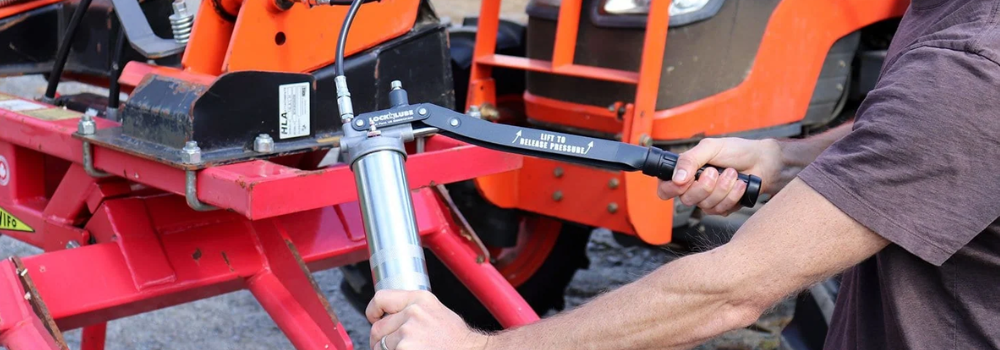
And they were selling a product called a grease coupler. And we went into their living room and we had tea and cookies. And they said, we're looking for a summer intern to help us understand our cost of goods. And they showed me a grease coupler, which is a small little thing.
I should have one with me here. Weighs about 6 ounces. It's about this big. For those listening, maybe 6 inches it.
And they held it up and said, do you know what this is? I said, no, I have no idea. And they said, oh, this is a grease coupler. And Russell could see the look on my face and looked at me and said, do you know what a grease coupler is?
I said, nope, I have no idea. And so that was sort of where we started. Was total blank slate. And what I set up for that summer was a bit of a horse race.
So I got a grant from Tuck to work on a medical tourism business idea that I. We had had with some classmates. It was medical tourism and dental tourism in Mexico was the basic thesis. And then there was another guy in the area who was setting up an investing product for people to own Timberland directly rather than through a fund structure.
And he wanted a pitch deck. So I was working on that. And then Locken Loop was supposed to be three or four days a week. The other two projects didn't last more than two or three weeks.
Into the summer, it became very clear to me that Locken Lube was where my heart was, what I was interested in, what I wanted to pursue, not only for that summer, but it, it became pretty immediately apparent that they needed help, I wanted to help and that this could be the thing that I did after business school.
[00:19:46 - 00:21:23]
Host: Running payroll, paying your bills, closing your books, and producing financials. These are critical tasks every business owner must do or oversee. But spending time on them distracts you from the leadership in growth work you want to do. So let system 6 do it for you.
Owned and led by a former Searcher, Chris Williams, System 6 is a leading outsourced finance team for hundreds of SMBs, including over 50 searcher acquired businesses. Chris, Tim and the System 6 team understand firsthand the challenges, the opportunities of jumping into a business as its new owner. So whether you own your business already or have one under LOI, talk to System 6 about how they can give you time back and improve your financial operations. Mention acquiring minds and they'll provide a free review of your books and financial ops, a $500 value.
Check out system6.com, link in the show notes or email helloystem6.com so you're going to have to paint a picture here, Jay. First of all, we need to understand what a grease coupler is. We're going to have to go through that, the same thing you went through and then really understand this, this business and, and I think calling it a business, I mean, it was a, it was a business. But talk about a tiny, talk about a tiny business.
And so we'll get into that. First, what is a grease coupler? What's the market for it? You know, educate us on that, please.
[00:21:23 - 00:25:51]
Guest A: Yeah, so a grease coupler is the, the piece of a grease gun that connects the grease gun to the machine. And I, and so we'll define those terms as well. So on any piece of heavy machinery, anywhere there's a joint or there's movement, there are pins or bushings or ball bearings that rotate and move and allow the metal to rotate. When metal goes on metal, there's friction.
And so you need grease or some sort of lubricant in there to prevent it from grinding and seizing up. So what you do with heavy machinery is, is you add grease to those bearings over time. This used to be true for passenger vehicles and all sorts of other stuff. Those have moved on to sealed bearings which, with grease installed and, you know, dust caps and seals around them.
But for the big heavy industrial equipment, you still have to add grease to it. And they have a maintenance schedule. Maybe it's every eight hours of use. You got to put some more grease in it.
So the grease guns have evolved over time. They're now battery operated companies like Milwaukee and Dewalt and Ryobi. Everyone makes a grease gun. It's next to all the other cordless tools like drills and saws and whatever.
The coupler, the little piece on the end was sort of neglected. And the story goes from Russell and people who'd been active in the industry for a long time that the couplers actually used to work really well. They used to connect onto the machine. They didn't leak, they didn't pop off.
But over time, through cost cutting and offshoring, those got worse and worse and worse. And the manufacturers had kind of neglected that part of the system and had also never thought of it as a standalone thing. It was a consumable that was just part of a grease gun. And you buy them at the auto parts store for a dollar apiece.
What Russell found, and this is just a great coincidence of timing, is he found a manufacturer in South Africa who in about 2012, had invented a new kind of grease coupler. This manufacturer made a grease gun that delivered a ton of pressure. And they found that the little coupling that connected it to the machine was the weak point in the system. And so they improved it to make their grease gun better.
And I think Russell's great insight was that this little coupler didn't only improve their grease gun, it would improve every grease gun. Not only that, but the little fitting, it's called a zerk fitting. It's this little mushroom shaped piece of metal on the machine that where you put the grease gun, it accepts the the coupler from the grease gun. That is a truly universal standard.
Every piece of heavy machinery, all the way from your riding lawnmower up through the world's largest bulldozer, no matter where it's made, uses the exact same size and roughly shape grease fitting on the machine. So for my MBA brain, right, coming out of the first year of business school, the TAM is enormous. You have literally every machine in the world. And you have universal compatibility with the grease gun too.
You can put this little piece on any grease gun and then you can connect it to any machine. So you're totally platform agnostic. You're totally sector agnostic. Now, this thing sells for 30 bucks, which sounds like nothing, but when the competition is selling for two or three dollars, it feels like an insane premium.
To the people that are in this Industry. And there was a lot of, a lot of education and convincing early on that it, the product could justify the premium. And again, we're skipping around here, but the basic thesis that you could build a company in this space in a tool, a tool company, a hardware company that is based on an accessory was blasphemy. No one would even consider that.
No one would touch it. And what Russell did was he, I mean, he basically didn't care. He said, this product's amazing and I'm not trying to start the next Milwaukee Tools. I just found a great product and I want to be able to sell it and make some money.
He was 65 at the time. He had just. And he was very entrepreneurial. So he was a logger, had worked in forestry his whole life, but had also helped co found a forest management company.
So had exited his last business and was looking for effectively a retirement job. And this very quickly outgrew his capacity to manage it as a retirement job out of his living room. Now we can get into the details
[00:25:51 - 00:25:55]
Host: and give us the, give us the quick origin story on how he discovered this and.
[00:25:55 - 00:25:56]
Guest A: Right.
[00:25:56 - 00:25:59]
Host: And how he established a relationship with the South Africans.
[00:25:59 - 00:28:49]
Guest A: Totally. So he found this product on the Internet and reached out to them and said, hey, I'm Russell Barnes, I work in the logging industry and I would like to sell your coupler. I know that I could. And the initial response he got back from them was, we have no idea how you found us.
We don't make this in a thread standard for North America yet. We don't even have a working production model. We're still prototyping, but as soon as we're ready, we'll send you some. And so six months later he heard back from them and they were ready to send him, I think a box of 20 of them.
So he got 20 and he tried them and he gave them to some friends and they worked really well. He gave the manufacturer some feedback on how it could be improved. And he called him and said, okay, I want to buy 200. They were like, wow.
So he put 200 of them in the back of his Subaru and drove around to all his friends on all the logging sites all around the area where we live. And he sold 200 of them. And he sold them for 30 bucks a piece. And so he had his proof of concept.
He the product worked, people wanted it and he could convince them to pay $30 for it. So he went back to the guys in South Africa and he came up, at this point, he came up with the name Locken Lube. So he had filed a trademark for the name Locken Lube and reached back out to the manufacturers and said, I'm ready to turn this into a business. I want to be your American distributor, and I want to buy 2,000 of these.
And they said, okay, we're going to come visit. We want to come meet you before we really sign up for this. Just got serious for this. This just got serious.
So they came to New Hampshire and they visited and he toured him around, and they agreed to start working together. Now, at that time, and this was, you know, I think roughly six months later is when I met him in pretty immediately, there was tension around ownership between this separation between the patent and the manufacturing and the trademark and the distribution. They. They being the South Africans, or specifically the founder in South Africa, was never really comfortable with this and felt like they should own the trademark or it should be sold under their name.
I. I honestly can't remember the specifics because I wasn't there for that stage. But there was tension. There was a lot of tension with the.
Russell, the founder in New Hampshire, and Dick, the founder in South Africa. This tension, unbeknownst to me, came to a head the summer that I was there, and the guy in South Africa threatened to stop selling to Russell, to cut him off. And so Russell came to me and said, hey, how do you want to. How do you feel about a trip to South Africa?
And I'm in, you know, business class ticket to South Africa. I get to meet these guys, tour a factory. I'm like, this is the best internship ever. Let's do it.
So I put.
[00:28:49 - 00:29:04]
Host: And. And before. Before we hear about that, Jay, what. What did the business look like in terms of size?
Was he still selling these out of his Subaru? When you got there, how had. How had it developed? Because I guess I didn't realize how nascent it was.
It had just been a couple years, actually.
[00:29:04 - 00:29:05]
Guest A: Yeah.
[00:29:05 - 00:29:07]
Host: Yeah, it was a couple years old. So what did it look like?
[00:29:08 - 00:30:36]
Guest A: The very first sale was on ebay. The very first sale outside of the Subaru was on ebay. And then pretty quickly thereafter, they set up an Amazon listing, and Russell did that with the assistance of a. Of a contracted marketing guy in South Africa.
So it was very fluid, the relationship with the South Africans and Russell. They were. The business in South Africa was small. The business here was nascent.
They were growing together. They were working together to build this market. And he. He ran a number of ads and trade publications.
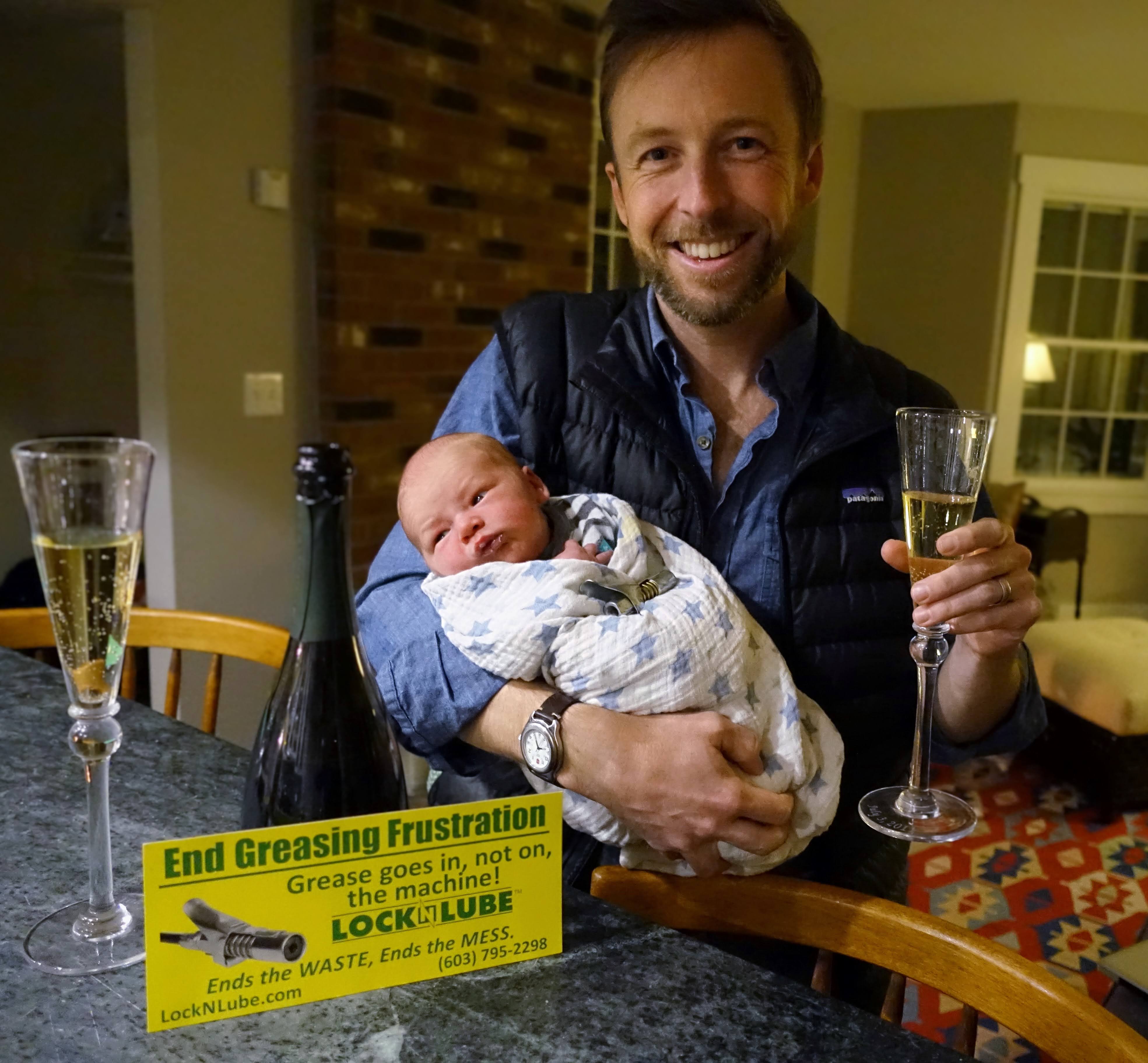
The Northern Logger, Equipment Trader, and they were always these little postage stamp ads. The smallest ad you could buy and it didn't even say lock and lube. It said end greasing frustration. There was a picture of the product and a phone number and that was it.
And guys would call and they would light up the phone, they would get the mate and it was he. Russell had a really traditional understanding of how the tool industry worked, but also where to meet these guys. And he understood that because it's a mechanical product, it's a tool that you put in your hands and use, simply seeing it for the right customer was all they needed. Would unlock the understanding of, oh my gosh, rather than doing it the old way, I can push down that thumb lever and do it this new way and that thing really would work better.
He didn't say the price, he didn't say the name. He stated the problem it was solving and gave him a phone number.
[00:30:37 - 00:30:37]
Host: Wow.
[00:30:38 - 00:30:41]
Guest A: And it worked. When the phone started ringing, what a
[00:30:41 - 00:30:51]
Host: talk about product market fit. A market that was just clamoring well, didn't realize what it needed completely. And he did.
[00:30:51 - 00:31:39]
Guest A: And so it just took off. Yeah. And so for me walking into this, that's what I saw. I saw a huge market, incredible organic product market fit.
And while I knew nothing about the actual product or the industry, I had Russell and Russell and I had this amazing, have still this amazing relationship where I. He shared everything. He all of his thoughts and you know, his thesis about what this company could be and should be and why it should work and how these guys thought and felt. And these are not early adopters.
You can't say new and expect them to buy. Right. They'll run the other way. They wanted it to be proven, tried.
True. It had to stand up to the heavy duty job site and, and be time tested and cycle tested.
[00:31:40 - 00:31:40]
Host: Yeah.
[00:31:41 - 00:32:06]
Guest A: And Russell told me he would get calls from guys who would, would call him, you know, a year, a year and a half. He would run the same ad in the same publication because they would call and say, hey, I've been looking at your ad for the last 18 months. I see you're still running it, so you must be doing something right now. I'm willing to try it.
It was always an ecom business, but it was this online offline hybrid. Right. An ecom business for the old school.
[00:32:07 - 00:32:09]
Host: And, and how much was he selling at this point?
[00:32:11 - 00:32:13]
Guest A: It was a few hundred thousand dollars a year.
[00:32:15 - 00:32:23]
Host: Wow. Okay, very impressive. From a standing start, but still a, as we keep saying, a very, very small business. A guy with An Amazon store.
[00:32:24 - 00:32:49]
Guest A: His brother built the website. The town post office told him that he couldn't, he couldn't just leave the outgoing shipments at the end of his driveway anymore. He had to actually bring them to the post office. You know, he bought the first label printer right around the time I was there.
So it was, it was early, early days, yeah, but he and his wife would, would pack up all the orders at the end of the day on their kitchen table.
[00:32:49 - 00:32:59]
Host: And Jay, you at Tuck, had you been exposed to ETA at all? Were you thinking about this opportunity at all? Through the lens now think about these businesses through.
[00:33:00 - 00:34:10]
Guest A: No, there was, there was no formal framework for it at that time. I remember when I joined. Joined when I, when I started at Tuck that first fall 2014, I was asked to be on a panel for incoming students because I'd worked in Silicon Valley, I'd worked at Google, and I said, great, yeah, what's the panel? And they said, oh, it's called Alternative Careers.
I said, no. I was like, no, you need to think differently about how you're going to frame that. If you want people to talk about tech, nobody coming in wants tech to be an alternative career. This is where people want to go.
So it was early, right? Search funds were happening, just not yet at Tuck, and things have changed dramatically since then. But the entrepreneurship curriculum was very focused on finance and private equity, buying and selling larger businesses, but never running or owning and operating a small business like this. Now, there's obviously lots from the curriculum that you can bring to bear, but it was, it was never framed like that.
The, the phrase ETA didn't exist for me. No, that was all, that was all new. I think I learned about search funds the second year after I'd already agreed to buy locket lube.
[00:34:11 - 00:34:50]
Host: Well, then I'll spare you pressing you on, you know, the fact that this business violated, quote, unquote, so many of the rules of ETA from, you know, for size right on down, you just this, this was much more of an, just it. Just kind of a pure entrepreneurial story. You saw the raw material of something and, and, and jumped on it, as opposed to, you know, layering the ETA framework on top of it and, and asking yourself if it checked all the boxes. It's, it's almost a different category of entrepreneurial project here.
[00:34:53 - 00:35:45]
Guest A: Yeah, yeah, I'd say so. And, and, you know, outside of a couple friends and family, like maybe my mom and dad, I don't think anyone would have put money into this thing. It was so tenuous. And, you know, we can get deeper into the relationship with the South Africans and everything else, but we had a non exclusive distribution relationship with a supplier who didn't particularly hostile supplier, Hostile supplier, a couple print ads and two years of sales history.
So there, there were all sorts of reasons why somebody would say this is a terrible idea. But we also had incredible product market fit, we had incredible organic growth. We had a great brand, we had a founder with a, with a vision who understood the market. And so for me, one of your recent guests had had a phrase that I hadn't heard before, but it was something like heads I win, tails I don't lose much.
[00:35:45 - 00:35:46]
Host: Yeah.
[00:35:46 - 00:36:09]
Guest A: And so that was a little bit of the attitude I went into this with, was, look, if I can, you know, my rough math and corporate finance and accounting was not my strong suit. Still is not. So I went into it thinking, look, if I can get this business to $5 million at roughly 10% net margin, that's half a million bucks a year. That's a lot of money.
[00:36:09 - 00:36:09]
Host: Yeah.
[00:36:10 - 00:36:34]
Guest A: And I was like, that's good. That, that's awesome. I, I'm just trying to have enough money that I don't have to be stressed about money. I'm not trying to go buy a yacht or anything like that.
So that was my rough math, was I think I can get this thing growing enough that it'll pay me well and it's going to be a great experience. It's what I genuinely want to do with my life right now. And that, that was enough.
[00:36:35 - 00:37:38]
Host: Well, and it solved the geography problem. It was local completely. And you were drawn to it. There was an X factor.
You were, you, as you said, you set up a horse race. You were working on three things at once. And this was the one that called to you. And we haven't heard about the structure of the acquisition.
There was a lot of risk mitigation in that. We'll get there. And then I, I, I would, I would I present this to you. I, I wonder if because you came from tech land, you had a better appreciation for this phenomenon of product market fit and how precious that is that maybe, you know, kind of traditionally trained finance people don't.
And so you had an eye for value in a very nascent business that your tech or your Silicon Valley training gave you that maybe others would have had a hard time seeing without similar training. Any reaction to that?
[00:37:38 - 00:38:32]
Guest A: I agree with the premise. Yeah. I think what I brought specifically from TaskRabbit and launching new markets was seeing the value of digital advertising, especially at that Time when the markets were less competitive, where you could go from zero to a pretty robust product very quickly with not a lot of money. And we had done, we had done very little digital advertising at that time.
Russell was very skeptical of it and didn't understand the acronyms and the jargon and the math and you know, CPAs and click through rates and average order values. It was just not where he was trying to go with this thing. And for me, that, that was enough for me to, you know, I think in any, in any searcher's journey, the question is, okay, I'm going to buy historical ebitda. And then I want to, I want to layer some growth on top of that.
It was obvious for me how I was going to grow this thing and that it was digital.
[00:38:32 - 00:39:21]
Host: You know, that's actually a point that I hadn't gotten from our pre call, Jay, that this was also. You were, you were, you were coming right into the heyday of dtc, completely direct to consumer, completely. Where things weren't too, you know, today to launch D2C brand, it's too expensive there. You know, it's very crowded.
Everybody's suffering from social media fatigue. But 10, 13 years ago, there was still a lot of opportunity, which of course then we did see the market explode and flourishing and, and many net new Today, very large D2C brands begin in this, in this era. And, and so this is kind of, in some ways lock and loop is a, is a story of a, of a D2C brand really. Right.
And in the D2C heyday, completely.
[00:39:21 - 00:39:58]
Guest A: Oh, it's completely, yeah. Being a D2C brand is core to everything I was trying to do. And the B2B. The B2B side of it came later.
But that brand building exercise of how do we, how do we create a D2C brand that means something that is aspirational, that our customers can identify with, that that connects with their own meaning of self worth was core to everything we did. And to your point, we had the market economics in our favor. You can't profitably acquire customers with a $30 average order value anymore. The math just doesn't work.
[00:39:58 - 00:39:59]
Host: Exactly.
[00:39:59 - 00:40:15]
Guest A: But back then, especially in the tool category, I don't even know what Milwaukee's digital ad spend back then was, but it wasn't much because when we went out doing Facebook ads and Google Ads in those early days, it was just wide open.
[00:40:16 - 00:40:18]
Host: Yeah. Wow.
[00:40:19 - 00:40:52]
Guest A: Yeah. So we had a couple, we had, we had a couple years of that and then everyone else figured it out. But. And we can get into the Amazon piece later, but we had this head start where we were building online reviews and we were building status in the algorithm and we, you know, to this day that, you know, spoiler alert, I'm no longer at Locken Lube, but to this day I think the, the Grease coupler is the number one product in the greasing category on Amazon and has been for 10 years because the, the algorithm self reinforcing and we had this head start, we had all these reviews.
[00:40:54 - 00:41:24]
Host: Fascinating. Also, one thing that, that grabs my attention is your brand insight there, that it, it sounds like you approach this project trying to build a brand and, and all of the kind of emotional strategy that, that, that entails. Also not typically kind of the private equity or even much of an ETA playbook where it's much more kind of utilitarian value that you're selling as opposed to emotional resonance.
[00:41:25 - 00:42:15]
Guest A: Yeah, yeah, that, that was core to it. And, and part of that was education. Right. We made I don't know how many hundreds of YouTube videos just talking directly to our customers.
And, and I think this was maybe my value of being an outsider was that I didn't have any, I didn't have any jargon for this industry. I didn't know anything. I had to learn everything from zero. So I was able to go out there and talk to our customers who also were buying their first grease gun and didn't, didn't make them feel ashamed or embarrassed that they had no idea how this thing worked.
And that turned out to be a strategy that really worked and really helped the brand grow and build awareness and build our reputation for being a trusted source of information, not just a high quality purveyor of tools.
[00:42:18 - 00:42:26]
Host: I feel like you just encapsulated the Acquiring Minds playbook that I didn't do strategically, but that it kind of played out that way.
[00:42:27 - 00:42:28]
Guest A: All this stuff, it's easy to talk about.
[00:42:30 - 00:42:31]
Host: Yeah, yeah, totally.
[00:42:32 - 00:42:45]
Guest A: You just do it and then you keep doing the stuff that works and you stop doing the stuff that doesn't work. And so in the rearview mirror it looks like everything was so deliberate and perfect, but it's just, you know, you just keep doubling down on the stuff that works.
[00:42:45 - 00:43:00]
Host: Totally, totally great stuff, Jay. Okay, returning to the plot. South Africa. What an internship.
You get to go business class to South Africa. Meet these, meet these suppliers. See a factory, pick us up from there.
[00:43:01 - 00:44:56]
Guest A: Yeah. So we get to South Africa and the first day we walk into the room, Dick, the founder there, is also probably a bit older than Russell at This time. So maybe pushing 70 years old and is openly hostile. He clearly is not excited to see us.
Russell and I are there for seven days, and day one, we walk into the room and there's a whole bunch of tchotchke on the table, like random African handicrafts, like poorly made cutting boards and dolls and super weird. We're like, well, this isn't what we expected to see. So Dick comes in and he sits down and he goes, well, I brought you some new products. Maybe you can sell this stuff on the Internet.
And I look at. I've got. I've got my. I've got my MBA spreadsheets and my.
My PowerPoint, and I've got six copies collated and printed out in binders, and I'm going to pass them out at the meeting table and we're going to have a. Not anymore. No, we're not. So we make it through that first day.
And now Dick has two younger guys about my age who are running the business for him. One guy who's his lead engineer, one guy who's the. The business hire who's running the. The office.
And those guys are clearly not totally comfortable with how Dick's running this show. But Russell and I go back to the hotel that night, and we go to the hotel bar. And I remember sitting in this hotel bar and. And he says, okay, Jay, they clearly don't want to work with me, but they might work with you.
Would you be willing to buy the business from me? So I call my wife and I say, hey, Em, or how do you feel about going into the greasing business? And, you know, I. I get her full support.
And this is truly not. This was not on my bingo card that day, was buying the business from Russell.
[00:44:57 - 00:44:59]
Host: Not at all. So this was out of left field, totally.
[00:44:59 - 00:47:03]
Guest A: And. And I thought, you know, maybe at this stage, like, maybe I come in as a partner and maybe over time there's a thing or a way where this could happen. And. And I think in hindsight, this is what I absolutely wanted.
But I just. I'm a summer intern at this point. I hadn't considered it. So I call Emily.
I say, we're going to do this thing. What do you think? And she says, okay, I trust you. Let's go.
And so I tell Russell, okay, we'll do it. We'll figure out the details later. But we. We shake hands and we go back in the next day.
And Russell says, okay, I'll step out of the room if Dick will step out of the Room. Jay's in charge. It's going to be his business. Let him sort out the details with Carrie and Jono and whoa, they go.
And Russell, to his great credit, I mean I got so, so much respect for Russell is, you know, he cared more about the legacy of the business than he did his own ego. Right. He wanted this thing to continue. He knew it was a good business.
He knew that if I didn't buy it, it would probably just die on the vine. And he wanted to see it, he wanted to see it through. And so, you know, fast forward, whatever, 12 years at this point. Carrie and Jono and I are still great friends.
I've stayed with them, I know their family, I've seen their kids grow up. But we hash it out and we say, okay, I want to, I finally get to show them my PowerPoint that I've spent so much time preparing and all the graphs go up into the right and it's going to be great. And we're going to sell a million of these things but I need a year, I need to finish my mba. And they agree.
They say, okay, we can do that. And remember, this is non exclusive. So there's no, we're not papering this. There's no deal really.
There's just an understanding that they won't cut us off. They will continue to sell us product branded as lock and lube for at least the next 18 months while I get things buttoned up. But they're also going to go out and find other American suppliers who are going to sell the exact same product in a different box. That's the compromise we had to make at that time.
[00:47:04 - 00:47:16]
Host: And to be clear, they're, their ambivalence about you guys was just that you were too small, amateurish. They just, they're not going to put all their, the biggest market in the world. They're not going to put all their eggs in your back in the basket of you.
[00:47:16 - 00:48:10]
Guest A: That was a big part of it and it was, it was ego and it was personality conflict with the founder over there where like I said, he and Russell had had sort of tussled over this brand where I think Russell and Russell had offered, if I remember correctly, Russell had offered to sell them the brand. I don't remember the price or any of the deal details. I wasn't there. But he had said, look, you guys can buy Locken lube from me.
And I think that was actually what set him off. The idea that he would have to pay for the brand of the product that he had Invented, which in reality I think Carrie had invented. But still his business. Right.
His name was on the, on the door. So there was some, some ego and just some personality conflict there. And rightly so. You know, are you going to give the largest market in the world to the guy in rural New Hampshire who's selling out of the back of his Subaru?
Like probably not. Fair enough.
[00:48:10 - 00:48:10]
Host: Right.
[00:48:12 - 00:48:13]
Guest A: So that's where we started.
[00:48:13 - 00:48:43]
Host: Well, I also, I also have to applaud, I have to applaud Russell on his kind of thinking, on his feet in that over the course of one night going from, you know, the, the, the meeting with the South Africans and the negotiation, having one character to a completely different one and, and, and a pretty bold tactic to say I'll step out of the room if. What was the South African founder's name?
[00:48:43 - 00:48:44]
Guest A: Dick.
[00:48:44 - 00:48:50]
Host: Yeah, Dick. If Dick also steps out of the room. I mean that was, that really kind of reset the board.
[00:48:51 - 00:48:51]
Guest A: Totally.
[00:48:51 - 00:48:51]
Host: Yeah.
[00:48:51 - 00:49:01]
Guest A: Anyway, set the stage for, for, yeah, for the whole, for the success and the, you know, the longevity of the company. One of those sliding door moments where it could have gone very differently,
[00:49:02 - 00:50:26]
Host: you know. Enzo Technologies as one of the leading IT managed service providers serving the search community led by Nick Akers, an acquiring minds guest who bought the 35 year old business. The team at Enzo regularly works with searchers and their acquisitions. And one feature of acquired businesses that Enzo is seeing over and over is the need to implement cybersecurity promptly during the transition.
So many acquired small businesses either have glaring vulnerabilities, lack security best practices or both. That step one to de risk the deal you just closed should be addressing these issues. INSO is your full service IT MSP4 for post close stability. They assess your target surface, the biggest risks in plain English and give you a day one through 30 plan to cut exposure, prevent downtime and even find cost takeouts like bloated telecom bills.
Check out enzotechnologies.com I N Z O or email Nick directly at nick@enzotechnologies.com let's hear how you structured the deal with Russell to buy the business. If you agree, that's sort of the next key point in the story.
[00:50:26 - 00:52:10]
Guest A: Sure, yeah. So at that point we hired a COO who. And this is way before remote work. Right.
That's not even in our lexicon. We're, we're in the office in New Hampshire. We moved by the end of that summer we had hired our first employee. We'd hired a full time shipping person who as of the day recording this is still with the business.
Longest tenured employee at Lockenloop and also hired a coo. And she came in, she had a legal background and came in because we needed some way to stabilize the business while I finished my mba. And we moved the business out of Russell's house down the road a couple miles into a half built spec house. And we had a guy in the neighborhood who was going to build this out as a commercial property, but it was all roughed and framed.
But he, he let us live there, let the company live there for about two years while we were getting established. And so we moved the company out of Russell's home. We. We hired a team and I would spend Fridays at the office my second year at Tuck and then was, you know, had a Locke and Lube email the other days and Monday through Thursday I was using Locke and Lube as a case study in all my classes.
And I structured my course lo I had this fifth day free to go work on the business. We stabilized the business. There was some slow growth that year. Nothing astronomical, but it was healthy.
And you know, having the team in place really helped us put some of the structures there to really kind of set things up and get things out of Russell's head and get them down and create some process. And,
[00:52:12 - 00:52:19]
Host: and Jay, all the. This hiring, where is that, how is that being paid for? Out of the earnings of the business presumably?
[00:52:19 - 00:52:20]
Guest A: Yeah. So the business has.
[00:52:20 - 00:52:24]
Host: And Russell's cool with that, but this is still coming out of Russell's pocket effectively at this point?
[00:52:24 - 00:52:26]
Guest A: It is, yep.
[00:52:27 - 00:52:27]
Host: Okay.
[00:52:27 - 00:54:56]
Guest A: And he, he had the mandate from his wife that they had to get the business out of the house. That this was, it was not an option to continue the status quo was not an option. And so I don't know what happened behind the scenes there in terms of the agreement. I remember he and I had, and his wife, we all had a conversation about payroll and payroll negotiations and how that was going to work.
But yes, we were able to hire those two people. Couldn't get their permission to pay for digital ads at that time, but we could hire two people. And so we got them on staff. We got the business stabilized and it was about 18 months before the deal actually closed.
So during that time it was a. At sometimes painful and very stressful process of trying to at the same time run the business and negotiate the deal to buy the business from somebody who I was also still learning from and was friends with. You know, we were a world apart in terms of age and experience, but we really had this shared connection over how the philosophy of how we wanted to see lock and loop grow and evolve. And there wasn't another buyer.
Obviously it wasn't a competitive process, but it was the process of finding a price that felt fair to both of us. And so to your initial question, how was that deal structured over that time we got to a place where the deal was 70 or 75% seller financed. And that was Russell's. Russell actually brought that idea to the table.
He said, I don't want you to go out and get investors. I don't want other people to be saying how this company should run. I trust you, I trust that you're going to do a good job, but I don't want you to go raise a bunch of money. And so he gave me a five year, 5% seller note for 70, 75% of the deal and then I had to come up with the rest.
And to do that I used the, I was able to, to use a line of credit that was based on a portfolio of stocks that I had some from my time in Silicon Valley, you know, some blue chip stocks, stuff like that. But I could borrow, I think up to 50% of the value of those stocks through a line of credit. And so I use that to come up with the closing costs. I'll pause there in case you have any questions.
Then we can get into the, the actual day of close, which is an anecdote worth telling.
[00:54:56 - 00:55:04]
Host: Yeah, Jake, just a couple follow ups there. First of all, this line of credit that you used for the 25%, was it 25% or 20%?
[00:55:05 - 00:55:06]
Guest A: About 25%, if I remember correctly.
[00:55:06 - 00:55:20]
Host: 25%. Yeah. This actually came up in a recent interview where. So if you, if somebody has some assets, some financial assets, some hundreds of thousands in your case, in, in equities, a stock portfolio.
[00:55:20 - 00:55:21]
Guest A: Yep.
[00:55:21 - 00:55:27]
Host: Your bank will give you a line of credit to the tune of half of the, of that asset value.
[00:55:28 - 00:55:28]
Guest A: That was my experience.
[00:55:28 - 00:55:31]
Host: Yes, that was your experience. Okay.
[00:55:31 - 00:55:39]
Guest A: And I think it depends on the nature of the underlying asset, but I believe that for publicly traded stocks it's usually about 50%.
[00:55:40 - 00:55:51]
Host: Okay, so this sounds like it's not uncommon. I'm just learning about it late. I guess the question is why not liquidate those stocks or the half of the value of the stocks as opposed to taking a loan?
[00:55:52 - 00:56:25]
Guest A: I had confidence in the business by the time I closed, and this was the benefit of going from intern to acquirer was by the time we got to close, I probably knew the business better than anyone. And it had been profitable since day one. And I felt that I had enough control over the costs that I could profitably grow the business. And so I thought, well, why, why sell perfectly good stocks and have to pay the tax bill and miss out on the growth if, you know, I can borrow at a relatively low interest rate and have a high level of confidence that I can repay that.
[00:56:26 - 00:56:33]
Host: Yeah. And, and what are interest rates on a line of credit like that? I know you probably won't remember the exact figure, but is it, are they
[00:56:33 - 00:56:45]
Guest A: generally at that time. So this was March of 2017. I think it was sub 5 because the seller note was 5% and I believe that line of credit was in the low fours.
[00:56:46 - 00:56:46]
Host: Okay.
[00:56:46 - 00:57:08]
Guest A: And I don't know what Libor was at that time specifically, but it's, you know, the bank rate plus, you know, I, I don't know, I think it probably depends a lot on your relationship with your financial institution. And at that point I was borrowing against pretty much everything I had. I think if you have, you know, millions or tens of millions of dollars, maybe that rate comes down. But that was certainly not the case for me.
[00:57:08 - 00:57:16]
Host: Sure, sure. Okay, super. Thank you for that. And then on valuation of the business.
[00:57:16 - 00:57:17]
Guest A: Yeah.
[00:57:17 - 00:57:22]
Host: What can you say there? We're speaking in percentages, but can you give us a number?
[00:57:22 - 00:57:55]
Guest A: Totally. The sellers had hired a local accounting firm to do a business valuation and they went through a couple methodologies. I don't remember which they used off the top of my head, but I remember that all of them came out at roughly one times revenue for the business. And I.
And the margins at that point, the business was so nascent that whatever the net margin actually was was meaningless going forward.
[00:57:55 - 00:57:55]
Host: Right.
[00:57:55 - 00:58:08]
Guest A: Because it was, the business was going to be so fundamentally altered by the way that it had to be run with, you know, building up inventory, building up new products, investing in digital advertising and all the rest. None of that existed historically.
[00:58:09 - 00:58:09]
Host: Yeah.
[00:58:10 - 00:59:22]
Guest A: So we had a back and forth. Right. They got, they got evaluation from a local accounting firm and they, you, they apply a non liquidity discount to, to very small businesses. Right.
So they go through their valuation process and they knock it down by 30, 40%, whatever it might be. And then there's always the adjustment, you know, adjustments for inventory and networking capital. But I think in our case we took that valuation from the accounting firm and agreed on a number that was lower, lower than their valuation. And there was a, a lot of emails and conversations back and forth with Russell and Beth about why I felt that number was wrong and was too high.
And it it was just very simplistic. It assumed like something like 6% straight line growth for the next 20 years. And I said, look, that's just, that's not how this business is, is going to go. It's either going to go way up or it's going to go to zero.
And so let's, you know, let's account for the possibility that it goes to zero. And they were, you know, willing to do that with me and willing to, you know, we were able to come to a number that they agreed to.
[00:59:23 - 01:00:40]
Host: You know, it's interesting, this is such an interesting transaction, Jay, because I could argue I could knock both of the you guys down. I mean, I could knock his business down for the reasons you just said. I could knock you down on, you know, what you're asserting as a lower price by saying that there's clearly, you know, there's clearly a trajectory here. This business has real potential.
But yes, it's, there's risks everywhere, there's pitfalls everywhere. It could also go to zero. So it's a tricky one. I guess where I would have come out was there, was there any rolled equity on his part?
Because if I'm him, that's how I have my cake and eat it too. I sell it to you for a price that might feel like a little bit, you know, less than this formal valuation. Understanding that the, the formal valuation is probably going to be pretty basic, but still less than that and, you know, less than maybe I feel like this business can, can, can. It can really turn into something I've hit upon, product market fit, but it has all of those risks.
So I can monetize my investment thus far, put it in the hands of this really capable young MBA, but also have a 20, you know, to hold on to 20% of the business. And, and if this, if this kid knocks it out of the park, I can go along for the ride. I'm surprised that wasn't a feature of the deal.
[01:00:41 - 01:00:51]
Guest A: Yeah, I, and again, I'm reaching into the memory banks here, but I know that that was not my preference. Right. I wanted to own 100% of the business. And so that was going back to
[01:00:51 - 01:00:58]
Host: your non investors, going back to not having investors or. Yeah. And because he wouldn't have been truly an investor, he wouldn't have been a boss.
[01:00:58 - 01:01:45]
Guest A: No, that's true. But he, at that time too, it was an incredibly stressful time in his life. This whole process was very stressful for him, for both of us. Right.
But I think maybe more so for him because he Was sort of outside of his element here. As much as we are friends and there's a lot of mutual respect there, I think we were both ready to not work with each other at that time. It was a good. And I think it was simple and it was clean.
And for him and his wife to just be able to get a check and walk away and be done. And I think I'm remembering him saying, I can't be halfway in. I'm either all in on this thing or I have to be all out. And so if I'm.
If I'm part way in, it's just not going to work for me.
[01:01:45 - 01:01:52]
Host: Yeah. So revenue at this point was, what if we can just kind of get the shape of. Of what. Where your acquisition number ended?
[01:01:52 - 01:01:57]
Guest A: It's like, you know, it's growing a little bit through this time, but we're, you know, it's. It's around a million bucks.
[01:01:57 - 01:02:01]
Host: Okay, all right. So the acquisition price, something under that.
[01:02:01 - 01:02:04]
Guest A: Yeah, yeah, that's about where we're at.
[01:02:04 - 01:02:17]
Host: Okay. And then so the 75 seller note, that's. That's a lot of seller note. Obviously, many sellers will want attach personal guarantee to that.
Did. Did Russell.
[01:02:17 - 01:03:24]
Guest A: Yes, there was a personal guarantee. And that was actually one of the negotiated points of the deal was I asked for a partial guarantee on that amount with the understanding, you know, we talked about that. You know, the long tail possibility that this goes to zero at that point. It didn't feel like such a long tail, given the story we just shared about going to South Africa.
So I said, hey, can we, can we knock that down? And we, we settled on a 30% cap to the personal guarantee of the outstanding balance on the seller note. So that was a nice concession on their part just to put me at ease. And the understanding we had again from our relationship and me already working with him and running the business was, I'm going to do everything I can to make this thing work.
I'm obviously very incentivized to make this thing work. But there is a series or a set of circumstances outside of our control that could tank this business. And if that happens, please don't bankrupt me. And he and his wife were understanding and agreed that that was, that was reasonable.
[01:03:25 - 01:03:35]
Host: Which is to say you felt like while they did insist on some personal guarantee, they might not have actually exercised it if push came to shove.
[01:03:36 - 01:04:20]
Guest A: I think that's right. Yeah. And it's all contingent on circumstances. Right.
But given the relationship we had and just the real understanding of what we were doing and we stayed in touch. I think unlike other deals where the seller may get the money at close and say, good luck and walk away, we stayed in touch. And he was aware of what I was doing. I shared what I was doing.
I was telling him about the growth and the stuff we were working on. And so I think in the back of my mind, I felt like as long as we're on the. As long as he understands that I'm doing everything in my power to make this thing go. If it doesn't go, we can hopefully have a conversation about that guarantee.
[01:04:21 - 01:05:21]
Host: Yeah, yeah, yeah. It's the difference between more classic Coal ETA acquisition, where there's real revenue and real employees in a business that has a track record of five or 50 years. And if you ETA acquisition entrepreneur come in and the business goes to zero or declines terribly, it is. There's much more of an argument to be made that it's your fault because there's all this track record.
In this case, it was so nascent that who knows how this was going to play out? And you had the hostile supplier, or I guess less hostile now that you're working with Dick's lieutenants. Yeah. Okay.
As you near close. And then. And then we really got to get to the other side of the transaction because there's the whole. The whole chapter of ownership, and then exit.
We still got to get to. What are your friends at Tuck saying to you during this? As. As this gets real, and you're saying you're working in the business, and I guess probably telling people that you.
In fact, this may be what you do with your Tuck education.
[01:05:23 - 01:06:55]
Guest A: Yeah, they. Look, if you buy a lubrication business named Lock and Lube, and your friends are in their 20s, they're going to be some jokes, right? I mean, you're gonna. You're gonna have that.
But they were. They were universally supportive, like, having that. And I mentioned earlier in the call that I'm not a corporate finance guy. I am not an accountant.
I'm not a cpa. Like, that stuff was hard for me, and I. I got through it, and I've learned. I think now I'm much better versed in this stuff after, you know, 10, 12 years in the business.
But at the time, I relied really heavily on my network of friends, guys who'd worked in private equity or venture or other spaces like that. And so there were a lot of phone calls in those early months and years to people that were also just coming out of Tuck and just starting these really intense jobs in banking and consulting. Where they're working 80 hour weeks. And they always made time.
Right. And they always took the call. They always helped me out, they always talked through whatever I was puzzling with. So, yeah, that it was a.
It was a tremendous help to have to be fresh out of my MBA and have all those friends and. And have them, in a way, be part of the journey. Because in that second year of tuck, I was working on this all the time. So I think they.
They knew it and they felt. I don't know if ownership's the right word, but they. They wanted to help, and they did tremendously. I owe a big debt of gratitude to a lot of.
A lot of my close friends there who helped me out in those early years.
[01:06:56 - 01:07:07]
Host: Great. Okay, Jay, let's get inside your ownership now. You've bought the business. We're going to condense.
What. When do you close? And then when did you exit? So what is the whole span of your ownership?
[01:07:07 - 01:07:19]
Guest A: We closed March of 2017 and sold the. Closed on the other side of the deal August of 24.
[01:07:21 - 01:07:22]
Host: Okay, so seven and a half.
[01:07:22 - 01:07:24]
Guest A: Yeah. Not quite years. Yep.
[01:07:25 - 01:07:38]
Host: Great. Okay. So we got to bang through those seven and a half years here pretty quickly. I'm doing the thing that we always get accused of, an eta, which is focus so much on the deal and not the operations, which is where actually
[01:07:38 - 01:07:39]
Guest A: the whole story lives.
[01:07:40 - 01:07:51]
Host: But I have not left us very much time. Let's. Let's take it in chunks. The first couple of years of your ownership, Jay.
What are the key kind of plot points and themes of that time?
[01:07:51 - 01:11:03]
Guest A: At that stage, we're really focused on building a brand and building a product catalog. So remember, you know, when we started, we have one sku. It's really a couple more than that. We have a short coupler and a long coupler.
We have that original South African grease gun that the coupler was designed for, which is very low unit volume, but we sell it anyway, and I think that's about it. We add in a product called the Grease Buster, which I ultimately buy from the inventor. So there are a couple SKUs, right? You know, fast forward eight years.
We have 250 SKUs in the catalog and growing rapidly. So one of the first things I did was I got connected, I think via LinkedIn, actually got connected to a manufacturer in India that was the primary manufacturer for grease guns in the world. Right. They made grease guns for every brand you've ever heard of and haven't.
And they were willing to work with us at relatively low quantities in those early days. And so I would always, you know, so I think the first order we placed was maybe 12 or 17 SKUs. We got a couple grease guns. We got grease fitting kits.
We got all the, all the products around a grease coupler that would be obvious that are. If the, if the customer Persona is a guy with a grease gun, because it was almost always a guy and the coupler goes on the gun. What else do you know about them? Right.
They're probably rural. They might be a small business owner. They own machinery, so they probably also own a truck. They probably also own a trailer, maybe a dump trailer.
And so you can start to work your way out of what are the tools that they need or use. And the other thing I did in those early years is I answered the. I answered all the phone calls. So every time the phone rang, I would try to be the one to answer it.
Because as we discussed, I knew nothing about this industry. And I had learned so much from Russell. And what I saw from Russell is him. I couldn't understand it at the time, but he would spend hours on the phone just talking with these guys.
They would call to buy a $30 coupler and it'd be a 45 minute phone conversation, but he'd hang up the phone and say, that guy's a corn farmer in Iowa. And he was telling me about this thing that happens after it rains when the disc hero does this and then you got to do this. And then there's this other thing. And I think there might.
And that was really interesting to me when I was like, okay, here's, here's my channel. Here's how I'm going to learn. Here's how we're going to decide how to grow this product line. I didn't have any opinions on grease guns.
I didn't know what people needed. And so I heard it from the customers. And so I would talk to the customers. I'd turn that product feedback into product ideas.
I'd go to the manufacturer and say, can you do this? And how much will it cost? And then we'd work through the ideas. The trade off was I didn't own any of the ip, but it was all gas, no breaks.
It was just like, let's go, let's grow this thing. Whatever. Best. Best defense is a good offense, right?
We need to grow. We're in a place where all the other players are over a hundred years old and tens, hundreds of millions of dollars in revenue, and we need to stick our elbows out and be somebody more than just a grease coupler.
[01:11:03 - 01:11:15]
Host: Company, I guess with that strategic direction, does that mean that core grease coupler, the hero product, loses its influence over time across the portfolio or does it still remain the hero product?
[01:11:16 - 01:12:18]
Guest A: It is one of the hero products for sure, but others have emerged. But it was, you know, at any, any time and any place you have too much concentration in your business. You want to diversify whether it's channel or customer or product. We were 100% concentrated on this one product.
And so I was less worried about the fragility of that and more looking at the opportunity of what's out there. Right. If we can stay true to our core principles of only delivering really high quality products that actually solve a unique problem for our customers, backed by great customer service, backed by great fulfillment speed, backed by guarantees and all that kind of stuff, that's how we're going to grow this business and that's how we're going to grow this brand into something meaningful. And it was, it was as much that brand building exercise and my own desire to do it and prove and see if we could do it as it was, you know, worried about product concentration.
[01:12:20 - 01:12:25]
Host: The name Locken Lube jokes aside, you liked always or did you consider changing?
[01:12:26 - 01:14:13]
Guest A: I think the challenge that we encountered with it was the name of our business was also the name of our hero product. And so as that product line grew and we expanded, was hard to explain that as, because I mentioned we bought a couple. You know, I bought that grease buster. There are four or five businesses I bought along the way which were small acquisitions, right.
Anywhere from 50,000 to $300,000. Usually one product companies with some IP and usually we would come in as a distributor, we could prove we could sell them. And then I would call the owner and say, hey, can I buy your business? And sometimes they said yes.
So we built out a portfolio of IP patents and trademarks that way. We also picked up customers. Right. We became a supplier for tractor supply because we bought a product called the clip bender which was for installing farm fence.
So that was a pivot for us as well. Oh, okay. Yeah. The guy who owns a grease gun.
Well, if you're, if you have enough fence that you need fence tools to install your fence, you definitely have machines. And so maybe that's also our, you know, a new customer segment we can look for is ranching. And so we, we go there. So yeah, we grow the product line that way.
And it's always MOQs and it's always customer feedback. We never go through two step distribution at first. We always Go direct to consumer. Because I want to know right away if something breaks or if a customer's angry or if something didn't work the way they thought it would.
And so we get into this rapid iteration cycle where we're on version four or five of our grease gun before the competition is even aware that we sell a grease gun. And that, you know, that served us really well and was sort of part of that core philosophy that I think continues to this day in the company.
[01:14:14 - 01:14:21]
Host: And alongside that, your pouring cash into ppc, pay per click into digital ads.
[01:14:21 - 01:15:04]
Guest A: Yeah, so. So digital ads and inventory. Right. And because we're selling physical goods.
Right. Not only do you need to buy the stuff and you know, that's, you know, you got to work really hard on your incot terms and your payment terms with your vendors. Because if you're buying stuff in India and it takes six weeks to get here, you know, and you pay for it when it cuts from the dock or you have a down payment just to get into the production queue, your cash flow cycle is a mess, especially when you're tiny and you're growing really fast. So it was just pure reinvestment.
Like we did not take a penny out of that business because we put everything back in to grow the inventory and to maximize our PPC budget.
[01:15:05 - 01:15:13]
Host: And so are you paying yourself? At what point do you start living off of the business? You personally, your family?
[01:15:15 - 01:15:47]
Guest A: We. So at first I pay myself with credit card points. We have a, we have a cash back credit card. And it, the way it was structured was it was.
I was signed on with my Social Security number in addition to the businesses ein. And so we would get 2% cash back, but the checks were made out to me. So I would take those checks and put them in our personal account. And then you have to account for that 2%.
So you take it out of, you know, your deductible business expenses. But that was the way I paid myself at first and then.
[01:15:47 - 01:15:49]
Host: And that. Is that tax free money?
[01:15:49 - 01:15:52]
Guest A: Yes. Yep, it is.
[01:15:52 - 01:15:53]
Host: And as long.
[01:15:53 - 01:16:18]
Guest A: And hey, this is not, this is not tax advice. I am not an accountant. I'm not telling people what to do here. But my understanding was that this is an earned discount, it's not income.
And as long as you are reducing the business expense for whatever you put through your credit card, Right. In our case, this is QuickBooks Online, you take that 2% off as a, as a deductible business expense, then the rewards you get are yours to keep.
[01:16:19 - 01:16:26]
Host: And you were putting all of the digital Spend through that. And the inventory. Not the inventory.
[01:16:26 - 01:16:35]
Guest A: Not the inventory. Some inventory where we could. We did. If our vendor would take a credit card without a surcharge, we would do it.
But all the ppc.
[01:16:35 - 01:16:35]
Host: Yeah.
[01:16:35 - 01:17:14]
Guest A: All the digital ads and that, you know, ultimately got, you know, was millions of dollars a year that we were putting on this card. So the rewards were real. And that, you know, between my wife's salary and that, that we made that work for a little while. I didn't go on payroll at first.
I would just take draws because I didn't have investors. It was a single member LLC and eventually we switched over to an S corp and I went on payroll and all that kind of stuff. But at first I would just take the smallest draws I had. So if we had a mortgage payment and we were a few hundred dollars short, you know, I'd take 500 bucks out of the business, that kind of thing.
[01:17:15 - 01:17:28]
Host: And just going back to the credit card points, because this is such a great tip, understanding that it's not official accounting advice. The millions of dollars, I mean how, how much did that end up being to you, to your. Into your pocket?
[01:17:28 - 01:17:30]
Guest A: Probably 40 or 50 grand a year.
[01:17:30 - 01:17:31]
Host: 40 or 50 grand a year. And that's.
[01:17:32 - 01:17:34]
Guest A: And my wife was working tax free. Yeah.
[01:17:34 - 01:17:36]
Host: So that's effectively 80 or 90 in salary.
[01:17:36 - 01:17:44]
Guest A: Totally. And like I said, my wife's working at that time as well. So we have another income in the family. And that was.
Yeah, that was how we did it.
[01:17:44 - 01:17:46]
Host: I don't know why I'm. I have been unaware of this.
[01:17:48 - 01:18:01]
Guest A: It was a. Yeah, not, not to do any, you know, unpaid plugs here, but it was a capital one card, I think a spark business capital one card. And I don't know if that product still exists. Hopefully it does for your listeners sake.
[01:18:01 - 01:18:08]
Host: And this wrinkle that it was both you personally and the businesses ein on the account is that that's probably not unusual.
[01:18:08 - 01:19:21]
Guest A: Yeah, it worked for me as a single member llc. I could see it being problematic if you have investors or co founders because you would want to just redeem those points to reduce your credit card spend for the business. Right. But as the sole owner it worked great.
So anyway, first couple years we're growing like crazy. We're adding a ton of products. The other thing to remember is when you have inventory, you need a warehouse and as you grow sales, you need to grow inventory and so you need to grow physical space. So the other thing we're doing in this period of time is moving constantly and let's call this period, you know, pre Covid, right up through Covid, we move out of that spec house, we move down to a place with a loading dock near a highway.
We then are sharing that space with a co tenant. Our warehouse has carpet and a drop ceiling which are not things you want in a warehouse. But you know, it's, you know, we're scrappy, we're trying to do it cheap and fast and like I said, it's all gas, no brakes. Like we're not, we're not building a long term company.
We are solving for the problems today to grow and build, deal with whatever we have to today to keep going. And that was the, that, that was
[01:19:21 - 01:19:25]
Host: your orientation sort of moment to moment. You were just moving quickly, completely.
[01:19:25 - 01:19:26]
Guest A: I was, I was never like, what
[01:19:26 - 01:19:36]
Host: was your long term vision? Did you think you would exit? Did you think you'd hold it for the long term? No, I know you were just looking at the opportunity, you know, sort of thinking in six months ahead sort of thing.
[01:19:36 - 01:20:13]
Guest A: I was thinking about the business, about. I was always operating from a place of fear with the business because of this relationship with the South Africans and how tenuous it felt that we didn't own the underlying patent for that product. And so all this product diversification, all this growth was just trying to shore up the business so that it didn't go away much longer than I should have. This is totally irrational.
But even to the place where we were like well established and big, I woke up every morning wondering if it was all just going to go away. And so if the South Africans were
[01:20:13 - 01:20:15]
Host: going to take away the supplier agreement.
[01:20:15 - 01:20:41]
Guest A: Yeah. And yeah, or like, yes, basically, if we lost access to that coupler, that core product, what would it mean? And look, we would have figured it out. We could have find it.
There are a million things that could have happened. Right. Like I said, this is irrational. But that's, that was the mentality I started with was it was fear based, it was scarcity mindset.
It was okay, we, we need to do everything we can to make sure this company doesn't evaporate tomorrow.
[01:20:41 - 01:20:56]
Host: Well, it, it doesn't sound like it was irrational in the early days. It sounds like the irrationality was maybe that you held on too tightly to that fear. Like you could have gotten comfortable. Once you had really diversified, how much of your, what percentage of your revenue did the coupler represent?
[01:20:56 - 01:21:44]
Guest A: Call it 50% at 50% at that stage. Yeah. So we, we had a, we had diversified. But, but remember the name of the product and the name of the company are the same.
The product line we're building around it is related to it. So when we sell a grease gun, we sell a grease gun with the coupler on it. And so yes, that, that SKU is different and that customer is buying a grease gun, but they're really buying the grease gun with the coupler. And so it was still core to our identity.
Later on, you know, post Covid, we expanded, we created a whole new product line for tire inflation using the same partner in South Africa with a similar locking design and a new patent to lock on to a tire valve rather than lock on to a grease fitting. So, so that that product diversification came down the line for sure.
[01:21:44 - 01:21:59]
Host: Yeah. Well, when you say that it still represented 50% of revenue, that's a lot. So I again, I'm kind of returning to the point that it feels like your strategy to diversify away that that supplier risk was justified for a long time.
[01:22:00 - 01:22:10]
Guest A: Yeah, yeah, yeah. Well, thanks Will. You made me feel better. But no, that was the reality.
Yeah. And then anyway, back to you and
[01:22:10 - 01:22:41]
Host: on the point about working capital and just plowing everything back into the business. Jay, so how does, how do you think about that long term? I mean, when in a dynamic like that, a growing business, inventory heavy business, when do you get to, to enjoy the fruits of profits, do you have to just wait until you've, you've hit the ceiling of demand or are there stair step moments where you can take a breather and start taking some cash off the table? Or how do you think about that?
[01:22:41 - 01:25:28]
Guest A: Yeah, so I think it on the inventory side specifically, it's all based on demand growth. Right. If, if demand is predictable, then the inventory purchases can be predictable as well. But if you're, you know, if you're in this hockey stick moment, you never have that base inventory you need.
So we always thought about it as like what's our base stock? Which is what's our supplier? Lead time plus a buffer. And that's the base stock we always want on hand.
And then your reorder cycle, you know, you have to optimize not only for that product and your supplier moqs, but also shipping. So you may only need half a pallet of it, but if you could fill a 20 foot container, your shipping cost goes way down and your product arrives in way better condition because it wasn't shipped less than container load where it's getting unloaded and offloaded all around the world and it gets, and it shows up and it's all smashed and you lost 20% of your product in transit. So there are a couple different things we're optimizing for along the way in terms of how much inventory we held. But yes, the short answer is yes, there are, there are moments where you can take a breather.
Our problem was that I never allowed us to do that because we were always adding new products. So if we would hit a demand cycle that we understood for a product, well, we already had five new products in the pipeline and so those, you're always starting from zero and then inevitably some of them work better than others. So then you have slow moving stock that you have to deal with. That's just cash sitting in the warehouse while the other stuff you may be sold out of because it sold too fast and you missed out on demand opportunities.
So as the catalog grows, every SKU is going to behave differently and you're dealing with all of it at the same time. But we were able to, we were able to, to bootstrap the whole thing, right? We never had to go get outside capital. We barely went into our line of credit.
So we were able to fund that inventory growth from profits and in terms of, you know, enjoying it or taking money out of the business, that the only way that happened was, and I guess this is, you know, a different chapter in the story, but we ended up buying a big piece of real estate and that absorbed, you know, both buying and then renovating that building took, you know, the cumulative profits of, you know, a large period of time to do that project. And that was once I was comfortable, once I was at that point where I was like, hey, we got a ton of money in the bank. This is great. That was.
The next thing we did was go, you know, buy and renovate a building and then, and launch a whole new product line for air tools that we had never done before. And so that was actually the moment when we went deepest into our line of credit was after being at the moment where we had the most cash. So those are the cycles, I guess.
[01:25:29 - 01:25:40]
Host: Well, Jay, your, your energy is as a pretty relaxed, easy guy, but when I hear about this journey, it seems like you were intensely SM sprinting for seven and a half years.
[01:25:41 - 01:26:06]
Guest A: It felt that way, yeah. And I think that was, you know, in hindsight you always want to reflect on what you would have done differently. I think I, I held on too tightly to a lot of things. There's some benefit there.
You know, I think it was Brian Chesky, the Airbnb guy, or whoever it is, who talks about founder mode, where you need to be in all the details of everything, all the time. That's where I lived for those eight years.
[01:26:08 - 01:26:12]
Host: And do you reflect back on it as maybe not the right move or.
[01:26:12 - 01:26:12]
Guest A: No.
[01:26:12 - 01:26:13]
Host: What?
[01:26:14 - 01:28:06]
Guest A: No. I would have liked to hire more and, and hire more senior earlier to get some support. I think doing this by myself was a thing that I really wanted to do at the time. Right.
I wanted to prove that I could do it by myself. I wanted ownership, I wanted control. But there's a trade off there, which is that it's really lonely and it's really stressful and it's really tiring. At least it was for me.
And the other side of this equation is it was also the time where we were building our family. So my oldest son was born three days before I bought lock and lube. So I, I showed up to close straight out of the hospital. You know, having just had our first child.
I don't, I barely even remember that day. And, you know, we've got three kids now, nine, seven and four. And it was, you know, doing both of those things at the same time, trying to be as, as involved and engaged and be the best parent I can and learning how to be a parent at the same time that I'm trying to do that same thing with a business. You know, it's not unique to me, but it, it was just that moment in time of my life.
And so reflecting back on that, it was exhausting and stressful, and I think ultimately is what led me to sell the business, which was a great decision both for me and for the company. The, the new ownership structure is much more robust in terms of the skill set that the owners bring to that business, that I think it's going to set it up for its next stage of growth. So, you know, continuing with that parenting analogy, right, Like, I feel like I got my kid into a really good college, and it's like, okay, great. Now you can, you know, go and go and prosper.
But maybe that would have been different, maybe if I had hired differently and had that support that I, I would have felt more inclined to hold on to that business for longer.
[01:28:08 - 01:28:34]
Host: Well, let's, let's hear kind of whatever you can share about the trajectory of your ownership, and then we'll turn our attention to your exit. So give us a sense of, we've heard kind of how the, the product portfolio proliferated. What other markers of growth could you share with us? I know you got to be a little bit delicate on, or a little bit careful on, on sharing revenue numbers.
What can you Tell us.
[01:28:34 - 01:30:49]
Guest A: Yeah, yeah. Because of the, the sale, I am restricted on financials and deal terms, but I'm happy to share everything else that I can about it. And so I guess the next chapter of the business is Covid as it was for everyone at that stage. Right.
So we had a couple months where we absolutely tanked and had to figure out, like I said, there was no remote work at that time. It wasn't even in our lexicon. And so we had to figure out while running a warehouse, how to do social distancing and all that stuff. So we had our warehouse guy in there full time and then my operations manager, myself and our product assembly person.
That was it. Going into Covid, that was all we had was, was three and a half people, myself included and coming out of COVID The machine and tool space was actually one of these home improvement sectors during COVID So while everyone else was painting their walls and redecorating their kitchen or whatever, you know, farmers were working on their tractors. They didn't have anything else to do. So they were, they were buying tools and they were that old, you know, that old truck in the garage that they've been meaning to put a new engine in for 10 years finally got done.
So our sales just went ripping through the back half of COVID It was crazy. And so that was when I really started hiring. So we hired, for B2B sales, we hired our first full time marketing person. We had been using a local graphic designer up until that time for ad copy and product packaging.
So we hired marketing, we hired sales, we hired more warehouse people and the team started to grow. We had to move into a new space. We then had to expand in that space. So at that point the product portfolio was relatively stable.
But we had such an incredible amount of technical debt that we had to pay down and we just had to catch up with the demand. So we were, we were piecing together software to run the business. We're doing a bunch of hiring and I was managing the moves and just the physical infrastructure of the business as well. I was buying pallet, racking off Uline and setting it up myself and bought a hammer drill so I could drill it into the concrete.
And you know, we're just figuring it out and trying to, like I said, just keep up with whatever the problem, the most acute problems were that day and just push our way through it.
[01:30:49 - 01:30:54]
Host: This, this has such a feel of a startup really going back to your tech roots totally.
[01:30:55 - 01:31:30]
Guest A: And we did, we brought a lot of that. I brought a lot of that Silicon Valley stuff. We would have a weekly team meeting that I, that I just blatantly stole from TaskRabbit where I would share a lot of the numbers with the team and we would get, no matter where you were, who you did, who you were in the company, we'd sit down and talk, hey, here's what, here's what we're doing, here's the strategy, here's what we're trying to grow, here's where the numbers are, here's what we're doing. We do a weekly team launch where I'd buy lunch for the team and we'd all sit down for half an hour and just have a time for them to get a free lunch and us to hang out.
So there are certainly elements of that Silicon Valley culture that brought with me,
[01:31:31 - 01:32:02]
Host: you know, the other, the other thing that feels startup ish is that it's clearly working. I mean, you're, you're growing and, and yet as much as entrepreneurs, business people all want growth, it's not necessarily comfortable. It's, it's frenetic. It's driven by fear in some cases, as you were.
So it doesn't necessarily sound, even though it's working, this big bet that you made with your career ends up kind of not kind of definitely working. It doesn't sound joyous.
[01:32:03 - 01:32:45]
Guest A: Yeah, well, and that's, that's my own hang up, like my own, you know, pathologies or whatever it is here of like, I'd never let myself celebrate the win. It was always, okay, what's next? That worked good. Then I don't have to worry about it anymore.
What's next? Okay, that's working good. What's next? Yeah, neuroses.
That's the word I was looking for. My own neuroses. That. So, yes, you're right to pick up on that.
And that was true for me. I don't know that that would necessarily be true for everyone in this same situation. Other people may have handled it very differently, but for me, yeah, I had a very hard time celebrating the wins and was instead always focused on what's
[01:32:45 - 01:32:59]
Host: next when the strategic enters the picture. How many employees do you have? How many products do you have? What other metrics can you share?
Just to give the audience a sense of size at that point. Size of lock and loop.
[01:32:59 - 01:34:20]
Guest A: Yeah. By that point, we've built out a B2B sales team. So we've got 20 people. We're in our new building.
Right. So we've got a beautiful new office, a huge warehouse. We're Actually physically comfortable. Now we have enough space to run the business.
So that was a big pressure relief. We've launched this line of air tools, tire inflation, which was good growth and also good learning for the business to expand. You asked the question earlier about the name lock and lube. You know, we, we trademarked the name lock and fleet because now we're inflating tires, we're not lubricating and there's tension in terms of your brand hierarchy.
Like it's a little awkward, but it kind of works. So it's lock, inflate by lock and lube. And how do you position that? So we, you know, worked through a lot of that stuff there in terms of expanding beyond lubrication.
We had a few hundred SKUs, you know, 250, 300 SKUs, I don't know at that point still based in New Hampshire, all the teams in person and you know, we're in U.S. canada, a little bit in Mexico, like I said, had built out B2B sales at that point. So we have two step distributors in the picture now. We have buying groups.
So we have, we feel like you
[01:34:20 - 01:34:23]
Host: have a defensible, a pretty defensible position in the market or.
[01:34:23 - 01:36:22]
Guest A: Yeah, totally. And I think that was, that was the point where it was okay, this is, this is working, right? And I'm not worried that it's going to all evaporate. But the man, the day to day management of it is stressful because I haven't built out that, that team yet.
And we can, we can run the day to day, but big exogenous shocks were things that we were not prepared for. And so thank God we, I had sold the business before tariffs and before that, you know, all that stuff came into play because then we have a whole team there, we have a supply chain expert, we have, you know, under, we have, you know, a global footprint. We have all this stuff that, that helps us navigate that. And for me too, I was, you know, in terms of my own imposter syndrome, I'm thinking at this stage, like how many times can I pull a rabbit out of this hat, right?
So we went from a grease coupler to, you know, you double down on the stuff that works and you get rid of the stuff that doesn't. We had a lot of stuff that worked. And because we're getting the product ideas from our customers, the things that were real flops were things that I ideas I came up with on my own without any validation from our customer base. The stuff that worked always came from our customers.
But as you grow, it gets harder, right? I'm not answering the phone anymore. I've got a team that's doing it and they're doing a good job. But anytime you introduce a new link in that chain, you know, there's some leakage and you lose some stuff.
And so we're trying to, you know, we're trying to build big company stuff we've done. We can do a whole nother episode on failed ERP implementations and, you know, lighting a million dollars on Fire with NetSuite, but that's, you know, something different. So we're doing all this stuff, right? We're growing into a big company.
We're trying to establish protocols and procedures and all this stuff. And this is around the time when we start to get serious inbound interest from potential acquirers. Like I said, I wasn't trying to sell the business. I didn't ever think I even could.
So it just wasn't even on my radar.
[01:36:23 - 01:36:29]
Host: But it wasn't even on your radar that you would be an asset that somebody would want to acquire, some larger business would want to acquire.
[01:36:29 - 01:37:03]
Guest A: I always assumed the underlying separation with South Africa would be too problematic with them owning the patent and us owning the trademark. And also, patents have a lifespan, right? And so, you know, we're however many years through the patent on the coupler at this point. And so, you know, again, I'm, I, I was a very glass half empty kind of entrepreneur.
I'm not the, you know, the moonshot entrepreneur. Like, it doesn't matter that everything's burning like we're going to be fine. I was very much the opposite of like, what could go wrong and how do we mitigate that risk?
[01:37:04 - 01:37:07]
Host: Okay, so tell us the story then of the exit.
[01:37:09 - 01:39:26]
Guest A: So, yeah, I had met, we'd been doing a bunch of trade shows over the years and I'd met. It's a very small industry and I'd met most of the people in the space at that time and had had one for the most part. The inbound interest we got was people just trying to do Amazon roll ups who didn't understand our business. And so those emails got archived, those phone calls got ignored.
But we did have one company that was a strategic in our space that was owned by private equity that it, you know, we kind of went down the path with. And I kept saying, look, you know, we don't own the patent for the coupler. We don't own the patent for the coupler. That's fine, that's fine.
Turns out it wasn't Fine. And so after, you know, spending my 40th birthday at a vacation house in Maine where we were supposed to have this great party with our family, and I'm up in the bedroom, like, frantically taking phone calls and trying to get this deal to go, and then it all falls apart later. And that just reinforced for me, yeah, no, this is fine. This is mine.
This is my company. I always knew it was like, I'm just going to stick with it. I get a call from the folks I eventually sell to, McNaught, who are a privately held business based in Australia, and they make some of the world's best products in our categories and other categories as well. So they have an incredible reputation for quality.
I remember Russell early on telling me that the McNaught grease gun was the best grease gun ever manufactured. And so I had, in the back of my mind, had this notion that they were. They were high quality and that we might be aligned on this sort of goals, visions, ideals, what we're trying to do with our business. And they're not owned by private equity.
They're owned by the family, the McNaught family, as well as the management there. And they know everyone in our space. They know the South Africans, and I'd met them at a trade show seven years before and had been friendly with them, they'd been friendly with me. They seem like good guys.
And so they reached out and said, hey, do you want to talk? And I said, you know, normally I'd say no, but I have. I'm in the middle of this, go around with private equity, and I, you know, I'd actually rather talk to you guys. And that's how it started.
And. And we went through the process. It took about nine months. They got to know me, they got to know the business.
They came to visit from Australia and that, that person, Jay.
[01:39:26 - 01:39:30]
Host: Jay, why did they want you if they had. It sounds like they had competing products.
[01:39:31 - 01:40:29]
Guest A: That's a good question. They had competing products, but also complimentary products and also adjacent products. So they make these incredible hose reels, like retractable hose reels for every fluid you can imagine. And they had grease pumps, which we didn't sell.
So there were all these categories that were obvious fits for us. They had a US branch that was growing and was robust and profitable. But they wanted more direct to consumer access and they wanted to expand their business. They wanted the Locke and Loop brand, and they wanted to bring the Locke and Loop brand to Australia, which we did, which was a lot of fun.
And they also. And they wanted Access to the, to the D2C business in North America, which they had through McNaught. But they, they wanted to support it with Locknoon. They were trying to grow.
The CEO is very growth oriented and was really ready to, to make some bigger bets and, and grow the business.
[01:40:29 - 01:40:32]
Host: You were going to say something about the relationship with them, their visit, that
[01:40:32 - 01:42:01]
Guest A: part was important for them. They came to visit, we got to know each other personally. They, they got to know me and my wife. They wanted to take us out to dinner and get to know her as well.
And so it wasn't, hey, here's our offer. It was, let's make sure this is right for both of us. And it really was. And so, yeah, fast forward to the deal.
Again, totally restricted on deal terms and that kind of stuff. But we close August 2024 and I am there indefinitely. They want me to stay indefinitely. I want to stay indefinitely.
And we spend those next two years doing all the normal integration stuff. We do an ERP transition, get onto a really good ERP thanks to their help, we navigate tariffs, thanks to their help with the supply chain guys. We get our corporate finance and our accounting in order, thanks to their controller and their CEO. And they just really help, like I said, take that business to the next level and help me in ways.
It was an incredibly complimentary partnership where if I, you know, I said all gas, no breaks, like if I'm the brand marketing, product guy, they were everything else. And so the business finally felt complete and it had also been integrated all the way from raw materials to the end consumer because they've got a factory in Australia, a factory in India, they have an incredible R and D team and engineers, they have a patent pipeline. So they had all this stuff we didn't have. And then we kind of completed the cycle for them on marketing, sales, distribution and brand as well.
[01:42:02 - 01:43:03]
Host: It's interesting to hear you describe what they brought, Jay, because while you are the acquisition entrepreneur protagonist in this story, because you bought it from Russell, in some ways, what they probably found in you was the pattern that we often hear acquisition entrepreneurs talking about finding in their sellers a very scrappy owner seller. In this case, you an organization that has been grown through the force of will of the, of the owner seller. You all kinds of, you know, he's really good at. He or she is really good at, you know, certain things, not others.
There's all this room for professionalization, all these gaps that could be filled to make the organization more robust. These are all the things that we're usually Looking, you know, on the outside looking in, because we're the buyers. And now it's just interesting to hear that how parallel that is from the McNaughts looking at you. Same.
Same.
[01:43:04 - 01:43:11]
Guest A: I hadn't thought about that. But you're right, that is much more of the. The traditional ETA story is. Is the way them acquiring from me.
[01:43:11 - 01:43:59]
Host: Yeah, yeah, yeah, yeah. The brand that you built and you know, we often in ETA value brand, the ringing phone sort of concept, that is partly what you're. You're getting when you buy a business, buy an existing business. But in your case, it was a D2C business.
It was a consumer business. Brand actually means a lot more in that context. And you from the outset had set out to build a brand and you were successful at that. How does that get valued?
I know you can't say much about the, the negotiations, but. And it sounds like they really wanted that. They really valued that. They, they really wanted the lock and lube brand.
How do you think about that in a negotiation with sellers?
[01:44:01 - 01:44:22]
Guest A: You know, I, I think the way. And again, there's very little I can, I can talk about here on the actual deal, but I think anytime you have a founder that is closely aligned with a brand, as I was right, so I'm the guy that was in all the YouTube videos,
[01:44:24 - 01:44:24]
Host: right?
[01:44:24 - 01:46:20]
Guest A: How do you make sure that there's continuity beyond that point so that it's not. The brand can exist beyond the founder or in my case, the, you know, the CEO, the president, whatever. I was right. And I think we both just had to get comfortable with that.
And, And I don't think it was ever a concern for them or for me. They, they saw me as an asset and I, and I was happy to be there as long as it made sense for us to help with that transition. But ultimately the business had grown beyond that too. I think in those early years, it would have been harder where it was.
So me and the company and the brand were so intertwined, but we had kind of grown beyond that in terms of the size and scope of what we did. And yes, I'm the guy in the YouTube videos, but there's a lot of navel gazing at any company about like, oh, this matters so much. You put it, you put a different guy in front of the camera, and it's fine as long as the values stay the same. And that's.
And so I think the, the transaction for us was much more about values alignment, was much more about knowing that in terms of the brand and the brand value would There be continuity there. Right. Because we had positioned Locke and Lube as a very aspirational brand. Our products had extra bells and whistles.
They were built to a much higher quality standard. They were built for the power user. They weren't built for your average, you know, everyday Joe. They were built to go down in the mines and get abused.
And the people who bought them, who maybe had a little backyard tractor, that was the aspirational piece they, their self identity. Right. Was a lot about like, I want to be the guy who has the good tools. And so as long as all of our product releases reinforced that brand, me being there, not being there was not core to Locke and Loop continuing.
It was much more about McNaught being a steward of that brand identity. And they are 100% going to knock it out of the park.
[01:46:20 - 01:46:27]
Host: The exit for you, you can't say any numbers. Was it a life changing exit?
[01:46:27 - 01:47:44]
Guest A: It was life changing in many ways. I mean, first and foremost went from grinding every day to not right. I left four months ago. I'm not working and I don't need to work for an extended period of time.
So yeah, there was plenty of money and the money, you know, my wife and I always talk about we want to have enough money so that we aren't worried about money and that I think we had been, we were fortunate that we were in that position already given the success of Locke and Lube. So nothing in my life or spending habits has changed since leaving. But there is a level of comfort of knowing that yes, we got a bunch of money in the bank that will help us, help me be very deliberate about whatever I do next. I'm not in any rush to pick the next thing.
I don't have to do something for a salary right now. I can, I can be really deliberate about what comes next and if I find another business I want to buy down the road, I've got some capital to do it. Yeah. So in that way, yeah, there's tremendous security there.
But the main thing was like waking up on that first day without my email or needing to do anything was a very surreal experience and something that I'm still, I, I would say four months in, I'm starting, I'm, I'm comfortable in this new phase. But it, you know, there, to be,
[01:47:44 - 01:48:06]
Host: to be clear, there, there was a, there was an exit in August 2024. The Wire hits skip that. That, that, that's the, that's the money moment. But then you're with the business for another two years and then just Four months ago, you have parted ways very amicably altogether, and you're now figuring out your next thing, and you're totally.
[01:48:06 - 01:48:43]
Guest A: Yep. And that moment was very much like, we are totally aligned on the. The mission and the vision and the plan for Locke and Lube. We've done all the hard work.
And I think it was very important for me to pay down that technical debt and make sure that I was leaving the company in a good place, that I had held up my end of the bargain and had delivered the business in the best state I could. We added all these new products that McNaught was manufacturing. We, you know, we. We started Lock and Lube in Australia.
It was. We did a new erp. It was like a busy two years, and we got the business to a place where it was really humming and doing well. And I felt like that was a moment where I could finally step back and say, all right, you guys got this.
[01:48:44 - 01:49:45]
Host: Did they. All of the. Getting the business humming, Was that the benefit of financial resources they poured into Locke and Loop, or was it stuff that you could have done yourself if you can have kind of had the. Know how you talked in the pre call about.
They. They brought discipline to a rather unwieldy startup business. They got you in fighting shape. Was.
Was the term. The phrase that you use that I like so much. They helped you kind of manage out under performers that you maybe had personal relationships with that it was going to be maybe otherwise hard for you to let go. They.
They pushed on your suppliers in ways that you, as an individual owner, were uncomfortable doing. So it's. I. I found that very interesting, if you want to elaborate on.
On any of those, because so often we romanticize small business entrepreneurship scrappiness. But there's a lot small businesses can learn and take from big businesses completely.
[01:49:45 - 01:50:48]
Guest A: And this is not. They are not a huge business, but a much larger business than ours. I learned a tremendous amount over the last two. I learned as much in the last two years working with them as I did in the prior two years on my own and maybe more.
So could I have done it on my own? Absolutely not. Could I have done it if all those people that we mentioned on their team that helped do all those discrete things had somehow been people that I had found and hired ahead of time? If that had been my team ahead of time?
Sure, yeah. But. But no. I mean, there.
There's so many counterfactuals there that would make it, you know, but. But that was the. It's the build or buy decision. Right.
Or in this case, build or sell? Do I go and try to build this whole team where I've got R and D and manufacturing and global supply chain and Finance and FP&A. And. Or this company that wants to work with us that is asking to buy the business and has all those people.
And I really like and I respect, you know, I chose that option.
[01:50:48 - 01:51:17]
Host: I'm about to let you go here, Jay, but just a couple more things to, to tie this out. So the real estate you mentioned the, the final big building when you were, I think you said you were right at cruising altitude and could take a deep breath. And that was the moment you decided to pour all your money into this real estate acquisition. But you own that business to this day, right?
We do. So talk to us, talk to us about how the value of buying real estate as a small business owner, even if you then sell the business, hold on to the real estate, what that looks like.
[01:51:17 - 01:53:38]
Guest A: Yeah. And we had a quick aside there. I remember my. When Felix, our oldest Felix, was born, I bought Locke and Lube.
Two years later, Graham was being born and I was buying all these small businesses. And then my wife gets pregnant again with our third, Minna, and she's like, please don't buy a business in July when Minna is going to be born. And so instead we start a business and buy a building. She's like, oh, okay.
So we, so we, we, we open a new LLC to buy a business, which is standard practice, and then use an SBA loan, the SBA 504, which was great for us. This was coming out of COVID There was a 30,000 square foot building nearby. It had been the printing press for the local newspaper. They wanted to stay and they wanted to remain a tenant, but just keep their core creative staff there.
Which opened up the whole printing floor for our warehouse. But there was a lot of work to do. It was an old building. There was tons of deferred maintenance.
There was a printing press in it to start, not to mention 50 years of H vac and everything else. So we use the 504 loan to buy the building. And that unlocks two things. It lets you only put 10% down rather than 20.
And the SBA loan is a long term fixed rate loan rather than a floating or an arm that you get from the bank. So we can buy the building with 10% down and then we spend the next year and all of our cash on the renovation and just completely gut, renovate, you know, 20,000 square feet of this building. But that Sets it up. So then Lock and Lube is a tenant, the newspaper is a tenant and they still are, both of them.
Right. So we haven't had any tenant turnover yet. Hopefully won't for a long time. But my wife and I still own the building that was not part of the transaction there.
And yeah, so to your earlier question about like, you know, the, the financial impact of the deal, obviously incredibly meaningful for our family, but we still have this income and it, it pays our bills and so that, you know, frankly the, the money from the transaction we haven't touched. It's you know, sitting there growing nicely and we're able to live off my wife's salary and the, the money we have as landlords from this building that we still own. So that was a great.
[01:53:39 - 01:53:43]
Host: And the building itself is a, is a, isn't it has asset value.
[01:53:43 - 01:54:42]
Guest A: Totally appreciating asset for sure. And part of the, the, you know, the 504 loan you do, you have to be the owner of the business that occupies at least 50% of the building. So when I sold the company, we did have to prepay the 504 loan which had a penalty associated with it wasn't, you know, didn't bankrupt us, but we had to do that. So we took some of the sale proceeds and paid off that loan, you know, roughly 50% of the debt.
Which also means that now the building cash flow is better. So now on a month to month basis we can actually take a meaningful owner draw out of that LLC and pay our bills. So that was a great diversification for us personally and I think in terms of something that could be generalized for small business owners, even really small businesses, being able to own the underlying real estate is, you know, is a durable asset that can last even beyond the business and can be non correlated as well. Whatever ups and downs you may have in your business, the value of your real estate, you know, moves independently.
[01:54:43 - 01:56:08]
Host: Yeah, well, Jay, it sounds just utterly phenomenal and of course it's not a new pattern. Many small business owners do buy their real estate and that they may or may not sell along with the business at transaction time. But yeah, if they remain, if they hold on to the business, they become landlords and it's another cash flow for them post transaction. So that's great.
But, but you know, sophisticated financial types will say real estate is its own business and you as owner of Lock and Lube should be focused on allocating capital just within that universe that you know so well. You know, the, the investment of acquiring this building and Then, you know, either divesting yourself of it when you sold the business, when you sold the business, or not. You've effectively have two businesses here. The piece of real estate is a much smaller business, but effectively that's what you've done.
And so it's not optimal. You should, because it's not the business that, you know, not to mention there was capital allocation here, so that 504 that you had to pay down when you exited the business but retain the real estate. It's not like the, you know, there's investment there. So there's going to be a return on that investment that we'd have to see in a spreadsheet to know if it's good or not.
But the point is, it's not like it was free. This money that you're, this rent is coming to you every year. So I'm just pressing you on, you know, the counter argument here. How do you respond to all that?
[01:56:09 - 01:58:48]
Guest A: Yeah, I think, you know, coming full circle in our conversation here, corporate finance has never been my thing. And when other people zig, I zag. And I think if there's any lesson or message here for other searchers or ETA folks, sometimes the MBA spreadsheet math doesn't make sense for you and, you know, don't do anything dumb. Right.
But in this case, it was when we had that money in the bank with Locke and Lube. I didn't have a higher and better use for those funds. I didn't have an idea for how I could deploy those within lock and loop. Now, in hindsight, could I have hired a CFO and a head of supply chain and a head of R and D and ahead of manufacturing and done all that instead and built out that team?
Yes. And there is a mental load there as well for hiring and training those people, just like there is buying and owning real estate. And so the other piece that was important for me was, like I said, we were not remote, we didn't want to have remote work. We were coming out of COVID And so I wanted to have, and I have this Silicon Valley background of working in beautiful spaces.
I wanted to offer that to my employees. And I thought, look, if I want these people to come to the office every day to get in their car and drive here and I tell them they can't work from home, I want to create a really beautiful environment. And so when we were building it, I said, I care about three things. I care about light, I care about smell, and I care about sound.
I want the offices to be Soundproof. I want there to be natural light everywhere and I don't want it to smell like the bathroom or the kitchen. And we were able to create the space that people enjoy working in. And so that mattered to me too.
So I think there are these intangibles that live outside of the spreadsheet. And I'm not saying it's wrong. And maybe I could have maximized my returns in some other way if I hadn't been dealing with the leaky plumbing and was instead focused on growing our product portfolio. But it felt right.
It felt right at the time and it felt right for me. And look, easy for me to say because it worked out right. If we had been having this call and Locke and Lube had tanked and the real estate market had tanked and I had a vacancies in my, There's a whole nother way this could have gone. So I'm not saying that I'm, you know, I had some, some higher knowledge of what to do here, but I, I think anyone who's going to buy a business has to trust their gut.
At the end of the day, you've got to be willing to follow your instinct and do what feels right to you. Even if other people are telling you maybe it's wrong and sometimes you'll fall on your face. But that's kind of the risk we're all taking if we're going to go down this path.
[01:58:50 - 02:00:25]
Host: What an answer. Thank you, Jay. Last question for you. So despite the fact that you characterize yourself as a pessimistic or fear based entrepreneur, this frickin thing worked out as well as it possibly could have from, you know, looking into it as, you know, as an intern or you know, from the starting point of 2016, I mean you grew this business aggressively and probably, you know, you, the thing was shaking, you know, the wheels were about to come off.
You were growing it so hard and you were able to exit for a really meaningful amount of money. I mean you had this great liquidity event. Now the business is in the hands of a, of a new owner, a steward that you really trust, have great rapport with. Over the last two years you've learned a lot from them.
They've demonstrated all of the value that they can provide to the business, have provided to the business. I mean, it really is just a, a very happy story, Jay. So I guess kudos on all that. Congratulations on a great, great run.
But it's also unique in so many of the ways that, that we've talked about already is it is there something generalizable here for the acquisition entrepreneur listening, buying this really tiny business, one man business, non exclusive supplier. I mean there was risk everywhere. As I've said, this feels almost more startup than eta. What, what's the takeaway?
[02:00:27 - 02:03:10]
Guest A: It's a good question. I'd say a couple things come to mind. The first is, you know, what we were just talking about really is like you don't, you can't let the perfect be the enemy of the good in this scenario, in any ETA scenario, they're going to be some warts, there's going to be some hair on the deal that you've just got to get comfortable with. And the other piece is aligning, aligning your goals with the target of your search.
So like I said for me I thought, hey, if I can get this, if I can get this thing going at 5 million in revenue, at 10% net profit, like that's a pretty sweet life for me. And I know that, you know, building a brand is something I really, building a D2C brand is something I really want to take a crack at and I have an opportunity to do it here for other people. That's, that's not what they want, right? They want to.
You know, you've interviewed some amazing people who, who create a Holdco before they buy anything because by the, before they even buy their first business, they're thinking about their second and their third and their fourth. That just, that just wasn't right for me. So I think there's no one size fits all answer here, but I think if you can do a lot of self reflection, as much self reflection as possible, I'd say find a good therapist before you go on this journey and see them regularly. I'm 10 years into my relationship with mine and he served as an incredible counselor throughout this whole thing.
You have to be really honest about yourself and what you want and what you need and try to align your target with that and then the possible growth scenarios and outcomes there, you know, that all has to match up with what you really want for your life and try to, you know, hopefully you find a business that can meet that. In my case, you know, I got lucky in some ways and I worked really hard in others and, and this thing worked and it worked even better than I thought it would. But I think a lot of them, to your point, a lot of the more traditional ETA searchers wouldn't have looked, wouldn't have even looked at this because it wasn't right for them. But for where I was at My life in, in that moment when I bought the business, it was perfect.
It was, it was this small sandbox. And yes, it had problems, but it was also this, the sandbox, this blank slate that I could fill in however I wanted. And that, that for me was what I, I was craving at that time. If I, if I, you know, take a second go at it at a different business down in the future, I think I'll have different priorities there.
I'll probably want to do it with a team, with some friends. Maybe we'd look at something a little bigger. Maybe we, you know, I don't know. I don't, I don't know what it would be, but.
So a very long winded answer to it, to a good short question.
[02:03:10 - 02:03:15]
Host: There you are, plugged into Tuck. You still live there in Hanover?
[02:03:15 - 02:03:16]
Guest A: Yep.
[02:03:16 - 02:03:38]
Host: So you see the Dartmouth MBAs who are interested in buying a business or exploring buying a business, as I said, at the very top, I learned about you via Jarrett Burke, who you encouraged to buy business. What do you say to, to students? What did you see in Jarrett that made you think that he should, he should go down this path?
[02:03:39 - 02:06:09]
Guest A: So, Jared, for those who haven't listened to his episode, first, you should. He's an amazing guy and a good friend and has done incredible things, you know, in terms of a follow up episode. He has done everything he said he would do and more with that business. But Jarrett had.
So he and I were both on the older side at Tuck. He already had a family, he had kids. I was married, didn't have kids yet, but I knew he wanted to stay here. I knew that he was looking for a way out of the traditional path and, and he had come out of the military.
He'd spent a bunch of time there, so he didn't, you know, come out of investment banking or anything like that. But I, I could tell from our conversations and our friendship that he didn't want to go to a city, whether it was Boston or somewhere else, and get right into a corporate job. And so I'm flattered that he says I, I really encouraged him. But I think, I think he already knew what he wanted.
And I, I gave him an excuse or an option to say, hey, I did it. You can too, right? You, you know, you won't be the first idiot to do this. You'll be the second one.
And we've, you know, we've had friends follow us since other Tuckies who, you know, came from that same generation where ETA wasn't a thing, but they've come to it after some time in a, in more traditional careers. And so it's been really fun to be one of the nodes of that network of people that are, that are looking at this stuff. And so when, when current students come and talk to me, I ask them the same thing. I ask about their risk tolerance, I ask about their preference.
For me, my filter was geography. That's what I was focused on. And so I, I try to just walk them through the questions of like, getting to know themselves. What do they really want to get out of it?
Why are they looking at this and not a career? What would it look like if the business totally failed? What, what does success mean to them outside of like a big exit? What is, what do they want their day to day to look like?
And I think that's something that a lot of people gloss over is when you wake up in the morning and you go into the office, what are you doing all day? And, and are you, does that fill your cup right when you get home at the end of the day, are you, did that give you energy or did that SAP your energy? And how can you align all those things to try to make sure that you come into this very stressful, demanding process with as much fortitude and energy as you can?
[02:06:10 - 02:06:18]
Host: Jay Boren, thanks for coming on Acquiring Minds. A hearty congratulations on your journey with Locke and Lube. What a story. Thank you very much.
[02:06:18 - 02:06:19]
Guest A: Thank you, Will. This is great.
[02:06:19 - 02:07:03]
Host: Hope you enjoyed that interview. Don't forget to subscribe to the Acquiring Minds newsletter. We send an email for every episode with an introduction to the interview, a link to the video version on YouTube, and soon, key takeaways, numbers and more essentials from the interview. For those of you who don't have time time to listen or watch it, subscribe at acquiringminds.co.
you'll also find all our webinars there on the website, both those we have coming up and recordings of past webinars. At this point, There are over 30 webinar recordings, a wealth of information on all the technical nitty gritty of buying a business. Acquiringminds Co.