[00:00:00 - 00:03:20]
Host: There are two paths to career success and they treat your time very differently. Climb the corporate ladder and the more successful you get, the less of your own time you control. More title, more travel, more of someone else's priorities. Today's guest watched his friends who owned businesses go the other way.
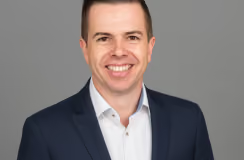
The better their businesses got, the more time they got back. That observation put Patrick Dunphy on this path to buy his own business. Eight years in the army, then corporate, then three and a half years of searching part time lunch breaks, nights after his four kids were in bed. What he bought in May 2025 is a business most searchers have never considered.
JS Languages, a low seven figure agency that places human interpreters in courts, hospitals, schools. He found it on Biz by Sell, which he likens to looking for a blind date on Craigslist. Listen for what Patrick did with working capital. By invoicing faster and in smaller batches, he cut day sales outstanding to half the industry standard, resulting in a one time cash benefit that he values between 100 and $150,000.
This working capital arbitrage he says is the cheapest capital you can find. Finally, Patrick wanted to make sure his Q of E provider got a call out. He said David and Steven Nemus at the accounting company were absolutely essential both before and after he closed. Here he is.
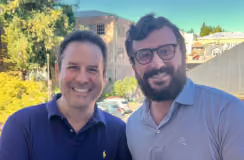
Patrick Dunphy, Owner of JS Languages. Welcome to Acquiring Minds, a podcast about buying businesses. My name is Will Smith. Acquiring an existing business is an awesome opportunity for many entrepreneurs and on this podcast I talk to the people who do it looking to secure an SBA loan to buy a business?
Meet Pioneer Capital Advisory your go to Partner for sophisticated buyers who want deals closed quickly and on the best possible terms. The Pioneer team has closed more than 100 SBA loans, averaging timelines well below industry standards. Founder and owner Matthias Smith and CEO Valerie Stash bring over two decades of SBA lending experience. Matthias and Valerie have built a team that meticulously works your deal from underwriting to close.
You'll have a full bench working on your behalf, sales associates who streamline onboarding M and a financial analysts who craft investor grade lender decks and an operations team that manages every step of the closing process with institutional level rigor. Pioneer is not a single person but your true deal team. Visit pioneercap.com or click the link in the notes. Patrick Dunphy welcome to Acquiring Minds.
[00:03:20 - 00:03:21]
Guest A: Thanks Will for having me.
[00:03:21 - 00:03:40]
Host: Patrick, you bought a business in the language industry interpretation. Very interesting to me personally and I think fair to say overlooked or or unknown to most Searchers. We're going to hear all about it. But start us off with some background on you, please, Patrick.
[00:03:40 - 00:06:12]
Guest A: Okay. I'm Patrick Dunphy. I am the owner of JS Languages. I bought JS Languages in May of 2025 and I've been operating for about 15 months now.
And I got here by way of the US Army. So I started my career for eight years in the army. I spent most of that overseas after the Army. Let me just pause there.
I enjoyed the army, but I, I decided that I wanted to get out in 2017 because I wanted the choice to put my kids to bed at night and I wanted the choice of where to live for as long as I wanted to live there. So home is the reason that I left. I found myself in private equity owned automotive supply chain and then Fortune 100 Aerospace. And I started to see this trend between two kinds of leaders and career paths.
For a leader who is a corporate America leader, works for someone else as they get more successful. All of the markers for success are obvious. You have more position, more title, but at the same time the golden handcuffs is a real thing. You're spending more time in the office, you're doing more traveling, you're more wrapped up in that company's priorities, the more successful you become.
And what I found with my friends that I began to interact with as business owners is that the more successful they became, they gained time, equity, they had more time for their family, more control over their life, more, more choice to put their kids to bed at night. And so with, with very little additional context, I knew that that's the route that I needed to go. General, long term goal, how do we get there? And that's when I started learning about search.
I found out about acquisition, entrepreneurship and in 2021 I joined Search Funder and then went on a three and a half year journey in the search environment, but also exploring other avenues for ownership. Ultimately the ultimate goal was that ownership and then re control of my time as the success curve climbed.
[00:06:12 - 00:07:13]
Host: Your observation there was. You shared it with me on the pre call and I loved it because on the one hand it's something kind of, that we all know intuitively. A lot of people pursue entrepreneurship to get more freedom or control over their time. But I'd never heard it distilled so well that the more successful you become when working for somebody else or on a corporate track, the less of your own time you control, the more it sort of enmeshes you.
Enmeshes you. And the inverse for if you are an Owner. I just self evident but also a really crisp observation. So thank you for sharing that.
And then talk about your discovery of search. I thought it was kind of humorous how you were seeing people show up in your LinkedIn feed and you were like, what is, what is going on here?
[00:07:14 - 00:08:36]
Guest A: So I, coming out of the military in 2017, they really coached get into LinkedIn, engage in LinkedIn. So I was heavily LinkedIn at every moment and I started to notice these small trends where some of my friends and colleagues from the army and from undergraduate would get out of the army, they would go to business school and then they'd come out of business school and they'd be CEOs in these very random businesses and very random places. Like you were an intelligence officer and now you're a CEO of a boilerworks company in the Southwest. You were a marathoner and.
And now you're a telecommunications installer CEO in the upper Midwest. And what is this? What is happening? Something is happening here.
I don't know but like there's too many, there's too much pattern recognition for this to be coincidental. So I started calling these folks and I started messaging them on LinkedIn and said the same thing, like something happened here. And I don't know what it is.
[00:08:37 - 00:08:39]
Host: Boilers, what is going on here?
[00:08:39 - 00:11:24]
Guest A: Right. And I want to hear about it. It seems really interesting. And it again, at that point I hadn't distilled the inverse relationship between time and ownership or corporate leadership.
This was part of that journey of learning it from my peers. And it took me a while. Would love to call it tactical patience. I think what it was was a sense of I wanted to learn more before I really jumped into it.
But so from 2027 until. Or 2017, sorry until 2021, I kept having these interactions. So October 2021 rolls around, I joined Search Funder and replace that social media time with search funder time and connecting with folks just again, a lot of there's something here, I want to hear it from you. Frankly, not to be too much of a fanboy, but it's one of the reasons that I love this show because I felt like there's a parallel methodology of curiosity with practitioners on a one on one conversation.
So I kept doing that from 2021 until close. And along that path I didn't look just at search, I looked at franchising. I looked at private equity operator development programs into equity. I was exploring multiple avenues.
The only one I didn't explore was 0 to 1. And the reason I didn't explore. 0 to 1 is 1. I maybe a little bit of doubt, but I can do a lot of things.
I didn't have a product, frankly I didn't know what I would start up. But the most compelling constraint was I'm a single income household and always had been. And so I knew that I really didn't want to stomach a pre revenue stage and I didn't feel like I could do the startup fast enough that it would replace my W2 income for sure.
[00:11:25 - 00:11:29]
Host: And how big is your family? I feel like that's relevant.
[00:11:30 - 00:11:44]
Guest A: It is relevant. So I've been happily married for coming up on 16 years next month and I have four children and they're aged five to 13.
[00:11:45 - 00:12:05]
Host: Five to 13, good for you. But a lot of mouths to feed. So immediate revenue was, was, was key. The search that you did was, was kind of a, well, not kind of definitely a part time search.
It lasted a number of years. What, what did it look like? Like the actual mechanics of how you were looking at deals.
[00:12:05 - 00:14:21]
Guest A: So I came into search very curious and I would say inexperienced and recognizing that up front, one of the things that I wanted to do was get reps. So as I started to do the search, I would use listing websites that are maybe not the best place usually to find a business, but the volume is there. So I would go bizbysell.com if you're familiar, it's basically Craigslist for businesses, often franchises. So what I started to do is I would go on biz by sell and set filter criteria, see what I could find, sling NDAs and practice rapid analysis.
And I wanted to get really good at evaluating a target quickly and determining if it was something that would be something that I could add value to and how would I be adding value to it. So that was a cornerstone for me was getting on a lot of email lists frankly and filter notifications so that on lunch breaks, after hours, after I put the kids to bed at night, I could review deals because I was still working. I didn't do the proprietary search, I didn't do the 1200 cold calls to businesses that are unlisted. In fact, about a couple months into it, I didn't want to do that because for me, a seller who listed or even better was working with a broker had made concrete steps in order to sell and they were, you know, they had signaled a commitment of some degree to selling.
[00:14:21 - 00:14:24]
Host: It's a great filter in that sense.
[00:14:24 - 00:14:29]
Guest A: Exactly. That was an initial macro filter for me was does the seller want to sell?
[00:14:31 - 00:16:00]
Host: You know, Enzo Technologies as one of the leading IT managed service providers serving the search community. Led by Nick Akers, an acquiring minds guest who bought the 35 year old business. The team at Enzo regularly works with searchers and their acquisitions. And one feature of acquired businesses that Enzo is seeing over and over is the need to implement cybersecurity promptly during the transition.
So many acquired small businesses either have glaring vulnerabilities, lack security best practices or both. That step one to de risk the deal you just closed should be addressing these issues. Inso is your full service IT MSP for post close stability. They assess your target, surface the biggest risks in plain English and give you a day one through 30 plan to cut exposure, prevent downtime and even find cost takeouts like bloated telecom bills.
Check out enzotechnologies.com in Z O or email Nick directly@nicknzotechnologies.com and so this biz buy, sell, browsing, being on broker lists, sending out Lois building reps, getting reps, building muscle, deal evaluation muscle lasted for some number of years.
[00:16:01 - 00:17:11]
Guest A: It did, but also again similar to your methodology, reaching out to practitioners and whenever I could capture a practitioner's time and respectfully asked them similar to you what did you do? What, what is this like how do you imagine yourself? What would you tell yourself if you were back at the start of this? That that was the Cornerstone of the first year of, of searching and then through the three and a half years I dropped seven IOIs, three LOIs, two due diligence and then I had one seller walk away and closed on JSL ultimately all at the same time while having two franchise confirmation days scheduled and bypassed and then winning but Turning down to P.E.
operator Pipelines.
[00:17:12 - 00:17:16]
Host: Huh. So winning meaning you could have joined these.
[00:17:18 - 00:17:19]
Guest A: I was offered the roles.
[00:17:19 - 00:17:19]
Host: Offers.
[00:17:19 - 00:18:21]
Guest A: Right. I was offered the role and, and, and in one case the role wasn't even defined. It was a new roll up strategy and a new geography and the conversation was we know we're going to need something like this. And that conversation really started out of this one on one strategy of hey you know, I see what you guys are doing.
I'm, I'm interested in business ownership and acquisitions. I just want to learn from you and how you go about things being a veteran open doors for those conversations. And it's absolutely true that oftentimes you can ask for advice and be offered a job, but if you get offered a job or if you ask for a job, you might get some free advice you didn't want.
[00:18:24 - 00:18:27]
Host: Tell us about JSL JS languages.
[00:18:27 - 00:18:52]
Guest A: So JS Languages is a language service provider. We put interpreters in courts, hospitals, schools and municipal programs. We bridge communication between individuals and businesses and individuals and government entities. And we do it in the places where it matters most so that people have access to justice, to health and education.
[00:18:54 - 00:18:55]
Host: And how did you find it?
[00:18:55 - 00:19:03]
Guest A: So I found it through Biz by Sell. Actually, it was Christmas break of 2024.
[00:19:03 - 00:19:17]
Host: Patrick, let me interrupt you. I just. Because I got the sequence wrong. Let me just re.
Ask how you, how you find jsl and then I'm going to ask you again what JSL is. Okay. I just get that as a little out of. Okay.
Okay, Patrick, so tell us your discovery of the business you did by jsl.
[00:19:17 - 00:22:09]
Guest A: So JS Languages came out of that rep building on Biz Buy Sell, which is a little funny. Finding a business to buy on Biz Buy Sell is like looking for a blind date on Craigslist. It's not usually the best target. And I was using it for volume analysis, but I had done this enough for at this point, two and a half, almost three years that I was looking at this business and I was like, there's something here, there's something different.
And it started to check a lot of the filters that I had and I inquired about it. Frankly, the business is a tough one to list because it's a contractor heavy model. It's in an industry that's not obvious. You don't realize that it's all around you.
And because of that, the shape and the mechanics of the industry and each individual firm are hard to put in a good listing where most buyers are going to say, okay, this hits my criteria. In fact, there's a lot of search funder 2021 red flags if you look back at what this listing was. One of the things in my process that I learned though is every red flag is an opportunity and every strength is a risk of complacency, a complacency liability in disguise. So after three years of searching and tons of mentorship, I looked at some of these red flags and I said yes, this seems like it's very founder oriented, it's very key person risk.
But I can diligence that and figure out how much involvement in the day to day the founder still has. And if it's low, then this continues. If it's not, then that's why you have diligence. So you walk away.
I think that there's this interesting balance in search that you have to be enthusiastic about every deal and in equal or greater measure, you have to be willing to walk away immediately from every deal.
[00:22:11 - 00:23:37]
Host: Well, my partner in Mind's Capital, Nicholas, will say that especially if you're raising money from investors as the independent sponsors that we invest in are, you're having two directly opposing conversations at once or contemporaneous. You're talking, you're negotiating with the seller, trying to knock them down on price, pointing out all the weaknesses of the business and then you're going back to your investors and trying to convince them that all the weaknesses in the business are actually fine and things that you're going to, you know, you're going to improve and you don't need to worry about it. So it's, it's literally you're kind of contradicting yourself depending on who your audience is. So yes, there is a tension there.
I also really like the point that you made about flags or opportunities. Another way that we, we put the red flags are opportunities. Another way we put this is, you know how kind of every, every deal's got hair. Just pick your hair, pick the weaknesses that, that you are uniquely suited to neutralize or, or improve upon and that, and that really becomes a great Venn diagram.
Because every business is going to have the weaknesses and if they overlap with what you can, you are, are positioned to fix. It's, it's, it's actually ends up being, that ends up being the opportunity.
[00:23:37 - 00:26:13]
Guest A: And, and, and I love how you distilled that. And, and what I, what I want to add to that is it took me a good two years with a lot of mentorship, a lot of self reflection, MBA classes before I really felt like I fully captured that Venn diagram and that that Venn diagram for me and for everyone is not so focused. So it comes back to evaluating every deal kind of from a fresh sheet and figuring out how to plug yourself in. This idea of imagining yourself in the seat, what are you going to do and what does that seat look like with you in it?
And how does the business look with you in it and with the seller out of it or however you want to structure for the seller? And more importantly than you imagining it is co imagining it with the people in your life. Because I came out of army aviation and flight lines and hydraulics, fluids and coming home in uniform and smelling like a flight line. And so a lot of my search was in more blue collar businesses that I thought among other things had intrinsic value, we needed them.
Things like striping pavement in parking lots. But sitting down with my wife and sitting down with mentors, one of the Questions that came up is you don't have to come home smelling like, like asphalt every day. And there's nothing wrong with smelling like asphalt. Again, evaluate it from a position of neutrality.
But ask yourself and people in your life what they evaluate, how they evaluate that, because we all have our own situation. Don't outsource your red flags because you have unique properties and skills and situations. And every deal has that quality of being its own unique fingerprint.
[00:26:14 - 00:26:24]
Host: This phrase intrinsic value, you also used in the pre call say more about that. That was actually one of your criteria. What did you mean by it?
[00:26:24 - 00:28:19]
Guest A: It was. So perhaps they still use the term. But I'm going to reckon Back to search Funder 2021 quite a bit because that was kind of my formative education. So Search Funder 2021 talked about the four proofs.
They wanted businesses that were Amazon proof, recession proof, pandemic proof, and AI proof. So what I would add to the four proofs that get you to intrinsic value is two more things, and that is cash, cash flowing businesses where the economic value is actually generating cash. And the second is that more subjective, unique to yourself. At the end of every day, at the end of your hardest day, most importantly, are you going to feel like you're doing good work?
Are you going to feel like this matters? Again, every answer is unique to the searcher. But for me, I've been raised with a spirit of responsibility and service. So JS Languages ticked all of those boxes for me.
Because the service that JS Languages and the language service industry provides is the difference between understanding your diagnosis or participating in your legal defense versus simply nodding along in your second language.
[00:28:20 - 00:28:24]
Host: Yeah. And so tell us, Patrick, exactly what JSL does.
[00:28:25 - 00:28:47]
Guest A: So jsl, simply put, brokers appointments between courts, hospitals, schools, municipalities, and any individual or organization that needs to bridge a bilingual or multilingual communication gap. What does that mean?
[00:28:47 - 00:28:50]
Host: So give us a, give us a use. Yes. What does that mean? Give us an example or two.
[00:28:50 - 00:31:36]
Guest A: So what does that mean? If, if a, if a person has a traffic ticket and they need to go to traffic court, English being their second language, they may be comfortable in English in the grocery store, or they may be comfortable in English when they go to the bank. But that, that doesn't mean that they're comfortable in English in a courtroom talking about traffic or their rights or the situation that they found themselves in. And for every individual in our country, we strive to create equal access to justice.
We don't want language to be a barrier to that access to justice. So the Court, state by state, county by county. It changes how the process works. But they will contract with either directly with independent contractors who are certified by the state or they will contract with agencies.
Agencies provide a additional layer of multi language coverage. Sometimes training agencies generally are doing recruiting and retention efforts. Because locally when you're talking about in person interpretation, the pool of talent is fairly fixed. It I would argue that it takes five to 18 years for somebody to acquire enough language skill in order to consider being an interpreter.
And then they have to self select to be an interpreter. And oftentimes that means that they are working a day job and they take on interpretation assignments based on the flexibility in their life. It is often not a full time career for many interpreters even though they are trained and certified and skilled and dedicated. And that can be really challenging for municipal government worker who's got four different other additional duties to manage.
Contacting everybody from every language that could walk through the door at the courthouse. That's where agencies help fill the gap and create a reliable supply of available interpreters.
[00:31:37 - 00:32:49]
Host: Great. Just in case people missed it. So inter we're talking about interpreters. It's a.
It's a human in person who comes to live translate what the judge is saying or what the doctor is saying or whatever. Whatever the context. So you know you. If you haven't seen that in real life you've probably seen it in the movies.
So those people and so it's not translation although apparently you have a little bit like a some sliver of revenue where you guys do translation. But this is not people translating documents. That's a different business under the whatever language industry. But interpretation is.
Is where your focus is and so the business model here. We've heard you say agency. I think I heard you say brokerage. I use the word marketplace is you have the relationships with the supply and demand both sides basically and you're bringing them together.
So that's the basic function of the business is sort of brokerage or agency. We're going to unpack that more in a little bit but give us a sense of the size of the of the business. Whatever numbers you can share. Let's start there.
[00:32:49 - 00:36:57]
Guest A: JS languages when we purchased it and today is a low seven figures business. It is entirely contractor delivered. So our business is very tied to variable cost and revenue which makes it a very easy business to scale. So long as I have an appointment and an interpreter I can deliver within a certain geography.
We also have the ability to exercise video and phone as well as document translation. So there Is a. We accept a geographic constraint because we specialize in, in person. But that doesn't mean that the industry is geographically constrained.
The business has very little fixed cost and almost no assets. So again, it's eminently scalable. But you also have to be very wise and savvy with your cash management. You also have to really focus on your relationships and ensuring that you're able to serve the needs of your customers and to serve your interpreters.
One of the things that I would say is this being a regulatory driven industry like many of them say. I think the classic example from Walker's book is the fire safety inspector. That would be another kind of example. In examples of service industries like that, the demand is there.
I won't say it's fixed, but it's there. It can grow, but you're assured of it. So the constraint becomes the supply. How do you focus on maintaining a solid supply pipeline and in this case of interpreters, people.
So for me and what I one of the things that I love about this business, it ties back to intrinsic value. I find that a strategy you could call it is kindness. Just being kind to human beings and treating them well, paying them what they're worth, finding ways to make the economics balance so that somebody who is taking time off of work in order to lend a limited skill to our broader society is justly rewarded. And also that they, they understand that that's a valuable thing, that, that you should think about yourself in terms of that service and the, the reward to society.
So those are some of the things that I try to focus on as well as the business fundamentals and, and cash management. So from low six figures, low, very low fixed cost, high variable cost model. Ultimately the founder, the seller was making a very comfortable lifestyle for herself on less than 10 hours a week, less than maybe 20 hours a month. And for me now I'm making my debt service and we're not at full replacement for my W2 income, but we're approaching it.
Lifestyle is a little different, but the business is very healthy.
[00:36:58 - 00:39:08]
Host: Longtime acquiring mind Sponsor Aspen HR is now part of Engage peo. Engage helps acquisition entrepreneurs, business buyers like you take care of their new employees and build trust from day one. Whether it's an asset or stock purchase, Engage provides a turnkey solution for payroll and taxes, hr, admin and technology, employee benefits, retirement plans, workers comp and more. They're also always a phone call away so you can receive HR guidance from licensed employment attorneys promptly as those inevitable people issues come up with Engage managing your people infrastructure you as new owner of your business, can focus on building relationships, operating the business and driving growth.
To learn more, contact Jenny Thier directly at jtheer J T H E a r@ngagepeo.com or click the link in the notes. We heard you say low seven figures and I think accidentally low six figures. The business does low seven figures of low seven figures of revenue. And so.
And so yeah, if we assume kind of small business margins, that sounds like a good SDE for one person business, which is what this was. And now you've got debt service. So until you grow the business, yours is probably a little bit less than what they. What the previous owner was making.
You've also answered the question about the how, how much the business rested on her. She was working 10 hours a week, 20 hours a month. So your view was that while it was a effectively a one person business and let's unpack that, correct me if I'm wrong, it was, it was actually required part time. So if you were going to give all your time to this, the thinking was you'd be able to grow it.
[00:39:08 - 00:40:22]
Guest A: Exactly. And I, I want to shy away from calling it a one person business and the reason I want to shy away from that is it really is a team effort. I've got, I don't lie. I've got the friendliest dispatchers in the world and they've been with us since the founder to now.
I've managed to retain those contract dispatchers and keep them engaged. We've attracted additional team members for project work and we continue to find additional project work as we grow and I look forward to finalizing a team that has more full time staff. But in terms of full time commitment, it's me and my family. So my wife helps quite a bit.
And that's another thing again with the co. Imagining yourself in a new industry and in a new company, the people in your life may have some involvement
[00:40:25 - 00:40:55]
Host: and your dispatchers so, so the, the people in the business are owner at the top dispatchers who receive the requests from the people who need an interpreter. The, the schools, the, the courts, the validations and they, they put out a call. You probably have some sort of online platform or membership membership website where your supply, your, your contractors are checking or getting automatic email alerts when there's a new gig.
[00:40:55 - 00:40:56]
Guest A: That's correct.
[00:40:56 - 00:41:17]
Host: Gig. Gig has a negative connotation these days. Gig economy. But when there's a new job.
Appointment. Appointment. A new appointment and they raise their hand to grab it and service it and then you Deal with all of the follow on as well, the receiving a payment, getting them paid, et cetera.
[00:41:18 - 00:42:01]
Guest A: And a lot of that, I believe is where agencies provide value to interpreters. I make it my goal that the interpreter shows up to the appointment, interprets across two or more languages and that's it goes home. So anything in terms of account management, anything in terms of invoicing and customer relations, questions fielded from the customer outside of the specific needs within the appointment, those are all handled by the agency which allows and frees up the interpreter to focus on the conversation and serve the conversation.
[00:42:02 - 00:42:34]
Host: Yeah. Understanding that you kind of, you resist the characterization of this being a one person business. There are other people who team effort. Everyone is keeping this, this machine humming and servicing these, these needs.
How, how necessary. I mean this, this sounds like a very robust business. Even though there are not any full time people. Not even the seller was their owner was a full time person.
[00:42:34 - 00:42:35]
Guest A: Exactly.
[00:42:35 - 00:43:00]
Host: Does it sort of operate on its own? I guess you're doing the books and things like that, but I guess the question is how is she spending her time? Is this as robust as it seems? Even though from the outside it would seem just the opposite, that it's a one person business where it's all on her shoulders and if something happens to her, the business collapses.
Actually, not at all in this case.
[00:43:00 - 00:43:55]
Guest A: No, not at all. Going back to the biz by sell, I think that that's why this was so hard to list. Is that wrapping your mind around what this business is? And again, not outsourcing your red flags for fragility, but digging into them.
This is why a business like this might not have had the moment that it needed to have in the marketplace. I'm lucky that it did. The business is a people business. It does not run by itself in the sense of it needs care and feeding, but, but it's more of, it's more of a garden than a puppy.
[00:43:57 - 00:43:59]
Host: Where are you getting these metaphors? I love them.
[00:44:00 - 00:45:31]
Guest A: It's more of a garden than a puppy. You plant the seeds, you set the system and you tweak the parameters as you see things that need to be changed. So if you can notice that there's a decline in certain languages or in certain geographies, you drill into it. One of the things of the last 15 months that I've really focused on is gaining control and visibility to all of our data and presenting the invisible for full visibility.
So those things require some monitoring. But I don't have to dispatch, I don't have to do the day to day I sometimes will get into the dispatch in order to see that operation and in order to interact with interpreters in that fashion and in order to interact with customers in that fashion so I can get a better sense for the interpreter and customer experience. In order to take that back to the gardening and setting the parameters, you know, making sure there's light and water and feed. But I don't have to feed it twice a day.
I don't have to take it to the veterinarian every six months. I don't have to take it to the groomers.
[00:45:31 - 00:45:37]
Host: Yep, this is, this is a metaphor I'm going to use. Patrick, is the business a puppy or is it a garden?
[00:45:37 - 00:45:38]
Guest A: Is it a garden? Is it a puppy?
[00:45:38 - 00:45:45]
Host: Exactly. That's just great. Okay, so can you tell us what you bought the business for, please? And how you, how you structured the deal?
[00:45:45 - 00:48:18]
Guest A: Certainly. So again, the business revenue was low seven figures. I bought it on multiples of SDE or earnings. This business really didn't have interest, tax, depreciation or amortization.
So the usual EBITDA multiple doesn't quite perfectly fit the model. I used a SBA 7A and one of the things that was important to me and to my lender, it's one of the reasons I picked my lender first Internet bank was working capital and making sure that there was enough working capital in the business that when I started the business I had that cushion. And of course adding working capital into the deal changes the capital stack. As a self funded solo searcher, I had contingency plans of where I could find other capital.
But I was working on trying to fund the deal myself. Again, that provided me the most amount of control after acquisition. So that's what we're able to do. We started the due diligence process in February and we closed on the deal May 5.
The deal structure did not include a seller carry or earn out and we were able to maintain a very healthy working relationship with the seller. In fact, truthfully, our founder is Juliana Sukuchi. She's Colombian. So Juliana starts with A, J, J, S Languages.
We keep her name in the branding. She's incredible and we still have the privilege of she has a passion for interpreting. So even in retire taking appointments based on the desires of her schedule. So structure of the deal, low seven figures, SBA 7A with working capital, no seller earnout and typical structure.
[00:48:19 - 00:48:20]
Host: Why no seller note?
[00:48:20 - 00:48:22]
Guest A: Patrick, why no seller note?
[00:48:24 - 00:48:25]
Host: The
[00:48:27 - 00:49:26]
Guest A: founder wanted to retire. She wanted a clean break from the business side. She loved interpreting, but she was targeting A lifestyle. So we discussed different structures throughout the due diligence.
We discussed Carrie, we discussed earnout and ultimately landed where we did. And there are trade offs in that. I think the lesson is coming back to red flags and opportunities at every stage of a deal. Ask as many times as possible if this fails, what next?
And try to stay ahead of that. So we were able to continue the conversation beyond no, there will not be a seller carry and find ways that the deal worked for all of us
[00:49:28 - 00:49:45]
Host: and the bank didn't push on you for there to be a seller note. Oftentimes, even when the buyer is comfortable with no seller note, the banks like to see it, the SBA likes to see it just to demonstrate continued skin in game by seller that they are incentivized to see a successful succession, transition, et cetera.
[00:49:46 - 00:50:32]
Guest A: So there was some discussion of that. We kept a very close relationship with the lender and kept the lender very close to the developments and the negotiations. So I think because of that depth of relationship and partnership, the lender understood the specific parameters and values going into this deal and was able to underwrite the deal as we was actually able to help us build the structure that could get underwritten without the seller carry.
[00:50:33 - 00:50:56]
Host: Great. And tell us more about the working capital that you were pressing for. Exactly what are we talking about here? This is such an important topic.
And then of course also there's a working capital improvement you made to the business, which we'll also get to in a minute, but that's separate. So what were you, what were you looking at working capital wise as you entered into the acquisition process?
[00:50:57 - 00:52:16]
Guest A: So I, I was looking at working capital as three months of payroll. This being a brokerage firm in its most reduced. What I wanted to make sure that we would do is that as an agency in the transition, we would always say what we do and do what we say. And in the most tactical terms, that is everybody's going to get paid on time very predictably and with great transparency.
No matter if I ended up being terrible at this business, I wanted that transition to be smooth. It came back to if this fails, what next? And luckily I had a lender who herself had a working capital threshold and had made a similar analysis. So I, I wasn't, I wasn't pushing for the working capital alone and it allowed me to be creative with the deal structure, knowing that the lender would push back and keep the working capital in the deal.
[00:52:18 - 00:52:43]
Host: Great. And so it was what you were asking for was three months of what you calculated, what you Pro forma to be outflow of payments to your contractors, three months worth. And you wanted that sum wrapped into the SBA loan so that cash on the balance sheet, day one. But as part of the SBA loan,
[00:52:43 - 00:54:18]
Guest A: yes, which naturally affects price. So you can see how that the negotiation levers started to come together toward the end of the deal. Now, what I found when I came into the working capital or what I found when I came into the business regarding working capital is that working capital can be not only a insurance policy, and especially if you're coming into a new industry, you, you cannot overestimate the amount of working capital for the transition. You simply cannot.
If you just had a infinite pot of money, you'll be successful in the transition, simply put. But what I found in the business is that the contractors had been paid reliably for 20 years on a set schedule, with a set process and they were comfortable and trusted that. So so long as I kept that and then focused on the customer side, could I get customers to pay faster? Then there could be some working capital arbitrage.
I might be able to de risk again if this fails. What next? I might be able to reduce my risk and create a one time cash advantage if I can get that working capital improvement. Our industry runs at about 46 days
[00:54:19 - 00:54:33]
Host: on average by 46 days, meaning from from the moment that one of the your interpreter contractors does a, an appointment to when you actually receive payment from the client, that's 46 days.
[00:54:33 - 00:57:39]
Guest A: Correct. And that's industry standard. By focusing on where, which customers paid, on what schedule, what were their internal processes for payment, be it a certain county or a certain hospital, or a mayor's court which doesn't have as much overhead, where could I focus the business and the relationships and how could I improve their inputs to paying me? How does that work?
Again, it took a lot of this one to one methodology of talking with the customers and really understanding their present situation. And I found that the customers are largely single individuals covering multiple responsibilities. And one of their responsibilities that was a bit burdensome was reviewing invoices when they come in on a certain cadence. So if I could invoice faster and create smaller invoices, they were delighted because their nug work of each iteration going through an invoice for that individual was significantly less.
So if I could do that and provide a little bit of automation to it and get invoices out in a timely and professional manner, customers could accept and pay quickly and I again was value my time. So how do I do that without Spending all of my days in ar. So by focusing on that, creating a little bit of sliver of time on Saturday mornings, during Saturday morning cartoons, putting out invoices and invoicing on a faster cadence, I dropped my day sales outstanding to half the industry standard. And because of that, I also coincidentally was providing a better service to the customer.
So it was nice to see that, that dual benefit. So another thing that I would offer to the search community is that we often think about working capital as an insurance policy, which it is, but it can also be a strategy because depending upon the size of business, if you're able to gain that much in working capital arbitrage, that could be somebody that you hire in your first year, that could be a finance clerk, that could be a salesperson. It's a one time benefit. But don't underestimate the value of how you can use that cash in the first year.
[00:57:40 - 00:57:56]
Host: If I pressed you Patrick, to quantify in dollars what the value to you was from reducing by reducing your working capital from 46 to 23 days, roughly what do you think that one time boon was?
[00:57:56 - 00:58:11]
Guest A: So one time boon is somewhere between 100 to $150,000 depending upon what, where you, where you land and the total revenue.
[00:58:12 - 00:58:12]
Host: Yeah.
[00:58:12 - 00:58:23]
Guest A: So again, significant. That's significant. That like I said, that's a finance clerk in a business that operates with about a three to five person team.
[00:58:24 - 00:58:34]
Host: Absolutely. Great. Good stuff, Patrick. And actually we met because you had attended a webinar, I believe, or had seen the promotion for one of.
Had you attended?
[00:58:35 - 00:58:36]
Guest A: I, I wasn't able to attend.
[00:58:37 - 00:58:49]
Host: But you saw the time we met because you had, had responded to one of our webinar promotions where the subject was going to be working capital. And so you had you, you wrote responding with what you've done here.
[00:58:49 - 00:59:13]
Guest A: Working capital arbitrage is, is the cheapest capital you can find it. It's entirely in your control. And if you approach your customers with empathy, understand where they're coming from and what their constraints are on payment, I think you in many industries have an opportunity to achieve similar results.
[00:59:14 - 01:00:54]
Host: Well, certainly, yes, be sensitive to the customers and you can approach them as you did your customers. But there's also, I think it's fair to generalize many small business owners depending on how small the business is. Businesses of a certain size, probably not. But if it's small and, and the owner is doing the invoicing or, or somebody who's overstretched is doing the invoicing, it tends, it can often slip.
I mean, I know that in my own career, it's, it's often slipped when I send out invoices. And so there might just be an opportunity to tighten it up and improve your working capital position. Not by kind of going hat in hand or very, you know, empathetically to customers, but just doing it like it should be done on a, on a regular schedule. And you'll, and you'll get this one time, this one time working capital infusion, if you will benefit.
Great point. So the, the transition that you were trying to, to effectuate here, this, the successful transition, also seems like a business that would be easy putting that in quotes to transition compared to showing up in the yard and talking to, you know, 20 grizzled plumbers that you're the, you're their new boss, this one seems like a little bit easier to step. To step into. Maybe I'm wrong, but also the fact that Juanita was working 20 hours a month means that you weren't just, you weren't just going to be crushed by stepping into a.
Juliana. Thank you. You weren't going to be crushed by stepping into a fast moving river here. So for a number of reasons, it seems like the transition would have been smooth.
Correct Me?
[01:00:56 - 01:00:57]
Guest A: Yes and no.
[01:00:57 - 01:00:58]
Host: Okay.
[01:00:59 - 01:02:44]
Guest A: There are certainly pitfalls. And the way we navigated around them, trust was important. Trust from customers that we're going to continue to deliver, trust from interpreters that we're going to continue to have the culture that they expected and the pay predictability and the appointment predictability that they expected. So what we did, for better or worse, we actually kept the transition really quiet.
We went a whole month and a half of operations before telling anybody. And the whole reason. And we did that very deliberately. And I say we because it was me and Juliana working it together, that this was Juliana's legacy and we wanted to ensure that continuity to legacy.
So by not announcing it, by not making a big deal, and especially her having been separated from the daily operations, what we could do is reveal at a later date that, hey, we, we've actually made this transition two months ago, month and a half ago. And you noticed no change. Yeah, that was intentional. We, we want you to feel comfortable that, yes, this has changed and yes, there are new things that are coming, but what you have expected from us for the last 20 years is the exact same, and we hold ourselves to that as a bare minimum standard.
And you're only going to see us go better from here.
[01:02:46 - 01:03:30]
Host: I instinctively, I like this approach and I've heard many searchers have it I will say the. One of the detractors of this approach, I recall Chris Williams, I think, said there's the danger that don't wait too long. Because if you wait too long, it's been six months. It almost feels like the customer, the client might feel a little bit like there was a deception, like, well, why didn't you tell me sooner?
So there's a sweet spot here of not waiting too long, but, but waiting enough to demonstrate the fact that, that the transition actually hasn't affected anything and business will continue as expected as the customers come to expect. Great stuff.
[01:03:30 - 01:03:45]
Guest A: I think it's business dependent. Every business has a certain cadence and cycle. Our business is roughly a monthly cycle. So we assess that, say a month and a half.
Let, let one cycle pass, whatever that cycle is, and then bring a soft reveal.
[01:03:46 - 01:04:15]
Host: Yeah, great. Soft reveal. Okay, Patrick, got you for just a few more minutes. Let's hear more just about the business itself.
So first of all, the size of this, your business, and the industry overall. Who are you serving? Where are you based? We haven't heard that.
And what markets are you serving? Are you just serving your home market or more or what? What does that look like?
[01:04:16 - 01:07:07]
Guest A: So we have two primary geographic hubs, Cincinnati and Milwaukee. We have a minor hub in northern South Carolina, Greenville as well. Our interpreters travel. So you will see our density is Ohio, southwest Ohio, Kentucky, Wisconsin, especially eastern Wisconsin, and then South Carolina.
The business largely serves a hospital vertical in the Wisconsin area and largely serves a municipal court vertical in the Ohio area. So one of the key growth strategies is cross pollinating that skill, working on bringing in more medical clients in the Ohio area and bringing in more court clients in the Wisconsin area. Our interpreters have been serving for some of them as long as 25 years. And we have never had until this generation a function or a focus on marketing and sales or specific outbound recruitment.
And I want to hedge that a little bit. I'll come back to that because it really gets into the special magic of Juliana and kind of the transition into this new generation. So the business has multiple possible verticals, stable geography. So the initial growth strategy is to cross pollinate those verticals, take what we know about court and bring it to our geography that's a little bit more hospital centric.
And what we know about hospitals bring it more to geography that's a little bit more courts centric. We also want to grow with government contracting and federal contracting. It's something that the business has never done before. I'm a veteran and now with the State of Ohio.
We're certified as a veteran friendly business enterprise. And we're working on our vet cert as well. We have our SAM registration. We're excited about these new opportunities to expand, especially in ways that aren't as geographically constrained.
[01:07:07 - 01:07:24]
Host: Tell us more about how Juliana built this business and why the focuses are where they are, both geographically and market wise. Like, meaning vertical wise. Healthcare in one market. What did you say?
Municipal. In the other, Was it court? Thank you. In the other,
[01:07:27 - 01:09:59]
Guest A: the. The geography is. Is tied to Juliana herself and her incredible story. So she started in Milwaukee because that's where she was living.
And when asked to be a medical interpreter, she was asked, what agency do you work for? Before all of us had iPhones and Google was a verb, she said, give me two days and I'll answer that question. And in two days, through her own research, created an llc. And that was the beginning of this agency.
That market largely started in one hospital and with Juliana. And as Juliana met quality interpreters who wanted to work with an agency, she brought them under her wing as a community. And those relationships with those institutions, the customers and hospitals have continued. It's one of the things that I saw in the due diligence that I really appreciated about this business and where I saw that intrinsic value is her customer retention was seven to 15 years in many cases.
And the lower end had a lot of entity structure change. So if you actually stretched it out to Wheaten Hospital, which is now a different organization, she'd been working with these areas for 25 years. So she then moved to Cincinnati, and in Cincinnati, she pursued continuing education and became court certified and became herself a court interpreter and started to serve municipal and court appointments in southwest Ohio, which is where our customer base is now. In her retirement, she's moved out to Greenville, South Carolina and continues to take appointments.
Those appointments largely are with court and legal. So this woman and the incredible work that she's done over her career has really defined the current geography and our verticals. And we want to build off of that fertile soil in this garden that, that she laid for us.
[01:10:00 - 01:10:47]
Host: And so, Patrick, do you think that how difficult or not do you think it will be for you to land new contracts? She. She built these, these hubs organically. She was the face, she had the relationships.
But now you're an owner sitting sort of atop this. Very enticing to think that she never did any formalized outbound. So that seems like a good opportunity. On the other hand, you know, maybe it won't be as effective because because you know, sell working directly with Juliana, I'm sure was very appealing to her customers in the early days.
So how to think about that? If you, for example, wanted to spin up a new hub, a new geographic hub here in the D.C. area, you know what, how realistic is that?
[01:10:48 - 01:13:04]
Guest A: I would say spooling up a geographic hub is not very realistic, at least not on a short timeline. Again, the key constraint being supply. The supply exists, but you have to bring that brand in and build that trust. Now, geographic expansion in a permeation strategy.
So coming from southwest Ohio and building out to the entire state as an example, perfectly capable because we can begin to serve at the boundaries of where we serve with interpreters, traveling and build up a community of practice in that very organic way. In terms of sales, there are challenges to finding these customers and to serving these clients. But because of the experience that we've had and because of the data visibility that we now have, we can present to similar customers the services that we can provide and we can do it on the back of the credibility of 25 years of service. So it's not a home run.
Sales is challenging, period, and especially challenging when your customer is not the mayor. It's not the most visible person in an organization. So finding your buyer who exists largely outside of the procurement channel is sometimes the biggest challenge. But showing service and quality is what really gets you across the line.
So that's been the focus of the last 25 years of quality and relationships, especially relationships with interpreters. And that's what's going to continue, is that we're going to have this focus on quality, relationships and retention with our interpreters and use that to bring value to new customers, new communities. We've opened new language dockets in adjoining counties because of work that we've done over the last 20 years.
[01:13:05 - 01:14:20]
Host: The got it on the organic growth strategy. This seems like an industry ripe for inorganic growth as well. Acquiring other JSLs around the country or wherever you might expand. It's probably, I'm guessing, a very fragmented market, very localized and lots of retirement, I'm sure, or I suspect it has many of the characteristics that so many of the businesses here we talk about do.
Retirement age owners and because it's Cap X, there is no capex. It's, it's all kind of brokerage. You could roll in an acquisition into your, to your umbrella organization relatively seamlessly. You get them using your, you know, your tech or website platform or not necessarily, but you know, some, some, some backend integration, some backend light integration.
Would probably be it. And, and what you're buying really are those relationships, which is kind of the, the best thing to be buying. It's the simplest thing to acquire. How do you react to that?
[01:14:21 - 01:15:12]
Guest A: You're exactly right. This is globally a $72 billion industry. We've got two, maybe $3 billion companies, firms in the industry globally. And if you walk your way down to from the top of the industry to the number 100th firm in the industry, you go from about a billion dollars to $50 million.
And there are endless number of small agencies throughout this country and others. There's a lot of different strategies for how to solve the supply side. So you could go very technology heavy and try to outsource to native countries. A lot of companies try to do that.
[01:15:12 - 01:15:17]
Host: But what do you, what do you mean by that, Patrick? What does that, what does that mean, outsource to the native country?
[01:15:18 - 01:15:49]
Guest A: So we serve in person and one of the languages that language grouping that we serve in quite a bit is a West African language grouping. It is possible. And some firms do this especially larger, more technology focused front technology forward firms will contract within West Africa and have video remote interpreters.
[01:15:50 - 01:15:50]
Host: Wow.
[01:15:51 - 01:17:13]
Guest A: So that, that is a strategy. It's valid. What I would say is that because the frame, fragmented and relationship based nature of this business across our country, I want to continue to focus on quality and relationships. And the opportunity for that inorganic growth, I think will happen organically.
Because I think my theory is that on the one hand, it's a fixed labor pool in a certain locality in a certain geography. So I can attract interpreters if I'm treating them well and if I'm elevating the profession. Similarly, if I'm treating people well and elevating the profession, as other founders are hitting retirement and they want to trust their legacy and their interpreters and their people with the next generation, do they want to do it with a company that seems to commoditize people and language and try to offer customers the cheapest, most remote solution, or do they want to give their people an opportunity to flourish and grow over an entire beautiful career of interpretation?
[01:17:14 - 01:18:00]
Host: But Patrick, won't that ultimately be driven by the customer? So hospitals, if they don't want to pay a premium for an in person experience for their patients, if the, you know, the basically effectively a zoom call with a West African guy who's literally in West Africa doing the translation there over a cell phone or a tablet is, is, you know, a tenth the price, hard to compete with that or, or not. How much of a threat. Is that reality?
And, and, and sorry, returning to my question, it's, it's, it's ultimately your end customer that's going to make that determination and you're going to just be pulled along whether you know, however they decide.
[01:18:01 - 01:20:55]
Guest A: You're spot on from a 60,000 foot view. However, there's always going to be high touch sensitive communication that's going to require human nuance. And the language isn't static, this isn't Latin. It's not a dead language that we're interacting in.
So you need people who can communicate a message because language isn't a one to one algorithm. Two anecdotes, one about my kids. Yes, I could be worried about AI for low touch routine appointments. But then I watch my kids yell at Alexa in English and she can't understand what they're saying.
And I feel pretty confident that we're okay. But also I once heard a case, it was a felony trial of a violent crime. They had a witness on the stand and the witness was speaking Spanish. And as the witness was describing the, the, what they saw, the question came how far away from this horrifically violent crime were they?
And the, the word that they used was yardes. So the initial interpretation came out as three yards. And everybody in the courtroom was floored. They said you were nine feet away from this horrifically violent crime.
That's a significant finding. And the interpreter, luckily was a wonderfully professional interpreter and requested to the judge, may I clarify the point? And spoke with the witness on the stand and, and clarified that when he said three yardes yards, he meant three backyards. He was 150ft away versus feet.
And it, it was the same word. But sure, that's where the algorithm might break that, that's where that human nuance will always matter. And in the most high touch situations, like court, like, like hospital specialty cancer, you need to be able to communicate with empathy. It's part of the message.
[01:20:55 - 01:21:02]
Host: The medium is the message. And, and so having a human there do it is, is part of the, of the delivery of the sensitive information.
[01:21:02 - 01:22:43]
Guest A: Exactly. And, and so yes, if there was perfect execution for remote interpretation from West Africa and there were no issues ever with connection times or with dropped calls or with the interpretation proceeding for the entire appointment and not being hung up on, you'd still have a screen, you'd still have a challenge of an interpreter who is serving the conversation as infrastructure for the room and at the same time assessing the room and the way that the message needs to be conveyed so that all Parties understand it. That's something that I don't believe is ever going to go away. And so playing in that high touch, high quality space is where JS languages wants to be.
Which is why we work in courts, hospitals and schools. Because justice, health and children, I think are some of the most important aspects of our society. And yes, there may be some routine interactions that get outsourced or push to AI. I would say that that's an entirely different product than what we're going for.
And doctors are reacting to AI interpretation in negative ways and doctors are reacting to remote interpretation in negative ways that are making their way.
[01:22:43 - 01:22:52]
Host: It's funny, I think that I've been watching season two of the Pit and there's actually a scene on this. The interpretation happens to be sign language for a deaf patient.
[01:22:52 - 01:22:53]
Guest A: Perfect.
[01:22:53 - 01:23:05]
Host: But the, the tech doesn't work and it, and it causes the anxiety in the room and the frustration with the patient to just that. That is the central tension of the scene, actually.
[01:23:05 - 01:23:06]
Guest A: Exactly.
[01:23:06 - 01:23:17]
Host: Patrick, we're at time, but I have two more questions I want to rapid fire to you. They're both kind of meatier ones, so do what you can to answer them quickly.
[01:23:17 - 01:23:18]
Guest A: I'll do what I can.
[01:23:18 - 01:23:50]
Host: I heard you say society, social value. We are living in an anti immigration moment. Do you, do you, do you see that affecting your work morale in terms of morale and. Or the business prospects?
Is this no longer a growth industry if the, if the anti immigration orientation of the country sticks?
[01:23:54 - 01:27:14]
Guest A: This is definitely a great meaty topic. Let me answer it two ways from a values perspective. I'm not very young, I'm not very old. In my limited life experience, I have found that there are things that endure beyond the present zeitgeist of any zeitgeist.
Yes, there might be a present moment of highly publicized anti immigration, but our country has a certain foundation and set of values that has endured multiple generations of this same zeitgeist. So I don't see this as the end of the timeline. And this is about people, not policy. I find that most that I would speak to on an individual basis would be very understanding of.
If your grandmother showed up to visit you and had a massive asthma attack for the first time in her life and she goes to a hospital and she doesn't speak the language, she's coming to visit you. You want everything in your power for her to feel comfortable. You would ask for the interpreter. So I don't see that as being a significant challenge on an individual basis.
And over time, truth will win. Values will win. So I don't see this going away and I don't see the need for human communication to diminish. Secondly, because this is a business podcast, anti immigration sentiment creates immigration cases that need interpretation and.
Our political opinions and political seasons swing in pendulums. So another perspective could be I'm buying in a down market to put it cynically and in full business. But truly my motivation is more along the lines of I believe our country and our society will and must uphold the promises of its identity. And I believe that this is the right place to be for that.
It's why I joined the military. It's why I've, it's largely why I've pursued the life that I've pursued. And this business works so well into fitting into that framework.
[01:27:14 - 01:27:54]
Host: Well put, Patrick. Last question for you. Going back to just pure the business. Well, actually, this isn't just a pure business question.
The observation you made about small business owners having more time as they got more success rather than less for the corporate types, you are still pretty recently into this business. But do you see now that you are the owner of the business, a path to, as you grow this business, as you become more successful with this business, it giving you that time for family, for whatever that you had observed from the outside of these other business owners you interacted with. Is this, is this the right path?
[01:27:54 - 01:29:09]
Guest A: 100%. I, I called the shot and the shot is right. And even today, that sounds so conceited, but that's the truth is that even today, what I've proved out in 15 months is that yesterday I, I was able to step away and jump on the trampoline with the kids. And that's not something that I could have done.
Midday in my W2, I'm, I'm dropping kids off, picking them up from school, taking them to soccer practices more than I ever did. And at the same time, I'm, I'm always on also. So. So there's a balance here and you have to decide what's right for you.
For me, I think I would always be on anyway. But now I can always be on and control what I'm physically doing in, in my time and space. And yes, my kids still ask me, hey, dad, when are you going to only work for 10 hours a week and we'll get there. It's coming.
And it'll come a lot faster this way than it ever would have with a W2.
[01:29:09 - 01:29:11]
Host: Patrick Dunphy, thanks for joining us on Acquiring Minds.
[01:29:11 - 01:29:13]
Guest A: Thank you, Will. I really appreciate it.
[01:29:13 - 01:29:57]
Host: Hope you enjoyed that interview. Don't forget to subscribe to the Acquiring Minds newsletter. We send an email for every episode with an introduction to the interview, a link to the video version on YouTube, and soon key takeaways, numbers and and more essentials from the interview. For those of you who don't have time to listen or watch it, subscribe at Acquiringminds.
Co. You'll also find all our webinars there on the website, both those we have coming up and recordings of past webinars. At this point There are over 30 webinar recordings, a wealth of information on all the technical nitty gritty of buying a business. Acquiringminds Co.