[00:00:00 - 00:04:06]
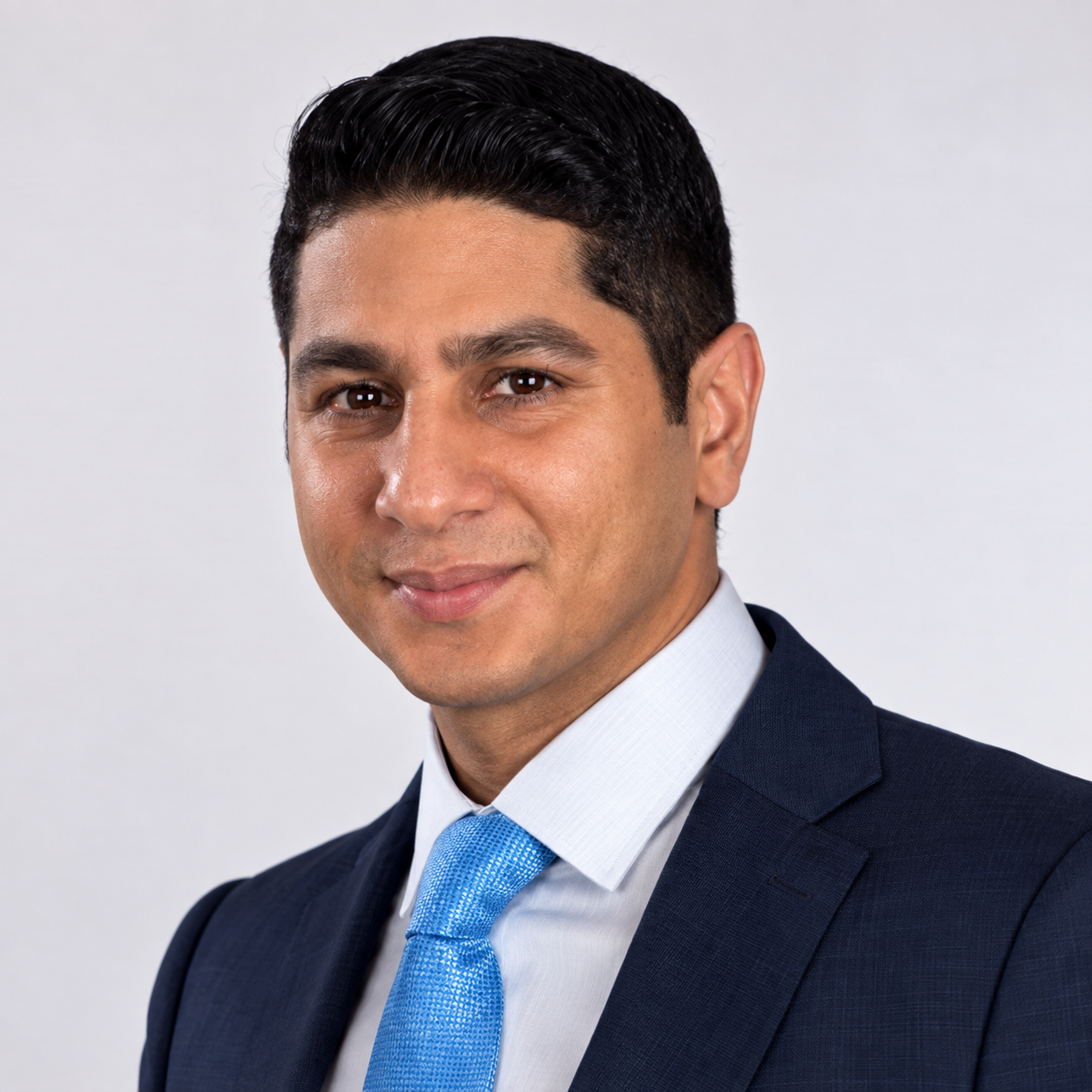
Host: The less of your own money you put into a deal, the easier it is to talk yourself past the red flags. Today's guest learned that firsthand. Raheeb Diwan started a short term rental management company in Nashville from scratch. He grew it to $10 million of assets under management while finishing his MBA.
Then he bought a competitor three times his size, quadrupling the business overnight. So that is a slightly different format for acquiring Mines. Most of our stories begin with the acquisition. Raheebs began with an operating business and the acquisition was how he then stairstepped it.
Now, as many of you know, the SBA treats acquisitions of targets in the same industry favorably. In this case, the financing was 80% SBA debt, with the sellers rolling the other 20%. So Rahib didn't have to contribute any equity, making his out of pocket to 4x his business, just the due diligence fees. Sounds amazing, but as he tells it, it also made him less careful than he should have been.
The business wasn't quite what it looked like from the outside as always, and Rahib has spent more than a year rebuilding it. We get into what that took Listen too For his approach to growth, Raheeb is not chasing big for big sake. He has a specific number in mind and he's already most of the way there. If the short term rental industry interests you, we've covered it before.
Matt Orley bought Red Cottage in the Poconos and Megan McGee bought guest houses in Charlottesville. Both interviews are worth a listen and are linked in the show notes. Here is Rahib Diwan, owner of Wanderlux Hospitality. This Tuesday and Wednesday, my team at Mines Capital and I will be at the McGuire Woods Independent Sponsor Conference in Dallas.
We'll have a little base camp set up in Pyramid, the restaurant right as you enter the Fairmont Hotel where the conference is hosted. So if you're at McGuire woods this week, please swing by our table and say hi. The Pyramid Restaurant at the Fairmont in Dallas, Tuesday and Wednesday. See you there.
Welcome to Acquiring Minds, a podcast about buying businesses. My name is Will Smith. Acquiring an existing business is an awesome opportunity for many entrepreneurs and on this podcast I talk to the people who do it. You know ENSO Technologies as one of the leading IT managed service providers serving the search community led by Nick Akers, an Acquiring Minds guest who bought the 35 year old business.
The team at Enzo regularly works with searchers and their acquisitions and one feature of acquired businesses that Enzo is seeing over and over is the need to implement cybersecurity promptly during the transition. So many acquired small businesses either have glaring vulnerabilities, lack security best practices or both. That step one to de risk the deal you just closed should be addressing these issues. INSO is your full service IT MSP for post close stability.
They assess your target surface the biggest risks in plain English and give you a day one through 30 plan to cut exposure, prevent downtime and even find cost takeouts like bloated telecom bills. Check out enzotechnologies.com in Z O or email Nick directly at nicknzotechnologies.com Rahib D1 welcome to acquiring Minds.
[00:04:07 - 00:04:09]
Guest A: Thank you. Well, thanks for having me. Great to be here.
[00:04:09 - 00:04:27]
Host: Raheeb, you actually started your business from scratch zero to one, but then acquired a three times larger business. So this is something of a hybrid zero to one ETA story. We're going to unpack that, but let's begin with some background on you please. Raheeb.
[00:04:27 - 00:05:00]
Guest A: Sounds good. So I've been an entrepreneur for most of my life, as has my father, so always been inspired by him. Really started a doing entrepreneurship about 15 years ago, have done a few different things and eventually I landed in hospitality. In terms of the acquisition route itself, that came as an inspiration from attending Kellogg.
I was attending my MBA program there and so that's where I was really exposed to the idea of acquiring a business rather than growing from scratch, which is what I've done for all of my previous ventures.
[00:05:02 - 00:05:07]
Host: This business you actually did though start from scratch. So give us a story of how it all started.
[00:05:07 - 00:06:35]
Guest A: Absolutely. So I was in healthcare before I transitioned to this business that I'm in now and my previous venture was acquired and so I was at a bit of a transition point in terms of my entrepreneurial journey and I really was looking for something that was real estate focused because that's something that I've always been interested in. I have had real estate investments in the past past, but they've been more longer term. And so as that transition happened and exited the previous business, I wanted to get into hospitality focused real estate.
But I also knew that I wanted something that had enough cash flow to obviously sustain the lifestyle as well. And so that's where I started exploring different models and eventually landed on just this particular Airbnb model. And I acquired my first property about three years ago. That's when I initially started and tested that out for six months, really got to know the business better than than had a than I had known earlier and it started making sense and that's when I started scaling.
So Grew the business organically from about zero to roughly 10 million in assets under management. And throughout that time, as I mentioned earlier, I was attending Kellogg, very involved in the acquisition space over there, which they're very active in. And so I always had this desire to grow through acquisition. And that's when I.
To pursue that opportunity when it came around.
[00:06:36 - 00:06:40]
Host: Okay, so you started this while at Kellogg or just before Kellogg?
[00:06:40 - 00:06:41]
Guest A: Yes, during my time at Kellogg.
[00:06:42 - 00:06:50]
Host: During your time at Kellogg. And it was a. Was this a real estate investment where you bought a real piece of real estate that you then put on Airbnb?
[00:06:50 - 00:06:50]
Guest A: That's correct.
[00:06:50 - 00:06:52]
Host: That. I guess that probably was the very.
[00:06:52 - 00:07:02]
Guest A: That's how it started. Yeah. It was the first property was when I purchased for myself to test this out and, and get to know everything better. And then when it started making sense, that's when I started scaling.
[00:07:02 - 00:07:06]
Host: So start scaling meaning you bought more of your own properties to put on Airbnb?
[00:07:07 - 00:07:37]
Guest A: I started managing for others. I also started sourcing opportunities and I had, through my own personal network, folks that were interested in acquiring and investing in real estate. So as I found opportunities that made sense to me, I presented them to others. And after their own due diligence, obviously, they decided to move forward.
So we acquired some properties that were essentially empty. We then acquired it, designed it from the ground up, and then manage it as well. So that's where a lot of the initial growth came in.
[00:07:37 - 00:07:48]
Host: Okay, so to be clear, you. The business in question in the business that we're going to talk about today is a property management business, a short term rental management business.
[00:07:48 - 00:07:48]
Guest A: That's correct.
[00:07:48 - 00:08:13]
Host: Airbnb being the sort of dominant channel, so people will call them Airbnb businesses or property management businesses. But part of the reason for that is because you have always had an affinity for real estate. And you're also. This also sort of plays very nicely with you building your own real estate portfolio.
So some of the properties that are in the portfolio that you manage are actually owned by you, including the very first one?
[00:08:13 - 00:08:14]
Guest A: That's correct.
[00:08:14 - 00:08:28]
Host: Okay. Okay, great. And when you say $10 million of assets under management, I noticed that was your kind of metric when we talked in the pre call. Explain to the audience what why you use that metric and what that means.
Exactly.
[00:08:29 - 00:09:00]
Guest A: So. So that is the value of the real estate that we're managing. And I prefer that metric because it is a more accurate indication of the, the size and scale of the business, mainly because we only manage large luxury properties in Nashville. So these are all four and five bedroom properties.
And so while we might not have the volume in terms of number of units, in terms of just the actual value of the assets, it's. It ends up being significant because of the model that we've chosen to pursue.
[00:09:00 - 00:09:23]
Host: Okay, so the outsider would think that you'd talk in terms of doors or units under management, but that would be really inaccurate. Or that wouldn't capture the fact that you're. You're a. You play at the luxury end or the higher end or the larger end.
Properties are larger end of the market versus a bunch of, you know, one bedrooms in downtown, wherever Nashville.
[00:09:23 - 00:09:34]
Guest A: There's a lot of property management companies that focus on that model, and they obviously have a lot more doors. But if you look at, you know, just in terms of assets under management, in a lot of cases will end up being the larger company.
[00:09:35 - 00:09:44]
Host: Yeah. Okay, great. And you're in Nashville now, but you were at Kellogg. So is there a Chicago connection?
Or is any of your business in Chicago? No.
[00:09:44 - 00:10:14]
Guest A: 100. 100% based in Nashville. I moved here to start this. I actually spent about six months researching where after the healthcare ex, I spent about six months researching where I want to do this.
And so I ended up in Nashville for a multitude of reasons, both macro and micro, and I essentially moved here during my time at Kellogg. And then I ended up traveling, traveling to Chicago for class while I was finishing up my mba. But a majority of my time has been in Nashville for the past several years now.
[00:10:14 - 00:10:37]
Host: Wow. Okay, so, Raheem, so you bought that first property and put it on Airbnb and figured out, you know, that the model worked. And I think that's how a lot of people will start kind of an Airbnb portfolio or any sort of real estate portfolio. But that undersells how much care you put into your thesis here.
It sounds like you evaluated markets across the country.
[00:10:37 - 00:10:38]
Guest A: I did.
[00:10:38 - 00:10:54]
Host: Were willing to move to whichever one penciled commute back and forth from your business school in Chicago. And so this was very serious. You attacked this not incrementally, but with a larger vision from the outset.
[00:10:55 - 00:11:25]
Guest A: That is correct. I definitely put a lot of thought into where I wanted to do this. And yes, I went all in when I decided that Nashville was the city to do this. And so, yes, it was challenging to obviously manage the travel and the MBA and whatnot, but, you know, it made sense to me.
I was really committed to doing this. Nashville has grown on me. Obviously, it resonated with me when I first visited, when I was doing my diligence before I even bought My first property and, and I've continued to enjoy the city, so. Kind of all worked out.
[00:11:26 - 00:11:45]
Host: Yeah. Yeah. Well, it's a great place to be, as I understand it personally and, and business wise, of course, a growing market. We're all, we're all familiar with that.
What were some of the markets that, that were your almost just curious, are they the obvious, could I guess them, Are they the hot markets sort of thing?
[00:11:45 - 00:12:59]
Guest A: Kind of. So one of the biggest factors for shortlisting the market was the regulatory landscape. And as you may be aware, the regulations in this industry are changing constantly. And so that was a risk that I identified early on and I really wanted to make sure that regardless of what city I'm in, the regulations were mature and there would be no disruption to the business from that perspective.
And so you hear about cities in California or cities in New York where they're really clamping down in regulations. Even overseas markets, a lot of local governments are banning Airbnbs or restricting the number of permits. And that's not something that I wanted to deal with. At the same time, I didn't want a complete free for all where there's no regulation at all because that obviously means that the competitive moat isn't there and anybody can just jump in and start that.
And so Nashville has a nice regulated market. The number of units that you have that are competitive within a certain radius downtown are fairly limited now. And so just that regulatory landscape made a lot of sense. The macroeconomic factors made a lot of sense in terms of overall growth and tourism and how much investment is coming to Nashville and whatnot.
And so there was a couple of reasons for really just honing in on Nashville being the city to do this in.
[00:12:59 - 00:13:18]
Host: Great. And then say more about your. The thesis around an Airbnb or short term rental business. You've said that it scratched your real estate itch hospitality.
But. But there's probably more there. Why did you like this as a long term, a place to really dedicate, you know, some number of your years of your career too?
[00:13:18 - 00:14:20]
Guest A: Yeah. So coming out of healthcare, you know, the other real estate focused model that I was really leaning into was, was any, any model of healthcare that, that had a real estate component to it. Right. So think nursing homes, transitional living homes, sober living, rehabilitation homes, stuff like that.
And while I really resonate with the altruistic nature of healthcare in terms of just the fact that you can have a positive impact on the health and wellbeing of people, which is why I enjoyed being in healthcare for a while, I Just felt that the day to day challenges were something that I wasn't willing to face just in terms of the regulations and dealing with Medicare and some of those other complexities that come with being in healthcare. And so this just made a bit more sense to me. And I've always had bent towards hospitality as well. At some point I would love to explore, you know, boutique hotels as well, if it makes sense to do so at some point, maybe in a different market.
So this just energized me a bit more than going that route.
[00:14:21 - 00:14:43]
Host: And was it always, it was the vision always also that you would be opportunistically or systematically adding to a real estate portfolio so that at the other side of this project, you, you're an owner of a portfolio of real estate that, you know, one, what is the expression, one hand feeds the other sort of thing?
[00:14:43 - 00:14:59]
Guest A: Absolutely right. So I continue to obviously invest in real estate as well. A very small portion of the portfolio is either 100% owned by me or co owned with other investors. And so that, that is something that I definitely want to continue to pursue.
[00:15:00 - 00:15:10]
Host: Okay, Rahib, so take us back then to where the business was when you started getting serious about an acquisition.
[00:15:11 - 00:16:23]
Guest A: I, as I mentioned earlier, I was at about 10 million in assets under management. The portfolio was stable enough for me to seriously start pursuing an acquisition. And so I had two paths in front of me, right? Either I could continue to grow organically or I could go through an acquisition.
And I was being, at the time, I was being a bit more aggressive with my growth. And so growing through acquisition was the route that I chose to pursue. Obviously a lot of that inspiration came from being at Kellogg, right, Because there's such an active community there. And I was really involved in it.
I attended the conferences, I interned with the searcher that was pursuing a traditional search as well. And so this idea of, hey, I've been acquired, now I want to see what the other side of that deal looks like really resonated with me. And so I, I decided to, to pursue the acquisition and that occurred in, in May of last year. The conversation started in, in the December prior to that and then the acquisition concluded in, in May of 25.
The conversation started late 2024. And so I started my business in, in summer of 2023. So about a year and a half into my business is when I really got serious about acquiring.
[00:16:23 - 00:17:20]
Host: Okay, great. Well, I think it's worth mentioning that you were perceptive because ETA at a place like Kellogg is, is very much about starting with an Acquisition, you know, in this whole podcast, buying your way into a business and not starting from scratch, but you perceived that the value, the shortcut frankly that acquisition enables is of course also available to you. If you're already a business owner, it doesn't have to be the first thing that you do. So as much as ETA is about, you know, buying a business as your path to becoming an entrepreneur, so many of the principles here are applicable to people who are already in in their business.
And in fact as we're as really is going to be the key theme of this whole episode. If you are already in a business, acquiring can maybe be even more powerful than it is for somebody breaking into an industry or starting that way.
[00:17:21 - 00:17:21]
Guest A: Absolutely.
[00:17:23 - 00:19:01]
Host: Buying a small business sounds simple. Find a company, due diligence, get a loan close. In reality, you wear every hat just to get the deal done. And then the moment you close, you have to throw those deal making skills out the window and learn how to operate.
You shouldn't have to rebuild this infrastructure from scratch and you definitely shouldn't do it alone. That's why Walker Deibel created Acquisition Lab, which started as an accelerator, has expanded into a complete ecosystem for acquisition entrepreneurs. Over six years, the lab's 1,200 members have acquired over a billion dollars in businesses. The lab puts everything under one roof.
An active community, deal reviews, post close services, and a dedicated fund helping experienced operators buy larger businesses. If you're serious about buying a business, come see why Lab members have a 40% success rate. Learn more in the show notes or@accentlab.com acquiringminds when you decided that as you said, you were in an aggressive growth mode, how did you think about that? You did you go out and do a search?
Did you, you know, did you know everybody in the Nashville market? You sent out a few emails or what did that look like? Both like qualitatively or, or, or the mechanics of it, but also like numbers wise. How, how does one think about this in your business?
[00:19:01 - 00:21:51]
Guest A: So I was very intentional with the similar to, you know, choosing the the city to do this with. I spent a lot of time really narrowing down the type of company that I wanted to acquire. Right. And so when I started the model was always we're only going to pursue large luxury properties.
I don't even manage anything that's less than four bedrooms. So they're all large luxury properties. So the target company had to fit within that model. I also wanted to make sure that the property portfolio itself was competitive.
So in Nashville, the closer to downtown you are the better. Obviously, you can't be in downtown because there's no large luxury homes in downtown, but you want to be as close to downtown as possible. And so my. My radius essentially, is I want to be within three miles of downtown.
And so all of the properties that I manage, all of the properties that are required, they've all followed that approach. And so that was the first lens, really making sure that the portfolio matched what I was looking for. And so that narrowed the field considerably. Right, because a lot of the companies that evaluated there were.
They were either managing homes that were not in great locations or weren't the right s. Weren't the right model. Some of the other fundamentals of the business weren't great in terms of just what they had at the back end. And so I really didn't have a lot of luck finding the right company initially, just because I think it was.
It was something very specific that I was looking for. But when I came across this particular company, it checked all the boxes, and I met the owners. I think we had a great relationship. And initially when I met them, I didn't meet them with the intent of actually acquiring them.
I was actually introduced to them because they were one of the companies that wanted to manage the property that I first acquired in Nashville. And so I was introduced to them through that channel. And much later down the line, I basically told them that, hey, I'm looking to go through acquisition, and if, you know, anybody that's interested, if you're ever interested, please let me know. And so that's kind of how that all evolved.
And at the time, they didn't really think much of it. But, you know, I think down the line, I think it was four or five months later, they're like, hey, you know, we've been considering this. You mentioned this a while ago to us. Let's.
Let's get together and talk this through. So that's kind of how it evolved. So I had been, like, putting feelers out there with people that made sense to do this with, that fit the model, and then I just let that momentum build over time, and eventually they got back to me, as did other people. But this was the one that made sense to me the most in terms of just fit and alignment that I was looking for.
[00:21:52 - 00:21:59]
Host: And, Raheem, why did they want to exit the business? Why. Why had they eventually come back around you and said, yes, we're interested in talking?
[00:22:00 - 00:22:38]
Guest A: I think that at the time, I thought that it was because they had been running this business for a while. It had grown significantly. And I think, I believe just the challenges of the business, of running small business were taking a toll on their work life balance as well. You know, they, they themselves had younger kids and so I think for the reasons that, that I mentioned earlier, they were thinking of just focusing on the, the Realtor side of their, their business and not the property management side of their business.
And so that's, that I believe was a strong motivator for them wanting to exit.
[00:22:39 - 00:22:41]
Host: That's what you thought going into the conversation.
[00:22:42 - 00:23:40]
Guest A: And I still believe that was one of the primary reasons. I, I also think that they, they felt that it was a good time to, to sell because there was, there was a slowdown in the market. Right. So Nashville had become very competitive as, as have most markets in, in the country in the world now.
Like when they started their business, you could literally get Ikea furniture, spend very little furnishing and very little decorating anything and still make good money. And I think that as things became more and more competitive, just running the business became more and more challenging and you really had to focus on the business. Like I do this with 100% focus. This is something I do seven days a week.
Right. And so for them to obviously manage a business of the scale that they were with partial focus, I think that also became a challenge. Like they really needed to dial it up. And I don't know if they either couldn't or weren't willing to do that.
[00:23:40 - 00:23:50]
Host: Yeah, well, if they are productive real estate agents, that is, that is also a more than full time job. So they will probably burning the candle at both ends.
[00:23:51 - 00:23:52]
Guest A: That's probably true.
[00:23:52 - 00:24:37]
Host: Let's get into the numbers and how you thought about this and size and so on. Before we do that, a side comment to press you on your thesis here. You know, as I, as you, as you lay out like the, your first filter, you know, certain property type within a certain radius of downtown and how that reduced the sample, the potential pool of targets dramatically. What that also tells us is that your business, if, if that's the property type and the geography where you're going to stay, your business has a pretty low ceiling, does it not?
There are only so many units that you can manage. If, if, if that, if that. If, if you're portfolio is going to be defined by, you know, four bedrooms and above within three miles of downtown Nashville.
[00:24:37 - 00:24:48]
Guest A: Yes, yes, that, that there is a ceiling to the growth of the business obviously. But that number is large enough for me to not have to worry about that. So that that number is close to 8 or 900.
[00:24:49 - 00:24:49]
Host: Wow.
[00:24:49 - 00:25:49]
Guest A: Yeah, I'm just, just within that. And so, you know, to your point, Will, for me, you know, the longer term vision of the business. Going off on a slight tangent because you asked the question is, is there is a right size of business for me, right. So I'm this to a 200 unit behemoth or like 100 million in assets under management.
For me, there's the right size of business. I AM at roughly 35,36 million in assets under management. I maybe want to grow this business to 50, 55. And at that point I'm going to essentially scale back on growth and essentially cap the size of my business.
Only because for me there is a right size of business that allows certain economies of scale and certain efficiencies from an operational perspective, from a management perspective that I'm looking to pursue. And you know, once I've achieved that, I'm going to stabilize that and I'd rather run that portfolio really, really well than continue to go through acquisition and just grow for the sake of growing.
[00:25:50 - 00:26:31]
Host: Interesting. And the. I always, I always want to growth is exciting. So we always talk about growth and the sky's the limit and the bigger the numbers, the better.
And so obviously those are my reflexive questions, but it's not that I, you know, don't respect a different vision. In fact, I could see that for myself. What happens then if you, when you reach your goal, do you, is it a lifestyle business? Do you do something else?
Have you do. Yeah. Or do you basically have the lifestyle that you want in the business that you want and live happily ever after? You're a young guy is kind of what I'm getting at.
You still got a lot of years in you and you're more than halfway there.
[00:26:32 - 00:28:00]
Guest A: Yeah, definitely more than halfway there. And we, we don't grow very aggressively. Right. There's this property company, there's property management companies in Nashville that advertise that they take on three units.
They onboard three units a week, we onboard five to six units a year. Right. So we're very intentional with their growth. We really want to make sure that, you know, the property is a good fit for it for us that there's, you know, a fit between the owner and myself and our management style.
And you know, so it's a very relationship heavy business. And so that's very important. So, so that, that is definitely there. But to, to your point, Will, I think that once I get to that point, I, I will take a step back and reevaluate it's possible that this ends up being a lifestyle business and I just really start nailing in everything and refining that portfolio and just running it really well.
And obviously, you know, using some of the extra bandwidth to spend more time with, with family and whatnot. You know, I just had a daughter recently, so hoping to spend a bit more time with her as well. As you can imagine, as a small business owner, I don't get to spend a lot of time with her right now. And so those considerations are obviously also there.
Or maybe, you know, I pursue something more international. I pursue a boutique hotel model. I'm really not sure at this point, but I do have the intention to cap my growth in Nashville for this model, at least for now and then. And I'll, I'll reevaluate once I've, once I've achieved that goal, which to your point, might be sooner than later.
Right. I think, I think within a year, year or two I should be there if, if I, if I really focus on growth.
[00:28:00 - 00:28:27]
Host: Amazing. Well, while, while we're on the topic then you said 50 to 55, I think, million of assets under management. So again for the audience, that's the aggregate real estate value of all of the units that you manage. What are the economic.
Translate that to, for us please, to like revenue and earnings or something directional to think, help us think about it as a small business. Can you do that?
[00:28:27 - 00:29:57]
Guest A: Sure. The way the management contract is structured, we receive a percentage of revenue. Right. So if we don't perform, then obviously we don't make as much money.
And that aligns incentives. And so at a portfolio of that size, you should be generating about 5 million in booking revenue. Roughly would be the number. And then you're, you know, depending on the contract itself, your management fee would be between 15 and 20% of that.
And so that would be your gross revenue. And then obviously you have all of your operating expenses and whatnot, a lot of which is payroll. Right. This is a very payroll heavy business because you need a lot of team members to service that, the business itself.
So that's a majority of your cost here. And then there's technology costs and whatnot. And so, you know, depending on how well you're running your business, your, your, your net margins will be between 25 and 35%. And that goes back to the question, the, the comment I made earlier.
Right. About, about. Right. Sizing the business at that size of business.
I can really just refine things in a manner where I'll be at the upper end of that spectrum. Versus needing to continue to grow. And I could be at 70 million, but my margins are going to be closer to 25 like that. That, that, that is not as appealing to me as, as a 55 million assets under management with a 35% margin.
So that, that's where I was, that's where my head's at with just the size of the business and how I would structure it.
[00:29:58 - 00:30:20]
Host: Great. That, that was really helpful. And so just to make sure I have it, 55 million assets under management translates to, call it a million dollars or so of, of top line gross revenue for your business. That's correct.
And then if you, if you operate in this, in this space has 25 to 35% net, you can be at the upper end of that. Great. That's correct. I have it right.
[00:30:20 - 00:30:22]
Guest A: Okay, great.
[00:30:23 - 00:30:42]
Host: Okay, back to the story. So these, you, you float this interest to the owners, some number of months later, they circle back to you. Of the owners of the other business, they circle back to you and say, let's have a conversation. What does it look like?
What does their business look like? Pick us up on the plot.
[00:30:43 - 00:31:52]
Guest A: So I think that the thing that appealed to me the most was the properties that they had under management. Right. So just the, the caliber of the properties that they had were really some of the best in the city, actually. And so they had a small portfolio, like relatively, but, but I think just the quality of the portfolio was great.
They had a lot of well designed properties and the locations were great. They themselves were actually Realtors in the, in the national market and they have been for a while. So they actually started this business as something that they offered to people that they were transacting these real estate properties for. Right.
So they would be basically the agents in the deal for the investor that's selling the Airbnb property or the STR property. And they would be like, hey, we'll manage it for you as well. So that's kind of how they got their start. And they had grown this business over seven years, and given that that was the angle, they were very selective with the types of properties that they represented as realt.
And so that translated to having obviously very, very good quality properties in the management portfolio as well.
[00:31:52 - 00:31:55]
Host: And okay, what were their assets under management?
[00:31:56 - 00:31:59]
Guest A: They were, at the time of acquisition, they had about 30 million assets under management.
[00:32:00 - 00:32:02]
Host: To your, to your 10 at the time?
[00:32:02 - 00:32:03]
Guest A: Yes.
[00:32:03 - 00:32:13]
Host: All right, so as I said at the top, this would, this was three times the size. So it would, you'd end up on the other side of this with a business four times as large essentially, or four times the assets management.
[00:32:13 - 00:32:13]
Guest A: But
[00:32:15 - 00:32:19]
Host: so how do you, how do you price a business like this? What take, take us into the numbers.
[00:32:19 - 00:33:24]
Guest A: Yeah, so you know, it was largely based on, on the, the net profit or the EBIT of the business. Right. So we looked at the once, once the initial paper was the LOI was signed, essentially the letter of intent was signed for the deal. We started doing diligence and that's when we started to get into the financials and we looked at historical financials for the past three years.
So at the time we looked at 22, 23, 24. Right. Because we were in early 25 when all of this was happening. And so based off of the historical revenue of the business, we calculated what the forward looking number would be for 25 and then we applied a multiple to that number and that's how we valued the business.
So it was a fairly traditional way of approaching the valuation. And obviously given that there was a lender involved, they had to do their own diligence as well and confirm that to make sure that the underwriters would sign off on the valuation and whatnot as well.
[00:33:24 - 00:33:49]
Host: Going back to the point of you're already having a business and then buying a business in the same industry, so this is what an SBA lender would call maybe an expansion loan. But there are certain benefits to you as a borrower when you're already the operator of a business. What did you see as you tried to finance this deal?
[00:33:49 - 00:34:24]
Guest A: Yeah, so this was, to your point, well considered essentially an expansion or a strategic acquisition. Right. I'm in the same market doing the exact same thing as the company that I want to acquire. And so some of the capital requirements in terms of down payment and whatnot are a bit more lenient.
And I was able to structure the deal in a very creative manner where I didn't have to invest a lot out of pocket to acquire the business. So, and partially I was able to achieve that by letting the existing owners retain 20% equity in the business while I acquired 80%. And so that's how I approached the deal mechanics itself.
[00:34:25 - 00:34:27]
Host: So they rolled 20%?
[00:34:27 - 00:34:28]
Guest A: That's correct.
[00:34:28 - 00:34:45]
Host: Okay, so not a seller note, but a full on. They continue to this day to own 20%. And how does that work? So the future go forward entity is, was subsumed by your existing entity.
How does that look?
[00:34:45 - 00:34:52]
Guest A: Yes, so I, I, my, my existing entity acquired 80% of their entity and so they retained 20%.
[00:34:53 - 00:34:55]
Host: Okay. Yeah, straightforward enough.
[00:34:55 - 00:34:56]
Guest A: Yeah.
[00:34:57 - 00:35:16]
Host: So as regular Listeners will know what you just said. If you are, it's a strategic acquisition or buying, buying another business in the same, same NAEP with the same NAICS code. You don't have the same down payment requirements. In fact, you can often get away with 100 financing.
In your case it was 80% financing and 20% role.
[00:35:16 - 00:35:17]
Guest A: That's correct.
[00:35:17 - 00:36:08]
Host: So just in case the audience missed it at this point about already being in an industry and, and the SBA smiling upon expansion or strategic acquisitions and allowing 100% financing for, for such an acquisition is great and powerful in its own right. But in your case it also meant you were a minnow, you know, eating a whale. That might be overstating it a little bit, but you went, you, you, you bought, you were, you know, you were a third the size of the business. So, so there's also an interesting point here where it allows you to, I think when we think about the 100% financing of buying another business, we're thinking about bolt ons.
[00:36:08 - 00:36:08]
Guest A: Yes.
[00:36:08 - 00:36:16]
Host: But it doesn't have to be that. It can be buying a much larger business with no money into the deal. What do you think?
[00:36:16 - 00:37:16]
Guest A: Yeah. So. Well, that was a double edged sword. Right.
Because I did not have to bring the 20% down to the deal because I only had to cover the cost of the diligence. Just the financial risk was a lot lower just in terms of how much capital I'm having to put up. And so while that's great for the deal itself and it allowed me to pursue the acquisition that I might not have otherwise been able to just given the size of the deal, it also meant that I was a bit less cautious than I would have been had I been risking a significant amount of capital. And I would have paid a bit more attention to some of the risks and some of the red flags that I saw early on.
I think I glossed over some of that for that reason where I was like, know what, I'm just gonna go with it, I'm gonna figure it out. And just to your point, I was, I was eager eyed and optimistic at that time. Still am. But you know, just, I, I definitely bit off a lot more than, than I should have because the financial risk was less than, than it might have been in a different deal structure.
[00:37:17 - 00:37:40]
Host: Yeah, excellent point. There's, there's also kind of a qualitative aspect to this where a lender, the underwriters at the bank looking at the deal and applying their judgment to it, ask themselves about the buyer, you in this case and how, what if there's good buyer fit here. And so obviously, if you're already a successful operator, not only an operator, you started your business from scratch.
[00:37:40 - 00:37:40]
Guest A: Yes.
[00:37:40 - 00:37:58]
Host: They're going to smile upon that. And they might, you know, there might be little levers in the deal where they'll be a little bit give, they'll have a little bit more give because they have confidence in the success of this transaction. Because of your track record, did you experience that at all in any way, or is this maybe just behind the scenes?
[00:37:58 - 00:38:37]
Guest A: No, I did, I did. I think they were more receptive. I think my. My track record as an entrepreneur helped.
The recent acquisition in healthcare helped. My MBA from Kellogg obviously helped. So I think, just in terms of just the caliber of the entrepreneur, the fit that they were looking for, I checked a lot of the boxes. And so that made the SBA lending process a lot easier, I think, just because of that.
In addition to that, obviously, when I was doing the diligence on the business, I was very thorough. I had very robust projections of how I would vad ali, how I would add value and how that would change the revenue numbers and the profit numbers and whatnot. And I think that also added a lot of confidence to the deal.
[00:38:37 - 00:38:47]
Host: So to the point of due diligence, Raheem, one of the ways that you approached that sort of unconventionally was positioning yourself as a third partner.
[00:38:47 - 00:38:47]
Guest A: That's correct.
[00:38:48 - 00:38:53]
Host: To the customers that you were acquiring. So please elaborate on that approach.
[00:38:53 - 00:39:58]
Guest A: Yeah, so the way I structured the deal had two benefits, right? There was the actual financial and deal structure benefit as far as the lender was concerned. And then there was also an operational and management benefit. And so by allowing the existing owners to retain 20% equity, I was able to be introduced to the existing owners of the properties as a third partner, rather than somebody that's just stepping in and taking over.
And so the one of the things that I realized now more than ever is just this is a very, very relationship heavy business. And so just the strength of those relationships and maintaining those relationships is huge. And so by doing that, I was able to essentially maximize that continuity of relationship that had already existed. So because the owners of the business, they were managing some of these properties for six, seven years, eight years.
And so they had very strong relationships with the owners. And so I really wanted to make sure that were preserved. And so that was. That was one of the primary reasons for.
For obviously positioning my introduction to the owners that way as well.
[00:39:58 - 00:40:58]
Host: Okay. And so just to be absolutely clear, in case the audience missed it, Obviously in this business there's almost two customers. There's the end customer who finds the property and stays in it, you know, who uses Airbnb and then stays there, the guest. But then there's the maybe primary customer who are the owners of the properties, who's managed, whose properties you are managing.
And those are, they, they represent your supply, your inventory, your, your recurring revenue. They, they say manage my property and then that becomes, you know, Net Aum, Net New Aum. And so that's how of course, you grow. And, and so those relationships with the property owners in the, in the property management business are extremely, extremely personal.
Makes sense. People are entrusting you with a big investment, not only entrusting you with this big investment, but also trusting that you'll send them a check. You know, I mean, they're giving you a revenue generating asset and they're trusting you to generate them a lot of revenue.
[00:40:58 - 00:40:59]
Guest A: That's correct.
[00:41:01 - 00:41:07]
Host: So, so, okay, so that was a clever, that was a clever way to approach it. Did it work to maintain this continuity?
[00:41:08 - 00:42:51]
Guest A: It did to an extent. I think that's where some of the challenges that I hadn't been aware of started, started to obviously service. So there was, there were certain relationships that were strong, but there were certain relationships that weren't. And I later found out that they were actually folks that had been considering making a switch even before my entire conversation started.
And so I really had to work hard to rebuild those relationships and rebuild that trust to make sure that they understood that. Look, you know, I'm taking point on a lot of this and, and I met with a lot of folks in person and really had to spend a lot of time and effort just cultivating those relationships. Having said that, Will, I think that there is still, because of the way I approached it, it was a double edged sword. Right?
Yes, there was continuity of the relationship because I was introduced as a third partner, but because of the way I was introduced, that was also like, all right, whatever, we're just going to continue to deal with the existing owners and in a lot of cases they still were the point of contact and so they, they were a bit more dismissive about me because they didn't really know me. Right. Obviously. And so there that, that relationship with the existing owners was obviously a lot stronger and so they continued to, to, to reach out to them.
And in a lot of cases I did have a, a lot of challenges with cultivating that relationship independent of the existing owners and still do, frankly, to, to this date. I think just obviously I don't think I can get to that level of relationship because I've only been at it for a year. They were at it for six, seven years. So obviously it'll take me a lot more time and effort to get to that depth of relationship.
[00:42:53 - 00:43:31]
Host: So you've got some of these customers who have this deep relationship with the existing owners, but then you and that, and then you need to somehow channel them to you and get that trust that's part of what you're buying. But then you have other customers who are on the brink of, of, of, of churning or going and finding another property management company anyway. Yes, those both sound like unhappy cohorts, but did you, I, did you perform some, some churn, some loss in the, in the transition?
[00:43:31 - 00:43:54]
Guest A: I did, I did. And that's inevitable. Well, like I, I don't think I, I went into this, into this with the expectation that I would retain 100% of the clients. I knew that there would be some ch was okay with that.
Still am, you know, obviously part of the business and part of an acquisition. But you know, just given the way I structured things and positioned myself, I still think that the outcome was pretty strong. So I'm pretty happy with where I ended up.
[00:43:55 - 00:45:27]
Host: If you ask owners in the ETA and search community which insurance broker provides highest quality work, great outcomes and has a practice dedicated to searchers and acquisition entrepreneurs, one name comes up again and again. Oberle. Oberle Risk Strategies has worked with hundreds of searchers over nearly a decade and is in fact led by a two time successful searcher, August Felker. Which makes Oberle a specialty insurance brokerage for searchers by a former searcher.
And if you've got a business under loi, Oberle will provide complimentary due diligence on that business's insurance and benefits program. An easy, no risk way to get to know August and the team at Oberle to take advantage. Check out oberle-risk.com that's O B E R L E- risk.com link in the notes and we're going to hear more about some of the challenges and how you have really rebuilt since. But I think now is a good time to just ask you to reflect on building versus buying.
Always the calculus you bought but you also had experience building up to $10 million AUM in from scratch. So your how did you think about. I presume you decided to buy because you wanted to grow faster. Is it as simple as that?
And how do you reflect on that now?
[00:45:28 - 00:46:36]
Guest A: So I think one of the strategic reasons for acquiring was Also. So to your point, yes, I wanted to grow faster, but what that unlocks for me is it gives me a much stronger foundation to continue to grow. Right when I'm approaching owners and I say, hey, I have 10 million in AUM versus 40 million in AUM, that's a very different conversation and a very different profile of business. And so I did know going into this that I was acquiring some challenges, that I was overpaying for the business.
But that strategic angle I think made me want to continue with the acquisition and it has obviously resulted in me being able to acquire business easier. Like I have acquired clients since, since the acquisition organically using the new profile of the business. So, so that, that did pan out as I was hoping to. You know, having said that, I think now given where the business is and where I want to be, like my end state goal of 50, 55 million in AUM now, I don't think I quacked a acquisition makes sense anymore.
I, I'm done with that part now. I, I will just continue to grow organically to the point where, where I reach my goal. And that would really be it.
[00:46:37 - 00:46:43]
Host: And, and to be clear, that's because you're pretty close to your goal. And you can get there organically.
[00:46:43 - 00:46:44]
Guest A: Yes.
[00:46:44 - 00:46:54]
Host: And you can get there organically. Not, not, not because you're anti, like the acquisition. You're anti acquisition. It just, it was, it was a tool for the time and not a tool for the now.
[00:46:54 - 00:46:55]
Guest A: That's correct.
[00:46:55 - 00:47:11]
Host: Okay, okay, okay. So let's hear more about the transition. So as I've teased, this actually was very hairy when we spoke the first time. It was, I think May 25th.
So you were only a month into things.
[00:47:11 - 00:47:12]
Guest A: Yeah.
[00:47:12 - 00:47:21]
Host: And still bright, bright eyed and bushy tailed. Then when we talked a few weeks ago, you had a, another gray hair or two.
[00:47:21 - 00:47:23]
Guest A: Oh yeah, it's all turning gray now.
[00:47:25 - 00:47:27]
Host: So, so what has happened during this year of transition?
[00:47:28 - 00:50:17]
Guest A: You know, I have essentially had to rebuild the business from the ground up. I think that the previous owners, they, they grew very aggressively over the past couple of years and I think that their, their systems and processes were not in line with their size of business. I, I just think that they were, they were hacking things together as best as they could. And that goes to my earlier comment about, you know, I just think that they didn't have the bandwidth or the desire to really invest in the business the way it needed to.
And that's why, you know, having it be acquired made sense for them. And so, you know, in addition to the, some of the relationship challenges. I acquired the business when there was downward momentum in the market overall, right. Due to competitive factors, due to saturation, I think revenue year over year is trending downwards.
I saw that with my own properties. I'm also seeing that with other properties. And so because of that there was just an uphill battle with, with the owners about, hey, why is my, my property not making as much money? And obviously me being the new face and me being the person that's supposed to be managing the properties going forward, I unfortunately took a lot of that blame, even though objectively that wasn't my fault.
The other challenge that I ran into to was because the business was close to acquisition. You know, the, the, the prior owners were not being as on top of things as they would have been had the acquisition not happening. And so I, I, I, in addition to the overall market momentum trending downwards, just some of the, the booking momentum and marketing momentum was not there. And so I had to spend a lot of time and effort just rebuilding that booking volume of.
You know, when I did an analysis of July for a segment of the portfolio, you know, 85% of the, the bookings for that month should have been in place before I even stepped into the business. But when I stepped in, the calendars were for the most part empty. And so, you know, in July, when I sent out owner statements and, you know, owners are getting, getting a sense of what their numbers are looking like and they're significantly lower than they should have been. Unfortunately, I did take a lot of that heat when I don't feel I should have, because that booking momentum should have been there before I even stepped into the business.
But thankfully I was able to diffuse the situation, start ramping up momentum, start making the changes necessary to really start ramping up those numbers again and make the changes to obviously keep owners satisfied, as I mentioned earlier, there was some churn. I think it was a combination of just misalignment of expectations and just being dissatisfied prior to me stepping in. But, but that's something I had anticipated already.
[00:50:18 - 00:50:24]
Host: So to be clear, the, the light bookings is because your sellers had taken their foot off the gas.
[00:50:24 - 00:50:35]
Guest A: Yes. Yeah. And obviously that's not something you learn of before the acquisition, Right? You don't have insight to that level of data right before, before you actually step into the business and get into the weeds?
[00:50:35 - 00:50:52]
Host: Yeah, well, it's a little, it's, it's, it's kind of a, a double dip for you, but in a, in a bad way because if you Come in and there's these light bookings. It means your own revenue is going to be less than you thought. But it also means this dynamic where you're, You're.
[00:50:52 - 00:50:52]
Guest A: It.
[00:50:52 - 00:50:58]
Host: It challenges retention. So it's also less revenue to your customers, the very customers you just bought.
[00:50:58 - 00:50:59]
Guest A: That's correct.
[00:50:59 - 00:51:02]
Host: And. And you have to worry that they're going to. To churn because the revenue.
[00:51:02 - 00:51:02]
Guest A: So.
[00:51:02 - 00:51:29]
Host: So you get burned potentially twice on. With, with this dynamic. Yes, because, you know, because on the one hand, sometimes in these cases, in, in. In a case of an acquisition where the seller's taking their foot off the gas, it can be a good thing because it's like this great lever you can pull and just watch numbers, you know, go.
You know, start moving up relatively straightforwardly. It doesn't sound like this was a happy discovery in your case at all.
[00:51:30 - 00:51:30]
Guest A: You.
[00:51:31 - 00:51:47]
Host: But you were able to do it. So you did what you started pushing things or positioning things better on Airbnb, I guess, in your business, a lot of it is the listing, right? The actual listing on Airbnb and how it's positioned, marketed photos, quality, etc.
[00:51:47 - 00:53:36]
Guest A: That's correct. So a lot of it was that. A lot of it was also expanding distribution, so unlocking additional channels outside of Airbnb, really focusing on VRBooking.com, google vacation rentals and some other platforms, just expanding distribution as much as possible, getting as many eyeballs as possible through as many channels as possible. That makes sense to do so.
That doesn't mean we list on every single channel possible. You know, some don't really generate any revenue. So it's not just list for the sake of listing. It has to make sense because there's obviously an operating burden to every channel that you enable.
But, you know, just expanding distribution was one. To your point. The second part was the actual quality of the listing just in terms of how it's being marketed, the description copy itself, the positioning, the photos, all that stuff. Some of the properties required reinvestment, right?
So as I mentioned earlier, the properties themselves, some were designed well, but had gotten still. And so they needed a reinvestment either in the interior with new furnishings or new wallpaper, or needed investments in the rooftops, which. Which is obviously a major draw now in Nashville. And so when they started the business, they did not spend a lot of time or effort on that component.
So that was another challenge. And doing that across the entire portfolio was in itself a very heavy lift because there's only so many I can get through in a particular month. So I had to do, do it sequentially, obviously. And some owners weren't willing to.
Some owners were. So there's that entire dynamic. But, but it was a lot of different levers that I had to pull. Right.
Just to really start moving the revenue in the right direction. And, and obviously just that takes time. And unfortunately, certain owners weren't as, as, as willing to wait to see the results or, or as patient. And so that's where some of the churn did occur.
[00:53:36 - 00:53:40]
Host: And so for these investments into the property, the owner makes the investment.
[00:53:41 - 00:53:42]
Guest A: That's correct.
[00:53:42 - 00:53:44]
Host: But you manage it, you sort of project manage it.
[00:53:44 - 00:54:17]
Guest A: That's correct. So, so they, they need to, you know, we, we propose certain things, certain changes, strategic changes to the property to enhance it from a amenities perspective, like adding a pool table or something, or a game room or something like that, or just redesign it or add something to the rooftop where, you know, it's new furniture, you know, you're taking pictures, you add some string lights, you add a fireplace. Just make it more appealing. Right.
And in line with where really the rest of the market is now so that you are competitive and you can, can continue to generate healthy bookings and
[00:54:17 - 00:54:36]
Host: then speak about the market. Raheeb, because I heard you say, frankly, a lot of negative things. More competitive. Well, maybe, just maybe just the more competitive is what I heard you say.
But I think I know from our pre call that also there had been a peak in terms of nightly rates, right? Kind of a post Covid peak. And so nightly rates were coming down. Do I recall that right?
[00:54:37 - 00:55:53]
Guest A: Yes. And so, you know, there was, there was some momentum that was basically downward trending. I think that there was a boom post Covid and a lot of owners, you know, use that as a reference point of hey, this is how much I'm used to making. I'm not making that much anymore.
And that I don't think is a fair comparison for where the market is now. I think owners need to reset their expectations a little bit just in terms of where the market is. Having said that, the owners that have been willing to reinvest in their properties and have strong properties, they're continue to do, they continue to do very, very well and are very happy with management. You know, I mentioned this earlier, but I did acquire some properties after the acquisition as well.
And that owner in particular saw a 40% increase in their revenue versus their prior management. And you know, one of the things that I emphasized when I took over management is these are the things I need you to help me change they gave me a budget for it. I made those changes. The properties doing very well now, so they're very satisfied with the results.
So obviously when you have owners that are willing to support you with what you need to do and you can deliver results, it's, it's great for both of us. Right. They, they're, they're obviously a lot happier and we're, we're, we're managing it well, we're making money as well, so obviously we're happy to do that as well.
[00:55:54 - 00:56:08]
Host: This strikes me, based on what you just said, that there could be a, a firing the customer dynamic in this industry where there, there's probably properties or owners that just you don't want to deal with and you say thank you, but we're not going to work together anymore.
[00:56:10 - 00:56:52]
Guest A: There is a bit of that. I think most property management companies are just intentional with their acquisition and their growth and so they don't tend to be in that situation because of the acquisition dynamic. I obviously acquired properties that, while I, I did like the properties themselves, there were challenges with some of the owners in terms of a working dynamic or relationship perspective. Yeah, but I didn't obviously go as far as letting them know that, hey, I'm no longer going to manage your property because frankly, I just had my hands full and given some of the financial dynamics of the deal, I wasn't really in a position to do that.
[00:56:53 - 00:57:13]
Host: And when you integrate a business which is a lot larger than, three times larger than your existing infrastructure, but at the same time, maybe naively an outsider would say, you know, don't these, maybe these properties just plug into what you have? What does it look like to transition and integrate?
[00:57:13 - 00:58:33]
Guest A: So that has been a very strong focus for the past year. And that's where, you know, a lot of, a lot of the challenges have really led to. When I acquired the business, I think I mentioned this earlier, but they had grown quite significantly over the year, year and a half prior to the acquisition. And so I think their processes, their systems, their team itself had not caught up to where they were now.
And then that in combining with, combining it with where I was at a much smaller size, I obviously did not have anything really to build on top of. So I had to rebuild the business from the ground up. Every facet of it, from pricing to operations, to mainten, the cleaning company themselves, how those folks are managed, our SOPs, our practices, every facet of the business has been rebuilt from the ground up. And that's where a lot of the time and effort has been put in over the past year.
Thankfully, we are now at a point where things are stable. That's not to say there isn't room for improvement. I feel there always is. I have a continuous improvement mindset, so we're obviously going to continue to improve along all facets.
But I think it's at a pretty strong foundation now for me to just be very comfortable where things are now versus where they were when I first acquired.
[00:58:33 - 00:58:39]
Host: And so really, as you reflect back what you bought, were those relationships with the owners that, that is the most valuable thing?
[00:58:39 - 00:59:09]
Guest A: Yes, yes, I bought the management contracts and those relationships and the properties themselves and the locations of those properties. Right. That's what I felt most strongly about. Like these are, I felt that these were great properties that were for the most part designed, well designed.
They were competitive. And so that, that was just the core of the acquisition. I wasn't really, really expecting much else beyond that. And so I knew going into it that I would have to put a lot of time and effort just building the, the operational side of things from the ground up, really, because.
[00:59:09 - 00:59:11]
Host: Oh, you knew that. You figured as much.
[00:59:11 - 00:59:13]
Guest A: Yes, Yes, I did.
[00:59:13 - 00:59:21]
Host: Okay. Okay. Because my next question was going to be, do you feel like in retrospect you paid the right price and it sounds like directionally.
[00:59:22 - 01:00:43]
Guest A: Directionally. Yes. I knew I was overpaying. I, I just, I just, I, I anticipated that I was over, I projected that I was overpaying by, by, by 15 to 20%.
I think that that number ended up being a lot higher. And, and I think the reason for that was twofold. Right? Just, just the, the, the overall downward momentum of the industry.
I, I underestimated that downward momentum and that, that, that in a bit later. But the other part was just, just them letting off the gas and me, not me, me needing the time and effort needed to rebuild that momentum back up. In terms of just my existing portfolio. My, my existing portfolio is a bit unique and different because I have very niche themed experiential properties.
They're geared towards, you know, bachelor parties and they're very like, they're, they're very interesting. Just in terms of, of the design approach we've taken. The, the company that I acquired, their portfolio was all more mass appealing and generic, so to speak. And so that downward momentum that the rest of the market was seeing, I saw it less because of how my property was designed and positioned.
So that's why I, I, I'm saying that no, I definitely overpaid more now in, in hindsight than, than what I thought I was just because I didn't feel the brunt of that, that downward momentum as much because of, of that reason.
[01:00:44 - 01:01:00]
Host: And is that a lever you can pull that in the acquired properties? You can position them to be more this, you know, niche premium experience for bachelorette parties or whatever? Or is that at this point not really too much lift, whatever.
[01:01:00 - 01:01:47]
Guest A: That, that's too much of a lift. And, and you know, there, there is, there's an argument to be made made for just generic mass appealing properties as well that are still designed well and still perform well. The themed properties are a double edged sword because they do very well in the busier months when there's a lot of folks traveling to Nashville for that reason like March, April, May, September, October, we do very well in those months. But at the same time in the store months like January, February, there's fewer bachelor parties happening in Nashville.
So those properties don't generate as much revenue as some of the more massive billing ones. So you know, I, I think that having a, a mix in your portfolio is the right approach, which is what we're continuing to do.
[01:01:48 - 01:01:55]
Host: So at the end of the transition or, or kind of all told, what did the AM A attrition look like?
[01:01:56 - 01:02:51]
Guest A: So post acquisition we were at at, you know, 40 million in AUM. That dipped down to about 32 just in terms of just how much churn there was in this first year. And then organically we were able to acquire some business as well. So right now we're at roughly 34 to 35 in AUM.
Roughly about 35 plus minus ish. So there was quite a bit of churn. But then there was also some acquisition that batted that and frankly, well, I haven't really focused on acquisitions. A lot of this acquisition was organic or through referrals or whatnot.
I haven't really put myself out there. I just was spending the past year really building a very strong foundation to build on top of. And now I'm confident that look, we were in a good spot. Now I can go acquire and move towards my goal of getting to 50, 55 million in a.
But, but I really wanted to focus on the foundation first.
[01:02:51 - 01:02:56]
Host: And so you feel like you've built that you're, you're through, you're through the transition. Things have stabilized.
[01:02:56 - 01:03:16]
Guest A: I believe that that now finally got in there. But it took, it took almost a year and a half right. Of just really focusing on the business and dialing everything in. And that's not to say there still aren't challenges.
Like I said, there's still room for improvement, but I think I'm confident in where the business is now for me to be able to put a bit more time and effort behind acquisition.
[01:03:17 - 01:03:18]
Host: And what does your team look like, Raheep?
[01:03:19 - 01:04:39]
Guest A: So we have a mixed bag of team members. I have an operations manager that's full time, boots on the ground type that helps with a lot of the qa, a lot of the guest experience stuff. Then I have some additional team members that are remote that help with a lot of the backend work like guest comms and whatnot. And I have a pricing strategy consultant that I tap periodically just to make sure that I'm dialing in things the way I'd like to.
And then there's an entire army of contractors, right? These are the folks that are the handyman, the cleaners, the H Vac technicians, and everything else that is involved in keeping the properties looking pristine and perfectly managed. And that's actually the part that I underestimated. I did not realize how much time and effort it's going to take to keep these properties looking great.
Maintenance and cleaning is a much stronger and longer, larger component of the business than I thought it would be. There's just so much wear and tear that happens because, you know, people are here, they're having a good time, things break, you gotta, you gotta fix it. And so that at scale obviously becomes, becomes quite challenging. If you don't have the right support, then obviously this really gets challenging to provide the caliber of the experience that you want to.
[01:04:40 - 01:04:50]
Host: But per property, you're finding that the maintenance requirements are higher than, than the eight that you had going into the acquisition.
[01:04:50 - 01:05:32]
Guest A: I think that because the portfolio that I had prior to the acquisition was all brand new for the most part, or was all designed from scratch, I did not inherit a lot of bending maintenance concerns. A lot of the equipment used. The H Vacs were close to being brand new and well maintained. And so some of the properties, being older, they had the maintenance challenges were a lot higher than I was expecting them to be.
It's for that reason just the age of property is more wear and tear, you know, just me not being aware of what paint was used and trying to figure out what paint was used. I can, can match it and just take care of a lot of the wear and tear on the walls and whatnot. So there were some challenges related to that.
[01:05:33 - 01:06:29]
Host: So, Raheem, one thing that we've heard you say here is that you, the Nashville market is. I don't, I don't know if to say it's in a lull might be too strong, but like a lot of industries, there was a nice bump after Covid and it's been declining in various, according to various metrics since. Operating in a, in a contracting market or a challenged market is unpleasant, obviously, especially when you've, when you've leveraged a business. When you got leveraged, you got to deal with makes things tight.
As we talked about at the top, the macroeconomic trends for Nashville, the long term trends are really strong. So this is probably more a case of cyclicality than it is, than it is secular decline. What is your take on the pinch that the market's feeling but the overall long term project that you're undergoing here?
[01:06:30 - 01:07:26]
Guest A: So. Well, I think you're spot on with some of your assessment. The overall market isn't a big bench. But at the same time there's two things that are going in favor of the market overall.
Right. One, because of regulations and just overall supply of, in terms of where these properties can be built. Those are now constraining the number of Airbnb properties or short term rentals that are coming online, especially in competitive areas. Right.
So as I mentioned, I want to be within three miles of downtown. Within three miles of downtown. There's very little new inventory coming online line and so and the overall tourism numbers at least mid to long term will continue to improve. And so for that reason I think even though we're in a bit of a dip mid to long term, especially as we move past some of the macroeconomic factors, I think we'll be fine.
Just obviously need to weather the storm and we're in a bit of a tight spot right now. But I'm still very optimistic about the mid to long term of the national market.
[01:07:26 - 01:07:31]
Host: And so you feel good about your Nashville thesis and your short term rental thesis both?
[01:07:32 - 01:07:46]
Guest A: I do, I do. As challenging as, as this year has been and, and what, what I've had to do to get here, I still feel pretty positive about, you know, how we've positioned the business, the types of properties we have and just the overall mid to long term prospects of the market.
[01:07:47 - 01:08:21]
Host: We talked about your, your, your near, near medium term goal of getting to 50, 55 million of assets under management. You're at 35 today day we didn't. And the optionality that will give you. Maybe you'll have a lifestyle business, maybe you'll spend more time with your family.
Maybe you'll get into boutique hotels. Boutique hotels. What I failed to ask you there is what about the real estate portfolio? So is that how now that you're a few years into this business as a real estate investor, how is that playing out?
[01:08:21 - 01:09:01]
Guest A: It's playing out well, obviously not as well as I'd hoped because the revenue numbers are trending in the wrong direction. But I think that as long as I'm meeting my costs and I can to the earlier point, weather the storm, things will be fine. You know, real estate to me is always a long term hold. I don't look at real estate as a short term investment at all.
So I'm looking to hold onto this for decades. And so at that time horizon, inevitably things will be fine. And I do plan to continue to acquire real estate, whether it be more in Nashville or exploring other markets. That's something that I haven't really decided on, but I would like to diversify a little bit just in terms of my overall real real estate portfolio.
[01:09:01 - 01:09:03]
Host: And what is your real estate portfolio today?
[01:09:04 - 01:09:11]
Guest A: It's, it's a lot of it is, is in Nashville. There's some of it in, in overseas markets as well that I've, that I've acquired in.
[01:09:11 - 01:09:47]
Host: Okay, Raheem, well, let's close by. Just speaking to the ETA audience about this industry, the short term rental industry. So you're actually the third, maybe fourth entrepreneur who's been on who's, who's acquired such a business and very different markets. So you're, you know, downtown Nashville, four bedroom and above market.
Others have been in Charlottesville, Virginia and, or and up and down the, from the Poconos up to Maine. So these are all, I mean, it's real estate. So every micro market has its own dynamics.
[01:09:47 - 01:09:47]
Guest A: Yes.
[01:09:47 - 01:10:20]
Host: And so maybe it is hard to generalize, but certainly some of the things you said about like acquiring a customer's acquired customers versus the earned customers, the ones that you, that knew you and that you built from scratch and how, how much attrition you suffered there. That probably is a dynamic that exists across this market. But question is, broadly, what would you say to acquisition entrepreneurs who like this industry, like this space, would like to own, own or buy a business like yours?
[01:10:21 - 01:11:12]
Guest A: I think they just need to really be mindful of that relationship dynamic. As I mentioned, I think that was one of my key challenges and spend a lot more time and effort from the get go really building and cultivating those relationships. One of the challenges that I ran into was I didn't have any conversations with the owners before I acquired. If that is an option or a possibility, I would encourage them to obviously pursue that path, try and talk to some owners and be like, hey, I don't know how you would position it.
Maybe you position it as I'm looking to join this company. Just would love to hear your thoughts on how we can improve what we're doing well, what we're doing wrong and stuff like that. Just try and have a generic conversation without really disclosing what the existing owners might not want you to. But I think that would be very beneficial to be able to do, do
[01:11:13 - 01:12:04]
Host: and Raheeb about this industry. So one of the key themes of another interview that I did with Matt of Red, who acquired Red Cottage, the Poconos short term rental business that I mentioned, brand was a, was a big part of his project there. He was actually a brand guy more than he was a real estate guy. And he was trying to, he is trying to build a brand around his short term experiences.
So as opposed to everybody just, you know, duking it out on Airbnb, if it's a Red Cottage property, you as the customer know that it's, you know, meets a certain level of quality and so on. Is that, are you taking that approach? Is that, is that common in this industry? How do you react to that strategy?
[01:12:05 - 01:12:57]
Guest A: I, I think that is a strategy that might work better in, in vacation markets than metropolitan markets. Right. So if you're, you know, the Smoky Mountains, for example, just three hours away from here is a huge vacation rental market. I think that approach there would, would, would do a lot better than, than a market like a metro market like Nashville.
In a metro market like Nashville. I just think that if you provide a great positive experience, people will continue to stay at your properties. But they don't necessarily, you don't necessarily build brand equity. I definitely have a lot of customers that continue to stay with me year over year.
There's one customer that stayed with us for CMA for like four years in a row now. And so there's definitely a lot of that. But in terms of just brand recognition and value, there's a bit less of that. At least in a metro market, I feel.
[01:12:57 - 01:12:59]
Host: Yeah, makes sense.
[01:12:59 - 01:13:06]
Guest A: The brand equity that you want to build is more so with, with, with owners in a market like this than it is with with the guests themselves.
[01:13:06 - 01:13:13]
Host: Great stuff, Raheeb. How can listeners find you? We'll, we'll link to your LinkedIn. Is there any other way you'd prefer they reach out?
[01:13:13 - 01:13:36]
Guest A: Yes, so they can reach me at my email as well. The, my email address is Raheeb, just my first name ra h I b@visit Nashville now.com and if they're looking to stay at one of our properties, they can book with us directly as well. That's just visit nashville now.com so they can can go on there. Reach reach out to me as well check out our properties and would love to host folks that are visiting Nashville.
[01:13:36 - 01:13:39]
Host: Perfect. Raheeb Diwan thanks for coming on Acquiring Minds.
[01:13:39 - 01:13:42]
Guest A: Thank you so much Will. It was great speaking to you and thanks for having us here.
[01:13:42 - 01:14:30]
Host: Hope you enjoyed that interview. Don't forget to subscribe to the Acquiring Minds newsletter. We send an email for every episode with an introduction to the interview, a link to the video version on YouTube, YouTube and soon key takeaways, numbers and more essentials from the interview. For those of you who don't have time to listen or watch it, subscribe at Acquiring Minds co.
You'll also find all our webinars there on the website, both those we have coming up and recordings of past webinars. At this point There are over 30 webinar recordings, a well, wealth of information on all the technical nitty gritty of buying a business. Acquiringminds copy.