Read MoreStories



I was buying two guys in their trucks, which is essentially future labor, so I wanted to make sure their interests were as aligned with mine as possible.
General contractors don't go bankrupt in bad times, they go bankrupt in the good times because you grow too fast and outgrow your cash needs.
Construction businesses can be hard, as you know.
Subcontractors who don’t show up, or who take your money and don’t pay their vendors. Tools that walk off job sites. Working capital that gets squeezed when business is good.
Today’s guest bought one anyway, and from the other side of the country.
Jason Leisey was trading in Manhattan and living in New Jersey when he bought a majority stake in a general contractor based in Las Vegas.
At the time it was about $1m in revenue: just two guys, their pickup trucks, and a handful of 1099 laborers. A fragile business.
And then two months later, COVID hit.
But — three years after that, revenue was $14m, and Jason had built it largely from a distance, running the finance and back office while his partners ran the work.
Listen for the deal structure, which was designed to keep everyone pulling in the same direction and was key to Jason taking the bet he did on this tiny construction business.
Also listen for the conversation with a nurse at Walter Reed that set Jason on this path.
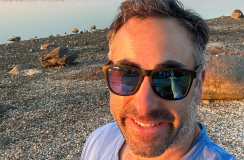
Here he is, Jason Leisey, majority owner of Aventus.
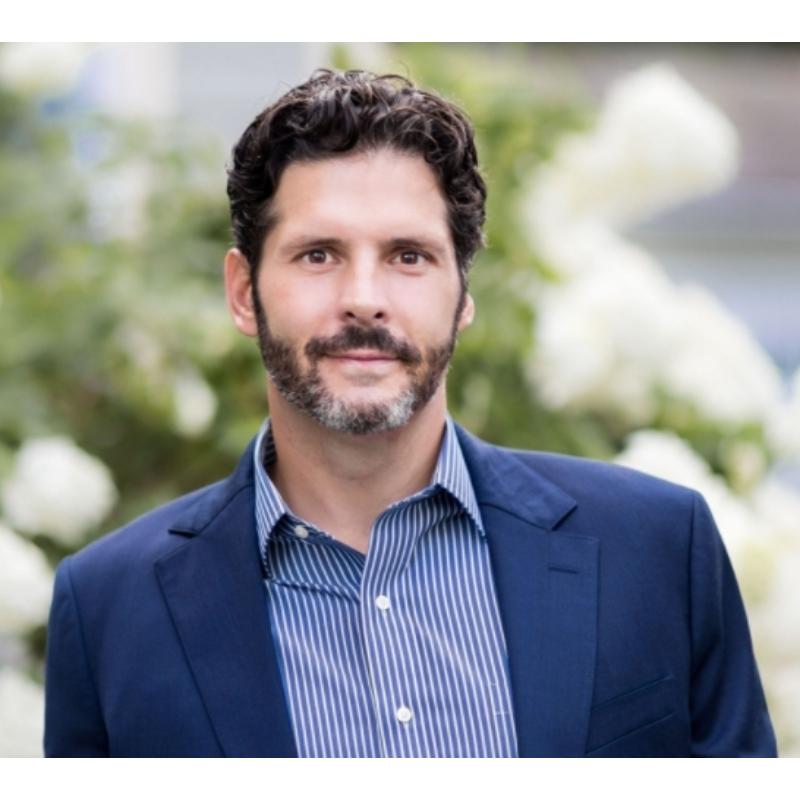
Jason Leisey spent just over nine years in the military, deploying to Iraq in 2004. In 2005 he was severely injured by a car bomb roughly three hours north of Baghdad, suffering third-degree burns over 25% of his body, losing all the fingers on his left hand and part of his left ear. He left the service with an honorable discharge and medical retirement.
He earned a finance degree in 2009 and landed in Citigroup's sales and trading program, trading U.S. Treasuries before moving to futures and options for a client base of global macro hedge funds. Seeking a taste of entrepreneurship, he joined a London-based fintech brokerage startup opening a New York office, and along the way completed an executive MBA at Columbia Business School.
In 2014, mid-business school, he underwent a revision amputation at Walter Reed. A conversation there with a contracted nurse, himself an Iraq veteran, about patients who had sacrificed family for career, convinced Jason—then a father of daughters aged seven and one—to build something of his own. Living in New Jersey and working in Manhattan, he searched nights and weekends from 2015 onward, initially pursuing a thesis around robotics and reshored manufacturing, and narrowly lost a CNC precision machining deal.
Smaller slice of a bigger pie.
Jason Leisey bought a two-truck federal contractor in Las Vegas from New Jersey, two months before COVID hit.
Register for the webinar:
Topics in Jason’s interview:
References and how to contact Jason:
Contact Jenny to learn how Engage can run people operations in your acquisition:
Get a free review of your books & financial ops from System Six (a $500 value):
Get a complimentary IT audit for acquisition diligence or post-close transition.
Connect with Acquiring Minds:
Edited by Anton Rohozov and produced by Pam Cameron
[00:00:00 - 00:04:04]
Host: Construction businesses can be hard, as you know, subcontractors who don't show up or who take your money and don't pay their vendors, tools that walk off job sites, working capital that gets squeezed when business is good. Well, today's guest bought one anyway. And from the other side of the country. Jason Liese was trading in Manhattan and living in New Jersey when he bought a majority stake in a general contractor based in Las Vegas.
At the time it was about a million in revenue, just two guys, their pickup trucks and a handful of 1099s. A fragile business. And then two months later, Covid hit. But three years after that, revenue was 14 million and Jason had built it largely from a distance, running the finance and back office while his partners ran the work.
Listen for the deal structure, which was designed to keep everyone pulling in the same direction and was key to Jason taking the bet he did on this tiny construction business. Also listen for the conversation with a nurse at Walter Reed that set Jason on this path. Here he is, Jason Liese, majority owner of Aventus when you buy a franchise business, the business itself gets plenty of diligence. But there's another party at the table who deserves just as much scrutiny.
The franchisor in a Webinar Today Thursday, Connor Gross, whom regular listeners will recognize as the expert at the intersection of franchising and entrepreneurship through acquisition, will walk through how to diligence the franchise system behind the business you're buying. Among the topics you'll learn today when in the deal process to engage the franchisor a high level review of the FDD how to talk with other franchisees and what to ask navigating conversations with franchise executives and how franchisor diligence shapes valuation and deal structure. The webinar is Franchise Diligence 101 and it is today, Thursday, November 5, noon Eastern. Link to register is right at the top of this episode's show Notes or on the Acquiring Minds homepage.
Acquiring Minds co. Welcome to Acquiring Minds, a podcast about buying businesses. My name is Will Smith. Acquiring an existing business is an awesome opportunity for many entrepreneurs, and on this podcast I talk to the people who do it.
Longtime Acquiring Mind sponsor Aspen HR is now part of Engage peo. Engage helps acquisition entrepreneurs, business buyers like you, take care of their new employees and build trust from day one. Whether it's an asset or stock purchase, Engage provides a turnkey solution for payroll and taxes, hr, admin and technology, employee benefits, retirement plans, workers comp, and more. They're also always a phone call away, so you can receive HR guidance from licensed employment attorneys promptly as those inevitable people issues come up with engage managing your people infrastructure, you as new owner of your business can focus on building relationships, operating the business and driving growth.
To learn more, contact Jenny thier directly at jtheaire j t h e a r@ngagepeo.com or click the link in the notes. Jason Liese, welcome
[00:04:04 - 00:04:07]
Guest A: to Acquiring Minds. Thank you for having
[00:04:07 - 00:04:34]
Host: me. Jason, you bought a general contractor business two months before COVID hit. You survived and grew the business from 1 million of revenue then to 14 million of revenue over the next three years. Today that business runs largely without your day to day involvement.
Quite a run. Let's dive in. Start us off with some background on you please Jason. Yeah,
[00:04:34 - 00:05:47]
Guest A: sure. So I served in the military for just over nine years, was deployed to Iraq in 2004 and got injured in 2005. So I got out with a honorable discharge medical retirement and then I got a degree in finance 2009. So not a great time to be getting a coming out with a degree in finance.
But I ended up in the Citigroup sales and trading program and I traded U.S. treasuries before moving on to trading futures and options for global macro. Hedge funds were our client base. And then I got the kind of entrepreneurial bug so I joined a small fintech brokerage startup.
They were London based and they were starting a New York office. So I went there to get a taste of entrepreneurship and learn about kind of small business. But also still doing it in the context of what I knew at the time, which was trading and then ultimately acquired this federal contracting business in 2020. And along the way I got my MBA through the executive program at Columbia Business School.
Okay,
[00:05:48 - 00:05:54]
Host: to fill in a few of the gaps there, first of all, your injury in Iraq was serious. Can you share
[00:05:54 - 00:06:25]
Guest A: any of the details there? Yeah, sure. So I was injured by a car bomb, um, about three hours driving north of Baghdad just for people geography because feel like that's what people might know, not town names, but I was burned third degree over 25% of my body. And I had all of the fingers on my left hand amputated, lost part of my left ear and just generally left with burn scars over, you know, a significant portion of my
[00:06:25 - 00:06:39]
Host: body. Okay. And one of the stories that was indelible from our pre call is that you find yourself back in the hospital for something related to this injury, but some years later and you're
[00:06:39 - 00:09:09]
Guest A: speaking with a nurse. Yeah, that's right. So this was the point at Which I really decided that I was going to acquire my own business. I was.
After the injury, I spent again, about nine years just working, living daily life. But I was in a lot of pain. I dealt with a lot of infections of what was left of my limb. So I consulted with some physicians, and they suggested that I get a revision to the amputation.
So ultimately cut off more of my arm and this time do it just below the elbow. And the logic behind that was that they could give me a functional prosthetic if. If we went up that far. So in 2014, in the middle of business school, I decided to.
I went to Walter Reed, and I had that surgery in Walter Reed. One of the nurses, he was a contracted nurse. He was also an Iraq War veteran himself. And he would come in and we would chat, and we would just kind of share war stories.
And one night he came in and he started talking about some of the other people he had seen there over the years. So, high ranking generals, former diplomats, you name it. All of these people who were sitting in these rooms alone by themselves, and they had a common story that no family coming to visit them. He was.
He was their family, like, in a sense, because he was chatting with them for hours on end. And all of them kind of had the same story that they chased the next promotion, the next duty station, the next whatever it was. And they had neglected their families along the way. And here they were at the end of their life wishing, you know, they had done things differently.
And he went on to ask me what I did. And I told him I work on Wall street as a trader, work 12 to 15 hours a day, don't see my family much. And he had seen that I had two young daughters at the time. They were ages 7 and 1.
And he said, you know, you don't want to end up like these people, I promise you. And it was in that that I decided that I wanted to build a business on my own time rather than ultimately climbing somebody else's ladder.
[00:09:09 - 00:09:35]
Host: It's a powerful story, Jason. I wonder why it grabbed you in that moment. That probably wasn't the first time that you had considered the sacrifice you were making, not seeing your family. In some ways, what he said, as powerful as it is, is something that we hear almost a cliche.
Nobody gets to their deathbed and wishes that they worked harder sort of thing. So it wasn't just the message, it was also the moment
[00:09:35 - 00:10:29]
Guest A: that you heard it, right? Yeah, that's right. I think I was spending a lot of time thinking about how I was spending my time. I thought that trading would have been like the pinnacle of my career and that I wasn't going to want to do anything else.
But I think, you know, when you have. My youngest daughter was just one, and I was really realizing that she didn't even know who I was. I mean, she. I was just this guy that happened to be there on the weekends.
But when I saw her, it was like she didn't really recognize me. So I took it. I really took it to heart. And it wasn't the first time I had heard advice like that.
It was just the time that it hit me the hardest, given that I was sitting in a room by myself, kind of living it just at a much younger age. Yeah, well, what
[00:10:29 - 00:10:47]
Host: a blessing to hear that message and have it resonate. Okay. And so you had been exposed to entrepreneurship some with the startup that you worked at, but why specifically go out and buy a small business of all of the entrepreneurial paths you might have chosen? Yeah, at
[00:10:47 - 00:12:48]
Guest A: the time, I wasn't entirely sure what it was going to look like. I mean, on one hand, there were a lot of people that I spoke to at that time that thought about going and starting their own hedge funds. And I had kind of seen a taste of that world and realized entrepreneurship is difficult as a starting point. Starting a hedge fund is extremely difficult and requires a lot of capital and a lot of.
I think there's two real, I guess, two major components you need. You need the investment talent, but you need someone that can also run the business. You can't do both. You have to have somebody that handles both lanes.
And I knew that wasn't really the path that I wanted to take. And more broadly, just coming from my background in the world of global macro, I had my own ideas and opinions about what businesses would be successful. And I remember at the time having this thesis about automation, specifically around robotics and manufacturing, and specifically thinking that with robotics, the labor cost arbitrage that sent a lot of manufacturing jobs out of the US to Asia was going to start to reverse. And the idea was that with robotics, there's no more labor cost arbitrage.
The wages are essentially flat. The cost of a robot in China is the same as it is in the US So the next lever that people would have to pull is to reduce your logistics cost and be as close to your customers as possible. So that was the premise. And I was looking for manufacturing businesses that would benefit from that.
So that was the kind of the genesis of where I started at with the thesis to ultimately Acquire, acquire a business
[00:12:49 - 00:13:01]
Host: and you had not been exposed to capital S search or eta. Right. This was sort of a thesis or a project that you arrived at on your
[00:13:01 - 00:13:31]
Guest A: own. Yeah, and that's right. I didn't know what ETA was. I hadn't heard of search.
Through some of my own research I had found the, the Stanford search fund, you know, some paperwork on that and read a little bit about it. But I thought that was just for people that went to Stanford. I didn't know that it was a bigger thing and I, I just glossed over it, didn't spend a whole lot of time on it and set about trying to figure out how I would do it, do something similar just by myself.
[00:13:33 - 00:13:37]
Host: And what year was it now, Jason, when you decided on this project? This
[00:13:37 - 00:13:51]
Guest A: would have been about 2014, 15. I was still in business school at the time when I decided and I knew that once I graduated business school I was thinking, I wanted to at that time pivot. So you don't buy
[00:13:51 - 00:14:05]
Host: the business that's the subject of Today's interview until 2020. Are do you not get around to searching until 2019 or what is, what does the project consist of from 15 to 20?
[00:14:05 - 00:15:10]
Guest A: If anything, I spent a lot of time searching, a lot of time networking, a lot of diligence on deals. One in particular I thought I was going to get it. It was ultimately a, it was a CNC precision manufacturing shop. They manufactured very fine components for aircraft and drones and other kind of high end, really expensive parts.
Ultimately, as we were getting to the loi, I came to find out that another company, another larger manufacturer came in and made an all cash offer for the business out from underneath me. And it just so happened that manufacturer had contracts with a little company that people know as SpaceX today. So I can look back on it now and not feel so bad about losing that deal. But I was really heartbroken at the time that, that someone outbid me for it.
Well, Jason,
[00:15:10 - 00:15:28]
Host: if you're going to lose, lose to Elon Musk. That's right. Yeah. And so during that attempt and all those years between 15 and up to the business, when you buy the business that you do, you're continuing to work and searching part time, as we would call it.
[00:15:28 - 00:15:35]
Guest A: Yeah, that's right. I was still working my full time job on the trading desk and spending my nights and weekends
[00:15:35 - 00:15:40]
Host: searching. Okay, tell us about the discovery of the business that you do buy.
[00:15:41 - 00:17:15]
Guest A: So I had actually invested in another deal. So I was just a minority kind of silent partner investor in another deal in 2019. And through that deal I met a number of other investors. And one of those investors called me up while I was at work one day and he said, hey, I've got these two individuals, they're based in Las Vegas.
They've been running this federal contracting business for the last three years. Most of the business is located in Las Vegas, although they do travel into southwest Utah and a little bit into California. But again it's mostly in the Vegas area and they are looking for a business partner that can really help them out on the administrative and finance side of things. And I'd like to introduce you to them.
For my part, I wasn't super interested in the GC business at the time, but because they had already been specializing specifically in federal contracting and because of my background with having what they were looking for, but also being a service disabled veteran and being able to potentially apply that to a business and get set aside contracts through the federal government, it made it interesting and it made me want to take a look or at least do the diligence and see, you know, kick the tires, see if this was a real opportunity.
[00:17:17 - 00:18:38]
Host: Running payroll, paying your bills, closing your books and producing financials. These are critical tasks every business owner must do or oversee. But spending time on them distracts you from the leadership in growth work you want to do. So let system 6 do it for you.
Owned and led by a former Searcher, Chris Williams, System 6 is a leading outsourced finance team for for hundreds of SMBs, including over 50 searcher acquired businesses. Chris, Tim and the System 6 team understand firsthand the challenges, the opportunities of jumping into a business as its new owner. So whether you own your business already or have one under LOI, talk to System 6 about how they can give you time back and improve your financial operations. Mention acquiring minds and they'll provide a free review of your books and financial ops, a $500 value.
Check out system6.com, link in the show notes or email helloystem6.com you were based by the way, where? New York at the time. New Jersey. You're in New Jersey now where you kind of just tri state this whole time.
Yeah,
[00:18:38 - 00:18:43]
Guest A: and that's right. So I've living in New Jersey, working in Manhattan. Living in
[00:18:43 - 00:18:50]
Host: New Jersey, working in Manhattan. This business was in the mountain west and so were you to buy it, you would
[00:18:50 - 00:19:22]
Guest A: move with the family? No, my intention was to always run it remotely so that because the individuals that I was purchasing it from, they were, they were basically the operations of the business. They were the construction professionals that were going to have oversight of the day to day operations. And my role was mostly finance, accounting, administrative strategy, business development side, which didn't necessarily need to be on site.
[00:19:23 - 00:19:35]
Host: Well, we're going to get much more into how your role took shape. Okay. And so give us some bullet points about the business, more about it, revenue, employees, type of work size, et
[00:19:35 - 00:20:39]
Guest A: cetera. Give us a picture. Sure. So 2019, the business was about a million dollars in revenue.
It was mostly owner operated. So those two individuals that were, they were 50, 50 owners of the business, they had a very small crew of people that followed them around and worked as 1099 laborers from one project to the next. They were doing some work for the Fish and Wildlife Service, the, the National Park Service, the Bureau of Land Management, you know, a number of government agencies that are, I guess, a little more active out there on the, on the west coast than they are here on the East Coast. Because I had never really heard of some of them before, like the Bureau of Reclamation.
But the, there, there were maybe a total of like five to seven people that were active in the business at any given time. I mean, frankly, it was two guys and their old pickup trucks and some tools. That, that was the business at
[00:20:39 - 00:21:08]
Host: the time. I mean, I was going to say exactly that. Jason. This is a, this is a guy in a truck business or two guys and two trucks as it happens.
Right. But I mean even, even the team aren't proper employees. They're, they're, they're. Sue me.
1099. And you know, I mean, this is a sort of business that we would tell somebody not to buy if it were down the street from them, let alone on the other side of the country. What was it that
[00:21:08 - 00:22:14]
Guest A: enticed you? It was so the individuals, they knew what they were doing, they knew their business very well. They understood federal contracting because general contracting on itself, I mean, not to say it's easy, but you add the paperwork requirement of federal contracting and it's a whole nother beast that you're dealing with. They had people that knew this inside and out.
Everything from the billing to the, just the routine paperwork submissions that had to be submitted every week, the daily reports dealing with the FAR clauses, which is all the kind of rules and regulations around federal contracting. Not to say that they were necessarily experts, but they clearly knew enough about it that it gave me confidence that they knew their trade. What they seemed to be missing was the financial reporting and the back office infrastructure to help them really be able to scale this thing faster than they could have on their own. And so
[00:22:15 - 00:22:52]
Host: pretty clear what your value proposition was here, the value you bring to the business. It's one thing to feel like, you know, they don't have the financial chops to do the back office and accounting, but you could almost. They could almost hire somebody to do that for them, I guess. Were they hiring.
Were they looking to. For somebody to partner with them as the leader of the business, as the CEO? I guess, kind of what I'm also asking here, Jason, is the business seems small, but so too does the role. Yeah, right.
For you, for a guy of your stature.
[00:22:52 - 00:23:58]
Guest A: Yeah. And I think there was part of it was capital, the capital that I brought and my. My personal credit that I brought because federal contracting runs on bonding. Bonding being insurance companies going to provide the bond that says if this company doesn't finish the project, we're on the hook for it.
They only give you that bonding if you have capital and credit to back it. And for these guys, they just didn't have that. So I was able to bring that as well. And it also lent credibility to the bond underwriter that we've got actually a finance guy overseeing the books and he's personally guaranteeing it.
So we feel pretty good about expanding the bonding capacity for the business. So that was a big part of the value proposition. And potentially that. I mean, our ability to grow was being able to get all of that in place so that the bond underwriters were comfortable with us to extend more.
More of a
[00:23:58 - 00:24:43]
Host: bond line. Yeah, well, I'm pressing you on this all. All of this. But in fact, it worked out exactly as you kind of.
Other than Covid, it worked out kind of exactly as you had intended and as you had plotted. When you talk about the. You bringing capital to the table that would give you. That would.
What's the vocabulary? Increase the bonding limit. That's the right way to say. Yeah, so.
But that would be not. So you would have to bring the capital to buy the business or your piece of the business, as we're going to hear, but the acquisition capital and then additional capital to go on the balance sheet. So your true cost of ownership is going to be two slugs of capital or what? It
[00:24:43 - 00:25:17]
Guest A: was truly just the one, just the acquisition capital. And then shortly after we closed on the purchase, I got a line of credit for the business that was backed by me personally. And the bonding company looks at that as good as cash. So it wasn't cash out of my pocket.
It was just the fact that we had a line of Credit that we could draw on to support operations. And they count that as, as towards your capital. Really? So that
[00:25:17 - 00:25:27]
Host: seems unusual. Consumers aren't afforded that same luxury that if we have, you know, a big, you know, access to credit on our credit cards, that doesn't count as collateral that we can use in
[00:25:27 - 00:26:18]
Guest A: another transaction. Right. It's, it's. Yeah.
In the consumer world. No, but as I, when I did my diligence on the business and I spoke to, I spoke to a CPA just to kind of get. And he dealt with. He was a third party.
CPA had nothing to do with the business. He just simply said, you know, one, get the line of credit because that will count towards your capital with the bond underwriters. And the other piece of wisdom he gave me was that general contractors don't go bankrupt in bad times, they go bankrupt in the good times because you, you grow too fast and you outgrow. You end up having payroll that's too big for your cash needs.
So you need the line of credit to fund the, to fund those instances of the payroll.
[00:26:20 - 00:26:31]
Host: And I assume that getting the line of credit was only possible because of your personal balance sheet. So the two guys could not have gotten the line of credit on their own. They needed
[00:26:31 - 00:26:33]
Guest A: you for that. That's right, yes. Okay.
[00:26:33 - 00:26:46]
Host: Okay. Okay, great. So let's hear about this structure or what the offer on the table was, because you were actually not buying these guys fully out, they were going to stay involved. Let's hear about the offer and then the structure that you put together here.
That's right,
[00:26:46 - 00:29:00]
Guest A: yeah. So we started negotiating around July 2019, and it was a bit of a roller coaster, I think normal friction of negotiations of a deal. And we conceptually came to finalize the deal in November and then closed on January 3, 2020. But ultimately what I bought was 51% of the company.
And the two original sellers each retained 18%. I know that doesn't add up to 100. We had two others that we brought into the cap table and in lieu of kind of normalized salaries, they were getting some equity upfront to get them bought in to the business and contributing to the business early on. But I put up $250,000 at the, the closing with a commitment to an earn out to the two original sellers for a balance of $750,000.
And that was contingent on the company reaching gross cumulative revenue of $10 million. And then also based on the company's capital levels and profitability, ultimately, as we kind of said, I was buying two Guys in their trucks, which is essentially future labor. So I wanted to make sure that their interests were as aligned with mine as possible to grow the business. So that's why I put that $10 million gross cumulative revenue number on it, because I wanted to make sure that they were fully in it and they were going to work hard to get to the rest of their earn out.
And then once they started to earn out, I didn't want to pay the entire earn out all at once because we needed the capital to support working capital just for everyday expenses, but also for our bonding limits. So we had agreed to this kind of structure that would kind of balance out the, the payments to them, but also not choke the company off from growing the way we
[00:29:00 - 00:29:31]
Host: wanted it to. And so the earnouts were going to be paid from the proceeds of the business, from the profits of the business itself, the earnings of the business itself. You were not going to come out of pocket even if they fully earned out the remaining 750. That's right.
And when you say 10 million cumulative revenue, you mean just, you started a. You were just counting all of the revenue. And once it got to 10 million over however long that took, they're gradually earning their earn out up to that point when they would realize the full
[00:29:31 - 00:30:10]
Guest A: 750is. So. Yes. I mean, yes.
No. So we, the clock, so to speak, was set at zero on January 3rd. And then every month that, you know, we do 200,000 this month and then 500,000 the next month, we hit that 10 million in, I believe it was May of 2022. So it took us a full, you know, over two years to get there.
And then at that point that triggered the earn out that was. And it wasn't all at once. It was still an ongoing payment over time after May of 2022.
[00:30:11 - 00:30:26]
Host: Ah, so the, the 750 earnout was binary. You either hit it or it didn't, or they didn't. And then once you hit it, they were entitled to all of it. But you weren't going to pay them.
You weren't going to stroke them the check all at once. It was going to be paid out gradually. It was still to
[00:30:26 - 00:30:28]
Guest A: be paid out gradually. That's right, yeah.
[00:30:28 - 00:30:42]
Host: Okay. Okay. And let me just restate for the audience the structure again. So this is a business that's doing $1 million in revenue.
So SD is probably what, 2, 250, it
[00:30:42 - 00:30:44]
Guest A: was like, yeah, somewhere in that range.
[00:30:44 - 00:31:40]
Host: That's right. But a very fragile business. Two guys and two trucks, a bit of a crew and Some tools, you are going to buy 51% of the business. 250, $250,000 out of pocket and then they could earn up to another 750.
So you'd be all in for a million, but only if only after an addition, you know, only after $10 million of revenue was generated, however long. Okay, all right. And your seven, that additional 750 that was going to go to them was never going to come out of your pocket. It was going to be, it was going to come from the earnings of the business.
Pretty great structure, right? I mean so let's just think it through really quickly. How did you think about the, the upside for you and the downside protection for you and the same for them? Yeah,
[00:31:40 - 00:32:04]
Guest A: I mean it was a little, in hindsight it sounds good but at the time it was a little nerve wracking because I'm cutting a check for $250,000 to these guys on the other side of the country and like, well what if they just run off like and they decide that like well we got our money, like forget this guy and we'll go keep running our business. Which by the way
[00:32:04 - 00:32:12]
Host: GCs are known to do on projects. They'll get paid for projects. They can't finish the projects and they'll fly the coop with whatever they've earned. Right?
That's
[00:32:12 - 00:33:29]
Guest A: right. And I've come to find that through six years of operating one with our subcontractors that that's very much a risk. And I had anticipated that maybe it was. But I said okay, I think this, I think this, I think these guys are okay.
I don't think this is going to happen. I had spent, you know, almost six months getting to know them, talking to them every weekend, just having conversations about their families, the business, all of it. And I believed that they were hungry to grow it and that the 250 wasn't going to be enough to satisfy them. They saw that there was potential for a lot more.
But yeah, in, yeah, that was the main risk. But I believe that with the structure of the earn out I can look back on it now and say that was actually pretty smart of me six years ago to say to do it this way because I do believe that it aligned our interests in helping us grow the business. And everyone was really pulling in the the same direction to get there because as much as they wanted to get there, to start getting that or now, I wanted us to get there because it was going to mean obviously more income for the business but also more income for me. And
[00:33:29 - 00:33:57]
Host: from their perspective, they each get $125,000 and potentially half a million each. And they see their, they see their ownership reduced. If they, you know, they were the two owners before they were 50, 50 each had 50%. They see their ownership reduced to 18% each.
So from 50 to 18. But now there's upside. So smaller slice, bigger pie from their
[00:33:57 - 00:34:09]
Guest A: perspective. Yes, that's right. And that was, that was ultimately the vision that I pitched them was the, you know, I said those exact words, smaller slice of a bigger pie. Great.
And so back
[00:34:09 - 00:34:40]
Host: to your role here now, Jason. So by taking over 51% and then being reduced to 18 each and then you got a couple of other folks on the cap table, you are now the de facto main owner, decision maker. You know, control. I mean, you have all the control of the business, do you not?
Yeah, that's right. And so sorry, was that always the vision or is that just how the deal got negotiated, where it landed? That was
[00:34:40 - 00:35:22]
Guest A: the vision. But also it's important to note that it was, it's a requirement in order for the company to be able to get the service disabled veteran status. There are very strict requirements around the control that the veteran has to have over the business. Otherwise they deem the veteran to just be a front for, you know, a scheme that they're trying to funnel money out of the government.
So we had to rewrite the bylaws and everything to, to make sure that it wasn't just 51% ownership, but that I actually had control with that was satisfactory to the government when they did the audit of the organization for that status.
[00:35:24 - 00:35:38]
Host: And on the service disabled veteran front, what kind of opportunities did you see that really unlocking? I mean, put some, put some numbers behind the advantage there. So I guess
[00:35:38 - 00:37:03]
Guest A: to get to the punchline, it was about 20 to 30% of our annual revenue. The. I will say I think all of us anticipated that the opportunities would be more, but we found that it's. There's actually a lot of competition in that space.
Even though it's carved out, there's a lot of competition in this space and a lot of it's. If it's sub $5 million project, it tends to be a specialty project. So say it's like fire alarm systems or something or H Vac related, which as a gc, we're not necessarily set up to compete with somebody that's doing a single trade on a project. It's really difficult for us to be competitive on something like that.
Whereas in our space, the disabled veteran GCs that do really well are doing 15, 20, $30 million projects which we didn't have the bonding capacity for. So we weren't really able to compete in the space that we wanted to because we didn't have the resources to be able to do so in the space where we were competing. We weren't really set up to even be remotely competitive. So it definitely was helpful.
But it also turned out to not be as much of a help as we thought it was going to be when we first set out on this.
[00:37:05 - 00:38:24]
Host: You know Enzo Technologies as one of the leading IT managed service providers serving the search community. Led by Nick Akers, an acquiring minds guest who bought the 35 year old business. The team at Enzo regularly works with searchers and their acquisitions and one feature of acquired businesses that INZO is seeing over and over is the need to implement cybersecurity promptly during the transition. So many acquired small businesses either have glaring vulnerabilities, lack security best practices or both.
That step one to de risk the deal you just closed should be addressing these issues. INSO is your full service IT MSP for post close stability. They assess your target, surface the biggest risks in plain English and give you a day one through 30 plan to cut exposure, prevent downtime and even find cost takeouts like bloated telecom bills. Check out enzotechnologies.com I N Z O or email Nick directly at nick@enzotechnologies.com Returning to the plot, you close on the business
[00:38:25 - 00:38:30]
Guest A: when? January 3, 2020. Okay. And
[00:38:30 - 00:38:37]
Host: then you know you've got a freight train barreling down on you that you don't, don't realize. Take us through Covid.
[00:38:38 - 00:42:46]
Guest A: Yeah, So I was, I was still trading at this time we closed. I went back to my trading job and I had intended to transition out of that job and into the business full time by March or April of 2020. But within two weeks I'm sitting at the trading desk watching interest rates collapse as they're moving like light speed towards zero and just structuring options trades around. How do we what's the best options trade to pay out if interest rates go to zero?
Was essentially the question we got asked every day. And I knew something really bad was happening and I had just sunk a quarter of a million dollars of my savings into this business. So just to say that my plan of transitioning out didn't happen, I ultimately got stuck on the trading desk for a full year after that. Didn't transition until February20.
Um, but in the interim I was still involved in the business. Not to say I was involved in the day to day, but my nights and weekends were spent really at the time trying to get a PPP loan or trying to get the economic injury disaster loan or trying to figure out how to expand our line of credit to keep things, just keep things going. And then finally in September 2020, let me back up. So we were doing a lot of the.
The federal government was essentially shut down at the time. The contracting officers weren't set up to work from home. They didn't have the approvals, they didn't have the necessary technology to make it secure. So contracts weren't being issued.
Some projects were. A lot were still going on, but I believe we were only did one or two during the time. So our crews were trying to pick up residential work just to keep, keep busy and make some money during that time period. By September, we're on fumes.
I mean there's almost nothing left. And I'm leaving the office one day, I'm on the phone with one of the partners and we're talking about how we're going to keep this thing going. Like, can I roll my retirement into it? He's talking about going, getting like an electrical contracting job in the Bay Area to make as much as he can to try to like help cover expenses and things like that.
And I get on the train in Penn Station and we're still talking and all of a sudden he says, I got an email. And I'm like, so what? Like I get emails all the time. And he's like, no, it's a contract.
And I'm like, well, great. Like how much is it? And he's like, well, I don't know, I gotta look. And I'm like, you bid the contract, didn't you?
You should know how much it is. He's like, yeah, I think I bid like a hundred contracts in this cycle because we're just trying to win whatever we can. So at this point, the train's starting to move and I'm about to lose signal and I'm saying, hurry up, because I don't want to wait the seven minutes till I get on the other side of the tunnel to call you back. I'm going to be sweating the whole time.
And it turned that we won a project with the National Park Service to renovate three park rangers houses on the shores of Lake Mead. And it was a little over $400,000. I think it was like 450 with some options to potentially be over $500,000. And that kicked off, you know, several weeks there in September 2020, where we were awarded several million dollars worth of contracts in that time period, some Department of Defense, you know, just various agencies.
And we knew that it was enough to carry us through at least for the next year till the next federal award cycle happened, you know, because they, they tend to award all their contracts or most of their contracts in September because that's the fiscal year end for the, for the government.
[00:42:47 - 00:43:28]
Host: Wild boy, what a roller coaster. We're all having flashbacks from that time. Let me ask some follow up questions here, Jason. So you're in crisis, you buy this business and, and the spigot turns off, the market just comes to a screeching halt.
You've built some trust with these two guys, but still in all, you know, they could run off with your money or whatever, you know, and, and also get. Going through a crisis with people is different than, you know, when everything's hunky dory in the world. So how is the relationship with them unfolding through this very trying first six months of formally working together? I think,
[00:43:28 - 00:44:13]
Guest A: I think everyone held it together really well because it was a trying time. Everyone, I think, kind of intuitively understood that the only way we were going to get out of it, you know, alive, so to speak, was to band together and try to figure out how to make it work. So as frustrating as it was, it was no fault of anybody's. I mean, this was truly the definition of something like the act of nature that was outside of anybody's controls.
There was no finger pointing, there was no blame. It was just, okay, how do we get through this? Because we know we have something here, so let's just get to the other side and we'll do whatever it takes to get to that other side. When you
[00:44:13 - 00:44:31]
Host: say we know we have something here, why were you so bullish on the potential of this business? This question may be more appropriate for 30 minutes ago, but why did you and them feel that there was like real potential in this business? I mean, what, what differentiated it from another guy in a truck
[00:44:31 - 00:45:21]
Guest A: GC business? Yeah, because, because of the federal contracting angle and because of the, like I said, I think we, we knew that at a minimum, like we'd be able to pick up some disabled veteran, set aside contracts that would keep the lights on. Okay. And we felt like we had a little bit of a floor underneath of us.
And when times are bad, the federal government always spends more money. So we knew that the floodgates were going to open up in bad times. And how Sometimes how that manifests isn't always obvious, but it tends to end up in a lot of these kind of picks and shovels type projects to just keep people working. So that was one of the things that we knew like once things opened up again that they would be that
[00:45:21 - 00:46:19]
Host: the money would flow. It's funny that you say that and it does sound obvious as you say it, but it's never crystallized for me that in a really, that in a down economy, government spending on sort of infrastructure stuff, it's a, it's a pretty reliable cause and effect there. I mean, I guess that's Keynesian economics. Right.
You know, the government infuses the, the economy with capital and that's how typically or one of the ways. Well, and you nailed that prediction. Okay, also on the point about your investment here. So you put in this $250,000.
That's what you have at risk. Happily though, there's no debt, there's no even seller note, it's all earn out so you're not having to make a debt payment. Which distinguishes your structure here from so many of my guests where in, in a crisis like this, there's always the thread at the neck by the, of the
[00:46:19 - 00:47:00]
Guest A: lender. Yeah, that's right. And it wasn't at the outset, but within a month I had the line of credit and the line of credit got drawn on pretty quickly. So that was hanging over my head.
But again we had just enough to keep it, keep it paid down enough and then use it again and then pay it down again. It was kind of a yo, yo, back and forth of using it, paying it off. And we were pretty stretched by September in terms of we were almost maxed out on the line of credit. So that's why we were talking about like what are we going to do?
Because there's no, you know, we have to find other sources to keep, you know, keep operations running. Okay. And then
[00:47:00 - 00:47:38]
Host: finally on the $400,000 contract that landed in your partner's inbox, and then you said a couple million dollars of, of, of of new contracts that would last you. How did that pipeline or backlog compare to when the business was healthy? How does, how does backlog translate to a million dollars? Because we heard a million dollars of revenue, this business was.
And now I'm hearing a few million dollars. I mean, is, is all of a sudden going into the fall of 2020, the business now a multimillion dollar business or. No, those contracts were going to be spread over a number of years or what
[00:47:38 - 00:49:16]
Guest A: did that look like typically our contracts ran anywhere from three to 12 months at that time. So it was really going to be spread out over the course of a year. Some of it would be front loaded. And then typically the federal government has kind of a predictable somewhat cycle on this.
So fiscal year end is September, there's a lull in October, things pick up again in November. And then around the new year, the government goes really quiet. And that goes for us performing work as well. But then by the spring, you know, by February, March, April, things are back in full swing and we're really busy.
We're doing work and then bidding the next cycle of projects simultaneously for that next award cycle in for the next the following September. It creates a dilemma for as my, that CPA had said, you're, you don't go bankrupt in the bad times, you go bankrupt in the good times because you can't meet payroll because you're growing too fast. And we certainly ran into those kind of growing pains every fall where we're this tiny contractor and the government's awarding us multiple millions of dollars of contracts and then saying, hey, you have to mobilize on these three in the next month. And we're having to foot the bill for mobilization on all of those before we get paid.
So it created a lot of ups and downs in the working capital like that had to be managed pretty, pretty tightly.
[00:49:19 - 00:49:34]
Host: Well, just going back to the moment on the train and then, and then kind of the flurry of activity there over the fall of 2020. It sounds like you emerged from 2020 actually basically a bigger
[00:49:34 - 00:49:38]
Guest A: business. Yeah. And that's right, that's a good way to say it. So, so
[00:49:38 - 00:49:59]
Host: Covid, while terrifying and it's like, oh my God, oh my God, I just put $250,000 into this. And two months later, Covid happens. In fact, within. Yeah, by the end of the year you were already going to be bigger than a million dollar run rate business.
So interesting turn of events or interesting how that happens, I
[00:49:59 - 00:50:11]
Guest A: guess. Yeah. And as my dad says, he's like, well, if you had waited two more months, you would have never invested in the deal. You would have never done it because.
So just be glad you did when you did because it worked out for you, the timing.
[00:50:12 - 00:50:37]
Host: Yeah, yeah, good point. Okay, as I said, at the top, you million dollar run rate business in 2020, 14 million run rate by 2023. So over three years, you 14x the revenue of the business. What are some key themes along that journey?
Yeah.
[00:50:37 - 00:55:40]
Guest A: So in 2021, I think one of the big milestones, there were two big milestones in 2021. Because at this point we're still in survival mode. We're not, we're still not necessarily like, hey, we've got a great platform here. We're just, we're paying off the government debts from COVID and paying back the line of credit in I think it was About May of 21, we win this contract in Coachella.
We were one of two bidders. It's a live opening. We're there to remediate the area after the parties that go on there, the burned out couches, the pressure treated wood, all of the kind of just junk, it's leeching leaching chemicals into the local water supply. So the Bureau of Reclamation sets out this contract to clean it up.
We clean it up, we clear almost a 50% profit margin on that project. And it was about a $600,000 project, which at the time was really big money for us. And why that project was so important and why that profit margin was so important was we officially paid off all of our Covid related debt, the line of credits paid back. And now we're at a point where we can really start building capital.
And that was incredibly important for the growth of the business, as I've said, as it relates to bonding. So we were able to start setting aside capital to build that cushion, build the equity, the cash, all the things that the bonding company wanted to see to support our ability to get larger projects. And that was incredibly important. The other part of it was I got our financial statements reviewed by a third party cpa.
So not audited, but reviewed just to verify that we were following gaap, which is another important signal to the bonding company because they want to make sure that your financials are legit because they see a lot of fly by that contractors that aren't and the money, the cash gets sucked out and they. Our bond underwriter always says, I don't want to see a Corvette in your driveway or hear about your new yacht. Because that's a sure sign that I'm going to pull your limits if I, if, if we catch you with that stuff. So September 21st, we're bidding at the time our largest project.
It's a million dollar project. It's on again on the shores of Lake Mead. This time it's demolish an old government hotel. So this hotel was built I believe in the 40s or 50s.
It used to sit right on the shore of Lake Mead. But Lake Mead's been drying up for a long time. The shore is now over a quarter of a mile away. This thing's run down and decrepit.
They need it demolished and just turned back into desert. So the bonding company, we want to bid this. We say to the bonding company, hey, we want to bid this. And it's outside of our typical bonding limits for a single project.
And they said, well, okay, we'll. We'll give you the leash to go after this one because you've shown significant improvement. You have the financials, you're building capital, you're doing all the right things, so let's see what you can do. And the government called us and they asked for financial statements, and they called our bank and they did a thorough check on us.
So they had already identified us as the winner, but they needed to be certain that financially we could perform on the project. And we checked all the boxes and we were awarded the contracts. And ultimately we beat our labor hours numbers, we beat our equipment hours numbers, which for demolition is a big part of the project expenses. And we cleared, I believe it was 48% profit on that project, again, which for us, so 21, was a huge breakout year.
We had these two for us, sizable projects. And we cleared large profit margins because we were able to execute super efficiently with our labor. And that gave us a lot of capital to really start expanding the business, hiring, hiring additional people to help. Because at this point, billing is becoming out of control, like for us to keep up with accounts payable is becoming out of control.
And probably one of the most important things was managing subcontractors and the risks that they pose to us as a business. So hiring people and building out the processes around that to help us manage that part of the business. Because as risky as general contracting is one of the riskiest parts, at least in my opinion, is just that. Subcontractor, subcontractor, risk management.
And
[00:55:40 - 00:55:43]
Host: what does that mean? That they won't show, they'll do a job badly? All
[00:55:43 - 00:56:54]
Guest A: of the above. You name it. And we've probably experienced some version of it where they don't show up. They.
We've had. We had a subcontractor. He took our money. He bought the materials from electrical materials from a vendor.
Never paid the vendor for the electrical materials, did the work. But then the. The vendor came after us. They filed a lien on our bond and said, hey, we've never been paid.
And alt in federal contract, we're on the hook for that. Not, you know, we had to make sure that the vendor got that, they got their money. And that happened to us on several occasions and fortunately we never lost, we never lost money in those instances. We were able to.
We had structured our subcontractor agreement, we had structured payment processes, everything in such a way that it helped us avoid some potentially pretty big calamities in terms of if we would have had to pay out to these vendors for the subcontractors, not making the payments to them. Jason,
[00:56:54 - 00:57:41]
Host: this point about bonding, surprised it hasn't come up in, in more interviews because I've done a fair amount of construction related businesses. Essentially it's just, it's a working capital demand because you just have to have dry powder cash on the balance sheet just sitting there to unlock higher and higher levels of, of bonding. So for example, let's say you have a million dollars in the balance sheet that is meant to stay there to unlock a certain level of bonding and you go to sell your business. That million dollars needs to stay in the business to, for that bonding to carry across.
Right. So it's, it's, it's pure working capital cash that just sits there,
[00:57:41 - 00:58:18]
Guest A: right? Yeah, that's right. It's. They want to know.
So the bond company that's the government wants to know the contract is going to get completed. So yeah, they get the bond and then the bonding company says do you have the collateral that we can seize to complete the project if we need to? And first they want cash, but then typically they'll will make you sign away your firstborn essentially to, to make sure that they have recourse to whatever they can to satisfy the cash demands to pay a new contractor to finish, finish that
[00:58:18 - 00:58:46]
Host: project. Yeah, yeah. So all of the unhappy working capital dynamics that we hear about in your world, construction world, which usually relates to AP and ar, you have to pay so much before you then before you then get paid months later is worsened by this bonding dynamic as well, which is yet more working capital that a contract that a construction contracting business needs. Yes.
I will say
[00:58:46 - 00:59:54]
Guest A: though in federal contracting it's a little different that with our subcontractors. The federal regulations don't require us to pay any of them until 10 days after we've been paid for that work. So and this is in our, we, I mean we have this written in our subcontract agreements whereby they know that, you know, you might do work this month for the month of October 2026, we submit our billing, you know, to the government on November 1st. If there's anything wrong with the paperwork or if there's anything wrong with any of, any of the subcontractors paperwork, we as the GC are not getting paid and then therefore none of the subcontractors are getting paid.
So we're still paying for materials, we're still paying for the payroll of the labor. But typically as a general contractor, the subcontract values are much higher than anything else. So we do have at least some breathing room that way on, on cash flow with the projects.
[00:59:54 - 01:00:02]
Host: But that's not just related to the way government works. Right. In fact, the GCs are always in the better position
[01:00:02 - 01:00:22]
Guest A: than subs. Yeah, I'll be honest, I don't know how commercial works because, because I've never dealt with commercial side of the business. I just know that on the federal side we like there, there's a far clause written about this, the 10 day requirement after we're paid to pay our subcontractors. Through all of this,
[01:00:22 - 01:01:07]
Host: Jason, you're still as you are now living in New Jersey. All of the cleaning up Coachella, demolishing the, the Lake Mead Hotel, that's all happening across the country. And your two partners, the sellers are the ones making all of that happen. And you, but, and your running the business remotely and, and in fact you're doing all this finance stuff, but you're also the one really working on the business.
You're kind of working on the business from day one. So your, your role is, is strategic. And the guys on the ground, your partners are doing all the operational stuff. Is that how it shakes out?
Is that what
[01:01:07 - 01:03:18]
Guest A: it looks like? Yeah, exactly. They were in charge of all the operations, everything from bidding projects to managing the crews, executing the projects, closing out the projects. My role was other than the finance and accounting, overseeing that review, like building the processes to support that side of the business.
So you know, for just as examples, reviewing all the sources that we used for how do we identify projects, where is that coming from? And then we had never looked at which projects we bid, which states who won them because it's federal work. You, you get it's publicly announced who wins the project and at what price and then being able to compare that against our pricing and see where maybe we were off on it. So building out those type of analytics to help become more efficient so we're not putting out as many bids and so that we're winning more of the bids that we put out or again the subcontractor, risk management, I mean that was a whole, we probably spent a whole nine months putting that together to make sure that we were everything from the initial contract to that Subcontractor receiving their last payment and everything in between that we were really buttoned up because we faced several scares that were orders of hundreds of thousands of dollars potential exposure to us had they gone against us.
So we spent a lot of time on that. But it was really like process building and building those repeatable processes, the financial reporting and infrastructure, with an ultimate goal of aiming to have the main business, main contracting business, but then have each state effectively function as its own business unit doing federal and state government contracts. That was ultimately what we were trying to aim for. So that's what I was
[01:03:18 - 01:03:24]
Host: building towards. And when did you go full time in the business? So February
[01:03:24 - 01:03:28]
Guest A: 2021 was when I finally came on full time. Okay. And so
[01:03:28 - 01:04:00]
Host: this being a remote CEO of a notoriously operationally complex business, a business where, you know, there can be misbehavior, construction is, I mean, all kinds of, all kinds of pitfalls in construction land. What can you tell us about that experience? I mean, I hesitate to celebrate your story too loudly lest people think that they should go off and do this. This seems to sort of violate best
[01:04:00 - 01:06:39]
Guest A: practices. Yeah, it's not for the faint of heart. And I will say everything that could have gone wrong has pretty much gone wrong. We just, I think we had good risk management in place to mitigate some of these things.
I mean, you talk about, look at, we would have, you know, tools on a job site in the middle of the desert somewhere, California or Nevada. One night, the crew, the one morning the crew shows up and the tools are gone, they're stolen, you know, or. And then we put trail cameras up and the tools are stolen and the trail cameras are also stolen. I mean, you name it.
Like it's, it's not nailed down. It's getting stolen. Right? Like it's.
This was kind of a constant thing. Sometimes tools walked off with part time laborers. I mean, we had a laborer bring a firearm onto a Department of Defense facility for some ungodly reason. I don't know why, but yeah, I mean, you name it and everything goes wrong.
I think I'm a big believer again, going back, I'm going to back up to my days in markets. I had seen a lot of really successful traders and portfolio managers that were really good working at a bank or working at a hedge fund. And they were, they were like, well, I'm really talented. I'm going to go start my own.
The ones that were successful recognized that they needed a person to run the business of running the business and they needed to spend their Time focused on trading markets and not being worried about how the business ran. And by having that division of labor, the people that had that division of labor were successful. The people that weren't, that didn't have that were not. And I took that lesson forward to say that I'm going to be the guy that's in the business of running the business and I'm going to let these guys do what they love and they love the construction side of things.
They're passionate about this, they enjoy it, they're good at it. And the way I think about these is that like, I can partner with a lot of different potential business owners that are really passionate about the thing that, whether it's not to say that I want to own a bakery, but I'm just saying if someone is passionate about baking like you, they could stay focused on that. They probably don't want to do the business side of things. So that's really where I look for my opportunity because I think that's where I'm frankly the biggest value add.
[01:06:41 - 01:07:31]
Host: Well, it all sounds good on paper, Jason. And you know, that's, that's a, that's a similar pitch to what many searchers will, will give to sellers, founders, owners, certainly what private equity does. You know, you, you founder, want to, to just, you know, spend your time. You, you know, you're a technician, you're an artisan, you want to spend your time on that.
All this boring back office stuff, leave that to us. But it just, you know, easier said than done. And, and you were doing it across the country. You know, I wonder if, I wonder if a lot of the reason this worked is two things.
First, that you, you got lucky with your partners, that these sellers were good guys, A and B, the, this clever structure you came up with that you really, those incentives really worked. That earnout structure really worked well.
[01:07:32 - 01:08:35]
Guest A: Yeah, I, I think, I think luck had a big part to do with it because I've heard plenty of the horror stories otherwise. I also think that it's important to truly be partnered like with these people and not, I think it, there are certain deals that I've heard of where it sounds like the business partner is more extractive than value additive. And the resentment that can build, as you can imagine in that scenario, I think leads to some of the, some of the poor outcomes, not all of them. But you know, I, I think that that is a contributing factor.
But also, I mean, in my instance, yeah, I think I, I think I got very lucky. I also think that I, I know I Spent a lot of time thinking about how to structure the deal in such a way that it would, I hoped that it would align our incentives as much as possible to make this successful for everybody. Do
[01:08:35 - 01:09:02]
Host: you feel like through the success of this that you learned how to be an operator? Because I'm, you know, we keep talking about the point that you were kind of out of the operations. So it's interesting. You've been, you've built this GC business to $14 million in revenue.
And so, you know, ostensibly you're this seasoned operator, but in fact you weren't doing the operations. It's kind of an interesting, I don't know, observation.
[01:09:02 - 01:10:19]
Guest A: No, yeah, definitely. And you know, I, I wasn't in the day to day of the construction, but I will say I did three different projects where I actually sat in a superintendent and did, did, you know, did the job of a superintendent on a project out in California. And then I spent a whole month as a superintendent on a project on an Air Force base north of Nevada or north of Las Vegas in Nevada. So it's not to say that I was completely in the office the whole time.
I know that in the construction world, it's kind of a, they think that, that the office is sitting around drinking martinis on a Friday and not really doing anything. And I, I'm, I, I have been guilty of that a few times in the past, but it was not a regular, it was not a regular thing. But I also, I mean, I like to think that because of my military background, it gave me a little more of credibility with people that are in those day to day of operations to know that. Yeah, this guy used to dig holes in the dirt like us too.
You know, it's. Yeah, he's not too good to get his hands dirty. Well, and you
[01:10:19 - 01:10:22]
Host: sacrificed for your country. I like to
[01:10:22 - 01:10:25]
Guest A: think that that played a part in it too. I think it certainly helps.
[01:10:26 - 01:10:46]
Host: Yeah, I know. I'm sure it's very powerful. It is. Thank you on behalf of all of us, your daughters.
So now you're a few years into this project. Have you avoided the outcome that the nurse warned you about or have you, have you righted the ship? Yeah,
[01:10:46 - 01:12:55]
Guest A: I like to think so. I've certainly had more vacation time with them than I had previously. And we've done a lot of like epic vacations since being able to do this. I will say, like my first vacation while owning the business was to Lake Tahoe.
And I remember taking them on a hike along the mountains there and being on a call with A government contracting officer and the team and still getting done everything that I needed to get done while I was working. And another trip two years later to Greece. I took the entire month and it was kind of a. It was a test to see how the team would do if I was mostly out of touch for a whole month.
I wanted to see what would break. So I took the girls. We went to Greece for a month and surprising, I mean, not surprisingly, because I. There was a good team.
There wasn't a whole lot to. I mean, I checked my emails for 15 minutes in the morning and came back and didn't really miss a beat. And that got, you know, we got it to a point where ultimately last year I stepped out of the day to day and have spent the last year not involved in the day to day of it. So I like to think that I started very deep in the weeds of operations, really like, you know, getting my hands dirty, helping anywhere that I possibly could.
As we were growing really fast and getting to the goal of. Ultimately, I never, I never really wanted to be a construction company CEO for the next 20 years of my life. It was an investment that I wanted to grow and step back from and eventually sell or just let someone else take over as CEO and run it. Not forever, because I don't think GC is necessarily the greatest business because of the operational complexity of it, but it served the purpose that I needed for
[01:12:55 - 01:13:34]
Host: it at the time. Well, you're segueing nicely to a wrap up of our conversation. But before I let us go, can you give us a picture of what this $14 million in revenue actually means? What are the margins of the business?
How much of that flows into your pocket? Yeah, did the guy. Obviously the guys got their earn out. If you're doing $14 million a year at this point, they got their earn out a long time ago.
So, you know, tell us, unpack for us, please, what $14 million a year in revenue means for you personally and
[01:13:34 - 01:14:53]
Guest A: for your partners. Yeah, sure. So we. Our gross margin runs average about 30%.
We've improved that over time. We've kept. We've tried to keep overhead reasonably low. We have a team of offshore contractors based in India and Ecuador that help with a lot of the, you know, it helps with a lot of the paperwork side of things in the accounting side.
So we've certainly kept overhead low and it's allowed us to keep more of the money in the business. I mean, we typically run about a 10% net margin. So our. And our EBITDA tends To run about.
I would say we, we range from about like 1.1 to 1.4 in EBITDA. We have for the last three years since we've hit that kind of plateau in revenue, and it stayed mostly consistently steady. I'll say 2025 was a little rough just because of DOGE and the disruptions in the federal contracting world. But after that seems to have been a flash in the pan and we're back to normal now.
But 2025 was a little like a little bit of a blip on the, the trajectory that we've
[01:14:53 - 01:15:10]
Host: had. So 1 2, you know, 1415 of EBITDA. So if it's an EBITDA number, that means that you and the partners are salarying yourselves, so you're living off the business on with salaries, and that million plus is going back into the business, you said.
[01:15:11 - 01:15:34]
Guest A: So we distribute some of it. It's not completely. It's not completely going back into the business, but we have heavily. The first four years, we heavily reinvested in the business.
In the last year and a half or so, we've taken our foot off the pedal a little bit in terms of reinvestment. So it's been more cash out to the, to
[01:15:34 - 01:15:38]
Host: the partners. And the salary that you're paying yourself, is it market rate? Is
[01:15:38 - 01:16:07]
Guest A: it below market? I intentionally paid myself below market, significantly below market. It was important for me. It was important for me to show some degree of solidarity with the other owners that.
So I, I took a salary that was more in line with their salaries, which was. I mean, it's frankly like 50% of what the market rate should be.
[01:16:09 - 01:16:50]
Host: So I'm getting the picture here of, you know, the money that you've made for these last six years has been a livable kind of salary, maybe even below, a little bit below where it should have been and almost certainly below what you would have been making in. If you'd stayed on Wall street trading. Definitely well below. Yeah, yeah.
And so all of this, as you. To circle back to your nice segue to our end, all of this is building toward either a sort of a business that passively generates cash flow for you or a liquidity event and exit. Yeah, that's
[01:16:50 - 01:17:15]
Guest A: right. It was. For me, it was always about an eventual liquidity event and an exit. So I was willing to forego some of that salary or a significant portion of the salary in the aims of eventually, you know, growing it faster so that I could get to an exit and move on, to move on to the next thing, whatever that
[01:17:15 - 01:17:36]
Host: may be. And you have mentioned now a plateau at 2023, this $14 million revenue number that we keep saying it is now three years later. And so revenue is still at about that level. And, and why.
What is the plateau? Plateau by design, or have you hit the ceiling of the
[01:17:36 - 01:18:38]
Guest A: business or what? I personally am a little disappointed that it hasn't grown more than it has, because I think we had. I think we've had the platform in place to be able to get to 20 million, 25 million. I think there are certain bottlenecks in the business, and I've certainly tried to figure out, like, how to unblock those and get the, get the revenue up there, because obviously, if I'm working towards an exit, like, it only behooves me to increase that EBITDA as much as possible.
So I, I think for where I'm at, I would have been happier growing it. I think for the other partners in the business, they've become mostly comfortable with the lifestyle business that it's become for them. Or maybe, I mean, it's probably technically a little bit bigger than a lifestyle business, but for them it's a lifestyle business and they're pretty happy with. With where it's at now.
And
[01:18:38 - 01:18:45]
Host: so does that mean that you're moving toward an exit or, or, or your. At least your position? Yeah, that's right.
[01:18:45 - 01:18:49]
Guest A: For myself, yeah. Okay. And what, what
[01:18:49 - 01:18:55]
Host: is the going price for a $14 million GC that serves the federal
[01:18:55 - 01:19:01]
Guest A: government? That's a good question. I hope it's more than. I think.
That's all
[01:19:01 - 01:20:06]
Host: I know. Well, if you'll indulge me. So let's say you sell it for 5 million for easy math, and your piece, therefore, goes for two and a half after taxes. That's one and a half.
Right. And. But of course, you've got all this incredible experience for what that's worth at your stage of your career, I think it's hopefully worth something. First of all, there's a big difference between making a million and a half bucks cash in your pocket after taxes over three years versus over six years.
So that's also an interesting angle here is, is. Is you're probably with a business that's plateaued. You're probably getting a little eager to get out, which is what you've just told us. And, and if you could have gotten out at the same price three years ago, that, that maybe is one of those decision points that you reflect back on.
That's right. Yeah. Yeah. Am I thinking.
Am I thinking about this? The Right way. Or am I just making you uncomfortable with how, how personal it's gotten? No,
[01:20:06 - 01:20:32]
Guest A: no, no, that's the right way. I mean, it's like I put an additional, I put this additional time in thinking that we were going to grow this even further and we didn't. So I'm like, well, what did I do with. Not to say I've learned a lot over the last three years, but could I have gone on to the next opportunity at that point?
Who knows? I mean it's would have, could have, should have, but here I am and I'm going to make the most of what
[01:20:32 - 01:20:37]
Host: I've got at the moment. And so what is an exit path for you
[01:20:37 - 01:20:40]
Guest A: now? Selling to your partners? Yes, that's
[01:20:40 - 01:20:56]
Host: right. Okay. And. And then given this liquidity event and the experience you now have, what do you think the next chapter looks like for you?
You must be chewing on that a lot. Yeah,
[01:20:56 - 01:22:41]
Guest A: I'm spending a lot of time trying to source the next platform. I have a few different verticals that I'm interested in, but one of the verticals that really came to interest me through owning the general contractor was right of way vegetation management business. And very specific. Yes.
What does that mean, specific? So the businesses that cut down and manage the vegetation around utility lines, rail lines, along roadways, also they deal with. There's a number of federal projects, they're called fuels management projects for the Bureau of Land Management. That's how I came to know of these is because we bid on a number of those as a general contractor and we got annihilated by people that specialized in this.
And I realized, oh, this is like a really. Actually quite a big business. It's adjacent to the general contracting business, but it's very specialized, I think less risky than the GC business, less moving parts than the GC business. And there's kind of the secondary business of storm cleanup, which may not be necessarily super common, but it's at least a kicker to add to add to the business.
But it's pretty steady because these contracts tend to run long term. They tend to be five years plus once you get them, so you get steady, stable revenue in place. And once you're in with one of the utilities or a state government, they tend to keep using the same providers.
[01:22:43 - 01:23:03]
Host: It seems like a typical perfect business model that private equity loves is sort of long term contract to maintain essential services. Yes. Yeah, yeah, very interesting. And you're going to do it from.
From
[01:23:03 - 01:23:25]
Guest A: New Jersey. I don't know if I'll be able to pull off that trick twice. I recognize that it was a, that it was a unique situation. I suspect I won't.
But I'm open to exploring how things shape up with whatever opportunity ends up coming across my desk
[01:23:25 - 01:23:29]
Host: and looking the best. Jason, anything we didn't get to in your story that
[01:23:29 - 01:23:38]
Guest A: you wanted to? No, I don't think so. I think we covered pretty much everything. I think that's, I think that hits on all the major highlights.
Great.
[01:23:39 - 01:24:37]
Host: We will link to your LinkedIn in the show notes and really appreciate you coming on and being so transparent. Jason Liese, thank you. Thanks. Will appreciate it.
Hope you enjoyed that interview. Don't forget to subscribe to the Acquiring Minds newsletter. We send an email for every episode with an introduction to the interview, a link to the video version on YouTube, and soon key takeaways, numbers and more essentials from the interview. For those of you who don't have time to listen or watch it, subscribe at acquiringminds Code.
You'll also find all our webinars there on the website, both those we have coming up and recordings of past webinars. At this point, There are over 30 webinar recordings, a wealth of information on all the technical nitty gritty of buying a business. Acquiringminds copy.