Read MoreStories



I'm not an empire builder. My aspirations aren't that lofty. If it could be a reasonable amount of work and support my life and I can do something interesting, that'd be great.
I quickly realized I don't want to be the only person that everything depends on.
One reason that many Acquiring Minds guests have arrived at the decision to buy a business is the realization that a W-2 is less secure than it seems.
Today’s guest learned that young. Marco Hsu watched his father get laid off repeatedly, and his mother restart her career late in life.
Marco is a mechanical engineer and lifelong car guy. He bought Clewett Engineering, a one-man, home-garage maker of engine upgrades for vintage Porsches, with $600–700k of revenue and $350k of SDE. You'll hear me use the word "artisanal" a lot.
It took three LOIs for Marco to get the deal done; he was committed to this project. He valued getting in the game, and the business-buyer fit couldn't be tighter. The owner said that Marco reminded him of him 30 years ago.
Year one in the business has been pretty brutal — far harder than Marco expected, and he lays out what he got wrong.
Also listen for Marco's goals with this project.
He isn’t trying to build an empire; he wants a good living and a reasonable work week in his area of passion. We discuss exactly what would qualify his acquisition as a success.
Here is Marco Hsu, owner of Clewett Engineering.
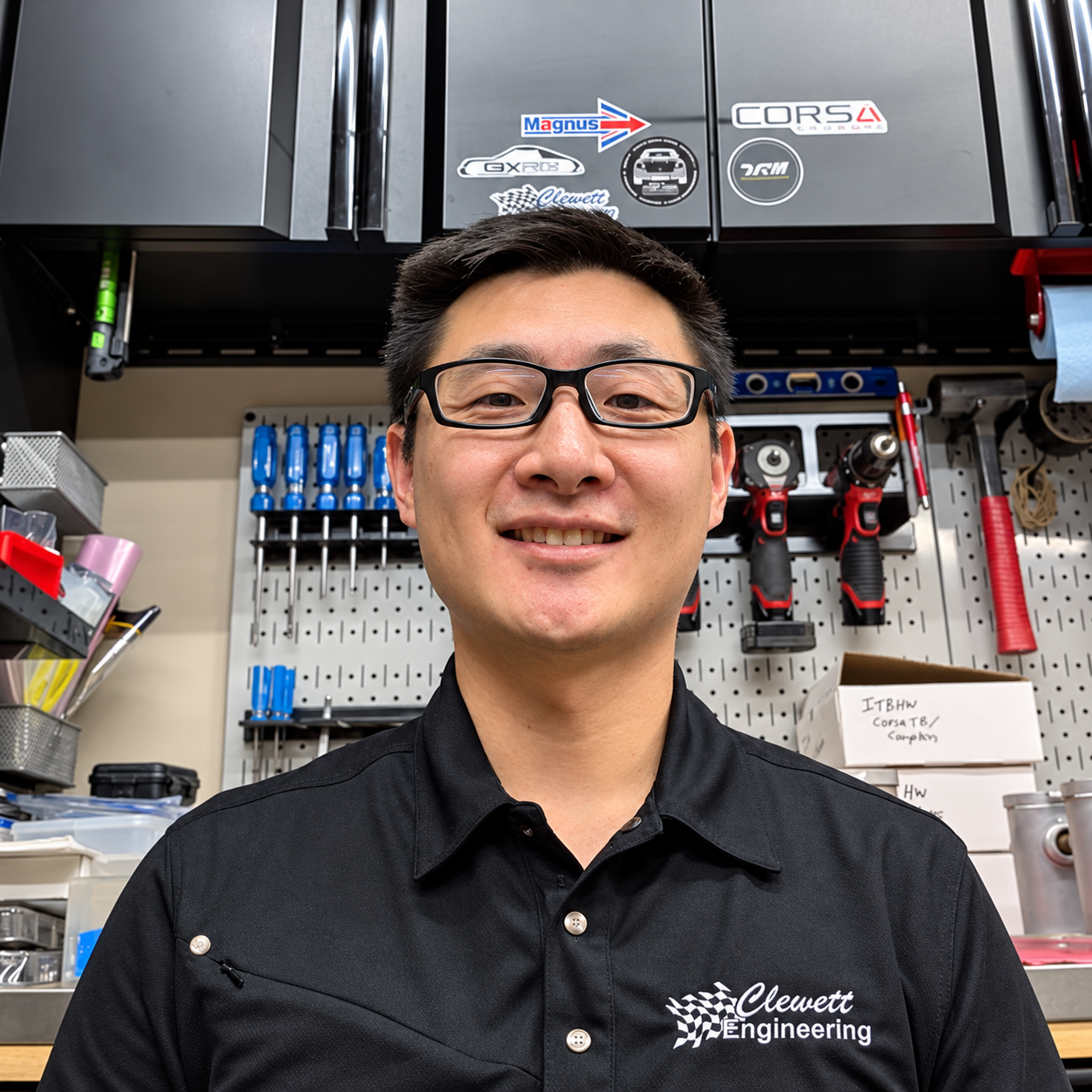
Marco Hsu is a mechanical engineer by training who spent roughly a decade working in the automotive industry, followed by a shorter stint at a medical device company that broadened his exposure to different corporate cultures. Though he describes his corporate experience as stable and genuinely useful, he never saw himself working for someone else indefinitely. He frequently found himself identifying and fixing problems, work that benefited his employers far more than it benefited him financially, with raises that barely kept pace with inflation.
His skepticism about employment was shaped by his upbringing. Raised by working-class immigrant parents who prized job security, he watched his father endure repeated layoffs that forced the family to relocate. After his parents divorced, he saw his mother pursue degrees and attempt to build a career late in life, struggling to find and sustain work. Lacking the resources to solve that problem for her, he concluded that real financial capacity to absorb life's shocks tended to belong to people who owned businesses rather than those who worked for them.
A lifelong enthusiast of anything with wheels, he built extensive fabrication, design, and testing skills in his home garage. Earlier attempts at selling parts he made himself faltered on marketing, convincing him acquisition suited him better than starting from scratch.
I realized having enough money to make big problems go away is a pretty big advantage in life.
Marco Hsu took over a Porsche upgrade maker run by one person, and now faces the same limits its founder did.
Register for the webinar:
Franchisor Diligence 101 for Searchers - Thu Nov 5 - https://bit.ly/4ySdPnG
Topics in Marco’s interview:
References and how to contact Marco:
Get complimentary due diligence on your acquisition's insurance & benefits program:
The ecosystem for serious acquisition entrepreneurs—education, capital, community, and post-close support to buy and grow a business:
Work with an SBA loan team focused exclusively on helping entrepreneurs buy businesses:
Connect with Acquiring Minds:
Edited by Anton Rohozov and produced by Pam Cameron
[00:00:00 - 00:04:09]
Host: One reason that many Acquiring Minds guests arrive at the decision to buy business is the realization that a W2 is less secure than it seems. Today's guest learned that young Marco Shue watched his father get laid off repeatedly and his mother restart her career late in life. Marco is a mechanical engineer and lifelong car guy. He bought Clewett Engineering, a one man home garage maker of engine upgrades for vintage Porsches with 6 to $700,000 of revenue and 350,000 of SDE.
You'll hear me use the word artisanal a lot in this episode. It took three Lois for Marco to get the deal done. He was committed to this project, he valued getting in the game and the business buyer fit couldn't be tighter. The owner said that Marco reminded him of him 30 years ago.
Year one in the business has been pretty brutal, far harder than Marco expected and he lays out what he got wrong. Also listen for Marco's goals with this project. He isn't trying to build an empire, he wants a good living in a reasonable work week in his area of passion. We discuss exactly what would qualify his acquisition as a success.
Here he is. Marco Shue, owner of Cluet Engineering when you buy a franchise business, the business itself gets plenty of diligence. But there's another party at the table who deserves just as much scrutiny. The franchisor.
In a webinar this Thursday, Connor Gross, whom regular listeners will recognize as the expert at the intersection of franchising and entrepreneurship through acquisition, will walk through how to diligence the franchise system behind the business you're buying. Among the topics you'll learn when in the deal process to engage the franchisor a high level review of the fdd, how to talk with other franchisees and what to ask navigating conversations with franchise executives and how franchisor diligence shapes valuation in deal structure. The webinar is Franchise Diligence 101 and it is this Thursday, November 5th noon Eastern. Link to register is right at the top of this episode's show notes or on the Acquiring Minds homepage.
Acquiringminds Co. Welcome to Acquiring Minds, a podcast about buying businesses. My name is Will Smith. Acquiring an existing business is an awesome opportunity for many entrepreneurs and on this podcast I talk to the people who do it.
If you ask owners in the ETA and search community which insurance broker provides highest quality work, great outcomes, and has a practice dedicated to searchers and acquisition entrepreneurs, one name comes up again and again. Oberle Oberly Risk Strategies has worked with hundreds of searchers over nearly a decade and is in fact led by a two time successful searcher, August Felker, which makes Oberle a specialty insurance brokerage for searchers by a former searcher. And if you've got a business under Loi, Oberle will provide complimentary due diligence on that business's insurance and benefits program. An easy, no risk way to get to know August and the team at Oberle to take advantage.
Check out oberle-risk.com that's o b e r l e-risk.com link in the notes. Marco Shue, welcome to Acquiring Minds.
[00:04:09 - 00:04:17]
Guest A: Thank you, Will. Thanks for having me. And thank you for having the show. It's taught me a lot and I'm looking forward to sharing a little more of my story too.
[00:04:17 - 00:04:43]
Host: Thank you for saying that, Marco. Well, sir, you bought a very small business, but in a category that you're passionate about, aftermarket upgrades to Porsches. In fact, the whole market that you're in is fueled by passion, which is its own dynamic that we will unpack. But let's begin with some background on you, Marco, and what led to your decision to go out and buy a business.
[00:04:44 - 00:06:06]
Guest A: Yeah. Yeah. So some of my professional background is that I'm a mechanical engineer by degree. I went and worked a job in the automotive industry for about 10 years, had a short stint at another company that did medical devices, which was good because it opened my eyes to some different, different company culture and different industry.
But I'd say, probably, to be honest, I've never really wanted to work for a company. If we rewind to when I was a kid, anytime I had a hobby or an interest and needed money to do the thing I wanted to do, I'd find some way to make money to through that hobby. And that kind of never stopped, except that my expenses when I became an adult became quite a bit higher, needing to pay for a mortgage and get to work and have a reliable car and stuff. So I kept working the job.
My parents encouraged it. They're immigrants, so they valued the stability and security of a job. And it was pretty good. I, I can't fault it at all.
I don't think I'm one of these people who had to escape corporate because their life was terrible. But I never really wanted to just work for someone forever and wanted to build something for myself. So I started looking for a business.
[00:06:07 - 00:07:00]
Host: And Marco, you remind me of an observation made by a recent guest, Patrick Dunphy, that as he looked at where he wanted to take his career, he saw people working in, he saw colleagues or successful people working in corporate. And the more successful they got, the less they controlled their time versus business owners. The more successful they got, the more time they had. So it was.
It was crystallized. You know what, the right path is there for him at least. And I remember from our pre call that you were. You were doing well in your career in corporate and given more and more responsibility, as I recall, and you were something of a fixer.
Did you feel like. Did you feel like that? Was there something about what Patrick observed that you also felt
[00:07:02 - 00:08:01]
Guest A: a little bit? Yeah, I definitely end up in a situation where I find and fix problems, which is good for an engineer, good for a business owner. But I did realize that in corporate land, in the wrong environment, having initiative and going and finding problems and trying to fix them generally doesn't reward you financially. It helps the company, and they might give you some, you know, attaboys.
But generally I worked a lot. I worked really hard and got raises that were barely keeping up with inflation. So overall, I. I realized, like, I'm getting a lot of value out of the experience and things I'm learning, but if I ever want to change to a situation where I can maybe build some wealth for myself, I have to take the risk and do something for myself.
[00:08:02 - 00:08:13]
Host: Great. And let's talk a little bit about your personal passions here and, and the career trajectory you were on. Automotive. You were working in it.
You've always loved it. Say more.
[00:08:14 - 00:09:29]
Guest A: Yeah, yeah. And that does play into the. The story in the business. But, yeah, ever since I was a child, I have been fascinated by any machine with wheels or planes or anything you can pilot and be in.
It's really taken over most of my life in good and bad ways. It kind of drove me to be an engineer, which ended up being a viable career path. Built me a lot of skills. I can do a lot of fabrication, design, testing just out of my garage, where I've gathered a bunch of tools and learned how to use them.
But, yeah, it's really shaped my life. A lot of my lifelong friends are because I met people through automotive or motorcycle hobbies, traveling around, doing events. But, yeah, it. It kind of made it easier for me to transition into ownership of this business because a lot of the people in this, we'll call it a niche, are the same way.
They're. They're not necessarily in it because they thought it made them money. They just like the cars, maybe had certain cars and started working on them and built a business out of it. I'd say it's,
[00:09:29 - 00:09:29]
Host: you Know,
[00:09:29 - 00:09:36]
Guest A: it's the whole reason I chose this business over something that might seem on paper to be a better business.
[00:09:37 - 00:09:37]
Host: Yeah,
[00:09:37 - 00:09:38]
Guest A: because it fits me.
[00:09:40 - 00:10:01]
Host: Yeah, fit is the optimal word there. The business buyer. Fit here is very strong. And so just to underline the point, you were not only working in as a automotive engineer and very successful at that.
You then come home and continue to work in this space. And we're, we're a passionate hobbyist around that
[00:10:01 - 00:10:04]
Guest A: always had a second job. Whatever was broken of my own.
[00:10:05 - 00:10:53]
Host: And for those listening, not watching on YouTube, I'm, I'm. You're sitting in your garage and behind you are all kinds of tools and kind of a, a workbench with pictures of cars on the wall. And so if it's like somebody were to, you know, be a, a car guy for Halloween, they would be you right now. You fit.
Fit it. Okay. The point about being an immigrant and your parents and wanting stability, that of course is a stereotype about immigrant parents and their children. Anything more to say about that?
Maybe specifically becoming an entrepreneur, buying a business did, was there. Did it make the decision to do that harder because you would be defying your parents wishes or what can you say there?
[00:10:53 - 00:13:42]
Guest A: Oh yeah, yeah. No, it did make it harder. Not because I'd defy my parents wishes, but because it was just something ingrained in me. Like I have a brother.
So both of us were raised by working class parents. My dad worked a career, my mom kept up with everything else. She really managed the family. And we grew up watching my father work.
And then when times got tough, he was laid off. He was laid off quite a few times, had to go chase jobs. We moved a few times and even though they said this is the safest way, I, as I got older, I saw what really happened and how little loyalty the companies had to employees in certain situations. And always in the back of my mind thought, I'll do this as long as it makes sense, as long as it's worth it.
And luckily I've had a pretty stable career. I think economic conditions in the field I went into helped with that. But there is some amount of insecurity even in what people think is the most secure way to earn an income. On top of that, eventually my parents divorced and I had to watch my mom try and go get degrees and start a career in fairly, you know, late career age and how hard that was and how hard it was for her to find something and sustain employment and eventually try and retire.
And one of the things that made me want a business is I didn't have the excess money to just make that problem go away for her. She had to go back to work, even though, you know, she sacrificed her career for raising a family. And I had limited options of like, well, could I, you know, move her in with me, could I buy a house for her or whatever, where I think that was the first time where I realized that having enough money to make big problems go away is a pretty, pretty big advantage in life. Up until then, I'd been fortunate enough I hadn't had to like, I had some, you know, my car broke and I can't fix it right away or something.
But big problems like that, I saw people able to fix those who had the means. And most of those people didn't work for someone else. They, they owned the company, they had built something and earned it. I don't think, you know, they just ended up there without strategic hard work.
But it puts you in a different category of being able to solve problems.
[00:13:44 - 00:14:58]
Host: The team at Pioneer Capital Advisory has started offering peripassu debt for SBA business buyers. That means they can help unlock up to $3 million of conventional debt on top of the $5 million limit of SBA 7A loans so Pioneer can structure larger, more complex acquisitions. Listen to our story with Anika John. For one of their clients who did just that, buying a $10 million business.
As a first time self funded searcher, the Pioneer team has closed more than 100 SBA loans, averaging timelines well below industry standards. Founder and owner Matthias Smith and COO Valerie Stash bring over two decades of SBA lending experience. Matthias and Valerie have a full bench of analysts and associates who work your deals with them. A true deal team.
Not just a single point of contact. Visit pioneercap.com or click the link in the notes. Okay, Marco, back to the plot. So you decide to do something entrepreneurial.
Why was it that buying a business was the path as opposed
[00:14:58 - 00:14:58]
Guest A: to
[00:14:58 - 00:15:00]
Host: starting something or.
[00:15:00 - 00:16:45]
Guest A: Great question and it actually has to do with your podcast. So I had started businesses sort of in my mind. I hadn't even thought about it that way. But I would just do things to try and earn money that weren't a job.
And I was always really bad at it. I couldn't figure out how to get the word out and get people to want to buy my things. Like I'd make something usually to solve some problem I had on a vehicle of my own and sometimes I'd try and sell it, post it on forums or groups or whatever. But past the first, like batch of people buying it.
I didn't really know what to do. I'd just sit there with all these parts and be like, I wish I could sell these. So I eventually accepted that about myself, that I probably am not the right person to start a business. But I started trying to learn other ways.
And it's not like I didn't know that people bought businesses because it's all around, right? You hear about like, oh, so and so bought this restaurant, it's a new owner. I just never thought that I could. I don't know why.
I don't have a logical reason why I thought that, but I stumbled across one of the Acquiring Minds podcasts one day and started listening to them. And it really helped that you have a variety of guests and not all of them are typical business owners or buyers or people in that space. So it really gave me the confidence to start looking into, what does it take? How do I do this?
And eventually I realized maybe I can do this.
[00:16:46 - 00:16:52]
Host: Great. I'm pleased to hear that, Marco. Deeply. So how did you find Cluet Engineering?
[00:16:54 - 00:18:47]
Guest A: Yes. So surprisingly, I found Cluet Engineering on Quiet Light. And it was surprising to me because I had found these business listing sites which to me I equated to like Craigslist or Facebook Marketplace with a bunch of junk cars and like one in a hundred maybe is an okay deal. And if you don't call out of work that day and go get it immediately, it's gone.
So I would look through them mostly for educational or even entertainment purposes. Not really thinking I'd find anything that. That good. But I saw a Quiet Light listing.
It generally described the business, the size of it and everything. And I thought, I probably have enough money to buy this and it's right up my alley of what I can do, my skill set and everything. So, yeah, I contacted the broker. Long story short, I actually sent three Lois, and it wasn't until the third one that mine was accepted.
And I think I did a bad job in my first call with the owner and the broker. It was a short call and I think I didn't. I barely said anything. Mostly I listened to them and I.
We ran out of time and I was like, okay, thanks. But the reason they accepted an LLI later is I sent kind of a two page presentation about myself and my background, which the seller saw. And his words to me were when I read it, it just sounded like me, but 30 years ago. So I guess that that worked out somehow that that got to him at the right time when he was Maybe entertaining offers again.
[00:18:48 - 00:18:57]
Host: Well, Marco, let's. Before I want to return to that, but just quickly. So what was the business? What did, what was on this quiet, light listing, what does the business do?
Size, revenue, et cetera.
[00:18:57 - 00:20:52]
Guest A: So yeah, the business is called Cluett Engineering after its founder and owner. Um, Richard Cluett is now a pretty close friend of mine. Um, he started the same way I started making parts for my cars. He had Porsches, he'd take them to the track, he had seen problems with them and things he'd like to upgrade and he started developing solutions to those.
And the way he explained it to me at first he wasn't even trying to make it a business, but people would see those things and realize how useful they were and they'd want them too. So at some point the, I guess we're going back to the whole job, jobs not being that secure theme. His company moved, he didn't want to move with it. It was going somewhere far away from home for him.
And you decide to take the leap and start trying to market and sell these parts on purpose. And over the course of 30 something years, he built up a pretty impressive catalog. What we do is focused on engine upgrades for vintage Porsches, anything air cooled. So time frame wise, this is like cars from 1998 and older.
So very, very old at this point. But there's a very dedicated following for these cars and they've remained valuable over time. So we essentially our goal is to make these older cars perform and drive more like a new car without losing their character. So they still sound and feel and have those vintage car characteristics.
But you don't have to worry about changing your carburetor jets if you go to higher altitude or fuel leaks and obsolete parts you can't replace.
[00:20:52 - 00:20:58]
Host: How big was the business or give us some sense of revenue, employees, etc.
[00:20:58 - 00:22:33]
Guest A: Yeah, yeah. So it was single owner, operator operated. He operated it out of his home garage and he, the way he described it was he had gotten it to the largest that it could be. The way he ran it and after taking it over, I totally agree.
I don't think I could do much more than, than this. And by the time he got to that point, it was about 600 to 700,000 in revenue per year because of how lean he ran it and how low his overhead was. The SD was about 350,000 a year. So it sounds like pretty good margins.
But he worked a lot. He worked seven days a week for the last, I don't know how long. Hard to take vacations when you're the only person hard to deal with personal or family things. But he also had gotten to an age where he didn't want to take it to the next level.
He, he had, it had done well for him. He raised a family and he was in, in his 60s. So he decided he'd try and list it for sale rather than try and make that leap of maybe moving out of his home garage, hiring people, trying to, you know, make it to a business where he wasn't the only essential person so he could have some time to himself.
[00:22:34 - 00:22:44]
Host: Did you ever get a sense of why he didn't hire somebody to help him? I mean with 350 of STE. He could have spent 100 or 150 of that on help and still had a good life.
[00:22:44 - 00:24:01]
Guest A: Oh yeah, he, he told me he would sometimes hire, you know, his kids or people he knew on a, I guess a contract basis to do certain things. But part of it was the home based part. And I, I get this now. Having someone come to your house as their place of work is a little odd.
We both are in like residential development so there's also the neighbor complaining risk of saying why is this guy running a machine shop out of their garage? And then it was also I think capacity, like when you're slammed, when you're full, full scheduled already, it's hard to find time to then work on a project as big as expanding your business, moving everything, hiring someone which is, it's a challenge that I'm faced with now. I feel like I bought this at a point where the business is as about, it's about as big as it'll get unless I hire people and get more space. But those are two hard things to do at the same time because they both cost a lot in time and money.
[00:24:02 - 00:24:21]
Host: Well, I want to return to that, a really important point. The profile of Cluett Engineering, basically a garage home, garage business is actually not uncommon in this world. Right. This is, this is kind of a profile that you encounter a lot.
Say tell us about
[00:24:21 - 00:25:47]
Guest A: that. Yeah, yeah, yeah. To me it wasn't that strange. I have several friends and even more people I'm just acquainted with that do this or started similarly and many of them purposely stay solo.
A lot of them, you know, they might fit the profile of, you know, an engineer who works well on their own but doesn't want to manage others. Um, isn't that isn't their strong suit or what they, they gain energy from? He was early. I guess it's a matter of perspective because of my age.
Maybe. Maybe he wasn't early. It just seems early to me because I'm younger. But a lot of the stuff that he did was very pioneering for.
For our space. The products he developed and the. The way he. He could remotely support electronics programming.
Essentially, he would calibrate or tune cars remotely at a time where most people hadn't even thought of that as a viable option. But, yeah, I think some of the strengths, because there's a lot of businesses like this that never grow that large or can't support someone, but he had a good product line, and he was always innovating. He did things other people hadn't thought of, or he refined things to the point where they were viable faster than other people.
[00:25:48 - 00:26:06]
Host: So even at. Even though we're characterizing this business as very small, a guy working in his business never worked on it, never had help or never formalized help. In fact, among his peers, he was kind of a pretty successful. An outlier.
Bigger.
[00:26:06 - 00:26:08]
Guest A: Oh, yeah, yeah, yeah.
[00:26:08 - 00:26:13]
Host: Had you heard of Cluet engineering in your. In your hobby? Doing this as a hobby?
[00:26:13 - 00:26:14]
Guest A: No. Yeah,
[00:26:14 - 00:26:14]
Host: you
[00:26:14 - 00:26:15]
Guest A: have definitely heard of them.
[00:26:16 - 00:26:47]
Host: Oh, wow. So you knew the company that you bought. That's. That's kind of cool.
Okay, so, okay, so to. Again, you said 6. 6, $700,000 of revenue, 50% net margins, call it. But we're talking SDE here.
No real rent. Just what, you know, what. What he put in his pocket every year from his own labor. One word that you and I threw around in our pre.
Call was arti. Art. Artisan. Artisanal.
[00:26:47 - 00:26:47]
Guest A: In
[00:26:47 - 00:27:22]
Host: some ways, this is. While this is, you know, high engineering and very technical work, it's analogous to like a, you know, like a. A crafts. A craftsperson, a woodworker making stuff in their home studio or garage that they then sell on the weekends.
It really is an artisanal business. A guy making stuff with his hands and then selling it and then kind of finding a market for it and making a decent living off of it. But, you know, not a business as we. As we think of it.
Do you think that's a fair characterization?
[00:27:23 - 00:27:47]
Guest A: Yeah, yeah, Definitely feels that way. I'm constantly here, you know, doing little assembly or manufacturing tasks, and it feels like, yeah, I'm just many different employees. Right. That you might find at a candle factory, but I'm just the candle maker in my garage.
It's like that, but for a more complicated product.
[00:27:49 - 00:27:52]
Host: We've actually done a candle interview. A candle making interview.
[00:27:52 - 00:27:52]
Guest A: Okay.
[00:27:54 - 00:28:04]
Host: And when you looked at buying this business, Marco did You envision then was your vision to take it to the next level or to be an artisan like him and,
[00:28:04 - 00:28:04]
Guest A: and,
[00:28:04 - 00:28:09]
Host: and to kind of continue with the same format of you or mostly just you.
[00:28:11 - 00:29:08]
Guest A: I'd say that's actually changed. When I first looked at buying it, I thought this would be pretty great to just, you know, have bought myself a job that is pretty good and I like. But I underestimated just how much work it is and how essential you become. Because a lot of my customers, they, they're on timeframes, a lot of them, you know, they run vintage race programs or support customers that do events.
And if I'm not here, I can't get the parts out. So I quickly realized I don't want to be the only person that everything depends on. So I definitely want to grow it to where there's at least a couple other people. But the path to getting there is going to be pretty challenging.
[00:29:09 - 00:30:08]
Host: Well, and so too has the transition been challenging, which I want to make sure everybody hears about. But just to distill your vision now, it still sounds like your goal is not to build a business or bigger big business necessarily. It's more to have bought yourself a job that pays you a certain salary and in a space that you're passionate about, that you enjoy, where you're autonomous, you control your own destiny. You can probably hopefully build some wealth from it.
But that it's not breaking your back as it current, which it is currently doing. It's. It's overwhelming now. So that's a problem that you want to fix.
But were you to fix that and you could work a comfortable 40 hours a week in this passion artisan business, that's kind of your. Is that fair. A fair description of your dream?
[00:30:08 - 00:30:09]
Guest A: I'd be happy
[00:30:09 - 00:30:11]
Host: versus trying to build a big business. No,
[00:30:11 - 00:30:16]
Guest A: I'm not an empire builder. My aspirations aren't that, that lofty.
[00:30:16 - 00:30:16]
Host: Okay.
[00:30:17 - 00:30:24]
Guest A: But yeah, if it could be a reasonable amount of work and support my life and I can do something interesting, that'd be great.
[00:30:25 - 00:30:39]
Host: Yeah. The deal structure to buy this business. You were, you were telling us about the three Lois. Take us back to the three Lois.
Why there were three. And then the ultimate deal structure you landed on.
[00:30:40 - 00:32:55]
Guest A: Yeah. Yeah. So, yeah, the short summary of it is the way the business was listed for sale. It was listed for sale without inventory, without any of the equipment, and without working capital.
But it was listed at a 3.5 times multiple based on these three factors. I didn't think that was that reasonable because of the, the Sole owner, operator risk. If you don't get any of the functional assets of the business, you're, you're really paying for the goodwill specs. I suppose the, the marketability, the customer base.
That's a better, better way to put it. So my initial offer was I'll pay three and a half times, but I want the inventory and the equipment and some amount of working capital that didn't work out. And then I think my second one was full price, but that didn't work out either. And the third time is after I had explained my background.
Same offer I, I gave them asking as my offer and fortunately I was able to pull it off. But in reality, after you account for equipment, inventory and working capital, the multiple was more like four times. And for, for the amount of money I had to put in, that meant I did the, the classic SBA 7A with 10%, 10% down payment move, which on a business that's four, four times ste. That is pretty aggressive.
It makes for a pretty big debt payment compared to what you bring in every month. But it's what I could do. It was a way to get my foot in the door and I thought that I could probably figure out how to improve it enough that, you know, the, the amount of money I could earn from the business after debt service would be reasonable. At some point, we'll, we'll find out if I can pull it off.
[00:32:56 - 00:33:05]
Host: And Marco, the, the three. Lois, is that to say that you just really, really wanted this business? Is that why you kept going, resubmitting?
[00:33:05 - 00:33:42]
Guest A: Yeah. As time went on and I saw more businesses, um, the more I really thought this, this fit me better than the other ones. There were other ones that might have looked better on paper, but I wasn't as well equipped to handle either. You know, it's, it's just in some other field that I have no experience in, and most of them are small like you said, so the owner dependency is really high.
So I'd rather take the leap on something I'm familiar with and comfortable running than something I have no background in.
[00:33:44 - 00:34:04]
Host: And so you submitted your first loi. It was rejected. You continued searching, educating yourself, seeing these other businesses, and just as you saw other businesses, realized more and more what a good fit this business was for you. And so you went back a second and ultimately third time to try to buy it.
Great.
[00:34:04 - 00:34:05]
Guest A: That's right.
[00:34:05 - 00:34:21]
Host: And so Marco, the final offer was his asking price for just the business. And then you had to buy the inventory and, and put some working capital on the balance Sheet separately.
[00:34:21 - 00:34:23]
Guest A: That's right. Yep, yep.
[00:34:23 - 00:35:25]
Host: Okay. And as business buyers we know that in the true cost of buying a business includes working capital which the business doesn't run without it. So it is part of the business and should be considered in the purchase price. Same with inventory.
In fact, inventory is considered working capital. So, so while you know, we'll see, you'll see listings on Biz by sell and elsewhere where the seller or the brokers positioned it as you know the business cost of this and then you know, the inventory is another whatever half a million bucks in our minds we have to realize, well, the fully baked price is therefore then all of that whatever the sellers or brokers want to tell themselves or tell us. And, and you were seeing it that way. So you were savvy to see it that way.
The total project cost here. And so you considered yourself having paid a 4x multiple. Now that, that as you just put it, that feels aggressive on the debt service coverage ratio. That's a big debt payment.
[00:35:25 - 00:35:26]
Guest A: It's
[00:35:26 - 00:35:33]
Host: also a pretty multiple for a tiny business. How did you think about that valuation and its in its fairness,
[00:35:35 - 00:39:44]
Guest A: yeah, it, it was a lot. But the reasons I thought it was okay for my situation were a, I didn't have that much money, so chasing a larger business was going to be pretty difficult for me. I also don't come from a network where I can think of many people I could ask for to be investors. It's just not the world I, I come from.
So I basically had a certain limit to what, what I thought I could afford. The other part was I, I felt like I fit well with the business, but also with the seller. As soon as we were under loi, I went to go see him and I think both of us thought this was the best thing to do. I'd learned through my career that there's nothing that can replace face to face interactions to get to know people, understand them, understand their challenges.
And the whole time I felt like it was a very collaborative process of trying to make a deal that helped him gain the time he wanted and preserve the business in a way that he'd be happy with how it continued. And then for me it was feasible enough. I wasn't afraid of a lot of work. I was a little afraid of the cash flow risks.
But after seeing the business, how he ran it, what he did, there was nothing that I couldn't do, which we'll come back to. I, I was right about, there's nothing that was outside of my abilities. But what I was very Wrong about is how much stuff I could do in a day. I.
I just. Because he was already running the business at a point where he was maxed out and he was good at it and everything was set up right. He knew he had everything ready to go. He could quote something quickly.
He could make invoices quickly. He could remember off the top of his head all these things that I didn't know that I could learn and did learn, but it took time. So everything took longer for me, especially at the beginning, and I just became overwhelmed. But going back to the why I felt okay with it is just, you know, the confidence that I could figure it out.
And then the parts that the business had some strengths in were the parts that I was weak in. So that whole part where I. I would try and start my own things and not know how to get customers. The business just has customers.
And the seller wasn't super strong in sales or marketing either. But he'd been around long enough. He had a great reputation like him personally and the business. He was very helpful.
He basically advised people for free on their projects. And these are complicated projects. Like doing one of these EFI conversions is. There's a lot of moving parts.
There's a lot of knowledge you need to have. So he'd help them figure out what they needed to do. And in return, enough of them bought the parts from him. Because a lot of the parts you could buy anywhere.
There's some stuff that we make to our own design that is essential for converting these cars. But there's other things, like electronics, where there's a million dealers who all sell the same thing. But I think being helpful and being well known in the community for being helpful helped people decide to go with fluid engineering over other options. So I felt like having customers without trying too hard to gain customers took away one of the big risks for me.
And maybe that's not as valuable for the other type of person. Right.
[00:39:46 - 00:40:11]
Host: Well, but I want to press on that because in some ways he was doing marketing. He just wasn't doing conventional marketing. In other words, you know, he was. His personal reputation, it sounds like, was generating sales.
And all of these hours, these hours that he was giving away to folks was helping generate sales. So did you envision. Did you envision a similar emotion that you were going to be.
[00:40:11 - 00:40:12]
Guest A: Oh, yeah,
[00:40:12 - 00:40:16]
Host: super, super kind of out in the community and very, very helpful and
[00:40:17 - 00:40:52]
Guest A: that. Yeah, yeah, that. That aligned between us. That's one of the things I learned during the visit is we have similar approaches to.
To business to Operating. I, I would agree with you, yeah, that, that does count. But it was all the customer inquiries were inbound though. It wasn't like he was trying to find customers.
Right. They, they would come to him and I think that was the part that helped me feel more comfortable with the risk.
[00:40:53 - 00:41:03]
Host: Well, in other words, his efforts to help people were genuine. And as a happy byproduct of that, he generated sales. But he wasn't doing it to generate sales. Yeah,
[00:41:03 - 00:41:05]
Guest A: exactly, yeah, yeah.
[00:41:06 - 00:42:31]
Host: Buying a small business sounds simple. Find a company, due diligence, get a loan, close. In reality, you wear every hat just to get the deal done. And then the moment you close, you have to throw those deal making skills out the window and learn how to operate.
You shouldn't have to rebuild this infrastructure from scratch and you definitely shouldn't do it alone. That's why Walker Deibel created Acquisition Lab, which started as an accelerator has expanded into a complete ecosystem for acquisition entrepreneurs. Over six years, the lab's 1200 members have acquired over a billion dollars in businesses. The lab puts everything under one roof.
An active community, deal reviews, post close services and a dedicated fund helping experienced operators buy larger businesses. If you're serious about buying a business, come see why Lab members have a 40% success rate. Learn more in the show notes or@accentlab.com acquiringminds and then the thing about how you saw yourself in that is that you have the personality to want to be helpful. You love, you have this, you share this passion
[00:42:32 - 00:42:32]
Guest A: with the
[00:42:32 - 00:42:40]
Host: ecosystem. You love this ecosystem. So you could feel you could see yourself being similarly kind of out there and involved if maybe you already were.
[00:42:41 - 00:42:41]
Guest A: Are
[00:42:41 - 00:42:47]
Host: you a known entity as a person? Marco. Mr. Marco.
Shoe in this world or not? Or just a hobbyist?
[00:42:47 - 00:42:50]
Guest A: Oh, not, not before this business. No.
[00:42:51 - 00:42:51]
Host: Okay,
[00:42:52 - 00:42:53]
Guest A: yeah.
[00:42:53 - 00:43:03]
Host: Okay, back to the. So, so what was the final price for the business? And tell us about the 7A and with Robs, you used robs. So let's hear that structure.
[00:43:03 - 00:45:47]
Guest A: Let's see, it was about four times. So the final price was around. It was almost 1.4 million for the business. And yeah, all of my down payment came from Rob's.
I put 10%. There was no seller note, but the inventory and a calculated amount of working capital and a little bit of equipment was rolled into the loan. So that 1.4 included theoretically everything the business needed to continue operating from day one. It turns out we didn't estimate the inventory or working capital that well, but it was better than not trying.
The business is what I would call a high mix Low volume business where there's a lot of little parts that you might only sell a few of, of a year. A few of those parts a year. But those little parts enable a certain car to get a full conversion package from us. So we have to have them.
There's tons of these. There's at least I'd say the, the parts that sell 20 or less a year is probably half, half of our catalog of custom parts. So he had done a pretty good job keeping up with that and having things available. But during the transaction we actually found out the seller was, was sick.
He had a pretty severe health issue. So we were working around that and he was keeping up with things as best as he could. But there were a few items that it just fell off due to his attentions being split between the business trying to sell the business and health issues. So we actually tried to push to close in between surgeries that he needed to have because it was the time that he felt the best.
And we figured if we don't close it now, it was October at the time. If we didn't close it soon, we'd have Thanksgiving and end of year holidays. The bank people, everyone starts having some time to themselves, which is good but bad for if you're trying to close a business. So we actually forced a close almost at a time that maybe wasn't ideal.
So I started out with less needed inventory than I really needed. And this was really no one's fault, especially after operating it. This is just how it is. Sometimes you can't keep up with everything.
[00:45:47 - 00:45:56]
Host: How short on inventory or in other words, how much more of your own capital did you need to put into the business for inventory and also additional working capital? Maybe
[00:45:56 - 00:46:24]
Guest A: the working capital part was probably pretty close to correct. I think we said it was about 70,000 of working capital just to you know, keep AP and AR going and everything. But the inventory, I think I put in another at least a hundred, maybe 150,000 pretty early on in like the first three or four months to start getting things available again.
[00:46:25 - 00:46:41]
Host: So you put in another 100 or 150 for or needed to buy additional inventory with that money. So you're all in purchase price ends up getting to, I mean if we consider that as part of the purchase price, which is arguable, but you're getting to 11 5. 1.55.
[00:46:41 - 00:46:42]
Guest A: Yeah.
[00:46:42 - 00:46:56]
Host: And then just going back to the, the robs. So you put in 10%. So 140 that came from your rob so and so now your robs owns the SBA's piece of it. What does that look like?
[00:46:56 - 00:47:25]
Guest A: Yeah, yeah, yeah. My, my robs owns everything that the SBA doesn't, didn't finance, which I think. Sorry, I, I'm not super familiar with this part of it, but I think even though the Robs only put down the 10% once I pay off the loan, the Robs owns the whole business. It's not like the banker SBA owns the 90%, but because
[00:47:25 - 00:47:28]
Host: the Robs put in all the equity. So it's the full equity hold.
[00:47:28 - 00:47:31]
Guest A: Yes, that, that's, that's how the right way to put it.
[00:47:32 - 00:47:55]
Host: Yeah. And you had said that you, you know, part of the reason that you were drawn to this business was because you didn't have a lot of your, you know, a lot of cash lying around. So it was going to need to be a smallish business. Did the 1.4 from your robs and then another, another 100 or 150 for additional inventory.
Did that clear you out personally?
[00:47:56 - 00:47:56]
Guest A: Yeah, pretty much.
[00:47:56 - 00:48:00]
Host: How much, how much of a risk was this for you financially?
[00:48:00 - 00:48:29]
Guest A: Oh, yeah. So other automotive enthusiasts will know, even if you earn a decent amount of money, if you're into this stuff racing and things, the money goes away really fast. So I didn't have very much money. A lot of it was tied up in retirement savings, which is why I used the Rob's route.
But yeah, outside of, you know, house and a few vehicles, it was basically all I had.
[00:48:30 - 00:48:37]
Host: Okay. When you bought the business, you actually kept your job for a little bit? Why?
[00:48:37 - 00:50:36]
Guest A: Oh, yes. Cash flow. Yeah. When I bought the business, I was working at a job where thankfully I was pretty useful and they were pretty understanding.
I told them, I think it was maybe a month before close. I told them, you know, what had been going on. I was trying to change my career path a little bit and I actually asked my, my boss at the time, would you rather have part of me or none of me? And he said, I'd rather find a way to have you part time.
And I said, I think I'd like that too. Because going back to my big mistake of thinking this wouldn't take as much time as it did, I thought that I could probably run it and keep my job for, let's say, 20 hours a week instead of 40 hours a week. I'd work really hard, I wouldn't have much time for anything else, but I thought I could do it. I was wrong.
It was absolutely overwhelming and I couldn't keep up with the business properly. But at the Time they agreed and actually for about six months I kept my job and tried to keep up with the business. But as people who have done this know, the transition puts a lot of extra work on you that doesn't exist once you kind of stabilize and can run it comfortably. So that was kind of the wrong time to maybe try keeping a job.
But it enabled me to not take a paycheck for six months from the business and that helped the cash flow of the business enough for me to recover the inventory situation and get a bit of savings in the, in the business bank account to feel safe with fluctuations.
[00:50:37 - 00:50:48]
Host: Yeah, yeah, interesting. So sort of blessing and curse financially. Good. But time wise it was, it was depriving you of 20 hours a week when you most needed them.
[00:50:49 - 00:50:49]
Guest A: That's
[00:50:49 - 00:51:53]
Host: right. It is, it, I mean the transition is just, is, is, there's just so much, there's so much learning curve and therefore it's, I'm not saying you did this but for any business buyer who's thinking that whatever hours the seller was spending will map onto your ownership are totally wrong because the, the seller doesn't have, didn't have to learn, you're going to have to go through this, this, this brutal steep, fast learning curve which is net new hours in the business. That, which is what we're talking about here. But then secondly, for a number of years us buyer are unlikely to be as efficient as the seller was.
The seller has been, deck has been doing this stuff for decades. They have all this, all this, what's the expression, tribal knowledge in their heads, muscle memory. They can just knock this, knock out their, the tasks of running the business so much more efficiently than you'll be able to do for a number of years. So their hours, seller hours are, it's kind of like dog years.
Seller hours are
[00:51:53 - 00:51:53]
Guest A: a
[00:51:53 - 00:51:59]
Host: third of what, what, of what buyer hours should, should buyers should think about their, what their hours are going to
[00:51:59 - 00:52:38]
Guest A: be. Yeah, yeah, absolutely. And I would also add that another warning, the more you're going to change about how the business runs, the more extra work you're signing up for. So yeah, in my case I changed a lot about how the business operates and I think a lot of potential buyers feel the same way.
They see, you know, a path for the business to expand or improve and want to implement those things. So it just, it doesn't come free. There's, there's effort required and it's hard to do that, you know, all, all at once when you first buy the business.
[00:52:39 - 00:53:38]
Host: Well, I think you may have touched on it already. You said it very directly in our pre call. The other thing is when you're on the outside looking in and you see all these levers to pull all these exciting changes you're going to make in the business, all these things, ways it can be improved. First of all, a lot of those are probably wrong headed.
They won't work for reasons you can't yet understand. But let's just benefit of the doubt. Let's say they're all viable, good levers to pull. You underestimate the time, you just don't there, there isn't going to be enough time to pull all those levers because of all the things we've just talked about, running the business, learning the business, transitioning, etc.
Etc. Etc. So even as, as exciting and enticing as this long list of things to do might be, it's going to take a long, much longer to get to them than you think. And in, in your case, right, you, you, that list is still very long and you would have thought that you would have gone through a lot more of it by now.
[00:53:38 - 00:53:49]
Guest A: Oh yeah, yeah. I'm almost a year in now and I've done almost no improvements. It's just, you know, getting things stable and available again, getting back to baseline almost.
[00:53:50 - 00:53:57]
Host: Yeah. So anything more to say about keeping the job or did you just eventually say guys, this isn't working, I need to go full time?
[00:53:58 - 00:55:19]
Guest A: Yeah, yeah, I eventually just realized, I think I realized early on that it wasn't sustainable but I also just couldn't, couldn't see how the financial would work out between, you know, my personal finances in the business. I, I'd either have to dump all the profits into reinvestment in the business or I would have had to have more money of my own to put in. So to anyone thinking about this, it's way better to just have money to put in because then you don't have to sacrifice your time. The time is an option.
But you know, the way I've always done things is I joke with my friends who also work on things a lot our labor is worth nothing, which is not true, but we treat it like it's worth nothing. So when given the chance, you know, we'd rather spend a weekend on our back getting oil dripped on us than to pay money for someone else to do it for us. And I think that carried over into the business and I'm quickly learning that is not sustainable for a business. It's fine when it's yourself and you might have that time that you're willing to sacrifice.
But sometimes, you know, you're sacrificing the health of the business if you're not taking the most efficient way, even if it costs more.
[00:55:20 - 00:55:27]
Host: Listen to you now, Mr. Businessman. From hobbyist to businessman. How the perspective changes.
[00:55:28 - 00:55:40]
Guest A: Yeah, perspective has changed. I have to break myself of my ingrained habit of just trying to fix it with labor, but at least I'm starting to think it's the wrong answer.
[00:55:42 - 00:55:46]
Host: And what's your personal situation, Marco? Are you. Yeah, yeah,
[00:55:46 - 00:55:47]
Guest A: that does
[00:55:47 - 00:55:50]
Host: huge. Are you depriving a family here? No, that is.
[00:55:50 - 00:57:07]
Guest A: That is huge. Yeah, it's just me and I. I have a partner, girlfriend that I've been with a long time. She's been really supportive.
Considering how crazy this seems. I can't think of a better word. Because, you know, she's also just kind of chosen a career as the way to survive. I don't think either of us have a lot of friends or people we know that take the business route.
So, yeah, that's part of it. The risk sounds pretty high, but it doesn't affect that many people. My girlfriend's career is solid. She's a professor at a university.
So if I guess if I completely went bankrupt and broke, I'd just go get a job. She'd still have a job. Guess I'd have a lot more debts to pay. But we'd survive.
It'd be a lot harder. If I had a family, I don't think I could have done something like this. The ETA path, maybe, but I'd have to find a way to save more money or find investors to share the risk with or something.
[00:57:08 - 00:57:08]
Host: Yeah,
[00:57:09 - 00:57:11]
Guest A: this is a all or nothing kind of maneuver here.
[00:57:13 - 00:57:22]
Host: Well, the way you did it. Yes, the way I did. Buying so small, the type of business that you bought. And so let's hear now.
You closed when
[00:57:23 - 00:57:28]
Guest A: I closed end of October of 2025. So it's been almost a year.
[00:57:29 - 00:57:39]
Host: Almost a year. And so let's hear now more about what this year has been like. We gather that it has been difficult, but give us some more specifics.
[00:57:40 - 00:57:51]
Guest A: Yeah, well, there's a reason I'm only just now talking to you. I was actually connected with you through Bill Barlow from Barlow and Williams,
[00:57:51 - 00:57:55]
Host: attorney Bill Barlow, who runs the monthly webinars.
[00:57:55 - 00:58:24]
Guest A: Yes. And they were amazing. I think in a way they kind of did what I do now for people looking at these upgrades, their free lessons and their LOI template. And things led me to feel like they were a good choice when the time came for Attorneys.
And even though my deal was small, I think they chose to still work with me.
[00:58:24 - 00:58:31]
Host: Great. And so then what has it looked like over the course of this year?
[00:58:31 - 01:00:52]
Guest A: The highlights are the transition was, was pretty tough. So there, there's a couple of factors here. So it was a home based business. The seller was the only person in it and he was extremely helpful and supportive beyond anything I would reasonably expect after listening to many business transitions.
But with the health issues, he also had, you know, limited energy and time and sometimes without a commission. So I had to move the business from California to Tennessee. He lived in California, I was in Tennessee. And the only way I could make it work was if I ran it like he did.
So this might look like a real workbench here, but it's really just my home garage. So I essentially have ran it the same way as him, but on the other side of the country. And the other big change is I have a much smaller garage than him. So I didn't buy all of his manufacturing equipment and decided that I was going to start out outsourcing more than he did.
He was about 50, 50. He made about half the parts that are custom made and he outsourced the other half. But long story short is everyone he outsourced to was either geographically not viable anymore or they just decided that they didn't want to transition. A lot of them, I think they had loyalty to him because they'd been doing things for him for so long, but it maybe wasn't good products for them.
And when I took over, some of them just said, sorry, we're not interested anymore. And then some of them said they would keep making the parts but raised prices significantly. And then when I did order them, the time frame to get them was a lot longer than they originally quoted. So I have essentially changed the entire supply chain is the result of it.
And I had to do this early on in the transition.
[01:00:54 - 01:01:01]
Host: And so there was this supplier vendor concentration problem or, or risk.
[01:01:01 - 01:01:02]
Guest A: Yeah,
[01:01:02 - 01:01:02]
Host: that.
[01:01:02 - 01:01:03]
Guest A: Yep,
[01:01:03 - 01:01:09]
Host: that, that you didn't perceive. And then it, and then it, it bit you. Almost immediately they said, we don't want to service you.
[01:01:10 - 01:02:18]
Guest A: Yeah, I, I had anticipated everything he made in house. I had a plan to outsource. I actually had to present this to the, the SBA lender as a part of explaining my business plan because, yeah, they were saying, if you're not going to make them, how are you going to make them for a competitive price? And that's where some of my background came into play, where I already knew the different shops that did these different processes, had some existing relationships and was able to get quotations from them to prove to the bank like this profitability of these parts isn't going to tank the business.
But yes, you're right in that I didn't anticipate losing every single one of my other vendors that he was already outsourcing to. That. That really threw things through a loop. And some of those were the most complicated parts.
And with any of these businesses, a lot of the specifications and details are somewhat documented, but a lot of it's still in the seller's head.
[01:02:19 - 01:02:24]
Host: The specifications for parts are going to be in his head. That's not written down anymore.
[01:02:24 - 01:03:39]
Guest A: Let me explain. That sounds weird, but it's actually not that uncommon. So what happens really is you start making a part. You maybe have a drawing that you send out and the part gets made, but there's revisions.
Any engineer knows there's always something to be improved on. So the part parts themselves, the physical parts didn't always match the drawings that he had. And he knew that. And maybe, you know, he had a marked up version of the drawing that showed the right dimension or something.
But I just got folders and folders of drawings. Like for one part, There might be 11 drawings and I don't know which one is the final version that is relevant, you know. And of course the seller was great. He helped me through all of this.
He has always been dedicated to making sure that I can continue to be successful. But going back to the time thing, there's that back and forth. I can't just send these drawings out. I basically redrew every single drawing based on his old drawings and then some feedback from him and then measuring the actual parts.
So.
[01:03:40 - 01:03:42]
Host: And how many drawings did that end up being?
[01:03:42 - 01:03:44]
Guest A: At this point? At least 50.
[01:03:45 - 01:03:46]
Host: Okay.
[01:03:46 - 01:03:47]
Guest A: So yeah, it,
[01:03:48 - 01:04:18]
Host: well, that, that's, that's brutal. Absolutely, Mark. I mean, not understanding the world of engineering, but enough to appreciate that, that, that, that seems pretty brutal. That said, after that toil, you, the business is much sturdier right there.
Now. Not. I mean, they're, they're his products. But you're drawing your drawings, so you, you've really probably.
They've. They've been filtered through your brain now and you understand them
[01:04:19 - 01:04:20]
Guest A: at
[01:04:20 - 01:04:21]
Host: a deep level. Having, having that
[01:04:21 - 01:04:23]
Guest A: is the benefit. Yeah.
[01:04:23 - 01:04:32]
Host: And you can digitize that and institutionalize that for, for the business. It doesn't, it's not in some folder somewhere. I assume it's electronic at this point.
[01:04:32 - 01:04:49]
Guest A: It is electronic. It's not as nice as I'd like it to be. But yeah, it's a documented, identifiable. In theory, someone with the right background could come in and understand the specs and get parts ordered and inspect them basically on their own.
[01:04:53 - 01:05:16]
Host: And just the. Going back to the point about you had to reconfigure the entire supply chain or find new suppliers, you already kind of teed up a little bit of that during your. During the transaction itself. So how long did it kind of take roughly, from when you got the emails or the calls from the existing suppliers saying, no, thanks, we don't want to work with you anymore, to solving that problem, finding new suppliers and getting them set up?
[01:05:16 - 01:05:39]
Guest A: Yeah, overall, I'd say let's see if I closed. I closed in late October. It really wasn't until maybe March of this year that I had things available and reliable sources for them. So instead, six months or
[01:05:39 - 01:05:41]
Host: so. Yeah, yeah,
[01:05:41 - 01:05:41]
Guest A: yeah.
[01:05:41 - 01:05:43]
Host: Or if that. Yeah,
[01:05:43 - 01:05:58]
Guest A: the process is rough. And if you don't have that background, that specifically, you know, drawings, 3D models, sourcing parts, background, I don't know what I would have done. I'd just be. I guess I could try and hire someone.
[01:06:01 - 01:06:17]
Host: Well, I have to say, Marco, I mean, yeah. I mean, there's so much technical knowledge here. There's so much culture fit that you're a participant in this market already. You're really passionate.
He was so lucky to find you. I mean,
[01:06:17 - 01:06:18]
Guest A: I feel,
[01:06:18 - 01:06:20]
Host: you know, he should have given you the business
[01:06:20 - 01:06:30]
Guest A: in both directions. I feel like, yeah, we were really lucky to find each other because there's a lot of people that could do this. They could have done what I did.
[01:06:31 - 01:06:31]
Host: Okay.
[01:06:31 - 01:06:57]
Guest A: But most of them are either already doing it like they have their own small business like this, or they're really good at some job somewhere, or both. A lot of them are doing both. You know, my generation is the side hustle generation. There's a lot of them that, you know, they work their job at Honda or Toyota or something, and then they have their little side business making aftermarket parts.
[01:06:59 - 01:07:02]
Host: Okay, okay. Wow. The pool is probably
[01:07:02 - 01:07:08]
Guest A: small, but, hey, sometimes fate works in your favor.
[01:07:09 - 01:07:27]
Host: We're getting toward time here, Marco, So I want to start zooming out and kind of hearing lessons learned and overall thoughts here. But before we do that, just characterize this, this, this year to us. I mean, do you feel positive now, optimistic about year two?
[01:07:27 - 01:07:28]
Guest A: Do
[01:07:28 - 01:07:52]
Host: you feel burnt out? Do you feel like you made the wrong decision? Do you feel like, God, that was so hard, but now the business is on much firmer footing, so. So I'll remember That year as story.
But like, you know, emerging from that, I feel. I mean, because it sounds to me like the business is way. Still just you. Still an artisanal business, but a way sturdier artisanal business than it was just 11 months ago.
[01:07:54 - 01:10:21]
Guest A: Yeah, good question. Hard to answer. I definitely feel better. My day to day is better.
I still don't really feel successful, if. If that makes sense, because this was really step one. Step one. I wanted to get the business to where customers could get what they needed, just like they did before me.
So that was my first goal. So I had to learn a lot. I had to learn the nuances of these specific cars, engines, the products themselves, and then have the parts available because, yeah, the first. Even now, but especially the first four to six months, people were just calling.
The phone was ringing off the hook every day, and I didn't have the things they wanted more often than I'd like to admit. So in that way, it feels okay. Now, usually people call, and sometimes stuff's out of stock once in a while, but generally it's available. Financially, I'm making less money than I ever did.
Even straight out of college, I was paid more than I'm paying myself now. But hopefully that's also temporary as I work through the inventory that I've built up. I should be selling things but not immediately buying more, you know, so for a while there it was. Every dollar I made, it was going right back out.
But now, you know, there's some leftover, which a lot of it, I want to invest in things like maybe finding a space to expand into, getting equipment, finding employees. But that means I have to grow the business enough to support that financially. So I think that's where the not successful part comes in, is that I haven't figured out how to do that yet. Sales are on track, so when I close out this year, it'll be right around 600 or $700,000 in revenue.
[01:10:22 - 01:10:22]
Host: Wow.
[01:10:22 - 01:10:59]
Guest A: Which I'm pretty happy about, especially with how hard it has been to have things to sell to people. But going back to the whole reinvestment thing, almost all the profits gone back into the business so far. So at the rate things are going, I might have to take another year or so before I feel like I've saved enough to, you know, take the risk of expanding into a space and hiring someone unless I can grow the business more than. More than the current level.
[01:11:00 - 01:11:28]
Host: Well, Marco, I know you're eager, and, you know, this thing is all on your shoulders, and that. That sounds like it's not tenable, but that's what this business was for a couple of decades. And so from where I sit, if you're able to do that in two years time, if it takes you another year, but this time in a year you will have moved into a different location and even being able to hire somebody
[01:11:29 - 01:11:29]
Guest A: and
[01:11:29 - 01:12:34]
Host: stabilized and grown even revenue from this tiny, artisanal, fragile business, that was all. Every single thing was done by a single person. I will consider, I will consider that a big success and a very optimistic sign for what's to come in years three and beyond. You know, things take, I mean, it's a just a general rule, I think, of all business, not just acquisitions, that things take longer than we think they will or certainly want them to.
But if you're able to accomplish all of that in two years, that, you know, it's called a J curve. And in the J curve is, is going to be worse in a fragile, tiny business like yours. So I'm not trying to, you know, deflect your anxiety about all of this, but, but you know, I just see very clear progress. And if you really do think in another year you can have somebody working with you and actually be in a third party space, not in your own garage, that, that'll be really good progress.
So
[01:12:34 - 01:12:34]
Guest A: don't
[01:12:34 - 01:12:34]
Host: you agree?
[01:12:34 - 01:13:11]
Guest A: Yeah, if I can pull that off, I think I will feel a little bit of success. Yeah. Because you know, right now if I'm looking at just the trade off, I'm making a lot less money than I could at a job working a lot more and taking on a lot more risk. So just like as a snapshot in time right now it doesn't look that attractive.
But you're right now and I think this is why a lot of us go with the ETA path. I have the option of trying to mold it into what I really want it to be. So let's hope I can do it.
[01:13:12 - 01:13:29]
Host: And we talked about how you, your dream here is not to build some big business, but just a business that, where you can, you can make these things and sell these products and be involved in this market and have some help and be working a comfortable amount, not just insane amount.
[01:13:29 - 01:13:29]
Guest A: Yeah.
[01:13:29 - 01:13:36]
Host: And making a decent salary. What is that salary threshold? Like how much would you want to be able to take home money in your pocket? Not the businesses.
[01:13:36 - 01:13:37]
Guest A: That
[01:13:37 - 01:13:44]
Host: is kind of, you know, the amount that you'd consider comfortable and dignified.
[01:13:44 - 01:13:57]
Guest A: Yeah. For the work and risk, I would say it'd have to be at least 150,000 a year. Or so to feel worth it. Okay.
[01:13:58 - 01:14:07]
Host: All right. And so if in a couple years you're taking home, putting in your pocket $150,000 a year, you're working only a reasonable amount,
[01:14:07 - 01:14:08]
Guest A: not
[01:14:08 - 01:14:21]
Host: passively, but, you know, 40 hours, ish a week, got some help, got a, got a proper third party space, garage, whatever, small warehouse, you'll be pretty psyched, I imagine.
[01:14:21 - 01:14:23]
Guest A: Oh yeah, yeah, that'll be great.
[01:14:23 - 01:14:51]
Host: And so that's a one picture of success for you circling all the way back to your mom and you know, the idea that wealth is built through owning your own business. Do you see this business as ever being a path to wealth? So not just 150 grand a year, but some larger amount that could, as you put it, solve a big problem in your family, for example.
[01:14:53 - 01:16:22]
Guest A: I don't know about this business alone and really I kind of look at this as another step in my learning experience. What I've looked at a lot of my career as, even though I started as an engineer, I constantly sought out different things to learn. I don't think this particular business will probably grow that large, or if it does, it'll have to significantly change. But hopefully it teaches me some things and enables me to maybe pursue something larger in the future.
One of the most obvious paths is if I can get this to where it can support investing in manufacturing equipment. It's not like this business would fill up the capacity of that equipment. So there's the potential to, you know, start contract manufacturing for other businesses or maybe take the ETA route and I buy another company like a CNC machine shop and this business gives them some baseline revenue that they can rely on and try and grow that. But yeah, this business is so specific and it's addressable market, product type, it'd be hard for it to grow much more.
[01:16:23 - 01:16:38]
Host: And so the idea of introducing new SKUs, new products that Cluet is the manufacturer of, probably not a very. There's not a lot of growth there because it's such a small market. There just aren't that many new widgets to produce.
[01:16:39 - 01:17:05]
Guest A: Yeah, there, there's some, but I don't think it'll, you know, take the business to a level where it's significantly earning more. Um, it'll mostly be more attractive to the customers and that's a lot of what I'm pursuing in my little spare time. Just improvements on the current products, but I don't think it'll significantly increase sales or anything.
[01:17:06 - 01:17:49]
Host: And you mentioned the ETA route, buying a CNC shop, as you just said, what about though what we talked about earlier, where there actually is a surprisingly large ecosystem of businesses similar to the one you bought. You know, a hobbyist, a passionate car guy, engineer, an artisan making products maybe at retirement age and buying somebody like buying those, rolling them up for, for lack of a better phrase, a very PE phrase which probably wouldn't be. Wouldn't be well received in this market. But effectively that.
What about that path?
[01:17:50 - 01:17:56]
Guest A: It could be an option. I don't think I'm, I'll be the one to do it. But
[01:17:57 - 01:18:00]
Host: why? Because you don't. It doesn't. It's not
[01:18:00 - 01:19:04]
Guest A: desirable. The transition risk is so high with most of these. Um, unless I could somehow carve out most of my day to day time to whatever new acquisition, I think there's a high risk that it wouldn't work out just due to how, how much knowledge has to be transferred and then also just not every seller is going to be as good as mine to work with. I actually looked at other businesses like this and passed on all of them because of buyer, seller fit or transition viability is a way to put it.
Yeah. So they're out there and there are I suppose kind of like PE firms rolling up businesses in this space. But as a customer, because I'm still relate more to the customers than the business owners.
[01:19:04 - 01:19:04]
Host: It
[01:19:05 - 01:19:43]
Guest A: never is better for the customer. The quality goes down. The people working there, it starts to be just whoever they can pay the least and not someone who's really into these, these types of cars or whatever products they're selling. So it's.
It loses the personality of the business and they don't support their customers as well. And it's even become if someone hears that one of these businesses sold to a, a business type person or a private equity group, customers immediately flee from that business
[01:19:44 - 01:19:45]
Host: really.
[01:19:45 - 01:20:28]
Guest A: And I don't think it's permanent because at the end of the day if you can offer a good product at a good price, people will buy it. But especially at first when it's announced, there's a big uproar. People are like I'm never buying from them again. And whether or not that is true, I don't really want to take on the advanced maneuver of handling that.
It was hard enough for me in a business where people still wanted the parts. I can't imagine also trying to tackle declining sales and handling PR to try and smooth things over at the same time as I'm trying to figure out how to run the thing.
[01:20:28 - 01:20:56]
Host: Okay, Marco. Well, any final thoughts for the audience? We've said a lot about the mechanics of your deal and then also kind of the difficulty and the reality and the motivations for doing it. You, you bought an, you know, an artisanal business, very small.
You're following the ETA model, but not the conventional, the conventionally recommended path.
[01:20:57 - 01:20:58]
Guest A: Correct.
[01:20:58 - 01:21:08]
Host: What, what might you say to somebody who is. Looks at a kind of similarly sized business in a category they're maybe, you know, passionate about or have a hobby in?
[01:21:10 - 01:22:40]
Guest A: I would say that if you're aware enough, because we're never fully aware of how hard it'll be and you still want to do it, I would encourage it, especially if you're. It's something you care about. Because so many of these businesses, they don't have a successor. There's no path forward once the founder is gone.
So even though there's probably better business or financial paths, if there's something you're passionate about, you have knowledge and skills in and you think you can take it over and you can structure a deal that makes sense. I really would like to see more, more situations like this rather than sellers that, you know, just close it down. Because there's, there's so many for, for every story like mine. I can't imagine how many, probably hundreds just close.
And I've been in the automotive world long enough to remember a lot of these companies and it's unfortunate and it hurts the community of the people who used to use those parts. If you want to go down this path and you feel like it's worth it for yourself, I'm happy to try and help. Can find me on the Internet as people do now?
[01:22:41 - 01:23:05]
Host: Well, we'll, we'll link to your LinkedIn. Marco will link to clue IT engineering. And I really, I, I've loved this story. It's a, it's an unusual one or it's a slightly edge case from the usual, as we've said now a couple times.
And for that reason it's really valuable and, and there will be people out there that really resonate with your story. So thank you for sharing it.
[01:23:06 - 01:23:07]
Guest A: Thank you for having me.
[01:23:08 - 01:23:52]
Host: Hope you enjoyed that interview. Don't forget to subscribe to the Acquiring Minds newsletter. We send an email for every episode with an introduction to the interview, a link to the video version on YouTube and soon, key takeaways, numbers and more essentials from the interview. For those of you who don't have time to listen, listen or watch it, subscribe at acquiringminds.co.
you'll also find all our webinars there on the website. Both those we have coming up and recordings of past webinars. At this point, There are over 30 webinar recordings, a wealth of information on all the technical nitty gritty of buying a business, acquiring Minds Co.