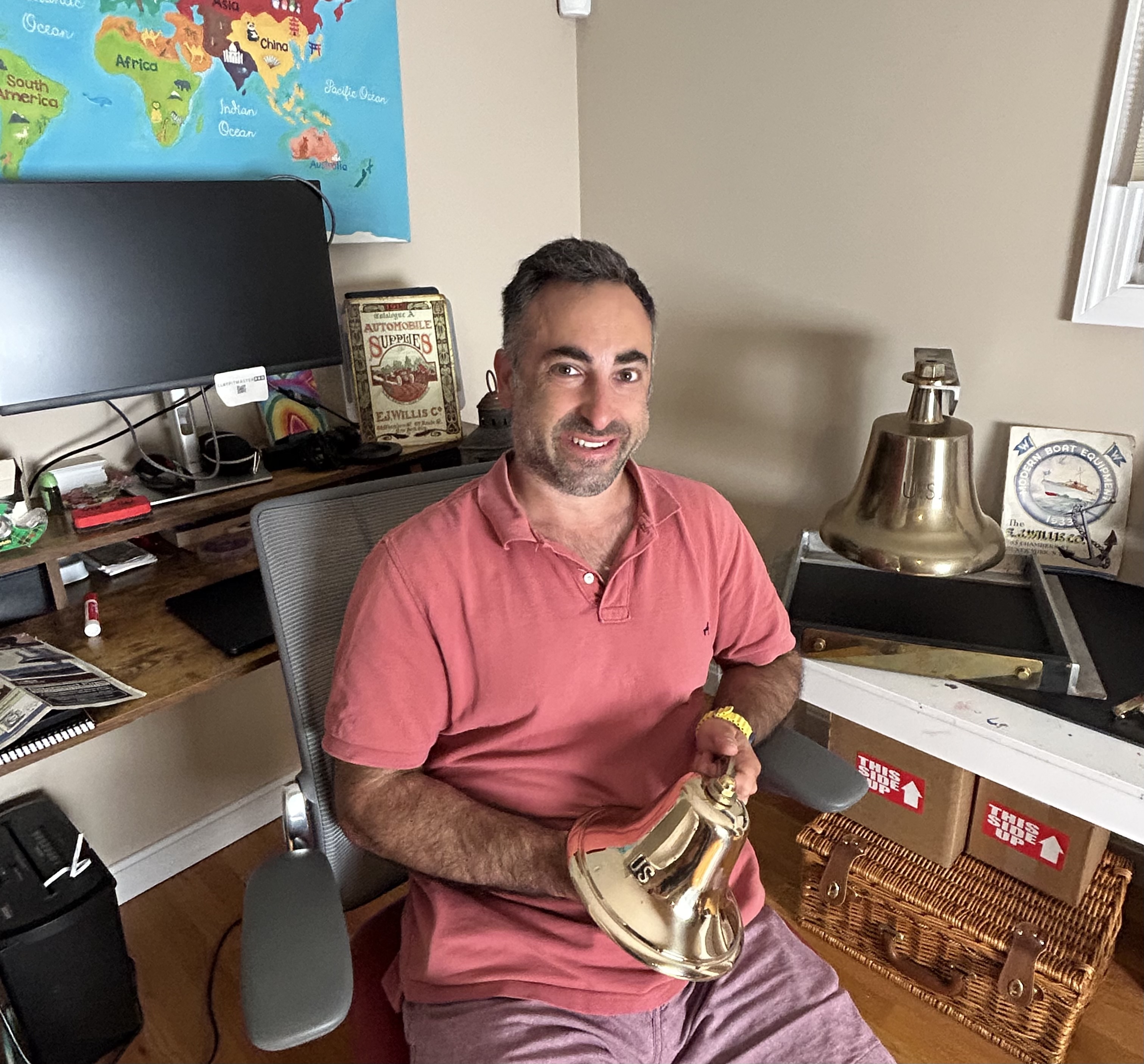
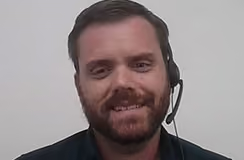
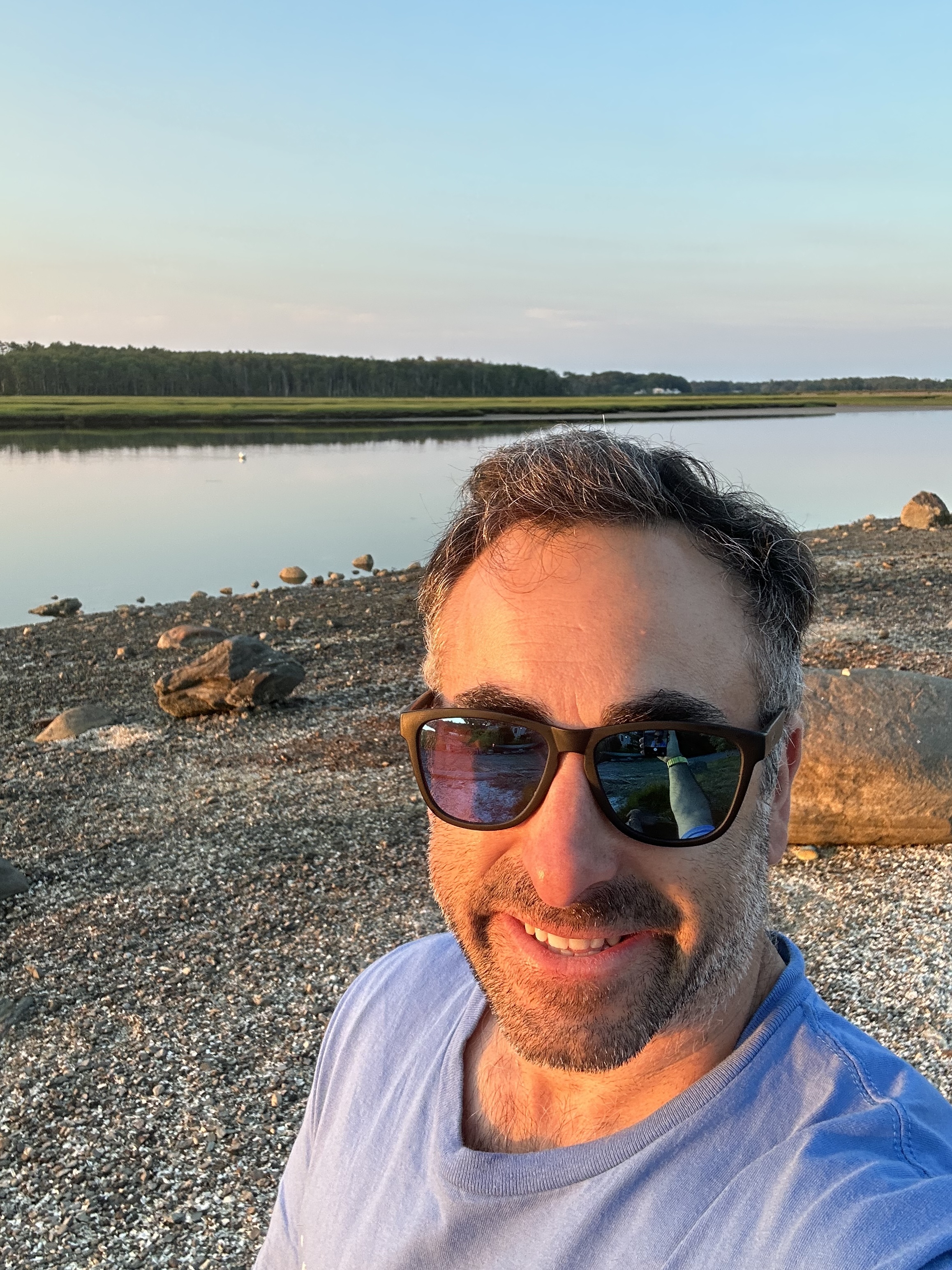
[00:00:00 - 00:05:24]
Host: Many of the best practices you'll hear on acquiring minds are about keeping emotion out of your acquisition. Well, today's guest found a business that made that impossible. John Hyatt left a 20 year consulting career to search and he searched the disciplined way. He landed on a dental roll up thesis and got a practice under LOI.
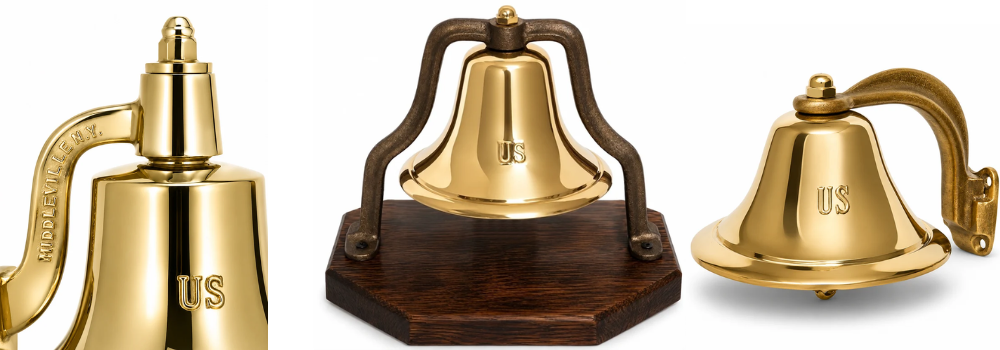
Then at 11:31 Wednesday night, looking on Craigslist for a car part, a listing caught his eye. American bell manufacturer, U.S. navy supplier. That listing was for E.J.
willis Co. Founded in 1888, maker of the bells that hang on Navy and Coast Guard ships. John fell in love on his first visit to EJ Willis and walked away from the dental deal. So today's is not a textbook acquisition.
Revenue is low six figures. All four employees retired with the seller and the website had said coming soon for 20 years. This looks more like zero to one entrepreneurship than ETA. As John builds a consumer brand out of a 138 year old name and a set of Bell molds, I press John on this point.
The story may remind you of Jay Boren from a few episodes ago. Jay, who bought a one product grease tool business run out of a living room while his business school classmates went off to consulting and banking. Jay and I talked about the similarities between his story and John's and he shared the advice that he gives to business school students at his alma material as these kids are looking for businesses to buy, they'll come across one that really lights them up, even if they can't articulate why that is the one to double down on. Buying and running a small business requires the owner to be all in, and that just isn't possible if you aren't irrationally passionate about the project.
The fear of bankruptcy doesn't motivate in the same way as the passion to create something beautiful. End quote A powerful message that sets the stage perfectly for today's episode. Here is John Hyatt, newest owner of Centenarian E.J. willis Co.
Just because your seller accepts your offer does not mean your lender will. Your LOI needs to be acceptable to both seller and bank. So how do you write an offer that's competitive enough to win but realistic enough to close? In a webinar today, Thursday, leading SBA loan broker Heather Anderson will walk through exactly that.
Among the topics you'll learn why sellers favorite offers can fail with SBA lenders LOI terms that affect financeability, how price, equity, seller financing and working capital all fit together, making an offer attractive without making it unbankable and keeping flexibility for underwriting, diligence and negotiation. The webinar is structuring competitive enough to win, bankable enough to close and it is today, Thursday, October 22, noon Eastern. Link to register is right at the top of this episode's show notes or on the Acquiring Minds homepage. Acquiringminds Co.
Welcome to Acquiring Minds, a podcast about buying businesses. My name is Will Smith. Acquiring an existing business is an awesome opportunity for many entrepreneurs and on this podcast I I talk to the people who do it. Buying a small business sounds simple.
Find a company, due diligence, get a loan, close. In reality, you wear every hat just to get the deal done. And then the moment you close, you have to throw those deal making skills out the window and learn how to operate. You shouldn't have to rebuild this infrastructure from scratch and you definitely shouldn't do it alone.
That's why Walker Deibel created Acquisition Lab, which started as an accelerator, has expanded into a complete ecosystem for acquisition entrepreneurs. Over six years, the lab's 1200 members have acquired over a billion dollars in businesses. The Lab puts everything under one roof, an active community and deal reviews, post close services and a dedicated fund helping experienced operators buy larger businesses. If you're serious about buying a business, come see why Lab members have a 40% success rate.
Learn more in the show notes or@accentlab.com acquiringminds John Hyatt Bellman yes indeed. Welcome to Acquiring Minds.
[00:05:25 - 00:05:26]
Guest A: Thanks for having me.
[00:05:26 - 00:05:46]
Host: John. Yours is an unusual acquisition and unusual story of entrepreneurship through acquisition. You broke a rule or three that we try to teach here on Acquiring Minds. John no, but this is a really fun, a really intriguing story in acquisition.
Let's get right into it. Start us off with some background on you, please.
[00:05:46 - 00:06:43]
Guest A: Great. So thanks for having me. Will so a bit of background about me spent about 20 years in in management consulting. Started off focused in in the retail consumer goods world, in luxury goods a bit.
Moved into the the digital space, across industry from transportation and manufacturing all the way to healthcare and life sciences. Spent a bit of time after that in the healthcare space and quickly decided that I'd love to buy a business someday. So I set off on a path trying to figure out exactly what that business was as you said, broke a few rules along the way and stumbled upon a business in the in the Navy Bell world. So it's been a a whirlwind to say the least, but a journey that I'm excited to to be on and excited to see where it takes me.
[00:06:44 - 00:06:49]
Host: John what was this notion to buy a business where did that come from? Why? Why that? Why then?
[00:06:50 - 00:07:49]
Guest A: You know, I always had this entrepreneurial itch. I'd say the, the idea of being able to build something that I can call my own, it has been. Always been appealing to me. I've always said that, you know, being part of a W2 environment, you're by and large building someone else's kingdom.
And I, I had the idea that building my own kingdom in the second half of my career sounds like an appealing thing to. I set off down the path of evaluating businesses like I feel like a ton of people do. And, you know, I joke that I turned myself into an accountant that was digging into other businesses books and having hard conversations around the gap in valuation between what I viewed it as and, you know, what the sellers viewed it as. So, yeah, and lots of paths I went down, lots of industries and whatnot.
[00:07:50 - 00:08:01]
Host: Yeah. And we're going to hear a little bit more about that. And John, why, why then what had happened in your life or your career that prompted you in that moment to. To scratch that entrepreneurial itch?
[00:08:01 - 00:08:52]
Guest A: You know, I'd say one of the bigger things is fit within the, the, the lifestyle that we have as a family. Having the ability to have some flexibility. I have a spouse that, that travels quite a bit for work. I have two kids that, you know, have sports commitments in the afternoons that need to get shuttled back and forth and around.
So having something that I can, I don't want to say come and go, but just have the flexibility to be able to not be in an office from, you know, 8 to late or 9 to 5 and be able to run a business, do things when I'm able to get to them and when I can kind of flex and, you know, handle the things that need to be handled and still have something that I can be marching down the field was very appealing.
[00:08:52 - 00:09:08]
Host: So great. Okay, give us a flavor of your search. I want to. I'm going to spend a little bit more time on.
On a dental thesis that you arrived on. So kind of give us a color of your search other than the dentist roll up.
[00:09:08 - 00:12:06]
Guest A: Sure, sure. So I started down the path doing what I feel like a lot of people do, which is signing up for the biz buy sells of the world. And, you know, quickly started looking at, I think I looked at was a seasonal ice cream shop in Maine, which I thought would be just something different and exciting to chew on. I had always wanted to be in the restaurant and food world.
It's an itch that, you know, I've Never scratched. So when that came up, it was, it was something I leapt at right away. I had an LOI in place and like I said earlier, we, once you get into the numbers, you know, things quickly kind of fell apart. Decided that I really needed to stick to my guns on whatever my thesis had told me and whatever the numbers were telling me.
And that was something that I learned up front and kind of carried forward. Went from ice cream to commercial H vac to coin op laundry, electrician, electrical businesses, hardscape countertops and, and stone. So there's, there's so much stuff out there and you know, I was never afraid to kind of tackle and be, I was always open to industry only because that, that had been like the, the, the story of my career. Right.
I, I never went really deep into one area and you know, I, I, I've always said I'm a jack of all trades, master of none. I, I can kind of sit in a business, understand the levers that need to be pulled and execute. You know, unfortunately or, or fortunately you could, you could, you know, slice it whichever way the, the they didn't work out. There were various reasons across the board, whether it was price, operating model, you know, seller demands and needs versus mine.
But I learned a ton of um, One of the things that was actually the, the most helpful thing that I did was join the Facebook groups that exist for each of these respective industries. Whether you know, my, my, my current Facebook account reads like a, a, a business buyer's legacy graveyard with you know, being in H VAC groups and ice cream operator groups and laundromats. So I, I kind of look back and you know there, there's a lot of stuff that I say, oh man, you know, I, I could really secondhand experience on what it means to value a laundromat or whatnot. So I, I feel like my approach was unconventional in many respects.
You know, as you said, I, I, I stumbled into dentistry and went pretty deep into that world. And yeah, I, I, I pulled back on the yolk when I found the, the opportunity we're talking about.
[00:12:06 - 00:12:29]
Host: Well, we're going to hear about the Dennis thing in just a sec. The, this Facebook group tip I, I love so you would join, you know, the ice cream operators Facebook group and you can just scroll through it and get a flavor haha of just kind of what it's like to be in the industry. Would you reach out to the owners and ask them questions or is it more just a, a lurker, a professional lurker.
[00:12:30 - 00:14:11]
Guest A: It went from professional lurker to, you know, pinging people that were asking questions, posting in the groups. The term rocky road was thrown around a lot for the ice cream journey, but the, the, the Facebook groups at least help with the, the systematic challenges that all of these businesses have. The, the ice cream world in particular. Labor was like the biggest challenge that I heard people talking about just finding dependable labor.
The, the, the, the way that a lot of the, the shops operate is off of high school and college students, and once people go back to school, you have gaps. And, you know, I, I've, I've always had a firm belief that people in labor are the biggest challenges you can have in a business. And I, I was, I was always hesitant to have a, a company where I would be hurting cats. I like to be able to operate and to know what's happening and to be able to, I don't want to say have dependability, but labor is one of those things that.
It felt like a wild card that I, I didn't want to start depending upon people showing up on time or people calling out last minute to, you know, that that creates a bit of uncertainty that I just, you know, given the life that I'm living right now, the, the places I have to be just to, to keep the, the trains moving on time, that didn't really align with my thesis so well.
[00:14:11 - 00:15:43]
Host: I think that was wise. I think that in these, many of these small businesses manage the management of labor is the core challenge. And for some, you know, none of these businesses are going to be perfect. For some people, managing that problem isn't so unappealing, and so they just power through it.
But it's, but for those for whom it is unappealing, it's extremely unappealing. I mean, I just was speaking to a former guest who bought a business where labor has, has been challenging for the three years of his ownership, and it just, it's relentless. Again, you know, part of the game of buying a business is picking your poison. They're all going to have undesirable aspects to them, and you just got to figure out if, if what's undesirable in a particular business is something that actually, you know, you can lean into and, and handle.
I also want to just add to your tip of the Facebook groups. I think that there's probably a lot of Reddit subreddits that are devoted to owners, so check that out. Another, perhaps the most efficient of all, when I occasionally dip into some industry research, is YouTube. And you'd be surprised how many owners of X random type of small business have channels about what it's like to be in that business and run that business?
So, and that again can be very efficient. You just search for the industry and then up pops 10 videos you can just sit down and watch in an hour to learn, you know, what it's like from the operator's perspective.
[00:15:43 - 00:16:23]
Guest A: No, and that's, that's absolutely true. And one of the things that I found publishing on YouTube Long form content is it's cool to become an expert in your field. And I feel like when, when you have that snackable content that talks, you know, what are the challenges in running an ice cream business? How do you manage your SKU count?
How do you make sure inventory is at the proper levels based upon, you know, time of year? It's, it's all stuff that you know. Those are the people you want to be reaching out to and asking questions because they've gone through the due diligence, they have perspective. And yeah, YouTube is another great resource for sure.
[00:16:25 - 00:17:35]
Host: If you ask owners in the ETA and search community which insurance broker provides highest quality work, great outcomes and has a practice dedicated to searchers and acquisition entrepreneurs, one name comes up again and again. Oberle. Oberle Risk Strategies has worked with hundreds of searchers over nearly a decade and is in fact led by a two time successful searcher, August Felker, which makes Oberle a specialty insurance brokerage for searchers by a former searcher. And if you've got a business under loi, Oberly will provide complimentary due diligence on that business's insurance and benefits program.
An easy no risk way to get to know August and the team at Oberle to take advantage. Check out oberle-risk.com that's o b e r l e-risk.com link in the notes. Let's hear about this dentist roll up. We don't need to get in to the mechanics too much, people will understand the concept.
But why, why did you land on that?
[00:17:35 - 00:19:00]
Guest A: Sure, sure. So I, prior to digging into the, the entrepreneurial route, I was actually leading a MSO for a medical group. So the idea of being the business end of medical practices was something that wasn't very foreign to me. It's, it's a model that if, if executed properly, you know, is, is a consistent and you know, I don't want to say easy because that's definitely the wrong word but it's, it's a business that I can understand like I said, the levers that we need to Pull on.
I have a clear picture of what good looks like and I have a fairly strong support network in that world that I said this is, you know, pulling at the things that I'm comfortable with and I can see the, what the future can look like. So my goal was a small group practice. Three to five practices in three to five years. Operate it and then, you know, figure out what's next, whether it's sell, whether it's hold on to it, whether it's expand.
We didn't get that far down the road in terms of thesis, but that, that was the game plan. And I had a, a group of doctors or dentists that I was going to work with and you know, we were actively engaged in buying a practice. So after reviewing many of them, so.
[00:19:02 - 00:19:06]
Host: So you, oh, you were really far down the path. So you were actually, were you under LOI on this practice?
[00:19:06 - 00:20:21]
Guest A: I, I submitted an LOI for a practice at the time when I kind of, like I said, pulled up on the yoke. So yeah, I was under loi. Once you submit the loi, especially in, in that world, it becomes real very quickly in terms of, you know, there's a deadline in place, there's due diligence that has to get started. It's highly recommended to bring in a specialist that can review claims data and you know, revenue and cost and you know, tech stack and all those things that I have a level of comfort in.
But I need second set of eyes and you also need legal involved and the upfront costs are incredibly high for that commitment. And in the back of my head I just had this, this gets real very quickly, so I better be sure that I want to do this. And like I said, I had a dental partner that was ready to go. And you know, stuff happens in life, so stuff happens.
[00:20:21 - 00:20:39]
Host: And we're about to hear your discovery of the Bell business. But now that I hear you characterize your kind of how quickly you were gonna, things were gonna start moving once you sign that loi. I'm wondering if actually subconsciously you were looking for an out to the dental roll up.
[00:20:41 - 00:22:53]
Guest A: I wouldn't say that I was actively looking for an out so much as I was, I was scrutinizing practices to a point where anything that I saw that I was uncomfortable with made it such that I just couldn't pull the trigger on it. And I don't want to say I became very picky, but I really stepped back from it and thought through like day one, like what happens day one when I get the key to the business, and it's on myself and a partner. The cash up front came from me, would come from me, and I would be paying a partner and a team. And I didn't love the idea of being beholden to everyone else because I can't operate the business both legally and from a skill set standpoint.
And I just said to myself, everyone I talk to in this space in the dental world says it's getting tougher and tougher to be a dentist. It's getting tougher and tougher to make money with what's going on within the insurance space and costs to operate. And I just pictured day one having a line of people saying that they're demanding raises, because why wouldn't we? Because there's.
Especially in Massachusetts, there's a massive shortage of hygienists. They're incredibly in demand. And, you know, one of the things that, in conversation when I talked to dentists said, what's. What's one of the biggest challenges you have, keeping and retaining help.
Help is the biggest challenge that they have, you know, out of the. The laundry list. But that was one of those things that, that I said, I'm comfortable underwriting the business, but I'm a little bit uncomfortable as to what that could look like six months down the road if things go from, you know, the. The low end of the spectrum to the.
The really, really low end of the spectrum.
[00:22:54 - 00:22:59]
Host: Gotcha. Okay. Well, that's the context. So tell us about your discovery of the bell business.
[00:23:01 - 00:25:56]
Guest A: Sure. So I was on Craigslist at like 11:30 on a Wednesday. It was. I was searching for something completely unrelated.
I think a part to a Jeep. And when you scroll to the bottom of whatever you're searching for on Craigslist, it says things that may be of interest outside of your area. And it said, American bell manufacturer, U.S. navy supplier.
And so naturally, I had to cl. And this business was for sale, the E.J. willis Company, since 1888. You know, we manufacture marine hardware, and our specialty is bells to supply the Navy and Coast Guard.
So naturally, I. I had to email the guy. Sure enough, they responded. And after a few conversations, it got to the point where.
Where he said, wait, why don't you come out to. To Middleville, New York, and. And meet the team and, you know, see the business. And I said, I.
I joked, I said, you know, this is how people get murdered. You know, I'm gonna get out there. There's gonna be no one there, and I'm gonna be, you know, in a ditch somewhere. And that's just gonna be, you know, I was the idiot.
But fortunately that didn't happen and met a lovely guy that was looking to retire and had this machine shop business that he had, he had sold off every other line of business and you know, all the, the machines and tools that he had. And in the back of the building there was this little bell shop that had been part of E.J. willis since, you know, before he was even, and his father was even part of the business. So that was carved out and I fell in love like right away.
This was that niche. Obscure artisan meets marine. I've got a background in, I grew up on boats. So this pulled at a lot of heartstrings really quickly for me.
Got home, told my wife and she was incredibly supportive like from day one. And yeah, we, I got to work, I put an LOI together and just started due diligence which all took place fairly quickly. I'd say relative, you know, to being in the dental world. But yeah, it was, it was, it was a very odd thing to find in a, in a strange place.
And I, I, I didn't want to have rocking chair regret and say, oh, I just passed on something because it just didn't, it didn't feel safe or it didn't seem like it was something that I could turn into a fully fledged business. But I had to, had to give it a shot. So here I am.
[00:25:56 - 00:27:21]
Host: Well, well, John, what's, what's so interesting about this is, is how you had been searching, you'd been looking at a ton of stuff, you talked to owners, you'd landed on this dental roll up thing and maybe you didn't even think you were capable of being so enthusiastic. But you find this bell business and you're blown away by your own reaction to it. I'm kind of blown away by your reaction to it. You know there, as I prepared for this episode, I was reminded of this great phrase from it probably I don't know where it comes from, but I heard, first heard about it in Techland where you want as a venture capitalist, you want a startup founder to be a missionary, not a mercenary.
And so the point is, you know, mercenary is somebody who does things for the money, for opportunistic is opportunistic and does things for the money. The missionary is somebody who's on a mission. And in fact you characterize yourself as being on a mission in our pre call and we'll get there. But this went from a wealth building exercise, you buying a business quickly went from being a Wealth building exercise to being overcome with passion.
Now you, you do have a vision to build this into a big business. But, but really it was, it was an emotional decision. It was an emotional decision.
[00:27:21 - 00:29:21]
Guest A: Completely. Yeah. 100% fair. This is a small business that the history of the company blew my mind.
You can see behind me catalogs with hundreds of pages of marine hardware that this company, back in the, you know, late 1800s, early 1900s, was one of, if not the biggest marine supplier along the east coast. So I look back at what it's, it's romantic. I look back at what the company had done, the pivots it made from the pneumatic tire world to automotive aero, the aeronautical space landing in marine. And the bells have been this constant thing that I don't know, how could you let something like that die on the vine?
Where it's just who's gonna do it? And I feel like it was dropped in front of me. The company needs a new steward. I get to put the hat on and get into an industry where, you know, it can be whatever it's going to be.
I'm, I'm almost sitting here saying, you know, I don't know the direction it's going to go in. It can, you know, it can be a machine shop, it can be a bell manufacturer, it can get into the fly fishing world. Like there, there's so many different directions it's gone in in the past. And that's why I fell in love with the idea of this is a heritage brand.
This is a, a brand that means something in the, the state of play for the US Which I think is wildly cool. And there's no limit for where I can take it. And I thought the, the idea of having that flexibility was really appealing.
[00:29:21 - 00:30:09]
Host: Yeah. Well, I'm getting excited for you, John. Your passion just so comes across. Before we get any further though, here are the bullet points of the size of this business.
This is a very small business. So it, you, you arrive at the machine shop, this is not part of the machine shop. It's sort of an appendage to the machine shop. Seller is retiring, solely selling his machine shop or shutting it down, selling all the equipment and then separately, but in the back room or as you put it, or whatever, there's the bell manufacturer, which is kind of its own business.
A carve out, I think you said. So that's, that's the picture. You're not buying the whole machine shop, you're just buying the bell manufacturing part of it. Give us the bullet points of that Business.
[00:30:09 - 00:31:26]
Guest A: Sure. So in terms of the business itself, it was an asset sale. I essentially bought the existing inventory, the patterns and the molds that we have to cast the bells, 30 or 40 of those. I bought the name, the.
The goodwill associated with it. So, you know, that was. That was the. The way I look at it is the crown jewel that I needed to get to continue the.
The story of the business. And I wound up buying the machines to do the. To do the work. So I had this kind of bell business without a home.
And. Yeah, in terms of, you know, size of the business, it was big enough that it was significant in terms of making the decision, but small enough that I felt like, well, it's. It's. It's some cash, It's a bit of loan against myself, but I'm not gonna.
I'm not gonna lose my shirt if it doesn't pan out the way I want it to. But if it goes the direction I'm hoping it does, I've got myself a nice little turnaround business that has turned into something meaningful, and we're going to
[00:31:26 - 00:31:36]
Host: unpack that a little bit further. But the size of the business itself, like, in terms of revenue, employees, how many bells it sells a year sort of thing, give us a sense of scale here.
[00:31:36 - 00:32:36]
Guest A: Sure, sure. So in terms of size, there were four employees, all of them retiring. So it quickly was going from four to one, which for me was one of the immediate challenges that I faced. And in terms of number of bells per year, anywhere between 75 and 100 bells and varying sizes, they go from 3 to 200 pounds.
And, you know, it's. It's an inbound business from the. The. The Uncle Sam from the.
The dod and, you know, that's the way the business has been operated in the past. So, you know, in terms of size, small, in terms of things that can be done operationally to materially improve those numbers, I viewed that as significant. And thus far, it's been proving itself as that.
[00:32:36 - 00:32:38]
Host: So roughly what was revenue here?
[00:32:39 - 00:32:45]
Guest A: It's around the $250,000 mark, give or take. So, you know, significant enough revenue.
[00:32:45 - 00:32:48]
Host: Not profits. Revenue. Revenue of 200.
[00:32:48 - 00:32:48]
Guest A: Top line? Yes.
[00:32:48 - 00:32:57]
Host: Okay. Top line. And when you say the number of employees was going from four to one, do you mean that one is you, or does it come with an employee?
[00:32:57 - 00:33:09]
Guest A: No, everyone. Everyone's hanging it up. So I. I was The.
The bell business was the blocker between lounge chairs and my ties, so that's. That. That was the last piece of the business to go.
[00:33:10 - 00:33:19]
Host: Okay, so what you bought was, as you said, the, the, the molds, the kind of, the, the ingredients to get these bells made. Tooling.
[00:33:20 - 00:33:20]
Guest A: Yep.
[00:33:20 - 00:33:39]
Host: And the brand, the name, the history, but no employees. And the business was doing top line, less than 250. So your, your acquisition price would have been modest. You know, you're not, this is not financeable.
This is not a million dollar SBA loan.
[00:33:40 - 00:33:41]
Guest A: No, no.
[00:33:41 - 00:33:42]
Host: Stretch.
[00:33:42 - 00:35:29]
Guest A: No. And I actually had relief that it wasn't an SBA loan only because the, the, the rates that I was seeing for SBA loans were in the, you know, low double digits between 11, 13%. And I dipped into a HELOC a little bit and had some cash as well. And it's, it's significantly more manageable when it's me betting on myself versus having something that has a bit more cost in terms of interest expense related to it.
And yeah, the, the thing that, that also provides me is the ability to begin turning the business around. Like everything from optimizing inventory, you know, identifying partners to work with, pricing, marketing, you got, you got to remember this is a brand without a digital footprint whatsoever. So for me to go out and get an SBA loan, I'm on the clock right away. And I was very hesitant to jump into a business that was existing predominantly on inbound orders that I didn't have much visibility to because it just, you know, when people search the DLA for a solicitation, it's either there or it's not.
There's not really a window where you can say, oh, I know that, you know, there's going to be X, Y, Z coming down the pipeline. It's, it's not that. So I actually am happy about the flexibility that going in the other direction from SBA has afforded me.
[00:35:29 - 00:36:01]
Host: Two things here, John. One of the, the quote unquote rules of eta, or maybe not rules, but benefits, is that you walk into a business that can pay you. So if you're walking away from a W2 to become a business owner, ETA solves the problem of having take home income depending on the size of business that you buy. This sounds like if it was, if it was 250 or less of top line revenue, there's probably not a lot of cash coming out of this business.
So you probably won't be paying yourself yourself anytime soon. Correct?
[00:36:01 - 00:36:43]
Guest A: Certainly not what I was getting as a W2 employee. I, I would say, but you know, there's, there's enough to keep things floating and to, to see the upside that I know we can get to. It's a matter of, like I said, building brand and you know, pricing appropriately and doing, doing all the things that kind of sit in the back of your head as you, as I went through an mba, you know, way too long ago that I can say, all right, well now I now have a good sense of what I have to do to get myself from, you know, having a proper internship, where I am right now, to a fully fledged business that is generating cash and all that good stuff.
[00:36:43 - 00:36:51]
Host: Great. Okay. But it was, it was profitable. Okay, so it did generate, even with the employees.
[00:36:51 - 00:37:01]
Guest A: Yes. No, it generates, it is a profitable business. It is small, it is niche. But yeah, coming in, it's turning out money.
[00:37:02 - 00:37:20]
Host: Great. And its customer base today is the US Navy or Uncle Sam Broadley solely or are there other customers? Give us a picture of, of, of the customer base and the types of bells that are produced. Sure.
[00:37:20 - 00:39:36]
Guest A: So the customer base, it's, it's more of the primaries that are the shipbuilders of the world. Ultimately everyone's, you know, working towards building a ship for the Department of Defense. But the customers that I interact with are a lot of the shipbuilders in this country. Some of the, the suppliers to them wind up bidding on contracts as well.
So I might be selling to an intermediary that'll be selling to a primary that ultimately sells to the government. So it's quite the chain. But you know, it's fascinating when an RFQ comes out and you know, 10 suppliers contact you and say, hey, we need, you know, XYZ number of bells at whatever size, you know, and that, that's kind of the, the sales motion as of right now in terms of size of bells, we, we have seven sizes right now. We have three, five, 10 and 20 pound bells that at least as I'm starting to think about direct to consumer, I view those as bells that I would see someone, an individual purchasing, whether it's a gift for something, for a home, for a boat.
From There we make 30, 75 and 200 pound bells, which you know, are certainly more significant in terms of size, cost and those are more likely to see the use on ships. However, you know, it's interesting when you see orders for smaller bells for dedications, naval christenings, retirements, and all of those use cases that I didn't necessarily think of initially, but they're out there and you know, when they come in, it definitely is one of those things that kind of gets your, your mind jogging around the possibilities and how you can frame the business as building out new Channels, new markets, and so on and so forth.
[00:39:37 - 00:40:21]
Host: Well, and to that point, John, the. One of the things I want to get at is like, is the business in its. With its core channels and, and customer base of the DoD, you know, maxed out or, or is there market share to grab or to really make this business, or to really make this business a more sizable business, you need to generate demand with via other use cases like direct to consumer, you know, commemorative gift sort of stuff for bells. Do you need to do that to survive or is.
Is there a path here to just sell more bells to the DOD and you can grow the business that way?
[00:40:22 - 00:43:24]
Guest A: I think that. I think yes. And yes, I think there is a path to grow the business with the DoD by making sure you're monitoring sites and, and not missing RFQs that come out to make sure you're pricing competitively so that when an RFQ does come out, you're able to respond and at least have a level of confidence in your win rate versus the, you know, swinging of the bat. Having conversations with people that are on the other side that, that you.
Building relationships is very important, especially when you have folks that are not necessarily putting up an RFQ for something that they're just making a purchase under X dollars and you know, they need a bell because so and so is retiring and we want to get something engraved and just ship it to this base or what have you. Those are the things that I'm still learning about and I'm seeing that the relationship building with people that are adjacent to the bell world, or at least customers that have use cases for demand, having conversations so they know about you is incredibly important. So you're top of mind. In a perfect world, that would sustain the business completely.
But reality is, I think there's a much bigger market outside of the defense world. I've said before, no one wakes up and says, well, today's the day that I'm buying a bell. But every day people think about the things that they, they care about in life, the moments they want to celebrate. So and so is retiring.
You know, I got a promotion at work. Got to get a wedding gift for someone just closed on a beautiful coastal home. And I think that's where the market is, is to, to. To have something that is both art has, but, but a true piece of material.
It's, it's a true piece of. It's functional art. You know, it's something that, that looks amazing, it will outlast the person that buys it, and it's something that you can always look at and say, I remember when I got this, it ties to this. And that's the thing that I hope that when people see it and eventually purchase it, they get it.
And I think that, you know, the conversations I've had thus far and the sales conversations have all been really positive. So
[00:43:26 - 00:46:19]
Host: running payroll, paying your bills, closing your books and producing financials, these are critical tasks every business owner must do or oversee. But spending time on them distracts you from the leadership in growth work you want to do. So let system 6 do it for you. Owned and led by a former Searcher, Chris Williams, System 6 is a leading outsourced finance team for hundreds of SMBs, including over 50 searcher acquired businesses.
Chris, Tim and the System 6 team understand firsthand the challenges, the opportunities of jumping into a business as its new owner. So whether you own your business already or, or have one under LOI, talk to System 6 about how they can give you time back and improve your financial operations. Mention acquiring minds and they'll provide a free review of your books and financial ops, a $500 value. Check out system6.com link in the show notes or email helloystem6.com you got a bell there to your left.
And it is a, it is a beautiful object. I mean they really are. It's, it's so unlikely. It's never occurred to me.
It's sort of like they're invisible until, until you notice them and then you, and then you. And then they do just have a lot of heft kind of literally and figuratively. It's so funny. We talked about this in the pre call.
You and my father are the only two men I know with full size bells in their lives. My dad has a train like a locomotive bell, probably of similar size to the type that you all sell in his basement slash man cave. And next to it, a framed image of the locomotive, of it on the locomotive from I don't know when, 30 years ago, 60 years ago, you know, going through, you know, it's this locomotive pulling rail cars through some mountain, along some mountain rails. And there's the, there's the bell.
And now he's got, he's got it in his possession and he really loves it and I really think it's a cool thing. So there is, there is something magical to bells. I mean I understand the kind of falling in love with it and I'd say without knowing anything about kind of the gift world, I would say that there's probably a lot of great channels for introducing there, there's probably well established kind of gift channels. There's all sorts of sites that specialize in, in gifts and sort of catalogs.
I think that, that specialize in, in gifts. I feel like you could find retail channels that are well established through which you could sell your bells.
[00:46:19 - 00:46:20]
Guest A: Yes.
[00:46:20 - 00:46:20]
Host: Total hunch.
[00:46:21 - 00:46:32]
Guest A: Yeah. Yeah. There, there's the challenge that I, I think I will face. And at least the way I've been thinking about is casting a net that's too wide.
[00:46:33 - 00:46:33]
Host: Right.
[00:46:33 - 00:48:08]
Guest A: Because what I don't want to do is go down 30 channels and find that I'm not digging deep enough or investing enough and I'm not getting to the place that I want to be. You know, like, like we said, weddings, you know, promotions at work, they're all different buyers. Right. So one is corporate, one is the, the bridal circuit, you call it the ship restorers and manufacturers.
They're, they're for every one of those places I have to kind of try and fail fast and, and you know, that, that, that whole bag. So I've placed my bets initially. I have some theses around where I think there's opportunity and it's, it's really about building that market. It's about getting the brand awareness out there.
Blogging, doing social media. You know, I, I've been to countless boat shows over the past three months and just been walking and talking with people. It's really helpful to kind of assess where, where there's interest and use cases. And I, I've learned a lot from the folks that I've talked with and some things have been a bit surprising in positive ways and in ways that have been making me scratch my head a bit.
So very educational nonetheless.
[00:48:09 - 00:48:26]
Host: And do you feel like it has to be a kind of nautical marine themed? I mean, are your bells obviously nautical or could they be any. You know, not necessarily. Like, if I'm not a boat guy, I still might like one of your bells.
[00:48:26 - 00:48:45]
Guest A: Absolutely. You know, one of the, the biggest opportunities that is a result of a rabbit hole I've gone down is a desktop or you know, coffee table or whatever you want to call it. Bell sits lovely on an a frame with a nice wooden base.
[00:48:46 - 00:48:46]
Host: Yeah.
[00:48:46 - 00:49:35]
Guest A: If for a couple getting married, their name, the wedding date, the location engraved on it, to me that's like a home run of a gift for people, especially people that, that have ties to the veteran community and you know, strong naval ties. That to me is an. In an untapped market, at least from the standpoint of it's not a toy, you know, it's the real deal. My inventory gets pulled and goes to a customer or it goes to the Department of Defense, and there's zero difference between A and B.
So this, this is something that's getting repurposed, but has all the gravitas of something that would be in service.
[00:49:36 - 00:50:02]
Host: Well, it has the gravitas of something that would be in service, not only because you actually are producing bells that go into service, but because it's. The company's over 100 years old. The company has authenticity. This isn't something that was spun up yesterday.
And I imagine you'll, I mean that, that's one of the things that you fell in love with. And I imagine that that will be part of your branding and positioning as you go to market.
[00:50:02 - 00:52:04]
Guest A: Absolutely. Like, like you mentioned, 138 year old company. There's things that I'm learning about it every single day. The, the, the gentleman I bought the business from is not an Internet guy.
He's not a digital guy. He's, you know, brick and mortar. So there's nothing, there was no, the website was under construction for 20 years and it had that little, you know, coming soon EJ willis dot com. So that was the extent of the, the digital footprint.
So I've joked that I'm literally the, the CEO and chief archaeologist here. Digging through, I mean, you could see the stuff behind me. Our logo came from the catalog in 1953. Our, our print ads are from 1932.
If, if, if it was good then it's good now. That's the way I'm looking at a lot of this. I, I, I would be a fool to think I could do better than, you know, artists from that era that are doing the art deco work. And, you know, it's almost that madman type of feeling that I'm like, oh, you know, if this was good enough for a Don Draper, this, this should certainly work for me.
So it's more of procuring the things that exist that just have fallen by the wayside and telling that story. And I think that's what's resonated most is, you know, it's, if this was a company that was 40 years old, it would be interesting, but it's, it's not what it is today. You know, it's, it's not this company that's been through, you know, multiple world wars, you know, the, the transition from horse and carriage to automotive to, to flight. And that's the going back to the whole, this is like a romantic space to be in, you know, if the, if the bells could talk, what would they say?
[00:52:06 - 00:52:29]
Host: Well, and I think it's a, it's an important distinction that yes, you love the bells, but what you fell in love with was not necessarily the bells. It was the entity, the, the business, the vessel that has traveled through time and now you're, you're the steward of. And there were times when it was manufacturing all kinds of non bell stuff. So it's more about E.J.
willis than it is the Bells, 100%.
[00:52:29 - 00:54:33]
Guest A: And one of the, the funniest things was I was sitting in the office and there's a, what looked like a hand pump on, hanging on the wall. And I said, what's that about? And he said, oh, we used to make this. It's, it's a two way manual bilge pump.
I said, is that like part of the business? He said, yeah, you want that? And I said, absolutely. That's like, you know, that's one of the coolest things that I've seen.
It's a, it's a cast brass two way bilge pump that he's the only one that was making it. So to me that's one of those things that, you know, I took that one off the wall and when I go to boat shows, people that know what it is stop and ask right away. They're like, where did you get that, Sam? Make it.
And that's, I've never had a conversation starter like that pump. And you know, it, it, the, the diagram sitting next to me, it's literally tagged 1937. I brought it to my, my machine shop and they were pulling their hair out trying to like, you know, translate it from an old document to new and just that I don't know what I don't have yet. And that's the coolest part.
Like, like I said, when you get onto ebay and places and you look around you find blueprints from things that just haven't been made in 50, 60 years. A boat hook is another example. We have a brass boat hook that is just gorgeous and you look at what else is out there. And I said, wow, this is like, I can see someone that has a beautiful Chris Craft with the teak and you know, the whole nine yards.
And that kind of is the cherry on top that, that I would love people to say, well that's what's been missing from, from my craft. And you know, so that's the audience I'm looking for.
[00:54:33 - 00:56:02]
Host: You know, I feel like you're also on, on trend here in a, in a Few ways, John. First, this is Americana. And so, so it's. And, and, and they're in there to be.
Americana needs to be manufactured in the U.S. obviously, in a moment of time tariffs. That's a, That's a happy trend to, to be with on. I do feel like old is on trend.
I don't think you're the only one who's into old things. I mean, as we're all kind of recoiling from technology, you know, technology taking over everything. In AI, there is a, A hankering for no, for, for, you know, a simpler time. And that, that's always the case among old, older people and old think now it's.
It's actually societal. Not only are you on trend for something, that's that because people kind of like, seem to be liking old and feeling nostalgic. But what you have can't be replicated. As you said, if, I mean, even if, you know, if there were a bell company that started up tomorrow or started 40 years ago, there's nothing it can do to manufacture being over a hundred years old.
So there's a, There's a, There's a true moat. And in the age of the entity, nobody can claim the story that you have.
[00:56:02 - 00:57:53]
Guest A: Agree. I think that, you know, and that's the biggest challenge I have is, is telling the story because the story is what, you know, makes you fall in love with the bell. It's. It's beautiful by itself.
Don't get me wrong. It has that, like you said, that, that old nostalgic feel. Even when you, if you buy one brand new and you see your face in the, in the patina on it, it's, It's. It's a, It's a bell until you attach it to a story that ties it to the USS jfk.
Right? That's the thing that's, like, really cool to me is you can put this in front of a Navy chief and, and they're like, I know exactly where I can find that. And it takes it. It takes people to a time and place in life.
And it's funny that when you think about one of the things I, I've always said before that I love the restaurant world. I love the food world. I love being able to have something. Put something in front of someone that takes them to grandma's kitchen, right?
And to be able to have a physical product that you could put in front of someone, and it just transports them back to, you know, being on their, you know, on a, On a carrier for the first time, that. That's really powerful. I love that. It even goes back to being in the retail world.
When I was working in high end luxury goods, I was always fascinated. But. But someone could spend 800 bucks on a pair of pants. It's not the pants.
It's, it's the story that it tells and it's what you think of and how it makes you feel. Right? And I feel like this, this, this has all of the symptoms of that and that's what I really love.
[00:57:54 - 00:59:22]
Host: Well, as I keep saying, John, I am taken with all of this. I, I really love it. But as I also tweaked you at the beginning of our conversation, you're breaking the rules of entrepreneurship through acquisition here. The, the quote, unquote rules.
This is, you know, generally one of the things we're looking for in, in ETA in a business that we acquire is something that can do more of the same. You know, it's already got its product market fit, it's already got substantial revenue and you are coming in with it with the hopes of improving upon that, pulling levers, growing, etc. Yours is a much more raw, small, creative endeavor. This almost feels like, I mean, this almost feels closer to 0 to 1 entrepreneurship than entrepreneurship through acquisition because you're, because of the small base that you're starting from in the sort of blank slate that you're starting from.
It's not totally blank, but where you take this business is not obvious. You've got all these different ideas and it's really exciting, but it's nascent. Unlike a dental practice roll up or an H vac business where you come in and it's, it's, it's a lot more about operational prowess than it is marketing, brand building, positioning, which is where you are. So it's, you know, it's, it's, this is a very entrepreneurial undertaking.
[00:59:24 - 00:59:44]
Guest A: Yeah. Yes to all of that. I'd say that it's got good bones. It has a great product.
It is a market that is small but at its core necessary. You know, build a ship, you need a bell. That's, that's how it goes.
[00:59:45 - 00:59:45]
Host: Yeah.
[00:59:46 - 01:02:03]
Guest A: It is something that, yes, it needs the market built. It needs a website built, an e commerce engine spun up. It needs analytics, layers on top customer acquisition and needs CRM. It's like it's been way more than I like thought through.
I'd say. It's funny I joked to my wife that, oh, I'll do this and I could still do a dental practice, don't worry honey. And that after like the Second week, I was like, oh, my God. I really was humbled in not knowing what I didn't know.
And, you know, I, I joke with friends that you think that, like, the consulting and the, the W2 behind a desk at a keyboard translates to manufacturing and physical goods and, you know, Made in America supply chains, and there's a lot less there than that I would hope was going to be there. I've, I've really, I joked that I was put on mute during a conference call with my team just because they were like, shut up and let us figure this out for a minute and trust the process that, like, what can I do there? There comes a point where I have to believe in the, in the folks I'm working with. And it's actually been helpful for me to focus on the things that I'm good at, which, you know, building a site, building a marketing funnel, you know, starting to optimize and spend for SEO and all those things to an AEO to make sure we're building a brand presence, finding suppliers and manufacturers.
Like for a bell stand, for example, if you, if I sell a bell to a country club and they don't want to mount it on a wall, they need a stand, I need to procure that. So it's all these things that I've, you know, mentally kind of ticked off in the back of my head that need to happen, and all of a sudden it's like, okay, they need to happen. It needs to happen right now. So it's kind of cool in that regard.
So.
[01:02:03 - 01:02:17]
Host: But you mentioned your team there. What, what does that mean? I thought there was no team. So give us a, well, give us a kind of a picture of.
What is it? What does it look like? The business? Now, how does a, a bell get manufactured by a guy who doesn't know a manufacturer?
[01:02:17 - 01:03:10]
Guest A: Sure. Trial and error. No, no. I, I, during my due diligence, I went to the foundry that we partner with and sat down with the, the general manager that runs it.
And I just had an honest conversation. And I said, put yourself in my shoes. I've got a business that I'm essentially, you know, I'm not going to kid myself that I know how to, you know, operate a lathe and a grinder and a machine punch. I actually thought I could until, like, the first day I was there.
And then I was just like, this is definitely not my skill set. And so I, I, I said to him, I said, who was your first, who'd your first call be? And he said, he said, don't call. Here's an address.
30 minutes from here. Get in the car, knock on a door. Okay, I did exactly what he said.
[01:03:10 - 01:03:12]
Host: A second moment where you might get murdered.
[01:03:13 - 01:05:08]
Guest A: You know, I feel like it's thematic and I'm just, you know, dodging bullets left and right. But that's, you know, that's. That's what you got to do sometimes, a little bit of trust and a leap of faith. But I wound up connecting with the owner of a machine shop.
Lovely woman that believes in entrepreneurship. Took over a family business herself many years ago and saw something. And so I, you know, after convincing her that I wasn't, you know, trying to sell them something at their front door, she. We sat down, I gave her the.
The. The pitch, and she said, you know, give me two weeks. I want to come out and see the operation. And so two weeks went by, we met, she came out, she saw the business, and she said, I've got some space in my.
My facility. Let's pack up your gear, your. Your machines, your inventory, and move it into my building, and you can work with my team to do the work. It was less about can she do the work and more about, you know, making sure that we.
We have the modernization. You know, like I said, with the pump, we had to do a lot of reverse engineering and figure out what good looks like and, you know, but the core of, you know, operating a business we believed could be there. So she's taking a bet on me, just like I'm taking a bet on me that this is a business that can flourish and grow. But, you know, this is.
This is entrepreneurship. And I think that really resonated with her. And fortunately, you know, she's. She's supportive and, you know, teaching me a few things along the way as
[01:05:08 - 01:05:21]
Host: well, and explain to us how a bell is manufactured. What is the foundry and what is the machine shop? And how do all these pieces fit together to go from raw, whatever, steel to about a beautiful, shiny bell?
[01:05:21 - 01:05:51]
Guest A: Sure. So it starts at a foundry. They. They purchase and got of the various composites that you need.
There's a unique composite for the bells that's by DoD requirement. It has to be a silicon brass blend. So the foundry has the molds, and, you know, they place these ingots into their. Their kilns and.
And fire them, melt them down. It's a wild process.
[01:05:52 - 01:05:52]
Host: This.
[01:05:52 - 01:07:21]
Guest A: I. I talk about the smell of a foundry. It's like nothing you've ever smelled before. It's completely just.
It's wildly different. You know, they. They Pour them into the molds and the mold set. Then you have a cast, a casting of the bell that you're ultimately going to be, be working on.
We take delivery of those castings so that they come in, some come in looking semi polished, some come in looking, you know, fairly charred and rough. We put them through a machining process to drill the various holes and you know, mounting hardware that have to get ultimately attached to the bell itself. And we have a polishing process that goes from grinding to sanding to polishing, engraving and finishing and you know, silly things that you don't think about. But wearing white gloves or certainly gloves that don't put fingerprints on the bell is required using certain packing materials to make sure moisture doesn't get in.
So it's, it's really a, it's a process that you think doesn't have a lot to it, but once you get into the detail and nuance of what is really needed in order to make sure it's delivered properly, it's, it's quite involved. But, but at its core it's casting, machining and polishing.
[01:07:22 - 01:07:41]
Host: And so the foundry step, where they take the raw, the ingots and send you castings, those castings are basically very rough bell shaped objects as an intermediate step. And so the, and so the foundry is a third party.
[01:07:41 - 01:07:42]
Guest A: Yep.
[01:07:42 - 01:08:04]
Host: And, and then, and then you guys in house or I guess this machine shop that you're working with, but eventually, or sort of, or sort of in a built out business, your own machine shop would do the final, would take the castings and do all the grinding and polishing to produce the final products. That's where you're kind of, if you're doing that in house, that, that's where we would go.
[01:08:04 - 01:08:04]
Guest A: Yes.
[01:08:05 - 01:08:06]
Host: Okay.
[01:08:06 - 01:09:41]
Guest A: So, you know, the, the interesting thing about getting into this is the foundry already knows the machine shop and they've been working together for, you know, tens and tens of years. So I, I was almost inserting myself into a supply chain. Fortunately that, that was already designed to operate really well. So, you know, it's, it's a bit of luck in many ways because when I first was looking at the business, I said, oh, I'm going to move everything to Massachusetts where I am just from a, you know, not having to drive across, you know, God's creation here.
But I look back and say leaving the foundry as is making sure our, our quality doesn't falter. And having a nice tightly knit supply chain has been wildly beneficial. A couple of weeks ago we had a bell that actually had to go back due to pitting from the casting process and you know, it's a 30 minute drive to get it back and have a conversation and get a new one into the, the pipeline for manufacturing. And I thought back to, well, man, what if that was like sitting in, in the Boston area and I had to figure out how to, you know, bring it back to, to Syracuse and it takes five hours to get there and you know, what do I do then?
So I'm glad I, I listened to my, my foundry friend and drove 30 minutes down the road. It's, it's, it's proven quite helpful so far.
[01:09:41 - 01:09:45]
Host: And when you refer to your team, you're referring to the folks of the machine shop.
[01:09:45 - 01:09:46]
Guest A: Yes, exactly.
[01:09:46 - 01:09:53]
Host: So what is the geography of your venture here? Where is it and where are you and what does that look like?
[01:09:53 - 01:10:28]
Guest A: Sure. So I'm based out of metro West Boston, so about 30 minutes outside of Boston. And E.J. willis, the company itself was based out of Middleville, New York, which is about 15 minutes outside of Utica, right next to Herkimer, which interestingly enough is where Herkimer diamonds come from.
If you're a, a gemologist kind of guy, that, that will, will resonate. But it's a, it's about a four hour drive, so enough for me to be racking up miles, but certainly not insurmountable in terms of getting there.
[01:10:29 - 01:10:33]
Host: But how, how often are you at the business? What does that, what does your commute
[01:10:33 - 01:10:35]
Guest A: look like or your every couple of
[01:10:35 - 01:10:36]
Host: weeks spending nights there?
[01:10:36 - 01:11:05]
Guest A: Every couple. I'll do, I'll do a night or two every couple of weeks. I want to make sure that, you know, I've got face time with the folks that I'm working with, building rapport, building trust, understanding the process. So I have a good sense of when someone says, hey, there's pitting in a Bell, we need to send it back, that I know exactly what they're talking about.
So getting out there as much as I can initially and then figuring out what that, what that rhythm looks like
[01:11:05 - 01:11:12]
Host: as we go forward and then all of the work that you're doing then, you're doing from home, from your home office.
[01:11:12 - 01:11:14]
Guest A: Yes. Everything else, all the other. Yeah, exactly.
[01:11:15 - 01:11:17]
Host: And when did you close? When did you buy it, John?
[01:11:17 - 01:11:20]
Guest A: I closed July 1st of this year.
[01:11:21 - 01:11:25]
Host: Okay, so you're coming up on just seven, eight, nine. Three months in the business.
[01:11:25 - 01:11:27]
Guest A: Three months. Three glorious months. Yes.
[01:11:29 - 01:11:43]
Host: And I assume in those three months you have successfully manufactured and sold a Bell. Probably many of them by this point. So so the business is operating. You have transitioned it.
[01:11:43 - 01:13:38]
Guest A: Yes, the, the business is operating. Fortunately, I was able to keep the previous owner and the, the chief bell turner, I call it, part of the business, at least for a couple months. To that. The knowledge transfer is wildly challenging just because it's all up here.
It's, it's not documented. It's just let me think about what size this hole has to be or let me, you know, look back and I think I know what the thread count is. So, so it's like very, we have to be very deliberate about making sure that everything gets gets written down. But yeah, 90 days in shipping bells, shipping pumps.
As much as I dislike AI, it's been wildly helpful in doing things like building my Shopify site, standing up a CRM platform, all the infrastructure that I need and to build, you know, the, the front of house that, that faces a customer. I, I've leaned in pretty heavily to just be able to get stuff done quickly. Right. I, I, I, I've been very lucky to be able to kind of use technology where, where it makes sense in order to get from, from zero to fully functioning shop bells being manufactured, you know, marketing campaigns taking place, boat shows being attended and all that stuff.
So it's, I almost have to kind of pause a bit sometimes and look back and say we've done a lot over 90 days. Like we're not even there yet. And if I could have signed up on July 2 to be where I am right now, I would have said that's a good first 90 days and we've got a lot more to do.
[01:13:39 - 01:13:45]
Host: Yeah, of course, but congratulations on that. And so John, is your E commerce site then your D2C site live?
[01:13:46 - 01:13:47]
Guest A: I sure hope so.
[01:13:49 - 01:13:49]
Host: Yeah.
[01:13:49 - 01:13:49]
Guest A: Yeah.
[01:13:49 - 01:13:51]
Host: Can I buy a bell on EJ
[01:13:51 - 01:15:27]
Guest A: willis.com you can buy as many bells as you want. Yeah, we are live. We. I have my Google Analytics working, so everything's kind of tied in.
So I'm able to see, you know, when I promote a something in Meta, I can see the spike in traffic. I've got marketing software that I use very sparingly. I, I am almost deliberately not doing marketing in terms of like, hey, here's in your inbox. Buy a bell, you know, 10 off that.
That's, I don't want to go that route. The, the, the loan thing that I'm doing that, that I think is resonating with people's. I'm doing a newsletter. We have eight bells, which is our E.J.
willis newsletter that for me to tell the story like when, when I meet with people that, you know, whether I'm having dinner with friends or talking to someone like you, that there are so many questions and, and there's this fascination like oh man, what's the day in the life like? Or how did you find this business? Or what, what are the challenges? And that's where I kind of capture the story of the business and the brand and my journey and the weird things that I have to kind of dissect and figure out.
And you know, that's been the thing I've spun up that has been pretty good at capturing audience.
[01:15:27 - 01:15:51]
Host: John, I feel like what you just said is begging to be in short form video in you know, Instagram or TikTok. I mean it's, it's visual. You can, your passion comes across. It's a, it's a very personal story.
You're not, you know, a company talking about how great their company's products are. You are a man who, you're a bell man. You're that you're the bell keeper.
[01:15:51 - 01:15:51]
Guest A: That's right.
[01:15:52 - 01:16:31]
Host: There's your handle that you can go claim. I just feel like social video is, is, is perfect for kind of the weird and wonderful world of an entrepreneurial adventure. This entrepreneurial adventure you're on and it's way lower friction than writing. Maybe your newsletter is written by chat GPT, but as we all know, actually writing text is, is the most laborious of all.
I feel like you could be knocking out 90 second little videos and uploading them to Instagram, just showing kind of behind the scenes of, you know, buying 138 year old Bell business.
[01:16:31 - 01:18:33]
Guest A: Yeah, no, absolutely. I think, you know, one of the things I, I strive to do is when I am on site to make sure I'm capturing content and you know, getting sound bites and just an inside look at the challenges that we've got. You know, introducing things like I, I have a piece of equipment that's well over 100 years old that just, it's darn cool. We have people that have been doing the bell turner that I'm taking over for.
He's got a story. There's stories to be told. You know, we used to supply the Wright brothers. How did we get there?
I don't really know, but there's so much to dissect there and that's the stuff that when we're talking about video content and things like that, that's what I get excited about. I, I also have this idea of if someone buys a bell and you know, it's it's for a, to commission a yacht or a country club or a golf course or yacht club, whatever the case may be. I want to hear about that. Why, why, why did you buy this?
Like it's, it's an investment. Like these are, this is not something that I spent 100 bucks and got a bell. Here it is. You know, if, if, if you're a doctor and you work in oncology and you buy a bell, there's probably a reason you, you bought it.
Tell me about the story. What, what brought you to your world? I, I almost have this picture of, you know, the, the. What was the, the Modelo ad or the most interesting man in the world.
I want to hear the stories of people and if, if Eight Bells, my newsletter, is a way to talk about the delivery of a bell for a customer that has a story. What are you celebrating?
[01:18:33 - 01:18:33]
Host: What.
[01:18:33 - 01:19:03]
Guest A: Who are you remembering? Those are the things that I think people get excited to hear about. It's, that's what resonates. Everyone loves an underdog.
Everyone loves someone that wins something or, or comes out of something that, that is of importance and that to me is content that I would sit and really want to like, dive into. So if I can create those moments, then that's, that's where I want to be.
[01:19:03 - 01:19:16]
Host: Good stuff. John. I think you've, you've really got a vision for this. How much does a bell cost?
Like the one behind you? That's like a, that's like, you know, that would sit kind of hang in an A frame and would be really quite heavy.
[01:19:16 - 01:20:37]
Guest A: Sure. So, so you measure it that, that is a, a 20 pound bell that, that runs approximately 3, $700, which is, it sounds pricey, but it's, it costs a lot to make them. And the good thing is you buy it once and you've got it for life. So it's funny, we, we actually get bells back from customers that need that want it polished or refurbished or want an insignia or an inscription put on it.
So it's, it's cool seeing them go around the world and wind up back in our laps and getting them back into the fleet or back into a customer's hands and you know, hearing all the places that it's been along the way. Our three pound bell is, is 7.95. So it's, it's a, an approachable intro to the bell world and you can get them with a little handle if you want to have that school bell kind of flair. And our, our bells that are at least my hypothesis on the gifting world, start at 1500, which is a five pound bell, nicely mounted on a, on an A frame, a nice teak stand and you know, whatever you want in terms of engraving.
They're really beautiful.
[01:20:37 - 01:21:13]
Host: This episode has been a lot about, kind of fantasizing about what's possible, dreaming about the possible here. And it's, and it is really exciting and I'm happy for you. I'm going to close this out by returning to just, you know, the reality in front of us. What do you see the risk as here?
Like, how could this, you know, if, if some of these plans don't come to fruition, can you walk away from this? Will you go back to corporate? What is the, how much risk did you take? We understand that the financial risk was a lot less.
There's not a, there's not personal guarantee, but there's still career risk. You were an accomplished guy and now you're doing this. How do you think about that?
[01:21:13 - 01:22:24]
Guest A: I don't right now. Honestly. I, my, my, my commitment is this. I'm all in on this.
I say that to, to everyone that kind of asks me that question. If I have to step back from it and say, what if, what if it's just not as big as I wanted it to be, I can still operate a successful DoD supplier business and manage inbound accordingly. I don't think that that's where the opportunity is. So, you know, my hope is that building this market and going down all these paths will create some groundswell for me to prove out the theory and have, you know, a successful B2B business, a successful, you know, government supplier, and something that's direct to consumer.
So if, if that winds up not being the case, I still have something that's really cool with an interesting story that, you know, maybe I'll be the, the, the most most interesting guy at the cocktail party. But you know, if it, if it, if it doesn't go that way, then I guess there's always dental. I don't know.
[01:22:24 - 01:22:34]
Host: We'll see. And your wife remains supportive even though the dental roll up is really not in the offing anymore?
[01:22:34 - 01:23:22]
Guest A: She remains very supportive. I'm, I'm incredibly lucky to have someone that, you know, has the passion for building businesses, has done a startup of her own, so kind of can commiserate with her on what are the challenges? How do you approach things? What would you be doing differently?
So my sounding board is, is wonderful. You know, I'd like to, I'd like to always continue to move at a pace that is close to breakneck. So I can get to the next, get to the next level and continue forward. But you know, got to step back and remember that I'm, I'm not even 90 days in and you know, we're going as quick as we can and like I said, fail fast, pivot, move forward, learn as much as we can and continue down the path.
[01:23:22 - 01:23:32]
Host: Great. John, let's leave it there. Plug some URLs or socials one more time just so we can get some, get some Bells sold here for you. Sure.
[01:23:32 - 01:23:51]
Guest A: Follow us on Instagram @EJ WILLIS CO. And on Facebook EJ WILLIS AS WELL. We're, we're out there and we've got some great content. If you've ever wanted to learn anything about a bell, it's, it's on our site.
So certainly something that we're excited to have people follow us.
[01:23:52 - 01:23:56]
Host: And yeah, it's, it's an EJ Willis.com as well. Right.
[01:23:56 - 01:24:01]
Guest A: EJ Willis.com and our Instagram handle, EJ Willis co. Great.
[01:24:01 - 01:24:03]
Host: But to, to actually buy a Bell, they'd go to the website.
[01:24:03 - 01:24:24]
Guest A: Yes. Yeah. And any, anything engraved, any, any style, any lanyard, we, we can, we can supply it. So we, we, we know it's a, a, a big decision, it's a large purchase and we are certainly willing to work with anyone that wants something as special as the moment they're celebrating.
[01:24:24 - 01:24:27]
Host: John Hyatt, thanks for joining us on Acquiring Minds.
[01:24:27 - 01:24:28]
Guest A: Thanks so much. Will appreciate it.
[01:24:29 - 01:25:13]
Host: Hope you enjoyed that interview. Don't forget to subscribe to the Acquiring Minds newsletter. We send an email for every episode with an introduction to the interview, a link to the video version version on YouTube and soon, key takeaways, numbers and more essentials from the interview. For those of you who don't have time to listen or watch it, subscribe at acquiringminds Co.
You'll also find all our webinars there on the website, both those we have coming up and recordings of past webinars. At this point, There are over 30 webinar recordings, a wealth of information, information on all the technical nitty gritty of buying a business. Acquiringminds Co.